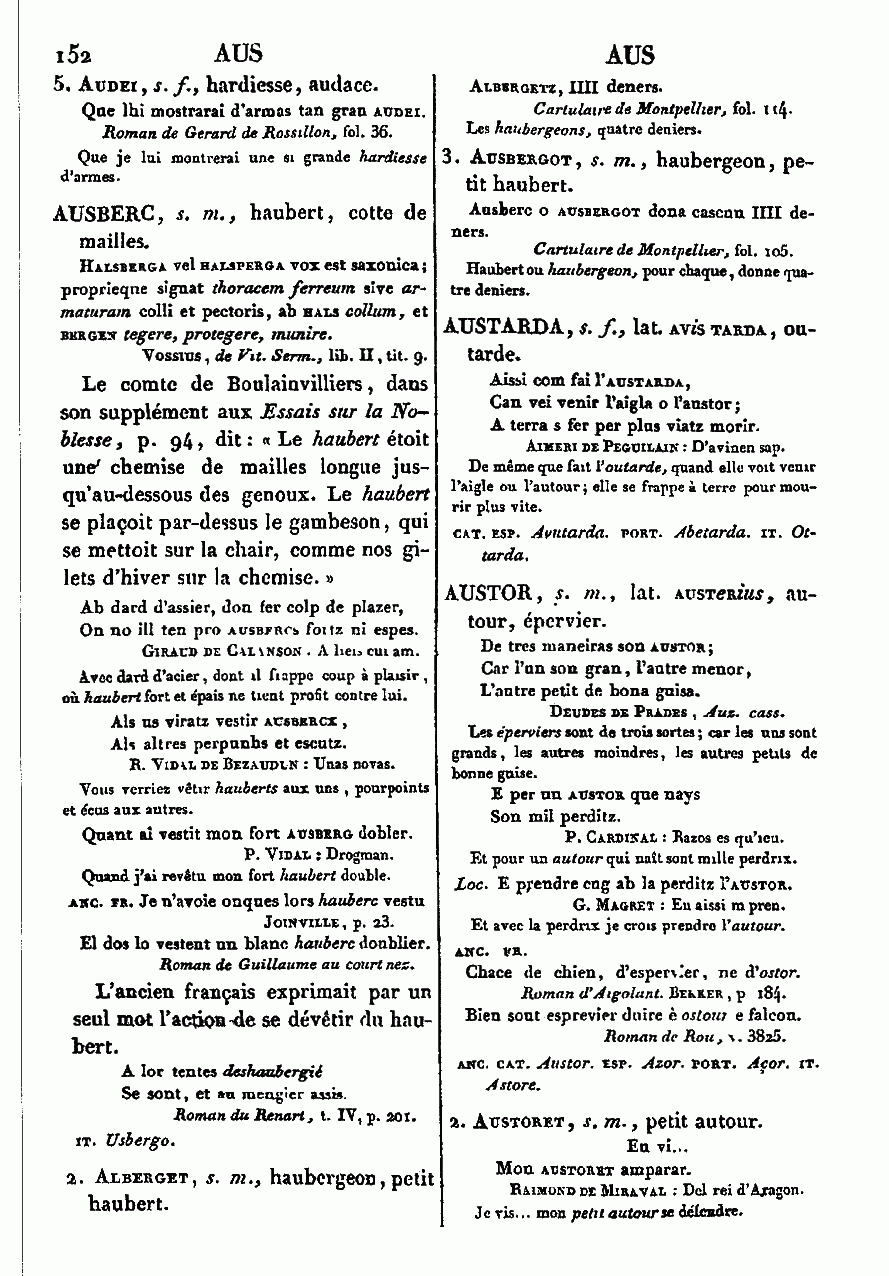
English Words of Arabic Ancestry
Collection of etymologies and word histories of English words that came from Arabic words
Author: Seanwal11111
Date: circa 2018
About seventy percent of the words in this collection were transferred from Arabic into the Latinate languages in the Mediterranean region in the medieval era, especially the 12th and 13th centuries, and subsequently were transferred from the Latinate languages into English. The other thirty percent entered European languages from the 16th century onward, sometimes going directly from Arabic into English, more often going through intermediate languages before arriving in English.
Only words in current use in English are included; rare and archaic words are omitted.
Words connected with the Islamic religion are omitted. For Islamic words, see a glossary of Islam Book ''A dictionary of Islam; being a cyclopaedia of the doctrines, rites, ceremonies, and customs, together with the technical and theological terms, of the Muhammadan religion'', by Thomas Patrick Hughes, year 1885. This book was written by a Christian clergyman. One of its virtues is that its copyright has expired. A similar book written by a Muslim clergyman may be better.
(e.g.).
The main aim is to provide the evidence that the words came from Arabic, taking each word individually.
The words have been collected from machine-searchable etymology dictionaries
1. Main List of Words
2. Additional Lists of Words 1 Addendum for Botanical names
2 Addendum for Stars in Night Sky
3 Addendum for Cuisine Recipe Names
4 Addendum for Arabic Music Words
5 Addendum for Textile Words 6 Addendum for words that some people have claimed are from Arabic when the evidence for the claim is deficient and defective
3. Footnotes
Only one-sixth of the upcoming text is in the top-level body of the presentation. The other five-sixths is in the footnotes. To see substantive facts it is necessary to click into the footnotes. This is especially true when a word's derivation from Arabic is complicated. Any footnote is optional reading.
Main List of Loanwords
admiral, albatross, alchemy, alcohol, alcove, alembic, alfalfa, algebra, algorithm, alidade, alkali, alkanet (plant), amalgam, ambergris, aniline (dye), apricot, arsenal, artichoke, assassin, attar, aubergine, average, azimuth, benzoin, bezoar, borax, camphor, candy, carat, caravan, caraway, carob, check, checkmate, cipher, civet, coffee, cotton, crimson, curcuma, damask, elixir, erg (landform), fennec (fox), garble, gazelle, ghoul, giraffe, harem, hashish, henna, hookah (pipe), hummus (food recipe), ifrit (demon), intarsia (decoration), jar, jasmine, jerboa (gerbil), jinn, julep, jumper (garment), khat (stimulant), kohl (eye makeup), lac & lacquer, lemon, lime (fruit), luffa (plant), lute (kind of guitar), macrame (decoration), magazine, marcasite (mineral), massicot (mineral), mattress, mohair, monsoon, morocco (leather), mufti (clothing), mummy (corpse), muslin, nadir, natron (mineral), orange, popinjay, realgar (mineral), ream (of paper), rook (in chess), sabkha (landform), safari, safflower, saffron, sandalwood, saphena (vein), sash (ribbon), sequin (ornament), serendipity, sheikh, sherbet, sofa, spinach, sugar, sultan, sumac, swahili, syrup, tabla (drum), tahini, talc, talisman, tamarind, tambourine, tanbur (kind of guitar), tangerine, tare (weight), tariff, tarragon, demi-tasse (cup), tincalconite (mineral), typhoon, varan (lizard), zenith, zero. More botanical names and certain other names are given separately after the main listing.
It is assumed you already know the meaning of today's English word.
- 1 admiral
- أمير amīr, military leader, emir. Amīr is common in medieval Arabic writings as a commander on land (not sea). It has records in Latin from the 9th century onward as a specifically Muslim leader. A Latin record of a different kind comes from Sicily in 1072, the year the Latins defeated the Arabs in Sicily at the capital city Palermo. In that year, after about 200 years of Arabic rule at Palermo, a new military governing official was assigned in Latin as "knight, to be for the Sicilians the amiratus", where
Definition at Wikipedia's wiktionary : -atus #2, a Latin noun suffix. You can see derivatives of it in today's English noun suffix -ate in triumvirate, episcopate, principate, consulate, syndicate, emirate.
‑atus is a Latin suffix on nouns. This title continued in mainly non-marine use during the next century among the Latins at Palermo, usually spelled am[m]iratus (spelled amiraldus in year 1113, whereBook ''An Etymological Dictionary of the French Language'', by A. Brachet, translated from French to English, edition year 1878, has short intro to Latin ''‑aldus'' in paragraph §195
‑aldus is a Latin suffix functioning much the same as ‑atus; spelled ammiral year 1112 influenced by Latin suffixWiktionary definition for -alis, a suffix in Latin
‑alis). In 1178 and earlier, the person holding the title amiratus at Palermo was put in charge of the navy of the Kingdom of Sicily.[6] After that start, the word meaning an Admiral of the Sea was taken up at the seaport of Genoa in year 1192 as ammiratus referring to the grand admiral of Sicily, and at Genoa around 1211 as admiratus referring to an admiral of Pisa; and early 13th century Latin at Genoa also used the wordform amiragius (which has Italian suffix Definition at Wiktionary : -aggio
‑aggio) meaning "admiral of the sea".[7] In 13th century Latin Europe the meaning as a specifically Muslim leader continued in independent circulation as well. The one word with two meanings has lots of records in all Latinate languages in the late medieval period. To be clear, the two meanings were (1) a Muslim military leader, practically always on land, and (2) a commander of two or more war-ships, practically always a Western Christian. [7] In late medieval French and English the usual wordforms were amiral and admiral, with both meanings. [8] The insertion of the letter 'd' was prompted by allusion to the word admire, a commonplace classical Latin word.
- 2 albatross
- الغطّاس al-ghattās, literally "the diver", naming birds who got their food by diving underwater, and sometimes it named the large diving seabirds of the pelecaniform class including cormorants.
[9] Late medieval Spanish has alcatraz meaning large diving seabirds (first record 1386) and this Spanish word is undoubtedly from Arabic. [9] Spanish alcatraz entered English in 2nd half of 16th century as alcatras meaning large diving seabirds in the Indies oceans. Alcatras has dozens of records in English in ocean voyages narratives in the late 16th and early 17th century ''Early English Books Online'' (EEBO) has nine 16th century English books having dozens of instances of alcatras_, alcatrace_, alcatraz_, alcatrarz_ birds. Another two dozen instances at EEBO are in the year 1625 Samuel Purchas collection of voyages narratives.
(ref). The word also went from Spanish into Italian in the 16th as alcatrazzi with same meaning. The albatrosses are a class of large diving seabirds that are only found in the Southern Hemisphere and Pacific Ocean regions. Beginning in the 17th century, every European language adopted "albatros" with a 'b' for these birds, the 'b' having been mobilized from Latinate alba = "white".
- 3 alchemy, alchemical, chemical, chemistry
- الكيمياء al-kīmīāʾ, alchemy, medieval chemistry, and especially "studies about substances through which gold and silver may be artificially produced".
[10] The Arabic word had its source in a Greek alchemy word that was in use in the early centuries AD in Alexandria in Egypt in Greek. [11] The Arabic entered Latin as alchimia in the 12th century and was widely circulating in Latin in the 13th century. [12] In late medieval Latin, the word alchimia was strongly associated with the quest to make gold out of other metals, but the scope of the word also covered the full range of what was then known about refining metals and minerals. Late medieval Latin word-forms included alchimicus = "alchemical" and alchimista = "alchemist", as well as alchimia = "alchemy". By deletion of al-, those word-forms gave rise to the Latin word-forms chimia, chimicus and chimista beginning in the mid 16th century. The word-forms with and without the al- were synonymous until the end of the 17th century: The meaning of each of them covered both alchemy and chemistry. [13]
- 4 alcohol
- الكحل al-kuhl, very finely powdered stibnite (Sb2S3) or galena (PbS) or any similar fine sooty‑colored powder.
[2] The word entered Latin and Spanish records in the 13th century spelled alcohol and meaning exactly the same as the Arabic word. In late medieval Latin the sole meaning was an exceedingly fine-grained powder, made of any material. [14] In various cases the powder was obtained by crushing, but in various other cases the powder was obtained by calcination, or by sublimation & deposition. In the alchemy and medicine writer Paracelsus (died 1541), the alcohol powders produced by sublimation & deposition were regarded as kinds of distillates; e.g., he regarded the ordinary soot deposited in chimneys as a distillate. With that viewpoint, he extended the word's meaning to distillate of wine. "Alcohol of wine" (ethanol) has its first record in Paracelsus. [15] The biggest-selling English dictionary of the 18th century defined alcohol as "a very fine and impalpable powder, or a very pure well rectified spirit" alcohol @ Nathan Bailey's English Dictionary, year 1726 edition. Bailey's dictionary was reprinted in more years than any other English dictionary in the 18th century. This implies it sold more copies than any of its competitors.
(ref).
- 5 alcove
- القبّة al-qobba, vault, dome, or cupola. That sense for the word is in medieval Arabic dictionaries.
[2] The same sense is documented for Spanish alcoba around 1275. Alcoba semantically evolved in Spanish during the 14th to 16th centuries. [16] Alcoba begot French alcove, earliest known French in 1646 [3] and French begot English. (By the way, English "cove" is unrelated).
- 6 alembic (distillation apparatus)
- الأنبيق al-anbīq, distillation apparatus for distilling. Earliest chemical distillations were by Greeks in Alexandria in Egypt about the third century AD. Late Ancient Greek distillation apparatus name ambika (
ἄμβιξ ambix @ Lexicon of Ancient Greek by Liddell-Scott-Jones, in English, year 1925. ἄμβικα AMBIKA is an alembic in the alchemist Zosimos, who lived in 4th century AD and wrote in Greek. At the linked lexicon page, Zosimos's alchemy book is cited by the abbreviated notation ''Zos.Alch.''. Zosimos's alchemy book in Greek is at site stephanus.tlg.uci.edu. By the way, Zosimos was translated to Arabic in the 9th century.
e.g.) became the Arabic al-anbīq starting in the 9th century (9th century book in Arabic plus modern translation to German : كتاب الاحجار لارسطاطاليس ''Das Steinbuch des Aristoteles'', curated by Julius Ruska, year 1912. Arabic الانبيق al-anbīq is on page 110 on last line.
e.g. ,Arabic book dated 10th century :
e.g.), which became 12th-century Latin alembic. In Latin the word's early records are in Arabic-to-Latin translations (
مفاتيح العلوم – بن أحمد بن يوسف الخوارزمي
''Mafātīḥ al-ʿulūm'' by Ibn Ahmad Ibn Yusuf Al-Khuwarizmi. Curated by G van Vloten, year 1895. الأنبيق al-anbīq on page ٢۵٧ on lines 4, 6, & 9, and on page ٢٦۴ line 3.Latin alchemy text titled ''Liber de Septuaginta'', dated circa 1200, is an Arabic-to-Latin translation. It is published in Latin in journal Mémoires de l'Académie des sciences de l'Institut de France, volume 49, year 1906, pages 310-363, having word ''alembic'' on pages 317, 327 & 345.
e.g. ,Latin alchemy text titled ''Porta Elementorum'', dated circa 1200, is an Arabic-to-Latin translation. It is published in article ''The PORTA ELEMENTORUM of Pseudo-Avicenna's alchemical DE ANIMA'', by Sébastien Moureau, year 2013 in journal Archives d'histoire doctrinale et littéraire du Moyen Âge Volume 80. It has two instances of ''alembic'', which are on pages 188 and 190.
e.g.). Alembic arrived in Latin along with some other Arabic alchemy words.[11]
- 7 alfalfa
- الفصفصة al-fisfisa, alfalfa.
[17] From the Arabic, later-medieval Spanish has alfalfez = "alfalfa". [17] In later-medieval Iberia, alfalfa had a reputation as the best fodder for horses. The ancient Romans grew alfalfa but called it an entirely different name. [18] The plant is usually called lucerne in today's British and Australian English, while it is usually called alfalfa in American English. The American English name started in the far-west USA in the 1850s when alfalfa seeds were imported from Chile to California.
- 8 algebra
- الجبر al-jabr, restoring of broken parts.
[2] The word's mathematical use has its earliest record in Arabic in the title of the book "al-mukhtaṣar fī ḥisāb al-jabr wa al-muqābala", translatable as "the compendium on calculation by restoring and balancing", by the 9th-century mathematician Mohammed Ibn Musa Al-Khwarizmi. This book was well-known in medieval Arabic mathematics. It was translated to Latin twice in the 12th century. In medieval Arabic mathematics, al-jabr and al-muqābala were the names of the two main preparatory steps used to solve an algebraic equation. For the medieval Arabs the phrase "al-jabr and al-muqābala" came to mean "method of equation-solving". The medieval Latins borrowed the method and the names. [19]
- 9 algorithm, algorism
- الخوارزمي al-khwārizmī, short name for the mathematician Muhammad ibn Mūsā al-Khwārizmī (died c. 850). The word has no record in medieval Arabic mathematics except as a person's proper name. In Latin in the 12th century a few introductory tutorials for working with the Hindu-Arabic numbers have the word alchorismi or algorizmi in the headline of the text and there is an indication in the body of the text that it represents Al-Khwarizmi's name. In Latin in the 13th century the wordform was algorismus. In Latin and English from the 13th through 19th centuries, both "algorism" and "algorithm" meant only the elementary methods of the Hindu-Arabic number system.
[20]
- 10
Definition at TheFreeDictionary : Alidade
alidade - العضادة al-ʿiḍāda (from عضد ʿiḍad, pivoting arm), the rotary dial for angular positioning on the Astrolabe surveying instrument used in astronomy. The word with that meaning was used by the astronomers Abu al-Wafa Buzjani (died 998)
alidade @ ''Dictionnaire Étymologique Des Mots Français D'Origine Orientale'', by L. Marcel Devic, year 1876, has two quotations in Arabic from أبو الوفاء البوزجاني Abu al-Wafa Buzjani in footnotes #2 and #3 on page 23
(Ref), Ibn al-Saffar (died 1035)Ibn al-Saffar wrote a 30-page tutorial on working with the Astrolabe. It is in Arabic in journal ''Revista del Instituto Egipcio de Estudios Islámicos en Madrid'' Volume 3, year 1955, curated by Millás Vallicrosa. The Arabic text is on print pages ٤٧ to ٧٦, which is PDF pages 158-187 in linked PDF file. In this text, the word العضادة al-ʿiḍāda is frequent and is on many pages. It is defined on page ٤٨ line 15.
(Ref), and others. The word with the same meaning entered medieval Latin in the context of Astrolabes.[21] Crossref word azimuth, which entered medieval Latin on the same pathway.
- 11 alkali
- القلي al-qalī | al-qilī, an alkaline material derived from the ashes of saltwort plants. Saltwort plants grow on saline desert soils and other salty soils. Saltwort plants were medievally collected and burned because their ashes contained a useful chemical. The dictionary of Al-Jauhari (died circa 1003) said "al-qilī is obtained from saltworts".
[2] In today's terms, the medieval Arabic al-qalī ashes was mainly composed of sodium carbonate and potassium carbonate. [22] The medieval Arabs used it as an ingredient in making glass and making detergents. In the European languages the word's early records are in Latin alchemy and minerals texts in late 12th and early 13th century, spelled alkali, with the very same meaning as the Arabic word. [23] In Europe during 16th & 17th centuries the meaning was broadened to include other chemicals with similar characteristics.
- 12 amalgam, amalgamate
- الملغم al-malgham, amalgam, especially amalgam of mercury with metal.
[24] In the European languages this word's earliest records are in late 13th and early 14th century Latin alchemy texts, where it meant an amalgam of mercury with another substance (nearly always a metal) and was spelled amalgama. Arabic alchemy arrived in Latin during the 12th and 13th centuries, and Arabic influence was pervasive in the Latin alchemy of the 13th and 14th centuries. In Arabic records before the 13th century, the word al-malgham | al-mulgham = "amalgam" is uncommon but does exist and was used by a number of different authors. [24]
- 13 ambergris
- عنبر ʿanbar, meaning ambergris, i.e. a fragrant solid material produced in the stomach of sperm whales and used historically for perfumery. Medieval ambergris was sourced mostly from the Indian Ocean's shores. From Arabic sellers of ambergris, the word passed into early-medieval Latin as ambar | ambra meaning "ambergris". Later, starting 13th century, the Latin ambra took on the separate meaning "amber", from causes not understood. The two meanings for the name ambra –i.e. "ambergris" and "amber"– co‑existed for over four centuries in Western Europe. The qualifier gris was added to eliminate the ambiguity of ambra. The color of ambergris is grey more often than not, and gris is French for grey. An organic chemical extracted from ambergris is ambrein, first named in year 1820
Book ''Chemistry of Animal Bodies'' by Thomas Thomson, year 1843 on page 151, says the name ambrein was introduced by JP Pelletier (died 1842) and his collaborator JB Caventou (died 1877) in their examination of ambergris in 1820.
(ref), named in derivation from French ambre and the Latin ambra = "ambergris" whose parent was the Arabic ʿanbar. The parentage of the medieval Latin ambra = "amber" is unknown.[25]
- 14
Definition at TheFreeDictionary : Anil
anil,Definition at TheFreeDictionary : Aniline
aniline,Definition at Wikipedia : Polyaniline
polyaniline - النيل al-nīl | an-nīl
[5], indigo dye. The medieval Arabs grew indigo dye plants commercially and they called them nīl. [27] The medieval Europeans used indigo dye imported from the Arabs sometimes. More often the medieval Europeans used European-grown Woad dye for the same purpose. From the medieval Arabic word an‑nīl, the word anil became the usual for indigo in Spanish & Portuguese. [27] From Spanish & Portuguese anil, the word anil entered other European languages via the indigo supplied to Europe from the late 16th century onward by Spanish & Portuguese merchants who brought it from tropical America and India. Anil in English means a natural indigo dye from a tropical American plant. Aniline was created as a technical word in dye chemistry in the early 1840s.
- 15 apricot
- البرقوق al-barqūq, apricot.
[28] The medieval Arabic al-barqūq went into late medieval Spanish as albarcoque HispanicSeminary.org is a site with a searchable collection of late medieval and 16th century Spanish texts. Search for ''albarquoque'' and ''albarcoque''.
(ref) and Catalan albercocalbercoc @ ''Diccionari català-valencià-balear'', by AM Alcover & FB Moll, year 1962. It quotes albercocs in Francesc Eiximenis (died 1409) and albercochs in Anselm Turmeda (died c. 1423).
(ref) meaning apricot. The early spellings in English included abrecok (year 1551), abrecox (1578), apricock (1593), aprecocke (1597) meaning apricotapricot @ ''New English Dictionary on Historical Principles'', volume year 1888, gives quotations from 16th century English
(ref). The letter 't' in today's English apricot has come from a French wordform. In French the word starts around the 1520s as aubercot and abricot meaning apricotabricot @ ''Centre National de Ressources Textuelles et Lexicales'', year 2012
(ref). This French was from the late medieval Spanish & Catalan albercoc. Apricot fruit trees were grown by the ancient Latins. It is unknown or not clear what motivated the late medieval Latins to adopt the Arabic name.
- 16 arsenal
- دار صناعة dār sināʿa, literally "house of manufacturing" but in practice in medieval Arabic it meant government-run manufacturing, usually for the military, most notably for the navy.
[29] The at Wikipedia : In medieval Italy the maritime republics were a handful of independent city-states. Each one was headquartered at a seaport that was the home port of substantial sea-commerce.
Italian maritime republics in the 12th century adopted the word to designate a naval dockyard, a place for building ships and armaments for ships, and repairing armed ships. In late medieval centuries the biggest such arsenal in Europe was theDefinition at Wikipedia : Arsenal of Venice
Arsenal of Venice. 12th century Italian-Latin had the spellings darsena, arsena and tarsanatus. 14th-century Italian-Latin and Italian had the spellings darsena, terzana, arzana, arsana, arsenada, arcenatus, tersanaia, terzinaia, all meaning a workyard for ships and in only some cases having navy building activity.[30] In the 16th century in French and English, an arcenal | arsenal was a naval dockyard or an arsenal or both ( Book : History of the Peloponnesian War written by Thucydides (died c.400 BC) put in French translation by Claude de Seyssel (died 1520), reprinted in 1559 with spelling changes. It has French ARCENAL(S) on nine pages meaning a place within which war-ships are kept in safety and security. Book's title is ''L'Histoire de Thucydide Athenien...''.
e.g.,arcenal @ French-to-English dictionary by Randle Cotgrave, year 1611
e.g.,arsenal @ ''New English Dictionary on Historical Principles'', volume year 1888, on page 465-466, gives quotations from English sources of the 16th & 17th centuries
e.g.) and those two meanings are still in today's French arsenal (arsenal @ ''Dictionnaire de l'Académie française'', 9th edition, years 1992-2011
e.g.).
- 17 artichoke
- الخرشف al-kharshuf | الخرشوف al-kharshūf, artichoke. The word with that meaning is in at least a half a dozen Andalusi and Maghrebi Arabic authors in the 10th to 14th centuries.
[31] With the same meaning, there is Spanish alcachofa (first record around 1400), Spanish alcarchofa (1423), Spanish carchofa (1423), Catalan carxofa (1490; Catalan letter 'x' is sound /sh/), Italian carciofjo (circa 1525), German Cardchoffil (1539), French carchiophe (1542). [32] All of those are phonetically close to the Arabic kharshuf. Similarly close to the Arabic precedent is today's Italian carciofo and today's Spanish alcachofa, each meaning artichoke. Not phonetically close, starting 2nd quarter of 16th century: English archecokk (1531), French artichault (1535), German-Latin articocalus (1542), Italian artichiocco (1544), English hortichocke (1555), Italian arcichiocco (1568), Italian artichioffo (1590), English artichowe (1599), Italian arcicioffo (1611), all meaning "artichoke". [32] Etymology commentators near-unanimously say these wordforms have to have been mutated from the earlier Iberian and Italian wordforms. This predominant opinion has support from the background horticultural historical context. But the mutation is far outside the bounds of ordinary phonetic change, and the way it happened is poorly understood and not understood. There is not a competing alternative idea.
- 18 assassin
- الحشيشية al-hashīshīya and حشيشين hashīshīn, an Arabic nickname for the Nizari Ismaili Muslim religious sect in the Levant during the Crusades era. This sect carried out assassinations against chiefs of other sects, including Crusading Christians, and the story circulated throughout western Europe in the 13th century and late 12th. Medievally in Latin & Italian & French, this sect was called the Assissini | Assassini.
[33] Medievally in Arabic texts the wordform is al-hashīshīya [33] and by Arabic grammar this can be put in Arabic in the wordform hashīshīn also. Hashīshīn is the wordform in Arabic that the Latin Crusaders borrowed in the Levant. By well-known aspects of medieval Latin & Italian & French phonetics, it is well understood why the wordform got phonetically changed from the Arabic Hashīshīn to the Latinate Assissini. [33] The generalization of the sect's nickname to the meaning of any sort of assassin happened in Italian at the start of the 14th century. The word with the generalized meaning was often used in Italian in the 14th and 15th centuries. [33] In the mid 16th century the generalized Italian word entered French [3], followed a little later by English.
- 19 attar
- عطر ʿitr, perfume, aroma. The English word came from the Hindi/Urdu-speaking area of northeast India in the late 18th century and its source was the Hindi/Urdu atr | itr = "perfume"
[34] , which had come from Persian ʿitr = "perfume", and the Persian had come medievally from the Arabic ʿitr, which is an ancient word in Semitic.
- 20 aubergine
- الباذنجان al-bādhinjān, aubergine. The plant's native place of origin was Myanmar and thereabouts. The plant was unknown to the ancient Greeks and Romans. It was introduced to the Mediterranean region by the medieval Arabs. The Arabic name entered Iberian Latinate languages late medievally, producing 15th century Spanish alberengena = "aubergine" and 14th century Catalan alberginia = "aubergine". The Catalan name alberginia was the parent of French aubergine, which embodies a change from al- to au- that happened in French.
[35]
- 21 average
- عوار ʿawār, a defect, or anything defective or damaged, including partially spoiled merchandise; and عواري ʿawārī = "of or relating to ʿawār, a state of partial damage".
[36] In the European languages the word's history begins in sea-commerce on the Mediterranean in late-12th-century Italy as Latin avaria. In first half of 13th century at seaports Genoa and Marseille, the Latin avaria meant physical damage on gold and silver coins, particularly Arabic coins. [37] At seaports Savona and Genoa around year 1200, Latin avaria meant damage and non-normal expenses incurred during merchant sea voyages. [37] The Italian-Latin avaria begot 15th century French avarie with the same meaning, i.e. "damage expenses". The French begot English "averay" (year 1491) and English "average" (1451, 1502) with the same meaning. However, in some late medieval cases in Italy and elsewhere the meaning is a normal and predictable import-tax expense incurred in a merchant sea voyage. [38] Today, Italian avaria, Catalan avaria and French avarie have the primary meaning of "damage". The huge transformation of the meaning in English began with the standard practice in late-medieval and early-modern European merchant-marine law contracts under which if the ship met a bad storm and some of the ship's cargo had to be thrown into the sea to make the ship lighter and safer, then all merchants whose goods were on the ship were to suffer proportionately; and more generally there was to be proportionate distribution of any avaria. From there, the word was adopted by British insurers, creditors, and merchants for talking about their losses as being spread across their whole portfolio of assets, and having a mean proportion. Today's "average" developed out of that, and started in the mid 18th century, and started in English. [38]
- 22 azimuth
- السموت al-sumūt | as-sumūt
[5], the directions, the azimuths. The word was in use in medieval Arabic astronomy, including particularly with the Astrolabe instrument, and it was transferred into Latin as azimut in the context of using Astrolabes, and records in Latin begin in the 1130s or 1140s. [39] The earliest in English is in the 1390s in a treatise on using the Astrolabe ( Full text of ''Treatise on the Astrolabe'' by Geoffrey Chaucer (died 1400), in medieval English and modern English side-by-side. Has the word azimut about a dozen times.
ref ,azimutz @ Middle English Dictionary
ref).
- 23 benzoin, benzoic acid
- لبان جاوي lubān jāwī, benzoin resin, literally "frankincense of Java". Benzoin is an aromatic natural resin from an Indonesian tree. In the later-medieval centuries, Arab sea-merchants shipped it to the Middle East for sale as perfumery and incense. It first came to Europe in the 15th century. Its European name benzoin is a great mutation of the Arabic name lubān jāwī. The linguistic factors that caused the mutation are well understood.
[42] Among European chemists, benzoin resin was the original source for benzoic acid, which became the source for the 19th-century benzene, benzo-, benzyl- chemicals.
- 24 bezoar
- بازهر bāzahr | بادزهر bādzahr, a type of hard ball containing calcium compounds, sometimes formed in the stomachs of goats and some other ruminant animals. Today in English a bezoar is a medical and veterinary word for a ball of indigestible material that collects in the stomach and fails to pass through the intestines. Goat bezoars were recommended by medieval Arabic medical writers for use as antidotes to poisons. That is how the word first entered medieval Latin medical vocabulary.
[43]
- 25 borax, borate, boron
- بورق būraq, various salts, some used as cleaning agents and some used as fluxes in metalworking. Borax, i.e. sodium borate, was used medievally primarily as a fluxing agent in soldering gold and silver metal ornaments. The ancient Greeks & Latins used fluxing agents in metalworking, but borax was unknown to them. Borax was used among the medieval Arabs before it came into use among the medieval Latins. There was no borax in medieval Europe except as an import from Arabic lands. In all centuries until two centuries ago, the most important source of borax was at salty lakes in the country of Tibet, and it is quite possible that Tibet was the sole source on the planet. The Tibet borax was carried into international trade in northwest India. The borax of the medieval Arabs came from northwest India at least in part, and possibly all of it came from there. From Arabic būraq, the Latins adopted the name borax | baurach in the 12th century meaning borax for fluxing metals, and sometimes later more loosely in Latin it meant any kind of salts for fluxing metals.
[44]. ﴾﴿ In medieval Arabic the more usual and more specific name for borax was التنكار al-tinkār. This name was adopted by the medieval Latins starting in the 12th century as Latin tincar | atincar with the same meaning. Today's English tincal or tincalconite is a mineral variant of borax. Its name tincalconite is descended from the medieval Latin tincar = "borax" [44], post-medievally conjoined with ancient Greek konia | konis = "powder", plus the conventional mineralogy suffix ‑ite. "Borate" and "boron" are post-medieval and are descended from the medieval "borax".
- 26 camphor
- كافور kāfūr, camphor. The medieval Arabs imported camphor by sea from the East-East Indies for medical uses and aromatic uses. They resold some of it to the Latins. The medieval Arabs in general were fond of aromas and kāfūr = "camphor" was well known to them.
[2] The medieval Latins were not so fond of aromas, and for them camphor was an item in medicine, in general. In Latin the word starts in the 9th century, though it is rare until three centuries later. [45] ﴾﴿ Another imported Indies wood-product that had medical and aromatic uses in medieval Europe and had its name taken from medieval Arabic is sandalwood, from Arabic صندل sandal. [46] In Arabic these two names had come from the Indies along with the goods. The two names are in Sanskrit texts. Camphor and sandalwood were in use in Late Ancient India, aromatically and medicinally.
- 27 candy
- قند qand + قندي qandī, sugared, made from cane sugar.
[47] Cane sugar developed in ancient India. Medieval Persian word qand = "cane sugar" was possibly from Sanskritic. [48] The plant is native to a tropical climate. The medieval Arabs grew the plant with artificial irrigation and exported some of the product to the Latins. The word candi entered all the Western European languages in the later-medieval centuries. [47]
- 28 carat (gold purity, also gem weight)
- قيراط qīrāt, a small unit of weight, medievally sometimes defined by reference to a weight of (e.g.) three barley seeds and sometimes defined as one twentyfourth (1/24) of the weight of a gold dinar coin. Medieval Arabic qīrāt was also in use meaning 1/24th of the money value of a gold dinar coin. In Italy in 12th & 13th centuries, Latin caratus most often meant 1/24th of the money value of Arabic and Greek gold coins. In Italy beginning in the late 13th century the word was adopted for talking about the proportion of gold in a gold alloy, especially in any gold coin, this happening soon after some city-states of Italy started new issues of pure gold coins.
[49] The word's meaning as a small unit of weight is scarce in Western European languages in 13th century. The smallish number of 13th-century Western authors who use it meaning a weight have clearly had contact with Arabic sources in most cases. The meaning as a weight has growing records in the 14th & 15th centuries in Italy & France. [49]
- 29 caravan
- قيروان qaīrawān, convoy of travelers journeying together, which could be a merchant convoy or military convoy. Qaīrawān with this meaning is in all the main medieval Arabic dictionaries. It is somewhat frequent in medieval Arabic writings, even though it is not nearly as frequent as the synonymous Arabic qāfila.
[2] Arabic qaīrawān had come from Persian کاروان kārwān with same meaning. Many English dictionaries say the word in the European languages had come directly from Persian without Arabic intermediation. Those dictionaries are mistaken. The word is in Latin in the 12th century. The early records in Latin include caravanis (1161), carvana (1190s), carrvana (1190s), carvane (1190s in French), caravenna (c.1194), caravana (1217), caravanna (1219-1225), karavenna (1250), carravana (1262), all meaning an overland convoy, and in a good few of those cases the people of the caravan are Muslims – quotations are at caravanna @ Du Cange's Glossary of Medieval Latin
ref ,Declaration in Latin in year 1161 by king Baldwin III, king of Crusader Levant, printed in book ''Tabulae Ordinis Theutonici'', curated by Strehlke, year 1869, having caravanis on page 4 on line 11
ref ,carvanna @ ''Dictionary of Medieval Latin from British Sources'' (''DMLBS''), year 2013. It quotes instances in British Latin in chroniclers who are talking about happenings in the Crusades in the Levant. The dictionary names its sources through abbreviations which are defined at: www.dmlbs.ox.ac.uk/web/dmlbs%20bibliography.html
ref ,French carvane is a dozen times in the Crusader narrative ''L'Estoire de la Guerre Sainte'' by Ambroise of Normandy, written in the 1190s. Ambroise has nostre carvane = ''our caravan'' meaning caravan of the Crusaders. Ambroise has ses carvanes = ''his caravans'' meaning caravans of the army of Saladin, the Muslim sultan.
ref ,caravanna @ ''Mittellateinisches Wörterbuch'', year 1967, a lexicon. It has half a dozen quotations for the word in Latin in 12th and early 13th century.
ref ,Collection of medieval documents in Latin & French : ''Cartulaire général de l'Ordre des Hospitaliers de Saint Jean de Jérusalem'', in four volumes, compiled by Delaville le Roulx, years 1890s & 1906. Volume 3 page 51 has year 1262 Latin carravanerii and French karavanier meaning people who operate a caravan. Volume 4 page 39 has year 1302 Latin carravanis and French carrevanes meaning caravans.
ref. Besides the overland convoy, the word was used for a convoy of sailing ships in the 13th century in Italian-Latin, Italian, and Crusaders'-French, with wordforms caravan[n]a | carevane | carvane | carabana –caravana @ ''Vocabolario Ligure'', by Sergio Aprosio, year 2001, on page 224, gives 13th-century quotations for Latin caravana as a convoy of ships in Genoa authors. Source abbreviations are defined on pages 24-48.
ref ,Book in Latin : ''Annali genovesi di Caffaro e de' suoi continuatori'', Volume Two, year 1901. Has events having carauanna year 1213 (page 127) and carauana year 1217 (page 144) in annals written shortly after the year of the event.
ref ,Year 1240 carabana navium Januensium = ''caravan of Genoese ships'' is quoted in the lexicon ''Arabismi Medievali di Sicilia'', by Girolamo Caracausi, year 1983 on page 157. The quote is lifted from the administration records of the ruler Frederick II of Sicily (died in 1250).
ref ,Book ''Archives de l'Orient Latin, Tome II'', year 1884, publishes 13th-century Latin documents, curated by Desimoni. Page 229 has caravann__ three times meaning a caravan of ships at seaport Tyre (aka Ṣūr) in Crusader-controlled Levant. The date is 1264.
ref ,caravane @ ''Trésor du langage des galères: Dictionnaire exhaustif'', by Jan Fennis, year 1995, on page 487. It cites the word in three French authors in the 13th century. It quotes from a chronicle by Philippe de Novara (died c.1270), who lived in the Crusader-controlled Levant and who wrote in French: ''thirteen galley ships of the Genoese reached Limassol in Cyprus in two carevanes, four in the one and nine in the other.''
ref. At that time, Western European merchant ships going to foreign ports on the Mediterranean Sea often travelled in convoys for security reasons. Latin caravana = "convoy of ships" is at the port of Genoa in 1213, 1217, 1241, and 1247 –caravana @ ''Vocabolario Ligure'', by Sergio Aprosio, year 2001, quotations for Latin caravana on page 224. ''Ligure'' means Liguria Province in Italy. Genoa is in Liguria.
ref. At the port of Genoa in the 14th & 15th centuries the laborers who loaded and unloaded the ships were called "laboratores de caravana" and they had a Trade Union called the Compagnia dei Caravana –145-page book, ''Gli Statuti della Compagnia dei Caravana del porto di Genova (1340-1600)'', curated by Giorgio Costamagna, year 1965, publishes medieval documents. It has about 200 instances of caravana plus about 200 of caravane. Pages 13-14 has year 1381 ''Societate de laboratores de Caravana.... socius de Caravana.... Consorcia de Caravana....'' The 145-page publication is within the series ''Memorie dell'Accademia delle Scienze di Torino'' [SERIE IV, Tomo III, Memorie num 8].
ref. The word has been continuously in use in Europe since the 13th century meaning a convoy, especially in Italy. 14th century Italian merchants have it in several kinds of applications contexts, spelled carovana | caravana –carovana @ ''Tesoro della Lingua Italiana delle Origini'', a lexicon of 14th century Italian
ref. It was a rarity in late medieval French with the exception that it is common in French writers who were in the Eastern Mediterranean lands –caravane @ ''Les emprunts arabes et grecs dans le lexique français d’Orient (XIIIe-XIVe siècles)'', by Laura Minervini, year 2012 in journal ''Revue de Linguistique Romane'' Volume 76, on pages 119-120, gives a dozen quotations of caravan in medieval French in various spellings. Article is downloadable as PDF via interface of linked page. Alt‑link: The whole of journal Volume 76, year 2012, is downloadable at www.eliphi.fr .
ref,caravane @ ''Dictionnaire du Moyen Français''. Quotes the word in one 15th century French travel writer who went to the Holy Land in the Levant.
ref. English has a rare instance carvan circa 1497, which is in the context of info about the Holy Land in the Eastern Mediterranean –carvan @ ''Middle English Dictionary'', year 2001
ref. An Italian-to-English dictionary in year 1598 has Italian caravana translated as English caravan –John Florio's Italian-to-English dictionary, year 1598, where the printed letters 'u' and 'v' can each represent any and all of the sounds /v/ and /u/.
ref. Back in the context of the 12th and early 13th century, any Persian word would necessarily have to have had intermediation through some other language in order to arrive in a Western European language, because there was no contact whatsoever between Persian and any Western European language at the time. In practice the intermediary was Arabic. The great majority of the 12th-13th century Latin records of this word involve travellers in Arabic-speaking lands, particularly Latin Crusaders in the Levant and Latin sea-merchants going to Arabic sea-ports, and none are in Iranian-speaking lands.﴾﴿ English van (type of transport vehicle) arose as a contraction of English "caravan" in the 19th century. Its word history is in New English Dictionary on Historical Principles under
caravan @ New English Dictionary on Historical Principles, volume year 1893
caravan andvan #3 @ New English Dictionary on Historical Principles, volume year 1928, page 34 column 1
van #3.
- 30 caraway (aromatic seed), carvone (organic chemical)
- كرويا karawiyā | كراويا karāwiyā, caraway. The word with that meaning has many records in medieval Arabic.
[50] Medieval Italian-Latin carui with the pronunciation CAR·U·I | CA·RU·I, meaning caraway, had come from Arabic karawiyā with same meaning. Carui was in late-medieval and early-modern French pronounced also CAR·U·I. Late-medieval English had wordforms carewy, carwy, carwey, caraway, and carui. The English had come from medieval Latin & French carui pronounced CAR·U·I in Latin & French. [50] Today's English "carvone" is a terpene oil from caraway seeds. Carvone has a stem carv- and an organic-chemical suffix ‑one. The stem is descended from medieval Italian-Latin carui pronounced CAR·VI in Italian (later pronounced CAR·VI in French also). Medieval Italian and Italian-Latin had a sound /u/ not far from a /w/ but did not use a sound /w/ in any words. The conversion of sound /w/ to sound /v/ in going from karawiyā to carui to carvi has parallels in other loanwords from Arabic in medieval Italian-Latin. [50]
- 31 carob
- خرّوب kharrūb, carob. Carob pods and carob seeds were consumed in the Mediterranean area in the classical Latin era. They had more than one name in classical Latin. But a name of roughly around carrubia with meaning carob is found in Latin from only the 12th century onward and its source was Arabic.
[51] The medieval Latinate word is the parent of today's Italian carruba, French caroube, English carob.
- 32 check, checkmate, chess, exchequer, chequered, checkers, unchecked, checkout, checkbox, checkbook...
- شاه shāh, king in the game of chess. The many uses of "check" in English are all descended from Persian shah = "king" and the use of this word in the game of chess to mean "check the king". Chess was introduced to medieval Europe through Arabs;
Book ''A History of Chess'' by HJR Murray, year 1913, 925 pages. Pages 394-416 is a chapter titled ''Chess in Western Christendom: Its Origin and Beginnings''.
history of chess. The medieval Arabs pronounced the terminal h in shāh harder and more forcefully than how it is pronounced in English or in today's Arabic.[52] The word is in mid-11th-century Catalan-Latin as the grammatical plural escachs = "chess" – Book, ''Documentos lingüisticos catalanes, s. X-XII'', curated by Luis Rubio García, year 1979. Has two mid-11th century Latin texts with escachs. One of them is on page 40 in an inventory list dated 1071 having parilios III escachs vivoril = ''3 ivory chess pairs'' meaning 3 ivory chess sets.
ref. It is in mid-11th-century Italian-Latin as the plural scac__ | scach__ | scacch__ = "chess" –An epistle by Petrus Damianus (died 1072) has Latin scachum or scacchum and also scac[c]hos, scac[c]ho, scac[c]horum, meaning chess. The book ''A History of Chess'' by HJR Murray, year 1913, prints this epistle in Latin on page 414-415 and translates it to English on page 408-409.
ref. Latin in southern Germany in mid-11th century has the plural scach__ = "chess" –The Latin text called ''Ruodlieb'' has scachorum ludo = ''game of chess'', where the Latin scachorum is in the genitive-case plural. Ruodlieb is date-assessed 2nd quarter of 11th century. Ruodlieb's author is unknown. The relevant paragraph of Ruodlieb is printed in Latin on page 415 and is put in English translation on page 412 in the book ''A History of Chess'' by HJR Murray, year 1913.
ref. The plural was derived from the grammatical singular scac = "check (in the chess game)". Italian in late 12th and 13th century has singular scaco | scaccho = "check (in chess)" and scaco mato | scacco matto = "checkmate" and plural scacchi = "chess" –scacco @ ''Tesoro della Lingua Italiana delle Origini'', a lexicon of medieval Italian
ref. The phonetic mangling of the Arabic shāh into the Italian and Catalan scac__ has phonetic parallels in Italian and Catalan.[53] The Italian matto #2 @ ''Tesoro della Lingua Italiana delle Origini'' (''TLIO''), circa 2015. The TLIO lexicon includes a quotation for ''audire scaco mato'' in an Italian poem dated late 12th or early 13th century. The poem has spelling ''audire scacomato'' in edition in year 1885 downloadable at www.academia.edu/19398562 ''PROVERBIA QUE DICUNTUR SUPER NATURA FEMINARUM'', curated by A. Tobler, printed in medieval Italian in journal ''Zeitschrift für romanische Philologie'' Volume IX page 308 at line 12, year 1885‑86. The 1885 publication had a 4‑page preface and footnotes written in German. The German has been translated to Italian in the given copy (translator C.A.Mangieri).
medieval scaco mato = "checkmate" was sourced from the medieval Arabic chess term شاه مات shāh māt = "king dies", for which examples in medieval Arabic are atSearch for شاه مات near الشطرنج in medieval texts at AlWaraq.net. Relevant results include texts by the authors الزمخشري Al-Zamakhshari (died 1144), الذهبي Al-Dhahabi (died 1348), ابن أبي حجلة التلمساني (died 1375), الأبشيهي Al-Abshihi (died c. 1446), and others. With same meaning, the wordform الشاه مات is also at AlWaraq.net and requires a separate search at AlWaraq.net.
شاه مات shāh māt @ AlWaraq.net and925-page book ''A History of Chess'' by HJR Murray, year 1913, has more than 18 instances of phrase shāh māt | shah mat | shah-mat | shahmat. It has 150+ instances of whole word shāh | shah and 200+ instances of whole word māt | mat. The OCR'd copy has shdh and mdt as OCR errors for shāh and māt.
Murray's History of Chess. With same meaning as Arabic māt and Italian mato, 12th-century French has mat, and it begot the "‑mate" in English checkmate. 12th-13th century French has singular eschac | eschec = "check (in chess)" and plural eschas | esches = "chess" –eschec #1 @ ''Dictionnaire Étymologique de l'Ancien Français'' (''DÉAF''), circa 2013. The link goes to DÉAF. A substitute for DÉAF is the Tobler & Lommatzsch dictionary, whose headword eschec is at as-bwc-tl.spdns.org/tl/ocr/tl03.html#eschec1 You will have to wait about 20 seconds for the page to load at the right place. This is because the file has many megabytes of programatically generated crud.. In Tobler-Lommatzsch the medieval texts are named by abbreviations that are defined at T‑L biblio Literaturverzeichnis by Erhard Lommatzsch (died 1975) [annotated by Achim Stein circa 2010]
citations. The singular begot English "check" and the plural begot English "chess".
- 33 cipher, decipher
- صفر sifr, the zero digit in the Hindu-Arabic number system. The zero digit was a key innovation for the positional notation of the Hindu-Arabic numbers. Outside of the realm of arithmetic, and before the Hindu numbers arrived into medieval Arabic, the Arabic word sifr meant "empty" –
صفر sifr @ Lane's Arabic-English Lexicon, at bottom of column 2 on page 1697, in Volume 4, year 1872. Sifr meaning ''empty'' is in all the main medieval Arabic dictionaries. Sifr meaning ''zero'' is in only a minority of them. Lane cites sifr meaning zero in dictionary ''L'' = ''Lisan al-Arab'' by Ibn Manzur, completed in year 1290. Lane's Lexicon alt‑link: arabiclexicon.hawramani.com/?cat=50
ref. The word arrived in Latin Europe with the Hindu-Arabic numbers in the 12th century as Latin cifra, which begot English cipher. For the Latins, cifra originally meant numeral zero as aat Wikipedia : Positional notation for numbers
positionholder. Later it was used to mean any positional numeral. Later still it took on the meaning of numerically encoded message. This last meaning, and decipher, dates from the 1470s in Italian, 1490s in French[3] and 1520s in English. But in English "cipher" also continued in use as a word for nought or zero from the late medieval period until the 19th century. [54]
- 34 civet (perfume), civet (mammal)
- زباد zabād, civet perfume, a musky perfume excreted from a gland in the قطط الزباد qitat al-zabād = "civet cats". Al-Mas'udi (died 956) said the zabād perfume was taken from a cat-like animal in India. Shams al-Din Al-Dimashqi (died 1327) said the African civet produced better zabād than the Indies' civets.
[55] In Italian since the 15th century zibetto = "civet" ( Text ''Navigazioni di Alvise da Ca' da Mosto'' by Alvise Cadamosto, dated about 1465, is a report about the author's expeditions in West Africa. It mentions ''zibetto e pelle di gatti che fanno il zibetto'' as commercial products in West Africa. Text is printed in Volume 1 of Ramusio's navigations & voyages collection.
e.g.,Poem ''Il Morgante maggiore'' by Luigi Pulci (died 1484) has ''moscado, e zibbetto'', where moscado means ''musk''. Poem verse #80 on page linked.
e.g.,Book ''Notandissimi secreti de l'arte profumatoria'' [Notable secrets of the art of perfumery], year 1560. Has dozens of instances of ''zibetto''. Book's author is Giovanni Ventura Roseto Veneto, as stated at bottom of page 73+1.
e.g.). Wordform civet_ starts in Catalan 1372 and French 1401.[3] An example paralleling the phonetic mutation from /b/ to /v/ is: Arabic al-qobba ➜ Spanish alcoba ➜ French alcove. Similarly, classical Latin liber ➜ French livre. Today the civet smell is manufactured synthetically and the chemical is called civetone.
﴾﴿ Incidentally, Arabic حبّ المسك habb el-misk = "musk seed", a seed with a musky perfume, is the source of the Latin botany genus name Abelmoschus and the English plantname abelmosk.[56]
- 35 coffee, café, caffeine
- قهوة qahwa, coffee. Coffee drinking originated in Yemen in the 15th century.
[57] Arabic qahwa begot Turkish kahve. Standard Turkish speech does not use a /w/ sound. The sound change from /w/ to /v/ in going from Arabic qahwa to Turkish kahve can be seen in many other words going from Arabic into Turkish (e.g. Arabic fatwa ➜ Turkish fetva, Arabic helwa ➜ Turkish helva). The Turkish kahve begot Italian caffè in the early 17th century. Caffè became the dominant word-form in European languages during the 17th century. European languages in and around the early 17th century also have numerous records where the word-form was being taken directly from the Arabic; e.g. cahoa in 1610, cahue in 1615, cowha in 1619 (French quaoué in 1646). [57]
﴾﴿ Incidentally, cafe mocha, a type of coffee, is named after the port city of Mocha, Yemen, which was an early coffee exporter.
- 36 cotton
- قطن qutn | qutun, cotton. This was the usual word for cotton in medieval Arabic.
[2] The word entered Latinate records in the mid 12th century [3], British Latin early 13th century coto, cotonus, cotum @ ''Dictionary of Medieval Latin from British Sources'' (''DMLBS''), year 2013. The dictionary names its sources through abbreviations that are defined in ''DMLBS Bibliography'' at www.dmlbs.ox.ac.uk/web/dmlbs%20bibliography.html
(ref), and English 14th century. Cotton fabric was produced in ancient India and was known to the ancient Romans as an import. The cotton plant was grown as a crop in late antiquity in Greco-Roman Egypt on a small scale. But cotton fabric and cotton fluff were rare in the Latinate-speaking lands until imports from the Arabic-speaking lands in the later-medieval era at much lower prices.[58]
- 37 crimson
- قرمزي qirmizī, color of a class of red dyes used in the medieval era for dyeing silk and wool. The dyes of this class were made from the bodies of certain scale-insects. Their dye colors are crimsons and near-crimsons. Such dyes are sometimes called cochineal dyes in English today. In ancient & early medieval Latin the cochineal dyes were called coccinus, vermiculus, and grana. The Arabic name qirmizī | qirmiz enters the records of the Latinate languages about year 1300, starting in Italy. Initially in Italian it referred to only one of the dyes of this class, the one called Armenian cochineal today. Italian from about 1300 onward has carmesi | chermisi | cremesi meaning this cochineal-type dye and its color. From about 1350 onward it is also in Italian and Italian-Latin in the wordforms carmisino | chermisino | cremesinus, where -ino | -inus is a suffix of Italian and Latin. Overwhelmingly this dye's main use was to dye silks. The word in Italian came from Arabic, and the word in all other European languages came from Italian via exports of silk cloths from Italy.
[59] In English, the word started in the English wordform crimesin (e.g. cremesin @ Middle English Dictionary, year 2001
year 1416) then contracted to crimsin (e.g.cremesin @ Middle English Dictionary, year 2001
year 1436) and then altered to crimson (e.g.Search for ''crimson'' and ''crymson'' at ''Early English Books Online'' (''EEBO'')
year 1565). Crossref English kermes, which is a scale-insect species producing one of the cochineal dyes.
- 38 curcuma (plant genus), curcumin (yellow dye)
- كركم kurkum, medievally meaning turmeric, i.e. the root of the Curcuma Longa plant; and medievally also meaning certain other yellow dyes, including saffron yellow. Curcuma plant roots were products of the Indies exclusively. Ibn al-Baitar (died 1248) said kurkum is (among other things) a ginger-like root imported from the Indies and it produces a saffron-like dye.
[60] In medieval Arabic dictionaries, kurkum is (among other things) a yellow root and used as a medicine. [2] In Latin Europe the early records of curcuma are in 12th & 13th century medicines books that were translated from Arabic. [60]
- 39 damask (textile fabric), damask rose (flower)
- دمشق dimashq, city of Damascus. The city name Damascus is very ancient and not Arabic. The damson plum – which was earlier called in English damasyn and damascene plum and
Book ''The Herball, Or Generall Historie of Plantes'', by John Gerarde, year 1597, on page 1314, at lines 4 & 5. On same page at line 20 is ''Damaske Plums'' meaning damson plums.
damaske prune – has a word-history in Latin and Greek that goes back to the era when Damascus was part of the Roman empire and so it is not from Arabic. On the other hand, the damask fabric and the damask rose emerged in the European languages when Damascus was an Arabic-speaking city and at emergence they referred to goods originally made in or sold from Arabic Damascus. Damask's early records in Europe are in the 14th century with the meaning of a decoration design style. In 14th century Europe, the damask fabrics had decoration designs that were borrowed from Middle Eastern design models, and the name damask reflected this, and in practice some large percentage of the damask fabrics were made in Italy. The 14th-century Italian word damasco is comparable with the 16th-century Italian word arabesco = "English dictionary definition for arabesque
arabesque design style done in Italy and elsewhere".[61]
- 40 elixir
- الإكسير al-iksīr, alchemical "
Definition at Wikipedia : Philosopher's stone
philosopher's stone", i.e. a pulverized mineral agent by which you could supposedly make gold (also silver) out of copper or tin or other metals. Al-iksīr has lots of records in medieval Arabic in the alchemy sense, for supposedly making gold.[62] From Arabic alchemy, it entered Latin as elixir in the 12th century meaning an elixir for supposedly making gold. The 12th century instances in Latin are in texts translated from Arabic. Elixir has many records in Latin in the 13th & 14th centuries. From the Latin, it entered English in the late 14th meaning an elixir for supposedly making gold elixir @ ''Middle English Dictionary'', year 2001
(examples). The "elixir of life" magic medication is in 14th and/or 15th century Latin derivatively from the elixir for supposedly making gold. The word elixir is in all European languages today.
- 41
Encyclopedia definition : Erg (landform)
erg (desert landform), 42Encyclopedia definition : Hamada
hamada (desert landform), 43Encyclopedia definition : Sabkha
sabkha (desert landform), 44Dictionary definition : Wadi
wadi (desert landform) - In English, erg and hamada are technical words in geomorphology and sedimentology. Their entrypoint in English and French was in European mid-19th-century travel reporters in the Sahara Desert. Erg means deeply sandy desert landscape, and hamada means rocky desert landscape with very little sand. The words come from Maghrebi Arabic عرق ʿerq = "erg" and Maghrebi Arabic حمادة hamāda = "hamada".
[63] - سبخة sabkha, salt marsh. This Arabic word is in English & French in the 19th century in geography and geomorphology writers as
Search at Google Books with restriction to books printed before 1891. To change the date restriction, click on the page's label Tools▾.
sebka | sebkha | sabkha. Sabkha with a technical meaning as salt-flat terrain came into general use in sedimentology in the 20th century through numerous studies of the coastal salt flats on the eastern side of the Arabian peninsula.[64] - وادي wādī, river valley or gully. In English, a wadi is a non-small gully that is dry, or dry for most of the year, in the desert. This meaning for wadi has a mid-19th-century start in English and French.
- 45 fennec (desert fox)
- فنك fenek, fennec fox. European naturalists borrowed this name from North African Arabic in the late 18th century.
[65] (In older Arabic writings, fenek also meant some other mammals).
- 46 garble
- غربل gharbal, to sift. Commonplace in Arabic before year 1000.
[2] Early records in European languages are at seaports in Italy and Catalonia. They include: Latin garbellare = "to sift" in 1191 sifting mastic resin; Latin garbellus = "a sieve for sifting spices" in 1227; Latin garbellare sifting dyestuffs in 1269; Catalan garbellar sifting spices and dyestuffs in 1315; Italian gherbellare in 1321 sifts spices, drugs and resins. [66] Those begot late medieval English garbele = "to sift spices". In Europe at that time, pepper and cinnamon and other Indies spices were imports from the Arabic-speaking Eastern Mediterranean, and the same goes for many botanical drugs, and a few expensive colorants. The spices, drugs and colorants had variable amounts of natural chaff residuals and occasionally had unnatural added chaff. In England among the merchants of these products in the late medieval and early post-medieval centuries, garbel | garble was a frequent word. [67] Sifting was the usual meaning in English until the 19th century, and today's meaning grew out from it History of English verb GARBLE @ ''New English Dictionary on Historical Principles'', volume year 1901
(Ref). ﴾﴿ In this etymology, the Medieval Latin garbellare = "to sift" is not descended from the Ancient Latin cribellare = "to sift".[68]
- 47 gazelle
- غزال ghazāl, gazelle. Two species of gazelle are native in the Middle East. The word's earliest known record in Latin is in the early 12th century as gazela in a book about the First Crusade. French has a record in the late 12th century as gacele in a book about the Third Crusade, and another early one in French is in the later 13th century as gazel in a book about the Seventh Crusade.
[69] The change of vowel from ā to e in going from ghazāl to gazel is an example of a medieval Arabic vowel shift behavior called "imala". [70]
- 48 ghoul
- غول ghūl, ghoul. Ghouls are a well-known part of Arabic folklore. The word's first known appearance in the European languages is French goule in an Arabic-to-French translation of the 1001 Arabian Nights tales in 1712.
[3] The 1712 French was put in English in 1738, with English spelling goule Book translated to English from French : ''Arabian Nights Entertainments, consisting of One Thousand and One Stories'', VOLUME X, year 1738, where ''Goule'' is on page 123
(ref). Another early appearance in English is goules in 1786 in a popular horror novel,Vathek, written by William Beckford
an Arabian Taleghoul @ ''New English Dictionary on Historical Principles'', volume year 1901, gives quotations for selected old instances in English
(ref). Ghouls are in other English translations of the 1001 Arabian Nights tales in the 19th century.
- 49 giraffe
- زرافة zarāfa, giraffe. The giraffe and its distinctiveness was discussed by medieval Arabic writers including Al-Jahiz (died 868) and Al-Mas'udi (died 956).
[72] The word's earliest records in European languages are in Italian as giraffa in the second half of the 13th century, a time at which a few giraffes were brought to the Kingdom of Sicily & Naples from a zoo in Cairo, Egypt. [73] The animal has a few records in classical Latin under a completely different name.
- 50 harem
- حريم harīm, women's quarters in a large household. There was sex segregation to a considerable degree within any larger household building space in Muslim countries, and harīm was the women's area in Arabic (زنانه zenāna in Persian & Urdu). In Arabic today, harīm means womenkind in general
حريم harīm @ AlMaany.com Modern Arabic-to-English Dictionary. Translates harīm as : women, women in general, female members of the family, plural of woman; and also harem.
(ref). 17th-century English entered English from Turkishحرم HAREM @ Turkish-to-Latin dictionary by F. Mesgnien Meninski, year 1680, on page 1749. Mesgnien Meninski lived in Istanbul for 9 years. His dictionary has also integrated coverage of Arabic and Persian.
harem |حريم HARĪM @ Turkish-to-Latin dictionary by Mesgnien Meninski, year 1680, on page 1753
harīm, where the meaning was closer to what the English is.
- 51 hashish
- حشيش hashīsh, hashish. In Arabic hashīsh has the literal meaning "dry herb", "rough grass" and "weed". It also means hemp grown for textile fiber. Its earliest record as a nickname for cannabis drug is in 13th century Arabic.
[74] The word entered all the bigger Western European languages in the early to mid 19th century if you don't count scarce mentions in travellers' reports before then. Its earliest in English is in a traveller's report from Egypt in 1598. Today's wordform in English is in a traveller's report from Syria in 1798. [75]
- 52 henna, alkanet (plant), Alkanna (plant), alkannin (organic chemical)
- الحنّاء al-hinnāʾ, henna. Henna is a reddish natural dye made from the leaves of a certain plant that is native in a climate with high temperatures all year. The henna dye has been used in the Red Sea region from time immemorial. English word "henna" dates from about 1600 and came from 16th-century European travellers' reports from the Middle East.
[76] Alkanet dye is a reddish natural dye made from the roots of a certain Mediterranean-region plant (namely the plant Alkanna Tinctoria). The word "alkanet" occurs in late medieval English and French. It has a Latinate diminutive suffix ‑et. Its stem came from Italian-Latin alcanna meaning "henna", which was from Arabic al-hinnāʾ meaning henna. [77]
- 53 hookah (water pipe for smoking)
- حقّة huqqa, a pot, jar or round container. The word arrived in English from India in the 2nd half of the 18th century meaning hookah
hookah @ ''New English Dictionary on Historical Principles'', volume year 1901, quotes early examples in English writers
(ref). The word in India was from Persian, and the Persian was from Arabic. The Arabic source-word did not mean hookah, although it re-entered Arabic later meaning hookah.
- 54 hummus (food recipe)
- حمّص himmas, chickpea(s). Chickpeas were consumed in the Mediterranean region in the ancient era. For the medieval Arabs, chickpeas were frequently eaten and were called himmas.
[2] In the 19th century in Syria & Lebanon & Egypt the word was pronounced HOMMOS. [78] This was borrowed into Turkish as humus. The Turkish entered English in the mid-20th century. The Turkish and English hummus means mashed chickpeas mixed with tahini and certain flavourings. In Arabic that is called himmas bil tahina and hommos bit-tahina. The hummus recipe in today's most common form seems to have started in Syria & Lebanon in the 2nd half of the 19th century. But in the Middle East in the medieval centuries people ate mashed chickpeas with various flavour enhancers, and in at least one medieval case tahini was mixed in with the chickpeas ( Book, ''Medieval Arab Cookery: Essays and Translations'', by M. Rodinson, A.J. Arberry and C. Perry, year 2001. On page 383 it has one medieval recipe that mixes mashed chickpeas, vinegar, oil, tahineh [read: tahini], and spices and herbs.
ref,Book, ''Delights from the Garden of Eden: A Cookbook and History of the Iraqi Cuisine'', by Nawal Nasrallah, year 2003, year 2013. The word chickpeas is in this book 149 times. On page 125 it says a 14th-century Egyptian cookbook titled ''Kanz al-Fawa’id'' has recipes for a food named ''himmas kisa'' and at least one of these recipes is : Boiled chickpeas are mashed, then tahini with vinegar is added to the mash, and then other edibles are mixed into the mash.
ref,Book, ''Medieval Cuisine of the Islamic World: A Concise History With 174 Recipes'', by Lilia Zaouali, year 2007. On page 65 it has a medieval recipe for adding flavourings to puree of chickpeas. The recipe does not use tahini.
ref).
- 55 ifrit or afreet (in mythology)
- عفريت ʿifrīt, an ancient demon popularized by the 1001 Arabian Nights tales.
- 56 intarsia (decorative wood inlay work)
- ترصيع tarsīʿa, decorative inlay work. Medieval Arabic has plenty of records of tarsīʿa with this meaning.
[2] It contains Arabic root verb رصع @ variety collection of Arabic dictionaries. One of the dictionaries is ''Arabic-English Lexicon'' by Edward William Lane (died 1876). The meaning of the verb is to put together, to join and attach together.
رصع rasaʿa and Arabic verbal noun prefixBook, ''All The Arabic You Never Learned The First Time Around'', by James M. Price, year 1997, a free download, 564 pages. On page 139 in section headed ''Verbal Nouns'', it says the vast majority of Form II verbal nouns are constructed this way: “A prefix of ت is added to the word while a sukuun is placed over the first radical. Then a ي, acting as a long vowel, is placed between the second and third radicals.”
تَـ ta. The root verb means "to join together" and hence the noun rootwise means "joinery". Late-medieval and modern Italian has tarsia | tarsie = "decorative wood inlay work". An Italian dictionary in year 1681 defined tarsia as "a sort of mosaic made of wood... joining together diverse small pieces of colored wood"tarsia @ ''Vocabolario toscano dell' arte del disegno'', by Filippo Baldinucci, year 1681, on page 161-162. ''Intarsiare'' on page 77 is defined as doing inlay work of the ''tarsia'' kind.
(ref). With same meaning, late-medieval and modern Italian has intarsio, intarsiare,intarsiato dated 1370s @ ''Tesoro della Lingua Italiana delle Origini'' lexicon, year 2015
intarsiata, in which an intensifying Italian-Latin in‑ = "in" has been inlaid in the word. In 19th-century English it was commonly spelled tarsia (Search for the phrase ''Tarsia Work'' in a search of text contents at ARCHIVE.ORG, doing this search through ARCHIVE.ORG's own text indexing facility. At linked page, you can get more convenient viewing by clicking on the icon for List View instead of Tile View at upper right‑hand side of the page.
examples).
- 57 jar (food or drink container)
- جرّة jarra, a large earthenware jar, an upright container made of pottery. Among the later-medieval Latins, a jarra was a large jar for the commercial transport of olive oil especially, and of other products to a lesser degree. Commercial documents in Italian-Latin at seaport of Genoa have jarra | iarra in years 1223, 1240, 1252, 1279, etc; records at Catalan seaports have gerra starting in 1249; Sicilian Italian iarra starts in the 1280s; coastal Occitan jarra starts early 14th century.
[79] The Arabic jarra is commonplace centuries earlier. [2] The word was adopted from Arabic by Italian & Catalan sea-merchants, and then it was transferred from Italian & Catalan into Spanish. [79] In England the first records are in 1418 and 1421 as a container of imported olive oil. In its early centuries of use in English a "jar" was most often a container of vegetable oil for use as fuel for oil-lamps, it was earthenware, and it was considerably bigger than the typical jar in English today. [80]
- 58 jasmine
- ياسمين yāsimīn, jasmine. For the medieval Arabs, jasmine was well-known and they had more than one species. The Arabic word was from Persian.
[81] Jasmine plants were unknown to the ancient Greeks & Latins. Among the Latins, the word's earliest or near-earliest record is in a mid-13th-century Arabic-to-Latin translation of a medicine book, in which a medicinal oil has extracts of jasmin flowers. The plant was grown in southern Latin Europe in the 14th century, which is the earliest recorded for the plant growing in Latin Europe under any name. [82] Jasmone and jasmonate are 20th-century organic chemistry words derived from jasmin.
- 59
Definition at Wikipedia : Jerboa
jerboa,Definition at Wikipedia : Gerbillinae, a taxonomic family of gerbil-type animals
Gerbillinae +Definition at TheFreeDictionary : Gerbil
gerbil, 60Definition at Wikipedia : Gundi
gundi, 61Definition at Wikipedia : Jird
jird - These are four classes of rodents that are native in desert or semi-desert environments in North Africa and Asia, and not found natively in Europe. Arabic يربوع yarbūʿa = "jerboa" entered Latin in the 17th century as aljarbuo | jarbuo | jarboa | jerboa | jerbua (
Book about the animals in the Bible : ''Hierozoicon sive Bipertitum opus de animalibus Sacrae Scripturae'', by Samuel Bochart (died 1667), edition year 1675. The author was able to read Hebrew and Arabic. In the given copy, the search for OCR'd substring JARB will find 40 instances of aljarbuo or jarbuo and one jarboa. This 1675 edition also has a few demonstrable instances of spellings Jerboa and Jerbua but the substring JERB does not surface as an OCR'd substring in the given copy.
e.g.,Book ''Mosis... commentario philologico, dissertationibus criticis'', by Joannis Clericus (died 1736), being commentary on the Pentateuch part of the Bible, first published in 1696 and republished in 1710. The commentary says Jerbua is an Arabic name for a kind of mouse of the bigness of a squirrel. It has taken that from Samuel Bochart's book (the very same is in Bochart's 1675 edition at column 1015).
e.g.). The pronunciation of jerboa was YERBOA in Latin and in German etc, but not so in French etc. In the 18th century, the wordform jerboa continued in use, and additionally the wordforms jerbo | gerboa | gerbo came into use in books by European naturalists and travellers. In the early 19th century a European naturalist created gerbil_ as a LatinIntroductory summary at Wikipedia : Diminutive forms in Latin
diminutive of gerboBook ''Addenda au FEW XIX (Orientalia)'' by Raymond Arveiller, year 1999 on pages 132-134. Latin wordform gerbillus and French wordform gerbille (whence English gerbil) was a creation of naturalist Anselme Desmarest in year 1804.
(ref). North African Arabic قندي qundī = "gundi" was 18th century European borrowing. North African Arabic colloquial جرد jird = "jird", being a variant of standard Arabic جرذ jeredh/juradh = "rodent", was 18th-century European borrowing.[83]
- 62
Definition at Dictionary.com : Jinn
jinn (mythology) - الجنّ al-jinn, the jinn. The roles of jinns and ghouls in Arabic folklore are discussed by e.g. Al-Mas'udi (died 956). Jinns are in the 1001 Arabian Nights tales.
- 63 julep (type of drink)
- جلاب julāb, rose-water
[2] and a syrupy drink The word جلاب julāb in Arabic has been used for all sorts of diluted syrups and sugary waters, although what it denotes in its narrow sense is rose-water. This is mentioned in translator's annotations in an Arabic-to-French translation of a book by Abd al-Latif al-Baghdadi (died 1231), translated by Silvestre de Sacy in year 1810, where the annotation on page 317 is annotating the translation on page 312.
(ref), including a sweet base for a drinkable medicine. The Arabic-to-Latin medical translators Constantinus Africanus (died c. 1087) and Gerard of Cremona (died c. 1187) are the early users of the word in Latin. They spelled it iulep | iuleb in Latin (In Latin : Arabic-to-Latin translations of translator Constantinus Africanus, volume 1, edition of Basel city in year 1536
ref,In Latin : Arabic-to-Latin translation of medicine book of Ibn Sina (died 1037) in translation by Gerard of Cremona (died c. 1187). Print year 1555. Spelling is iuleb.
ref). From the Latin medicines books, it arrived in English meaning a sugary drink. Like the word syrup, julep's early records in English and Latin are primarily in medicines writers (julep @ New English Dictionary on Historical Principles, volume year 1901
English examples). Like candy, sugar, and syrup, the word "julep" arrived in medieval European languages in conjunction with imports of cane sugar from Arabic-speaking lands.
- 64
jumper #1 @ Concise Oxford English Dictionary, year 2011. The word's meaning in British English is different from the meaning in North American English.
jumper (meaning a pullover sweater or a sleeveless dress) - جبّة jubba, an outer garment (
''Dictionnaire détaillé des noms des vêtements chez les Arabes'', by Reinhart Dozy, year 1845, medieval jubba on pages 107 - 109
ref,جُبَّةٌ @ Lane's Arabic-to-English lexicon, at page 371 (in 2nd column), year 1865, cites medieval sources for jubba meaning a garment. Lane also cites medieval jubba with other meanings.
ref,Statement والجُبَّةُ: ثَوْبٌ م is in dictionary القاموس المحيط by Fairuzabadi (died 1414). It is compressed notation for الجُبَّةُ: ثَوْبٌ معروف = ''the jubba is a well-known garment''.
ref). In medieval Arabic, jubba was a common word for an outer garment. It did not have a narrow definition. In European languages the word is first seen in southern Italy in Latin in 1053 and 1101 as iuppa, meaning an expensive garment and made of silk. The same is in northern Italy in 1157. Approximately the first in French is at about 1180 in a poem in which a Christian princess wears "a purple‑ish jupe well-made of Muslim workmanship". In the 13th and 14th centuries, Latin iuppum | juppum, French jupe, Italian giub(b)a, Spanish aliuba | aljuba, all meant a luxury jacket garment.[84] In English there is 14th-century ioupe | joupe, 15th-century iowpe | jowpe, 17th-century jup, juppe, and jump, 18th jupo and jump, 19th jump and jumper, all of them meaning a jacket. [85]
- 65 kermes : kermes insects, kermes red dye
- قرمز qirmiz, red dye from the crushed bodies of certain scale-insects. Arabic dictionaries written medievally say al-qirmiz is "Armenian red dye"
[2], which means the red dye from the Armenian cochineal scale-insects of today's English, and this meaning is not the same thing as the red dye from the Kermes scale-insects of today's English. The word was in use in the Middle East for centuries before it started to be used in the Western European languages. In the West it started about year 1300, initially in Italy, and initially meaning exclusively the Armenian cochineal dye. [59] In the Western languages the meaning changed to today's Kermes insect species beginning about year 1550. [59] The mineral Kermesite was so named simply because of the red color the mineral typically has 'Kermes mineral' (18th century start in English) and 'kermesite' (19th century start in English) @ ''New English Dictionary on Historical Principles'', volume year 1901
(ref). Crossref crimson, which descends from the same rootword as Kermes.
- 66
Definition at Dictionary.com : Khat
khat |Qat and khat are two English spellings of the same word
qat ,Definition at Wikipedia : Catha (plant)
Catha (plant) - قات qāt, the leaves of the plant Catha edulis and the stimulant drug they contain. English khat came directly from Arabic qāt in the mid 19th century. Today's international technical botany name Catha came from the same Arabic word in the 18th century; the originating botanist was Peter Forskal, who visited Yemen in 1762-63. The organic chemistry names cathinone, methcathinone, and cathine are 20th century from Catha.
- 67
Definition at TheFreeDictionary : Kohl
kohl (cosmetics) - كحل kuhl | kohl, finely powdered galena (PbS), stibnite (Sb2S3), and similar sooty-colored powder used for eye-shadow, eye-liner, and mascara. The word with that meaning was in many travellers' reports in English, from travellers in Arabic lands, for centuries before it was adopted natively in English.
[86] Crossref alcohol which was transferred from the same Arabic word at an earlier time by a different pathway.
- 68
Definition: Lac is a red‑colored resinous material produced by certain insects. After cleaning and purifying it, it is a high‑quality lacquer.
lac ,Definition at Dictionary.com : Lacquer
lacquer ,Definition at Dictionary.com : lake #2 is a class of pigments. It is not related to lake #1 in etymology or meaning.
lake #2 ,Definition at Dictionary.com : shellac (''shell lac'')
shellac - لكّ lakk | lukk | likk, lac.
[87] Lac is a particular kind of pigmented resin, native in the Indies, used to make a varnish and also used as a red colorant. In the medieval era, lac was valued foremostly as a red colorant. The medieval Arabs imported the lac from India. The medieval Arabic word lakk and Persian lāk came from Sanskritic lākh | lakkha = "lac". The word commences in Latin as lacca in a physical manuscript dated about 800 AD, although the word is very scarce in Latin until after year 1150. Late medievally it is quite common in Latin. The word is in Spanish, Catalan, Italian and French in the 13th-14th centuries. The English "lac" has its ancestry in the medieval Latinate lacca, and the same is true for the ‑lac part of "shellac" and "lacquer" and "lake (a pigment)". [87] However, there is a historical question over deriving the early medieval Latin lacca from the Arabic lakk. Early medieval Greek has λαχά[ς] lacha[s] meaning a red colorant, with records likely before the 8th century. The early records in Greek create the possibility that the word arrived in Mediterranean commerce from India without Arabic intermediation. The Latin lacca documented about year 800 possibly arrived in Latin through sea-commerce in the lac product with no Arabic intermediation involved. [88]
﴾﴿ Incidentally, two lesser-seen varnishing resins with Arabic word-descent are:Definition at Wikipedia : Sandarac
sandarac from Arabic سندروس sandarūs[89] and Definition at TheFreeDictionary : Elemi
elemi from Arabic اللامي al-lāmī[90].
- 69 lemon
- ليمون līmūn, lemon. The cultivation of lemons, limes, and bitter oranges was introduced to the Mediterranean region by the Arabs in the mid-medieval era. The ancient Greeks & Romans knew the
Definition at Wikipedia : Citron
citron, but not the lemon, lime, or orange. In Arabic, a single rootword underlies the names for the two fruits lemon and lime. Human use and cultivation of the lime fruit started in northern India. Less certainly, the same is probably true for the lemon. There is no evidence of human cultivation of the lemon anywhere in the world before the medieval era.[91] Ibn al-Awwam (died circa 1200) distinguished ten varieties of citrus fruits grown in Andalusia and he spelled the lemon as اللامون al-lāmūn and الليمون al-līmūn. Abdallatif al-Baghdadi (died 1231) distinguished almost as many different citrus varieties in Egypt and spelled the lemon as الليمون al-līmūn. [92] At least three Latin authors of the 13th century said lemon juice is suitable as a condiment on food and they spelled it limon in Latin ( Text, ''Thietmari Peregrinatio'', by Thietmar, dated shortly after 1218. Thietmar was a German Christian pilgrim who visited Jerusalem and Damascus in 1217-1218. He says in Latin : ''They have there [in the Levant] LIMONES trees, whose fruit is acid and is valued as a seasoning.'' Text reprinted as an appendix in book ''Peregrinatores Medii Aevi'', curated by Laurent, edition year 1873.
ref,Jacobus de Vitriaco (died 1240) lived in the Crusader-controlled Levant in the 1220s. His book ''Orientalis'', aka ''Historia Hierosolymitana'', says LIMONES are acidic fruits whose juice is good for flavouring meat and fish. In the paragraph where he says it, much of what he says has much in common with Thietmar's report, and presumably was adapted from Thietmar. Link goes to year 1596 Latin edition page 170.
ref,limon @ ''Clavis Sanationis sive Synonyma Medicinae'' by Simon of Genoa aka Simon Januensis, dated about 1292, a medicines dictionary. It says : LIMON is a fruit with a lovely smell, has plenty of juice, but very acidic, suitable for seasonings, and it is consumed in salt condiments.
ref). Records in Latinate start in the late 12th but are scarce until the later 14th ( illustration Agriculture book of Petrus de Crescentiis in Italy in Latin around year 1309 has a two-page chapter about the citron tree and its fruit, but it has no mention of lemon, lime or orange –''Ruralia Commoda'' by Petrus de Crescentiis, aka Piero Crescientio, aka Pietro de Crescenzi, written c.1305-1309. Linked copy was printed in 1538. It has an index of plants at the front pages.
ref. The non-mention of lemon in Petrus de Crescentiis is a symptom and illustration that the lemon tree was uncommon in Italy up to that time. Another illustration is the set of six early records of Italian limone quoted at the lexicon ''Tesoro della Lingua Italiana delle Origini'' =limone #1 @ TLIO
TLIO : approximately none of the six is earlier than 14th century, and three of the six are within travelers' reports from the Middle East. As reported by TLIO, the word lemon is in an Italian language version of the medieval Latin medicines text Regimen Sanitatis Salernitanum, a text which has multiple versions in Latin. Contrary to TLIO, this Salernitan medicines item in Italian is almost surely 14th century, not 13th, because the lemon is absent in the Salernitan writings in Latin in the 13th century. In particular, there is no lemon in the five-volume Salernitan medicine collectionIn five volumes : ''Collectio Salernitana'', medieval Latin medical texts of the Salernitan School, published in the 1850s. The medieval date is the 150 years 1175-1325 for the bulk of the five volumes of texts. Volume 1 includes a version of the ''Regimen Sanitatis Salernitanum''. That version does not have lemon. The ''Regimen Sanitatis Salernitanum'' has many versions. Most versions cannot be well dated.
Collectio Salernitana. During the course of the 14th century the lemon becomes increasingly mentioned in Italy (in Latin and Italian). In medieval documents in Spanish, there is not a known lemon until the 14th century with one exception in a book about astrology & magic –Online corpus search @ ''Corpus Diacrónico del Español''.
ref . Likewise in Catalan the records start in the 14th century – details
The corpus has the phrase ''limones o oliuas o maçanas'' in a Spanish document whose reported assessed date is either 1256 or later than 1280. The document and its date is discussed in an article ''Between the Ghāya and Picatrix. I: The Spanish Version'', year 1981, at jstor.org/stable/751050; and in an article ''Two Astromagical Manuscripts of Alfonso X'', year 1996, at jstor.org/stable/751395. Lemons are not in the medieval Arabic book titled the Ghāyat al-Hakīm, titled shorter the ''Ghāya''. And lemons are not in the medieval Latin book titled the ''Picatrix'', which was mostly a translation of the ''Ghāya''. There is one mention of lemons in a fragmentary surviving Spanish text whose content was mostly translated from the ''Ghāya''. The ''Ghāya'' is a book about astrology & magic.There are 31 records for medieval Catalan limons at ''Vocabulari de la Llengua Catalana Medieval'', by Lluís Faraudo de Saint-Germain (died 1957), put online at www.IEC.cat. At linked presentation, the 31 results are split up into three pages and it is compulsory to click on the top lefthand side scroll arrows to move between the pages.search @ Faraudo's medieval lexicon. An alternative to Faraudo is the Alcover-Moll lexicon of Catalan. Alcover-Moll cites an instance of limon in a tax tariff that it tersely declares is date-assessed 13th century – headword llimó @ ''Diccionari català-valencià-balear'' by Alcover & Moll, year 1962. Some more citations for the lemon word in medieval Catalan are in the same dictionary under headword llima.ref. But that specific tariff's date is 1317 in the assessment of the curator who put that specific tax tariff in print – Published in a journal in installments: ''Documents sur la langue Catalane des anciens comtés de Roussillon et de Cerdagne (de 1311 à 1380)'', curated by Pierre Vidal, in journal ''Revue des langues romanes''. Relevant installment begins on page 59 of Volume 31, year 1887. The relevant document is a tax tariff begining on page 71 and it has limons on page 74. The curator Pierre Vidal asserts the date is 1317.ref. The earliest limon at Faraudo's lexicon is mid 14th century. Having lemons in a tax tariff as early as 1317 is a possibility, but some doubt about it is warranted because of the scarcity of notice of lemons in any written sources in Latinate up to that time, and because tax tariffs are notorious for having extra products inserted into the tax tariff list at later times.
.). Derived names in modern organic chemistry in English are limonene and limonin.
- 70 lime (fruit)
- ليم līm, meaning sometimes any citrus fruit, sometimes lemon and lime fruit, and sometimes a lime fruit. Medieval Arabic writers who used līm with the meaning of a lime fruit include Al-Qalqashandi (died 1418)
Al-Qalqashandi's encyclopedia القلقشندي - صبح الأعشى has four instances of والليمون والليم = ''and the lemon and the lime''. One instance is المحمضات الأترج والليمون والليم والنارنج = ''the citruses citron & lemon & lime & orange''. Link downloads complete encyclopedia as one big searchable PDF file.
(Ref) and Ibn Batuta (died 1369)In Arabic : Ibn Batuta's ''Voyages'', in year 1877 edition in volume III on page 126 line 4, where Ibn Batuta speaks of ''al-līm wa al-līmūn'', which implies that for him the līm and the līmūn were two distinct fruits.
(Ref) and Ibn Khaldoun (died 1406)In Arabic: Ibn Khaldoun's book مقدمة Muqaddima, edition year 1858, Tome 1st, Part 2nd, page 259. Ibn Khaldoun's الليم al-līm is read as meaning ''lime fruit''.
(Ref).[4] . Arabic wordform līm historically arrived later than Arabic wordform līmūn and was derived from līmūn; see lemon. Spanish and Italian lima means lime fruit today. In bygone centuries, Spanish and Italian lima | lumia meant also lemon-lime varieties distinct from today's lime. A Spanish-to-Arabic dictionary in year 1505 translated Spanish lima as Arabic lim Spanish-to-Arabic dictionary of Pedro de Alcala, aka Petrus Hispanus aka Petri Hispani, dated 1505, republished in 1883, having ''lima arbol'' and ''lima fruta'' on page 293
(Ref). Today in English, "lime" has become a color-name as well as a fruit. The color-name originated by reference to the fruit. It can be noted in passing that all the following English color-names are descended from Arabic words (not necessarily Arabic color-words):at Wikipedia : Apricot (color)
apricot (color),at Wikipedia : Aubergine (color)
aubergine (color),at Wikipedia : Coffee (color)
coffee (color),at Wikipedia : Crimson (color)
crimson (color),at Wikipedia : Lemon (color)
lemon (color),at Wikipedia : Lime (color)
lime (color),at Wikipedia : Orange (color)
orange (color),at Wikipedia : Saffron (color)
saffron (color), spinach green (color),at Wikipedia : Tangerine (color)
tangerine (color).
- 71 luffa, also spelled loofah
- لوف lūf
[93], luffa. Luffa is a tropical plant, native in Indochina. It has much in common with courgette/ zucchini and is edible in the same way. It was under cultivation with irrigation in Egypt in the early 17th century. The name was transferred into European botany nomenclature from Egypt in 1638. [93] The name has been in English botany books since the mid 18th century as "Luffa". In the later 19th century it re-entered English in non-botanical discourse in the wordform loofah @ ''New English Dictionary on Historical Principles'', volume year 1908
Loofah referring to theat Wikipedia : Introduction to Luffa aegyptiaca, a plant fiber used as a household scrubber
luffa scrubbing sponge.
- 72 lute (musical instrument)
- العود al-ʿaūd, the oud, i.e. the lute. Al-ʿaūd was one of the chief musical instruments of the Arabs throughout the medieval era.
[95] The word lute is in all European languages today. It has its early records in European languages as Spanish alod about 1256 (ref) An astrology book, "El Libro Conplido en los Iudizios de las Estrellas" is an Arabic-to-Spanish translation dated about 1256. It contains the sentence: "E si Mercurio fuere, e Venus e Mars amos le cataren, di que es estrumente de ioglerias, assi como alod o rota o trompas o atamores." The three words rota, trompas, atamores are names of musical instruments. Text ''Libro complido en los judizios de las estrellas'', curated by Sánchez-Prieto et al., year 2006
Ref for text ;Article in English, ''Libro Conplido en los Juizios de las Estrellas'', by A.R. Nykl, year 1954 in journal ''Speculum'' Volume 29 on page 91. Alt-link: www.jstor.org/stable/2853869
ref for date. But this sentence in Spanish, in translating an Arabic astrology book, should not be taken to establish that the word was in use in Spanish as a musical instrument at the time. To show that the word was actually in use in Spanish in the timeframe as a musical instrument you would need to show that the word was present in some other Spanish documents. Other Spanish documents do not start to show up until about 80 years later and then they use a different wordform., Italian-Latin lauto | liuto 1265Lautum #2 @ Du Cange's glossary of medieval Latin, quoting legislation of the city of Bologna, with date 1250-67, that prohibited people from playing lutes and violins and other instruments at nighttime
(ref), Italian-Latin liuto 1271Liuto is a musical instrument in text ''Practica Artis Music[a]e'', by Amerus, dated 1271. Text has the statement: ''viella, symphonia, liuto et huiusmodi instrumentis patet''. The text was printed in a booklet ''AMERI Practica artis musice'', with English introduction and curation by Cesarino Ruini, year 1977. The text has been included in the online anthology ''Thesaurus Musicarum Latinarum''.
(ref), Catalan laut 1274llaüt @ ''Diccionari català-valencià-balear'' by Alcover & Moll, year 1962, cites ''laüt'' meaning lute in book ''de Contemplació en Deu'' by Ramon Llull dated 1274
(ref), French leut about 1285 (ref) Adenes li Rois is the author of poetry dated 1275-1290 (Adenes li Rois a.k.a. Adenet le Roi @ Arlima.net : Archives de littérature du Moyen Âge
ref for date). He has: ''harperes... leuteres'' = "harp players... lute players" ‒''Berte aus grans piés'', by Adenés li Rois, curated by Scheler, year 1874, on page 12, on line 296
ref. He has: ''leuteurs... flauteurs... gigueours'' = "lute players... flute players... fiddle players" ‒''Li roumans de Cléomadès par Adenès li Rois'', curated by Van Hasselt, year 1865, Volume 1 on page 91 on line 2886
ref. He has also: ''harpes... leus, rubebes et kitaires'' = ''harps... lutes, rababs and guitars'' ‒''Li roumans de Cléomadès par Adenès li Rois'', curated by Van Hasselt, year 1865, Volume 2 on page 251 on line 17275
ref. Adenes li Rois writes leus as the grammatical plural of leut. Thereby he deletes the letter 't' in the spelling of the plural. Likewise he has the spellings "tel torment... grant damage... grans tormens" = "such torment... big damage... big torments"., Spanish alaút 1343Long poem date-assessed 1330-1343 : ''Libro de Buen Amor'' by Juan Ruiz, in edition curated by Julio Cejador y Frauca, year 1913, in two volumes. The relevant word is in Volume 2 only. But Volume 1 has the curator's description of the manuscripts. Some manuscripts have spelling ''laúd''. Oldest manuscript is dated 1389 and has spelling ''alaút''.
(ref). Laúd has been the usual wordform in Spanish since about 1400. In Portuguese the usual modern wordform for lute is alaúde which is notable for good phonetic fit to al-ʿaūd. Medievally the al-ʿaūd of the Arabs and the lute of the Latins were essentially the same instrument. The indications are good that the Latins borrowed the instrument design from the Arabs, as well as the word.[95] The word's earliest unambiguous record in English is in the 2nd half of the 14th century (per search @ Middle English Dictionary
Middle English Dictionary).
- 73 macramé
- Macramé is a kind of lace-work involving fatter laces. The name macramé | macramè, with the meaning macrame, commences in Western Europe in the 3rd quarter of 19th century in Italy. Macrame textiles were made by Western Europeans long before they started using the word macrame. The Western European word has its roots in an Arabic cloth word مقرمة miqrama, but the Arabic word's meaning was not related to macrame. If you would like to read the details, click for the note 96:
[96] .
- 74 magazine
- مخازن makhāzin, storehouses, storerooms.
[2] Makhāzin is somewhat frequent in medieval Arabic texts. It is composed of Arabic khazan = "to store" and the Arabic noun prefix Book, ''A Grammar of the Arabic Language'', by Caspari, Wright, Smith, Goeje, year 1898, prefix م 'm‑' discussed under the section heading ''Nouns of Place and Time'', in volume 1, pages 124-130
ma‑. In the European languages the early records are in 13th century Latin as magazenum meaning "storeroom". The locations of writing of the 13th century Latin records are Mediterranean seaports, particularly Marseille, Pisa, Venice, Genoa, Palermo, and Acre. In at least half a dozen of these 13th century records the Latin magazenum is referring to commercial storage at North African seaports, including Tunis and Alexandria.[97] The word with meaning "storeroom" is still used today in Italian, Catalan, French, and Russian. Sometimes used with that meaning in English in the 16th to 18th centuries. But more commonly in English in those centuries a magazine was an ammunitions storage place, or a store of gunpowder, and later a receptacle for storing bullets. A magazine in the publishing sense of the word started in the English language and its start was in the 17th century meaning a store of information about military or navigation subjects ( magazine @ ''New English Dictionary on Historical Principles'', volume year 1908, gives quotations for early and old usages of ''magazine'' in English.
ref,Dictionary at ''Centre National de Ressources Textuelles et Lexicales'', year 2012, has a page for French word ''magazine'' and a separate page for French word ''magasin''. The two pages summarize the early and old usages of these two words in France.
ref).
- 75 marcasite (an iron sulfide mineral)
- مرقشيثا marqashīthā, iron sulfide.
[98] Marqashīthā is in a 9th century Arabic minerals book. In the 10th and 11th centuries it is in minerals books by Zakariya Al-Razi (died circa 930) and Al-Biruni (died circa 1050), and others, meaning iron sulfide. [98]. In European languages the earliest records are Latin marchasita | marcasita | marcacida in Arabic-to-Latin translations of minerals and medicines books dated late 12th & early 13th century in Latin, including the following translations: ''Liber de Aluminibus et Salibus'' is an Arabic-to-Latin translation. Latin dated about 1200. The unnamed Arabic author was influenced by a minerals book by Al-Razi (died c. 930). The surviving medieval Arabic & Latin texts are published together in ''Das Buch der Alaune und Salze'', curated by Julius Ruska, year 1935. Arabic section AG §39 on page 43 has مرقشيثا marqashīthā, and it is translated as markasita in Latin section AG §39 on page 68.
ref ,The alchemy book ''Liber de Septuaginta'' is an Arabic-to-Latin translation. It has not survived in Arabic. The date of the Latin is estimated around 1200. The Latin is published in ''Mémoires de l'Académie des sciences de l'Institut de France'', volume 49, year 1906, pages 310-363. It has almarchasita on page 346, marchasita on pages 341 & 352, marchasite on pages 335, 351 & 354.
ref ,''De Anima in Arte Alchimiae'' is Arabic-to-Latin translation dated early 13th century Latin. The Latin is in the volume ''Artis Chemicae Principes'', year 1572, from page 1 to page 471 (whereas pages 473 - 767 is unrelated later alchemy). It has two dozen instances of marchasita or marcasita. Page 77 has armarcasita which represents al-marqashīthā. The composition date and authorship is discussed in French in ''Le DE ANIMA alchimique'' by Sébastien Moureau, year 2016.
ref ,''Liber Secretorum de voce Bubacaris'' is an Arabic-to-Latin translation, translating كتاب الأسرار ''Kitāb al-Asrār'' of Abu Bakr Zakariya Al-Razi (died c. 930). The full Arabic original is at dlib.nyu.edu/aco/ and elsewhere. The Latin survives in more than one medieval version. Extracts from Latin versions are in ''Übersetzung und Bearbeitungen von Al-Rāzīs Buch Geheimnis der Geheimnisse'', curated by Ruska, year 1935, where Latin MARCHASIDE is on page 21 and Latin MARCHASITA is on page 37.
ref ,Text ''Liber Sacerdotum'' is a Latin compilation about minerals, colorants, and metallurgy. Date assessed about 1200 as a compilation. Some parts of it are from an Arabic-to-Latin translation, and other parts are not. It has 15 instances of marcacida or almarcacida meaning the Arabic marqashīthā. Published in Latin in ''La Chimie au Moyen Âge, Tome 1'', curated by Berthelot, year 1893 on pages 187-228.
ref ,Book in Latin : ''Liber Canonis Medicinae'' of Ibn Sina (died 1037) translated from Arabic to Latin by Gerard of Cremona (died c. 1187). Has Latin marchasita translating Ibn Sina's Arabic مارقشيتا mārqashītā | مارقشيثا mārqashīthā.
ref. From the Latin, the word is in English from early 15th century onward. Today's English marcasite is defined scientifically as orthorhombic iron sulfide, butat Google Image Search : photographs of marcasite jewelry
marcasite jewelry is jewelry made from isometric iron sulfide.[99]
- 76 massicot (a Lead oxide mineral)
- مسحقونيا masḥaqūniyā | مسحوقونيا masḥūqūniyā, a glazing material applied in the manufacture of pottery. In today's English, massicot is defined as orthorhombic Lead monoxide. In late medieval and early modern Europe, the most common use of Lead monoxide (including massicot) was in Lead-based pottery glazes. The history of the word massicot in the European languages begins with later-medieval Latin massacumia which was a pottery glazing material in Italy in the late 13th century, sometimes involving Lead monoxide and sometimes not, and it came from Arabic masḥaqūniyā (pronounced MAS·HA·QUN·IYA) meaning approximately the same.
[100]
- 77 mattress
- مطرح matrah, a large cushion or rug for lying on.
[101] In Arabic the sense evolved out of the sense "something thrown down" from Arabic rootword tarah = "to throw", and Arabic noun prefix ma-. Classical Latin matta = "mat" is no relation. The Arabic letter 'h' in matrah is strongly aspirated in the throat and it is quite different from a Latin letter 'h'. The word is in Catalan-Latin in the 12th century as almatrac. It is in Italian-Latin in the 13th century as almatracium, materacum, matratium, matarazium and Italian materassa and similar. The word occurs in the 13th century in Germany, Britain, & France, in Latin or vernacular. Its frequency is higher in the 14th century. The mattress word in those centuries in Europe usually meant a padded under-blanket, "a quilt to lie upon", not a mattress in today's most often used sense. [101] Derivatively in Europe, mattress was the generator of the word Matelasse is cloth having quilted and embossed features. The link has pictures of what is called matelasse upholstery. The English word matelasse is from French matelassé with same meaning. The French matelassé stands in descent from Italian materasso meaning mattress. The sound change from /R/ to /L/ happened in French.
matelasse.
- 78 mohair
- مخيّر mukhayyar, high-quality cloth made from fine goat-hair. The word has Arabic root khayar = "choosing, preferring" and Arabic noun prefix mu-. The original mohair was a cloth made from the fine goat-hair of Angora goats in Ankara province in Turkey. This mohair was made in Turkey in the late medieval period, although the name mukhayyar = "mohair" is not seen until the early post-medieval period.
[102] In the name's early records in European languages, mohair is a cloth made in Turkey and imported from Turkey and the date is mid 16th century. In Italian commerce documents in the mid 16th century it is in the wordforms Book ''Relazione di Persia'' by Michele Membré, written in year 1542. In this book an Italian traveler in Turkey buys ''zambellotti e mocajari'' at ''città chiamata Cancria'' = ''city called Çankırı'', northeast of Ankara.
mocajari 1542 (where the Italian j is pronounced like English y),Book, ''Dello Specchio di Scientia Universale'' by Leonardo Fioravanti, year 1564, re-issued 1567. On page 32, it names Moccaiari as an import to Italy from Beirut : ''Da Barutti si caricano... Zambelotti, Moccaiari, & altre simil cose.'' Page 21+1 has spelling mocaiari. Page 31+1 has moccaiari.
moccaiari 1564, andBook, ''Monumenta Historica Slavorum Meridionalium Vicinorumque Populorum :: Tomus I, Tabularia minora et nonnullae bibliothecae : Volumen 1'', curated by Vincentio Makuscev, year 1874. Publishes 14th-16th centuries commerce documents involving the Adriatic seaports of Ragusa and Ancona. Page 507 has in Italian ''ciambellotti et mucaiarri''.
mucaiarri 1570. It is in French in 1568 in the wordformBook ''Navigations et Peregrinations Orientales'' by Nicolas de Nicolay, year 1568 at page 151, has ''Marchandises de Levant comme Camelots, Mocayars, soyes''.
mocayars and it is in English in 1570 as "Text : ''A discourse of the trade to Chio, in the yeere 1569''. Chio[s] is beside Çeşme on west coast of Turkey. The text says : ''commodities that are in the countreyes neere about Chio... [include] chamlets, mocayares, grogerams, silke...''. Text printed in Hakluyt's collection.
mocayares" and in English in 1584 as "Text ''Money and measures of Babylon, Balsara, and the Indies, with the customes, written from Aleppo in Syria'', written by William Barret in 1584. The text says: ''cloth of Wooll, Karsies, Mockaires, Chamlets, and all sortes of Silke.... Kersies, Mockairs, Chamblets, Silks....''
mockaires". The mutation in English to wordform "mohaire" is first seen in 1619.[103]
- 79 monsoon, 80 typhoon
- These two words referred to wind and storm events off the coasts of India and China in their earliest usages in European languages and are seen first in Portuguese in the early 16th century. Muslim sea-merchants, Arabs included, were active in the Indies long before the Portuguese arrived – see e.g. history of Islam in the Philippines, and camphor and benzoin in this list. Portuguese sailors adopted the two words from Muslim sailors in the Indies. موسم mawsim, season, used in Arabic for anything that comes round once a year, and used by late medieval Arab sailors for the annual season of favourable sailing winds for going to the Indies (and another sailing season to return from the Indies).
[104] طوفان tūfān, a very big rainstorm, a deluge, and used in the Koran for Noah's Flood. [105] The histories for the two words are in the two footnotes.
- 81
Definition at TheFreeDictionary.com : For the word morocco spelled with lowercase 'm', morocco is soft and flexible leather
morocco (type of leather) - مراكش marākesh, country of Morocco. This Arabic word has not been used in Arabic with the meaning of a leather, it seems. As name of leather, the English wordform "morocco" is a 17th-century refreshed spelling of the 16th-century English wordform maroquin (ref) Year 1908 volume of ''A New English Dictionary on Historical Principles'' has historical examples in English under headword MAROQUIN on page 179. The same dictionary volume has examples under headword MOROCCO-LEATHER on page 668., from 15th-century French maroquin
maroquin @ Dictionnaire du Moyen Français (1330-1500)
(ref) meaning a type of flexible leather of goat-skin made in the country of Morocco or similar leather made anywhere, with maroquin literally meaning "Moroccan, from Morocco"''Französisches Etymologisches Wörterbuch'', Volume XIX page 121, year 1967
(ref). Country of Morocco was Marroch in 12th century Catalan-LatinSearch for Marroc* (with asterisk) at ''Corpus Documentale Latinum Cataloniae''. With 12th century date, the corpus has ''regem de Marroch'', ''regem de Marrocs'', and ''The morabetin were Arabic gold coins. Also spelled morabit. Word was from Arabic المرابطين and المرابطون and المرابط.morabetinorum Marrochinorum''.
(ref), Mar(r)oc in late medieval French, Marrok in late medieval EnglishSearch for medieval ''Marrok'' in The Middle English Dictionary (finished in year 2001). There are a dozen instances of it in the dictionary's medieval quotations where its meaning is Morocco. In a half dozen of these instances, the Straits of Gibraltar is called the Straits of Marrok. The dictionary does not have a headword for it.
(ref). Marroc was a truncation of مراكش Marākesh = "Marrakesh city". Marrakesh city was the capital city of Morocco from its founding as a city in 1070 until 1269. Marākesh was the most-often-used name for the country of Morocco in Arabic in the later-medieval centuries and remained so in Arabic for many centuries after the city was no longer the capital city:Search for مراكش in the collection of medieval Arabic texts at AlWaraq.net. Compare its frequency to the frequency of the alternative name المغرب الأقصى in the same collection. At the linked page on the righthand side, each book title is clickable for getting the book's text having مراكش . The bottom of linked page is clickable for next batch of books containing مراكش .
large set of medieval Arabic examples. The deletion of the ‑esh of Marākesh to get Marrok has two steps: The first step is Latinate conversion of "sh" to "s" because the sound /sh/ was not useddiscussed in a paragraph elsewhere on the current page
in Latin and some other Latinate, and the second step is the deletion of the "s" because "Marrakes" would sound like a plural and plural was uncalled for. Retention of the "s" is in Spanish in the 13th & 14th centuries as marruecos = "country of Morocco"Search for marruecos in ''Corpus Diacrónico del Español''
(ref). Today, in Spanish Marruecos = "Morocco" and Portuguese Marrocos = "Morocco" and this is grammatical singular in Spanish and Portuguese.
- 82 mufti
Definition at TheFreeDictionary.com : MUFTI #2 means civilian and non-uniform clothing worn by a person who usually wears an institutional uniform. MUFTI with this meaning is in established circulation but not very circulated. It is flagged as ''old fashioned'' in some dictionaries today, including dictionary.cambridge.org and chambers.co.uk.
(clothing style) - مفتي muftī, mufti, an expert in Islamic law. The phrase 'mufti day' is sometimes used instead of 'own clothes day' in some English-speaking schools to mean a day when students and teachers can wear casual clothes and clothes in their own style rather than the institution's uniform or semi-uniform clothes. The term originated in the British Army in the early 19th century. It seems the term originated just because the clothing style of a mufti was much different from the army's uniform clothing at the time.
- 83 mummy (semi-preserved corpse)
- موميا mūmiyā, a bituminous substance used in medieval medicine and in embalming, and secondarily sometimes it meant a corpse embalmed with the substance. The medieval Arabic word was transferred into medieval Latin medicine as mumia with the same meanings.
[106] The meaning was extended to a corpse preserved by drying (desiccation), starting in the 15th century, in western European documents. [107]
- 84 muslin
- موصلي mūsilī, fine lightweight fabric made in Mosul city in Iraq, usually cotton, sometimes linen.
[108] The word entered Western Europe with the same meaning in the 16th and 17th century. The fabric was imported to Europe from Aleppo city by Italians at the time. The earliest known record in English is muslina in a traveller's report from Aleppo in 1609. The ending ‑ina was an Italian addition. In Italian, a suffix ‑ina acts as a diminutive (communicates lightweight). [108]
- 85 nadir
- نظير naẓīr, a point in outer space diametrically opposite some other point; or a direction to outer space diametrically opposite some other direction. That meaning for the word was used by, e.g., the astronomer Al-Battani (died 929).
[109] Naẓīr in medieval Arabic more broadly meant "counterpart". [2] The Arabic 'ẓ' here used is the Arabic alphabet's 17th letter, ظ , one of the alphabet's least-used letters, not the usual z. This letter has pronunciations in today's Arabic including the sounds of z, d, dh and zh, such as pronouncing Abu Dhabi as "Abu Zabi" or "Abu Dzabi". Nadir's early records in European languages are in 11th and 12th century Latin astronomy texts as nadair, nadahir and nadir, with the same meaning as the Arabic, and the early records are in Arabic-to-Latin translations. [109] Crossref zenith, which was transferred on the same pathway from Arabic astronomy to Latin astronomy.
- 86 natron (a mineral),
English chemical name ''sodium'' has the scientific abbreviation Na in English. Na abbreviates ''Natrium'', which is the name for sodium in Modern Latin and Modern German. ''Natrium'' is a modern word creation in derivation from ''natron''.
natrium (Na) - نطرون natrūn, natron, i.e. naturally-occurring sodium carbonate. The ancient Greeks had the name nitron meaning naturally-occurring sodium carbonate. The medieval and early modern Arabs had this spelled natrūn. In medieval and early modern Europe, Europe's biggest supply of natron was from northern Egypt. Today's Western European name natron, meaning hydrated sodium carbonate, came from the Arabic name.
[110] In Europe shortly after sodium was isolated as an element for the first time, in the early 19th century, sodium was given the scientific abbreviation Na from a newly created Latin name, named in derivation from natron, named initially natronium and soon afterwards renamed natrium. It stands in etymological descent from the Arabic natrūn. [110] [111]. Also in the early 19th century, elemental potassium was isolated for the first time and was soon afterwards given the scientific abbreviation K representing a newly created Latin name kalium, which was derived from 18th century scientific Latin kali meaning potassium carbonate. Which historically goes back to medieval Latin alkali. Which had come from Arabic al-qalī ash, whose main constituents were potash and soda ash (potash is potassium carbonate; soda ash is sodium carbonate). [22] [111]
- 87 orange
- نارنج nāranj, orange (a citrus fruit). Arabic came from Sanskritic nāraṅga = "orange" (a citrus fruit). The orange tree came from India and it was introduced to the Mediterranean region by the Arabs in the early 10th century, at which time all oranges were bitter oranges.
[91] The word is in all the Latin languages and Greek from the later medieval centuries. Today it is nerantzi in Greek meaning "bitter orange". Today it is naranja in Spanish. Today it is arancia in Italian, and orange in French, and this wordform with the loss of the leading letter 'n' occurs early as Latin arangia in late 12th century Sicily ( George Gallesio's history of citrus fruits (year 1811) quotes ''arangias acetoso'' used in the Latin document ''Epistola Ad Petrum Panormitanae Ecclesiae Thesaurarium'', dated slightly after 1189, written in Sicily, authorship attributed to a writer named Hugo Falcandus.
ref,arangium @ ''Arabismi Medievali di Sicilia'', by Girolamo Caracausi, year 1983, on pages 106-109, has quotations from 12th-14th century Sicilian sources
alt‑ref).
- 88 popinjay (parrot bird)
- ببغاء babaghāʾ | babbaghāʾ, parrot bird. The change from medieval Arabic sound /b/ to medieval Latinate sound /p/ also occurs in the loanwords Julep, Jumper, Spinach, and Syrup elsewhere on this page. The French papegai = "parrot" has a late 12th century start date
[3] and the English starts a century later. The wordform was affected by a pre-existing bird‑name (from classical Latin) French at Wikipedia, French edition : Geai
gai = Spanish gayo = English "jay" (bird). Parrots were imported to medieval Europe via Arabic speakers.[112]
- 89 realgar (a mineral also known as red arsenic sulfide)
- رهج الغار rahj al-ghār, realgar, arsenic sulfide.
[113] In medieval times, realgar was used as a rodent poison, as a corrosive cleaner, and as a red paint pigment. The ancient Greeks and Romans knew the substance. Other names for it in medieval Arabic writings include "red arsenic" and "rodent poison". Ibn al-Baitar (died 1248) wrote: “Among the people of the Maghreb it is called rahj al-ghār” (literally: "cavern powder"). In European languages the name's earliest records are in 13th-century Italian-Latin medicine spelled realgar Text ''Glosulae quatuor Magistrorum super Chirurgiam Rogerii et Rolandi'' is a lengthy 13th-century commentary upon the late-12th-century surgery book of Roger Frugard. It uses realgar powder as a caustic chemical in surgical wounds. It mentions REALGAR eight times. It is published in ''Collectio Salernitana'', Volume 2, year 1853. Another edition is at archive.org/details/glossulaequatuor00rugg
(e.g.) also Italian-Latin regalgar anno 1275''Chirurgie de Guillaume de Salicet, achevée en 1275'' is the Latin surgery book of Guglielmo da Saliceto (died 1277) published in modern French translation in 1898, with translator's notes and a glossary of Latin terms used by Saliceto. REGALGAR is on preface page cxx and on page 45 footnote #1.
(ref) also Spanish rejalgar | reialgar | reyalgar 1275-1295corpus search @ ''Corpus Diacrónico del Español'' de la Real Academia Española
(ref). As a factor in answering why the Latins adopted the Arabic word, there was a realgar mine in operation in medieval Andalusia.[113]
- 90 ream (quantity of sheets of paper)
- رزمة rizma, a bale, a bundle
[2] [4]. Paper itself was introduced to the Latins via the Arabs in and around the 12th and 13th centuries – the adoption by the Latins went slowly; history at Wikipedia : History of paper
of paper. The Arabic word for a bundle spread to most European languages along with paper itself, with the early records in southern Europe. Medieval & modern Italian risma = "ream of paper"risma @ ''Tesoro della Lingua Italiana delle Origini'', a lexicon of 14th century Italian
(ref). Spanish resmasearch @ Corpus Diacrónico del Español, a database of old Spanish texts. Includes year 1462 ''resma del papel'' = ''ream of paper''.
(ref). Catalan raima, first record year 1284Book ''Documents sur la langue catalane des anciens comtés de Roussillon et de Cerdagne'', curated by Alart, year 1881. Page 80 has year 1284 ''Caxa de paper en que ha XVI raymes'', and page 111 has year 1295 ''Caxa de paper en que aja xvi. rames'', meaning ''box of paper in which there are 16 reams''. The dictionary of Catalan at www.diccionari.cat/GDLC/raima says 1284 is word's earliest known in Catalan.
(ref), looks the forerunner of the English word-form. First record in English is 1356Rem | Reme, with meaning ream of paper, in the ''Middle English Dictionary'', year 2001
(ref).
- 91
Definition at TheFreeDictionary : Rook #2 (Rook in chess game)
rook (in chess), 92Definition at TheFreeDictionary : Roc (in mythology)
roc (mythological bird) - رخّ rukhkh, (1) the rook piece in the game of chess, (2) a mythological bird in the 1001 Arabian Nights tales. The Arabic dictionary Lisan al-Arab completed in 1290 said the chess-piece name rukhkh came from Persian; crossref check. The bird meaning for Arabic rukhkh may have come from Persian too. But not from the same word. All available evidence supports the view that the two meanings of Arabic rukhkh sprang from two independent and different rootwords, while at the same time some uncertainty exists about what the rootwords were
Article, ''Of Rukhs and Rooks, Camels and Castles'', by Remke Kruk, year 2001 in ''ORIENS: Journal of the International Society for Oriental Research'', volume 36 pages 288-298
(ref). The chess rook is in French from about 1150 onward as rocroc #2 @ CNRTL.fr
(ref).
- 93 safari
- سفر safar, journey. Safari entered English in the late 19th century from Swahili language safari = "a journey" which is from Arabic safar with same meaning. Swahili has also safiri = "to travel" from Arabic سافَر sāfar = "to travel", and Swahili msafiri = "a traveller" from Arabic مُسافِر musāfir = "a traveller"
Swahili-to-English dictionary by A.C. Madan, year 1903, 450 pages. When a Swahili word has a clear parent in Arabic, this dictionary usually marks it with the notation Ar. and sometimes it says what the Arabic parent-word was.
(ref).
- 94 safflower
- عصفر ʿusfur, safflower. The flower of this plant was commercially cultivated for use as a dye in the Mediterranean region in medieval times. From the Arabic word plus Arabic al-, medieval Catalan had alasfor = "safflower"; and medieval Catalan had also alazflor = "safflower" where Catalan flor = "flower". In medieval Italian, the Arabic word's ‑fur mutated into Italian ‑flore | ‑fiore which is Italian for "flower". Medieval Italian spellings included asflore, asfiore, asfrole, affiore, zaflore, zafflore, zaffiore, all meaning safflower. In medieval Arabic dictionaries the spelling is ʿusfur, but oral variants ʿasfar and ʿasfur would be unexceptional in Arabic speech and would be a little better fit to the Catalan and Italian wordforms.
[114]
- 95 saffron
- زعفران zaʿfarān, saffron. Zaʿfarān meaning saffron is commonplace from the outset of writings in Arabic.
[2] It was common in medieval Arab cookery. [115] The ancient Latins used saffron and they called it crocus | crocinum and it has lots of records in ancient Latin texts. Earliest known for name saffron in European languages is year 1156 Latin safranum = "saffron" at seaport of Genoa in Italy in a commercial contract. [116] The name saffron became predominant in western European languages in the late medieval centuries, in wordforms that led to today's Italian zafferano, Spanish azafrán, French safran, German safran, and the organic chemical safranin. The old name crocus | croco | croceus | croceo has plenty of records in medieval Latin and medieval Italian meaning saffron. It is not clear what drove the Latins to adopt the new name.
- 96 sandalwood
- صندل sandal, sandalwood. A scent-emitting wood imported from India, popular among the medieval Arabs for its scent, often an ingredient in medieval Arabic medicines recipes. It was unknown to the ancient Greeks & Romans. Earliest record in Latin is in the late 11th century in an Arabic-to-Latin translation of a medicine book.
[46]
- 97
Definition at TheFreeDictionary : The larger saphena & smaller saphena are two major blood veins in a human leg.
saphena |Schematic pictures of Saphenous Vein at Images.Google.com
saphenous vein - الصافن al-sāfin, saphena vein, aka saphenous vein. The saphenous vein is in the human leg. It was one of the veins used in medieval medical
Medieval medical practitioners believed that health problems of various kinds could be improved by removing a smallish percent of a person's blood and throwing it away. The practice is called bloodletting.
bloodletting (phlebotomy). Bloodletting was the word's context of use medievally. Medical writers who used the word in Arabic include Al-Razi (died c. 930), Haly Abbas (died c. 990), Albucasis (died c. 1013) and Avicenna (died 1037).[117] In Latin the earliest known record is by the Arabic-to-Latin translator Constantinus Africanus (died c. 1087) translating Haly Abbas. Bloodletting, which was practiced in ancient Greek and Latin medicine, was revamped in medieval Latin medicine under influence from Arabic medicine. [118]
- 98 sash (a kind of ribbon)
- شاش shāsh, a ribbon of fine cloth wrapped to form a turban around the head and usually made of fine muslin.
[119] In European languages the word's early records are in travellers' reports from Muslim countries. Among the earliest is this comment from an English traveller in the Middle East in 1615: "All of them wear on their heads white shashes.... Shashes are long towels of Calico wound about their heads." In the later 17th century in English, "shash" still had that original meaning, and additionally it took on the meaning of a ribbon of fine cloth wrapped around the waist. In the early 18th century in English the dominant wordform changed from "shash" to "sash". [121] [120]. Crossref word muslin which entered European languages from Arabic in the same timeframe.
- 99 sequin (shiney clothing ornament)
- سكّة sikka, tool for coin minting, and by extension also meaning coined money and money coinage in general.
[2] Medieval Italian word zecca | cecha came directly from the Arabic sikka and meant the same. Its first record in Italian is in year 1207-1208 in a trade treaty between the republic of Venice and the sultanate of Aleppo Quotation for year 1207-8 Venice Italian ''çeca'' (ç = z) is under dictionary headword ''zecca'' in ''Tesoro della Lingua Italiana delle Origini''
(ref). The first known where zecca means the coin mint at Venice is in 1285Book, ''Zecca: The Mint of Venice in the Middle Ages'', by Alan M. Stahl, year 2000, on page 33
(ref). The Venice Italian zecca was the parent of Italian zecchino meaning a gold coin minted by the Republic of Venice. Production of the Venice zecchino gold coin began in 1284 and continued for 500 years. Zecchino was Frenchified as sequin, meaning the Venice gold coin. Production of the Venice gold coin ended in 1797. “The word might well have followed the coin into oblivion, but in the 19th century it managed to get itself applied to the small round shiny pieces of metal applied to clothing.”[122]
- 100 serendipity
- سرنديب Serendīb, the island of Sri Lanka. "Serendipity" was created in English in 1754 from "Serendip", an old fairy-tale place. The fairy-tale with the serendipitous happenings was The Three Princes of Serendip. "Serendip" was from the old Arabic name for Sri Lanka.
[123] [124]. Serendipity is fortified in English by its resemblance to the etymologically unrelated "serenity".
- 101 sheikh
- شيخ shaīkh, sheikh. It has been in English since the 17th century meaning an Arab sheikh
sheikh @ ''New English Dictionary on Historical Principles'', volume year 1914
(ref).
- 102 sofa
- صفّة soffa, a low platform or dais.
[125] The Arabic word was adopted into Turkish, and from Turkish it entered Italian and French in the 16th century meaning a Middle-Eastern-style dais with rugs and cushions. The European-style meaning —a sofa with legs— started at the end of the 17th century. [125]
- 103 spinach
- إِسبناخ isbinākh in Andalusian Arabic, and اسفاناخ isfānākh in medieval Arabic more generally, and also spelled medievally in Arabic اسفناج asfanāj | اسفاناج isfānāj, all meaning spinach. The spinach plant was unknown to the ancient Greeks and Romans. It was the Arabs who introduced the spinach into Iberia, whence it spread to the rest of Europe, and the same is true of the name as well.
[126] The first records in English are around year 1400 spinache @ ''Middle English Dictionary'', year 2001
(ref).
- 104 sugar
- سكّر sukkar, sugar. The word is ultimately from Sanskritic sharkara = "sugar". Cane sugar was developed in India around 2000 years ago. The medieval Arabs grew the sugarcane plant on irrigated land. They made sugar on a somewhat extensive scale, although sugar was costly throughout the medieval era (very roughly on the order of 6 or 8 times costlier than wheat flour by weight in Arabic countries). Early records in Latin are at around year 1100 spelled zucharum and zucrum, which came from the Arabic sukkar.
[127] Early records in England include the following in the account books of an Anglo-Norman abbey in Durham: year 1302 "Zuker Marok", 1309 "succre marrokes", 1310 "Couker de Marrok", 1316 "Zucar de Cypr[us]". [128] The Latin wordform sucrum or the French form sucre = "sugar" generated the modern chemistry words sucrose and sucrase.
- 105 sultan,
Images of sultanas at Images.Google.com
sultana - سلطان sultān, authority, ruler. The first ruler to use sultan as a formal title was an Islamic Turkic-speaking ruler in Central Asia, Tughril Beg (died 1063), founder of the Seljuq empire. He got the word from Arabic.
[129] In Arabic grammar سلطانة sultāna is the feminine of sultān.
﴾﴿Defined at Dictionary.com
Caliph,Defined at Dictionary.com
emir,Defined at Dictionary.com
qadi, andDefined at Dictionary.com
vizier are other Arabic-sourced words connected with governmental rulers. Their use in English is mostly confined to discussions of Middle Eastern history.
- 106 sumac
- سمّاق summāq, the common sumac bush that grows natively in the Mediterranean region, especially the berries of this bush. Anciently and medievally, different components of the sumac were used in tanning leather, in dyeing, in medicine, and in cuisine. The sumac was a cultivated plant among the medieval Arabs, especially in Levant. They primarily cultivated it for its berries. Among the Latins, the sumac was anciently called rhus (whence taxonomic modern Latin
Technical botany name for Mediterranean sumac bush
Rhus Coriaria). Late medievally in Latin and the Latinate languages the usual name became sumac. This Arabic name is found in Iberian-Latin in the 10th century and as such it is one of the earliest loanwords from Arabic. Sumac is in Italian-Latin in the 11th century in Arabic-to-Latin medical translations. The Latin entered 15th century English medicines books as sumac = "sumac berries".[130] [131] [132]
- 107
Definition at TheFreeDictionary : Swahili
Swahili (a language) - سواحل sawāhil, coasts (plural of sāhil, coast). Historically Swahili was the language used in commerce along the east coast of Africa, along 2000 kilometers of coast:
at Wikipedia : Swahili coast
the Swahili coast. Swahili is grammatically a Bantu language, with about one-third of its vocabulary taken from Arabic.[133] First known record of word Swahili in English is in year 1814, to the knowledge of swahili @ ''New English Dictionary on Historical Principles'' (''NED''), volume year 1919
NED.
- 108 syrup, 109
sherbet @ ''American Heritage Dictionary'', 5th edition, year 2011
sherbet, sorbet - شراب shirāb | sharāb, a word with two meanings in Arabic, "a drink" and "syrup". Medieval Arabic medical writers used shirāb | sharāb meaning a medicinal syrup. This passed into Latin medicine as siropus | siruppus | syrupus with the same meaning. In Latin the earliest records are in the Arabic-to-Latin medical translations by Constantinus Africanus (died c. 1087). The sound change from /sh/ to /s/ in going from shirāb to siropus reflects that Latin pronunciation did not use the sound /sh/ in any words. The ‑us of siropus is a carrier of Latin grammar and nothing more. In late medieval Europe a sirup was usually medicinal.
[134] Separately from syrup, the same Arabic rootword re-entered Western Europe through Turkish in the 16th and 17th centuries. Turkish شربت sherbet | shurbet = "a sweet lemonade drink" شربت & شربة @ ''Thesaurus linguarum orientalium: Turcicae, Arabicae, Persicae'', by Franciscus Mesgnien Meninski, year 1680, a dictionary for Middle Eastern languages. At columns 2794-2795, it has شربة sherbet as Turkish and Arabic and Persian, with same meaning in the three languages.
(ref) entered with that meaning directly into English as "sherbet"sherbet @ ''A New English Dictionary on Historical Principles'', volume year 1914
(ref). During the same time, directly from Turkish, the word entered Italian as sorbetto with the same meaning (Book ''Relazioni degli ambasciatori veneti al Senato'', Serie 3 Volume 2, year 1844, publishes 16th-century Italian writers located in Turkey. Page 229 has year 1581 Italian in Turkey saying ''sorbetto'' is a drink in Turkey made of water, sugar, and aromatic flavorings.
e.g.,''Grande Dizionario della Lingua Italiana'' (''GDLI''), 22 volumes in years 1961-2002, free and searchable at www.GDLI.it. ''Sorbetto'' is a headword in volume 19.
e.g.), and this entered English from Italian and from French intermediation of Italian. The Turkish was from the Arabic wordform شربة shirbaẗ | sharbaẗ.
- 110 tabla (percussion instrument in music of India)
- طبل tabl, drum. English tabla is from Hindi/Urdu tabla which is from Persian tabla = "small drum" and Persian tabl = "drum" and Arabic tabl. The Persian is from the Arabic. In Arabic, tabl has been the usual word for drum (noun and verb) since the beginning of written records.
[135]
- 111 tahini
- طحينة tahīna, tahini. Derives from the Arabic verb for "grind" and is related to Arabic tahīn = "flour". The written Arabic tahīna is pronounced "taheeny" in Levantine Arabic speech. The word entered English directly from Levantine Arabic around year 1900, but tahini was very rarely eaten in the English-speaking countries until around year 1970. It is ancient in the Middle East.
- 112 talc
- طلق talq, mica and talc. Common in medieval Arabic. Documented in Latin minerals books from around 1200 onward meaning mica and talc, spelled talc | talk in Latin, with the early records being in Arabic-to-Latin translations. Uncommon in the Latinate languages until the later 16th century. In all European languages today.
[136]
- 113 talisman
- طلسم tilsam | tilasm, talisman. Medievally in Syriac and Arabic this word was sometimes used with the meaning "incantation" and "magic spell". In Arabic medievally the word was mainly used with the meaning of an astrology-based inscribed amulet. An inscription of characters and images, created through the guidance of astrology, was supposed to forfend against a specific bad fortune or vitalize a good fortune. The thing bearing such an inscription was called a tilsam | tilasm. A classic Arabic text using the word with this meaning is Ghāyat al-Hakīm, a 400-page book about occult magic and astrology and talismans, dated 10th or 11th century. In Europe the word entered astrology with this meaning in the early 17th century, begining in French. The wordform in French from the beginning was talisman. The word's early users in French were able to read Arabic and they said the word with this meaning came from Arabic.
[137]
- 114 tamarind
- تمر هندي tamr hindī (literally: "date fruit of India"), tamarind. Tamarinds were in use in ancient India. They were not known to the ancient Greeks & Latins. They entered medieval Latin medicine practice from Arabic medicine. The Arabic-to-Latin translator Constantinus Africanus (died c. 1087) was the first writer to use this word in Latin. His translations have tamarindi in a dozen medicines recipes. Tamarind's medieval medical uses were various.
[138] In the English language the records start late medievally in translations of Latin medical books tamarinde @ Middle English Dictionary. Has quotations for ''tamarinde'' in late medieval English.
(ref).
- 115 tambourine (music percussion instrument), tambour (a drum or drum-like frame)
- طبول tabūl, drums. English tambourine is from French tambourin = "small drum" (15th century), which is from French tambour = "drum" (14th century), which is from French tabour = "drum" (13th century), which is from French tabor | tabur = "military drum used by Arab armies" (12th century), which is from Arabic taboul = "military drums, and any drums". Military drums were not in use in French armies at the time when the word emerged in French in the 12th century as a military drum. Most of the early records in French are in a genre of military-legend ballads known as chansons de geste in which war-drums are pounded by the enemy side only, and the enemy is non-Christian, usually Muslim. War-drums were in normal use in Arab armies from the 10th century onward, during actual battles and when marching. The Arabic tabūl | taboul has been the usual word for "drums" in Arabic since the beginning of written records of Arabic. In evaluating this etymology, different people have expressed different views about the prior probability of the phonetic change involved in the step from taboul to tabour.
[140]
- 116
Photographs of tanbur or tanbour
tanbur / tanbour,Definition at TheFreeDictionary : Tamboura
tamboura,at Wikipedia : Tambur in traditional music in Turkey
tambur,music instrument used in Serbia and nearby
tamburica,at Wikipedia : Tanpura in traditional music in India
tanpura,at Wikipedia : Tambouras, a tanbur in traditional music in Greece
tambouras,at Wikipedia : Tembûr, the Kurdish music tradition for the tanbur
tembûr - These are all long-necked guitar-type plucked-string musical instruments. The word occurs early and often in medieval Arabic as طنبور tunbūr | tanbūr meaning a long-necked guitar-type plucked-string instrument. The word is also documented in late-ancient Aramaic & Persian, pre-Islam. In English the name is modern and comes from all the languages of the modern Middle East.
[139] Meanwhile, the English tambourine, a percussive instrument, is without any documentary evidence that would etymologically relate it to the string instrument name. Likewise, the Western European tambour = "drum" is not related to the Middle East's tambour = "string instrument" and claims to the contrary are errors induced by superficial info. [140]
- 117 tangerine
- طنجة Tanja, city and port of Tangier in Morocco. Tangerine oranges are the same thing as mandarin oranges. They were not introduced to the Mediterranean region until the early 19th century.
[91] The English word "tangerine" arose in the UK from shipments of tangerine oranges from the port of Tangier in the early 19th century. "Tangerine" means "of Tangier", but the word formation also had allusion to pre-existing English "tang"/"tangy". Word formation was in the UK. [141] The Arabic name for a tangerine is unrelated.
- 118 tare (weight)
- طرح tarh | tirh and طرحة tarha, a discard, something discarded (from Arabic root tarah = "to throw").
[2] The Arabic tarh | tarha was also used meaning "a deduction, a subtraction" طرح @ ''Supplement aux Dictionnaires Arabes'', by Reinhart Dozy, Volume 2, year 1881. The book's abbreviations are explained in Volume 1 available at same website.
(ref). In today's English the tare weight is defined as the weight of a package that is empty. To get the net weight of goods in a package, you weigh the goods in their package, which is the gross weight, and then discard the tare weight. Italian-Latin commerce records have tara = "tare weight" starting in the late 13th century.[142] The word is in England as tare starting late 14th century. [143] There is one record in Spanish in early 15th century where the wordform is atara, which helps to affirm Arabic ancestry because the leading 'a' in atara represents the Arabic definite article. [4] [5] [142]. The tare weight is spelled tara in today's Italian, Catalan, Spanish, German, and Russian.
- 119 tariff
- تعريف taʿrīf, notification, specification (from Arabic عرّف ʿarraf = "to notify"). In medieval Arabic the word was widely used and meant any kind of notification or specification.
[2] Among the Latins the word starts in Italian merchants in the 2nd half of 14th century in sea-commerce on the Mediterranean meaning a tabular statement, such as an enumeration of products with selling prices; and the word is also in late medieval Italian meaning a single stated fee. [144] The Italian word was transferred into German, French and English in the 16th century meaning a tabular statement. [144] From the meaning of a tabular statement of different import tax liabilities on different goods, the meaning of an import tax grew out by metonymy.
- 120 tarragon (herb)
- طرخون tarkhūn, tarragon. The word with that meaning was used by Ibn Al-Baitar (died 1248), who gives a description of the plant and mentions both culinary and medical uses. Tarkhūn comes up in medicine contexts in Zakariya Al-Razi (died c. 930). It is mentioned in a culinary context in Ibn al-Awwam (died c. 1200). It is in a number of other medieval Arabic writers.
[145] In later-medieval Latin, late 12th century onward, it comes up in medicine contexts spelled tarcon | tarchon and was acknowledged at the time to be from Arabic. [146] Up until then in Latin there is no record of the tarragon plant under any name, or at least no clear record. The records for Italian targone, French targon | tragon, English tarragon, each meaning tarragon, each start in the 2nd quarter of 16th century and are in culinary contexts. [146]
- 121
Definition: English ''tazza'' is a drinking glass in the style of a shallow bowl placed on top of a long glass stem
tazza,Definition: Demitasse is a small ceramic drinking cup, half the size of an ordinary tea-cup. Demi- is a French prefix meaning ''half‑'' and is rootwise from classical Latin meaning ''in relation to half''.
demi-tasse (cup) - طسّ tass | طسّة tassa | طاسة tāsa, round shallow cup or bowl, which was made of metal, and was typically made of brass.
[2] The word was common in Arabic for many centuries before it shows up in the Latinate languages. [2] In Latinate it starts 13th century. It has loads of records in 14th-century Spain & Italy. The medieval Latinate taza | taça (ç = z) | tacia | tacea | tassea | tassia | tassa | tazza | tazze | tasse was a drinking vessel in the luxury category and it was most often made of silver – In Spanish : Search for taça @ ''Corpus Diacrónico del Español''. A lesser-used wordform in the corpus is taza. Note medieval Spanish plata meant silver.
ref,In Latin : Entries for ''tacia'', ''tassia #1'', ''tassa #2'', ''taxea #2'', ''tacea'', in Du Cange's Glossary of medieval Latin. Note medieval Latin argent__ meant silver.
ref,Inventories written in Sicily in Latin : ''Inventaires de maisons, de boutiques, d’ateliers et de châteaux de Sicile (XIIIe-XVe siècles)'' Volume II, by Bresc-Bautier & Bresc, year 2014. The volume has dozens of instances of 14th century tacia | tazia | tazearum and in most cases it is explicit that the thing is made from silver.
ref,The searchable corpus ''Corpus OVI dell'Italiano antico'' has 14th-century Italian documents with wordforms tazza | tazze | taza | taze. Medieval Italian argento and ariento meant silver.
ref,tasse @ ''Dictionnaire du Moyen Français'', years 1330-1500. French argent meant silver.
ref,tasse @ Dictionary of Anglo-Norman French. Quotes ''tasses d'argent'' (year 1396) and ''tassez d'argent'' (year 1399).
ref,tassa @ ''Diccionari català-valencià-balear'', by AM Alcover & FB Moll, year 1962. Quotes the word as ''taces d'argent'' (year 1410) and ''tassa daurada d'argent'' (year 1414), where Catalan argent meant silver. Also quotes ''taça del vi'' meaning ''goblet of wine'' (before 1419).
ref. Today's English tazza and demi‑tasse came from Italian and French in the 19th century.
- 80 typhoon duplicate of #80 above
- طوفان tūfān, a very big rainstorm, a deluge. Like the word monsoon, typhoon in the European languages first occurs in Portuguese in the East Indies in the early 16th century. The Portuguese borrowed it from Muslim sailors in the Indies. The word's history is in note #105.
[105]
- 122
Definition at TheFreeDictionary : Varan
varan (type of lizard),Definition at Wikipedia : Varanoidea
varanoid (family of lizard types) - ورل waral and locally in North Africa ورن waran, varan lizard, especially the two species native in North Africa, namely Varanus griseus and Varanus niloticus. In Europe in the 16th to 18th centuries it was usually spelled with letter L at the end. Examples: "oûaral" in 1725 in French writer in Egypt –
Book ''Nouveaux mémoires des missions de la Compagnie de Jésus dans le Levant'' Volume 5, year 1725, on page 194. The volume has a memo by a Jesuit missionary priest in Egypt, who writes of ''un Lézard nommé Oûaral''.
ref; "warral" in 1738 in English writer in Algeria –Book ''Travels, or, Observations Relating to Several Parts of Barbary and the Levant'', by Thomas Shaw, year 1738 on page 250
ref; "worral" in 1828 in English dictionary –worral @ Webster's Dictionary, year 1828 edition
ref. But certain influential European naturalists in the early 19th century adopted the North African wordform with the letter N –varan @ ''Centre National de Ressources Textuelles et Lexicales''. Outputs of influential naturalists include : François Marie Daudin in year 1802 has ''le varan d'Égypte''; Étienne Geoffroy Saint-Hilaire in year 1802 has ''l'ouaran du désert''; and Blasius Merrem in year 1820 has taxonomic Latin VARANUS = German WARAN.
ref. The V in place of W reflects Latinization. In Medieval Latin there was no letter W and no sound /W/, with some exceptions for some foreign names. The general non-use of W was continued in Modern Latin.
- 123 zenith
- سمت samt, direction; سمت الرأس samt al-raʾs, direction highest upwards, zenithal direction, literally the "top direction". Samt al-raʾs is in the astronomy books of Al-Battani (died 929) and Al-Farghani (died c. 870), both of which were translated to Latin in the 12th century. From use in astronomy in Arabic, the term entered astronomy in Latin in the 12th century. Earliest date of word zenith in European languages is in the Arabic-to-Latin translation of Al-Battani's book where the translation's Latin zenith meant "direction" (not "zenith") and the translation's Latin zenith capitis translated the Arabic phrase samt al-raʾs meaning the zenithal direction.
[147] Details on how the Arabic wordform samt got mangled to the Latin wordform zenith are in note 148. [148]
- 124 zero
- صفر sifr, zero. The use of zero as an elementary digit was a key innovation in the Hindu-Arabic numeral system. The word's path into English was: medieval Arabic sifr meaning zero (two examplesArticle, "The Transmission of Hindu-Arabic Numerals Reconsidered", by Paul Kunitzsch, year 2003,
Book ''The Enterprise of Science in Islam: New Perspectives'', by various authors, year 2003, has a chapter ''The Transmission of Hindu-Arabic Numerals Reconsidered'', having the relevant zero four times on page 4 in translation of ṣifr.
on page 4, cites ṣifr meaning zero in the book Tārīkh by Al-Ya'qubi (died 897-898) and in the book Mafātīḥ al-ʿulūm by Al-Khuarizmi (lived c. 980). In both of those books, the صفر ṣifr is in the context of talking about Hindu numerals, حساب الهند and الاحرف الهندية. Both books are freely downloadable in Arabic:Book تاريخ اليعقوبي , written by بن واضح اليعقوبي , published in Arabic in two volumes in year 1883 with book jacket title ''Historiae'', curated by MT Houtsma. Word صفر meaning zero is in Volume 1 page ٩٣ line 9.
Al-Ya'qubi's Tārīkh ,مفاتيح العلوم by Ahmed ibn Jûsof al-Kâtib al-Khowarezmi (flourished c. 980 AD), curated by G. van Vloten, year 1895. Has chapter on Hindu numerals starting on page ١٩٣. On page ١٩۴ it has الاصفار as the plural of الصفر meaning zero. On page ١٩٧ at line 5 it has the phrase الصفر في حساب الهند meaning zero; and the same phrase is on page ٥٨ line 3.
Al-Khuarizmi's Mafātīḥ al-ʿulūm. in 9th-10th century) ➜ medieval Italian-Latin zephirum meaning zero (used in year 1202 by Leonardo Pisano, who was an early adopter of the Hindu-Arabic numbers in Latin) ➜ medieval Italian zefiro meaning zero (e.g., zefiro was used by mathematician Piero Borgi in the 1480s) ➜ contracted to zero in Italian in late 14th & early 15th century[149] ➜ French zéro starts 1485 [3] ➜ English zero starts 1604 but is rare in English before 1800. [54] Crossref cipher.
Addendum for Botanical Names
The following plant names entered medieval Latin texts from Arabic. Today, in descent from the medieval Latin, they are international systematic classification names, commonly known as "Latin" names: Berberis, Cakile, Carthamus, Cuscuta, Doronicum, Musa, Nuphar, Senna, Taraxacum, Usnea, Physalis alkekengi, Melia azedarach ﴾and derivatively the genus Azadirachta﴿, Centaurea behen, Terminalia bellirica, Terminalia chebula, Cheiranthus cheiri, Piper cubeba, Phyllanthus emblica, Alpinia galanga + Kaempferia galanga, Peganum harmala, Salsola kali, Prunus mahaleb, Datura metel, Daphne mezereum, Rheum ribes ﴾and derivatively the genus Ribes﴿, Jasminum sambac, Cordia sebestena, Operculina turpethum, Curcuma zedoaria, Alpinia zerumbet + Zingiber zerumbet. The Arabic parent names and further details for each of those names are in note 150:
Over ninety percent of those botanical names were introduced to medieval Latin in a herbal medicine context. About a third of them are names of medicinal plants from Tropical Asia for which there had been no classical Latin nor ancient Greek name. Those names include azedarach, bellirica, camphora, curcuma, cubeba, emblica, galanga, metel, tamarindus, turpethum, zedoaria, and zerumbet. Another portion are ultimately from Iranian names of Iranian plants used in Iranian medicine, including at a minimum alkekengi, behen, doronicum, jasminum, mezereum, ribes, sebestena, taraxacum, and usnea, some of which were known as plants under other names in classical Latin and Greek. A substantial portion of the names were introduced into Latin by the Arabic-to-Latin medical translator Constantinus Africanus (died late 11th century). Another substantial portion were introduced by the Arabic-to-Latin translator Gerard of Cremona (died late 12th century). The medical translations of those two translators were widely circulated books in Latin medical circles late medievally. They were key for establishing most of the Arabic plant names in Latin.
Medieval Arabic botany was primarily concerned with the use of plants for medicines. In a modern etymology assessment of one medieval Arabic list of medicines, the Arabic names of the medicines —being primarily plant names— were assessed to be 31% from ancient Mesopotamian names, 23% from Greek names, 18% Persian, 13% Indian (often via Persian), 5% uniquely Arabic, and 3% Coptic (Egyptian), with the remaining 7% of unassessable origin.
In the 1580s the Latin botanist Prospero Alpini stayed in Egypt for several years. He introduced to Latin botany from Arabic the names Abrus, Abelmoschus, Lablab, Melochia, and Today's plant called Senna sophera is also known as Cassia sophera. It is very closely related to today's Senna occidentalis aka Cassia occidentalis. The two closely related plants are described together in ''The Principal Drugs of Vegetable Origin met with in British India'', by Dymock et al, year 1890, Volume 1, on pages 520-523.
sophera, naming plants that were unknown to Latin botanists before Alpini. All are plants native to Tropical Asia that were grown with artificial irrigation in Egypt at the time.
In the early 1760s Peter Forskål systematically cataloged plants and fishes in the Red Sea region. For genera and species that did not already have Latin names, Forskål adopted the local Arabic names as the technical Latin taxonomic names. This became the international standard for most of what he cataloged. Forskål's Latinized Arabic plant genus names include Aerva Today's Aerva is a genus of low shrubs occurring in warm arid places. The two species Aerva Lanata and Aerva Tomentosa are frequent, and Aerva Javanica is synonymous with Aerva Tomentosa. Aerva = Ærva. Peter Forskål in his year 1775 book in Latin on ''Flora Ægyptiaco-Arabica'' by Petrus Forskål
page 171 and ''Flora Ægyptiaco-Arabica'' by Petrus Forskål
page CXXII says the plant he is calling Ærva and ''Ærva Tomentosa'' is called in Arabic in Yemen إروا Ærua and را Ra. Transcription of إروا Ærūā can also be done as Ærwā. The long 'ū' or 'w' in the Arabic Ærūā/Ærwā was converted by Forskål into the Latin 'v' in Latin Ærva. That conversion was done by other people also in and around the 18th century; e.g. you can see on current page the Latin lizard-name VARAN was from Arabic ورن waran. Forskål says the Ærva plant is a high-frequency occurrence in sandy soil in Yemen. The plantnames dictionary by Abu Hanifa Al-Dinawari (died c. 895) has this plant spelled راء Rāʾ and says the plant is useful for stuffing cushions Downloadable, ''Abu Hanifah Al-Dinawari's Book of Plants: An Annotated English Translation of the Extant Alphabetical Portion'', by Catherine Alice Yff Breslin, year 1986, on page 246
(ref). In today's Arabic, the name is also spelled الآرى al-ārā.at Wikipedia : Arnebia. Peter Forskal in his book ''Flora Ægyptiaco-Arabica'' in year 1775 on page 63 says the plant he is calling Arnebia is called in Arabic شجرة الارنب shajarat al-arneb.
Arnebia, Cadaba, Ceruana, Maerua, Maesa, Oncoba, Themeda, and others, and he borrowed further other names as species names (e.g. Today's Acacia oerfota, a.k.a. Vachellia oerfota, a.k.a. Mimosa oerfota, is a species of Acacia tree that grows in Egypt and Yemen and nearby. Peter Forskål spells the name Örfota in Latin. Forskål declares he took the name from Arabic عرفطة ʿorfota (equals العرفط al-ʿorfot). The place where he declares it is section Mimosa örfota in book ''Flora Ægyptiaco-Arabica'' on page 177, year 1775.
oerfota).
Additional miscellaneous botanical names with Arabic ancestry include: Crataegus azarolus
azarolus + Acerola cherry
aceroladefinition of genus Retama
RetamaSolenostemma argel
argelAcacia seyal
seyalIn Arabic: word فاغرة is a headword under حرف الفاء in division الكتاب الثاني in book القانون في الطب written by ابن سينا
Ref) and when this book was translated to Latin by Gerard of Cremona (died c. 1187) the word was translated as Latin fagara In Latin: word Fagara is a headword under Letter F in division Liber II of book ''Liber Canonis'' of Avicenna
(Ref). The word is uncommon in old botany writers. Old writers that provide it with some botanical description include: Arabic فاغرة fāghara in Ibn al-Baitar (died 1248) ( بن البيطار – الجامع لمفردات الأدوية والأغذية
Ref ,
بحث عن فاغرة – فاغرة في صفحة 626 –
Ibn al-Baitar's book in ArabicLinked book has Arabic-to-French translation of Ibn al-Baitar. French headline Zanthoxylon on page 16 is translating Arabic headline فاغرة fāghara | fāghira. Translator has an endnote about it on page 17. The linked book is the third volume of ''Traité des Simples par Ibn El-Beithar'', translation by Lucien Leclerc, in three volumes, 1877-1883.
alt‑ref); and Latin fagara in Johann Bauhin (died 1613) ''Historia Plantarum Universalis'' by Johann Bauhin has a section headed FAGARA in Volume 1, at Liber III pages 350-351, in year 1650 printing. The section's first sentence says the name Fagara has come from ''Auic.'' = Avicenna = Ibn Sina (died 1037). First sentence also says Doctor GA Cortusus (died 1603) sent Fagara peas to Johann Bauhin. Bauhin quotes from Cremona's Arabic-to-Latin translation of Ibn Sina, in which Fagara is said to resemble a chickpea in appearance. Johann Bauhin says a Fagara pepper-corn is substitutable for a Cubeb pepper-corn.
(Ref). Ibn Sina says the فاغرة fāghara is transported from السفالة al-səfāla, which surely means the seaport Sofala [سُفالة] on the southern Swahili coast in East Africa. This statement, rather than accepting it at its face value, is better accepted as meaning that the fāghara was an exotic and uncommon product that was brought to the Arabs and Persians from far across the Indian Ocean somewhere. Information was sparse about product origins when the product origins were on the far sides of the Ocean. No matter if the product had been shipped from south China or from southeast Africa, the product would have been unloaded in Yemen or Oman and then put on another ship to bring it up the Red Sea or up the Persian Gulf.
(Minor detail)., lebbeckLebbeck was introduced into Latin from Arabic plantname لبخ labakh in mid-18th century. The introducer was Fredrik Hasselquist (died 1752), author of Travels in the Levant... containing Observations in Natural History. Hasselquist says "Mimosa Lebbeck" is a large Acacia-type tree species that he saw growing in gardens in Cairo city in Egypt, and he says "the Arabs call it Lebbeck". The botanist Carl Linnaeus (died 1778) carried Hasselquist's species name ''Lebbeck'' into Linnaeus's own botany book. The botanist Peter Forskål (died 1763) in his book Flora Ægyptiaco-Arabica, on pages 177 & CXXIII, says "Mimosa Lebbek" is grown in gardens in Cairo city and he says the Arabs call it "Lœbach". Today's tree named Albizia lebbeck is identical to trees named Mimosa lebbeck and Acacia lebbeck in the 18th-19th centuries. The tree will not grow in Egypt without artificial irrigation.Mesua is a botanical genus whose native range is restricted to Tropical Asia. The genus was unknown to Latin botany until about late 17th or early 18th century. The botany name is an 18th century creation. It was created in commemoration of the late 13th century Latin medicinal botany author ''Mesue'', pronounced ''me-su-eh'', whose name was a pseudonym (pseudepigraph) from medicinal botany author Ibn Masawayh ماسويه (died c. 857).
Mesua. List incomplete.
Addendum for Names of Stars in Night Sky
The top 50 or 100 brightest stars are relatively well known among sky watchers. These stars have traditional names in English. The majority of the names are descended from medieval Arabic. They arrived in Latin in the late 12th and the 13th century. An example is the 5th brightest star in the night sky, called Vega in English and Latin, from Arabic واقع wāqaʿ . More fully this star's name was النسر الواقع al-nasr al-wāqaʿ in medieval Arabic (the full name is in medieval Latin at least once spelled annaceralwaka – Latin star name ''annaceralwaka'' (representing: an-naser al-waqa) is in a short Latin treatise on the Astrolabe by Rudolf of Bruges, who lived mid 12th century in the Languedoc area. Rudolf was born in Germanic-speaking Bruges. His Germanic background helps explain why he used the letter W in annaceralwaka. Latin writers of Italy and France used the letter V. Rudolf's text is in a book chapter under the chapter title ''The Treatise on the Astrolabe by Rudolf of Bruges'' curated by Richard Lorch, year 1999.
ref). The 7th brightest star, Rigel, is from Arabic رجل rijl and more fully this star's Arabic name was رجل الجوزاء rijl al-jawzāʾ. Fomalhaut, the 18th brightest star, is from Arabic فم الحوت fom al-hūt. During recent centuries in English many of the traditional star names have been getting slowly displaced by a more systematic naming convention involving other names. But this has really not been happening for the top 30 or so best-known, brightest stars. For example, Vega is now also known as Alpha Lyrae, Rigel is also known as Beta Orionis, and Fomalhaut is also known as α PsA, but Vega, Rigel and Fomalhaut remain by far the most commonly used names for these three stars.
Aldebaran, Deneb, Altair, Betelgeuse and Achernar are others among the top 20 brightest stars. Their name ancestry path is: medieval Arabic star names ➜ medieval Latin star names ➜ English star names. A full list is at at Wikipedia : List of English star-names of Arabic ancestry
ref and alternatively organized lists are at Article ''The pronunciations, derivations, and meanings of a selected list of star names'', by George A. Davis Jr., in journal ''Popular Astronomy'', Vol. 52 pages 8 - 30, year 1944
ref and ''(Un)Common Star Names'', a list by David Harper and L.M. Stockman. This list is derived from sources that are named at the bottom of the list.
ref. Related info can be gleaned from descriptions of the sky's brightest stars at Online resource : THE 170 BRIGHTEST STARS, by astronomer Jim Kaler
ref . Further history on star-names can be gleaned from articles by Paul Kunitzsch at Article ''Star Catalogues and Star Tables in Mediaeval Oriental and European Astronomy'', by Paul Kunitzsch, year 1986, in ''Indian Journal of History of Science'' Volume 21 num 2 on pages 113-122. The 10‑page article was reprinted in book ''The Arabs and the Stars'', by Paul Kunitzsch, year 1989. Link goes to reprint.
ref, Article ''The Star Catalogue Commonly Appended to the [Parisian] Alfonsine Tables'', by Paul Kunitzsch, year 1986 in ''Journal for the History of Astronomy'' Volume 17 on pages 89-98
ref, Article ''A Note on Star Names - Especially Arabic - and Their Literature'', by Paul Kunitzsch, year 1979 in ''Quarterly Journal of Royal Astronomical Society'' Volume 20 on pages 478-480
ref.
In Arabic The Book of Fixed Stars of Abd al-Rahman al-Sufi (died c. 986) has descriptions and drawings of the positions of the stars and quantifies their brightnesses. This book was well-circulated among astronomers in the medieval Arabic world. It is one of the best sources for the star-names in medieval Arabic. It was translated to Latin in the late 12th century and was moderately well-circulated in Latin – Al-Ṣūfī's ''Star Atlas'' aka ''Book of the Images of the Fixed Stars'' survives in medieval manuscripts in Arabic, and in Persian, and in Latin. The linked page has a list of the medieval manuscripts. List compiled by Robert Harry van Gent. Van Gent says Al-Ṣūfī's Arabic was “translated into Latin by an unknown scribe for William II of Sicily (1155-1189)” and its earliest surviving Latin manuscript is dated “c. 1270” as manuscript.
ref-1, Digitized Latin manuscript : Ms-1036 ''Sufi latinus''. Physical manuscript dated 1250-1275. This manuscript is al-Sufi's star book in Latin; and in addition its first seventy pages have many high-quality drawings & paintings that function as mnemonics for star constellations.
ref-2. Al-Sufi's book was published in Arabic-to-French translation in year 1874 and this publication gives all of al-Sufi's star-names in Arabic – Book ''Description des étoiles fixes par Abd-al-Rahman al-Sûfi'', translation to French by Schjellerup, year 1874. It has a page index for the Arabic star-names starting on print page 259, which is PDF page 268. The Table of Contents is at back of book.
ref.
Addendum for Middle Eastern Cuisine Recipe Names
Part of the vocabulary of Middle Eastern cuisine is from Turkish, not Arabic. The following words are from Arabic, although some of them have entered the Western European languages via Turkish. Baba ghanoush, Couscous, Falafel, Fattoush, Halva, Harissa, Hummus, Kibbeh, Kebab, Moussaka
Addendum for Arabic Music Words
Some Arabic words used in English in talking about Arabic music: Ataba, Baladi, Dabke, Darbouka, Khaleeji, Maqam, Mawal, Mizmar, Oud, Qanun, Raï, Raqs sharqi, Takht, Taqsim.
Addendum for Textile Words
The textile industry was the largest manufacturing industry in the Arabic-speaking lands in the medieval and early modern centuries. The list above included the six fabric names Cotton, Damask, Macrame, Mohair, Morocco, and Muslin; and the three textile dye names Anil, Crimson/Kermes, and Safflower; and the two garment names Jumper and Sash. The following are two near-obsolete textile fabric names not listed earlier.
- camlet
Defined at TheFreeDictionary
: Records among the Latins begin about year 1200 as cameloto. The word has lots of records in 13th century Latin. Its commonest Latin wordform was camelot__. The meaning in Western Europe in the 13th century was a luxury cloth imported from the Eastern Mediterranean. Further definition is not available. Maybe it was a half-silk with plush texture. The camlet cloths were not made in Europe for the first 150+ years of records in Europe. Late medievally in Europe, in some records, it is made of fine goat-hair from goats in central Turkey, while in other records it is made of silk or half-silk. Late medievally it was often "moiréd", and had "napped" or "plush" texture at least sometimes. There is complexity and lack of clarity about the medieval fabric definition. A little uncertainty exists about what the word's rootword was. But very likely this Western European word came from the Arabic of the Eastern Mediterranean. The main Arabic candidate is خميلة khamīlaẗ (a grammatical singular) and خملات khamlāt (a plural), meaning fabric with napped and plushy texture.[160] - tabby
Defined at TheFreeDictionary
: from Arabicعتّابي @ ''Supplement aux dictionnaires arabes'' by Reinhart Dozy, Volume Two, year 1881. The abbreviations are explained in Volume One available at same website.
عتّابي ʿattābī meaning a species of silk cloth. Al-Istakhri (died c. 957) in his description of the uplands of Iran said ʿattābī silk garments were imported into thereIn Arabic : Al-Istakhri's geography book, curated by M.J. de Goeje, year 1870 (reprinted 1927), having العتّابيّ on page ١۹۹ line 4
(ref). Al-Idrisi (died c. 1165) in his description of Andalusia said ʿattābī is one of the finer cloths made thereIn Arabic : Muhammad al-Idrīsī's Description of Africa and Spain, curated by Dozy & De Goeje, year 1866, on page ١۹٧ line 8
(ref). Ibn Jubayr (died 1217) said ʿattābīya is cloth of silk and cotton [interweaved] in contrasting colors''Dictionnaire détaillé des noms des vêtements chez les Arabes'', by R.P.A. Dozy, year 1845, page 436-437 quotes Ibn Jubayr in Arabic
(ref). Whence a species of silk cloth in Italian-LatinValuable goods at the Vatican were put in an inventory list in 1295 and the list includes the priest's vestments named: ''planetam de attabi'', ''dalmaticam de attabi'', ''coperturam de attabi'', ''pannum tartaricum de attabi'', ''brodata de attabi''. List published in 1880s in six installments under title ''Inventaire du trésor du Saint-Siège sous Boniface VIII (1295)'', curated by Molinier. Link has only Installment #4; the other installments do not have attabi.
attabi, year 1295 ,Book in Latin: ''Il Tesoro della Basilica di S. Pietro in Vaticano dal XIII al XV secolo'', curated by Müntz & Frothingham, year 1883. Page 65 has a priest's litugical vestment made of ''ciammelotto viridi sive attabi'', in a year 1436 inventory of priest's liturgical vestments.
attabi 1436 ,At Genoa in 1456 an inventory of personal belongings has Italian-Latin ''pecia una atabi turchini'' meaning a piece of turquoise-colored attabi cloth. Published in ''Atti della Società Ligure di storia patria'' Volume XLVII, year 1915, page 233.
atabi 1456, whence Frenchatabis in atabis @ Dictionnaire du Moyen Français
1375 & 1387, FrenchAttaby cloth occurs three times in ''Inventory of the Goods and Chattels belonging to Thomas, Duke of Gloucester'' in year 1397, curated by Dillon & Hope year 1897. The inventory is written in Anglo-Norman French.
attaby in 1397, Englishattaby attabi @ Middle English Dictionary
1401-1450, British LatinLatin attaby is within an inventory list of priest's fancy liturgical vestments in ''The Letter Books of the Monastery of Christ Church, Canterbury'' Volume 3, curated by JB Sheppard, year 1889, a set of late medieval documents.
attaby in 1411. In Italy in the 15th century the word attabi begot ItalianTabi is in clothing inventories in chapter ''Tre corredi milanesi inediti della seconda metà del Quattrocento'', in book ''Tessuti Serici Italiani 1450-1530'', year 1983. These inventories are reproduced in an appendix of a Doctoral Thesis year 2015, where the tabi is 18 times in ''Appendix 4: Milanese trousseaux'' on print pages 189-196. Link downloads appendices in a PDF file. Alt‑link: hdl.handle.net/1887/33552
tabi 1489 & 1492 ,Text in Latin & Italian ''Instrumento di divisione seguita li 12 settembre 1493 tra le sorelle Angela ed Ippolita Sforza Visconti di Milano'', curated by LN Cittadella, year 1863 in journal ''Miscellanea di Storia Italiana'' Volume IV, starting on page 443. Text has eleven instances of tabi.
tabi 1493, and ItalianSearch at Google Books for tabi in conjunction with seta|sete|feta (i.e. silk), with the search restricted to books printed in 16th century.
16th century tabi. Whence Frenchtabis @ ''Dictionnaire de l'ameublement et de la décoration depuis le XIIIe siècle jusqu'à nos jours'', Volume 4 [of four volumes], by Henry Havard, on page 1183‑1184. Volumes published 1887‑1894.
tabis 1607, French''Glossaire Archéologique du Moyen Age et de la Renaissance'', Volume 2, begun by Victor Gay, completed by Henri Stein, year 1928. It has French ''tabi'' year 1618 under headword ''tabis'' on page 366.
tabi 1618. Whence 17th century English tabbytabby | taby | tabbies @ ''Early English Books Online'' (''EEBO'')
(examples). Defined in 17th century French & English as a species of "watered" silk cloth.
In addition to the above, several now fully obsolete textile names were transferred during the medieval centuries from Arabic into Latinate and then from Latinate into English — details omitted. The following are seven English textile names still in use today, whose ancestries are not established and not adequately in evidence, except it is established that six of the seven have medieval start dates in the Western European languages and the seventh started in the 16th century. An Arabic source may be one of the possibilities for each: buckramDefined at Dictionary.com
, Defined at Dictionary.com
chiffon, Defined at Dictionary.com
gaberdine, Defined at Dictionary.com
gauze, Defined at Dictionary.com
satin, Defined at Dictionary.com
taffeta, Defined at Dictionary.com
wadding.
English cordovan is a type of leather. The word cordovan does not have Arabic ancestry.
Fustic is a near-obsolete textile dye whose word-history in European languages begins in Languedoc and Catalonia in the 13th century. It is often asserted that it came from an Arabic word, but the assertion is surely wrong.
Addendum for words that some people have claimed are from Arabic when the evidence for the claim is deficient and defective
almanac, antimony, azure, bazaar, borage, caliber, carafe, carrack (ship), cork, drub, fanfare, garbage, gauze, genetta, guitar, hazard, lilac, macabre, mask, massage, racquet, risk, scarlet, soda, tartar, tobacco, traffic, zircon/zirconium, tuna (fish), albacore (fish).
Probably a few of the 30 words in this section are of Arabic ancestry. Most of them are probably not, or definitely not. More than a few are clearly not from Arabic. For most of them, a convincing root in a European language was missing, and so researchers turned to the possibility of an Arabic source for the word. And a specific Arabic source was proposed for the word. And this Arabic-source proposal is nowadays reported by many English dictionaries with a greater or lesser degree of confidence. But the evidence for the Arabic source is poor, defective, and unconvincing. The 30 words also include cases where, in addition to lousy evidence from Arabic, a good non-Arabic-source proposal exists -- including the cases borage, caliber, cork, guitar, lilac, scarlet, tartar, tuna, and zircon -- the good non-Arabic propositions for those words are in the footnotes below.
- 1 almanac
- This word's earliest dated records in Europe are in Latin astronomy in the mid 12th century, though it is scarce in Latin astronomy until second half of 13th century. For its first few centuries of use in Latin, it was spelled almanach | almanac, and it meant a set of tables detailing movements of astronomical bodies for multiple upcoming years. Namely the movements of the five then-known planets and the Moon and the Sun. A lot of medieval Arabic writings on astronomy exist, and they do not use a word that can be matched to the Latin almanac. In medieval Arabic, the astronomy motion tables were called al-zīj | al-taqwīm | al-jadāwil. The 19th-century Arabic-word-origin experts Engelmann & Dozy said about almanac: "To have the right to argue that it is of Arabic origin, one must first find a candidate word in Arabic" and they found none.
[4] There is a medieval Arabic المناخ al-munākh, which would be a good fit phonetically, but it has no semantic connection to the Latin almanac. The origin of the Latin remains obscure. [165]
- 2 antimony
- This word occurs earliest in Constantinus Africanus (died circa 1087), who was a translator of Arabic medical books into Latin. His translations were widely circulated in Latin. His spelling was antimonium and he has the word in three separate translations. The Constantinus-influenced Matthaeus Platearius (died c. 1160) spelled it antimonium as well. The meaning in medieval Latin was antimony sulfide and closely similar rocks (notably lead sulfide). Antimony sulfide was well-known to the medieval Arabs under the names إثمد ithmid and كحل kohl and it was well-known to the ancient & medieval Latins under the names stibium | stibi | stimmi. The Arabic-to-Latin translator Gerard of Cremona (died c. 1187) used the Latin antimonium to translate the Arabic ithmid (
In Latin : Canon of Medicine of Ibn Sina (died 1037) translated from Arabic by Gerard of Cremona (died c. 1187), edition annotated by Andreas Alpagus Bellunensis (died 1521). Paragraph for ''antimonium'' in Book II.
ref ,In Arabic : ''Canon of Medicine'' by Ibn Sina (died 1037). Search for إثمد .
ref). The medieval Latin name antimonium is of obscure origin. In the western European languages other than Latin, in the late medieval period, antimony is a "bookish" name arriving from the medieval Latin. It is found primarily in medicines books. Secondarily it is found in minerals books. Conceivably the Latin might have come from something in Arabic, but no precedent in Arabic has been found.[166]
- 3 azure (color), lazurite (mineral), azurite (mineral), lazulite (mineral)
- These names are ultimately from an Iranian name connected to a large deposit of azure-blue rock in northeastern Afghanistan. Northeastern Afghanistan was the chief and maybe the only source-place for the most-desired type of azure-blue rock in the medieval era — the type called Lazurite today. The medieval name was also in use for other types of azure-blue rocks — especially the type called Azurite today. Medievally the rocks were usually crushed to a powder for use as a blue colorant in paints and inks. From the powdered rocks used as paint colorants, "lazure | azure" was a color-name in many medieval languages. From the Iranian name, medieval Arabic had لازورد lāzward | lāzūard meaning particularly Lazurite and sometimes meaning the other rocks with a similar azure color.
[181] Late-ancient and early-medieval Greek had the synonymous lazourion | lazour_. This has a handful of records in Greek in the 4th-7th centuries AD. [182] The records in Latin start in the early 9th century as Latin lazurin, lazuri and lazur. [182] Later medieval Latin had wordforms lazurium, azurium, azurum, etc, synonymous with the Greek and Arabic. The period 4th-7th centuries was before the spread of the Arabic language with the onset of Islam. The territory of the Byzantine Empire in the 4th-7th centuries included the bulk of today's Turkey. There are good grounds to take it as true and correct that the 4th-7th centuries Greek word lazourion | lazour_, meaning Lazurite, went into Greek by an overland route from the Persian empire to the Greek empire, and did not go into Greek overland through Arabic-speaking territory. Mesopotamian Semitic speakers were not Arabic speakers. If the Lazurite product also arrived in Mediterranean Europe by transport across the Indian Ocean and up the Red Sea in the 4th-7th centuries, this route would not necessarily involve Arabic intermediation either. The attestations of the Greek lazour_ in the 4th-9th centuries demonstrate that Lazurite was an item in Mediterranean commerce in the 4th-9th centuries. There are good grounds for judging that the Greek lazour_ was the parent of the 9th-century Latin lazur_. This means that the Latin word did not come directly nor indirectly from the Arabic lāzward. [182]
- 4 bazaar
- This word is in nearly all European languages today. In Europe before 1800 it was mostly confined to traveller's reports from various Eastern lands and it was taken afresh from various Eastern languages at various times. Most languages in British India used it. It is ultimately from Persian bāzār = "bazaar". It occurs in late medieval Italian and Italian-Latin as
Lexicon ''Vocabolario Ligure'' by Sergio Aprosio, year 2001, quotes medieval Latin bazale | bazalium | bazarium on pages 137-138, in Genoese authors. The meaning of a bazal__ is a bazaar.
bazarium | bazale |bazar @ Tesoro della Lingua Italiana delle Origini. Quotes the word in travel writer Lionardo Frescobaldi (died c. 1409), who was talking about a bazaar in Cairo city.
bazar |Book, ''La Pratica della Mercatura'' by FB Pegolotti, dated circa 1340. Pegolotti was a Florentine Italian. He says a marketplace is called a bazarra by the Genoese Italians.
bazarra |Giosafat Barbaro travelled in Iran in the 1470s and wrote a travel narrative in Italian. His wordforms are bazaro, bazari, bazarri. Alt‑link : books.google.com/books?id=I7IvDJsuW10C&q=bazaro|bazari
bazaro | bazzarro''Viaggio di Ambrosio Contarini'' is a narrative by Ambrogio Contarini describing his visit to Iran in 1474-1476. It has spellings bazzarro, bazzarri, bazarro, bazarri. Text is in Ramusio's collection ''Navigazioni e Viaggi'' volume 2 year 1559, starting on page 112+1. An English translation in 1873 is at archive.org/details/travelstotanaper00barbrich Book ''Travels to Tana and Persia...''. Translation uses English word bazaar 11 times. Translation by SA Roy.
= "bazaar", and a few instances asDownloadable book, ''Vocabolario Ligure'' by Sergio Aprosio, year 2001. ''Ligure'' is Liguria Province, whose main city is Genoa. The book has separate vocabularies for medieval Latin and medieval Italian, and bazariot_ is in the two of them.
bazarioto | bazariotus = "person who works in a bazaar", and once as poeticPoem ''Il Morgante maggiore'' by Luigi Pulci (died 1484) has ''basta solo un cenno a far bazzarro'' meaning ''just a nod is enough to make a bazaar'' meaning ''just a nod is enough to make a deal''. Which is using bazzarro figuratively and loosely. This item from Luigi Pulci is quoted in the lexicon ''Vocabolario degli Accademici della Crusca''. Link goes to headword bazzarro in the lexicon's edition year 1866 volume 2.
far bazzarro = "make a transaction". There is also, but scarcely, FrenchArticle, ''Les emprunts arabes et grecs dans le lexique français d’Orient (XIIIe-XIVe siècles)'', by Laura Minervini, year 2012, on page 109, quotes ''basar de Famaguste'' meaning a bazaar in Famagusta city in Cyprus, dated 1362 at Cyprus, in appendage to ''Assises de Jérusalem''.
basar (year 1362) ,Book ''Le Voyage d'Outremer'' by Bertrandon de la Bro(c)quière is about the author's travels in Levant in 1432-1433. He has bathzar for bazaar on pages 60, 77, 131 & 135 of the linked edition. On page 77 the bathzar is at ''Hamant'' meaning Hama city in Syria. On page 134 he is at Bursa city in Turkey and spelling is ''bathsar''.
bathzar (year 1432-1457) = "bazaar". Those medieval records involve the Eastern Mediterranean lands, and do not involve contact with Iranian-speaking lands excepting two Italian travellers in Iran in the 1470s which are later than the other records. The word is in medieval Arabic as بازار bāzār = "bazaar" although not with high frequency. Medieval Arabicالبحث عن البازار @ AlWaraq.net
examples andmore البحث عن بازار @ AlWaraq.net
examples. It is of low frequency in today's Arabic. In Italian and French in the 16th & 17th centuries it is in various travelers talking about bazaars in overseas cities, being Arabic-speaking cities as often as not –bazar @ ''Addenda au FEW XIX (Orientalia)'', book by Raymond Arveiller, year 1999, on pages 52-53, has a collection of examples in 16th-17th French
ref,''Grande Dizionario della Lingua Italiana'', years 1961-2002, in Volume 2. It has quotes under headword bazar #1 on page 128 and additionally under headword bazzarro #2 on page 129 and under verb bazzarrare on page 129. It uses citation abbreviations that are expanded at www.GDLI.it/autori-citati/
ref, e.g.Ramusio's voyages collection ''Navigazioni e Viaggi'' Volume 2, year 1559, on pages 66-78 has a text by GM Angiolello (died 1525) and on pages 78-91 it has a text by an unnamed Italian merchant composed around year 1513. These two texts are by Italian writers traveling in Iran and they mention bazzarri, bazzari, bazzariotti, bazzarro, bazarro, meaning bazaars. The two texts are in English translation year 1873 at archive.org/details/narrativeofitali00greyrich Book ''A narrative of Italian Travels in Persia, in the fifteenth and sixteenth centuries'', being Italian-to-English translations done by Charles Grey
,Book ''Viaggio di m. Cesare de i Fedrici, nell'India orientale'', year 1587. The author Fedrici -- aka Federici -- travelled in the oriental Indies in 1560s and 1570s. His book has bazarro | bazarri four times, one instance being in the context of his journey from Aleppo in Syria to Basra in Iraq, and the other three contexts are in India.
e.g.. A German traveler in Syria & Iraq in 1573-1575 has about 25 instances in German for Batzar = "bazaar" and one of his instances is that in Aleppo city "they have a great shoping center called Batzar by the inhabitants" –Book in German: ''Der Raiß inn die Morgenländer'', by Leonhart Rauwolf, year 1582. Page 98 has ''ein grosses Kauffhauß , BATZAR von innwohnern genennet''.
ref-1,In English translation: Travel narrative by Leonhart Rauwolf (died 1596) is in ''A Collection of Curious Travels and Voyages. Volume II. Containing Dr. Leonhart Rauwolf's Journey into the Eastern Countries...'', Collection compiled by John Ray, year 1693, republished 1738. Search book for Batzar, including page 65.
ref-2. An argument can be made that (#1) today's European word was borrowed medievally from Arabic, starting in Italian, and (#2) despite later borrowings afresh, today's European word is in unbroken continuity with the medieval start. The contrary argument is that (#1) the later borrowings were necessary to keep the word from becoming defunct, and (#2) Arabic was not a source of the later borrowings. Arabic much prefers to use a different word.
- 5 borage (plant), Boraginaceae (botanical family)
- Borage is a native plant in the Mediterranean area. It was known to the ancient Greeks and Romans under another name. The name borage starts in medieval Latin as bor(r)ago | bor(r)agine. It is first seen in Constantinus Africanus, who was an 11th-century Latin medical writer and translator who grew up in Africa (Tunisia), he was fluent in Arabic, and all his writings were derived and translated from Arabic medical sources. Many of today's etymology dictionaries suppose the name to be from Arabic and report the proposition that Constantinus took it from أبو عرق abū ʿaraq = "sweat inducer", which may be pronounced bu ʿarag in Maghrebi oral Arabic. But in medieval Arabic no such name is on record for borage, and Constantinus makes no mention of sweat in connection with borage, and moreover a good and convincing non-Arabic origin proposition exists for borrago.
[167]
- 6 caliber, calipers, calibrate
- Excluding an isolated and semantically unclear record in northern France in 1478, the early records are in French in the early and mid 16th century spelled calibre and equally often spelled qualibre, with two concurrent meanings: (1) "the interior diameter of a gun-barrel" and (2) "the quality, character, or degree of anything". A popular old idea is that the French word was borrowed from Arabic قالب qālib = "physical model, mold, template". But that idea comes with no evidence and it has no background historical context to support it. What is far more likely is that calibre was formed in French from medieval Latin qua libra = "what balance, what weight".
[168]
- 7 carafe
- It is acceptable enough to say that records for the word carafe in the European languages begin in the 14th & 15th century in Sicily in the wordform carraba, meaning a glass carafe, a glass vase for holding wine. Records in the wordform carrafa begin in southern Italy in the last 3rd of the 15th century.
[169] Northern Italian records begin in the early 16th century, with their wordform being caraffa = "carafe". Mid 16th century Spanish garrafa = "carafe" was from the Italian word. [169] Throughout the first few centuries of the records in Italy, the carafe was usually made of glass. The most popular source hypothesis for the Italian word is based upon the medieval Arabic rootword غرف gharaf = "to scoop up a liquid, especially water", which produced medieval Arabic غرفة gharfa = "large spoon or ladle to scoop water" and medieval Arabic غروف gharūf | غريفة gharīfa = "large bucket for water". Those are a little off-target semantically and may be without specifically supporting transfer context for transfer into Italian. The Arabic gharaf = "to scoop water" was a rootword with an ability to generate further derivative words. It is possible that one of its derivatives was transferred locally in Arabic-ruled Sicily (10th & 11th century) and thereafter the semantics evolved somehow in Latin-ruled Sicily & southern Italy. [170] Some of today's Arabic dictionaries have غرّافة gharrāfa = "carafe", but this is only found in Arabic in the last 150 years (since last third of 19th century), so it is a borrowing from Europe.
- 8 carrack
- Carrack is an old type of large sailing ship. It was always a cargo transport ship. It normally had armaments to defend itself against hostile foreigners at sea but was not a warship in the strict sense. Its earliest European records are in the century from 1150 to 1250 at Genoa & Liguria in Latin spelled carraca | caraca (
Book, ''Vocabolario Ligure'', by Sergio Aprosio, year 2001, quotations for Latin ''carraca | caraca'' on page 222. Abbreviations are defined on pages 25-48.
examples in years 1157, 1213, 1225, 1238). Genoa & Liguria was one of the Mediterranean's biggest ship-building places in that century and the following centuryArticle, ''Les chantiers navals en Ligurie du Moyen Âge à l’époque moderne (xii-xvi siècles)'', by Furio Ciciliot, year 2012, in journal ''Cahiers de la Méditerranée'' volume 84 pages 259-271. Article is based on 230-page monograph, ''Le superbe navi. Cantieri e tipologie navali liguri medievali'', by Furio Ciciliot, year 2005 in volume XLI of ''Atti e Memorie della Società Savonese di Storia Patria''. Plenty of tall mature trees stood on the hillsides close to the Liguria coast in the 12th & 13th centuries. That is one of the main reasons why the Ligurian coast had more ship-building than probably any other section of the Mediterranean coast during those centuries.
(ref). The Genoa & Liguria word went into Spanish in the late 13th century as carraca (search for ''carraca'' @ Corpus Diacrónico del Español. First record is dated between 1270 and 1284.
ref ,carraca @ ''Diccionario de la lengua española de la Real Academia Española'', edition around year 2015. Says the carrack sailing ship originated among the Italians. Also says the source of the name is uncertain; i.e. the source of the Italian name is uncertain.
ref). In England, where the start is late 14th century in Latin and English, the carracks in numerous early records are big merchant ships that sail to English ports from the Mediterranean Sea and are under the management of Genoa merchants (113-page article, ''Commercio marittimo genovese in Inghilterra nel Medioevo (1280-1495)'', part 1, by Angelo Nicolini, year 2007 in open‑access journal ''Atti della Società Ligure di Storia Patria'', Volume Nuova Serie XLVII Fasc. #1, on pages 215-327. The article's part 1 has 357 instances of the word carrack spelled CARAC__ or CARRAC__. On page 227-228, the author provides some indicative numbers for cargo-ship load sizes in the period 1371-1405 and he says the carrack was the name of the biggest cargo-ship class that the Genoese had.
ref,carik | carek | carak @ ''Middle English Dictionary'', year 2001. The quotations include year 1383 in Latin: ''a certain big ship, called CARRAK of Genoa''.
ref,carraca @ ''Dictionary of Medieval Latin from British Sources'', year 2013. It quotes: year 1386 carricis, 1388 carraka, 1405 caracas, c.1416 karricarum, 1418 carrakarum. In the quotations, the British Latin proper name ''Janu__'' means Genoa. The dictionary's sources are identified by abbreviations defined at www.dmlbs.ox.ac.uk/web/dmlbs%20bibliography.html
ref). There is a good and strong possibility that the Italian-Latin word was derived from early medieval LatinVerb carricare @ ''Mediae Latinitatis lexicon minus'', by J.F. Niermeyer, year 1976 on page 147. Niermeyer's lexicon of Medieval Latin additionally has entries on nearby pages for the nouns: carricatio = carrarius = ''cartage''; carricamentum = carricatura = carricatus = carragium = ''cartage service''; and carrata = ''cart-load''.
carricare |''carrigare'' in Du Cange's Glossary of Medieval Latin. See also ''#1. carricare'', ''#2. carricare'', ''caricatum'', ''caricatorium'', ''carica'', ''caraca'', and ''carraca'' in Du Cange's glossary.
car(r)igare = "to carry, to transport", which came from classical Latin carrus = "a cart" plus the Latin verb endingat Wikipedia's wiktionary : -icare, a Latin suffix
‑icare which incorporates the Latin suffixat Wikipedia's wiktionary : -icus, a Latin suffix
‑ic_. Classical and early medieval Latin was clearly and uncontestedly the parent of medieval ItalianBook, ''Vocabolario Ligure'', by Sergio Aprosio, year 2001. Has 12th century Italian-Latin ''carrica'' in Part 1 on page 228 (abbreviations defined on pages 25-48).
carrica |carica #1 @ TLIO
carica |carico #2 @ TLIO
cariconave carico #1 @ TLIO
di carico = "cargo ship";nave caricato @ TLIO
caricata = "cargo ship";caricare @ TLIO
car(r)icare = "to load a vehicle, to place a burden on anything";carrata @ TLIO
carrata = "cargo";carratura @ TLIO
carratura = "carting";carroccio @ TLIO
carroccio |carrozza @ TLIO
carroz(z)a |carriaggio @ TLIO
carriaggio |carreggio @ TLIO
carreggioJ.F. Niermeyer's ''Mediae Latinitatis lexicon minus'', year 1976, is a lexicon that converts Medieval Latin words to Modern English
carricatus | carricatura | carricamentum = "carting service, carriage service, trucking service". Native words for cargo and cargo-bearing can plausibly generate a word for cargo ship. The 2nd letter 'a' in carraca = "cargo ship" is slightly irregular if derived from the above native Italian and Latin. Only slightly. The following Italian wordforms are in late medieval Italian and are standard in modern Italian: Italian tonaca = classical Latin tunica = English "tunic"; Italian cronaca = classical Latin chronica = English "chronicle"; Italian indaco = classical Latin Indicum dye = English "indigo"; Italian sindaco = late classical Latin syndicus = English "syndic" (whence "syndicate"). Therefore it is phonetically okay to take the Italian car(r)aca from the Italian noun car(r)ica and the Italian verb car(r)icare. However, the more popular belief is car(r)aca was somehow taken from Arabic. The most popular speculation is car(r)aca came from Arabic قراقير qarāqīr which was the grammatical plural of Arabic القرقور qurqūr = "cargo ship". An alternative is car(r)aca was from Arabic حرّاقة harrāqa = "kind of warship", but the evidence for it is very poorBook, ''Classic Ships of Islam: From Mesopotamia to the Indian Ocean'', by Dionisius Agius, year 2008. Discusses the meaning of medieval Arabic ḥarrāqa on pages 299-301 and pages 343-347. Semantically, as a seagoing vessel, ḥarrāqa was bigly different from carraca. On page 346-347 the author says he has not met evidence to support the speculated etymological connection between ḥarrāqa and carraca.
(ref). I have found nobody with an evidentiary basis or good historical reason for preferring any Arabic source whatsoever here, except for the merely negative reason that carraca does not have a definite source in the native Italian and Italian-Latin words cited above. By the way, a type of old sailing ship with possible Arabic word-origin isDefinition at Dictionary: Xebec
Xebec, another isDefinition at Dictionary: Felucca
Felucca, and another isDefinition at Dictionary: Dhow
Dhow, but the histories of those words has no bearing on the historical context surrounding carraca.
- 9 cork
- The earliest known records in England are 1303 as "cork" and 1342 as "cork", each meaning bulk cork bark imported from Iberia –
cork @ ''Middle English Dictionary'', year 2001, gives quotations
ref. The ancient Romans used cork and called it, among other names, cortex (literally: "bark"). From that Latin, medieval and modern Spanish has corcho = "cork". Corcho definitely did not come from Arabic.[171] Corcho is the most likely source for the English word. Many English dictionaries claim on the contrary that the English word came from Spanish alcorques = "slipper shoes made of cork" and they claim the Spanish alcorques is surely from Arabic because of its "al‑". But this Spanish "al‑" word has not been found in use in Arabic with a clear and reliable meaning of "cork shoes" or "cork". Evidence in Spanish supports the contrary argument that the "al‑" in alcorques was solely Spanish, and that the corque part of the Spanish word descended from classical Latin without Arabic intermediation. [171]
- 10 drub, drubbing
- Drub is not in European languages other than English. There is good likelihood that the English verb "drub" and the noun "drubbing" came from the Arabic verb & noun
ضرب @ E.W. Lane's Arabic-English Lexicon, year 1874, in Volume 5 on pages 1777-1782, discusses verb ḌARB and then noun ḌARB. For noun ضَرْبٌ ḌARB, it says the plural is ضُرُوبٌ ḌURŪB and where it says it is at the top of column 3 on page 1781. The linked html page is for downloading the eight volumes of Lane's Lexicon. An alternative way to access Lane's Lexicon is: ArabicLexicon.Hawramani.com/ضرب/?book=50
ضرب ḍarb = "whack, hit" and the Arabic noun pluralضرب ḍarb @ ''Dictionary of Modern Written Arabic'' by Hans Wehr, year 1976. It says : ḍarb has meaning ''beating, striking, hitting'' and for this meaning the plural of ḍarb is ḍurūb.
ضروب ḍurūb = "whackings, hittings".in volume for words that begin with D, year 1897
A New English Dictionary on Historical Principles says about English drub: “Appears first after 1600; all the early instances, before 1663, are from travellers in the Orient [i.e. the Middle East], and refer to theBastinado was a legal punishment in which the soles of a person's feet were whacked with a wooden stick. It was imposed for misdemeanor crimes in the Ottoman-ruled Middle East.
bastinado. Hence, in the absence of any other tenable suggestion, it may be conjectured to represent Arabic ضرب ḍaraba (also pronounced ḍuruba), to beat, to bastinado, and the verbal noun ḍarb (also pronounced ḍurb).” You can see atAt the link, the search for drub has been restricted to books before 1681. You can see drub in many more books between 1680 and 1700 at same website. You can see that the word was fashionable in England in the 1680s and 1690s.
Early English Books Online that 17th-century English "drubbed" & "drubbing(s)" is primarily in travel writers in the Middle East. In the earliest case where the writer was not in the Middle East, the writer says the American Indians in New England are so able to tolerate pain that “a Turkish drubbing would not much molest them”Book ''New Englands prospect'' by William Wood, year 1634, online at ''Early English Books Online''
(year 1634). A travel book in English in 1677 says “bastinado... on the soles of their feet... is the punishment which is properly call'd Drubbing”Book ''The six voyages of John Baptista Tavernier... through Turky, into Persia and the East-Indies'', year 1677. It is a translation of year 1676 French ''Les six voyages'' by Jean-Baptiste Tavernier. In the French text, the only word or term used is ''coups de baton''. The English translator puts it fourteen times as ''bastinado'' and eleven times as ''drub__''.
(ref). A dictionary in English in 1706 has the definition: “DRUB, to beat the Soles of the Feet with a Stick, a Punishment used in Turkey : Also simply, to cudgel or bang one soundly.” –Edward Phillips' late-17th-century English dictionary was greatly expanded by John Kersey in year 1706. Kersey added the word ''drub'' to the dictionary's 1706 edition.
ref. The English word looks to be from Arabic ضروب ḍurūb. There are grounds for some small residual insecurity about it – details omitted. (Suggestion of deriving drub from medieval Englishverb DREPEN @ ''Middle English Dictionary'', year 2001. Gives quotes involving the verb's past-tense forms DROP_ and DRAP_ , as well as DREP_. The meaning was ''to kill, to strike (especially with a sword), to cut down, to subdue''. This word has plenty of records in 14th century English, as can be seen at the given linked page. The word had gone out of use in the 16th-17th centuries, as can be seen by searching for it in the EEBO corpus at quod.lib.umich.edu/e/eebo/.
drepen is not tenable – details omitted).
- 11 fanfare
- English fanfare is from French fanfare. Earliest known in French is year 1542. Around then in the Western European languages the word for "trumpeting" carried the meaning "boastful" as well as meaning "playing the musical trumpet wind instrument". One of fanfare's first records in French is “The roaring of a bull would serve in lieu of a trumpet for incanting the fanfare of his victory”
Novel ''L'histoire Aethiopique'' by Heliodorus, translated Greek-to-French by translator Jacques Amyot, first published in 1548, republished 1549. Says: ''chanter la fanfare de sa victoire''.
(year 1548). Another early one in French has the phrase “a haughty fanfare”Book of poetry in French, ''La Tragedie d'Agamemnon, avec deus livres de chants'', by Charles Toutain, year 1557, speaks of un fanfare hautain at page 27+1 line 8.
(year 1557). The French fanfare was almost certainly from Spanish fanfarrón (earliest known in Spanish 1517), meaning bluster, a person grandstanding, a talker who is full of bravado. Spanish fanfarrón and its plural fanfarrones (earliest known 1532) has many records in 16th century Spanish, and it is also in 16th century Spanish in the lesser-used wordform panfarrón (earliest known 1514) –Search for fanfarr?n* (with asterisk) @ ''Corpus Diacrónico del Español'' (CORDE). The search for fanfarr?n* finds both fanfarrón* and fanfarron*. Search separately for panfarr?n*, or alternatively do search for ?anfarr?n* which finds both fanfarr?n* and panfarr?n*.
ref: CORDE. Spanish fanfarria (earliest known 1577 –Book ''El pelegrino curioso y grandezas de España'', by Bartholomé de Villalba, was completed in year 1577. Published in 1886 in two volumes. Each volume has stem-string fanfarr__, and Volume 2 has word fanfarrias.
ref) was "ostentation" & "boastfulness" & "fanfare" in its early records, and its records are plentiful in the period from 1577 to 1650 –fanfarria at Books.Google.com with search restricted to books printed before year 1650. At the same site, you can also see the Spanish dictionaries of the period 1599-1649 have the verb fanfarrear | fanfarriar = ''to make a fanfare''.
a few examples. 16th & 17th century Spanish writings also had farfante (earliest year 1545 at CORDE); farfante was semantically near fanfarrón and probably came out of the same rootword. Meanwhile, the French fanfaronnade (earliest known 1598 –fanfaronnade @ Centre National de Ressources Textuelles et Lexicales
ref) and the French fanfaron (earliest known 1609 –fanfaron @ Centre National de Ressources Textuelles et Lexicales
ref) were certainly from Spanish fanfarrón. Cotgrave's French dictionary in year 1611 defined the French fanfare and the French fanfaronnades as synonymous with each other. Cotgrave defined it as trumpeting and "bragging acclamation"Headwords FANFARE and FANFARER and FANFARONNADES in Randle Cotgrave's French-to-English dictionary, year 1611
(ref). The rootword of the Spanish word is undetermined and inconclusive. A source in the Arabic of medieval Iberia is one possibility. An Arabic candidate is: فرفار farfār | فرفرة farfara, which in medieval Arabic dictionaries has meanings including "talkative", "shouting", "frivolity".[172]
- 12 garbage
- This English word is not found in bygone centuries in French or other languages. The early meaning in English was the low-grade yet consumable parts of poultry such as the birds' heads & necks and gizzards, and its earliest spelling is GARBAGE, and the earliest known in English is in 1422.
[173] During the 16th-17th centuries the meaning evolved to the non-consumable entrails parts of butchered animals. Some nouns formed by suffixing '‑age' to verbs in late medieval English and not found in French: cartage (1305), leakage (1444 lecage), steerage (1399 sterage), stoppage (1465), towage (1327). [173] Garbage may have been formed from English verb garble = "to sift". The earliest known for garble in England is 1393. [173] Garble came to English through the Romance languages from Arabic gharbal = "to sift". [66] The wordforms "garbellage" and "garblage", meaning the garbage or inferior material removed by sifting, are recorded spottily in English from the 14th through 18th centuries and those are clearly from garble. The proposed idea is that garbage, meaning the low-grade parts of poultry, was formed from garble meaning "to sift". The idea has phonetic and semantic shortcomings. It gets an airing because there is not a better idea available for garbage. [67]
- 13 gauze
- English "gauze" is from French gaze, pronounced ga:z | gazz in French. The earliest known French is 1461 as a man's robe made of gaze. French dictionaries in 1573, 1607 and 1611 defined gaze as transparent fabric used as a foundation for making embroidery pieces. The dictionary in 1611 also said gaze also means transparent lightweight silk fabric. 13th century Latin has two instances of gasu | gazzatum meaning some sort of luxury garment fabric, a rare word in medieval Latin, probably some sort of silk. It is possible that the 15th century French word is fully independent of the 13th century Latin word. The source of the French word is obscure. Arabic words for silks are speculated as the source for the French word. More than one Arabic candidate has been proposed. All origin propositions suffer from thin documentation in French for the first 100+ years of the word's use in French, and secondly they suffer from not having a close fit to the particular semantics of the French word.
[174]
- 14 genet | genetta (nocturnal mammal)
- Genet pelts were used medievally to make an edge-band of fur on woolen coats, and less often to make complete fur coats. The word is in 13th-century Catalan (
Book (PhD Thesis), ''La Terminologia Tèxtil a la Documentació Llatina de la Catalunya Altomedieval'', by Laura Trias Ferri, year 2012, on page 418, ''yaneta'' and ''janetes''
ref,geneta @ Diccionari.cat says year 1284 is earliest known in Catalan
ref), 13th-century Frenchgenete @ ''Dictionnaire de l'ancienne langue française et de tous ses dialectes'', by Frédéric Godefroy, Volume 4 on page 258, year 1880-1895
(ref) and 13th-century Englishgenet #1 @ Middle English Dictionary
(ref). There is no known generator word in Latin. Hence Arabic is a possibility, but there is no known generator word in medieval Arabic writings either. A 19th-century oral dialectical Maghrebi Arabic جرنيط jarnait = "genet" is on record''Journal Asiatique'', 4th series volume XII, year 1849, volume I (of 2 volumes for 1849), article starting on page 537, in which Professor Cherbonneau reports a set of words found in use in vernacular North African Arabic. ''Jarnait'' on page 541.
(ref) but the absence of a record for this in Arabic in any earlier century must disqualify it from being the parent of the European word (and the Maghrebi jarnait has not been connected to a meaningful root-word in Arabic or Berber, so it is liable to be from the European word).
- 15 guitar
- Guitar is ultimately from ancient Greek kithara, which was a plectrum-plucked string musical instrument, described in ancient Greek as akin to a large lyre. Directly from the ancient Greek, there was cithara in ancient Latin. Guitar-type instruments are viewable on ancient Roman artworks (
at Wikipedia : Pandura. Pandoura was an ancient Greek name for a guitar-type string instrument. The link has photographs from ancient Greek and ancient Roman artworks. The Romans did not use the Greek name pandoura. At the same website, you can find a separate page titled ''History of lute-family instruments''. It has additional photographs of ancient artworks.
photo examples). The ancient Latin cithara meant a plucked musical instrument, including guitar-type instrument (Lewis & Short's Latin-to-English dictionary, year 1879, defines Latin ''cithara'' as English ''cithara, cithern, guitar, or lute'' (guitar and lute meant in the broad sense)
ref,Search for stem string ''cithar__'' in the Classical Latin texts at Latin.PackHum.org. These ancient texts have 163 instances of ''cithar__'' meaning cithara or meaning the musician who plays cithara. In these ancient texts, the cithara clearly means a string instrument played with a plectrum. But there is a lack of description of instrument design. More than one instrument design is probable.
ref, ref According to one ancient Greek text, a cithara was akin to a lyre (lyra) but bigger, and more difficult to play than a lyre, and the people who played it had more practice. Learning to use the fingerboard on a guitar takes longer than learning to use a lyre. The text saying the cithara demanded more practice than the lyre may have been talking about a guitar-type instrument. There is a lack of detailed description of the cithara in ancient texts. Some interpretation is necessary, and multiple instrument designs are probable. Ancient Latin cithara has been interpreted by numerous people as “an instrument somewhat like a guitar”. One of the grounds for agreeing with them is that we can see guitar-type instruments depicted in ancient Latin artworks and we cannot see another candidate name for these instruments in ancient Latin texts. In the Latin texts, the cithara occurs frequently enough that it probably could not mean guitar-type exclusively; it probably encompassed all instruments that were plucked with a plectrum and were more elaborate than the lyre.). Directly from the ancient Latin, cithara was in medieval Latin and Latinate languages meaning a guitar, and also meaning any plucked string instrument. As a specific example, a 9th-century Latin manuscript has colorful paintings of guitars on ten different pages and it has the word cythara in the adjacent text on eight of the pages (Stuttgarter Psalter pages9th century ''Stuttgarter Psalter'' Latin manuscript at folio 108r (equals page 221) has colored painting of man playing guitar. The text immediately over the painting says ''cum cantico in cythara'' = ''with song on cithara''.
108r,Stuttgarter Psalter at folio 125r (equals page 257) has colored painting of man playing guitar. The text immediately above the painting says ''exsurge psalterium & cythara'' = ''rise up psalterium and cithara''.
125r,Stuttgarter Psalter at folio 83r (equals page 171) has colored painting of man playing guitar. Text three lines above the painting says ''psallam tibi in cythara'' = ''I play the psalms for you on the cithara''.
83r,Stuttgarter Psalter at folio 112r (equals page 231) has colored painting of man playing guitar. Text four lines above the painting says ''psallite dño in cythara'' = ''psallite domino in cithara'' = ''play psalms for the lord [God] on cithara''.
112r,Stuttgarter Psalter at folio 163v (equals page 334) has colored painting of man playing guitar, at the bottom of the page. Text following at the top of the next page (164r) says ''laudate eum in psalterio & cythara'' = ''praise him [i.e. God] on psalterium and cithara''.
163v-164r,Stuttgarter Psalter at folio 55r (equals page 113) has colored painting of man playing guitar. Text three lines above the painting says ''Confitebor tibi in cythara'' = ''I will acknowledge you [God] on cythara''.
55r,Stuttgarter Psalter at folio 69r (equals page 141) has colored painting of man playing guitar. Text three lines below the painting says ''exsurge psalterium & cithara'' = ''rise up psalterium and cithara''.
69r,Stuttgarter Psalter at folio 161r (equals page 329) has colored painting of man playing guitar. Text four lines below the painting has ''incythara'' = ''on cithara''. In this 9th-century manuscript, paintings of guitars are on folios numbered 55r, 69r, 83r, 97v, 108r, 112r, 125r, 155v, 161r, 163v.
161r). As another specific example, a 10th-century Latin manuscript has a colorful painting in which 14 people are playing guitars and the word citharas is written at the center of the painting (''Morgan Beatus'' is an illustrated Latin manuscript dated mid 10th century. The manuscript at page 174v has a painting of people playing guitars. ⸎ The manuscript is kept at Pierpont Morgan Library with archive number MS M.644. The website of Pierpont Morgan Library has catalog info for it at www.themorgan.org/manuscript/110807 and a zoomable hi‑res photo of page 174v is at ica.themorgan.org/manuscript/page/59/110807.
Morgan Beatus page 174v). Medieval Latin cithara | cythara was pronounced SITARA. The word guitar starts as French quitarre (first record circa 1275), French guiterne (circa 1280), French kitaire (circa 1285), Italian chitarre (circa 1300; pronounced KI·TAR·RE), and Spanish guitarra (1330-1343)[175] , each meaning a guitar-type instrument, where "guitar-type" is not defined with high resolution. The wordforms whose spellings begin qui- | ki- | chi- | gui- are treatable as one word, because a change from sound /k/ to sound /g/ happened easily and often in medieval Latinate languages. But change from beginning ci- to any of qui- | ki- | chi- | gui- has very few or no parallels within the Latinate languages around that time; i.e., a change from sound /s/ to sound /k/ or /g/ would be irregular and abnormal at the begining of a word. Therefore in high likelihood, the wordform with the /k/ or /g/ that arrives in the Latinate records in the late 13th century was introduced from an external source, and unlikely to have evolved out of the pre-existing Latinate cithara. A minority of dictionaries say, and they are probably correct, there was an external source and it was the medieval Greek kithára = "plucked string musical instrument", which is a very common word in medieval Greek. Kithara has thousands of records in medieval Greek. A majority of dictionaries erroneously say the source was an Arabic قيتارة qītāra | كيثرة kaīthara = "plucked string musical instrument". An Arabic word of around the form qītāra | kaīthār occurs about ten times in medieval Arabic records, and in the places where it occurs it names an instrument used by the medieval Greeks and the Greek Christian Arabs and some other Christian Arabs. It has no known medieval record where it is used by non-Christian Arabs. [176]
- 16 hazard
- Medieval French hasart | hasard had the primary meaning of a game of dice and especially a game of dice where money was gambled. It was also used meaning one throw of the dice. The early records in European languages are in Norman French and northern French. The early wordform is hasart. The first is at about year 1150
[3], another is in 1155 Text ''Roman de Brut'', by Wace, dated 1155, in Norman French, has ''juent a hasart'' meaning playing the dice game called ''hasart''
(ref), and the next is in the 1170sThe poem ''Erec et Enide'' by Chretien de Troyes, dated 1170s, has ''hasart'' as a dice game. The relevant line of the poem is quoted at hasart @ ''Dictionnaire Électronique de Chrétien de Troyes''.
(ref). Hasart is in well more than a dozen texts in French in the period 1180-1230, which you can see from citations collected inhasart @ ''Altfranzösisches Wörterbuch'', by Tobler & Lommatzsch, Volume 4 at the four column‑pages 946-949, which fill two ordinary pages. The four relevant columns are fully viewable at the link. ⸎ However, to read this dictionary you also need to know the meanings of the dictionary's abbreviated citations for its sources, which are defined at:
Tobler-Lommatzsch (year 1958), informed by
www.ling.uni-stuttgart.de/institut/ilr/toblerlommatzsch/util/tlbib.htm Tobler-Lommatzsch Literaturverzeichnis. At the html page at the given address, the first 60% of the page is headlined ''Texte'' and is the bibliography of the primary sources. The other 40% is headlined ''Abhandlungen, Zeitschriften, Wörterbücher'', meaning the secondary sources.Book, ''Würfel und Würfelspiel im alten Frankreich'', by Franz Semrau, year 1910. Downloadable as text-searchable PDF. Search for wordform hasart, which the book has one hundred instances of. The book gives citations for most of the late 12th & early 13th century French records of hasart although these are scattered through the book.
Semrau (year 1910). Norman French hasart is in England before 1216Anglo-Norman French poem ''Le Petit Plet'' by poet Chardri has the words “est cheance, cum de hasart”. The poem is dated after 1189 and before 1216. Info on how it is dated is in the edition curated by Brian S. Merrilees, year 1970. An earlier edition is ''Chardry's... Petit plet'' curated by John Koch, year 1879.
(ref). Occitan azar is in southern France with the same meaning at about 1200-1215azar @ ''Lexique roman ou dictionnaire de la langue des troubadours'', by François Raynouard, volume II pages 160-161, year 1838. With date circa 1200-1215, the poet Gavaudan (le Vieux) has : ''azars, ab datz galiadors'', where ''azars'' means dice games, ''datz'' means dice, ''galiadors'' means things deceptive or cheating, and the whole phrase means dice games played with imbalanced dice.
(ref). Medieval High German has hasehart | hashart = "hazard dice game" with starting date about 1230hasehart @ ''Mittelhochdeutsches Wörterbuch'' by Benecke, Müller & Zarncke, year 1866. It gives quotes of the word in medieval High German texts. The earliest is in the poem ''Die gute Frau'' by anonymous, for which the date is about 1230.
(ref). With the same meaning, Italian açar | azar has its first record about roughly 1240 in poetry showing influence from Occitanazaro @ ''Tesoro della Lingua Italiana delle Origini'' quotes from poetry by Uguccione da Lodi. Uguccione da Lodi's Italian poetry contains ''gallicismi'' (i.e. loanwords from French) and shows influence from Occitan. Uguccione da Lodi composed earlier than the 1260s and has been date-estimated the 1240s, although some estimate early 13th century.
(ref). Latin in Italy has azardum | açardum | azar(r)um in the 1260s and 1280s (azardum + azardus + azarrum @ Du Cange's Glossary of Medieval Latin. Du Cange's glossary also quotes Italian-Latin ''ludunt ad açardum aleas et taxillos'' circa 1288.
ref,Downloadable lexicon ''Vocabolario Ligure'' by Sergio Aprosio, year 2001, on page 104, quotes Latin ''ludum açardi seu tassillorum'' = ''game of hazard or dice'' dated 1262 in ''Il cartulario di Giovanni di Giona di Portovenere''
ref). Spanish azar starts about 1250search @ Corpus Diacrónico del Español (CORDE). It has ''azar'' dated approx 1260, 1276, 1283, and later. CORDE has also a record to which CORDE assigns a date of 1240-1250.
(ref). As quoted in the Anglo-Norman Dictionary, Norman French in England before 1216 has hasardur = "person who plays the hasard dice game" and circa 1240 has hasardrie = "hazardry, gambling, hazarding money in the dice game called hazard", which underscores that the root-word was well-established in Norman French before the records start to show up in Italian or Spanish. There is no candidate in Latin to be the French word's parent. Everyone agrees it did not descend from Latin. According to its etymology summary in some of today's dictionaries, the French word was descended through Spanish from an unattested Arabic oral dialectical az-zār | az-zahr = "the dice". But that proposition is extremely improbable because that word has no record in Arabic with that meaning until the early 19th century.[177] An alternative proposition, having the advantage of attestation in medieval Arabic, is to derive the French word from medieval Arabic يسر yasar = "playing at dice". Conceivably this might have entered French through the Crusader States of the Levant, but zero evidence is on offer for this, and phonetically it is mismatching the French hasart. [177] It is conceivable with far better likelihood that French sourced hasart from something in Germanic. [178] The French word is of undetermined origin. Notwithstanding that the source of the French is undetermined, the chronology of records cited above makes it practically assured that the word in Italy and Iberia came from northern France.
- 17 lilac
- It is well documented that the common lilac plant was originally brought to Western Europe directly from Istanbul in the early 1560s. The earliest records in the Western European languages include botany books in Latin in 1565 and 1576 which explicitly say the lilac plant and the name "Lilac" was recently brought to Western Europe from the Turks and from Istanbul.
[179] "Lilac" is in a botanist writing in English in 1596 and 1597, a date which ranks among the first for lilac in any vernacular Western European language. [179] The early Western European word meant exclusively today's Common Lilac plant. The plant's native place of origin was the Balkans, where it blooms in the wild with abundant flowers in late springtime. The Balkans is definitely where the Turks in Istanbul got the plant from. The Turks probably got the plant's name from the Balkans too, from a language of the southern Balkans, particularly Bulgarian. Alternatively and less likely, the Turkish name leylak might have existed in Turkish as something before the Turks attached it to the lilac. In any case, there is no basis for a derivation of the word from Arabic. [180]
- 18 macabre
- European records begin in late medieval French, first known year 1376. All early records involve “the very specific phrase danse macabre, which denoted a dance in which a figure representing death enticed people to dance with him until they dropped down dead”
The quote is from book ''Word Origins: The Hidden Histories of English Words'' by John Ayto, year 2005. You can see early instances of MACABRE in French at www.atilf.fr/dmf/ and at www.cnrtl.fr/etymologie/macabre .
(ref). "Dance of death" = danse macabre. Non-Arabic candidates for the origin of the French word exist, but they have weaknesses (Etymologie de macabre @ ''Centre National de Ressources Textuelles et Lexicales'', year 2012
ref,macabre @ Dictionnaire Étymologique Des Mots Français D'Origine Orientale, by L. Marcel Devic, year 1876
ref). The meaning can be fitted to the Arabic مقابر maqābir = "graves", plural of مقبرة maqbara = "grave", from قبر qabar = "to bury". Maqābir is frequent in medieval Arabic meaning a cemetery, as can be seen in the collection of texts atLink gives search results of search for المقابر. In AlWaraq's search results list, in the list's righthand column, the book titles and the page numbers are clickable. A search for المقابر is not same thing as search for مقابر .
AlWaraq.net. Medieval Portuguese almocavar = "cemetery for Muslims or Jews" is certainly from Arabic al-maqābir.[183] But there is no known historical context for a transfer of the Arabic (via any pathway) into the French danse macabre. That is a major weakness.
- 19 mask, masquerade, mascara
- In European languages the early records are in 14th century Italian, in which Italian written ‘ch’ is pronounced /k/ and the spelling is maschera and the meaning is "mask put upon a person's face". The Italian is the source for the French, English and Spanish set of words.
[184] The source for the Italian is undetermined. A weak proposition for it is the medieval Latin precedent masca = "witch". Another weak proposition is the medieval Arabic precedent مسخرة maskhara = "buffoon, jester". [184]
- 20 massage
- The English comes from French. The French is first recorded in the 1770s as a verb masser = "to massage" which then produced the noun massage starting in 1808.
[3] The origin of the French has not been well explained. Most of the early records in French are in narratives of travels in the Middle East or India (includes Indian Muslim environments). The practice of massage was common in the Middle East for centuries before it became common in West Europe in the mid-to-late 19th century (see Massage was practiced in the ''Turkish bath'' buildings. These buildings were called حمامات hamāmāt in Arabic.
Turkish bath). Consequently there has been a proposal that the French word be from Arabic مسّ mass = "to touch". But the Arabic word for massaging was a different word, namely tamsīd | dallak | tadlīk. The fact that the early records in French did not use an Arabic word for massaging seems to preclude the hypothesis that the word they did use was borrowed from Arabic. Another proposal is the Portuguese amassar = "to knead" and the Spanish amasar | masar = "to knead", which are longstandingly commonplace in Spanish & Portuguese for kneading of bread dough.
- 21 racquet or racket (tennis)
- The tennis racquet has a late-medieval start date in Europe. The tennis racquet is in late medieval French as raquette, synonymous with Italian racchetta and English racquet. It is nowadays widely reported as derived from a medieval Latin medical anatomy word rascete. The Latin rascete meant the carpal bones of the wrist and the tarsal bones of the foot. Rascete was a highly technical anatomy word in medieval Latin. The Latin rascete had its beginnings in Constantinus Africanus (died c. 1087) who took the bulk of his content from Arabic medical sources and he did indeed take the anatomy word from Arabic.
[185] But there is no evidence to connect this anatomy word with the game word racquet. It would be a big leap in semantics to re-use the bones word as a word for a racquet. To warrant belief that this leap occurred, evidence would be necessary. Because no evidence is present, the idea has no merit. A smaller point is that to get raquette from rascete would be phonetically irregular and abnormal, because it calls for mutation to sound /k/ from sound /s/. Other etymology ideas try to connect racquet with other pre-existing words in late medieval Europe. [185]
- 22 risk
- This word is nowadays in use with high frequency in almost every European language. It has been a business word in the Latin Mediterranean since the medieval era. It is seen earliest in the mid 12th century at the seaport of Genoa as Latin ad resicum = "at risk", and ad meum resicum = "at my risk", and ad tuum resicum = "at your risk" –
Book, ''Ricavati dal Cartulare di Giovanni Scriba, notaio Genovese dall' anno 1154 all' anno 1164'', by Fortunato Marchetto and Paolo Marchetto, year 2008. Book consists of extracts from commercial contracts in Latin at Genoa in years 1154-1164, plus modern Italian translation. The word ''resicum'' occurs dozens of times in these contracts.
ref. The same phrasing is at the seaports of Pisa and Marseille at the end of the 12th century, with the spelling resegum. The great bulk of the surviving early records are in notarized commercial contracts and loan agreements, with most of them involving financing for sea-merchant ventures. The contracts say who is at risk for the loss from possible adverse events. The contracts are in Latin. The word's wordforms in 13th-century Latin include resegum | resigum | risigumBook in Latin: ''Documents Inédits sur le Commerce de Marseille au Moyen-âge'', Tome 1, curated by Louis Blancard, year 1884. The book consists of notarized contracts and loan agreements at Marseille from 1200 to about 1260. It has dozens of instances of Latin resegum (first in year 1200). Also has resigum and risigum with same meaning.
|Lexicon of medieval Latin of Liguria Province in Italy: ''Vocabolario Ligure'', by Sergio Aprosio, year 2001/2002. Under the Latin heading ''fortuna'' on page 399, it quotes Latin risicum in years 1239, 1242, 1253 and 1274. Besides medieval Latin, the linked ''Vocabolario Ligure'' also has a lexicon of medieval Italian, with quotations containing Italian wordforms resico, resego, reisego meaning ''risk''.
risicum |rischium @ Du Cange's glossary of medieval Latin, quotes rischium & rischum in Italian-Latin in years 1267 and 1288
rischium | rischum. The word's origin is undetermined and all proposals that have been aired about it are unsatisfactory. A proposal that it came from Arabic is atArticle ''L'apparition du 'resicum' en méditerranée occidentale, XIIe-XIIIe siècles'', by Sylvain Piron, year 2004, 18 pages, in book ''Pour une histoire culturelle du risque'' by various authors.
REF, in French, year 2004. The Arabic proposal is رزق rizq, which is a frequent word in medieval Arabic, but its meaning is too remote from "risk".[2]
- 23 scarlet
- In European languages the records begin around year 1100 in Northwestern Europe in Latin spelled scarlata. The meaning was an expensive type of cloth made of wool. The scarlata cloth could be any color, including gray, black, white, violet, brown, green. But red was the most popular color by far. Scarlata with the meaning "red color" is found in the later 13th century and increasingly in the 14th and 15th centuries, concurrently with the continued meaning as "dense and smooth woolen cloth". For the medieval word origin, no candidate parent-word in Latin is known of. An Arabic candidate is mentioned briefly in some dictionaries, but the evidence to support it is very poor. From the contexts where the word's early records are found, a Germanic source is very much more likely, and a good specific Germanic candidate exists.
[196]
- 24 soda, sodium
- The chemical name sodium was created in the early 19th century as a derivative of "soda", where "soda" meant "soda ash", "washing soda", "sodium carbonate". The noun soda is in Italy & southeast France in the late 14th century as soda | souda meaning "soda ash" (two potentially early-14th-century records in Italy are unreliably dated). Catalan and Aragonese Spanish have the noun as sosa = "soda ash" reliably dated mid 13th century. The soda-ash product was made by burning plants that carry relatively high levels of sodium chloride. When these plants are burned, their ashes have relatively high levels of sodium carbonate, a useful chemical. Besides meaning "soda ash", the medieval Latinate noun sosa | souda | soda had the meaning "saltwort plants", i.e. the salty plants that were collected and burned to make the soda ash. For the medieval word origin, in medieval Arabic writings there is an absence of a word that matches phonetically and semantically. A judgement that sosa and soda are "of unknown origin" remains defensible today. But soda is probably from sosa, and sosa is probably from a native Catalan rootword.
[186]
- 25 tartar (a chemical), tartaric acid, tartrates (in chemistry)
- Medieval Latin chemical name tartarum meant wine-dregs. Wine-dregs in today's terms are mainly composed of tartrates. The medieval name also meant the substance made by cremating the wine-dregs. The ancient Greeks & Romans made the same thing in the same way but did not use the name tartar. The Latin chemical name tartarum has a record securely dated 9th century. Other early records are 12th century Latin. An Arabic source for the Latin name was suggested in the 19th century but it has no support in Arabic nor in Latin. An Arabic source is certain to be wrong because of the 9th-century start date of the Latin and because of the absence of a corresponding word in medieval Arabic texts.
[187]
- 26 tobacco
- The English word came from 16th-century Spanish tabaco. Today many dictionaries say the Spanish word was derived from a word in the Amerindian language of Haiti in the Caribbean. But some Spanish dictionaries say the Spanish word was probably derived from a late-medieval Spanish plantname that came from an Arabic plantname.
[188]
- 27 traffic
- This word in European languages is seen earliest in Italian about year 1300. It has loads of records in the Tuscany area of Italy in the 14th century as the verb trafficare and the noun traffico. The verb occurs at least as early as the noun. The 14th-century meanings are "any business transactions", "to interact with, usually commercially", "commerce, including long-distance commerce", "bringing and transferring merchandise", "negotiate with" and also "negotiate with intent to deceive".
[189] For the Italian word's origin, propositions have been aired for various Latinate and Arabic sources, but none convincingly. The early contexts where this word occurs in Italy give no sign that the word's source was in Mediterranean sea-commerce, with or without Arabs. The early Italian contexts do not give signs that the word could have been introduced into Italian through any kind of communications with Arabs. Meanwhile, the medieval Arabic dictionaries do not have a word that matches to "traffic" in phonetics and semantics. [189]
- 28 tuna (fish)
- In today's English dictionaries, the popular report of descent for "tuna" is the pathway: Ancient Greek thunnos = "tunafish" ➜ ancient Latin thunnus/thynnus ➜ medieval Arabic التنّ al-tunn = "tunafish" ➜ later-medieval Spanish atún = "tunafish" ➜ colloquial California Spanish tuna = "tunafish" ➜ late 19th century California English tuna ➜ international English tuna. This pathway is unsupported by the known history; it stands in reliance on unknown history and it is probably wrong. The word was common in ancient Greek and Latin; and common in late medieval Spanish; but very rare in medieval Arabic, and is not listed in medieval Arabic dictionaries. In English from the 16th to the 20th century the word was in the wordform tunny, which was in descent from the ancient Latin thunnus without an Arabic intermediary. Modern Italian tonno, Occitan ton, French thon, each meaning tuna, are descended from the ancient Latin thunnus without any Arabic intermediation. The California wordform "tuna" is not clearly or necessarily descended from the Spanish atún; there is no substantiation that California tuna came from Spanish atún. Moreover the medieval Spanish atún did not clearly or necessarily come from Arabic.
[190]
29 Moving to a related subject, theDefinition at TheFreeDictionary : Albacore
albacore is a species of tuna fish. The history of this name is validly traced back as far as 16th century Portuguese & Spanish albacora meaning tuna species in the Tropical High Seas. Albacora lacks a good derivation from Latin. Albacora, because of its al-, conceivably might have come from an Arabic word. But there is no known precedent word in medieval Arabic with meaning of fish. Medieval Arabic writings have very little content about any and all edible sea fishes, and this has a crippling effect on looking for Arabic parent-name possibilities. Moreover, in Latinate Iberia the known history of the fish-name albacora contains nothing to support an idea that albacora could have come from any Arabic word.[191]
- 30 zircon, zirconium
- English and French zircon are from German zirkon. It starts in German in mineralogists and chemists about 1780 meaning zircon gemstone. In the period 1780s-1820s many mineralogy writers across western Europe said the corresponding name in French is jargon or "jargon from Ceylon". The French jargon and the synonymous Italian zargone | giargone in the 17th and 18th centuries meant zircon gemstones, and gemstones that are visually very similar to zircons, in various colors. The late 18th century German zirkon was a scientifically defined species of jargon | zargone | giargone. The newly arrived late 18th century German name zirkon came from the pre-existing French & Italian name jargon | zargone | giargone and the long Note #193 below is mostly about showing the truth of that. The French & Italian jargon | zargone | giargone gemstone came from medieval French
Lexicon of Old French, ''Altfranzösisches Wörterbuch'' by Adolf Tobler and Erhard Lommatzsch, in Volume IV : G ‑ J, year 1955‑1960, at column 1537, under a headword jagonce, gives quotations for use of wordform jargonce | jargunce, meaning a gemstone, in a handful of French texts of 13th century and thereabouts. Linked page is raw OCR'd text only. The text's formatting has been stripped off. The reader has to infer and deduce the missing formatting.
jargonce, medieval Italiangiarconsia @ ''Tesoro della Lingua Italiana delle Origini'', circa 2015, gives quotation from the 14th century Italian ''Libro di Sidrach''
giarconsia, medieval Spanishiargonça | jargonça | search @ ''Corpus Diacrónico del Español''
girgonça, medievally meaning zircon gemstones, and gemstones that are visually very similar to zircons, in various colors. This medieval Latinate name was descended ultimately from an ancient Mediterranean-wide name for a class of gemstones. There is no basis for deriving it from Arabic.[193]
The above 30 words were collected by searching English etymology dictionaries for the word 'Arabic'. The 30 words are summarily reported as of probable Arabic ancestry in at least some English dictionaries and usually in most. All of the dictionaries are mainly following tradition in their etymologies, even though any one of them occasionally steps away from tradition. It is not unusual for the dictionaries as a group to contain the same unsubstantiated traditional assertion. An uncounted number of words in English dictionaries possibly might descend from Arabic while the tradition in the English dictionaries is to report something else for them. Those words are not in the above list, because the list is merely words that the English dictionaries suggest Arabic ancestry for.
Notes about this collection of the English words of Arabic etymological ancestry
The words have been collected from the etymology dictionaries named in
Obsolete words and rarely used non-technical words are not included in the collection, but some specialist technical words are included. For example the technical word "at Wikipedia : Alidade
alidade" comes from the Arabic name for an ancient measuring device used to determine line-of-sight direction. Most English-speaking people have never heard of an "alidade", but the name is part of the vocabulary of English-speaking surveyors & civil engineers and today's alidade uses modern technology and therefore the name is in the collection.
About half of the words have their earliest record in a Western European language in the 12th or 13th century. About two-thirds have a medieval starting date in the West.
The translations of the medical translator Constantinus Africanus in the late 11th century have the earliest records of a good few of the Latin botany names that came from Arabic. If Constantinus's new words are excluded, then eleven or twelve words in the collection have a record in Latin before the 12th century. There is no word in the collection where the transfer into Latin occurred before the 9th century. The words that were transferred into Latin in the 9th century are restricted to the names of four exotic goods that the Arabs imported from across the Indian Ocean.
An additional unquantified number of words or terms were brought into the European languages in and around the 12th and 13th centuries by Arabic-to-Latin translators who used loan-translations in preference to loan-words. The collection has been restricted to loan-words: It excludes loan-translations. The following is an example of a loan-translation. In Arabic, the words for father, mother and son were often used to denote relative properties of physical things. Surrounding the brain and spinal chord is a tough outer layer of membrane called in today's English the dura mater. The words dura = "hard" and mater = "mother" are each in Latin from antiquity. The medieval Latin anatomy term dura mater [cerebri ], literally "hard mother [of the brain]" is a loan-translation of Arabic الأمّ الجافية [الدماغ] al-umm al-jāfīa [al-dimāgh], literally "dry-husk mother [of the brain]" (a dry husk is a hard bark), and the translator in this case was Constantinus Africanus.
Footnotes
^ ^
The etymology dictionaries used to collect the words were these: ✺CNRTL.fr online :: Etymologies of French words
Centre National de Ressources Textuelles et Lexicales :: Etymologies, year 2012.
✺400-page book about the German words of Arabic ancestry. Mostly the same words that are seen in English. German got the words mostly from French and Latin, and thirdly from other European languages.
Arabismen im Deutschen: lexikalische Transferenzen vom Arabischen ins Deutsche, by Raja Tazi, year 1998.
✺Brief summary etymologies of English words
An Etymological Dictionary of Modern English, by Ernest Weekley, year 1921.
✺Previewable at Google Books, 345 pages. This dictionary has the virtue that it delivers a big list of rare and archaic words. It has the vice that it is an uncritical compilation from other dictionaries. It replicates the errors of the dictionaries it copies from.
The Arabic Contributions to the English Language: An Historical Dictionary, by Garland Cannon, year 1994.
✺Dictionary.com includes the year 2001 Random House Dictionary of English
Dictionary.com, year 2001 & other years.
✺ Dictionnaire Étymologique Des Mots Français D'Origine Orientale, by L. Marcel Devic, year 1876.
✺ Arabic cuisine and music words were collected from elsewhere.
✺ A tiny number of other words came from elsewhere.While the above sources were used to collect the words, other sources were used to collect the evidence about the words, for the most part. The evidence sources are in the footnotes for the individual words. The final collection is in two classes: Words for which the evidence of Arabic ancestry is (1) satisfactory and (2) unsatisfactory.
- ^ a b c d e f g h i j k l m n o p q r s t u v w x A number of large dictionaries were written in Arabic during the medieval era. Searchable copies of practically all of the main medieval Arabic dictionaries are online at ArabicLexicon
.Hawramani.com . The site AlWaraq.net has word-searchable copies of a large number of medieval Arabic texts on various subjects. AlWaraq's text collection is big enough that it can deliver a good indication of the commonness or scarcity of a word in medieval texts in general (but not for a technical word or meaning in a narrow subject area), after you have experience with searching it and you have learned what the collection contains. Not everything in AlWaraq's collection is medieval. Of the medieval dictionaries, one of the most esteemed is Ismail ibn Hammad al-Jauhari's Al-Sihāh which is dated very shortly after year 1000. The biggest dictionary is Ibn Manzur's Lisan Al-Arab which was completed in year 1290 but the bulk of its contents came from a variety of earlier sources, including 9th- and 10th-century sources. Often Ibn Manzur names his source then quotes from it. A list giving the year of death of a number of the people who Ibn Manzur quotes from is in Lane's Arabic-English Lexicon volume 1 page xxx. Lane's Arabic-English Lexicon, in eight volumes, has most of the main contents of the medieval Arabic dictionaries in English translation, with omissions of several classes of words, as explainedIntroductory description at Wikipedia : Lane's Arabic-English Lexicon
here. The eight volumes of Lane's Lexicon are downloadable atDownload Lane’s Lexicon at website LaneLexicon.com . The lexicon was originally published in years 1863-1893 in eight volumes. A number of websites have it today.
LaneLexicon.com. The abbreviations used by Lane's Lexicon are defined inVolume 1 Lane's Lexicon volume 1, preface page xxxi. Page xxx must be referred to as well.
page xxxi. More machine-searchable medieval Arabic texts are collected at ABLibrary.net and Lib.Rafed.net and Arabic-Keyboard.info. There is no copyright restriction on the medieval Arabic texts. There are lots of websites carrying them. - ^ a b c d e f g h i j Information sourced from the French etymology resource at CNRTL.fr
Centre National de Ressources Textuelles et Lexicales : Etymologies
Etymologie, which has citations on its own behalf for the information. Date 2012 and earlier. ''Centre National de Ressources Textuelles et Lexicales'' (CNRTL) is funded by the French government. - ^ a b c d Glossaire des mots espagnols et portugais dérivés de l'arabe by R. Dozy and W.H. Engelmann. 430 pages. Published in 1869.
- ^ a b c Arabic al- = "the". In Arabic, sumūt = "directions" and al-sumūt = "the directions". Universally in Arabic the written al-sumūt is always pronounced AS‑SUMŪT. The written al-nīl ("the indigo") is always pronounced AN‑NĪL; and the written al-tarh ("the discard") is always pronounced AT‑TARH. This pronunciation applies to al- in front of about half of the Arabic consonants. In front of the other half, the al- is pronounced AL‑. The difference is known as Sun and Moon letters of Arabic.
^ admiral
An in-depth treatment of the origin and early history of the European word "admiral" is in the book Amiratus–Αμηρας: L'Émirat et les Origines de l'Amirauté, XIe-XIIIe siècles, by Léon Robert Ménager, year 1960 –The year 1960 book has been freely downloadable in year 2025 at Annas-Archive.gl and at Z-Library.sk and at LibGen.la The site LibGen.la intentionally has ads that make it impossible to download the desired file unless a strong adblocker is functioning in your browser. The site has been working fine if the browser's installed adblocker is uBlock Origin. LibGen.la is a replica of the site LibGen.li , where again an adblocker is compulsory, and the site has been working fine when the adblocker is working. and at ZLib.pub The site ZLib.pub is spamy, which means you should not go there without a good adblocker. and at WeLib.org. Those five websites are not complying with the copyright. They are at risk of having early deaths. The book's table of contents is at the back of the book.
ref . The article "Le point sur l'origine du mot amiral", by Omar Bencheikh, 5 pages, year 2003,sur l'origine du mot amiral, par Omar Bencheikh
online, has the finding that the Arabic amīr = "commander" is unattested as a sea-commander in Arabic around the period when the Latins started using the word as a sea-commander in the later 12th century. This is consistent with Ménager's finding that the Latin meaning as sea-commander evolved out of a title of governance in Norman Sicily with an original meaning as a commander on land in Norman Sicily. More about the 12th century amiratus in Norman Sicily is in bookWritten by Hiroshi Takayama, year 1993
Administration of the Norman Kingdom of Sicily. Quotations for the word in use in Latin Sicily in the 12th-13th centuries are in the lexiconLexicon by Girolamo Caracausi, year 1983, with AMIR on pages 102‑105
Arabismi Medievali di Sicilia and in the source-book Urkunden... zur...Book in medieval Latin: ''Urkunden und Briefe zur Geschichte des Kaiserreichs und des Königreichs Sicilien in den Jahren 1198 bis 1273'', curated by Eduard Winkelmann, year 1880.
Königreichs Sicilien, in Latin wordforms ammirat_ | amirat_.^ admiral
Wordform variants of one medieval Latin word, amiræus, ammiratus, ammirandus, amirallus, amiraldus, admiralius, admiratus, amiragius, amiraudus, are in quoted usage examples in''Mittellateinisches Wörterbuch'', year 1967, is an unfinished dictionary of medieval Latin. It covers texts to the end of the 13th century. The coverage of words that begin with the letters A or B or C got finished. The project was halted soon after that. The relevant headword is AMIRALDUS. Alt‑link: books.google.com/books?id=hIe88EhfAvwC&q=amiraldus
Mittellateinisches Wörterbuch andIn Latin: Glossary of medieval Latin by Du Cange et al., edition year 1883-1887, ''Glossarium mediæ et infimæ latinitatis''. The word's various wordforms are handled under the headword AMIR.
Du Cange. In medieval Latin, the word's meaning as a specifically Muslim commander starts earlier than the meaning as a naval commander. The same is true in medieval French. The earliest in French is in a long ballad about war-battles between Christians and Muslims, the Chanson de Roland, dated about 1100. Chanson de Roland has three dozen instances of amirail or amiralz (plural) meaning a Muslim military leader on land –''La chanson de Roland: texte du XIe siècle'', edition year 1890
ref. A French Crusader war narrative poem in the 1190s has the word twenty times meaning Muslim military leader on land; and this medieval text has it spelled both amira__ and admira__ –Book, ''L'Estoire de la Guerre Sainte'' by Ambroise of Normandy, written in the 1190s, a narrative poem about the Third Crusade war. Link has medieval French plus modern French translation, year 1897. The word used in the modern translation is émir.
ref. The meaning "Admiral of the Sea" in French has its first record about year 1209 in the chronicler Geoffrey de Villehardouin, whose spelling is amiraus and the admiral he is talking about is in the Byzantine navy –''La Conquête de Constantinople'' by Geoffroi de Villehardouin (died c. 1212), original French plus translation to modern French, year 1891, volume 1, with medieval ''amiraus'' on pages 346 & 344 and modern ''amiral'' on pages 347 & 345.
ref. Later in medieval French it is commonly spelled both amiral and admiral, with both spellings having both meanings. The French with meaning "Admiral of the Sea" had come from Italian. The word is in Italian-Latin at the seaports Palermo and Genoa in late 12th century meaning "Admiral of the Sea". Between 1191 and 1246 at Genoa it has wordforms ammiratus | admiratus | amiragius | amiraudus – ref‑1Book in Latin, ''Annali genovesi di Caffaro e de' suoi continuatori'', Volume Two, year 1901, publishes annals of Genoa concerning events of late 12th and early 13th century, annals written nearly at the year of each event. On page 39-40 for an event in 1191/1192 there is in Latin: “Margaritus of Died in year 1197. Was Grand Admiral of Sicily. Brindisi the admiral [ammiratus] of King Tancred of Sicily”. On page 113-114 for an event in 1210: “they detained from these galleys of Pisa the better men, including one very high nobility Pisan who was the admiral [admiratus] of these galleys, Tegrimum by name”. On page 119 for an event in 1211: “the ship called Gorgie which had been armamented by the admiral [amiragius] Willielmus Porcus”.
, ref‑2Genoa city is located in Liguria province. ''Vocabolario Ligure'' by Sergio Aprosio, year 2001, is a lexicon of the voluminous Latin documents that survive from medieval Liguria. Its Volume One has quotations for year 1191 ammiratus, 1234 admiratus, 1235 amiragius, 1246 amiraudus, 1257 armiragius, 1282 admiragius, all meaning ''Admiral of the Sea'', all in Genoa/Liguria authors. It cites its sources by abbreviated labels that are defined in Volume 1 on pages 24-48.
. Late medievally in Italian the commonest wordform was am(m)iraglio –ammiraglio @ ''Tesoro della Lingua Italiana delle Origini'' (''TLIO''), an online lexicon for 14th century Italian
ref: TLIO. Meanwhile in medieval Italian the usual word for "to admire" was ammirare (ammirare @ Tesoro della Lingua Italiana delle Origini
TLIO) which was from classical Latin admirare with deletion of 'd'. Because the Italians did not use the letter 'd' in their pronouncing and spelling of admire and admirable, the absence of the 'd' in the Italian-Latin ammiratus = "admiral" cannot be taken as good simple evidence of the Arabic origin of ammiratus, although it does in fact reflect the Arabic origin. From the Italian-Latin wordform amiragius, the kingdom of Castille in Spanish around year 1252 created an official title "almirage de la mar" = "Admiral of the Sea" –search @ Corpus Diacrónico del Español, a big corpus of old Spanish texts. Restrict search to 13th century.
ref‑1,Article ''Alfonso X y el Almirantazgo castellano: Reflexiones en torno al nacimiento de una institución'', year 2000 in open‑access journal ''Ius Fugit : Revista de Estudios Histórico-Jurídicos'', Volume 8‑9. It says the terminology of admiral and admiralty was adopted by the Castillians from the Genoese (''el modelo genovés''). It has a 9‑page section ''Sobre el origen y difusión de un término''.
ref‑2.^ admiral
A set of late medieval English examples of amiral | admiral, with both meanings, is in the Middle English Dictionary, year 2001. The English with both meanings had come from French; French examples atamiral | admiral @ ''Dictionnaire du Moyen Français (1330-1500)'', year 2012
Ref.^ albatross
Several bird-names in Spanish are established as having entered Spanish from Arabic during the medieval era. They include today's Spanish alcaraván = "curlew-type bird" from medieval Arabic كروان al-karawān = "curlew-type bird" and today's Spanish zorzal = "thrush and similar bird" from medieval Arabic زرزور zurzūr = "starling bird". Late medieval & 16th century Spanish & Portuguese alcatraz meant "seafish-catching large bird", such as cormorant, pelican and gannet bird. The European word's earliest known record, which is in Spanish in year 1386, says “birds that maintain themselves on fish such as sea-eagles and alcatraces and other birds of the sea” –Book, ''Los Arabismos del Castellano en la Baja Edad Media'', by Felipe Maíllo Salgado, year 1998, alcatraz on page 230. Spanish in year 1386 has ''águila pescadora y alcatraces y otras aves de mar''. A book in Spanish circa 1440 says of the Habibas Islands: ''Hay en aquellas islas grand muchedumbre de aves que crian por el suelo de las islas, palomas, buldrejas, é alcatraces, é gaviotas, é falcones''.
ref. In Spanish around year 1440, a certain group of very small islands in the Mediterranean Sea is described as breeding grounds for a multitude of birds including alcatrazes – same ref. The diary of the first voyage of Christopher Columbus across the Atlantic Ocean in 1492 mentions several times that alcatraz | alcatraçes birds were sighted when the ship was far out on the ocean, far from any land –Search for alcatra* (with the asterisk) in ''Corpus Diacrónico del Español''. Christopher Columbus personally maintained a daily diary during the voyage, 1492-93. The diary came into the possession of Bartolomé de las Casas (died 1566), who reproduced it in a paraphrased form. Only this paraphrased form survives today.
ref. A 19th-century translation of Christopher Columbus's diary into English has the Spanish alcatraz translated as English "booby | boobies"Book, ''The journal of Christopher Columbus (during his first voyage, 1492-93)'', translated to English by Clements R. Markham, year 1893
(ref), where "boobies" are a class of diving seabirds related to gannets. Alcatraz is presumed by everybody to be from an Arabic word. But it is not very clear what the Arabic word was. On looking at candidate words, the leading candidate is the medieval Arabic الغطّاس al-ghattās = "the diver", from the verb غطس ghatas = "to dive in water". The verb is in many medieval texts and medieval Arabic dictionaries. The noun is easy enough to find in medieval Arabic sources in a generic sense of diver, but it is scarce in the specific sense of the Spanish word. As one of the scarce instances, Ahmad al-Qalqashandi (died 1418), in a chapter on kinds of birds, wrote: “ الغطاس al-ghatās, also called الغواص al-ghawās, is a black bird approaching near [the size of] the goose, it dives in the water to catch fish to eat.” –Al-Qalqashandi says: ومنها الغطاس ويقال له الغواص وهو طائر أسود نحو الإوزة يغوص في الماء فيستخرج السمك فيأكله
ref,
The entirety of Al-Qalqashandi's encyclopedia صبح الأعشى – القلقشندي , in searchable PDF format, is at:
http://islamicbook.ws/adab/sbh-alaasha-.pdfAt AlWaraq.net: الغطاس in book صبح الأعشى – القلقشندي
alt‑link. Which is interpretable as cormorant. Yaqut al-Hamawi (died 1229) and Zakariya al-Qazwini (died 1283) include الغطاسة al-ghatāsa in their lists of birds, but do not provide descriptions, except that al-Qazwini indicates it is a seabird –معجم البلدان – ياقوت الحموي . Geography book of Yaqut al-Hamawi, curated by Wüstenfeld year 1866, in Volume 1 on page ٨٨٥ line 17 has الغطاس .
ref‑1,Zakariya Al-Qazwini has a statement about a certain fish-eating seabird: وهو طائر أسود يشبه الطائر الذي يقال له الغطاسة = ''it is a black bird similar to the bird that is called al-ghatāsa''. The link goes to Al-Qazwini's geography book, آثار البلاد وأخبار العباد – القزويني , as printed in year 1848 curated by Ferdinand Wüstenfeld, where الغطاسة is on page ٣٦٣ line 8.
ref‑2,غطّاس + غطّاسة @ ''Supplement Aux Dictionnaires Arabes'', by Reinhart Dozy, year 1881, volume 2, on page 217, cites Yaqut al-Hamawi and Zakariya al-Qazwini for ghattās | ghattāsa as a diving waterbird.
alt‑ref. In today's Arabic, al-ghattās is a grebe, which is a diving waterbird of a different class (at Wikipedia, Arabic edition:
رتبة الغطاسيات). Al-ghattās also means a human skin-diver. Al-ghattās is the candidate word favored today by a majority of the English dictionaries. It has the weakness that the sound changes involved in moving from Arabic al-ghattās to Iberian Latinate alcatraz are irregular and unusual: In loanwords going from Arabic into Iberian Latinate, a conversion of gh- to c- is rare
الغطاسيات هي رتبة من الطيور''Dictionary of Arabic and Allied Loanwords: Spanish, Portuguese, Catalan, Galician and Kindred Dialects'', by Federico Corriente, year 2008. On pages 506‑508 it has a long list of Arabic words that begin with Arabic letter غgh tabulated alongside the Latinate word that the Latinate speakers had adopted from the Arabic word. With almost no exception, Arabic غgh got adopted as Iberian Latinate g. The dictionary has been downloadable at z-library.sk and at vdoc.pub. Those two sites have copyright violation jeopardies, which may result in a short life for them.
(ref), and insertion of ‑r‑ is rare. The well-documented medieval Arabic قادوس al-qādūs = "bucket of a water wheel" was certainly the parent of the well-documented late medieval Spanish alcadus | alcaduz | alcaduçes with the same meaning; and this word is in plenty of documents in 16th‑17th century Portuguese as alcatruz with the same meaning –Search for alcatruz* (with the asterisk, which will deliver ''alcatruzes'') at website CORPUS DO PORTUGUÊS. The site's corpus has the word about twenty times in 16th & 17th century documents. Website's interface is unintuitive and awkward at first meeting, but it works. Before starting search, click on the word ''Sections'', which will give you a pick list from which you pick time periods.
ref for Portuguese. Because al-qādūs (the waterwheel bucket) is certainly the parent of alcatruz (the waterwheel bucket), we have a valid phonetic parallel that supports the view that al-ghattās (the diving seabird) is the parent of alcatraz (the diving seabird).^ alchemy
Medieval Arabic al-kīmīāʾ most often meant the effort to make gold out of non-gold metals. Using the word in this sense, some well-known medieval Arabic authors said al-kīmīāʾ is futile, occult, and spurious. In medieval Arabic the word can be found less often in the sense of other and more practical chemical and physical alterations of minerals, and any methods for doing so. The word has a large number of medieval usage instances in the texts at AlWaraq.net by searching for formsIn AlWaraq's search results lists in the righthand column, the book titles and the page numbers are clickable. Clicking leads to a page of a book's text.
الكيمياء and كيمياء and الكيميا. However, AlWaraq.net's medieval authors do not have hands‑on experience in the subject; they only know its reputation.^ alchemy ^ alembic
During the early centuries AD, the Greeks in Egypt developed new alchemical and distillation methods. These were not acquired by the Latins of Late Antiquity and they were unknown to the early-medieval Latins. The later-medieval Latins acquired the methods in the 12th century from the Arabs. The Arabs had acquired them in the early centuries after the onset of Islam (up to the 10th century) from ultimately Greek sources. The parent word of the Arabic al-kīmīāʾ was a Late Ancient Greek word chumeia | chemeia (χημεία) = "art of alloying metals, alchemy", which was used in Greek in Alexandria in Egypt in the writings of the alchemist Zosimos (4thbiography of Zosimos of Panopolis
century AD) and the Zosimos commentator Olympiodoros (5th‑6thbiography of Olympiodorus of Alexandria
century AD) – ref:χυμεία & χημεία @ Liddell-Scott-Jones Lexicon of Ancient Greek, in English, year 1925
Liddell-Scott-Jones. Zosimos's alchemy was translated to Arabic during the early centuries of Arabic literature – ref:Book ''Geschichte des arabischen Schrifttums, Band IV: Alchimie-Chemie, Botanik-Agrikultur. Bis ca. 430 H.'', by Fuat Sezgin, year 1971. Zosimos on pages 73-76. Alt‑link: archive.org/details/geschichtedesara0004sezg
Sezgin, volume IV pages 73-76. Distillation was the most important of the chemical techniques that were known to Late Ancient Greeks and medieval Arabs and unknown to early medieval Latins. A Short History of the Art of Distillation, by RJ Forbes, year 1948, "Chapter II: The Alexandrian chemists", "Chapter III: The Arabs", and "Chapter IV: The [Latin] Middle Ages".
¶ One medieval Arabic text that is a pretty good short introduction to alchemy is the chapter on alchemy in the book Mafātīḥ al-ʿulūm by Ibn Ahmad Ibn Yusuf Al-Khuwarizmi (lived about 980). It has definitions for most of the main alchemy words. It has five instances of الأنبيق al-anbīq = "alembic (distillation apparatus)".Book in medieval Arabic plus footnotes in modern Latin : مفاتيح العلوم ''Mafâtîh al-olûm'', curated by G. van Vloten, year 1895. The chapter on ''al-kīmīāʾ'' begins on page ٢٥٥ (255).
Text in Arabic,أبو عبدالله محمد بن أحمد بن يوسف الخوارزمي - مفاتيح العلوم :: الباب التاسع - في الكيمياء
alt-link,Article ''Islamic Alchemy According to Al-Khwarizmi'', by Karin C. Ryding, year 1994 in journal ''Ambix'' Volume 41 #3. The article gives complete Arabic-to-English translation of the alchemy chapter of the Mafātīḥ al-ʿulūm book. In the article, the translation is 4 pages, and it is followed by 5 pages of footnotes, and it is preceded by 5 pages of introduction.
text in English translation.^ alchemy
It is longstandingly well-established that (#1) the Arabic al-kīmīāʾ entered Latin in the 12th century and (#2) a slew of Arabic texts in the domain of alchemy were translated to Latin in the late 12th & early 13th century. Note #11 above says the main thing about the historical context. One angle for a more detailed history isLes Written by Sébastien Moureau, year 2012, 113 pages
sources alchimiques de Vincent de Beauvais. Vincent de Beauvais, who died in 1264, compiled in Latin a general-purpose encyclopedia about all subjects. His encyclopedia has many instances of Latin alchimia | alchimista | alchimie | alchimiste | alchymia –The website SOURCES DES ENCYCLOPÉDIES MÉDIÉVALES (SourcEncyMe) has a text-searchable copy of the Latin encyclopedia of Vincent de Beauvais aka Vincentius Belvacensis (died 1264)
ref. For his encyclopedia he copied alchemy material from several Arabic texts that were available to him in Latin translation. One of the translations Vincent copied from has the feature that the text in Arabic is available and securely dated 1020s and its Latin translation is available and securely dated about 1190s. This Arabic text has اصحاب الكيمياء āṣḥāb al-kīmīāʾ = "alchemy professionals" and the Latin translation has alkimie | alkimia = "alchemy" and alkimiste = "alchemist". The Arabic and Latin texts are atPrinted as a short book : AVICENNAE DE CONGELATIONE ET CONGLUTINATIONE LAPIDUM, being sections of the KITĀB AL-SHIFĀʾ, the Latin and Arabic texts, with an English translation and English notes by EJ Holmyard and DC Mandeville, year 1927, 90 pages. PDF file is downloadable at linked page by clicking on the page's download icon ⭳ . Alt‑link : archive.org/details/HolmMandAvicMineralia
Ref.^ alchemy in post-medieval Western Europe
Regarding the formation of the word chemical from the word alchemical, the influential mineralogist Georg Agricola (died 1555) seems to be the earliest to have dropped the Arabic definite article al-, doing so in 1530. Agricola in his Latin works from 1530 onward wrote chymia = "chemistry" and chymista = "chemist". Agricola had been instilled in the spirit of Renaissance Humanism and he wished to purify word-forms and return them to their supposed classical roots of Greek and Latin. He had no intent to make a semantic distinction between alchymia and chymia. The semantic distinction between a rational and practical science of chimia and an occult alchimia did not begin until more than a century later, in the last quarter of the 17th century. Until about 1700, the noun, as both alchimia and chimia, and the adjective, as both alchimicus and chimicus, covered the full range of what was then known about chemistry and metallurgy, even though at the same time the word was prominently attached to the effort to transmute cheaper metals into precious metals –Article ''Alchemy vs. Chemistry'', by WR Newman & LM Principe, year 1998 in journal ''Early Science and Medicine'' Volume 3 pages 32-65. The article reviews the meanings of the words ''alchemy'' and ''chemistry'' in Europe up to the 18th century.
ref,Article ''Alchemy and Chemistry: Chemical Discourses in the Seventeenth Century'', by Ferdinando Abbri, year 2000 in journal ''Early Science and Medicine'' Volume 5 pages 214-226.
ref. For instance, Italian dictionaries published in 1612 and 1681 defined alchimia as "the art of refining and mixing metals" –alchimia @ ''Vocabolario degli accademici della Crusca'', year 1612 edition, defines alchimia as ''arte del raffinare, alterare, e mescolare i metalli''. The same definition is in the 1691 edition of this dictionary. Alt‑link at archive.org/advancedsearch.php
ref,alchimia @ ''Vocabolario toscano dell' arte del disegno'', by Filippo Baldinucci (died 1696), year 1681
ref. An English dictionary in 1658 defined alchimy as "the art of dissolving metals, to separate the pure from the impure" –The dictionary is ''The New World of English Words'' by Edward Phillips, year 1658. The dictionary is text-searchable at the website ''Early English Books Online'' (EEBO).
ref. An English dictionary in 1656 defined Chymistry as "see Alchymy" and defined Alchymy as the art of purifying substances – ref:chymistry @ ''Glossographia: or, A dictionary interpreting the hard words... now used in our refined English tongue'', by Thomas Blount. Link goes to year 1681 edition. Same definition is in year 1656 edition.
page 129 &alchymy @ ''Glossographia'' English dictionary by Thomas Blount (died 1679). Immediately after its definition for alchymy, it has a definition for alchymist. On page 129 it says that ''chymist'' is same thing as ''alchymist''.
page 16;Thomas Blount's English dictionary in year 1656 edition is transcribed into plain text formatting at site ''Lexicons of Early Modern English'' (''LEME''). The site has a big collection of the English dictionaries of the 16th-17th centuries. The linked file is a .txt text file that is using the UTF‑8 character encoding set. However, the file does not declare its character encoding set. A majority of programs make a wrong assumption about which character set is in use in the file.
alt‑link. In English in the 16th to early 18th centuries, the spelling was usually with a letter i|y as in chimic | chymic | alchimic | alchymic. In English during the late 18th & early 19th century the spelling with the letter e as in chemic took over. Examples in English over the centuries are atalchemy + alchemist @ New English Dictionary on Historical Principles (NED), volume year 1888
NED‑‑1 andchemic + chemical + chemistry @ New English Dictionary on Historical Principles (NED), volume year 1893
NED‑‑2 andGoogle Books has the world's largest collection of machine-searchable printed books. For searches at Google Books you have your full choice of the time period when a book was printed.
Google Books. Chemistry is from chemist like masonry from mason, poetry from poet, and sophistry from sophist.^ alcohol in 13th century Spanish and Latin
A dozen texts in Spanish in the 13th century have alcohol or alcofol meaning a fine powder. The most informative of them is the minerals bookAt HispanicSeminary.org : Full text of ''Lapidario de Alfonso X''. The book was commissioned by Spanish king Alfonso X (died 1284).
Lapidario de Alfonso X (3rd quarter of 13th). Generally the alcohol powders were made from sulfide minerals; generally lead sulfide and antimony sulfide. Lead sulfide and antimony sulfide are sooty-colored rocks whose powders were used by women as eye-makeup. The Lapidario de Alfonso X, besides using the word as a noun, sometimes uses the word as a verb meaning "to apply a fine powder", as seen in the following two cases: "Si alcoholare con el fregamiento desta piedra los oios.... Las mugeres se alcofolaren con ella" = "They alcohol the eyes with the powder of this stone [as eye makeup].... The women alcofol themselves with it [as eye makeup]." The 13th century Spanish texts are online and searchable atsearch for alcohol* and alcofol* with the asterisk
Corpus Diacrónico del Español. The mutation from letter H to letter F in wordform alcofol got its start in Spanish & Portuguese –''Glossaire des mots espagnols et portugais dérivés de l'arabe'', by R. Dozy and W.H. Engelmann, year 1869, on page 14
ref. An alchemy book translated from Arabic to Latin, translation dated around 1200, has Latin "Plumbum de alchofol, et Plumbum de litargiro" = "lead sulfide (PbS) and lead monoxide (PbO)" –Alchemy book ''Liber de Septuaginta'' is an Arabic-to-Latin translation. It is published in Latin in ''Mémoires de l'Académie des sciences de l'Institut de France'', volume 49, year 1906, pages 310-363. ''Alchofol'' on page 352, ''alcofol'' on page 330.
Liber de Septuaginta. Another Arabic-to-Latin alchemy translation done in Iberia in early 13th century has many instances of alcofol, including "plumbum alcofolis" = "lead sulfide" – De Anima in Arte AlchimiaeThe Latin text is within the volume ''Artis Chemicae Principes'', year 1572, from page 1 to page 471 (content after page 471 is different, later, and unrelated alchemy material). By the way, an improved edition of this early-13th-century Latin text has been published in Latin under book title ''Le DE ANIMA alchimique'', curated by Sébastien Moureau, year 2016.
. A Latin alchemy compilation in early 13th century incorporates an Arabic-to-Latin translation with the word spelled in Latin alkool and alchool (which in Latin is pronounced AL·KO·OL) –''Liber Sacerdotum'' is a compilation about minerals, colorants, and metallurgy. It is date-assessed a little after 1200 as a compilation, while some of its parts are many centuries older than 1200. The Latin is on pages 187-228 in ''La Chimie au Moyen Âge, Tome 1'', curated by Berthelot, year 1893.
Liber Sacerdotum. A medicines book translated Arabic-to-Latin in late 13th century has Latin cohol on about 30 pages, always meaning "an eyewash or a powder for an eyewash", involving powders of a variety of materials –Link is year 1531 printed edition
Simplicibus Medicinis by Serapion the Younger. A Latin medicines dictionary in the 1290s defined alcohol solely as "a powder for an eyewash" –Author also known as Simon Januensis
Synonyma Medicinae by Simon of Genoa. The main medical use of such alcohol | alcofol powders was in eye cleaning treatments for eye complaints; seeat Wikipedia : Collyrium is an antique term for an eye wash. It has antique medical ideas attached to it.
collyrium. As a reflection of the medieval Latin meaning, alcohol is defined solely as an exceedingly fine powder in the year 1543alcohol @ ''In Antidotarium Ioannis Filii Mesuae, censura. Cum declaratione simplicium medicinarum, & solutione multorum dubiorum ac difficilium terminorum.'' Written in year 1543. Authors were Franciscan monks named Angelus Palea & Bartholomaeus.
In Antidotarium Mesuae, censura, a book which says on its front page that it intends to explain the meanings of ambiguous and difficult medicinal terms in Latin.^ alcohol in Paracelsus and his followers
One of Paracelsus's followers was Martin Rulandus (died 1602). Martin Rulandus wrote a dictionary of Latin alchemy words in which he explained Paracelsus's viewpoint about the semantics of alcohol. Rulandus says the following five things: (1) alcohol is an exceedingly fine-grained powder; (2) alcohol vini is distilled wine; (3) it is an error to think of the fine powder as having been obtained by mechanical grinding; (4) Paracelsus'sIn Latin the two spellings alcool and alcohol are each pronounced AL·CO·OL.
alcool powders, synonymous with alcohol powders, are powders obtained from various minerals by Paracelsus and how they are obtained is by first mechanically breaking up the mineral and then heating the mineral until it sublimates to a vapor, with “the sublimation performed by a carefully tempered fire, so that the powder of the mineral may be liquefied as little as possible, but at the same time may ascend until the essence of the powder is seen sticking to the walls of the enclosure” [like soot does]; and (5) the alcohol, be it a powder or a liquid, is a purified body [and in other words it is a distillate] – ref: Martin RulandBook ''Lexicon alchemiae sive dictionarium alchemisticum'', by Martin Ruland, year 1612, on page 27
in Latin andBook ''A Lexicon of Alchemy'', by Martin Rulandus the Elder, translated from Latin to English by Arthur E. Waite, year 1893, on PDF page 21 in linked PDF file. (Same translator has also translated writings of Paracelsus which are in English at Archive.org in two volumes).
in English. Reference also RJ Forbes's A Short History of the Art of Distillation onBook, ''A Short History of the Art of Distillation'', edition year 1970, originally published in 1948
page 107 regarding Paracelsus and onBook, ''A Short History of the Art of Distillation'', search for word ''sublimation''
numerous pages regarding fine powders made medievally by sublimations and distillations. The same is covered by EJ Holmyard's Makers of Chemistry onBook ''Makers of Chemistry'', year 1931, bottom of page 111
page 111 regarding Paracelsus and on pagesBook ''Makers of Chemistry'' by EJ Holmyard, year 1931
58‑59 regarding fine powders made medievally by sublimations and calcinations.^ alcove
Alcoba @ Iberoromanische Arabismen im Bereich Urbanismus und Wohnkultur, by Y. Kiegel-Keicher, year 2005, on pages 314-319; and alcoba @ search @ Corpus Diacrónico del Español.^ alfalfa
The agriculture writer Ibn Al-Awwam (died c. 1200) talks about how to cultivate alfalfa and one of his names for alfalfa is الفصفصة al-fisfisa –Ibn Al-Awwam's Book of Agriculture, in Arabic, together with translation to Spanish by JA Banqueri, year 1802, Volume 2, on page 129
ref,Clement-Mullet's French translation of Ibn Al-Awwam's Book of Agriculture, Volume 2, translator's footnote on page 126-127 talks about Ibn al-Awwam's names for alfalfa and related fodder
alt-ref. The 13th-century Arabic dictionary Lisan al-Arab says الفِصْفِصة al-fisfisa | الفِصْفِصُ al-fisfis is cultivated as an animal fodder and consumed in both fresh and dried form –The dictionary Lisan al-Arab by Ibn Manzur (died 1312) is online at a number of sites. It says:
ref. Medieval فصفصة fisfisa is handled in Lane's Lexicon under
فِصْفِصة، وهي الرَّطْبة من علَفِ الدوابّ، ويُسمى القَتّ، فاذا جفَّ فهو قَضْبٌ
The above statement is under the dictionary's headword فصص . Similarly, under headword قتت the Lisan al-Arab says:
القَتُّ يَكون رطباً ويكون يابساً.... القَتُّ: الفِصْفِصةُ، وهي الرَّطْبةُ من عَلَف الدَّوابفصفصة = ''species of trefoil, a food for horses'' is in Lane's Arabic-to-English Lexicon under rootword فص at page 2403 column 2, in Volume 6, year 1877. Alt-link: All volumes of Lane's Lexicon in PDF fileformat at https://lanelexicon.com/updates/
headword فص.
¶ In Spanish & Catalan, a few late medieval records have alfalfez meaning alfalfa. A good example in Spanish circa 1390 is in the next paragraph below (note #18). In another example, a veterinary book in 15th century Spanish has alfalfez as an animal fodder and presumably it means alfalfa –Late 15th century Spanish book ''Libro de Albeyteria'' has three horse fodder names alfalfez, alfaça = alfaza, and mielga, on three different pages, and it is not clear how they differ in meaning. All three names are interpreted as meaning alfalfa in ''Diccionari del castellà del segle XV a la Corona d'Aragó'', dictionary compiled by ''Grup d'història i contacte de llengües'', year 2013. The link goes to the dictionary. At linked page, search for word alfalfez and then click on it. The Spanish ''Libro de Albeyteria'' had been translated from Catalan ''Llibre de Menescalia'', dated 1436 in Catalan.
ref. The phonetic change from the Arabic al-fisfisa to the Spanish alfalfez is irregular; i.e., the 2nd letter L in alfalfez is abnormally different when you derive alfalfez from al-fisfisa. The irregularity is validly attributed to phoneticDefinition at Wikipedia : Dissimilation (in phonology)
dissimilation because in Spanish a doubled syllable (as in fisfis) is most often perceived as clunky and unnatural. Doubled syllables are much more common in Arabic than in Spanish.^ alfalfa
The ancient Greek and Latin name for alfalfa was medicaThe ancient plant name medica was derived from the name of a country in ancient northwest Iran, the country Media, homeland of the Medes people. Medica in Greek syntax means ''relating to Media''. The ancient Greeks and Romans believed, probably correctly, Media was the place of origin of cultivation of the plant.
. Ancient Latin writers on agriculture who have something to say about the medica fodder crop include Varro (died 27 BC), Columella (died 70 AD), Pliny (died 79 AD), and Palladius (lived about 400 AD; muchly copied from Columella). Historically the major reason for growing alfalfa was that it was noticeably better than grass as food for working horses. Horses had more working energy, mainly because they were intaking more calories. The ancient Roman medica fodder crop was alfalfa, because the encyclopedia of Pliny says the leaves are trifoliate like clover (true of alfalfa) and the agriculture book by Palladius says it causes serious bloating in cattle until the cattle become adjusted to it (true of alfalfa) and Paladius says one sow-down lasts for ten years (true of alfalfa). Palladius's agriculture book was translated to Spanish with date around 1390. In that translation, Paladius's medica was written down in Spanish as alfalfez – ref: PalladiusLink has the text ''Libro de Palladio'', written in Navarro-Aragonese Spanish dialect, date assessed as not long after 1385
in medieval Spanish ,Text ''De Re Rustica'' by Palladius, with ''medica'' in book V section 1
in classical Latin ,''The Fourteen Books of Palladius'', translated by T. Owen, year 1807. Translation uses English word ''lucerne'' for alfalfa. Lucerne is the subject of book V section 1, on pages 199-200.
in modern English.^ algebra
A late-medieval Arabic copy of Al-Khwarizmi's algebra book is reproduced inBook in Arabic : ''The Algebra of Mohammed ben Musa'' [al-Khwarizmi], with annotations in English plus full translation to English by Frederic Rosen, year 1831. On page xiii Rosen says the transcription date of the Arabic manuscript is A.H. 743, which is A.D. 1342.
The Algebra of Mohammed ben Musa [al-Khwarizmi], year 1831. The earliest Latin translation of Al-Khwarizmi's algebra treatise was by Robert of Chester and the year was 1145. Centuries later, some Latin manuscripts of this particular translation carried the Latin title Liber Algebrae et Almucabola. But the translation of 1145 did not carry that title originally, nor did it use the word algebrae in the body of the text. Instead it used the Latin word "restoration" as a translation of الجبر al-jabr, and the title it used was Liber Restaurationis et Oppositionis. It is published in Latin (plus English translation of the Latin) in Robert of Chester's Latin Translation of the Algebra of Al-Khowarizmi, curated by LC Karpinski, year 1915 –Book at Archive.org
downloadable. There is a separate and independent Latin translation of Al-Khwarizmi's algebra book. Its Latin date is believed to be late 12th or early 13th century. Its text has three instances of Latin word algebra | algebre, always in the phrase "computatione in algebra et almuchabala", but it fails to define algebra or almuchabala, and it chooses much more often to use the Latin word restaura_ = "restore" – refArticle ''Gerard of Cremona's Translation of al-Khwārizmī's al-Jabr: A Critical Edition'', curated by Barnabas Hughes, year 1986 in journal ''Mediaeval Studies'' volume 48 pages 211-263. In case the above link dies, here is an alternative address for the article.
,
Some other historians have said they doubt that Gerard of Cremona was the translator of this particular translation.A certain medieval Latin translation of Al-Khwarizmi's algebra tutorial is printed in ''Histoire des sciences mathématiques en Italie'' Volume 1, curated by Guillaume Libri, year 1838, on pages 253-297. As you can see on page 253, the medieval title of the translation is ''Liber Maumeti filii Moysi alchoarismi de algebra et almuchabala''. It is to be suspected that the two words algebra and almuchabala in this title were not part of the original translation and were added later. The reason for suspecting this is: The two words algebra and almuchabala are mainly and essentially not used in the translation. However, for the translation carrying that title, there is a physical manuscript whose assessed date is 13th century.
alt‑ref. Another mathematics treatise translated Arabic-to-Latin around the same time has three dozen instances of Latin aliabra | aliebre where the Latin 'i' is representing Arabic letter ج 'j' –Medieval Latin text ''Liber Mensurationum'' is published in article ''L'algèbre au Moyen Âge : le « Liber mensurationum » d'Abû Bekr'', curated by Hubert LL Busard, year 1968, in ''Journal des Savants'' Volume 2. The Latin text says the author is ''Ababuchri qui dicebatur Heus'' and it says the translator is ''Girardo Cremonensi''. This is an unknown Arabic author and no Arabic version of the text is known.
ref.
¶ In the early 13th century in Latin the mathematician Leonardo Pisano Fibonacci wrote a chapter section involving the Latin title Algebre et Almuchabale –The text ''Liber Abbaci'' by Leonardo Pisano, written in 1202, revised in 1228, is printed in Latin in ''Scritti di Leonardo Pisano'' Volume 1, curated by Baldassarre Boncompagni, year 1857. Chapter section headline on page 406 is : de solutione quarumdam questionum secundum Modum algebre et almuchabale, scilicet ad proportionem et restaurationem.
ref. Leonardo Pisano had been influenced by an algebra book of essentially same title in Arabic by Abu Kamil Shujaʿ ibn Aslam (diedshort biography of Abu Kamil Shuja Ibn Aslam
c. 930), this influence demonstrated by Leonardo's use of specific concrete numerical examples that Abu Kamil uses –Article, ''The Algebra of Abu Kamil'', by L.C. Karpinski, 12 pages, in journal ''The American Mathematical Monthly'', volume XXI number 2, year 1914. Search the article for the word Leonard.
ref. The first known user of the phrase الجبر والمقابلة al-jabr wa al-muqābala is Ibn Musa Al-Khwarizmi (diedshort biography of Muhammad Ibn Musa Al-Khwarizmi
c. 850). Al-Khwarizmi is also the first known within Arabic mathematics to use the mathematical method that the phrase meant, although Al-Khwarizmi gives signs that he did not originate it himself –Book in medieval Arabic plus translation to English : ''The Algebra of Mohammed ben Musa'' [al-Khwarizmi], with notes and translation by Frederic Rosen, year 1831. Introductory pages viii - x.
ref (pages viii - x). An algebra treatise by Omar Al-Khayyam (diedshort biography of Omar Khayyam
1131) has the phrase "al-jabr wa al-muqābala" in the title of the treatise, and it is downloadableBook in Arabic : ''L'Algèbre d'Omar Alkhayyâmî, publiée, traduite et accompagnée d'extraits de manuscrits inédits'', by F. Woepcke, year 1851
in Arabic (plus French translation), and it is also downloadable in60-page book, PDF format, ''Omar Bin Al-Khayyam on Algebra and Equations'', being Omar Al-Khayyam in Arabic-to-English translation by Roshdi Khalil, year 2008. The translation and publication was funded by ''The Center for Muslim Contribution to Civilization'', an organization funded by the government of Qatar. This translation is book-reviewed at Ref and the reviewer says “the translation is competent”. The reviewer makes it clear that Omar Al-Khayyam's mindset in this book is more heavily geometric than algebraic, despite ‘algebra’ in the title. ﴾Book review in open‑access journal ''Aestimatio'' Volume 7 (Old Series) pages 54‑59, year 2010; alt‑link﴿
English translation. An algebra treatise by Al-Karkhi (Biography of Al-Karajī, who is also known as Al-Karkhī. Biography article written by Roshdi Rashed, first published in Dictionary of Scientific Biography, Volume 7, on pages 240-246, year 1970. The 1981 edition of Dictionary of Scientific Biography has same biography in same volume number and same page numbers.
lived early 11th century) uses the phrase, and defines the two mathematical terms الجبر al-jabr and المقابلة al-muqābala; Al-Karkhi's definitions are online inBook in French, ''Extrait du FAKHRÎ, traité d'algèbre par... ALKARKHÎ'', by F. Woepcke, year 1853, on pages 63-64
French translation. The algebra in Al-Karkhi, Abu Kamil and Omar al-Khayyam was built upon the foundation in Al-Khwarizmi. Al-Khwarizmi's algebraic method was the same as the method of Diophantus of Alexandria, wholived short biography of Diophantus of Alexandria
in the 3rd century AD and wrote in Greek. Diophantus's algebra book was in circulation in Arabic from the later 10th century onward, and was quoted from by Al-KarkhiThe early-11th-century book Al-Fakhrī by the writer Al-Karkhī includes some replications from Diophantus's Arithmetica. The specific replications from Diophantus are specified in Woepcke's preamble on pages 18-21 in the book ''Extrait du FAKHRÎ, traité d'algèbre par... ALKARKHÎ'', by F. Woepcke, year 1853.
(ref), but was not known to Al-Khwarizmi (refs below). At the time when the Latins started learning mathematics from Arabic sources in the 12th century, the Latins had no knowledge of the mathematics of Diophantus nor of any similar Late Ancient Greek mathematics. Refs: Diophantus's Arithmetica in EnglishBook ''Diophantus of Alexandria; a study in the history of Greek algebra'', year 1910 edition, being Diophantus's Arithmetica with an introduction and notes by Thomas Heath.
with notes on its dissemination history by Thomas Heath; and "Simplifying equations inArticle in journal ''Historia Mathematica'', volume 34, pages 45-61
[Medieval] Arabic algebra", by Oaks & Alkhateeb, year 2007; and "The Influence of Arabic Mathematics in theArticle in ''Encyclopedia of the History of Arabic Science'', Volume 2, year 1996
Medieval West", by André Allard, year 1996; and Karpinski's book''Robert of Chester's Latin Translation of the Algebra of Al-Khowarizmi'', curated, annotated, translated and introduced by LC Karpinski, year 1915
on pages 7, 19, 24, 33, 42, 65-66, 67, 159.
¶ In medieval Latin, and then derivatively in some late medieval European vernacular languages, the word "algebra" also had a medical sense, "restoration of broken body parts especially broken bones" –In Latin : Medicine writings by Al-Razi (died c. 930) translated from Arabic to Latin by Gerard of Cremona (died c. 1187). The linked volume is a year 1544 collection of Latin medicines writings, only some of which are by Al-Razi. Search for algebra, algebre, algebræ, algebrae.
example ,algebra @ ''Middle English Dictionary''. It quotes the word in late medieval English in two medical books that were Latin-to-English translations.
examples. This medical sense was entirely independent of the mathematical sense. It came from the same Arabic word by a different route. الجبر Al-jabr in the medical sense is in medieval Arabic medical writers Al-Razi (died c. 930) and others –Search for الجبر in the corpus of medieval Arabic texts at AlWaraq.net. Search results include الجبر in medical writings by Zakariya Al-Razi (died c. 930). In the search results list at AlWaraq.net, the righthand column has clickable links.
e.g.,Book in Arabic : ''Canon of Medicine'' by Ibn Sina (died 1037), searchable. ابن سينا – القانون في الطب – بحث عن الجبر
e.g. –– whose medical books were translated to Latin in the late 12th and the 13th century.^ algorithm
The medieval Latin introductions to calculating with the Hindu-Arabic numerals usually had the word algorismus in their title. The introduction with the most medieval distribution was the one by Johannes de Sacrobosco, dated about 1230, about 20 pages long, which was also titled De Arte Numerandi = "On the Craft of Arithmetic". Its opening paragraph says algorismus is the craft of arithmetic –Latin text ''Iohannis de Sacrobosco Algorismus Vulgaris'' is published within the book ''Petri Philomeni de Dacia in Algorismum vulgarem Johannis de Sacrobosco commentarius. Una cum Algorismo ipso edidit'', curated by Curtze, year 1897.
ref,Latin text ''Tractatus de Arte Numerandi'' by Joannis de Sacro-Bosco is published within the book ''A collection of treatises on the mathematics and subjects connected with them, from ancient inedited manuscripts'', curated by Halliwell, year 1841.
alt-ref. In Latin in 1534 the spelling algorithm[us] occurs in the title of a book on arithmetic methods, Algorithmus Demonstratus. But in general, until the late 17th century and later, the spelling was algorism[us]. The spelling algorithm[us] was effectively a new spelling in the mid 17th century, under the influence of the model of the word Logarithm. The arithm in Logarithm was taken from ancient Greek arithmos = "arithmetic". The algor in Algorithm was from medieval Latin algorismus = "Hindu-Arabic numeral system". Algorism and algorithm were synonymous and meant only the basic methods of the decimal number system until the late 19th century, at which point the word was almost obsolete, in any wordform. An English dictionary in year 1921 flagged the word as "archaic" –algorism @ ''An Etymological Dictionary of Modern English'', by Ernest Weekley, year 1921
ref. But starting in the late 19th century algorithm was saved from oblivion by an expansion of the meaning to cover any systematic codified procedure in mathematics. The next paragraph is about how the word began in medieval Latin.
¶ Late-medieval introductions to the algorismus arithmetic include the English and Latin texts atBook ''The Earliest Arithmetics in English'', curated by Robert Steele, year 1922. It publishes four short 15th-century English tutorials plus one in medieval Latin. The tutorials in English had been translated from earlier ones in Latin, for the most part. There are three relevant tutorials. Each of the three has the word algorism_ in the first page of its text. The three begin at pages 3, and 33, and 72.
Ref and''Algorismus'' in Latin about year 1296 in the encyclopedia by Johannes Egidius Zamorensis aka Juan Gil de Zamora (died c. 1318)
Ref. In these and other introductory texts, it can be seen that people in late-medieval Europe generally assumed the name algorismus had somehow come from an Arabic or Indian or other foreign source, but they did not know what source. They did not connect it with al-Khwarizmi's name. Likewise, centuries later, the year 1828 Webster's English dictionary said algorism is "an Arabic term"Webster's English dictionary, year 1828 edition
(ref), which was a false statement in the sense it was intended, because algorism was not a term in Arabic. The connection with al-Khwarizmi's name was made by historians in the 1840s. The evidence that al-Khwarizmi's name was the source of the medieval Latin word algorismus is in certain Latin tutorials which have been date-assessed as 12th century, and which had only low distribution in Latin, and which gave introductions to the Hindu-Arabic arithmetic in a similar way to one another. These several texts are discussed in "Early [Latin] Texts on Hindu-Arabic Calculation", by Menso Folkerts, year 2001, 24 pages –''Early Texts on Hindu-Arabic Calculation''. The title is referring to early Latin texts. Article published in journal ''Science in Context'' Volume 14, year 2001. Article is legally freely accessible, as stated at ''Licence'' at epub.ub.uni-muenchen.de/15927/
online. Supplemental details are in "The Arabic Origins and Development of Latin Algorisms in the Twelfth Century", by André Allard, year 1991, 50 pages –Article published in journal ''Arabic Sciences and Philosophy'' volume 1 pages 233-283, year 1991. The article's author André Allard died in 2014. Ten or eleven years after he died, a copy of the article was uploaded to the website Academia.edu. This copy is probably not compliant with the copyright of the journal. The journal's website demands £35 payment from any guest reader for access to the article: doi.org/10.1017/S0957423900001508
ref. The earliest of these Latin texts is theoretically date-hypothesized as mid 12th century. The location where the Latin was written was Christian-ruled Iberia. The Latin has to have come from some kind of Arabic source in Iberia somehow, but nothing matching has survived from the Arabic side. Other introductions in Latin evolved out of it, without input from other Arabic introductions. Four versions were produced by unknown or uncertain Latin authors having dates assessed as late 12th and early 13th century. One of these carries the title liber alchorismi and in medieval Latin the writing of a proper name with the initial letter lowercase was sometimes done, and thus alchorismi could be eligible for translation as Al-Khwarizmi (died c. 850). But in this version the stated author is magister iohanne = "master John" –Manuscript at BNF, dated about mid 13th century as physical manuscript, begins : ''Incipit prologus in libro alchorismi de pratica arismetice qui editus est a magistro iohanne.''. The photo of this raw manuscript page is zoomable by rolling the mouse-wheel at the linked html page. The manuscript at BNF has library-assigned archive number ''latin 15461''.
ref. For that reason, and for additional reasons seen in the body of this version, the alchorismi in the title is better translated as "algorism". Another version begins "Dixit alchoarizmi..." where Latin dixit = "said (verb grammatically 3rd person singular)" –Photograph of the first page of the manuscript text ''Dixit alchoarizmi'' in manuscript owned by Hispanic Society of America with archive number HC 397/726. The manuscript is dated 13th century. The photo is printed in the book ''Les chiffres arabes à la conquête de l'Europe, 1143-1585'', by Alain Schärlig, year 2010, on page 45.
photo of the 1st page of manuscript ,Book, ''The art and influence of Islamic Spain : selections from the Hispanic Society of America'', by Heather Ecker, year 2004, photo plate number 39 on print page 41 at around PDF page 69.
alt‑photo. This version also survives in a closely corresponding variant manuscript that begins "Dixit algorizmi..." –Photograph of the first page of the medieval manuscript ''Dixit algorizmi''. Manuscript kept at Cambridge University Library with archive number Ms. Ii.vi.5.
manuscript page photo. The medieval Latin words dixit alchoarizmi | dixit algorizmi get translated to modern English as "Al-Khwarizmi said...". A muchly different tutorial version begins "Intencio algarismi est in hoc opere..." which at least one translating historian has translated as "The intention of Al-Khwarizmi in this work is..."Article, ''Two Twelfth Century Algorisms'', by Louis C. Karpinski, year 1921, in journal ''Isis'' Volume 3 pages 396–413
(ref). That translation is debatable. A related variant tutorial of late 12th and more probably early 13th century (Article, ''Two Twelfth Century Algorisms'', by Louis C. Karpinski, year 1921, in journal ''Isis'' Volume 3 pages 396–413
ref for date) begins "Intendit algorismus in hoc opere..." which is translatable as "The craft of arithmetic intended in this work...". These early tutorials begot the name algorismus. The thing that most strongly indicates that the Latin algorismus was initially referring to Al-Khwarizmi (died c. 850) is that the versions begining "Dixit alchoarizmi..." and "Dixit algorizmi...", in the 2nd half of their first page, mention the title of a well-known algebra book by Al-Khwarizmi : "Et iamLatin PATEFECI means ''I have revealed''. It is a verb in the first-person singular.
patefeci in libro algebre et almucabalah, idest restaurationis et oppositionisRobert of Chester's mid-12th-century Arabic-to-Latin translation of the algebra book of Al-Khwarizmi was originally called Liber Restaurationis et Oppositionis and its first and last sentences have this phrase – ref:In edition curated by Karpinski, year 1915, the first sentence is on page 66 where it says ''incipit liber Restaurationis et Oppositionis''. By the way, on page 66 there is also a title ''Liber Algebrae et Almucabola'' but that title is a centuries-later late addition.
first sentence ,In edition curated by Karpinski, year 1915, the last sentence is on page 124 where it says ''Finis libri restaurationis et oppositionis''.
last sentence. The phrase "restaurationis et oppositionis" used in the Dixit alchoarizmi tutorial is necessarily copied from Robert of Chester's Latin. Arabic ibn = Latin filius = English "son of". In Robert of Chester's translation, the name of Mohammed Ibn Musa Al-Khwarizmi (died c. 850) is written in Latin as "Mahumed filius moysi algaurizim" and is also in wordforms algaurizm etc in medieval copies –The wordforms are reported in footnote 9 on page 66 in book ''Robert of Chester's Latin Translation of the Algebra of Al-Khowarizmi'', curated by Karpinski, year 1915
ref. There exists a separate Arabic-to-Latin translation of the algebra book of Al-Khwarizmi, whose Latin date is assessed as late 12th or early 13th century, and its Latin title is "Maumeti filii Moysi alchoarismi de algebra et almuchabala" –Book ''Histoire des sciences mathématiques en Italie'' Volume 1, curated by Guillaume Libri, year 1838, on pages 253-297, prints a medieval Latin translation of Al-Khwarizmi's algebra tutorial. Latin title is on page 253.
ref ., quod uniuersus numerus sit..." = "And already I have revealed in the book of algebra and almucabala, i.e., restoration and opposition, that every number is..." – ref:Article, ''Thus spake al-Khwārizmī: A translation of the text of Cambridge University Library Ms. Ii.vi.5'', by J Crossley & A Henry, in journal ''Historia Mathematica'', volume 17 issue 2, year 1990. Translates the ''Dixit algorizmi'' text into English.
Dixit algorizmi in English translation; for the Dixit algorizmi in Latin see the photos linked above and supplementarilyLatin text ''Algoritmi de numero indorum'', aka ''Dixit algorizmi'', published in ''Trattati d'aritmetica'' Volume 1, curated by Baldassarre Boncompagni, year 1857. Text is copied from manuscript Ms. Ii.vi.5 at Cambridge University Library. This publication in some places erroneously prints ''Dixit algoritmi'' instead of ''Dixit algorizmi'' -- you can see this is an error by looking at the manuscript photo.
Ref. The Dixit algorizmi tutorial has the word "Indian" at least 8 times and it says that what it is describing is an "Indian" system of numbering. A history book in Arabic by Ṣāʿid al-Andalusī (died 1070) states that Mohammed Ibn Musa Al-Khwarizmi authored an explanation of how to calculate with the "Indian" numerals – refBook in Arabic : صاعد الاندلسي - طبقات الامم ''Kitāb Tabaqāt al-Umam'', by Ṣāʿid al-Andalusī (died 1070), curated by Louis Cheikho, year 1912, on page ١٤. Book has a chapter about sciences developed by people in India (العلم في الهند). In that chapter it is stated that Mohammed Ibn Musa Al-Khwarizmi explained calculating with the Indian numerals. A year 1935 French translation is online: details here Done by translator Régis Blachère, with French title ''Kitāb Ṭabaqāt al-Umam : Livre des Catégories des Nations'', year 1935, translates Ṣāʿid al-Andalusī's book. It was re‑issued in facsimile in 1999. The 1999 facsimile has been and may be downloadable at website ANNAS-ARCHIVE.GL . Relevant bit is in French at print page 48, which is PDF page 297 in PDF copy at ANNAS-ARCHIVE.GL . You can expect that ANNAS-ARCHIVE.GL will die, after which there will be a successor website with a different name and the same downloads.
. It is not clear that Al-Khwarizmi was the true original author, because: (#1) Al-Khwarizmi's algebra book –Text in medieval Arabic with modern English translation : ''The Algebra of Mohammed ben Musa'' [al-Khwarizmi], curated and translated by Frederic Rosen, year 1831
link‑1,Text in medieval Latin with modern English translation of the Latin : ''Robert of Chester's Latin Translation of the Algebra of Al-Khowarizmi'', curated and translated by Louis Charles Karpinski, year 1915. The Latin was translated from Arabic in the mid 12th century.
link‑2 – does not use zero or positional notation, the key innovation of the Hindu-Arabic numerals (a late-medieval copy has the Hindu-Arabic numerals in labels on drawings); and (#2) no copy nor fragment of an Al-Khwarizmi algorism text survives in Arabic; and (#3) the earliest use of zero and positional notation that survives from any mathematics writer in Arabic is dated a century after Al-Khwarizmi died (Of all Arabic texts that do any mathematical calculation, the earliest surviving text that uses the Hindu-Arabic numerals was written by Al-Uqlīdisī (died c. 980). A set of the names of early documents that have the Hindu-Arabic numerals in use in Arabic is in the article ''The Transmission of Hindu-Arabic Numerals Reconsidered'', by Paul Kunitzsch, year 2003 in the book ''The Enterprise of Science in Islam'', by various authors. The book has been a free download for many years. Alt‑link: books.google.com/books?id=_AUtLNtg3nsC&pg=PA3
details), despite a good few surviving antecedent Arabic works on mathematics and math-intensive astronomy; and (#4) Al-Khwarizmi was medievally famous as a mathematician andWhen a writer adopts a pseudonym and the pseudonym is the name of a famous earlier writer, then the pseudonym is called a pseudepigraph, and the practice is called pseudepigraphy. The famous writer Aristotle (died 322 BC) is the declared author of texts that were written in the medieval era by a number of independent authors whose real names are unknown. These pseudo-Aristotles branded their texts with the reputation of the original Aristotle.
pseudepigraphy was common in the era; and (#5) the founding text of the Latin text-family does not survive in Latin, and in other words the Latin texts are all "reworkings" and "hybrids", and in other words the presumed Arabic tutorial is unavailable in a faithful Latin translation.^ alidade
Sententie Astrolabii is the name of a Latin text done in Catalonia and dated about year 1000. It is about the design and use of Astrolabes. Most of it was translated from Arabic. One section of the Latin text matches tightly with one section of an Arabic text by Al-Khwarizmi (died c. 850). It has Latin hahidada and alhidade translating Al-Khwarizmi's Arabic العضادة al-ʿiḍāda = "alidade" –Article ''Al-Khwārizmī as a Source for the SENTENTIE ASTROLABII'' by Paul Kunitzsch, year 1987 on pages 227-236 in book ''From Deferent to Equant'' by various authors, this book having been published as Volume 500 of ''Annals of the New York Academy of Sciences'', year 1987. The given http link will probably let you see pages 227-228 and nothing more. Page 228 is enough, though more is on page 229. If you can see pages 227-228 at the given http link address, then it is possible to see page 229 by modifying the http link address: In the link address, change page/227/ to page/229/.
ref. In Latin in 12th & 13th centuries, Arabic-influenced books about using astrolabes have the Latin alhaidada | allidada = "alidade" –Latin wordforms alhaidada | alhaidade | alhidade are in a short treatise on the Astrolabe written by Rudolf of Bruges, who lived mid 12th century in Languedoc. In the first paragraph of Rudolf's text, Rudolf says he is a disciple of ''Hermann the second'', which means Hermann of Carinthia (died c. 1160) who was an Arabic-to-Latin translator of astronomy books. Rudolf's text, curated by Richard Lorch in year 1999, is printed in book ''Essays in the History of Science and Philosophy Presented to John D. North'' by various authors, year 1999, where the Latin is on pages 60-75 and it is translated to English on pages 80-86.
ref‑1 ,Book, ''Pseudo-Masha’allah, On the Astrolabe: A Critical Edition of the Latin Text with English Translation'', by Ron B. Thomson, year 2014. Pseudo-Masha’allah's compilation on the Astrolabe is dated 3rd quarter of the 13th century as a compilation. Some of its contents are a century older than the time of the compilation. Search for Latin substring ALLIDAD.
ref‑2. In Spanish in 3rd quarter of 13th century, alhidada = "alidade" occurs about 250 times in astronomy books that were commissioned by the king of Castille, these books translated from Arabic for the most part –Edition at HispanicSeminary.org : ''Libros del saber de astronomía del rey Alfonso X de Castilla'', commissioned by the king Alfonso X (died 1284)
ref. In year 1523 in Germany, an introduction to astrolabes says in Latin: “Alhidada, an Arabic word, is a dial which turns and moves on the surface of an [astrolabe] instrument” –Book, ''Coelestium rerum disciplinae... variorum astrolabiorum compositionem seu fabricam'', by Johannes Stöffler (died 1531). Book has word alhidada about a dozen times. Book was also published under title ''Elucidatio fabricae ususque astrolabii''.
ref. For background context, see history articles on medieval astrolabes (Article, ''An Introduction to the Astrolabe'', by Darin Hayton, year 2012, 32 pages
e.g.,Article, ''Some remarks on Islamic astronomical instruments'', by David A. King, year 1992, in open‑access journal ''Scientiarum Historia'', volume 18 pages 5-23.
e.g.). In the 18th century in English, Bailey's English Dictionary defined ALIDADA as “the ruler or label that moves on the center of an astrolabe, quadrant, etc., and carries the sight” –Bailey's English Dictionary, 1726 edition
ref.alkali among the Arabs ^ 1 ^ 2
The medieval Arabic القلي al-qalī was obtained from succulent flowering plants that grow where water has relatively high levels of ordinary salt. As the consequence of the salt in the water, the plants have relatively high levels of sodium. When the plants are burned, much of the sodium ends up as sodium carbonate in the ash. Another major component in the ash is potassium carbonate. The ash also has calcium compounds and other compounds. Medievally these saltwort plants were collected on salty soils, including tidal marshes and saline desert soils, and the plants were burned for their ash, and this kind of ash was called al-qalī in Arabic. The desert-dwelling saltwort species (e.g.Photos of Halogeton at iNaturalist.org
Halogeton,Photos of Haloxylon at iNaturalist.org
Haloxylon,Photos of Seidlitzia at iNaturalist.org
Seidlitzia,Photos of Anabasis at iNaturalist.org
Anabasis) were burned in greater volume and were of greater commercial importance than the marsh-dwelling saltworts. Making glass and making soap were the main things the ash was used for. Ash from burning non-salty plants could be used for making glass and soap, and indeed was used quite a lot in Europe. But better results came from ash that was rich in sodium carbonate. The chemical composition analysis of some ancient glass from the Middle Eastern & Mediterranean region indicates that the ash of saltwort plants (i.e. plant ash rich in sodium carbonate) very likely had been sometimes used as an ingredient in making glass thousands of years ago –Book, ''Ancient Glass: An Interdisciplinary Exploration'', by Julian Henderson, year 2013. By looking through the entirety of the book's table of contents you will see relevant section headings.
ref,Book has been freely downloadable at a number of websites : ''Ancient Glass: An Interdisciplinary Exploration'', by Julian Henderson, year 2013.
alt‑link. On the other hand, however, no synonym for al-qalī or saltwort ash occurs in ancient Greek or Latin writings.
¶ “Al-qalī salt is made from al-qalī,” says an Arabic dictionary dated circa 980 –أبو عبدالله محمد بن أحمد بن يوسف الخوارزمي - مفاتيح العلوم :: الباب التاسع - في الكيمياء
ref. Arabic milḥ = "salt". Medieval Arabic ملح القلى milḥ al-qalā | ملح القلي milḥ al-qalī = "alkali salt" was a product refined from al-qalī = "alkali ash". Zakariya Al-Razi (died c. 930) has a description of the refining procedure –
Book in medieval Arabic plus footnotes in modern Latin : ''Mafâtîh al-olûm'', by Ahmed ibn Jûsof al-Kâtib al-Khowarezmi (lived c. 980), curated by Van Vloten year 1895. القلي al-qilī | al-qalī on page ٢٥٩ on line 7.Book in Arabic : الرازي كتاب الأسرار وسر الأسرار ''Kitāb al-asrār wa sirr al-asrār'', by Al-Razi (died c. 930). The book is downloadable from site ''Arabic Collections Online'' whose home page is dlib.nyu.edu/aco/. In this copy, باب ملح القلي is on print pages ٦ and ٧ which is PDF pages 34 and 35.
ref‑1 ,DEAD LINK. Book in English : ''Kitāb al-Asrār'' by Zakariya Al-Razi (died c. 930). The book was translated from Arabic to German by Julius Ruska in year 1937 and the German was translated to English by Gail Marlow Taylor in year 2011. This English translation is also titled ''The Book Secret of Secrets'' and also republished under title ''The Alchemy of Al-Razi''. Al-Razi's Arabic al-qali is in English as ''soda'' in this translation. The non-refined soda ash is called ''soda'' while the refined soda ash is called ''soda salt''. The translation has a section headed ''Preparation of Soda Salt''.
ref‑2 ,In Latin : ''Liber Secretorum de voce Bubacaris'' is Arabic-to-Latin translation of ''Kitāb al-Asrār'' of Abu Bakr Zakariya Al-Razi (died c. 930). It is in Latin in the 13th century in more than one version. Extracts from Latin versions are in ''Übersetzung und Bearbeitungen von Al-Rāzīs Buch Geheimnis der Geheimnisse'', curated by Ruska, year 1935. The procedure for refining alkali ash is on page 71-72. Latin uses word ALKALI.
ref‑3. The procedure was: The al-qalī ash is mixed with about seven times as much hot water and this causes the desired components of the ash to dissolve in the water, then the non-dissolved components are gotten rid of by passing the water through a fine sieve, then the water is gotten rid of by evaporation, and then what is left is the dissolved components as solids. Sodium carbonate and potassium carbonate are extremely soluble in water. They were the main components of the al-qalī salts. The procedure removed much of the other components of the al-qalī ash.^ alkali among the Latins
One of the earliest records of the word "alkali" among the Latins is in the Liber de Aluminibus et Salibus (English: Book on Alums and Salts), which is an Arabic-to-Latin translation with translation date about year 1200. Its text is in medieval Arabic and medieval Latin atBook in Arabic and Latin : ''Das Buch der Alaune und Salze'', curated by Julius Ruska, year 1935. Arabic section A §78 on page 52 has ملح القلي milḥ al-qalī. This is translated in Latin section G §78 on page 81 as sal alkali. Arabic section A §44 on page 45 has ماء القلى māʾ al-qalī, which is translated in Latin section G §44 on page 69 as alkali.
Ref, where it can be seen that the Arabic القلي al-qalī was translated as Latin alkali. For another text with early "alkali", the minerals book of Al-Razi (died c. 930) is available in original Arabic and in 13th century Latin translation, where you can see that Al-Razi's القلي al-qalī was translated as Latin alkali and the word is in the book dozens of times – note #22 above has the http links. Another Arabic-to-Latin translation dated early 13th century is De Anima in Arte Alchemiae. It has more than 60 instances of Latin sal alcali | sale alcali | salis alcali –Text ''De Anima in Arte Alchimiae'' is within the volume ''Artis Chemicae Principes'', year 1572, from page 1 to page 471 (beyond page 471 is different, later, and unrelated alchemy). By the way, an improved edition of this early-13th-century Latin text has been published in Latin under book title ''Le DE ANIMA alchimique'', curated by Sébastien Moureau, year 2016.
ref; the text does not survive in Arabic. Another 13th-century Latin text about salts and minerals is Liber Dedali aka Liber Luminis Luminum, much influenced by an unknown Arabic source. It has more than a dozen instances of alkali | alcali – refOnline article, ''The Texts of Michael Scot's ARS ALCHEMIE texts curated by Harrison Thomson, year 1938 in journal ''Osiris'' Volume 5.'', year 1938. It has three versions of a text associated with the name of Michael Scot, who died in 1230s. Text guessed as written late 13th and thus not written by Michael Scot. What the article publishes is: one version in full, and two versions in part. When those are combined, they have alkali 17 times and alcali 9 times. Another source for one version of the text is: Appendix III on pages 240-268 at archive.org/details/anenquiryintoli00browgoog Book ''An Enquiry Into the Life and Legend of Michael Scot'', by Wood Brown, year 1897 which prints the Liber Dedali, which contains alkali 10 times and alcali 6 times. The known and unknown history of the medieval versions is the subject of an article ''The ARS ALCHEMIE: the first Latin text on practical alchemy'', by Antony Vinciguerra, year 2009 in journal ''Ambix'' volume 57, in which it is argued that “the Liber Dedali... contains the most ancient version of.... the Ars alchemie”.
. The above four 13th-century Latin texts speak of "sal_ alkali" (with Latin sal_ = "salt") with the very same meaning as the Arabic milḥ al-qalī defined in note #22 above. "Sal_ alkali" is easy to find in 14th & 15th century Latin alchemy –Book, ''Verae Alchemiae Artisque Metallicae'', a collection of Latin alchemy texts by uncertain and various authors, nearly all dated 14th and 15th century, printed in year 1561. The OCR'd text has three dozen instances of substring ''alkal_'', most of them in the form ''sal__ alkali''.
some examples. Also spelled''Catalogue of Latin and Vernacular Alchemical Manuscripts in the United States and Canada'', by WJ Wilson, year 1939, is a 836-page report in Volume 6 of journal ''Osiris''. It has 70 instances of 15th-century SALIS ALCHALI | SALE ALCHALI | SAL ALCHALI, on the pages from 60 to 146. Interface at JSTOR.org is troublesome and badly done. After you have got through the site's admission hurdles, the linked document's interface has a function for doing word search. It is accessed by clicking on icon ⌕ at top of document's frame on right side. The search has been pathetically slow but eventually delivering.
sal_ alchali in medieval Latin.
¶ 14th century Italian has sale alkali (sale = "salt") –alcali @ ''Tesoro della Lingua Italiana delle Origini'' (''TLIO'') gives medieval quotations
ref: TLIO. The English language has "alkali" from the later 14th century on –alkali @ ''The Middle English Dictionary'' gives medieval quotations
ref. In medieval French, the word's known records are limited to two books that were Latin-to-French translations – details omitted. Earliest known in Spanish is dated around year 1500. Around that year, three new Spanish books have alcali | alkali: All three are medical books translated from Latin to Spanish, two of them were written in Latin in Italy and the third written in Latin in France –Search for ''alcali'' + ''alkali'' in Corpus Diacrónico del Español
ref,Search for ''alcali'' + ''alkali'' in 15th and 16th century Spanish medical texts at HispanicSeminary.org. Has instances in Spanish in translations of books originally written in Latin by Theodoric Borgognoni (Tederico), Saladinus of Ascoli, and Guy de Chauliac.
ref. Medieval Spanish has plenty of records of the alkali ashes product under a completely different name.
¶ Alkali ashes were regularly imported from Arabic lands into Italy by the glass-making industry of late medieval Italy. That is the main subject in the article "Levantine Alkali Ashes and European Industries", by E. Ashtor and G. Cevidalli, in Journal of European Economic History, year 1983. The Levantine alkali ashes were produced in semi-desert places in Syria. They were the fluxing material of first choice in glass-making at Venice especially. Late medieval Italian writers connected with the glass-making industry in Italy most often used names other than alcali for the alkali ashes. Two of them using the name alcali are quoted in TLIO, link above.
¶ In the 17th-18th centuries, the alkali ashes was most often called "soda" and "soda ash" in English and throughout Western Europe, with wordform variants soude etc –Book ''Universal European Dictionary of Merchandise'', by PA Nemnich, year 1798. It has English word ''Soda'' translated to 9 or 10 Western European languages. It treats ''Soda Ash'' as synonymous with ''Soda''. Search for Soda. Search also for Barilla, which was synonymous with soda ash. This dictionary had been translated from German ''Waaren-lexicon in zwölf sprachen'', year 1797.
examples ,K2CO3 is today called potash. Na2CO3 is today called soda ash. Until the late 18th century, there was no way to separate K2CO3 from Na2CO3. In practice in 17th-18th centuries, the thing that people called ''soda ash'' was a mix of about equal portions of K2CO3 and Na2CO3. In other words, 17th-18th century alkali ash was a mix of potash and soda ash and other ash constituents, but this mix was called ''soda ash''. People did not use the name ''alkali ash[es]'' for it until late‑19th & 20th century.
detail.^ amalgam
Evidence that late 13th century Latin amalgama came from Arabic al-malgham with same meaning:
¶ It is stated in the dictionary of Ibn Sīda (died 1066): وكل جَوهر ذؤَّاب. كالذَّهب ونحوه خُلط بالزَّاوُوق: مُلْغَمٌ = "And any melting substance such as gold, etc, mixed with mercury is called مُلْغَمٌ mulgham" – ref:headword لغم in dictionary titled المحكم والمحيط الأعظم
لغم @ Ibn Sīda's dictionary @ AlWaraq.net. Ibn Sīda's statement was copied into the dictionary of Ibn Manẓūr (died 1312) and placed under the rootword لغم L‑Gh‑M –Dictionary ''Lisan al-Arab'' by Ibn Manzur says:
لغم @ Lisan al-Arab. Essentially the same statement about ملغم mulgham | malgham is in the dictionary of Abū ʿAlī al-Qālī (died 967), whose dictionary is titled al-Bāriʿ fī al-Lugha –
وكلُّ جوهر ذوّاب كالذهب ونحوه خُلِط بالزَّاوُوق مُلْغَمٌ، وقد أُلْغِمَ فالْتَغَمَ
Linked site has medieval dictionaries searchable.ملغم @ ''Wörterbuch der klassischen arabischen Sprache'', by Manfred Ullmann, in volume Band II Teil 2, year 1991, on page 901 column b at lines 27‑30. It quotes from page 279 of the Bāriʿ dictionary as published in 1975 curated by Taʿʿān = هاشم الطعان .
ref‑alt‑1 ,10th century dictionary titled البارع في اللغة , written by أبو علي القالي , curated by هاشم الطعان (died 1981), published in 1975. The relevant ملغم is on page ٢٧٩ on line 10.
ref‑1.
¶ An Arabic alchemy text date-assessed about late 9th century has Lead (Pb) mixed with pyrite and copper, and it says "into this it is appropriate to mix mercury until it becomes a ملغماً malghamā". This text was compiled from Late Ancient Greek alchemy authors who are named in the text. The Arabic compiler is named "Al-Ḥabīb" and the text is titled Kitāb al-Ḥabīb.Book ''La Chimie au Moyen Age, Tome III : L'Alchimie Arabe... Texte et Traduction'', by Berthelot & Houdas, year 1893. Text at top of page ٥۴ says:
Kitāb al-Ḥabīb text in Arabic ;
رصاصنا اذا خلط... وابار نحاس وعند ذلك ينبغى ان يخلط فيه الزيبق حتَى يصير ملغماً ثمَ يجعل انآئه ثم يطبخ
''Kitab al-Habib'' begins on Arabic page ٣۴ and ends on page ٧۸.Book ''Geschichte des arabischen Schrifttums, Band IV: Alchimie-Chemie, Botanik-Agrikultur. Bis ca. 430 H.'', by Fuat Sezgin, year 1971, on pages 92-93 for Kitab al-Habib.
ref for date ; and the text has been put in French translation under titleBook ''La Chimie au Moyen Age, Tome III : L'Alchimie Arabe... Texte et Traduction'', by Berthelot & Houdas, year 1893. French translation of ''Kitab al-Habib'' is on pages 76-115. On page 94 on line 6, the French word pâte (= English ''paste'') is translating the Arabic word malghamā. The translators on pages 12-13 briefly talk about the Arabic text's date.
Le Livre d'El-Habib.
¶ Book on Precious Stones by Al-Bīrūnī (died c. 1050) has a chapter about mercury. The chapter has grammatical plural ملاغم الذهب... ملاغم الفضة malāghim al-dhahab... malāghim al-fida = "gold amalgams... silver amalgams". Elsewhere in the same book Al-Bīrūnī has كالملغمة kal-malghama meaning a paste consisting of dung and salt, where Arabic prefix kal- means English suffix "‑like" = "sort of"; kal‑malghama = "amalgam‑like".In Arabic : كتاب الجماهر في معرفة الجواهر - البيروني ''Comprehensive in Knowledge on Precious Stones''. Word بملاغم is in a chapter on mercury where Al-Biruni writes ''doing gold-plating with gold amalgams and doing silver-plating with silver amalgams''. About ten pages later, كالملغمة is in a chapter on iron.
Al-Biruni's book in Arabic.
¶ Several Arabic alchemy texts of the Jabirean School have grammatical plural الملاغم al-malāghim | al-mulāghim = "amalgams" in the titles of the texts. These Jabirean School texts have not been put in print, and have not had the benefit of clear confirmations of the dates of their titles. But at least some of the titles are judged medieval, about 10th century. One of them is titled Tafsīr al-Malāghim = "Explication of Amalgams", pseudepigraphically attributed to Jabir Ibn Hayyan (died c. 820). Another is Kitāb al-Malāghim al-Awal = "The First Book on Amalgams", attributed pseudoepigraphically to Jabir Ibn Hayyan. Another is Kitāb al-Malāghim al-Saghīr = "Short Book on Amalgams". Some info about these Jabirean School manuscripts is at the USA National Library of Medicine atAn Arabic alchemy manuscript which has manuscript catalog number MS A 33 at the USA National Library of Medicine: Description of item 4 in the manuscript
ref ,An Arabic alchemy manuscript which has manuscript catalog number MS A 33 at the USA National Library of Medicine: Description of item 1 in the manuscript
ref ,Arabic alchemy manuscript having catalog number MS A 33 at the USA National Library of Medicine : Photograph of page 1 of item 4 in the manuscript. The first line in the photograph says : ''Kitāb Tafsīr al-Malāghim l-Jābir Bin Hayyān''.
ref ; and you can see some of them classified as pre-12th century texts in Fuat Sezgin's Geschichte des arabischen Schrifttums, Volume IV, onGeschichte des arabischen Schrifttums, Band IV: Alchimie-Chemie, Botanik-Agrikultur. Bis ca. 430 H. By Fuat Sezgin. Year 1971.
page 234 andGeschichte des arabischen Schrifttums, Band IV: Alchimie-Chemie, Botanik-Agrikultur. Bis ca. 430 H. By Fuat Sezgin. Year 1971.
page 269.
¶ Kitāb al-Asrār wa Sirr al-Asrār by Zakariya Al-Razi (died c. 930) is about minerals and medieval chemistry. It has التلغيم al-talghīm meaning amalgamation with a metal, including various named metals each being amalgamated with mercury. It has al-talghīm repeatedly over many pages, and also has تلغم talgham – ref:Book in Arabic : الرازي كتاب الأسرار وسر الأسرار ''Al-asrār wa sirr al-asrār'' by Al-Razi (died c. 930). Edition at site ''Arabic Collections Online'', whose homepage is dlib.nyu.edu/aco/. Word بالتلغيم is on pages ٣٤ ، ٤٢ ، ٤٥ ، ٤٨ and other pages. Word تلغم is on page ٣٥. Word بالالغام is in boldface headline on page ٣٨ and it involves الفضة = ''silver'' and زيبقا = ''mercury''. Word الملغّمة is on page ٦٣ on line 2 (with زيبق on last line of previous page).
pages ٣٤, ٣٥, ٣٨, ٤٢, ٤٨, etc. Anyone who knows a little Arabic grammar can see that, formally speaking, talghīm involves a notional rootword لغم L‑Gh‑M with the Arabic grammar prefix 't‑', while malgham involves the same rootword with the Arabic grammar prefix 'm‑'.
¶ Late-10th-century Arabic book Mafātīḥ al-ʿulūm = "Keywords of the Sciences", by Ibn Ahmad Ibn Yusuf Al-Khuwarizmi, is a technical dictionary for various subjects. It has a chapter on keywords in alchemy and metallurgy. It defines الإلغام al‑ʾilghām | الألغام al‑ʾalghām as "a body pulverized then mixed with mercury" –Book in Arabic with footnotes in modern Latin : مفاتيح العلوم ''Mafâtîh al-olûm'', by Ahmed ibn Jûsof al-Kâtib al-Khowarezmi (flourished circa 975 AD), curated by G. van Vloten, year 1895. الإلغام on page ٢٦٥ with curator's footnotes h , i , and k.
ref ,Short Biography of the 10th century author Ibn Aḥmad Ibn Yūsuf Al-Khuwārizmī in ''Dictionary of Scientific Biography'', year 1970, Volume 7, on pages 357-358. Bio written by Juan Vernet. Same volume was re-issued in 1981 with same pagination.
ref for the date. The same wordform is in an Arabic alchemy text dated roughly 10th century, by a pseudonymous author, where الالغام al‑alghām means an amalgamation with mercury –Medieval book in Arabic : ''Arabische Alchemisten: II. Ǧaʿfar Alṣādiq, der sechste Imām'', curated by Julius Ruska, year 1924. الالغام is on line 15 on print page 5 of the Arabic text, which is PDF page 182. The curator has comment about it in German in footnote #4 on print page 72-73 of his German translation.
ref: Julius Ruska year 1924. The same occurs in Al-Razi (died c. 930) as بالألغام bil‑ʾalghām and فألغمه fa‑ʾalgham‑ha –سر الأسرار ل زكريا الرازي
ref. The wordform al‑ʾalghām is odd-looking and contributes to the assessment that the notional rootword لغم L‑Gh‑M is only notional, only a retrofit, and not the real root. More about the rootword is later below.
¶ The book Shams al-maʿārif al-kubrā has been printed several times with attribution to author Ahmad al-Buni who died in 1225, but the authorship of it is a complexity, and some parts of it have a date of composition around 16th century –Article, ''Notes on the Production, Transmission, and Reception of the Major Works of Ahmad al-Buni'', by Noah Gardiner, year 2012 in ''Journal of Arabic and Islamic Studies'' Volume 12 pages 81-143
ref ,Book (PhD dissertation), ''Esotericism in a manuscript culture : Aḥmad al-Būnī and his readers through the Mamlūk period'', by Noah Daedalus Gardiner, year 2014
ref. It has a chapter about alchemy. The alchemy chapter has الملغمة al-malghama meaning an amalgam – ref:Book in Arabic: شمس المعارف الكبرى ''Shams al-maʻārif al-kubrā'' attributed to أحمد بن علي البوني Aḥmad ibn ʻAlī al-Būnī (died 1225). In the linked copy, the الملغمة on print page ٣٧٨ is on or near electronic page 384. Same page has الملغوم on line 27.
page ٣٧٨ on lines 10, 14 & 25.
¶ The researcher Manfred Ullmann, reading unpublished old Arabic alchemy manuscripts, has found a very small number of other texts with (ة)الملغم al-malgham(a) meaning "amalgam, especially amalgam of mercury with metal". His findings are in his Wörterbuch der klassischen arabischen Sprache, year 1991, under letter L on''Wörterbuch der klassischen arabischen Sprache'', by Manfred Ullmann, volume Band II Teil 2 on page 901
page 901 &volume Band II Teil 2 [this volume also labelled as Lām 2], on page 902
page 902; and in his book Katalog der arabischen alchemistischen Handschriften der Chester Beatty Library, two volumes, years 1974-1976.
¶ Next, medieval Syriac has at least two records of ܡܠܓܡܐ malagma with meaning "amalgam". One is in the Syriac-to-Arabic dictionary of Bar Bahlul, dated 3rd quarter of 10th century. Bar Bahlul says in Syriac that a ܡܠܓܡܐ malagma of mercury with silver is called الملغمة al-malghama in Arabic. Ref:Bar Bahlul's dictionary curated by Rubens Duval, year 1901, volume 1, entry for headword ܐܦܪܘܣܠܝܢܘܢ aphroselinon on page 267
ܐܦܪܘܣܠܝܢܘܢ @ Bar Bahlul column 267, line 25; ref also "Notices Alchimiques Tirées du Lexique Syriaque de Bar Bahloul",Book ''La Chimie Au Moyen Age, Tome II: Alchimie Syriaque'', by Marcellin Berthelot and Rubens Duval, year 1893, has a chapter titled ''Notices Alchimiques Tirées du Lexique Syriaque de Bar Bahloul'', where the relevant item #66 is on page 134.
item lexical #66, by Rubens Duval, year 1893. The other record of Syriac ܡܠܓܡܐ malagma = "amalgam" is in an early medieval Syriac alchemy text – ref:Having ܡܠܓܡܐ on page 194 col 2. Supplement done by Jessie Payne Margoliouth.
Supplement to Payne-Smith's Syriac Dictionary, year 1927, which is citing the following medieval Syriac alchemy text:Book, ''La Chimie Au Moyen Age, Tome II: Alchimie Syriaque'', curated by Rubens Duval and Marcellin Berthelot, year 1893, publishes a Syriac alchemy text with ''malagma'' on page 12, on 19th line. The book's introduction discusses the date and estimates approx 8th century.
ܡܠܓܡܐ @ page 12, line 19 (in Syriac).
¶ In medieval Syriac records, the far more common meaning for ܡܠܓܡܐ malagma is a medicinal ointment for a skin inflammation, a poultice, a bandage dressing –Hassan bar Bahlul's lexicon is a Syriac-to-Arabic dictionary that was written in the 10th century. It translates Syriac ܡܠܓܡܐ malagma as Arabic مرهم marham, which is English medicinal ointment or medicinal bandage dressing. In edition curated by Rubens Duval, year 1901, this is at Volume 2 column 1088, on the first line of the column.
ref ,Brockelmann's ''Lexicon Syriacum'', year 1895 page 187, translates Syriac malagma as Latin malagma, which is English medicinal ointment or bandage dressing. Brockelmann cites Syriac texts that use this word.
ref ,''Compendious Syriac Dictionary'', by J. Payne Smith, year 1903 on page 275, translates Syriac malagma as English ''soothing ointment''. This Syriac-to-English dictionary is an abridgement of the Syriac-to-Latin dictionary ''Thesaurus Syriacus'' by R. Payne Smith, year 1879.
ref ,''Supplement to Payne-Smith's Thesaurus Syriacus'', year 1927 on page 194, translates Syriac malagma as English ''emollient plaster''
ref. This meaning was also in use for the Arabic al-malgham prior to the 20th century in Arabic. The Arabic-to-English dictionaries by Richardson year 1777, Barretto year 1804, Johnson year 1852, and Steingass year 1884, translate Arabic ملغم malgham as English "an emollient poultice or unguent" or "softening ointment" and they do not translate it as an amalgam –ملغم MELGHEM @ ''A Dictionary, Persian, Arabic, and English'', by John Richardson, year 1777, at page-column 1840
ref ,Joseph Barretto's Persian-Arabic-English dictionary year 1804 on page 783 has Persian & Arabic ملغم MELGHEM defined as English ''unguent for sores'', i.e. medicinal cream for skin sores.
ref ,ملغم malgham @ ''A Dictionary, Persian, Arabic, and English'', year 1852. This dictionary incorporates the year 1777 dictionary of the same title done by John Richardson (died 1795). It has expansions and edits done by Francis Johnson (died 1876).
ref ,ملغم malgam @ Steingass's Arabic-to-English dictionary, year 1884, page 1056, says the meaning is ''softening ointment''. This dictionary by Steingass is heavily derived from the 1852 Johnson's Richardson's dictionary and is a more concise version of it.
ref. Golius's Arabic-to-Latin dictionary, year 1653, translates لغم lagham as medicinal ointment and does not translate it as amalgam –Jacobus Golius's Arabic-to-Latin dictionary, year 1653, column 2143, has لغم lagham translated as Latin ''parum unguenti seu odorati linimenti''. Additionally Golius's dictionary has unrelated translations for this word.
ref. This لغم lagham is an only-notional root لغم L‑Gh‑M getting extracted from malgham by reading the initial 'm' as the grammar prefix 'm' and removing it. The true root is a foreign import. That is, Arabic malgham = "medicinal skin dressing" came from the Syriac malagma with same meaning. The Syriac word has some records in very early medieval Syriac, and it came from ancient Greek μάλαγμα malagma with same meaning, a word with plenty of records in Greek in medical writers including Galen (died c. 200 AD) and Aetius Amida (lived early 6th century). In the medieval Arabic medical writers, medicinal malgham is clearly a rare word, and hard to find. Meanwhile in the medieval Arabic alchemy writers, numerous words have no native root in Arabic and they arrived in Arabic alchemy on a specifically alchemical pathway from Greek alchemy. It follows that the alchemical Arabic malgham = "amalgam" is probably from Greek alchemy specifically.
¶ To repeat, Arabic malgham and Syriac malagma are each on record meaning both "amalgam" and "medicinal skin dressing". Medievally and continuing almost until the invention of modern antibiotics, amalgams containing mercury were used in medicinal ointments and bandage dressings to treat skin sores, because they were effective. Mercury's effectiveness is in 19th century British medicine texts such asBook, ''A compendium of current formulæ, approved dressings and specific methods for the treatment of surgical diseases and injuries'', by George H. Napheys, year 1878, on page 22 and many other pages
ref and''The Elements of Materia Medica and Therapeutics'', by Jonathan Pereira, Volume 1, year 1852 on page 786. It was well-known that mercury had toxic side-effects.
ref. Other effective and commonly used amalgams for skin infections involved lead metal (Pb) or lead monoxide (PbO). In the 19th century in Britain, an officially approved and commonly used dressing for infected skin was an amalgam of (#1) lead monoxide, plus (#2) pure mercury, plus (#3) sulfurated olive oil –Formula for ''Plaster of Mercury'' in ''The Elements of Materia Medica and Therapeutics'', by Jonathan Pereira, Volume 1, year 1852, formula #163 on page 786. On nearby pages, the book gives slightly varying formulas that were approved by the standards-making bodies of the medical colleges of London, Edinburgh and Dublin.
ref. Very similar recipes, using mercury for problems of the skin, are in medieval Arabic in a medicines book by Ibn al-Jazzar (died c. 980), though he does not use the word malgham –In Arabic plus English translation: chapters 7 to 30 of Book 7 of زاد المسافر وقوت الحاضر ل ابن الجزّار , ''Provisions for the Traveller and Nourishment for the Sedentary'' by Ibn al-Jazzār (died c.980), curated and translated by Gerrit Bos, year 2015. Complete work by Ibn al-Jazzar is in seven divisions called ''Books''. What is in the linked publication is only chapters 7–30 of the seventh Book. In Chapter 20 subsec 4, the Arabic text on page 56 has word زيبق on line 16. It is translated as English word ''quicksilver'', meaning mercury, on page 117. In Chapter 22 subsec 4, the Arabic text on page 59 has زاووق on lines 3, 4 & 5. And it is translated as English ''quicksilver'', meaning mercury, on page 119.
ref,Article ''Healing with Mercury : The Uses of Mercury in Arabic Medical Literature'', by Natalia Bachour, year 2015, in open‑access journal ''Asiatische Studien'' Volume 69, with Ibn al-Jazzār on page 848-849.
alt‑ref. Two dozen formulas involving lead-based amalgams for medicinal skin dressings, and a few involving mercury, are in Arabic in Ibn Sina (died 1037) and Najm al-Din Mahmoud (died 1330), although they do not use the word malgham –Article ''Healing with Mercury : The Uses of Mercury in Arabic Medical Literature'', by Natalia Bachour, year 2015, in journal ''Asiatische Studien'' Volume 69. Ibn Sina's so-called ''Killed mercury'' is the subject of the article's pages 845-848. Alt‑link: doi.org/10.5169/seals-696818
ref ,Book 5 of Ibn Sina's Canon of Medicine is formulations for mixing several things into one medicine. Book 5 in section 11 has formulations for metallic minerals as ingredients in pastes and creams for treating skin inflammations. The most-often-used metallic mineral is White Lead, aka Ceruse, اسفيداج | اسفيذاج .
ref ,Medicines recipes book in medieval Arabic plus French translation : كتاب الحاوي في علم التداوي من نجم الدين محمود , مقالة خامسة ''Le Livre de l'Art du Traitement de Najm ad-Dyn Mahmoud [died 1330]: Cinquième Partie'', year 1903. Lead (Pb) and Lead monoxide (litharge) and White Lead (céruse) are in skin bandages in chapter 47 starting page ٢١٧. Litharge mixed with mercury and olive oil is in sec 16 of chap 19 on page ١١٩ (translated on page 89) where it says:
ref. Similar skin dressings are described in ancient Greek and Roman medicine writings; e.g. Cornelius Celsus (died c. 50 AD) has a skin dressing that is an amalgam of lead monoxide, melted resin, and olive oil –
كبريت ومرداسنج وخبث الفضة وزراوند ... ويخلط مع دهن الزيت المقتول فيه الزيبق يجمع ذلك كلهCelsus's book ''De Medicina'' has skin dressing formulas involving lead monoxide (litharge), green copper oxide (verdigris), and resin, in Part V section 19. Celsus called those skin dressings emplastra in Latin. He has less-heavy skin dressings he calls malagmata in Latin. In Part V section 17 he states the difference between emplastra and malagma[ta] as medicated dressings on the skin. Link has Latin and English side-by-side.
ref.
¶ The re-location of the vowel that occurs in going from malagma to malgham is something that frequently and characteristically occurred in medieval Arabic words coming from Greek. As a good example, the medieval and modern Arabic for "phlegm | phlegmatic" is بلغم belgham from ancient Greek phlegma. Vowel re-location does not occur in Latin borrowings from Greek, nor in Latin words within Latin. Malagma = "medicinal skin dressing" is a pretty common word in classical Latin and medieval Latin. Any idea that this Latin malagma could be the parent of the Latin amalgama = "amalgam" would be an impossible idea linguistically because of the relocated vowel in the middle and because of the extra 'a' at the front. The newly arrived 13th century Latin amalgama does not have a plausible word-origin in terms of any other Latin or Greek precedent word either. Meanwhile, the loss of the first letter 'L' in going from the Arabic al-malgham(a) = "amalgam" to the Latin amalgama = "amalgam" is calledDefinition at Wikipedia : Dissimilation (in phonology)
phonetic dissimilation of two nearby L sounds and the likes of it has often happened in the Latinate languages. Phonetically the Arabic al-malgham is unimpeachable as a match for the Latin amalgama. The overall historical context —profusely documented in 13th century Latin— is that the Latins were actively adopting alchemy material from Arabic sources in the 13th century.
¶ However, numerous etymology dictionaries are still unconvinced that the Latin amalgama came from Arabic al-malgham. The basis for their doubt is their information that the Arabic word is unattested or very poorly attested in medieval Arabic texts. This information was prevalent among late 19th century etymology booksamalgam @ ''New English Dictionary on Historical Principles'', year 1888 page 262, says : “An Arabic adaptation of Greek MALAGMA with prefixed AL- [is a suggestion we have heard] .... But no instance of the use of these as chemical terms is cited from Arabic writers.”
(example in year 1888). Henri Lammens in year 1890 said correctly about amalgam: "Until we have collected examples... in the literature of Arabic alchemy, the proposed etymologies remain in a state of conjecture"amalgame @ ''Remarques sur les mots français dérivés de l'arabe'', by Henri Lammens, year 1890 page 22
(ref). Henri Lammens and Reinhart Dozy and certain other 19th century etymology writers had read lots of literature in Arabic, but very little in the domain of alchemy. They had not come across an Arabic malgham meaning amalgam. Amalgams were called by words derived from the rootword خلط khalt = "to mix" in Arabic literature in most cases, medievally and post-medievally. 19th-century Arabic does not have any record of malgham meaning amalgam, it seems; and more exactly it is not in any of the dictionaries and if it occurs elsewhere it must be very rare. 20th century Arabic dictionaries have malgham with the same meaning as the European word amalgam, no more and no less, and it looks clearly borrowed from the European word.
¶ A thing bearing on amalgam's word-origin is that the quantity of medieval Arabic alchemy texts available in published form is still truly small. The quantity of medieval Arabic material published from the domain of medicine is a lot more plentiful than from alchemy. But the medieval Arabic medicine texts do not use the word malgham. Likewise in medieval Latin, the records of amalgama are in the alchemy books and are not in the medicine books. Latin alchemy books with amalgama include the "Pseudo-Geber corpus" titles Liber Fornacum and De Inventione Perfectionis, which are in Latin atBook of Latin alchemy texts ''Verae alchemiae artisque metallicae'', year 1561, publishes several texts of the Pseudo-Geber corpus and also has some other texts.
Ref and in English translation atBook, ''The Works of Geber'', translated from Latin to English by Richard Russell, year 1678, reprint 1686
Ref. The Pseudo-Geber titles just named were likely written in the early 14th centuryBook ''The Summa Perfectionis of Pseudo-Geber: A Critical Edition'', curated by William R. Newman, year 1991, contains a 250-page essay by the curator. The text ''Summa Perfectionis'' does not have the word amalgam. Relevant texts in the Pseudo-Geber Corpus are the texts that do have the word amalgam. The curator's essay on pages 72-82 talks about the dating of relevant texts. Curator's essay on page 100-101 talks about how the ''Summa Perfectionis'' is dated late 13th century.
(ref). To my knowledge, the word's potential instances in Latin prior to the early 14th century are very few in number and are beset by serious insecurities about their dates. Instances are plentiful in the 14th and 15th centuries in Latin, some more examples of which are in RefBook ''Katalog der mittelalterlichen lateinischen Papierhandschriften aus den Sammlungen der Herzog von Sachsen-Coburg und Gotha'schen Stiftung für Kunst und Wissenschaft'', by Elisabeth Wunderle, year 2002. It has 28 instances of Latin amalgama. Alt‑link: books.google.com/books?id=FdfJEuId3Y4C&q=amalgama
,''Catalogue of Latin and Vernacular Alchemical Manuscripts in the United States and Canada'', by WJ Wilson, is a 836-page report published as Volume 6 of the journal ''Osiris'', year 1939. It has about 70 instances of Latin substring amalgam__, mainly 15th century.
Ref ,Book ''Verae Alchemiae Artisque Metallicae'', a collection of Latin alchemy texts by uncertain and various authors, nearly all dated 14th and 15th century, published in 1561, 550 pages. OCR'ed. The quality of the OCR is not bad. It has 32 instances of substring ''amalgama__'', including 14 of amalgamat__.
Ref. The origin of Latin amalgama is less understood than the other medieval Latin alchemy words in this page's collection -- Alchemy, Alcohol, Alembic, Alkali, Borax, Elixir, Marcasite, Talc, Tincar/Tincal, each of which is securely dated in Latin in several Arabic-to-Latin translations of alchemy material of late 12th and early 13th century Latin. Amalgama does not occur in those translations. To more solidly support the judgement that amalgama came from Arabic al-malgham, it remains desirable to collect more instances in medieval Arabic alchemy texts. But the Arabic instances given above -- the unpublished ones found by Manfred Ullmann included -- are effectively enough. The transfer channel into Latin remains foggy. Transfer date seems to be very late in the 13th century.^ ambergris
Medieval Arabic dictionary definitions and medieval Arabic texts that talk about عنبر ʿanbar = "ambergris" are atRootword عنبر in Lane's Arabic-English Lexicon, year 1874 (page 2168), reproduced at website ArabicLexicon
عنبر @ Lane's Arabic-English Lexicon ,.Hawramani.com عنبر @ ArabicLexicon .Hawramani.com ,In Arabic with French translation : مروج الذهب للمسعودي Prairies D'Or by Al-Mas'udi (died 956), volume 1, year 1861. Download and machine-search the French text for ''ambre'' and see the corresponding Arabic text on the same pages.
عنبر @ Al-Mas'udi (died 956) volume 1 ,العنبر @ search of medieval Arabic texts at AlWaraq.net
AlWaraq.net +عنبر @ search of medieval Arabic texts at AlWaraq.net
AlWaraq.net. The word is frequent in medieval Arabic texts, as you can see at AlWaraq.net.
¶ For a majority of Arabic speakers today, any written letter pair ‑nb‑ is pronounced ‑MB‑. In the medieval era for at least some Arabic speakers, the written ʿanbar was pronounced ʿAMBAR. ʿAnbar was pronounced ʿAMBAR in Damascus in the early 16th century –ref Italian physician Andreas Alpagus Bellunensis (died c. 1521) lived for two decades in Damascus. He did an annotated edition of Gerard of Cremona's Arabic-to-Latin translation of Ibn Sina's ''Canon of Medicine''. His annotations are printed in the page margins in 16th-century Latin editions of Cremona's translation. Adjacent to the translation's Latin headword Ambra = "ambergris" (in 2nd liber), Bellunensis has a terse annotation that the name in Arabic is HAMBAR, where his letter H is representing the Arabic letter ʿayn. Ref: page-margin annotation in 16th-century printings at Google Books with book title "Liber Canonis" and Ibn Sina's name in the Latin form Avicenna..
¶ The start of the Arabic word عنبر ʿanbar has a consonant sound ʿ [ayn]. It is a good sign that the Arabic word was not sourced from Europe.
¶Ambergris among the medieval Latins
. Ambergris is unrecorded among the ancient Greeks & Latins under any name, after possibly excluding one Greek nugget of very doubtful interpretation. In medieval Latin, ambar commences in three 9th-10th century sources located in northern France, northern Italy and Switzerland, wherein ambar is a vivaciously aromatic substance, and assuredly it is ambergris – ref‑1 Quote dated late 9th or early 10th century: ''Revulsoque sarcophagi operculo, mirificae virtutis AMBARE suaviter redolentis viri [scilicet Sebastiani] faciem demonstrant.'' Written by a monk Odilo at the abbey of Saint-Medard in northern France. It occurs in Odilo's narrative of the relocation of the bones of the saint Sebastian. Odilo is saying in the above sentence that when the lid was lifted up off the coffin-tomb of the saint Saint Sebastian, there appeared a wonderfully virtuous AMBAR smell pleasantly emitting from the bones of the saint. Saint Sebastian died in 286 AD. His relics were relocated to Saint-Medard abbey in 826. Odilo of Saint-Medard died about 925. Odilo's narrative is titled Translatio Sebastiani and has been published more than once. , ref‑2 A Latin poem, dated probably 9th century, location northern Italy, says: ''nardei qui sedulo et ambaris odorem ore spirabas, dogmata philosophorum'' = ''intense nard-oil [odour] and AMBAR odour you were exhaling from the mouth, the doctrines of the philosophers''. The poem is published in Rhythmi aevi Merovingici et Carolini, volume IV parts 2 & 3, on page 721, year 1923. This item is cited under headword ambar in the unfinished Latin dictionary Mittellateinisches Wörterbuch, year 1967. , ref‑3 A parchment manuscript called ''Codex Sangallensis 44'' has late-9th or early-10th century estimated date. It contains medicinal recipes that have been assigned a modern title St. Galler Antidotarium, where Antidotarium means "compendium of antidotes" and St. Galler means the big medieval monastery at Saint Gallen in Switzerland. The text is in print atBook ''Studien und Texte zur frühmittelalterlichen Rezeptliteratur'', by Henry E Sigerist, year 1923. The St Galler Antidotarium begins on page 78, and the relevant bit is at the top of page 89.
Ref. The text has one antidote recipe headlined Confectio timiame, where Latin timiame is from Greek θυμιαμα = ''incense''. This recipe has ingredients with the Latin names:In medieval Latin it is spelled also cozumbrum, cozimbrum, cociumbrius, corimbr[i]um. It is a resinous incense. One later medieval source defines it as ''red storax'', another defines it as ''liquid storax'', another defines it as ''incense'' and says it has ''pleasant smell'', another says it is synonymous with θυμιαμα.
cozumbrio ...Storax, an incense resin
storace ...THUS is frankincense, an incense resin. It was more often spelled TUS in Latin. THUS and TUS are in 10th-11th century Latin glossaries in ''Corpus Glossariorum Latinorum'' Volume III, curated by Goetz, year 1892, at archive.org/details/corpusglossarior03linduoft
thus ...Myrrh, an incense resin
mirra ...Mastic resin, usable as an incense
mastice ... spicaSpikenard, very fragrant essential oil (also known as ''nard oil''), can be used as an additive in incenses
[read: spica nardi] ...croco Saffron
...Here ''aloen'' is aloeswood, aka lignum aloes, very aromatic wood, totally unrelated to aloe vera
aloen ...Camphor, an aromatic wood
cafora ...musco Musk
... ambar. Not counting the ambar, all of them are strongly odoriferous. The position of the word ambar at the end of the list adjacent to Latin musco (English ''musk'') implies it is likely that the ambar means ambergris (not amber), because ambergris is strongly odoriferous. This recipe is also the location of the earliest record in Latin for the word camphor, here spelled cafora. Greek starting in the 10th century has kafora | kafoura meaning camphor. Medieval Arabic kāfūr meant camphor. The Arabic word kāfūr went into Latin & Greek medicine from Arabic medicine. The Latin cafora in the above list of ingredients is additional support for reading the above ambar as meaning ambergris (not amber), because: (#1) the Arabic ʿanbar never meant amber in medieval Arabic and (#2) the above cafora increases the likelihood that the above ambar was from the Arabic ʿanbar.In Latin: Collected translations of Constantinus Africanus, Volume 1 (of two volumes), printed at Basel city in 1536, in which the relevant ambra is on page 357 in the text ''De Gradibus''. ''De Gradibus'' was a translation of ''Kitab al-adwiya al-mufrada'' written by Ibn al-Jazzar (died c. 980).
ref. Another one of Constantinus's translations says there is little difference between ambra and musk in their medicinal actions –Latin text titled ''De Communibus Medico Cognitu Necessariis Locis'' is alternatively titled ''Pantegni Theorica'' or ''Pantechni Theorica''. It is a translation by Constantinus Africanus translating the Arabic of Ali Ibn Al-Abbas Al-Majusi (died c. 990). The text is in Volume 2 of collected works of Constantinus Africanus printed at Basel city in year 1539, in which page 136 has the statement: ''Ambra calida est & sicca. Actiones suae parum dissimilant musco.''
ref,Book ''Omnia Opera Ysaac'', printed at Lyon in year 1515, prints the translations by Constantinus Africanus, including the text ''Pantechni Theorica''. ''Pantechni Theorica'' has a subheading ''De naturis aromatum'' on Pantechni page Fo xxiiii+1. It has the statement : ''Ambra... actiones eius a musco parum dissimilantur.''
alt-ref. Subsequently ambra is in 12th & 13th century Latin medicines writers in Italy influenced by Constantinus's translations –12th & 13th century Latin medical books of the Salernitan School are published in the five-volume collection ''Collectio Salernitana'', years 1852-1859. Search for substring ambra in the five volumes. The Salernitan School's way of doing medicine was much influenced by the Arabic translations of Constantinus Africanus.
examples. Late-12th-century Arabic-to-Latin medicine translator Gerard of Cremona translated Arabic ʿanbar as Latin ambra, meaning "ambergris" –In Arabic : Entry for عنبر in Book Two of the Canon of Medicine of Ibn Sina (died 1037)
ref-1,In Latin : Entry for ''ambra'' in Book Two of Canon of Medicine of Ibn Sina (died 1037) translated by Gerard of Cremona (died c. 1187). The linked OCR'd book has ambra in Latin wordforms ambra, ambre, ambrę, ambræ.
ref-2. Away from medicine, 13th century Italy has several poets who sing the praises of the scents of ambra and musk in Italian, and their ambra clearly means "ambergris" –ambra @ TLIO lexicon, circa 2014
TLIO.
¶Ambergris among the medieval Greeks
. In Greek in the late 11th century, medicines writer Symeon Seth has ἄμπαρ ampar clearly meaning "ambergris". He says it is a grey-colored coagulation, fatty, collected from fish, found in India and Yemen –In Greek : Book on foods and medicines by Symeon Seth published under title ''Syntagma de alimentorum facultatibus'', curated by Langkavel, year 1868. Page 26 says ἄμπαρ AMPAR is ''fatty'' (Λιπώδες), collected from fish (συνάγεται εξ ιχθύων), found in India (Ινδικη) and at sea-coast of Yemen (εὐδαίμονος Αραβίας), and it occurs in the color grey or off‑white (ὑπόλευκον) and also black (μέλαν) and also orange‑ish (κιρρόν).
ref (page 26),In Greek : Book on foods and medicines by Symeon Seth (died c. 1110), curated by Langkavel, year 1868, has ἄμπαρος AMPAROS on page 72 on line 15 in the phrase ''a combination of musk and AMPAROS and Indian aloeswood''. Musk and Indian aloeswood have lively fragrant odor as their main feature. Therefore the AMPAROS in the context must mean ambergris not amber. AMPAROS is in grammatical genitive singular case and it carries the OS as the genitive case-ending.
ref (page 72),In Latin : Greek-to-Latin translation of Symeon Seth's book on foods and medicines, printed in year 1538 at Basel city.
ref (page 95). The Greek medicines writer Aetius of Amida lived in 6th century. But the handed-down and received version of Aetius's text is infiltrated by later additions of approx 11th century. The problem with the Aetius text is discussed elsewhere on the current page at Note #26; the problem is that the Aetius text has multiple composition dates. Assuredly part of the additions around 11th century, the Aetius text has ἄμβαρ ambar, which the text does not define but it uses it medicinally alongside muskAetius of Amida's medical encyclopedia is in 16 divisions called ''books''. Book 16 was published in Greek in year 1901, curated by Skevos Zervos. It has ἄμβαρ immediately beside μόσχος (moschos = musk) on pages 169, 170 & 171. Book 16 also has ἄμβαρ on pages 163 & 168. The ἄμβαρ is an ingredient in medicines recipes in all cases.
(Ref), which implies it more likely means ambergris not amber. Furthermore the Aetius text uses the word ηλεκτρον elektron for amberAetius of Amida's medical encyclopedia is in 16 divisions called ''books''. The first eight ''books'' were published in Greek in one physical volume in year 1534. ''Book 2'' is a dictionary of medicinal substances, and it has Ηλεκτρον ELEKTRON on page 29 on lines 5 & 6. It says Ηλεκτρον ELEKTRON is also called σούχινον SOÚChINON. Which means Latin suc[c]inum, the usual Latin name for amber. ηλεκτρο_ is elsewhere in Aetius's encyclopedia a half-dozen times as an ingredient in medicinal recipes.
(Ref), which again implies the text's ambar means ambergris. More early records in medieval Greek are cited at ἄμπαρLBG = ''Lexikon zur Byzantinischen Gräzität''. Linked website demands visitor registration. There is no money cost for registering.
ampar | ἄμβαρ ambar @ LBG, year 2014, a lexicon of Byzantine Greek up to the end of the 13th century. Greek has three different securely-dated records for ampar | ambar in the 10th century. The LBG lexicon, linked above, assigns the meaning "amber" to these records. But LBG's interpretation "amber" in each one of those records is very insecure and is disputed, and a number of people, myself included, say the right interpretation in medieval Greek is always "ambergris" not "amber" –details Book of the Eparch, also known as Book of the Prefect, is a set of Byzantine trade regulations issued in the 10th century in Constantinople. It includes ἄμβαρ ambar in a list of exotic foreign imports and the English translation of the list is as follows: “pepper, spikenard, cinnamon, aloeswood [aka agarwood], ἄμβαρ AMBAR, musk, frankincense, myrrh, balsam, indigo, medieval lac was an import from India, was used firstly a red dye, was secondarily used as a lacquer
lac , lapis lazuli, goldensuggested interpretation: yellow sandalwood, an aromatic wood from India
wood” –In Greek, ''Le Livre du préfet ou L'Edit de l'empereur Léon le Sage sur les corporations de Constantinople'', curated by Jules Nicole, year 1893 in journal ''Mémoires de l'Institut National Genevois'', volume XVIII. See page 41 line 18. Side-by-side is translation of Greek to modern Latin, but the translation has bad errors on some words. Much better translation is in German edition ''DAS EPARCHENBUCH'', year 1991.
text in Greek. The Book of Ceremonies of the Byzantine Emperor Constantine VII (died 959) includes ἄμπαρ ampar in a list as follows. The Emperor's cabinets should include “ointments, various incenses, fumigations, mastic, frankincense, sugar, saffron, musk, ἄμπαρ AMPAR, aloeswood wet and dry, true cinnamon of first and second grades, cassia cinnamon, and other aromatics” –Book in Greek, ''Constantini Porphyrogeniti imperatoris : De cerimoniis aulae byzantinae'', curated by I.I. Reiske, year 1829, Volume 1 on page 468 on line 16.
text in Greek. In Greek with mid-10th-century date, a short medicinal text is an appendix at the end of the "Berolinensia" version of the Hippiatrica. It has a list that begins: “ἄμβαρος AMBAROS, musk, aloeswood, cinnamon, cloves, spikenard, white pepper,...” –Book ''Corpus hippiatricorum Graecorum, Volume 1'', curated by Oder & Hoppe, year 1924 on page 446 line 17
text in Greek (page 446 line 17). And two pages later it has: “aromatics... musk and aloeswood and ἄμβαρ AMBAR and cinnamon and cloves and pepper...” –Book ''Corpus hippiatricorum Graecorum, Volume 1'', curated by Oder & Hoppe, year 1924 on page 448 line 7
text in Greek (page 448 line 7). Ambergris has fragrance as its main feature, while amber has practically no smell. In each of the above three books the ambar/ampar occurs immediately beside the word "musk", which implies its meaning is much more likely to be "ambergris" not "amber". And in each of the three books the ambar/ampar is also immediately beside aloeswood, an aromatic wood imported from the Indies. The primary feature of aloeswood is that it has a strong and pleasant smell. The earliest record in Greek where ambar/ampar's meaning is presented explicitly and unmistakeably is in the book on foods and medicines by Symeon Seth (died c. 1110), where the meaning is "ambergris". About year 1300 in Greek a text includes the list: “musk, nard and ἄμβαρα AMBARA, camphor and cassia-cinnamon” –Book in Greek with translation to English: ''Digenis Akritis: The Grottaferrata and Escorial Versions'', curated and translated by Elizabeth Jeffreys, year 1998. Relevant Greek is in Grottaferrata version of Digenis Akritis tales, and it says on page 154 on line numbered 39 : μόσχοι, νίται καὶ ἄμβαρα, καμφοραὶ καὶ κασσίαι. The Grottaferrata manuscript is dated about 1300 as a physical manuscript.
text in Greek. Which again is a list of odoriferous substances, implying the ambara is "ambergris". Another medieval Greek text from roughly the same timeframe has ἄμπαρ ampar grouped with the odoriferous substances musk, camphor, sandalwood, aloeswood, saffron, cloves & rosewater –A certain anonymously-authored Greek text carrying title ''Peri Trophon Dynameos'' has a date range from 11th to 14th century. It is in Greek in ''Anecdota Atheniensia'' Volume 2, year 1939, curated by Armand Delatte, with curator's intro on page 466-467, with ἄμπαρ on page 475 line 26. The linked electronic file has both Volume 1 and Volume 2 of ''Anecdota Atheniensia''.
text in Greek – implying its ampar is "ambergris". One recent historian and translator of medieval Greek says (with emphasis added by me): “[Medieval] Greek ambar... always means ambergris” –Book ''Tastes of Byzantium'' by Andrew Dalby, year 2003, year 2010. Ambergris is on page 41 and other pages. The ambergris on page 142 is within a Greek-to-English translation. The full book is downloadable at linked page.
Ref: on page 41.. It is secure that Greek ampar | ambar was a foreign loanword in medieval Greek, because in the 10th century it is put in the lists of exotic foreign imports, and it is not documented until the 10th century, and there is no obvious parent-word in Greek, and the concurrent use of the two wordforms (ἄμπαρ | ἄμβαρ) is another sign of its foreignness.
¶The great majority of medieval ambergris was sourced on the shores of the Indian Ocean
. That includes the east coast of Africa (the Swahili coast), the west coast of India, and the Maldives islands. The coast of Iberia was also a source. Info about ambergris's medieval sources is in Al-Mas'udi (died 956) linked above, andambre @ ''Histoire du commerce du Levant au moyen-âge'', by W. Heyd, year 1886, Volume 2 pages 571-574
ambre @ W. Heyd (year 1886 in French), andBook in English : ''Colloquies on the Simples and Drugs of India'', by Garcia da Orta, translated from Portuguese to English, year 1913 (year 1563 Portuguese), chapter on ''amber'', meaning ambergris, on pages 20-27. Garcia da Orta makes several statements about where ambergris was being sourced from in the 16th century.
ambergris @ Garcia da Orta (died 1568). The Indian Ocean ambergris was brought to the Mediterranean region by Arab traders, who called it ʿanbar and that is the parent word of the medieval Latin & medieval Greek ambra | ambrum | ambar | ampar with the same meaning. The word never meant "amber" in medieval Arabic.
¶The earliest known where Latin ambra means "amber" is mid-13th century
. Thomas de Cantimpré's Liber De Natura Rerum was completed in year 1244 and was written in northern France. It uses the longstanding Latin succinus for amber but it says succinus is also called lambra –Search for ''Lambra'' at website SOURCES DES ENCYCLOPÉDIES MÉDIÉVALES. The site has the ''Natura Rerum'' encyclopedia of Thomas de Cantimpré aka Thomas Cantimpratensis (died c. 1272). The site also has the ''Speculum Naturale'' encyclopedia of Vincent de Beauvais aka Vincentius Belvacensis (died 1264). The info about lambra in Cantimpré's ''Natura Rerum'' got copied into Beauvais's ''Speculum Naturale''.
ref. In 1257 or 1258 at Marseille, "buttons of ambra" and household objects made of silver are given as collateral for a loan of money –Book in Latin : ''Documents Inédits sur le Commerce de Marseille au Moyen-âge'', Volume ONE, curated by Louis Blancard, year 1884 on page 214
ref. That item means amber, not ambergris, as affirmed by the following four quotations from a little later in time. 1277 or 1278 at Marseille: "five gilded ambre buttons, value 90 denarius coins... twelve plain silver buttons, value 14 denarius coins" –Book in Latin : ''Documents Inédits sur le Commerce de Marseille au Moyen-âge'', Volume TWO, curated by Louis Blancard, year 1884 on page 410
ref. 1278 at Venice: "gold metal threads [used for ornamenting clothes] and silk and buttons of ambro.... gold rings and small pear-shaped pieces of ambro [used for buttonings]" –Latin text ''Judicum Venetorum in causis piraticis contra Graecos decisiones'', dated 1278, published on pages 159-281 in Volume 3 of ''Urkunden Zur Älteren Handels- und Staatsgeschichte Der Republik Venedig, Mit Besonderer Beziehung Auf Byzanz und Die Levante'', year 1857. Word ''ambro'' is on pages 255, 262, and 277.
ref. Year 1300 at Venice: "one new overcoat garment of scarlata cloth with decorations of pearls and with 8 buttons of anbro" –ambra @ ''Tesoro della Lingua Italiana delle Origini''. Has quotation ''inprima varnaçon J novo de scarlato con frisadura de perle e con botoni VIIJ d'anbro'', copied from book ''Testi veneziani del Duecento e dei primi del Trecento'', year 1965, curated by Stussi.
ref. Latin by an author from Genoa in Cyprus year 1300: "gamera una de blavo claro cum botonis septem de ambray" = "one light-blue overcoat with seven buttons of amber" –Text in Latin : ''Actes passée à Famagouste de 1299 à 1301 par devant le notaire Génois Lamberto di Sambuceto'', curated by Desimoni, published in book ''Archives de l'Orient Latin, Tome II'', year 1884, having ambray on page 102 on 6th line.
ref. In 1320 a well-known poem by poet Dante Alighieri has: "come in vetro, in ambra o in cristallo / raggio resplende sì" = "like in glass, in amber, or in crystal / a ray is resplendent". In the 1330s in Italian, Pegolotti's manual for international trading mentions the product ambra a dozen times and it clearly means "amber" sometimes (and sometimes it is not clear) –Book ''La Pratica della Mercatura'' by Francesco Balducci Pegolotti, dated around 1340, curated by Allan Evans, year 1936
ref.
¶Problem of ambra meaning "amber"
. In the medieval Mediterranean region, amber mostly came from the Baltic Sea region of northern Europe. One can imagine in the abstract that a word of the form ambra meaning amber could be brought to southern Europe by traders from the Baltic region. But no supporting evidence is found in the northern European languages for that. The records in Latin only show that the Latin word began with one meaning (ambergris) and later had two meanings (ambergris and amber). When the meaning is amber, where the word came from is undetermined and obscure. It could not have come from an Arabic source, because the medieval Arabic ʿanbar is unattested meaning amber.
¶ Possibly the Latin word meaning "amber" came from the north shore of the Black Sea, because one of the medieval trade routes for Baltic amber was down the Dnieper River from Belarus to the Black Sea ("trade route from the Varangians to the Greeks"). Italian sea merchants started commercial colonies at Caffa and other places on the north shore of the Black Sea in the 13th century, which is when the word ambra meaning "amber" has its records starting in Italian-Latin. The lands on the Black Sea's north side at that time were predominantly populated by Turkic speakers (Cuman language). Unworked bulk amber was sold out of boxes and sacks at Constantinople in the 1330s, reported by Pegolotti, link above.
¶ Many English dictionaries have endorsed the speculative idea that somehow the European ambra meaning "amber" was derived from the European ambra meaning "ambergris". But this idea makes no sense semantically. And the proponents of it do not offer medieval documentation to support it. Rather, the medieval documentation shows that people did not regard the two products as being in the same category. The ancient and early-medieval Latins used amber and they named it suc(c)inum and electrum and glaesum. In any hypothetical scenario where the later-medieval Latins ignored those names and adopted the name ambra = "amber" as a derivative from their ambra = "ambergris", there would have to be a driver that drove them to do that. There is no trace of any such driver in medieval writers.
¶ Although the two products were not in the same category, when a writer uses the word ambra in Europe in and around the 14th century, it is not clear in numerous cases whether the intended meaning is "ambergris" or "amber". Each substance was grinded up and consumed as a medicine, occasionally. Amber was mostly for making ornaments. Ambergris was mostly for making perfumes, notably including perfumed medicines. The two incompatible meanings of ambra are presented in two sets of quotations from 13th-14th century Italian atTesoro della Lingua Italiana delle Origini
ambra @ TLIO, and two sets from 14th-15th century French atDictionnaire du Moyen Français
ambre @ DMF, and two sets from 14th-15th century English atMiddle English Dictionary (MED)
ambre | aumbre @ MED, also late medieval Englishlaumbre @ Middle English Dictionary
laumbre | lambur (solely meaning amber) @ MED. Extra note about semantics: Medieval pomum ambrae | pomme d'ambre | pomo d'ambra | pomo de aumbre was aA pomander was a scent-emitting small basket, ball-shaped, ornamented, usually made from metal, with gaps on it for the scent to come out, and you put scent-emitting substances into the basket, and hang the basket in a room. Small pomanders were suspended on a chain hanging from the human waist. A pomander was regarded as a visual ornament as much as an odorant. The wordform pomander was late. The early wordform was pomme d'ambre, where ambre meant ambergris.
pomander, which has nothing to do with amber.
¶ As far as I can see the European word meaning "amber" did not start in Iberia. But a Spanish minerals book dated 1250-1278 has alambre clearly meaning "amber" –At HispanicSeminary.org : Full text of ''Lapidario de Alfonso X'', dated 1250-1278. Text has ''alambre'' meaning amber. NOTE: This text has a number of mineral names that are isolated records, i.e. the names are not found elsewhere in Spanish during the two hundred years after the date of this text.
ref. It is an isolated record. Medieval Spanish alambre | arambre normally meant "copper" and came from a rootword that seems unrelated to "amber". Medieval Spanish vocabulary is well done at search @ Corpus Diacrónico del Español (CORDE). Spanish ambra = "ambergris" has numerous records in the 13th & 14th centuries at CORDE. But ambra | ambar | ambre = "amber" is absent in Spanish until the 15th century at CORDE. CORDE is not all-encompassing, but it encompasses a body of texts so big that the absent word must be very rare in Spanish until the 15th. Adding more confusion to the picture, Portuguese dictionaries in the 16th and 17th centuries said the Portuguese word for amber is alambre –Dictionary, ''Hieronymi Cardosi Lamacensis Dictionarium ex Lusitanico in latinum sermonem'', by Jerónimo Cardoso, year 1562 edition. Alambre is on PDF page 21 of linked PDF file [30 megabytes].
ref, ref Portuguese alambre = Latin succinum = Latin electrum (English "amber") is in Bento Pereyra's Portuguese-to-Latin dictionary inalambre is on PDF page 26
edition year 1647 and edition year 1697; and the same is in Jerónimo Cardoso's Portuguese-to-Latin dictionary in editions in 1643 and 1694; and the same is in Rafael Bluteau's Portuguese dictionary in 1712 (on page 205 of Volume 1). The dictionaries are downloadable at Biblioteca Digital de Biblioteca Nacional de Portugal..
¶ In summary, ambra = "amber" is a difficult and unsolved problem and many people have jumped to ill-founded conclusions about it. Ambra = "ambergris" is a solved problem.Problems with Aetius of Amida
Aetius of Amida was the producer of an encyclopedia of medicine, 700+ pages, in Greek. Its date is standardly put at early 6th century AD and thereabouts. The bulk of the Aetius of Amida encyclopedia looks genuinely about that date. As handed down and received and propagated, the Aetius text has certain medicines names that are not found elsewhere in Greek until the 10th century. These particular names were in widespread use in medieval Arabic medicine and the particular medicines are aromatics that came from across the Indian Ocean. As reported by the Greek lexiconsRelevant for the words AMBERGRIS, CAMPHOR, GALANGAL, SANDALWOOD, ZEDOARY
search @ Liddell-Scott-Jones (LSJ) Lexicon of Ancient Greek, year 1925
LSJ orsearch @ ''Lexikon zur Byzantinischen Gräzität'' (''LBG'') Lexicon of Byzantine Greek, year 2014. The linked website requires visitor registration. Registration is free for full access to the lexicon.
LBG, the propagated Aetius text has the following five words and spellings: ἄμβαρ ambar = "ambergris", καφουρά kafoura = "camphor", γάλαγγα galanga = "galangal",Encyclopedia of Aetius of Amida is organized in 16 divisions, called ''books''. As of year 2016, the only edition of ''book XI'' that has ever been put in print in Greek is inside the volume ''Oeuvres de Rufus d'Ephese'', curated by Daremberg & Ruelle, year 1879, on pages 85–126 and pages 568–581. ζαδώρ is in a medicinal recipe on page 575 last paragraph, where ζαδώρ is beside γαλαγγά = galanga.
ζαδώρ zador = "zedoary (an edible aromatic root from Indies)", σάνδανον sandanon = "interpretation: sandalwood". Each of those five words is in Greek in the Appendices to the Hippiatrica, which are medicines recipes reliably dated mid 10th century —Book ''The Sources, Compilation, and Transmission of the Hippiatrica'', by Anne McCabe, year 2007. Most of the Hippiatrica was composed well before the 10th century. In the mid 10th century, much and most it was edited and reworked. The Hippiatrica survives in varying versions, but all versions have rework of the 10th century. One nearly full version of the Hippiatrica is in a physical manuscript that is dated mid 10th century (it is called the ''Berolinensia'' manuscript). Another version has composition dated comprehensively as no later than the 10th century, although its physical manuscript date is 13th century (it is called the ''Cantabrigiensia'' manuscript). These two versions have different appendices situated at the very end of each. The two different appendices each consists of medicinal recipes. These two appendices are the only pieces of the Hippiatrica corpus that are relevant here. The linked book assigns the composition date of the two appendices to the mid 10th century. One of the considerations for doing so is: the appendices's recipes have “imported materia medica such as ambergris, aloeswood, and galangal, introduced only in the medieval period” [said on page 27], and in other words the recipes “call for materia medica introduced only after the Arab conquest” [said on page 272].
ref for date— and in which the spellings are the same except sandalwood is spelledBook in Greek, ''Corpus hippiatricorum Graecorum'', curated by Oder & Hoppe (years 1924 & 1927), in Volume 2 on page 193 at lines 3 & 5. Volume 2 page 193 is part of the Appendix text of ''Hippiatrica Cantabrigiensia''.
σανδαλον sandalon and zedoary isBook in Greek, ''Corpus hippiatricorum Graecorum'', curated by Oder & Hoppe (years 1924 & 1927), in Volume 1 on page 449 at line 17. Volume 1 page 449 is part of the Appendix text of ''Hippiatrica Berolinensia''. This appendix's ζαδώριον is immediately adjacent to ζιγγιβέρεως = ginger. Six lines earlier on same page is γαλαγγά = galanga.
ζαδώριον zadorion. A minority of the five are also in other 10th century Greek sources (search @ ''Lexikon zur byzantinischen Gräzität'' (LBG), year 2014
LBG ). Also, those five words have starting dates in the Latin language in the late 9th or the 10th century except that sandalwood starts late 11th century in Latin. In Greek, in the timeframe from Aetius in the 6th to Appendices to Hippiatrica in the 10th, there is a smallish yet significant number of documents mentioning aromatic imports from the Indies, and the mentions are mainly in medicinal contexts. In other words, the surviving records for pepper, ginger, cinnamon, cloves, etc, are mainly in medicines contexts, and the quantity of the records in the timeframe is not too small to draw conclusions from, in Greek. The records in Latin can be added to the Greek to increase the quantity of records. To say it again repetitiously, we have a body of late-ancient and early-medieval medicines documents with lots of aromatics and they do not have the above five aromatics we see in Aetius. Aetius's encyclopedia has a big number of medicinal treatment recipes. Nearly every recipe calls for a multiplicity of ingredients and especially aromatic ingredients. The aromatic ingredients that were genuinely in use in 6th century medicine include pepper, ginger, cinnamon, and numerous others. Pepper, ginger, cinnamon, and numerous other aromatics occur very repeatedly in the Aetius recipes, whereas the five anomalous words named above are only in a very small number of the recipes, and are in recipes only –Most of Aetius is freely online in Greek. Yet still it is not in machine-searchable Greek. All of Aetius was translated to Latin in 16th century, translator Janus Cornarius. Cornarius's Latin is online in OCR'd copy. It has OCR errors but is quite usable. Search it for counts of occurrences of PIPER, MYRRH, NARDI, ZING (for zingiber), CINAMOM, CAFIA (= casia), CAPHUR (camphor), FANDAL (sandal), AMBRA, GALANG, ZADOR.
Ref. In Aetius's encyclopedia, the first 100all of Bib‑1 §1 and most of Bib‑1 §2
pages is a dictionary of medicinal substances. This part of the encyclopedia gives the names and main medicinal attributes of the elementary medicines, handled individually. It does not have any of the five anomalous medicines named above. If the five had been genuinely in use in Aetius's time, then it would have been senseless to have omitted them in this part of the encyclopedia. The manuscript cataloging sitePage headed ''Aetius Amidenus, Libri medicinales'' at website ''PINAKES: Textes et manuscrits grecs''
PINAKES : Textes et manuscrits grecs gives a list of 177 Greek manuscripts that have a portion or all of the Aetius encyclopedia (this number includes manuscripts that have only fragments). In Pinakes's list, no manuscript of the Aetius text is dated before 11th century, excluding one small fragment dated 10th century, and what is dated 11th century is less than the complete encyclopedia. The manuscripts are at substantial variance and conflict with each other in the subsections of the encyclopedia that are medicinal treatment recipes. When historians look at the multiplicity of recipe variants across the different Aetius manuscripts, it is clear there is a multiplicity of composition dates, and the problem is, in general, there is no way to know the composition dates and no way to know what variants are older. An introduction and overview of the situation is "Problèmes relatifs à l'édition des livres IV-XVI du Tétrabiblon d'Aétios d'Amidain journal Revue des Études Anciennes tome 86
", by Antonio Garzya, year 1984, 12 pages. Aetius's recipes are the scene of damage from medieval enhancements and alterations; the problems are more than the five words named above. But on the other hand, Aetius's encyclopedia is fundamentally okay and tractable in the sections dealing with physiology and everything except the treatment recipes. It is practically impossible that the five words be in medicine treatments in Aetius genuinely in the 6th century and be undocumented before it and after it until the 10th century; and instead what is practically certain is that the five words are part of enhancement insertions done about 11th century. The five histories of the five words are handled individually in the book you are now reading. The five of them entered Greek from Arabic in the 10th century. Efforts at getting hold of a reasonably authentic Aetius text were the subject of research reports by various people during the 25 years 1987-2012 –The link has the Table of Contents of Conference Proceedings on the subject ''ecdotica dei testi medici greci'', published in the years 1992, 1996, 1999, 2003, 2006, & 2010. Search the table of contents for eleven instances of AEZIO, which is the Italian wordform for Aetius. All of these Conference Proceedings were overseen and edited by Antonio Garzya and Jacques Jouanna.
ref ,Book, ''Per l’edizione del primo dei “Libri medicinales” di Aezio Amideno'', by Irene Calà, year 2012. Table of Contents is at end of book. It has :: Chapter 3: Manuscript tradition of Book One of Aetius of Amida's Medicinal Books. Chapter 4: Info for collating the codices of Book One of Aetius. Chapter 5: Further considerations for doing a Critical Edition of Book One of Aetius.
ref ,Book ''Medici Bizantini:...Aezio...'', curated by Roberto Romano, with Antonio Garzya, year 2006. Includes an edition of Aetius's 16th book, in ancient Greek, plus modern Italian translation. The curator surrounds the anomalous words with square brackets but keeps them on the page. Related curator's footnotes are numbered #384, #385 & #386 at foot of pages 536-537; also pages 546-547. Greek ἄμβαρ__ AMBAR__ is four times on page 546 and the curator puts it inside square brackets at all times and he says it is from Arabic anbar. THE LINKED COPY IS PROBABLY NOT COMPLIANT WITH COPYRIGHT LAW. IT IS LIABLE TO DIE. The book has been downloadable at the sites ANNAS-ARCHIVE.GL and Z-LIBRARY.SK with the same copyright infringement jeopardies.
ref.^ aniline
In medieval Arabic the word for indigo dye had the word-forms al-nīl and al-nīlaj. Ibn al-Baitar (died 1248) freely intermixed both word-forms –ref الجامع لمفردات الأدوية والأغذية - ابن البيطار
(page 866). The geography writer Al-Muqaddasi (died c. 995) said نيل nīl produces an azure blue color and is commercially cultivated as a plant in southwest YemenAl-Muqaddasi's geography book in Arabic, curated by M.J. de Goeje, year 1877. On page 98 on line 9 Al-Muqaddasi says: ونيلها الذي لا نظير له كانه لازورد = ''and their indigo is unrivalled, it is like azure''.
( ref ) and in PalestineAl-Muqaddasi's geography book in Arabic, curated by de Goeje, year 1877, has النيل on page 175 line 1, and النيل page 181 line 10, and نيل on page 186 line 10, in each case talking about economic geography of Palestine.
( ref ) (translated to English at refThe first 202 pages of the geography book by Al-Muqaddasi (died c.995) was translated Arabic-to-English by Ranking & Azoo, years 1897-1910, printed in four separated installments by The Asiatic Society of Bengal. Linked PDF file has all four installments together, 331 pages. Linked PDF file has 9 instances of English word INDIGO, translating Arabic word nīl. ⸎ Alt‑link for the same: books.google.com/books?id=eRs5AQAAMAAJ . Al-Muqaddasi's book is 498 pages long in year 1877 Arabic printing. The Arabic pages 202‑498 did not get translated to English by Ranking or Azoo.
). Ibn al-Awwam (died c. 1200) said the al-nīl plant is used for dyeing clothes –In Arabic : Volume 2 of Book of Agriculture by Ibn al-Awwam, with translation to Spanish by JA Banqueri, year 1802, on page 307.
ref. Abd al-Latif al-Baghdadi (died 1231) in his description of Egypt said “ النيل al-nīl is abundant [in cultivation in Egypt] but inferior in quality to that of India” –Book in Arabic : عبد اللطيف البغدادي – الأمور المشاهدة والحوادث المعاينة بأرض مصر . Abd al-Latif Al-Baghdadi's book says: والنيل يكثر بها ولكنه دون الهندي .
ref. The Indigofera plant genus has a number of species that are usable as indigo dyes. Among the medieval Indians in India, the indigo dye was from the Indigofera Tinctoria species. Among the medieval Arabs, more than one Indigofera species was in cultivation. Ibn al-Awwam's agriculture book has some description for two النيل al-nīl species –In Arabic : Volume 2 of Book of Agriculture by Ibn al-Awwam (died c.1200), with translation to Spanish by JA Banqueri, year 1802. Search for النيل. On page 307-308, Ibn al-Awwam says two types of plants are cultivated under the name النيل al-nīl and he provides some description of the plants. On the same page, Banqueri translates النيل al-nīl as Spanish glasto = English ''woad dye''.
ref,In Arabic : Volume 1 of Book of Agriculture by Ibn al-Awwam, with translation to Spanish by JA Banqueri, year 1802. Page 88 has النيل والفوة ''al-nīl wal-fuwwa'', which Banqueri translates as ''el añil y la rubia'', which is English ''indigo and madder dye''. Page 29 footnote #4 has a footnote by the translator about translating النيل al-nīl.
ref. The taxonomic species Indigofera Argentea was the predominant commercial species of indigo grown in Egypt in the 19th century –Book, ''Letters from Egypt and Syria'', by William Arnold Bromfield, year 1856, on page 162 says : ''INDIGOFERA ARGENTEA is to this day universally used in Egypt for dyeing the common blue cloth of the country.''
ref,Book, ''Text-book of Egyptian Agriculture, Volume 2'', edited by Foaden, year 1910, on page 513 says : ''The form of Indigofera grown in Egypt is the I. argentea.''
ref. Indigofera Argentea grows unattended (no irrigation) in the hot arid climate in Sudan.
¶ More info can be gleaned from the bookA book of historical geography. Written by Jenny Balfour-Paul. 270 pages.
Indigo in the Arab World, year 1997.
¶ The corresponding word has late medieval Spanish records as anil (Article ''Unos aranceles de aduanas del siglo XIII'', by Américo Castro, year 1921 in journal ''Revista de Filología Española'' Volume VIII. It prints a tax tariff which has anil on page 12 line 17.
instance c.1295), and annil (after 1250+ ; 1482), and annir (1250; 1300; 1501) –search @ ''Corpus Diacrónico del Español'' at Real Academia Española
ref,anil @ ''Vocabulario del comercio medieval'', by Miguel Gual Camarena (died 1974) and by others later. Online at University of Murcia (www.UM.es), year 2014 and later.
ref. The word is uncommon in late medieval Spanish. The word and wordform añil started to become common in Spanish in the 2nd half of the 16th century. In Portuguese in the early 16th century a number of commerce writers located in India mention the product anil | anill = "indigo dye". Supplementary history info for al-nīl or anil is inArticle, ''Las plantas textiles y tintóreas en al-Andalus'', by Expiración García Sánchez, year 2001, 38 pages, explains on page 441 that the medieval Arabic term ''habb al-nīl'' is to be understood as utterly unrelated to indigo-type plants
ref,indigo @ ''Histoire du commerce du Levant au moyen-âge'', by W. Heyd, year 1886, Volume 2, on pages 626-629
ref,anil + aniline @ ''New English Dictionary on Historical Principles'', volume year 1888
ref,Article ''Growth and Decline of Indigo Production in Colonial Brazil'', by Dauril Alden, year 1965, 26 pages, in ''The Journal of Economic History'' Volume 25. Includes an eleven-page review of worldwide sources of imports of indigo to Europe in post-medieval centuries.
ref. The word "anilin" | "aniline" was created by a chemist in Germany in year 1840 and contains the chemical suffix ‑in|‑ine –anilin @ ''Arabismen im Deutschen'' by Raja Tazi, year 1998, on pages 191-192. It has history of word ANILIN in Germany. It also says ANILIN's earliest known in English and French is in the 1850s. ANILIN spread from German to all other languages as a technical chemistry name. For this history, Raja Tazi's main source is Römpp's Lexikon Chemie, which nowadays is at website Roempp.Thieme.de but site requires registration.
ref.^ apricot
Arabic البرقوق al-barqūq means plum nowadays. The botanist Ibn al-Baitar (died 1248) grew up in the Maghreb and later lived in Syria. He wrote that the word means apricot in the Maghreb and a species of plum in Syria –In Arabic: برقوق on page 106 in Ibn al-Baitar's book
ref,
الجامع لمفردات الأدوية والأغذية – ابن البيطارIn French: ''Traité des Simples par Ibn El-Beithar : Tome Premier'' [of 3 vols], translation by Lucien Leclerc, year 1877, having abricot and برقوق at bottom of page 215
alt‑ref. Ibn al-Awwam (died circa 1200) lived in the Maghreb and wrote a book on agriculture. His book has a section on how to propagate apricot trees, and he says al-barqūq means apricot –In Arabic : ''Kitāb al-Filāha'' by Ibn al-Awwam, with translation to Spanish by Banqueri, year 1802, in Volume One (of two volumes) on page 336
ref. The Arabic dictionary of Fairuzabadi (died 1414) says al-burqūq is an apricot –Fairuzabadi's dictionary says: والبُرْقوقُ: إجَّاصٌ صِغارٌ، والمِشْمِشُ . Fairuzabadi's dictionary has its definition for البرقوق located on the last line of its treatment of a rootword البَرْق. The dictionary is titled القاموس المحيط and is at numerous websites.
ref. Fairuzabadi lived in the eastern countries including Syria, but in the preface to his dictionary Fairuzabadi acknowledges that he has copied a lot from the dictionary of Ibn Sida (died 1066), who lived in the Maghreb.^ arsenal in medieval Arabic records
Medieval Arabic دار صناعة dār ṣināʿa was any manufacturing operation of the ruler of the State, and most often it was constructing and equipping war-ships and making weapons. Al-Mas'udi (died 956) wrote: “Rhodes is currently a dār ṣināʿa where the Byzantine Greeks build their war-ships” –Multi-volume book in Arabic with French translation: مروج الذهب للمسعودي Al-Mas'udi's Prairies D'Or, curated & translated by Barbier de Meynard, year 1873, where the phrase دار صناعة is in Volume 2 page 423 line 3.
Al-Mas'udi's 10th century Arabic. Ibn Batuta (died 1369) wrote that soon after Gibraltar had been retaken by Muslims from Christians in 1333 a “dār ṣinaʿa” was established at Gibraltar as a part of military strengthening there –Ibn Batuta's ''رحلات'' ''Voyages'' in volume IV, plus French translation by Defrémery & Sanguinetti, year 1858 (reprinted 1879). Volume IV page 356-357 contains the three variant spellings دار الصناعة and دار صنعة and دار الصنعة. Curator's endnote on page 463 says دار صناعة is another spelling variant. Page 359 has دار صنعته which carries a possessive pronoun ـه.
Ibn Batuta's 14th century Arabic. The historian Ibn Khaldoun (died 1406) quotes a recommendation of the caliph Abd al-Malik (died 705) to build at Tunis a “dār ṣināʿa” for the construction of everything necessary for the equipment and armament of seagoing vessels – cited at''Glossaire des mots espagnols et portugais dérivés de l'arabe'', by R. Dozy and W.H. Engelmann, year 1869, on page 205
Arsenal @ Engelmann & Dozy, year 1869. In the historian Ibn al-Qūṭīya (died 977), the seaport of Seville was attacked and pillaged by pirates from the sea in 844 AD, with the pirates eventually getting fought off by military reinforcements from Cordoba, and then “The emir [of Cordoba] made preparations to avoid a reoccurrence. He ordered the establishment of a دار صناعة dār ṣināʿa in Seville and the construction of ships.” –Book in Arabic plus translation to Spanish: تاريخ افتتاح الأندلس - ابن القوطية , ''Historia de la conquista de España de Abenalcotía el Cordobés'', translation by Julián Ribera, year 1926. It has دار صناعة on line 1 of page ٦۷, which is PDF page 290 in the linked PDF file. ⸎ The following is a direct link to PDF page 290:
Ibn al-Qūṭīya's 10th century Arabic. In the following example the wordform is slightly different. The geographer Al-Ya'qubi (died 897-898) wrote: “
It has دار صناعة on the first line.
Translation puts it as atarazana on PDF page 87 = print page 53.A city in southern Lebanon. Also known as Tyre city. Descriptions of Ṣūr city are collected in English in the book ''A Description of Syria and the Holy Land from A.D. 650 to 1500. Translated from the Works of the Medieval Arab Geographers by Guy Le Strange.'' Year 1890.
Ṣūr [in Lebanon] is a coastal city, and it has a دار الصناعة dār al-ṣināʿa, and from here go out the ships of the sultan for the war expeditions against the Byzantines, and it is greatly fortified.” –Book in Arabic : البلدان ''Al-Buldān'' by بن واضح اليعقوبي Ibn Wadih al-Ya'qubi, curated by Juynboll year 1861. It has دار الصناعة on page ١١٥ = 115, at line 13.
Al-Ya'qubi's 9th century Arabic. During most of the centuries of Arabic rule in southern Iberia, a naval shipyard was in operation at Algeciras harbour in southern Iberia. The naval shipyard at Algeciras is called a dār al-ṣināʿa or dār ṣināʿa in a history book by Abd Allah ibn Buluggin (died soon after 1090), and in a geography book by Al-Idrisi (died 1165), and in a history book by Ibn ʿIdhari (died after 1312) –Book in English translation, ''The Tibyān: Memoirs of ʻAbd Allāh B. Buluggīn, Last Zīrid Amīr of Granada'', كتاب التبيان للأمير عبد الله بن بلقين , by Abdallah ibn Buluggin, put in English by Amin Tibi, year 1986. Search for word NAVAL in text on page 114 and in translator's notes on page 239.
ref,Book in Arabic : ''Description de l'Afrique et de l'Espagne par Edrīsī [aka Al-Idrisi, died 1165]'', plus translation to French by Dozy & de Goeje, year 1866. Al-Idrisi has دار صناعة on page ١٧٦ on line 13 in his description of الجزيرة الخضراء = Algeciras. It is translated on page 212.
ref,Searchable book in Arabic : ''Al-Bayān'' by Ibn ʿIdhārī كتاب البيان المغرب لابن عذاري المراكشي . It has a handful of mentions of phrase دار الصناعة and has also دار الصنعة and دار صنعه ; and it has ten instances of الجزيرة الخضراء meaning Algeciras, and has also just الخضراء alone meaning Algeciras.
ref,Article, ''Las atarazanas musulmanas de Algeciras (siglos X-XIV)'', by Torremocha Silva, year 2011-2012 in open‑access journal ''Estudios sobre Patrimonio, Cultura y Ciencias Medievales'' Volume 13‑14. Alt‑link for Volume 13‑14: hdl.handle.net/10481/62942
ref. Additional Arabic records of the word dār ṣināʿa or dār al-ṣināʿa in medieval Arabic texts are cited inArticle ''Les arsenaux musulmans de la Méditerranée et de l’océan Atlantique (VIIe-XVe siècle)'', by Christophe Picard, year 2004, in book ''Chemins d'outre-mer : Études d'histoire sur la Méditerranée médiévale'' by various authors. The article's footnotes are rich in citations to medieval sources.
Ref.^ arsenal in medieval Latinate records
The word arsenal has early records in European languages in the Latin wordform darsena meaning dockyard at Genoa in 1147, Pisa in 1162, and Sicily in 1209 – ref:tarsanatus @ ''Arabismi Medievali di Sicilia'', by Girolamo Caracausi, year 1983 on pages 375-378
Caracausi, year 1983. With meaning dockyard, the port of Amalfi in southern Italy in the 12th century has Latin wordforms arsena and arsina, while the port of Venice has Latin arsana in 1206 and arsenatus in 1272 – same ref. With same meaning, wordform tarsanatus is at port of Messina in Sicily in 1147, while ports of Palermo and Messina in 1280s & 1290s have wordform tarsianatu in Latin documents – same ref. In continuation from the above Latin early wordforms, Italian documents in the 14th century havearsenà @ TLIO
arsenà = "naval dockyard" anddarsenà @ TLIO
darsenà |terzanà @ TLIO
terzanà = "small dockyard". In contrast to those wordforms, at thePisa had a busy, busy port in 13th-14th centuries. Pisa's port later became silted up, and Pisa has not had a port for several centuries now.
port of Pisa are Italian wordforms tersanaia (date 1313-1323), tersanaja (1343) (where Italian j is pronounced y), tersonaia (1375), terzinaia (later 14th century), meaning dockyard –terzanaia @ ''Tesoro della Lingua Italiana delle Origini'' (''TLIO''), a lexicon of 13th & 14th century Italian writings. The lexicon was nearly in a finished state soon after year 2015.
TLIO ,arsenal @ ''Centre National de Ressources Textuelles et Lexicales'', year 2012
CNRTL. Those 14th century wordforms at Pisa look independently influenced by direct contact with the Arabic dār sināʿa and in other words they do not look evolved out of the prior Italian-Latin tarsanatus | darsena | arsana. In 13th-15th centuries in Catalan and Catalan-Latin, with meaning dockyard, and naval dockyard, are wordforms: daraçana (where ç is /z/ or /s/), daraçanale, darassana, darasanal –Book ''Memorias históricas sobre la marina, comercio y artes de la antigua ciudad de Barcelona'' Volume II primera parte, curated by Antonio de Capmany, year 1779, reissued 1962. The volume has more than 80 instances of 14th-century daraçan__ | darassan__, which in the given OCR'd copy are not easy to find except by doing a search for the substring DARA. More than 40 of the instances are on the pages from 301 to 312 in directives issued by the king of Aragon & Catalonia in the 1370s concerning the royal navy yards at Barcelona and the Catalan coast.
ref ,Book ''Crónica'' by Ramon Muntaner, dated 1325-1328, has numerous instances of darasanal(s) meaning naval dockyard(s). Link is print year 1844. The book's Catalan word darasanal(s) is translated as English word dockyard(s) in the book's English translation titled ''The Chronicle of Muntaner'', in two volumes, years 1920-1921, downloadable at Archive.org.
ref ,drassana @ ''Diccionari català-valencià-balear'', by AM Alcover & FB Moll, year 1962. Quotes Catalan-Latin daraçanam (accusative case of daraçana) in year 1230. Quotes Catalan daraçana in years 1341, 1360, 1378.
ref ,Book about the port city of Valencia, ''Valence, Port Méditerranéen au XVe siècle: 1410-1525'', by Jacqueline Guiral-Hadziiossif, year 1986. Search for daraçana.
ref. Those Catalan wordforms display contact with an Arabic form having a definite article, i.e. Arabic dār as‑sināʿa. Spanish had wordform taraçana in the 14th & 15th centuries, with same meaning as the Catalan and Italian word –search @ Corpus Diacrónico del Español
ref. The year 1495 Spanish-to-Latin dictionary of Antonio de Nebrija uses a Spanish wordform ataraçana and translates it as Latin navale, which is English "dockyard for ships" –Latin-Spanish and Spanish-Latin dictionary of Antonio de Nebrija aka Antonius Nebrissensis, dated 1490s, and the link is edition year 1513
ref. Ataraçana with its vowel before 't' and its vowel before 'ç' apparently reflects two Arabic definite articles. The Spanish wordform (a)taraçana is not found in Italian sources, and it is understood as influenced by Arabic, even though the Spanish is fundamentally from Italian and Catalan. The point of mentioning all those wordform variants is that they help affirm that the 12th century Italian-Latin darsena | arsena had come from the Arabic dār sināʿa.^ artichoke in medieval Arabic records
Three medieval Andalusian Arabic authors with khurshuf | kharshūf meaning "artichoke, cardoon" are cited in A Dictionary of Andalusi Arabic, year 1997 onThe dictionary uses the notation XRŠF and xuršuf for خرشف = khurshuf. The three Arabic authors cited for khurshuf are: (1) LZ = book Lahn al-'awamm by Abū Bakr az-Zubaydī (died 989); (2) IH = Ibn Hisham al-Lakhmi (died c. 1181); (3) IZ = Ibn Zamrak (died 1393). Dictionary compiled by Federico Corriente. Abbreviations are defined on pages xiii-xvii.
page 153 -- the three authors are Abu Bakr al-Zubaydi (died 989), Ibn Hisham al-Lakhmi (died c. 1181), Ibn Zamrak (died 1393). An Andalusian Arab Ibn Baklarish (died early 12th century) spelled it kharshuf in his book Mustaʿīnī, as reported byGlossaire des mots espagnols et portugais dérivés de l'arabe, by R. Dozy and W.H. Engelmann, year 1869, page 85-86
Reinhart Dozy year 1869. Health benefits of eating الخرشوف al-kharshūf are mentioned in a book on foods and medicines by Ibn Khalṣūn, who lived 13th century in Maghreb. Ibn Khalṣūn's book is atكتاب الأغذية – بن خلصون Kitab al-Aghdhiya by Ibn Khalsoun, published in Arabic plus French translation by Suzanne Gigandet, year 1996. Book has five sections. Link goes to Arabic text of fifth section. Search it for الخرشوف. The translation, titled ''Le livre des aliments'', is at books.openedition.org/ifpo/5509
Ref. An Andalusian Arab Ibn al-Khatīb (died 1374) spelled it خُرشُف khurshuf and he talks about preparation ways for eating it, and he is quoted atBook, ''Los Arabismos del Castellano en la Baja Edad Media'', by Felipe Maíllo Salgado, year 1998, has quotation at bottom of page 219 in Arabic, with translation to Spanish at top of next page.
Ref. The above six Arabic authors, or at least the last three named above, really do not describe the plant nor the foodstuff. But the things that they do convey have nothing contradicting the meaning "artichoke, cardoon". All the known medieval Arabic authors who used this word were located in the Far Western part of the Arabic-speaking world. The rest of the Arabic-speaking world used other words, but one of the other words was حرشف harshaf = "artichoke, cardoon", which was obviously the parent of the Far Western kharshuf, as was noted by Reinhart Dozy year 1869 andartichaut @ Dictionnaire Étymologique Des Mots Français D'Origine Orientale, by L. Marcel Devic, year 1876
Marcel Devic year 1876. Ḥarshaf was also in use in the Arabic Far West (Book in Arabic : ''Kitāb al-Filāḥa'' by Ibn al-Awwam (died c. 1200) in Arabic together with translation to Spanish by Josef Antonio Banqueri, year 1802. Volume Two has الحرشف on pages 303, 365, and 369. The same volume has also الخرشف on page 440.
e.g.).^ artichoke in European records
Spanish alcachofa | alcarchofa | carchofa = "artichoke, cardoon" starts in the first quarter of 15th century. Its earliest Spanish records are quoted in the book Los Arabismos del Castellano en la Baja Edad Media atBook ''Los Arabismos del Castellano en la Baja Edad Media'', by Felipe Maíllo Salgado, year 1998 page 218
page 218 +Book ''Los Arabismos del Castellano en la Baja Edad Media'', by Felipe Maíllo Salgado, year 1998 page 219
page 219; and numerous Spanish records of late 15th & early 16th century are atsearch @ Corpus Diacrónico del Español
Ref. Catalan carxofa = "artichoke" has first record around 1490 –carxofa @ ''Diccionari català-valencià-balear'', by Antoni Maria Alcover (died 1932) and Francesc de Borja Moll (died 1991). It quotes ''carxofes'' in the book ''Tirant lo Blanch'' which is dated 1490.
ref,carxofa @ Diccionari.cat, online dictionary of today's Catalan, says the word's earliest in Catalan is 1490. The dictionary copies this year from other publications.
ref. The early records in French include: year 1535 artichault, 1542 carchiophe, 1544 charchiophe, 1550 artichaux, all meaning "artichoke[s]" –The citations are in an article titled ''Addenda au FEW XIX : 8e article'' by Raymond Arveiller, year 1978 in journal ''Zeitschrift für romanische Philologie'' Volume 94 on pages 281-282. The article was republished in the book titled Addenda au FEW XIX by Raymond Arveiller, year 1999, on pages 180-181.
ref. Italian has artichioc(c)o in yearsBook, ''Il Gentil'huomo'', by Sebastiano Fausto da Longiano, published at Venice in 1544, mentions ''le castagne, ouero a lo artichiocco''.
1544,Andrea Calmo (died 1571) used the word ''artichiochi'' in letters he wrote in the late 1540s. His letters are in the book ''Le lettere di Messer Andrea Calmo'', curated by Vittorio Rossi, year 1888.
1547,Book, ''Studien zum venezianischen Wortschatz des 15. und 16. Jahrhunderts'', by Elke Sallach, year 1993, on pages 28-29. Quotes artichiochi in 1547, 1548 & 1552.
1552,Book, ''Libro della natura et virtu delle cose che nutriscono'', by Bartolomeo Boldo, year 1576. ''Artichiocco'' on page 66.
1576, and Italian has arcichiocco in yearsBook, ''Studien zum venezianischen Wortschatz des 15. und 16. Jahrhunderts'', by Elke Sallach, year 1993, on pages 28-29. Quotes year 1568 arcichiocco.
1568,carcioffo @ ''Volgare et Latino'', a dictionary by Filippo Venuti, year 1573 edition. On page 153 it says Italian carcioffo & Italian arcichiocho are the same as Latin ''Cinara'' [Greek ''Kinara'']. On page 68 it says ''ARCICHIOCCO leggi Carcioffo''.
1573, and Italian has artichioffo in yearcarcioffo = artichioffo @ ''Dittionario volgare et latino'' by Filippo Venuti, year 1590 edition on page 182
1590 and arcicioffo in yearThe Italian-to-English dictionary by John Florio in its year 1611 edition has : Italian arcicioffi = Italian arciciocchi = English artichockes
1611, all meaning "artichoke". Botany authors in German in 1539 and 1543 have Cardchoffil meaning "artichoke" –''Kreütter Buch'', by Hieronymus Bock, year 1539, year 1546. It has a chapter headed ''Von Welsch Distel'' in which it says : ''...hiess bei den Walen Cardchoffil.... die Walen sagen Cardchoffil''. In German writers, Welsch meant Southern Europe and Walen meant people of Southern Europe. Link is 1546 edition. 1539 edition is at: books.google.com/books?id=AeVaAAAAcAAJ&pg=PP539&dq=%22bei%20den%20Walen%22
ref,Book ''Das Kräuterbuch'' by Leonhart Fuchs, edition year 1543. Its chapter titled ''Von Strobildorn'' is about artichoke. Book was published in Latin in 1542 and in German in 1543.
ref. A Latin botany book in Germany in 1542 mentions a slew of "corrupt" names that some people "nowadays" have used for artichoke, one of which is the name Articoca –''De Historia Stirpium Commentarii Insignes'' by Leonhart Fuchs, year 1542, having chapter on artichoke on pages 791-793. The book's main and non-corrupt names for artichoke are Scolymus and Cinara. The ''corrupt'' names are Arcocum, Alcocalum, Cocali, Articocalus, Articoclus, Articols, Articoca.
ref. Early records in English are cited inartichoke @ New English Dictionary on Historical Principles (''NED''), year 1888
NED.
¶The ancient Greeks & ancient Latins ate artichokes.
They did not use the word artichoke. The ancient Greek medical writer Galen (died c. 200 AD) wrote a book titled The Properties of Foodstuffs. In it, Galen says: “The thorny plants are moderately good for the stomach. Among these plants are the golden and spindle thistles... and the over-valued artichoke [Greek: kinara].... It [the kinara] is unwholesome food, especially when already rather hard.... So it is preferable to boil it down and eat it in this way [i.e. boiled], adding coriander if one is taking it with oil and fish sauce, but without coriander if one prepares it in a pan or fries it. Many people also eat the heads [Greek: kefalàs], which they call ‘whorls’.” The English translator in a footnote says that his English word ‘whorls’ is translating Galen's Greek sphondyloi and he comments: “sphondyloi are the circular weights that are used in spinning. These are the flower heads of the artichoke, which is the item we consume today. It is clear that what Galen has been referring to up to this point is the thistle-like artichoke plant.” –Book, ''Galen on the Properties of Foodstuffs'', translated and annotated by Owen Powell, year 2003. Page 104 translates section 50 of book II. Page 178 has the translator's footnote about it. Altlink:
ref: Galen in English translation ,
books.google.com/books?id=NmZTpZTN-EoC&q=artichokeText in Greek : ''De alimentorum facultatibus'' by Galen, curated by Helmreich, year 1923, in Volume 4.2 of series ''Corpus Medicorum Graecorum''. Relevant part is section 50 of book II, which is on pages 315-316 of the volume.
Galen in ancient Greek. It is clear too that people in Galen's time were also consuming a part of the plant other than the heads. Namely, they were also consuming the stalks of the leaves (i.e. cardoons;at Wikipedia : a photograph of cardoon leaf-stalks boiled with garlic
photograph of boiled cardoons). You can see in other ancient texts that Galen's opinion that the artichoke is "over-valued" and "unwholesome" is not representative of the generality of ancient opinion. Further review and discussion of what is said about artichokes & cardoons in ancient Greek & ancient Latin texts is at''A History of Inventions, Discoveries, and Origins'' by Johann Beckmann (died 1811), translated from German to English, has a 10-page chapter on artichoke in Volume 1 of the year 1846 English edition. Nearly all of the chapter is about the artichoke in the written records of the ancient Greeks and ancient Latins. More precisely, the chaper is a study of the meaning of the following three ancient plantnames in the ancient texts: Cinara, Carduus, Scolymus.
Ref: on pages 212-221 and atArticle ''Plants and Progress'', by Michael Decker, in Journal of World History, Volume 20 Number 2, year 2009, briefly discusses the ancient eating of artichokes on pages 201-203
Ref: on pages 201-203.
¶ It is thought today, but more evidence is desirable, an improved artichoke cultivar arrived late in the medieval era, and was the impetus for the spread of the new name in Europe in the 15th and early 16th centuries.^ assassin
Among the Arabs.
The book ''History of the Ismailis'' by Mumtaz Ali Tajddin, year 1998, has a chapter titledAn alternative link is heritage.ismaili.net/node/98262
"Genesis of the word Assassin"; reiterated inBook ''Brief History of the Shia Ismaili Imams'' by Mumtaz Ali Tajddin, year 2009, has an appendix titled “Origin of the word ''ASSASSINS''” on pages 161-165, which has been copied from the year 1998 book at the other link.
year 2009 copy. The book has the history of the Nizari Ismaili religious sect in the medieval Levant. This sect was pejoratively nicknamed the Ḥashīshīya by other Muslims in the 12th and 13th centuries. The book says: “The earliest reported application of the term Hashishiyya to the Ismailis occurs in the anti-Ismaili polemical epistle issued in 517 [Hijri] / 1123 [A.D.] by the then Fatimid regime in Cairo on behalf of the caliph.” The book quotes five medieval Arabic texts using the nickname الحشيشية al-hashīshīya for the Nizari Ismaili sect. A dozen more such texts are available atSearch for الحشيشية in the books at AlWaraq.net. Results include the history books by Abū Shāma al-Maqdisī (died c. 1268) and Al-Dhahabi (died 1348). In the presentation at the linked page, the book title text on the far-right side is clickable, and clicking it will bring you into the named medieval book.
www.AlWaraq.net. A history book by Abū Shāma al-Maqdisī (died 1267-1268; lived in Syria) has الحشيشية al-hashīshīya about two dozen times meaning Nizari Ismailis –Medieval text : أبو شامة المقدسي - الروضتين في أخبار الدولتين: النورية و الصلاحية . Its title translates as ''The two meadows on the events of the two governments: Nur al-Din's and Salah al-Din's''. Nur al-Din died in 1174 and Salah al-Din died in 1193.
ref,This link is for when the first link dies.
alt‑link. The nickname hashīshīya | hashīshīn has been sometimes interpreted as implying that the medieval Nizari Ismailis consumed hashish, but this interpretation is without any evidence and it is very liable to be mistaken. The writings of the medieval Muslims (Sunnis, Shi'ites, Ismailis) do not say that the Nizaris used hashish drug or any other drug –Article, ''The Use of Bāṭinī, Fidā'ī and Ḥashīshī'', by Shakib Saleh, year 1995 in journal ''Studia Islamica'' Volume 82. The relevant info about the Ḥashīshiyya is at lowest third of page 40 and at bottom of page 41 and top of page 42. In the medieval era, canvas cloth was most often made from hemp fiber. The normal Arabic name for hemp was hashīsh. There exists a speculation that the early Nizari Ismailis commonly wore a head-dress made of canvas cloth and that this was the origin of their nickname hashīshīya | hashīshīn. This idea is only speculative (page 42) but it has better plausibility than the idea that the Nizari Ismailis commonly consumed hashish drug.
ref. Evidence is very good that the 12th century Nizari Ismailis assassinated political opponents on many occasions. The 13th century Nizari Ismailis increasingly lost political power. They conceded themselves to be subordinate to bigger powers in the Levant in 1273 and earlier.
¶Among the Latins.
Referring to the same religious sect, the Crusader historian William of Tyre (died c. 1190) has it in Latin as Assissini –Book ''Historia rerum in partibus transmarinis gestarum'', by William of Tyre. Book was finished in year 1184. It has wordforms assissinorum (6 instances), assissinis and assissinos.
ref. William of Tyre says "we do not know where the name is taken from"In Latin : Chapter ''Describitur Assissinorum secta'' in book ''Historia rerum in partibus transmarinis gestarum'', by William of Tyre
(ref), which implies he knows the name is a nickname. Crusader historian Jacobus de Vitriaco (died 1240) has it in Latin as Assasini – refBook in Latin: ''Orientalis, sive Hierosolymitanae'' by Iacobus de Vitriaco (aka Jacques de Vitry), print year 1596. It has a few pages of discussion of what it calls the ''Assasini'' religious sect, starting at page 40. Year 1825 French translation of this book is at gallica.bnf.fr/ark:/12148/bpt6k1121191/f56.image ''Histoire des croisades, par Jacques de Vitry, avec une introduction'', by François Guizot in which the section describing the ''Assissins'' is on pages 46-50.
. Events chronicles compilers in Latin in 1190s-1230s have Assassi referring to the same Levantine sect –assassini @ Du Cange. It mentions Latin chronicles compiled by Roger Hovenden (died c. 1202) and Matthew Paris (died 1259). The chronicles by Matthew Paris incorporate the chronicles compiled by Roger of Wendover (died 1236).
ref. Independently, a German diplomat visited Egypt in 1175 and he spelled it in Latin Heyssessini and this was copied into a chronicle in Latin by Arnold of Lübeck (died c. 1212) –Book ''Arnoldi Chronica Slavorum'' by Arnold von Lübeck, curated by Lappenberg, year 1868. On page 274, Arnold von Lübeck's ''Heyssessini'' is quoting from a report by Burchard of Strassburg who in 1175 went on an official diplomatic mission to Egypt on behalf of king Frederick I Barbarossa. Some manuscripts of Arnold's chronicles have it spelled ''Heissesin''.
ref. Referring to the same sect, the word is in at least a half dozen authors in the 13th century in the Italian language, most of them spelling it assessini –assassino @ Tesoro della Lingua Italiana delle Origini (TLIO)
TLIO. The broadening or conversion of the word's meaning into any assassin or any murderer is seen in Italian from about 1300 onward; and 14th century Italian has assassino, assassinare, assassinato, assassinàtico, assassinatore, assassinerìa, assassinagione, as documented in Tesoro della Lingua Italiana delle Origini (TLIO).
¶Latin spelling and pronunciation did not use the sound /sh/ in any words.
When medieval Latin and Italian borrowed words from outside the Latinate languages, the foreign sound /sh/ was converted to /s/ or to "sc". Here are some examples of that, gathered from elsewhere on this page, involving borrowings from Arabic in medieval Latin: Arabic مرقشيثا marqashīthā ➜ Latin marcasita ➜ English marcasite (a mineral); Arabic كشوت kushūt ➜ Latin cuscuta ➜ English cuscuta (a plant); Arabic أشنة ushna ➜ Latin usnea ➜ English usnea (a plant); Arabic شراب shirāb ➜ Latin sirop(us) ➜ English syrup; Arabic شاه shāh ➜ Latin scac(us) ➜ French eschac/eschec ➜ English check (in chess). Likewise, Arabic حشيشية Ḥashīshīya + حشيشين Ḥashīshīn had its sound /sh/ converted to /s/ in the medieval Latin and Italian Assissini | Assassini. Separately from that, the loss of the leading 'H' sound in going from Ḥashīshīn to Assissini is explained by the fact that any leading /h/ was usually not pronounced in Italian and French and Latin in medieval Italy and France. In Italian spelling, as well as Italian pronunciation, words received with a leading /h/ usually get their h deleted. E.g.: classical Latin habitus ➜ Italianabito abito @ Etimo.it
(English "habit"); classical Latin herba ➜ Italianerba erba @ Etimo.it
(English "herb"); early medieval High German harpfe ➜ Italianarpa arpa @ Etimo.it
(English "harp").^ attar
The word attar is not used in European languages other than English. One of its first records in English is in year 1788 in a writer located in Lucknow city in the Hindi/Urdu-speaking area of north India and this writer says: “The Attar is obtained from the Roses by simple distillation” and the rose flowers are grown specifically for purpose in fields in the Lucknow hinterland –Article ''Process of making Attar or Essential Oil of Roses'', by Lieutenant Colonel Polier [a resident of Lucknow], year 1788 in journal ''Transactions of the Society Instituted in Bengal...'', Volume 1, on pages 332-335.
ref. Also during the 1780s the word was in English as "otter of roses" in another report from India –Article ''An Account of the Method of making the Otter of Roses, as it is prepared in the East Indies'', year 1783 + year 1790, in ''Transactions of the Royal Society of Edinburgh'', Volume 2 at Part 2 at pages 12-13.
ref. In Urdu, عطر ʿatr | ʿitr = "perfume" –عطر @ Urdu-to-English Dictionary by John T Platts, year 1884, searchable at site ''Digital Dictionaries of South Asia''
ref. Spelling in Hindi is इत्र ittr | itr | itra = "perfume" –Site DIGITAL DICTIONARIES OF SOUTH ASIA has dictionaries for many languages of India and adjacent countries
ref. Among the English speakers in India in the 19th century it was “Otto of Roses, or... Attar of Roses, an essential oil obtained in India from the petals of the flower, a manufacture of which the chief seat is at Ghazipur [Ghazipur city in Hindi/Urdu-speaking north India]” –otto @ ''A Glossary of Colloquial Anglo-Indian Words'', by Yule & Burnell, year 1903
ref. Fanny Parks was a native of England who lived in India from 1822 to 1838 and was based at Allahabad city in the Hindi/Urdu-speaking area of north India for most of that time. She wrote about India: “The Muhammadans, both male and female, are extremely fond of perfumes of every sort and description ; and the quantity of atr of roses, atr of jasmine, atr of khas-khās, etc., that the ladies in a zenāna put upon their garments is quite over powering.” –Book ''Wanderings of a Pilgrim in Search of the Picturesque, During Four-and-Twenty Years in the East; with Revelations of Life in the Zenana'', by Fanny Parks, year 1850, Volume 1 (of two volumes), on page 386.
ref.^ aubergine
In Arabic.
The book on agriculture by Ibn Al-Awwam in late 12th century Arabic has a 3-page chapter on how to grow the aubergine. The book has dozens of mentions of the aubergine. Ibn al-Awwam's spelling is البادنجان al-bādinjān = "aubergine" – ref:In Arabic : Ibn al-Awwam's ''Kitāb al-Filāḥa'', in Volume Two of year 1802 edition, in which البادنجان is the subject of pages 245-251. Curated by JA Banqueri, with side-by-side translation to Spanish.
Volume 2,In Arabic : Ibn al-Awwam's ''Kitāb al-Filāḥa'', Volume One of year 1802 edition, with translation to Spanish by JA Banqueri, where البادنجان is translated as berengena or berengenas
Volume 1. The most common spelling in medieval Arabic is الباذنجان al-bādhinjān = "aubergine". The word is in loads of medieval Arabic writers. The plantnames dictionary by Abu Hanifa Al-Dinawari (died c. 895) has the comment that the name bādhinjān came to Arabic from Persian –Downloadable, ''Abu Hanifah Al-Dinawari's Book of Plants: An Annotated English Translation of the Extant Alphabetical Portion'', by Catherine Alice Yff Breslin, year 1986, bādhinjān on page 94
ref. Nobody disagrees with that comment today. It is widely believed that the Persian name came from India, as the plant itself did.
¶ Foraubergine in European languages
, the early records are in 14th-century Catalan as alberginia and albergínies, two instances of which are atCatalan book dated mid-14th-century: ''Libre de Sent Soví'' by anonymous, curated by Grewe, year 1979. Pages 166‑170 have 20 instances of albergínies.
Ref andCatalan book finished in 1383: ''Regiment de la cosa publica'' by Francesc Eiximenis (died 1409). It has alberginies within a list of fruits and vegetables, occurring at page 11 line 304 at link. The link replicates a 1499 printed edition.
Ref. The earliest known in Catalan is in 1328, saysalbergínia @ Diccionari.cat, a dictionary of today's Catalan, which gets the date from dictionaries of historical Catalan
Diccionari.cat. 15th century Spanish has instances of all of the spellings berengena | alberengena | verengena | alverengena | bereniena | berenjena | verenjena | verengenal, all meaning "aubergine", all in 15th century Spanish texts available at search @ HispanicSeminary.org and search @ Corpus Diacrónico del Español. Despite plentiful instances in the 15th, the word is a rarity before the 15th in Spanish or Catalan.
¶Phonetic changes.
The change in the vowels in going from the Arabic الباذنجان al-bādhinjān to the Spanish (al)berengena is well understood: it isIntroduced on current page at Note 70
the medieval Arabic imala vowel shift. Medieval Arabic texts have also a lesser-used wordform باذنجانة bādhinjānaالبحث عن باذنجانة @ AlWaraq.net
(Ref), which has a terminal vowel in correspondence with the terminal vowel in the Spanish word. However, the change from the sound /dh/ to the sound /r/ in going from the Arabic al-bādhinjān(a) to the Spanish (al)berengena is poorly understood and not understood. It is an irregular and abnormal phonetic change, which demands a second look over the correctness of the whole etymology. On second look, everything about the historical context and the semantics, and everything except one thing about phonetics, affirms the etymology is okay. (A somewhat similar irregularity is Spanish cola = "tail" from classical Latin coda | cauda = "tail").
¶Change from al- to au-.
The aubergine was in provincial French two centuries ago under the name albergine –''Dictionnaire De La Culture Des Arbres Et De L'Aménagement Des Forêts'', by J.A. Bosc and J.‑J. Baudrillard, year 1821, on page 18, says French albergine is a synonym of French aubergine
ref,''Dictionnaire classique d'histoire naturelle'', by Bory de Saint-Vincent and others, Volume 1, year 1822, has a dictionary headword ''albergaine ou albergine'', for which it says: See aubergine.
ref. The French albergine had come from late medieval Catalan albergínia. In the French language, a phonetic shift from ‑al‑ to ‑au‑ is a common occurrence on condition that the L is not followed by a vowel. French words showing the shift from ‑al‑ to ‑au‑ that have later been transferred into English include auburn, faux, mauve, sauce, and chowder, as well as aubergine.^ average : the parent word in medieval Arabic records
In medieval Arabic, the word عور ʿawr meant "blind in one eye", and the word عوار ʿawār meant "any defect, or anything defective or damaged". The medieval Arabic dictionary definitions are under عور @ search @ ArabicLexicon.Hawramani.com and translation to English of what is in the medieval Arabic dictionaries is atE.W. Lane's Arabic-English Lexicon under rootword عور starting on page 2193, in Volume 5, year 1874. The eight volumes of Lane's Lexicon are downloadable in PDF format at the linked page. Lane's Lexicon is text-searchable at ArabicLexicon.Hawramani.com/?cat=50
عور @ Lane's Arabic-English Lexicon, pages 2193 & 2195. In the medieval Arabic texts, the wordformssearch @ AlWaraq.net. In AlWaraq's search results, the book titles in the righthand column are clickable. Clicking on a book title will bring up the relevant text snippet[s] within the book. The book's page numbers are presented beside the snippets. The page numbers are clickable for bringing up the whole page of text.
عواري ʿawārī andsearch @ AlWaraq.net
عوار ʿawār orsearch @ AlWaraq.net
عوارة ʿawāra are frequently used when referring to things that have ʿawār, i.e. damage. This can be seen in the searchable collection of medieval Arabic texts at AlWaraq.net and at other searchable collections online. Abstractly in Arabic a wordform ʿawārīa can be readily formed to refer to things that have ʿawār. But in practice the medieval Arabic dictionaries do not have the wordform عوارية ʿawārīa and none of the medieval Arabic texts at AlWaraq has the wordform ʿawārīa. Reinhart Dozy (year 1881) cites an instance of Arabic ʿawārīa meaning "merchandise damaged by seawater" but the date is post-medieval. The fact that Reinhart Dozy did not cite a medieval source is another good indication that a wordform ʿawārīa is rare and hard to find in medieval sources. To repeat, the corpuses of medieval texts show that ʿawār | ʿawārī | ʿawāra was a frequently used word in medieval Arabic meaning defective and damaged.^ average : the parent word in its early records in Latin
Latin nominative singular case avaria becomes avariis in the dative and ablative plural cases. At the seaport of Genoa in years 1200-1210, this word is in numerous notarized commercial contracts where it is referring to physical damage on gold and silver coins. The main cause of coin damage was deliberateCoin clipping was an illegal historical practice of shaving small amounts of precious metal from the edges of a gold or silver coin. The people who did it put the reduced coin back into commerce at the original face value. The accumulated shavings from many coins were melted together and sold as gold or silver.
"coin clipping", i.e. a slender piece of the gold or silver has been cut off at the outer edge of the coin. Intentional damage on gold and silver coins was commonplace in the medieval era. As a result, precision weighing of the coins was commonplace, especially for gold coins. At Genoa in 1200-1210, avariis is in contractual agreements where there is a promise of a future payment of a stated number of gold & silver coins, and the promise has the stipulation that the payment amount shall be “clear/clean/pure/neat/net and with just weight for all avariis”, apparently meaning that damaged coins shall be acceptable but would be precisely weighed and would require top-ups to satisfy the value of the agreed number of perfect coins. One contract at Genoa dated 15 September 1200 says 26 bezant gold coins promised shall be “mundos silicet ab omnibus avariis ad iustum pondus de Tripoli” which I translate in an expansive way as “clear, that is, from all physical damage to a just weight using the precision weighting procedure of Tripoli in Crusader-controlled Levant”. It is the case that most of these contracts at Genoa involve sea-commerce with explicitly-named Arabic-speaking places and involve Arabic coins or Crusader coins. The contracts are atBook in Latin, ''Guglielmo da Sori: Genova - Sori e dintorni (1191, 1195, 1200-1202)'', Volume 1 (of two volumes), curated by Oreste et al, year 2015. Avariis on page 298: ''b(isantios) XXVI Sulie mundos et iusti ponderis, quos promitto dare..., mundos s[c]ilicet ab omnibus avariis ad iustum pondus de Tripoli''.
ref‑1,Book in Latin, ''Guglielmo da Sori: Genova - Sori e dintorni (1191, 1195, 1200-1202)'', Volume 2 (of two volumes), curated by Oreste et al, year 2015. On page 705: ''bisantiorum CCXXXI Sulie mundorum et iusti ponderis ab omnibus avariis mundorum et ab omni datica''.
ref‑2,Book in Latin, ''Notai Liguri del sec. XII e del XIII: Lanfranco (1202-1226)'' Volume 1, curated by Krueger & Reynolds, year 1951. The volume has many instances of avariis.
ref‑3,Book in Latin, ''Notai Liguri del sec. XII e del XIII: Lanfranco (1202-1226)'' Volume 2, year 1951. Search for avariis.
ref‑4; (Website ''Notariorum Itinera : Centro Studi Interateneo''. On linked page, search for the title ''Lanfranco (1202-1226), tomo'' and download volumes 1 & 2. On same page, search for the title ''Guglielmo da Sori. Genova-Sori e dintorni (1191, 1195, 1200-1202)'' and download volumes 1 & 2. The volumes by Guglielmo da Sori are also accessible via the page NotariorumItinera.eu/CollanaItinera.aspx
alternative links). The contracts at Genoa in years 1200-1202 have coins named bisantios Sulie, where Sulie = Surie = Syria = Levant. As a general rule, bisantios Sulie meant gold coins issued by the Christian Crusader government in Levant and less likely meant gold coins issued by an Islamic government in Levant. ⸎ The commerce vocabulary at seaport of Marseille in the 13th century was under the influence of the bigger seaport at Genoa. At Marseille during the first half of 13th century, avariis is in numerous notarized commercial contracts and loan agreements where it is referring to physical damage on gold and silver coins. In the Marseille contracts, the coins are, or will be, transferred to another person. As part of the notarization in some cases, it is stated that the coins are “justly weighted... and free from all avariis excepting known exceptions left unitemized” –Volume 1 page 84 in Blancard's ''Documents Inédits sur le Commerce de Marseille au Moyen-âge'', year 1884
e.g. Latin in year 1235: “bizanciis auri sarracenatis Alexandrie [i.e. Egyptian gold coins], rectis et justi ponderis, mundis... omnibus avariis, renuncians in his expressim atque scienter exceptioni non numerate pecunie.” Of the Marseille contracts containing the relevant word, about half involve sea-commerce trips from Marseille to named Arabic-speaking places and involve the gold coins that the contracts call bisanti | bisanci, which in general were coins issued by Arabic governments or by the Crusader government. Coins under that name conceivably could have been issued by the Byzantine government, but in context it is a practical certainty they were not Byzantine-issued, and the contracts in many cases explicitly say the coins are "Saracen bezants". The early-13th-century Marseille commercial contracts are in Latin at''Documents Inédits sur le Commerce de Marseille au Moyen-âge'', Volume 1 (of two volumes), curated by Louis Blancard, year 1884
Ref. ⸎ The following is in Latin written at the seaport of Savona near Genoa in northwest Italy in 1203 or 1204. It refers to the seaport Buzea/Buzee = Bugia = بجاية Bejaia in Algeria: “At Bugia there were expenses [Latin exspendit] for food and drink and all things for the ship's crew of 42 bezants [local Arabic gold coins] and 9 miliarenses [local Arabic silver coins].... At Bugia there were expenses for the ship's sails and the ship's rudder and all avariis of the said ship, which came into being at any and all locations, amounting to 11 bezants.” –Book in Latin, ''Il cartulario del notaio Martino: Savona (1203-1206)'', curated by Dino Puncuh, year 1974. Avariis is on pages 186-187, 189-190 and 335.
ref (page 186-187),This link is for when other link does not work. On the linked page, search for book title ''Il cartulario del notaio Martino''.
alt‑link,Search for book title ''Il cartulario del notaio Martino'' and then download the book.
2nd alt‑link. The same author in Latin a few pages later has a ship at the seaport Septa = سبتة Sebta = Ceuta in Morocco, where “there were expenses for the food storehouse of the ship and for local servants of the ship and for avariis of the ship” (page 190). Those usages of avariis carry the meaning of wear-and-tear damage to the ship, as I read them. The same author at Savona about a year later writes of a deputy ship-captain who “paid 13 solidos coins of Barcelona, happening in that part of the world,... in avariis rerum recuperatarum” (page 335), which I think is translatable as "for recuperating things from damage", more literally "for damages of recuperated things", and also it can be translated as "for expenses of recuperated things", and in the context it is implicit that the damage and recuperation was to the ship. ⸎ The word's very earliest records in Latin that I know of (excluding one certain case whose date is questionable) are in four notarized contracts written at Genoa in 1190. One of these contracts created a partnership to finance a sea-merchant to visit Syria to buy and sell. The contract says: “Nullum dispendium debeo facere super hanc societatem, nisi in avariis eiusdem” = “No expense is to be made owing upon this partnership, except for avariis.” In that sentence, avariis is a specific kind of expense. A closely similar sentence is in three other partnership contracts written by the same contract writer in year 1190 –Book in Latin, ''Oberto Scriba de Mercato (1190)'', curated by Chiaudano et al, year 1938. Avariis on pages 159, 176, 209 and 263. The book is part of the series ''Notai Liguri''.
ref. He does not define avariis. As I read him, the intended meaning is exclusively non‑normal physical damage expense; i.e. the financing partners bear the risks of unexpected damage and they owe the operating partner reimbursement in the event of damage expenses. ⸎ HOVER for a different kind of example in year 1214At Savona in 1214, William and Bernard declare in writing that they have received in safekeeping from Raymond ten sacks of steel. They declare it is Raymond's intent that the steel be given to Girard. They promise to give the steel to Girard. Then William and Bernard declare: "si quid expenderimus pro ipso açario in avariis debet nobis dare dictus Girardus" = "if we would have to pay out anything for this steel in avariis we must give to the said Girard" –Book in Latin, ''Il cartolare di ‘Uberto’: Volume I [of two volumes] : Atti del notaio Giovanni, Savona (1213-1214)'', curated by Antonella Rovere, year 2013, on page 483. Alt‑link for the book: notariorumitinera.eu/Digital_Library_Bibliografica.aspx
Ref. Which I read as saying that if the steel is damaged or lost during safekeeping then the keepers must pay compensation to Girard..^ average : the word's European history over centuries
The Arabic origin of Italian avaria was first reported by Reinhart Dozy in the 19th century. His summary is in his 1869 bookavaria @ ''Glossaire des mots espagnols et portugais dérivés de l'arabe'', by R. Dozy and W.H. Engelmann, year 1869.
Glossaire. The seaport of Genoa is the location of avaria's earliest records in Latin, late 12th century. More than a hundred instances of medieval Latin avariis | avarias at Genoa are in documents published at the website StoriaPatriaGenova.it –At StoriaPatriaGenova.it : Collection of books of notarized commercial contracts by Genoese notaries, written in Latin in 12th-14th centuries, published during the 20th century
ref-1,At StoriaPatriaGenova.it : More books of notarized commercial contracts by Genoese notaries, written in Latin in 13th-14th centuries, published during the 21st century
ref-2,StoriaPatriaGenova.it is the website of the society Società Ligure di Storia Patria. It has a digital library. Search it for Latin word avariis | avarias.
ref-3. The Latin lexicon''Ligure'' means Liguria province in Italy. ''Vocabolario Ligure'' is downloadable as several PDF files. The relevant PDF is ''(Latino), pp. 1-250 – A/C''.
Vocabolario Ligure by Sergio Aprosio, year 2001, has a collection of medieval Latin examples from Genoa on pages 115-116 under headword avaria. You can see in Aprosio's collection that the meaning had several adjacent facets, and sometimes it is hard to see what facet of the meaning was intended by the medieval writer. In Catalan and Catalan-Latin in and around 14th century, averies | aueries meant expenses of damage to ship or cargo at sea or some other expenses of a merchant sea venture – examples atavaria @ ''Diccionari català-valencià-balear'', by Alcover & Moll, year 1962
ref,Book ''Memorias históricas sobre la marina, comercio y artes de la antigua ciudad de Barcelona'' Volume II primera parte, curated by Antonio de Capmany, year 1779, reissued year 1962. Search for AVERIES and AVERIIS and AVARIIS having dates in years 1258, 1314, 1323, 1353.
ref,Book, ''Historia del derecho en Cataluña, Mallorca y Valencia'', Volume III [of four volumes], curated by Bienvenido Oliver, year 1879. Page 296 has Bienvenido Oliver's 19th-century report concerning the medieval meaning of Catalan AUERIES | AVERIES. Page 638 has medieval AUERIES. Word AUERIES is also in Volume IV.
ref. Summary info about early records in French is atCentre National de Ressources Textuelles et Lexicales
avarie @ CNRTL.fr. The synonymous Netherlands avarye | avarie | avarij | averij | haverij has its first record in the mid 16th century –averij @ ''Woordenboek der Nederlandsche Taal'' (WNT), year 1894, plus 20th century supplements by ''Instituut voor Nederlandse Lexicologie (INL)'', year 2007. In the interface, checkmark the checkbox labelled ''citaten'' at top of page.
examples @ WNT @ INL. For the English word, see firstly the definition of "average" in the English dictionaries published in the early 18th century, i.e., in the time period just before the huge transformation of the meaning in English:Edward Phillips' English dictionary was expanded by John Kersey in year 1706
Kersey-Phillips' dictionary year 1706 ,Thomas Blount's English dictionary was first published in year 1656. The year 1707 edition is reworked and different from the early Blount's editions.
Blount's dictionary 1707 ,''A Merchant or Trader's dictionary'' is one chapter in the book ''Trades Man's Treasury'', by Edward Hatton, reprinted year 1712, first published in the 1690s
Hatton's dictionary 1712 ,average @ ''Dictionarium Britannicum: Or a more COMPLEAT Universal Etymological English Dictionary than any Extant'', by N Bailey and others, first published in 1730. This dictionary is substantially more complete than the Bailey's English dictionary published in 1726.
Bailey's more complete dictionary, 1730 ,average @ ''Cyclopædia: Or an Universal Dictionary of Arts and Sciences'', Volume 1, by Ephraim Chambers (died 1740), edition year 1741. Its edition year 1728 says mainly the same on ''average'' and is at archive.org/details/Cyclopediachambers-Volume1
E. Chambers' Cyclopaedia dictionary 1741. Ephraim Chambers' encyclopaedic dictionary in edition year 1741 says English "average" means: The unforeseen damage to a ship or to merchant goods loaded in the ship, and also the expense of this damage, and furthermore “average is more particularly used for the quota or proportion which each merchant or proprietor in the ship or loading is adjudged, upon a reasonable estimation, to contribute to a common average [where AVERAGE means DAMAGE EXPENSE]. Such sum shall be divided among the several claimers by way of average [i.e. damage expense] in proportion to their respective interests and demands.” Some complexities surrounding the English word's history are discussed inBook, ''Contested etymologies in the dictionary of the Rev. W. W. Skeat'', by Hensleigh Wedgwood, year 1882
Hensleigh Wedgwood year 1882 page 11 ,''An Etymological Dictionary of the English Language'', by Walter W. Skeat, Errata and Addenda at the end of the book, year 1888 edition
Walter Skeat year 1888 page 781 ,''A Handbook of AVERAGE, for the use of merchants, agents, ship-owners, masters, and others. With a chapter on Arbitration'', by Manley Hopkins, 1859. Hopkins worked in the marine transport insurance industry. He gives very detailed legal info about the word's meaning in mid 19th century marine law contracts.
Manley Hopkins year 1859 page 1 andaverage @ New English Dictionary on Historical Principles (''NED''), year 1888
NED, year 1888.
¶ Today there is consensus that today's English "average" descends from the medieval Italian-Latin avaria. There is also consensus that the following four points about the origin of Italian-Latin avaria are correct: (#1) among the Latins the word avaria started in the 12th century and it started as a word of Mediterranean sea-commerce and its early records are in Italian seaport locales writing in Latin, especially at Genoa; and (#2) there is no rootword for avaria to be found in Latin; and (#3) a number of Arabic words entered Italian-Latin and Italian in the late 12th and the 13th century starting as terms of Mediterranean sea-commerce — examples for which are on the current page in the word histories of caravan, carat, garble, jar, magazine, sequin, tare, and duana, and 14th century tariff; and (#4) the medieval Arabic عوار ʿawār | عواري ʿawārī — for which Note 36 above links to a large set of medieval Arabic records — is phonetically a good match for Italian-Latin avaria because conversion of Arabic و w to Italian-Latin 'v' was regular ﴾ details ﴿You can see the conversion happening elsewhere on the current page in the four medieval Italian-Latin words caravana, carvi, Vega, anddovana is an obsolete wordform, but it is discussed elsewhere on current page
dovana. The current page gives the medieval Arabic parent-word for each those four words. The Arabic parent-word has the Arabic letter و w. The current page has history for those words taken individually. It has references to Italian-Latin documents containing the words in the 13th century. Moreover, medieval Italian did not use the sound /w/ and it converted foreign /w/ to Italian /u/ or Italian /v/.Link has definitions in English for Latin suffix ‑ia and Italian suffix ‑ia.
‑ia was a suffix in medieval Italian-Latin & Italian. Most commentators agree about a fifth point: (#5) The medieval Arabic عوار ʿawār | عواري ʿawārī = "damage | relating to damage" (for which Note 36 above links to a big number of instances) is semantically a good match for the Italian-Latin avaria = "damage or damage expenses". Some commentators have been dubious about #5 for the reason that early records of Italian-Latin avaria have, in some cases, a meaning of "an expense" in a broad sense – ref''Vocabolario Ligure'', by Sergio Aprosio, year 2001, ''avaria'' on pages 115-116. Pages 25-48 have the definitions of the abbreviations of the document names.
Aprosio (Italian-Latin) andavaria @ Tesoro della Lingua Italiana delle Origini
TLIO (in Italian). My Note 37 above has a set of the word's earliest records in Latin, with attention to the meaning. My view and the view of numerous other people is that the meaning "an expense" was an expansion from "damage and damage expense", and the chronological order of the meanings supports this view, and the broad meaning "an expense" was not the most commonly used meaning. On the basis of the above five points, the inferential step is made that the Latinate word came from the Arabic word.^ azimuth
In medieval Arabic astronomy the usual word for a direction or an azimuth was السمت al-samt and the grammatical plural of this was al-sumūt. Normally the medieval Arabic texts on astronomy use the word in the grammatical singular. The astronomy book of Al-Battani (died 929) has سمت samt 189 times in the singular and only once in the plural –البتاني — كتاب الزيج الصابئ
ref, alt‑link
Al-Battānī's Kitāb Al-Zījزيج الصابئ — البتاني
. The Book of Optics of Ibn al-Haytham (died 1040) is not an astronomy book but it is notable for having about 90 instances of the plural سموت sumūt = "directions" –ابن الهيثم - كتاب المناظر. Text searchable. In case the link dies, this book is available at other websites, including www.islamicbook.ws/amma/almnadhr.pdf . Translation to English by A.I. Sabra, year 1989, is at warburg.sas.ac.uk/pdf/ffh360b2205460.pdf and uses English ''direction'' and ''directions''.
ref. The astronomer Maslama al-Majriti (died 1007) divides the circle of the horizon into divisions that he calls السموت al-sumūt –Maslama al-Majrīṭī says : هذا فتكون قد قسمت دائرة الافق على السموت . He says it in his notes on Ptolemy's ''Planisphaerium'' as published in Arabic under title ''Las obras matemáticas de Maslama de Madrid'', year 1965, and republished online.
ref. With same meaning, السموت al-sumūt is in the astronomer Ibn al-Saffar (died 1035), who was a student of Maslama al-Majriti (Ibn al-Saffar more often uses the singular al-samt) –Ibn al-Saffar's tutorial on working with the Astrolabe is in Arabic in journal ''Revista del Instituto Egipcio de Estudios Islámicos en Madrid'' Volume 3, year 1955, curated by Millás Vallicrosa. In linked PDF file, the Arabic text is on print pages ٤٧ to ٧٦ which is PDF pages 158 to 187. Word السموت is on page ٦٥ line 7 and on page ٦٩ line 12.
ref (pages ٦٥ and ٦٩). Al-sumūt was always pronounced AS‑SUMŪT in ArabicThis point about pronunciation was introduced in Note #5 on the current page
(ref). AS‑SUMŪT was the source of the medieval Latin azimut | azimuth. Numerous Arabic astronomy texts were translated to Latin in the 12th and early 13th centuries –Book ''Arabic astronomical and astrological sciences in Latin translation : A critical bibliography'', by Francis J Carmody, year 1956. 200 pages. The astronomy texts are outnumbered by the astrology texts.
ref,Article ''Greek–Arabic–Latin: The Transmission of Mathematical Texts in the Middle Ages'', by Richard Lorch, year 2001. The article includes some math-intensive astronomy texts as well as mathematics texts. Downloadable as PDF file at linked page.
ref. Most of the translations do not use the word azimuth in Latin. The ones that do are talking about Astrolabes. Surviving in Latin from the 11th and 12th centuries are a handful of Arabic-to-Latin translations on making and using Astrolabes –These handful of translations are named on pages 55-56 in the curator's intro to the short Latin text ''The Treatise on the Astrolabe by Rudolf of Bruges'', intro written by Richard Lorch, year 1999. The text of Rudolf of Bruges itself has been dated mid 12th century and it contains the word ''azimuth'', as published in Latin on pages 72 & 73. Published as a chapter in the book ''Essays in the History of Science and Philosophy Presented to John D. North'' by various authors, year 1999.
ref. But azimuth is not found in the 11th century Astrolabe texts in Latin. It starts in Latin in Astrolabe texts dated mid 12th century (years 1133-1153). It is likely that the only fountainheads of the word azimuth in Latin are one or two Arabic-to-Latin translations done in the mid 12th century. One of these is a 25-page tutorial on working with the Astrolabe written by Ibn al-Saffar in the Latin translation done by Johannes – it is in medieval Latin atBook downloadable as one PDF file (431 pages), ''Las traducciones orientales en los manuscritos de la Biblioteca Catedral de Toledo'', by José Millás Vallicrosa, year 1942. Relevant Latin text is Appendix I on pages 261-284, having AZIMUT page 271, ATZUMUT page 275, AZUMUT 276, AZIMUT + ASZIMUT 279. On page 261 the headline in Spanish says the Arabic author was Maslama al-Majriti (died 1007). The curator José Millás Vallicrosa in later years said the Arabic authorship should be attributed to Ibn al-Saffar (died 1035).
Ref (pages 261-284) and in medieval Arabic atIbn al-Saffar's text كتاب العمل بالاسطرلاب is in Arabic in journal ''Revista del Instituto Egipcio de Estudios Islámicos en Madrid'' Volume 3, year 1955. In linked PDF file, the print pages ٤٧ to ٧٦ are the PDF pages 158 to 187.
Ref (pages ٤٧ to ٧٦). More history info inGlossar der arabischen Fachausdrücke in der mittelalterlichen europäischen Astrolabliteratur, by Paul Kunitzsch, year 1982/1983, 100 pages.
Ref.- ^ Empty note #40 keeps stable the numbering of the other notes.
- ^ Empty note #41 keeps stable the numbering of the other notes.
^ benzoin
In Arabic.
Jāwā refers to the island Java in today's Arabic. In Arabic in bygone centuries, Jāwā referred to all of Indonesia & Malaysia. It referred to the island Sumatra in the medieval travel writer Ibn Batuta (died 1369), who wrote: "The island الجاوة al-Jāwa gives its name to the incense الجاويّ al-jāwīyī." Ibn Batuta wrote اللبان الجاويّ al-lubān al-jāwīyī, where لبان lubān = "frankincense"; and elsewhere he wrote "perfumes... such as agarwood, ambergris and الجاويّ al-jāwīyī." –Ibn Batuta's ''رحلات'' ''Voyages'', in volume IV on page 228, in Arabic plus translation to French, first published in 1853-1858. Translation by Defrémery & Sanguinetti.
ref‑1,Ibn Batuta's ''رحلات'' ''Voyages'', in volume III on page 234, in Arabic plus translation to French, first published in 1853-1858. Translation by Defrémery & Sanguinetti.
ref‑2,benjoim @ ''Glossaire des mots espagnols et portugais dérivés de l'arabe'', by R. Dozy and W.H. Engelmann, year 1869
alt‑ref. The geography book by Shams al-Din al-Dimashqi (died 1327) has a section about the commercial products of the islands of Southeast Asia and in that section it mentions صمغها هو اللبان الجاوي = "the resin that is al-lubān al-jāwī", meaning benzoin – ref:Book شمس الدين الأنصاري الدمشقي -- كتاب نخبة الدهر في عجائب البرّ والبحر , curated by A.F. Mehren, year 1866. Link goes to page ١٥٤, having اللبان الجاوي on line 11. On page LXXII the curator has provided a word-page-index for word لُبان in the book.
in Arabic andBook ''Manuel de la cosmographie du moyen age'', being the geography book of Shams al-Din Al-Dimashqi translated to French by A.F. Mehren, year 1874. Link goes to page 206, having ''benjoin'' near bottom of page. French ''benjoin'' is on three pages.
French translation. A 15th-century اللبان الجاوي al-lubān al-jāwī is cited inلبان lubānun @ ''Wörterbuch der klassischen arabischen Sprache'', by Manfred Ullmann, in volume Band II Teil 1 [this volume also labelled as Lām 1], on page 173 column A, lines 36-38, year 1983. It cites اللبان الجاوي in the 15th-century text:
Ref .
تسهيل المنافع في الطب و الحكمة لـ ابراهيم بن عبد الرحمن ابن الأزرق
The volume by Manfred Ullmann has been and maybe continues to be at most of the websites named in a ref at note #6 above.
¶Phonetic changes in Latinate.
This paragraph is an explanation for how the Arabic lubān jāwīyī or lubān jāwī got mutated and mangled to the English "benzoin". It involves four different causative factors. The word is in Catalan in the mid-15th century spelled benguy and benjuí and benjuhíbenjuí @ ''Diccionari català-valencià-balear'', by Alcover & Moll, year 1962. Cites the word in three 15th-century Catalan books (namely: ''Llibre de conexenses de spicies'', ''Spill o Libre de les dones'' and ''Tirant lo Blanch'').
(ref), and in Catalan the definite article was lo. The word is in French in the late 15th spelled benjuyn and binjoyn (benjoin @ ''Centre National de Ressources Textuelles et Lexicales'', year 2012
ref,benjoin @ ''Dictionnaire du Moyen Français'', year 2015. The benjoin was a perfume emitter. Findable in same dictionary, the meaning of ''oysellez de Chippre'' was a bowl of perfume-emitting substances.
ref), and in French the definite article was le. The French letter j is pronounced near the sound denotable as 'zh', as in "soup du zhour". Which is closely near the Arabic letter ج j phonetically. But in Latin and Italian, the letter j is pronounced as y, as in "Yuventus". Therefore, writing z instead of j would be somewhat more phonetic in Italian for writing down an Arabic sound ج j. Benzoin is in Italian at Venice in 1461 spelled benzoi (''Rerum Italicarum scriptores'' Volume 22 column 1170 year 1733, curated by Muratori, publishes an epistle dated 1461, in which 30 kilograms of benzoi is a gift sent by the government leader of Egypt to the government leader of Venice.
ref,benzoin @ ''A Glossary of Colloquial Anglo-Indian Words'', by Yule & Burnell, year 1903, on page 87
alt‑ref), and at Venice in 1503 spelled benzui''Tariffa de pexi [aka pesi] e mesure'', by Bartholomeo di Paxi [aka Pasi] da Venetia, year 1503 edition. It has several dozen instances of benzui.
(ref). Phonetically similarly in Italian in 1510 an Italian traveller in the Arabian peninsula wrote "Zida" for Jeddah cityEnglish translator's footnote #3 on page 7 in book : ''The Travels of Ludovico di Varthema in Egypt, Syria, Arabia Deserta, Arabia Felix, Persia, India and Ethiopia, AD 1503 to 1508'', translated to English from the original Italian edition of 1510, published 1863. Ludovico di Varthema was born in Bologna.
(ref). Similarly around the same time in Italian, Venice dialectIn Latin: ''...documents divers... recueillis...'', curated by Louis De Mas Latrie, year 1866. The Latin documents begin on PDF page 379, and occupy 374 pages, and are machine searchable. They have zara, zaram, zare, zaris, zarris, zarram, all meaning jar, all in Venice Latin authors in 14th & 15th centuries.
zara |zarra @ Florio's Italian-to-English dictionary, year 1598
zarra = widespread Italiangiara @ Florio's Italian-to-English dictionary, year 1598
giara |giarra @ TLIO
giarra = Arabic jarra = English "jar". Venice ItalianZARDÌN @ ''Dizionario del dialetto veneziano'' by Giuseppe Boerio, year 1867 edition
zardìn = widespread Italian giardino = French jardin = English "garden". Florence Italian had benzoin in the wordforms bengiuì | bengioi | bengioino in the 16th century ( refWordform bengiuì is in year 1550 book Ricettario... de Medici... di Firenze. Wordform bengioi is in year 1564/1566 book Compendio dei Secreti by Leonardo Fioravanti. Wordforms bengiuì and bengioíno are in year 1611 Italian-to-English dictionary by John Florio. The three books just named are at site Books.Google.com.
). In the Italian of Venice, the written 'z' was most often pronounced near the 'zh' in "soup du zhour", and this differs from the widespread Italian 'z'. Another phonetic aspect in going from Arabic lubān jāwī to European benjuí | benzoi | bengiui is the apparent change in the vowel going from Arabic bān to European ben. In medieval Arabic, the spelled lubān was generally pronounced LUBEN and they call that behavior theCurrent page at Note 70 gives an intro to imala
Arabic imala vowel shift. In other words, the European spelling ben was phonetically faithful to the commonplace medieval Arabic way to pronounce Arabic spelling bān. Another phonetic aspect is the appended letter 'n' in French benjoin and Italian benzoino. This 'n' is a Latinate suffix descended from classical Latin ‑inus. Parallelwise, 14th & 15th century Italian has:verzi @ TLIO
verzi ➜verzino @ TLIO
verzino ;arancio @ TLIO
aranci ➜arancino @ TLIO
arancino ;cremisi @ TLIO
cremisi ➜cremisino @ TLIO
cremisino ;celeste @ TLIO
cilestra ➜celestino @ TLIO
cilestrina.
¶No known records before 14th century.
The principal Indonesian tree that produces the benzoin resin is called the Styrax benzoin tree in today's English botany books. It is related to a native Eastern Mediterranean tree, the Styrax officinalis, which has a somewhat similar aromatic resin, which was in use in the Mediterranean region in antiquity and medievally. Also in use back then, there was a somewhat similar aromatic resin from another native Eastern Mediterranean tree, the tree today called Liquidambar orientalis. The Eastern Mediterranean Styrax and Liquidambar resins were called in medieval Arabic لبنى lubnā, ميعة mayʿa, and أصطرك asturak, and these resin names are easy to find in medieval Arabic writings. In contrast, the Indonesian Styrax resin is hard to find in medieval Arabic writings and it does not seem to have arrived until late in the medieval era and the same is true of the name لبان جاوي lubān jāwī.^ bezoar
To see the word bezoar in medieval Arabic, search at AlWaraq.net for البادزهر and البازهر and بازهر and بادزهر . In medieval Latin, bezoar is bezahar in the late-12th-century Arabic-to-Latin translations of the medical books of Ibn Sina (died 1037) and Al-Razi (died c. 930), atIn Latin : ''Liber Canonis Medicinae'', translation of Ibn Sina's ''Qānūn fī al-Tibb'', translated by Gerard of Cremona (died c. 1187), print year 1544. Search for bezahar, and albezahar.
Ref andIn Latin : Medicine works of Al-Razi translated by Gerard of Cremona (died c. 1187), print year 1544. Bezahar is on pages 196, 197 & 433.
Ref. It is lapis bezaar | lapis bezahar in the late-13th-century Arabic-to-Latin translation of the medicines book of Serapion the Younger atIn Latin : Serapion the Younger's aggregation of commentary from many commentators about medicines. ''De lapide bezaar'' is on page 261-262. The author name ''Serapion'' was a false attribution from an anonymous Latin translator. The book's Arabic compiler was Ibn Al-Wafid (died c. 1070) and/or a student of Ibn Al-Wafid.
Ref. It is bezard in the late-13th-century Latin medicines dictionary of Simon of Genoa atbezard @ ''Clavis Sanationis sive Synonyma Medicinae'' by Simon of Genoa aka Simon Januensis, dated c. 1292
Ref and Simon of Genoa says the word is Arabic. Historically in the Middle East and in Europe, the original bezoar of Central Asia was expensive and the trade volume in it was very low. Historically sometimes other concretions were recommended for use as antidotes and were called bezoars in the looser sense of the word. In Western European authors, the 17th century was the high tide of the reputation of the bezoar stone as antidote medicine.^ borax and tincal
Records in Arabic.
Medieval Arabic بورق būraq encompassed multiple salts. Most often, it meant naturally-occurring sodium carbonate, aka natron. It could mean sodium borate, aka borax, but it would be an error to interpret a medieval būraq as meaning borax without specific info in the context. On the other hand, medieval Arabic التنكار al-tinkār was specifically borax. An early minerals book in Arabic, dated 9th century, titled The Stone Book of Aristotle, pseudonymously authored, says: (1) būraq is a class of salts and the class includes al-natrūn (i.e. natron) and al-tinkār; and (2) al-tinkār exists on the shores of salt-marshes and is used in shapening and soldering of gold –Book in medieval Arabic : كتاب الاحجار لارسطاطاليس ''Das Steinbuch des Aristoteles'', curated and translated to modern German by Julius Ruska, year 1912. تنكار tinkār is stone #63 on page 123. بورق būraq is stone #46 on page 118. نطرون natrūn is stone #47 on page 118.
ref. Zakariya Al-Razi (died c. 930) named six or seven types of būraq salts. Among Al-Razi's named types of būraq, one was tinkār, another one was "goldsmith'smeaning some other mineral salt in use by goldsmiths for soldering metals
būraq", and another two or three of the named types were sodium carbonate minerals taken from different places with different impurities admixed –In Arabic : كتاب الأسرار وسر الأسرار ''Kitāb al-asrār wa sirr al-asrār'' by Al-Razi (died c. 930). Page ٢ (PDF page 30) has seven names for seven types of boraxes. One printed name احمر is read as اخمر (causative of خمر). Page ٦ (PDF page 34) has more info about some types of boraxes. بوارق bawāraq is the plural of بورق būraq. The plural is in this book about 20 times. E.g., page ٥٩ (PDF page 87) has a paragraph headlined الذهب بالبوارق and it contains التنكار and البورق , while pages ٦١ and ٦٢ have paragraphs with headlines الفضة بالبوارق and النحاس بالبوارق . Page ٦٩ has بوارق together with بورقا and تنكارا and نطرونا , all of them being types of بوارق .
ref‑1,DEAD LINK. Book in English : Al-Razi's ''Kitāb al-Asrār''. The book had been translated from Arabic to German by Julius Ruska in year 1937 and the German was translated to English by Gail Marlow Taylor in year 2011. This English translation is also titled ''Al-Rāzī's Book of Secrets''. In this translation, Al-Razi's بورق būraq and بوارق bawāraq are put as English ''borax'' and ''boraxes''. You have to bear in mind that al-Razi's word's scope is much broader than the English borax. On page 4 the English translation has: “Of boraxes, there are six: borax of bread, natron, borax of goldsmiths, tinkar, borax from Zarāwand, and borax of willow.” Al-Razi's details about these boraxes is on pages 10-11 under the English headline ''The Kinds of Borax''. The German translation by Julius Ruska is online: hover for detailsBook ''AL-RĀZĪ'S BUCH GEHEIMNIS DER GEHEIMNISSE, MIT EINLEITUNG UND ERLÄUTERUNGEN, IN DEUTSCHER ÜBERSETZUNG'', by Julius Ruska, year 1937, has been downloadable at the sites Annas-Archive.gl and LibGen.la and LibGen.vg. Julius Ruska is dead for more than 70 years and therefore the copyright on his output has expired, in most jurisdictions..
ref‑2. In a book about the production and refining of precious metals, attributed to an author Al-Hamdani (English short biography of الحسن بن أحمد الهمداني al-Ḥasan ibn Aḥmad al-Hamdānī, written by Christopher Toll in ''Dictionary of Scientific Biography'', Volume 6, pages 79‑80, year 1970. ⸎ A few other short biographies of this al-Hamdānī are collected at In Arabic and English: collection of a handful of published short biographies of al-Ḥasan ibn Aḥmad al-Hamdānī. Undated collection by unnamed collector, associated with organization ISAM.org.tr. Ref .
maybe died c.951), التنكار al-tinkār and البورق al-būraq are two similar substances for fluxing a precious metal –
This al-Hamdānī mainly wrote books about political affairs in Yemen. Christopher Toll asserts that this al-Hamdānī is the author of a certain book about production of precious metals. This assertion by Christopher Toll is rejected by some historians, as you can see in some other biographies of this al-Hamdānī, who died c.950 AD. For our purposes, for using the precious metals book as a historical source book, we need not spend time looking into whether Christopher Toll or his rejectionists are correct about who the book's author was not. I take it that the book was written within three hundred years of 950 AD.In Arabic plus translation to German: كتاب الجوهرتين العتيقتين المائعتين من الصفراء والبيضاء — الحسن بن أحمد الهمداني = ''Die beiden Edelmetalle Gold und Silber'', by Al-Hamdānī, curated and translated by Chrisopher Toll, year 1968. Text has phrase البورق أو التنكار or التنكار أو البورق on page 159 (last line) and page 293 (approx line 6) and page 295 (approx line 5). Word التنكار is on page 161 line 4, and page 281 line 21, and page 321 lines 14 & 15. Page 173 has البورق on line 6. The Table of Contents is at back of book. If the given http link address gives you pages 292 and 293, then you can probably go to any page in the book by just changing the page number in the http link address in the browser's address box.
ref. Some Arabic dictionaries written in the medieval era say būraq is used as a rising agent for bread dough, causing bread to inflate during baking, and it is evident that this kind of būraq consisted mainly of sodium carbonate –
The whole book has been downloadable at the twin sister sites
➮ Annas-Archive.gl/search?q=Die+beiden+Edelmetalle+Gold+und+Silber
➭ WeLib.org/search?q=Die+beiden+Edelmetalle+Gold+und+Silber
But those two sites will likely have short lifetimes because of copyright violations they are doing on other books.Lane's Arabic-English Lexicon gives the medieval definitions for the word بورق under the rootword برق on page 191 column 3, in Volume 1, year 1863.
ref. Another widely used medieval application for sodium carbonate was as a cleaning agent, i.e. active ingredient in soaps and washing powders. Ibn Sina (died 1037) says būraq salts are of multiple types, he says būraq salts have uses as cleaning agents, and he has the word būraq around 250 times in his book titled al-Qānūn fī al-Tibb –In Arabic, text searchable : القانون في الطب لابن سينا. The book has more than 250 instances of the string بورق. It has more than 100 instances of البورق OR البورقي OR البورقية meaning the būraq class of salts. It also has a few instances in the plural wordforms البوارق and البورقيات meaning the multiple types of بورق salts.
ref. In the same book, Ibn Sina says tinkār is a fluxing agent for gold, and he says tinkār is medically useful against tooth decay –In Arabic : تنكار @ Ibn Sina's Canon of Medicine, Book Two, edition at AlWaraq.net
ref. Ibn al-Baitar (died 1248) in his medicines book says firstly that tinkār is used by goldsmiths and jewellers more than by anyone else and they use it as a fluxing agent in soldering metals – refParagraph about تنكار on page 167. Paragraph about لحام الذهب on page 772. الجامع لمفردات الأدوية والأغذية - ابن البيطار
(page 167; also page 772). Al-Biruni (died c. 1050), in a book about precious stones, used vinegar with small quantities of each of "tinkār" and "būraq" (two distinct substances) as a gentle cleaner to improve the luster of white pearls –كتاب الجماهر في معرفة الجواهر – البيروني -- البحث عن تنكار
ref – and surely his būraq meant sodium carbonate and his tinkār meant sodium borate.
Al-Biruni writes:
وقالوا في تبييض الفاسد من اللآلئ بلقي في خل ثقيف مع قيراط نوشادر وحبتين تنكار وحبة بورق وثلاث حبات قلى مسحوقة
Translation: “It is said that pearls with discolorations should be whitened in sharp vinegar with one carat weight‑unit of sal ammoniac and two habb weight‑units of borax and one habb weight of natron and three habb weights of alkali ash powder.”
¶ Medieval Arabic has reports of البورق al-būraq collected at salt-water lakes in Iran & Iraq & Syria –In Arabic : Geography book of Ibn Hawqal (died c. 988), curated by Goeje in ''Bibliotheca Geographorum Arabicorum'' Volume 2, year 1873. Page ۲۴۸ on line 8 has ملح البورق meaning ''buraq salt''. The same page on line 10 has البحيرة ارمية بورق الصاغة meaning buraq from Lake Urmia in northwest Iran.
ref‑1,Search for the phrase البحيرة البورق in the geography book of Al-Idrisi (died c. 1165). Al-Idrisi says salt-water lakes in Iraq and Syria have al-būraq which is used for bread-making. Al-Idrisi's geography book is titled نزهة المشتاق and is online at multiple websites.
ref‑2. Today none of the salt-water lakes in Iran & Iraq & Syria has borates dissolved in it (not counting miniscule quantity). Sodium carbonate occurs in significant quantity in some salt-water lakes in that region. Therefore, the al-būraq salt in those medieval reports was not borax. There is no evidence that borax was sourced from anywhere in Iran in all history until the 19th century. You can find a contrary assertion in some historians. The burden is on them to show their evidence is for real. They fail.
¶Records in India
. The foremost supply source for borax in the medieval era, and 16th-18th centuries also, was evaporites on the perimeters of lakes located on plateaus in the Himalay Mountains. It is believed nowadays by numerous historians that the Arabs and Persians were introduced to tinkār from India and that the name تنكار tinkār (tankār in Persian) originated from the medieval Sanskritic wordṭaṅkaṇa ṭaṅkaṇa @ Digital Corpus of Sanskrit
meaning borax from Tibet & Kashmir. Digital Corpus of Sanskrit has hundreds of medieval instances of ṭaṅkaṇa | ṭaṅkana | ṭaṅkaṇaka | ṭaṅkaṇakṣāra meaning borax; and additionally medieval Sanskrit has other words that are translated as borax –Search for English ''borax'' in word meanings at Digital Corpus of Sanskrit.
Digital Corpus of Sanskrit ,Search for BORAX in ''The practical Sanskrit-English dictionary'', by V.S. Apte (died 1892), revised and enlarged edition year 1959, online at ''Digital Dictionaries of South Asia''.
Apte's Sanskrit-to-English dictionary. Thereby it is clear that borax was well known in medieval India. During the 16th to 18th centuries, the high north of India – more exactly Tibet – was the principal source of borax in international trade worldwide. It may be that Tibet was the only source on planet Earth during all centuries until the 19th century. This is discernable from info in two later paragraphs below. Borax and similar borate minerals can occur as surface evaporite deposits when a land's surface is intermittently flooded by water containing dissolved borax or borate. But, except in Tibet, the percentage borates in these deposits is small and minor, and there is no evidence these deposits were ever used commercially.
¶Records in Latin.
The Latins of the ancient and early-medieval eras used metalworking fluxing agents. Latin name: chrysocolla. But borax was unknown to them. One of the first records in Latin for the substance borax, and for either of the names borax or tinkar, is in a late-12th-century enlargement of the Latin text Mappae Clavicula, in a section headlined "Composition ofNiello is a metal. It is an alloy of copper, silver, and lead sulfides. It is black in color. It is used in metal ornaments and engravings, where typically it is a color-contrasting inlay beside a lighter-colored metal.
niello with gold", where the borax is used as a fluxing agent: "detempera atincar, i.e., burrago, cum aqua; et cum hoc distempera nigello" = "blend tinkar, i.e. borax, with water; and coat (distemper) the niello with this" –One version of ''Mappae Clavicula'' is called the Phillipps-Corning version. It is published in journal ''Archaeologia'' in year 1847, where relevant text is recipe #195 on page 225. This version is dated late 12th century. Earlier versions of Mappae Clavicula do not have this recipe.
ref. Slightly earlier, in mid-12th century, a Latin medical writer in southern Italy said "borax" is an import from the far side of the sea (meaning the Arab lands), and he said it is in the form of a white powder, and he mistakenly said it was derived from a tree gum –Book ''Liber de Simplici Medicina'' aka ''Circa Instans'' by Matthaeus Platearius (died c. 1160). Link goes to images of a manuscript dated perhaps early 13th century. ''Borax'' is on page number 37-38, which is image number 20. Manuscript is owned by Mertz Library.
ref. Other early records of the word borax in Latin are in Arabic-to-Latin translations of alchemy texts dated about year 1200 in Latin – they include the textsEarly-13th-century Latin text ''De Anima in Arte Alchimiae'' is an Arabic-to-Latin translation. The Latin is printed in the volume ''Artis Chemicae Principes'', year 1572, from page 1 to page 471 (whereas pages 473-767 is unrelated later alchemy). It has about seventy instances of BAURACH or BAURAC, and a few BORACE. Its composition date and authorship is discussed in ''Le DE ANIMA alchimique'' by Sébastien Moureau, year 2016.
ref‑1 ,''Liber Secretorum de voce Bubacaris'' is an Arabic-to-Latin translation of كتاب الاسرار Kitāb al-Asrār of Abu Bakr Zakariya Al-Razi (died c. 930). Its subject is minerals and medieval chemistry. It is in medieval Latin in more than one version. Extracts from Latin versions are in ''Übersetzung und Bearbeitungen von Al-Rāzīs Buch Geheimnis der Geheimnisse'', curated by Ruska, year 1935. BORAX & BORACI__ on pages 23, 34, 40 & 66-67.
ref‑2 ,The alchemy text ''Liber de Septuaginta'' is an Arabic-to-Latin translation. The Latin is dated about 1200. It is published in ''Mémoires de l'Académie des sciences de l'Institut de France'', volume 49, year 1906, on pages 310-363. It has wordforms bauracia, baurax, baurac, bauracorum.
ref‑3 ,''Liber Sacerdotum'' is a Latin compilation about minerals, colorants, and metallurgy. Its date is assessed early 13th century as a compilation. It has content from Arabic-to-Latin translation in some places, and not in other places. It has 5 instances of BORAC__. The Latin is on pages 187-228 in ''La Chimie au Moyen Âge, Tome 1'', curated by Berthelot, year 1893.
ref‑4. Medieval Latin spellings included baurax | baurac | baurach | bauracia | borax | borace | boracibus,Book ''Verae Alchemiae, Artisque Metallicae'', year 1561, a collection of late medieval Latin alchemy writings by Pseudo-Geber, Pseudo-Ramon-Llull, and other uncertain authors. The collection has the word spelled BAURAC, BAURACE, BAURACHIIS, BAURATIA, BORACE, BORACIA, BORAX, BORACIBUS, etc.
et cetra. The word's medieval Latin meaning was sometimes the same broad meaning as in Arabic –''De Anima in Arte Alchimiae'' is an Arabic-to-Latin translation, dated early 13th century Latin. It has about 70 instances of baurach or baurac. It uses this substance as a metals flux. But in some instances the Latin word means the Arabic būraq as sodium carbonate, not borax. The text is within the volume ''Artis Chemicae Principes'', year 1572, on pages 1 - 471.
e.g. ,''Liber aggregatus in medicinis simplicibus'' by Serapion the Younger is Arabic-to-Latin translation dated 13th century Latin. Serapion quotes the medicines writer Isḥāq Ibn ʿImrān (died c. 908) who says in the Latin translation: “NITRUM has multiple species, one of which is called baurach of Armenia and is carried from Armenia.... Another species is called baurach of bread, because it is used in bread.” All of which means sodium carbonate species. On page 269 at link.
e.g. ,baurach @ ''Pandectarum Medicinae'' by Matthaeus Silvaticus, dated c. 1317. Book is heavily influenced by Arabic medicine practices and it uses many Arabic medicines words. It defines ''baurach'' as sodium carbonate. Among things it says : ''baurach armenum est defertur ab armenia'', which is referring to sodium carbonate exported from Lake Van, a big salt-water lake in medieval Armenia. Lake Van is rich in sodium carbonate.
e.g.. But normally in medieval Latin the meaning was a substance used as a metals fluxing agent –Latin text ''Liber Sacerdotum'' uses BORAC__ to help melt metals, including gold and copper. Text is on pages 187-228 in ''La Chimie au Moyen Âge, Tome 1'', curated by Berthelot, year 1893.
e.g. ,Medieval Latin encyclopedia ''Speculum Naturale'' by Vincent de Beauvais (died 1264) says BORAX is used in soldering metals. Vincent de Beauvais says : ''borax consolidates silver with silver and also tin with tin.'' This book mentions BORAX in several places.
e.g. ,Late-14th-century Latin glossary ''Sinonoma Bartholomei'' says BORAX is gum used in soldering of gold and silver. Curated by J.L.G. Mowat, year 1882.
e.g. ,borax | boras @ ''Middle English Dictionary'' gives a dozen usage quotes from late medieval English. Some of the quotes are from books that were Latin-to-English translations.
e.g.. The late medieval Latin borax fluxing agent usually meant what we call borax today, but sometimes it meant any fluxing agent. The same was true for the medieval Latin tincar | atincar | attincar | tinkar | atinkar | attinkar | tinchar | atinchar | athincar | antincar, i.e. it was a fluxing agent, and it was usually borax, and it was not always borax. Likewise, chrysocolla in later-medieval Latin literature could mean either one certain specific material with fluxing uses or else any fluxing material. Examples of the medieval Latin tincar | atincar | attincar | tinkar | atinkar | attinkar | tinchar | atinchar | athincar | antincar include''Liber Sacerdotum'' is a compilation about minerals, colorants, and metallurgy. It has 18 instances of tincar | atincar | attincar | altincar. It is assessed early 13th century as a compilation. It has content from Arabic-to-Latin translation in some places but not in other places. The Latin is on pages 187-228 in ''La Chimie au Moyen Âge, Tome 1'', curated by Berthelot, year 1893.
ref ,Book ''Übersetzung und Bearbeitungen von Al-Rāzīs Buch Geheimnis der Geheimnisse'', year 1935, publishes extracts from 13th century Latin alchemy material, curated by Julius Ruska. Latin atinkar on page 23 and tinchar on pages 34 & 40.
ref ,Article, ''Practical Chemistry in the Twelfth Century: Rasis de aluminibus et salibus'', by Robert Steele, year 1929 in journal ''Isis'' Volume 12 pages 10-46. The article prints a Latin text. The text has wordforms tincar, atincaris, and antincar. At top of page 39, antincar is applied to molten silver metal: ''argento... pone eas in crucibulo cum aliquanto antincar aut nitro''.
ref ,A certain medieval Latin text is published in book ''Das Steinbuch des Aristoteles'' curated by Julius Ruska, year 1912. On page 193 the Latin says attinkar is very effective for fluxing gold. Attinkar is also on page 191 line 12. This Latin text is thought to be somehow derived from a medieval Semitic source, as discussed on pages 66-67. Same text was also put in print in 1875 with title ''Aristoteles De Lapidibus'' with curation by Valentin Rose in journal Zeitschrift für deutsches Altertum.
ref ,Book ''Picatrix : The Latin version of the [Arabic] Ghāyat al-Hakīm'', curated by David Pingree, year 1986. The Latin has 8 instances of ATTINCAR. The Latin translation's date is assessed late 13th, except that the Latin Picatrix additionally incorporates a 14th century text titled ''Flos Naturarum''.
ref ,Article, ''The FLOS NATURARUM ascribed to Jābir'', by Charles Burnett and David Pingree, year 2009 in Journal of the Warburg and Courtauld Institutes Volume 72. Publishes a 14th-century Latin text which says ''cito consolidare ut cum atinkar'' for fluxing gold (on page 48) (variant on page 57 says ''cito solidare sicut cum attincar'').
ref ,Latin TINCAR @ Book Two of ''Liber Canonis Medicinae'' by Ibn Sina (died 1037) translated to Latin by Gerard of Cremona (died c. 1187). Print year 1544.
ref ,''Liber aggregatus in medicinis simplicibus'' by Serapion the Younger is Arabic-to-Latin translation dated 13th century Latin. It quotes the medicines writer Isḥāq Ibn ʿImrān (died c. 908) who says in the Latin translation: “TINCAR is from a species of salt. And in its taste one finds the taste of baurach [interpret: sodium carbonate], and it has with this a little bitterness” (on page 279 at link).
ref ,Latin tincar @ ''Synonyma Medicinae'' by Simon of Genoa, dated 1290s. It says tincar is synonymous with borax and is a fluxing agent for gold (''capistrum auri''). It cites tincar in Gerard of Cremona's Arabic-to-Latin translation of Ibn Sina's Canon of Medicine (''Aui'').
ref ,Book ''Alchemiae quam vocant Artisque Metallicae'', year 1572, consists of Latin alchemy texts by various unknown or uncertainly known writers, predominantly with 15th-century dates. The collection has all the wordforms atincar | attincar | athincar | tinkar. On page 129-130 there are salt concoctions called attincar | atincar and they do not contain any borax ingredient, but they are used for fluxing metals.
ref ,''Catalogue of Latin and Vernacular Alchemical Manuscripts in the United States and Canada'', by WJ Wilson, is a 836-page report published as Volume 6 of the journal ''Osiris'', year 1939. It has 15th-century athincar on pages 104 & 111 and tinchar on page 126, and 15th-century atincar and attincar on page 36.
ref ,Big PhD Thesis : ''L'oeuvre alchimique de Guillaume Sedacer : édition et étude'', by Pascale Barthélemy, year 1985, in four volumes. The four volumes are in one big PDF file at the link (160 megabytes). The PDF file has 19 instances of atinchar, and 7 athincar, and 6 atincar. The PhD Thesis is firstly an edition of the Catalan-Latin alchemy book ''Sedacina'' by Guillaume Sedacer (died c. 1383), which begins on PDF page 477. In this book, the thing called tincar is a confection and ensemble of different ingredients. It does not have any borax in it. It is used as a chemical fluxing agent.
ref ,Book ''The Summa Perfectionis of Pseudo-Geber'', by William R. Newman, year 1991. On page 66 it has quotes from two medieval Latin texts titled ''Theorica et Practica'' (''TP'') and ''De Investigatione Perfectionis'' (''DIP''). The quotations have the wordforms ''atinchar'' and ''antincar'' meaning tincar. This book's main Latin text does not have tincar in any wordform. But it has borax as baurachiis | baurachium | baurachibus | baurachia | baurax.
ref.
¶ From the Latin, 15th century English has borax | boras and attincar.
¶ In Europe in the 16th and 17th centuries, borax was an import from the Indies (often still transported via Egypt and Venice), trade volume was small, the price was expensive, and its main use was as a fluxing agent in gold and silver metalworking. In the European metallurgy literature of the 16th and 17th centuries, borax was commonly called "tincar" | "atincar". It was also commonly called "borax". Martin Ruland's year 1612 Lexicon Alchemiae has the definitions of that time period for atincar, tinckar, borax, boras, baurac, and chrysocolla –In Latin : ''Lexicon Alchemiae sive Dictionarium Alchemisticum'', by Martin Ruland, year 1612.
ref‑1,In English translation : ''A Lexicon of Alchemy by Martin Rulandus the Elder'', translated from Latin by Arthur E. Waite, year 1893, 413 pages. It has 33 instances of borax, and 13 instances of baurac, and 14 instances of tinckar|tincar|tinkar, and 37 instances of chrysocolla.
ref‑2.
¶Probably all of the world's borax and tincal came from Tibet.
A year 2005 historical review of borax | tincar | tincal imported to Europe in the 17th and 18th centuries is "Borax, Boric acid, and Boron – From exotic to commodity"Article by Jaime Wisniak in ''Indian Journal of Chemical Technology'' Volume 12 on pages 488-500. Alt‑link: www.researchgate.net/publication/228489527
and a thing I take from the review is: No evidence of extraction of borax, or boric acid or any borate, anywhere in the world outside of Tibet until year 1818. The same thing is in the book''The Tincal Trail : A History of Borax'', by NJ Travis & EJ Cocks, year 1984. The bulk of this book is about the commercial history of the borax industry in the 19th and 20th centuries. The book's first two chapters are about the pre-19th century history of borax.
A History of Borax (in which two of the points of fact are on page 24 A History of Borax by NJ Travis & EJ Cocks, year 1984, says onSnippet view only. Book not free online.
page 24 concerning travel writers in Iran or Persia: “John Mandelso [died 1644; aka Johan de Mandelslo] and Jean Chardin [died 1713], who both paid particular attention to minerals in Persia, saw nothing of borax there.” Says on page 24 concerning Iran or Persia: “There have been no reports of sodium borate being found in any lake deposits there.”Book written by Donald E. Garrett
(online). The book is not a history book. It summarizes the history of extraction of borates that is given in the book The Tincal Trail : A History of Borax, year 1984.Article, ''Some Account of the Vegetable and Mineral Productions of Boutan and Thibet. By Mr. Robert Saunders, Surgeon at Boglepoor in Bengal'', year 1789 in journal ''Philosophical Transactions of the Royal Society of London''. Tincal is on page 96-97.
Ref: print pages 96-97. Today it is known the borax in the Tibetan plateau's lakes is being replenished by thermal water springs coming up from far underground. These waters arrive at the surface carrying borax and other borates dissolved in them. The solubility of borax in water is unable to exceed a certain max concentration rate. The borax concentration increases when some water is evaporated to the sky at the lake's surface. Hence, when the concentration is max, some of the borax is precipitated to the lake's floor.
In the 1780s William Blane resided at Lucknow city in the lowland plains of northern India. He never visited Tibet. He got info about borax from a resident of Nepal who visited Lucknow. William Blane wrote in 1786: “I am assured, by many of the natives, that all the borax in India comes only from the mountains of Tibbet.... That it is really brought from the Tibbet mountains is certain, as I have myself often had occasion to see large quantities of it brought down, and have purchased from the Tartar mountaineers, who brought it to market.... I have never heard of its being either produced or brought into this country [i.e. India] from any other quarter.” William Blane's informant from Nepal has mostly accurate info about how the borax was dug as natural evaporites in Tibet, which Blane retells atArticle, ''Some Particulars Relative to the Production of Borax'', by William Blane, year 1787 in journal ''Philosophical Transactions of the Royal Society of London''
Ref: print pages 297-300.
Giuseppe (aka Joseph) da Rovato resided at Patna city in the northern India lowlands in the 1780s. He never visited Tibet. By specific arrangement and appointment, he interviewed a native of Tibet who was acquainted with harvesting borax. Rovato's report, dated 1786, is at''A Letter from the Father Prefect of the Mission in Thibet, F. Joseph da Rovato, Containing Some Observations Relative to Borax'', translated from Italian to English, published in 1787 in journal ''Philosophical Transactions of the Royal Society of London''.
Ref: print pages 471-473. He says: “Twenty-eight days journey to the north of Nepal, and twenty-five to the West of Lassa [Lhasa], the capital of Thibet, there is a vale... the inhabitants of which are wholly employed in digging the borax... the soil being so barren as to produce nothing but a few rushes.... There is a pool of a moderate size, and some smaller ones, where the ground is hollow, in which the rain-water collects. In these pools, after the water has been some time detained in them, the borax is formed naturally.”
The above 1780s reports may leave the impression that the source of borax was in only one valley, whereas in fact a very big and wide area in Tibet has borax-infused lakes. A year 1906 book Tibet and the Tibetans has a section headlined "The Salt Lake District" and it says onBook by Graham Sandberg, year 1906
pages 41‑44: “The thick far-reaching margins of saline crust encircling these lakes is evidence of an evaporation.... The salt soda and borax are principally collected from the thick deposits fringing such lakes and, being filled into 20-pound bags, the bags are placed in couples on the backs of sheep. Flocks of seven hundred sheep thus loaded are to be encountered patiently bearing these products either west into Ladak, or south to the markets of Nepal. Borax seems to occur most profusely on the plains of Majin, a district N.‑E. of Ngari Khorsum [westernmost part of Tibet]. It lies there near the surface in vast tracts, and any amount may be had for the digging.... Borax sufficient to supply the potteries of all Europe is here lying unused.... In the Tibetan fields, however, great slackness of demand now prevails ; nevertheless, in one borax field in the plains bordering on the eastern-most sources of the Indus, one survey explorer noted 100 men at work.”
More reading is in the science book An Introduction to Saline Lakes on the Qinghai–Tibet Plateau, by Zheng Mianping, year 1997.borax @ ''A Dictionary of Chemistry'' by Pierre Joseph Macquer, year 1777 English edition, Volume 1 [of three volumes]. Translated from 1766 French ''Dictionnaire de Chymie''.
ref,SNIPPET VIEWING ONLY. ''A History of Borax'' by NJ Travis & EJ Cocks, year 1984, on page 10
alt‑ref. The 9th century Arabic Stone Book of Aristotle said al-tinkār exists on the shores of salt-marshes (ref:Book in Arabic : كتاب الاحجار لارسطاطاليس ''Das Steinbuch des Aristoteles'', curated by Julius Ruska, year 1912, where تنكار tinkār is stone #63 on page 123
يكون على سواحل السبخة). That statement in the so-called Stone Book of Aristotle is interpretable as probably the evaporites of the Tibetan lakes and nowhere else, because nobody anywhere before the late 18th century delivers information that would support another interpretation.
¶This paragraph is only about word tincal in the 16th century and later.
Nathan Bailey's English Dictionary in the early 18th century defined tinkar as synonymous with borax and defined borax as "a mineral used by goldsmiths in melting and soldering of gold" –Bailey's English Dictionary, year 1726 edition
ref. Samuel Johnson's English dictionary, mid 18th century, defined tincal as "a mineral.... What our borax is made of" –tincal @ Samuel Johnson's English dictionary, edition year 1785. Year 1755 edition says same thing.
ref. As reflected by Nathan Bailey's tinkar versus Samuel Johnson's tincal, there was a change in wordform from tincar to tincal. The wordform tincal became predominant in Europe in the 18th century. Practically all of the borax in 18th-century Europe was being shipped from northern India by sea by Europeans. Contrary to some reporters, it is not correct that the wordform tincal came to Europe from a native language of the Indies. This wordform came from the Indies from the Portuguese tincal, which came from the medieval European tincar, which came from the medieval Arabic tinkār. The wordform tincal has its earliest known records in the early 16th century in Portuguese in India. The substantial overall influence that Portuguese had on English vocabulary in the Indies can be appreciated from the book A Glossary of Colloquial Anglo-Indian Words,Book by Yule & Burnell, year 1903. The book has 700+ instances of ''Portuguese'' and 150+ ''Portuga__''. Has around 100 ''Port.'' short for Portuguese or Portugal. Has 21 instances of ''Portingal_'' and 14 of ''Portoghes_''.
on preface pages xviii - xix and by noticing that this book has 900 instances of the stem-word Portug__. ⸎ As one piece of the evidence for the Portuguese and European origin of the wordform tincal, with date between 1512 and 1515 the Portuguese writer Tomé Pires has tincall, and at about the same date the Portuguese writer Duarte Barbosa has tincal, with both writers assuming the word needs no explanation to a Portuguese reader. Both of those writers wrote their books in the Indies. Both of them list tincal as a market commodity at Cambay in Gujarat province in northwestern India, a commodity that Portuguese merchant shipping at Cambay might carry to Europe –Downloadable book, ''Encontros civilizacionais no Oriente : visões sobre a alteridade nas obras de Duarte Barbosa e de Tomé Pires'', by Carla Sofia Saraiva Luís, year 2010. In the book's Anexo 15, the word-frequencies of the words used in Tomé Pires's ''Suma'' (= Su) and Duarte Barbosa's ''Livro'' (= Li) are listed and compared. Search for ''tincal''.
ref,In Portuguese: The book ''Livro'' by Duarte Barbosa (died 1521) includes ''tincal'' in the goods for sale in ''Guzarate e Cambaia'' meaning Gujarat & Cambay. In the linked edition, this ''tincal'' is on print page 82, and ''tincal'' is for sale in Malabar on print page 232. The linked edition is curated by Augusto Reis Machado in year 1946. Barbosa's spelling is ''tinqual'' in an edition in year 1867 at books.google.com/books?id=wa1AAAAAcAAJ
ref,Book in English : ''The Suma Oriental of Tome Pires'' translated from Portuguese by translator Armando Cortesão, year 1990. English ''tincal'' is in the book's section about trade at Cambay, on page 43-44.
ref. Another piece of the evidence for the European and Portuguese origin of the wordform tincal comes from Garcia da Orta writing in Portuguese in India in 1563. His name for borax was tincal (he also referred to it as crisocola). He said the tincal on sale at the trading centers of the west coast of India was brought there from the northern interior of India and came to the coast through Cambay and Ahmedabad city in Gujarat, and he said the name for it in the Gujarati language is the same as the name it has in Arabic, namely (he said) tincar – ref: Garcia da OrtaBook ''Coloquios dos simples e drogas da India'' by Garcia da Orta, year 1563, republished 1891, where tincal and tincar is in Volume 1 on page 277. (Volume 1 page 281-282 is 19th-century comment).
in Portuguese andColloquies on the simples & drugs of India, by Garcia da Orta, translated to English by Clements Markham, year 1913, chapter headlined ''criscola'' on page 162-163
in English translation. Consistent with Garcia da Orta's information, British reporters in India in the 1780s said the mountains in the far north of India are the only known source of borax in India – they are quoted in the previous paragraph above. ⸎ As cited in another of the previous paragraphs above, Latin atincar starts in the late 12th century and has plenty of records in medieval Latin, mostly in alchemy writers. The Latin atincar begot late medieval Spanish atincar = "borax or fluxing agent" (Medicine book ''Menor daño de la medicina'' by Al(f)onso Chirino (died c. 1429) says Spanish atincar is synonymous with Spanish ''borraj'' i.e. borax. NOTE : Records of atincar start in Latin 150 years before they start in Spanish. After atincar's records start in Spanish, the records for atincar continued to be more numerous in Latin than in Spanish, medievally. This implies the Latin was the parent of the Spanish.
Spanish example circa 1422). Synonymously the wordform atincal is in 16th-century Portuguese. A Portuguese-to-Latin dictionary in year 1562 has Portuguese Atincal translated as Latin Chrissocola –atincal @ ''Hieronymi Cardosi Lamacensis Dictionarium ex Lusitanico in latinum sermonem'', by Jerónimo Cardoso, year 1562 edition. Atincal is on PDF page 44 in linked PDF file.
ref. It is easy to see in an etymology dictionary of Portuguese: English "azure" = Portuguese azul from medieval Latin azurium; English "carat" = Portuguese quilate from medieval Arabic qīrāt; English "paper" = Portuguese papel from medieval Catalan paper and ultimately from classical Latin papyrus; English "azarole hawthorn" = Portuguese azarola from medieval Arabic al-zaʿrūr; Portugueseatafal @ ''Vocabulario portuguez e latino'', by Rafael Bluteau, in Volume 1 on page 623, year 1712. In Portuguese the word ''atafal'' is scarce, and what gets used in its place is ''retranca''. Additional Portuguese dictionaries with a definition for ''atafal'' include:
atafal = Spanish
• www.infopedia.pt/dicionarios/lingua-portuguesa/atafal
• books.google.com/books?id=cspKAAAAcAAJatafarra @ Diccionario de la lengua española de la Real Academia Española
atafarra from medieval Arabicثفر @ Lane's Arabic-English Lexicon
الثفر al-thafar. The quantity of writings in Portuguese before 1500 is smallish overall, and is small in the categories of writings that might likely mention tincal or borax. So you can put little weight on the fact that the Portuguese tincal is undocumented until the Portuguese went to the Indies.Book by Sebastião Rodolfo Dalgado, year 1919, is a glossary on historical doings of the Portuguese in Asia. It has glossary treatment of tincal. It quotes five 16th-century Portuguese writers who mention tincal as a trade item in India.
Tincal @ Glossário Luso-Asiático, year 1919, has quotations for tincal in four additional 16th-century Portuguese writers concerned with Portuguese commerce in Asia and none of them is inconsistent with the conclusion that the word entered Portuguese in Europe. ⸎ There are a number of today's English dictionaries who summarily claim that today's English word tincal entered English from the Malay language – e.g., e.g.,tincal on page 1986 of year 1987 edition of ''The Random House dictionary of the English language: Unabridged''. A later edition of this dictionary says the same thing online at: www.dictionary.com/browse/tincal
e.g.,tincal @ ''A New English Dictionary on Historical Principles'', volume year 1926, on page 48
e.g.. Their claim can be summarily refuted by: Tibet is the only known source of the mineral tincal in the whole world until the 19th century. The Malay word tingkal was a borrowing from the Portuguese tincal, in opinion of experts on Malay –Article ''Malay Words of Portuguese Origin'', 6 pages, year 1885. Article was written by William Edward Maxwell, who was earlier the author of ''A Manual of the Malay Language'', year 1881. The article is in the book ''Notes and Queries'' Issues 1 ‑ 4, by various authors, issued by ''Straits Branch of the Royal Asiatic Society'', printed at Singapore in 1885.
e.g.,Article ''La langue Portugaise dans l'Inde Française et en Malaisie'', by Aristide Marre, year 1881 in journal ''Bulletin de la Société Académique Indo‑chinoise'' serie 2, tome 1. Malay tingkal is on page 50.
e.g..^ camphor camphora
In Greek.
Camphor is unrecorded among the ancient Greeks and Latins under any name. A medicinal kafora occurs in a Greek medicines text dated mid 10th century, namely Appendix to Hippiatrica CThere are different versions of the Greek Hippiatrica texts, and they have different appendixes. The relevant appendix is part of the version called Hippiatrica Cantabrigiensia, which is called version C for short. The information basis for this appendix's mid 10th century date is in the book The Sources, Compilation, and Transmission of the Hippiatrica, by Anne McCabe, year 2007, on pages 277-279. The relevant appendix's text is printed in Greek atBook in Greek, ''Corpus hippiatricorum Graecorum, Volume 2'', curated by Oder & Hoppe, year 1927, prints the Hippiatrica Cantabrigiensia version (title abbrev'd HIPP. CANT.). Page 193 has καφόρα and σανδαλον.
Ref: On page 193, having καφόρα kafora on line 2 and σανδαλον sandalon on lines 3 & 5, meaning camphor and sandalwood. Another version of Hippiatrica is Hippiatrica Berolinensia. It does not have mention of camphor or sandalwood.. That is the word's earliest reliably dated in Greek. In the late 11th century, camphor is in Greek as kafoura in a writer influenced by Arabic medicine, Symeon Seth –In Greek : Paragraph headed περι καφουρας at page 58-59 in the book on foods and medicines by Symeon Seth (died c. 1110), published under book title Syntagma de alimentorum facultatibus, curated by Langkavel, year 1868. Besides page 58-59, καφουρά is also on page 61 line 7.
ref-1,Article in English: ''Complete list of foodstuffs in Symeon Seth’s SYNTAGMA DE ALIMENTORUM FACULTATIBUS arranged alphabetically in Greek. Selected items for which full translation'', by Alison Noble, year 2014, 9 pages. The article translates Symeon Seth's paragraph about camphor. The article was first put on the Internet at the website of ''Dumbarton Oaks Byzantine Studies'', DOAKS.org, in year 2014, at which time Alison Noble was an employee of DOAKS.
ref-2. Symeon Seth says kafoura is a gum of a tree that grows in India. That statement by Symeon Seth is the earliest in Greek that delivers a description of the kafora | kafoura | kamfora. More citations in medieval Greek are atκαμφορα + καφορα @ ''Lexikon zur byzantinischen Gräzität'' (LBG), a lexicon of Byzantine Greek up to 13th century, year 2014. Linked website requires visitor registration. Registration is free.
καμφορα KAMFORA @ LBG. A record much earlier in Greek in the medical writer Aetius of Amida is reported by some reporters, but the dating is afflicted with serious problems and it is surely wrong. The problems with Aetius of Amida are discussed at Note #26 above.
¶In Latin.
Latin early records for camphor are in the wordform cafora in aromatic medicines recipes date-assessed as having been written in the 9th century at monasteries in Germany and Switzerland –Book in medieval Latin plus translation to modern German : ''Der LORSCHER ARZNEIBUCH, ein medizinisches Kompendium'', curated & translated by Ulrich Stoll, year 1992. The Latin text survives only in the sole manuscript known as Codex Bambergensis Medicinalis 1, aka Staatsbibliothek Bamberg Msc.Med.1. The Latin text has ''cafora'' three times. Book is downloadable as searchable PDF file via interface of linked page. Alt‑link: books.google.com/books?id=Jr2NQCevkUUC&q=cafora
ref‑1,Latin text ''Antidotarium Sangallense'', also titled ''St. Galler Antidotarium'', is within the book ''Studien und Texte zur frühmittelalterlichen Rezeptliteratur'', by Henry E Sigerist, year 1923, where ''cafora'' is on page 89 on line 3. The text is in a parchment manuscript of 9th century date, says the curator on page 78. By the way, page 147 line 41 has a medicine ingredient ''casfora'' that is interpreted as a mis-transcription of caffora = cafora = camphor.
ref‑2. In Latin the insertion of the letter 'm' in wordform camphora is first seen in the Arabic-to-Latin medical translator Constantinus Africanus (died c. 1087). The wordform with 'm' is in a manuscript of a Constantinus Africanus translation dated 1150-1175 as physical manuscript – ref: camphora & camphara in Codex EÖ.II.14Constantine the African, ''Theorica Pantegni'', word-searchable transcription of the Helsinki manuscript, Codex EÖ.II.14, dated 3rd quarter of 12th century as a physical manuscript. The ''Pantegni'' book is in two parts, ''Theorica'' and ''Practica''. The manuscript has only the ''Theorica'' part.
. The Book of Simple Medicines of Matthaeus Platearius (died c. 1160; was influenced by Constantinus's translations) has it as Latin camphera | camphora in a physical manuscript dated perhaps about 1200 –Book, ''Liber de Simplici Medicina'', aka ''Circa Instans'', by Matthaeus Platearius in a manuscript dated perhaps early 13th century. The manuscript is owned by Mertz Library. Entry for ''camphera'' begins at the bottom of page numbered 40 which means the image numbered 21. It continues at the top of page numbered 41 which is image numbered 22.
ref. In any wordform, the word is of great rarity in Latin before Constantinus. Constantinus's translations have dozens of instances of this word as an ingredient in medicines recipes –In Latin : Collected Works of Constantinus Africanus, Volume 1, published at Basel in year 1536. Top of page 370 says camphor is a gum from trees that grow in India. The given OCR'd copy has 47 instances of substring CAMPHOR.
ref. Reflecting the popularity of camphor in Arabic medicine, the word camphor_ occurs more than 200 times in Arabic-to-Latin medical translations done by Gerard of Cremona in late 12th century Latin –Book in Latin : ''Canonis Medicinae'', translating ''Qānūn fī al-Tibb'' of Ibn Sina (died 1037), translation by Gerard of Cremona (died c. 1187), print year 1555. The translation has nearly 200 instances of substring camphor__ translating Ibn Sina's Arabic كافور kāfūr. This book is not the only medical book that Gerard of Cremona translated.
ref.
¶ By the way, late medieval Spanish alcanfor, as well as Catalan camfora, came from the Italian-Latin camphora = "camphor".In particular, the Spanish alcanfor did not come from Arabic
. This is demonstrable from the several medieval Spanish wordforms and their dates atsearch @ Corpus Diacrónico del Español (''CORDE'')
CORDE. At CORDE, the word was in Spanish as camfora/camphora and canfora for 150 years before the first record of the wordform alcanfor in Spanish. The Spanish wordform alcanfor does not start until about year 1400, which is fully 300 years after the start of the Latin camphora. If Spanish had gotten it from the Arabic كافور kāfūr = "camphor", then the wordform in Spanish would have been alcafor. Medieval Spanish had no alcafor | cafor | cafora, and Arabic had no kānfūr. The Spanish alcanfor was from the Spanish canfora, which was the most-used wordform in Spanish medievally and was from the Latin camphora. Spanish has a small but significant number of words where Spanish speakers prefixed al- to the word when the word in Spanish did not come from Arabic. This behaviour by Spanish speakers is in several places elsewhere on the current page. You can find it by searching on this page for aduana, alambre, albérchigo, alcaparra, alcorque, almadreña, almastica, almirage, atún, azufre. The al- or a- on those words is not enough evidence that the word entered Spanish from Arabic. When I look into the histories of those particular words I find there is enough evidence to believe they did not enter Spanish from Arabic.sandalwood ^ 1 ^ 2 santalum
English "sandalwood" descends from medieval Latin sandalus | sandalum. The medieval Latin is ultimately from ancient Sanskritcandana candana @ Digital Corpus of Sanskrit
= "sandalwood", and Sanskritic vernacular chandan, Urdu spellingچندن @ Urdu-to-English dictionary of John T. Platts, year 1884, searchable online at ''Digital Dictionaries of South Asia''
چندن tchandan. In the medieval Mediterranean region, the sandalwood product was always an import from the Indies. It arrived in Mediterranean markets through Arabic-speakers, mostly through Egypt. It was called ṣandal in medieval Arabic. Ṣandal wood was commonly used and well-known among the medieval Arabs, as demonstrated by the large number of instances in medieval Arabic authors at AlWaraq.net:البحث عن صندل @ AlWaraq.net. In a minority of medieval instances, صندل does not mean sandalwood.
صندل andالبحث عن الصندل @ AlWaraq.net
الصندل.
¶ A History of the Materia Medica by John Hill in year 1751 said the following about sandalwood and I quote it because it is mainly correct: “There are some who suppose the Ancients [meaning ancient Greeks and Latins] were acquainted with these [yellow, white and red sandalwoods].... But as Dioscorides and Galen are both wholly silent about them, it is very probable they were not known at all in their Time ; at least it is very evident that they were not known in Medicine. The Arabians [meaning the Arabians in Latin translations read by John Hill] are the earliest Authors we find making any certain Mention of them; they call them Sandal, and the modern Greeks speak of them as they do.” –Book, ''A history of the materia medica: containing descriptions of all the substances used in medicine'', by John Hill, year 1751, on page 683
ref. Kosmas Indikopleustes was a Greek sea-merchant who personally visited India in the 6th century AD. One 21st-century historian says correctly: For sandalwood under any name, “the first mention in surviving texts from the Mediterranean world comes in the Christian Topography of Kosmas Indikopleustes. He calls it tzandana, which is an accurate Greek transcription of the name that would have been used in the Indian ports” –Article ''Some Byzantine Aromatics'' by Andrew Dalby, in book ''Food and Wine in Byzantium'' by various authors, year 2007. Sandalwood on page 56.
ref. Kosmas Indikopleustes mentions the word only once, and only as a trade item at seaports in Sri Lanka and the Indian Ocean, and he does not have it as a trade item going to the Mediterranean region –Book, ''The Christian Topography of Cosmas... translated from the Greek... with notes'', by J.W. McCrindle, year 1897, on page 366
ref – and so he gives no indication the Mediterranean people had a use for it. Sandalwood was in extensive trade among the Indies people in Kosmas's time, as shown by many hundreds of mentions of candana in ancient and early-medieval Sanskrit texts –candana @ Digital Corpus of Sanskrit. Among the items of info at the linked page: The word candana occurs 106 times in the book Suśruta-saṃhitā, an ancient medical compendium in Sanskrit.
ref. Kosmas Indikopleustes's wordform tzandana (Kosmas Indikopleustes's text in Greek is printed in ''Patrologiae Graecae Tomus LXXXVIII'', year 1860, where the word τζανδάναν is on page 445.
τζανδάναν) is not found anywhere else in Greek and it looks like Kosmas wrote it down phonetically for a trade product he had encountered ONLY in the Indies.
¶ According to some modern reporters, sandalwood is documented in Greek in Late Antiquity in wordforms santal__ | sandan__ in more than one author. But those modern reporters are not correct, because the offered documentation is not valid when critically examined. In the centuries before and after the instance in Kosmas in the 6th century, in Greek, in any wordform, there is not a correctly dated instance with the correct meaning until the mid 10th century, and it is very scarce until the 12th century –search @ Liddell Scott Jones (''LSJ'') Lexicon of Ancient Greek. Lexicon has no σανταλ_ (santal_). Linked edition is at and after year 1925. An earlier edition misleadingly insinuated σανταλ_ was in ancient Greek meaning sandalwood. The earlier edition had relied on erroneous comments by Claudius Salmasius (died 1653). The lexicon has no σανδαλ_ (sandal_) meaning sandalwood. The linked website requires visitor registration. Registration is free. Alt‑link : search @ https://LSJ.gr/
ref‑1 ,search @ ''Lexikon zur byzantinischen Gräzität'', year 2014, Lexicon of Byzantine Greek covering centuries up to and including the 13th. With the meaning sandalwood, the lexicon has wordforms σανδαλον and σανταλον and σαντάλη. For some of the Byzantine documents cited by the lexicon, the composition date is 12th-14th century and not known with better precision than that. The linked website requires visitor registration. Registration is free.
ref‑2 , ref‑3 Periplus of the Erythraean Sea is a well-known Greek text dated 1st century AD. Periplus in its paragraph 36 hasBook in Greek : ''The Periplus Maris Erythraei: Text, with Introduction, Translation, and Commentary'', by Lionel Casson, year 1989. The relevant bits are: Greek on page 72 line 6, and English translation on page 73 line 5. You should be able to see those two bits at the linked page by repeatedly clicking the page's zoom button at the page's righthand side. Alternatively, you have the option of finding out whether the book is still a free download at site welib.st, or at site dokumen.pub.
ξύλων σαγαλίνων, and this was interpreted by Early Modern readers as sandalwood. The interpretation is an error. It is discussed in a 3‑page article "Periplus Maris Erythraei 36: Teak, Not Sandalwood"in journal ''The Classical Quarterly'' volume 32
, by Lionel Casson, year 1982. , ref‑4 In medieval Greek, most early records for sandalwood are in the same texts that have the early records for camphor. Surrounding these texts are good and bad assignment of dates. Elsewhere on the current page, the date assignment issues for the Aetius of Amida text are discussed at Note #26: Problems with Aetius of Amida. The date of “the Appendix to Hippiatrica's recension C” is covered at Note #45: Camphor elsewhere on current page. , ref‑5 A Greek papyrus text validly date-estimated around year 300 AD consists of formulas for doing magical things and it has the statement: λαβὼν πίτυρα πρῶτα καὶ σανδαλον [sic] καὶ ὄξος ὅτι δριμύτατον καὶ ἀναδεύσας μάζια. Full text in Greek is atBook ''Papyri in the University of Michigan Collection'' Volume 3, curated by John Garrett Winter, year 1936. The book prints texts in Greek. The relevant Greek σάνδαλον [sic] is on print page 125 at line 2. The same word is in the same document on print page 124 at line 11.
ref +Article, ''Notes on Two Michigan Magical Papyri'', by David Jordan, year 2001 in journal ''Zeitschrift für Papyrologie und Epigraphik'' volume 136. On page 187, Greek text at line numbered 21 exactly reproduces the σάνταλον [sic] of the published papyrus in the Preisendanz edition of year 1974. But on page 191 David Jordan reports that what is actually on the papyrus is σανδαλον (sandalon, not sántalon).
ref. A published translation in English is: “Take bran of first quality and sandalwood and vinegar of the sharpest sort and mold a cake.” That English translation has been published in more than a half dozen outlets includingBook, ''The Greek Magical Papyri in Translation'', by Hans Dieter Betz, (year 1986) year 1992, Volume 1, on page 297. It has ''sandal-wood'' in translating the papyrus numbered LXX in the book ''Papyri Graecae Magicae'' Volume II, curated by Preisendanz, 2nd edition, year 1973-1974.
ref,Article, ''Fragments from a Catabasis Ritual in a Greek Magical Papyrus'', by Hans Dieter Betz, year 1980 in journal ''History of Religions'' volume 19, where page 288 has ''sandalwood''.
ref,Book ''Papyri in the University of Michigan Collection'' Volume 3, curated by John Garrett Winter, year 1936. Text in Greek-to-English translation has English ''sandalwood'' on page 129 near bottom of page. Greek text has σάνδαλον on pages 124 & 125. Translator has a note about it on page 128 where he says “Liddell and Scott give only σάνδανον in the sense required”. Translator has another note about σάνδαλον at bottom of page 126. At bottom of page 129, ''C. B.'' = ''Campbell Bonner'' (died 1954).
ref,Website PAPYRI.INFO has links to hi‑res photos of the relevant papyrus and has complete translation to English of the papyrus's text. The translation is copied from Hans Dieter Betz's English translation, year 1992. Search for ''sandal-wood''.
ref,Online resource at University of Michigan, ''Traditions of Magic in Late Antiquity'', by Gideon Bohak, year 1995. The chapter headed ''Recipe-Books'' quotes from an English translation of Greek ''PGM LXX'', where ''PGM LXX'' means papyrus numbered LXX in ''Papyri Graecae Magicae'' 2nd edition, Volume II, curated by Preisendanz, year 1973-1974. Search for ''sandalwood''.
ref, etcSearch text contents at Archive.org : Search for the exact phrase ''sandalwood and vinegar of the sharpest sort'' in all searchable books.
. You will be able to see in the following paragraphs that that translation is in error. A first iteration for another translation is: “Take bran of first quality and SANDALON and very bitter vinegar andIn LSJ lexicon of ancient Greek, ἀναδεύω is firstly English ''soak, steep'' and secondly English ''mix into a paste''. Ancient Greek μᾶζα is firstly cake of bread or lump of bread dough, and secondly lump or amalgam of any kind. The second and broader meaning is the first meaning in later times for μάζα | μᾶζα. Rootwise relatedly, μαζί means ''together with''. Hence ἀναδεύσας μάζια is translatable as soak together.
soak them together or mix them together.” With the limited context you get to see above, you cannot tell what the SANDALON is supposed to be. There is no historical basis for presupposing SANDALON could be sandalwood.
An expert on Greek papyri, David Jordan,Article in English, ''Notes on Two Michigan Magical Papyri'' by David Jordan, year 2001 in journal ''Zeitschrift für Papyrologie und Epigraphik''. On page 191, David Jordan talks about edible fishes for translation of the relevant papyrus's Greek SANDALON. On page 193 in the last paragraph, he gives in conclusion his own translation of the papyrus's sentence.
in year 2001 on page 191, mentions that σανδαλον SANDALON has ancient Greek records where it means an edible seafish like theIn modern Latin fish taxonomy: Soleidae and Solea
sole fishes. σανδαλον SANDALON is translated as English "a flat fish" inσάνδαλον @ Liddell-Scott-Jones (LSJ) Greek–English Lexicon
LSJ lexicon of ancient Greek, year 1925. David Jordan, on page 193, translates the specific σανδαλον SANDALON in the above-quoted Greek papyrus context as a flat fish.
I believe the σανδαλον SANDALON in the context means a sandal shoe. It is necessary to go into context details to explain and justify this. First needed is acquaintance with the ancient Greek goddess Hecate, aka Hekate, a goddess of magic, mostly a goddess of protective magic and sometimes a goddess of bitter, wicked witchcraft. In the well-known Greek drama Medea by Euripides (died c. 406 BC), a husband abandons his wife to marry another woman, and the abandoned wife says: “By the goddess I worship most of all, my chosen helper Hekate.... bitter will I make their marriage for them” –At the linked webpage, search for the English word bitter. The following is an alternative English translation of the relevant bit in Euripides's Medea. It was published in year 1846: “I swear it by my mistress whom I reverence most of all gods, and whom I have chosen as my coadjutor, by Hecate.... Bitter for them and mournful will I make their marriage.”
ref. One of the symbols of Hekate was a sandal shoe, and predominantly this was in grammatical singular, one sandal shoe. A common word for sandal shoe in ancient Greek was σανδαλον SANDALON. In the Greek papyri of late antiquity, the sandal shoe of Hekate is numerous times said to be brass or bronze or golden, and in other words there are numerous records of χάλκεον τὸ σάνδαλον and χρύσεον τὸ σάνδαλον and χρυσοσάνδαλον, etc, in relation to HekateArticle, ''Die Sandale der Hekate-Persephone-Selene'', by D Wortmann, year 1968 in journal ''Zeitschrift für Papyrologie und Epigraphik'' Volume 2 on pages 155-160. Separately from the above linked article, you can see three ancient examples of σάνδαλον SANDALON as sandal shoe as symbol of Hekate in ''Léxico de magia y religión en los papiros mágicos griegos'', by Luis Muñoz Delgado, year 2001, 183 pages, online at dge.cchs.csic.es/lmpg/σάνδαλον Two of the lexicon's three quotations in Greek use the abbreviation σ. for σάνδαλον.
. In Greek late antiquity, sometimes the myths and traditions attached to Hekate were blended with those attached to the goddess Ereshkigal. In the papyrus in question, Hekate Ereshkigal is named as a single entity, which is spelled Ἑκάτης Ἐρεσχιγὰλ Hekates Ereschigal. The papyrus in question is only one sheet of paper and has only a half page of text. The following is most of it: Charm of Hecate Ereschigal against fear of punishment. If he [interpret: he a punishment daimon] comes forth, say to him: “I am Ereschigal, the one holding her thumbs, and not even one evil can befall her.” If however he comes close to you, take hold of your right heel and recite the following: “Ereschigal, virgin, bitch, serpent, wreath, key, herald's wand, golden sandal [Greek: χρύσεον τὸ σάνδαλον] of the Lady ofat Wikipedia : Tartarus. It was a mythical Hell underground. It was a component of the mythical Underworld. The two goddesses Hecate and Ereshkigal resided in the Underworld. Tartarus was more hellish than the rest of the Underworld.
Tartaros [i.e. the golden sandal shoe of Hecate].” And you will avert him.... “PHORBA PHORBAat Wikipedia : Brimo. Wikipedia says : “ In ancient Greek religion and myth, the epithet Brimo — 'angry' or 'terrifying' — may be applied to any of several goddesses with an inexorable, dreaded and vengeful aspect that is linked to the Land of the Dead... [and one of those goddesses is] Hecate....”
BRIMOThis is incantatory verbiage. It is similar to English abracadabra.
AZZIEBYA.In Latin : Works of Constantinus Africanus, Volume 1 (of two volumes), printed at Basel city in year 1536. Search the OCR'd text for the substring ANDAL, which will surface sandali OCR'd as fandali. (Volume 2 has the word only once).
(requires substring search) – a number that reflects the substantial role that sandalwood had in Arabic medicine recipes. As offspring from Constantinus's translations, the word is frequent in the Salernitan School of Latin medicine writings of the 12th and 13th centuries –''Collectio Salernitana'', Volume 2, year 1853, publishes Latin medicines authors of 12th & 13th centuries. Pages 81-386 is the compilation titled ''De aegritudinum curatione'', which has 40+ instances of SANDAL__. ''De aegritudinum curatione'' acknowledges that it has copied some of its content from Constantinus Africanus.
e.g.,''Collectio Salernitana'', Volume 4, year 1856, publishes medieval Latin medicines authors. Search for SANDAL. The Table of Contents is placed at the end of the volume.
e.g.,Book, ''Liber de Simplici Medicina'' aka ''Circa Instans'', by Matthaeus Platearius (died c. 1160), in a manuscript dated perhaps early 13th century. A paragraph about medicinal sandali is on page number 125-126 which is image number 64. The manuscript is owned by Mertz Library.
e.g.. Powder of sandalwood was put as an additive in medicines. The aroma was a key feature, but the Arabs believed it had medicinal virtues beyond the aroma, and their beliefs were adopted by the Latins. Many records are in Latin in the later-medieval centuries. Reflecting the late medieval popularity of sandalwood, the word is in late medieval Italian, Catalan, Spanish, French, and English, all spelling it with a 'd' as in sandal, all taking it initially from the Latin. The vast majority of sandalwood's medieval Latin & Latinate records are in medicine contexts, and the specific medicine usages were copied from Arabic medicine practices. (The Arabs for their part had copied from the medicine practices of the Indians for sandalwood). Modern dictionaries who have endorsed the conclusion that the medieval Latin name was from the medieval Arabic name includesandalo #3 @ Vocabolario Treccani on line in Italian. This dictionary says about the Italian sàndalo meaning sandalwood : “It is from medieval Latin sandalum, which is from the Arabic ṣandal ; the Greek form σάνταλον (santalon) is not well documented.” Treccani's motive for mentioning Greek is that a still-alive and erroneous old tradition says the word is documented in Greek in antiquity.
ref,sandalo #2 @ ''Dizionario italiano : il nuovo De Mauro'', a concise dictionary compiled by Tullio De Mauro and other people, year 2014 and earlier. It says : for Italian sandalo when the meaning is sandalwood, the Italian came from medieval Latin sandalum which came from Arabic ṣandal. The same thing is said in the Italian dictionary at www.GDLI.it.
ref,σάνδαλον @ ''Lexikon zur byzantinischen Gräzität'', year 2014, lexicon of medieval Greek. Says medieval Greek sandalon meaning sandalwood came from Arabic sandal.
ref,sandal @ ''A Glossary of Colloquial Anglo-Indian Words'', by Yule & Burnell, year 1903. Says Arabic ṣandal was the source of the Latin & Greek word with meaning sandalwood.
ref,santal @ ''Centre National de Ressources Textuelles et Lexicales'', year 2012. Says: mid-16th century French santal came from medieval French sandal which came from medieval Latin sandalum which came from medieval Arabic ṣandal.
ref,sandal-wood @ ''An Etymological Dictionary of Modern English'', by Ernest Weekley, year 1921. Says Western European word was from Arabic ṣandal.
ref,sandelholz @ ''Deutsches Wörterbuch'' by FLK Weigand (died 1878) and others, 5th edition, year 1909. Says Greek & Latin word came from Arabic ṣandal.
ref,ṣandal @ ''Etymologisches Wörterbuch der Europäischen (Germanischen, Romanischen und Slavischen) Wörter Orientalischen Ursprungs'', by Karl Lokotsch, year 1927. Says Greek σανδαλιον meaning ''sandalwood'' came from Arabic ṣandal. Also says the Western European word came from Arabic.
ref,DEAD LINK. Sandelholz @ ''Arabische Wörter im Deutschen'', by Andreas Unger, year 2006, year 2013. This is a book on the subject of the German words of Arabic ancestry. It has a 3-page section for sandal‑wood, Sandel‑holz in German. It says: (#1) the word entered German from medieval Italian & Latin sandal_ and (#2) sandal_ entered medieval Latin from Arabic ṣandal.
ref,sandel- (sandelboom, sandelhout) @ ''Etymologisch Woordenboek der Nederlandsche Taal'', by Johannes Franck and N. van Wijk, edition year 1912 on print page 568, equals PDF 584. Says Arabic ṣandal was the source for the word in Greek and Latin.
ref,sandelhout @ Etymologiebank.nl : Gives quotations from four etymology dictionaries of the Netherlands language. Includes ''Nederlands Etymologisch Woordenboek'' by Jan de Vries, year 1971, who endorses the Arabic source for the European word.
ref.
¶ Today's scientific or New Latin name for the sandalwood tree genus is "Santalum", with a letter 't', which is a wordform not found in Latin Europe until the 16th century. This is a Renaissance-era refashioning modelled after a Greek wordform santal__. The wordform with 't' was adopted by 16th-century Classicizing Latin Humanists. Those Classicizing Humanists include the Latin medicines writers Joannes Ruellius (died 1537)Book ''De natura stirpium libri tres'', by Joannes Ruellius aka Jean Ruel, year 1536 edition, where medicinal Santalum is on page 134. The Latin wordform Santalum was unconventional in 1536. Ruellius says Santalum [i.e. the wordform] has been in use in Greek. On page 133-134, Ruellius adopts the unconventional wordform caphura for camphor in Latin. It is clear that he has been moved to adopt it after seeing it sometimes used in medieval Greek for camphor. He names three Greek sources that have caphura.
(Ref), Jacobus Sylvius (died 1555) and Leonhart Fuchs (died 1566). Their classicizing agenda meant it would have been proper for them to spell it with 't' if it had been in use with 't' in antiquity. Thus, apparently, their motive for adopting 't' was they believed it was in Greek in late antiquity. The wordform santal__ with 't' with meaning sandalwood is not found in Greek until 12th or 13th century – see the previous paragraph in the refs labelled ref‑1, ref‑2, & ref‑5. Greek of the 12th century was too late for 't' to be proper for the classicizing Latin agenda. In some Latin medicines books in the 1540s, a dead writer who had used the spelling with 'd' was republished with the spelling changed everywhere to 't' – e.g. Latin medical writer Symphorien Champier died in 1539. Several medicines writings by him were published as an aggregation in one volume in 1522, in which, for the meaning "sandalwood", the spelling is consistently SANDAL__, and the word occurs around 50 times –Book ''Practica nova in medicina ... De omnibus morborum generibus'', by Symphorien Champier, year 1522. The book contains several texts that had been published in the 1510s as separately standing-alone texts.
ref . Essentially the same aggregation was republished again in 1547. The 1547 edition's spelling is consistently SANTAL__ –Book ''Practica nova in medicina ... De omnibus morborum generibus'', by Symphorien Champier, year 1547.
ref ., e.g. BookIn this book, text in ordinary typeface is by Ioannes Mesue, while text in italic typeface is comments written by Jacobus Sylvius
De re Medica, libri tres, written by Ioannes Mesue, late 13th century Latin, annotated by Jacobus Sylvius (died 1555), edition year 1542. The medicines books of Mesue were printed repeatedly in late 15th & early 16th century, from which one can see that the original spelling in Mesue's books was consistently sandal__. Jacobus Sylvius in this 1542 publication has changed Mesue's spelling from sandal__ to santal__. The word occurs around 60 times in this publication. Online elsewhere, two Latin medicaments books written by Jacobus Sylvius in 1541 and 1542 use sandalwood in recipes and they consistently spell it with 't'..^ candy
Many medieval Arabic dictionaries online – including Al-Jauhari's Al-Sihāh dated about 1003 – haveقند @ Searchable Medieval Arabic Dictionaries @ ArabicLexicon
قند qand defined firstly as the juice or honey of sugar cane. Secondly they define qand as this juice solidified. By Arabic grammar, qandī = "from qand, or of qand". In medieval Arabic texts qand is a somewhat frequent word. But qandī is very hard to find; qandī does not show up in the text collections available via note #2 above. Although qandī is very rare and possibly completely non-existent in texts, qandī is usually preferred to qand as the parent of the European "candy" for phonetic and syntactic reasons..Hawramani.com
¶ Candy's earliest dates in the European languages are in spelling candi in Italian-Latin medicines writings date-assessed as soon before 1250 and they include the three booksSalernitan medicine text ''De aegritudinum curatione'', 300 pages long, is a compilation by an anonymous compiler. It is generally dated about 1190s. Conceivably and maybe, some medicines recipes might have enhancement insertions of later date. Text has two instances of candi in medicines recipes. Text is in ''Collectio Salernitana'' Volume 2, year 1853 (pages 81-386) where candi is on page 260 at approx line 35 (just before the phrase ''seminis melonis purgati''), and on page 309 at approx line 35.
De Aegritudinum Curatione ,Salernitan text in Latin : ''Eene Middelnederlandsche vertaling van het ANTIDOTARIUM NICOLAÏ, met den Latijnschen tekst der eerste gedrukte uitgave van het ANTIDOTARIUM NICOLAÏ'', curated by Van Den Berg, year 1917. Latin candi occurs three times. Date of the relevant Latin is probably shortly before 1250 and probably not much before 1250. The Antidotarium Nicolai has been handed down in various revised versions. Some versions do not contain the word candi. All dates are non-simple.
Antidotarium Nicolai ,Gilbertus's compendium is of the Salernitan School in content. In the edition printed at Lyon in year 1510, on page xix+1 (one page before page numbered ''fo.xx'') there are two instances of candi in medicines recipes. The recipes indicate that the candi is muchly akin to penidii (id est فانيد aka penide). ⸎ The composition date is assessed as probably the 1240s. Ref for this date: archive.org/details/gilbertusanglic00hand History book of 80 pages, ''Gilbertus Anglicus, medicine of the thirteenth century'', by Henry E. Handerson, year 1918. A key part of the date assessment is on page 23, which begins by saying many chapters in Gilbert are very close paraphrases of the corresponding chapters of the surgery book of Roger of Parma, a person who is more often known as Roger Frugard. Roger's output is dated late 12th.
Gilbertus's Compendium Medicinae. The Antidotarium Nicolai has the phrase zuchari candi = "sugar candy" and it also has just candi. Other early attestations in European languages include: French candi ≈ 1256 (this French is located in a compilation and translation of Italian-Latin medicine material); Italian-Latin çucari canti (sugar candy) = 1259; Italian candi = 1310, Italian zucchero candi = 1330s; Spanish candi = 1330-1343, Spanish açucar candio (sugar candy) = 1337-1348; Netherlands Dutch candijt = 1351, Netherlands suycker candy ≈ 1377, Netherlands candi = 1397; German kandith ≈ 1400, German zuckerkandyt (sugar candy) = 15th century; English sugur candy | suger candie ≈ 1420s. British Latin sucri candy ≈ 1390. Refs:candi @ ''Dictionary of Medieval Latin from British Sources'' (DMLBS), year 2013. It quotes Gilbertus Anglicus (died c. 1250), who was educated in the way of doing medicine of the Salerno School. Gilbertus Anglicus is a Salernitan source, not a British source. DMLBS also quotes candi in John of Gaddesden, whose output was compiled from Continental Latin medicines texts.
DMLBS,Lexicon ''Vocabolario Ligure'' by Sergio Aprosio, year 2001, on page 216, quotes year 1259 Latin ''çucari canti''. The whole of the year 1259 text is in ''Atti della Società Ligure di Storia Patria'' Volume XXXVI, year 1906, on pages xxvi-xxx, at archive.org/details/attidellasociet36sociuoft
Aprosio,candi @ ''Tesoro della Lingua Italiana delle Origini'', circa 2014
TLIO,''Corpus OVI dell'Italiano antico'' is a searchable corpus of 13th-14th century texts in Italian. Search for ''candi''. The search results include ''çucheri candi'' in a certain Latin-to-Italian translation of the Antidotarium Nicolai. OVI says this translation's estimated date is ''XIII ex.'' = 1275‑1300. Some other people have estimated ''14th century'' for it.
Corpus OVI,candi @ ''Dictionnaire Étymologique de l'Ancien Français''. It cites ''candi'' in Aldebrandin de Sienne's medicines book, which is French compiled and translated from Italian-Latin sources. It also cites French ''çucre camdi'' translating Latin ''zuchari candi'' in translating the Antidotarium Nicolai. Candi is a rarity in medieval French. Its rarity is illustrated by the low quantity of citations at www.atilf.fr/dmf/ and at DÉAF.
DÉAF,Medieval Spanish cande, candi, candil, candio @ ''Los arabismos del castellano en la Baja Edad Media'', by Felipe Maíllo Salgado, year 1998, on page 140-141
Maíllo,kandij @ Netherlands Dutch etymologies compilation
Etymologiebank,Book ''Arabismen im Deutschen'' by Raja Tazi, year 1998, on page 259, mentions 15th-century German instances of Zocker candith | zuckerkandyt | zucker condit | zuckerkandit.
Raja Tazi,Low German lexicon ''Mittelniederdeutsches Wörterbuch'' Volume IV page 459, year 1878, has headword sucker. It cites 15th-century suckercandyt and suckercandy.
MNDW,sugre-candi @ ''Middle English Dictionary'' (''MED''), years 1952-2001. It has quotations that are always for sugar candy and never for candy alone. The dates are 15th century (not counting British Latin in 1393).
MED,candy #1 @ ''New English Dictionary on Historical Principles'' (''NED''), year 1893
NED,candi @ ''Etymologische Untersuchungen auf dem Gebiete der Romanischen Sprachen'', by C.A.F. Mahn, year 1855, on page 47
Mahn.^ candy
One short introduction to the history of sugar among the Persians & Arabs in the medieval period is on pages 20-25 in the book The Sugar Cane Industry: An Historical Geography from its Origins to 1914, by J.H. Galloway, year 1989. Another introduction is the chapter "The Origin and Expansion of Sugar Production in the Islamic World" in the book Sugar in the Social Life of Medieval Islam, by Tsugitaka Sato, year 2014. Both of those books say sugar cultivation spread from India into Iran and then went from Iran into the Arabic-speaking countries.^ carat
In the early records of the word carat in English, carat referred to the purity of gold, most often of gold coins. Later it is seen additionally referring to a unit of weight. The earliest known for carat as purity of gold in English is 1469 –carat @ ''Middle English Dictionary'' (''MED''), year 2001
ref: MED. The earliest known in English where the word was used for a weight is 1552 –carat @ ''New English Dictionary on Historical Principles'' (''NED''), year 1893
ref: NED,search @ ''Early English Books Online'' (''EEBO''). One of the results is year 1555 English ''carattes'' used as a unit of weight for weighing rubies and pearls, in a book translated from Italian.
ref: EEBO. The English with both meanings is traceable to Italian via French. In the following paragraphs, most of the attention is put on the word's use in Italy in and around the 13th century. The aim is to affirm that the word in 13th century Italy had come from Arabic. Nearly all 13th century records in Italy are in Latin.
¶In medieval Arabic
قيراط qīrāt was frequent with the meaning of a unit of weight (lots of instances atالبحث عن قيراط
AlWaraq.net). It had more than one definition as a unit of weight. The definition by reference to the weight of a gold dinar coin was common in the early centuries of Islam and was still mentioned in late medieval Arabic –Search for القيراط in medieval dictionaries. The medieval dictionaries put the word underneath a rootword قرط.
e.g.,The dictionary by Ibn Manzur (died 1312) says :
e.g.. But in mid & late medieval centuries the weight of the gold dinar coin varied across different Arabic government issuers. In the 13th century in particular, gold dinars of different weights and sizes were in circulation at the same time, although the gold purity was almost always high (i.e. 23+ carats) –
القيراط جُزء من أَجزاء الدينار... وأَهل الشام يجعلونه جزءاً من أَربعة وعشرينArticle, ''The Dinar versus the Ducat'', by Jere L. Bacharach, year 1973 in ''International Journal of Middle East Studies'' Volume 4. Says on page 84: The dinar had a traditional weight of 4.25 grams, but with the advent of Saladin's rule in Egypt (1171 AD) this tradition was disregarded, and for the next several centuries the governments in Egypt issued gold coins of varying weights, while at the same time almost all the issuances had gold purity of “a very high degree of fineness”.
ref. Qīrāt in medieval Arabic was also a pricing term meaning 1/24th of the value of any gold dinar coin or a 1/24th part of anything –E.W. Lane's Arabic-English Lexicon under rootword قرط QRT has a paragraph for قيراط qīrāt [was page 2517 in year 1885 printing].
ref,
Lane's handling of قيراط qīrāt has several definitions in English translation from the المصباح al-Miṣbāḥ dictionary (''Msb'') written by الفيومي Al-Fayyoumi (died 1368). Al-Fayyoumi's dictionary's headword قرط, containing القيراط, is available in Arabic at the same linked website.ḳīrāṭ @ E. J. Brill's ''Encyclopaedia of Islam'', First Edition, Volume 2, year 1927, on pages 1023-1024, reports medieval definitions of the Arabic ḳīrāṭ = قيراط qīrāt.
ref.
¶In medieval Greek.
Arabic qīrāt was descended from ancient Greek keration, which anciently meant a small unit of weight. In medieval Greek, keration (plural: keratia) also meant 1/24th of the value of the Byzantine Greek gold coin and this meaning was in medieval Greek over many centuries including the 10th and 13th centuries –Book ''Studies in the Byzantine Monetary Economy'' by Michael F. Hendy, year 1985. Page 506 quotes KERATION in ''Book of the Prefect'' (aka Eparch) in 10th century. Page 536 (table 24) gives KERATION's role in Byzantine coinage about 1300. The wordform KERATIA occurs 100 times in Hendy's book. The stem word KERAT__ occurs 150 times in the book, while the stem CARAT_ occurs 76 times. You will get access to only a minority of those instances at the link at Google Books. Potential alt-links giving access to the whole book:
ref.
¶In medieval Italian-Latin.
Medievally the word "at Wikipedia : Bezant coin
bezant" (which had medieval Latin wordform variants bisancius etc) meant any Arabic or Greek gold coin. It also meant a gold coin issued in the Crusader-controlled Levant in substitution for an Arabic gold coin. In Italian-Latin in commerce documents, the word caratus | karatus | caractum means 1/24th of the money value of a bezant gold coin in years 1164, 1191, 1203, 1204, 1206, 1210, 1216, 1219, 1225, 1243, 1244, 1249, 1253, 1261 and later, and in about a third of these cases the bezant was issued by an Arabic government, about a third were bezants issued by the Levant Crusader government, and a third were issued by the Byzantine government –Latin karatus/charatus in the lexicon ''Vocabolario Ligure'' [Liguria in Italy] by Sergio Aprosio, year 2001, on page 224. In the quotations, perpero means the Byzantine gold coin, and bisanci means Arabic gold coins. The quote from year 1164, ''de bisanciis xlviii minus iii. karatis alexandrie'', is referring to Alexandria in Egypt and it means bezants issued by the Egyptian government.
ref ,Book in Latin : ''Guglielmo Cassinese (1190-1192), tomo II'', year 1938, a book belonging to the publication series ''Notai Liguri''. Page 2 has year 1191 ''dare promittit bis[ant]. sarracenales... xliii et caratos iii'', where 3 caratos means 3/24th of the money value of one Saracen bezant coin.
ref ,Book in Latin : ''Notai Liguri del sec. XII e del XIII : Lanfranco (1202-1226)'' Volume 1, curated by Krueger & Reynolds, year 1951. Has year 1210 carat__ at Genoa on pages 268, 271, 286 & 290.
ref ,Book in Latin : ''Notai Liguri del sec. XII e del XIII : Lanfranco (1202-1226)'' Volume 2, curated by Krueger & Reynolds, year 1951. Has six instances of caratis or caratos at Genoa with dates 1216 and 1225. The meaning is 1/24th of a bezant, and the bezants are ''bisantios... sarracenales de Acri'', i.e. issued at Acre by the Latin Crusaders.
ref ,Book in Latin : ''Il cartulario del notaio Martino: Savona (1203-1206)'', curated by Dino Puncuh, year 1974. Wordform is caract_. There are 5 instances. E.g.: ''de Ianua in Alexandriam... bizantios sarrazinales LXII et XX caractos'', date 1203-1204.
ref ,Book in Latin : ''Notai liguri del sec. XII : Giovanni di Guiberto (1200-1211), tomo I'', curated by Krueger et al, year 1939. Has four instances of year 1203 ''caratulos'' meaning 1/24th of one bezant coin in notarized agreements involving sea-commerce in Eastern Mediterranean. Alt‑link: www.storiapatriagenova.it/BD_vs_sommario.aspx?Id_Collezione=7
ref ,Commerce documents in Latin : ''Archives de l'Orient Latin, Tome II'', year 1884, publishes Genoa authors located in Eastern Mediterranean at Acre and Famagousta in years 1249 and 1300. Documents have karat__ meaning 1/24 of a bisant coin.
ref ,Commerce documents in Latin : ''Urkunden Zur Älteren Handels- und Staatsgeschichte Der Republik Venedig'', Volume 2, covering years 1205-1255, curated by Tafel & Thomas, year 1856. Search firstly for ''kar.'' which is abbrev for ''karat''. The Greek gold coin ''perpero'' is abbreviated ''pp''. Hence ''pp xxx et kar. vi'' means 30 perperos and 6/24 of one perpero. Book has also karat and caratum.
ref ,Book ''Genoese Shipping in the Twelfth and Thirteenth Centuries'', by Eugene H Byrne, year 1930, consists of a 70-page essay in English followed by 90 pages of 13th-century notarized contracts in Latin. The contracts have 8 instances of karat__, all dated 1253, all involving bezant coins issued by the Crusaders at Accon__ = Acre city. E.g.: ''ad rationem bisanciorum duorum et karatorum quatuordecim sarracenalium per libram mundorum et expeditorum ab omnibus avariis''.
ref. With meaning as the degree of gold purity in gold coins, in Latin there is 20½ caratis circa 1260 (
Alt‑link: website annas-archive.gl13th century Latin documents : ''Acta Imperii inedita seculi XIII: Urkunden und Briefe zur Geschichte des Kaiserreichs und des Königreichs Sicilien in den Jahren 1198 bis 1273'', curated by Eduard Winkelmann, year 1880. On page 766, the Sicilian ''augustalis'' or ''augustale'' coin is stated to be made of gold of twenty and one-half CARATIS of gold and the remaining metal of the coin is stated to be bronze and silver.
ref,Article, ''Ueber die Goldprägungen Kaiser Friedrichs II. für das Königreich Sicilien und besonders über seine Augustalen'', by E. Winkelmann, year 1894. Search for Latin caratis, with translation to German as karätig on same page. Winkelmann declines to put a date on this Latin. Others put date in 3rd quarter of 13th century, while others put it before the death of king Friedrich II who died in 1250.
alt‑ref), and 20 karattis in 1311 (Book, ''Acta Henrici VII imperatoris Romanorum et monumenta quaedam alia medii aevi'', Part 1, year 1839, on page 97. Publishes a legislative act of Holy Roman Emperor Henry VII (died 1313) which has ''viginti karattis ad aurum finum pro marcha'' = ''gold fineness at twenty carats for Mark coins'' (German Marks). Date 1311. This item is cited in Niermeyer's Lexicon of Medieval Latin.
ref ), and 24 quaratis in 1327 (Book, ''Histoire de Dauphiné et des Princes qui ont porté le nom de Dauphins'', Tome Second, year 1722, page 214. Publishes a text dated 1327 having ''florenos de viginti quatuor quaratis auri fini'' = ''Florin coins of 24 carat gold fineness''. This item is cited in Du Cange's Glossary of Medieval Latin.
ref ), and in Italian carati | charati in 1307 ( refBook ''Jacopo da Firenze, Tractatus Algorismi...'', medieval Italian text curated by Jens Høyrup, year 2007. Search for CARATI and CHARATI. The medieval text includes a tabulation of different gold coins with the degree of fineness of gold in the coins. You can jump to this tabulation in Italian by searching for the English headline ''Tabulated Degrees of Fineness of Coins''. ⸎ Jens Høyrup in another publication has translated the text to English. The translation is at: books.google.com/books?id=XZhPC1Y-SOUC&q=carati|charati|carrati|charrati Book ''Jacopo da Firenze's TRACTATUS ALGORISMI and Early Italian Abbacus Culture'', year 2007
), and Italian 21 carrati in 1324-1328 (''Corpus OVI dell'Italiano antico'' is a searchable corpus of 13th-14th century texts in Italian. It has wordforms charati | karati | carati | carrati. The corpus includes a text by Jacopo della Lana dated 1324-1328 having the word with meaning degree of purity of gold.
ref ). Among the Latins, the above two distinct meanings both started in Italian commerce. In 14th-century Italian commerce a carato could also mean the twentyfourth part of anything –carato @ Tesoro della Lingua Italiana delle Origini. Has quotations from 14th century.
ref,Book ''La Pratica della Mercatura'' by Francesco Balducci Pegolotti, dated roughly 1340. Book has 547 instances of CARATI and 69 of CARATO. The meaning is the twentyfourth part of something. Especially the twentyfourth part of a coin.
ref.
¶In Occitan-Latin and Catalan.
Seaport of Marseille in the mid 13th century has the Latin wordform cairat__ meaning "carat" –''Documents Inédits sur le Commerce de Marseille au Moyen-âge'', Tome 1, curated by Louis Blancard, year 1884, on page 121 and also on seven other pages by search for substring ''cairat''
ref. The Marseille documents include year 1238 "cxi bisanciis et xvi cairatis sarracenatis Acconis" meaning 111 bezants and 16 carats (carat = 1/24th of one bezant) of the bezant coins issued at Acre city (Acconis) in the Crusader-controlled Levant. Marseille-Latin wordform cairat__ and Catalan-Latin wordform quirat are closer to Arabic qīrāt in the wordform, compared to Italian-Latin wordform carat__. Catalan quirat has earliest reported record in 1315 –quirat @ Diccionari.cat, an online dictionary of modern Catalan. It has copied the start date from publications about historical Catalan and Catalan-Latin.
ref. 14th century Catalan quirat examples:Book ''Colección de documentos inéditos del Archivo General de la Corona de Aragón'', Tomo 39, compiled by Bofarull, year 1871. Book has quirat on four pages in the same document.
year 1315 ,Book, ''Les Monedes Catalanes'' Volume 3, by Joaquim Botet, year 1911. Starting on page 311 and ending on page 418, search Volume 3 for 14th century ''quirat''.
years 1338, 1356, 1362, 1370, andBook, ''Memorias históricas sobre la marina, comercio y artes de la antigua ciudad de Barcelona'' Volume II primera parte, curated by Antonio de Capmany, year 1779, reissued year 1962. Quirat(s) on page 322.
1381. On the basis of the chronological order and the frequency of records, the word in Catalan was sourced from the word in Italian, notwithstanding that the Catalan wordform quirat shows independent contact with Arabs. In some of the above-linked Catalan examples, the meaning of quirat is gold purity degree, a meaning which was not in use in medieval Arabic; it went into Catalan from Italian. In Catalan in 1315 the meaning of quirat is a tax in Muslim jurisdictions, which is classifiable as being not the same word. The word that Catalan took from Italian is a word still in use in Catalan today, while the word that Catalan took directly from Arabic is dead in Catalan -- except that it affected the Catalan wordform.
¶Historical context surrounding the start of the gold-purity semantics in late 13th century Italy.
For five centuries before 1250, the States and kingdoms of Western Christendom did not issue gold coins, except for a few short-lived and minor issuances in Christian Iberia and Sicily-Naples (for details on the exceptions seeArticle, ''Gold coinage of Europe before 1300AD'', published by The Australian Numismatic Society Library, date 2012
ref) ﴾and one other minor exception is that gold bezants were intermittently issued in the Crusader-controlled Levant at Acre, 1140s-1250s﴿. Silver was the metal of choice for money in the West in those centuries. Starting in 1252 in Republic of Genoa, 1252 in Republic of Florence, and 1284 in Republic of Venice, the northern Italian city-states started issuing 24-carat gold coins. These were well received, and then some other States followed their example, including France in 1290 and England in 1344. During the five centuries prior to 1252, gold coins were almost continually issued by the Arabs and the Greeks. The Arabic and Greek gold coins were well-known in the commercial Latin Mediterranean, because they were accepted as payments in international trade. The Arabic gold coins had multiple independent State issuers, and varied in their gold purity in time and place. In the 13th century in Egypt and Syria, they were generally 23- to 24-carat gold –Article ''The Standard of Fineness of Gold Coins Circulating in Egypt at the Time of the Crusades'', by A.S. Ehrenkreutz, 5 pages, year 1954 in ''Journal of the American Oriental Society'' Volume 74 pages 162-166
ref,Article, ''Quseir al-Qadim : a Hoard of Islamic Coins from the Ayyubid period'', by Cécile Bresc, year 2008 in journal ''Revue numismatique''. The gold coins in this particular hoard were made in Egypt in early 13th century and they have ''a percentage of fine gold of about 96-97 %''.
ref,Article, ''Mamluk Monetary History: A Review Essay'', by Warren C. Schultz, in open‑access journal ''Mamlūk Studies Review'', Volume III, year 1999. On page 186 it reports that the reign of Baybars (years 1260-77) ''is characterized by gold coins of high purity''.
ref. The generality of the coins of the 13th century Maghreb were of this purity as well –Book, ''The Numismatic History of Late Medieval North Africa'', by Harry W. Hazard, year 1952, section headed ''Metrology''
ref. The two main sources of new gold for the Arab and Mediterranean trading regions in the 13th century were in Africa: The West Africa areas (carried north to the Maghreb) and the southern Sudan area –Article ''The Italian Gold Revolution of 1252: Shifting Currents in the Pan-Mediterranean Flow of Gold'', by Thomas Walker, 23 pages, in book ''Precious Metals in the Later Medieval and Early Modern Worlds'' by various authors, year 1983. The article is mainly an overview of pan-Mediterranean flows of gold in the 11th-13th centuries. Article's medieval sources are mostly Arabic. Article emphasizes West Africa as the primary producer of new gold. Alt‑link at dokumen.pub.
ref,''Mining, Metallurgy and Minting in the Middle Ages'' : Volume 2 : ''Afro-European supremacy, 1125-1225'', by Ian Blanchard, year 2001, on page 913. Some further info extractable by searching the book for word ''Maghreb''.
ref,''Mining, Metallurgy and Minting in the Middle Ages'' : Volume 3 : ''Continuing Afro-European supremacy 1250-1450'', by Ian Blanchard, year 2005. The book has a chapter titled ''Sub-Saharan Africa Gold Production and Trade 1250-1450''. The book mentions ''Mali'' 44 times. It mentions ''Niger'' 30 times. It mentions ''Gana'' 15 times. ''Gana'' was a region in West Africa located to the west and north of today's Ghana; it was spelled غانا ghānā in medieval Arabic sources; and it was not related to today's Ghana.
ref. The gold coins issued by the Byzantine Greeks were 24-carat up until the middle of the 11th century, and their purity was reduced from then onward. Byzantine purity in the period 1220 to 1280 was 15-carat to 17-carat gold –Article, ''Byzantine Money: Its Production and Circulation'', by Cécile Morrisson, year 2002, a chapter in the downloadable book ''The Economic History of Byzantium'' published by Dumbarton Oaks, year 2002/2007. At linked html page, to download the book, click on button labelled INTERNET ARCHIVE . Figure 4 between print pages 912 and 913 is a graph that shows the percentage of gold in the 13th century Byzantine gold coins.
ref. Minting and circulation of Byzantine gold coins much declined during the 13th century and permanently ceased at mid 14th century –Chapter ''Byzantine Money: Its Production and Circulation'', by Cécile Morrisson, year 2002, in downloadable book ''Economic History of Byzantium'' by various authors.
ref,Book ''Studies in the Byzantine Monetary Economy c.300-1450'', by Michael F. Hendy, year 1985.
ref. 13th-century Italian merchants on the whole did more commerce with Arabs than with Byzantines. But Italian trade with Byzantines was still substantial in the 13th century –Downloadable Book, ''The Economic History of Byzantium From the Seventh through the Fifteenth Century'', by various authors, year 2002/2007. Published by Dumbarton Oaks (www.DOAKS.org). In section headed ''Exchange, Trade, and Markets'', the book's chapters by Klaus-Peter Matschke and John Day show that commerce conducted by Italians in the Byzantine lands in the 13th century was substantial in volume and multifaceted, and many Italian merchants were involved.
ref. As repetition, the Arabic qīrāt was 1/24th of an Arabic gold coin and the Greek keration was 1/24th of a Greek gold coin, and in 12th & 13th century Italy the word "bezant" meant both Arabic and Greek gold coins, and the Italian-Latin word carato in its early use meant 1/24th of the money value of both Arabic and Greek gold coins. Because the parent word of the Italian carato was longstandingly established in both Arabic and Greek, the Italian carato could have come from Arabic and Greek at the same time. When the meaning is "purity of gold", carato is better assigned more predominantly to Arabic (not Greek) because the 13th century Arabic coins generally were 23- to 24-carat gold while the Greek coin was not.
¶kirat and karat in medieval Latin medicines recipes.
The 12th-century Arabic-to-Latin translation of the Canon of Medicine of Ibn Sina (died 1037) by translator Gerard of Cremona (died c. 1187) was influential in Latin medical circles. In the translation, Ibn Sina's Arabic قيراط qīrāt is always translated as Latin kirat, its meaning is a small weight unit, the word is used about 40 times in recipes for medicines, and Ibn Sina says:Book القانون في الطب لابن سينا , text searchable
كل قيراط أربع شعيرات =In Latin : Ibn Sina's Canon of Medicine translated by Gerard of Cremona (died c. 1187). Quote is taken from near the end of Book V.
omnis kirat est iiii grana hordei = "every carat is four barley seeds" [of weight]. In the late 13th century another medicines book in Arabic-to-Latin translation has Latin kirat as a weight unit in medicines recipes –Book, ''Liber Aggregatus in Medicinis Simplicibus'', by Serapion the Younger, an Arabic-to-Latin translation. The translation's Latin medicine vocabulary is influenced by the vocabulary in Gerard of Cremona's translation of Ibn Sina's Canon of Medicine. It has Latin ''kirat'' a dozen times as a weight unit in medicines recipes. The Arabic author was of the school of Ibn al-Wafid (died c. 1070) in Iberia.
ref. Early in the 14th century in Latin in Italy, a 3-page tract was written to clarify the definitions of the weight units in Latin medicines recipes. The tract invokes Ibn Sina's Canon as the principal authority for the definitions. The tract lists the Latin spellings karat, kirat, karatos –3-page tract: ''Tractatus Dini de ponderibus et mensuris'', by Dinus de Garbo, aka Dino di Garbo, aka Dinus Florentinus (died 1327). Printed as a chapter in some editions of Dinus's book of commentaries on Ibn Sina's Canon of Medicine. In the tract, the printed ''Auic.'' and ''Aui.'' and ''A.'' are abbreviations for Avicenna, i.e. Ibn Sina (died 1037).
ref‑1, ref‑2 BookVon Axel Bergmann. Aus dem Institut für Geschichte der Pharmazie der Philipps-Universität Marburg.
Der TRACTATUS DE PONDERIBUS des Mondino de’ Liuzzi und andere metrologische Kleintexte des lateinischen Mittelalters, year 2008. It says in German on page 10: “The ''Ponderibus'' of Dino del Garbo [died 1327] is nothing more than an editing of the ''Tractatus de Ponderibus'' of Mondino de’ Liuzzi (died circa 1326), who, like Dino del Garbo, studied medicine as a student of Taddeo Alderotti in Bologna.” Book gives a critical edition which handles the medieval variants of the tract. It has Latin ''Karat vel kirat'' on page 110-111. The edition and its footnotes has more than 200 instances of the Latin string AVICENNA meaning Ibn Sina (died 1037)..
¶In French.
The word carat is in late 14th & early 15th century French in the grammatical plural wordforms karas | karaz | caras | caraz | quaras | quarais | quaraiz | quarraz = "carats", meaning both the gold purity degree and a small weight unit –carat @ Dictionnaire du Moyen Français (1330-1500)
ref,Book, ''Glossaire français du Moyen Âge à l'usage de l'archéologue et de l'amateur des arts, précédé de l'inventaire des bijoux de Louis duc d'Anjou dressé vers 1360-1368'', by Léon de Laborde, year 1872. Search for substrings quara, kara, and cara.
ref,Book, ''Inventaires mobiliers et extraits des comptes des ducs de Bourgogne... Tome Second : 1379-1390'', compiled by Bernard & Henri Prost, year 1913. Search for substrings kara and cara.
ref. Records in French or French-Latin are overall much later than in Italian-Latin except that the word has two records in French in the late 13th century, both of which are in texts that show contact with Arabic sources and they have the word as a weight unit –carat @ ''Dictionnaire Étymologique de l'Ancien Français'' (DÉAF). It cites the two French texts Sidrach and Ghatrif.
DÉAF.^ caraway + carvone carvi
Arabic الكرويا al-karawiyā or الكراويا al-karāwiyā = "caraway seed" is in medieval Arabic general-purpose dictionaries. It comes up as a spice in dozens of recipes in the 10th-century cookery book of Ibn Sayyar al-WarraqMedieval cookery book in English translation : ''Ibn Sayyār al-Warrāq's Tenth-Century Baghdadi Cookbook'', by translator Nawal Nasrallah, year 2007. Includes a translator's glossary of the Arabic culinary words. The book has 90 instances of English word caraway (the 90 instances are on 60 pages). Alt‑link:
(ref), and in dozens of recipes in an anonymous Arabic cookery book of the 13th century (
books.google.com/books?id=dUC-e-l3XM8C&q=carawayBook in English : ''Anonymous Andalusian Cookbook : The Book of Cooking in Maghreb and Andalus in the era of Almohads [13th century]''. Translated from Arabic by Charles Perry. Reformatted to PDF fileformat by Candida Martinelli, year 2012. Search for word CARAWAY.
ref‑1,Article ''A Fragrant 13th Century Spice Box of al-Andaluz'', by Dar Anahita, year 2011. It presents an analysis of a certain Andalusian Arabic cookbook that Charles Perry had translated to English. In the cookbook's first eight chapters, having a total of 345 food recipes, caraway is a flavoring ingredient in 46 of the recipes.
ref‑2). The way to grow the plant is discussed in Ibn al-Awwam's 12th-century book on agricultureالكراويا @ Ibn al-Awwam's Kitab al-Filaha, in Arabic alongside translation to Spanish by Banqueri, year 1802, Volume 2, particularly on pages 254-256
(ref), and the plant is mentioned repeatedly in the 10th-century Arabic Book of Nabataean Agricultureكتاب الفلاحة النبطية @ AlWaraq.net. This book uses three wordforms: الكراويا | الكرويا | كرويا
(ref). The seeds are used as a medicine in the medicine books of Zakariya Al-Razi (died c. 930)AlWaraq.net : كرويا @ كتاب الحاوي في الطب – أبو بكر محمد بن زكريا الرازي
(ref), Ibn Sina (died 1037)Ibn Sina's القانون في الطب. Search for الكراويا.
(ref), Ibn al-Baitar (died 1248)Book : الجامع لمفردات الأدوية والأغذية - ابن البيطار. In the linked copy, كراويا is the subject of discussion on pages 723-724. Page 745 says كمون أرمني: هو الكراويا
(ref), and many others. In medieval Arabic the name "Armenian cumin" was a synonym for karawiyā meaning caraway seed, as reported by Ibn al-BaitarIbn al-Baitar's book on foods & medicines says:
(ref) and Ibn Maimoun (died 1204)
كمون أرمني: هو الكراوياA medicines catalog by بن ميمون Ibn Maimoun is in searchable format at ABLIBRARY.NET and it says
(ref). A reporter in medieval Persian says one of the exports of Armenia & Azerbaijan is karawiyā
[sic] كرويّه يقال لها أيضا الكمون الأرمينى [sic]In English translation only : حدود العالم HUDUD AL-'ALAM, geography book in Persian by an unnamed compiler in 982 AD, translated by V Minorsky, year 1937. The region of Armenia & Azerbaijan is the subject of pages 142-145 and within those pages the Persian ''karaviyā'' (i.e. karawiyā, meaning caraway) is mentioned as an exported product.
(ref).
¶ The standard assessment stated by today's botany books is that the caraway plant is native in the Armenian Highlands, and native in Northern Europe. It is not native in Arabic-speaking areas, except it may occur in highland northern Iraq. The medieval Latins adopted a number of culinary spices from the medieval Arabs, and adopted the Arabic names for them in a number of cases. A majority of these spices were from the Indies. A few were from plants native in the Mediterranean area. The better-known spice-names adopted as names by the medieval Latins from the medieval Arabs are: cubeb, curcuma, galangal, lemon, orange (medieval oranges were all bitter), saffron, sumac, tamarind, tarragon -- each discussed elsewhere on this page. The two spices saffron and sumac were commonly consumed by the ancient Greeks & Romans, but it is demonstrable that the two names saffron and sumac were adopted by the medieval Latins from medieval Arabic. The medieval Latin carui = "caraway" was taken from medieval Arabic as well, as argued in the following paragraphs.
¶ From Arabic al-karawiyā, 14th & 15th century Spanish hadSearch for alcarauea in the medieval Spanish texts at HispanicSeminary.org
alcarauea |Dictionary : ''Diccionari del castellà del segle XV a la Corona d'Aragó'', year 2013. It quotes alcarahueya in the year 1499 Spanish book ''Libro de Albeyteria''. It also gives quotations involving Spanish wordforms alcarauea | alcarauia | Alcarauja, whose meaning is the same as the meaning of alcarahueya. ⸎ The dictionary is produced from a corpus of 15th century texts. The titles of the texts and the abbreviated identifiers for them are defined at page ghcl.ub.edu/diccaxv/pages/corpus DiCCA XV - Diccionario del castellano del siglo XV en la Corona de Aragón: The corpus bibliography. The corpus itself is not at the website.
alcarauia + alcarahueya |Lexicon ''Sobre El Léxico Aragonés :: Indice Léxico Y Documental : Mercaderías Entradas Por La TAULA DE FRAGA En El Ejercicio 1445-1446'', written by J.A. Frago, year 1979. Fraga is a town located on border between Aragon and Catalonia and its local speech has features of Aragonese and Catalan. Lexicon published in ''Actes del cinquè Col·loqui Internacional de Llengua i Literatura Catalanes'', year 1980, on page 424.
alcarahuya |15th century manuscript with 20th century title ''Tratado de la patología general'', also cataloged with a title ''Tratado de medicina'', by anonymous author, has 3 instances of alcarabea, and 3 instances of alcarauea. Transcription at HispanicSeminary.org. Transcribed by Maria Teresa Herrera. Manuscript at B.N.E.
alcarabea = "caraway". 14th & 15th century CatalanBook, ''Llibre d'establiments i ordenacions de la ciutat de València .I. (1296 - 1345)'', is a set of medieval texts, curated by Antoni Furió, year 2007. Alcarahuya is 3 times on page 411.
alcarahuya |Downloadable book ''VOCABULARIO DEL COMERCIO MEDIEVAL: Colección de aranceles aduaneros de la Corona de Aragón (Siglos XIII Y XIV)'', by Miguel Gual Camarena, year 1968. It has 15 instances of substring alcara__ meaning ''caraway''. It has a further 7 instances of substring alchar__ meaning ''caraway'' (e.g. alcharuye on page 71 line [28]).
alcarahuye + alcarauya = "caraway". The writing system in the medieval Latinate languages used one and the same letter for the two sounds /u/ and /v/. The word in today's Spanish is alcaravea. You can see the 15th century Spanish wordform alcarabea listed above. It signals that the 14th-15th century wordform alcarauea was pronounced ALCARAVEA at least sometimes. But you can also see the 15th century wordforms like alcarahuya, which are signalling clearly a different pronunciation. Sicilian Italian had caruya | caruye = "caraway" with date before 1312 –caruya @ ''Arabismi Medievali di Sicilia'', by Girolamo Caracausi, year 1983, on page 163
ref. Its pronunciation was maybe KAR·U·I·A or KAR·VI·A. Its wordform on its face -- caruya, caruye -- is foreign-looking and says it came from the Arabic karawiyā.
¶ Latin carui = "caraway" occurs dozens of times in the translations of the Arabic-to-Latin medical translator Constantinus Africanus (died c. 1087) –In Latin : ''Opera Constantinus Africanus'', Volume 1 [of two volumes], published at Basel in year 1536. The given copy has 32 instances of OCR'd string carui. The other volume, Volume 2 at Basel 1539, does not contain the word.
ref , ref Book Omnia Opera Ysaac, published at Lyon in year 1515, 900 pages. Nearly all of it is the translations of Constantinus Africanus. It has dozens of instances of ''carui'' in medicines recipes. The book's publisher attributed the original authorship of all of it to an Arabic author Isaac (Isaac Israeli, aka Isḥaq al-Isra’ili, died c. 932-955). Hence the Ysaac or Isaac in the book's title. The publisher was much mistaken about that. However, a more problematical thing about this publication is it propagates text insertions done in Latin by anonymous undated people sometime later than Constantinus Africanus. The insertions are mainly in the ''Practica'' chapters that are located towards the end of the book.. The Latin word and wordform carui meaning "caraway" is easy to find from the 12th century onward. It is apparently entirely absent in Latin before Constantinus Africanus -- but there is a hurdle or complication involved in saying this. Ancient Greek karo | karon | karos, and ancient & early medieval Latin careum meant aromatic edible seeds and the name may have meant the caraway. In the ancient and early medieval records, the name is uncommon and the species it names is never clear. Dioscorides in Greek in the 1st century AD said "Karo[s] is a... little seed.... It has much the same nature as anise. The boiled root is edible as a vegetable." –Dioscorides ''Materia Medica'' in English, translated by John Goodyer and Tess Anne Osbaldeston, year 1655 and year 2000. Dioscorides's ''Materia Medica'' is in five ''Books''. The linked HTML page has links to the five ''Books'' as five PDF files. Search the English text for the word KAROS in ''Book Three'' only. Dioscorides in Greek is at archive.org/details/b21459162_0002, having καρώ in Book 3 §57, on page 70 (Wellmann edition, year 1906).
ref. Many aromatic seeds (including caraway) can be fitted to that statement within the botanical family Apiaceae. The Latin encyclopedia of Isidore of Seville (died 636) has no mention of caraway, though it has a chapter on cultivated aromatic edibles in which it mentions cumin, anise, coriander, fennel, dill, parsley, chervil, and lovage, all of which are plants in the Apiaceae family and have edible aromatic seeds, and the roots of around half of them are edible after boiling them for a while.Book ''The Etymologies'' by Isidore of Seville, translation to English by Barney et al, year 2006. Bk XVII chap xi on page 357 is about edible aromatic garden-grown herbs.
Isidore in English,In Latin : ''Origines'' by Isidore of Seville, Bk XVII chap xi ''De odoratis oleribus''
Isidore in Latin. The medicinal-botany book of Macer Floridus in Latin in France in the 11th century has no mention of caraway, though it mentions cumin, coriander, fennel, dill, chervil, lovage, celery seeds, fenugreek seeds, and others –''Macer Floridus – De Viribus Herbarum'', a Latin medicinal-botany text dated 11th century. Curated by Choulant, year 1832.
ref. The Latin agriculture book of Palladius (lived circa 400 AD) does not mention caraway, though it mentions cumin 7 times, coriander 8 times, and has fenugreek seeds, anise, fennel, dill, and some other Apiaceaes –''De Re Rustica'' by Palladius, in Latin together with translation into modern French, year 1844.
ref. The early medieval Greek agriculture book of Cassianus Bassus has numerous mentions for each of cumin, anise, fennel, dill,Link has an intro to the culinary aromatic seed ''Trachyspermum ammi'' aka ''Carum copticum'' aka ''Carom seed''. The plant is a member of the Apiaceae family. It is native in the Mediterranean area. It was known in ancient and medieval Greek as ἄμμι, ἄμι, ἄμις, ἄμμιος.
ammi seeds, nigella seeds, fenugreek, and others, and no mention of any karo akin to what Dioscorides mentioned –Cassianus Bassus's agriculture book was translated to Arabic in the 9th century. The 9th century Arabic with translation to modern Spanish : ''Edición, traducción y estudio del KITAB AL-FILAHA AR-RUMIYYA (Tratado de agricultura griega) de Qustus b. Askuraskinah (Casiano Baso Escolástico)'', by FJ Mariscal Linares, year 2015. Includes searchable indexes for plantnames. Alt‑link: hdl.handle.net/10553/17614
ref-1,Book in Medieval Greek : ''Geoponica sive Cassiani Bassi scholastici De re rustica eclogae'', curated by Beckh, year 1895. This is a relatively late version of ''Geoponica''. It has Greek word καρναβαδιον karnabadion, which is understood as meaning caraway. Back of book has index of Greek vocabulary.
ref-2. The medicines encyclopedia of Alexander of Tralles, 6th century Greek, has no karo or caraway, though it has numerous mentions for cumin, coriander, fennel, lovage, ammi, nigella, etc –Alexander of Tralles's Greek side-by-side with German translation by Theodor Puschmann was published in 1879 in two volumes. Volume 2 has a pages-index for the Greek vocabulary of the medicinal substances. The link goes to this index.
ref. Symeon Seth is the author of a book on foods and medicines in Greek in the late 11th century. Symeon Seth's book has no karo, though it has talk about the Apiaceaes anise, coriander, cumin, dill, fennel, parsley, and the non-Apiaceaes nigella, mint, etc –In Greek : The book on foods and medicines by Symeon Seth (died c. 1110), published under book title Syntagma de alimentorum facultatibus, curated by Langkavel, year 1868.
ref-1,Article in English: ''List of foodstuffs in Symeon Seth’s SYNTAGMA DE ALIMENTORUM FACULTATIBUS'', by Alison Noble, year 2014, nine pages, published by Dumbarton Oaks Byzantine Studies.
ref-2. Symeon Seth and some other medieval Greek texts have καρναβαδιον karnabadion meaning caraway seed –
The article translates Symeon Seth's Greek foodstuff καρναβαδιον as English ''caraway''.καρναβαδιον @ ''Lexikon zur byzantinischen Gräzität'', year 2014, a lexicon of medieval Greek. Cites καρναβαδι(ο)ν in medieval Greek authors. The lexicon says the meaning is caraway. Linked page requires visitor registration. There is no money cost to register.
ref ,Book ''La Scala Copte 44 de la Bibliothèque Nationale de Paris: Transcription'', curated by Henri Munier, year 1930, publishes a Greek-to-Arabic dictionary having a later-medieval date before year 1423. On page 135 on line 12 the dictionary has Greek καρναβαδιν = Arabic كراوية.
ref ,In Latin: carnabadum @ ''Synonyma Medicinae'' by Simon of Genoa, dated 1290s. It says ''carnabadum .g. est carui'', which translates as ''carnabadum is a Greek word and its meaning is Latin carui''.
ref. Karnabadion was a foreign name in medieval Greek and it corresponds to medieval Arabic قرنباد qarnabād | قرنباذ qarnabādh | qaranbād meaning caraway, which is documented in medieval Arabic with low frequency meaning caraway – medieval Arabic examples includeIn Arabic : Ibn al-Baitar (died 1248) says قرنباد and قرنباذ is another name for كراويا. Says it on pages 723 and 668 in the linked PDF. ابن البيطار - الجامع لمفردات الأدوية والأغذية
e.g. ,Arabic author Ishaq al-Isra'ili (died c. 932; aka Isaac Israeli) says qarnabād means cultivated caraway seed. This info is reported by Nawal Nasrallah in her book ''Ibn Sayyār al-Warrāq's Tenth-Century Baghdadi Cookbook'', year 2007, on page 658, where spelling is قرنباد. Al-Isra'ili's book الأغذية ل إسحاق الإسرائيلي is online searchable at ABLIBRARY.NET, where spelling is القرنباذ.
e.g. ,قرنباد QURUNBĀD @ ''Supplement Aux Dictionnaires Arabes'', by Reinhart Dozy, Volume 2, year 1881, on page 340. It cites this word with meaning ''garden caraway'' in the Arabic medicines book ''Mostaʿīnī'' written by Ibn Baklarish around year 1100.
e.g.; the word went into Arabic from Persian قرنباد qaranbād | quruṃbād. Hortulus by Walafrid Strabo (wrote in Latin, died 849, lived in Germany) is a short commentary on the virtues of miscellaneous ancillary garden plants. It mentions chervil, dill, celery seeds, mint, and some others, and does not mention caraway –Latin text ''Hortulus'' by Walafrid Strabo, about 10 pages long, is published as an appendix in the book ''Macer Floridus – De Viribus Herbarum'', curated by Choulant, year 1832
ref. Herbarium of Apuleius, roughly 5th century Latin, does not mention caraway –In Latin: ''De Medicaminibus Herbarum'' by Apuleius, year 1537 edition, with annotations by Gabriel Humelberg. An index of plantnames is at end of book. The index does not have caraway.
ref. From the above set of non-mentions, we can say that the caraway was not in widespread use in Latin or Greek before the time of Constantinus Africanus. The Latin agriculture book of Columella (died 70 AD) has one mention of a thing careum: "Dry flavorings... such as careum, cumin, fennel seeds, Egyptian anise". This word in Columella has been read as meaning caraway by some translators
⸎ A year 1927 edition of this text is at cmg.bbaw.de/epubl/online/cml_04.php Latin herbal medicine texts published under book title ''Antonii Musae De herba Vettonica liber, Pseudoapulei Herbarius...'', curated by Howald & Sigerist. Pseudoapulei means pseudo‑Apuleius, also known as Apuleius., and it has an index of plantnames, and page 340 is relevant page of index.Book ''Les douze liures de Lucius Iunius Moderatus Columella'', year 1555. Translator's annotation on page 558 under the heading ''Annotation sur le quarante & neufiesme Chapitre''.
(e.g.) and not by others''De Re Rustica'' by Columella in Latin and modern French translation in book titled ''Les Agronomes Latins'', year 1844. Latin on page 486 (lower righthand side) has ''careum, cyminum, semen foeniculi''. The French translation is on the same page (upper righthand side).
(e.g.). Pliny (died 79 AD) wrote: "Careum is an exotic plant, which derives its name from the country in which it was first grown, Caria [in southwest Turkey]; it is principally employed for culinary purposes." –In Latin, side-by-side with an English translation: Pliny's encyclopedia ''Naturalis Historia'' = ''Natural History'', translation by H Rackham (died 1944), in Volume V, year 1950, on pages 526-527, the encyclopedia's book XIX chapter 49, a short paragraph about careum.
ref‑1,In English translation only: Pliny's book XIX chapter 49, translated by Bostock & Riley, year 1855, in which Pliny's Latin careum is put as ''caraway''. Pliny says careum is cultivated in the same way that olusatrum is. This statement helps to affirm that careum is an Apiaceae, because olusatrum is an Apiaceae. Olusatrum is the subject of Pliny's preceding chapter, Pliny's book XIX chapter 48. Pliny's olusatrum is undoubtedly today's taxonomic Latin ''Smyrnium olusatrum''.
ref‑2. Today's botany reference books say the native range of the caraway plant does not include west Turkey nor Greece, even though the plant is native in the highland country in east Turkey and ArmeniaReference tome: Flora of Turkey by PH Davis et al, in Volume 4, year 1972, in section for Carum on pages 347-349. Its main points are the same as the main points in Flora Orientalis by Edmond Boissier, in Volume 2, year 1872, in section for Carum on pages 878-883.
(ref). Pliny's careum is liable to be naming something other than caraway because the Apiaceae family has about two hundred edible aromatic species and the few mentions of the careum in ancient texts do not give specificity. The Latin cookery book of Apicius, roughly 4th century AD, has recipes involving an undescribed flavouring called in Latin careum (singular) and carei (plural), and it is often read as meaning "caraway seeds"Book in English translation: ''Apicius: Cookery and Dining in Imperial Rome'', being Apicius translated to English by Vehling, year 1936. Search for CARRAWAY [sic], which is translating Latin careum.
(e.g.), and sometimes is read as "carrot seeds" –Book in Latin : ''De Re Coquinaria'' by Caelius Apicius, curated by CH Schuch, year 1855, year 1867. Search for CAREUM and CAREI. The curator Schuch, in footnotes on pages 66 & 105, suggests Apicius's CAREUM is best interpreted as carrot seeds.
ref. Latin text Capitulare de Villis in France about year 800 has a list of useful garden plants to be grown, the list includes "cumin, rosemary, careium, chick-pea, squill..." and the careium is often read as meaning caraway –Document ''Capitulare de Villis'' : In Latin and English side-by-side. The document's relevant paragraph is paragraph numbered 70. The English translation was originally published in book ''Documents on Carolingian Government and Administration'', year 1975. The 1975 book is readable at archive.org/details/bwb_P8-AWT-730, in which a short intro to ''Capitulare de Villis'' is on pages 64-65.
ref,Latin text ''Capitulare de Villis'' is in book ''Capitularia Regum Francorum'' Volume One, curated by Alfred Boretius, year 1883, where careium is on page 90 on 3rd line. The word is translated to modern German in footnote #19 on same page. Translation says meaning is caraway.
alt‑ref. Careu[m] | careo | careio is an undescribed aromatic seed in 9th-10th century Latin medicinal recipes –Book in Latin : ''Studien und Texte zur frühmittelalterlichen Rezeptliteratur'', by Henry E Sigerist, year 1923, publishes early medieval Latin medicinal recipes texts. Search for substrings careo | careu | carei.
ref. Reading careum | carei | careium as meaning "caraway" was controversial back in the 16th centuryBook ''In Antidotarium Ioannis Filii Mesuae, censura. Cum declaratione simplicium medicinarum, & solutione multorum dubiorum ac difficilium terminorum.'' Written in year 1543 by Angelus Palea & Bartholomaeus. Under headword carui on page 60-61, the authors say the ''caro'' in Dioscorides should not be read as caraway and it should instead be read as daucigenus = ''a sort of carrot''.
(e.g.) and 19th centurycaraway @ ''A History of the Principal Drugs of Vegetable Origin'', by Friedrich Flückiger and Daniel Hanbury, year 1879. Says on page 305: “The opinion that this plant [caraway] is the Κάρος of Dioscorides, and that, as Pliny states, it derived its name from Caria (where it has never been met with in modern times) has very reasonably been doubted.”
(e.g.) and 20th centuryArticle ''The Carrot as a Food in the Classical Era'', by AC Andrews, year 1949 in journal ''Classical Philology'' Volume 44 #3, on pages 191-192. On pages 191-192 it gives citations to ancient texts that have ancient Greek KARO & KARON and ancient Latin CAREUM. On page 192 it gives references to modern articles by which you can find a diversity of modern opinion about what these names named anciently. By the way, on page 193 the article makes the claim: ''[Classical] Latin careum by way of Late Latin carvi is the source of most of the current Romance names [for]... the caraway.'' I am contending that the Late Latin carvi was not sourced from classical Latin: Carvi is from Arabic.
(e.g.). The information basis for reading it as caraway is very slim, vague, and questionable, though it may be a correct reading. If it were correct, it would not imply that it was the parent of the medieval Latin carui. From the phonetic point of view it would be an irregularity to produce the Latin carui out of the Latin careum | carei | careium. The first records of Latin carui are in Constantinus Africanus's translations and this is one sign that carui arrived from the Arabic. A more compelling sign is that carui is indeclinable in Latin grammar. Carui is the wordform in Latin in the nominative singular case. It is irregular and foreign in Latin for a noun to have a case-ending like the case-ending in carui in the nominative singular.
¶ Constantinus Africanus's translations were influential among the Salernitan School of medicine writers of the 12th & 13th centuries. One of those was Matthaeus Platearius (died c. 1160). Platearius lived in southern Italy. He wrote: "Carui herba est et semen . in transmarinis partibus et sicilia reperitur copiose" = "Carui is a herb and seed. In overseas places and Sicily it is obtained abundantly." –Book ''Liber de Simplici Medicina'', aka ''Circa Instans'', by Matthaeus Platearius. Link goes to images of a manuscript dated perhaps early 13th century. ''Carui'' is on the bottom right of page number 51-52, which is image number 27. The text in this manuscript makes heavy use of abbreviations. Manuscript owned by Mertz Library.
ref,Book ''Liber de Simplici Medicina'', aka ''Circa Instans'', by Matthaeus Platearius, in an edition printed in year 1512. Has a paragraph headed ''De carui''. The first two sentences in the paragraph begin with the word ''Carui'' in the Latin nominative singular.
alt‑copy. His book's word "overseas" always means the Arabic-speaking lands. His book was translated to French in the 13th century. The 13th century French translation says: "Carui.... c'est la semence d'un[e] herbe qui creist outre mer" = "Carui is the seed of a herb that grows overseas" –Book, ''Le livre des simples médecines : Traduction française du Liber de simplici medicina dictus Circa instans, de PLATEARIUS, tirée d'un manuscrit du XIIIe siècle'', curated by Paul Dorveaux, year 1913, on page 55, last paragraph. NEEDLESS TO SAY, the medieval manuscript says carui and does not say carvi.
ref. Which is discordant with the idea that this name was in continuance from the careium grown in France in the Capitulare de Villis.
¶ Constantinus Africanus lived in Italy and so did most of the writers of the 12th-13th century Latin records of carui. Italian medievally has it spelled carui = "caraway". Several points in this paragraph and the next paragraph below show that carui must be read aloud as CARUI and CARVI, both. Today's Italian has it always carvi. Today's Italian cavolo = "cabbage" is in medieval Italian as cauolo, caulo, kaolo, colocavolo @ TLIO
(ref), from Classical Latin caulis | colis = "cabbage". The medieval Italian-Latin carui was from the medieval Arabic karawiyā in the opinion of today's Italian dictionaries, those dictionaries includingcarvi @ Treccani.it, an online Italian dictionary with brief etymologies
Treccani,carvi @ ''Tesoro della Lingua Italiana delle Origini'' (''TLIO'') : Click on the button labeled ''Nota etim.''.
TLIO,carvi @ ''Grande Dizionario della Lingua Italiana'' (''GDLI''), years 1961-2002, in volume 2 on page 820, says : Italian carvi was from medieval Latin and the medieval Latin was an adaptation from Arabic Karawia.
GDLI,carvi @ ''Dizionario italiano : il nuovo De Mauro'', a concise dictionary of today's Italian
De Mauro,carvi @ Sapere.it :: Dizionario di Italiano, an online dictionary with brief etymologies
Sapere,carvi @ ''Gli arabismi nelle lingue neolatine: Con speciale riguardo all'Italia'', Volume 1 (of two volumes), by Giovan Battista Pellegrini, year 1972
Pellegrini,carvi @ ''Vocabolario etimologico della lingua italiana'', by Ottorino Pianigiani, year 1907
Pianigiani. Medieval Italian and Italian-Latin did not use a sound /w/ in any words (although it did have /u/ near /w/). Phonetically changing an Arabic /w/ to a medieval Italian-Latin sound /v/ has parallel examples elsewhere on the current page in the histories of the three words "average", "caravan" and "Vega" – those three words have records in the 12th-13th century in Italian-Latin. Medieval Italian-Latin dovana is another example of going from Arabic /w/ to Italian-Latin /v/. Some documents with dovana in medieval Italy : yearBook, ''Raccolta di scelti diplomi pisani'', curated by Dal Borgo, year 1765. It has dovana in trade treaties of Pisa in 1256 (page 60) and 1264/1265 (pages 215 & 217).
1256+1265,Book ''Vocabolario Ligure'' by Sergio Aprosio, year 2001, on page 350, quotes Latin dovana at Carrara town, located 50 kilometers north of Pisa.
1260,doganiere @ ''Tesoro della Lingua Italiana delle Origini'', a lexicon, circa 2014. It quotes ''lo dovanieri della dovana'', year 1330, location Pisa.
1330,Book ''Bandi lucchesi del secolo decimoquarto: tratti dai registri del R. Archivio di stato in Lucca'', curated by Salvatore Bongi, year 1863. Search for dovana.
1336+1346,Book ''I Diplomi Arabi del R. Archivio Fiorentino'', curated by Michele Amari, year 1863. Page 304-305 has six instances of dovane or dovana in a treaty agreement between the city-state of Pisa and the emir of Tunis, dated 16 May 1353. Dovana is also elsewhere in the book with medieval date.
1353,In Italian : A maritime Statute enacted at seaport of Ancona in Italy in 1397, published in ''Collection de lois maritimes antérieures au XVIIIe siècle'', Volume V, with dovana on pages 152 and 181, curated by Jean-Marie Pardessus, year 1839
1397. Dovana is synonymous with Italian & Latin duana | doana | dugana | dogana, whose earliest records in European languages are in Latin at numerous seaports in Italy in 2nd half of 12th century as duana –Downloadable lexicon : ''Vocabolario Ligure'' by Sergio Aprosio, year 2001. Duana is at port of Pisa in 1154, at port of Savona in 1162, at port of Genoa in 1203. Latin wordform duana is a headword on page 351-352. Latin wordforms doana, dovana, and dugana are covered separately in other headwords of the lexicon.
ref ,duana @ ''Arabismi Medievali di Sicilia'', by Girolamo Caracausi, year 1983, on pages 212-214. It quotes Latin duana at the ports of Palermo and Messina in years 1170-1185. Caracausi also gives a citation for Italian doana in a Venice author in year 1207.
ref. This Italian & Latin came from Arabic ديوان dīwān. ﴾This Italian & Latin duana | doana was the parent of the synonymous Spanish aduana | adoana – details At the Spanish text database search @ Corpus Diacrónico del Español, Spanish records start in 1270s as doana and adoana and all early instances in Spanish are referring to duanas at Mediterranean seaports, especially the seaport at Seville. The Spanish speakers did not possess any Mediterranean seaport in Iberia until their military victories in the 2nd quarter of 13th century. The word has records at the following seaports in Italy with the following start dates: Pisa 1154, Savona 1162, Palermo 1170, Salerno 1174, Messina 1185, Genoa 1203, Venice 1207, Marseille 1210 (Marseille under influence of Genoa), all written in Latin, except the year 1207 at Venice is in Italian. The early Italian-Latin word was a word of marine commerce. Spanish borrowed many words from Italy in the domain of Mediterranean marine commerce in the years 1250-1350, which is the years just after the Spanish speakers got possession of some Mediterranean seaports. Some substantial percentage of the people working in marine commerce at Seville in the years 1250-1300 were immigrants from Genoese or Catalan marine commerce operations. The Latinate syllable du- | do- for the Arabic __ديو dīw__ is phonetically distinctive and it was a creation done in Italy and it was not transferred from Italian into Spanish until a century afterwards. In a hypothetical scenario where ديوان dīwān had been transferred from Arabic into Spanish directly, a notional normal Spanish wordform would have had the syllable di- | de- and not du- | do-. Medievally the meaning of the Spanish word was restricted to the same meaning as in Italian. The Arabic word ديوان dīwān was far broader in the meaning and it had a multiplicity of meanings – E.W. Lane's Arabic Lexicon, Volume 3, page 939 column 3, year 1867; cfديوان dīwān on pages 880-881 in the year 1777 Arabic-to-English dictionary by John Richardson. Richardson's dictionary uses a mix of medieval and non-medieval Arabic sources.
Richardson's Arabic dictionary. Most of the time, the meaning in Arabic was quite different from the meaning in Italian and Spanish, even though the Arabic word had been the parent of the Italian-Latin word. ⸎ A list of medieval Spanish words derived directly from Arabic words is in the year 1998 bookThe list of words is on page 51-52. The criteria for excluding words from the list is at page 19. At page 19 the book says it is focused on ''las palabras de origen árabe entradas en el castellano por contact directo'' and ''por eso fueron suprimidos meaning: we suppress, we exclude algunos préstamos de carácter arábigo que llegaron al castellano procedentes ya de otras lenguas''. Book written by Felipe Maíllo Salgado.
Los arabismos del castellano en la Baja Edad Media, and the book excludes from its list the Spanish aduana, and it also excludes Spanish atarazana | taraçana = "arsenal" and excludes Spanish almirante = "admiral". They are excluded because in Spanish these words had come directly from Italian and Catalan and not directly from Arabic.﴿. Another example is the 12th century Italian-Latin12th century Crusader documents in Latin published under title ''Les archives, la bibliothèque et le trésor de l'Ordre de Saint-Jean de Jérusalem à Malte'', curated by Delaville Le Roulx, year 1883. On page 133 bedevinos and bedevinis (''qui habitant in tentoriis'' = ''who live in tents''), written in year 1178 in Jerusalem by Amalricus, vicecount of Naples. Page 239 has the book's Word Index for word ''Bedevini''.
bedevini = 13th century Italianbeddovini @ Tesoro della Lingua Italiana delle Origini
beddovini = modern English "bedouins", spelledIn Latin: ''Itinerarium Peregrinorum et Gesta Regis Ricardi'', a chronicle of the Crusade of king Richard I of England in the Levant in 1189-1192. Published as Volume I of ''Chronicles and Memorials of the Reign of Richard I'', year 1864. Bedewin__ is on pages 13, 262, 317, and 386.
Bedewini by a Crusader chronicler from England in the Levant in the 1190s writing in Latin (he being from England, he had no problem with using the letter w). It was spelled most often in medieval Latin beduini (probable pronunciation: BED·U·INI). It was from Arabic بدوي bedawī(īn) | بداوي bedāwī(īn). Modern Italian ovatta = "wadding" (earliest known 1667/1674 –ovatta @ ''Grande Dizionario della Lingua Italiana'' (''GDLI''), years 1961-2002. For the start of datation of ovatta, GDLI cites the article ''Nuove datazioni di tecnicismi sei-settecenteschi'', by Andrea Dardi, year 1980.
ref) came from French ouate = "wadding" (earliest known 1493 –reported at ouate @ Centre National de Ressources Textuelles et Lexicales
ref), which is the same word as German watte = "wadding" (earliest known 1682 –watte @ Deutsches Wörterbuch von Grimm et al, year 1961 and earlier. Herkunft dunkel.
ref).
¶ Medieval French had carui meaning caraway. The majority of its records are in botanical medicine books influenced by Constantinus Africanus. That includes all of its French records before 1360 that I have seen. The word is uncommon overall in medieval French. One book with carui in French about year 1300 cites "Constantin" by name a half dozen times –Text called ''Euperiston'', dated circa 1300, printed in book ''Anglo-Norman Medicine, Volume 2'', curated by Tony Hunt, year 1997. The word ''carvi'' is printed on page 166. NEEDLESS TO SAY, the medieval manuscript says carui and does not say carvi.
ref. That book has also in French berberis, borage, cuscute, sene, which are botanical names that have their earliest records in European languages in Constantinus Africanus. Writers and printers used one and the same letter for the two sounds /u/ and /v/ in all words until the later 17th century. Some 16th-17th century French books have the explicitly printed caruï, which signals that the medieval and early post-medieval French carui was pronounced caruï (KARU·I) at least sometimes. Examples of the printed French caruï meaning caraway: yearWordform caruï occurs 4 times in annotations on page 558 in the book ''Les douze liures de Lucius Iunius Moderatus Columella des choses rustiques, traduicts de Latin en François, par feu maistre Claude Cotereau Chanoine de Paris, la traduction duquel ha esté soigneusement reueue & en la plupart corrigée, & illustrée de doctes annotations par maistre Iean Thierry de Beauuoisis'', year 1555
1555 , 1562+1572+1605Wordform caruï occurs 3 times in first column on page 289 in book ''Les commentaires de M.P. André Matthiolus, medecin senois, sur les six liures de Pedacius Dioscoride. Traduits de Latin en François par M. Antoine du Pinet''. The book has both caruï and carui. Link is going to year 1605 printing. ⸎ Book was printed in 1572 with same thing on same page, i.e. page 289; the 1572 copy is at archive.org/details/gri_33125012606816.
. After printers began distinguishing u from v in the late 17th century, a book printed in 1682 in French has "avec la ſemence de carui"
Same Latin-to-French translator, Antoine du Pinet, translated Pliny (died 79 AD) in a separate book, in which Pliny's Latin careum is translated as French caruï, the book having caruï on pages 98, 318, & 332 in year 1562 printing at books.google.com/books?id=JUtc6-nZKGwC&q=caruï ''L'Histoire du Monde de C Pline second, Collationee & corrigee ... & enrichie d'annotations ... & mis en François par Antoine du Pinet'' Tome SECOND, 1562''La pratique de medecine avec la theorie'', by Lazare Riviere, year 1682 on page 348
(ref); similarly a book in 1683 in French has "suivi... carui... genevre... carui...Name of a 17th century composite medicine (named from town-name Orvieto in Italy)
orvietan... carui...A resin from a Tropical American tree (name guaïac came from a language of Tropical America)
guaïac... carui... convient... carui..."Book ''Le médecin françois charitable'', by J. Constant De Rebecque, year 1683
(ref); and similarly in books in''Pratique generale de medecine de tout le corps humain, de Michel Ettmuller. Traduction nouvelle. Tome Second.'' Year 1699.
1699 and''Traité de la matière médicale, ou L'histoire et l'usage des médicamens'', by Tournefort and Besnier, year 1717
1717. This shows the word being pronounced KARU·I. The medicines book Regime du Corps by Aldebrandin is a 13th-century French compilation and translation from 12th-century Latin books. Aldebrandin has the word spelled caroi in FrenchBook ''Le Régime du Corps'', by Aldebrandin de Sienne, curated by Landouzy & Pepin, year 1911. Word caroi occurs three times (pages 52, 171, & 185).
(ref), which again shows that the medieval carui was pronounced KARU·I at least sometimes; i.e., caroi shows that carui was not pronounced KARVI. Today in French it is carvi, which came from the Italian carvi.
¶ English "caraway" came from the medieval Latin & French carui pronounced in Latin & French as KAR·U·I & KA·RU·I. Late medieval English has it spelled carewy | carwy | carwey | carewey | caraway –caraway @ Middle English Dictionary
ref. The spelling carui occurs in late medieval English medicines books –carvi @ Middle English Dictionary
ref. The English "caraway" does not show classical Latin breeding: The letter 'w' was created in medieval northern Europe to represent a sound that did not occur in medieval Latin (except in Germanic names in medieval Latin), and the words of the English language with the letter 'w' are rarely of Latin descent.
¶ Today's international Latin botany name for the caraway plant is Carum Carvi. The carvi component of Carum Carvi is judged to be from medieval Arabic karawiyā intermediated by medieval Latin carui=KAR·U·I and late medieval Italian carui=KAR·VI. The modern Latin botany name carvi was used in creating the names of the organic chemicals carvonechemical suffix ‑one is used in the names of ketones and similar
and carveolchemical suffix ‑ol is used in the names of alcohols and phenols
and carvacr‑acr‑ = acrid and acerbic
ol. The carum component of Carum Carvi was lifted by 16th-century taxonomists from the carum in a year 1516 Greek-to-Latin translation of Dioscorides's Materia Medica by translator Ruellius, where the translation had put Dioscorides's Greek karo[s] seed as Latin carum seed. Wordform carum with a botanical meaning starts in Ruellius.
‑acrol = acrid phenol^ carob
Among the Arabs.
The medieval Arabic kharrūb = "carob" has forerunning documentation in the 3rd to 5th centuries AD in Syriac & Aramaic as ḥarrūbā = "carob" – ref:''Comprehensive Aramaic Lexicon'', online at HUC.edu. Lexicon compiled by Steve Kaufman, circa 2015.
Dictionary of Aramaic and Syriac. The medieval Arabic dictionaries have two or three Arabic wordforms: خرّوب kharrūb | خرنوب kharnūb | khurnūb – ref:''Abu Hanifah Al-Dinawari's Book of Plants: An Annotated English Translation of the Extant Alphabetical Portion'', by C.A.Y. Breslin, year 1986
Dictionary of Plants by Abu Hanifa al-Dinawari (died c. 895) ;Medieval خَرُّوبٌ under rootword خرب @ ''Arabic-English Lexicon'' by EW Lane, year 1874. Online at ArabicLexicon
خرّوب underneath خرب in Lane's Arabic-English Lexicon. The geography book by Al-Muqaddasi (died c. 995) lists the carob as a product that is rarely produced outside the Levant –.Hawramani.com. In Arabic : ''Bibliotheca Geographorum Arabicorum'', Volume III, year 1877, publishes Al-Muqaddasi's geography book. Has الخرنوب al-kharnūb on page ١٨١ on line 9.
ref,In English translation: ''Description of Syria including Palestine, by Mukaddasi circ. 985 A.D.'', translated by Guy Le Strange, year 1886. Carob on page 71.
ref. The carob is associated specifically with the Levant in various medieval Arabic authors – ref:Search for الخرنوب الشامي in the medieval texts at AlWaraq.net
الخرنوب الشامي @ AlWaraq.net ,Search for الخروب الشامي at AlWaraq.net
الخروب الشامي @ AlWaraq.net.
¶Among the Latins.
A very early record in Latin is "arboribus de quarubiis" = "carob trees" in a Latin Crusader in the Levant believed correctly dated 1116-1137 –carruba @ Arabismi Medievali di Sicilia, by Girolamo Caracausi, year 1983, on page 162
ref. French quarobles = "carobs" is in a Crusader in the Levant in the 1190s –Book ''L'Estoire de la Guerre Sainte'', by Ambroise of Normandy, a Crusader in the Levant who wrote his chronicle in the 1190s in French. Link has medieval French plus translation to modern French in year 1897. The medieval text has quarobles on page 117 (line 4362), and the modern translation has caroubes on page 381 (2nd para). The quarobles are sweet to eat and cheap to buy, Ambroise says.
ref. Year 1263 in Sicily in Latin: "land on which are trees of carruba, almond, and fig" –carruba @ Arabismi Medievali di Sicilia, by Girolamo Caracausi, year 1983, on page 161
ref. Year 1273 Occitan at seaport of Narbonne: "garrovas e prunas secas" = "carob pods and dried plums" –Book ''Ville de Narbonne: Inventaire des Archives communales... Série AA :: Annexes de la Série AA'', curated by Mouynès, year 1871. A toll tax tariff on page 130.
ref. Circa 1317 a Latin medicines book listed the Latin spellings karnub, carnub, karubia, carrubia, currubia and said it is synonymous with Latin xiliqua | siliqua –''Pandectarum Medicinae'', by Matthaeus Silvaticus, date circa 1317, says ''carnub id est currubia vel xiliqua'' on linked PDF electronic page 197. Electronic page 436 has karnub and karubia declared as synonyms for xiliqua.
ref. A Latin encyclopedia compiled in the 1240s used only the name siliqua for carob and it has two short chapters about carob pods & carob trees –In Latin : paragraph headed ''De siliqua'' in encyclopedia ''Speculum Naturale'' by Vincent de Beauvais (died 1264), in the section on fruits and juices (de arborum fructibus & succis). Vincent de Beauvais quotes from Isidore of Seville, Pliny, Dioscorides, and Galen on the properties of ''siliqua''.
ref-1 ,In Latin : paragraph headed ''De silere ac siliqua'' in encyclopedia ''Speculum Naturale'' by Vincent de Beauvais (died 1264), in the section on common uncultivated trees (de arboribus communibus, videlicet silvaticis, & agrestibus).
ref-2. Siliqua was an old Latin name for carob pods and carob seeds, although the Latin siliqua also meant the pod of any legume. Carob has a small but significant number of records in classical Latin under this old name. Propagation of the carob tree is described in the ancient Latin agriculture books of Columella (died 70 AD) and Palladius (lived c 400 AD) –In classical Latin plus translation to modern French : ''Les Agronomes Latins'', year 1844, publishes the agriculture books of Cato, Varro, Columella, and Palladius. Search for French caroub and Latin siliqua (siliqua sometimes means any bean pod).
ref. Preparation ways for eating the carob pods are described by Pliny (died 79 AD). Carbonized remains of carob pods have been reported at an archeological site of ancient southern Italy –Article, ''Carob tree, Ceratonia siliqua'', by I Batlle and J Tous, year 1997, on page 22. It says the archeological excavations info is taken from an article titled ''Carbonized food plants of Pompeii, Herculaneum, and the Villa at Torre Annunziata'', by FG Meyer, year 1980.
ref. Because the Latins already had the name siliqua for carob, the Latin adoption of the Arabic name kharrūb seems unmotivated. I presume and believe there was a driver that drove the Latins to adopt the Arabic name, but I do not see what it was. In late-medieval sea-commerce by Italians, the carob pods were called car(r)ube | carobbe | carroba, they were transported in large sacks, and there are enough surviving records to show that the overall volume of trade in them was not very small –Texts in Latin : ''Actes passée à Famagouste de 1299 à 1301 par devant le notaire Génois Lamberto di Sambuceto'', curated by Desimoni, year 1894 in journal ''Revue de l'Orient Latin'' Volume 2. Has ''carrobarum'' six times. Page 125 ''sachos tercentos carrobarum'' = ''300 sacks of carob pods''. Likewise on page 134. But on page 284 it means ''carat''.
ref,carruba @ TLIO lexicon. It quotes a 14th century Venetian commerce document having the words ''C de li sachi de le carobe de Çepro'' = ''a hundred of the sacks of the carobs of Cyprus''.
ref,Book ''La Pratica della Mercatura'', by Francesco Balducci Pegolotti, about year 1340, curated by Allan Evans year 1936. It has multiple instances of car[r]ub[b]e.
ref,Chapter ''Economy'', by Nicholas Coureas, in book ''Cyprus: Society And Culture 1191-1374'', by various authors, year 2005. Page 108-109 is about the carob in the 14th-century Cyprus economy. It cites a few commercial records written in Italian-Latin in which carobs were put on a ship in Cyprus and exported.
ref,Book ''Tariffa de i Pesi, e Misure corrispondenti dal Levante al Ponente'', by Bartholomeo di Pasi [aka Paxi] da Vinetia, first printed in 1503, re-issued in 1540 with spelling changes. In OCR'd copy, eleven instances of ''carobbe'' are obtainable by searching for ''arob''.
ref,Book ''Storia documentata di Venezia'' Volume III, by S. Romanin, year 1855, on page 383, has import-tax regulations at Venice in year 1338 having Latin ''caparis sinapi et carobis''.
ref, refBook ''La «PRATICA DI MERCATURA» datiniana (secolo XIV)'', curated by Cesare Ciano, year 1964. Publishes an Italian 40-page commerce text dated around 1380. Text has ''carube'' meaning carob pods on page 80. Text says the carob pods sell by the hundredweight and they discount 10 pounds per hundredweight for the tare. ⸎ Alt‑link: The 1964 book has been a free download for many years at https://vdoc.pub/documents/la-pratica-di-mercatura-datiniana-secolo-xiv-60kvce0nuvk0 and at several other sites.
,Book ''La pratica della mercatura scritta da Giovanni di Antonio da Uzzano'', written around year 1440, has a list of trade goods at the city of Pisa and the list includes ''Charubba di qualunque luogo''. In printed edition year 1766 on page 50.
ref,Book ''Il libro della cucina del sec. XIV'', curated by Francesco Zambrini, year 1863. 14th century Italian cook-book mentions a food ingredient ''garobbi'' as an optional addition in a vegetable stew.
ref.^ check
When borrowing a word from Persian whose last letter was ـه h , medieval Arabic changed the last letter to q or j in some cases. A few examples are given inBook, ''Remarques sur les mots français dérivés de l'arabe'', by Henri Lammens
Lammens, year 1890 page 103 footnote 1. Another example is medieval Arabic نيلج nīlaj = "indigo dye" from Persian نیله nīlah with same meaningJohnson's Richardson's Persian-Arabic-English dictionary, year 1852, on page 1346. The dictionary marks a word with ''P'' meaning it is Persian, and/or marks it with ''A'' meaning it is Arabic. See P نیله and A نيلج .
(ref). Another example is medieval Arabic بورق būraq = "sodium carbonate and similar salts" from Persian بوره būrah with same meaningJohnson's Richardson's Persian-Arabic-English dictionary, year 1852, on page 258. In this dictionary, headwords marked with P are Persian, and headwords marked with A are Arabic. Page 258 column 1 has P بوره and A بورق .
(ref). Those changed spellings are evidence that Persian terminal ـه h was pronounced ‘hard’ in medieval Arabic.^ check
Phonetic change from the Arabic شاه shāh to the Italian-Latin scac_ and Catalan-Latin escac_ has the following parallels:
➾ Italian-Latin medicinal-botanical cuscuta (late 11th century) was from synonymous Arabic كشوت kushūt –Discussed on the current page under headline of English botanical name CUSCUTA
ref.
➾ Medicinal-botanicalIn Latin : Canon of Medicine of Ibn Sina (died 1037) translated from Arabic to Latin by Gerard of Cremona (died c. 1187), annotated by Andreas Alpagus Bellunensis (died 1521). Paragraph for tree-name scerbin in Book II. The scerbin was a category of coniferous trees, such as cedars, firs, and junipers. More definition in medieval Latin for scerbin is in Matthaeus Silvaticus under head-word hictan = ''liquid black pitch'' at hictan @ ''Pandectarum Medicinae'' by Matthaeus Silvaticus, circa 1317 or 1334. In same book at headword cedrus, scerbin is in wordform serbin. Ref . In the medieval Latin of Serapion the Younger, the word is in all three of the wordforms scerbin | serbin | xerbin, at Serapionis Aggregatoris de Simplicibus Commentarii, print edition year 1531 Ref .
Latin scerbin (late 12th century) was from synonymousIn Arabic : Paragraph for tree-name شربين in Book II of the Canon of Medicine by Ibn Sina (died 1037). Instances in other medieval Arabic writers are obtainable by search for الشربين at AlWaraq.net or ABLibrary.net.
Arabic شربين sherbīn | sharbīn.
➾ Catalan-Latin almatrac (year 1134) and Italian-Latin materacum (year 1232), each meaning "mattress", were from synonymous Arabic مطرح matrah –Discussed on the current page under headline of English MATTRESS
ref.
➾ Italian-Latin alcanna (mid 12th century) and Catalan-Latin alquena (mid 13th century), each meaning "henna", were from synonymous Arabic الحنّاء al-hinnāʾ –Discussed on the current page under headline of English ALKANET
ref.
✺ Spanish did not alter words in that way when borrowing from Arabic. Therefore, the medieval Spanish escaque_ was from the Italian and/or Catalan (e)scac_.^ cipher ^ zero
Based on the number of medieval manuscript copies that survive today, the most-often-read introduction to the Hindu-Arabic numbers in Europe in the medieval era was the one by Johannes de Sacrobosco written in Latin about 1230, about 20 pages long. Another popular one was by Alexander de Villa Dei, written in Latin about 1220, about 10 pages long. Both of them use cifra | cyfra for "zero" and they have it more than two dozen times each –Sacrobosco's and Villa Dei's texts are in Latin in book ''A collection of treatises on the mathematics and subjects connected with them, from ancient inedited manuscripts'', curated by Halliwell, year 1841. Search for Latin cifra.
ref,Sacrobosco's text ''Algorismus Vulgaris'' is in book ''Petri Philomeni de Dacia in Algorismum vulgarem Johannis de Sacrobosco commentarius. Una cum Algorismo ipso edidit'', curated by Curtze, year 1897. Search for Latin cyfra.
ref. In the English language from the late medieval period until the 2nd half of the 19th century, the name for zero was usually either "nought" or "cifre | cipher | cypher" –ref 1a nought @ Middle English Dictionary
,ref 1b cifre @ Middle English Dictionary
,''cipher'' in the year 1828 Webster's English Dictionary
ref 2a ,''zero'' in the year 1828 Webster's English Dictionary. Compare it with noun ''cipher'' in same dictionary.
ref 2b ,Graph of frequency of ''zero'', ''nought'' and ''cipher'' in time intervals over the years from 1605 to 1955, in texts indexed by Google Books Ngram Viewer. A word's frequency in a time interval is expressed as a percent of all words in all indexed texts in the same time interval. Ngram Viewer shows that ''zero'' bypassed ''nought'' in popularity at about year 1870.
ref 3. Nathan Bailey's English Dictionary in 1726 defined ZERO as “a word used for a cypher or nought especially by the French” –''zero'' in the year 1726 Bailey's Dictionary
ref. Samuel Johnson's English Dictionary in 1755 and 1785 did not include the word zero at all. Meanwhile, the use of "cipher" & "decipher" to mean "encrypt" & "decrypt" entered English in the 16th century, borrowed from French –New English Dictionary on Historical Principles (NED), year 1893
cipher @ NED ,New English Dictionary on Historical Principles (NED), year 1897
decipher @ NED ,Dictionnaire du Moyen Français
chiffre @ DMF ,Dictionnaire du Moyen Français
déchiffrer @ DMF.^ civet
The statements of Al-Mas'udi and Shams al-Din al-Dimashqi about زباد zabād = "civet" were noted bycivette @ ''Remarques sur les mots français dérivés de l'arabe'', by Henri Lammens, year 1890
Henri Lammens, year 1890. Al-Mas'udi's 10th century geography book is in Arabic with al-zabād atIn Arabic and French translation : مروج الذهب للمسعودي Al-Mas'udi's Prairies D'Or, year 1864, Volume 3 page 57 has الزباد on line 1 & line 2. Curated and translated by Barbier de Meynard.
Ref. Shams al-Din al-Dimashqi's 14th century geography book is in Arabic with قطاط الزباد qitāt al-zabād atكتاب نخبة الدهر في عجائب البرّ والبحر , curated by A.F. Mehren, year 1866. The book mentions the قطاط الزباد qitāt al-zabād in a chapter describing the islands of Southeast Asia, on secondlast line on print page ١٥٩ [i.e., page 159] [which in the linked PDF copy is either PDF page 128 or PDF page 220, depending on which PDF reader you are using]. In 1874 the curator A.F. Mehren published an Arabic-to-French translation, which has the relevant bit as French «zibeth» on print page 214 at archive.org/details/manueldelacosmo00mehrgoog
Ref.^ abelmosk
The "abelmosk" plant or "musk seed" plant is called Abelmoschus moschatus in today's botanical Latin. It is a native of Tropical East Asia. It requires a 9-month-long growing seasonan intro to growing abelmosk
(ref). In Egypt it was in irrigated cultivation in the late 16th and early 17th centuries and that was when European botanists got specimens of it from Egypt and adopted the name from Egypt. The Italian-Latin botanist Prospero Alpini (died 1617) visited Egypt in the 1580s. He called the plant in Latin "Abelmosch", "Aegyptii Mosch", and "Bammia Muschata", whereat Wikipedia in Arabic: ar:بامية
بامية bāmiya is Arabic for okra, a.k.a. Abelmoschus Esculentus, mosch is Latin for musk, Aegyptii is Latin for Egyptian, and Abel is an Italian-Latin representation of Arabic habb el- = "seed". Ref:Edition year 1629 has headline Bammia Muschata on the two pages 196-197
De Plantis Exoticis, by Prospero Alpini. The botanist Johann Veslingius visited Egypt around 1630. He wrote the name in Latin as "hab el mosch" inBook by Joannis Veslingius, year 1638. Page 65 has headline ''De Ab el mosch'', beneath which it says the pronunciation can be ''autem aspiratione adaucta Hab el mosch'' = ''also augmented with phonetic aspiration as Hab el mosch''.
De Plantis Aegyptiis: Observationes et Notae ad Prosperum Alpinum, by Johann Veslingius, year 1638. The plant was called "''Ketmia Aegyptiaca'' @ The Gardeners Dictionary by Philip Miller, year 1735. It cites ''Tourn.'' meaning the botanist JP de Tournefort (died 1708) as the taxonomic originator of the name ''Ketmia Aegyptiaca''.
Ketmia Aegyptiaca" by some other European botanists of the 17th-18th centuries. The abelmosk seed is small and the odor is mainly in the shell. In 17th-18th century Europe, the whole seeds were used as a room odorant and some people carried whole seeds in clothing. The odoriferous essence was extractable by steam distillation, a method well-known to perfume makers. Arabic حبّ المسك habb el-misk, literally "musk seed", meaning the aromatic seed of the abelmosk plant, does not have a known record in medieval Arabic with this meaning. In the big collection of medieval Arabic texts at AlWaraq.net, the phrase or a variant of it occurs a few times, but the meaning is not this seed in the contexts. This seed is apparently not present under any other name in any of the better-known medieval Arabic texts that have lots of content about aromatic botanicals – more about that point is at Note #153 below. Today's Spanish dictionaries have abelmosco = "abelmosk". No record of this occurs in Spanish until a time long after the word was brought to European botany from Egypt by Prospero Alpini (e.g.Book ''Curso elemental de botánica, téorico y práctico'' Volume 1, by Casimiro Gomez Ortega (died 1818) & Antonio Palau (died 1793), year 1785, has Abelmosco on pages 94 and 135. In this book, ''Linn.'' means Linnaeus (died 1778). The book's Spanish word abelmosco is derived from the abelmoschus / abelmoschi used in botanical Latin in northern Europe in books by Linnaeus and others.
Spanish year 1785). Therefore, Spanish abelmosco is from the modern Latin abelmoschus of Alpini and his followers.^ coffee
Bookwritten by William H. Ukers
All About Coffee, year 1922, chapter 1 "Dealing with the Etymology of Coffee" and chapter 3 "Early History of Coffee Drinking". This book reports: Coffee-drinking as we know it has its earliest reliable record in mid-15th-century Yemen; it arrived in Cairo in the early 16th; it became widespread in the Ottoman Empire during the 16th; and it arrived in Western Europe in the early 17th. All the coffee of the 16th and 17th centuries came from Yemen. Most of it arrived in Mediterranean markets through Egypt. The earliest importers into Western Europe wereat Wikipedia : Venetian Republic means Republic of Venice
Venetians who used the word caffè (1615), from the Turkish kahve. Venetian sea-merchants at that time had predominance in all kinds of seaborne trade between the Eastern Mediterranean and Western Europe. This pushed their wordform caffè to prevalence in Western Europe. Derivatives from it are seen in today's German kaffee, Spanish café, etc. The English wordform coffee and Dutch koffie has an overall shape that reflects influence of the Venetian caffè.^ cotton
Book: The Italian Cotton Industry in the Later Middle Ages, by Maureen Fennell Mazzaoui, year 1981, "Chapter I: Cotton cultivation in the ancient and medieval world" and "Chapter II: The Mediterranean cotton trade 1100–1600".^ crimson ^ kermes
Late medievally, crimson was in the wordforms: Italian chermisi | carmesi | cremisino, French cremesy | cramoisi | cramoisin, Spanish carmesi | cremesin | carmisin, English cremesyn | crimsin, Latin cremesinus | carmesinus, all referring to red color from cochineal-type cloth dye. Most of those wordforms have a Latinate suffix -ino | -inus. Parallelwise for the suffix, late medieval Italian has:verzi @ TLIO
verzi ➜verzino @ TLIO
verzino, andarancio @ TLIO
aranci ➜arancino @ TLIO
arancino, andceleste @ TLIO
celest(r)e ➜celestino @ TLIO
celest(r)ino.
¶ Italian carmesi | carmisi is in Italian-Latin since around year 1307 (earliest in Italian atcremisi @ Tesoro della Lingua Italiana delle Origini
TLIO is c.1320). That is a century earlier than the first for carmesí | carmesy in Spanish (earliest atSearch for carmes* (with asterisk) @ Corpus Diacrónico del Español (CORDE)
CORDE is c.1430). Italian carmesi came from Arabic qirmizī in the Eastern Mediterranean exclusively. Details about the Arabic and Italian records are coming up in the paragraphs below. Also below is an intent to show that the word in Spanish & Catalan came from Italian. Longstandingly and conventionally, every reporter has accepted that the European word came from the Arabic qirmiz|qirmizī. However, a majority of reporters have had a misconception or fogginess about the way it came from Arabic, which the following 18 paragraphs intend to clear up.
¶A number of distinct scale-insect species yield similar but distinct red dyes.
The distinctions are going to be relevant. All of them are cochineal insects and cochineal dyes in my terminology (another terminology uses the word cochineal more narrowly than I will be using it). Kermes cochineal is one of them. The Kermes insect is native in the Mediterranean region. It was used as a red dye by the Greeks and Romans of antiquity. In ancient Latin texts the usual word for the Kermes insect was coccum, and by extension coccum | coccin(e)us meant rich red color –coccum @ Lewis & Short dictionary of classical Latin, year 1879
ref‑1,coccineus @ Lewis & Short dictionary of classical Latin, year 1879
ref‑2. As shown in the next paragraph below, in medieval Arabic texts the word qirmiz meant most often the insect which in today's English is called Armenian cochineal, being of the insect genus Porphyrophora, and not the genus Kermes. The Porphyrophora cochineal insects are not native in the Mediterranean region, and were not propagated alive there, and the question of how often they were imported as a dye into Latin Europe is surrounded with difficulties and lacks a good answer. The Porphyrophora cochineal insects in medieval trading came in two species, Armenian cochineal and Polish cochineal. The Armenian one lives in Armenia and Iranian Azerbaijan. The Polish one lives in Poland and Ukraine. The Polish and Armenian species have the same active dye chemical (carminic acid). The Kermes cochineal has a similar but distinct dye chemical (kermesic acid). Another similar but distinct cochineal in medieval trade was Lac cochineal, from insects native in India (having dye chemicals named laccaic acids). The cochineal that is native in Mexico & Peru became the dominant cochineal in Europe before 1600 for two economic reasons: [1] these insects contain ten times higher concentration of dye chemical (namely, carminic acid) and [2] the insects were propagated and harvested with relative ease in Mexico & Peru. The cornerstone of all of the similar but distinct dye chemicals is anthraquinone (C14H8O2). The shade of an anthraquinone red can be changed towards orange or towards purple by mixing it with an acid (for orange) or an alkali (for purple) or a sulfate salt (cochineal @ ''The Cyclopaedia; or, Universal Dictionary of Arts, Sciences, and Literature'', volume 8, year 1819, gives details on the coloring effects of numerous various additives added to Mexican cochineal in solution. These effects also happen when these additives are added to the other anthraquinone reds too.
examples).
¶Qirmiz in medieval Arabic sources
. The dictionary of Al-Sahib Ibn ʿAbbad (died c. 995; lived in Iran and Iraq) states: "قِرْمِزُ qirmiz is Armenian red dye" –الصاحب بن عباد : المحيط في اللغة . Writes: قِرْمِزُ صِبْغٌ أرْمَنِي أحْمَرُ . The linked website gives this.
ref. The dictionary of Ibn Sida (died 1066; lived in southern Iberia) states: "القرمز al-qirmiz is Armenian red dye. The dye is said to come from juice of worms living in scrublands. The word is Arabicized Persian." –Ibn Sida's dictionary at www.AlWaraq.net says:
ref . Ibn Sida's statement was copied into the dictionaries of Ibn Manzur (died 1312) and Fairuzabadi (died 1414) –
القرمز: صبغ ارمني احمر يقال: إنه من عصارة دود يكون في آجامهم، فارسي معرب
By Internet searching for the above Arabic phrases, you can find in searchable format at several websites Ibn Sida's dictionary, ابن سيده -- المحكم والمحيط الأعظم . Largely the same statement is in some other medieval Arabic dictionaries on the Internet, including some written before the lifetime of Ibn Sida.القرمز @ search @ site ArabicLexicon
ref. The geography book of Al-Istakhri (died c. 957; lived in Iran) gives information about the exports and commerce of many regions. Al-Istakhri says al-qirmiz dye is an export from the territory of what is now Republic of Armenia and adjacent Azerbaijan. Al-Istakhri does not mention qirmiz produced anywhere else. He says the qirmiz comes from worms and is used for dyeing wool –.Hawramani.com. The site has the dictionary of Fairuzabadi (i.e. القاموس المحيط) and the dictionary of Ibn Manzur (i.e. لسان العرب). In Arabic : The geography book by Al-Istakhri, curated by M.J. de Goeje, year 1870 (reprinted 1927), القرمز on page ١٨٨ on line 5. Book published as Volume 1 of the series set ''Bibliotheca Geographorum Arabicorum''.
ref. Al-Istakhri's info was replicated by Ibn Hawqal (died c. 988) –In Arabic : Geography book of Ibn Haukal, aka Ibn Hawqal, curated by M.J. de Goeje, year 1873, having قرمز on last line of page ٢۴۴. Book published as Volume 2 of the series ''Bibliotheca Geographorum Arabicorum''.
ref. The geography book of Al-Muqaddasi (died circa 995; lived in Palestine, visited Iraq and Iran) has a chapter about the region of Azerbaijan & Armenia. Al-Muqaddasi in this chapter says that a special feature of this region is "its wonderful qirmiz worms" –Al-Muqaddasi's geography book, titled أحسن التقاسيم في معرفة الأقاليم , authored by المقدسي البشاري , is in Arabic as Volume 3 of the series ''Bibliotheca Geographorum Arabicorum'', curated by M.J. de Goeje, year 1877. Al-Muqaddasi says العجيبة ديدانه قرمز at linked page ٣٧٣ at line 13.
ref. He says Armenia & Azerbaijan "is without rival for... their qirmiz and their fabric patterns and their colors" –Al-Muqaddasi's geography book in edition curated by M.J. de Goeje, year 1877, says on page ٣٨٠ line 8: ولا نظير لـ ... قرمزهم وانماطهم وصبغهم
ref. Al-Muqaddasi says "al-qirmiz is a worm that comes out of the soil" and it is gathered in the vicinity of Dabīl town in Armenia –Al-Muqaddasi's geography book curated by M.J. de Goeje, year 1877. Link goes to page ٣٨١ where Al-Muqaddasi says:
ref. The Armenian cochineal insect larvas feed underground on the roots of certain herbaceous plants. When the larvas change into adults they come to the surface to mate, and die soon afterwards. The cochineal-rich female adults were collected at the surface in the mating season in Armenia. But in Poland it was necessary to dig up the soil to collect the Polish cochineal insects. A certain short text is attributed to Al-Jahiz (died c. 869; lived in Iraq), and the attribution to Al-Jahiz is maybe a false one, but anyway it is quotable as a medieval text by somebody: "Al-qirmiz of Armenia.... It is said about al-qirmiz that a herbaceous plant in its roots brings on the growth of a red worm." –
دبيل.... وعندها يوجد القرمز وهي دودة تظهر في الارض تخرج اليها النسوان ينقرنهاالجاحظ : التبصرة بالتجارة
ref,
He writes:
القرمزي الأرمني المنير .... وزعم أن القرمز حشيشة تكون في أصلها دودة حمراء تنبتكتاب التبصرة بالتجارة – الجاحظ
alt‑link. In contrast to all the above authors, Ibn Al-Baitar (died 1248; lived near Mediterranean Sea coast) has a description of qirmiz and "qirmiz worms" that clearly means the Kermes cochineal and cannot mean the Armenian cochineal –
searchable for 3 instances of القرمز .ref الجامع لمفردات الأدوية والأغذية - ابن البيطار
(page 664). Ibn al-Baitar is in a minority among medieval Arabic authors in using the word with this meaning. Most of the medieval Arabic records of qirmiz are in authors located in Iraq and Iran. Medieval Iraq and Iran has numerous records of qirmiz, but whenever this qirmiz is described it means the Porphyrophora cochineal from Armenia & Azerbaijan. In other words there is no description from medieval Iraq or Iran of qirmiz meaning Kermes insect or Kermes dye. The Kermes insects feed exclusively on the sap of the young branches of two species of small Quercus trees that are native and commonplace in the Mediterranean rim region. Primarily the Quercus Coccifera, and secondarily the Quercus Ilex. But these two Quercus trees do not grow natively in Iraq or Iran as adjudged by today's botanists (Quercus Coccifera @ OakNames.org, a website of International Oak Society, a society devoted to the study of the trees of the genus Quercus. It has a list of all the nation-state territories containing any part of Quercus Coccifera's natural distribution territory.
ref,Quercus Ilex @ OakNames.org gives the plant's natural distribution territory in terms of nation-states
ref,Quercus Coccifera @ GRIN Global, a botany database. Linked page has a clickable tab headed Distribution, under which it says the plant is native all around the Mediterranean Rim except in Egypt, and not native in Iraq nor Iran nor elsewhere.
ref,Quercus Ilex @ Kew.org World Checklist of Selected Plant Families (apps.kew.org/wcsp/). It has a SVG map of the Quercus Ilex plant's native distribution territory. It also has it stated in words. The territory does not include Iraq or Iran. The same info for Quercus Ilex is at www.CatalogueOfLife.org.
ref,Quercus Coccifera at Kew.org's ''Plants of the World Online''. The linked page has a SVG map of this plant's geographic distribution in worldwide terms. It also has it stated in words. The same info is available by search at the site www.CatalogueOfLife.org.
ref,Quercus Coccifera @ Oaks of the World website. Under the heading ''Range'', says the Quercus Coccifera plant's range is the Mediterranean Region. This means the plant's range does not include Iraq. The website is written in English by Jean-Louis Hélardot.
ref) and they have not been introduced there in non-tiny numbers. Therefore the Kermes insects were not gathered in Iraq or Iran. As a point of Arabic grammar, "relating to qirmiz" = "qirmizī". Al-Razi (died c. 930; lived in Iran), in a book about medicine, has a bandage dressing with صوف قرمزي souf qirmizī = "wool dyed with qirmiz" –الحاوي في الطب – الرازي
ref. Al-Biruni (died c. 1050; lived in Iran), in a book about precious stones, says: "The color of the ruby stone is red.... It comes in various quality grades.... The most desirable is the pomegranate grade.... As an analogy, if you drop qirmizī blood [دم قرمزي] onto a polished silver plate you get the ruby color of the pomegranate ruby." –كتاب الجماهر في معرفة الجواهر - البيروني -- البحث عن قرمزي
ref. Other examples of Arabic writers who mention qirmiz and whose books are at AlWaraq.net include: Al-Ya'qubi (died 897-898; born in Iraq, lived in Armenia and Iran, later lived in Egypt)
Book is online in Arabic at numerous websites. By the way, the book is in print in English translation by translator Hakim Mohammad Said, with English title ''Knowledge on Precious Stones'', year 1989, where the relevant bit is in English on page 30.اليعقوبي : البلدان Al-Ya'qubi writes:
(Ref), Ibn Duraid (died c. 933; lived in Iraq)
مدينة أسيوط وهي من عظام مدن الصعيد، بها يعمل الفرش القرمز الذي يشبه الأرمني = ''the town Asyut is among the biggest towns in Upper Egypt, there they make al-qirmiz carpets that are similar to the Armenian ones''.Ibn Duraid's dictionary states : قِرْمِز، إنما هو دود أحمر يُصبغ به = ''qirmiz, indeed it is a red worm for dyeing with''. Dictionary is titled جمهرة اللغة لابن دريد .
(Ref), Ibn Abd Rabbih (died 940; copied from Iraqi sources)ابن عبد ربه : العقد الفريد
(Ref).
He writes: جُبَّة خَزّ قِرْمِز = a JUBBA garment of KHAZZ fabric with QIRMIZ dye
¶Medieval records in the Armenian language
show the name of the Armenian cochineal dye in the Armenian language was vortan garmir | vordan karmir, where garmir | karmir = "red" and vortan | vordan = "of worms" –Article ''Kirmiz'' by H. Kurdian, 3 pages, year 1941 in ''Journal of the American Oriental Society'' Volume 61 pages 105-107
ref . Armenian writer Ghazar Parpetsi lived in the late 5th century AD and he wrote: "The valley of Ararat grows a sort of grass on which breed insects from which vortan is produced, used for profit and for gorgeous dyeing" – same ref; (Book in English translation: ''Ghazar P'arpec'i's History of the Armenians'', translated by Robert Bedrosian, year 1985. It contains an alternative English translation of the same sentence. Search it for the word WORMS.
alt‑ref). The Arabic geographer Ibn Hawqal (died c. 988) said about Armenia and adjacent Azerbaijan (includes the Azerbaijani provinces in today's Iran): "Throughout this country the Persian and Arabian languages are understood. The inhabitants also use the Armenian tongue and other tongues." –In English : ''The Oriental Geography of Ebn Haukal, an Arabian Traveller of the 10th century. Translated from a Manuscript'', by Sir William Ouseley, year 1800, on page 163. Note: Ouseley's manuscript differs in many places from De Goeje's much better Arabic edition of Ibn Hawqal published in 1873.
ref – and essentially the same statement is in the geography book by Al-Istakhri (died c. 957) –Arabic book المسالك والممالك by الإصطخري al-Istakhri, in section headed أرمينية والران وأذربيجان . Al-Ikstakhri says: speech in Azerbaijan & Armenia & Arrān is Persian and Arabic; and the people of دبيل Dabīl city and its vicinity [in today's Armenia] speak Armenian; and people around برذعة [which is Barda city in today's Azerbaijan] speak الرانية ar-rānīa.
ref.
¶In all western European languages
in all of the relevant medieval centuries, the main name for the Kermes insects and Kermes dye wasLate medieval English ''grain'' had multiple meanings. The ''Middle English Dictionary'' gives a set of 21 quotations for ''grain'' where the meaning is the Kermes dye. To see these 21 quotations, you have to go down to the SIXTH listed meaning-set for the word ''grain'' in the dictionary.
grain in medieval English ,graine @ ''Dictionnaire du Moyen Français''. Graine had multiple meanings. To get to the relevant meaning under the headword graine, search for the string ''teinture''.
graine in medieval French , grana ingrana @ TLIO lexicon. Grana is different from grano.
medieval Italian ,grana @ ''Pigment Compendium: A Dictionary of Historical Pigments'', year 2007, on page 173
grana in medieval Latin , grana in medieval Spanish & Catalan, gran in medieval German. In English and in all the Western European Latinate languages, the word grain meant firstly what grain means today (edible seeds) and secondarily grain meant today's Kermes. That was true before and after the arrival of the word qirmiz.The next eight paragraphs are solely talking about 14th & 15th century records in Italian or Italian-Latin.
¶ A Venice Italian merchant report titled Zibaldone da Canal dated probably about 1310-1320 (date is complex) has one of the very early records in European languages for the word crimson and it occurs in the statement "Seda carmesì se pesa a Laiaça"''Corpus OVI dell'Italiano antico'' is a searchable corpus of 13th-14th century Italian texts. It has the text Zibaldone da Canal. Search the corpus for carmesì with grave accent on letter ì.
(Ref) which is translateable as "Crimson silk in the unit measurements of the seaport town of Laiaça in theat Wikipedia : Armenian Kingdom of Cilicia
Armenian Kingdom of Cilicia", today's townat Wikipedia : Yumurtalık
Yumurtalık on the southeast coast of Turkey;Zibaldone da Canal was printed in Italian together with date analysis in Italian by Stussi et al, year 1967. The medieval text is in English translation with title ''Merchant culture in fourteenth century Venice : the Zibaldone da Canal'', translated and introduced by John E. Dotson, year 1994. The English intro talks about the date on pages 9 to 11. A second website for the English book has been and may be : annas-archive.gl . English translation on page 161 says: “At Ayas [i.e., at Laiaça], cramoisy silk is weighed by an ounce that weighs 110 dirhems.”
ref for the date. Laiaça was also written Laiazo | Lajazzo by the medieval Italians. At this seaport with date of 1305-1307, a Venice merchant ship loaded goods onto the ship, with the goods itemized in writing in Venice-Latin, and one of the items was a jacket made from çendato carmesiBook ''Le Trésor des Chartes d'Armenie'', compiled by Victor Langlois, year 1863, being a collection of medieval documents by Latins on matters involving Cilician Armenia. Page 175 has çupam de çendato carmesi. Venice Latin çupa(m) = Venice Latin zuppa(m) = Genoa Latin iupa(m) = Sicily Latin juppa(m) = a jacket garment. The book's previous page (page 174) in footnote #7 has part of the basis for the year 1305-1307 date.
(Ref), where Venice-Latin çendato meant "cendal silk".
¶ In the 1330s in Italian the international merchant reporter Francesco Pegolotti has frequent mentions of trade in the grana dye at a wide variety of places in Europe. Pegolotti makes it clear that the dye he calls grana | grana da tignere was the Kermes dye. When Pegolotti writes seta chermisi | seta chermusi, where seta = "silk", he is talking about something different from grana, but he has no description. But once again it is notable Pegolotti's only mention of chermisi is in the context of trading at the seaport he calls "Laiazo in Armenia", and his only mention of chermusi is in trading at the nearby seaport of Famagusta on the island of Cyprus. Commonly in Pegolotti's time, internationally tradeable goods in Armenian Cilicia were brought to the market at Famagusta for re-export elsewhere (Book chapter : ''The Role of Famagusta as a Distribution Centre of Oriental and Local Merchandise to the West (1300-1340)'', in the book ''Medieval Famagusta: socio-economic and socio-cultural dynamics (13th to 15th centuries)'', by Seyit Özkutlu, year 2014
ref1,Book chapter : ''Les relations économiques entre Chypre et le royaume arménien de Cilicie d’après les actes notariés (1270-1320)'', by Catherine Otten-Froux, in the book ''Arménie et Byzance'', by various authors, year 1996
ref2). Pegolotti's book is atIn HTML fileformat : ''La Pratica della Mercatura'' by Francesco Balducci Pegolotti (died c. 1347), curated by Allan Evans in year 1936
Ref,In PDF fileformat : ''La Pratica della Mercatura'' by Francesco Balducci Pegolotti (died c. 1347), curated by Allan Evans in year 1936
alt‑link, another alt‑link, a third alt‑link.
¶ The manuscript known as the Codex Cumanicus is a dictionary for its first 108 pages. As a physical manuscript its date is about 1330; and its original composition date is put about a few years or a few tens of years earlierThe ''Codex Cumanicus'' text was republished in year 1981 together with a new introduction in English by Louis Ligeti. The introduction describes how the text is dated. Altlink: core.ac.uk/download/35132862.pdf
(ref for date). The Codex Cumanicus dictionary was written by an Italian author on the northern shores of the Black Sea. It consists of three columns of words, the first column being words in Italian-Latin, the second column being the corresponding words in Persian, and the third column the corresponding words in the Turkic language of the Cuman people, a people who lived on the northern shores of the Black Sea. A section of the word-list is headlined in Latin "merchandise pertinent to merchants". It has Italian-Latin word cremixi. Italian spelling cremixi was pronounced approx KREMISI; medieval Italian written letter 'x' was sound /s/; classical Latin letter 'x' was sound /ks/ (same sound as English 'x') and was converted in Italian to sound /s/. Lots of later documents in Italian have cremex as a certain type of crimson dye, and Italian cremixi = cremexi = cremixino = cremexile = "dyed with this crimson dye"; e.g. two dozen instances of Italian-Latin cremex(i) | cremexili from 2nd half of 15th century are inBook ''L'Arte Genovese della Seta nella normativa del XV e del XVI secolo'', by Paola Massa, year 1970. Search for substring CREMEX_ on pages 205-238, carrying dates 1465 & 1466 & 1479.
Ref. The Codex Cumanicus translated the Italian-Latin cremixi as Persian cremixi, which represented Persian قرمزی qirmizī. On the line immediately above cremixi, the Codex Cumanicus has Italian-Latin virmilium (English meaning: vermilion) translated as Persian surg, which is Persian سرخ surkh = "red". Codex Cumanicus is''Codex Cumanicus'' edition year 1880 curated by Géza Kuun
online.
¶ Italian glossary article CREMISI @ TLIO quotes from five early documents with the word in northern Italy between 1310 and 1350, and in all five the word is an adjective attached to silk cloth. In Sicily in Latin with dates between 1350 and 1393, luxury goods inventories have two dozen instances of carmisino | carmixino | carmixina | charmisino and in all instances the word is an adjective attached to silk cloth –''Inventaires de maisons, de boutiques, d’ateliers et de châteaux de Sicile (XIIIe-XVe siècles)'' Volume II [of six volumes], by Bresc-Bautier & Bresc, year 2014. Searchable.
ref: Bresc-Bautier. The adjective meant "dyed with a certain kind of red dye".
¶ Italian merchant Giacomo Badoer (died 1445) was a trader in Constantinople in the late 1430s and he kept account books. He bought cremexe dye in Constantinople for resale in Italy. He also bought seda cremexi meaning silk dyed with this crimson dye. His Italian letter 'x' is pronounced /s/. He wrote that cremexe dye and cremexi silk arrived at Constantinople from across the Black Sea from Trabexonda (akaat Wikipedia : Trebizond, a small kingdom that existed from 1204 to 1461. The kingdom's headquarters was in the city of Trebizond on the southeastern shore of the Black Sea.
Trebizond akaat Wikipedia : today's Trabzon city on the Black Sea in Turkey
Trabzon, the largest seaport on the southeast shore of the Black Sea) –SNIPPET VIEWING ONLY. Book ''Il Libro dei Conti'' by Giacomo Badoer, written in 1436-1440, published in 1956 curated by Dorini & Bertelè. According to an old and bygone search at Google Books: This book has word "cremexe" on 81 pages, and has word "cremexi" on 42 pages, and has "Trabexonda | Trebexonda" on about 40 pages. But nowadays, at the given link, when the search query is "cremexe" alone, Google Books erroneously says "cremexe" is absent in this book. However, when the search query is "cremexe" vini|rosesco|neto, then Google Books says this book contains 52 pages that satisfy this search query.
ref-1,SNIPPET VIEWING ONLY. Book ''Il libro dei conti di Giacomo Badoer : Complemento e indici'', by Giovanni Bertelè, year 2002. It publishes complementing info and word indices for Giacomo Badoer's ''Il Libro dei Conti''. It has word "cremexe" on 19 pages. It has "cremexi" on 13 pages. It has "Trabexonda | Trebexonda" on about 36 pages. But nowadays, at the given link, when the search query is "cremexe" alone, Google Books erroneously says "cremexe" is absent in this book.
ref-2. Which effectively means the dye came from Armenia.
¶ A mid-15th-century treatise about the silk industry in Florence, by an anonymous Florentine author, includes prices for dyed silk cloths. The silk cloths dyed with chermisi are more expensive than the silk cloths dyed with grana –''L'Arte della Seta in Firenze: Trattato del secolo XV'', curated by Girolamo Gargiolli year 1868. Prices of dyed silk cloths on pages 100, 101, 102, and 112. Dyeing costs on page 78. The last page of the 15th century treatise is page 124 and the rest of the book is 19th century commentary.
ref (pages 100-102). This 15th century treatise uses the word grana about 30 or 40 times. It makes it clear on page 109 that grana means the Kermes cochineal. It uses the word chermisi about 90 or 100 times. Despite that frequency of use, you have to read between the lines to deduce that its chermisi means the Porphyrophora cochineal. It says chermisi minuto dye is twice the price (per unit weight) compared to chermisi grosso dye; and it says chermisi minuto yields twice as much color by unit weight than chermisi grosso does –''L'Arte della Seta in Firenze: Trattato del secolo XV'', curated by Girolamo Gargiolli year 1868
ref (pages 32 and 109). Consistent with that, an Italian merchant Giovanni da Uzzano conveys the following four points in a merchandise book dated around 1440 written in the Florence region: (1) five weight units of the chermisi minuto is equivalent to ten weight units of the chermisi grosso for the same dyeing power; and (2) when the chermisi dye is on the silk there is no distinction between minuto and grosso; and (3) there is a distinction between chermisi dye and grana dye upon finished silks, and the silks dyed with chermisi sell for substantially more money than the silks dyed with grana; and (4) the way to assay (i.e. to test) the quality of the grana dye merchandise is not the same as the way to assay the chermisi – ref:''La pratica della mercatura scritta da Giovanni di Antonio da Uzzano'', dated 1442, printed 1766, where page 116 has the headline : ''In che modo si fà lo saggio del Chermisi minuto e grosso'' = ''the way to do the assay of the small chermisi and big chermisi''. In the text on pages 116-117, Uzzano's ''denari'' means a very small unit of weight (ref: denaro @ TLIO), and ''danajo'' is synonymous with ''denari'' (ref: danaio @ TLIO). Uzzano on page 116 says: ''per ogni danajo peso di seta denari 5 di chermisi minuto, e di grosso per ogni denari 10''.
page 116-117,''La pratica della mercatura scritta da Giovanni di Antonio da Uzzano'', dated 1442, printed 1766. Prices of dyed silk cloths are on pages 171 and 107 where silks dyed with chermisi are far more expensive than the other dyed silks.
page 171,''La pratica della mercatura scritta da Giovanni di Antonio da Uzzano'', dated 1442, printed 1766. Various dyed silk cloth prices are on page 107. Compare the chermisi against the grana.
page 107,Uzzano's ''Pratica della mercatura'' in print year 1766 on page 169 has headline : ''Memoria di fare saggi di grana'' = ''Memo on how to assay the grana dye''. Compare it with the memo on page 116-117 on how to assay the chermisi dye.
page 169-170. The cochineal was sold as dried insects. The Polish Porphyrophora insect is much smaller than the Armenian Porphyrophora insect, and the Polish insect has a higher concentration of dye chemical per unit weight, and the main dye chemical is identical in the Polish and Armenian insects. Italian minuto = "small, fine, minute", grosso = "big". Therefore today's readers interpret the qualifier minuto as Polish cochineal and grosso as Armenian cochineal. In reinforcement of this reading, an Italian merchant in Azerbaijan dated 1510-1514 has cremesi grosso at an Armenian-speaking town "Alangiachana", a place he says is two days journey [A different Italian traveller, namely Caterino Zeno, dated early 1470s, says town ''Alangiacalai'' is two days journey north above ''Tauris''. Caterino Zeno's narrative is in English translation in ''A Narrative of Italian Travels in Persia in the Fifteenth and Sixteenth Centuries'', translated by Charles Grey, year 1873, on page 52. ''Tauris'' is Tabriz city: In the same book at the link, a description of ''Tauris'' city starts on page 166 and continues for ten pages. The name توریز [Tavrīz] meaning Tabriz was formerly in several Iranian languages and Armenian.
north] from Tabriz city. He says: "In this town there is a great quantity of cremesi grosso" –Text ''Viaggio d'un mercatante, che fu nella Persia'' is a travel narrative by an unnamed Italian merchant. It is printed in Ramusio's voyages collection Volume 2, year 1559, where on page 87+1 it says: ''In queste ville nasce anche gran quantità di cremesi grosso.'' In the narrative's first and last chapters, the unnamed author gives the dates of his voyage. Full English translation done in year 1873 is on pages 141‑207 at archive.org/details/narrativeofitali00greyrich (translation by Charles Grey).
ref,Website Bibliotecaitaliana.it has all of Ramusio's collection ''Navigazioni e Viaggi'' in searchable format in one big text file, which is 12 megabytes as text and 16 megabytes as html. At the linked page at Bibliotecaitaliana.it, wait 15 or 20 seconds for the page to load the megabytes and execute a formatting script. Then search for the phrase ''cremesi grosso''.
alt‑link. A trade document at Florence Italy in year 1441 has four barrels of "cremisi minuto" imported from Germany for use in silk clothmaking at Florence –Book ''Die deutsche Einwanderung nach Florenz im Spätmittelalter'' by Lorenz Böninger, year 2006 on page 260, cites Italian ''cremisi minuto'' in year 1441 in an unprinted document kept in ''Archivio di Stato, Firenze'' (= ''ASF''). The document's ''cremisi minuto'' had been transported to Florence from Nürnberg. Also page 260 cites ''cremisi tedescho'' in a year 1486 commerce document kept at Archivio di Stato, Firenze. Alt‑link:
ref (on page 260). From the same ref on page 260 you can get a citation to an unprinted trade document at Florence in 1486 having item "cremisi tedescho", where tedescho means "German". A book about dyeing published at Venice in 1548 has the phrase "chremesino menuto & todescho" = "crimson dye of the small & German kind" –Book, ''Plictho de larte de tentori che insegna tenger panni, telle, banbasi et sede'', by Giovanventura Rosetti, year 1548, which is the first edition. Book has no page numbers. The phrase ''chremesino menuto & todescho'' is on last line of fourth paragraph following a headline ''A Tenger Seda in color Chremesino perfetto'' located near PDF page 60.
ref,Book, ''Plictho de larte de tentori che insegna tenger pani, telle, banbasi et sede'', by Giovanventura Rosetti, year 1560 edition. Book has no page numbers. The quote is on the very last line of the linked page, where the spelling is ''CREMESINO MENUTO & TODESCO''.
alt-link. Which means the cochineal from Poland. It arrived in Italy through the intermediation of German-speaking merchants. The same dyeing book in 1548 says in Italian: "grana or Kermes" comes in three grades and "the grana of Armenia" is one of the ones in the best grade, and a few sentences later it says "the best grade is collected on the ground" [interpret: Porphyrophora is best grade], and it says the other grades are "collected on small trees" [this means they are the Kermes scale-insects on Quercus trees] –''Plictho de larte de tentori'', by Giovanventura Rosetti, in the year 1560 printing. About five pages after the book's first full page of ordinary text, there is a paragraph headed ''Capitolo della grana ouer Kermes''. This paragraph says about this dye that ''la miglior de tutta si è quella che è raccolta di terra'' and it says the lesser grades are ''raccolta in arbori piccoli'' and it says ''veramente la grana de Armenia è nel numero della bona''.
ref,Year 1548 printing of Rosetti's ''Plictho de larte de tentori''
alt‑link. The qualifiers minuto and grosso are only scarcely in other records. One of the scarce other records is that a trader from Venice bought cremisi grosso at Aleppo at the end of the 14th century, as reported atBook, ''Storia documentata di Venezia'' Volume III, by S. Romanin (died 1861), reprint year 1912 on page 342. For ''cremisi grosso'' dated late 14th century, the book cites its source on page 341 footnote #2, and is an unpublished manuscript at Venice labelled ''Cod. Cicogna N. 1232''. I cannot tell from the terse words of the citation what this source actually is, although surely I think it is genuine.
Ref. It is reasonably inferable that the cremisi grosso at the Aleppo market was transported there from Armenia. Another one of the scarce instances is "cremexe grosso et menudo" in year 1482 in a list of commodities regularly bought by Venice merchants at Constantinople –Article, 170 pages long, ''Les marchands vénitiens à Constantinople d'après une tariffa inédite de 1482'', curated and annotated by Alessio Sopracasa, year 2011, in journal ''Studi Veneziani'' Volume LXIII pages 49-220. Cremexe grosso et menudo is on page 75. Grana dye is on the next page. The curator has commentary in French on pages 136-137 in which modern French kermès is translating medieval Italian cremexe and the curator specifically declares its meaning is the Porphyrophora cochineal. The curator says his word kermès does not mean Kermes. On page 136 he also has modern taxonomic Latin name Kermes vermilio, which does mean Kermes.
ref.
¶ A decree of the Senate of the city of Venice in 1457 restricted the silk industry in Venice to using only four different dyes for dyeing silks red, and the four were: cremisi, grana, lacca, and verzino, where cremisi meant Porphyrophora cochineal, grana meant Kermes cochineal, lacca meant LacMade out of the insects that are called Kerria Lacca insects
cochineal, and verzino meant tropical Asian brazilwood –Book, ''The Silk Industry of Renaissance Venice'', by Luca Molà, year 2000. Chapter 5: ''Dyeing''. Venice decree of year 1457 on page 115. Note: this author deliberately uses the English name ''kermes'' to mean the Porphyrophora cochineal. The name he uses for the Kermes cochineal is ''grain''.
ref,Book ''La vita dei Veneziani nel 1300: Le vesti'', by B Cecchetti, year 1886 on page 39
alt‑ref. Local guild regulations of the silk industry in a number of towns in 15th century Italy show that the Porphyrophora dye was frequently used to dye silks; and the silk industry used Kermes frequently too, but Porphyrophora was preferred to Kermes for dyeing silks in 15th century Italy –Book, ''The Silk Industry of Renaissance Venice'', by Luca Molà, year 2000. Chapter 5: ''Dyeing'', starting page 107. Note: this author deliberately uses the English name ''kermes'' to mean the Porphyrophora cochineal. The name he uses for the Kermes cochineal is ''grain''.
ref. Cochineal dyes in general were used on silks and woolens, not on linens nor cottons. But the woolen industry of 15th century Italy almost never used the Porphyrophora cochineal, and some woolens guilds prohibited it – same ref. The Kermes cochineal was preferred for wool. In all of the above Italian sources, the chermisi|cremisi dye is used on silk and only silk.
¶ An Italian merchant book muchly composed in the late 15th, and first put in print in 1503, has cremese dye distinct from grana dye. It has cremese listed as merchandise that is regularly bought in Constantinople by traders who resell it in Italy. In particular they bring it from Constantinople to named towns in Italy having a silk cloth industry –''Tariffa de pexi [aka pesi]'', by Bartholomeo di Paxi [aka Pasi] da Venetia, year 1503 printed edition. It says ''cremese'' purchased at Constantinople is carried to Venice, Florence, Milan, Bologna, Lanzano (i.e. Lanciano), and Ragusa (Dubrovnik). Each of those towns had a silk industry in the later 15th century with the exception of Ragusa. Ragusa was an entrepot seaport which would have re-exported the ''cremese'' by sea.
ref. The word cremese occurs about 18 times in this book, while the word grana | grane meaning Kermes dye occurs about 70 times. In some of the book's sentences the cremese and the grana | grane dye products are in the same sentence. The book also has cremesini. While the cremese is dye merchandise, the cremesini is an adjective on cloth merchandise and the cloths are silks.
¶ Spanish in the late 15th century had the following wordforms meaning cloths dyed crimson, in the usual case, and in a few other cases meaning crimson paint color: cremesí, cremesyn, cremesin, cremesina, carmesi, carmesí, carmisi, carmisyn, carmisin, carmesino, carmesines, carmesín. All of those have the letter 's'. Not included in that list is Spanish carmin, carmín, carmini which will be discussed separately in a later paragraph because its history is much different. All the wordforms with the letter 's' are very rare in Spanish before the 15th century, probably fully non-existant before year 1400, and are uncommon before the late 15th. The large Spanish textbase Corpus Diacrónico del Español (CORDE) has no example of it before 1400. CORDE's early records in Spanish are in the form cremesin | cremesyn circa 1400, a wordform that on its face is qualified to be straight from the Italian cremesina | cremisino. French has cremesin in 1342Book ''Nouveau recueil de comptes de l'argenterie des rois de France'', curated by L. Douët-d'Arcq, year 1874. It has ''cremesin'' on page 26, and ''cremasin'' on page 28, and the year 1342 date is on pages 20 & 36. This item is cited in the DMF dictionary at www.atilf.fr/dmf/.
(ref), which is 60 years earlier than the first known Spanish cremesin. French has cremesy in 1352Book ''Comptes de l'argenterie des rois de France au XIVe siècle'', curated by L. Douët-d'Arcq, year 1851, has year 1352 ''fin velluau cremesy'' on page 287. This item is cited in the DMF dictionary at www.atilf.fr/dmf/.
(ref), which is 80 years earlier than the first known Spanish carmesí and 150 years earlier than the first known Spanish cremesí. Sicilian-Latin has year 1350 carmisino and 1355 carmixinoCollected inventories in Latin, ''Inventaires de maisons... de Sicile (XIIIe-XVe siècles)'' Volume II, by Bresc-Bautier & Bresc, year 2014, on pages 436, 438, 446
(ref), which is 100 years earlier than the earliest known Spanish carmisin | carmesino. I have already mentioned that Italian carmesi by a Venice author in 1307 and another Venice author about 1310-1320 are 120 years earlier than the first known Spanish carmesi. The earliest reported for Catalan carmesí | carmesina is 1398-1399Year 1398-1399 Catalan book ''Lo Somni'' by Bernat Metge is at Archive.org and it has ''vestit de vellut pelós carmesi'' = ''dressed in crimson piley velvet''. This item is cited at CARMESÍ @ ''Diccionari català-valencià-balear'' at https://dcvb.iec.cat. It is the word's earliest known in Catalan.
(ref). In England, draps de cremosyn is in Anglo-Norman French in 1402The English parliament in year 1402 prohibited persons of non-noble rank from wearing ''draps de cremosyn''. The law was written in Anglo-Norman French. ''Draps de cremosyn'' is translatable as ''cloths of crimson'' but in context it meant silk cloths and the cremosyn referred to a red dye on silks. The law is printed on pages 506 & 593 in Volume 3 of ''Rotuli Parliamentorum'', published in years 1767-1783 in six volumes. This item is cited at www.anglo-norman.net.
(ref), and cremesyn | crymesyn starts in English in 1416cremesin @ Middle English Dictionary
(ref), which is about the same starting date as in Iberia.
¶ The driver of the word into France, Sicily, Catalonia, Spain and England was silk cloths made and dyed in Italy. The silk cloth industry greatly expanded in northern Italy in the 14th century and continued expanding in the 15th. Very little silk cloth was made in Iberia or in France in the period 1300-1450, and the very little that was made was of lower quality than the silk cloth exports of Italy –Article ''Silk in the Medieval World'', by Anna Muthesius, at pages 325-354 in book The Cambridge History of Western Textiles Volume 1, by various authors, year 2003. The article is mostly about silk-making in Italy. It talks about silk-making in Iberia and France starting on page 340.
ref‑1,Book ''The Silk Industry of Renaissance Venice'', by Luca Molà, year 2000, on pages 21-23, summarizes the scale of the silk industry in Iberia and France in the 14th and 15th centuries
ref‑2. The late medieval European word was closely associated with silks to such a degree that draps de cremosyn (1402 England, link above) is definitely translatable as "crimson silks" (not crimson cloths) and velvette cremesyn (1420 England) is definitely translatable as "crimson silk velvet". The large market share of the Italian producers of silks in 14th-15th century western Europe, considered together with the chronological order of all the word's records, and considering additionally the word's medieval semantics, especially the semantic differentiation from the grana dye in Italian, imply: In western Europe it was exclusively the Italian carmesi | chermisi | cremisi that came from the Arabic qirmiz(ī) while the word in all the other European languages was descended from the Italian. In saying this, I am excluding the wordforms lacking the letter 's'; i.e., excluding carmine | carmín | carmini, which descended from a different rootword and will be discussed in a later paragraph.
¶This paragraph shows that in Europe in the early 16th century the biological meaning for Chermes | Kermes was today's Porphyrophora and it was not today's Kermes.
For the purpose of this paragraph, it is essential to know the difference between the Porphyrophora insects and the Kermes insects in their feeding habits. I already summarized the feeding habits of the Porphyrophora and Kermes insects in two earlier paragraphs. Anciently in the Greek medicinal botanist Dioscorides (died c. 100 AD), cochineals were called coccus and coccus baphica where Greek baphe = "dye" –In an English translation, Dioscorides says: “KOKKOS BAPHIKE is a little shrub full of sprigs, to which cling grains like lentils which are taken out and stored. The best is from Galatia and Armenia, then that from Asia and that from Cilicia, and last of all that from Spain.... That in Cilicia grows on oaks [and this coccum on oaks is] similar in shape to a little snail.”
ref. In 16th century Latin and Italian, the written 'ch' was pronounced /k/. In year 1540 Antonio Musa Brasavola wrote in Latin: “Other people believe the coccus in Dioscorides is our chermes.... But I dissent from such opinion, because Dioscorides says it grows on woody shrubs, whereas it is herbaceous plants from which our chermes arises.... Our chermes grows underground.” –Book ''Examen Omnium Syruporum'' by Antonius Musa Brasavolus, year 1540 edition. It says on page 44 : ''herba autem est, ex qua nostrum chermes ortum habet: Coccus autem infectorius nascitur ex frutice.'' It has more to say about chermes on pages 45-48. It says on page 48 : ''Nostrum autem chermes... sub terra nascitur'' -- which is correct for Porphyrophora and cannot mean today's Kermes.
ref. In that statement, Brasavola is saying chermes means Porphyrophora and does not mean Kermes. Brasavola on the same page also says the coccus in Dioscorides “is the grana dye, not chermes”. In that statement, coccus and grana mean Kermes. In year 1541 Jacobus Sylvius wrote in Latin: “Chermes is dug up commonly in Poland from the root of a herbaceous plant similar to Saxifraga; it [chermes] is different from coccus baphica” –Book ''Methodus Medicamenta Componendi'' by Iacobus Sylvius aka Jacques Dubois, year 1541, year 1548, page 107. His Latin botanical ''bipinnellæ'' translates to today's Saxifraga genus & today's Anagallis genus & similar herbaceous plants.
ref. In that statement, chermes means Porphyrophora while coccus means Kermes. In year 1543 a medicines book by monks Angelus Palea & Bartholomaeus says in Latin: “Chermes or Kermes, or charmes etc, designates a grana dye, and that is agreed by everybody. However, a multiplicity of types of grana are used by dyers and fullers. But there are two principal types of grana, one of which is absolutely just called grana dye and this one is alternatively called coccus.... The other grana is called grana chermes or simply chermes, and not called absolutely just grana.... The grana dye with the cognomen chermes is only used to dye silk. And this grana is found on the roots of certain herbaceous plants.” –Book ''In Antidotarium Ioannis Filii Mesuae, censura. Cum declaratione simplicium medicinarum, & solutione multorum dubiorum ac difficilium terminorum.'' Year 1543, 1546, on page 30. The book's preface indicates the authors were two Franciscan monks who lived near Rome.
ref. In the late 1540s botanist Pierre Belon was talking about today's Kermes cochineal when he said about the Greek island of Crete: “The revenue from the scarlet grain named Coccus baphica is very great in Crete.... Small trees of Coccus, from which the inhabitants collect the scarlet grain” –Travel book in French, ''Les Observations...'' by Pierre Belon. Pierre Belon visited the Eastern Mediterranean lands in the years 1546-1549 and published his observations about it in 1553, revised 1555. Linked copy has 9 instances of ''Coccus''. His phrase ''arbre(s) de Coccus'' means today's Quercus Coccifera tree(s).
ref. In the early 1550s botanist Petrus Matthiolus was talking about Porphyrophora cochineal when he said: “True Chermesinum is gathered from the roots of certain herbaceous plants” –Petrus Matthiolus's Commentaries on Dioscorides, year 1554 Latin edition (enlarged from earlier editions). Chapter headlined COCCUM INFECTORIUM. Matthiolus says: ''Chermesinum vero, quod est pimpinellae radicibus decerpitur''. One definition for plantname pimpinella is elsewhere in the same book. The 16th-century pimpinella plants were in the Saxifraga group and similar.
ref,Year 1558 Latin edition of Petrus Matthiolus's Commentaries on Dioscorides, on the page situated between page 515 and 517
alt-link. However, Petrus Matthiolus at the same time proposed that the name Chermes would be validly usable to designate the Mediterranean coccus dye insect, meaning today's Kermes. He had a deliberate technical reason for proposing this. More exactly, he had a technical reason for rejecting the established Latin name coccus. The details involve the fact that Matthiolus and practically all 16th century botany & taxonomy experts wanted Dioscorides's names to be the foundation for standardized terminology, and the fact that Dioscorides said the best "coccus" came from Armenia and Galatia in the uplands of Turkey. Dioscorides also said the coccus in Cilicia grows on oak trees. Dioscorides said some coccus look like lentils while some others look like little snails. Dioscorides's coccus was glaringly ambiguous in Matthiolus's reading of it. Therefore Matthiolus took the position that the Latin name coccus was too ambiguous to be a technical name for Kermes. Matthiolus put forth an erroneous rationale for why Chermes would be an acceptable replacement name for Coccus –Petrus Matthiolus's Commentaries on Dioscorides, year 1554 Latin edition. Chapter headlined COCCUM INFECTORIUM.
ref,Year 1558 Latin edition of Petrus Matthiolus's Commentaries on Dioscorides, on page 515
alt-link. This semantics by Matthiolus for chermes was new. It caused some confusion (In Latin : The works of Leonhartus Fuchsius (died 1566), volume 1, year 1566, on page 50 and search the whole book for CHERMES.
e.g.), yet it was quickly accepted by many taxonomy and botany scholars. The botanist Johann Bauhin (died 1613) did not like it, and he aired an argument against it across several pages (''Historia Plantarum Universalis'' by Johann Bauhin, Volume 1, Liber VII pages 107-114, year 1650
pages 108 and 113), although in the end he did not reject it. The international Latin botany community of that era wished for standardized meanings for their plantnames and insectnames. They got part of their wish into reality by not only standardizing on Dioscorides but by standardizing on Matthiolus's interpretations of Dioscorides. Matthiolus's unnatural definition of Chermes is the only fountainhead for this definition for Chermes in the nature books, I believe.
¶ In conclusion and review of all the foregoing paragraphs, the Italian carmesi | chermisi | cremesi at its onset meant specifically and exclusively the Armenian cochineal, in light of the following eight summary points: (#1) Armenian cochineal is what the Arabic qirmiz(ī) referred to most often in medieval Arabic texts; and (#2) Armenian cochineal in Italy was necessarily an import from the Eastern Mediterranean and the Black Sea, and involved contact with easterners who used the word qirmiz(ī); and (#3) Italian traders expanded their overall activity in the Eastern Mediterranean and Black Sea in the 13th & early 14th century (details omitted) and this included expansion in their trading with the Armenian Kingdom of Cilicia, and we have three independent records of Italian merchants importing silk cloths dyed with carmisi | chermisi from Armenian Cilicia in the early 14th and these are among the very earliest records of the word in a European language, and another of the earliest records comes from an Italian on the northern shores of the Black Sea; and (#4) the Porphyrophora dye is chemically behaviorally different from the Kermes dye, and hence medieval Italian traders and dyers had a motive to have distinct names for these two dyes; and (#5) the Polish Porphyrophora was called "chermisi minuto" and this was appropriate because chemically as a dye it is practically the same thing as the Armenian Porphyrophora; and (#6) the Kermes cochineal in Italy generally did not come from Arabic-speaking places, rather it generally came from places on the north side of the Mediterranean Rim, including Greece and Languedoc (illustrations)Francesco Pegolotti circa 1340, linked above, has a list of major source-places for grana dye and at the top of the list are the Greek islands and the southeast side of Adriatic Sea, and Pegolotti has also southeast France in his list. The anonymous mid-15th-century Italian treatise about the silk industry in Florence, linked above, says grana dye comes from near Lisbon in Portugal and from Spain, northwest Africa, southeast France, and "many other places". The Tuscany merchant Uzzano in 1440-1442, linked above, names grana dye sourced from Corinth in Greece and from Provence in southeast France and some other named places. and moreover the Kermes cochineal was collected on the Mediterranean rim from time immemorial and it had longstanding names in Italian, and there was no motive for Italians to adopt a foreign name for Kermes in the 14th century; and (#7) in Italian the name grana continued to be the most frequently used name for Kermes cochineal for three centuries after the arrival of the name chermisi into Italian, and during these centuries the two names continued to be semantically distinct in authors who were aware of the distinction between Kermes and Porphyrophora; and (#8) post-medievally, in breach of vernacular usages, mid 16th century bookish scholars followed Matthiolus in rejecting the name coccus and adopting the name chermes to designate Kermes.
¶In late medieval Latin there was a medicinal drink called "Alchermes confection"
. It was a drink containing cochineal crimson dye plus varying other ingredients. Its early records in European languages are in Italian-Latin medicines books influenced by Arabic medicine. The drink named alchermes | alkermes is frequent in Europe-wide Latin medicines books of the 16th century. These books frequently state that the originator of it was "Mesue". The Latin name "Mesue" is pronounced ME·SU·Eh. It literally referred to the medical writer Ibn Māsawayh (died c. 857; lived in Iraq). But some books of a much later composition date circulated in Latin with this author's name as aA pseudepigraph is an author's pseudonym that rides on the reputation surrounding a well-known antecedent name.
pseudepigraph. The Latin "Mesue" books were among the most widely read medical books in Latin in the century starting in 1471, as evidenced by how frequently they were reprinted by printing-press. The most widely read of the Latin "Mesue" books is a pharmacy book with the Latin title Grabadin, commonly alternatively titled Antidotarium. It has the Latin phrase "confectio alchermes" and has a recipe for the confection –Volume of the works of Mesue printed in year 1513. The Grabadin text starts on PDF page 163. The link goes to confectio alchermes on PDF page 165, which is within a chapter titled De Electuariis that starts on PDF page 164.
ref,Linked edition year is 1549, reprinted 1558, containing the full works of Mesue with integrated commentaries upon Mesue by other people. Alchermes is on print page 79+1. The Grabadin starts on page 76 but starts without a word from Mesue himself until page 76+1. The commentators are Christophorus de Honestis (died c. 1392), Iohannes Manardus (died 1536), Jacobus Sylvius (died 1555), and others. The parts written by Mesue himself are in larger typesize.
alt‑ref. The composition date of the Latin Grabadin is put in the late 13th century. A handful of pages of its text are in two physical manuscript fragments date-assessed late 13th –Book, ''Medieval and Renaissance Manuscripts at the University of California, Los Angeles'', by Mirella Ferrari, Richard H. Rouse, year 1991, on page 117
ref ,Auction catalog item : ''Bifolium from an extremely early manuscript - of Mesuë the Younger, Grabadin''. Has a photo of a page of the bifolium. Says the manuscript date is 13th century. Auction was by Bloomsbury Auctions in London W1 UK on 09 Dec 2015.
ref . Five dozen manuscripts of it survive from the 14th and 15th centuries –Article ''L'electuaire, un medicament plusieurs fois millenaire'', by Liliane Plouvier, year 1993 in open‑access journal ''Scientiarum Historia'' Volume 19. It says on page 107 : 65 manuscripts of the Antidotarium of Mesue of the 13th-15th centuries were identified by researcher Ingrid Klimaschewski-Bock and the 65 are cataloged in an appendix of the book ''Die 'DISTINCTIO SEXTA' des Antidotarium Mesuë'', by Klimaschewski-Bock, year 1987.
ref . It was first printed in 1471. The Latin Grabadin was done in Italy, everyone agrees, though complexity and uncertainty exists about other aspects of the authorship. The title word Grabadin was a word sourced from Arabic, and so was the word alchermes.
¶ Corresponding to the Italian-Latin alchermes confection,Spanish had the synonymous confection alquermes
. Earliest known in Spanish is 1493 –Book of laws : ''Las pramaticas del Reyno: Recopilacion de algunas bulas'', printed by printer Miguel de Eguya in year 1528. In a regulation of apothecaries, it has the words ''confaciones deleytables, assi como de germis alquermes & otros cosas semeiantes : & confaciones amargas''. Which is on page ''fo. LXXXVI''. The previous page has a preamble saying the law is issued in the name of king & queen Fernando & Isabel. {[Year was 1493]}.
ref. It has been used in Spanish only spottily since then. The word is in Spanish in 1554 in the Italian-Latin wordform "confection Alchermes" –Spanish medicines writer Andrés Laguna lived in Italy from 1545 to 1554. In 1554 he completed a book in Spanish which has the statement ''confection Alchermes, aquella muy cordial''. The book is mainly Laguna's commentaries upon Dioscorides's Materia Medicinal.
ref. By reason of the late 15th & 16th century historical context of its emergence in Spanish, it is impossible that alquermes could have entered Spanish from Arabic. The number of words that Spanish borrowed from Arabic in the 15th-16th century is almost nil and Spanish had no practical basis for borrowing this word from Arabic in the 15th-16th century -- no known basis in contact with Arabic medicine, or in borrowing a new use for kermes from Arabs. Spanish medicine of the 15th-16th century borrowed many words from Italian-Latin medicine (including the word alcali : note #23 above). Spanish also borrowed words from vernacular Italian. The database of medieval and early post-medieval Spanish texts atalquermes @ Corpus Diacrónico del Español
CORDE is not all-encompassing, but it is big enough to be roughly representative. Anyone who looks at CORDE can see that today's Spanish etymology dictionaries are without a basis in Spanish for their claim that the Spanish alquermes came from the Arabic of Iberia. It came from the Italian-Latin of "Mesue" and his followers.
¶ This paragraph's only purpose is to show that today's English word carmine does not descend from Arabic. The paragraph is mostly a review of the word's records in history, especially in medieval Latin. In the 17th and 18th centuries in Europe, the market for cochineal dyes was heavily dominated by the imports of cochineal from southern Mexico and PeruShort book, ''Cochineal Red: The Art History of a Color'', by Elena Phipps, year 2010, 50 pages
(illustrations). The Mexican cochineal insect is an Americas native. Chemically the dye it produces is the exact same as in the Armenian cochineal. The chemical is called carminic acid. English carmine commences as a dye-name and color-name in English in the late 17th century –ref The "carmine" dye is mentioned three times as a painter's red colorant in year 1685 in an English book about the practices of colouring, the book Polygraphice by William Salmon, enlarged edition 1685 – The link has the 1685 edition. Same website also has ''Polygraphice'' in the 1701 edition, which is further enlarged and has more carmine.
ref. Carmine is mentioned as a dye in an English medical book in 1692 and the same William Salmon is the author –Search for word carmine at website ''Early English Books Online'' (''EEBO''). William Salmon's 1692 book says on page 273: ''Carmine, to wit, Grana Nostra, doth tinge or Dye Silk''. Book's title is ''Medicina Practica, or, Practical Physick''. This book is also at Archive.org.
ref. Year 1893 volume of A New English Dictionary on Historical Principles gives historical quotations for English "carmine" meaning the colorant, and its earliest quote is in 1712 –carmine @ NED, year 1893
ref. This start date for "carmine" in English is about 300 years later than the start date for "crimson" in English.search @ Corpus Diacrónico del Español
CORDE. Carmín was well established in Spanish before it shows up in modern French or Italian or English. In medieval French there was a rare charmin, on record about 1165 and about 1200 –Book ''Early Blazon: Heraldic Terminology in the Twelfth and Thirteenth Centuries'', by Gerard J. Brault, year 1997. On page 140, it has citations for word ''charmin'' in poem ''Roman de Troie'' by Benoit circa 1165 and in poem ''Folque de Candie'' by anonymous circa 1200.
ref – and the medieval meaning of this was a red colorant used to emblazon shields & escutcheons, and, as discussed below, it was a mineral-rock, and it was not any kind of cochineal. Medieval Italian had a rare carmen | charmen material, having an instance in 1361, inscrutable in its context in 1361 –carmen @ Tesoro della Lingua Italiana delle Origini
ref. But that word disappeared from French and Italian and was absent from those languages for centuries until it re-appeared in the modern era borrowed from the Spanish carmín in the late 17th century meaning the Mexican cochineal. But the word was not rare in medieval Latin. A Latin dictionary in 13th century Italy says: "carminium, synopide idem" = "carminium is the same as sinopia" – ref:Headword carminium in edition of the ''Alphita'' dictionary in Volume 3 of ''Collectio Salernitana'' [in five volumes], year 1854
13th century Salernitan Alphita dictionary. Sinopia was a reddish pigment from a composite mineral whose reddish color comes from iron oxide. Sinopia was a red ochre. The red ochres and sinopia were unearthed in a range of shades of red;at Wikipedia : Sinopia
intro to sinopia (14th-century Italian spellings = sinopia | sinobia | sinopide –sinopia @ TLIO lexicon of 13th-14th century Italian
ref). A Latin text about paints and coloring dated very roughly 12th century says: "carminium, i.e. cinobrium" = "carminium, it is cinnabar" – ref: De Coloribus et Artibus RomanorumIn Latin and in English : ''De coloribus et artibus Romanorum'' by a pseudonymous Eraclius, aka Heraclius, published in ''Original Treatises, Dating from the XIIth to the XVIIIth Centuries, on the Arts of Painting'', curated & translated by MP Merrifield, year 1849, Volume 1, text on pages 238-239, and the curator adds worthwhile footnotes on the same two pages.
by Eraclius (for dating it:Article, ''A New Manuscript of Heraclius'', by JC Richards, year 1940 in journal ''Speculum'' Volume 15. It discusses the date of ''De coloribus et artibus Romanorum'' by Heraclius / Eraclius. The date is complex. For the edition curated by Merrifield (year 1849), some parts of the text are dated approx 11th century and other parts are dated approx 13th century.
ref). Cinnabar was a red mineral that was grinded to powder and used as a red colorant in paint. However, the same Latin text on a later page says: "carminium fit de albo et ocro" = "carminium is made from whiteThe 12th century Latin text by Eraclius says on an earlier page (para #50): “The species of white [colorants] are Ceruse [aka White Lead], Lime, and Alumen.” When Eraclius uses the word white, it can mean any of those three colorants. The name "Lime" here means either and both calcium carbonate and calcium oxide. Red ochre, aka sinopia, has good compatibility with lime. Red ochre mixed with lime and cement is still used today for coloring exterior walls. A text in Italian at around year 1400-1410 says: “A red colour called light CINABRESE.... is made from the finest and lightest sinopia; it is mixed and ground with... a white made of very white and pure lime.” –Italian text by Cennino Cennini (died c. 1427) in English translation by MP Merrifield, published in English under book title ''A treatise on painting written by Cennino Cennini'', year 1844. Cinabrese is on page 22 and other pages.
ref. and ochre" –Text ''De coloribus et artibus Romanorum'' by a pseudonymous Eraclius aka Heraclius, published in ''Original Treatises... on the Arts of Painting'', year 1849, Volume 1, on page 253 in Latin, and page 252 in English translation
ref. The same text by Eraclius recommends that carminium paintwork be trimmed (i.e. edged, edge-highlighted) with White Lead –''De coloribus et artibus Romanorum'' by a pseudonymous Eraclius, aka Heraclius, published in ''Original Treatises, Dating from the XIIth to the XVIIIth Centuries, on the Arts of Painting'', Volume 1, year 1849, on page 257 (in Latin) and page 256 (in English translation)
ref. Another Latin text about making colorants and colored materials dated 12th century has carmin & carminum & carmineus meaning a red colorant for paints, and a red color, and the text describes the carminum as made by mixing a red mineral-rock colorant with a white mineral-rock colorant, the red being cinnabar { details }The 12th century Latin text says: ''In vermiculo si misceas album fiet carminum'' = ''Into vermilion if you mix white it will make carminum''. Vermiculo in that quotation cannot mean a cochineal because elsewhere in the text the vermiculo colorant is prepared for use as a paint by washing and grinding it in water and then discarding the water, implying the colorant is not soluble in water. Cochineals are soluble in water, their solubility increasing when the pH of the water goes more non-neutral. The 12th century text uses the word vermicul__ 18 times. By looking at the 18 usages it is clear vermicul__ means the mineral vermilion, aka cinnabar, aka mercury sulfide, aka HgS, which is not soluble in water. When cinnabar is grinded very fine and rinsed with water, its rich red color is improved because the grinding causes impurities to get detached and the impurities then become suspended in the water. A book about artistic painting written by Cennino Cennini (died c. 1427) says about preparing cinnabar as a colorant: “Grind cinnabar with clean water as much as you can -- if you were to grind it for twenty years, it would be the better and more perfect” –Book in Italian-to-English translation: ''A Treatise on Painting written by Cennino Cennini'', translated by MP Merrifield, year 1844. On page 23 under the heading ''Of the properties of a red pigment called cinnabar (vermilion).''
ref. The 12th century Latin text elsewhere says that in general you get white paint colorant from either White Lead (aka lead carbonate) or Lime (aka calcium carbonate). In experience with mixing paints: “Cinnabar is incompatible with lime.... Cinnabar is inimical to lime”, as reported byBook ''The Art of Fresco Painting'' by MP Merrifield
Merrifield, year 1846. Cinnabar is compatible with White Lead. Hence the album = "white" in the above-quoted Latin sentence is readable as album plumbum = "White Lead". So the quoted sentence “In vermiculo si misceas album fiet carminum” means: carminum is made by mixing white lead into cinnabar. – ref: Addenda to Theophilus Presbyter'sBook in Latin, ''De Diversis Artibus'', by Theophilus Presbyter, plus Latin-to-English translation by Robert Hendrie, year 1847. On page 416 it says : ''In vermiculo si misceas album fiet carminum''. More instances by searching the book for substring CARMIN.
De Diversis Artibus. The Addenda to Theophilus Presbyter's De Diversis Artibus says in Latin on another page: "if you mix some sinopia with white it will be carmineus color" (''Si misceas cum albo parum sinopli erit carmineus color'', says the above-linked book on page 414. Sinopli is one of the medieval Latin wordforms that carries the meaning sinopia. The wordform sinople has many old records in French meaning sinopia.
ref ). Another Latin text about colorants, with date probably 11th century, date certainly no later than 12th century, says the following about the outer edge or trim on a paint job: "Pink color is trimmed [i.e. bordered and edged] with carum minium and White Lead; it is trimmed darker with carum minium, and trimmed lighter with White Lead." – ref: De Coloribus et MixtionibusText ''Mappae Clavicula'' in the Phillipps-Corning manuscript version is dated late 12th century. One of its sections has the heading ''De Mixtionibus''. This section occurs in a separate text, ''De Coloribus et Mixtionibus'', which is dated 11th century or early 12th at latest. The linked late-12th ''Mappae Clavicula'' incorporates the earlier ''De Coloribus et Mixtionibus''.
(in Mappae Clavicula). The same text also says that carum minium is trimmed lighter by rubeum minium, where the rubeum minium, literally "red Minium", can only be just Minium, aka Red Lead, aka Pb3O4, a red mineral powder that was used as a colorant in paints. Next, there is a 14th century Latin compilation text which says mainly the same things as the earlier Latin texts quoted above, but it repeatedly spells the word carominium and carominum (instead of carminum or carum minium). It spells it carominus when it says in Latin: "If you mix white with sinopia, it will be carominus" – ref: Liber de Coloribus Illuminatorum sive PictorumArticle ''Liber de Coloribus Illuminatorum Siue Pictorum from Sloane Ms. No. 1754'', by Daniel Varney Thompson, year 1926 in journal ''Speculum'' Volume 1. Latin carominium or caromin(i)us is on pages 284, 288, 290 & 306, and is translated to English nearby. Text says ''carominium id est sinobrium'' (copied from Eraclius). It says ''vermiculum'' is made by heating mercury and sulfur together.
,Article, ''Liber de Coloribus: Addenda and Corrigenda'', by D. V. Thompson, year 1926 in journal ''Speculum'', Volume 1 #4, pages 448-450. Declares transcription corrections: ''p. 284, line 34, for carominius read carominus.... ; p. 290, line 33, for Carominium read Carominum''
corrigenda. Another 14th-century compilation text about artist's paint materials says in Latin: "If you wish to make carminium, mix white with cinaprio [i.e. cinnabar] and you will have it" – ref:The 14th-century ''Liber Diversarum Arcium'' is an appendix on pages 739-811 in ''CATALOGUE GENERAL DES MANUSCRITS DES BIBLIOTHÈQUES PUBLIQUES DES DEPARTEMENTS PUBLIÉ SOUS LES AUSPICES DU MINISTRE DE L'INSTRUCTION PUBLIQUE : TOME PREMIER'', year 1849. Latin on page 755 on third-last line says : ''Si vis carminium facere, misce album cum cinaprio, et habebis.''
Liber Diversarum Arcium. A glossary of painter's color terms was done in year 1431 in derivation from the above-quoted texts. It says in Latin: "Carminium is a red color, an alternative name for cinnabar or sinopis; others say it is made from white colorant and ochre mixed together.... Sinopis is a red which can be obtained in different ways" – ref in Latin: Table of Colorant Synonyms of''Original Treatises, Dating from the XIIth to the XVIIIth Centuries, on the Arts of Painting'', Volume 1, curated by Merrifield, year 1849, carminium on page 24. Mrs Merrifield's preface on pages 1-4 talks about the date and authorship of this Table of Synonyms. She notes that this Table of Synonyms has ''numerous mistakes'' and its compiler Jehan Le Begue (died 1457) cannot have been well practiced in the subject. Synonyms for sinopis are idiosyncratic or erroneous.
Jehan Le Begue. ⸎ In the above texts, carmin | charmin | carminum | carmineus | carminium | carum minium | caromin(i)um | carominus are wordform variants of one word. It is in use for approximately two centuries before the earliest record of carmisi(n) in any European language. Spanish has carmin in year 1326 where it is a colorant used in paint and it is not necessarily a cochineal-type colorant; and on further investigation it is not a cochineal. None of the 12th to 15th century instances of the word are using the substance to dye cloths. They are using it as a red paint colorant. They mention the carmin- in the same sentence as the coloring minerals Azurite, Ceruse, Minium, and Tutty, as well as cinnabar and sinopia. Its red color comes from cinnabar or sinopia, not cochineal. The source-word for it cannot be the Arabic qirmiz because, firstly, the phonetics are wrong : one cannot derive CARMIN from QIRMIZ phonetically. Secondly, the semantics are wrong. Thirdly, the contexts in which the early Latin carmin- are located do not contain something suggesting that the word could have been borrowed from any Arabic source. In documents in Spanish collected at CORDE, Spanish has carmin | carmini | carmín as a red paint colorant, not cochineal and probably not cochineal, in 1326, 1403, 1487, 1508, and later. Spanish carmín is possibly cochineal in the 1490s, though it is uncommon until the late 16th century. No known instance anywhere in western Europe has the word carmin- unambiguously meaning any cochineal-type dye until 16th century Spain. Etymologically speaking, the 16th century Spanish carmin | carmín meaning cochineal-type dye is assessed as the same word as the 12th-15th century carmin-, with a somewhat-related new meaning for the word. Which is to say that English carmine is not a word of Arabic ancestry.^ curcuma curcuma–2
Ibn al-Baitar (died 1248) reported that كركم kurkum is a plant root that is brought from the Indies and it produces a saffron-like yellow dye and the root is akin to ginger root. What that means is the Curcuma Longa root, aka turmeric, which is the meaning of kurkum in modern Arabic. (Curcuma Longa root is an orange color after you grind up the root, but the dye imparted by it is yellow.) Ibn al-Baitar also reported that kurkum can alternatively mean the yellow dye of the root of the Mediterranean-native plant Chelidonium Majus (عروق الصباغين) –At AlWaraq.net : كركم @ ابن البيطار
ref,In PDF copy from Al-Mostafa.com : كركم on page 724-725 in الجامع لمفردات الأدوية والأغذية - ابن البيطار
alt‑link,Ibn al-Baitar in translation to French : ''Traité des Simples par Ibn El-Beithar'', translated by Lucien Leclerc, years 1877-1883 in three volumes, with كركم Curcuma in Volume 3 on page 167.
alt‑ref‑1,Ibn al-Baitar in translation to German : ''Heil- und Nahrungsmittel von... Ebn Baitar'', translated by Joseph Sontheimer, year 1842 in two volumes, with KURKUM in Volume 2 on page 370.
alt‑ref‑2.
¶ The medical books by Al-Razi (died c. 930) and Ibn Sina (died 1037) have a recurring دواء الكركم dawāʾ al-kurkum = "medicinal preparation involving kurkum", which was a confection of multiple ingredients, and one of its ingredients was kurkum, and the kurkum is explicitly a root, but neither Al-Razi nor Ibn Sina describes what root the kurkum is –In Arabic : search الكركم @ Al-Razi's ''Kitab al-Hawi fi al-Tibb'' @ AlWaraq.net
ref,In Arabic : Ibn Sina's Canon of Medicine : Text searchable at AlWaraq.net.
ref. Al-Razi and Ibn Sina were translated from Arabic to Latin in the late 12th century with this medicine put into Latin as diacurcuma and curcuma –In Latin : Medical works by Al-Razi in translation by Gerard of Cremona (died c. 1187), as printed in year 1544. The linked volume also contains later Latin medical writings by other people.
ref,In Latin : Ibn Sina's Canon of Medicine translated by Gerard of Cremona (died c. 1187), printed in 16th century. Search for the substring CURCUM.
ref – which are the earliest records for the word curcuma in Latin. One century later, the ingredient curcume and the confection diacurcuma are in more medicines recipes in Latin, but again without a description of the plant –Latin medicines author ''Mesue'' is dated late 13th century. The link has his writings in edition year 1549/1558. This edition comes with extensive commentaries on Mesue's medicines written by later Latin writers. The commentaries are printed in smaller typeface or in italic typeface.
ref. Some description of curcuma is in the medicines book of Serapion the Younger, which is an Arabic-to-Latin translation with 13th century date in Latin. Serapion the Younger says curcuma is a root used as a dye and as a medicine, but he says further that curcuma means the Chelidonium Majus root, and he does not show any knowledge of the Curcuma Longa root –In Latin : The subsection headed ''De Virz'' in Serapion the Younger's aggregation of commentary from many commentators about medicines. Serapion the Younger says ''curcuma'' is a type of ''virz | uirz'', where the Latin virz/uirz was a transcription of Arabic ورس ''wars | wirs'', which named more than one type of dyestuff.
ref-1,In Latin : Subsection headed ''De Curcuma'' in Serapion the Younger. It quotes ancient Greek medicines writers who had been translated into medieval Arabic. These writers are quoted on what was called in ancient Greek ''chelidonion'', which means today's plant chelidonium. This is effectively saying the medieval Arabic ''kurkum'' means chelidonium.
ref-2. Serapion the Younger's curcuma definition was reproduced by Simon of Genoa –curcuma @ ''Synonyma Medicinae'' by Simon of Genoa, a late-13th-century Latin dictionary of medicines. It says ''curcuma'' is synonymous with ''celidonia''. It says ''curcuma'' is a yellow-colored root that is used for dyeing clothes. One its main sources for its vocabulary is Serapion the Younger's medicines book in Latin.
ref.
¶ In the 14th century the merchant Pegolotti in Italian has curcuma | corcumma listed as an item in the drugs & spices trade. He does not describe what it is, but historians interpret it in the context as meaning the Curcuma Longa root because it is listed alongside medicinal imports from India: Pegolotti has corcumma | curcuma listed alongsideMedievally in Latin & Italian, the main thing called costus was an aromatic bitter root imported from India, and it has the botanical name Saussurea Costus today. Medieval botanical name cost__ was also attached to certain other aromatic medicinals that were imported from the Arabs and from the Indies. Bitter costus was totally unrelated to sweet costus.
costus,Turpeth is a tropical plant. It grows natively in southern India. Its roots were used in medieval medicine.
turpeth,Pegolotti's Italian word squinanti translates as 16th & 17th century English ''Squinanth Rush'' and English ''Squinant'', which translates as a few species in today's English CYMBOPOGON genus, a genus of fragrant grasses whose native climate is Tropical.
lemongrass, andgrew in Yemen and northern Somalia, was imported to medieval Europe for medicine use
aloe vera –Book in Italian : ''La Pratica della Mercatura'', by Francesco Balducci Pegolotti, dated about 1340, curated by Allan Evans, year 1936. Allan Evans has a note in English about the meaning of curcuma and corcumma.
ref. The same interpretation goes for Italian word churcuma in a drugs & spices list of a merchant in Italy around year 1440, because the word's placement is beside medicinal botanicals imported from India –Book ''La pratica della mercatura scritta da Giovanni di Antonio da Uzzano'', written circa 1440, printed in 1766. On page 19 it has the phrase ''Chebuli, cetrini, churcuma''. Chebuli is the chebula myrobalan, also known as Terminalia Chebula. In the context, ''cetrini'' means the yellow myrobalan, known today as Terminalia Citrina. The Terminalia myrobalans were dried fruits from India.
ref. The same goes for curcuma in an apothecary's product list written in Latin in Germany around 1450-1499, where curcuma is in a section for Indian aromatics, whereas the same document has celidonia in a section for European leafy herbs –Text in Latin : ''Die Frankfurter Liste: Beitrag zur mittelalterlichen Geschichte der Pharmacie'', curated by FA Flückiger, year 1873. Text is a 6-page list of elementary medicines to be stocked in an apothecary shop. Celidonia is on page 10 and Curcuma is on page 11.
ref. Medicines writer Antonio Musa Brasavola living in northeast Italy in year 1536 wrote: Regardless of whether the info in Serapion the Younger is valid or not, the yellow root called curcuma at Venice is in the ginger family and is nothing like Chelidonium –Book in Latin : ''Examen omnium simplicium medicamentorum, quorum in officinis usus est'', by Antonius Musa Brasavolus, year 1536, year 1537. Curcuma is discussed on pages 262-263.
ref. Medicines writer Angelo Palea in Italy in 1543 wrote: A mix-up in meaning between Curcuma root and Chelidonia root has happened with the name curcuma, and alternative names are available that do not have the mix-up –curcuma @ ''In Antidotarium Ioannis Filii Mesuae, censura. Cum declaratione simplicium medicinarum, & solutione multorum dubiorum ac difficilium terminorum.'' Written in year 1543. The book's preface says the authors were Angelus Palea & Bartholomaeus, two Franciscan monks living near Rome.
ref. The mix-up was because (#1) the Latins had borrowed the Arabic word kurkum to name the Curcuma Longa root, which was a product that came to the Latins exclusively from the Arabs and ultimately from the Indies, but meanwhile (#2) among the Arabs the meaning "Curcuma Longa root" for kurkum had the status of an improvised secondary meaning, improvised from the pre-existing meaning of "Chelidonium Majus root".
¶ In the English language the word's early records are in medical books that are taking it from Latin, and two instances in English from at or before 1425 are quoted in the Middle English Dictionary attermerite @ Middle English Dictionary
ref andcurcuma @ Middle English Dictionary
ref. In Spanish the early records are at about year 1500 in Latin-to-Spanish translations of Italian-Latin medical books – ref:search for word curcuma
Library of Old Spanish Medical Texts at Hispanic Seminary of Medieval Studies.^ damask
In Italian and French, the word for damask is the same as the word for Damascus city. In late medieval English, Damascus city was often written "Damask" or "Damasc" –Linked HTML page is the output of the case-insensitive search for Damas* in all quotations in Middle English Dictionary. The output contains 219 quotations. It is a mix of relevant and irrelevant quotations. The city-name is usually upper-case Damas* while the design-name is usually lower-case damas*.
examples. Early records in Britain for "damask", "damask rose", "damaskeen", etc, and "damson" and "prunes of Damask" are quoted indamask cloth @ Middle English Dictionary
MED‑‑1,15th century English damasyn = damascene plum = damson plum @ Middle English Dictionary
MED‑‑2,damask, etc, @ New English Dictionary on Historical Principles (NED), year 1897
NED,Damascus @ ''Dictionary of Medieval Latin from British Sources'' (''DMLBS''). At linked page, you have to first click on the label DMLBS.
DMLBS‑‑1,Damascenus @ DMLBS. The DMLBS dictionary uses abbreviations to name its medieval sources and these are defined at www.dmlbs.ox.ac.uk/web/dmlbs%20bibliography.html
DMLBS‑‑2; and wardrobe possessions ofDamask or damasq[ue] cloth occurs 25 times in ''Inventory of the Goods and Chattels belonging to Thomas, Duke of Gloucester'' in year 1397, published in ''The Archaeological Journal'' Volume 54 pages 275-308, year 1897. Inventory written in Anglo-Norman French.
Duke of Gloucester in year 1397. The late medieval European "damask" textile was decorated, and costly, and usually of silk. The textile-name damask is present in the 14th century in French, English, Catalan, Italian, and Latin, and it seems to be absent before the 14th. You can find a small number of sporadic instances before the 14th where somebody in Europe refers to a product from Damascus city (for instance, a garment of silk from Damascus is mentioned in a French poem in late 12th century). But those instances are separable from the word damask that arrives in the 14th. As you can see in examples to be quoted below, the 14th-century name was applicable to types of decorated metalwork, as well as types of decorated textiles.
¶ At the time of the name's arrival among the Latins, Damascus was one of the biggest cities of the Mediterranean region and had one of the highest standards of living. Numerous medieval Latin and Arab writers who visited Damascus noted the high quality of its workshops for silks, and metals, and glass, and they admired the adjacent expanse of irrigated horticulture. However, they do not report a textile nor design style called damask. The Arabic medieval dictionaries do not have دمشق dimashq (Damascus) for any kind of textile or design style –دمشق @ searchable medieval dictionaries
ref. The geographers Al-Idrisi (died c. 1165) and Al-Muqaddasi (died c. 995) said Damascus is notable for production of silk brocades, but they did not mention a name damask in that connection –Muhammad al-Idrisi's description of Damascus is quoted in English translation in ''A Description of Syria and the Holy Land from A.D. 650 to 1500. Translated from the Works of the Medieval Arab Geographers by Guy Le Strange'', year 1890, on page 239-240. Al-Idrisi's geography book titled نزهة المشتاق is in Arabic on the Internet at multiple websites.
ref,Book in English : ''Description of Syria including Palestine, by Mukaddasi circ. 985 A.D.'', translated by Guy Le Strange, year 1886, on page 70. Al-Muqaddasi says Damascus is notable for ديباج dībāj = ''silk brocade''. You can get this statement by Al-Muqaddasi in Arabic on page 181 line 1 at archive.org/details/bibliothecageogr03goej
ref. The Italian travelers Nicolo Poggibonsi in the 1340s and Simone Sigoli in the 1380s visited Damascus and wrote about goods made there (including "the best silks in the world", said Sigoli), and they did not mention a damask fabric nor damask design-style –Book, ''Libro d'oltramare di Fra Nicolo da Poggibonsi'', Volume TWO, edition year 1881. Search for ''Damasco'' meaning Damascus.
ref-1,Book, ''Viaggio al Monte Sinai di Simone Sigoli'', edition year 1843. Sigoli visited Damascus in 1384. Search for ''Damasco'' meaning Damascus. On page 61 Sigoli says that in Damascus they make a great quantity of silk cloths of all styles and colors, the most beautious and best in the world.
ref-2,Book, ''Histoire du commerce du Levant au moyen-âge'', by W. Heyd, year 1886, Volume 2 on page 458
alt-ref. Apparently the name was not in use in Arabic for a textile nor design style.
¶ The arrival of the name in European languages coincided with an expansion of silk cloth-making in Italy in the 14th century. Very little silk fabric of any kind was made in Latin Europe before then. Nearly all of the silks of the medieval Latins, before the 14th century, were imported from the Arabs and the Byzantines. The 13th and 14th century silk-making industry in Italy was influenced by models and methods of the Arab and Byzantine silk industries, which had been in the business for centuries before the industry got going in Italy in the 13th –Chapter ''Silk in the Medieval World'', by Anna Muthesius, at pages 325-354 in book ''The Cambridge History of Western Textiles'' Volume 1, by various authors, year 2003. The chapter is about the silk cloth-making industry in medieval Western Europe only. The author Anna Muthesius has also authored a book titled ''Studies in Byzantine and Islamic Silk Weaving'', year 1995.
ref.
¶ In 14th century Europe the word damasco | damascha | domascho | damaschino = "damask, damasked" in most cases meant "decorated in a certain style", yet the definition of the style is hard to find in writing. Examples in Italian or Italian-Latin documents: year 1365 "a bishop's hat of taffeta silk, white, with decorations of domascho"; 1367 "one tambourine drum of damaskino brass"; 1376 "a silver jug having work in domaskino mode.... a gilded silver jug having work in Domasco"; 1381 "six small damaschino vases"; 1385, a luxurious room draped with "drapes of damasco [cloth] worked with gilded [metal] thread-work"; 1400 "a priest's robe of gilded cloth of damasco"; 1403 "a robe of blue domaschini cloth"; 1412 "cloth of damaskino silk"; 1438 "small jugs of domaskino glass"; 1451 "a candle-stick of damasco"; 1456 "a hand-washing basin of damaschi worked in gold and silver"; 1458 "a basin of brass damaschi without silver" –Book in Latin : ''Inventaires de maisons, de boutiques, d’ateliers et de châteaux de Sicile (XIIIe-XVe siècles)'' Volume II [of six volumes], by Bresc-Bautier & Bresc, year 2014. Search for stem-strings DAMAS_ and DOMAS_.
ref,In Latin: ''Inventaires de maisons... de Sicile (XIIIe-XVe siècles)'' Volume III, by Bresc-Bautier & Bresc, year 2014. It has an inventory list dated 1438 that has 3 instances of ''de vitro domaskino'' = ''of damascene'd glass''. Volume III is downloadable at linked page.
ref,Lexicon of medieval Latin of Liguria province : ''Vocabolario Ligure'' by Sergio Aprosio, year 2001. Downloadable as PDF files. Search for stem-strings DAMASC_ and DOMASC_.
ref,damasco @ Tesoro della Lingua Italiana delle Origini, circa 2014
ref,Headwords damaschino and damasco in ''Grande Dizionario della Lingua Italiana'', years 1961-2002, online at www.GDLI.it
ref. In Catalan documents in 1370 and 1417, candlesticks have obra de domàs = "damask ornamental work" –domàs @ ''Diccionari català-valencià-balear'', by Antoni Maria Alcover (died 1932) and Francesc de Borja Moll (died 1991)
ref; and in Catalan in 1413 a textile is brocaded a la damasquina = "in damask fashion" –damasquí @ ''Diccionari català-valencià-balear'', by Alcover & Moll, year 1962
ref. In French in 1381, a small basin of copper is "ouvré d'oevre de Damas" = "worked in damask work"; and in the same document in 1381, a Christian Cross icon of gold is "ouvreé en la façon de Damas" = "wrought in damask fashion" –Book, ''Inventaire du Mobilier de Charles V, Roi de France [died 1380]'', curated by Jules Labarte, year 1879. The book publishes a big inventory that has dozens of inventory items of ''euvre de Damas'' or ''façon de Damas'' meaning damask ornamental work.
ref. More French documents from late 14th & early 15th century are quoted at''Glossaire français du Moyen Âge à l'usage de l'archéologue et de l'amateur des arts, précédé de l'inventaire des bijoux de Louis duc d'Anjou dressé vers 1360-1368'', by Léon de Laborde, year 1872. Glossary for word ''damas'' is on page 243 and has a set of medieval quotations. In addition, year 1360-1368 ''ouvrage de Damas'' and ''lettres de Damas'' are on pages 28 & 34 & etc.
ref +damas @ ''Glossaire Archéologique du Moyen Age et de la Renaissance'', Volume One, by Victor Gay, year 1887, on pages 535-539
ref. A 19th century historian of medieval European textiles says about the damask textiles: “Great was the variety of these precious textiles.... In the 14th and 15th centuries the two expressions "drapes of Damask" and "damask" were applied to two different sorts of textiles, the first expression indicating their true or supposed provenance [in Damascus], and the second indicating the design in which they were decorated” –''Tissues précieux en Occident, principalement en France, pendant le moyen âge'' [two volumes], by Francisque Michel, year 1854, in Volume 2, on page 214 and page 218-219
ref. The name is apparently an Italian coinage meaning "decorated in a style associated with the Middle East and Damascus". Compare it with 16th-century Italian''Grande Dizionario della Lingua Italiana'', years 1961-2002, has historical usage quotations for: verb arabescare, participle arabescato, adjective arabesco, and noun arabesco. All semantically different from the Italian arabico.
arabesco = "decorated in design style associated with Arabic artwork, this design style done by Arabs and Italians and others".^ elixir
An Arabic technical dictionary titled مفاتيح العلوم Mafātīḥ al-ʿulūm = "Keywords of the Sciences" is dated late 10th century. It defines الإكسير al-iksīr as “a preparation which, when cooked together with a molten body, turns the molten body into gold or silver or into some other body of white or yellow color” –Book in medieval Arabic plus footnotes in Modern Latin : مفاتيح العلوم ''Mafâtîh al-olûm'', explicans vocabula technica scientiarum tam Arabum quam peregrinorum, auctore Ahmed ibn Jûsof al-Kâtib al-Khowarezmi. Curated by G. van Vloten, year 1895. الإكسير on page ٢٦٥ (265) on line 9.
ref ;Short Biography of the 10th century author Ibn Aḥmad Ibn Yūsuf Al-Khuwārizmī in ''Dictionary of Scientific Biography'', year 1970, Volume 7, on pages 357-358. Bio written by Juan Vernet. The volume was re-issued in 1981 with same pagination.
ref for date. A representative example of a medieval Arabic alchemy text that uses the word al-iksīr repeatedly isIn Arabic : ''Arabische Alchemisten: II. Ǧaʿfar Alṣādiq, der sechste Imām'', curated by Julius Ruska, year 1924. Word الاكسير is in Arabic six times on print pages 114-116, and is on first line of facsimile page 4 which equals PDF page 184, and on seventh line of PDF page 183, and on lines 8 & 10 of PDF page 186 (equals facsimile page 3), and some other pages. Medieval manuscript declares the author is Ja'far al-Sadiq (died 765 AD), but there is reason to believe the declaration is false.
Ref, which is by a pseudonymous author who pre-dates Ibn Al-Nadim (died 995). Many dozens of medieval instances in other Arabic texts are at الإكسير @ AlWaraq.net.^ erg and hamada
Johnson's Richardson's Arabic-to-English dictionary in year 1852 gives numerous very different meanings for Arabic عرق ʿerq and one of the meanings is "a long sand-hillock.... barren ground" –عرق @ Arabic-to-English dictionary by Francis Johnson, year 1852, incorporating a year 1777 dictionary by John Richardson
ref. Reinhart Dozy's year 1881 Arabic-to-French dictionary gives one of the meanings for عرق ʿerq to be "a hillock or ridge of sand, a transient ridge of sand, a succession of ridges of loose sand in the desert" –عرق @ ''Supplement aux Dictionnaires Arabes'', by Reinhart Dozy, year 1881, volume 2, on page 120
ref. Dozy's dictionary has Arabic حمّادة hammāda with meaning "a big and rocky and sterile plateau" –حمّادة @ ''Supplement aux Dictionnaires Arabes'', by Reinhart Dozy, year 1881, volume 1
ref. A travel book in English in 1853 has 41 instances of word hamadah meaning "vast, elevated stretches of stony desert" in Libya and northern Niger –Book, ''Narrative of a Mission to Central Africa Performed in the Years 1850-51'', VOLUME ONE, by James Richardson, year 1853. James Richardson travelled by camel from Tripoli in Libya to Zinder in southern Niger.
ref-1,Book, ''Narrative of a Mission to Central Africa Performed in the Years 1850-51'', VOLUME TWO, by James Richardson, year 1853.
ref-2. A travel book in French in 1864 has about 70 instances of word ʿErg meaning vast expanses of barren sand dunes in central Algeria lowlands –Book ''Exploration du Sahara. Les Touareg du Nord'', by Henri Duveyrier, year 1864. Book uses word ʿErg on about 57 pages.
ref. In English in 1870, the words "El Erg" and "El Hammada" are in a book titled Hand Book of Physical Geography –''Hand Book of Physical Geography'', by Alexander Keith Johnston [born 1844], year 1870, at bottom of page 62 and top of page 63. Alt-link: archive.org/details/handbookphysica00johngoog
ref. In English today, "erg" and "hamada" are restricted to technical geomorphology contexts, with a few exceptions in travel writers. The two words can usually be seen in English textbooks that have "geomorphology" in the book title –erg @ books.google.com
ref ,hamada @ books.google.com
ref. For these words, when carrying today's definitions, the time of entry of the words into English and French is put in the 3rd quarter of 19th century.^ sabkha
One formal definition for English word sabkha is atChapter 3: Sabkhas, Saline Mudflats and Pans, in book ''Evaporites : Sediments, Resources and Hydrocarbons'', by John K. Warren, year 2006
Ref, and a different formal definition for English word sabkha is atArticle, ''Playa, playa lake, sabkha: Proposed definitions for old terms'', by Peter R Briere, in Journal of Arid Environments, year 2000
Ref.^ fennec
In European languages the earliest and most notable for the name fennec comes from James Bruce, who travelled in North Africa in the 1770s and published a book about the animals of North Africa in 1790 in English. James Bruce in Algeria in the 1770s purchased a captured live fennec fox, and he made a watercolor drawing of it. His drawing was replicated in print in his 1790 book with the headline and caption 𝔽𝕖𝕟𝕟𝕖𝕔 and the book says: "The name of this quadruped all over [Northern] Africa is El Fennec" –Book ''Select Specimens of Natural History, Collected in Travels to Discover the Source of the Nile, in Egypt, Arabia, Abyssinia, and Nubia'' by James Bruce, year 1790. The book is part of a multi-volume set of African travel reports by James Bruce.
ref. Eduard Rüppell and PJ Cretzschmar were trained zoologists who published a book in German in 1826 on the animals of North Africa, all based on animal specimens that Rüppell had collected in North Africa and had sent to Germany in preserved dead form. The book has a good drawing of the fennec, and it has a set of citations to early descriptions of this animal, under any name, in the European zoology literature. Its earliest citations are dated 1770s –Zoology book: ''Atlas zu der Reise im nördlichen Afrika'' by Eduard Rüppell with written contributions by PJ Cretzschmar, year 1826. It has a 7‑page chapter on the fennec. The chapter uses the name Fennec about twenty times. However, the technical name it prefers for the fennec is Zerda, for the reason that Zerda starts in the published literature at an earlier date than Fennec. The book's earliest for Zerda is in 1777 in author Skiöldebrand. The name for the fennec in today's international taxonomic Latin is zerda.
ref. In Europe it was not fully established until the 1820s that the fennec is a species in the fox and dog group –Fennec Fox is treated under headword Fox in ''Penny Cyclopaedia'' Volume X, by The Society for the Diffusion of Useful Knowledge, year 1838 on pages 393-394, a general-purpose encyclopedia. The article begins by saying the classification of the fennec ''has given rise to much controversy''. In later paragraphs it attests that the controversy is now over and the classification is settled.
ref.
⸎ In medieval Arabic writings, فنك fenek | fanak could be any mammal species whose pelts were used to make fur coats for humans. Most often those mammals were in the weasel family. Those older Arabic records are reported upon in French inفنك @ ''Supplement aux dictionnaires arabes'', by Reinhart Dozy, year 1881, Volume 2, on page 285. Dozy's source abbreviations are defined in Volume 1, available at same website.
ref,alfaneque @ ''Glossaire des mots espagnols et portugais dérivés de l'arabe'', by Dozy and Engelmann, year 1869, on pages 102-104
ref,fennec @ ''Dictionnaire Étymologique Des Mots Français D'Origine Orientale'', by Marcel Devic, year 1876, on pages 118-119
ref. James Bruce, linked above, says his Arabic dictionary declares the meaning of فنك fenek is a weasel (page 165). Then he says: for the people he met living in Algeria & Tunisia the meaning is the fennec [fox] and furthermore the fennecs are "known by the name of Fennec, and no other" (page 167).garble ^ a ^ b
For medieval Italian-Latin garbellare = "to sift" and garbello = "a sieve", a set of records at seaport of Genoa is inLexicon by Sergio Aprosio. Downloadable. It covers medieval Latin garbel__ on page 419. ''Ligure'' means Liguria province, whose chief city was Genoa.
Aprosio's Vocabolario Ligure, year 2001. The set has garbellare in 1191 where the sifted matter was mastic resin and it has garbellum in 1259 as a thing in an apothecary's shop (for sifting drugs). At seaport of Marseille in 1269, garbellare is doing sifting on kermes red dye –garbellare @ Du Cange's Glossary of Medieval Latin. In the glossary's quotation from year 1269 the ''grana... pro pannis tingendis'' means kermes red dye for dyeing cloths.
ref. At seaport of Pisa in 1321, gherbellare = "to sift" and ghierbello = "a sieve" are sifting spices, drugs, and resins – ref:garbel @ ''Tesoro della Lingua Italiana delle Origini'' (TLIO), a lexicon of 14th century Italian. It lists six clickable headwords containing the stem GARBELL__. Clicking gives medieval quotations for each headword.
garbel__ @ TLIO. In Italian with date around 1340, the word occurs more than two hundred times in a sea-commerce handbook, Francesco Pegolotti's La Pratica della Mercatura, where the use contexts are quality-control of spices, drugs, dyes, and resins, and it is spelled both garbell__ and gherbell__ –Book ''La Pratica della Mercatura'', by Francesco Pegolotti (died c.1347), in Italian, with annotations in English by Allan Evans, year 1936
ref. At seaport of Valencia in Catalan in early 14th century, the use contexts of verb garbellar were the removal of chaff matter from kermes red dye, henna dye, cumin seeds, and anise seeds –Book ''Llibre d'establiments i ordenacions de la ciutat de València .I. (1296 - 1345)'', curated by Antoni Furió, year 2007. It has wordforms garbellar, garbellat, garbellador, garbellada, garbell. Note: Medieval Catalan ''grana'' meant kermes red dye as well as meaning other things. On pages 64 and 99 the sifted substances are kermes red dye and cumin seeds and anise seeds.
ref,Downloadable lexicon ''VOCABULARIO DEL COMERCIO MEDIEVAL: Colección de aranceles aduaneros de la Corona de Aragón (Siglos XIII Y XIV)'', by Miguel Gual Camarena, year 1968. Under headword grana with meaning ''kermes red dye'' on page 334, this lexicon has quotations involving guarbell__ meaning ''to sift''. Under headword alquena on page 198, it has one quotation involving wordform garbellada. The quotations are lifted from ''Valencia urbana medieval a través del oficio de Mustaçaf : edicion de textos'', curated by Sevillano, year 1957.
ref. Catalan in the 14th century had also noun garbell = "a sieve" –Book, ''Llibre d'establiments i ordenacions de la ciutat de València .I. (1296 - 1345)'', curated by Antoni Furió, year 2007, has noun ''lo garbell'' on page 389 in a text dated 1340
e.g. 1340.
¶ In light of the early use contexts in the Latinate languages involving spices etc, and in light of the Mediterranean seaport locations where the early Latinate records are found, the inference is made that the commonplace Arabic word غربل gharbal = "to sift" (and Arabic غربال ghirbāl = "a sieve") entered Italian & Catalan merchant vocabulary from the Mediterranean-wide sea-commerce in spices, drugs, colorants, and resins. Good background information on sea-commerce by Italians in Arabic-speaking cities is in Pegolotti's Mercatura, linked above. The 14th-century Catalans based at Valencia and Barcelona were active in the Mediterranean-wide sea-commerce in much the same way as the Italians. A concise introduction to sea-commerce by Catalans is in article "37-page article by MT Ferrer, year 2012 in open‑access journal ''Catalan Historical Review'', volume 5, pages 29-65. The article has a section headed ''Trade with Muslim Spain and the Maghreb'' and a section headed ''Commerce with the Mediterranean Levant''.
Catalan Commerce in the Late Middle Ages".
¶ French garbeler | grabeler = "to sift spices & drugs", never frequent in French, has early records in French in wordform garbel(l)er in 1393-1394 and garbeller in 1453-1457 in commerce documents that are talking about sifting culinary spices –Article ''The French vocabulary in the archive of the London Grocers' Company'', by William Rothwell, year 1992. Search it for substring GARBEL. Date is 1394.
ref,garbeler @ Dictionnaire du Moyen Français. Quotes from ''Les Affaires de Jacques Coeur'' dated 1453-1457. Jacques Coeur was a financier for importing goods from Eastern Mediterranean. His documents include ''poivre net et garbelle'' = ''pepper clean and sifted''.
ref. In French its wordform grabeler commences later than its wordform garbeler. The late arrival of the French records makes it obvious that the French word came from the Italian & Catalan word. In Spanish there is an uncommon and late garbillo = "a sieve". Its uncommonness in Spanish is shown by the CORDE Spanish text corpus, which does not have it in medieval Spanish, and rarely has it in post-medieval Spanish. One of the first records in Spanish is year 1509 Spanish garbelladura in a translation of an Italian-Latin medicine book. Therefore, the word in Spanish came from the Italian & Catalan.^ garble ^ garbage
In English and/or Anglo-Norman French around year 1400 all of the following words referred to the sifting removal of stalks & roughage & impurities from spices: garbel, garbel[l]age, garbelen, garbelinge, garbalour, garbelure, garbellable, ungarbled –search @ Middle English Dictionary
ref. An Act of Parliament in year 1439, written in English, applying to English seaports where spices were offered for sale, says any spices not "trewly and duely garbelyd and clensyd" were subject to "forfaiture of the said Spiceries so yfound ungarbelyd and unclensyd" –garbelen @ Middle English Dictionary
ref. Garbled meant that the parts of the spice plant that were not part of the spice were removed. Garble was also used as a noun for the refuse removed by garbling; e.g. an Act of Parliament in English in 1603-1604 says: "If any of the said Spices... shall be mixed with any Garbles..." –garble @ New English Dictionary on Historical Principles, year 1901
ref. The verb garbel[l][er] = "to sift" and nouns derived from it are in documents of the London Grocers' Guild written in French in London in 1393-1394 –Book ''Facsimile of First Volume of MS. Archives of the Worshipful Company of Grocers of the City of London, A.D. 1345-1463'', PART ONE, curated by Kingdon, year 1886. Wordforms include garbele, garbelle, garbeler, garbellez, garbellage, garbellure, garbelure, garbelour, garbellour, garbellable[s].
ref-1,The link has PART TWO of the facsimile named in the other link. PART TWO has wordforms garbell, garbalour & garbeled on page 179.
ref-2. A garbel[l]our, also 1393-1394, was an official of the London Grocers' Guild who could enter a shop or warehouse to view spices & drugs, and garble them, to check them for compliance with rules against having cheaper stuff mixed in with them. The most prominent use context of this garbeler | garbel | garble was sifting the spices & drugs brought to England from the Mediterranean Sea. The word in England was from Italian & Catalan garbellar(e), which was from Arabic gharbal = "to sift". The early history of the Italian & Catalan word is at note #66 above.
¶ Meanwhile, the English "garbage" has its first known record in 1422, in London, and its early meaning was the low-grade yet consumable parts of poultry such as the birds' heads, necks and gizzards – ref: garbage @ Middle English Dictionary. In the 16th century, "garbage" meant the entrails of butchered animals, both the entrails parts that humans eat and the parts that humans don't eat. In the 17th century, "garbage" was almost always the entrails that humans don't eat. In the early 18th century, Nathan Bailey's English Dictionary defined garbage as "the entrails, etc., of cattle", and defined garble as "to cleanse from dross and dirt", and defined garbles as "the dust, soil or filth separated by garbling" –Bailey's English dictionary year 1726 edition
ref. Nathan Bailey says the parent of garbage is garble, together with the suffixdefinition of English suffix ‑age
‑age. Most English dictionaries today do not endorse that statement. They say instead the parent of garbage is unknown. The low-grade edible parts of poultry does not make a tight match with "sifted matter". The possibility that garble is the parent of garbage cannot be excluded, so long as the parent of garbage is unknown.^ garble versus cribell
In late ancient & early medieval Latin, there was cribr__ = "a sieve + to sieve" and also a less-used cribell__ = "a small or fine sieve + to sieve finely" –Search for cribr* and cribel* (with asterisk) in the online corpus of early medieval Latin texts at http://www.monumenta.ch/.
ref,Lewis & Short's Latin-to-English dictionary, year 1879, has headwords for the verb ''cribello'', the noun ''cribellum'', and the noun ''cribrum''.
ref. The Latin begot medieval Italiancrivello @ TLIO
crivello +crivellare @ TLIO
crivellare = "a sieve + to sieve". An Italian-Latin document in year 1314 has: "Pulvis non gherbellatis cum crebellis artis.... Foret cribellatum...." = "Powder not sieved with a closely-spaced sieve.... To be sieved...." –Book, ''Statuti dell'Arte dei Medici e Speziali... di Firenze'', curated by Raffaele Ciasca, year 1922. Pages 1-53 prints a year 1314 Latin statute that regulates medics & apothecary operators & spices grocers in Florence. It has ''gherbellatis'' on page 36. It also has cribellando, cribella, cribellatum, chribellatum, cribellare.
ref. On first thoughts it is hard to believe that gherbellat_ and cribellat_ are not from the same rootword. But most dictionaries today endorse the judgement that the Latin cribellum was not the parent of Italian gherbello and Catalan garbell. Part of the reasoning for this judgement is that phonetically for the letter r in the context of any Latin consonant ψ and any Latin vowel ☄, a transposition from ψr☄ to ψ☄r within Latinate was rare. In view of its rarity, if a person thinks he has an example of it, he has a heavy onus to show that he is not mistaken. (14th-century Italian Chermona for Cremona is documented). ﴾Transposition in the other direction was not rare. In note #66 above, French wordform grabeler was a mutation from the earlier French garbeler.﴿.
¶ Another negative point, totally separate from the above, is that the late ancient Latin cribell__ is not connected etymologically with the synonymous Arabic غربال ghirbāl + غربل gharbal = "a sieve + to sieve". Late Ancient Aramaic & Syriac hasˁrbl @ Comprehensive Aramaic Lexicon @ HUC.edu. Cites this word in Aramaic sources of the early centuries A.D., including the Peshitta Bible. Lexicon compiled by Steve Kaufman, around year 2015.
ܥܪܒܠܐ ʿarbalā = "a sieve + to sieve", which cannot come from Latin cribellum because of the consonant sound ʿ [ayn] at the start of the Aramaic word. Strong equivalences exist between the Aramaic letter ʿayn and the Arabic letter ghayn. The Aramaic alphabet has fewer letters than the Arabic alphabet and one of the reasons why is that the Aramaic letter ʿayn maps to the two Arabic letters ʿayn and ghayn. Aramaic has no letter ghayn. The Arabic gharbal is the same word rootwise as the Aramaic ʿarbalā.^ gazelle
Albert of Aachen in the early 12th century was a chronicler of the First Crusade. He said gazela is a type of horse and he said it is an Arabic word –In Latin : Chapter VII of ''Historia Hierosolymitanae expeditionis'' (''History of the Expedition to Jerusalem'') by Albert of Aachen, who is also known as Albert of Aix and as Albericus Aquensis
ref. Albert of Aachen did not personally go on the Crusade to the Levant; his Crusade chronicle was based on oral reports to him. This can explain why his gazela is a type of horse. Ambroise of Normandy personally went to the Levant in the Third Crusade in the late 12th century. Writing in French, Ambroise listed gacele as a type of deer –Book, ''L'Estoire de la guerre sainte'', by Ambroise of Normandy, edition year 1897, gacele on line 10548, on page 282
ref. Jean de Joinville personally went to the Levant in the Seventh Crusade in the mid 13th century. Writing about it later in French, Joinville said a gazel is similar to a wild goat –In medieval French : Jean de Joinville's account of the Seventh Crusade
ref. Two more texts in French dated late-13th-to-early-14th century with gasele | gazele | gaçelle = "gazelle" are cited atgazele @ ''Dictionnaire Étymologique de l'Ancien Français''. The dictionary uses abbreviations to name the medieval texts. The abbreviations are defined in alphabetical order at alma.hadw-bw.de/deafbibl/.
Ref. Albertus Magnus (lived in France & Germany, wrote in Latin, died in 1280) wrote a book about animals in which he says "damma-type deers... are called algazel in Arabic" –Book ''De animalibus libri XXVI. Nach der Cölner Urschrift. Zweiter Band, Buch XIII-XXVI'', by Albertus Magnus, curated by Hermann Stadler, year 1920. Page 1375 lines 12-14 is a description of the ''damma'' animals and it fits well to the gazelles. Page 1375 line 15 says ''arabice vocatur algazel''. Book was written in the 1250s when Albertus mainly lived in France.
ref. Late medieval Iberia has a few records for Spanishsearch @ ''Corpus Diacrónico del Español'', where, with medieval date, with meaning gazelle, there is one text with algazel, and one with gazelas, and the corpus also has three instances of ganzela | ganzellas meaning gazelle.
algazel | gazela or Spanish-LatinBook, ''Picatrix : The Latin version of the Ghāyat al-Hakīm'', curated by David Pingree, year 1986. Most of this Latin is a translation of the Arabic book غاية الحكيم Ghāyat al-Hakīm. The Latin has eight instances of algazel meaning gazelle.
algazel. The word was scarcer in Spanish than in French. Today's Spanish gacela probably descends from the French and French-Latin, by reason of wordforms and chronological order and the scarceness of records in Spanish.^ imala vowel shift in 'gazelle' and other words
Jean de Joinville participated in a Crusade war expedition to the Levant in the mid 13th century. He wrote a report in French about the expedition, in which he mentions hunting wild gazelles in the territory of today's northwestern Israel. In Arabic both medievally and today the spelling of the word for gazelle is غزال ghazāl. But the common local pronunciation in the Levant today is mostly GHAZEL and GHEZEL. It is proveable that ghazāl was pronounced GHAZEL in medieval Arabic as well. This pronunciation is the reason why it was that Jean de Joinville's word was gazel not gazal. The medieval Arabic pronounciation of the spelled ā as the sound e was frequent and is well documented. This Arabic pronounciation phenomenon is discussed in the early Arabic grammar book by Sibawaih (died c. 796). Sibawaih called it the إمالة imāla vowel pronunciation shift. It is still called that today. Imala is discussed in some other medieval Arabic language books. But the best concrete evidence for the medieval imala pronunciation comes from large numbers of medieval documents in which Arabic words are written down phonetically in non-Arabic alphabets. There are two kinds of these documents. The second kind is documents in non-Arabic languages. The first kind is documents in the Arabic language written in non-Arabic alphabets by non-Muslims whose native language was Arabic and whose use of the non-Arabic alphabet was keeping up a tradition in religion.
¶ Medievally the Arabic pronounciation of the spelled ā as sound e was dependent on consonantal contexts -- for example it usually did not occur when Arabic letter q or gh or r was adjacent to the ā, and usually did occur when letter b or z was adjacent to the ā. There are guidelines for when it occurred but they are complicated by exceptions and by variances by geographical location. Sibawaih (died c. 796) said there were variances among speakers in the same location. Sibawaih also said that the imala vowel shift on pronouncing ā could occur “when the vowel in the syllable adjacent to the ā is i or ī”Book ''Arabic Linguistic Thought and Dialectology'', by Aryeh Levin, year 1998. The book has more than 55 pages that contain the word imala OR imāla OR ʾimāla. It has more than 100 pages that contain the word Sībawayhi OR Sibawayhi OR Sībawaihi.
(ref). One crude first approximation to some guidelines, together with some 13th century examples, together with references for further reading in English, is atArticle ''Simon of Genoa as an Arabist'', by Siam Bhayro, year 2013, 15 pages, in book ''Simon of Genoa's Medical Lexicon'', by various authors. The imāla vowel pronunciation is the subject of the article's pages 52-55. The article gives examples of Arabic words spelled phonetically in a Latin text in the late 13th century. Altlink: books.google.com/books?id=LxDuCAAAQBAJ&pg=PA49
Ref.
¶ The following are words gathered from the collection here on this page where (#1) the Arabic spelling was and is with ā, and (#2) the Arabic pronunciation was and is mostly with e, and (#3) the medieval Western European languages borrowed the word from Arabic, and (#4) the Western European word has always been spelled and pronounced with e: aubergine, benzoin, bezoar, civet, elemi, gazelle, julep, Vega, and the medicinal botany names berberis, alkekengi, azedarach, chebula, cubeba, emblic, metel, mezereum, ribes, sebesten, zerumbet.- ^ Empty note #71 keeps stable the numbering of the other notes.
^ giraffe
Concerning the giraffe, Al-Mas'udi's 10th century Arabic together with 19th century French translation is inArabic title : مروج الذهب للمسعودي . French title : Prairies d'Or.
chapter 33 of Al-Mas'udi's Marūj al-Dhahab. Al-Mas'udi cites the book about animals by Al-Jahiz.^ giraffe
Early records for the Italian giraffa are quoted in thegiraffa @ ''Tesoro della Lingua Italiana delle Origini'' (TLIO)
TLIO lexicon. The bookThe Giraffe in History and Art written by Berthold Laufer, year 1928
has a chapter headed "The Giraffe among the Arabs and Persians" and a chapter headed "The Giraffe in the Middle Ages [among the Latins]". As a small addition to that book's information, one of the first records in French is that a French traveller in Egypt in year 1396 saw five giraffes in a zoo in Cairo and he spelled the name in French as giraffaBook, ''Le saint voyage de Jherusalem du seigneur d'Anglure'', by Ogier VIII, Seigneur D'Anglure, who visited Cairo and Jerusalem in 1395-1396. Print year 1878 on page 62.
(ref), thereby borrowing the Italian giraffa and not borrowing the Arabic zarāfa. A German traveller at the zoo in Cairo in 1335, writing in Latin, has it spelled jeraffan –60-page travel report by Wilhelm von Boldensele (died 1339) was printed in Latin in the Jahrgang 1852 volume of the journal ''Zeitschrift des Historischen Vereins für Niedersachsen'', with jeraffan on page 248
ref,Book ''Guillaume de Boldensele sur la Terre Sainte et L’Égypte (1336)'', curated and annotated by Christiane Deluz, year 2018. Downloadable as PDF. Search for jeraffan and jarafan.
alt‑ref.^ hashish
Book The Herb: Hashish versus medieval Muslim society, by Franz Rosenthal, year 1971, on pages 6-14, gives a list of medieval Arabic texts that talk about حشيش hashīsh = "hashish". The list's earliest texts are 13th century.^ hashish
A British traveller in the countryside near Antakya in northwestern Syria in 1798 wrote: "Country cultivated with Hashīsh, a kind of flax"Book, ''Travels in Africa, Egypt, and Syria, from the Year 1792 to 1798'', by William George Browne, year 1806 on page 448
(ref). In that sentence, Hashīsh means "hemp to be used as a textile fiber", which is one of the meanings of hashīsh in Arabic. A German narrative about the Arabian Peninsula in the 1760s, translated to English in 1792, says: "The lower people are fond of raising their spirits to a state of intoxication. As they have no strong drink, they, for this purpose, smoke Haschisch, which is the dried leaves of a sort of hemp"Book, ''Travels through Arabia, and other countries in the East'', by Carsten Niebuhr, year 1792, Volume 2, page 225. Translated from Niebuhr's German ''Beschreibung von Arabien'', year 1772.
(ref). More early quotations are athashish @ New English Dictionary on Historical Principles (''NED''), year 1901
NED.^ henna
Henna was in use in the Mediterranean region in antiquity. In ancient Latin the name for henna wascyprus cyprus @ Latin-to-English dictionary by William Whitaker, year 2006
(ancient Greek kupros). Cyprus remained the most frequently used name for henna in medieval Latin. Hence late medieval English has a few instances ofcipre cipre @ Middle English Dictionary
meaning henna. Latin in the 13th & 14th centuries has a few instances of henne (pronunciation: hen·ne) meaning henna –Headword ''Henne'' at Matthaeus Silvaticus's medicines book, early 14th century Latin. It says : ''Henne'' is an Arabic word and it is synonymous with Greek ''ciprus'' and Latin ''alcanna''. Matthaeus Silvaticus acknowledges that his ''henne'' has been copied from Serapion the Younger's medicines book (''Sera.''). Serapion the Younger's book in Latin is online elsewhere.
e.g.. But this was a rarity in medieval Latin, and this name is not known in French until 1541henné @ Centre National de Ressources Textuelles et Lexicales
(ref) and not in English until circa 1600. In English the early records come from traveller's reports that are talking about practices in the Middle East. Those traveller's reports had been, as often as not, translated into the English language from French or from another Western European language. A few early examples in English are inhenna @ New English Dictionary on Historical Principles (''NED''), year 1901
NED. John Gerarde's English botany book in year 1597 called the plant "Easterlin Privet" and said the Arabs & Turks called it "Henne" –Gerarde's Herball, year 1597 on page 1210
ref.^ alkanet alkanna
The active dye chemical in both alkanet dye and henna dye is a naphthoquinone derivative (alkannin in alkanet, lawsone in henna) and the two dyes are similar in several ways. The name alcannet has records in late medieval English where it clearly means today's alkanet dye –alkannet @ ''Middle English Dictionary''. The quotations include circa year 1425 ''puluis of alcannet... putte it in a quart of comon oile, and þe oile schal become rede to liknez of blode'', which unmistakeably is the powder of the root of the Alkanna Tinctoria.
Ref. Latin year 1363Guy de Chauliac's surgery book in Latin, dated 1363, written in France
radix alcannae maybe means the alkanet root; and the same goes for Latin circa 1450-1499''Die Frankfurter Liste: Beitrag zur mittelalterlichen Geschichte der Pharmacie'', curated by F.A. Flückiger, year 1873, publishes a 6-page list of elementary medicines to be stocked in an apothecary shop, written in Latin in Germany. The physical manuscript is date-assessed as late 15th century. ''Radices alcanne'' is at list item #83 on article's page 8.
radices alcanne. But in medieval Latin the earlier and the much more common meaning of alcanna was "henna". In mid-12th-century Latin in southern Italy, Matthaeus Platearius says alcanna is used for dyeing hair and fingernails a red color, though he does not deliver a good plant description –Book ''Liber de Simplici Medicina'' aka ''Circa Instans'', by Matthaeus Platearius (died c. 1160). Link goes to a digitized medieval manuscript in which Alcanna is on page number 33-34 which is image number 18.
ref. A better early example is Gerard of Cremona's late-12th-century Arabic-to-Latin translation of Ibn Sina's Canon of Medicine, whereIn Arabic : حنا @ Ibn Sina's Canon of Medicine, BOOK 2. The word's spelling is حناء in other copies of this book freely online.
Ibn Sina's Arabic حناء hināʾ = "henna" was translated asIn Latin : The Canon of Medicine by Ibn Sina (died 1037) translated by Gerard of Cremona (died c. 1187) and annotated by Andreas Alpagus Bellunensis (died 1521)
Latin alcanna. Late 13th century Latin medicines book of Mesue hasCollected medicine works of Mesue, with commentaries added by later medicines writers, in edition year 1549/1558. The book has dozens of instances of the Latin wordforms alchanna, alcanna, alchannae, alchannæ, alchanne. The meaning is henna. In some cases it is the henna plant's flowers that are used, while in other cases it is the leaves.
alchannæ de Mecha = "henna from Mecca", meaning henna from west side of Arabian peninsula. Phonetically in parallel to the Latin alchanna | alcanna, the Prophet Mahommed's name often was spelled in medieval Latin Machometus, which was pronounced near MAKOMETUS, and it was also spelled Macometus and Machomet (Book: ''The Pseudo-historical Image of the Prophet Muhammad in Medieval Latin Literature: A Repertory'', by Michelina Di Cesare, year 2011
examples in medieval Latin). The Arabic alphabet has two letters h: one has a sound like a Latin & English h, and the other has a much stronger sound. The h of محمد Mahommed and of الحنّاء al-hinnāʾ is the strongly pronounced letter h, which helps explain why it got rendered as letter 'c' or 'ch' in medieval Latin. This Latin originated in Italy. In Italy if it had been written hanna there would have been much tendency to pronounce it "anna" (still true in Italian today). The often weak and disappearing pronunciation of the sound /h/ in Latin, especially in Italy, is noted in introductions to the sounds of Latin (Sound /h/ in chapter ''The sounds of Latin'' in book ''A Companion to the Latin Language'', year 2011
example). Medieval Italian had alc(h)an(n)a meaning clearly "henna" in some cases, and maybe it meant "henna" in all cases – ref:alcanna @ TLIO, circa 2014
TLIO ,Italian ''alcanna'' means henna in book ''Liber Serapionis aggregatus in medicinis simplicibus : Nel volgarizzamento toscano del Codice Gaddiano 17'', curated by Maria Elena Ingianni, year 2013, on page 231 and other pages. This book is a 14th-century Latin-to-Italian translation of a 13th-century Latin book. The Latin had been translated from an Arabic book of the school of Ibn al-Wafid (died c. 1070).
Italian Serapion ,''La Pratica della Mercatura'', by Francesco Balducci Pegolotti, text dated c. 1340, curated by Allan Evans year 1936. Search for ''alcana'' and ''alcanna''.
Pegolotti. Medieval Catalan had alquena = "henna" – ref: Gual Camarena's Vocabulario del comercio medievalBook is subtitled ''Colección de aranceles aduaneros de la Corona de Aragón (siglos XIII y XIV)'', year 1968, written by Miguel Gual Camarena, who died in 1974. An expansion of this book was done after year 2014 by several collaborators online. The expansion for alquena is at Ref .
. This was not in medieval Spanish. The Spanish wordform was alheña | alfeña = "henna". Medieval Spanish has practically no example where an Arabic sound h was converted in Spanish to Spanish sound k (examples come from Catalan); and medieval Spanish has no record of alcana or alcaneta meaning henna or alkanet – ref: Maíllo Salgado year 1998 onBook ''Los Arabismos del Castellano en la Baja Edad Media'' by Felipe Maíllo Salgado, year 1998 edition, discusses ''alcana'' on pages 223-224. Medieval Spanish documents contain ''alcana'' as a word, but its meaning is nothing like henna. It is not related to Italian-Latin ''alcanna'' meaning henna.
page 223 +''Los Arabismos del Castellano en la Baja Edad Media'', by Felipe Maíllo Salgado, year 1998 on page 224
page 224, andBook ''Glossaire des mots espagnols et portugais dérivés de l'arabe'', by R. Dozy and W.H. Engelmann, year 1869. Page 14 summarizes how the Arabic letter ح h was rendered when transferring words from Arabic into Spanish & Portuguese medievally.
Dozy & Engelmann year 1869, andBook ''Contribución a la fonética del hispano-árabe y de los arabismos en el ibero-románico y el siciliano'', by Arnald Steiger, year 1932. Alt‑link: archive.org/search?query=creator:%22Arnald+Steiger%22
Arnald Steiger year 1932. 13th century French medicine has alcanne = "henna", which was borrowed from the Italian-Latin alcanna = "henna" –Book, ''Le Régime du Corps'', by Aldebrandin de Sienne, dated mid-13th century, curated by Landouzy & Pepin, year 1911. Aldebrandin de Sienne translated medicines material from Latin to French. French alcanne occurs twice and it translates Latin alcanna.
ref-1,Book, ''Le livre des simples médecines : Traduction française du Liber de simplici medicina dictus Circa instans, de PLATEARIUS, tirée d'un manuscrit du XIIIe siècle'', curated by Paul Dorveaux, year 1913. 13th-century French ''alchane'' on pages 19-20 is translating Platearius's 12th-century Latin ''alcanna''.
ref-2. Alcannet = "alkanet" was formed from alcanne | alcanna = "henna" with the Latinate diminutive suffix ‑et__ appended in Italian or French. 15th century French has arquenet | arquenete = "alkanet" –Citations are under the dictionary headwords ARQUENET and ORCANÈTE @ Dictionnaire du Moyen Français
DMF. Parallelwise phonetically, 14th century Italian hasalcali @ TLIO
arcali = "alkali" andalchimia @ TLIO
archimia = "alchemy". Italian today and for many centuries hasArganetta is defined in ''Dizionario delle scienze naturali'', year 1831 on pages 422-423 & 151.
arganetta = "alkanet", which is the same word with sound /k/ changed to /g/ (/k/ changed to /g/ is often seen in Italian word histories).
¶ The alkanet dye plant, today's Alkanna Tinctoria, was in use in the Mediterranean region as a dye since antiquity. It was called anchusa in classical Latin. Alkanet had several names in medieval Arabic –Under the headword الشنجار al-shinjār, the Arabic dictionary of Fairuzabadi (died 1414) gives five names for alkanet: الشنجار al-shinjār (from persian شِنْگار), خس الحمار khas al-himār, الكَحْلاء al-kahlāʾ, الحُمَيْراءَ al-humayrāʾ, and رِجْلَ الحَمَامَة rajl al-hamāma. In practice most of these names have been used for plants that are botanically akin to alkanet, as well as meaning alkanet in a narrower sense.
ref,In each of Ibn Sina (died 1037) and Ibn al-Baitar (died 1248), the name for alkanet is both شنجار shinjār and خس الحمار khass al-himār.
ref. None of the medieval Arabic names for alkanet is related to the Arabic al-hinnāʾ = "henna".^ hummus
With meaning chickpeas, the Arabic dictionaries spell it حِمَّص himmas but the Arabic people pronounce it HOMMOS, said Henri Lammens, who lived in Beirut in the 19th century –Book ''Remarques sur les mots français dérivés de l'arabe'' by Henri Lammens, year 1890, where page 93 in footnote #1 has ḥommoṣ.
ref. It was pronounced HOMOS in Egypt, said Peter Forskal, who travelled in Egypt in the 1760s –Botany book in Latin : ''Flora Aegyptiaco-Arabica'' by Peter Forskal, year 1775, on page LXXI. On page LXXI at item 368, Forskal says Latin CICER (meaning chickpea) is called حمص homos in Arabic.
ref. Nowdays in Syria in International Standard Arabic on television, the city حمص Homs is commonly pronounced HIMS, but in Syria in vernacular Arabic it is pronounced HOMS.^ jar in Latin, Italian, Catalan, and Spanish, in 13th‑14th centuries
An assessment which is mentioned in some dictionaries, and which I will argue for, is that Spanish jarra = "jar" went into Spanish from Italian & Catalan, and it did not go into Spanish from Arabic. The grounds for this assessment can be broken up into at least a half a dozen points:- (#1) The word's earliest records in European languages are in Genoa (year 1223 jarra) and Catalonia (1233 jarra; 1249 gerra) and these are in sea-commerce documents. The Latin jarra | iarra = "a large jar" is in numerous documents at 13th-century seaports in Italy. Six of those documents at Genoa are quoted in
Downloadable book, ''Vocabolario Ligure'', by Sergio Aprosio. Page 451 quotes Latin ''jarra'' and ''iarra'' and ''iarreta'' (small jar). The quotations are dated 1223, 1240, 1252, 1279, 1280, 1288. Ligure means Liguria province, whose principal city is Genoa.
Aprosio, year 2001. Two at Sicily seaports in the 1280s are quoted iniarra @ ''Arabismi Medievali di Sicilia'' by Girolamo Caracausi, on pages 254-255. Quotations include ''gerras olei'' and ''iarras de oleo''.
Caracausi, year 1983. Early-14th-century Italian or Italian-Latin sea-commerce documents with iarra | giarra are inBook in Latin, ''Notai Genovesi in Oltremare. Atti rogati a Cipro da Lamberto di Sambuceto (3 luglio 1300 - 3 agosto 1301)'', curated by Valeria Polonio, year 1982. Has four instances of ''iarras'' at seaport Famagusta in Cyprus in year 1300-1301 in commercial agreement notarizations.
ref ,Book ''La Pratica della Mercatura'', by Francesco Balducci Pegolotti, dated around 1340, a sea-commerce manual written at Florence. It has 50 instances of ''giarra'' or ''giarre'' meaning jar(s). For an alternative link : search for the word Pegolotti at the page www.medievalacademy.org/page/Books , and then click on the label HTML beside the word Pegolotti.
ref ,giarra @ TLIO lexicon. Quotes documents at Pisa city in the 1320s. Pisa was a seaport at that time.
ref. The same word was commonly spelled zara at seaport of Venice in early 14th century –Book in Latin : ''Traités de paix et de commerce et documents divers...'', curated by Louis De Mas Latrie, year 1866. Searchable for zara, zaram, zare, zaris, zarris, zarram, all meaning jar, all in Venice authors. Includes year 1305 ''per zaram olei... per centenarium de zaris''. Year 1317 ''çaris'' (ç = z). 1356 ''zare olei''.
ref. Records in Catalan or Catalan-Latin in sea-commerce documents dated mid-13th to early-14th century are atBook, ''Memorias históricas sobre la marina, comercio y artes de la antigua ciudad de Barcelona'' Volume II primera parte, curated by Capmany, year 1779, reissued year 1962. Book has wordforms gerre, gerra, gerres, jarra, in documents dated 1252, 1282, 1323, 1331. The 1282 document concerns Catalan merchants operating at the port of Seville and it is written in Spanish and its wordform is jarra.
ref ,Book, ''Documents sur la langue catalane des anciens comtés de Roussillon et de Cerdagne'', curated by Alart, year 1881. It has gerra and jarra in taxation tariffs dated 1249, 1284, 1295 and 1300 at Cotlliure and Perpignan. The sea-commerce of Perpignan took place via Canet beach and Cotlliure harbour.
ref , refBook ''Llibre d'establiments i ordenacions de la ciutat de València .I. (1296 - 1345)'', being a set of medieval texts, curated by Antoni Furió, year 2007. Page 99-100 has regulatory ordinances for the size of gerretes and for the tar sealing on gerres. A very similar couple of ordinances was issued at Catí, a Valencian municipality, probably in year 1306. The Catí regulation uses wordforms gerra | gerres and is online at Ref Book ''Establiments municipals del Maestrat...'', curated by Enric Guinot, year 2006. Top of page 281 has gerra | gerres in a municipal ordinance at Catí. The date 1306 is declared in a headline on page 278. A date 1306 is also declared on page 262. The curator warns that the text being printed is carrying some later alterations..
,gerra @ ''Diccionari català-valencià-balear'', by AM Alcover & FB Moll, year 1962. Quotes jerra in book ''De Contemplacio'' by Ramon Llull dated 1274; also quotes gerres in ''Crónica'' by Ramon Muntaner dated 1328.
ref ,Book (PhD Thesis) ''El comercio en el Reino de Valencia durante la primera mitad del siglo XIV'', by JL Soler Milla, year 2015. It has an appendix that reprints early-14th-century Catalan-Latin commerce documents. The appendix is on PDF pages 831-1086 in given PDF copy. Those pages have 5 instances of Catalan-Latin gerre[s] in sea-commerce contracts by merchants at Valencia who were doing merchant marine transporting to Mallorca and Granada.
ref , in spellings gerre | gerra | gera | jerra | jarra. Occitan jarra is in sea-commerce documents at Marseille and Narbonne in first half of 14th century meaning a large storage jar for edible oil and salted seafish –An unpublished inventory of goods at Marseille in year 1340 has: ''duas jarras.... unam jarram cum sardellis salsis.... tres jarre.'' An unpublished inventory at Marseille in year 1348 has: ''duas jarras ad ponendum oleum.... unam jarram olei.... unam magnam jarram''.
ref ,Narbonne town had a seaport in the 13th and early 14th century (not today). An import-tax tariff at Narbonne, undated, includes : ''Oly, la jarra IIII deniers. Tonyna, la jarra IIII deniers.'' Published in ''Ville de Narbonne: Inventaire des Archives communales... Série AA: Annexes de la Série AA'', curated and date-assessed by Mouynès, year 1871, on page 197. The date is 13th century in Mouynès's opinion.
ref. - (#2) Medieval Italian & Catalan sea-commerce people borrowed numerous commercial words directly from Arabic through contact with Arabs at Arabic-speaking seaports in North Africa and Levant. Details for nine of those words are elsewhere on the current page because they got transferred into English later.
- (#3) The Spanish speakers did not possess any Mediterranean seaport in Iberia until their military victories during the 2nd quarter of 13th century. Therefore Spanish could not have been the source for any of the numerous new Latin Mediterranean sea-commerce words that have their earliest records at seaports in Italy between 1150 and 1250. And jarra is one of those words.
- (#4) Jarra | jarro | iarra | xarra is very rare in Spanish until the late 14th century – search @ CORDE corpus.
- (#5) The century from 1250 to 1350 is the first period after the Spanish speakers gained possession of some Mediterranean seaports in Iberia. During that century, numerous words entered Spanish vocabulary as Mediterranean sea-commerce words that Spanish had gotten from Italian & Catalan seafarers. One of the first records of jarra in Spanish is in year 1302 in the sea-commerce document Ordenamiento portuario de Sevilla -- a document which, in the same paragraph as jarra, has Spanish grondola meaning a small boat from a big commercial sailing ship, this word borrowed from the synonymous Italian gondola ﴾gondola with this meaning is in Latin at Venice in 1229 and at Genoa in 1246 –
Downloadable book, ''Vocabolario Ligure'', by Sergio Aprosio, year 2001, Latin ''gondola'' on page 432
ref﴿; and, also in the same paragraph as jarra, the 1302 document has almirantadgo = "admiralty bureau", a word that passed into Spanish from Italian seafarers in the 2nd half of 13th century (seeTwo references for the Spanish word are under the heading of English word ADMIRAL at Note #7 on current page.
admiral); and the 1302 document in another paragraph has Spanish carraca, which is another ship-word that entered Spanish from Italian in 2nd half of 13th (seeOn current page : Italian and Spanish carraca discussed under English heading CARRACK.
carrack); and the transmission of such words from Italian into Spanish in the period 1250-1350 involved the Catalan seafaring industry as an intermediary sometimes. - (#6) Jarra is in Spanish in a non-sea-commerce document that
search @ Corpus Diacrónico del Español
CORDE assigns a composition date of 1251 to. But the basis for that date assignment is terribly weak and it is very probably wrong by well more than a century ﴾ details — 1 Book, L'Ancienne version espagnole de KALILA ET DIGNA, by Clifford G. Allen, year 1906 –''L'Ancienne version espagnole de Kalila et Digna'', by Clifford G. Allen, year 1906 on pages vii-viii
downloadable. Its introduction on pages vii-viii says how the Spanish text is dated. 13th century dating is based on a statement in a colophon in one 15th century manuscript of the Spanish text. Clifford G. Allen prints the colophon on page vii at the above link. The 15th century colophon says also that Calila e Digna was translated from Arabic to Latin and then to Spanish, ''sacado de arauigo en latyn, e rromançado''. But the correctness of that is doubted because of the literary style of the Spanish and no corresponding version in Latin exists to prove it. A second 15th century manuscript has no colophon and no such statement. A third manuscript of the Spanish Calila e Digna stated in its title page that it was put into Spanish in the 2nd half of the 14th century. The third manuscript is now lost, but its title page was recorded centuries ago by an archivist and it is quoted by Clifford G. Allen in the above book on page vii. No copy nor fragment of the Calila e Digna text survives in a manuscript dated before the 15th century. No source of the 13th or early 14th century mentions this specific Spanish Calila e Digna text. ﴾But there are mentions of other texts of the Kalila et Digna tales –Volume in medieval Latin : ''Les fabulistes latins : Tome V : Jean de Capoue et ses dérivés'', curated by Hervieux, year 1899. Johannes de Capua lived in southern Italy in the late 13th century. He translated Kalila et Dimna into Latin from Hebrew (the Hebrew version had been translated from an Arabic version). This Latin translation carries an assigned title ''Directorium humanae vitae, alias parabolae antiquorum sapientum''. This Latin received much circulation in Europe medievally. Derivatives of it were also circulated. In the linked volume, the Table of Contents is at the back of the volume.
details﴿. Because the colophons or title pages are inconsistent, it is necessary to do a deep textual analysis to determine the date. This has not been done. What has been done and demonstrated is that the Calila et Digna manuscripts contain many specific words that are not found in other Spanish texts until late 14th or early 15th century. These specific words in Calila et Digna are of a composition date no earlier than late 14th century, with very high likelihood. According to a supposition accepted by some people, these specific words are part of 15th century alterations of a base that has a mid-13th century composition date. Yet a 13th century date is not demonstrated for anything. , details — 2 Book, El libro de CALILA E DIMNA (1251): edición nueva de los dos manuscritos castellanos, con una introducción, by Hans-Jörg Döhla, year 2007 –PhD Thesis at University of Zurich. 870 pages.
downloadable. The introduction talks about how the Spanish text is dated. The author Hans-Jörg Döhla fails to offer a good quality basis for the date. He ignores the shortcomings of the information he has about the date. He much too easily accepts the date of 1251. He does not do textual analysis that would support this date, though he does textual analysis for other purposes. Calila e Dimna survives from medieval Spanish in only two manuscripts. The two manuscripts have many divergences from each other. Neither one has historical priority over the other. Each of the two has phrases, sentences, and paragraphs that are not in the other. The divergences between the two in the use of the word jarra are summarized on page 703 in the link above. A 13th century Calila e Dimna might or might not have existed. Regardless of whether a 13th century version existed or not, each of the two 15th century manuscripts cannot be a faithful copy of a 13th century text. Hans-Jörg Döhla acknowledges that the two 15th century manuscripts have words that were not 13th century words; i.e. he acknowledges that the two manuscripts have words and phrases that are 15th century composition elements. To see places where he acknowledges it, search in his book for ''1.a doc.: Calila e Digna, ms. A, primer tercio del s. XV'' and contrast it with search in his book for ''1.a doc.: Calila e Digna, 1251''; search also ''1.a doc.: Calila e Digna, ms. B, 1467''. In my opinion he is probably mistaken when he says a 13th century Spanish Calila e Digna existed and was the foundation for the 15th century versions: The Spanish style is everywhere later than 13th century as I see it. But this issue is irrelevant for my purposes if we can agree that the word jarra in Calila e Digna is invalidly dated 13th century. I am only interested in the date of jarra. ⸎ Calila et Digna contains the word caxa = "a case, a box", which is the same word as Spanish caja, equals medieval Italian cassa, medieval Catalan caixa, medieval Latin capsa. Caxa or caja with this meaning is frequent in Spanish in the 200 years from 1375 to 1575 which you can see in the online CORDE text database. It is almost absent in Spanish until the 1370s in the CORDE database: Except for an isolated sea-commerce document in year 1302 which you can see at CORDE, CORDE up until the 1370s has no document with caxa/caja = "a case, a box" and no jarra. Medieval Spanish arca means "a box". The Spanish arca is at CORDE with dates before the 1370s in more than 500 instances and in more than 120 documents. All those pre-1370s instances of arca at CORDE reaffirm that caxa/caja was not in general use pre-1370s. The word agach*, gach*, acach*, cacha* (asterisk denotes any suffix) is another word that is in Calila e Digna and is otherwise not in Spanish at CORDE until after the 1370s, while it is in numerous documents at CORDE in the 15th century. Nenufar is another word in Calila e Digna and not in Spanish at CORDE until after the 1370s. Another is tasugo; and another is texo[n] with the meaning "badger (kind of mammal)". The absence of these words at CORDE is a good sign that the composition date of Calila e Digna is later than the 1370s in the matter of the use of these words.﴿. Excluding the document with the bad 1251 date and the sea-commerce document of 1302, CORDE has no record of jarra in Spanish until 150 years after the records begin in Genoa-Latin, whereas CORDE has 772 instances in 119 documents for the Spanish uaso(s) | vaso(s) = "jar(s), vase(s)" during the same 150-year time period.
- (#1) The word's earliest records in European languages are in Genoa (year 1223 jarra) and Catalonia (1233 jarra; 1249 gerra) and these are in sea-commerce documents. The Latin jarra | iarra = "a large jar" is in numerous documents at 13th-century seaports in Italy. Six of those documents at Genoa are quoted in
^ jar in England
"Jar" in the Middle English Dictionary hasQuotation set #4 under the word OLIVE at Middle English Dictionary has a quote involving ''jarres'' of olive oil. Quotation set #4 is a set for olive oil.
jarre year 1418 and pluraljarre @ Middle English Dictionary. It quotes a Latin document in England having ''iii jarris olei''.
jarris year 1421. The jars hold olive oil in both of those cases. In years 1427 & 1430 & 1435-1436, jarre(s) occurs in the context of taxes on imported goods at the seaport of Southampton, where the jarres hold olive oil most often, and other times hold dried date fruits or ginger –Book, ''The Port Books of Southampton'', written in French at Southampton in years 1427-1430, curated by Paul Studer, year 1913. Search for JARRE.
ref-1,Book ''The Local Port Book of Southampton for 1435-36'', curated by Brian Foster, year 1963. Written in Norman French at Southampton. It has ''jarres de oyle'' on four pages. It has jar__ meaning jars on seven pages. Concerning the historical context : ''At this time Southampton's [seaborne] trade was dominated by aliens, and in particular by Italians'', the proof of which is the ongoing recording of the names of the ship captains in the port books at Southampton.
ref-2. Those goods were brought to England by sea directly from the Mediterranean. In English this word jar was rare until the 17th century. The 17th century English jar had the usual meaning of a large earthenware jar holding imported oil, the oil used primarily as fuel for oil-lamps. This can be seen from the definitions for jar | jarr | jarre | iar | iarre atOnline site ''Lexicons of Early Modern English'' (''LEME'') has a large collection of dictionaries from the period 1450-1702. Most are dictionaries that translate words between English and other languages. Each dictionary is downloadable in plain text having UTF‑8 character encoding format. In year 2014 and later, the site had a word-search facility. As of 2024, the site-wide search has been removed. Nowadays the way to find 17th-century definitions for a word is to go into the site's 17th-century dictionaries one-by-one.
LEME andjar @ ''New English Dictionary on Historical Principles'' (''NED''), year 1901
NED andEEBO is ''Early English Books Online''. At EEBO the word is obtainable by search for : iar* or jar*. But that search will return a huge number of unwanted instances of semantically unrelated words where the meaning is ''a discord'', ''to conflict'', ''dissonant and jarring''. A proximity search for (iar* or jar*) near (oyl* or oil*) will eliminate unrelated words.
EEBO. In Britain in the 15th to 17th centuries, oil-lamps were overall scarcely used, because the oil was too expensive. Usage increased in the 17th century despite the expense. Olive oil was the most-often-used type of oil in the oil-lamps until second half of 17th century; production of rapeseed oil and linseed oil became more predominant during the 17th. The olive oil came to Britain by sea from southern Spain firstly and southern Italy secondly.^ jasmine in Persian
Some Arabic dictionaries written in the medieval era say the Arabic word ياسمين yāsimīn = "jasmin" came from Persian –ياسمين @ لسان العرب and other medieval dictionaries at ArabicLexicon
ref. For verifying that those dictionaries are correct about that, there is a problem with looking into Persian itself, because so little writings survive from ancient or early medieval Persian, and because later medieval Persian has much taken from Arabic. However, ancient Chinese writings indicate the jasmine plant and its fragrant flower oil was in use in ancient Iran, with the ancient Iranian name being in Chinese texts as approximately ye‑si‑min. The information about Iran from China, from ancient and early medieval Chinese sources, is in.Hawramani.com Sino-Iranica... jasminum & jasmine on pages 329-332
with special reference to the history of cultivated plants, by Berthold Laufer, year 1919.^ jasmine in Latin Europe jasminum
Jasmine under any name is scarce in late medieval Latin texts. In late medieval Latin medicine, vegetable oil aromatized by jasmine flowers was sold as an aromatic medicinal product and this was called by a Latin name sambacus | zambacca | zambach, which came from Arabic zanbaq = "oil containing jasmine flowers". Crossref botanical sambac elsewhere on the current page. One of the very few instances of the name jasmin in medieval Latin is in the Arabic-to-Latin translation of the medicines book of Serapion the Younger (later 13th century Latin) and then derivatively in the medicines book of Matthaeus Silvaticus (early 14th). Serapion and Matthaeus say iesemin is an Arabic word synonymous with sambacus –Book in Latin : Serapion the Younger's aggregation of commentary from many commentators about medicines. Book says ''iesemin id est zambach''.
ref,In Latin : iesemin @ ''Liber Pandectarum Medicinae'' by Matthaeus Silvaticus, dated about 1317. Matthaeus says he is quoting from Serapion.
ref. In Spanish and Catalan, jasmin's first records are in the 14th century but it is rare until the 15th. The flowers of jasmin are in several Spanish poets in the early 15th. The 15th-century Spanish wordform is usually jazmin –search @ ''Corpus Diacrónico del Español''. Searching for jazmin will not find jazmín. Searching for jazm?n will find both jazmin and jazmín, but not jazmines. Searching for ja?m?n* will find jazmines, jaymines, jasmin, jazmín, but not jassemin.
ref. During the 16th century the plant was commonly grown in gardens in western Europe, including England –jasmine @ ''New English Dictionary on Historical Principles'', year 1901, has quotes from six writers in English in the years 1562-1598. The following is an additional quote which is taken from an English botanist in 1548: “IASMIN. It groweth communely in gardines bout London.” – page 44 at archive.org/details/namesofherbesad100turnuoft Book ''The Names of Herbes'' by William Turner, first printed in 1548, re-issued in 1881
examples in English. In 16th century botanical Latin, there are loads of records for jasminum | iasminum | jesminum | iesminum | iesiminum | ieseminum | iaseminum | iasiminum | etc.^ jird
The word Jird is rare in the European languages until the 20th century. One early record is the following English from the book Observations Relating to Several Parts of Barbary and the Levant, year 1738: “The Jird and the Jerboa are two little harmless animals which burrow in the ground.... All the legs of the Jird are nearly of the same length, with each of them five toes; whereas the fore-feet of the Barbary Jerboa are very short and armed only with three.” –Book ''Travels, or, Observations Relating to Several Parts of Barbary and the Levant'', by Thomas Shaw, year 1738, on page 248
ref.^ jumper in medieval Latinate
The juppa was a kind of jacket in the late medieval period in all Western European languages. Earliest-known Western record, year 1053 southwestern Italy, has iuppa merely named in a list of valuable goods at an abbey, with many of the other goods made of silk –Book, ''Codex diplomaticus Cavensis'', Volume VII, year 1888, on page 198. The book publishes medieval documents from an abbey at the town of Cava in southwestern Italy.
ref. The next earliest, year 1101 southeastern Italy, involves a gift of a silk iuppa –SNIPPET VIEWING ONLY. ''Codice Diplomatico Barese'', Volume V: ''Le pergamene di San Nicola di Bari, Periodo normanno (1075-1194)'', curated by Francesco Nitti di Vito, year 1902. The volume has ''iuppa serica'' on page 58 on line num 25, with the same document on page 57 having date ''...christi millesimo centesimo primo'' = AD 1101.
ref. Northern Italy in 1157 has Latin "iupam meam de cendato" = "my jupa of cendal silk" –Book, ''Vocabolario Ligure'', by Sergio Aprosio, year 2001, on page 472. Quotes Latin ''iupa'' at Genoa in year 1157 in ''CGS.1'' = ''Cartulary of Giovanni Scriba, volume 1''.
ref. It is relevant that practically all the silk cloths of the Latins were imported from the Byzantines and the Arabs at that time; i.e., the Latins did not make silk cloth in the 11th-12th centuries –Chapter ''Silk in the Medieval World'' by Anna Muthesius, at pages 325-354 in book The Cambridge History of Western Textiles Volume 1, by various authors, year 2003.
ref. A ballad in northern France in the 1170s or 1180s has a Christian princess wearing "a purple‑ish jupe well-made of Muslim workmanship" –The ballad ''Partonopeus de Blois'', by anonymous author in 1170s or 1180s, has the two rhyming lines: ''Ele a une jupe porprine / Bien faite à oevre sarasine''.
ref. In the 1180s or 1190s in French, two ballads about the Crusades wars have brocaded jupes worn by Muslims –''La Chanson d'Antioche'' is dated circa 1190. It has ''jupes d'orfrois'' (brocaded jupes) worn by Muslims on the battlefield.
ref-1,Ballad ''La Conquête de Jérusalem'', also known as ''La Chanson de Jérusalem'', is dated circa 1190. It has 3 instances of ''jupe'' worn by a Muslim emir or sultan.
ref-2. Records of a somewhat early date in Latin and Italian and French include instances where: The juppa garment was banned or restricted at monasteries because it was considered too luxurious; or it was buttoned in front with jeweled buttons; or it was an item in a Last Will and Testament; or it was worn by a commander on a battlefield; or it was worn by Muslims; or it was said to be made in the Orient; or it was made of silk; or it was brocaded with silver metal threads –Du Cange et al., Glossarium mediæ et infimæ latinitatis
jupa @ Du Cange (Latin J pronounced Y),Book, ''Women's Costume in French Texts of the Eleventh and Twelfth Centuries'' by Eunice Rathbone Goddard, year 1927, 263 pages, has a section on the garment named jupe.
jupe @ Goddard 1927 ,Lexicon, ''Arabismi Medievali di Sicilia'', by Girolamo Caracausi, year 1983, ''iuppa'' on pages 258-260
iuppa @ Caracausi 1983 ,Collection in Latin : ''Inventaires de maisons, de boutiques, d’ateliers et de châteaux de Sicile (XIIIe-XVe siècles)'' Volume II [of six volumes], by Bresc-Bautier & Bresc, year 2014. Search for substring JUPP. Volume II has three dozen instances in Sicily in 13th and 14th centuries. In most cases it is explicit that the juppa is made from silk. In other cases it is explicit that the juppa is made from linen.
juppa @ Bresc-Bautier 2014 ,Latin lexicon ''Vocabolario Ligure'' [Ligure means Liguria province], by Sergio Aprosio, year 2001. Quotations for 12th-13th century Latin ''iupa'' on page 472. Same page has also quotations for ''iupon__''.
iupa @ Aprosio 2001 ,giubba giubba @ Tesoro della Lingua Italiana delle Origini
@ TLIO ,DÉAF = ''Dictionnaire Étymologique de l'Ancien Français'', around year 2013. It offers citations to medieval French documents.
jupe + jupel @ DÉAF ,Headword gipó @ Alcover & Moll's lexicon of Catalan, year 1962, gives quotations with late medieval dates. Additional quotations are in the same Catalan lexicon under a separate headword jupó, whose meaning is the same garment as gipó. Same lexicon has a separate headword aljuba whose meaning is not the same because it is a garment worn by specifically Muslims. Further quotations are in Lluís Faraudo's lexicon of medieval Catalan, under the three headwords gipó and jupó and aljuba at www.iec.cat/faraudo/.
gipó + jupó @ Alcover-Moll. Later-medieval Spanish has the word commonly as aliuba | aljuba and in some cases the person who wears it is an Arab Muslim and in other cases the wearer is a Spanish Christian, and the garment is in the luxury class. Dozens of medieval Spanish examples atCorpus Diacrónico del Español
search @ CORDE. Medieval High German has the word borrowed from French –jope, joppe, juppe @ ''Mittelhochdeutsches Wörterbuch'', year 1866
ref. This medieval European garment was a man's and a woman's jacket. The shape of the jacket is not clear in its early records in medieval Europe – early records were studied by Goddard, year 1927, linked above. It may have been short in length. Later, in the 14th century the shape may have been like the pourpoint jacket (Article, ''Creating and Patterning a late 14th century Pourpoint, Part 1'', with photos, by website ''Clothing the Past''.
pictures of 14th century pourpoint). To Goddard's knowledge and mine, no European artwork of the 14th century or earlier can be pointed to with certainty as depicting what they called the jupe.^ jumper in English
Examples of joupe as a jacket in late medieval English are at joupe @ The Middle English Dictionary (and same dictionary has also the relatedjupon @ Middle English Dictionary
jupon). Wordform jupe continued in use in Scots English as late as the 19th century meaning a jacket –jupe @ ''New English Dictionary on Historical Principles'', year 1901
ref‑1,jupe @ ''Dictionary of the Older Scottish Tongue (up to 1700)'', year 1963
ref‑2,jupe @ ''Scottish National Dictionary (1700–)'', year 1960
ref‑3. In standard written English in the 16th-17th centuries, online atEarly English Books Online (''EEBO''). Search for English jupe. Results include a year 1648 Italian-to-English translation in which the king of Sweden wears ''a Jupe of perfumed leather, with a gray Hat on his head''. Some of the other results are French-to-English translations of French ''jupe'' meaning a woman's dress.
EEBO andTwo words, JUP and JUPE @ New English Dictionary on Historical Principles (''NED''), year 1901
NED you can find a handful of records for jupe | juppe | jup meaning a jacket and another handful meaning a woman's dress. But the word was scarcely used at the time. In the 17th-18th centuries, the wordform jupe got mostly replaced by a new wordform jump. In a German-to-English dictionary in year 1716, the German juppe, whose meaning was "jacket", was translated as English "a jupo, jacket or jump, a coat for women" –Juppe @ ''Teutsch-Englisches Lexicon'', a German-to-English dictionary, year 1716 edition, on page 984. Printed at Leipzig. The author was Christian Ludwig (died 1728). The same author also did a version organized as English-to-German, which is available at archive.org/details/dictionaryenglis00ludwuoft
ref. Nathan Bailey's English dictionary in 1726 defined a jump as "a short coat; also a sort of bodice for women", and it does not have the wordform jupe –Bailey's Dictionary 1726
ref. For the jump garment in its 17th century records atEarly English Books Online (''EEBO''). Proximity search for jump* (with asterisk) near coat*. Secondarily, proximity search for jump* near breech*. Thirdly, proximity search for jump* near velvet*.
EEBO, the wearer is more frequently a man than a woman, the garment is a short coat, it is worn along with breeches by the men, and sometimes it is made of velvet. In 1828, Webster's English dictionary defined a jump as "a kind of loose waistcoat worn by females" –Noah Webster's Dictionary 1828
ref. Webster's English dictionary in 1913 defined a jump as "a kind of loose jacket for men" –Webster's Dictionary 1913
ref. Webster's 1913 defined a jumper as "a loose upper garment; a sort of blouse worn by workmen over their ordinary dress to protect it" –Webster's Dictionary 1913
ref. The NED dictionary defined a jumper in year 1901 as "a kind of loose outer jacket reaching to the hips, made of canvas, serge, coarse linen, etc., and worn by sailors, truckmen, etc." –jumper #2 @ New English Dictionary on Historical Principles (''NED'')
NED. The NED dictionary has more history for the three English wordforms jupe, jump, and jumper as jackets. The start of jumpsuit was with war-time parachute troopers in the 1940s.
¶ Most English dictionaries today say: jumper = "jacket" was from jump = "jacket" which was from jupe = "jacket". Some English dictionaries say also: the alteration from the older English jupe to the newer English jump can have occurred through the influence of the unrelated common English word jump = "leap". History has plenty of concrete cases where a less-common word got phonetically ‘‘contaminated’’ by a phonetically somewhat nearly resembling more-common word. Rather than calling it ‘‘getting contaminated’’, it is said that the less-common word got assimilated throughat Wikipedia : ''Folk etymology'' is a rarified technical term in linguistics. Its meaning differs from the intuitive ordinary meaning of folk etymology.
"folk morphology" and "folk etymology". In the present case, the judgement is made that the scarcely used English early-modern word jupe = "jacket" got phonetically assimilated to the commonly used English word jump = "leap" and this is what created the wordform jump = "jacket".^ kohl
English traveller describing women in the Middle East year 1615: “They put between the eye-lids and the eye a certain black powder with a fine long pencil, made of a mineral called alcohole, which... do better set forth the whiteness of the eye.” –Book, ''A relation of a journey begun in 1610... containing a description of the Turkish Empire...'', by George Sandys, year 1615, on page 67
ref. Similar travellers' reports in English are inBook, ''Travels, or, observations relating to several parts of Barbary and the Levant'', by Thomas Shaw, year 1738, on page 294
ref: Algeria 1738 ,Book, ''Travels through Arabia and other countries in the East'', by Carsten Niebuhr, year 1792, Volume 2, on page 236. The book is translation to English. Original in German in 1772+1774.
ref: Yemen 1792 ,Book, ''The natural history of Aleppo'', by Alexander Russel, enlarged by Patrick Russel, year 1794, Volume 1, on page 111
ref: Syria 1794 ,Book, ''A Thousand Miles up the Nile'', by Amelia B. Edwards, year 1877, on page 132
ref: Egypt 1877.^ lac & lacquer
Records in Arabic
. A medieval Arabic text about making inks, authored at the court of the emir Ibn Badis (died 1061-1062), used اللك al-lakk | al-lukk = "lac" as an ingredient in some inks, where it acted as a binder and as a red coloring agent –11th-century text titled عمدة الكتاب وعدة ذوي الألباب has a set of recipes for making colored inks. The text is in machine-searchable Arabic at the linked page. Search for 8 instances of اللك .
ref‑1,The 11th-century text of the court of emir Ibn Badis is in complete Arabic-to-English translation in an article ''Mediaeval Arabic Bookmaking'' by Martin Levey, year 1962. English translation uses the word LUKK for Lac on article's pages 19, 23, 30, 31, 32, 35, & 38. Link goes to article. When link dies, an alternative link might be at z-library.sk or jstor.org.
ref‑2. An early Arabic medicines writer Sabur Ibn Sahl (died 869) has a recipe that calls for لك منقى من عيدانه = "lak cleansed of its twigs", which unmistakeably is the Indian lac –Book in Arabic : ''Sābūr ibn Sahl's Dispensatory in the Recension of the ʿAḍudī Hospital'', curated by Oliver Kahl, year 2009. It has لك منقى = ''cleansed lac, purified lac'' on three pages, one of which is page 78. The volume also does translation to English. English ''woodfree lac'' is on page 182. The book has been freely online for many years and at several sites. Therefore, if and when the given link dies, you will probably be able to get the book at another site.
ref. In Arabic the word was pronounced LAK and LUK and LIK. The dictionary of Ibn Duraid (died c. 933) said: "Concerning اللَكّ al-lakk for dyeing with, it is not of the Arabs" (read: it is an import from a non-Arab country) –Ibn Duraid says فأما اللًّكّ الذي يُصبغ به فليس بعربي in the copy at AlWaraq.net. His dictionary is titled جمهرة اللغة لابن دريد . It has head-word لكك . It is in machine-searchable format at multiple websites.
ref. The encyclopedia of Al-Nuwayri (died c. 1333) said اللُكّ al-lukk comes from India –Al-Nuwayri's book is titled نهاية الأرب في فنون الأدب . In it, Al-Nuwayri says:
ref. One old dictionary in Arabic said leather is dyed a red color by a juice that people call اللِك al-lik –
الُّلكّ فيقال إنه يسقط على قُضبان الكروم في بلاد الهند فينعقد عليهاAt AlWaraq.net, the dictionary titled ابن سيده – المخصص is founded upon the dictionary of Ibn Sida (died 1066) but it contains additions from a later time and it has no date. It says:
ref. Simon of Genoa in the 1290s said in Latin: "Lacca is a red gum from which a dye is made.... The Arabs call it lech" –
الجُلُود المدبُوغة بالَّلِك - وهو عُصَارة الَّلِّك وسيأتي ذكر اللُّكِ واللكlacca @ ''Clavis Sanationis sive Synonyma Medicinae'' by Simon of Genoa aka Simon Januensis
ref. Abu Hanifa al-Dinawari (died c. 895) said اللكّ al-lakk is a kind of gum and he said it does not grow in Arabian territory – he is quoted inLAKKUN @ ''Wörterbuch der klassischen arabischen Sprache'', by Manfred Ullmann, in volume Band II Teil 2 [this volume also labelled as Lām 2], year 1991, on page 1241. Page 1241 has quotations for لكّ lakk in a number of medieval Arabic writers. It quotes Abu Hanifa al-Dinawari (''Dīnaw.'') saying الصموغ اللكّ وليس ممّا ينبت بأرض العرب . Arabian territory here means all of, and no more than, the Arabian peninsula.
Ref. Ibn Sina (died 1037) in his medicine book said لك lak is a resinous exudation from a plant and its medicinal properties are akin to those of amber –''Canon of Medicine'' of Ibn Sina in Arabic : القانون في الطب . Search for the whole words لك , لكّ and اللكّ . Do not search for لك as a non-whole word. Ibn Sina says : ...لك ... هو بولس: هو صمغ حشيشة
ref. However, Ibn Sina at the same time said the lak is similar to myrrh, and this statement of his was essentially wrong, and it later caused confusion and error when Ibn Sina was translated to medieval Latin. The same confusion and error happens in the book of Serapion the Younger, which was another medieval Latin medicine book that had been translated from Arabic. The medieval Latins depended on info from the Arabs about the plant and animal nature of the lac product. The errors of Ibn Sina and Serapion the Younger in their descriptions of lac were pointed out as errors in 16th century Latin –In English : ''A Medicinal Dispensatory'' by Jean de Renou aka Joannes Renodaeus, written in Latin in 1615 and put in English in 1657. It has a chapter ''Lacca and Cancamum'' at pages 397-398. It acknowledges that its valid info about Lacca is reiterating Antonius Musa Brasavolus (died 1555) and Garcia da Orta (died 1568).
ref‑1,In Latin by Antonius Musa Brasavolus, year 1536, ''Examen omnium simplicium medicamentorum'', reprinted 1537. In discussing lacca and laccam on page 408, it says Serapionis i.e. Serapion the Younger and Avicenna i.e. Ibn Sina slip into mistakes in their descriptions.
ref‑2,In English : ''Colloquies on the Simples and Drugs of India'', by Garcia da Orta, written in Portuguese in India in year 1563 and put in English in 1913. It has a chapter on LACRE, i.e. Lac. Garcia da Orta mentions that the info about Lac is not correct in Avicenna and Serapiam i.e. Serapion the Younger .
ref‑3.
¶Records in Latin
. In Latin, lacca occurs about year 800 in a book about making colorants, where the lacca is used as a coloring ingredient – the bookBook, ''A Classical Technology, edited from Codex Lucensis 490'', by John M. Burnham, year 1920, has the Latin text ''Compositiones Variae'', plus English translation. The Latin has four ''lacca'' and one ''laca''. The English puts those as ''lacquer''. The text ''Compositiones Variae'' is in a physical manuscript dated about 800 AD. The manuscript is called ''Codex Lucensis 490'' aka ''Codex 490'' aka ''Manoscritto di Lucca 490''.
Compositiones Variae. Lacca | Lacha, meaning the lac colorant, is similarly in Latin in another book about making colorants about year 900 –Article ''Mappae Clavicula: A Little Key to the World of Medieval Techniques'', by Smith & Hawthorne, year 1974, 128 pages. Publishes complete raw images of ''Mappae Clavicula'' of Sélestat MS 17 manuscript. Sélestat MS 17 is dated about 900 as physical manuscript. The manuscript has lacca and lacha multiple times meaning lac colorant. Article also publishes Latin-to-English translation. In article's English translation, search for whole word LAC and note the paragraph numbers. Then see pages 10-13 to get the corresponding paragraph numbers in Sélestat MS 17 manuscript.
ref. Commercial contracts in Latin at Genoa in years 1154-1164 have multiple instances of lacca = "lac" –Book, ''Ricavati dal Cartulare di Giovanni Scriba, notaio Genovese dall' anno 1154 all' anno 1164'', by Fortunato Marchetto and Paolo Marchetto, year 2008. Prints medieval Latin documents with modern Italian translations.
ref,Lexicon ''Vocabolario Ligure'', by Sergio Aprosio, year 2001, on page 476 of Latin volume. Cites lacca in ''CGS'' = ''Cartulare di Giovanni Scriba'', in years 1156, 1158, 1163, & 1164.
alt-ref. When Ibn Sina's medical book was translated to Latin circa 1175 the Arabic lak was translated as Latin lacca –In Latin : ''Liber Canonis Medicinae'' by Ibn Sina (died 1037) translated by Gerard of Cremona (died c. 1187). Print year 1544.
ref. Latin lacha | lache | laca is a name in import-tax tariffs at Barcelona in years 1222, 1243 & 1252, where it is named alongside imports from the Indies –''Memorias históricas sobre la marina, comercio y artes de la antigua ciudad de Barcelona'' Volume II primera parte, curated by Antonio de Capmany, year 1779 (reissued 1962), publishes medieval Latin documents. Year 1222 Latin lacha on page 7. Year 1243 Latin lache on page 18. Year 1252 Latin laca on page 21. In each case, it is a taxed product in a tax tariff. In each case, the immediately adjacent products in the list are imports from the Indies. Therefore, the meaning is lac dye, even though these tariffs have no description of what the product is.
ref. Vernacular Italian lacca | lacha = "lac" is documented from around 1300 –lacca #1 @ TLIO
ref. Around year 1340 the Italian merchandise book Mercatura by Pegolotti mentions the product lacca around fifty times, mentioning lacca for sale in Tabriz, Alexandria, Venice, Antwerp, etc –Book ''La Pratica della Mercatura'' by Francesco Balducci Pegolotti (died 1347) in Italian with annotations in English by Allan Evans year 1936
ref. In French late medievally there are all the wordformsBook ''Addenda au FEW XIX (Orientalia)'' by Raymond Arveiller, year 1999, on page 341, has quotations.
laque, lacque, lacca, lache, & lac, all meaning "lac". With the same meaning, late medieval French has also''Addenda au FEW XIX (Orientalia)'' by Raymond Arveiller, on page 342, cites a 15th century French pharmacy inventory which contains the words ''ung quarteron de Gomelac''.
gomelac and''Inventaire de la pharmacie de l'Hôpital St. Nicolas de Metz (27 juin 1509)'', curated by Paul Dorveaux, year 1894 on page 30 has the inventory item ''gomi lacce'' situated in a list of gums and resins.
gomi lacce and''Liber Albus'' is a compilation done in London, completed in year 1419. Parts are in Anglo-Norman French. It has French lak (page 224) and French lake (page 230) in import tax tariffs at London, in Volume 1 curated by HT Riley year 1859. French spelling LAKE has pronunciation of French laque and English lack. French-to-English translation by HT Riley is in Volume 3 pages 58 & 64 at archive.org/details/munimentagildhal03rile ''Liber Albus, Liber Custumarum, et Liber Horn'', Volume III, year 1862
lak and lake.
¶Records in English
. Today's English word "lac" starts in English in the 15th century in the wordform "lacca". There are two 15th-century Latin-to-English translations where the Latin lacca was translated as English "lacca" –lacca @ Middle English Dictionary
ref. A medical glossary in English in 1543 reflects erroneous medieval thinking about lac when it says: "LACCA. Lacha is a gumme or liquor of a tree in Arabie." –lacca @ English glossary by Bartholomew Traheron, composed in year 1543. The glossary was composed as an appendix for the surgery book ''Workes of Chirurgerye'' by Joannes de Vigo. Joannes de Vigo's surgery book was printed in Latin in Italy in 1514 and was translated to English in 1543.
ref,Website ''Lexicons of Early Modern English'' has a plain UTF‑8 text copy of Bartholomew Traheron's English medicines glossary, year 1543. Search it for ''Lacca''. Traheron's glossary is an appendix at the back of a book about surgery by Joannes de Vigo (died 1525).
alt-link. The 1543 English author was relying on late medieval Latin info sources. In particular he was reiterating the late-13th-century Latin medicines book of Serapion the Younger, which erroneously says: "Lacca est gummi arboris, quae nascitur in Arabia" –lacca @ ''Liber Aggregatus in Medicinis Simplicibus'', by Serapion the Younger. This book is an Arabic-to-Latin translation. The Arabic was written in Iberia by the school of Ibn Al-Wafid (died 1067 or 1074).
ref. Similarly misinformed, English dictionary compilers in years 1656, 1658, & 1677 have the wrong definition: They say LACCA is "a kinde of red gumme, issuing from certain trees in Arabia" –lacca @ ''The New World of English Words'', a dictionary by Edward Phillips, year 1658 edition
ref,lacca @ ''Glossographia, or, A dictionary'', by Thomas Blount, original in year 1656, reprinted in 1661. It says LACCA is ''a kind of red gum coming forth of certain trees in Arabia, and sold here [in Britain] by Apothecaries, good against diseases.... Painters also and Diers use it.'' Thereby the LACCA is a red dye used by dyers. This can only be the Lac sourced from India and Burma. No dyeing red gum was sourced from Arabia.
ref,lacca @ ''An English dictionary'', by Elisha Coles, year 1677. It has LACCA as : ''a red gum from certain Arabian trees''. This dictionary has also : ''LACK, an East-India gum (gathered by Ants) which makes the best wax''. Thereby this dictionary is saying LACCA and LACK are two different gums. Which is bad info. LACCA and LACK are two spellings for one gum. The gum was not obtained in Arabia.
ref. In fact, for the five centuries 1160-1660, the lacca gum had been arriving in Europe in non-small quantities from India whereas no red gum of any kind was obtained in the Arabian peninsula under the name lacca. In English in the 16th and 1st half of 17th century the most frequently used wordform was "lacca" –search @ ''Early English Books Online''. You have to do Proximity searches or Boolean searches in order to eliminate the unrelated other meanings of English ''lac(k)''. Suggestion: Boolean search for (gum OR gumme) AND (lacca OR lac OR lacker).
ref-1,Online site ''Lexicons of Early Modern English'' has 16th-17th century English dictionaries. By browsing through the dictionaries, you can see that ''Lacca'' was the usual English wordform in the dictionaries done in the 16th-17th centuries, for the word today ''Lac''.
ref-2. In French during the same timeframe the wordform was common as French lacca –For many years I was able to get a big set of examples of 16th‑17th century French lacca by search at site Books.Google.com. When I retested this in 2025, I find the site is returning only a pale shadow of the longstanding set. It probably will revive from degeneracy in the future sometime. (Conceivably, but unlikely, things might be made to work properly now by me establishing another Google searcher ID profile).
examples. It was also in French as lacque | laque. In French the wordform la[c]que expelled French lacca mainly during the 1st half of the 17th century. The same happened in English in a later timeframe, when "lac[k]" expelled English "lacca" during 2nd half of 17th and 1st half of 18th century. In 1749, Benjamin Martin's English dictionary has "lacca" as the only wordform for lac and defined it as "a sort of red gum brought from the Indies" –Lacca @ ''Lingua Britannica Reformata, Or, a New English Dictionary'', by Benjamin Martin, year 1749
ref. The English wordform "lac[k]" in its early records is often in the phrase "gum-lac[k]" and "gum[m][e] lac[k][e]" which was a phrase in 16th century Latin medicine in the Latin wordformgummi search at books
laccæ and gummi lacca. This Latin produced today's German Gummilack and today's Italian gommalacca. English wordform "lac[k]" is French la[c]que. This English came from French and Latin..google with the search restricted to books printed in 16th century.com
¶The next wordform issue is "lacquer" | "lacker" with the letter 'r'
. Benjamin Martin's 1749 English dictionary has the word "lacker" defined as "a sort of varnish", which definitionally differs from "lacca" and "gum lac". The word lacquer came to English directly from Portuguese starting in late 16th century. It is of very low frequency in English until the late 17th. Writers in Portuguese in India in the early 16th have all the wordforms lacar | alacar | lacre | alacre | laquer | alaquer | laquar | laccar | lacra, all meaning "lac" –''Cartas de Affonso de Albuquerque'', in 3 volumes, prints the letters of the first governor of Portuguese India, who died in 1515. The letters have the word spelled in a half dozen different ways. The most frequent way is lacar, second most frequent is alacar, and other ways are laquer, alaquer, laquar, laqar, lacre.
ref (3 volumes) ,Downloadable book, ''Encontros civilizacionais no Oriente : visões sobre a alteridade nas obras de Duarte Barbosa [died 1521] e de Tomé Pires [died c. 1524]'', by Carla Sofia Saraiva Luís, year 2010. In book's Anexo 15, word-frequencies of words in Tomé Pires's ''Suma'' (= Su) and Duarte Barbosa's ''Livro'' (= Li) are listed. Tomé Pires spells it lacar 9 times. Duarte Barbosa spells it alacre, alacar, & laquer.
ref ,search @ CORPUS DO PORTUGUÊS. Has early 16th century instances : (#1) ''lacra'' in the journal of first voyage of Vasco da Gama; and (#2) ''laccar'' in Codex Valentim Fernandes; and (#3) ''lacre'' in Chronica dos Reis de Bisnaga. Website's interface is unintuitive and awkward at first meeting, but it works. Before starting search, click on the word ''Sections'', which will give you a pick list from which you pick time periods.
ref. This wordform with 'r' is found occasionally in English, French, Italian, and Spanish in the 16th century, all taking it from Portuguese, all due to the dominance of the Portuguese among the Europeans in bringing commercial goods from the Indies to Europe at the time. This wordform with 'r' was in Portuguese before the Portuguese sailed to India. It is lacra in the diary of the first voyage of Vasco da Gama, diary written in 1497-1499. It is paralleled in Portuguese by Portuguese çumagre |sumagre @ Dicionário infopédia da Língua Portuguesa
sumagrealmíscar @ Dicionário infopédia da Língua Portuguesa
almíscar from medieval Arabic al-misk = English "musk"; Portuguesealcachofra @ Dicionário infopédia da Língua Portuguesa
alcachofra = Spanish alcachofa | alcarchofa from medieval Arabic al-kharshuf = English "artichoke". The leading letter 'a' in Portuguese alacar | alacre | alaquer is the vestige of the Arabic al- in Arabic al-lakk.^ lac in ancient and early medieval Greek
The Periplus of the Erythraean Sea is a well-known text written in Greek in the 1st century AD. Its author was a Greek-Egyptian sea-merchant who had experience doing commerce on the Indian Ocean. He writes about imports and exports at seaports around the rim of the Indian Ocean. He says: At the southern end of the Red Sea on the African coast, the imports received from across the ocean from India include “Indian iron... and Indian cotton cloth... and muslin cloths and lakkos chromatinos”. His Greek λάκκος χρωμάτινος lakkos chromatinos is standardly and reasonably translated as "colored lac" or "lac colorant". The letter 's' in lakkos is a grammar affix of Greek. The ancient Greek writer Aelian (died c. 235 AD) displays knowledge of the lac dye. In his book about animals, Aelian says: “In India are born insects about the size of beetles, and they are red.... They flourish on trees.... The Indians hunt them, and crush them, and with these bodies they dye their crimson cloaks and their tunics.... The color is even stronger and more brilliant than the much-vaunted wares of Sardis [in ancient Asia Minor].” –In Greek and English side-by-side : ''Characteristics of Animals'', by Aelian (aka Claudius Aelianus), Chapter IV, paragraph 46(i)
ref. Aelian does not use word lakkos nor a similar wordform. Historians and lexicon compilers have not found a word akin to lakkos meaning "lac" elsewhere in ancient Greek. However, early in medieval Greek are documents with λαχάς lachas meaning a red dye – ref:lexicon of Byzantine Greek, year 2014. The linked website requires visitor registration. Registration is free for full access to the lexicon.
λαχάς @ Lexikon zur byzantinischen Gräzität. The early medieval Greek spellings included λακχάς lakchas and λαχχᾶ(ς) lachcha(s) and λαχάς lachas, where the terminating letter 's' is a grammar affix of Greek. This early medieval Greek word clearly means a red dye. What specific red dye is not clear. It is not a common word. It can mean lac dye. Assuming it means lac dye, it would have come from the Sanskritic lākh | lakkha = "lac". Regarding the pathway of intermediation by which it would have arrived in Greek, if the Greek came immediately from Semitic, Semitic would not necessarily mean Arabic. The records in early medieval Greek (cited in the above Lexikon) are afflicted with insecurities about what centuries they were written in. But still they suggest that the lac product and the lac name could have been in use in Mediterranean commerce before the Arabic language spread into Egypt and Levant with the adoption of Islam. Hence, the Latin lacca, which is in a document securely dated around year 800Codex 490 is a physical manuscript. The 108-page book ''Compositiones Variae, From Codex 490, Biblioteca Capitolare, Lucca, Italy : An Introductory Study'', by Rozelle Parker Johnson, year 1939, delivers references to other publications that tell how the Codex 490 is dated about 800 AD. The book fails as an introductory study because it fails to directly deliver the information basis for the date of the Codex 490 manuscript. The Codex 490 manuscript contains the Compositiones Variae text, which has four instances of Latin lacca (plus one laca) meaning the lac colorant.
(ref), was maybe from a pathway of transmission into the Mediterranean region that did not come through the Arabic lakk.^ sandarac
Europeans got all their sandarac resin from the Arab lands, primarily from Morocco –The sandarac resin was collected from only one type of tree, the tree with today's Latin botany name ''Tetraclinis articulata''. The tree's native range is Northwest Africa only. The tree was generally not cultivated agriculturally anywhere. The sandarac resin was collected from trees that grew unattended in the semi-desert in northern and southern Morocco.
ref. The sandarac resin's Arabic name sandarūs is the source for the European sandarac resin word. In medieval Arabic, سندروس sandarūs is a resin from a tree, the resin's color is light yellow, and the resin has a pleasant smell and unpleasant taste – in books by Al-Biruni (died c. 1050), Ibn Sina (died 1037), Ibn Al-Baitar (died 1248), Al-Razi (died c. 930), and others –Machine-searchable Arabic: البيروني – الجماهر في معرفة الجواهر Al-Biruni's Book on Precious Stones. It has a chapter about amber, in which Al-Biruni describes السندروس al-sandarūs as a tree-resin with a pale yellow color. Book has five instances of السندروس al-sandarūs.
ref,Machine-searchable Arabic: Ibn Sina's القانون في الطب. Search for سندروس. Ibn Sina says سندروس ... هو صمغ شجرة
ref,Machine-searchable Arabic: الجامع لمفردات الأدوية والأغذية - ابن البيطار. Ibn al-Baitar on page 472 says سندروس : صمغ أصفر يشبه الكهرباء
ref,Search for السندروس and سندروس in the corpus of texts at ABLibrary.net. ABLibrary.net's Arabic corpus is a mix of medieval and modern texts.
ref. Nasir Khusraw (died c. 1077), writing in Persian about his visit to Jerusalem, speaks of a varnish made by mixing سندروس sandarūs with oil, and used as a varnish on paintings in a Christian church –ناصرخسرو » سفرنامه » بخش ۳۶ [Nasir Khusraw's ''Safirnameh'' in Persian]
ref-1 ,In English translation : Diary of a Journey through Syria and Palestine by Nasir-i Khusrau in 1047 AD, translated from the Persian by Guy Le Strange, year 1888, having varnish of Sandarūs on page 60
ref-2. The sandarac resin has high quality as a varnish.
¶Sandarac in medieval Latin
. In ancient Greek and Latin, sandaracha | sandaraca meant Red Arsenic Sulfide and secondarily Red Lead. In medieval Latin, sandaracha | sandaraca normally meant arsenic sulfide. But there are instances where sandaracha | sandaraca meant a resin from a juniper-like tree and these exceptional instances are in Arabic-to-Latin medicines translations in the late 12th & 13th centuries; plus there are some 14th & 15th century Latin instances in the domain of medicine where the word's use is a derivative from the 12th & 13th century Arabic-to-Latin translations. The late-12th-century Latin medicines book Ad Almansorem is a translation of Kitāb al-Manṣūrī of Zakariya Al-Razi (died c. 930). It has Latin sandaracha meaning a type of resin in translation of Al-Razi's Arabic sandarūs –In Arabic : Search for السندروس and سندروس in Al-Razi's medicine book كتاب الحاوي في الطب. This book is not the same as Al-Razi's medicine book كتاب المنصوري في الطب but Al-Razi uses the same vocabulary in both books. Al-Razi's كتاب المنصوري في الطب is downloadable elsewhere in raw manuscript format.
ref‑1,Volume of Latin medical texts by various writers, printed in year 1544. The volume includes the text ''Liber ad Almansorem'' translating Al-Razi's Arabic ''Kitāb al-Manṣūrī fī al-ṭibb'', translated by Gerard of Cremona (died c. 1187).
ref‑2,Book ''In Antidotarium Ioannis Filii Mesuae, censura''. Written in year 1543 in Italy by Angelus Palea & Bartholomaeus. On page 618 it says in Latin, translated loosely: “This juniper-tree gum, in Arabic sandarax or sandaros, one reads about in the Latin translation of Al-Razi's AD ALMANSOREM. From which, by a very abusive use of language, people call it sandaraca in Latin. Whereas sandaraca properly speaking is red arsenic sulfide.”
ref‑3. Likewise the late-12th-century Arabic-to-Latin translation of the medicines book of Ibn Sina (died 1037) has the Latin sandaracha translating Ibn Sina's Arabic al-sandarūs meaning a type of resin –In Latin : Canon of Medicine of Ibn Sina (died 1037) translated by Gerard of Cremona (died c. 1187), print year 1555. In the OCR'd volume, the search for substring ANDARAC will deliver 22 instances of sandarac__.
ref. For both of those books, Gerard of Cremona (died c. 1187) was the translator. In the late 13th century, a Latin dictionary of medicines was compiled by Simon of Genoa. Under the headword sandaracha, Simon of Genoa's dictionary says firstly that sandaracha means arsenic sulfide. Secondly, Simon of Genoa says: Varnishing resin is called sandaros by the Arabs, and the Arabic name sandaros was corrupted into the corrupt Latin name sandaracha meaning sandarac resin in books translated from Arabic to Latin –Sandaracha @ ''Synonyma Medicinae'' by Simon of Genoa
ref.
¶Examples of the definition of sandarac in 17th-18th century Europe
. A dictionary of chemicals in year 1612 has the definition in Latin: "Sandaraca is a metallic earth, red in color, and having a sulfurous smell.... It is essentially the same thing as orpiment [i.e. yellow arsenic sulfide].... Sometimes sandarac is identified with a resin.... The confusion began with the Arabs." –In Latin : sandaraca @ ''Lexicon Alchemiae sive Dictionarium Alchemisticum'', by Martin Ruland, year 1612 on pages 419-420
ref-1,In English : ''A Lexicon of Alchemy by Martin Rulandus the Elder'', translated from Latin to English by Arthur E. Waite, year 1893. Sandarac on PDF pages 267-268 in linked PDF file.
ref-2. An author in Latin in 1679 gives the definition: "Sandaraca has a twofold designation, one of the Greeks, the other of the Arabs.... Sandaraca with the Greeks is arsenic sulfide.... The sandaraca of the Arabs is the gum of juniper trees" –Book ''Juniperi Descriptio Curiosa... Et Variis Medicamentis...'', by Benjamin Scharff, year 1679 on page 26
ref. A science dictionary in English in 1728 defined SANDARACHA ARABUMMeaning : ''Of the Arabs''
as a gum from a kind of juniper tree and it defined SANDARACHA GRAECORUMMeaning : ''Of the Greeks''
as red arsenic sulfide –Sandarac & Sandarach & Sandaracha @ ''Cyclopædia, Or an Universal Dictionary of Arts and Sciences'', Volume 2, by E. Chambers (died 1740), edition year 1728
ref. Today's English sandarac is defined as a type of resin only.
¶Origin of the word sandarac meaning a resin
. It is not correct to say the pre-existing Latin sandaraca (meaning an arsenic) was expanded in meaning to cover a type of resin. What happened is that, in the late 12th century, the translator Gerard of Cremona borrowed an entirely new word from the Arabs and he modified the Arabic wordform سندروس sandarūs to assimilate it to a pre-existing unrelated European wordform sandaraca. It is not correct to say the confusion began with the Arabs. The confusion began with Cremona's translations. The sandarac resin got little use or notice in western Europe during the late medieval centuries under any name. In western Europe during the early post-medieval centuries, the sandarac resin had a substantial increase in use as a varnish. In the vernacular European languages, the resin-word sandarac starts in Italian. It does not start until the 16th century or at least it is hard to find it until the 16th in vernacular. Some 16th century Italian books talking about the sandaraca | sandracca resin are quoted atsandaraca #1 @ ''Grande Dizionario della Lingua Italiana'' (''GDLI''), years 1961-2002, in Volume 17 on page 494. For the dates of the named sources quoted, refer to www.GDLI.it/autori-citati
Ref and some other 16th century Italian books talking about the sandaracca | sandraca resin are cited atBook, ''Original Treatises, Dating from the XIIth to the XVIIIth Centuries, on the Arts of Painting'', curated and introduced by M.P. Merrifield, year 1849, Volume ONE, has info on sandarac resin on page ccliii-ccliv. At foot of page ccliii it cites sandaraca resin in Leonardo Fioravanti's Secreti (year 1564/1566), Raffaello Borghini's Riposo (1584 spelled sandracca), and don Alessio Piemontese's Secreti (spelling sandracha 1557, sandraca 1559).
Ref and plenty more 16th century Italian books with this resin are atsearch @ Books.Google.com, with the Time restricted to 16th-century books. With the meaning of a resin, the 16th-century Italian wordforms include sandracca, sandraca, sandaraca, sandaracca. Those wordforms also occur with the meaning of an arsenic sulfide in 16th-century Italian.
Ref. Today's Italian dictionary at''Grande Dizionario della Lingua Italiana'' (''GDLI''), years 1961-2002, in Volume 17 on page 494 has Sandaraca #1 and Sandaraca #2
www.GDLI.it says correctly: Italian sandaraca #1 meaning "a type of resin" came from Arabic sandarūs, while Italian sandaraca #2 meaning "arsenic sulfide" came from ancient Latin & Greek sandarache. More fully correctly, the Italian resin-word came directly from medieval Latin, and the medieval Latin resin-word came directly from Arabic. In English, the sandarac meaning "a type of resin" was brought into English in the 2nd half of 17th century, brought from Italian-influenced Mediterranean commerce vocabulary. Old examples in English are atsandarac @ ''A New English Dictionary on Historical Principles'', year 1914, has quotations of early records in English for sandarac. This dictionary says correctly : ''Modern Latin SANDARACHA ARABUM represents Arabic SANDARŪS.''
Ref andArticle ''On the real origin of that resin known under the name of Sandarac'', by M. Schousboe, 3 pages, year 1799-1800 in journal ''Philosophical Magazine'' Volume 5, on pages 239-242. The reporter Schousboe had a lengthy stay at the seaport of Mogador and its hinterland in southern Morocco. He saw the sandarac being collected on trees there.
Ref. It is an error to see only one rootword in the two meanings of sandarac and the majority of English etymology dictionaries make this error (sandarac @ TheFreeDictionary.com.
examples).
TheFreeDictionary.com has copies of three current English dictionaries : American Heritage Dictionary, Collins English Dictionary, and Random House Dictionary.^ elemi
Two instances in Arabic for اللامي al-lāmī meaning a resin in & around the 15th century are quoted inBook, ''Remarques sur les mots français dérivés de l'arabe'', by Henri Lammens, on page 288. Includes quotation of word اللاميّ in the writer السيوطي Al-Soyuti (died 1505).
Henri Lammens year 1890 page 288. The word with this meaning was rare in Arabic medievally and later. In the European languages, approx earliest is Latin gumi elemi circa 1450 in a list of gums or resins by Saladinus of Ascoli in Italy –Short book ''Compendium Aromatariorum'' by Saladinus, aka Saladino Ferro da Ascoli, has ''gumi elemi'' listed under the heading ''De gummis'' or ''De gūmis''. Book was printed by printing press in 1488. Estimated composition date is about 1450.
ref. Also circa 1450 in Italy, Latin gummi elemi is in medicines recipes by Bartolomeo Montagnana –Book ''Consilia'' by Bartolomeo Montagnana has its year of completion put at 1448. In its print edition year 1564, at back of book, starting at page 359, there is a 20‑page appendix titled ''BARTHOLOMEI MONTAGNANAE MEDICI CLARISSIMI, ANTIDOTARIVM'', which has 10 instances of ''gummi elemi'' or ''gumma elemi''.
ref. Circa 1490 a medical-botany compilation says in French: "Gomme elempni is a gum of a tree that theSaracens means Muslims. Also Saracens means Arabs.
Saracens call elempni" – refBook ''Grant Herbier en Francois'', dated 1486 and printed circa 1498. ''Gomme elempni'' is a heading under letter G on page LXXI + 1. Book is a compilation and translation from medieval Latin texts. Done by an anonymous compiler. A slightly varying printed edition dated 1488 has spellings elempni and elemni and is at Google Books with book title Arbolayre.
. Several medicines books in print in Latin in Italy in the 1510s have gummi elemi or elemni or gumi elimi –Book ''Practica in Arte Chirurgica Copiosa'', by Joannes de Vigo, aka Giovanni da Vigo (died 1525). Book's publication year is 1514. Spelling is ''gum[m]i elimi'' and occurs a dozen times.
e.g.. Those records can be taken to indicate that the word-transfer to Europe was through Italian sea merchants on the Mediterranean Sea in the 15th century. The al-lāmī resin of the Arabs may have come from Ethiopia. One old Arabic apothecary's book says: " لامي lāmī is a resin that is brought from Yemen or from the Indies" – details Minhāj al-Dukkān is an apothecary's book written in Cairo city in year 1259-1260 AD. A manuscript of Minhāj al-Dukkān having transcription year 1629 is quoted byÉlémi in book ''Remarques sur les mots français dérivés de l'arabe'', by Henri Lammens, year 1890 on page 288 including footnote #2
Lammens and the quote is:
لامي : هو صمغ شجرة تجلب من اليمن او من الهند
The website ABLibrary.net has a searchable copy of منهاج الدكان Minhāj al-Dukkān. Its copy has nearly the same statement as above.
Books.Google.com has Minhāj al-Dukkān in two printed editions searchable, and one of them has the above statement approximately, and each of the two has the medicinal statement يذاب اللامي بزيت طيب ويدهن به مكان الوجع = "melt elemi with aromatic oil and smear it on the place that hurts". Minhāj al-Dukkān is available in digitized early-14th-century manuscripts but I have not gone into any of them to find out if al-lāmī is there or not.. But Yemen was likely just a waystation or transit-point for goods brought across the Indian Ocean at the time. The goods transiting through Yemen from the Indian Ocean could come from Ethiopia as well as from the Indies. Apothecary writers in Latin in the 1530s said a resin product of Ethiopia may be what the gummi elemi is, though they acknowledged a lack of verification –Book, ''Examen omnium simplicium medicamentorum, quorum in officinis usus est'', by Antonius Musa Brasavolus, year 1536, reprinted 1537. Gummi elemi on page 386.
ref‑1,Book, ''Herbarum vivae eicones ad nature imitationem'', by Otto Brunfels, year 1530 & 1532, on appendix page 9, says Ethiopian resin is ''perhaps'' synonymous with gummi Elemi.
ref‑2. Apothecary writers in French in the 1690s said "true" elemi resin comes from Ethiopia and Yemen, and a different elemi resin comes from America –Book ''A Compleat History of Druggs'', year 1712 (reprinted 1737) on page 195. This book in English was translated from 1690s French books by Pierre Pomet (died 1699) and Nicholas Lemery (died 1715).
ref. John Hill in English in year 1751 said "genuine" elemi comes from Ethiopia and "this genuine Elemi is very rare at present in Europe" and "there are a great many resins sent over from different parts of America under the name of Elemi" –''A history of the materia medica: containing descriptions of all the substances used in medicine'', by John Hill, year 1751, on pages 721-723
ref. Peter Forsskal visited Cairo city in 1762 and copied material about resins from a contemporary Arabic pharmaceutical book in Cairo. This Arabic book had a resin لامي lāmī which it said was imported from India –Appendix titled ''Materia medica ex officina pharmaceutica Kahirae [meaning: Cairo] descripta'', with لامي Lami on page 157, in the book ''Descriptiones animalium... quæ in itinere orientali'' by Peter Forskal (died 1763), year 1775.
ref. In the 19th century in Europe the principal elemi in commerce was extracted from a tree native in the Philippines; and this elemi was called "Manila elemi" in 19th-century Europe –elemi @ ''A History of the Principal Drugs of Vegetable Origin'', by Friedrich A. Flückiger and Daniel Hanbury, year 1879 on page 149
ref. Today, the name elemi means the Manila elemi. 20th-century organic chemistry has the derived names elemol and elemicin.^ lemon ^ orange ^ tangerine
Book, Origin of Cultivated Plants by Alphonse de Candolle, year 1885, pages 178–181 for lemon and lime, pages 183–188 for orange, page 188 for tangerine aka mandarin orange. Further info in "Études sur les noms arabes des végétaux: l'oranger et ses congénères", by J.J. Clement-Mullet in Journal Asiatique year 1870, on pages 17-41. The geographer Al-Mas'udi (died 956), writing in the 940s, said the orange tree (shajar al-nāranj) had been introduced to Arabic-speaking lands only a few decades previously –In Arabic with French translation : مروج الذهب للمسعودي Al-Mas'udi's Prairies D'Or, year 1863 volume 2 page 438-439
ref. He does not mention the lemon, and from other evidence it is demonstrable that the lemon had not yet arrived in Al-Mas'udi's time. More on the medieval lemon is in note #92, the next paragraph.^ lemon in medieval Arabic
A good source for lemon in medieval Arabic is the agriculture bookIn Arabic : ''Kitāb al-Filāha'' by Ibn al-Awwam, in Arabic together with translation to Spanish by Josef Banqueri, year 1802, Volume One (of two volumes). It has a section about growing lemon trees, starting on page 323. Also has a section about growing citrus trees in general, starting on page 314.
Al-Filāha by Ibn al-Awwam, who died c.1200. Ibn al-Awwam makes an acknowledgement onIn Arabic : ''Kitāb al-Filāha'' by Ibn al-Awwam, year 1802 edition, Volume One, page 323. Ibn al-Awwam's book is a compilation and it frequently takes material from Abu al-Khayr's book. It frequently uses the notation قال خ qāl Kh = ''says Abu al-Khayr''.
page 323 that part of his info on lemon trees is taken from an agriculture book by Abu al-Khayr of Seville (In English at site Filaha.org : A brief biography of Abu al-Khayr, and a brief synopsis of the contents of his book about agriculture. Another brief intro to Abu al-Khayr is at journals.openedition.org/remmm/6465 Article in English, ''Studies on the agronomy of Al-Andalus'', by García & Carabaza, year 2009 in journal ''Revue des mondes musulmans et de la Méditerranée''
died c. 1100). Abu al-Khayr is one of the earliest to mention the name lemon in Arabic. Abu al-Khayr has the name spelled الليمون al-līmūn –SNIPPET VIEWING ONLY. Book ''Kitāb al-Filāḥa'' by Abū al-Khayr Ishbīlī, curated by Julia Maria Carabaza, year 1991, mentions الليمون on page 172
ref. The 13th century bookعبد اللطيف البغدادي - الإفادة والاعتبار في الأمور المشاهدة والحوادث المعاينة بأرض مصر
Ard Masr by Abdallatif (died c.1231) (for which
Link goes to year 1789 Arabic edition curated by Joseph White, where الليمون is on page 26 and is also on pages 32, 100 & 101.''Relation de l'Égypte par Abd-Allatif'', being Abd al-Latif al-Baghdadi's description of Egypt translated to French by Silvestre de Sacy, year 1810. Abd al-Latif's main statement about lemon is on page 31. The translator has annotations about it on page 115-116.
French translation) ranks fairly early in composition date among the medieval Arabic books that mention the lemon. The citron fruit is not a lemon or lime. It is easy to find plenty of pre-12th century Arabic books that mention the citron, الأترج al-utruj – search الأترج @ AlWaraq.net. The plantnames dictionary by Abu Hanifa al-Dinawari (died c. 895; lived in Iran) says: "The citron (utruj) is abundant in Arabia, and it is a cultivated plant and does not grow in the wild" –''Abu Hanifah Al-Dinawari's Book of Plants: An Annotated English Translation of the Extant Alphabetical Portion'', by Catherine Alice Yff Breslin, year 1986, with ''Utrujj'' on page 59.
ref. Numerous Arabic medicine writers before the 12th century repeatedly mention the citron as a medicinal ingredient. In sharp contrast, the mentions of the lemon before the 12th century are very scarce in Arabic medicine writers, and scarce also in non-medicine writers. Although scarce, the lemon or the lime fruit does occur reliably dated before the 12th century in Arabic. The Arabic words for the lemon and lime fruit are from the same rootword. The earliest instance of lemon or lime in Arabic is in the chapter about Pakistan in the geography book of Al-Istakhri (died about 957; lived in Iran; probably visited Pakistan personally). Al-Istakhri says: "The people of this land [Balād al-Sind = Pakistan] have a fruit the size of a small apple called الليمونة al-līmūna, which is bitter, very acidic" –In Arabic: Al-Istakhri's geography book, curated by M.J. de Goeje, year 1870 (reprinted 1927), on page ١٧٣ on lines 9 & 10, where Al-Istakhri says: وبأرضهم ثمرة على قدر التفاح تسمى الليمونة، حامضة شديدة الحموضة
ref. The geography book of Ibn Hawqal (died c. 988) replicates the same statement –In Arabic: geography book of Ibn Haukal, aka Ibn Hawqal, curated by M.J. de Goeje, year 1873, with الليمونة on page ٢٢٨ line 12. Ibn Hawqal's book replicates many things from al-Istakhri's book.
ref. In the above quotation from Al-Istakhri, he might have been talking about the lemon or the lime; we do not know whether it was lemon or lime. Arabic nouns with a terminal ون ūn in the singular, like līmūn(a), are nearly always taken from a foreign language. In the Persian language, Nasir Khusraw (died c. 1077) used the Persian name لیمو līmū in an enumeration of fruit trees he saw growing at Tripoli in Lebanon – ref: Nasir Khusrawin ناصرخسرو » سفرنامه » بخش ۲۲
Persian andBook ''Diary of a Journey through Syria and Palestine'' by Nāsir-i Khusrau in year 1047 AD, translated from the Persian by Guy Le Strange, year 1888, having lemon on page 7
English translation. Again, he might have been talking about lemon or lime, because in Persian the name لیمو līmū covers both lemon and lime.^ luffa
The first known occurrence of the plantname "Luffa" in a European language is in the botanist Johann Veslingius, who visited Egypt in 1628 and afterwards published drawings and a description of the Luffa aegyptiaca plant. Veslingius wrote that the plant was in cultivation around Cairo, was called "Luff | Luffa" in Arabic, and was in use both as an edible cucumber and as a fibrous scrubber. Veslingius in Latin called it Luffa Arabum and "Egyptian Cucumber" – ref: De Plantis AegyptiisBook year 1638. Luffa on page 48.
by Johann Veslingius. In 1706 the botanist J.P. de Tournefort introduced the formal botany genus name "Luffa". He referred to Veslingius's earlier description and reiterated that Luffa Arabum is a plant from Egypt in the cucumber family –Tournefort in journal ''Histoire de l'Académie royale des sciences'', année MDCCVI. Luffa is discussed in text on page 84. One full page of drawings of Luffa is situated between pages 86 and 87. The given electronic file has two adjacent copies of the page of drawings.
ref. In 1761 the botanist Peter Forsskål visited Egypt and noted that the luffa plant was called لوف lūff in Arabic – ref:لوف LUFF = Momordica Luffa on page number LXXV in edition year 1775
Flora Aegyptiaco-Arabica by Peter Forskal. In Arabic the name lūf has also meant other plants, unrelated to the luffa. In today's Arabic the luffa plant is more usually called ليف līf, which associates with the common Arabic word līf = "fiber" and alludes to the luffa as a fibrous scrubber.- ^ Empty note #94 keeps stable the numbering of the other notes.
^ lute
Lute among the Arabs
. Most medieval Arabic music-making involved human singing, and the al-ʿaūd lute was one of the most preferred supporting instruments in songs. The songbook of Abu al-Faraj al-Isfahani (died 967) has well more than 100 instances of العود al-ʿaūd or عود ʿaūd = "oud" –The book الأغاني written by أبو الفرج الأصفهاني is freely online in machine-searchable Arabic at multiple websites. Search in it for العود and عود . The author's name is also spelled أبي الفرج الأصبهاني . The book is very lengthy. Some online editions have only the first part of it; or have the first part plus only selections from other parts.
ref. Two of the best medieval Arabic sources on the design and tuning of the al-ʿaūd are Al-Kindi (died 870) and Al-Farabi (died 950). Al-ʿaūd of the 9th and 10th century Arabs had the following features: (1) a wooden sound-chamber that bulged out at the back, (2) a relatively short neck (short compared to the tanbur of the time), (3) strings were made of silk and sometimes of gut, (4) strings were struck with a plectrum, (5) the lower-pitch strings were positioned uppermost along the neck, (6) standardly the ʿaūd had four strings, tuned in fourths, each fretted with four frets, and besides this standard there were also non-standard tunings in use, and (7) the pairings of strings that is seen in the 14th century (and still today) does not appear in the descriptions of the al-ʿaūd in the 9th and 10th centuries. The al-ʿaūd design descriptions from Al-Kindi and Al-Farabi, and from a 10th century source Rasāʾil Ikhwān al-Ṣafā, are paraphrased in the book Musical Instruments as Objects of Meaning in Classical Arabic Poetry and PhilosophyBook written by Yaron Klein. Year 2009. Downloadable as PDF at link. The design descriptions for the oud instrument are on pages 115-122, 132-135, and 208-215 (more tuning info at 171-179).
. One thing Al-Kindi says about al-ʿaūd is: “its back is somewhat round [ استدارة = circular or rotund], conic toward the neck”. A distinctive design feature of the medieval al-ʿaūd and the Latin lute was a sound-chamber that bulged back, bowled, vaulted, like half of a pear, the pear cut in half longitudinally.
¶Lute among the Latins
. Adequate descriptions in text are unavailable from the Latins for musical instrument design details. It is necessary to look at Latin artworks for instrument designs. The ancient Latins used guitars, as can be seen in depictions of guitars on ancient Latin artworks:at Wikipedia : History of lute-family instruments. Has photographs of guitars on ancient artworks.
photo examples. But there is no depiction of the al-ʿaūd guitar design in use among the Latins, or at least no clear depiction, until the 12th & 13th century. Guitars are in numerous paintings in illustrated Latin manuscripts made in Northwest Europe in the 9th century. These 9th century Latin guitar pictures are viewable:''Stuttgarter Psalter'' is a Christian hymn book manuscript made in northwest Europe in the early 9th century. The manuscript at folio 83r (equals page 171) has colored painting of man playing guitar.
Stuttgart 83r,9th century ''Stuttgarter Psalter'' Latin manuscript at folio 163v (equals page 334) has colored painting of man playing guitar.
Stuttgart 163v,9th century ''Stuttgarter Psalter'' Latin manuscript at folio 69r (equals page 141) has colored painting of man playing guitar.
Stuttgart 69r,9th century ''Stuttgarter Psalter'' Latin manuscript at folio 161r (equals page 329) has colored painting of man playing guitar. In this manuscript, paintings of guitars are on folios numbered 55r, 69r, 83r, 97v, 108r, 112r, 125r, 155v, 161r, 163v. The link has high-resolution images of the complete manuscript.
Stuttgart 161r ,The ''Utrecht Psalter'' is a Latin manuscript dated 9th century. It has Christian religious text and drawings. It has sketchy drawings of guitars on the six pages numbered 57, 87, 103, 115, 170, 173 at linked site. Those six pages are also numbered as the folio pages 25r, 40r, 48r, 54r, 81v, 83r, respectively.
Utrecht p 87,The ''Utrecht Psalter'' is a Latin manuscript dated 9th century. At the center of page numbered 115 is a sketchy drawing of one man playing a guitar and a second man playing a harp. Page 115 is also numbered as folio page 54r.
Utrecht p 115 ,The Vivian Bible, also known as ''First Bible of Charles the Bald'', is a physical manuscript dated the 9th century during the reign of King Charles the Bald. It has Bible text and it has Bible-related colored paintings. Created in northwest Europe. The painting on folio 215v has a guitar.
Vivian Bible 215v ,''Golden Psalter of Saint Gallen'', aka ''Psalterium Aureum'', is dated 9th century as physical manuscript. Created in northwest Europe. Page 66 has painting of biblical King David playing guitar using very long plectrum. King David plays a guitar-like instrument in another painting on page 2 of same manuscript.
Saint Gallen Aureum page 66 ,Boethius (died 524 AD) is author of book ''De institutione arithmetica''. A 9th century manuscript of this book has painting of guitar. Manuscript is stored in Bamberg Staatsbibliothek with archive number ''Msc. Class. 5''. The guitar painting is on page 9v. For Boethius there were four Arts: music, arithmetic, geometry, astronomy. The painting has icons of these four Arts. The icon for music is guitar. Link goes to photo of manuscript page 9v. Notice the word MUSICA at the topleft in the painting. The painting on page 9v is discussed on pages 20-22 in a journal article at: digital.kenyon.edu/perejournal/vol5/iss1/1/ Article ''Secular Learning and Sacred Purpose in a Carolingian Copy of Boethius's DE INSTITUTIONE ARITHMETICA'', by Laura E. Cochrane in open‑access journal ''Peregrinations: Journal of Medieval Art & Architecture'' Volume V num 1 pages 20-22, year 2015
Bamberg Boethius 9v ,''Dagulf Psalter'' is a lavish psalter manuscript dated 795-800. Done in northwest Europe. With the same date, it was furnished with an outer jacket done in engraved ivory. The engraved ivory book jacket has depiction of a small guitar-type instrument played with a plectrum.
Dagulf Psalter outer jacket. None of those 9th century artworks has evidence of the bowled, vaulted, sound-chamber of the oud, even though in most cases they do have the guitar strings placed over a broad sound-board or sound-chamber. In the following two vellum paintings done in 10th-century Christian north Iberia, the sound-boards on the guitars are rounded but do not appear to bulge back, and the finger-boards or necks are much longer than an oud's neck:Latin manuscript ''Morgan Beatus'' has many paintings on vellum. The manuscript page 87r has a painting of people playing guitars. At linked page, click on button labelled +Zoom or click on photo. The mid-10th-century manuscript is kept at Pierpont Morgan Library with archive number MS M.644.
Morgan Beatus 87r ,Mid-10th-century manuscript ''Morgan Beatus'' on page 174v has a painting of people playing guitars. Manuscript is kept at Pierpont Morgan Library with archive number MS M.644. At linked page, click Zoom image or click Download (image).
Morgan Beatus 174v. The guitars in that manuscript are similar to the guitars painted in the 11th century Latin manuscriptsIllustrated manuscript Facundus Beatus was done in Christian-ruled north Iberia and finished in year 1047. Themes in manuscript's paintings are Biblical Christianity themes. Page 205r has a painting with fourteen guitars together with the words ''habentes citharas'' = ''having guitars''. In same manuscript, more guitars are on page 117v, viewable at commons.wikimedia.org/wiki/File:B_Facundus_117v.jpg . Manuscript is kept at Biblioteca Nacional Madrid with archive number ''Ms Vit.14.2''.
Facundus Beatus 205r andThe Saint-Sever Beatus is an illustrated parchment manuscript dated 1050-1075. Its page 177r has a painting with seven guitars. Across the middle of the painting is the words ''habentes citharas dei et cantantes canticum'' = ''having guitars of God and singing a song''. Text in same painting also says the seven people who hold the guitars are angeli = ''angels''. Manuscript is kept at Bibliothèque Nationale de France, with archive number ''lat. 8878''.
Saint-Sever Beatus 177r andManuscript ''Silos Beatus'' is also called ''Silos Apocalypse'' and ''Beatus of Silos''. Lefthand side of linked page has photo from page 86r of the manuscript. Righthand side of linked page has photo from page 164r of same manuscript. On lefthand side, the guitar instrument is bowed with a bowstring. On righthand side, the guitar is plucked with human fingers. Montage photo is by EarlyMusicMuse.com. The manuscript was painted between the years 1091 and 1109 in a monastery in north Iberia. Similar guitars are on the manuscript's pages 86v & 170v & 229r, and they are in photos at www.academia.edu/126361762 ''Iconografía musical en los códices de Beato de Liébana'', by Dani García de la Cuesta, 129 pages, year 2022 on pages 76‑81. Manuscript is kept at ''The British Library'' with archive number Additional Ms. 11695.
Silos Beatus 86r & 164r. In 3rd quarter of 12th century, paintings with depictions of guitars were made on the ceiling of a Christian chapel in Palermo in Sicily. The paintings include the earliest known images of oud-like instruments in Latin artworks, and some of the depicted musicians have Arabic visual aspects, which contributes support to the claim that the Latin lute design was influenced by the Arabic oud:Cappella Palatina, aka Palatine Chapel, is a Christian church in Palermo city. The images painted on the ceiling of the chapel's nave have been dated 1150-1175. The ceiling, in addition to having many painted images, has ornamental decorations in an Arabic ornamental style called مقرنص muqarnas.
pictures. Paintings of oud-type guitars in Latin sources dated 13th, 14th and 15th centuries can be seen at:Blumberg's Music Theory Cipher for Guitar and other stringed instruments : guitar, vihuela, viola, viol, and lute, history. Has many photos of guitar-type instruments in medieval artworks done by Latins. Website done by Roger E Blumberg. After twenty+ years online, the site died in year 2023. But an old capture of the site by Archive.org's Wayback Machine is available. The linked html page has a big number of photos embedded. The page takes about five times longer to load than a more typical html page. It is Page 2 of a six-page set.
pictures andArticle, ''A Brief History of the Lute'', Part One, by David van Edwards, has some photos of medieval artworks.
pictures. An oud is visible on two engravings done in ivory in Arabic Andalusia with dates 968 AD and 1005 AD:The Louvre Museum in Paris possesses an ivory canister, with catalog number OA 4068, with the museum's caption: ''Pyxis with the name of Al-Mughira. Madinat al-Zahra, Spain, 968.'' An oud is depicted on one of the sides of the canister. The website of Louvre Museum has dozens of photos of the canister. However, the resolution detail in the photos is not high.
pic‑1‑a,Ivory canister at Louvre Museum with catalog number OA 4068 was linked to at the immediately previous link. The current link has a bigger and better photo of the oud on the canister.
pic‑1‑b,Another photo of same engraved ivory canister dated 968 AD on which an oud is depicted
pic‑1‑c ;The ''Pamplona Casket'', also known as the ''Leyre Casket'', is an engraved ivory casket now kept in Museo de Navarra, which is a museum in Pamplona city. Inscription on base of lid of casket says the casket was commissioned by Sayf al-Dawla ʿAbd al-Malik (died 1008; lived in Andalusia).
pic‑2‑a,Photo of a portion of the engraving on the ''Pamplona Casket'', also known as the ''Leyre Casket'', engraving dated 1005 AD
pic‑2‑b, pic‑2‑cAnother picture of the same engraving of an oud on the Leyre Casket. This picture of the oud is cropped from the bigger picture at: commons.wikimedia.org/wiki/File:Arqueta_de_Leyre_(Museo_de_Navarra).jpg Photo of one side of the Leyre Casket
. Meanwhile, oud-type guitars are visible in a number of artworks done in China in the 5th-9th centuries AD:Painting on the inside wall of the burial tomb of Xu Xianxiu, who died in 571 and was an administrative official of the Northern Qi Dynasty. The tomb is located at outskirt of Taiyuan city. The painting has one white lute and two beige-colored lutes.
picture,at Wikipedia : Pipa. Pipa is the Chinese word for the lute-type musical instrument. Wikipedia has photos of early medieval Chinese paintings having the lute instrument visible.
pictures.^ macrame
Medieval and early modern ArabicHeadword قرم in medieval dictionary ''Al-Sihāh'' by Al-Jawhari (died c. 1002) has:
مقرمة miqrama was an embroidered covering cloth used as curtaining –
.القِرامُ: سِترٌ فيه رقمٌ ونقوشٌ. وكذلك المِقْرَمُ والمِقْرَمَةُ = “Al-qirām is a curtain with figures and design patterns. And it also occurs in wordforms al-miqram and al-miqrama.”ref . Miqrama contains the Arabic noun prefix مـ m_ and it is rootwise closely related to Arabic Johnson's Richardson's Arabic-to-English dictionary, year 1852
قرام qirām = "embroidered curtain or veil", andJohnson's Richardson's Arabic-to-English dictionary, year 1852
مقرم miqram = "tapestry". Those three Arabic words got transferred into Turkish. Mesgnien Meninski's dictionary of Turkish in year 1680 has those words and it additionally hasمقرمه @ ''Thesaurus Linguarum Orientalium: Turcicae, Arabicae, Persicae'' by F. Mesgnien Meninski, year 1680, Volume 4, page-column 4839. Mesgnien Meninski's abbreviation t. means Turkish. His romanization مقرمه mækræmæ represents the same thing as today's conventional romanization مقرمه maqramah. Mesgnien Meninski translates this Turkish word to Persian, Latin, German, Italian, French, and Polish. In doing so, he mentions the following words, all of them meaning ''hand-towel'': Manutergium = Mantile = Handtuch = Handzwehl[e] = Sciugamano = Drap de Main = Ręcznik.
Turkish مقرمه maqramah = "napkin, handkerchief, hand-towel (most frequently not embroidered)", which is a meaning in Turkish arising out of مقرمة miqrama = "covering cloth (usually embroidered)". In Western European languages in the decades 1780s-1830s, various books by Western European travelers in the Turkish Empire have the word macrama in their travel reports with the same meanings as the above Turkish cloth words –Book in Italian, ''Viaggio di ritorno da Bassora a Costantinopoli'' by Domenico Sestini, year 1788, on page 164, has macramà = fazzoletti = ''handkerchiefs''.
e.g.,''Travels through the southern provinces of the Russian Empire'', Volume 2, by Peter Simon Pallas, published in German in 1799–1801 and in English translation in 1802-1803. When talking about the coast of Crimea, it says the word macrami = macramé = “hand-cloth, hand-towel” is in use by the local Turkish speakers and by the local Italian speakers (page 357).
e.g., e.g.Book ''A View of the Commerce of Greece'' by Félix Beaujour, was originally in French in 1800, was translated to English in same year. The English page 235 has: “scarves called macramas, with which the Greeks cover their breast”. The French is on page 11 at books.google.com/books?id=yO5XAAAAcAAJ&dq=macramas&pg=PA11
,Book ''An essay on certain points of resemblance between the ancient and modern Greeks'', by FS North Douglas, year 1813, on pages 144-145. It says modern Greek women wear a veil that covers all of the head and descends below the shoulders. It says this veil garment is called a Macrama.
e.g.,Book ''Voyage dans la Macédoine'' Volume 1, by Esprit-Marie Cousinéry, year 1831, has macrama(s) four times on pages 69-70. The macrama is a covering cloth. It is a blanket or large towel. It is worn in the Turkish Baths in the vicinity of Thessalonika and in Turkish Baths throughout Turkey.
e.g.,''Souvenirs du lieutenant général comte Mathieu Dumas de 1770 à 1836'', year 1839 on page 205. French author Mathieu Dumas visited island of Crete in year 1783-1784. In his memoirs he says the Turkish women in Crete wear mantles called macramas, and underneath their macrama they wear a light shirt.
e.g.. In the decades 1830s-1850s in Italian in the vicinity of Genoa, the word macramè has documentation where the meaning is a hand-towel or table napkin made from linen or cotton, and these Genoese hand-towels most often have decorative fringes at the ends, and they were made locally –Book ''Cenni statistici sull'interna amministrazione dell'Albergo de' Poveri in Genova dal 1841 al 1845'', year 1846. The book says macramè is another word for asciugamani = ''hand-towel(s)''. In one of this book's administration records, on page 33, labour was engaged to do “frangia a' macramè” = ''fringes on hand-towels''. Macramè is also on pages 35 & 36.
e.g.,''Gazzetta Piemontese'', semi-daily newspaper printed at Torino, in issue dated 16 Jul 1833 says : “Chiavari.... gli sciugatoi denominati Macramè nell idioma del paese” = “the towels called Macramè in the idiom of the locals in Chiavari”. Chiavari is 40 kilometers from Genoa.
e.g.,MACRAMÆ @ ''Dizionario domestico genovese-italiano'', by Giuseppe Olivieri, year 1841, on page 117, defines macramæ as a towel. It says supplementarily: In some instances, such a towel is kept in a church for use by priests. Relatedly, see online photos of a Roman Catholic priest's maniple, which is a species of hand-towel used in church Eucharist ceremonies. The priest's maniples have fringes hanging at the ends.
e.g.,MACRAMË @ ''Vocabolario domestico genovese-italiano'', by Angelo Paganini, year 1857 on page 121, defines macramë as a towel with fringes. This dictionary also mentions macramë on page 118 under headword frangia = ''fringing ornamentation, tassels''.
e.g., e.g.Book ''Storia dell'esposizione dei prodotti e delle manifatture nazionali fatta in Genova nel settembre del 1846'', year 1846 & 1847. Macramè is on print pages 91, 92, & 93. In each case, the macramè are cloths that are made in Genoa or in Chiavari town near Genoa. However, the cloths are left undescribed. At this 1846 exhibition, one exhibitor exhibited cloths called “Tovagliuoli, Fazzoletti da sudore, Macramè, Tovaglia e Tele diverse” – Book ''DIARIO DELL OTTAVO CONGRESSO SCIENTIFICO ITALIANO IN GENOVA NEL SETTEMBRE 1846'', no stated author. Macramè is about 30 pages before end of book, on a page numbered 9, within section ''Elenco di Manifatture''. ref .
,Book ''Alcuni cenni sulla provincia di Chiavari pubblicati in occasione del Congresso Agrario 1853'', year 1853, no stated author. Under heading of linen cloths on pages 67-68, it says products made in Chiavari in Liguria include “le serviette ornate di frangia rassomigliante pizzo, volgarmente dette macramè” = “the small towels ornamented with fringing that resembles lacework, commonly called macramè”, which intends to be saying that the small ornamented towels are called macramè.
e.g.. In the 1850s in Italian in the vicinity of Genoa, the locally-made macramè hand-towels sometimes have fancy handmade fringe-work hanging at the ends. In the early 1860s, macramè sometimes means a work-product of plaiting and knotting “used as a fringe in the style of the Genoese Macramè”, where the Genoese Macramè here means the towels with the elaborate fringes – ref:460-page book in English, first edition in 1865. Under headline ''Genoa'' on pages 70-71 it says: In vicinity of Genoa, “macramè [meaning here: hand-towels]... were formerly made with a plain plaited fringe.... At the present time [1865] a variety of [fringe] designs are executed, the more experienced inventing fresh patterns as they work.... Richly trimmed macramè [towels] form an item in the wedding trousseau of a Genoese lady.” Page 71 has a picture captioned Fringed Macramè. Genoa. . While the book's 1865 edition has no index of contents, the editions in 1869 and 1875 have an added index in which the meaning of Macramè is stated to be: “Macramè, the fringed towels of Genoa”.
''History of Lace'' by Mrs. Bury Palliser, year 1865; andShort book, 70 pages, with many high-quality illustrations: ''The Illustrated Queen Almanac and Lady's Calendar for 1875'', no stated author, published at London in 1875. It has a section headed “Macramé Lace” on pages 35-38. It has additional illustrations of macramé on pages 40-41. The history it reports for macramé is heavily reliant on Mrs Bury Palliser's ''History of Lace''. It has greater details about how to do macramé.
Macrame Lace in year 1875. The semantics jumped from the elaborately fringed towel to just the fringing. Originally this jump happened in the 1860s. Originally all relevant fringe-work was done in the Genoa area on towels. Macramè was still being defined as a hand-towel at Genoa during the 1860s –Book published at city of Genoa in the province of Liguria: ''Dell'antichissimo idioma de'Liguri'' by Emanuele Celesia, year 1863. On page 77 it says macramè is a word in Genoese/
e.g.,Ligurian Italian and means asciugatojo = ''towel''. It says the Genoese/ Ligurians adopted the word macramè from Arabic. Book ''Raccolta di dialetti italiani'' by Attilio Zuccagni-Orlandini, year 1864. On page 232, standard Italian asciugamano = ''hand-towel'' is translated to Genoese/
e.g.,Ligurian dialect equivalent macramè. Book ''Studii scientifici sull'Egitto e sue adiacenze'' Volume 2, by Antonio Figari Bey, aka Antonio Bey Figari, year 1865. The author was Genoese; he was born in Genoa in 1804 and died in Genoa in 1870. He mentions macramè on pages 425 & 445 : “una specie di selviette dette Macramé” | “specie di sciugamani di cotone, detti Macramè”.
e.g.,Book ''Atti ufficiali della Esposizione Universale di Vienna del 1873 : catalogo generale degli espositori Italiani'', year 1873. An exhibitor from Liguria's Chiavari town exhibited “asciugamani di lino detti macramè” (page 73).
e.g.. The Genoese word macramè was borrowed from the Turkish word مقرمه maqramah meaning hand-towel.^ magazine
Legislation at the seaport of Marseille in 1228 included restrictions on the resale of wine by Marseille merchants at North African seaports. The legislation has Latin maguazenum and magazenis referring to storerooms or retail shops under the management of Latin merchants at North African seaports –Year 1228 text in Latin is in ''Histoire... de la municipalité de Marseille'', Volume 1, curated by Méry, year 1841/1842, where the word is on page 351 twice. It is put in French translation on page 382-383.
ref. A trade treaty between the seaport of Pisa and the emirate of Tunis in 1230 has Latin "ad portandum res magazeni" = "transporting the things of storage" –Text in Latin in ''Urkunden Zur Älteren Handels- und Staatsgeschichte Der Republik Venedig, Mit Besonderer Beziehung Auf Byzanz und Die Levante'', curated by Tafel & Thomas, year 1856, Volume 2, on page 302
ref. In 1249 at the Crusader-controlled seaport of Acre in the Levant, certain Genoese merchants each had a residential house with a magasenum attached to it (the magasenum being a storeroom for merchandise) –Year 1249 text in Latin is printed under modern headline ''Quatre Titres des Propriétés des Génois à Acre et à Tyr'', curated by Desimoni, in book ''Archives de l'Orient Latin, Tome II'', year 1884, where magasenum is on pages 215, 216, 217 & 218
ref. A trade treaty between Venice and Egypt in 1254 allowed for "magazeni per homines de Venecia ad ponendum mercimonia" = "storerooms for the men of Venice to put merchandise in" in Egypt –Text in Latin in ''Urkunden Zur Älteren Handels- und Staatsgeschichte Der Republik Venedig, Mit Besonderer Beziehung Auf Byzanz und Die Levante'', curated by Tafel & Thomas, year 1856, Volume 2, on page 488
ref. At Genoa in 1278 or 1279, Latin magaseni = "storerooms" occurs in a trade treaty between Genoa and Arab-ruled Granada, whereby a colony of Genoa merchants was enabled to have operating facilities in Granada –Texts in Latin : ''Pièces diplomatiques tirées des archives de la république de Gènes'', curated by Silvestre de Sacy, published in journal ''Notices et extraits des manuscrits de la Bibliothèque du Roi et autres bibliothèques'', Volume 11 premiere partie, year 1827. Magasenis and magaseni are on page 28 in a Latin treaty text that starts on page 27.
ref. In a trade treaty between Genoa and Egypt in 1290, Latin magasenos, meaning "storage rooms", occurs in a clause that enabled Genoa merchants to have storage rooms, locked with their own keys, inside the imports-tax building area at the waterfront in Alexandria –Texts in Latin : ''Pièces diplomatiques tirées des archives de la république de Gènes'', curated by Silvestre de Sacy, published in ''Notices et extraits des manuscrits de la Bibliothèque du Roi et autres bibliothèques'', Volume 11 premiere partie, year 1827. Latin treaty text on pages 34-41 has magasenos on page 37.
ref. Those Genoese magasenos at Alexandria were rooms inside a building. The building was locked by Egyptian import-tax officials. Venice merchants received the same rights at Alexandria in a treaty between Venice and Egypt in 1302: "Veneti habeant magazenos in duana... et teneant claves illorum magazenorum" = "the Venetians are to have storage places in the imports-tax building... and are to hold the keys of these storage places" –Collection of medieval texts, ''Diplomatarium Veneto-Levantinum, sive Acta et Diplomata, Res Venetas Graecas atque Levantis'', covering years 1300-1350, curated by Georg Martin Thomas, year 1880, magazen__ on page 6
ref. A peace & trade treaty between Venice and the Almohad rulers of Tunis in 1305 has Latin "mittere precium magazeno Moadinorum" = "send the payment to the coffers of the Almohadians" –In Latin : A treaty published in ''Traités de paix et de commerce et documents divers concernant les relations des chrétiens avec les Arabes de l'Afrique septentrionale au moyen age'', curated by L. de Mas Latrie, year 1866, with magazeno on page 214
ref. In that era it was standard practice that trade treaties between Latins and Arabs were put in writing in both Latin and Arabic. The texts of the above six trade treaties are not available in Arabic to my knowledge. However, the corresponding Arabic word مخازن makhāzin (plural) and مخزن makhzan (singular) can be seen in trade treaties in Arabic in years 1445 and 1496 in the bookThe book publishes late medieval trade treaties between Arab and Italian states. Curated by Michele Amari, year 1863. Arabic texts on pages 174, 187, 197 & 202 use the words مخزن مخازن يخزن .
I Diplomi Arabi del R. Archivio Fiorentino on pages 174, 197 & 202 and the root verb خزن khazan = "to store" can be seen on page 187. In Sicily at the seaports of Messina and Palermo the word occurs in Latin as machazenum in 1240, Latin mahazenum in 1284, Latin machassenum in 1287 –machazenum @ ''Arabismi Medievali di Sicilia'', by Girolamo Caracausi, year 1983 on page 272. Abbreviations are defined on pages 11-26.
ref. The earliest known in Italian, as distinct from Italian-Latin, is year 1318 magazeno at seaport of Cagliari Sardinia, a seaport under the jurisdiction of Pisa at that time –magazzino @ Tesoro della lingua Italiana delle Origini (TLIO). The lexicon cites the text ''Breve del porto di Cagliari compilato nel MCCCXVIII''. The text is printed within the book ''Statuti inediti della città di Pisa dal XII al XIV secolo'' Volume 2, year 1870, which has ''magazeno'' on pages 1129-1130.
TLIO. All the above instances are among the word's earliest instances in European languages. Taken together, they imply that for the Latins the word magazine started in Mediterranean sea-commerce and it came to the Latin Mediterranean seaports from Arabic-speaking seaports. The 13th-century Latin Mediterranean seaports largely used the same vocabulary as each other.^ marcasite in medieval Arabic
The Arabic stone-name مرقشيثا marqashīthā is in the so-called The Stonebook of Aristotle, a minerals book dated 9th century in Arabic. The book puts the marqashīthā stone into association with sulfur, several times. It says the marqashīthā stone can be gold-colored, silver-colored, or copper-colored –Book in medieval Arabic plus translation to modern German: كتاب الاحجار لارسطاطاليس ''Das Steinbuch des Aristoteles'', curated by Julius Ruska, year 1912. The stone مرقشيثا marqashīthā is in Arabic as stone #24 on page 112, and also in Arabic on pages 101, 121 & 123. The book has nothing to do with the ancient Greek writer Aristotle.
ref. Ibn Sina (died 1037) says مارقشيتا mārqashītā's color can be gold-, silver- or copper-colored, or iron-colored –In Arabic : مارقشيتا in Ibn Sina's Canon of Medicine, BOOK 2. Spelled مارقشيثا in some other copies of BOOK 2.
ref,ابن سينا -- القانون في الطب -- الكتاب الثاني: الأدوية المفردة -- حرف الميم -- مارقشيثا :: صفحة 345|344
alt‑link. Likewise Al-Biruni (died c. 1050) says: “ مرقشيثا marqashīthā | مارقشيثا mārqashīthā comprises several varieties: golden-yellow, silvery-white, brassy-red, and decayed iron black” –In Arabic : Al-Biruni's Book on Precious Stones كتاب الجماهر في معرفة الجواهر - البيروني. It has spelling مارقشيثا two times and spelling مرقشيثا three times.
ref. That color description is consistent with the iron sulfides, i.e. pyrite and marcasite. Shams al-Din Al-Dimashqi (died 1327) says: “ المرقشيشا al-marqashīshā is a hard, brittle, unsmooth stone.... A fire converts it into a powder. A hammer splits it open. You obtain its metallic components by removing its sulfuric components. The sulfuric components are removable with oils and salts.” –Book in Arabic شمس الدين الأنصاري الدمشقي -- كتاب نخبة الدهر في عجائب البرّ والبحر , curated by A.F. Mehren, year 1866. Page ٨٤ has four instances of مرقشيشا .
ref‑1,Medieval encyclopedia of Shams al-Din Al-Dimashqi was translated to French by A.F. Mehren, year 1874, with title ''Manuel de la cosmographie du moyen age''. Page 100 has five instances of French marcassite translating Arabic marqashīshā.
ref‑2. Zakariya Al-Razi (died c. 930) in his minerals book Kitāb al-Asrār has the word مرقشيشا marqashīshā | مرقشيتا marqashītā thirty-six times and he has descriptions of procedures to change the chemical and physical properties of it –DEAD LINK. Book in English : Al-Razi's ''Kitāb al-Asrār''. Book was translated from Arabic to German by Julius Ruska in year 1937 and was translated from German to English by Gail Marlow Taylor in year 2011. In this translation, Al-Razi's marqashīthā is put as English ''marcasite''. You have to bear in mind that al-Razi's word is considerably broader in scope than English marcasite.
ref ,Book in Arabic : كتاب الأسرار ؛ وسر الأسرار ''Kitāb al-asrār wa sirr al-asrār'', by Al-Razi (died c. 930). Book is downloadable from ''Arabic Collections Online'' whose home page is dlib.nyu.edu/aco/. This edition's spelling is consistently مرقشيشا.
ref (مرقشيشا) ,Book in Arabic-to-German translation: ''AL-RĀZĪ'S BUCH GEHEIMNIS DER GEHEIMNISSE, MIT EINLEITUNG UND ERLÄUTERUNGEN, IN DEUTSCHER ÜBERSETZUNG'', by Julius Ruska, year 1937. It has been downloadable at the sites WeLib.org and LibGen.li. The translator has been dead for more than 70 years and therefore the book's distribution is not restricted by copyright in most jurisdictions. In this translation, Al-Razi's marqashīthā is put as German Marqasit, which is intentionally distinct from regular German Markasit.
ref. From studying all he says, his meaning can be deduced in today's terms as iron sulfides and secondarily other metal sulfides.
¶ Medieval Syriac sources have a mineral ܡܪܩܫܝܬܐ marqəshītā whose meaning is deduced as iron sulfides –ref ''La Chimie Au Moyen Age, Tome II: Alchimie Syriaque'', by Rubens Duval & Marcellin Berthelot, year 1893. It prints in Syriac a medieval Syriac alchemy text having ܡܪܩܫܝܬܐ marqəshītā on page 3 line 10, page 4 line 9, and page 6 line 14. Page 37 line 12 has ܡܩܫܝܬܐ maqəshītā. Book also has translations to French, having French word marcassite and French plural marcassites denoting iron sulfides. In another text printed in this book, an Arabic ܐܠܡܪܩܫܝܬܐ al-marqəshītā is on page 90 lines 12 & 14 and page 92 line 20.
. This mineral word is in ancient Mesopotamian cuneiform records with meaning as a red stone –ref Freely downloadable, The Assyrian Dictionary of the Oriental Institute of the University of Chicago is a dictionary for Ancient Mesopotamian Akkadian. Dictionary consists of more than two dozen printed book volumes. In the roman alphabet notation used, the letter š is pronounced as English Sh as in ash. The letter ḫ is pronounced as English Kh, which is like Arabic Kh, as in akh, and is like German ch in German ach. The dictionary's volume 10 Part 1 on page 280 has mar‑ḫa‑ši‑tu meaning a red stone. Volume 10 Part 1 on page 281 has a stone mar‑ḫa‑šu | mar‑ḫu‑šu from which the people made stone vessels.
.^ marcasite in late medieval and modern English
Here are three obsolete English mineral names with ancestry in medieval Arabic mineralogy:Colcothar is in the years 1828 and 1913 editions of Webster's English Dictionary. Medieval Arabic was القلقطار al-qolqotār. Medieval Latin was colcotar, alcolcotar, colcothar, calcatar.
Colcothar,Tutty is in the years 1828 and 1913 editions of Webster's English Dictionary. It is in some English dictionaries more recently. Medieval Arabic was التوتيا al-tūtīā. Medieval Latin was tutia, thutia, tuttia.
Tutty, andZarnich is in the years 1828 and 1913 editions of Webster's English Dictionary. It is very obsolete in English today. Medieval Arabic was الزرنيخ al-zarnīkh. In medieval Latin alchemy, this word was uncommon, but did occur as Latin zarnich | zarnic | zarnec. It was synonymous with the medieval Latin words auripigmentum and arsenicum.
Zarnich. They arrived in English through the intermediation of later-medieval Latin mineralogy. Today they have been replaced by the three names iron oxide, zinc oxide, and arsenic sulfide, respectively. Marcasite meaning iron sulfide has survived in today's science because marcasite was redefined in the mid-19th century to designate a certain narrow type of iron sulfide. The older, broader meaning for marcasite was used in late medieval English (marcasite @ The Middle English Dictionary
examples). Today in English the most common type of iron sulfide is usually called by the name pyrite and not called marcasite. But jewelry made from pyrite is called "marcasiteDefinition at Wikipedia : Marcasite jewelry
jewelry".^ massicot
Different dictionaries report different origins for the European "massicot". The origin reported here is the one endorsed bymassicot @ online at Dictionary.com
Random House Dictionary ,Centre National de Ressources Textuelles et Lexicales
massicot @ CNRTL.fr ,Tesoro della Lingua Italiana delle Origini (TLIO). Click on button ''Nota etim.''.
marzacotto @ TLIO.ovi.cnr.it, andDiccionario de la lengua española (''DLE'') de la Real Academia Española (RAE)
mazacote @ RAE.es. The evidence for this origin is very complicated, and takes seven paragraphs of details. The complications are large-scale changes in meaning and wordform. You have to make inferences that the later uses had proceeded from the preceding uses.
¶ Ibn al-Baitar (died 1248) quotes Al-Razi (died c. 930) saying مسحقونيا mas·ḥaqūniyā is a glaze for earthenware jars –In Arabic: الجامع لمفردات الأدوية والأغذية – ابن البيطار Ibn al-Baitar's Book of Simple Medicaments, on page 831 in linked copy
ref. Al-Biruni (died c. 1050) in his Book on Stones, in section on glass, in a context where he had been talking about molten glass, says: “The dross or scum (رغوة) of glass is called مسحوقونيا mas·ḥūqūniyā. This dross is flat, white and brittle.... It is also known as froth of glassmaking.... Suhar Bakht says that it is the coating for the Egyptian pottery.” –Book in Arabic by Al-Biruni: كتاب الجماهر في معرفة الجواهر - البيروني
ref‑1,DEAD LINK. In English translation: ''The Book Most Comprehensive in Knowledge on Precious Stones'', by Al-Biruni (died c. 1050). English Translator: Hakim Mohammad Said. Publisher: Pakistan Hijra Council. Publication year: 1989. Section heading ''Glass'' on page 191. POTENTIAL ALT LINK : z-library.sk/s/?q=al-beruni's+book+on+mineralogy [SIC]. Another site where this book has been and may now still be downloadable at is: annas-archive.gl/search?q=Book+Most+Comprehensive+on+Stones. These sites live dangerously and are liable to die young because of copyright violations.
ref‑2. The Arabic Mafātīḥ al-ʿulūm dictionary dated about 980 says: “ المسحقونيا al‑mas·ḥaqūniyā is something that exudes from glass, being a potent, hard, white, meltable salt” –Book in Arabic : مفاتيح العلوم ''Mafâtîh al-olûm'', by Ibn Jûsof al-Kâtib al-Khowarezmi (lived c.980 AD), curated by G. van Vloten, year 1895, having المسحقونيا on page ٢٦٢ on line 5.
ref‑1,Article ''Islamic Alchemy According to Al-Khwarizmi'', by Karin C. Ryding, year 1994, in journal ''Ambix'' Volume 41 #3. It publishes a complete Arabic-to-English translation of the alchemy chapter of the book Mafātīḥ al-ʿulūm written by Al-Khwarizmi (lived c.980 AD). The Arabic chapter is four pages long. The English translation has the word masHaquunya on print page 127.
ref‑2. An Arabic-to-English Dictionary in year 1852 translated مسحوقونيا mas·ḥūqūniyā as "Until the 19th-20th centuries, the ingredients in glass-making had more impurities than now. Sulfate salts were frequent impurities. When all of the ingredients were mixed together and made molten hot, the impurities mostly floated to the top and some others sank to the bottom. The impurities were the biggest ingredients in the dross, though not the only ingredients. Glass-making nowadays uses almost pure ingredients and hence does not have dross.
dross of glass" –مسحوقونيا @ ''A Dictionary, Persian, Arabic, and English'', by Francis Johnson, year 1852, which incorporates and edits the year 1777 Persian-Arabic-English dictionary by John Richardson. Almost the same for مسحوقونيا is in Richardson's dictionary in 1777 at books.google.com/books?id=Jj5pAAAAcAAJ&pg=PA1737
ref.
¶ The Arabic word is in a 12th-century Arabic-to-Latin translation where it says in Latin: "moszhacumia... [est] fex vitri" = "moszhacumia is dross of glass" –Latin text ''Liber de Compositione Alchemiae : Morieni Romani scripta de Re Metallica'' is Arabic-to-Latin translation whose Arabic author is named in Latin ''Morienus''. Translator is Robert of Chester (lived 12th century). Text has been printed numerous times in Latin. It is included in book ''Auriferae Artis, quam Chemiam vocant, VOLUMEN SECUNDUM'', year 1572, where page 55 has Moszhacumia.
ref. The word has a record in Spanish in a minerals book dated 1250-1278 where the spelling is maçaconia (ç = z) and it is described as "similar to glass" –Book, ''Lapidario de Alfonso X'', dated 1250-1278, says ''la piedra aque dizen maçaconia... color es uerde & semeia al uidrio'' = ''the mineral called maçaconia... color is green and similar to glass''.
ref. In Latin in 1363 a medical book has: "massacumia... the composition of which, according to Heben Mesue, is improperly heated glass" –In Latin : ''Chirurgia Magna Guidonis de Cauliaco'', by Guy de Chauliac (died 1368), edition curated by Joubert, year 1585, with massacumia and massacumiæ on page 308. In the relevant sentence, ''Heben Mes.'' means ''Ibn Mesue''. The 16th-century curator Joubert has an endnote about massacumia on page 572 or on page 672.
ref. That 1363 Latin book was translated to English around 1400-1425 with the wordform put in English as massacunye and massacumie –massacumie @ ''Middle English Dictionary''. Quotes from the Latin-to-English translation of the medical book of Guy de Chauliac (died 1368).
ref. Separately in English around 1400-1425 there is: "massacune, it is theglazing material, vitrifying material, vitreous material
vitrining thatearthenware, vessels made of pottery clay
vessels of earth that comefrom from overseas -- medievally this phrase most often meant from the Eastern Mediterranean and North Africa
beyond sea bevitrified glazed
with" –massacumie @ Middle English Dictionary
ref. In Italy in Latin around 1317 the writer Matthaeus Silvaticus described mas(s)acumia | massacuma as a pottery glaze havinglead (Pb) A heavy metal, has chemist formula abbrev Pb (Latin plumbum)
as the foremost ingredient –Entry for headword petamum in ''Liber Pandectarum Medicinae'' by Matthaeus Silvaticus
ref,Massacuma @ Du Cange's Glossary of Medieval Latin
alt‑ref. (In more precise language, the lead in the pottery glazes was lead monoxide, PbO). In same book, Matthaeus said massacumia is called also in Latin massacocto, where in Latin "cocto" means "baked" and "cooked" –Entries for headwords massacumia and masacumia in ''Liber Pandectarum Medicinae'', circa 1317
ref. Simon Januensis in Italy in Latin around 1292-1296 said mas(s)acumia is "glass imperfectly baked" (no mention of lead) and he said it is also called masacocto or massaroto –masacumia @ ''Synonyma Medicinae'' by Simon Januensis, aka Simon of Genoa. VERSION B.
ref‑1,massacumia @ ''Synonyma Medicinae'' by Simon Januensis, aka Simon of Genoa. VERSION A.
ref‑2. In Italian, cotto means "baked" and "cooked". Italian has the word mazzacotto in year 1303, maççacocti year 1312, marzacotto year 1355, and this Italian word in the 14th century meant a glaze for earthenware, not necessarily lead-based –Entry under headword marzacotto in the lexicon ''Tesoro della Lingua Italiana delle Origini'', circa 2015
ref: TLIO.
¶ To repeat, the Italian mazzacotto (1303) is the same word as the Italian-Latin massacocto (c.1292 and c.1317) which has the same meaning as the Italian-Latin massacumia (c.1292 and c.1317) which has the same meaning as the English massacunye & massacumie (1400-1425), Spanish maçaconia (1250-1278), and Arabic masḥaqūniyā (before 930). From the etymological point of view, mazzacotto is understood as an alteration of massacumia and is understood as a case of an imported foreign word getting altered through a ‘‘‘striving after meaning’’’. In a like way, Arabic ʿusfur = "safflower" begot medieval Italian asflore = "safflower", where medieval Italian flore = "flower", and the alteration from the Arabic ‑fur to the Italian ‑flore is a case of ‘‘‘striving after meaning’’’ in Italian. Wordform alterations from people ‘‘‘striving after meaning’’’ can be seen elsewhere on this page in the histories of the Arabic-descended English words Admiral, Algorithm, Mohair, Popinjay, Safflower, and Typhoon.
¶ In Italian around 1558, a book titled Arte del Vasajo = "Art of the Potter" uses the word marzacotto almost fifty times meaning a generic vitrifying material for pottery glazes, just consisting of sand and soda ash, to which metal oxide colorants were then added; the word marzacotto was attached to the vitrifying material before the metal oxide was added –Book: ''Tre libri dell'arte del vasajo'', by Cipriano Piccolpasso (died 1579), republished in 1879. In Italian. A basic recipe for ''marzacotto'' is at the bottom of page 22, and again on pages 23 and 24, and consists only of sand (''rena'') and alkali salts (''feccia''). Tin oxide and lead oxide are added on pages 28 & 29 and other pages.
ref. The metal oxide usually was lead oxide or tin oxide. Several other metal oxides, and combinations of them, occur in the above book's recipes for making pottery glazes. In 1540 another Italian author defined marzacotto as sand and soda ash, and then he added lead oxide or tin oxide to his marzacotto –Book in English translation : ''Pirotechnia'' by Vannoccio Biringuccio (died 1539), translated by Smith & Gnudi, year 1942. The Italian text was first printed in 1540 and is at Archive.org. Italian text uses wordform ''marzacotto''. English translation uses ''marzacotta''.
ref. In contrast, John Florio's Italian-to-English dictionary year 1611 said mazzacotto and marciacotto are two wordforms of one word and defined it as: "the metal whereof Venice glasses are made, as it is boiling in the pots within the furnaces" –mazzacotto @ Florio's Italian-English dictionary
ref,marciacotto @ Florio's Italian-English dictionary
ref. Which means lead oxide.
¶ The word massicot starts in French in the 15th century –massicot @ Centre National de Ressources Textuelles et Lexicales
ref,massicot @ Dictionnaire du Moyen Français (1330-1500)
ref. In French it is very scarce until the 17th century. Diderot's Encyclopedia in French in 1765 said massicot means either (#1) lead oxide or else (#2) a composition used as a glaze on earthenware and composed of silica, soda ash, and either lead oxide or tin oxide –Massicot @ Encyclopédie de Diderot et d'Alembert, Volume 10 page 179, year 1765. Put online at ''Édition Numérique Collaborative et Critique de l’Encyclopédie''.
ref. The Académie Française's French dictionary in its year 1762 and 1798 editions defined massicot as "a mixture of glass and calcined tin [meaning powder of tin oxide] which makes a tin-based pottery glaze" –Search for ''massicot'' at old editions of ''Dictionnaire de l'Académie Française'' digitized by ''The ARTFL Project''. In case the given link dies, the old dictionaries are also at
ref.
• www.dictionnaire-academie.fr/article/A4M0469
• archive.org/details/dictionnairede02acad
¶ In both French and Italian, the word had two meanings for centuries, as can be seen in the quotations above. In addition in French, but not in Italian, it also meant a painter's yellow pigment. Massicot meaning a yellow colorant is the most frequent meaning for massicot in the 15th-17th centuries in French. Cotgrave's French-to-English dictionary in 1611 defined French massicot as "a yellow colour made of lead; or ocher made of ceruse or white lead" –massicot @ Cotgrave's French-to-English dictionary, year 1611
ref. Which means lead oxide with yellow color. In English in 1672 a tutorial for artistic painting said masticot is the colorant of choice for bright yellows –Book ''The Art of Drawing, Engraving, Etching, Limning, Painting, Washing, Varnishing, Colouring and Dying'', by W.S. a Lover of Art, year 1672 at page 174 and other pages. The declared author ''W.S.'' is William Salmon (died 1713).
ref. In English in 1686 a catalog of colorants said "masticot is a kind of improper calx of tin" –Article, ''A Catalogue of Simple and Mixt Colours'', by R. Waller, in journal ''Philosophical Transactions of the Royal Society of London'', in issue Jan-Feb 1686, on print pages 27 & 31. ''Calx of tin'' means tin oxide powder, which is white and is used as a white colorant in pottery glazing.
ref. That probably meant lead-tin oxide, which is yellow and was employed as a yellow colorant. Lead-tin oxide, also known as "lead-tin yellow", was made by heating a mix of lead oxide and tin oxide to about 750 degrees Celsius. It had advantages over lead oxide as a painter's yellow. The massicot yellow was sometimes lead-tin oxide –Book, ''Original Treatises, Dating from the XIIth to the XVIIIth Centuries, on the Arts of Painting'', curated & introduced by M.P. Merrifield, year 1849, Volume ONE, intro pages CLVI-CLXIII
ref ,Article, ''Artificial Yellow Pigments: Production and Characterization Through Spectroscopic Methods'', by Claudia Pelosi et al, year 2010
ref. Lead-tin oxide was also used in the pottery glazes. The pottery glazes frequently used either lead oxide or tin oxide, and additionally a mix of the two was frequent – ref:Text ''Tre libri dell'arte del vasajo'' written by Cipriano Piccolpasso (died 1579), republished in 1879. It has pottery glazes that use a mix of lead-oxide and tin-oxide on pages 21, 22, 23, 24, 28, 29, 33. The publication also has an independent appendix by an author named Gianandrea Lazzarini (died 1801). The 18th-century appendix has recipes for making pottery glazes that use the mix of lead-oxide and tin-oxide on pages 57, 58, 59, 63, 69.
Arte del Vasajo andat Wikipedia : Tin-glazing
Intro to Tin Glazing.
¶ The Académie Française's French dictionary in its 1835 edition defined massicot as "oxide of lead, having more-or-less yellow color", which is basically today's definition of massicot. Lead oxide (PbO) exists as a chemical molecule in two physical lattice formats -- orthorhombic and tetragonal. The orthorhombic one has more-or-less yellow color and it was labelled massicot by 19th century technical chemists. The other lattice format was labelled litharge. In either format, the principal use of lead oxide was as an ingredient in making lead pottery glaze and lead glass.^ mattress
In standard Arabic today مطرح matrah means "location"; it does not mean mattress or rug or suchlike. But in medieval Arabic there is lots of documentation that, in addition to meaning "location", مطرح matrah meant a rug or padded fabric for lying on. Four medieval Arabic examples are cited inGlossaire des mots espagnols et portugais dérivés de l'arabe, by R. Dozy and W.H. Engelmann, year 1869, on page 151
Reinhart Dozy, year 1869 from the writers al-Tha'alabi (died 1038), Ibn Hayyan of Cordoba (died 1075), Mohammed Ibn al-'Imrani (died 1184) and Zakariya al-Qazwini (died 1283). Five more medieval Arabic examples of مطرح matrah as some kind of mattress or big cushion or sofa‑without‑legs are cited byArticle, ''Meubles et acculturation : Bédouins et sédentaires dans la civilisation califienne'', by J. Sadan, year 1970, in journal ''Annales. Économies, Sociétés, Civilisations'', volume 25 on page 1360 in footnote #2.
J. Sadan, year 1970, including from the writers Al-Jahiz (died c. 869), Al-Muqaddasi (died c. 995), Abu al-Mutahhar al-Azdi (lived early 11th century) and Ibn al-Jawzi (died 1201). The Cairo Geniza records of the 11th and 12th centuries have some instances of Arabic مطرح matrah meaning a padded fabric for sleeping on – cited in''A Mediterranean Society [in 6 volumes] : Volume IV, Daily Life'', by S.D. Goitein, year 1967. Volume IV pages 377 & 380 cite Cairo Geniza records in Arabic that use ''matrah'' with meaning of a padded fabric for sleeping on. Pages 109-110 and 115 discuss those records. Pages 115 & 304 say ''Tabari'' was a heavy silk fabric and this ''Tabari'' is in Cairo Geniza records as the outer covering on a ''matrah''.
S.D. Goitein, year 1967. A comedy & satire written in Arabic in the early 11th century has مطارح matārih = "mattresses" and these mattresses are stuffed with the feathers of exotic small Indian birds of the class of the warbler birds – refBook حكايه ابي القاسم البغداديّ ''Ḥikāyat Abī al-Qāsim al-Baghdādī'' authored by أبو المطهر الأزدي Abulmuṭahhar Al-Azdi (early 11th century) published in Arabic under German cover title ''Abulḳāsim, ein bagdāder Sittenbild'', curated by Adam Mez, year 1902. Page 36 lines 9-10 has ومطارح محشوّة بريش الصعو الهنديّ . ⸎ The book is fully translated to English in the PhD thesis at hdl.handle.net/1773/10839, with relevant bit on print page 224 line 2; English translation by Mary St. Germain, year 2006.
.
¶ A reason for confidence that the medieval European mattress word came from Arabic is that the word was sometimes spelled with al- prefixed in European languages. Some examples of that are in Reinhart Dozy's book above. Another example is Latin almatracium in years 1291 and 1318 –almatracium @ Du Cange's Glossary of Medieval Latin. The quoted medieval source is located in ''Ruthena'' whose meaning here is synonymous with today's Rodez area in southern France.
ref‑1,Almatracium occurs 16 times in an inventory list written in the Rodez area in southern France in Latin in 1318. The list is printed in article ''Pierre de Pleine-Chassaigne [died 1318; was bishop of Rodez], son testament, inventaire de ses meubles'', in journal ''Annales de Saint-Louis-des-Français'' [French Catholic journal based in Rome], Volume 1, year 1896, pages 487-529, where almatracium is 14 times on pages 522-224, and almatracio occurs once on page 499.
ref‑2. The letter 'c' in medieval Latin almatracium | mataracium was pronounced as sound /s/. Synonymously in medieval Latin there was alsoalmatracum @ Du Cange's glossary
almatracum | materacumelsewhere on the current page
alkanet, where there is a note about the conversion of Arabic sound /ħ/ to Latinate sound /k/. Reinhart Dozy says the /ħ/ in matrah ended up as the sound /s/ in Italian materasso and he makes the remark that in Latinate the wordform with the sound /k/ is "the more pure form". Better put, the conversion from Arabic /ħ/ to Latinate /k/ is seen in a number of other loanwords, whereas the conversion to /s/ is not.
¶ The word's earliest known records in European languages are in Catalan-Latin in legal notarizations spelled almatrazt (year 1084-1085), almatraf (year 1122), and almatrac (year 1134) – details about those instances is inDownloadable book (PhD Thesis), ''La Terminologia Tèxtil a la Documentació Llatina de la Catalunya Altomedieval'', by Laura Trias Ferri, year 2012. It has section headed ''Almatrac'' on pages 36-39. It gives four quotations for ''almatra__'' in years 1084, 1122, 1134 & 1148. The quotations are copied from ''Glossarium Mediae Latinitatis Cataloniae'' (''GMLC''), a multi-volume publication, year 1960 and later. Alt‑link: hdl.handle.net/10803/116497
Ref (in Catalan). The mattress word in late medieval Europe usually meant a somewhat padded underblanket, not a deep stuffed mattress, not a "featherbed". For example, in regulations of the ship transport industry at Venice in year 1255 every fare-paying passenger was allowed to bring a mataracium onto the ship without extra cost, on condition that the mataracium did not exceed a weight of around 6.7 kilograms –In Latin : A maritime ordinance written at the seaport of Venice in 1255, published in ''Collection de lois maritimes antérieures au XVIIIe siècle'', Volume V, collection compiled by Jean-Marie Pardessus, year 1839, on page 42 has ''unum mataracium de septem rotulis, et non plus''.
text,The basis for the 1255 date is presented in 19th-century Latin in book ''Urkunden Zur Älteren Handels- und Staatsgeschichte Der Republik Venedig'', Volume 3, curated by G.L.F. Tafel and G.M. Thomas, year 1857, on pages 403-404. This book also prints the medieval text. The text is titled ''Statuta et ordinamenta super navibus et lignis aliis''.
ref for date,Commerce book Zibaldone da Canal was written in Venice in the 14th century in Italian. It is available in English translation with same book title, translated and annotated by John E. Dotson, year 1994. The translator has added an appendix titled ''Venetian Weights and Measures'', on pages 203-206. ⸎ Hover here for what In Zibaldone da Canal, a rotolo weight unit of Venice was two ''pounds'' and one such ''pound'' consisted of 12 ''ounces''. At Venice there were two kinds of ''ounces'': one ounce was around 40 of today's grams, and the other ounce was around 25 of today's grams. The Venice weight unit rotolo | rotoli was 24 of the heavier ounces. Word was also spelled rotolle and rotul__. Hence, 7 rotuli at Venice was slightly less than 7 of today's kilograms. It was nearly the same thing in southern Italy: Headword rotulus #2 at Du Cange's glossary of medieval Latin quotes from book ''Cosmidromius'' by Gobelinus (died 1421) saying a rotulus in southern Italy in year 1385 is ''uncias 32 aut circa'' = ''around 32 ounces''.septem rotulis of weight was.
ref for weight. Sets of medieval examples of the mattress word are online at: Benecke Müllermatraz @ ''Mittelhochdeutsches Wörterbuch'', year 1866. It quotes ''matraʒ'' (where ʒ ≈ z ≈ ss) in the High German poem ''Parzival'' dated 1205-1210. Also quotes matraʒ in the High German poem ''Nibelungenlied'' dated about 1200. Those two records in High German are among the word's earliest records in the European languages. But they are not earlier than the Catalan records.
(in High German) ,matraz @ ''Mittelhochdeutsches Handwörterbuch'' von Matthias Lexer, year 1878
Matthias Lexer (in High German) ,''Inventaires de maisons, de boutiques, d’ateliers et de châteaux de Sicile (XIIIe-XVe siècles)'' Volume II [of six volumes], by Bresc-Bautier & Bresc, year 2014. Has 11 instances from 13th century and nearly 200 instances from 14th century, all with spellings MATARA__.
Bresc-Bautier (in Sicilian Latin) ,TLIO materasso @ ''Tesoro della Lingua Italiana delle Origini''
(in Italian) , CORDEalmadraque + almadraques @ ''Corpus Diacrónico del Español''
(in Spanish) ,almatrach @ ''Vocabulario del comercio medieval'' by Miguel Gual Camarena and others, years 1968 & 2014 & later, online at University of Murcia (www.UM.es). In 2014, the linked lexicon was essentially an online reproduction of the output of Gual Camarena, a person who died in 1974. Since 2014, the lexicon has expanded by adding many medieval quotations that are not in what Gual Camarena had collected.
Legado Gual Camarena (in Catalan & Aragonese Spanish),matalàs o matalaf @ ''Diccionari català-valencià-balear'', by Alcover & Moll, year 1962
Alcover-Moll (in Catalan),DMF materas @ ''Dictionnaire du Moyen Français''
(in French) ,MED materas @ ''Middle English Dictionary'' = MED
(in English) ,materacium @ ''Dictionary of Medieval Latin from British Sources'' (''DMLBS''), year 2013. The dictionary names its sources through abbreviations that are defined at www.dmlbs.ox.ac.uk/web/dmlbs%20bibliography.html
DMLBS (in Latin) ,The 13th century Anglo-Norman government administration records named ''Close Rolls'' are in 16+ volumes in modern printing, and five of the volumes have the word in question. The link goes to the volume ''Close Rolls of the Reign of Henry III... A.D. 1247-1251'', year 1922. Search it for matracio and materacium. The Close Rolls volume covering A.D. 1256-1259 has the word in three wordforms: books.google.com/books?id=2YBGAQAAMAAJ&q=materacio|materacium|matracium
Close Rolls (in Latin) ,matracium, matratium, matratum, mataratium, materatium, materacium @ Du Cange's Glossary of Medieval Latin
Du Cange (in Latin).
¶ In the early records in Europe in some cases the mattress padding material was cotton fluff, which in those days was an import from Arabic lands and was a preferred material for padding fabrics. Examples: year 1232 Italian-LatinBook, ''The Italian Cotton Industry in the Later Middle Ages, 1100-1600'', by Maureen Fennell Mazzaoui, year 1981, on page 204, which is citing the book ''Documenti del Commercio Veneziano nei Secoli XI-XIII'', volume II page 197, year 1940.
materacum bombesi, where bombesi = "cotton fluff"; year 1298 Italianuna bambagia @ Tesoro della Lingua Italiana delle Origini
materazza... piene di bambagia = "a mattress filled with cotton fluff"; year 1301 Italian-LatinBook in Latin, ''Notai Genovesi in Oltremare. Atti rogati a Cipro da Lamberto di Sambuceto, 6 luglio - 27 ottobre 1301'', curated by Romeo Pavoni, year 1982. Notarized document dated 1301 ottobre 8 has ''matarassum cotoni''. Altlink: notariorumitinera.eu/Digital_Library_Bibliografica.aspx
sachis septem cotoni... et... matarassum cotoni = "seven sacks of cotton [fluff]... and a mattress of cotton [fluff]"; year 1284 CatalanBook ''Llibre de la Cort del Justícia de València (1283-1287)'', curated by Gregori et al, year 2008, on page 658
XIIII lliures d'alcotó de matalaf = "14 pounds of mattress cotton". Also in early records in Europe in some cases the outer cover of this padded underblanket was made from silk cloth. Example: year 1274 Italian-Latin "Legal notarization dated 4 August 1274 written in Bologna, published in ''De Claris Archigymnasii Bononiensis Professoribus a saeculo XI usque ad saeculum XIV'', volume 2, year 1896, has ''matarazium'' on page 60, last paragraph.
unum matarazium de samito" = "one mattress ofSamit was a medieval silk cloth. Word was quite common in late medieval Europe in spellings samit, samitum, etc. Now an obsolete word.
samit silk". The Arabic matrah too has instances where the outer cover is stated to be made of silk – examples in Dozy and Goitein, above. The Arabs slept on padded blankets which were rolled up and put away during the day, and spread out on the floor at bedtime; "they did not have beds properly speaking in the fashion of us French" –matelas @ ''Dictionnaire Étymologique Des Mots Français D'Origine Orientale'', by L. Marcel Devic, year 1876 on page 160
Devic year 1876; "everyone passing through the Middle East can understand how a word for a throw can lead to a word for a bed" –matelas @ ''Remarques sur les mots français dérivés de l'arabe'', by Henri Lammens, year 1890 on page 161
Lammens year 1890.^ mohair
In Arabic
. The dictionary of Oriental languages by Mesgnien Meninski, in year 1680, translated Turkish & Arabic & Persian vocabulary into Latin & Italian. Mesgnien Meninski has مخيّر mukhayyar as Turkish & Arabic & Persian and he says it means “a sort of cloth fabric similar to camlet but more villous [meaning more plush, more napped, more piley]... a villous species of cloth from goat-hair” –مخيّر mukhayyar @ ''Thesaurus Linguarum Orientalium: Turcicae, Arabicae, Persicae'' by F. Mesgnien Meninski, year 1680, Volume 4, page-column 4499
ref. Richardson's Arabic-to-English dictionary in year 1777 says Arabic مخيّر mukheiyer is “a kind of coarse camelot [a.k.a. camlet] or hair-cloth” –مخير @ ''A Dictionary, Persian, Arabic, and English'', by John Richardson, year 1777, at page-column 1670
ref,مخيّر @ Johnson's Richardson's Persian-Arabic-English dictionary, year 1852, incorporates Richardson's year 1777 dictionary and edits it
2nd‑link. Mukhayyar | Mukheiyer with this meaning is documented only scarcely in Arabic or Turkish. In Turkish the commonest name for mohair was تفتيك tiftīk | تفتك tiftik (this word was not used in Arabic). Sometimes mohair was called صوف sūf in Turkish and Arabic.
¶15th-16th century Italian imports from Ankara city
. In 2nd half of 15th century, mohair cloth was imported to Italy from Turkey, especially from Ankara city (cityname Angora in Italian), but the documents do not use the name mohair: At that time, the mohair product is in Italian commerce documents under the Italian cloth-name zambeloto | giambellotto which translates as English cloth-name "camlet" – examples In year 1477 in Italian-Latin, a description of sea-commerce on the south coast of Turkey mentions "goat's‑wool cloth, which is called Zambilotum" [Latin zambilotum = English "camlet"] –Book, ''De Petri Mocenici Imperatoris Gestis'', by Coriolanus Cepio aka Coriolano Cippico (died 1493), year 1477, republished in 1544, where page 9 has Zambilotum.
ref,Petri Mocenici imperatoris gestorum libri tres, versio electronica
alt‑link. An Italian merchant in Turkey in a report dated c.1475 says "città di Angori" = "city of Ankara" is the key place where they make "giambellotti turcheschi" = "Turkish camlets" –Text ''Recollecta nella quale è annotata tutta la entrata del gran Turcho'' by Jacopo de Promontorio (died c. 1487) is published in Italian in ''Die Aufzeichnungen des Genuesen Iacopo de Promontorio de Campis über den Osmanenstaat um 1475'', curated by Babinger, year 1957
ref. Notarized commercial transactions at Genoa in 1492 have Latin "Clamellotorum Angori" = "of camlets of Ankara" –''Atti della Società Ligure di storia patria'' Volume XLVII, year 1915, on pages 289 and 290
ref. A commerce manual at Venice in 1503 says on sale in Istanbul is "zambelot[t]i dangori", meaning camlets from Angora city aka Ankara city –Book ''Tariffa de pexi e mesure'' [aka ''Tariffa de i pesi e misure''] by Bartholomeo di Paxi [aka Pasi] da Venetia, year 1503 edition. Search for word DANGORI.
ref. In the three above-cited texts that mention the Ankara camlets, we are not told what the Ankara camlets were made from. Texts of the 16th century make it clear that the camlet-making industry in Ankara was based on fine goat-hair fromDefinition at Wikipedia : Angora goat
Angora goats raised in Ankara province.Book, ''House Owners and House Property in Seventeenth-Century Ankara and Kayseri'', by Suraiya Faroqhi, year 1987 on page 25
ref ,Book, ''An Economic and Social History of the Ottoman Empire'' Volume 1, year 1997 on page 240
ref ,Article ''Traditional mohair cloth weaving in Southeastern Turkey'', by Charlotte Jirousek, year 2008 on pages 1-2. Article published in the Proceedings of the 11th Biennial Symposium of the Textile Society of America.
ref , ref Pierre Belon visited Turkey and the Eastern Mediterranean in the years 1546-1549 and wrote a book about it in French in which he says: “The goats of this country [i.e. Central Turkey] bear a wool so delicate that one would judge it to be finer than silk.... All the finer Chamelots [i.e. camlet cloths], watered, or unwatered, of most excellent beauty, are made from the wool of these goats.... The city of Angouri [i.e. Ankara] is today the city most renowned in this country for the great traffic in Chamelots.... The goats from which they take the fine wool to make the Chamelots are not found in South Central Turkey.... The Turks make cloths including... Chamelot or Moncayar [read: Mocayar, meaning mohair].” –Travel book in French, ''Les Observations...'' by Pierre Belon, year 1553, reissued with edits in 1555. Search for chamelot.
Ref ..
¶ German traveller Leonhart Rauwolff visited Syria & Iraq in 1573-1575. He wrote that the merchandise in Aleppo included "Book in German, ''Der Raiß inn die Morgenländer'' by Leonhart Rauwolf, year 1582, with ''Macheyer'' on page 98. The book was translated to English around year 1692 and the translation is at books.google.com/books?id=8oMrAQAAMAAJ&pg=PA88&dq=Machyer|Camlet Book ''A Collection of Curious Travels and Voyages, in Two Tomes: The First Containing Leonhart Rauwolff's Itinerary Into the Eastern Countries''
Türckischen Macheyer, Schamlot," meaning Turkish mohair and camlet. Rauwolff also has a German spelling''Der Raiß inn die Morgenländer'', by Leonhart Rauwolf, year 1582, with ''Muchaier'' in Baghdad on page 216
Türckische Muchaier for Turkish mohair. With regard to both spellings, Rauwolff probably took the word directly from Arabic mukhayyar. He probably encountered also in Aleppo the Italian merchandise name mocaiar_ | moccaiar_ | mucaiar_ = "mohair".^ mohair in 16th-17th century English
A set of quotations for English "mohair" is in New English Dictionary on Historical Principles, year 1908. Supplementarily, Early English Books Online has a year 1638 English commerce book that says in regard to the city of Ankara, which was then known as city of Angora : "The Turky Company of London... import from Turkie... Mohayrs of Angora" and Angora city is a manufacturing center for "moheires and chamblets".^ monsoon
For this word, starting from the start of its European records and continuing in all European languages for many centuries, the primary definition of "monsoon" has been the monsoon winds, not the monsoon rains. At India's west coast, from October to April the winds come from approximately the northeast, while from April to October the winds come from approximately the southwest. At India's west coast, heavy rains arrive in June and keep up for four months.
¶In 16th century Portuguese.
The first governor of Portuguese India, Afonso de Albuquerque (died 1515) often mentions the monsoon winds in his letters. He usually spells it mouçam. E.g., on 8 November 1514 he writes of trade goods which were "am de partyr nesta mouçam d abryll" = "to depart at this April's monsoon" –Book ''Cartas de Affonso de Albuquerque'' Tomo 1 [of 3 volumes], year 1884, on page 339. Mouçam occurs 14 times in Tomo 1.
ref. The Portuguese letter ç is pronounced /s/. Mouçam is phonetically close to the Arabic موسم mawsim | mausem | mawsəm = "season". Portuguese commerce writer Tomé Pires (died c. 1524) resided and wrote in the Portuguese East Indies in the years 1512-1515. For the monsoon wind his book uses the wordforms mouçam, mouçã, moução, mouçaõ –Book ''Encontros civilizacionais no Oriente : visões sobre a alteridade nas obras de Duarte Barbosa e de Tomé Pires'', by Carla Sofia Saraiva Luís, year 2010. In this book's anexo 15, the word-frequencies of the words used in Tomé Pires's ''Suma'' are listed. Downloadable in PDF fileformat. See PDF file page 177. The book's abbreviation ''Su'' means the book ''Suma'' by Tomé Pires.
ref. The Portuguese letter ã is 'a' with nasalization and it is etymologically usually from Latin 'an'. Portuguese frequently replaces 'an' with ã, such as Latin orphanus = Portuguese órfão = English "orphan". So the written wordform moução is phonetically close to MOUSANO. Portuguese õ denotes o with nasalization. The chronicler Diogo do Couto (died 1616) lived in Portuguese India for more than forty years. His 4 volumes of chronicles about the Portuguese Indies have the monsoon word spelled moução|mouçaõ four dozen times in the printings of his chronicles that were done during his lifetime –Book ''Decada Quarta Da Asia'', by Diogo do Couto, edition year 1602. Linked copy has 12 pages with a match for wordform moução | mouções | mouçaõ | mouçao. This book is the fourth volume of the Portuguese Decades in Asia series. Diogo do Couto was the author of volumes 4 to 7. He was not an author of volumes 1 to 3.
ref‑1,Book ''Decada Quinta Da Asia'', by Diogo do Couto, edition year 1612. Linked copy has 14 instances of wordform moução | mouçaõ | mouçao. The linked page gives you the option to download the whole book to your local machine as a PDF file. You may need to exercise this option, because the OCR has errors. When you have the book as a local PDF file, you can search it for OCR'd substrings.
ref‑2,Book ''Decada Sexta Da Asia'', by Diogo do Couto, edition year 1614. Linked copy has 15 instances that match the wordform moução | mouçaõ | mouçao. You may have to download it in order to see 15 instances.
ref‑3,Book ''Decada Setima Da Asia'', by Diogo do Couto, edition year 1616. Search OCR for mouç to get six instances of mouçaó | mouçaõ | mouçoens; and search for mouc^a to get two more instances of mouçaõ. OCR is low qual. When Diogo da Couto's chronicles were reprinted in the 18th century, the 18th century printings consistently used spelling monç__. The four volumes printed during his lifetime consistently used spelling mouç__.
ref‑4. However, in Portuguese India during the 16th century the dominant wordform became monção|monçaõ , from causes not understood. From the Portuguese monção|monçaõ , English sailors in the Indian Ocean in the late 16th century adopted it with the spelling monson. Examples of English monson:Subchapter ''The times or seasonable windes called Monsons, wherein the ships depart from place to place in the East Indies'', is within text ''The money and measures of Babylon, Balsara...''. Written by William Barret in year 1584. The text was printed as a chapter in Richard Hakluyt's ''Principall Navigations'' collection in year 1589. Hakluyt's 1599 edition is transcribed to HTML format at the link.
1584 ,Text, ''Narrative of the First Voyage of Sir James Lancaster'', by Edmund Barker. It narrates a sailing voyage done in years 1591-1594, part of which was on the Indian Ocean. It mentions ''monsons'' as winds on the Indian Ocean. Text is included in Hakluyt's collection in year 1599.
1594 ,Jan Huyghen van Linschoten's book about navigation in the tropical oceans was published in English in year 1598. It has the English word ''monson'' 68 times. The 1598 English was translated from 1595 Dutch. Most of Linschoten's info had been taken from Portuguese by Linschoten.
1598.
¶In 15th century Persian.
In year 1442 Persian ambassador Abd al-Razzāq Samarqandī sailed to India from the Persian Gulf, starting at the port of Hormuz in the Persian Gulf. He sailed back home again in 1444. He wrote in Persian a 45-page narrative of his trip. The following is a quote from a published English translation, plus four of his Persian words have been put in brackets together with alternative translation. Quote about going from the Persian Gulf to India:“The favorable time for departing by sea... is the beginning or middle of the monsoon [= موسم mawsim = sailing season].... The end of the monsoon [= آخر موسم akher mawsim = ending of the sailing season] is the season [= زمان zamān = time] when tempests [= طوفان tūfān = big sea-storm] and attacks from pirates are to be dreaded.... The time for navigation having passed, every one who would put to sea at this season was alone responsible for his death, since he voluntarily placed himself in peril.” – ref: Abd al-Razzaq Samarqandi
¶Book, ''Notices et extraits des manuscrits de la bibliothèque du roi et autres bibliothèques, Tome quatorzième, première partie'', year 1843. Publishes in Persian the narrative of Abd al-Razzāq Samarqandī (died 1482) of his trip to India 1442-1444. The Persian begins on page 341 and the word موسم is on page 344. The book also has a translation to French, which begins on page 427.
in Persian andBook, ''India in the fifteenth century : being a collection of narratives of voyages to India... translated into English'', year 1857. Has the fifteenth century narrative of Abd-Er-Razzak. The relevant bit is the second half of page 7.
in English translation.Travel writers at Basra seaport.
Turkish navy admiral Sidi Ali (died 1562-1563) traveled with Arabs on the Indian Ocean in the mid 1550s. He started out from the Iraqi seaport of Basra. Writing about it in Turkish in 1556, he says that when he was in Basra he had to wait for five months for the arrival of what he called the mowsim = "sailing season" –Book ''The Travels and Adventures of the Turkish Admiral SIDI ALI REÏS... during the Years 1553-1556'', being Turkish-to-English translation by Armin Vambéry, year 1899. Translator's footnote on page 8 has Turkish ''mowsim''. Author SIDI ALI is also known as SIDI ALI ÇELEBI and SIDI ÇELEBI.
ref. A century later, French traveller Jean de Thévenot (died 1667) set sail to India from Basra. Thévenot had lived in the Middle East for about five years previously and could speak Arabic. He wrote: “I set out [for India] from Balsora [i.e. from Basra] on the sixth of November 1665.... The proper season for sailing on the Indian Sea is called mousson or monson by corruption from [Arabic] moussem. The season wherein there is a constant Trade Wind upon that Sea begins commonly at the end of October and lasts to the end of April.” –Book, ''Les Voyages de Mr. de Thévenot aux Indes Orientales'', chapter 1: Du départ, on pages 1-2. The book was first published in 1684. Thévenot died in 1667 in Iran.
ref,Book in English translation : Jean de Thevenot's Travels into the Indies, edition year 1687, on page 1
alt-ref.
¶In late medieval Arabic.
Arabic mawsim is from Arabic rootword wasim = "to mark" and Arabic noun prefixBook, ''A Grammar of the Arabic Language'', by Caspari, Wright, Smith, Goeje, year 1898, Volume 1 pages 124-130, section headed ''Nouns of Place and Time''
م m‑. It is not hard to find mawsim in medieval Arabic in the sense of "season, time of year, an annual event". E.g. botanist Ibn al-Baitar (died 1248) has المطر الموسمي al-matar al-mawsemī = "seasonal rain" (in a climate having rainy and rainless seasons) and he also has الموسم بمكة al-mawsem be-meka = "Mecca pilgrimage season" –الجامع لمفردات الأدوية والأغذية - ابن البيطار. On pages 517 and 150.
ref. Medieval al-mawsem = "season for religious pilgrimage" is very frequent in the texts at الموسم @ AlWaraq.net + موسم @ AlWaraq.net. Mawsem with the specific meaning of "Indian Ocean sailing season" is only in a small number of late medieval Arabic sources and it is hard to find it until you look in the right places. Ahmad ibn Majid, who died shortly after year 1500, wrote Arabic books about navigation on the Indian Ocean. His main book is dated 1490. He writes مواسم البحر mawāsim al-bahr = "seasons of the sea", meaning seasons when the sea is navigable; and he writes of "winds and seasons" meaning sailing winds and sailing seasons, with mawāsim his word for seasons; and he has اخر موسم akher mawsim meaning the ending of the sailing season at a given location; and he repeatedly has the singular موسم mawsim meaning the standardly good time of year to sail from a specific seaport on the Indian Ocean to a specific destination; and he uses the plural مواسم mawāsim when referring to multiple locations having different sailing seasons; and the same vocabulary is used by his student Sulayman al-Mahri (flourished in early 16th century) –Book: “Arab navigation in the Indian Ocean before the coming of the Portuguese : Being a translation of « Kitab al-Fawa'id fi usul al-bahr wa'l-qawa'id » of Ahmad b. Majid al-Najdi, together with an introduction”, by G.R. Tibbetts, year 1971. ''Monsoon Dates for Sailing (sailing seasons)'' is the subject of pages 225-242 of the translation; and the translator has comments about it starting on page 360 and continuing for many pages. The copy is searchable. The search for mawsim finds more than 12 instances. The search for whole-word ''season'' finds more than 108 instances, none of which is ''seasons''. The search for ''seasons'' finds more than 65 instances.
ref‑1 , ref‑2 ONLY FOR THE STOUT HEARTED. Navigation books by Ahmad ibn Majid [أحمد بن ماجد] and Sulayman al-Mahri [سليمان المهري] are published in Arabic in manuscript facsimile in volumes 1 & 2 of the three‑volume set ''Instructions nautiques et routiers arabes et portugais des XVe et XVIe siècles'', curated by Gabriel Ferrand, years 1921-1928. In the set, volume 1 has the book كتاب الفوائد في أصول البحر والقواعد , while volume 2 has a number of shorter texts.
More ocean navigation writings in Arabic without machine-searchability are in three PDF volumes atThe linked page has a list of three PDF files that are downloadable. These PDF files are also accessible for downloading at the address
archive.org/details/al3oloum-alba7riya-3inda-al3arab , which is three volumes titled العلوم البحرية عند العرب , with subtitle تحقيق و تحليل , curated and discussed by إبراهيم خوري , years 1970-1972.,
archive.org/download/al3oloum-alba7riya-3inda-al3arabBook in English : ''The Poem of Sofala'' by Ahmad ibn Magid أحمد بن ماجد (died c. 1500-1510) translated from Arabic to English by Ibrahim Khoury, year 1982/1983. Search for phrase ''sailing season[s]''. Also search for mawsim. Sofala [سُفالة] was a seaport and commerce center in southeast Africa. The poem's title in Arabic is السفالية al-sofālīa.
ref‑3 ,Book ''Classic Ships of Islam: From Mesopotamia to the Indian Ocean'', by Dionisius Agius, year 2008. Page 175 quotes mawāsim twice from Ahmad ibn Majid (died c. 1500-1510). Page 187-188 quotes mawsim and mawāsim in post-medieval Arabic sailors on the southeastern coasts of the Arabian peninsula.
ref‑4.
¶More in 16th century Portuguese.
The Arabic word begot the 15th-century Persian mawsim quoted above, and also the 16th-century Turkish word, and the 16th-century Portuguese word. A subtle thing that helps confirm that the Portuguese word was borrowed from the Arabic word is the particular way it was used in Portuguese India in the 16th century: Usually it named a season, not a wind. The season was created and delimited by wind, but it was spoken of as a time, not a wind. Portuguese poet Garcia de Resende (died 1536) has "dous ventos, duas mouções" = "two winds, two seasons" –Poetry book ''Miscellanea'' by Garcia de Resende (died 1536), first printed in 1554, reprinted 1917, mouções on page 29
ref,headword monção @ ''Glossário Luso-Asiático'', by Sebastião Rodolfo Dalgado, year 1919, quotes from a poem of Garcia de Resende (died 1536), the poem first published in 1554
alt-ref. Portuguese East Indies chronicle by João de Barros (died 1570) repeatedly defines monção | monções as "the time(s) for sailing" –Book, ''Decada terceira da Asia'', by João de Barros, year 1563. This is the 3rd volume of the chronicles by João de Barros. Search for monção | monções in proximity to tempo | tempos.
ref. The following is another illustration that usually it named a season. Mendes Pinto (died 1583) wrote in Portuguese about his travels in the East Indies. He has two dozen instances of moução or monção (the printed edition uses both spellings multiple times) –Book ''Peregrinaçam de Fernam Mendez Pinto'', by Fernão Mendes Pinto, edition year 1614, which is the first edition year
ref. When his book was put in English translation in 1663 the word was always put in English as "the season" –Book, ''The voyages and adventures of Ferdinand Mendez Pinto'', done into English by Henry Cogan and published originally in year 1663. THE LINK GOES TO AN ABRIDGEMENT, year 1891. The non-abridged version is online elsewhere.
ref. When his book was translated by a different English translator in 1989 the word was translated sometimes as "monsoon" and sometimes as "the season" –Book, ''The Travels of Mendes Pinto'', by Fernão Mendes Pinto, translated to English by Rebecca D. Catz, year 1989
ref. Garcia da Orta (died 1568) lived in Portuguese India for many years and he wrote about mango fruits: "The monçam for them in early localities is April, and in other localities it is later, in May and June", a statement where the monçam means "the season when the fruit is ripe", a much wider sense of season than a seasonal wind. Garcia da Orta:Book ''Coloquios dos simples e drogas da India'' by Garcia da Orta, year 1563, republished 1891, in Volume 2 [of two volumes], where chapter about mangas = ''mango fruits'' begins on page 99 and has monçam at bottom of page 100.
in Portuguese, andBook ''Colloquies on the Simples and Drugs of India'', by Garcia da Orta, translated from Portuguese to English by Clements Markham, year 1913. Chapter on mangoes begins on page 284, and it has ''the season'' at top of page 286, and translator's footnote about it is at bottom of same page. Minor Addy: There is a slip‑up in translation of the Portuguese text's word temporans. The temporans is today's temporão meaning ''early'', and it is not today's temperado meaning ''temperate''. The offered other English translation does not make this slip‑up.
in English translation, andmonsoon @ ''Glossary of Colloquial Anglo-Indian Words'', by Yule & Burnell, year 1903, on page 578 in lefthand column, quotes one sentence in English translation from the year 1563 book by ''Garcia'' meaning Garcia da Orta (died 1568).
another English translation. Still, for the Portuguese it was primarily a seafaring word. It was picked up by them from other seafarers in the East Indies. A few additional quotations for the word's usage in the 16th century are atmonsoon @ ''Glossary of Colloquial Anglo-Indian Words'', by Yule & Burnell, year 1903, on pages 577‑578. The quotes from the 16th century are all statements that had been written in Portuguese, or Italian, or Turkish, but these statements were then translated into English in the 19th century for easier reading by English-speaking readers.
Ref.typhoon ^ 1 ^ 2
In Middle East languages.
Medieval Arabic dictionaries define طوفان tūfān firstly as "overwhelming rain" and secondly as "a natural calamity" –طوفان @ E.W. Lane's Arabic-English Lexicon is handled under rootword طوف on page 1893, at bottom of column 1 with continuation at top of column 2, in Volume 5, year 1874.
ref ,Search for طوفان and الطوفان in medieval Arabic dictionaries
ref. The Koran uses this word forThe Deluge at Wikipedia : Flood myth
(The Flood Myth) in Koran sura 29: verse 14. In late medieval Arabic in writers who have talk about storms on the Indian Ocean, the usual word for a strong storm is tūfān, and the tūfān is generally not a typhoon –Book ''Arab navigation in the Indian Ocean before the coming of the Portuguese : Being a translation of « Kitab al-Fawa'id » of Ahmad b. Majid al-Najdi, together with an introduction'', by G.R. Tibbetts, year 1971. The translator on pages 383-385 paraphrases the meanings of ''tūfān'' winds in Sulaiman al-Mahri (flourished early 16th century) and Ahmad Ibn Majid al-Najdi (flourished late 15th century).
ref. طوفان Tūfān is in medieval Persian, and it is commonly used in modern Persian and modern Urdu, meaning a strong storm of wind and rain, usually not a typhoon. The Turkish navy admiral Sidi Ali (died 1562) travelled on Arab ships on the Indian Ocean in the 1550s and he wrote about it in Turkish: “We left the port of Guador [گوادر in today's Pakistan] and again steered for Yemen. We had been at sea for several days... when suddenly from the west arose a great storm known as fil tofani [where fil = ‘elephant’ in Arabic and Turkish].... As compared to these awful tempests, the foul weather in the Mediterranean and Black Sea is mere child's play and their towering billows are as drops of water compared to those of the Indian Sea.” –Book In English : ''The Travels and Adventures of the Turkish Admiral SIDI ALI REÏS in India, Afghanistan, Central Asia, and Persia, during the Years 1553-1556''. Translated from Turkish by Armin Vambéry, year 1899. ''Tofani'' on page 17.
ref.
¶In Portuguese.
When the Portuguese sailed to the east Indies in the 16th century, they became aware of very violent sea-storms and typhoons which they called tufão. Tufão, with its Portuguese letter ã, is roughly equivalent to TUFANO and TUFONO phonetically. The first Portuguese record, year 1540, refers to typhoons in the sea off the coast of Vietnam. In Portuguese it was written tufão in 1540 and plural tufões in 1554 and this is exactly how the word for typhoon is written in Portuguese today.
¶In English.
From the Portuguese word tufão, English writers in the East Indies have touffon in year 1588 and tuffon in year 1610 meaning a very violent sea storm. Tuffon was the most frequent wordform in English for the following one to two centuries. Notably that includes the English writers who were located in the Indies. But during this time a wordform affected by the ancient Greek mythological demonat Wikipedia : Typhon
Typhon increased in usage in English. Besides the 1588 and 1610 records just mentioned, early records for the typhoon word in English include the following: tufan (1614), tuffon (1615), tufon (1625), tuffon (1626), tuffon (1665), tuffin (1674), tuffoon (1699), typhon (1699), tuffoon (1721), tuffoon (1727), tuffoon (1745), tay‑fun (1771), tiffoon (1773), tuffoon (1780), typhawn (1793), tuffoon (1802), ty‑foong (1806), touffan (1811), typhoon (1819), toofan (1826), toofaun (1826), tiffoon (1831), typhoon (1832), typhoon (1840), tyfoon (1848), tufan (1850), typhoon (1851) – ref:New English Dictionary typhoon @ NED, volume year 1926
on Historical Principles ("NED"), plustyphoon @ ''A Glossary of Colloquial Anglo-Indian Words'', by Yule & Burnell, year 1903, quotations on pages 949-950. A number of its quotations in English are translated from another language. For these, the book declares the date of writing in the other language and it does not declare that the English is a translation.
Yule & Burnell. The first reported for the wordform "typhoon" in English is in 1819 in a certain poet who never went to the Indies or China. But Nathan Bailey's English Dictionary in the early 18th century has the entry: “TYPHON (from Greek τυφών) : a violent whirlwind, an hurricane; also a fiery meteor or impression of the air” –Headword TYPHON in the year 1726 edition of N. Bailey's English Dictionary. This definition in Bailey's was mostly copied from John Kersey's English Dictionary year 1706, which is at books.google.com/books?id=PHBUAAAAYAAJ&q=TYPHON&pg=PP683
ref. Info on the role of the Greek Typhon in affecting the English wordform is inNew English Dictionary on Historical Principles, volume year 1926
Typhon #2 @ NED and''Glossary of Colloquial Anglo-Indian Words'', by Yule & Burnell, year 1903
typhoon @ Yule & Burnell (pages 947-950). The wordform seems to have been affected also by a Chinese ta feng | t'ai fung meaning a great wind. Notice in the above listing an English tay‑fun in 1771 and an English ty‑foong in 1806. Sometimes English typhoon is mistakenly claimed as coming from Chinese. To appreciate the claim is mistaken see Yule & Burnell above. In French today the wordform is typhon = "typhoon", which was mutated on French soil in conscious association with the Greek demon Typhon but was descended in history from the Portuguese Indies tufão –''Centre National de Ressources Textuelles et Lexicales'', year 2012
typhon @ CNRTL.fr.
¶How Arabic tūfān was transferred into Portuguese in the East Indies.
On the eve of the Portuguese arrival in the Indies, Arabic speakers were the main transporters of the goods of the Indies to the Arabic and Mediterranean markets. In the Indies, the personnel of the ocean-going shipping industry were overwhelmingly Muslim in religion and some non-small percent were of partial or full Arabic descent. The coastal cities of India and Indonesia had local ship-pilots for navigating ocean-going ships locally. These local ship-pilots were working in a milieu that was influenced by Arabic & Persian. When the Portuguese arrived, the Portuguese routinely employed local pilots to guide their ships through some local areas –Book ''A description of the coasts of East Africa and Malabar at the beginning of the 16th century, by Duarte Barbosa, a Portuguese'' (author died 1521; text dated 1514), translated to English in 1866. On page 64, Duarte Barbosa is talking about the west coast of India near Cambay when he says: “The navigation of these [coastal] places is very dangerous, especially for ships with keels which draw much water... and it is expedient for those who go there to take country [local] pilots”.
example. Moreover the early Portuguese in the Indies employed non-Portuguese ship-pilots for long-distance navigation across wide seas the Portuguese were unfamiliar with. In year 1504 the governor of Portuguese India, Afonso de Albuquerque, employed a "Moorish" pilot to bring him by a shorter route from India to Mozambique across the ocean. "Moorish" meant Muslim. The published set of letters written by Albuquerque has a handful of other instances of the phrase "piloto(s) mouro(s)" = "Muslim pilot(s)" –''Cartas de Affonso de Albuquerque, Tomo 1'', published 1884
ref‑1,''Cartas de Affonso de Albuquerque, Tomo 2'', published 1898
ref‑2. As another illustration of the situation, the Portuguese explorer and writer Tomé Pires, writing in the Indies between 1512 and 1515, makes the following statement about his knowledge of how to get to the Banda Islands in Eastern Indonesia: “I have learnt this from Moors, from their charts, which I have seen many times” –Book ''The Suma Oriental of Tome Pires'', translated to English, edition year 1990 on page 211
ref. In short, in the Indies, Muslim pilots were available for hire and the early Portuguese hired them. Three more instances of this practice are in Yule & Burnell on pages 675, 576 & 158. It is inferred that the early Portuguese picked up the word tūfān = tufão from the Muslim pilots, including Arabic pilots.^ mummy
Medicines writer Dioscorides in the first century AD wrote in Greek: “All bitumen [Greek: asphaltos] is able to repress inflammation, and close open cuts and sores.” –In English : ''Materia Medica'' by Dioscorides, translated to English by John Goodyer and Tess Anne Osbaldeston, year 1655 and year 2000. The quote is taken from Book One on page 100. The link has Book One only, out of five Book Divisions. Dioscorides's statement in original Greek is on page 73 line 8 of Wellmann edition at archive.org/details/b21459162_0001
ref. Latin mumia = "medicinal bitumen" is in an Arabic-to-Latin translation by Constantinus Africanus (died c. 1087), translating a medicines book by Ibn al-Jazzar (died c. 980) –Works of Constantinus Africanus, Volume 1, published at Basel in year 1536. The volume includes ''Liber de Gradibus'' which has a paragraph on the properties of ''mumiam'' on page 372. ''Liber de Gradibus'' was a translation of Ibn al-Jazzar's ''Kitab al-adwiya al-mufrada''.
ref. There is no record of this word in Latin before Constantinus Africanus. 12th & 13th century Latin medicines books influenced by Constantinus's translations have word mumia | mumie –Book ''Tractatus de Herbis'' by Bartholomaeus Mini of Siena, 13th century Latin, edition year 2009. It has a page about ''Mumia''. Part of what it says about ''Mumia'' is copied from 12th-century Latin by Matthaeus Platearius, online elsewhere.
e.g.,Text in Latin : ''ANTIDOTARIUM NICOLAÏ'', curated by Van Den Berg, year 1917. Wordform is ''mumie'' in Latin.
e.g.,''Collectio Salernitana'' Volume 4, year 1856, prints multiple Latin medicines texts of 13th century and thereabouts. It has 6 mumia, 3 mummia, and 2 mumie, all in recipes for medicines. Table of Contents is at end of volume.
e.g.. The Canon of Medicine of Ibn Sina (died 1037) has Arabicابن سينا -- القانون في الطب -- الكتاب الثاني: الأدوية المفردة -- حرف الميم -- موميا
موميا mūmiyā |Edition printed in Arabic at Rome city in year 1593 : ابن سينا -- القانون في الطب -- الكتاب الثاني: الأدوية المفردة -- حرف الميم -- موميايي
موميايي mūmiyāyī = "medicinal bitumen" and this was put in Latin as mumia in translation of Ibn Sina's book in late 12th century Latin –In Latin : ''Liber canonis totius medicinae'' of Ibn Sina, translated by Gerardus Cremonensis. Search for substring MUMIA. The Latin includes the statement : ''Mumia quid est? Ipsa est in virtute picis, et aspalti, commistorum.''
ref. Bitumen here means viscous tar found naturally in the ground with some sand or other minerals naturally mixed in to some degree. As offspring from medieval Latin, the following is an example in a medicines book in English in 1475: “Make amedical bandage dressing, medicated plaster
plastir ofArmenian bole : a certain kind of clay
bole andA red resinous material produced by some species of trees growing in semi-tropical places. The resin's Latin name was sanguis draconis, from which came English sandragon.
sandragon and mummie and sumac and of gum arabike” – ref:Search for MUMMIE at ''Middle English Dictionary'' (the ''MED''), and do the search across all quotations in all headwords, not solely in the MUMMIE headword.
search @ MED. In later-medieval Western Europe this medicinal mummie product was always an import from the Eastern Mediterranean, with much of it coming ultimately from Iran – mumia @Book by W. Heyd, year 1886, Volume 2 pages 635-636, including footnote #4 on page 635 for mumia. Book was translated from German, the German in two volumes titled ''Geschichte des Levantehandels im Mittelalter'', year 1879.
Histoire du commerce du Levant au moyen-âge.
¶ Studies on the embalming methods used by the ancient Egyptians to embalm and preserve the famous Egyptian mummies show: (1) the methods used were quite variable and (2) bituminous material was used in some cases and (3) wood tar or cedar oil was used in some other cases and contributed to preserving the corpse in a black or near-black color –Book ''A History of Egyptian Mummies'' by TJ Pettigrew, year 1834, in Chapter VI ''On Embalming'', especially pages 70-71.
ref. From the corpse's bituminous or tarry material and its black color, the word mūmiyā came to be applied to the whole ancient corpse. This transfer of meaning started in medieval Egypt. Abdallatif al-Baghdadi (died 1231), in his description of Egypt, says a black bituminous matter is taken from ancient embalmed corpses and is available for purchase in Egypt under the name موميا mūmiyā, and he says it is purchased to be used medicinally in the same way as the ordinary موميا mūmiyā – ref:Book عبد اللطيف البغدادي - المعاينة بأرض مصر , in year 1789 edition curated by Joseph White. It has الموميا on pages 83-85.
Abdallatif in Arabic (Book ''Relation de l'Égypte par Abd-Allatif'', translated Arabic-to-French by Silvestre de Sacy, year 1810. Abd al-Latif's statement about mūmiyā is put in French as momie on pages 200-201.
French translation). The medicines book of Ibn al-Baitar (died 1248) says one of the sources of medicinal mūmiyā is the mūmiyā taken from old embalmed corpses found in the burial tombs in Egypt – ref:Entry for موميا on page 845 in الجامع لمفردات الأدوية والأغذية - ابن البيطار
Ibn al-Baitar in Arabic (''Traité des Simples par Ibn El-Beithar'', translation to French by Lucien Leclerc, translation published in three volumes, years 1877-1883. ''Momie'' in Volume 3 on pages 346-348.
French translation). That kind of mumia, taken from ancient embalmed corpses of Egypt, made its way into medieval Latin medicine books as well – e.g. inEntry for ''mumia'' in ''Liber Pandectarum Medicinae'' of Matthaeus Silvaticus, composed circa 1317, linked copy was printed in year 1488
Matthaeus Silvaticus, circa 1317. On the question of when the word came to mean the whole corpse, it seems to have started later than the time of Abdallatif and Ibn al-Baitar and there is fogginess about when. Today's Arabic مومياء mūmiyāʾ means "mummy" (today's Persian mūmiyāyī means "mummy").^ mummy
Spanish writer Pero Tafur travelled through the Sinai Desert in Egypt in the late 1430s. He wrote: “We departed from Cairo and crossed the lifeless desert of Egypt.... These deserts, they say, provide the mummies [his Spanish word: momia], which are the bodies of those who die there. For with the great dryness which is in those parts, the bodies do not decay, but the radical moisture is consumed, leaving the bodies entire and dried, so that they can be ground up.” –momia @ ''Los Arabismos del Castellano en la Baja Edad Media'', by Felipe Maíllo Salgado, year 1998 on page 173-174, quotes momia in Spanish writers Juan de Mena (died 1456) and Pero Tafur (died 1489), and others. Also has comments on how the word's meaning got evolved away from its original meaning.
ref‑1,Book in English : ''Travels and adventures, 1435-1439'' by Pero Tafur, translated Spanish-to-English by Malcolm Letts, year 1926, with mummies on page 81.
ref‑2. Seemingly implicit in that statement, in the bit where he speaks of "ground up" momia, he is possibly envisaging the desert momia grinded up for use in bandage dressings like how the two kinds of mumia in Note #106 above were used.
¶ The evolution of mummy's meaning in the English language in the post-medieval centuries is the subject of a set of quotations atmummy @ ''New English Dictionary on Historical Principles'', volume year 1908. In addition to the headword mummy, the volume has also the related headwords mummia and mummify.
Ref.^ muslin
In European languages, muslin meaning fine lightweight fabric made in Mosul has its earliest known record in a glossary of Arabic words published in Latin in year 1544, authorship attributed to Andreas Alpagus Bellunensis (died 1521-1522). The glossary says in Latin: “Almussoli is a district in Mesopotamia in which fabric of great beauty is woven from cotton. This fabric the Syrians and Egyptians and merchants of Venice call mussoli, named after this district. And the leading people of Syria and Egypt in the summertime sit in a more-honoured place dressed in garments made from such mussoli.” –Ibn Sina's Canon of Medicine has numerous 16th century Latin editions. Some have a glossary appendix at the back of the book titled ''Andreae Bellunensis arabicorum nominum, quae in hisce Avicennae libris sparsim legebantur, ad mentem expositorum Arabum Latina interpretatio. Quibus quamplurima addita''. ALMUSSOLI is a headword in this glossary. Link goes to year 1556 Alpago-Rinio edition.
ref,Glossary, ''Interpretatio arabicorum nominum, quae in hisce Avicennae libris continentur, per Andream Alpagum Bellunensem : Additis vocabulis quingentis'', year 1544, is a glossary appended within an edition of Avicenna's ''Liber Canonis''. ALMUSSOLI is a headword in the glossary on page 6 of the linked copy.
alt‑link,mussolo @ ''Le Origini Della Lingua Italiana'', by Gilles Ménage aka Egidio Menagio, year 1685, an etymology dictionary, quotes from the Andreas Alpagus Bellunensis glossary
alt‑ref. The next earliest known record is in the German traveller Leonhart Rauwolf, who travelled round the Levant in the years 1573-1575 and wrote a 350-page narrative of his visit. Rauwolf says of muslin in Aleppo city: The stuff is brought to Aleppo from Mosul city, it is made from cotton, and the Arabs call it Mossellini –''Der Raiß inn die Morgenländer'', by Leonhart Rauwolf, year 1582, with ''Mossellini'' on the last line of page 93. The German is translated to English at page 62 at archive.org/details/acollectioncuri00goog but the translation does not tightly adhere to the German original.
ref. But Rauwolf's wordform Mossellini looks like it's the Italian merchants' wordform, because the Arabic wordform was موصلي mūselī | mūsilī | mūsolī with no letter 'n'. Aleppo was one of the biggest commercial hubs in the Ottoman Empire at the time. Italian speakers dominated the commerce between Aleppo and Western Europe at the time. The suffix ‑ini|‑ina in Italian is a diminutive and can communicate "lightweight". An English traveller in Aleppo in 1609, William Biddulph, wrote that "muslina" is a type of cloth brought to Aleppo from Mosul, and he says it is made from linen –William Biddulph says: “In Assyria, situated by Tygris [river],.... in the place where Niniveh [city] stood, there is a little towne called Muscla [read: Musela/
ref,Musola denoting Mūsil/ Mosul], from whence the inhabitants of that place bring a kinde of linnen cloath called MUSLINA, to Aleppo, to sell to merchants there.” Published in 1609 as ''A letter written from Aleppo in Syria''. muslin @ ''New English Dictionary on Historical Principles'', year 1908
alt-ref.
¶ The English word shash | sash entered English from Arabic shāsh at about the same time as muslin. The Arabic shāsh was a long ribbon of fine lightweight muslin that was wrapped up to form a turban. It was many meters long. It could be of cotton or linen (it was rarely silk). In the Middle East at that time, shāsh turbans were worn by the majority of men and constituted a large part of the market for fine lightweight muslin. The Thousand and One Nights tales has Arabic وإلى رأسه شاش موصلي = "and on his head a shāsh mūsilī" –Arabic book ألف ليلة وليلة has a chapter titled:
ref . For the date of that quote from 1001 Nights tales, a preliminary guess would be 16th century, but putting a date on it with confidence would require a search through old manuscripts because the 1001 Nights tales were modified and expanded over many centuries. An Italian traveller in Iraq in year 1580/1590 has mussolo meaning a shash turban –
حكاية هارون الرشيد مع محمد علي الجوهري
It has the statement:
وإلى رأسه شاش موصلي وعلى كتفه الآخر محلاة من الحرير
It is surfaceable at multiple websites.
One site is qiraah.net/alf-layla.htmlBook, ''Viaggio dell'Indie orientali'', by Gasparo Balbi, year 1590, on page 33+1. In 1579-1580 Gasparo Balbi travelled from Aleppo to Basra. At Basra he describes merchants wearing ''mussolo, ò sessa'', where the Italian sessa meant the Arabic shāsh.
ref. An Italian dictionary in 1611 has Italian mussolo defined as "a kind of head-attire or turbant that the Persians wear" –mussolo @ John Florio's Italian-to-English Dictionary, year 1611
ref. 17th century Italian documents contain a scarce mussolino = "muslin" and a rare mussolina = "muslin" –mussolino @ ''Grande Dizionario della Lingua Italiana'' (GDLI), years 1961-2002. It has two quotes for mussolino as muslin in late 17th century. GDLI has more under GDLI's headwords mussolo, mussola, and mussolina. In GDLI's handling of mussolina, GDLI has quotes from the 18th century, whereas 17th instances are notably absent. For dating the quoted sources, refer to www.GDLI.it/autori-citati
e.g.,Book ''Deonomasticon Italicum: Dizionario storico dei derivati da nomi geografici'', by Wolfgang Schweickard, Volume 3, year 2009, under heading ''Mosul'' on pages 361-363
e.g.,In searchable 17th century Italian books at books.google.com you can find a set of occurrences of the wordforms mussolino, mussolina, mussolini, mussoline, but in nearly all cases the meaning of these wordforms is not muslin and not anything close to muslin. A tiny number of 17th century cases occur where the meaning is muslin.
ref. Today's Italian has mussolina = "muslin" and mussola = "muslin". In Arabic, mūsilī was not used as a textile word with much frequency in any bygone century, and it is no longer used today.^ nadir
Sententie Astrolabii is the name of a Latin text done in Catalonia and dated about year 1000. It is about the design and use of Astrolabes. Most of it was translated from Arabic. One section of the Latin text matches tightly with one section of an Arabic text by Al-Khwarizmi (died c. 850). This section has six instances of Arabic نظير naẓīr translated as Latin nadair –Article ''Al-Khwārizmī as a Source for the SENTENTIE ASTROLABII'', by Paul Kunitzsch, year 1987, on pages 227-236 in book ''From Deferent to Equant'', by various authors. The article prints medieval Arabic text and medieval Latin text side-by-side, with naẓīr = nadair on pages 229 & 231. The book is published as Volume 500 of ''Annals of the New York Academy of Sciences'', year 1987. The article was reprinted in 1989 in the book ''The Arabs and the Stars'' by Paul Kunitzsch and this latter book has been and may still be downloadable as PDF file at site annas-archive.gl. Also potentially downloadable as PDF at annas-archive.gl is the book carrying exact title ''Annals of the New York Academy of Sciences 1987: Vol 500''.
ref.
¶ A 30-page tutorial about working with the Astrolabe was written in Arabic by Ibn al-Saffar, who died in 1035. It was translated to Latin around year 1150. In the translation, Arabic النظير al-naẓīr was translated as Latin nadair and/or Latin nadir –Ibn al-Saffar's text كتاب العمل بالاسطرلاب is printed in Arabic in journal ''Revista del Instituto Egipcio de Estudios Islámicos en Madrid'' Volume 3, year 1955, curated by Millás Vallicrosa. The text occupies print pages ٤٧ to ٧٦, which, in linked PDF copy, is PDF pages 158 to 187. Among other instances, نظير is eight times on the two pages ٤٩ to ٥٠.
text in Arabic,Medieval Latin translation of Ibn al-Saffar's Astrolabe tutorial is in Appendix I in the book ''Las traducciones orientales en los manuscritos de la Biblioteca Catedral de Toledo'', by José Millás Vallicrosa, year 1942. In Appendix I, nadair or nadir is four times on page 265, three times on page 268, two times on page 269, and on numerous other pages.
text in Latin. An astronomy book by Al-Battani (died 929) was translated Arabic-to-Latin around 1140. In the translation, Al-Battani's نظير naẓīr and نظيرة naẓīra was put in Latin as nadahir | nadhir | nadir –البتاني - الزيج , aka كتاب زيج الصابئ , Al-Battānī's ''Kitāb Al-Zīj''. It has 32 instances of نظير or نظيرة or النظير or النظيرة. If the link dies, you will be able find a copy of this well-known book at a number of websites.
text in Arabic,''Albategnius. De numeris stellarum et motibus'', edition at Bologna in year 1645. This is the mid-12th-century Latin translation of Al-Battani's astronomy by the translator Plato Tiburtinus. It has a preface by Plato Tiburtinus. In the linked OCR'd copy there are 15 instances of ''nadahir'', and 8 instances of ''nadhir'', and 7 instances of ''nadir''.
text in Latin.
¶ The text De Sphaera Mundi by Johannes de Sacrobosco, dated about 1233, was an influential astronomy text in Latin, influential because much used as an introductory text. All of Sacrobosco's works show influence from Arabic astronomy, which Sacrobosco had learned from Arabic-to-Latin translations. In De Sphaera Mundi, when discussing how planet Earth blocks sunlight from reaching the moon during a lunar eclipse, Sacrobosco says in Latin: "The nadir of the sun is a point in outer space directly opposite to the sun" – ref‑1In English: ''The Sphere of Sacrobosco'', being Sacrobosco's ''Sphaera'' translated from Latin by Lynn Thorndike, year 1949, 28 pages. English word ''nadir'' occurs four times, all in the same paragraph, all talking about the nadir of the sun.
,
Alt‑link: hdl.handle.net/2027/mdp.39015025028716In Latin : Sacrobosco's ''De Sphaera'' in edition printed in year 1485. On the linked page, the lower half of the page has four instances of the phrase ''nadir solis'' meaning ''the nadir of the sun''.
ref‑2. That statement uses nadir in the sense the Arabic naẓīr was used, which in Arabic had a core meaning of "counterpart". Nadir with Sacrobosco's definition is in various later medieval astronomers –Latin book ''Opus Majus'' by Roger Bacon (died 1294) defines NADIR the same as Sacrobosco's definition.
e.g. ,nadir @ Centre National de Ressources Textuelles et Lexicales – Etymologie. It quotes Nicholas Oresme (died 1382) defining NADIR similarly to Sacrobosco's definition. More of same is under NADAIR at www.atilf.fr/dmf
e.g..^ natron
The substance natron is naturally occurring sodium carbonate. Historically in Europe from ancient times until the 19th century the biggest supply of it came from the Wadi El-Natrun area of northern Egypt.
¶Medieval Arabic natrūn
. Ibn al-Baitar (died 1248) said النطرون al-natrūn comes from Egypt, is a type of salt, bitter to the taste and a little caustic, and he used the word 61 times in his main book –الجامع لمفردات الأدوية والأغذية - ابن البيطار
ref. One of the earliest texts on minerals in Arabic, written in the 9th century, says the mineral نطرون natrūn is a type of salt used as a washing agent –Book dated 9th century, كتاب الاحجار لارسطاطاليس , published in Arabic under volume title ''Das Steinbuch des Aristoteles'', curated by Julius Ruska, year 1912. ''Al-natrūn'' is in Arabic on page 118 (stone #47).
ref. That is natron. Lots more examples of natron in medieval Arabic are at Alwaraq.net by searching forSearch at Alwaraq.net
النطرون al-natrūn andSearch at Alwaraq.net
نطرون natrūn. Natrūn is pronounced NATRŌN in Egyptian accents.
¶Spanish natron and anatron
. Five late-medieval Spanish books on minerals or medicines have natron = "natron" or anatron = "natron". The five are online and searchable at HispanicSeminary.org. The medieval Spanish wordform anatron, with its leading letter 'a', was formed from the Arabic al-natrūn which is pronounced AN‑NATRUN and AN‑NATRON in Arabic. However, in Spanish from year 1510 until about year 1775, the word, as natron or anatron, is essentially absent and not in use – details The following search at Google Books as of December 2025 is mainly non-functioning and degenerate, when compared to how it used to function for many years. Although I do not know what is the matter, I suppose the search's output will probably be revived to its former state sometime.
books.google.com has a big collection of early printed books in Spanish, OCR'd and searchable despite OCR errors. Normally a book is tagged with the year the book was printed. You can restrict searches to an interval of years. This has been the best way to see that natron was essentially not in use in printed books in Spanish until the last quarter of the 18th century. You can also see some inconsequential exceptions at Google Books: (#1)Book ''Curso chymico'' in edition year 1703. It has ''el Natron de Egypto'' on page 240.
in year 1703 Spanish Natron and in second editionBook ''Curso chimico'' in edition year 1721. It has Anatron and Natron on page 157. It has Natron on page 133 at top‑left.
in 1721 Spanish Natron + Anatron is a salt in a French-to-Spanish translation of a chemistry book, in which French wordforms Natron + Anatron by French writer Nicolas Lemery were translated by Spanish translator Félix Palacios (died 1737) (Lemery's chemistry book is viewable in French in 1701 edition at Ref); and (#2)Book ''Palestra farmaceutica'' by Félix Palacios was first printed in 1706. I have not seen the 1706 printing. I have seen the 1725 printing, which is downloadable at the website of Biblioteca Nacional de España, at BNEDIGITAL.BNE.ES. It has a section headed Anatron on page 694. However, the linked copy is a 1753 printing. The 1725 and 1753 printings have the very same material on the very same page number 694.
in 1706 and/or 1725, Spanish Anatron is a word in a Spanish pharmacy book composed by Félix Palacios himself, but this book is heavily influenced by a year 1698 pharmacy book by Nicolas Lemery, and what Palacios says about Anatron is copied from what Lemery says about Anatron (Lemery's pharmacy book is viewable in French at Ref); and (#3) Natron is the name of a dry lake in Egypt, not a salt, in a Spanish author in year 1755.. That is a gap of 250+ years. Therefore, the late-18th-century Spanish natrón is not in direct continuity with the late-medieval Spanish natron.
¶Latin nitrum
. In medieval Latin the usual name for natron was nitrum, which was from classical Latin nitrum and ancient Greek nitron without Arabic intermediation. The classical Latin nitrum meant natron –The ancient meaning of the ancient word nitrum gets 16 pages of discussion in Volume 2 of the two-volume ''A History of Inventions, Discoveries, and Origins'', by Johann Beckmann (died 1811), translated from German to English. It is on pages 487-503 at the link, but it is enough to only look at the 5 pages 491-493 & 496-497 and maybe lightly sample the other 11 pages. Johann Beckmann's first objective is to show that the ancient nitrum did not mean a nitrate.
ref ,nitrum @ Latin-to-English dictionary by Lewis & Short, year 1879
2nd‑ref. A 7th-century Latin dictionary says: "nitrum... is found in a region of Egypt.... it is used for washing clothes... its nature is not so different from ordinary salt" – ref:Book ''Etymologiarum'', a.k.a. ''Origines'', by Isidore of Seville (died 636) has two sentences about nitrum in lib XVI sec 2 subsec 7.
in Latin andLatin-to-English translation: ''The Etymologies of Isidore of Seville [died 636]'', translation by Barney et al, year 2006, on page 318, where the English word natron is translating Isidore's Latin word nitrum in lib XVI sec 2 subsec 7.
English. A 15th-century Latin dictionary says: "nitrum is a kind of salt brought from Alexandria", Egypt –nitrum @ ''Alphita'' medical-botany dictionary dated mid 15th century. Published in Latin with footnotes in English by Mowat, year 1887.
ref. That is natron. In late medieval Latin, nitrum could additionally be a name for some other salts besides natron (details omitted), though natron was the usual meaning. From the Latin nitrum, late medieval English had nitrum, nitro and nitre with the same meaning, i.e. usually meaning natron, i.e. sodium carbonate –nitrum @ Middle English Dictionary
ref,nitre @ Middle English Dictionary
ref. Late medieval Spanish had nitro with the same meaning –Search for ''nitro'' in medieval Spanish medical texts collection at HispanicSeminary.org
ref. The same is in early 16th century German and German-Latin – ref In German in year 1535: “Nitrum is a white salt stone. Medicine is made from it. The dirt on bodies and clothes is washed away by it.... The best is from Armenia [meaning : the best is the sodium carbonate evaporite from Lake Van, a big salt lake in today's east Turkey near today's Armenia].” –Medicines book ''Eucharius Rösslin the Younger [died 1547] On Minerals and Mineral Products'' [for medicines applications], text in German, plus translation to English, curated by JS Belkin and ER Caley, year 1978, on pages 164-165. The curators in their intro say: “Rösslin's 1535 text... is not an original work.... Rösslin's work is medieval in form and spirit.” On pages 32-46, the curators name the medieval sources that the book's content was compiled from.
ref .
In German-Latin in 1546: “There are many varieties of artificial nitrum. One variety is made in Egypt from the alkali water.... at Naucratis, Nitria, and Memphis [meaning : the sodium carbonate evaporite in the desert in northern Egypt].” –Minerals book ''De Natura Fossilium (Textbook of Mineralogy)'', by Georgius Agricola [died 1555], put in Latin-to-English translation by MC Bandy and JA Bandy, year 1955. Nitrum is in main text in English on page 42. On same page, translator's footnote #6 says mineral-name nitrum had various meanings. Alt‑address: archive.org/details/denaturafossiliu0000geor
ref ..
¶Medieval Latin natron and anatron
. The Latin text Mappae Clavicula has a late-12th-century enlargement in which some minerals words were taken from Arabic and one of the added words was natroni meaning natron –Text Mappae Clavicula exists in a shorter version dated 9th-10th century and in an enlarged version dated late 12th century. The enlarged version is printed in Latin in journal ''Archaeologia'' volume XXXII, year 1847, starting on page 187. In the enlarged version, four instances of natroni are on pages 225-226. Some other pages have nitri | nitro | nitrum meaning natron -- the composition date of those pages is much earlier.
ref,128-page article in English and Latin, ''Mappae Clavicula'', by CS Smith and JG Hawthorne, year 1974 in journal ''Transactions of the American Philosophical Society'' Volume 64
alt‑ref. Two Arabic-influenced alchemy texts in medieval Latin said "anatron" is another name for "sal nitrum" – refA certain short medieval Latin text says: ''habet Anatron, sive sal nitrum, & sal gemma, & alkali''. Another short medieval Latin text says: ''sale anatron, id est, sale nitri''. These two texts do not elsewhere use the word anatron. The two texts have visible Arabic influences, and perhaps were Arabic translations, though their authors are unknown. The two texts have each been put in print as a chapter in a number of alchemy compilations. The two texts are at: Text‑1 ; Text‑2.
. But natron and anatron were very rare in medieval Latin. Standardly in medieval Latin the name was nitrum. In Arabic-to-Latin text translations done medievally, the Arabic natrūn was almost always translated as the Latin nitrum.
¶16th-17th century German-Latin anatron
. Anatron | anathron was adopted in Latin in Germany in the 16th century in the widely disseminated writings of Theophrastus Paracelsus (died 1541), with the anatron | anathron carrying the meanings of sodium sulfate and "sal nitrum" and it did not mean "natron" –''Dictionarium Theophrasti Paracelsi'', year 1584, written by Gerhard Dorn, 94 pages, being short definitions of terminology of Theophrastus Paracelsus. The spelling here is ''anathron''. The spelling ''anatron'' is in 16th century publications of Paracelsus also. Gerhard Dorn defines ''anathron'' as a white hard salt that grows on the surface of stones. Secondly he says ''anathron'' is an alternative name for ''sal nitrum''. The salt that ''grows on stones'' has been explained by later writers as sodium sulfate (Na2SO4), a muchly water-soluble salt that occurs naturally in some surface environments and forms crystallizations on rocks when the water dries off. The name ''sal nitrum'' is defined by Gerhard Dorn on page 82 as urea (CH4N2O) or a nitrogenous product of urea, and same is on page 71 for ''nitrum''. Gerhard Dorn's dictionary has a separate word anatrum, which it defines as a colored glazing material akin to enamel. The glazing material is unrelated to today's natron material.
ref‑1 ,Short book in Latin, ''De Praeparationibus'' by Paracelsus (died 1541), publication year 1569: Online here Searchable for Anatron and Anatrum and ''fel vitri''. It has Latin wordforms anatron, anatrum, anathro, anatri, all with same meaning. It has a terse statement by Paracelsus about the meaning. This text by Paracelsus is in Latin-to-English translation online here ''The Hermetic and Alchemical Writings of Aureolus Philippus Theophrastus Bombast, of Hohenheim, called Paracelsus'', Volume 2 [of two volumes], translated by Arthur Edward Waite, year 1894. Searchable for ''glass gall'' and ''gall of glass'' and ''Anatron'', on print pages 205, 222‑223, and 365., where the meaning of ''Anatron'' is stated in English as ''glass gall''.
ref‑2 . Subsequently anatron is a salt in Paracelsus's followers Hieronymus Reusner (lived late 16th)
Paracelus says in Latin that anatron is ''fel vitri'', which translates literally as ''gall of glass'' and ''glass‑gall'', meaning a dross side‑product in glass‑making. Also known as ''dross of glass''. A fuller definition for ''glass‑gall'' is in a chemistry dictionary in year 1777 online: ''A Dictionary of Chemistry'' by Pierre Joseph Macquer, Volume 2 [of three volumes], on PDF pages 21 & 22 “GLASS-GALL. This is a saline matter which rises as a scum in the pots or crucibles in which glass is made. This matter is chiefly composed of Glauber's salt [i.e. sodium sulfate = Na2SO4], common salt [NaCl], vitriolated tartar [i.e. potassium sulfate = K2SO4], or other neutral salts which cannot enter into vitrification, and which were originally contained in the ashes or alkalis employed in the composition for glass.” In 1728 an English encyclopedia has the definition: “ANATRON is also a volatile Salt, skimm'd from the Composition of Glass, when in fusion” [meaning: skimmed off as floating scum on molten glass] – anatron @ ''Cyclopædia: Or an Universal Dictionary of Arts and Sciences'', by Ephraim Chambers, edition year 1728, Volume 1, on page 86ref. The above definition for anatron was spread by the followers of Paracelsus, and it has no known precedent earlier than Paracelsus (died 1541). It was solely created and invented by Paracelsus.Book ''Pandora: Das ist, die edelst Gab Gottes'' by Hieronymus Reusner, year 1588. Book is an introduction to alchemy, in German, with a glossary in Latin. The glossary has anatron and anaton [sic] on page 277. Book's preface has an acknowledgement of influence of ''D. Rulande'', which is Doctor Martin Ruland.
(ref), Martin Rulandus (died 1602)Book ''Lexicon Alchemiae'' by Martin Ruland, year 1612. Anatron and anaton and anatrum are defined on page 41. The linked book is in Latin. The book was translated from Latin to English by Arthur E. Waite in year 1893 with English title ''Lexicon of Alchemy''. The translation is at https://epdf.tips/lexicon-of-alchemy.html, in which anatron and anatrum are defined on PDF page 31.
(ref), Andreas Libavius (died 1616)Book ''Alchemia'' by Andreas Libavius, year 1597. Page 380 has recipes for making ''true sal anatron'' and ''true anatrum''. The outcome of the recipes is unrelated to natron.
(ref), Matthias Untzer (died 1624)Book ''Physiologia salis'' by Matthias Untzer, year 1624. Page 72‑73 defines anatron salt at considerable length. The meaning is not akin to today's natron salt.
(ref), Johan[n] Thölde[n] (died 1614-1624)Book ''Haligraphia, Das ist, Gründliche und eigendliche Beschreibung aller Saltz Mineralien'', by Johan Thölden or Johann Thölde, year 1603, on page 23. It has sal anatron defined as ''glass‑gall'' and a glazing material. The described material is not semantically fittable to natron. (This is true notwithstanding that one of natron's applications was as an ingredient in making glass and glazes).
(ref), Johann Daniel Mylius (died 1631-1642)Book ''Opus medico-chymicum, Tractatus III: Basilica Philosophica'' by Johann Daniel Mylius, year 1618. It says ''Sale anatron'' means ''Sale nitri & Almizadir''. In the context, the meaning of ''Sale nitri'' is not clear but probably is not natron. The book overall has dozens of instances of nitri | nitro | nitrum and only one instance of anatron.
(ref), and others living in German-speaking places. Hieronymus Reusner and Martin Rulandus in Latin also mention the wordform natron and they say Latin natron is another name for Latin nitrum –natron @ ''Lexicon Alchemiae'' by Martin Ruland, a dictionary of alchemy and chemicals, year 1612, having ''natron'' on page 344
ref,Book ''Pandora: Das ist, die edelst Gab Gottes'' by Hieronymus Reusner, year 1588, having ''natron'' on page 303. Book's preface has an acknowledgement of influence of ''D. Rulande'', which is Doctor Martin Ruland.
ref. But the wordform natron was of great rarity and practically non-existent in Germany throughout the 17th century –At Books.Google.Com, with the search restricted to the 17th, and restricted to German or Latin, almost nothing is there. In the 1690s, natron is in two German books that were French-to-German translations, in which the natron had been taken from the French authors Thevenot and Lemery.
ref . Anatron was not rare in Germany during the 17th in chemistry writers in Latin or German. However, their meaning for anatron was not natron and was usually not close to natron.
¶17th century Arabic natrūn and 17th century French natron
. An Italian visitor to Egypt in the 1580s wrote in Latin: "nitrum, which the Arabs call natron, is plentifully dug out in Egypt" –Book ''Historiae Aegypti Naturalis, pars prima, qua continentur Rerum Aegyptiarum libri quatuor. Opus Postumum'', by Prospero Alpini (died 1617), edition year 1735 on page 140
ref. The earliest known for "natron" in English is year 1684 and says: "In Egypt... there is a... sort of Nitre called Natron"A Letter about the Natron of Egypt, by Charles Leigh, on pages 609-619 in June 1684 issue of ''Philosophical Transactions'' of the Royal Society of London. The letter is about the chemical definition of natron. The phrase ''this sort of Nitre called Natron'' is on page 613.
(ref). An English encyclopedia in 1728 defined "natron" as an alkaline salt taken out of a lake in Egypt and is used for whitening linennatron @ ''Cyclopædia: Or an Universal Dictionary of Arts and Sciences'', by Ephraim Chambers, edition year 1728, Volume 2, on page 616
(ref), and it defined "anatron" as any of several salts including one taken from Egyptanatron @ ''Cyclopædia: Or an Universal Dictionary of Arts and Sciences'', by Ephraim Chambers, edition year 1728, Volume 1, on page 86
(ref). English natron was synonymous with French natron. French writers in the mid-to-late 17th century said the mineral natron was imported to France from Egypt — the records for that in French includeBook, ''Hydrographie'', by Georges Fournier, year 1643 edition, says on page 369 in French: ''to bring [to France] from Alexandria in Egypt the proper ashes for laundry detergent commonly called NATRON''.
1643 natron , 1651 natronnaṭrūn @ ''Addenda au FEW XIX (Orientalia)'', lexicon by Raymond Arveiller, year 1999, on page 421. It quotes French travel writer Caesar Lambert, who was a visitor to Egypt in the years 1627-1629 & 1632. Caesar Lambert says NATRON is obtained in Egypt, is used for whitening linen, and is carried in substantial quantity to France. His report was printed in 1651 and it is at archive.org/details/relationsveritab00unkn Book ''Relations veritables et curieuses... [including] trois relations d'Egypte'', a collection of travel reports by various authors
,Book ''Les Voyages et Observations'' by François de La Boullaye Le Gouz, year 1653. It says in French : ''Two days journey from Cairo is the NETRON lake [page 365].... The ships load at Alexandria [in Egypt] for Rouen [in France] a semi-mineral which is called NETRON in Egypt [page 398].''
1653 netron ,Book ''Relation d'un voyage fait au Levant'', by Jean de Thévenot, year 1664, on pages 486-488, describes the NATRON at its source in Egypt in the desert, and says the NATRON is boated down the Nile river to the seaport at Rosetta.
1664 natron , 1675 natronBook ''Observations sur les eaux minerales de plusieurs provinces de France'', by Samuel Cottereau du Clos, year 1675. It says the nitrum of ancient Latin was today's ''Natron d'Egypte''. It says the Natron of Egypt is also known in France as white soda (soude blanche). It uses word Natron four times and the uses indicate the meaning is solely the natron taken from Egypt. The same book was re-issued in Latin in 1685. The Latin version has the same vocabulary as the French. The Latin is at archive.org/details/bub_gb_fMjUkXO19JUC ''Observationes super aquis mineralibus diversarum provinciarum Galliae''
,Book ''Abregé De La Philosophie De Gassendi'' Volume 5, by François Bernier, year 1678. It says Natron is taken out of a lake located in Egypt. It says there are big differences between (1) the Nitre called Natron and (2) the Nitre called Salpetre.
1678 natron ,Book ''Instruction generale pour ce qui regarde le commerce des marchandises de France, & des pays estrangers'', by Jacques Savary (died 1690), enlarged second edition, year 1679. It has a chapter titled in French ''Of the commerce that is done by the French at Alexandria [in Egypt]'', in which a product the French buy is ''Natron'', stated at first line of page 465.
1679 natron ,Book ''Memoires pour servir a l'histoire des plantes'', by Denis Dodart, year 1679. It says Natron is a white soda salt that is imported from Egypt.
1679 natron ,Book ''Le Bouclier de l'Europe, ou La Guerre Sainte... avec une Relation de voyages faits dans la Turquie, la Thébaïde et la Barbarie'', by Jean Coppin, year 1686. The author visited the area in northern Egypt where the natron was extracted. He writes: “...lac où se fait le Nitre que l'on appelle communement du Natron en Egypte.... Le veritable nitre ou natron qui est semblable à la glace de dessus excepté qu'il est plus dur & plus solide. Il s'en fait un grand commerce parce qu'il est utile à plusieurs choses.”
1686 natron ,''Testament politique d'Armand du Plessis, Cardinal, Duc de Richelieu'' [died 1642], SECONDE PARTIE, published in year 1688. It says natron is a product transported to France from the port of Alexandria in Egypt. I do not know the composition date of this.
1688 natron ,natron @ ''DICTION(N)AIRE UNIVERSEL: Contenant generalement tous les mots françois tant vieux que modernes, et les termes de toutes les sciences et des arts'', by Antoine Furetière, year 1690. It says: natron is a salt species that comes from mineral waters in Egypt, and this natron is a species of ''nitre''. It says the natron is shipped to the port of Rouen in France in substantial quantity.
1690 natron ,Book ''Histoire general des drogues'' by Pierre Pomet, year 1694. On page 73 it says ''Natrum'' is a kind of salt that is brought from Egypt and has been used in big quantities in Paris city, especially for whitening linen. Later on same page, confusingly, it blurs Natrum with a sort of ''saltpeter'' that is much different from the natron of Egypt.
1694 natrum , and relatedly there is 1679 natronBook ''Cours de Chymie'' by Nicolas Lemery, year 1679 edition, on page 319. It has a chapter headed NITRE, in which it says in French : ''The NITRE of the ancient writers was either the NATRON of Egypt or some other salt..., but the NITRE of the moderns is consistently SALPESTRE [i.e. potassium nitrate].''
,Book ''Traité universel des drogues simples'' by Nicolas Lemery, year 1698, on page 38. It says Anatron is a synonym for Natron and is obtained in Egypt as a surface evaporite. Later on the same page, it says there is another Anatron whose chemical definition is much different from the natron of Egypt. In 16th and 17th century Europe, the meaning of Anatron as ''natron'' is absent, with rare and late exceptions. During that time period, Anatron has occurrences meaning chemicals much different from natron.
1698 anatron. Every one of those natron records explicitly mentions Egypt and does not mention any other source for the natron. The natron had been arriving from Egypt for thousands of years under the name nitrum, nitre, nitro, needless to repeat. An important other factor in the picture in 17th century Western Europe is that the name nitrum | nitre had become beset with bad ambiguity. This can be seen in the several incompatible meanings for nitrum in Martin Ruland's year 1612Pages 345-348 have multiple incompatable definitions for Nitrum. The book overall has about 80 instances of the word nitrum | nitri | nitro. The linked book is in Latin. The book was translated from Latin to English by Arthur E. Waite in year 1893 with English title ''A Lexicon of Alchemy by Martin Rulandus the Elder''. The translation is downloadable at https://epdf.tips/lexicon-of-alchemy.html, in which English word ''nitre'' is translating Latin nitrum and the word's definitions are mainly at PDF pages 223-224.
Lexicon Alchemiae and in Matthias Untzer's year 1624Book ''Physiologia salis, seu de salis natura'', year 1624. Pages 73-81 is a chapter headed ''De Sale Nitro''. It gives multiple incompatible definitions for nitrum, nitro, nitri, nitrosa, nitroso.
book on salts. By year 1600 the main meaning for nitrum | nitre had already become or was on the verge of becoming potassium nitrate, akaat Wikipedia : Nitre is naturally occurring potassium nitrate
nitre or niter. Nitre became the parent-word of "nitrogen", nitrate, nitro, etc, which are nitrogen-containing chemicals. The ambiguity encouraged adoption of the name natron to reduce the potential for misunderstanding. Adoption of "natron" started happening in French in the mid-to-late 17th and it spread from French into Italian and Spanish around roughly one century later. Today's Spanish dictionaries endorse the statement that modern Spanish natrón was borrowed from modern French natron and that the modern French was borrowed directly from Arabic –natrón @ Diccionario RAE
e.g.,natrón @ ''Dictionary of Arabic and Allied Loanwords: Spanish, Portuguese, Catalan, Galician and Kindred Dialects'' by Federico Corriente, year 2008, on page 396
e.g..
¶French natron was not from German-Latin anatron
. It was said in a previous paragraph that natron was of great rarity in German and German-Latin in all of the 17th. Natron's adoption in practice in German, when it eventually happened, was effectively done in derivation from the French natron: That is observable at the big corpus of old German and French books at Books.Google.com. During the century prior to the start date of the French natron, there are records for 16th-17th century German-Latin anatron. However, the German-Latin anatron was not semantically suitable to be the parent of the French natron: you can see so in eight German-Latin links in a previous paragraph above. This semantic incompatibility means the French natron was not sourced from the German-Latin anatron. The previous paragraph above has a dozen 17th-century-French links that support the conclusion that the French word natron was sourced from Egyptian Arabic directly and exclusively. ⸎ A key thing for understanding the situation in the 17th is that nitrum | nitre needed to be discontinued and replaced as the name for natron.^ natrium and kalium
"Natrium" at Elementymology & Elements Multidict. "Kalium" at Elementymology & Elements Multidict. Natrium and Kalium are the names for sodium and potassium in today's German and Russian and some other languages.^ popinjay
Parrots come from tropical or semi-tropical environs. Parrots were imported to Mediterranean Europe in antiquity. The ancient Greek and classical Latin name for a parrot was psittacus. In the medieval era, the imports of parrots to Europe often and usually came through Arabic speakers. Medieval Arabic from an early date has babaghāʾ = "parrot" as a wellknown and commonplace word –Search for الببغاء in the medieval texts at Alwaraq.net. The search returns a large number instances. Further instances are available by a search for ببغاء at the same site.
ref,Search for الببغا in the medieval texts at Alwaraq.net. Further instances are available by a search for ببغا at the same website.
ref,Lane's Arabic-English Lexicon under rootword ببغ. In print year 1863, Volume 1 page 147 column 2.
ref. Standardly today, the medieval Arabic babaghāʾ is taken to be the parent word of the medieval French papegai, medieval Spanish papagayo, medieval Italian pappagallo, and similar wordforms in other medieval European languages meaning "parrot".''New English Dictionary on Historical Principles'' (NED), volume year 1909
Popinjay @ NED has quotes in English from bygone centuries. ⸎ In Arabic it is not known how the word babaghāʾ originated. The same word babaghā is in Persian. An origin in a tropical locale has been suggested.^ realgar
The medieval Arabs used the substance realgar but generally did not use a name like realgar. A number of medieval Arabic minerals writers used the name al-zarnīkh = "arsenic sulfide" and they made the distinction between the yellow and red types of al-zarnīkh. The origination of the Latinate name realgar in oral, non-written, medieval Maghrebi Arabic is discussed inrejalgar @ ''Glossaire des mots espagnols et portugais dérivés de l'arabe'', by R. Dozy and W.H. Engelmann, year 1869 on page 332
Dozy, year 1869 and a supplement to Dozy's info is inBook, ''Remarques sur les mots français dérivés de l'arabe'', by Henri Lammens, on pages 201-202
Henri Lammens, year 1890. Dozy is able to cite two medieval Arabic writers who used رهج الغار rahj al-ghār with meaning "arsenic sulfide", namelyأحمد بن محمد ابن الحشاء، مؤلف الكتاب مفيد العلوم ومبيد الهموم، وهو تفسير الالفاظ الطبية واللغوية الواقعة في الكتاب المنصوري للرازي
Ibn al-Hashshāʾ and Ibn al-Baitar, both of them medical writers who lived in the Maghreb in the early 13th century. In published editions of Ibn al-Baitar, including the edition atالجامع لمفردات الأدوية والأغذية - ابن البيطار. Pages 469, 512 and 875 have رهج الفأر or رهج الفار . (Relatedly, زرنيخ is on page 401-402).
Ref , what is printed is رهج الفار rahj al-fār = "rodent powder"; and this is not rahj al-ghār. As printed, Ibn al-Baitar says rahj al-fār is a name used in the Maghreb for samm al-fār = "rodent poison" and al-shakk. This means arsenic sulfide. Dozy saw two old manuscripts of Ibn al-Baitar's book in which what is written is رهج الغار rahj al-ghār = "cavern powder" and Dozy says this must be the true and correct text. His reasoning is that the newly arrived 13th and early 14th century Latinate realgar | rejalgar | reyalgar | reialgar | regalgar | resalgar on its surface looks as coming from Arabic, and it cannot come phonetically out of rahj al-fār, and one cannot see another source for it from Arabic nor non-Arabic. This reasoning is widely accepted. It would be desirable to affirm it by documenting imports of realgar to the Latins from a realgar mine in the Maghreb. The medieval Maghreb included southern Iberia. A realgar mine in operation in the south-central interior of Iberia is mentioned in the geography book of Shams al-Din al-Dimashqi (died 1327) and the book has the rare phrase رهج الغار rahj al-ghār in that context – the book is onlineشمس الدين الأنصاري الدمشقي -- كتاب نخبة الدهر في عجائب البرّ والبحر Geography book of Shams al-Din Al-Dimashqi in Arabic, curated by A.F. Mehren, year 1866, with رهج الغار on page ٢٤٢ on line 11
in Arabic andBook ''Manuel de la cosmographie du moyen age'', being the geography book of Shams al-Din Al-Dimashqi translated to French by A.F. Mehren, year 1874, « rahadj el-gar » on page 345
in French translation. A merchandise book in Italian circa 1340 mentionsBook ''La Pratica della Mercatura'' by Francesco Balducci Pegolotti (died 1347)
risalgallo spagnuolo = "Spanish realgar", meaning realgar mined in Iberia somewhere.^ safflower
The safflower is an annual plant that is native to a truly arid climate that has an annual rainy season. The plant has poor defenses against many types of fungal diseases in rainy or damp weather. This greatly restricts the areas in which it can be grown commercially –Book ''Safflower'', by Joseph R. Smith, year 1996. The book is devoted to growing the safflower as an oil-seed crop.
ref. Alphonse de Candolle in his Origin of Cultivated Plants (year 1885) reports that the ancient Greeks and Romans have not left any clear written evidence that they were acquainted with the safflower plant, and particularly not for its use as a dye, even though the evidence is excellent that the ancient Egyptians used the safflower –Safflower, i.e. Carthamus tinctorius, on pages 164-165 in ''Origin of Cultivated Plants'' by Alphonse de Candolle
ref: Carthamus Tinctorius. In medieval Arabic the most-often-used name for safflower was عصفر ʿusfur. The medieval Arabic dictionaries say ʿusfur is the plant that produces a well-known dye and also means the dye itself –عصفر @ Lane's Arabic-English Lexicon (year 1874)
ref ,In Arabic : The medicines encyclopedia of Ibn al-Baitar (died 1248), الجامع لمفردات الأدوية والأغذية – ابن البيطار. Its entry for عصفر ʿusfur is on page 588 in linked copy. It quotes from the plants dictionary of Abu Hanifa al-Dinawari (died c. 895). Abu Hanifa al-Dinawari says عصفر ʿusfur grows in the Arabian peninsula (ينبت بأرض العرب) and is used as a dye.
ref. With meaning "safflower dye", Italian or Italian-Latin has zaflore in 1310 and asfloris in 1376 –Entry under headword ''asflore'' in lexicon ''Tesoro della Lingua Italiana delle Origini'', circa 2014
ref ,Dictionary ''Vocabolario Ligure'' by Sergio Aprosio, year 2001 on page 106. It cites ''DDG'' = ''Les douanes de Gênes 1376-1377'' curated by John Day year 1963, page 477.
ref . In Italian around 1340Book, ''La Pratica della Mercatura'', by Francesco Balducci Pegolotti (died c. 1347), in Italian, with annotations in English by Allan Evans, year 1936. As printed in this edition of this book, the medieval manuscript has the spellings ''zafflore'' and ''asflore'', and the same manuscript also has the spellings ''asfore, asfrole, astifore, zaffole'', all interpreted today as meaning safflower.
Pegolotti's Mercatura uses the spellings asflore and zafflore – the manuscript uses both of those spellings multiple times and interchangeably meaning safflower dye merchandise. 19th century dictionaries for the Venice dialect of Italian have safflower under the name asforo –asforo @ ''Dizionario del dialetto veneziano'', by Giuseppe Boerio, year 1829 edition
ref,asforo @ ''Dizionario tascabile delle voci e frasi particolari del dialetto veneziano'', by Pietro Contarini, year 1850 edition
ref. The Sicilian dialect of Italian in 15th-18th centuries has usfaru = "safflower" –usfaru @ ''Vocabolario Siciliano'' by Michele Pasqualino da Palermo, year 1795, volume 5 on page 361
e.g.. In Catalan, alasfor = "safflower" is listed in today's Catalan dictionaries –alasfor @ ''Diccionari.cat, un projecte digital del Grup Enciclopèdia Catalana''
ref,alasfor @ ''Diccionari català-valencià-balear'', by Alcover & Moll, year 1962. It labels this word with the label ant. meaning antiquated.
ref,safranó @ ''Gran Enciclopèdia Catalana''. It says safranó meaning safflower is also called alasfor.
ref. Catalan wordform alazflor was used in year 1383 and Catalan alasfor in 1404 –alazfor @ ''Vocabulario del Comercio Medieval: Colección de aranceles aduaneros de la Corona de Aragón (siglo XIII y XIV)'', by Miguel Gual Camarena, year 1968, on page 192. It cites Catalan wordform alazflor in the text ''Regiment de la cosa publica'' by Francesc Eiximenis (died 1409). It cites alasfor in a year 1404 ordinance of king Martin I of Aragon (died 1410).
ref. In today's Portuguese, an old and near-obsolete wordform is açaflor = "safflower" where flor is Portuguese for flower and ç = /s/. In Spanish, the usual for safflower was and is alaçor | alazor, which was from the Arabic al-ʿusfur = "the safflower", with the deletion of the letter f having been done in Spanish. The point of mentioning all the above wordforms is that they support the claim that the Arabic ʿusfur | ʿasfar begot the 14th-century Italian asflore. Then the Italian asflore begot the Italian zafflore. The Italian zafflore begot''Table of Rates Inwards'', meaning table of import-tax rates, issued in year 1640-1641, the sixteenth year of British king Charles I reign. Safflore is a taxable import in the table. ⸎ Another copy of same table is at archive.org/details/anewandaccurate03entigoog ''A new and accurate history and survey of London.... With the charters, laws....'' Volume 2, by John Entick, year 1766 , having safflore on page 169.
English 1640 safflore and''The Rates of Merchandize. Rates Inwards'', being a list of taxable value assessments of imported goods, published in 1650 by British gov't, has SAFLORE as a taxable import.
English 1650 saflore, whence English "safflower".^ saffron
Book: Ibn Sayyār al-Warrāq's Tenth-Century Baghdadi CookbookMedieval Arabic cookery book put in English by translator Nawal Nasrallah, 850+ pages. The word saffron is on 83 different pages.
, translated from Arabic to English by Nawal Nasrallah, year 2007, has 151 instances of the English word "saffron". Book:An illegal, copyright-violating copy of this book has been and may be at website Annas-Archive.gl. Legal viewing of small snippets from the book is at books.google.com/books?id=EbHYAAAAMAAJ
Medieval Arab Cookery: Essays and Translations, by Rodinson & Arberry & Perry, year 2001, has the English word "saffron" 238 times, on 84 different pages.^ saffron
As reported atCentre National de Ressources Textuelles et Lexicales
safran @ CNRTL.fr and''Arabismi Medievali di Sicilia'', by Girolamo Caracausi, year 1983, on page 398
zafarana @ Caracausi, saffron has its first known records as a word in a European language at Genoa during the years 1154-1164 in the Cartulary of Giovanni Scriba. The Cartulary of Giovanni Scriba is a collection of legally notarized commercial contracts. It was published in Latin in two volumes in year 1935. Extracts from it are atBook, ''Genova Comune Medievale - Vita Usi E Costumi Dei Genovesi : Ricavati dal Cartulare di Giovanni Scriba, notaio Genovese dall' anno 1154 all' anno 1164'', by Fortunato Marchetto and Paolo Marchetto, year 2008
Ref (in Latin) and those extracts have safrani six times meaning saffron merchandise. Giovanni Scriba was the person who wrote the notarizations. Some of Giovanni Scriba's notarized contracts use the classical Latin name crocus meaning saffron – same ref;Medieval Latin lexicon headword crocus in ''Vocabolario Ligure'' by Sergio Aprosio, year 2001, on page 313, which is citing ''CGS.2'' = ''Cartulary of Giovanni Scriba, volume 2''
alt‑ref. Medievally the name crocus had the competitive disadvantage that its meaning was not solely the saffron crocus: it meant also today's crocus flowers of every type. This can be part of the explanation for why the Latins changed their name for saffron from crocus to saffron.^ saphena in Arabic
A Treatise on Small-Pox and Measles by Abu Becr Mohammed Ibn Zacariya Ar-Razi, translated to English from Arabic by William Alexander Greenhill, year 1848, translator's note on page 154 gives citations for الصافن al-sāfin = "saphenous vein" in Haly Abbas, Albucasis, and Avicenna [Ibn Sina]; and on page 45 it has Al-Razi's use of الصافن al-sāfin. Albucasis's description of how to take blood from the saphenous vein is in Arabic together with English translation atBook, ''Albucasis on Surgery and Instruments: A Definitive Edition of the Arabic Text with English Translation'', year 1973, with ''saphena'' = الصافن on pages 652-653
Ref. Avicenna's Canon of Medicine uses the word al-sāfin on 32 different pages in the context of bloodletting treatments –Word الصافن in book القانون by ابن سينا Ibn Sina = Avicenna
ref. In addition to medical books, some medieval Arabic general-purpose dictionaries have al-sāfin = "saphenous vein". One such dictionary is the Fiqh al-Lugha of Al-Tha'alibi (died 1038) –Search for word الصافن in book فقه اللغة by أبو منصور الثعالبي
ref. Another is the Lisan al-Arab dictionary –صافن @ search @ arabiclexicon @ hawramani
ref..com ^ saphena in Latin
The saphena vein is in Constantinus Africanus's Arabic-to-Latin translation of Haly Abbas spelled sophena –Article, ''Constantine's pseudo-Classical terminology and its survival'', by Gotthard Strohmaier, in the book ''Constantine the African and ʻAlī Ibn Al-ʻAbbās Al-Maǧūsī: The Pantegni and Related Texts'', year 1994, sophena on page 98
ref,Book ''Omnia Opera Ysaac'' is the translations of Constantinus Africanus printed at Lyon in year 1515. Here, the OCR nearly consistently misreads certain common characters. To get SOPHENA, search for fopbena | fopbenat | Sopbena. This search surfaces four instances, one of which is not a whole word in the OCR.
ref. A century later, it is in Gerard of Cremona's Arabic-to-Latin translation of Al-Razi as saphena –Volume of Latin medical texts by various writers, the volume printed in year 1544. The volume includes the text ''Liber ad Almansorem'' translating the Arabic ''Kitāb al-Manṣūrī fī al-ṭibb'' by Zakariya Al-Razi (died c. 930), translated by Gerard of Cremona (died c. 1187).
ref. The Latin surgery book of Lanfranc of Milan (died 1306) has it spelled both sophena and saphena –Book, ''Lanfrank's Science of Cirurgie'', being a late medieval translation from Latin to English of Lanfranc of Milan's book, plus 19th century footnotes, published 1894. Search the text for sophena and saphena.
ref. Today there is complete consensus that (#1) the medieval Latin word came directly from the exactly synonymous Arabic صافن sāfin and (#2) the word is unattested in Greek as a vein until after it was well-established in Arabic as a vein.
¶I am now moving on to a less settled history question
. Today's English and Latin anatomy names "Intro at Wikipedia : Basilic vein
basilic vein" and "Intro at Wikipedia : Cephalic vein
cephalic vein" refer to certain veins in the human arm. The ancient Greeks & Latins used these two veins in medical bloodletting, but they did not refer to them by the names basilic or cephalic. The vein-names basilic and cephalic have medieval start. Some historians have aired the opinion that these vein-names entered Latin from the medieval Arabic names الباسليق al-bāsilīq = "the basilic vein" and القيفال al-qīfāl = "the cephalic vein", entering Latin in the same timeframe and on the same pathways that saphena entered on. The vein-names al-bāsilīq and al-qīfāl are in medieval Arabic in the same writers who used al-sāfin, including Haly Abbas, Al-Razi, Albucasis, Avicenna, and the dictionary of Al-Tha'alibi (note #117 above). In Avicenna's Canon of Medicine in Arabic in the edition at AlWaraq.net, the vein-name الباسليق al-bāsilīq occurs 58 times on 41 pages spread intermittently across the 1000+ pages of the bookSearch results for word الباسليق at AlWaraq.net in Ibn Sina's القانون Canon
(ref), the vein-name الصافن al-sāfin occurs 43 times across 32 pagesSearch results for word الصافن at www.AlWaraq.net in Ibn Sina's القانون Canon
(ref), and the vein-name القيفال al-qīfāl occurs 26 times across 19 pagesSearch results for word القيفال at AlWaraq.net in Ibn Sina's القانون Canon
(ref), all of which is reflecting the multiple roles of bloodletting in Avicenna's Canon of Medicine. The corresponding vein-names in Latin, basilica vena and cephalica vena (aka vena basilica and vena cephalica), are in the Arabic-to-Latin translations done by Constantinus Africanus –Translations of Constantinus Africanus, Volume 1, published in Latin at Basel in year 1536. A search for the substring ''LICA UENA'' in the given OCR'd text surfaces 10 occurrences of basilica vein or caphalica vein. Additional occurrences via search for ''uena cephalica'', ''bafilici ueni'', ''bafilicam phlebotomare'', ''cephalicam incidit'', ''bafilica epatis'', in the given OCR'd text.
ref. In continuity from usage by Constantinus Africanus, many dozens of instances of basilica vein and cephalica vein are in Gerard of Cremona's translations of the medical books of Al-Razi and Avicenna. Subsequently the records of these vein-names in medieval Latin are in writers who were influenced by the books of Haly Abbas, Al-Razi, Avicenna, Albucasis, etc, in the Arabic-to-Latin translations. Constantinus's translations rank among the very earliest records for the vein-names basilica and cephalica in Latin, and they used to be thought to be the number one earliest in Latin. But in the late 1950s a medical historian Owsei Temkin was able to cite the vein-name cephalica (but not basilica) in two short bloodletting texts in Latin that date from the 10th century. These two texts do not elsewhere show sign of influence from Arabic. They imply vein-name cephalica arrived in medieval Latin from Greek. These two 10th-century medical bloodletting texts refer to the basilic vein under the Latin name epatica | hepatica, which was a name commonly used in medieval Latin & Greek meaning today's English basilic vein (unrelated to today's English hepatic vein, which is not a vein in the arm). "The Byzantine Origin of the Names for the Basilic and Cephalic Veins"published in 1961 in a journal, republished in 1977 in the book ''Essays in the History of Medicine'' by Owsei Temkin
, by Owsei Temkin, 3 pages, year 1961. A point downplayed by Owsei Temkin is that he has got no documentary evidence of vein-name basilica in Latin before Constantinus's Arabic-to-Latin translations. Because nobody is able to cite vein-name basilica as a vein in the arm in Latin or Greek before Constantinus, it is fair to judge that it arrived in Latin from Arabic (but Temkin silently and implicitly makes a different judgement and prefers a different hypothesis). The role of the Greek language in the history of basilic and cephalic as vein-names is given a terse overview by William Alexander Greenhill, year 1848, who says: (1) These two names were not used by Galen nor by any other pre-medieval Greek author; and (2) the names occur in medieval Greek in a medical book that had been translated into Greek from Arabic (Arabic author Ibn Al-Jazzar); and (3) a cephalica vein occurs in a medieval Greek medical author "Leo" whose century is perhaps 10th century – ref: GreenhillBook in English, ''A Treatise on Small-Pox and Measles by Abu Becr Mohammed Ibn Zacariya Ar-Razi'', translated from Arabic by William Alexander Greenhill, year 1848, translator's note on page 152 (which refers to text on page 45).
on page 152, alsoA certain medieval Greek medical text was printed in Greek in 1749 under a Latin cover title ''SYNESIUS DE FEBRIBUS''. William Alexander Greenhill year 1848 page 135 footnote #2 says this Greek text had been translated from Arabic. Charles Daremberg in a publication in the early 1850s showed that its original Arabic author was Ibn Al-Jazzar (died c. 980). The Greek text is listed in a year 2018 ''Catalogue of Translations into Byzantine Greek'', by Anthony Kaldellis, on page 27-28, at www.academia.edu/36711128
page 135. A treatise on smallpox by Zakariya Al-Razi (died c. 930) is one of the few Arabic medicine texts that was translated into Greek during the medieval centuries. Al-Razi's text used the vein-names al-bāsilīq and al-qīfāl in Arabic, but the medieval Greek translator did not use these names in the Greek translation – reported by Greenhill on page 152. Greek κεφαλικην kefaliken as used by the medical author "Leo" is atIn Greek : Σύνοψις τῆς Ἰατρικῆς by Leo or Leon, published in Greek underneath a Latin title ''Conspectus Medicinae'', curated by FZ Ermerins, in book ''Anecdota Medica Graeca'', year 1840, having κεφαλικην on page 109
Ref, and "Leo" does not have the basilic vein. Greek βασιλικη basilike is a vein in two 15th-century physical manuscripts cited by Temkin, and the composition date they might have is not guessed at by Temkin. They are presumably late. More info on what historians have and have not seen in medieval Greek is in the chapter "Basilica (Vena)"on pages 74-77 in book ''Das Arabische und Hebräische in der Anatomie''
in the book Das Arabische und Hebräische in der Anatomie, by Joseph Hyrtl, year 1879, and in the article "Vena basilica – Vena cephalica. Die Genese einer unverstandenen Terminologie"In journal ''Sudhoffs Archiv'', volume 64, pages 385-390.
, by Hans J. Oesterle, year 1980. Hans Oesterle's article helps to show that the name basilic was not in use in Greek as a vein in the arm until after it was so in Arabic; and the Latin vein-name basilica came from Arabic and could not have come directly from Greek, even though the root of the Arabic word is in Greek. Just in case it is not needless to add: Ancient Greek basilic = "royal" has additionally entered Latin with meanings and along pathways that have no connection to veins or bloodletting. The basilic vein was the "royal road" for taking blood, meaning that it was the most convenient and expeditious vein for the task.^ sash in Arabic
Dictionnaire détaillé des noms des vêtements chez les Arabes, by Reinhart Dozy, year 1845 on pages 235-243, goes into details on the old Arabic meaning of the clothing word شاش shāsh and the related shāshīa. The old meaning for shāsh is not the same as today's meaning. Most of Dozy's cited old instances and further old instances are at AlWaraq.net by searching for شاشات and شاشية and شاش . Today's Arabic shāsh means muslin –شاش @ AlMaany.com Arabic-to-English Dictionary
AlMaany.com.^ sash in Italian
Italian dictionary by John Florio dated 1611 has Italian''Sessa'' in Florio's Italian-to-English dictionary year 1611
sessa and Italian''Mussolo'' in Florio's Italian-to-English dictionary year 1611
mussolo with approximately the same meaning as Arabic shāsh, i.e. a long ribbon of fine cloth wrapped around a person's head to form a turban. Sessa was an Italian representation of the Arabic word shāsh. Italian normally did not use an /sh/ sound, historically, and normally converted the /sh/ sound of foreign words to an /s/ sound in Italian. Hence sessa from shāsh, with the Italian vowel e from Arabic ā reflectingCurrent page at Note 70 gives an intro to imala
imala. The word was rendered into French as sesse in travel reports of the 17th century –شاش @ ''Dictionnaire détaillé des noms des vêtements chez les Arabes'', by R.P.A. Dozy, year 1845, has quotations for French ''sesse'' on pages 237-238
ref. Italian sessa and French sesse did not take on the additional meaning that the English "sash" took on. Subsequently it died out in Italian and French.^ sash in English
In English one of the earliest records of "shash" (aka sash) is in "A relation of a journey begun in 1610... containing a description of the Turkish Empire...", by George Sandys, first published in 1615:In this book on page 63, George Sandys says the Muslim men of the Turkish Empire ''wear on their heads white Shashes and Turbants, the badge of their religion''.
online. In the Middle East around that time it was the custom for men to wear a turban hat that consisted of many meters of fine lightweight muslin cloth wrapped around the head. Another English traveller's description from the Middle East was given in 1617 by Fynes Moryson, who spelled the Arabic word as Shasse –''Itinerary'' by Fynes Moryson was published in three volumes in year 1617, and republished in four volumes in year 1908. It has a chapter on the apparel of the Turks in volume IV pages 223-224, with ''Shasses'' on page 224.
ref. The shash turban hat was worn by Muslims in India and Indonesia as well. The word shash comes up repeatedly in English travellers of the 1st half of the 17th century in India and Indonesia –Book, ''The Voyage of Captain John Saris to Japan, 1613'', being the diary of John Saris in years 1613-1625, edited by Ernest Satow in year 1900. It has ''shash'' thirteen times.
ref,Book, ''The travels of Peter Mundy... Volume II: Travels in Asia 1628-1634'', being diaries of Peter Mundy, edited by Carnac Temple in year 1914. Volume II has ''shash'' five times.
ref,Book, ''Some Yeares Travels Into Divers Parts of Asia and Afrique'', by Thomas Herbert, year 1638 edition. Book has ''shash | shashes'' on at least ten pages.
ref. For those English writers, the shash means the shash turban hat and the ribbon of cloth that it is made from.
¶ In English in 1676, a king in Central Asia is described as wearing a purple silk Shash around his waist –Book ''...pageants, and shows, performed... at the inauguration and instalment of... Lord Mayor of the city of London'', composed by Thomas Jordan, year 1676. In the book, a person is dressed ''with a purple silk Shash about his waste'' and the person so dressed is ''Tamberlain'', aka Tamerlane (died 1405), a wellknown king in Iran. Book is online at EEBO.
ref. In English in 1681, a description of clothing in Ceylon Island (Sri Lanka) says the men of the noble class do wear a “shash girt about their loyns” meaning wrapped around their waist –Book, ''An Historical Relation of the Island Ceylon in the East-Indies'', by Robert Knox, year 1681, on page 89
ref. In English in 1688: “The Men of Poland, I mean of the commonalty, do wear... a long Coat... buttoned on the Breast, and gird about the middle with a Shash, or Towel, fringed at the ends” –Book ''The Academy of Armory'' by Randle Holme, year 1688. Search for word SHASH.
ref.
¶ In English in 1685, a book about the Anglican Christian clergy of England has shash meaning a priest's ornamental wide ribbon of cloth that runs around the midriff, and runs down one leg from the midriff, and is worn by Anglican priests. Such a ribbon was and is part of formal attire of priests (by Roman Catholic priests it is called a "at Wikipedia : Fascia (sash)
fascia"). In a later edition of this book, the spelling was changed:Book, ''Some Observations upon an Answer to the Enquiry into the Grounds & Occasions of the Contempt of the Clergy''. Published anonymously by an author now known to be John Eachard (died 1697). 1685 edition on page 199. Has the remark ''...before Shashes and broad Hats came into fashion''.
the 1685 edition has Shashes andBook, ''Dr. Eachard's Works'', includes the work ''Observations on an Answer to the Enquiry'', year 1705 publication. Has ''Sashes and broad Hats'' on page 136.
the 1705 edition has Sashes.
¶ English dictionaries in years 1706, 1726 & 1749 have "shash" defined as "the linen of which a Turkish turbant is made; also a kind of girdle made of silk, etc. to tie about the waist" – ref:shash @ John Kersey's year 1706 big expansion of Edward Phillips' English dictionary. The 1706 edition's primary author is printed on the title page as Edward Phillips (died c. 1696).
Kersey's Phillips' (1706),shash @ Nathan Bailey's English dictionary. Nathan Bailey copied extensively from the Phillips-Kersey dictionary of 1706.
Bailey's (1726),shash @ ''Lingua Britannica Reformata, Or, a New English Dictionary'', by Benjamin Martin, year 1749. This dictionary copied extensively from Kersey's and Bailey's.
Martin's (1749). Those three English dictionaries have a separate entry for "sash" which they define as "a sort of girdle" [girdle = a band around the waist] – Kersey's Phillips', Bailey's, Martin's. In the later 18th century in ceremonial military clothing, the "sash" ribbon could go from right shoulder to left hip (or left shoulder to right hip) –Book ''Concise History of Knighthood'' by Hugh Clark, year 1784, in two volumes. Volume 2 page 83 has: “a broad blue ribbon worn sash‑ways from the right shoulder and under the left arm.” Volume 2 page 141 has: “a broad red ribbon worn sash‑wise from left to right, that is, over the left shoulder.” The two volumes have about 20 instances of a ribbon worn over the right shoulder “sash‑ways” or “sash‑wise”. Link goes to Volume 2. Volume 1 is at books.google.com/books?id=bJsOAAAAQAAJ
examples.
¶ The wordform change in English from earlier "shash" to later "sash" is a case ofIntro at Wikipedia : Dissimilation (in phonology)
phonetic dissimilation, according to several commentators. Fynes Moryson's 1617 Shasse for "Shash" can be heard as a case of phonetic dissimilation as well. To the knowledge of the New English Dictionary on Historical Principles in 1914, the earliest for wordform shash in English is in the 1590s in a travel narrative, while the earliest for sash is in 1687 and is not in a travel narrative –sash #1 @ New English Dictionary on Historical Principles, year 1914.
sash #1 @ NED.
¶ In the set of English words of Arabic ancestry, sash is one of the few words that transferred from Arabic into English directly, i.e. without intermediation through Latinate. Nowadays the assessment is universally accepted that the word meaning a ribbon of cloth wrapped around the head generated the word meaning a different kind of ribbon of cloth wrapped around the waist, even though there is fogginess about exactly how that happened. The sash of a window is from a different rootword (sash #2 @ NED).^ sequin
Quoted from Word Origins: The Hidden Histories of English Words, by John Ayto (year 2005). Likewise reported atsequin @ Centre National de Ressources Textuelles et Lexicales
CNRTL (year 2012) andsequin @ New English Dictionary on Historical Principles
NED (year 1914).^ serendipity
The Arabic "Sarandib" meaning Sri Lanka also occurs in English in translations of the Sinbad the Sailor tales (which are part of the Thousand Nights and a Night tales). In an Arabic-to-English translation of these tales in 1885, the translator has a footnote that the Arabic Sarandīb | Serendīb is etymologically from Sanskritic Selan-dwipa where Selan is the same word as the English "Ceylon", and dwipa is Sanskritic for "island" –''Thousand Nights and a Night'', translated by Richard F. Burton, Volume VI, year 1885, page 64
ref. Further discussed atat Wikipedia : Names of Sri Lanka
Names of Sri Lanka.^ serendipity
In Sri Lanka in year 1902 a previously unknown type of mineral was discovered and given the name "A brief introduction to Serendibite, a mineral
Serendibite" from the old Arabic name for Sri Lanka. The Serendibite mineral has since been found in North America and elsewhere, but remains rare.^ sofa
As defined in E.W. Lane's Arabic-English Lexicon, the Medieval Arabic صفّة soffa meant a kind of a porch or veranda of a house, and soffa had further and related meanings in Medieval Arabic, but it did not mean a sofa – Lane's Lexicon is atصفّة @ Lane's Arabic-English Lexicon is under rootword صف in Volume 04 on page 1693 column 3, year 1872. The linked page is for downloading all eight volumes of Lane's Lexicon.
ref. In post-medieval Arabic, the Arabic صفّة soffa can additionally sometimes mean a sofasofa @ ''Dictionnaire Français-Arabe'', by Ellious Bocthor (died 1821), augmented by Caussin de Perceval, year 1828. It translates French word SOFA as Arabic word SOFFA.
(e.g.). This meaning was perhaps started in Turkish. The 17th-century Turkish soffa could also mean a porchBook, ''House Owners and House Property in Seventeenth-Century Ankara and Kayseri'', by Suraiya Faroqhi, year 1987, on page 66
(ref) and this implies the Turkish word soffa came from the medieval Arabic word. The following are early-18th-century paintings of Turkish sofas in Turkey:Engraving done in France in 1714 based on a painting done in Turkey in 1707-1708. The original painter was Jean-Baptiste Vanmour. The derived engraving was published in the book ''Recueil de cent estampes représentant différentes nations du Levant'', year 1714. Complete book is at archive.org/details/gri_33125015119957
Sofa-Image-1 ,Engraving done in France in 1714 based on a painting done in Turkey in 1707-1708 by Jean-Baptiste Vanmour. Engraving published in book ''Recueil de cent estampes représentant différentes nations du Levant'', year 1714.
Sofa-Image-2 ,Painting done in Turkey by J‑B Vanmour (died 1737)
Sofa-Image-3. In year 1680 was published a multi-volume dictionary of Turkish-Arabic-Persian-Latin by Mesgnien Meninski. It defined soffa in both Turkish and Arabic in the same way as what is depicted in those paintings, and defined soffa as a porch also – ref:Arabic صفّة soffa & Turkish صفّه soffa @ ''Thesaurus linguarum orientalium: Turcicae, Arabicae, Persicae'', by Mesgnien Meninski, year 1680, at column 2965. The author lived in Istanbul for almost a decade and knew Turkish well. For the Arabic words of his dictionary, he takes heavily from the year 1653 Arabic-to-Latin dictionary of Jacobus Golius.
صفّة and صفّه . ⸎ John Kersey's English dictionary in year 1706 defined English sofa as: “SOFA, a kind of Alcove much us'd in the Eastern Countries, being an Apartment of State, rais'd about two Foot above the Floor of the Room, and furnish'd with rich Carpets and Cushions” –sofa @ John Kersey's year 1706 expansion of Edward Phillips' English dictionary. The 1706 edition's primary author is printed on the title page as Edward Phillips (died c. 1696). The dictionary was much expanded by John Kersey in 1706. Kersey added the word sofa.
ref. Two Italian writers located in Turkey in 1573 and 1590 define the Turkish sofà in much the same way as John Kersey's statement – they are quoted atsofà @ ''Grande Dizionario della Lingua Italiana'' (''GDLI''), years 1961-2002. The dictionary quotes from 16th century documents that are published at:
sofà @ GDLI. The word's earliest known in European languages is Soffa in Italian in 1509 in a description of the dining and seating customs of the Turks – the text at
• archive.org/details/s3relazionidegli01albuoft (sofà on pages 379 & 464);
• archive.org/details/s3relazionidegli03albuoft (sofà on pages 330 & 392).''Documents inédits relatifs à l'histoire de la Grèce au Moyen Âge, Tome IX'', curated by C.N. Sathas, year 1890. Volume IX has appendix titled ''Theodoro Spandugnino, patritio Constantinopolitano, de la origine deli imperatori Ottomani... et costumi de la natione'', where Soffa is on page 233 line 28. This Italian text was originally published in 1509 and then it was expanded in year 1538 by same author Spandugino (sic). Year 1890 printing is the 1538 version. The 1538 version is in 1997 English translation, in which the relevant bit of the translation is: “They [the Turks] sit on carpets on the ground... with cushions.... The lords and gentry sit on what they call a ‘Soffa’. The upper classes sleep on mattresses.”
Ref. Earliest known in English isText ''The Grand Signiors Serraglio'', translated to English by Robert Withers around year 1620 and printed in 1625 in the Samuel Purchas collection. Text has six instances of SOFA. Text translates ''II Serraglio del Gransignore'' by Ottaviano Bon (died 1623).
year 1620-1625 English Sofa translatingText ''Serraglio del Gransignore'' by Ottaviano Bon, dated circa 1608. It has six instances of sofà. Ottaviano Bon lived in İstanbul from 1604 to 1608 as ambassador from Venice. Text is in the volume ''Le relazioni... dagli ambasciatori Veneziani nel secolo decimosettimo :: Serie V : Turchia'', year 1866.
year 1608 Italian sofà in a text that had been written in Italian in İstanbul. More word history atsofa @ New English Dictionary on Historical Principles (NED), year 1919
sofa @ NED ,Centre National de Ressources Textuelles et Lexicales (CNRTL)
sofa @ CNRTL.fr ,Book, ''Remarques sur les mots français dérivés de l'arabe'', by Henri Lammens, year 1890
sofa @ Lammens.﴾﴿ Another European word for sofa that entered European languages from Turkish is divan. The Turkish word divan descends from a Persian rootword. Divan was probably transferred into Turkish directly from Persian, without Arabic intermediation, even though the word was in circulation in Arabic from the same Persian. Another furniture piece found in conjunction with a sofa is an ottoman, meaning an upholstered footstool or a backless upholstered seat. In early post-medieval French & English and other European languages, ottoman meant "anything of the Turks and especially the Ottoman Turkish government". In 18th century French, ottomane was also a furniture-name with meaning synonymous with sofa
French ottomane @ CNRTL.fr
(ref). The conventional etymology for "ottoman" is it came from Arabic عثماني ʿothmānī = "Ottoman Turks", which was from Turkish sultan Osman I (died 1324/1326) and Turkish Osmanlı = "relating to the dynasty founded by Osman I". The sultan's proper name, Osman, equals عثمان ʿOthmān, is rootwise an Arabic and Muslim person's proper name.^ spinach spinacia
In Arabic.
The 11th-century Andalusian Arabic agriculture writer Ibn Bassal has the word for spinach spelled ʾisbināj ; and a 12th-century Andalusian Arab Ibn Hisham Al-Lakhmi has it as isbinākh ; and two anonymous other Andalusian Arabs have it as ʾisbināj | asbinākh –Agriculture book in Andalusi Arabic: ''كتاب في ترتيب اوقات الغراسة والمغروسات : Un Tratado Agrícola Andalusí Anónimo'', curated and translated to Spanish by Ángel C. López, year 1990. The curator gives a glossary of Arabic agricultural plant names. Arabic ʾisbināj and its variant wordforms is handled in the curator's glossary on page 249-250. The lower half on page 249 uses abbreviated labels to cite medieval Arabic texts that contain this word. The abbreviated labels are defined on pages 241-243. The label ''IB'' means a text by Ibn Bassal in Arabic.
ref,ʾSPNX @ ''A Dictionary of Andalusi Arabic'', by Federico Corriente, year 1997. The dictionary uses source abbreviations that are defined on pages xiii - xvii. The abbreviation ''IH'' means a text by Ibn Hisham al-Lakhmi (died c. 1181).
ref. Those Andalusian Arabic wordforms are phonetically close to the medieval Catalan and Spanish espinach | espinac | espinaca and the medieval French wordforms espinache, espinoche, espinace, espinage, meaning spinach. In medieval Arabic in general (i.e., outside Andalusia), the word for spinach is spelled isfānākh | isfanākh | asfānākh | isfanāj | asfānāj. The cuisine writer Ibn Sayyar al-Warraq (lived 10th century) said its role in cuisine is the same as that of cabbage –Book in English : ''Annals of the Caliphs' Kitchens: Ibn Sayyār al-Warrāq's Tenth-Century Baghdadi Cookbook'', being the Arabic cookbook translated to English by Nawal Nasrallah, year 2007. Search for English word spinach. Specially on pages 265 & 785. Altlink @ http://books.google.com
ref. Ibn Sina (died 1037), in his medical book, lists health benefits of eating it and he said the plant is "well-known" –ابن سينا -- القانون في الطب. Search for إسفاناخ and اسفاناخ and آسفاناخ.
ref,In Arabic : Ibn Sina's Canon of Medicine, book II, entry اسفاناخ
alt-link. The medicines writer Ibn al-Baitar (died 1248) said it is an agricultural crop –الجامع لمفردات الأدوية والأغذية - ابن البيطار. Page 29 has the two spellings أسفاناج and الأسفاناخ. It is spelled الإسفاناخ on page 863.
ref. The agriculture writer Ibn al-Awwam (died c. 1200) mentions the plant repeatedly, and among things he says is the seeds germinate more successfully when sown in the colder months of the year –''Kitāb al-Filāha'' by Ibn al-Awwam, in Arabic alongside Spanish translation by Josef Banqueri, year 1802, in two volumes. Spinach is in volume 2 page 160 and on other pages by searching for الاسفاناخ and espinacas. Link goes to Volume 2. Volume 1 page 25 has spelling الاسفناج.
ref. Plantname إسفاناخ isfānākh | الاسفناخ al-asfanākh = "spinach" is in Arabic in Zakariya Al-Razi in early 10th century, which is 250 years before a record of spinach under any name in a European language.
¶In the European languages
the earliest reported spinach records are in 12th century Catalan (saysDiccionari.cat is a dictionary for today's Catalan. It says espinac starts in Catalan or Catalan-Latin in the 12th century. It has copied this info from somewhere. It does not tell us where from. Meanwhile, the Alcover-Moll dictionary of Catalan has several quotations for espinachs in the 14th century and has nothing earlier than the 14th. Alcover-Moll is at dcvb.iec.cat/results.asp?Word=espinac espinac @ ''Diccionari català-valencià-balear'' by AM Alcover & FB Moll, year 1962. The Faraudo dictionary of medieval Catalan is at www.iec.cat/faraudosearch @ ''Vocabulari de la Llengua Catalana Medieval'' by Lluís Faraudo de Saint-Germain (died 1957), put online searchable for the first time at around year 2022 at www.IEC.cat/faraudo and its earliest citation for espinac[h] is 14th century also.
Diccionari.cat), 12th century Greek (saysσπανάκιν @ Lexikon zur byzantinischen Gräzität (''LBG''), year 2014. Cites the word in a poem attributed to a poet named Prodromos, with 12th century assessed date. Says word's meaning is spinach.
LBG), and 12th century Latin. In the Arabic-to-Latin translation of Ibn Sina's Canon of Medicine by Gerard of Cremona, late 12th century Latin, Ibn Sina's Arabic isfānākh was translated as Latin spinachia and the translation deleted Ibn Sina's statement that the plant is "well known" –In Latin : ''Liber Canonis Medicinae'' of Ibn Sina translated by Gerardus Cremonensis (died c. 1187). It has a headline De Spinachiis.
ref. This Latin wordform spinachia can be read as a Latinization of the Catalan and Spanish espinacas because: (1) Catalan and Spanish insert 'e' in front of all Latin words that begin with 'sp', so Latinization of espinacas should delete 'e'; and (2) Catalan and Spanish usually speak of spinach in the grammatical plural and the Latin spinachia is a plural, whereas no plural was used in Arabic for the word; and (3) Latin 'ch' is sound /k/. Books in Latin dated around 1300 have comments about the health benefits of eating spinachia –spinachia @ ''Liber Pandectarum Medicinae'' by Matthaeus Silvaticus, a compilation dated circa 1317. On spinachia Matthaeus says he is quoting from the Arabic-to-Latin translation of the Serapion the Younger book (''Sera.'').
e.g. ,In Latin : Paragraph headlined ''De Spinachia'' in the agriculture book of Petrus de Crescentiis, aka Piero Crescientio, aka Pietro de Crescenzi, written in years 1305-1309. Says how to grow spinach, and then says the benefits of eating it. The eating benefits are mostly a repetition of what is in the Arabic-to-Latin translation of Ibn Sina. On page 358 at the link.
e.g. ,Texts carrying title ''Regimen Sanitatis Salernitanum'' aka ''Flos Medicinae'' have multiple versions and different expansions. The version at the link may be regarded as mostly 13th century, but 14th century is more likely for its item about spinach. In section on health benefits of common vegetables, the brief info on ''spinachia'' is a repetition of what is in Ibn Sina's Canon of Medicine.
e.g. ,Book ''Areolae'' by Johannes de Sancto Amando (died c.1312), curated by Pagel, year 1893. Page 42 says ''Spinachia confert pulmoni calido''. Page 63 says ''Spinarchia lenit ventrem''. It is reiterating the Arabic-to-Latin translation of Al-Razi's ''Ad Almansorem''. Ad Almansorem says ''Spinachia sunt temperata... pulmoni.... ventrem leniunt'', on page 69 at books.google.com/books?id=MXpVAAAAcAAJ
e.g. ,In Latin : Serapion the Younger's aggregation of commentary from many commentators about medicines, dated late 13th century Latin. The book is an Arabic-to-Latin translation. It includes comments about spinach from ''Aben Mesuai'' which means the medicine writer Ibn Masawayh ماسويه (died c. 857).
e.g. – and what they say is a repetition of what was said centuries earlier in Arabic, which reaffirms that the plant came to the Latins from the Arabs. Medieval records for spinach are in Catalan atespinac @ ''Diccionari català-valencià-balear'', by Alcover & Moll, year 1962, has quotes from 14th & 15th centuries
ref &Searchable lexicon ''Vocabulari de la Llengua Catalana Medieval'', by Lluís Faraudo de Saint-Germain (died 1957), put online for the first time in year 2022. Search for substring espinac. A few supplemental occurrences are obtainable by search for spinac.
ref, and in Spanish atSearch for espinacas in the corpus of 14th-16th century Spanish medicines texts at HispanicSeminary.org
ref &espinaca @ ''Los Arabismos del Castellano en la Baja Edad Media'', by Felipe Maíllo Salgado, year 1998 on page 149
ref, and in French atespinard & espinoche @ ''Dictionnaire du Moyen Français''
ref &espinoche @ ''Dictionnaire de l'ancienne langue française et de tous ses dialectes'', by Frédéric Godefroy, published 1880-1895. Includes wordform ''espinage''.
ref.
¶In good likelihood, spinach cultivation started in northern Iran.
The oldest written evidence for people eating spinach anywhere in the world comes from the 7th century AD in China; and Chinese sources indicate the plant came to China from Iran –Book ''Sino-Iranica : Chinese Contributions to the History of Civilization in Ancient Iran, With Special Reference to the History of Cultivated Plants'', by Berthold Laufer, year 1919, having a chapter for spinach on pages 392-398
ref. The Arabic plantname إسفاناخ isfānākh looks Persian and it definitely does not have a native root in Arabic vocabulary. The spinach plant does not thrive under hot temperatures nor under low rainfall. It is a seed-bearing annual. A subspecies of spinach has been found growing in the wild in uplands in northern Iran, where it annually grows in the springtime wet season and dies in the summer dry season, and it is guessed to occur natively there; and the cultivation of spinach is guessed to have originated in northern Iran soon before the Islamic conquest of Iran –Book, ''Origin of Cultivated Plants'' by Alphonse De Candolle, year 1885, pages 98-100
ref.^ sugar
Spellings of the word for sugar in later-medieval Latin included sucrum, succarum, sucharum, sucarium, succurum, zucrum, zucara, zuccarum, zuchar, zucharum, zuccura, zucurium – ref:search @ Du Cange's Glossary of Medieval Latin
Du Cange. Those are Latinizations of oral Romance speech. The earliest of the early Latin records is in the Arabic-to-Latin medical translator Constantinus Africanus (died c. 1087). Constantinus has the word a dozen times in his Theorica Pantegni, which is a translation of a medical book of Ali Ibn Al-Abbas Al-Majusi (died c. 990). A physical manuscript of Theorica Pantegni dated 3rd quarter of 12th century spells it zucharum | zucharo meaning sugar –Helsinki manuscript ''Codex EÖ.II.14'' is dated 3rd quarter of 12th century as manuscript. It contains ''Theorica Pantegni'', a translation done by Constantine the African. Linked PDF file is a machine-searchable transcription of the Latin text.
ref. Another of the early Latin records is about year 1125 in the Crusades chronicle "History of the Expedition to Jerusalem" written by Albert of Aachen, where the Latin wordform is zucra meaning sugar –Book in Latin, ''Historia Hierosolymitanae expeditionis'', by Albert of Aachen. Albert of Aachen is also known as Albert of Aix. ''Zucra'' is the subject of six or seven sentences in the chapter headed in Latin ''Liber V''.
ref. At and prior to year 1127, another Crusader chronicler called it in Latin cannamelles meaning literally "honey cane" –Book in Latin, ''Historia Hierosolymitana (1095-1127)'' by Fulcheri Carnotensis aka Fulcher of Chartres (died after 1127), curated by Heinrich Hagenmeyer, edition year 1913. Search all text for cannamell__.
ref. From the way that sugar is talked about in those two early Crusader writers, it is inferable and deducible that sugar was not in use in Latin Europe at that time (this point isArticle ''Quelques remarques sur la découverte du sucre par les premiers croisés'', by Bruno Laurioux, year 2004 in book ''Chemins d'Outre-Mer : Études d'histoire sur la Méditerranée médiévale'', by various authors
discussed in French in year 2004). The medical book of Ibn Sina (died 1037) has the Arabic سكّر sukkar more than two hundred times meaning sugar(ref) ابن سينا – القانون في الطب – بحث
and this book was translated to Latin in late 12th century with the wordform in Latin zuccarum | zuccaro | zuccari –Book in Latin, ''Liber Canonis'' of Ibn Sina translated to Latin by Gerard of Cremona (died c. 1187), print year 1555.
ref.
¶ Sugar was known to the ancient Greeks & Romans as an import from India, and they used it as a medicine, not as a food. Ancient Greek sakcharon and ancient Latin saccharum meant sugar – citations to the ancient writers are given at''A Sketch of the History of Sugar, in the Early Times, and through the Middle Ages'', by William Falconer (died 1824), in ''Walker's Hibernian Magazine'', issue date May 1796, pages 399-401. This old article has one or two mistakes. But overall it is well done in the aspect of identifying ancient Greek and Latin authors who wrote about ''saccharum''. It is less than three pages long. Its sources are all in Greek or Latin.
Ref. But there is no sugar in early medieval Latin medicine texts (Book in Latin : ''Studien und Texte zur frühmittelalterlichen Rezeptliteratur'', by Henry E Sigerist, year 1923, publishes early medieval Latin medicinal recipes texts
some example texts). No historical continuity is demonstrable between the Classical Latin saccharum and the later-medieval Latin sucharum | zuccarum. Nobody nowadays contends that saccharum (with its letter 'a') was the ancestor of sucharum | zuccarum (with its letter 'u'). Instead, etymology dictionaries are unanimous that the medieval Arabic sukkar was the parent of the medieval Latin word, whose wordforms were given in the previous paragraph. On the other hand, the modern "saccharin(e)" and "saccharide" were created as scientific words by direct modern lifting of the ancient saccharum – sacchar- @saccharine @ ''New English Dictionary on Historical Principles''
NED , sacchar- @sacchar- @ ''Centre National de Ressources Textuelles et Lexicales''
CNRTL.fr.^ sugar
"Sugar" in the Middle English Dictionary. "Marrok" meant Morocco – that is clear from elsewhere in the same dictionary.^ sultan
Quote: “Sultān in Arabic is an abstract noun, meaning authority and rule, and was used from early times to denote the government.... By the tenth century it had become a common designation of independent rulers.... It first became official in the eleventh century, when the Seljuks adopted it as their chief regnal title.” –Book ''The Middle East: A Brief History'', by Bernard Lewis, year 1995, on page 147-148
ref. The Seljuk ruler Tughril Beg proclaimed himself al-Sultān in year 1038 –Book ''History of Civilizations of Central Asia, Volume IV, Part 1: A.D. 750 to the end of the fifteenth century'', year 1992, by various authors. Chapter 7 is titled ''The Seljuqs and the Khwarazm Shahs''. It has al-Sultan on page 151.
ref.^ sumac among the Arabs
The Arabic Book of Nabataean Agriculture was written in Iraq in the 10th century, with parts of it translated from Syriac written in earlier centuries. It says السماق al-summāq is considered a tree of the [uncultivated] uplands but some people have planted it in the orchards. It has a one-page chapter about summāq –شجرة السماق @ الفلاحة النبطية
ref. The agriculture book by Ibn al-Awwam (died c. 1200) says January is the best month for sowing the سماق summāq seed for propagating the tree –Book in Arabic : ''Kitāb al-Filāha'' by Ibn al-Awwam, Volume 2 [of two volumes], curated by JA Banqueri, year 1802. Discusses السماق al-summāq at volume 2 page 319-320, and at a few other pages in the two volumes. Book also has Arabic-to-Spanish translation by JA Banqueri. Spanish word is zumaque.
ref. The geography book by Al-Muqaddasi (died c. 995) includes السمّاق al-summāq in a list of commercial crops grown in Palestine –In Arabic : ''Bibliotheca Geographorum Arabicorum'', Volume III, year 1877, curated by MJ de Goeje, publishes Al-Muqaddasi's geography book in Arabic. Has سمّاق summāq on page ١٨١ on line 11.
ref,In English translation : ''Description of Syria including Palestine, by Mukaddasi circ. 985 A.D.'', translated by Guy Le Strange, year 1886. Sumac on page 71. The description of Syria and Palestine is not the entirety of Al-Muqaddasi's book in Arabic.
ref. The travel book by Nasir Khusraw (died c. 1077), written in the Persian language, makes the following statement and carries the implication that the sumac was in commercial cultivation in Palestine: “I went from Jerusalem to Hebron [distance 30 kilometers].... Along the way are many villages with gardens and cultivated fields. Such trees as need little water, as for example grapevine, fig, olive and sumac [Persian: سماق sumāq], grow here abundantly.” –In English translation : Diary of a Journey through Syria and Palestine by Nasir-i Khusrau in 1047 AD, translated from the Persian by Guy Le Strange, year 1888, having sumac on page 53
ref,In Persian : Nasir Khusraw's travel narrative, section 34 : ناصرخسرو » سفرنامه » بخش ۳۴
ref. Sumac berries were frequently used for flavoring foods in medieval Arab cookery, particularly in Levant and also in Iraq and Egypt but apparently not in Maghreb –Medieval Arabic cookery book in English translation : ''Ibn Sayyār al-Warrāq's Tenth-Century Baghdadi Cookbook'', translated by Nawal Nasrallah, year 2007. Book has 67 instances of English word ''sumac''. Altlink @ http://books.google.com
ref ,Book ''Food and Foodways of Medieval Cairenes [i.e. of Cairo city]'', by Paulina Lewicka, year 2011. Sumac is on 20 pages, the page numbers given at the word-index page 612. Book says on page 314: “A sour taste was deeply appreciated and sought after in [medieval] Arabic-Islamic culinary culture. Juices of acid fruits, such as ... sumac ... were popularly used souring agents. The most important sour condiment of all was vinegar.”
ref ,Book, ''Medieval Cuisine of the Islamic World: A Concise History With 174 Recipes'', by Lilia Zaouali, year 2007. Says on page 53 that sumac was liked in the eastern part of the medieval Arabic world, and was not much liked nor used in the western part of the Arabic world. Notably, sumac is not used in the recipes in a certain lengthy Arabic cookery book written in Andalusia in 13th century.
ref. Summāq can be cited from many medieval Arabic medicine books, because it —the dried berry— was often used as an ingredient in medicaments. Centuries later, in the 1570s, a German botanist travelling in the Levant noted that the sumac bush was commonly planted in the countryside near Aleppo city, and he said the local inhabitants planted it for the sake of its berries, which were much used by them –Leonhart Rauwolff travelled in the Levant in 1573-1575. His travel narrative was published in German in 1582 (''Der Raiß inn die Morgenländer''). It was published in English translation in years 1693 + 1739 in : ''A Collection of Curious Travels and Voyages. Volume II. Containing Dr. Leonhart Rauwolff's Journey into the Eastern Countries....'', collection compiled by John Ray. Search for English word Sumach.
ref.^ sumac among the Europeans
It is reported inBook, ''Los Arabismos del Español en el Siglo XIII'', by Eero K. Neuvonen, year 1941, on print page 76 (PDF page 75) under the heading ''çumaque''
Eero Neuvonen, year 1941, page 76, sumac is in Iberian-Latin spelled zumake in year 922, zumag in 947, zumach in 1002, and zumaco in 1213. Spanish between 1250 and 1300 has çumaque | çumac(h) | zumach = "sumac (berries or leaves or bushes)" –search @ ''Corpus Diacrónico del Español'', corpus of old Spanish texts.
ref. Latin sumac = "sumac berries" is dozens of times in the Arabic-to-Latin medical translations of translator Constantinus Africanus (died c. 1087; lived in southern Italy), where the sumac berries are repeatedly an ingredient in complex medicinal concoctions – refWorks of Constantinus Africanus in Latin, Volume 1, published at Basel in year 1536. Search the given OCR'd text for the substring UMAC in order to find sumac.
(requires substring search). The medicines vocabulary in the translations by Constantinus Africanus got spread into general Latin medicine in the 12th & 13th centuries. Latin sumac | sumach is many dozens of times in the Arabic-to-Latin translation of the medical book of Ibn Sina in late 12th century Latin''Liber Canonis Medicinae'' by Ibn Sina (died 1037) translated by Gerard of Cremona (died c. 1187), print year 1555. Search for the substring UMAC in order to find sumac in the OCR'd text. This search gives more than 100 instances of sumac OCR'd as fumac.
(ref) and this particular translation took Latin vocabulary and wordforms from the prior translations by Constantinus AfricanusElsewhere on the current page under the heading ''NENUPHAR'' : Medicinal-botany names and wordforms in Gerard of Cremona's Arabic-to-Latin translations are influenced by the prior translations of Constantinus Africanus.
(ref). In late medieval French, sumac(h) meaning "sumac" is scarce, and is restricted to medicines books, these being basically Latin-to-French translations of later-medieval Latin medicines books, and the meaning is the dried sumac berry. The same is true in late medieval English –sumac @ Middle English Dictionary
examples. French and English medieval texts display that they adopted their word sumac from medicine texts written in Latin, written in Italy primarily; and they did not adopt it from vernacular Spanish, neither indirectly nor directly. Meanwhile in late medieval Spanish, the word is more frequent and sometimes refers to the sumac leaves for tanning leather, and it is not primarily in medical-botany books, and there are records of deliberate sumac-bush plantations in late medieval Spanish –search @ ''Corpus Diacrónico del Español''. Search for words begining çuma* (with asterisk) (also lesser-used zuma*).
examples.
¶ Sumac is in medieval Greek as soumakion in medicinal books circa 13th century –σουμάκιον @ ''Lexikon zur byzantinischen Gräzität'', year 2014, a lexicon of medieval Greek up to late 13th century
ref,σουμακι @ Du Cange's glossary of medieval Greek, year 1688 Volume 2 page 1411, ''Glossarium ad scriptores mediae et infimae Graecitatis''.
ref. This medieval Greek name came from the medieval Arabic name. The ancient Greek name was r(h)ous, meaning Rhus Coriaria, i.e. sumac. The sumac bush grew natively in the wild in ancient Greece & Turkey and this is clear in the writings of Theophrastus (died 287 BC)rhous @ ''Enquiry into Plants'' by Theophrastus (died 287 BC), translated to English by Arthur Hort, year 1916, rhous in Volume 1, page 272-273. Book has Greek and English side-by-side.
(ref) and Dioscorides (died c 100 AD)''Materia Medica'' by Dioscorides, translated to English by John Goodyer and Tess Anne Osbaldeston, year 1655 and year 2000, Part One. At Part One page 150, English translation uses the names ''Rhus coriaria'' = ''Tanning Sumach''. Dioscorides says ''It is a little tree which grows on rocks''.
(ref). Ancient Greek & Latin authors do not signal that the sumac bush was under cultivation. Among other things, there is no mention of sumac as a cultivated plant in the classical Latin agriculture writersIn classical Latin plus translation to modern French : ''Les Agronomes Latins'', year 1844, publishes the agriculture books of Cato, Varro, Columella, and Palladius
(ref), and no mention as a cultivated plant in the early medieval Greek agriculture book of Cassianus Bassus that was translated to Arabic in the 9th centuryBook in 9th century Arabic with translation to modern Spanish : ''Edición, traducción y estudio del KITAB AL-FILAHA AR-RUMIYYA (Tratado de agricultura griega) de Qustus b. Askuraskinah (Casiano Baso Escolástico)'', by FJ Mariscal Linares, year 2015. Book includes an index of plantnames. Alt-link hdl.handle.net/10553/17614
(ref). Around year 1550, a French traveller in northeast Greece observed: The local inhabitants collect big piles of sumac leaves, which they find growing in the hills [uncultivated], and they use the leaves in preparing their animal skins and tanning leather, and the hills have an abundance of this bush, and the inhabitants also collect the sumac berries –Travel book in French, ''Les Observations...'' by Pierre Belon, year 1553 with revisions in 1555. Book uses word ''sumac(h)'' numerous times. Search for the substring UMAC.
ref. It seems the sumac was not a cultivated plant among the medieval Greeks. Among the medieval Italians it seems not in cultivation either, and more exactly it is hard to find any evidence of it in cultivation, and if some cultivation did happen it could only have been at very low frequency. Meanwhile it was frequently cultivated among the medieval Arabs (note #130 above). Cultivation supports the selection and propagation of plants that have better berries. Cultivation by Arabs must be part of the explanation for why the Arabic name was adopted by the Greeks and Latins.^ general note ^ 9th-century transfers
There are 9th century records in Latin for the four words: ambergris (9th century Latin wordform ambar), camphor, galangal, and lac/lacquer (meaning lac used as red dye). You can get links to those 9th century records elsewhere on the current page under histories for the four individual words. Medievally these four products – ambergris, camphor, galangal, and lac – were imports to the Mediterranean region from across the Indian Ocean. Camphor and lac definitely have word-parentage in India in Sanskritic. Galangal's Arabic name definitely has Persian word-parentage, with the Persian probably having been sourced from further east. The "amber" in "ambergris" is Arabic and not traced beyond Arabic with confidence. The four words have no records in Latin before the 9th century. All four are in Greek in the 10th century. Except for lac, they are not in Greek until the 10th century. Lac is complicated by its earlier records in Greek. Assuming lac is handled alright, the four words were transferred into the European languages from Arabic. These four words have the oldest records in the European languages among all the words of Arabic ancestry that are collected here on this page. They are the words whose transfer from Arabic happened earliest. Transfers at an earlier time are demonstrable from Semitic but they cannot be classified as being from Arabic.^ swahili
A smaller Swahili-to-English dictionary, containing 2000 Swahili words of frequent use, with etymologies for the Swahili words, compiled by Andras Rajki, year 2005, is atConcise Swahili Etymological Dictionary by Andras Rajki
REF. A standard Swahili-to-English dictionary by AC Madan, year 1903, 450 pages, is atSwahili-English dictionary by AC Madan
REF and the dictionary's preface says on page v: “All [Swahili] words believed to be of non-Bantu origin are marked with an asterisk (*). Such words are mostly Arabic.”^ syrup
Arabic medical writer Ibn Sina (died 1037) called syrup شراب sharāb or shirāb and he has dozens of watery syrups or thickened juices in his Canon of Medicine, Book V, Treatise 6: On potions and thickened juices –The link has English translation of the sub-section headings of Book V Treatise 6 (on potions and thickened juices) of Ibn Sina's Canon of Medicine.
ref,Book in Arabic: ابن سينا -- القانون في الطب
ref. Najm al-Din Mahmoud (died 1330) has dozens of recipes for viscous sharāb for medical purposes, where fruit juices are boiled to reduce water by evaporation, and sugar is added –Book in Arabic with French translation: كتاب الحاوي في علم التداوي من نجم الدين محمود , مقالة خامسة , الباب الثاني ''Le Livre de l'Art du Traitement de Najm ad-Dyn Mahmoud: Cinquième Partie''. Translation by Pierre Guigues, year 1903. Chapter 2 consists of syrups recipes. Chapter 2 in Arabic runs from page ٨ to page ٢٤. It is translated to French on pages 8-18.
ref. The word sharāb occurs hundreds of times in the medical works of Zakariya Al-Razi (died c. 930), sometimes meaning a syrup, but more often meaning a medicinal beverage –Search for الشراب in Al-Razi's كتاب الحاوي في الطب at AlWaraq.net. Search returns 390 instances.
ref,Search for شراب in Al-Razi's كتاب الحاوي في الطب at AlWaraq.net. Search returns 284 instances.
ref.
¶ Arabic-to-Latin medical translations by Constantinus Africanus (died c. 1087), in early manuscript copies, have the variant Latin spellings syrop__ | sirop__ | sirup__ –By Constantine the African, the Latin text named ''Theorica Pantegni'', in machine-searchable transcription of the Helsinki manuscript named ''Codex EÖ.II.14'', which is a physical manuscript dated 3rd quarter of 12th century. The ''Pantegni'' is in two parts, ''Theorica'' and ''Practica'', but this manuscript has the ''Theorica'' part only.
e.g. ,Works of Constantinus Africanus, in Latin, Volume 1, published at Basel in 1536. This edition only uses the spelling sirup__ .
e.g.. The Works of Constantinus Africanus, Volume One has this word more than 230 times – refIn Latin : Works of Constantinus Africanus, Volume 1, published at Basel in 1536. Search the OCR'd text for the substring IRUP.
(requires substring search). The word has no record in Latin pre-dating Constantinus Africanus. In the 12th-13th centuries the Latin medical writers of the Salernitan School were much influenced by Constantinus's translations. The word is frequent in 12th-13th century Salernitan medicine texts –The five-volume ''Collectio Salernitana'', published in the 1850s, is a set of medieval medical texts of the Salernitan School, written in Latin in 12th & 13th centuries. The five-volume set has wordforms sirup sirop syrup syrop.
ref. In late-12th-century Latin, hundreds of instances of syrupus | syropus are in Arabic-to-Latin medical translations by translator Gerard of Cremona, translating the Arabic sharāb –In Latin : The Canon of Medicine of Ibn Sina (died 1037) translated by Gerard of Cremona (died c. 1187), print year 1555. Search the given OCR'd text for the substring YRUP. This search returns about 650 instances of SYRUP__, of which about 550 are in the translation.
ref (about 550 times),Volume in Latin : Medical texts of Al-Razi in edition year 1544, with related texts by other writers. Volume includes ''Liber Ad Almansorem''. Volume has more than 205 instances of SYROP__ as fyropus, fyropo, fyropi, fyropum.
ref (up to 200 times). Gerard of Cremona was not part of the Salernitan School, but he was influenced by Salernitan vocabulary and wordforms –Salernitan Latin influence in many of Gerard of Cremona's medicinal-botany names is shown on the current page under the heading ''Nenuphar''.
ref. In late medieval western Europe a "syrup" was usually a medicinal syrup (sugar + liquid + medicine) – this is well documented for 15th-century English in thesirup @ Middle English Dictionary
Middle English Dictionary and is evident in the entry for sirop in thesirop @ Dictionnaire du Moyen Français (1330-1500)
Dictionary of late medieval French.^ tabla
Tabl = "drum" is frequent in medieval Arabic. As one reflection of that, the 14th-century Arabic dictionary of Fairuzabadi gives normal definitions of well-known words by the compressed notation م denoting "well-known", and الطبل al-tabl is so given –Fairuzabadi's notation م is short for معروف. Fairuzabadi says :
ref. In Arabic dictionaries today another written form of the noun is طبلة tabla, but this is not in medieval Arabic dictionaries. In some Urdu dictionaries, طبل tabl is one of the words for a drum –
الطَّبْلُ: م، الذي يُضْرَبُ به، يكونُ ذا وَجْهٍ وذا وَجْهَيْنِ
Fairuzabadi's dictionary القاموس المحيط is at several websites in searchable format.طبل @ Urdu-to-English dictionaries searchable online at ''Digital Dictionaries of South Asia''
e.g..^ talc
Arabic الطلق al-talq meaning "mica and talc" is in Arabic in the 9th century in the minerals book known as The Stonesbook of Aristotle, and it is in books by Al-Razi (died c. 930), Al-Mas'udi (died 956), Ibn Yusuf al-Khowarezmi (lived c. 975), Ibn Sina (died 1037), emir Ibn Badis (died c. 1062), Ibn al-Baitar (died 1248), Al-Tifashi (died 1253), Al-Qazwini (died 1283), and others –9th-century Arabic minerals book كتاب الاحجار لارسطاطاليس is in Arabic along with translation to German under title ''Das Steinbuch des Aristoteles'', year 1912. Stone #50 حجر الطلق is in Arabic on page 119. Book's author is unknown. Has nothing to do with Aristotle.
ref,DEAD LINK. Minerals book in Arabic, سر الأسرار ل زكريا الرازي ''sirr al-asrār'' by Zakariya Al-Razi (died c. 930), wherein search for الطلق . The book is still downloadable as PDF file in the format of not‑searchable page‑images at the site dlib.nyu.edu/aco/. The mineral الطلق is in other books by the same author that are in searchable format at the site ABLibrary.net.
ref,أبو عبدالله محمد بن أحمد بن يوسف الخوارزمي - مفاتيح العلوم :: الباب التاسع - في الكيمياء
ref,
Curated by Van Vloten, year 1895. الطلق al-talq on page ٢٦٢ on line 1.Medieval Arabic alchemy texts are printed in Arabic in ''La Chimie au Moyen Age, Tome III : L'Alchimie Arabe'', curated by Berthelot & Houdas, year 1893. Book has six instances of الطلق meaning talc, in texts of School of Jabir Ibn Hayyan. Book also has Arabic-to-French translations. Arabic page ١٣٩ has two instances of الطلق and those get translated as French talc at French page 169-170. The Table of Contents for the Arabic texts is on print pages ٢٠٧ and ٢٠٨, which is electronic pages 268 and 267 approx.
ref,Article ''Mediaeval Arabic Bookmaking'', by Martin Levey, year 1962, publishes an English translation of an 11th-century Arabic text. The text has many recipes for making inks. The recipes put mica powder in some inks for the purpose of causing the ink to reflect more light. Arabic text uses word الطلق al-talq six times and translator puts it in English as ''mica'' and annotates it in footnote #170 on page 24. The translation occupies the article's pages numbered 13-50, which is 38 pages. The English article may or may not be obtainable at www.jstor.org/stable/1005932. The Arabic text is titled عمدة الكتاب وعدة ذوي الألباب and it is obtainable in machine-searchable Arabic at site
ref,
arabic-keyboard.info/books/ar/books-list.
The authorship of the Arabic is attributed to someone at the court of the ruler Ibn Bādīs (died c.1062; ruled in Tunisia).Henri Lammens in year 1890 quotes الطلق al-talq in Al-Mas'udi's 10th century ''Muruj al-Dhahab'', a.k.a. ''Prairies d'Or''. Henri Lammens has copied this item from page 176 of Volume VIII of the year 1874 edition of Al-Mas'udi at archive.org/details/lesprairiesdor08masuuoft
ref,In Arabic : طلق in Book Two of Ibn Sina's ''Canon of Medicine''
ref,Book in Arabic : الجامع لمفردات الادويه والاغذيه - ابن البيطار . Page 562 has six instances of الطلق al-talq.
ref,Book ''Essai sur la minéralogie arabe'', by JJ Clément-Mullet, year 1868, 250 pages. It has a chapter about medieval Arabic طلق talc on pages 209-222. It gives extensive quotes in Arabic for الطلق al-talq in a gemstones book written by Teifaschi (died 1253) a.k.a. التيفاشي at-Tīfāšī a.k.a. al-Tifashi. It gives shorter quotes in Arabic for الطلق in al-Qazwini (died 1283) and others.
ref.
¶ Talc | Talca | Talch | Talcha is in Latin about year 1200 in minerals books that were Arabic-to-Latin translations, includingAlchemy text ''Liber de Septuaginta'' is an Arabic-to-Latin translation. The Latin text, dated roughly around 1200, is in ''Mémoires de l'Académie des sciences de l'Institut de France'', volume 49, year 1906, pages 310-363. It has Latin ''talc'' on pages 334, 345, 346, 358, 360. The Arabic text has not survived in Arabic. The Arabic author was of the school of Jabir Ibn Hayyan (''Jabirian corpus'').
Liber de Septuaginta andThe Latin translates the Arabic كتاب الاسرار ''Kitāb al-Asrār'' of Abu Bakr Zakariya Al-Razi (died c. 930). Book is in Latin in more than one version dated 13th century. Extracts from Latin versions are in ''Übersetzung und Bearbeitungen von Al-Rāzīs Buch Geheimnis der Geheimnisse'', curated by Ruska, year 1935. Latin TALCA on page 34, TALCHA on page 37, TALCI/TALCO on page 74. The Arabic original is online elsewhere.
Liber Secretorum Bubacaris andThis is an Arabic-to-Latin translation. Date in Latin roughly about 1200. Arabic author is unknown but influenced by a minerals book by Al-Razi (died c. 930). Published in ''Das Buch der Alaune und Salze'', curated by Julius Ruska, year 1935. Latin section G §69 on pages 77-78 is headed ''De altalc''.
Liber de Aluminibus et Salibus and''Liber Sacerdotum'' by a compiler ''Johanis'' is a compiled text about minerals, colorants, and metallurgy. Some of it came from an Arabic-to-Latin translation, and some of it did not. It has five instances of TALCH. Its compilation is date assessed early 13th century. It is in Latin on pages 187-228 in ''La Chimie au Moyen Âge, Tome 1'', curated by Berthelot, year 1893.
Liber Sacerdotum. The word is also in Arabic-to-Latin translations of medical books as medieval Latin talk | talch. In late medieval Latin the word is scarce, with the exception that it is not scarce in the Latin alchemy & minerals books (Latin wordforms talc | talk | talck | talch | talcum). From the Latin, records in vernacular European languages arrive relatively late: Italian = late 15th centurytalco @ ''Grande Dizionario della Lingua Italiana'', years 1961-2002. It gives quotations for Italian ''talco'' in Leon Battista Alberti (died 1472), Caterina Sforza (died 1509), Leonardo da Vinci (died 1519), Giovan Ventura Rosetti (wrote in year 1555). The quote from the author Leon Battista Alberti (died 1472) is from an Italian text titled ''Ludi matematici''.
(ref); German = 1526talk @ ''Arabismen im Deutschen'', by Raja Tazi, year 1998, page 222. It cites ''talk'' in year 1526 in the writer Paracelsus. (Paracelsus wrote in a mixture of Latin and German). It cites German ''talck'' in year 1557 in a Latin-to-German translation of a metallurgy book written in Latin by Georg Agricola in 1530.
(ref); French = 1553talc @ ''Centre National de Ressources Textuelles et Lexicales'' says earliest known in French is in a year 1553 translation of the Latin book ''De re aedificatoria'' written in Latin by Leon Battista Alberti (died 1472).
(ref); English talcum = 1558Book ''The secretes of the reuerende Maister Alexis of Piemount... Translated out of Frenche into Englishe'', year 1558. It has 10 instances of English ''Talcum''. Book was originally published in Italian in 1555. Italian author's name Alessio Piemontese. Italian-to-French translation was in 1557.
(ref), English talc = 1582talc @ ''A New English Dictionary on Historical Principles'', volume year 1919
(ref). There is isolated usage of Spanish talc in a Spanish minerals book dated 3rd quarter of 13th century –''Lapidario de Alfonso X'' was written during the reign of Spanish king Alfonso X (died 1284). Portions of it were translated from Arabic and other portions were influenced by Arabic mineralogy. Text has spellings talc, atalc, atalch. Text is searchable at link.
Lapidario de Alfonso X. But on the whole in Spanish this word arrived late, i.e. later than it arrived in northern Europe in Latin, and then it was scarce in Spanish until later still –Search for wordforms talco and talque @ ''Corpus Diacrónico del Español''
CORDE. In Europe in the 16th century the circulation of this word was increased by the writings of Paracelsus (died 1541). One of the people who was influenced by Paracelsus was Martin Rulandus (died 1602). Rulandus wrote in Latin: “Talcum is a word believed to be from Arabic. It means glittery mica... flakey...A refractory material is a material that is physically and chemically stable at high temperatures. It does not melt or decompose when subjected to the heat of wood flame. The refractory property of talc or mica was one of the chief practical applications for talc or mica.
refractory... brittle.... There are several kinds.... It can be white, yellow, black or red.” –''Lexicon Alchemiae sive Dictionarium Alchemisticum'', by Martin Ruland, year 1612. Talcum is a headword on page 461, and separately another headword Talcum is on page 462 with different content.
ref. Likewise for Paracelsus talk | talcum was mica and talc''Dictionarium Theophrasti Paracelsi'', year 1584, written by Gerhard Dorn, 94 pages, consists of short definitions of terminology of Theophrastus Paracelsus. It has definition for talcum on page 88.
(e.g.).^ talisman
In the French language a talisman with today's meaning has first known instance dated 1592 and was first put in print in 1610. The word with today's meaning entered English, Italian, and Spanish from the French talisman. The word with this meaning starts in English in 1638. However, in the Western European languages for roughly two centuries before then, and continuing for a while after, a "talisman" meant an Islamic prayer leader.
¶You can see the European talisman meaning "Muslim priest, Muslim cantor" in two dozen or three dozen books printed in the 16th century, searchable at Books.Google.com, in French spelling talismans, Italian talismano, Latin talismani etc. The rest of this paragraph has ten examples of it.
In French in 1575, in a book chapter devoted to the kinds of Turkish priests, the word Talisman occurs on ten pages and its definitions include: "Talisman is a person who recites the testaments [of the Koran]", and "Talismanlar are the priests of the Turks", and one of the stated jobs of a Talisman is to chant at Islamic funerals –A version of ''Cosmographia'' of Sebastian Münster was translated to French by François de Belleforest as ''La cosmographie universelle'', year 1575. Search Volume 2 for Talisman.
ref. In another French book about the Turks in 1617, Talisman occurs on a dozen pages meaning "a priest of the law of Mohammed", a public reciter of the Koran, and an incantor at an Islamic funeral –Book, ''Inventaire de l'histoire generalle des turcz'', by Michel Baudier, year 1617. Search for talisman.
ref. In Italian in 1547, in a chapter about the religion of the Turks, the thalismani are defined as low-ranking Muslim priests –''thalismano'' & ''thalismani'' are in a prefatory chapter ''Della Religione de'Turchi'' in book ''L'Alcorano di Macometto'', year 1547, authored or edited by Andrea Arrivabene.
ref. In 1554 a European traveller in Turkey wrote in Latin: "Talismannos are a class of men dedicated to services at [Islamic] temples... At daybreak they raise a clamor from high turrets [at the temples]" –Book ''Itinera Constantinopolitanum et Amasianum'' by Ogier Ghiselin de Busbecq. The word ''Amasianum'' in the book's title means today's Amasya in central Turkey. The book is a travel narrative written in year 1554-1555. Linked is print year 1582 on page 23.
ref. The same thing about Talismans is in French in 1555 in a writer who had just returned from visiting Turkey and Syria –Book ''Cosmographie De Levant'' by André Thevet, year 1555, talks about TALISMANS on page 143-144. The same page has a woodcut drawing of a high turret of a mosque with two TALISMANS standing on top of the turret. André Thevet lived and travelled in the Levant in the years 1550-1554.
ref. Likewise, info about Turks & Muslims in Latin in 1596 and in German translation in the same year says: "The Talismani are equivalent to deacons.... They spur the Muslims to prayer five times per day. They ascend the towers adjacent to the mosques and call out in high-pitched voices" –Book in Latin, year 1596 : ''Vitae et icones sultanorum Turcicorum, principum Persarum'', by Jean Jacques Boissard and others. Phrase ''Talismani veluti Diaconi'' on page 96.
ref‑1,Book in German, year 1596 : ''Historia Chronologica Pannoniae...'' by various authors. It has a long section titled ''Der Turkischen Persianischen Sultanen... von I.I. Boyssardo''. The section has the words ''die TALISMANI gleich als DIACONI oder Caplan''.
ref‑2; and more of the same kind is inBook ''Annales Sultanorum Othmanidarum'', a collection compiled by Johannes Leunclavius, 2nd edition, year 1596. It has at least 21 instances of substring Talisman_. However, in the linked electronic copy, 16 of these are instances of substring Talifman_, which is an OCR error for substring Talisman_. The link goes to the book's word index at the back of the book. The word index has seven entries for Talismani.
ref. An Italian traveller in a town in western Iran in the 1470s, writing in Italian: "In this town there is a water-well like a fountain, the wardens of which are their talassimani, i.e. priests. The water thereof has great virtue against leprosy." –PDF in Italian: narrative written by Giosafat Barbaro concerning his travel to Persia, 1473-1478, in the edition curated by I.V. Volkov (И.В. Волков), year 2015, published under title ''Путешествие Иосафата Барбаро в Персию''. Search for TALASSIMANI.
ref,In medieval Italian: ''Viaggi di Giosafat Barbaro''. Search it for TALASSIMANI. The text in Italian is prefaced by a short introduction in Turkish titled ''Giosafat Barbaro DOĞU’YA YOLCULUK''. This copy's Italian text does not apparently differ in substance from the year 2015 critical edition by И. В. Волков, “Путешествие Иосафата Барбаро в Персию в 1473-1478 гг. (текст, перевод, комментарий)”. Acknowledgement of the Волков edition as a source for the Turkish‑prefaced edition is done in the Turkish preface on page 11.
alt‑link. An epic poem in Italian in 1516 portrays Damascus city being attacked and the city's response to the attack involves: "A movement of arms, a running of people, and from talacimanni a high outcry, and from drums a mixed sound" –In Italian: Poem ''Orlando Furioso'' by Ludovico Ariosto (died 1533), in canto XVIII verse 7, has ''e di talacimanni un gridar d'alto''. An alt‑link is at Archive.org.
ref. Likewise in other Italian poetry in 1509 –Headword TALACIMANNO in dictionary ''Vocabolario degli Accademici della Crusca'', year 1691 edition. It quotes 3 instances of talacimanni in the poem ''Ciriffo Calvaneo'', which was written by Luca Pulci (died 1470) and Luigi Pulci (died 1484) and was further developed as a poem by Bernardo Giambullari (died circa 1525), and was published in Florence in 1509.
ref. A Spanish-born friar went into Central Asia in the mid-1330s as a Christian missionary, and a surviving memo of his, dated 1338, written in Central Asia, says in Latin: "at the mosque... there were assembled a number of theirMedieval Arabic قاضي qādī = a judge in Islamic law courts and a director of Islamic charitable trusts
Cadini, i.e. their bishops, and of their Talisimani, i.e. their priests" –In Latin : A memo of Franciscan Friar Pascal of Vittoria (died c. 1340) published in ''Annales Minorum'' Volume 7, on pages 256-257, year 1733. Talisimani is on page 257 on line 16. The complete memo is two pages long.
ref,In English translation : Memo of Franciscan Friar Pascal of Vittoria (died c. 1340), published in ''Cathay and the Way Thither'' Volume 3, page 86, year 1914 edition. Translation by Henry Yule and Henri Cordier.
ref.
¶ In Late Ancient Greek,τελεσμός @ Liddell-Scott-Jones lexicon of ancient Greek
telesmos = "consecration ceremony",ἀποτέλεσμα @ Liddell-Scott-Jones lexicon of ancient Greek
apo-telesma = "result of certain positions of the stars on human destiny",ἀποτελεσματικός @ Liddell-Scott-Jones lexicon of ancient Greek
apo-telesmatikos = "astrologically influential". Which contains a Late Ancient Greek teleo (teles-) = "to consecrate, to endow with supernatural factor" –τελέω @ Liddell-Scott-Jones lexicon of ancient Greek, year 1925 and later. Search for English word CONSECRATE. For τελέω = consecrate, the lexicon cites the text source ''PMag'' which is abbreviation for ''Papyri Graecae Magicae'', which is 2 volumes of Late Ancient Greek formulas for doing magic, years 1928-1931.
ref,τελέω @ ''Léxico de magia y religión en los papiros mágicos griegos'', by Luis Muñoz Delgado, year 2001, 183 pages. It separately handles three distinct meanings for τελέω and the most relevant one is the second meaning: ''2 consagrar, dotar de poder mágico'' = ''to consecrate, to endow with magical power''. The Greek Magical Papyri is a collection of magical spells and formulas for doing magic, and hymns and rituals, all of which was written down on papyrus sheets in Greco-Roman Egypt.
ref. From the Late Ancient Greek, medieval Syriac has ܛܠܣܡܐ talismā | ܛܠܝܣܡܐ talīsmā = "magic spell; also amulet" –''Compendious Syriac Dictionary'', by J. Payne Smith, year 1903 page 175, has ܛܠܣܡܐ = ''magic'' and ܛܠܝܣܡܛܐ | ܛܠܝܣܡܐ = ''incantations, magic arts, wonders worked by magic''
ref,''Supplement to Thesaurus Syriacus of R. Payne Smith'', by J.P. Margoliouth, year 1927 page 144 has ܛܠܝܣܡܛܐ | ܛܠܝܣܡܝܗ = ''charms, amulets''
ref,''Lexicon Syriacum'' by Carl Brockelmann, year 1895, page 134-135 has ܛܠܣܡܐ = ''amulet''
ref.
¶Medieval Arabic has طلسم talsam | tilsam | tilasm = "astrology-guided inscription possessing talismanic power"
, with grammatical plural طلسمات talsamāt | tilsamāt | tilasmāt. The word is used hundreds of times in the Arabic book Ghāyat al-Hakīm, dated 10th or 11th century. The Ghāyat al-Hakīm is about magic and astrology and talismans. The Ghāyat al-Hakīm was translated to Latin in the late 13th century and in that translation the Arabic tilsam + tilsamāt was put into Latin as imago + imagines = "image, representation, simulacrum, conception, apparition". The Ghāyat al-Hakīm is downloadable inغاية الحكيم واحقّ النتيجتين بالتقديم ''Ghāyat al-hakīm wa-ahaqq al-natījatayn bi-altaqdīm'', curated by Hellmut Ritter, with curator's footnotes in modern Latin, year 1933. The linked book is not machine-searchable. It is 180 megabytes for 458 page-images. The same undesirable format is at the alternative copy at warburg.sas.ac.uk/pdf/picatrixarabic.pdf. Word طلسمات , or one of its grammatical variants, is six times in the Table of Contents. Book's main text on its second page has الطلسمات twice.
medieval Arabic and''Picatrix : The Latin version of the Ghāyat al-Hakīm'', curated by David Pingree, year 1986.
medieval Latin and''Das Ziel des Weisen, von Pseudo-Maǧrīṭī'' translated Arabic-to-German by Hellmut Ritter and Martin Plessner, year 1962. The PDF file has 424 instances of substring TALISMAN, of which 183 are instances of TALISMANE.
modern German. The Arabic Book of Nabataean Agriculture is dated 10th century in Arabic. It describes magical procedures it calls tilsam, which are supposed to induce higher yields for agricultural crops, and which involve horoscope knowledge, talismanic images, and ceremonial fires; and some of these particular talismans were copied into the otherwise down-to-earth agriculture book of Ibn al-Awwam (died c. 1200), who spells the plural طلاسم tilāsam –at AlWaraq.net : طلسم & الطلسمات @ كتاب الفلاحة النبطية
ref‑1 ,
Tilsam in the Book of Nabataean Agriculture.Book ''Kitāb al-Filāha'' by Ibn al-Awwam in Arabic, curated by Josef Banqueri, year 1802, where the section about the talismans is in Volume 2 on pages 337-341
ref‑2. The encyclopedia of Ikhwān al-Ṣafā, 10th century, has a long chapter about magic and talismans, and has the plural wordform al-tilsamāt = "the talismans" repeatedly, and the talismans are astrology-based inscriptions –In Arabic at AlWaraq.net :
ref‑1 ,
الطلسمات @ رسائل إخوان الصفاBook (PhD Thesis), ''Licit Magic: The Touch And Sight Of Islamic Talismanic Scrolls'', by Yasmine F. Al-Saleh, year 2014, book chapter 1: ''ṬILSĀM, An Investigation into the Primary Written Sources''. The chapter has a lengthy review of what is said about talismans in the epistles of the Ikhwān al-Ṣafā’.
ref‑2. Al-Mas'udi (died 956) has طلسمات tilsamāt = "astrology-based talismans" –In Arabic with French translation : مروج الذهب للمسعودي Al-Mas'udi's Prairies D'Or, edition year 1863, Volume 2, on page 430. In the same volume, there is more on pages 406-410 and 427-431.
ref. Zakariya al-Qazwini (died 1283) has dozens of mentions of طلسم tilsam in the sense of talisman –آثار البلاد وأخبار العباد – القزويني. This book by Al-Qazwini has 65 instances of substring طلسم. An example is: صور لطلسم أو سحر من جملتها . Another example is: طلسم لدفع الآفات.... طلسماً لدفع الآفت. This book by Al-Qazwini is in machine-searchable format at ALWARAQ.NET and ABLIBRARY.NET and LIB.RAFED.NET and elsewhere.
ref . There are plenty of other medieval examples –The plural الطلسمات | طلسمات at AlWaraq.net
ref ,At AlWaraq.net : Search for pages having both طلسم and نقش. When the نقش is included in the search, it increases the chances that the طلسم is semantically connected to talisman. If you search for طلسم alone, you will get many irrelevant results.
ref. Surprisingly, the Lisan al-Arab dictionary and most other medieval Arabic large dictionaries do not contain the word –E.W. Lane's ''Arabic-English Lexicon'' is a compilation from Arabic dictionaries from across the historical spectrum of Arabic dictionaries. At rootword heading طلسم , when the definition is talisman, Lane cites dictionaries of recent centuries only. As reported by Lane, طَلْسَمَ is in the Lisan al-Arab with a definition totally unrelated to talisman. The linked page has Arabic lexicons, including Lane's lexicon.
ref. In year 1613 an Arabic-to-Latin dictionary translated Arabic طلسمات tilsamāt as Latin "images made in accordance with the influence of the stars" –''Lexicon Arabicum'' by Franciscus Raphelengius, year 1613, on page 261
ref. Ibn Khaldoun (died 1406) wrote in Arabic: “The distinction between sorcery and al-tilsamāt [i.e. the talismans] is this. In sorcery, the sorcerer does not need any aid, while those who work with al-tilsamāt seek the aid of astrology.... The religious law makes no distinction between sorcery and al-tilsamāt. It puts them in the same class of forbidden things.... The effect of sorcery and al-tilsamāt is the same. There is also astrology, which... corrupts the Muslim faith.” –In English translation : The Muqaddimah by Ibn Khaldun, translated by Franz Rosenthal, year 1958, Volume 3 on print pages 166 and 169
ref ,In Arabic at AlWaraq.net: الطلسمات @ مقدمة ابن خلدون
ref.
Alt‑link for the book in machine-searchable Arabic:
archive.org/details/20230126_20230126_1854
¶ Pedro de Alcala's Spanish-to-Arabic dictionary in year 1505 has Spanish encantar ("to enchant") translated as Arabic talsam; and it has Spanish encantar con encantaciones ("enchant with incantations") translated as Arabic talsam and nitalsam; and it has the Spanish word for "enchantment" translated as Arabic tilsam –Dictionary of Pedro de Alcala, aka Petri Hispani, completed in 1505, printed in 1883. Search it for the Spanish substring encant_. On pages 215, 223, & 232, substring encant is translated as Arabic substring talçam | tilçám, where ç = s. On pages 181 & 196, substring encant is translated as substring tilçán, which has to be a misprint for tilçám.
ref. A Latin-to-Arabic dictionary written by an anonymous native-Spanish-speaker, date estimated late 13th century, has Arabic طِلْسَمْ tilsam | طِلَّسْمْ tillasm translated as Latin incantatio (English "incantation") and it has Arabic talsama | nitalsam as Latin incantare (English: "to chant", "to recite", "to bewitch", and "to consecrate with incantatory spells") –طلسم @ ''Vocabulista in Arabico'', a Latin-to-Arabic dictionary having late 13th century estimated date. The date is based on the handwriting style in the manuscript. Edition year 1871 curated by Schiaparelli has طلسم on pages 424 and 136.
ref.
¶Talisman's early records in the European languages
. In Spanish in year 1425, talesmás = "images created to ward off evil" = "talismans" is in a tract about black-magic by Enrique de Villena –Tract ''Tratado de aojamiento o de facinacion'' by Enrique de Villena (died 1434) contains the statement: ''por la obra de las imágines fazían talesmás''. Tract's text is searchable at ''Corpus Diacrónico del Español'', and elsewhere.
ref. But that is an isolated record. Today's Spanish talismán is from 17th century French talisman; the wordform talismán is not found in Spanish until after it was in vogue in French. In French one of the most notable and influential of the early records of talisman with the meaning of talisman is in an astrology book first published in French in 1629. The book's title, as published in English translation in 1650, was Unheard‑of Curiosities concerning the Talismanical Sculpture of the Persians, the Horoscope of the Patriarkes, and the Reading of the Stars. Its author, Jacques Gaffarel, was fluent in HebrewBook ''De Fine Mundi'' by Elcha Ben David, translated from Hebrew to Latin by Iacobo Gaffarello [i.e. Jacques Gaffarel], published in 1629
(ref) and understood other oriental languagesBiography of Jacques Gaffarel, aka James Gaffarel, in ''The Dictionary Historical and Critical'' of Pierre Bayle, in English edition year 1736 (first French edition was 1697)
(ref). The book starts with a "Defense of the Orientals", and in later chapters it has many references to the astrology of the Arabs and many more to the astrology of the Hebrews. A second notable early French record of talisman is in the title of a book in 1636 in French, "Des Talismans, ou Figures faites sous certaines constellations" = "Of Talismans, or Images made under certain constellations of stars", by Charles Sorel, influenced by the 1629 book of Jacques Gaffarel. Those two French books use talisman with the same meaning that tilsam has in the Ghāyat al-Hakīm. Both of them say talisman is an Arabic word – ref:''Curiositez inouyes sur la sculpture talismanique des Persans, Horoscope des Patriarches, et lecture des Estoilles'', by I. Gaffarel, year 1629, on pages 227 and 229
Gaffarel year 1629, ref:''Des Talismans, ou Figures faites sous certaines constellations'', year 1636, on pages 12, 133 & 209. The publication's stated author is ''le sieur de l'Isle''. It is known from other sources that the author was Charles Sorel (died 1674).
Sorel year 1636. In the European languages the very earliest instances of talisman in the astrology-connected inscription sense and having the wordform with the letter 'n' at the end, are in writings of Joseph Justus Scaliger, a historian who died in 1609, and those writings were first published in 1610. Scaliger wrote in French and Latin. Scaliger had studied the Arabic language, among other languages. Scaliger said talisman is an Arabic word – ref:Book ''Opuscula Varia'' by Joseph Justus Scaliger, published in 1610, having ''talisman'' on page 529 and pages 568-575 in writings dated 1590s
Scaliger year 1610. Scaliger discusses talisman on a half dozen pages. His talisman has the same meaning as what طلسم tilsam meant in Arabic. Scaliger's exact wordform is talisman. Gaffarel's 1629 book mentions Scaliger by name on at least 28 pages, and therefore there is good likelihood that Gaffarel's wordform talisman was copied from Scaliger.
¶How come there is the ending syllable ‘‘‘an’’’ in talisman
. As presented above, there is no syllable ‘‘‘an’’’ in the Arabic طلسم tilsam | tilasm = "talisman". The Western European Talisman with the meaning "Islamic prayer leader", with its circulation in the Western European languages as a prior borrowing, can help explain how come Scaliger's talisman has the extra syllable ‘‘‘an’’’, which otherwise would lack a good explanation. In Arabic grammar, tilsam = "incantation" can generate tilsamānī = "incantor" = "person who performs incantations" –''A Grammar of the Arabic Language'', by Caspari, Wright, Smith, Goeje, year 1898, discusses the noun suffix ـاني ‑ānī in Volume 1 pages 164-165 (section §267)
ref: suffix ـاني ‑ānī (similarly rouh = "spirit" generatesروحاني @ AlMaany.com modern Arabic-to-English dictionary
روحاني rouhānī = "person who is a spiritualist"). But in practice it is very hard to find tilsamānī in use in Arabic. It is possible and likely that Scaliger adopted tilsam with theDefinition in English at Wikipedia : Tanwin [ تنوين tanwīn] is the name of an Arabic grammar behaviour whereby most of the indefinite nouns get suffixed with the syllable ''an'' or ''un'' or ''in''. Related info on the declension of nouns in Arabic is at en.wikipedia.org/wiki/'i'rab
Arabic tanwin grammar suffix, which puts tilsam in the form tilsaman and tilsamun and tilsamin. When your Arabic word for talisman is tilasm, the tanwin grammar operator changes tilasm into the form tilasman and tilasmun and tilasmin. The tanwin wordform طلسماً ǁ طلسمًا ǁ طلسمً tilsaman | tilasman, meaning talisman, is easy to find in practical use in Arabic texts. For any Arabic noun, what is denoted by appending the tanwin suffix ‑an is that the noun is used as an indefinite noun in the context. But when you carry any Arabic noun into a non-Arabic language, it is normal to throw away the tanwin grammar appendage. I think it is equally likely that what Scaliger adopted, and at least was influenced by, was the permissible Arabic tilsamānī | tilasmānī = "incantor", the reason being that it has more semantic connection with the previously established meaning in Europe for talisman as an ordinary cantor.^ tamarind tamarindus
In Arabic, the book on medicaments by Ibn al-Baitar (died 1248) gives brief quotations from five earlier medieval Arabic medical writers about تمر هندي tamr hindī = "tamarind" –Ibn al-Baitar in Arabic with تمر هندي on page 166-167:
ref,
الجامع لمفردات الأدوية والأغذية – ابن البيطارFrench translation of Ibn al-Baitar: ''Traité des Simples par Ibn El-Beithar : Tome Premier'', translation by Lucien Leclerc, year 1877. It has French tamarin and Arabic تمر هندي on page 316.
2nd‑ref. One of the people quoted by Ibn al-Baitar says “it grows in Yemen and India and Central Africa [Bilād al-Sūdān]”. The tamarind has a large number of different names spread across the languages of Central Africa; and the tree is evidently native in Central Africa. Nevertheless, Arabic medicine got introduced to the tamarind from India. Another person quoted by Ibn al-Baitar says the tamarind is common in the country of Oman and it is used as a cuisine item. That is surely true, but other evidence clearly shows its use as a cuisine item was rare among the medieval Arabs (Book, ''Medieval Arab Cookery: Essays and Translations'', by M. Rodinson, A.J. Arberry and C. Perry, year 2001, 527 pages. Tamarind is absent in this book.
ref,Medieval Arabic cookbook in English translation : ''Ibn Sayyār al-Warrāq's Tenth-Century Baghdadi Cookbook'', by translator Nawal Nasrallah, year 2007. Tamarind does not occur in this medieval cookbook. The English translator has appended a glossary of medieval Arabic culinary words. Tamarind is in the appended glossary.
ref,Book ''Medieval Cuisine of the Islamic World: A Concise History With 174 Recipes'', by Lilia Zaouali, year 2007. Book does not contain the word tamarind. (Book first published in Italian in 2004; translated to English in 2007).
ref), though it was not rare in medieval IndiaBook ''Indian Food: a historical companion'', by K. T. Achaya, year 1994, 322 pages, has tamarind 38 times, spread on 31 pages.
(ref). For the medieval Arabs “tamarind was almost never used in food preparations.... It was considered medicinal”Book ''Food and Foodways of Medieval Cairenes [at Cairo city]'', by Paulina Lewicka, year 2011, on page 314
(ref). Medicinal writer Ibn al-Jazzar (died c. 980) has التمر الهندي al-tamr al-hindī in numerous concoctions aiming to counteract numerous ailments –Ibn al-Jazzār's Zād al-Musāfir is in seven divisions called ''Books''. What the link has is only chapters 1–6 of the Seventh Book. In Arabic plus English translation: chapters 1 to 6 of Book 7 of Ibn al-Jazzār's زاد المسافر لابن الجزّار Zād al-Musāfir = ''Provisions for the Traveller'', curated and translated by Gerrit Bos, year 2000. There are five places where التمر الهندي occurs in chapters 1–6 of the Seventh Book. The publication has a word‑index.
ref‑1,In Arabic plus English translation: chapters 7 to 30 of Book 7 of Ibn al-Jazzār's زاد المسافر لابن الجزّار Zād al-Musāfir = ''Provisions for the Traveller'', curated and translated by Gerrit Bos, year 2015. It has التمر الهندي on page 42 line 5 and page 43 line 3. Ibn al-Jazzār's Zād al-Musāfir is in seven divisions called ''Books''. What the link has is only chapters 7–30 of the Seventh Book. The six other Books of Zād al-Musāfir do in some spots have medicinal applications for al-tamr al-hindī.
ref‑2. In Latin, tamarindi comes up as an ingredient in recommended remedies for nearly a dozen medical problems in the Arabic-to-Latin translations of Constantinus Africanus (died c. 1087) –Works of Constantinus Africanus, in Latin, Volume 1, published at Basel in 1536. Search for substring tamarind__. On page 195 it says in Latin: “If they [the patients] have tremor in the heart, they should take water of tamarind with decocted psyllium with sugar.” On other pages, tamarind is an ingredient in recipes that the book claims are treatments for: menstrual period dysfunctioning, headaches, hepatitis, ulcerations of any kind, distempers and frenzies, and intermittent fever.
ref. Constantinus Africanus's translations were influential in the Latin medicine writers associated with the Salerno School of Medicine in the 12th & 13th centuries. Tamarind__ is a frequent ingredient in medicines recipes in the 12th & 13th century Salerno School writers –''Collectio Salernitana'' Volume 2, year 1852. The volume has 56 instances of tamarind__. The volume's Table of Contents is at the end of the volume.
ref,12th and 13th century medicine texts of authors of the Salernitan School were published in Latin in the 1850s in the five-volume ''Collectio Salernitana''. Tamarind__ occurs many times across the five volumes.
ref,Salernitan text ''Antidotarium Nicolai'' is in Latin in ''Eene Middelnederlandsche vertaling van het Antidotarium Nicolai, met den Latijnschen tekst'', curated by Van Den Berg, year 1917. Tamarind__ occurs about a dozen times in the Latin recipes.
ref. Another influential Arabic-to-Latin translation was the medical encyclopedia of Ibn Sina (died 1037) translated in the late 12th century by Gerard of Cremona. It has more than three dozen instances of Latin tamarind__ translating Ibn Sina's Arabic تمر هندي tamr hindī & التمر الهندي al-tamr al-hindī –Ibn Sina's Canon of Medicine in Arabic, machine searchable : ابن سينا – القانون في الطب – بحث. In case the link becomes defunct, the book is at other websites.
ref,Ibn Sina's Canon of Medicine in Latin, ''Canonis Medicinae'', translated by Gerard of Cremona (died c. 1187), print year 1555. Search for Latin stem tamarind__.
ref.^ tanbur (a type of guitar)
Early Medieval Aramaic has ܛܢܒܘܪ Ṭnbwr = "long-necked guitar-type string instrument". Aramaic writing systems usually omit short vowels and thus Ṭnbwr may be read as tanbawr | tunboūr | etc. –Lexicon compiled by Steve Kaufman, circa 2015
Tnbwr @ Comprehensive Aramaic Lexicon. The same word is in Persian in the Sassanian period, years 224-651 AD, phonetically tambūr –Encyclopedia article in Persian :
ref‑1, ref‑2 Late Sassanian text Karnamag-i Ardashir-i Pabagan, aka کارنامة اردشیر بابکان , has word ''tambūr'', when the ancient text is put in modern Latin alphabet notation. The ancient text is put in modern Latin alphabet notation at website Thesaurus Indogermanischer Text- und Sprachmaterialien, year 2010. The site reports that the meaning of ancient Persian tambūr is ''cither, lute''. BY THE WAY : The ancient Persian text is translated to English in book Karname i Artakhshir by translator Peshotan Sanjana, year 1896, in which Persian tambūr is wrongly put as meaning drum on page 10, but footnote #3 on page 10 says it might mean guitar.. Ancient artwork demonstrates that the long-necked guitar-type string instrument is of great antiquity throughout the Middle East. There are depictions of it in Egyptian artwork dated 3000+ years ago
تنبور ﴿یا تمبور/ طنبور﴾ @ دانشنامه جهان اسلام
This Persian encyclopedia's article about the tanbur provides the names of Sassanian-period texts that use the word tambūr. The meaning is the tanbur guitar. The named texts are published elsewhere under title ''Pahlavi Texts''.Paintings on the walls in the burial chambers at Thebes
(photos). It is also in ancient Mesopotamian artwork and ancient Greco-Roman artworkat Wikipedia : History of lute-family instruments. Has photographs of ancient artworks.
(photos). In medieval Arabic the name طنبور tunbūr | tanbūr and the instrument it named was in commonplace use among the Arabs:Search الطنبور at AlWaraq.net
set of medieval examples andSearch طنبور at AlWaraq.net
more medieval examples. An Arabic writer who wrote at length about الطنبور al-tunbūr was Al-Farabi (died 950); a 17-page extract from Al-Farabi about tuning the tanbur is atThe Proceedings of the Sixth International Conference of Orientalists meeting in Leiden in year 1883 (published in 1885) publishes in Arabic a text by Al-Farabi about playing ouds and tunbours. The text starts on page 133 and the part about tuning the tunbour starts on page 140.
Ref. Nowadays and for many centuries, tanbur | tambur has been a name in use in all the Iranian and Turkic languages, and in Hindi, meaning a long-necked guitar-type string instrument. This name in English is a recent arrival and has come from more than one of the languages of the modern Middle East. Because the name was in commonplace use among the Arabs medievally, an inferential step is made that the modern English name stands in descent from the medieval Arabic, in part. A minor point about pronunciation is that the written letter combination ‑nb‑ was and is pronounced ‑MB‑ by many Arabic speakers. This point about pronunciation comes up on the current page for the three medieval Arabic words عنبر ʿanbar = "ambergris", الأنبيق al-anbīq = "alembic" and زرنباد zurunbād = "zurumbet". The written Arabic tunbūr | tanbūr was often pronounced TUMBOUR | TAMBOUR.^ tambourine ^ tambor (a drum)
Regarding the European word tambour meaning a drum, the early records are in the form tabor | tabur.
The earliest is in Norman French in the ballad Chanson de Roland, which is dated both around 1100 and some decades before 1100. The ballad is about an imagined battle in France between a Christian army and a Muslim army, and the tabors in the ballad are war-drums pounded by Muslim soldiers –''La Chanson de Roland: texte du XIe siècle'', curated by Clédat year 1890
ref‑1,In modern English translation : ''The Song of Roland'' translated by Jessie Crossland, year 1999, search it for English word ''tambours''
ref‑2. After the Chanson de Roland, there is a gap in the known records until the 2nd half of the 12th century. Five records that are Europe-wide early are in French war-ballads dated 2nd half of 12th century, each featuring once again the users of the tabors are Muslim soldiers (and Muslim soldiers only), and once again northern France is where the texts' five authors are located –Ballad ''La Bataille d'Aleschans'' aka ''Aliscans'' is a war-ballad dated later 12th century. Search it for tabors and taborer and taborie.
ref,Ballad ''La Chanson d'Antioche''. Search for tabors. This ballad is about a siege-battle between Christians and Muslims at the city of Antioch during the First Crusade. The text's composition date is assessed as 1180-1215. Alt‑link at archive.org/details/duparc-quioc-chanson-d-antioche
ref,Ballad ''La Chanson de Jérusalem'', aka ''La Conquête de Jérusalem''. Has tabors and tabor. This ballad is about the battle for Jerusalem between Christians and Muslims in year 1099. It is dated circa 1190. Alt‑link at archive.org/details/laconqutedejeru00graigoog
ref,Ballad ''Chanson des Saxons'' by Jean Bodel (died c. 1210; lived in Arras town). This is a military-legend ballad where the enemy side consists of both Saxons and Muslims (''Saisnes'' and ''Sarrazins''). The Saxons are not Christians. The ballad intermixes (1) Christians fighting against Saxons in pre-Christian northern Germany and (2) Christians fighting against Muslims in the Levant during the Crusades. It has one instance of tabor.
ref,Ballad ''Floovant''. Dated later 12th century. Its subject is an imaginary war between Christians and Muslims in the 8th century. Its author is anonymous. It survives in only one manuscript. In the manuscript, the tabors is spelled ''tabous'' and the ballad says the ''Sarazins'' advanced to battlefield with their trumpets and ''tabous'' resounding. Print page 59.
ref. A long French ballad, Roman de Thebes, dated about 1160, is about legendary wars in ancient Greece, but the way it handles this legendary subject is influenced by narratives of the Christian First Crusade war against the Muslims which started in 1097; and it has tabors as war-drums four times –Ballad ''Le roman de Thèbes'', curated by Leopold Constans, year 1890, Volume 1 (of two volumes). Volume 1 prints the full ballad. Volume 2 prints variants of it as appendices.
ref. Two more records that are Europe-wide early come from England, in ballads written in Norman French in the later 12th century, and the taburs in one of these is war-drums pounded by Muslim soldiers, and in the other the tabur | tabors is war-drums pounded in the ancient epoch of Alexander the Great –Ballad known as ''Le Roman de Horn'' has been published under a title ''Horn Et Rimenhild'', year 1845. It has tabur(s) meaning war-drums played by Muslim soldiers. Its composition date is put around year 1170. Much info about this ballad is obtainable via : www.arlima.net/qt/thomas1.html
ref,French ballad known as ''Le Roman de Toute Chevalerie'' by Thomas (of Kent) is also known as ''The Anglo-Norman Alexander'' or ''Le Roman d'Alexandre de Thomas de Kent''. It has 7 pages having tabur or tabors meaning war-drums in warfare legends associated with Alexander the Great (died 323 BC). Info about the ballad's composition date and story plot is obtainable via : www.arlima.net/qt/thomas_de_kent.html
ref. Also in England, one of the word's very earliest records in Europe is in a history of the First Crusade war written by the Anglo-Norman historian Henry of Huntington, who wrote in Latin and completed his book in 1154. Henry of Huntington says the following concerning the year 1097 siege by the Crusading Latin Christians at Antioch in Syria,''The Chronicle of Henry of Huntington: comprising the history of England'', translated by Thomas Forester, year 1853, on page 229. The chronicle's history of the First Crusade is part of the chronicle's history of the Anglo-Normans.
in English translation: “The Christians suffered terribly; for their horses became unsteady and refused to obey under the strange shouts of the Saracens, and the braying of [Saracen] trumpets, and the beating of drumsHenry of Huntingon in Latin : ''Henrici, archidiaconi Huntendunensis: Historia Anglorum'', curated by Thomas Arnold, year 1879, Liber VII ''De Regno Normannorum'', on page 221
[in Latin: ictus taburciorum].” His Latin wordform taburciorum = "of drums" has inserted ‑ci‑, which was not done by other people, and seems invented by him in Latinizing the vernacular French taburs. Henry of Huntington has no battle-drums in Christian armies (though he twice mentions battle-trumpets in Christian armies). In French in the mid-1190s, Ambroise of Normandy's firsthand history of the Third Crusade war has a half dozen instances of noun taburs or verb taburer, always referring to drums sounded by Muslim armies –Book, ''L'Estoire de la Guerre Sainte : histoire en vers de la troisième croisade (1190-1192)'', by Ambroise of Normandy, curated by Gaston Paris, year 1897, has medieval French text plus translation to modern French. The word is in the medieval text 8 times. In given OCR'd copy, the medieval text has 4 instances of tabur__ and has additionally 2 instances of OCR'd labur__ as OCR mis-read for tabur. Medieval text also spells it twice as thabor__ and one of those is obtainable by search for OCR'd ''lhabor__''.
ref. In contrast to all the above records, the French ballad writer Chretien de Troyes in the 1170s has the tabor as a drum used in music-making at a wedding party in a legendary foreign land –tabor @ ''Dictionnaire Électronique de Chrétien de Troyes''. It quotes the word in two ballads. In both ballads, the word's context is non-military and non-religious music-making.
ref. Citations to more early instances of tabor | tabur in French are collected intabor @ ''Dictionnaire Étymologique de l'Ancien Français'' (DÉAF), year 2013
DÉAF. The early French tabor | tabur was in most cases a military drum sounded on a battlefield. Most of the early records are in a genre of military-legend ballads known as "chansonsat Wikipedia : Chanson de geste
de geste", in which the fighters on the enemy side are usually Muslims and are always non-Christians, and the drums are sounded on the enemy side exclusively. In medieval France the chansons de geste ballads were recited orally and were popular with all classes of people, and they influenced common vocabulary in French.
¶ In poetry in Occitan in southern France in the late 12th century authored by Bertran de Born, trumpets and tabors are used to rouse up wild birds when hunting them with falcons –Book, ''The Poems of the Troubadour Bertran de Born'', in Occitan language of the late 12th century together with translation to English, year 1986, edition by William D. Paden et al. Search for tabor and tabors.
ref. Bertran's poetry is not in the chansons de geste genre but it contains "pervasive allusions to the chansons de geste" –Book, ''The Poems of the Troubadour Bertran de Born'', edition by William D. Paden et al, year 1986. The editors' introduction on page 40 says Bertran's poems have ''pervasive allusions to the chansons de geste''.
ref. In England in an Anglo-Norman Latin chronicler in the 1190s, the tabur is a drum to rouse up wild fowls when hunting them with falcons; and this occurs again in the 13th century in Anglo-Norman Latin –tabur @ Du Cange's glossary of medieval Latin quotes tabur in a chronicle by R de Diceto (died 1202). The quoted statement concerns an event in year 1191 and was written during the 1190s. Du Cange's glossary elsewhere covers word ripanare, which helps with translating the word ripator in the quote from De Diceto involving tabur. Medieval Latin cercella = modern French sarcelle = ''small type of wild duck''.
ref,tabur @ ''Dictionary of Medieval Latin from British Sources'' (''DMLBS''), year 2013
ref. In French slowly in the 13th century and greatly increasing in the 14th and 15th centuries, the word came into frequent use meaning any kind of drum, and two wordforms tabour and tambour came into use with the same meaning, with tabour more frequent than tambour in French –tabour @ Dictionnaire du Moyen Français
DMF ,tabourin @ Dictionnaire du Moyen Français
DMF. In French the wordform tabour was more frequently used than the wordform tambour until the late 16th century –details Google Books – http://books.google.com – has a very large collection of 16th century printed books in French, OCR'd and searchable despite OCR errors. Searches can be restricted to books printed during any portion of the 16th century. Note dated December 2025: The following two searches are returning only a pale shadow of what they used to return. I suppose and expect this degeneration will get fixed at some time in the future. Still broken in March 2026. Search for "tabour" OR "tabours" in books printed prior to 1581: Here is a link To see and to change the date restriction, click on the linked page's label Tools▾.
to the output from that search. Then search for "tambour" OR "tambours" prior to 1581: Here is a linkTo see and to change the date restriction, click on the linked page's label Tools▾.
to the output from that search. Compare the quantity of results for those two searches. The more frequent wordform is the one without the letter 'm'. Additional instances of this wordform in use in 16th-century French are quoted inDictionary by Edmond Huguet et al., years 1925-1967 (in 7 volumes), gives a set of quotations under the headwords for tabour, tabourder, tabourer, tabourin, tabourineur, in Volume 7 on pages 166-168.
Dictionnaire de la langue française du seizième siècle.. The spellings tabor, tabur and tabour were pronounced the same way. Tabor | tabur | tabour has records in French for almost two centuries before the wordform tambour first enters the records in French in the late 13th century – tambour @Centre National de Ressources Textuelles et Lexicales
CNRTL, tabor @Dictionnaire Étymologique de l'Ancien Français
DÉAF. In view of that chronology, tambour is understood as a modification of tabour by nasalization before 'b', induced by 'b'. But this nasalization did not get its start in French and was never the usual wordform in medieval French. The nasalized wordform has its earliest records in Europe in High German in authors of the early 13th century –tambur @ ''Mittelhochdeutsches Handwörterbuch'' von Matthias Lexer, year 1878. Cites early records in German. Citations include the German ballads ''Eneide'', ''Parzival'' and ''Wigalois'', each of which was modelled after a prior ballad written in French.
High German tambur = "a drum, often military drum". The early-13th-century German instances are in German ballads that (#1) are theme-wise modeled after French ballads of the late 12th century, and (#2) contain numerous French loanwords, and sometimes (#3) some medieval copies of the ballad have the wordform tambur while other medieval copies of the same ballad have the wordform tabur or tapur (tambur @ ''Mittelhochdeutsches Handwörterbuch'' von Matthias Lexer, year 1878. Has citations to medieval wordform variants. Cited wordform variants include tambur, tanbur, tabur, tabure, tapur, tapure, tampur. Citations include variants in medieval manuscript copies of the ballad ''Eneide'' by Heinrich von Veldeke.
examples). German dictionaries today unanimously say the German word was from French. In the Spanish language from the mid 13th century onward the word is found in the forms tambor | tanbor | atambor | atanbor = "a drum". There is good evidence that this was nasalized in Spain from a received French tabor (this is returned to later below).
¶ Records start in the English language about year 1300. In the 14th & 15th centuries in English: The word has loads of records as tabur | tabour | tabor | taborne = "drum" and it is English's most frequently used word for drum (noun and verb) and it is either rare or fully absent in the form tamb- with 'm' –tabour @ ''Middle English Dictionary'' gives fifty quotes of this word in 14th-15th century English meaning a drum. Additionally the same dictionary on other pages has a dozen quotes for tabourer meaning drummer, and a dozen quotes for taborne meaning a drum, and eight quotes for tabouren meaning ''to drum'', and five quotes for tabouring meaning drumming.
ref.
¶There is no known source-word candidate from Latin for the origin of the French tabor.
Notably the classical and medieval Latin tympan[um] = "drum" is rejected by almost everyone for phonetic reasons. From the Latin tympan[um], 12th-14th centuries French had tymbre | timbre meaning a drum (the drum being usually in the context of non-military music-making) (and timbre slightly later also meant a gong-type bell). The standard derivation of the French timbre from the Latin tympan[um] is the following paraphrase fromtimbre @ ''An Etymological Dictionary of the French Language'', by A. Brachet, published in French in year 1870, published in French-to-English translation in year 1873
Brachet's year 1873 French etymology book: “For the regularity of contraction of tympanum to tymp'num see § 51; for precedents for change from stem-terminal Latin 'n' to French terminal 'r' seeFrench coffre is from Latin cofinum with same meaning. The Latin was also spelled cophinum. The Latin word has a stem cofin | cophin and a grammar suffix. Latin grammar suffixes are deleted when any Latin word is Frenchified, excepting rare exceptions.
coffre,French diacre is from Latin diaconum with same meaning. The Latin has stem diacon and accusative-case grammar suffix ‑um.
diacre,French ordre is from Latin ordinem with same meaning. The Latin has stem ordin and accusative-case grammar suffix ‑em.
ordre, andFrench pampre is from Latin pampinum with same meaning. The Latin has stem pampin and accusative-case suffix ‑um.
pampre; for regularity of change from 'p' to 'b' see § 111.” Thus, tympan ➜ timbre is well-paralleled. But tympan ➜ tabor would be without parallel, and is highly implausible, with the 'o' vowel the biggest implausibility.
¶For the origin of tabor, a relevant item of history is that the medieval Arab armies used drums much more intensively and extensively than the medieval Latin armies did.
Big quantities of writings about wars & battles survive from the 2nd half of 12th century in French sources, especially Normans. In the battle narratives, when the talk is about armies of Normans or other Latins, trumpets are often mentioned, drums almost never mentioned. In the Latin armies at that time, battle-trumpets were very customary for signalling. As example texts in French, the 4‑volume works of Wace (died c. 1175) and the 3‑volume Chronique des ducs de Normandie by Benoit (completed c. 1175) have no battle-drums but have dozens of mentions of battle-trumpets. E.g. from an English translation of Wace: “[The soldiers] came swiftly and secretly upon [the enemy]... making no stir with horns and clarions.... [King] Arthur bade sound his horns, his clarions and trumpets.... Loud and far resounded the bray of the horns, and the shocks of the lances [during a pitched battle].” Meanwhile, Arab armies carried both battle-drums and battle-trumpets. In medieval narratives of wars & battles when the subject is Arab armies, the trumpets and the drums are often mentioned together in the same sentence, and on the whole the drums get mentioned at least as frequently as the trumpets. The Arab armies from the 9th century onward went into the battlefield with some men who were dedicated to pounding on large drums. A seige, or a prelude to a battle, and an actual battle, typically had massed drums banging loudly in Arab armies. During battle the Arab armies used the drums both as a signalling method and as a morale booster – examplesBook in English translation : ''The Life of Saladin [died 1193; aka Salāh ed‑Dīn]'' written in Arabic by Bahāʾ al-Dīn ibn Shaddād (died 1234; aka Behā ed‑Dīn ibn Sheddād). English year 1897. Search for substring DRUM, which occurs 21 times, always in battlefield contexts.
. Ambroise of Normandy in the 1190s, link above, says twice that Muslim armies have men whose sole function during a battle is to bang on taburs and make noise. The horse-riders of the Arab armies trained their horses beforehand to be accustomed to the loud banging of the drums – example نهاية السؤل والامنية في تعلم أعمال الفروسية Nihāyat al-suʾl... al-furūsīya is a 14th century Arabic book about warfare on horseback, authorship accredited to a person Aqṣarāʾī who died in 1348 in Damascus. Many extracts from it are in The Mamluk Lancer: A philological study of Nihāyat al-suʾl wa-ʾl-ʾumnīya fī taʿlīm ʾaʿmāl al-furūsīya
⸎ The original Arabic text plus French translation is the first 370 pages at archive.org/details/recueildeshistor03acad ''Recueil des historiens des croisades : Historiens orientaux :: Tome III''. The book presents the Arabic text in the top half of each page, together with the French translation in the bottom half of the page. You can search the French for 23 instances of word tambour(s) = ''drum(s)'' and see the corresponding Arabic word in the Arabic text on the same page., year 1884. In Arabic, Bahāʾ al-Dīn uses the word كوس kūs for military drums. The 1897 English had been translated from the 1884 French. English published by ''Palestine Pilgrims' Text Society'' as volume 13 of their series of texts.Downloadable PDF file, 126 pages. Master's Thesis in Arabic Studies at Department of Culture Studies and Oriental Languages, at University of Olso in Norway. Alt‑link: hdl.handle.net/10852/38812
, by Kjersti Enger Jensen, year 2013, in which the extracts are printed in Arabic and translated into English. An extract on page 14 in Arabic (translated on page 15) mentions training the horse to be unflustered by the banging of military drums (ضرب الطبول والكوسات). A raw manuscript of the whole Arabic book is atQatar Digital Library
Ref .Book ''Patrologia Graeca'' Volume 107, year 1863, on page 971. The TAKTIKA text exists in variant versions in Greek. Volume 107 pages 669-1116 prints one version in Greek side-by-side with 18th- or 19th-century translation to Latin.
chapter 18 § 112 (page 971) andBook ''Patrologia Graeca'' Volume 107, year 1863 on page 982
chapter 18 § 141 (page 982). The Taktika in English translation is in print –SNIPPET VIEWING ONLY. Book in Greek side-by-side with English translation : ''The TAKTIKA of Leo VI'' curated and translated by George Dennis, year 2010 edition. The translation has the phrase “drums and cymbals” on two pages.
ref .. Arab armies when travelling were typically “accompanied by military music from trumpets and drums, carried on mules, and was used particularly in enemy territory to maintain morale”History book ''God's Warriors: Crusaders, Saracens and the Battle for Jerusalem'', by Helen Nicholson and David Nicolle, year 2005, on page 120 at last paragraph. Page 120 is immediately visible at linked address.
(ref). The Chanson de Roland, which was largely and possibly fully composed before the First Crusade, reflects knowledge that Arab armies used drums. During the First Crusade, the Latin armies and their horses encountered the drums of the Arab armies as something they had no prior experience with, a fact which was alluded to in quotation above from Henry of Huntington in 1154.
¶ I said the Normans and other French armies were generally not using military drums themselves in the 12th century when the word tabours emerged in French as military drums in the chansons de geste. I am aware of a few instances of Latin armies carrying drums at the end of the 12th century ( ref ) The Crusader historian William of Tyre (died c. 1190; wrote in Latin) says that the Crusader king Baldwin, in the Crusader-controlled Levant, after a battle "ordered that his men be recalled by the sound of trumpets and roll of drums", with the Latin word in the context being tympanorum = "of drums" – ref: William of Tyre''Historia rerum in partibus transmarinis gestarum'', by William of Tyre. Search for tympanorum; also tympanis.
in Latin and''A History of Deeds Done Beyond the Sea'' by William of Tyre, translated by Babcock & Krey, year 1943 in two volumes, where Volume 2 page 27 has the relevant phrase ''roll of drum'' (not drums). Search also for drums.
in English translation. The historian Robert de Clari (died c. 1220; wrote in French) has trumpets and "tymbres et tabours" on board a fleet of war-ships at Venice in year 1202 – ref: Robert de Clari''Li estoires de chiaus qui conquisent Coustantinoble de Robert de Clari en Aminois'', edition year 1868 curated by Riant. The text is also titled ''Conquête de Constantinople''. Search for tabours and tabors.
in Old French andRobert of Clari's account of the Fourth Crusade is in English in the book ''Three Old French Chronicles of the Crusades'', year 1939, translation by Edward Noble Stone. It is reproduced at the website ''DE REI MILITARI: The Society for Medieval Military History''. Translation uses English ''tabours'' to translate French tabours/tabors.
in English translation. Italian-Latin author Boncompagno da Signa was born between 1165 and 1175. Circa 1201 he wrote a narrative about a siege that happened in 1173. The siege was at Ancona in Italy. The beseigers were Venetians and Germans. The beseigers beated drums (Latin tangi timpana) and brayed trumpets – ref: in LatinLatin text ''Liber de obsidione Ancone'' by Boncompagno da Signa is in Tome VI Parte 3 of ''Rerum italicarum scriptores : raccolta degli storici italiani'', curation by Zimolo, year 1937, having timpana on page 18 line 14. (Text was also printed in Tomus VI of Muratori's collection in year 1725).
andThe book ''The History of the Siege of Ancona'' gives a complete translation, translated by Andrew F. Stone, year 2002. The relevant bit of the English translation is : ''He therefore ordered war trumpets to be sounded, drums to be struck and the army to be arrayed in battle formation; and in this way he approached the walls of the city with all his men.''
in English translation., and perhaps one or two additional late-12th-century instances can be found, yet it is clear that Latin armies normally did not carry drums in 12th century, nor 11th century. Latin armies adopted drums sporadically in the 13th century, and then increasingly used them in the 14th century. The 13th century adoption was sporadic as shown by ongoing frequent mentions of the military trumpets without the mention of military drums.
¶In Arabic, طبول tabūl has been the usual general word for "drums" since the beginning of written records of Arabic.
The grammatical singular is طبل tabl = "drum". In the military context the number of drums was almost always greater than two, and correspondingly the word for drum was in the grammatical plural. The military drums were often called simply tabūl = "drums" in medieval Arabic writings. From the same rootword, the battlefield drummers were called al-tabbālīn | al-itabbāl = "the drummers". Another oft-used word for military drums was الكوسات al-kūsāt. A multi-volume collection of medieval Arabic writings about the wars against the Crusaders was published in the 19th century in Arabic alongside French translation, and military drums comes up repeatedly in it, and is downloadable at''Recueil des historiens des croisades : Historiens orientaux'', in five volumes. The Arabic طبول tabūl occurs on the pages :
Ref. A much larger set of instances of the word tabūl as military drums in medieval Arabic historians can be had by searching for الطبول (al-tabūl) at
➢ Vol 1 page 142 ... [and al-tabaleen on page 454].
➢ Vol 3 page 561.
➢ Vol 4 pages 36 and 348 ... [and tabl on pages 118 and 144].
➢ Vol 5 page 169.AlWaraq.net الطبول @ AlWaraq corpus of old Arabic texts
, which includes nearly twenty instances in historian Ibn Ṣāḥib al-Ṣalāẗ (ابن صاحب الصلاة was author of history book المن بالإمامة. The book is about wars and politics in the Maghreb in the 2nd half of 12th century. The author ''clearly was closely involved in the events which he describes'', says Brill's Encyclopaedia of Islam, Second Edition.
died c. 1200)Search for الطبول in the book المن بالامامة لابن صاحب الصلاة
(Ref), a dozen instances in historian Ibn Khaldoun (died 1406)Search for الطبول in : تاريخ ابن خلدون
(Ref), a dozen in historian Al-Dhahabi (died 1348) (RefSearch for الطبول in : الذهبي - تاريخ الإسلام
,Search for الطبول in : الذهبي – سير أعلام النبلاء
ref), a minimum of four in historian Ibn al-Athir (died 1232-1233)Search for الطبول in : ابن الأثير – الكامل في التاريخ
(Ref), ten instances in a history book by Ibn al-Jawzi (died c. 1201)Search for الطبول in : ابن الجوزي – المنتظم في تاريخ الملوك والأمم
(Ref), about ten in a history book by Ibn Kathir (died 1373)Search for الطبول in : إسماعيل بن عمر بن كثير - البداية والنهاية
(Ref), etc. A minority of those instances of military drums are in quasi-military civic government situations. When a sultan or emir travelled through his realm in peacetime, he was in many cases accompanied by trumpets and drums, and in this situation the word al-tabūl = "drums" was in common use – it comes up repeatedly in the geography reports of Ibn Batuta (died 1369)At AlWaraq.net search for الطبول in :
(Ref), for example.
ابن بطوطة – تحفة النظَار في غرائب الأمصار وعجائب الأسفار
¶ In light of all of the above historical context, tabūl is a strong candidate as the source-word of the French tabur, if, but only if, the phonetic change from L to R is given a ticket of admission into the realm of the realistic.What follows are other cases of conversion from L to R with provenance in medieval French.
Most of these cases are taken from An Etymological Dictionary of the French Language, by A. Brachet,Original in French in year 1870. English translation in year 1873. A second edition in English in year 1878 has minor expansions.
year 1873, and supplementary details on each of them can be got fromsearch @ Centre National de Ressources Textuelles et Lexicales – Etymologies
CNRTL andsearch @ Dictionnaire du Moyen Français, 1330-1500
DMF.- Classical Latin ulmus ➜ medieval French orme from earliest records (anno 1165) ➜ modern French orme (Italian olmo, Spanish olmo, English elm tree).
- Classical Latin remulcare ➜ medieval and modern French remorquer, Italian rimorchiare, medieval and modern Spanish remolcar (all with same meaning: "to tow").
- Classical Latin capitulum ➜ 12th-century French has both chapitle and capitre ➜ modern French chapitre (Italian capitolo, Spanish capítulo, English chapter). Classical Latin titulus ➜ medieval and modern French titre (Italian titolo, Spanish título, English title). Parallelwise, involving classical Latin letter L after letter T: Classical Latin apostolus ➜ 12th-century French has apostle, apostre, apostoire ➜ modern French apotre (Italian apostolo, Spanish apóstol, English apostle). Classical Latin epistola ➜ medieval and modern French epitre (Italian epistola, Spanish epístola, English epistle). English "charter" is from Old French chartre which is from Latin chartula = "charter".
- Late Classical Latin scandalum ➜ medieval French escandre, esclandre, escandle, escandele, escande, esclande ➜ modern French has both esclandre and scandale (Italian scandalo, Spanish escándalo, English scandal).
- ➀ classical Latin pulla = modern French poule = English "chicken"; and ➁ Latin pes | pedem = French pied | pie = English "foot". From those, medieval Latin written in France in the 11th century has the Latin plantname ''pes pulli'' = literally "chicken's foot" = "name of a certain common weed" –
Book ''Macer Floridus – De Viribus Herbarum'' is Latin medicinal-botany dated 11th century. It says ''pes pulli'' is a common informal name for Latin ''portulaca''. Portulaca means the plant known today by the international botany name ''Portulaca oleracea''. Today's French pourpier means this plant. Besides the plant's status as a weed, the plant has a long history of being eaten as a leafy vegetable, eaten raw or sautéed.
ref. This plantname is found in medieval French as both polpier and porpié –porpié @ ''Dictionnaire Étymologique de l'Ancien Français''
ref. In modern French it is pourpie | pourpier, with the exact same specific botanical meaning as the 11th-century Latin pes pulli. An instance in Latin in France in wordform pullipes has been reported –Headword pourpie @ ''Dictionnaire étymologique de la langue françoise'', by Gilles Ménage and others, edition year 1750, Volume 2 on page 350.
ref. - Medieval French has numerous records of siloc | sciloc | sciloque | siroc | ciroch = "a wind from the southeast". The French form with the 'L' (siloc anno 1263) is older than with the 'R' (siroc 1414) – sirocco @ CNRTL.fr. The word is in medieval Italian as scilocco | scirocco | sirocco and again the form with the 'L' is older.
- Medieval Arabic صندل sandal meant two kinds of sandalwood imported from India. It begot medieval Latin sandalum and medieval French sandal. With same meaning, it is also in medieval French in the wordform sandre –
sandres, saundrez @ Dictionary of Anglo-Norman French. Gives two quotations. Says the word's meaning is sandalwood.
ref-1,ṣandal @ ''Addenda au FEW XIX (Orientalia)'', book by Raymond Arveiller, year 1999, on page 455. It quotes French ''de sandres blans et rouges'' with date c.1300. It quotes French ''de sandres citrins.... sandres vermeilles et blanches'' with date c.1350.
ref-2,Headword sandre @ ''Dictionnaire du Moyen Français''. Gives one quotation from 15th century, and gives it the interpretation sandalwood. Same dictionary has sandal as a separate headword meaning sandalwood.
ref-3. - Medieval Arabic خولنجان khūlanjān was a spicy ginger-type root imported from the Indies. It begot medieval Latin galingan | galanga, medieval French galangal, and medieval French garingal. Its most frequent wordform in medieval French is garingal –
galingal @ ''Dictionnaire Étymologique de l'Ancien Français'' gives citations to two dozen medieval French texts that have the wordform ''garing__''.
DÉAF,garingal @ Dictionnaire du Moyen Français
DMF,garingal @ ''Dictionnaire de l'ancienne langue française et de tous ses dialectes'', by Frédéric Godefroy, published 1880-1895
Godefroy. This instance of change from L to R may be discounted for the reason that it may be due to French phonetic dissimilation of two L's''An Etymological Dictionary of the French Language'', by A. Brachet, year 1873, section § 169 on page xcvi
in galangal. - The standard etymology of English "wafer" reported at
Etymological Dictionary of the English Language, by Walter Skeat, year 1888
Skeat year 1888 and other dictionaries is: English was from medieval French wafre = "wafer" which was from Germanic *wafle = "wafer" – details The Germanic wafle is without documentation at a sufficiently early date due to the scantness of medieval Germanic writings in the geographical area north-adjacent to the French-speaking area. In the late 12th century in French, there is wafre = "wafer" and gaufre = "wafer" –French wordform ''wafre'' is handled under the wordform heading ''gaufre'' @ ''Dictionnaire Étymologique de l'Ancien Français''.
ref. The French wafre | gaufre is standardly derived from a Germanic *wafel | *waefel | *wafla, meaning "wafer", containing a Germanic rootword wafe ≈ "weave" and containing the Germanic diminutive suffix ‑L‑. And here the asterisk symbol, *, signifies "theoretically constructed". Netherlands Germanic has wafle | wafele = "wafer" in the 14th & 15th centuries –wafele @ ''Middelnederlandsch Woordenboek'' @ De Geïntegreerde Taalbank. Checkmark the box labelled ''citaten'' at the top of the page in order to get the historical citations. The citations include ''waflen'' dated 1340-1360 and ''wafelen'' dated 1473.
ref. Netherlands has almost no writings in the 12th century and not much more in the 13th. Therefore the absence of wafle in Netherlands writings until the 14th has almost no power to imply that wafle was absent in Netherlands speech. Medievally in writing there is Netherlands weven = Anglo-Saxon wefan = High German weben |waben @ ''Mittelhochdeutsches Wörterbuch'' von Benecke, Müller, Zarncke, year 1866
waben = "to weave"; and Anglo-Saxon wefl = High German wefel | wevel = "the weft yarn of weavers"; and High Germanwabe @ ''Mittelhochdeutsches Wörterbuch'' von Benecke, Müller, Zarncke, year 1866
wabe |honec-wabe @ ''Mittelhochdeutsches Handwörterbuch'' von Matthias Lexer, year 1878
honec-wabe = "honeycomb (honey-web weaved by honey-bees)". GermanicDiminutive suffix L can be seen in Germanic in the suffix forms ‑EL, ‑LE, ‑LI, ‑L, ‑LIN, ‑ELIN, ‑LEIN, ‑LIJN, ‑LING, ‑ERL, all denoting a diminutive
diminutive suffix ‑L‑ is discussed in textbooks about Germanic. Crossref English & French gateau = "a type of cake", a word which entered French from a Germanic source at around the same time as wafer and the particular Germanic source can be only theoretically constructed.. - Medieval French has the synonymous wordforms hable | havle | havre, which in today's French is havre. There is a good argument that havle was the parent of havre – details A word in medieval northern France from a Germanic source is Latin habulum = "small sea haven". The Latin habulum is confined to writers in and near Normandy. Habulum is in Normandy in Latin in
Book, ''Notitia Galliarum'', by Adrien de Valois, year 1675 on pages 210-211, quoting Latin ''habulum'' in year 1239 in a charter of the Abbey at Fécamp on the coast of Normandy. ''Fiscamnensi'' means Fécamp. The date ''anno MCCXXXIX'' is on bottom of page 210.
1239,habulum @ Du Cange. Quotes an author at Blosseville village on Normandy coast in year 1240 who says ''in portu sive habulo suo de Sancto Walarico''. Sancto Walarico means today's Saint-Valery-en-Caux on Normandy coast.
1240,Article, ''Les Ports en Normandie du XIe au XIIIe siècle'', by Lucien Musset, is part of ''Huit essais sur l'autorité ducale en Normandie (XIe - XIIe siècles)'' by Lucien Musset, in ''Cahier des Annales de Normandie'', Volume 17, year 1985. Page 115 footnote #9 has a reference for ''ad habulum maris'' in year 1273 at Harfleur and at Courseulles-sur-Mer.
1273,Book, ''Mémoire sur le commerce maritime de Rouen, depuis les temps les plus reculés'', by Earnest de Fréville, year 1857, Volume 1 on page 81. Latin habulo + habulum + habuli, meaning a small haven or small waterway for boats, is in a Declaration of Parliament in Paris in year 1299 adjudicating a dispute between two adjacent small harbours at Harfleur and Leure in Normandy, situated on a river close to the coast.
1299. Latin wordform hablum is in Normandy in1354 .hablum @ Du Cange
with same meaning. Habulum | hablum is the same thing as medieval north French hable | havle | havele | havre | halvre, all meaning "small sea haven, very small harbour". Modern French havre = "a well-sheltered shore location that can accommodate small boats". Medieval French has havle and havre each starting in 2nd half of 12th century – the documents are cited athavene @ ''Dictionnaire Étymologique de l'Ancien Français'' (DÉAF) cites early records for havle, havre, and hable, as well as for havene and havne.
DÉAF. Medieval Germanic languages have havene |Late 13th century High German ballad ''Das alte Passional'' has ''habene'' clearly meaning a harbour for ships. In edition year 1845 the ballad's ''habene'' is on pages 201 and 204. This item is cited in Mittelhochdeutsches Wörterbuch by Benecke Müller & Zarncke, year 1866.
habene | haven | haefen meaning a sea haven of any size. This Germanic was the parent of 12th & 13th century French havene | havne | hafne with same meaning. It is guessed reasonably by Brachet (year 1873) that the letter L in Norman habulum | hable | havle comes from a diminutive form of habene | havene, where this diminutive is conveying that the sea haven is indeed a small one; i.e. the Germanic diminutive suffixDiminutive suffix L can be seen in Germanic in the suffix forms ‑EL, ‑LE, ‑LI, ‑L, ‑LIN, ‑ELIN, ‑LEIN, ‑LIJN, ‑LING, ‑ERL, all denoting a diminutive
‑L‑ , put into Latin as the Latin diminutive ‑ul‑ in habulum, and put into French as havle and hable. Thereby in likelihood havle is the parent of havre, not the other way around. In English today a covelet is a little cove, a portlet is a little port, rivulet is little river, islet is little island. In English speech if you call a little haven a "haevlet" you will be understood. Haevlet is a model for deriving the French havle from havene, and for deriving hable from habene. A phonetic change from medial B to medial V happened commonly within medieval French (Book ''An Etymological Dictionary of the French Language'', by A. Brachet, year 1873, sections numbered § 111 and § 113
Brachet § 111 and § 113). It would be unusual within medieval French to phonetically change from V to B. This implies that havre is unlikely to be the parent of hable. Which again implies the good likelihood that havre is the child of havle & hable.
¶As further background context, there is some worthwhile but minor supplementary info concerning what is found in medieval Latinate Iberia.
Independently of the French word, later-medieval Spanish had atabal = "drum", with most early records in Spanish talking about Muslims in Granada sounding trumpets and atabales. A set of examples is atSearch for atabales @ Corpus Diacrónico del Español (CORDE). A less-used wordform ''tabales'' is also in the CORDE corpus.
atabales @ CORDE. It is obvious the Spanish atabal came from the Arabic al-tabl = "the drum" (which was pronounced ATTABL in Arabic). Spanish had also a much-less-used and later atambal = "drum", which was a nasalizing modification of the Spanish atabal –''Filología y lingüística: estudios ofrecidos a Antonio Quilis'', Volume 2, year 2005, with atambal on page 1370. Atambal is under a headline in Spanish: ''§4. Surroundings that favour the production of a nasal.... §§4.4. Before a labial: ... where nasal M is instantiated in context as MB or MP.''
ref‑1,atabal @ ''Glossaire des mots espagnols et portugais dérivés de l'arabe'', by R. Dozy and W.H. Engelmann, year 1869
ref‑2. In Spanish, a lengthy ballad titled Libro de Buen Amor, date-assessed 1330-1343, has the four words tabor, taborete, atabor, and atabal, each meaning "a drum", and those spellings are the spellings in a physical manuscript copy assessed as best and oldest, year 1389 –''Libro de Buen Amor'' by Juan Ruiz, curated by Julio Cejador y Frauca, year 1913, is in two volumes. The link is going to volume II. The relevant words are in volume II only.
ref‑1,''Libro de Buen Amor'' by Juan Ruiz, curated by Julio Cejador y Frauca, year 1913, is in two volumes. The link goes to the curator's introduction in volume I. The curator in his introduction describes the manuscripts under the heading ''Los manuscritos principales''. The manuscript he labels ''G'' carries a date 1389 and he says it is the ''best'' and ''oldest'' manuscript.
ref‑2. But at least one old manuscript copy of Libro de Buen Amor uses the spellings tanborete, atanbor, and atanbal instead –''Libro de Buen Amor'' by Juan Ruiz, curated by Julio Cejador, year 1913, is in two volumes. The publication's main text is copied from a manuscript labelled ''G'', while the curator's footnotes give spelling variants copied from a manuscript labelled ''S''. The definitions for ''G'' and ''S'' are in volume I only. The link is going to volume II only. The relevant part of the medieval text is in volume II only.
ref – and another copy uses tamborete, atambor, and atambal instead –Book, ''Critical and Bibliographic Notes on Early Spanish Music'', by Juan F. Riaño, year 1887, on pages 129-130
ref. In Spanish the word (a)ta(m)bor = "drum" has earliest records around year 1250 – details omitted, but some details are at tambor @ Corpus del Nuevo Diccionario Histórico del Español (CNDHE). In Catalan, a chronicle written soon before year 1276 has tabors meaning military drums used in a Muslim army –Book ''Libre dels feyts... en Jacme Lo Conqueridor'', year 1874, prints a manuscript dated 1343. The manuscript contains a text whose composition date is slightly prior to 1276. The text has ''tocaren ses tabors''.
ref-1,James I, king of Aragon, died in 1276. Book in English : ''The chronicle of James I, king of Aragon, surnamed the Conqueror (WRITTEN BY HIMSELF)'', translated from Catalan by John Forster, year 1883, in 2 volumes, has English ''drums'' in Volume 1 on page 378.
ref-2. A Catalan chronicle dated around 1288 has tabals meaning drums used in a military flotilla of a Christian king –Book, ''Crónica del Rey en Pere e dels seus antecessors passats'', by Bernat Desclot, dated about 1288. Chronicle says: On galley-ships of the king of Aragon, they played trumpets and tabals and they shouted ''Aragon!''.
ref,tabal @ ''Diccionari català-valencià-balear'', by Alcover & Moll, year 1962
alt-ref. Those two chronicles have the earliest instances of tabor and tabal in Catalan. For the Catalan tambor (with a letter ‘m’), nothing prior to the 14th century is cited by modern treatments of historical Catalan vocabulary –tambor @ ''Diccionari Aguiló'', Volume VIII, Lletres T a Z, year 1934. This dictionary's historical info was collected by Marian Aguiló (died 1897) and Pompeu Fabra (died 1948).
e.g. ,tambor @ ''Diccionari català-valencià-balear'', by Antoni Alcover (died 1932) and Francesc de Borja Moll (died 1991), finished in year 1962
e.g..
¶The following three paragraphs have brief consideration of three alternative candidate source-words for the origin of the French tabour.
These candidates have been reported in various etymology dictionaries. Their weaknesses will be emphasized.❶► It has been suggested that tabour originated in the Breton Celtic language in Brittany in northwestern France. The basis for this suggestion is that the word's early records are in northern France and Anglo-Norman England, and the time-period of the Chanson de Roland ballad is before the arrival of all except a small minority of Arabic words into medieval Western European writings. Chanson de Roland certainly pre-dates the First Crusade war for the most part and the remaining other bits are subject to uncertainty about whether they were added shortly after the First Crusade started. The ballad has nothing about the Crusade. The person Roland in the Chanson de Roland was the lord of lands in Brittany adjacent to the border with Normandy, and the ballad was a development from earlier ballads in that region –
Book ''The Song of Roland translated into English prose'' by Isabel Butler, year 1904. Search for the words ''Brittany'' and ''Breton'' in the translator's introductory pages and in the translator's endnotes.
ref. But: (#1) there is no reported evidence that tabor was in use in the Breton language at a sufficiently early time; and (#2) the Chanson de Roland has some words that are definitely from Arabic, including French amirail = "Muslim military commander" from Arabic أمير amīr with same meaning, and French algalife = "Muslim king, caliph" from Arabic الخليفة al-khalīfa with same meaning; and (#3) Roland and the great majority of the other early records have the tabor-players as Muslims or heathens, but the Bretons were not heathens. The Breton dukes of the era made frequent marriage and military alliances with the Normans, resulting in Breton military divisions in Norman armies. At the time of the First Crusade, the Breton-speaking Duke of Brittany had been married to a sister of the Duke of Normandy (
By the way, this translation puts the Norman French ''tabors'' as English ''tabours''.Constance of Normandy died 1090. Her husband was Alan IV, Duke of Brittany, who was Breton-speaking. Her brother was Robert, Duke of Normandy. Her father was William the Conqueror, Duke of Normandy.
she had died in 1090), and the two dukes took themselves and their soldiers to the First Crusade in 1096.❷► Another source alternative that has been suggested by some etymology dictionaries is a medieval Persian word تبیر tabīr = "drum". This suggestion has the main problem that the Persian tabīr was essentially not used in Arabic, and the early date of the French tabour would necessitate Arabic intermediation in order for the Persian tabīr to arrive in northern France. Potentially somebody might come across a record of tabīr = "drum" in medieval Arabic, but if that happened it would not be able to undermine the generality that the word is essentially absent in Arabic records. I have not seen it in Arabic, not even once. Nor does Arabic have a similar wordform along the lines of tabur | tanbīr | tanbur with the meaning of "drum". A smaller and secondary issue for tabīr is that the supposed phonetic change in the long vowel of the Persian tabīr to the French tabour is a questionable mismatch.
❸► It has been suggested that the source was the Arabic tanbūr | tunbūr | tambūr = "long-necked guitar-type string instrument", which is a frequent word in medieval Arabic (external links to usages of it in medieval Arabic are at note #139 above). This suggestion has two problems. Firstly, the original Western European wordform was tabur | tabor. The deletion of the nasalization, either ن N or M, in hypothetically going from the Arabic tanbūr to the European tabur would be very unusual. As an illustration, the set of loanwords containing the letter ن n in the collection here on this page has no instance of it, except for the special case Arabic nāranj ➜ medieval Latin arangia ➜ English "orange", which is not a comparable case. The Arabic tanbūr is a poor fit phonetically because, no matter whether you imagine the deletion of n on the Arabic side of the fence or on the French side of the fence, the deletion would be phonetically irregular. The second problem is semantics. The medieval Arabic tanbūr is without a record meaning a drum while the medieval European tabur is a drum. The European word is almost without a record meaning a string instrument and the exceptions are late and irrelevant (
Latin writer Johannes Tinctoris (died 1511) says tambura is a plucked string musical instrument with three strings. He says this tambura is Turkish. He is quoted under headword TAMBURA in ''Lexicon Musicum Latinum Medii Aevi'', year 2006.
one such exception). Also the medieval Arabs did not use the tanbūr in a military context. Thus the fit is poor semantically.^ tangerine
Like Levant ➜ Levantine, and Alexandria ➜ Alexandrine, and Damascus ➜ Damascene, there are records in English for Tangerine meaning "of Tangier city" that pre-date the name "tangerine" the orange – ref:New English Dictionary on Historical Principles (''NED''), year 1919
"Tangerine" in NED. English word "tang" meaning piquant flavour had been in use in English for many centuries pre-dating "tangerine" the orange (ref: "tang" in NED).^ tare in Latin or Latinate records
Medieval Latinate tara meant "tare weight" and "deduction from gross weight of merchandise". It could include a deduction for the weight of a defective or damaged portion, as well as deducting for the weight of the packaging. Its early Latinate records include Italian-Latin tara datedArticle in Latin, ''Pièces diplomatiques tirées des archives de la république de Gènes'', curated by Silvestre de Sacy, year 1827. The article publishes in Latin a year 1290 trade treaty between Genoa and Egypt. Page 39 has ''nec debeant compelli pro tara nisi tantum quantum ponderabunt'' = ''they will have no obligation for any tare except in so much as they will weigh it''.
1290 andLexicon ''Vocabolario Ligure'', by Sergio Aprosio, year 2001, quotes Latin tara in year 1305 at Genoa. Quotation is under vocabulary word ''cazafaxare'' = ''damage'' on page 235. Quotation is copied from Volume 3 of ''Les relations commerciales entre Gênes...'', in Latin curated by R Doehaerd, year 1941.
1305, and Italian tara datedBook, ''Statuti senesi scritti in volgare ne' secoli XIII e XIV'', Volume 1 [of 3 volumes], curated by Polidori & Banchi, year 1863, having ''tara'' on pages 299 and 300. Statutes written at Siena in Tuscany.
1298-1309 andtara @ search @ ''Corpus OVI dell'Italiano antico''. This corpus has tara numerous times in the text ''Zibaldone da Canal''. ''Zibaldone da Canal'' was first written in early 14th, but was revised in late 14th and the revised version is the only surviving version.
circa 1310‑1330. Those are a century earlier than the word's first record in Spanish. Spanish has atara = "tare" about year 1410 and Spanish tara = "tare" in 1449. In any wordform this word in Spanish was relatively late on arrival and then it was rare, as can be seen atSearch for tara and atara at Corpus Diacrónico del Español (CORDE). Most search results of this search are words that do not have any semantic relation to tare.
CORDE. Catalan tara = "tare" is non-rare in 14th century Catalan sea-commerce documents –Book, ''Llibre d'establiments i ordenacions de la ciutat de València .I. (1296 - 1345)'', curated by Antoni Furió, year 2007. Page 411 has tara 8 times.
ref ,Book, ''Colección de documentos inéditos del Archivo General de la Corona de Aragón'', Tomo XL, year 1876, curated by Bofarull. Has multiple instances of Catalan ''tara'' in mercantile documents dated 1383 and 1387. Further instances dated 1388 and 1402 are cited by Alcover & Moll at: https://dcvb.iec.cat/results.asp?word=tara
ref ,Book, ''El primer manual hispánico de mercadería (siglo XIV)'', by Miguel Gual Camarena, year 1964/1981. Publishes Catalan texts from seaport of Barcelona from 14th & 15th centuries. The texts have numerous instances of ''tara''. Five instances are viewable at linked page.
ref. The earliest I have come across for the word in a European language is in a trade treaty between Egypt and Genoa – which is the document dated 1290 linked above. Italian and Catalan tara came from Arabic tarh | tarha through sea-commerce by Italian and Catalan merchants across all of the Mediterranean Sea. An outstandingly good illustration of its use in Italian commerce is Pegolotti's La Pratica della Mercatura about 1340, which has tara used 190 times meaning the tare on merchandise, plus in one case it has a verb tarare meaning to assess the tare, and two cases of taratori meaning persons who assess the tare –Book ''La Pratica della Mercatura'' by Francesco Balducci Pegolotti
ref. Pegolotti's Mercatura is also good for general background information on the Mediterranean-wide sea-commerce of Italians. For general background information on Mediterranean-wide sea-commerce by Catalans, a short introduction is "Article in open‑access journal ''Catalan Historical Review'' Volume 5
Catalan commerce in the late Middle Ages", by MT Ferrer, year 2012, 37 pages. Medieval Italian and Catalan traders had plenty of commercial contact with Arabs at Arabic seaports. That is where they got the word tara from. Or at least that is the assessment and belief today about where they got it from, excluding the assessment reported by the Spanish dictionaries. By reason of the chronological order and frequency of the records within the Latinate languages, it is practically assured that the Spanish tara came from the Italian and Catalan tara. Contrary to the Spanish dictionaries, it did not come from the Arabic of Iberia. The Spanish wordform atara = "tare" about 1410 looks an isolated case. It occurs in the collection of poems Cancionero de Baena, which is a kind of document that is different from the commerce documents having tara. Apart from the c.1410 instance, atara = "tare" seems not in use.^ tare in England
The first known for "tare" weight in England is in 1380 in the Norman French of England, and the first known for "tare" weight in English is in 1429. Those early instances in England are in the London Grocers' Guild, an organization whose members resold imported spices and drugs. The London Grocers' Guild had written regulations for product quality standards. The guild's regulations used some words taken from the Mediterranean sea-commerce in spices and drugs. Those early instances of "tare" are quoted intare @ Middle English Dictionary
Ref. The London Grocers' Guild's regulations in late 14th were written in French. More records of "tare" in English and Anglo-Norman French dated 1440-1450 are quoted inBook, ''Anglo-Norman, Italian and English language contact in medieval merchant documents, c1200-c1450'', by Megan Mary Smales Tiddeman, year 2016. The word TARE is the dedicated subject on PDF pages 465-468 in the given PDF file. PDF pages 669-737 publish merchant records titled ''Cantelowe Accounts 1450-51'' and they have tare many times. In this book, whole word tare occurs 381 times and whole word tara occurs 87 times.
Ref.^ tariff in its early European records
In Italian at Venice, with date assessed as very roughly around 1380, a short compilation has the title "Tarifa zoè noticia dy pexi e mexure di luogi e tere che s'adovra marcadantia" = "Tariff, i.e. memorandum, of weights and measures of places and lands that use them in commerce". That is one of the word's first records in a European language. In year 1422 a regulatory decree of the sultan of Egypt was translated from Arabic to Italian. The decree regulated Florence merchants in Egypt. It has the statement in Italian: "paghi la tariffa delli Chamellieri, e degli Bastagi, e delli gabellatori" = "pay the stated charges of the camel-drivers, and the porters, and the tax-assessors" –Book, ''La pratica della mercatura scritta da Giovanni di Antonio da Uzzano'', dated circa 1425 and/or 1440, printed in year 1766. On pages 70-73, the author Uzzano incorporates into his book the Italian text of a year 1422 decree of the Sultan of Egypt. The decree had been negotiated beforehand in talks between the representatives of the Sultan and the representatives of city-state of Florence.
ref,Book, ''I Diplomi Arabi del R. Archivio Fiorentino'', curated by Michele Amari, year 1863. Word ''tariffa'' is on pages 339 & 342 in two diplomatic writings in year 1422.
alt‑ref. In a written agreement between Egypt and Venice in year 1415, the merchants of Venice operating in Egypt were to pay taxes on merchandise in amounts specified by "the tariffe of the imports-exports tax administration building of the sultan" – the Italian text is atBook ''Diplomatarium Veneto-Levantinum'' Volume 2, covering years 1351-1454, curated by Georg Martin Thomas (died 1887) and Riccardo Predelli (died 1909), year 1899, on page 310. The book's 15th-century documents have tariffe | tarife on pages 307, 310, 313, 314, 325, 326, 358 & 376; and tariffa on page 357.
Ref. In year 1442, in another agreement between Egypt and Venice, regulating Venice merchants in Egypt, there is: "sia dado el pagamento... secondo le tarife de Alexandria usade per i tempi passadi" = "be given the payment... in accordance with the tariffs of Alexandria used in times past", meaning that payments be given at customary prices –Book ''Diplomatarium Veneto-Levantinum'' Volume 2, covering years 1351-1454, curated by Predelli & Thomas, year 1899, prints medieval documents. Book has 12 instances of tariffe | tarife | tariffa in Venice Italian in years 1415, 1422, 1442, & 1449.
ref,Book ''I Diplomi Arabi del R. Archivio Fiorentino'', curated by Michele Amari, year 1863, where the relevant ''tarife'' is twice on page 352.
alt‑ref. In Italian in 1482 a long tabulation has the headline "tarifa de tutte merchanzie si metano et trazano di Constantinopoli" = "tabulation of all merchandise gotten from Constantinople" –Article ''Les marchands vénitiens à Constantinople d'après une TARIFFA inédite de 1482'', by Alessio Sopracasa, year 2011, 170 pages, in journal ''Studi Veneziani'' Volume LXIII pages 49-220, where ''Tarifa'' is three times on page 66 (equals linked PDF page 20).
ref. In Italian in 1486, in talking about taxes on merchandise, "sia fato una tarifa ouer lista" = "make a tabulation or list" –Book, ''Capitolare dei visdomini del fontego dei todeschi in Venezia'', curated by Georg Martin Thomas, year 1874. Tarifa is 3 times on page 255.
ref. In Italian around 1488, for big sailing ships, "tariffa per entrata e uscita del porto d'Alexandria, ducati 13" = "fee for entering and exiting the port of Alexandria in Egypt, 13 ducat coins" –''I Diplomi Arabi del R. Archivio Fiorentino'', curated by Michele Amari, year 1863, on page 380. The tariffa on page 380 is in a memorandum written by the ambassador of Florence, addressed to the Sultan of Egypt, concerning commerce of Florence merchants in Egypt. Date is c.1488. On page 380 ''navilio di ghaggia'' is any ship with a big sail mast.
ref. In Italian in 1494 a book chapter is titled "Tariffa of all merchandise-taxes, exchanges, moneys, weights, measures, and usages of letters of exchange... in diverse lands" –Book ''Luca Pacioli e la matematica del Rinascimento'', by Giusti & Maccagni, year 1994. Luca Pacioli wrote a book titled ''Summa'', which was put in print in 1494. The ''Summa'' by Luca Pacioli has a chapter titled ''Tariffa de tutti costumi, cambi, monete, pesi, misure, e usanze di lettere di cambi, e... in diverse terre''. The year 1994 book at the link only delivers the chapter titles of the year 1494 book ''Summa''. On page 54-55 it has a section headlined ''Tariffa''.
ref. In the two meanings "tabulation of weights & measures" and "a solitary price, one declared fee", you can hear the echo of the Arabic parent-word's meaning, which was "specification". The word's uses in 15th century Italian are restricted to commerce documents.
¶ The word is in German in 1514, 1527, 1535, and onward –Book, ''Arabismen im Deutschen: lexikalische Transferenzen vom Arabischen ins Deutsche'', by Raja Tazi, year 1998, on page 222-223 cites German DRIFFAS in 1514, German TARIFA in 1527, German TRIFFAS in 1535, meaning tariff
ref. The German came directly from Italian: Italian parentage is discernible in German commerce documents such asBook in German, ''Die Inventur der Firma Fugger aus dem Jahre 1527'', curated by Strieder, year 1905, on page 98. The Fugger firm's office supplies include : “Other small wooden furnishings : ... one signet stamp with silver inlay, two CALAMAL [meaning: the Italian word CALAMAIO, meaning inkwell] of walnut wood, one TARIFA signboard, three black writing tablets...”
German tarifa year 1527 andBook, ''Tariffa Oder Uncostbüchlein, von allen Wahren in Venedig'', year 1572, published at Nürnberg
German tariffa year 1572. Earliest known in French is tariffe in 1572, saystarif @ ''Centre National de Ressources Textuelles et Lexicales'' (CNRTL). In 1572 in French the ''tariffe'' is a tabulation of money currency exchange rates.
CNRTL.fr. The word is absent in the lexicon550-page book by Felipe Maíllo Salgado, 3rd edition, year 1998, does not contain the word tarifa
Los Arabismos del Castellano en la Baja Edad Media. The earliest known in Spanish is year 1680 to the knowledge oftarifa @ ''Breve Diccionario Etimologico de la Lengua Castellana'', by Joan Corominas, year 1973, on page 558. The bigger 1980s edition of Corominas' dictionary is unchanged in its knowledge about the start date of Spanish tarifa.
Corominas year 1973. Spanish tarifa has come from post-medieval French, Italian, and Catalan.
¶ Regarding Catalan, it is clear that this word is scarce in old Catalan records online. One isolated Catalan instance dated early 14th century is quoted intarifa @ ''Diccionari català-valencià-balear'', year 1962
Alcover & Moll's lexicon. The Catalan word has two records circa 15th century quoted insearch @ ''Vocabulari de la Llengua Catalana Medieval'', by Lluís Faraudo de Saint-Germain (died 1957), put online at www.IEC.cat, year 2022
Faraudo's lexicon. I have seen it being indicated by several people ( e.g.tarifa @ ''Diccionario Crítico Etimológico Castellano e Hispánico'' by Joan Corominas, year 1983. Corominas cites ''Ag.'' = ''Diccionari Aguiló'', year 1934. The same content is in ''Diccionari català-valencià-balear'', year 1962. Those two Catalan dictionaries have a quote for ''la tariffa'' or ''latariffa'' in a year 1315 Catalan document. The 1315 document is at page 123 at archive.org/details/coleccindedocu39spaiuoft ''Colección de documentos inéditos del archivo general de la Corona de Aragón'' TOMO XXXIX, curated by Bofarull, year 1871. The next earliest cited in those Catalan dictionaries is tariffa in 1583, and that instance is at page 374 at archive.org/details/manualdenovellsa05barc ''Manual de novells Ardits... Antich Consell Barceloní'' VOLUM QUINT, year 1896. Corominas for his part is unaware of this word having a record in Catalan between 1315 and 1583.
) that this word is otherwise unreported from Catalan until the mid to late 16th century. Assuming that those indications are correct, then the Catalan tarif[f][a] practically starts in the 15th or 16th century, and the isolated document in the 14th is neglectable. This implies the word in Catalan came from Italian.^ tarragon among the Arabs
The Arabic Book of Nabataean Agriculture, written in Iraq, dated 10th century, says: الطرخون al-tarkhūn is a savory herb (بقلة طيبة) and two kinds of it exist, one with a long leaf and the other with a round leaf, and it is propagated by its roots (جعل في أصولها) [i.e. by breakingly digging up and replanting its rhizomes], and you propagate it in the cold months of the year –كتاب الفلاحة النبطية @ AlWaraq.net
ref. The cookery book of Ibn Sayyar al-Warraq, dated 10th century, has food recipes involving طرخون tarkhūn as a savory herb –Book in English : ''Ibn Sayyār al-Warrāq's Tenth-Century Baghdadi Cookbook'', being translation of the medieval Arabic text by translator Nawal Nasrallah, year 2007. The cookbook in the translation has tarragon 15 times. The translator also provides a glossary of Arabic culinary words. طرخون tarkhūn is in the glossary on page 674.
ref. Ibn al-Awwam, dated late 12th century, has طرخون tarkhūn listed together with mint, chicory-endive, rocket (arugula), basil, parsley, chard, and a few other small leafy plants of an ordinary vegetable garden –Book ''Kitāb al-Filāha'' by Ibn al-Awwam, names the plant طرخون tarkhūn in the context of putting manure on garden vegetables. Does not describe the plant. In Arabic together with translation to Spanish by Josef Banqueri, year 1802, Volume One, on page 111.
ref. Medicine recipes by Zakariya Al-Razi (died c. 930) have ورق الطرخون waraq al-tarkhūn = "tarragon leaves" as an ingredient –Multiple websites have a searchable copy of the medicine book الحاوي في الطب Al-Hawi fi al-Tibb by زكريّا الرازي Zakariya Al-Razi. This book has several recipes with الطرخون or طرخون.
ref. Ibn al-Baitar's Book of Simple Medicaments and Foods is a compilation compiled in the 1240s, it is online inالجامع لمفردات الادويه والاغذيه - ابن البيطار. See page 557-558.
Arabic andTranslation by Joseph Sontheimer. Link goes to Volume 2 page 156, year 1842.
German translation andTranslation by Lucien Leclerc. Link goes to Volume 2 page 407, year 1881.
French translation, and what it says is: طرخون tarkhūn is a herb that grows to a height of between a hand‑span tall and a forearm tall, has long narrow delicate leaves, and the leaves have a sharp piquant taste and "camphor‑like" aromatic qualities, and the leaves can be dined on at table mixed with mint leaves and other herbs, but when tarkhūn leaves are chewed on in bulk they cause a numbing effect in the mouth. What that description describes is tarragon. Ibn al-Baitar gives brief excerpts from ten medieval Arabic commentators about the plant. Some of the excerpted commentators are only interested in the value of the numbing effect as a treatment for tooth-ache. The commentators are not totally consistent with each other in what they have to say, but they give no basis for interpreting the scope of the medieval plantname tarkhūn to have encompassed a plant beyond tarragon. Ibn Al-Baitar says tarkhūn is "a herb well-known among the people of the Levant". More than three centuries later, in the 1570s, a German botanist visiting the Levant wrote that the local inhabitants in Lebanon used tarragon culinarily and they called it "Tarchon" –Book in German, ''Der Raiß inn die Morgenländer'', by Leonhart Rauwolff, year 1582 on page 24 on lines 7 & 8. Rauwolff says the vegetable plants in the gardens in Tripoli in Lebanon include ''TRAGON, von innwohnern TARCHON genennet''.
ref-1,Book in English translation, ''A Collection of Curious Travels and Voyages. Volume II. Containing Dr. Leonhart Rauwolf's Journey into the Eastern Countries...'', Collection compiled by John Ray, year 1693, republished 1738. Search for the substring TARC will deliver tarchon on page 16 and tarcon on page 48.
ref-2.^ tarragon among the Europeans
In year 1548 an English botany book explaining Latin names in English said: "[Latin] Tarchon... is called with us [English] Tarragon. Some call this same herb Draconem hortense" –Book ''The Names of Herbes'' by William Turner, first printed in 1548, re-issued in 1881
ref,tarragon @ ''New English Dictionary on Historical Principles'', year 1919
alt‑ref. In the 1290s in Latin, the medicines dictionary "Synonyma Medicinae" by Simon of Genoa has it spelled tarcontarcon @ ''Clavis Sanationis sive Synonyma Medicinae'', by Simon Januensis, aka Simon of Genoa, dated c. 1292-1296. The linked copy says on its last page that it was printed in year 1486.
(Ref) and has the plant defined by saying what was written about it by the Arabic medical writer Ibn Sina (died 1037; aka Avicenna). Simon of Genoa had read Ibn Sina's medical book in Latin translation. The earliest in Latin for the plantname tarcon | tarchon is in Ibn Sina's medical book translated from Arabic to Latin by Gerard of Cremona around year 1180. Ibn Sina's interest was in the tooth-ache treating, mouth-numbing effect caused by chewing large quantities of the leaves of tarragon. A more-often-used medieval way to numb a tooth-ache was to chew the root of the plant Anacyclus Pyrethrum, whose plantname in medieval Latin was piretrum. That is why Simon of Genoa says tarcon is "herba piretri", meaning it is a herb of a pyrethrum kind. The statement that tarcon is "herba piretri" is in later Latin medicine books includingLatin text : ''Questiones clarissimi philosophi prestantissimi medici Jacobi Forliviensis super... CANONIS Abin Haly Abin Sceni [i.e. Ibn Sina]'', by Jacobus de Forlivio (died 1414). At linked page 205+1 the text says : ''tarcon quod est saturegia vel herba piretri''. (Cf modern Satureja). At page 206 the text says : ''Tarcon... stupefacit large sumitur stupefacio'', meaning it numbs, a large intake is numbing. On page 181 at righthand column on line 14 it says ''tarchon calefacit linguam & stupefacit''.
year c. 1400 and''Tacuinum Sanitatis'' is a medieval Latin text. A certain 15th-century manuscript of ''Tacuinum Sanitatis'' is kept at Rouen municipal library with an archive number ''Leber 1088'' and with an alternative archive number ''Rouen Ms 3054''. The manuscript has the words ''Tarcon .i. herba piretri'' at top of folio page 10v. The link goes to a photo of page 10v. From the linked page you can also download a hi‑res copy of the full manuscript.
year c. 1450. Ibn Sina says: "They say that Anacyclus Pyrethrum [عاقر قرحا] is the plant root of a mountain species of tarragon [الطرخون الجبلي]" –ابن سينا – القانون في الطب – بحث
ref‑1,tarcon @ Cremona's Latin Ibn Sina, in liber‑II tract‑2
ref‑2. But Ibn al-Baitar (died 1248) says it is an error to think that tarragon (طرخون) is closely related to Anacyclus Pyrethrum (العاقر قرحا). The previous paragraph above (note #145) has links to Ibn al-Baitar and other Arabic.
¶ The mutation from the sound /k/ to the sound /g/ in going from the Latin tarcon to the Latinate tar(a)gon is something that has occurred within the Latinate languages on many other words. Early records for the tarragon plant in Italian include among othersBook, ''Libro Secondo delle lettere scritte al signor Pietro Aretino'', year 1552 on page 185. Publishes a letter dated 28 April 1541 that says ''con le insalatine di targone, con li radici teneri'' = ''with the salads of tarragon, with tender roots''. Salad of tarragon means any salad where some tarragon leaves are added as a flavouring.
1541 targone ,Book ''Le herbe, fiori, stirpi... Aggiuntovi un libretto di coltivare gli horti'', year 1545 on page 38+1. Book is Latin-to-Italian translation by translator Pietro Lauro Modonese. Latin was published in 1536 under title ''De re hortensi libellus, vulgaria herbarum, florum ac fruticum'', written by Carolus Stephanus aka Charles Estienne. Latin version says: ''Tarco, vulgo du targon, herba veteribus incognita''.
1545 tarco ,Year 1546 poem ''La Coltivazione'' by Luigi Alamanni has ''targon'' meaning tarragon. The best culinary cultivar of tarragon seldom produces flowers. Any seeds resulting from its flowers are sterile. The plant is propagated by breaking up and replanting the roots. This fact is referred to in the poem ''La Coltivazione''.
1546 targon ,Book, ''De gli occulti miracoli ... della natura'', by Levinus Lemnius, year 1560 in Italian. Page 165 has a section headed ''Della natura & virtu della lattuga''. It says ''targone'' along with mint leaves and rocket leaves are mixed into lettuce leaves salads by some people.
1560 targone ,Book, ''Il Ricettario Medicinale Necessario à tutti i Medici, & Speziali'', edition published at Florence in year 1567. It is one of the editions of ''Ricettario Fiorentino''. On page 41 it says correctly that the leaves of Hyssopus Officinalis are visually similar to ''le foglie del targone'' = ''the leaves of tarragon''.
1567 targone ,''Libro della natura et virtu delle cose che nutriscono'', by Bartolomeo Boldo, year 1576. ''Dragone'' means tarragon on page 48.
1576 dragone. Florio's year 1598 Italian-to-English dictionary has Italian taracone translated as English "taragon" –Italian taracone @ John Florio's Italian-to-English dictionary, year 1598 edition. By the way, the year 1611 edition of Florio's dictionary lists an additional Italian spelling tarcone meaning tarragon.
ref. In French the earliest known for tarragon is in wordform targon in year 1539 –estragon @ Centre National de Ressources Textuelles et Lexicales
CNRTL.fr. Three 16th-century French writers with targon = "tarragon" are quoted at Dictionnaire de la langue française du seizième siècle7-volume dictionary by Huguet et al., years 1925-1967. It has headword ''targon'' in Volume 7 page 191.
. Late-16th-century French has the tarragon herb in the wordforms targon &Book ''L'agriculture et maison rustique'', by Charles Estienne, edition year 1567 on page 73. It says ''targon'' is called ''estargon'' by gardeners. It says the character of ''targon'' resembles the herb rocket (arugula). Later in the 16th century, later editions of this book have the spelling changed from estargon to estragon while the spelling targon is left unchanged. Estargon is the spelling in this book's edition years 1564 and 1570, which are available at archive.org.
estargon & estragon, where the prepended syllable es- seems idiosyncratic only. The tarragon plant is in German in wordform Tragon in 1582 –German botanist Leonhart Rauwolff had studied botany & medicine at University of Montpellier in France in the early 1560s. His German plantname Tragon could not have come from anywhere other than from French. Tragon is in his book ''Der Raiß inn die Morgenländer'' on page 24 lines 7 & 8, year 1582. The same book on page 73 line 4 has the Latin wordform Tarcon meaning tarragon.
ref.
¶ A botany book in Netherlands Dutch in year 1554 conveys the info that the tarragon plant was unknown to the ancient Romans and had no name in classical Latin -- which is correct info, though the book conveys it without full explicitness. And then the book says that in 16th century Europe some people were calling tarragon by the Latin name dracunculus hortensis, literally meaning "little dragon of the garden", and some were calling it simply "dragon" –In English : Botany book of Rembert Dodoens, first published in Netherlands Dutch in 1554, englished by Henry Lyte in year 1578. Has chapter titled ''Of Tarragon or biting Dragon''. Chapter has bits in English that are not in the original Dutch.
ref,In Dutch : ''Crŭÿde boeck'' by Rembert Dodoens, year 1563 edition, has chapter titled ''Van Dragon'' on pages cccccxl-cccccxli.
alt‑ref. The Latin name draconem hortense, literally "garden dragon", is in a botany book in English in year 1548 meaning tarragon – it was quoted in a previous paragraph above. A Latin dictionary in 1577 said the Latin herb-name tarchon translates to the herb-name dragon in Dutch & French –tarchon @ ''Nomenclator, omnium rerum propria nomina variis linguis explicata indicans'', by Hadrianus Junius (died 1575), in the year 1577 edition. The book has a section headlined ''Rei herbariae'', in which tarchon is on page 105. Printed at Antwerp city.
ref. In Italian the name dragoncello literally means "little dragon" and it is in Italian meaning "tarragon" inBook in Italian : Pietro Andrea Mattioli's Commentaries on Pedanius Dioscorides's Materia Medica, year 1549, year 1551. Mattioli mentions the name ''dragoncello'' with meaning tarragon. He does so in the context of his commentary on the plant named ''Dragontea''. The Dragontea is a totally unrelated plant. The Dragontea is in Dioscorides's book.
year 1549 and still today. In the 18th century, some etymology writers believed that the European word for tarragon had arisen within Europe as a mutant of the classical Latin word dracon_ = "dragon". That idea was connected with the fact that a totally unrelated plant named "little dragon" |Late medieval English plantname dragonce @ Middle English Dictionary
dragonce |at Wikipedia : Dracunculus vulgaris
dracunculus |at Wikipedia, Spanish edition : Dragontea
dragontea |Many old Latin medicinal botany books have the plantname dracontea. The link merely goes to dracontea discussed in one example book in Latin.
dracontea |δρακόντιον @ LSJ Lexicon of Ancient Greek. Greek plantname δρακόντιον DRAKONTION literally means ''little dragon''. It is a diminutive of δράκων DRAKON = ''dragon''.
δρακόντιονestragon @ ''Dictionnaire Étymologique Des Mots Français D'Origine Orientale'', by L. Marcel Devic
Marcel Devic, year 1876. And it would be probably the sole example of a Latinate tra becoming a French tar, if it had been correct that the French tragon had been the mother of the French targon. Meanwhile an Arabic tar becoming a French tra ﴾i.e. the pathway: Arabic tarkhūn ➜ Latin tarcon + Italian targone ➜ French targon ➜ French tragon﴿ has valid parallels in the Arabic loanwords in French abricot, cramoisi, grabeler. Likewise, the Italian dragone = "tarragon" is judged to be a mutant from the Italian targone = "tarragon".
¶ In year 1576 an Italian book about foods has dragone as the Italian name for tarragon and states: "In modern Greek ταρχόν [tarchōn] is the name with the same meaning" –''Libro della natura et virtu delle cose che nutriscono'', by Bartolomeo Boldo, year 1576. ''Dragone'' on page 48.
ref. Botanical name tarchon is absent in ancient Greek texts –search @ ''Thesaurus Linguae Graecae'' (''TLG''). Website requires visitor registration. Registration is free for Abridged version. After registering, navigate to ''Abridged TLG'' and select TEXT SEARCH of Abridged TLG and do search. Before or after doing the search, navigate to the TLG site's LSJ Lexicon of Ancient Greek, which is free and is not abridged.
ref. It is almost absent in medieval Greek. It is absent in the big LBG lexicon of Byzantine Greek, year 2014 –''Lexikon zur Byzantinischen Gräzität'' (''LBG''), year 2014, online at the ''TLG'' website. The website requires visitor registration. Registration is free for full access to the LBG lexicon.
search @ LBG. Botanical tarchon is in Greek as a medicine in the book on foods & medicines by Symeon Seth (died c. 1110) –In Greek : Book on foods and medicines by Symeon Seth published in Greek under the book title Syntagma de alimentorum facultatibus, year 1868, curated by Langkavel, ταρχόν on page 107
ταρχόν on page 107. Symeon Seth was influenced by Arabic medicines sources and his book has some other words that went into medieval Greek from medieval Arabic –details Symeon Seth's Greek book on foods & medicines is organized by head-words. The head-words include :
[ in Langkavel's edition in year 1868 ]
• [at page 26] ἄμπαρ AMPAR from عنبر ʿanbar = "ambergris".
• [at page 33] γαξελιων GAZELION from غزال ghazāl = "gazelle".
• [at page 41] ζουλαπιον ZOULAPION from جلاب julāb = "julep".
• [at page 56] καρναβαδιον KARNABADION from قرنباد qaranbād | qarnabād = "caraway seed".
• [at page 58] καφουρά KAFOURA from كافور kāfūr = "camphor".
• [at page 72] νέτ NÉT from الندّ al-nadd = "medicinal combo of a few strongly pleasant-smelling substances".
• [at page 107] ταρχόν TARCHON from طرخون tarkhūn = "tarragon". The very scant surviving biography info on Symeon Seth indicates that in some years in his life he lived in Arabic-speaking cities and consequently he was able to understand Arabic –Short biography: Qui est Syméon Seth? par Antoine Pietrobelli, date 2016
ref .. Symeon Seth's Greek word tarchōn was taken from the Arabic tarkhūn.
¶ The Arabic name طرخون tarkhūn does not look native in Arabic and especially its ending ـون ‑ūn looks non‑native. Conceivably, Arabic tarkhūn might have descended from an ancient Greek name for some other plant. According to today's most-established interpretations of the plantnames of the ancient Greeks, the ancient Greeks did not have any plantname meaning tarragon and they did not use tarragon. The same goes for the plantnames of the early medieval Latins, i.e. no plantname meaning tarragon.^ zenith
The astronomer Al-Battani's Kitāb Al-Zīj was translated to Latin around year 1140. The translator was Plato Tiburtinus. In the translation, Al-Battani's سمت الرأس samt al-raʾs = "top direction" was written down in Latin as zenith capitis and zenith capitum. The Latin capitis | capitum = "head (or top)" was a straight translation of the Arabic raʾs = "head (or top)". The Latin zenith was a mangling of the Arabic samt = "direction". In the same book translated by Plato Tiburtinus we have: the Arabic سمت مطلع samt motalaa = "direction to the rising sun" was translated as Latin zenith ascensionis (chapter 7); Arabic قد تعرف السمت qad ta'rif al-samt = "the direction can be made known by" was translated as Latin zenith sciri potest (chapter 11); Arabic سمت الجنوب samt al-janoub = "southern direction" was translated as Latin zenith meridianumthis word meant southern in Latin
(chapter 12); etc. In other words, for Plato Tiburtinus, zenith meant "direction" and did not mean "zenith". Al-Battani's Kitāb Al-Zīj in Arabic is atالبتاني - الزيج , aka كتاب زيج الصابئ. If the link dies, you will be able find a copy of this well-known book at a number of websites.
Ref, and its translation by Plato Tiburtinus is atBook published at Bologna in year 1645 titled ''Albategnius. De numeris stellarum et motibus''. It is additionally titled ''Mahometis Albatenii : De scientia stellarum''. It includes a preface written by Plato Tiburtinus (flourished mid 12th century). The edition also has comments by Regiomontanus (died 1476). The book has 190+ instances of ZENITH and 40+ instances of ''ZENITH CAPIT__''.
Ref.
¶ The Arabic astronomy writer Al-Farghani (died c. 870) was translated to Latin in the mid 12th century by translator Johannes Hispalensis. Al-Farghani has سمت الراس samt al-rās, which the 12th century translator put as zenith capitum and zenith capitis – ref:Book in Arabic : ''Elementa Astronomica'' by Alfraganus, aka al-Farghani, publication year 1669. It has سمت الراس on Arabic page 20 line 18, page 21 lines 4 & 12 & 15, page 22 line 5, and Arabic pages 99-102, and some other pages. Arabic pages 24-26 have phrase سمت الرووس .
Arabic pages 20-26 and
This publication also has translation of the Arabic into Latin by translator Jacobus Golius (died 1667). Golius's translation does not use the word zenith.Printed in year 1546, ''Alfragani astronomorum peritissimi compendium, id omnes quod ad astronomica rudimenta spectat complectens, Joanne Hispalensi interprete''. It is the Rudiments of Astronomy by Al-Farghani in the 12th century translation by Johannes Hispalensis. It has ''zenith capitis'' OR ''zenith capitum'' on pages 18, 19, 20, 22, 23, 24, 99, 105, 106. Alt‑link: Most of the first third of year 1537 publication at books.google.com/books?id=-8VZAAAAcAAJ&q=zenith Published at Norimberg = Nürnberg city in 1537: ''Continentur in hoc libro: Rudimenta Astronomica Alfragani. ITEM Albategnius de motu stellarum. ITEM... Ioannis de Regiomonte...''.
Latin pages 18‑24. The Arabic astronomy writer Thabit Ibn Qurra (died 901) was translated to Latin in the late 12th century, in which Thabit's سمت samt = "direction" was put as Latin cenith | acenith, and Thabit's سمت الرووس samt al-ruwwus was put as Latin cenith capitum –Book, ''The Astronomical Works of Thabit B. Qurra'', curated by Francis J Carmody, year 1960, publishes texts in medieval Arabic side-by-side with medieval Latin translations. The relevant bit is on pages 131 & 132. The relevant text of Thabit is titled تسهيل المجسطي .
ref in Arabic & Latin. An astronomy book by Al-Hasan Ibn al-Haytham (died c. 1040) was translated to medieval Latin. It has numerous Latin cenith & cenith capitum & cenith capitis –Book ''Las traducciones orientales en los manuscritos de la Biblioteca Catedral de Toledo'', by José Millás Vallicrosa, year 1942. The book's Appendix 2 is titled ''Tratado de astronomía de Al-Ḥasan ben al-Haytam, en traducción latina''. It has numerous ''cenith'' on pages 289, 291, 294, 295. The translation's date estimate is early 13th century.
ref in Latin.
¶ A direction that medieval astronomers often referred to was the samt al-raʾs = samt al-ruwwus = zenith capitis = cenith capitum = "top direction, highest upwards direction". The Latin zenith capit__ is in 13th-century astronomy in: Johannes de Sacrobosco (died c. 1245)Text ''Tractatus de Sphaera'' by Johannes de Sacrobosco. It includes the statement : ''Est autem meridianus circulus quidam transiens per polos mundi & per zenith capitis nostri.'' = ''Indeed the Meridian is a circle which passes through the earth's poles and through our overhead zenith.''
(Ref), Albertus Magnus (died 1280)zenith capitum @ ''De Natura Locorum'' by Albertus Magnus
(Ref), Roger Bacon (died 1294)zenith capitis @ ''Opus Majus'' by Roger Bacon
(Ref), and pseudo-Masha’allah (2nd half of 13th)''Pseudo-Masha’allah, On the Astrolabe : A Critical Edition of the Latin Text with English Translation'', by Ron B. Thomson, year 2014. Messahalla is a Latin compiler and author who wrote under pseudonym ''Messahalla''. Latin has ''cenith capit__'' which English translation puts as ''overhead zenith'' and ''zenith overhead''. The edition collates many variant manuscripts. It is searchable for wordforms cenith, cenit, zenith.
(spelled cenith). Concurrently, Sacrobosco (died c. 1245) in his text De Sphaera also dropped the capitis and used zenith alone to mean the zenith capitis. Sacrobosco's De Sphaera was an introductory text on astronomy. It was influential because it was the most read introduction to the subject in the late medieval centuries in Europe. Sacrobosco's De Sphaera has occurrences of zenith in Latin at''Tractatus de Sphaera'' by Sacrobosco. It includes the statement : ''Est autem zenith punctus in firmamento directe suprapositus capitibus nostris.'' = ''Indeed the zenith is a point in the firmament directly above our heads.''
ref,Link goes to a page in ''Tractatus de Sphaera'' by Johannes de Sacrobosco. The word zenith is on the lines 4, 11, 13, 18, 22, & 23.
ref,Link goes to another page in ''Tractatus de Sphaera'' by Sacrobosco. The phrase ''zenith capitis'' occurs three times on the page, and the same page has also zenith without capitis.
ref; and it is in full English translation atIn English: ''The Sphere of Sacrobosco'', being Sacrobosco's ''De Sphaera'' translated to English by Lynn Thorndike, year 1949, 28 pages
ref;Book in Latin and in English, ''The Sphere of Sacrobosco and its commentators'', curated and translated by Lynn Thorndike, year 1949
alt-link.^ zenith
This paragraph consists of seven sub-paragraphs on the question of how Arabic سمت samt got re-shaped and mangled into Latin zenith. The subject is phonetics only. The semantics of zenith was covered in three paragraphs at #147 above.- (#1) Zenith starts in Latin in Plato Tiburtinus in his Arabic-to-Latin translation of Al-Battani's Al-Zīj. Plato Tiburtinus was a native of Italy and was a resident of Catalonia when he translated Al-Battani. The letter combination ‑mt‑ does not occur in any medieval Italian words nor in medieval Spanish words. You can see so by machine-searching for mt in medieval texts. In medieval Catalan, except for the word comte | comtat, ‑mt‑ was scarcely used. In Latin, the letter combination mt is quite scarce and all the words that have it have a clear-cut syllable separation between m and t :: e.g. Latin dumtaxat is pronounced DUM TAXAT, e.g. commonly-used word sumpta occurs in lesser-used variant sumta pronounced SUM TA. A notional Latin wordform samt|zemt|zemth would be strange and alien in medieval Latin, in southern Europe particularly, because a syllable ‑mt‑ was very rarely or not at all in use. It would have a dissonant sound. Meanwhile, a syllable and letter combination ‑nt‑ is very common in Latin.
- (#2) At about the same time as Plato Tiburtinus, about 1140s, another Arabic-to-Latin astronomy translator located in Iberia put the Arabic samt into Latin as sunt and zunt, and he has Latin zunt Mech = "direction to Mecca" and zunt capitis = "top direction"
Book downloadable as one PDF file (431 pages), ''Las traducciones orientales en los manuscritos de la Biblioteca Catedral de Toledo'', by José Millás Vallicrosa, year 1942. The 12th-century Latin text is in Appendix I on pages 261-284. Page 263 has Latin ''sunt alraz''. Page 276 has ''zunt capitis'' and ''zunt Mech''. More ZUNT via index on pages 358 & 360. Arabic author Ibn Al-Ṣaffār (died 1035). Translator Johannes.
(ref). With date assessment about the same time, about 1140, an Arabic-to-Latin astrology translation in Iberia put the Arabic samt into Latin as Latin cent meaning directioncent @ ''Arabic and Latin Glossary'' by Dag Nikolaus Hasse and others, year 2013. This glossary quotes Latin ''cent'' meaning ''direction'' in Arabic-to-Latin translation attributed to translator Johannes Hispalensis (lived c. 1140s). The Arabic text is المدخل الكبير = ''Introductorii maioris'' by author أبو معشر Abu Ma'shar = ''Albumasar'' (died c. 886), and the text was curated by Richard Lemay in year 1995.
(ref). About a century later, Al-Battani's Al-Zīj was translated to Spanish in the 1260s and in that translation the Arabic samt was put into Spanish a hundred times as zonteFull text of ''Cánones de Albateni'', dated 1260s. Text uses Spanish ''zonte de la cabeça'' for the Arabic samt al-raʾs.
(ref). - (#3) There are numerous instances of change from sound /m/ to sound /n/ in medieval Italian and Spanish. E.g. medieval & modern Italian sontuoso = medieval & modern Spanish suntuoso = English "sumptuous" from classical Latin sumptuosus and a parallel sound-change occurs with pronto = "prompt" and with the words for "exempt", "redemption" and "presumption"; and a different kind of example is Italian autunno = Spanish otoño = classical Latin autumnus = English "autumn" and a parallel change occurs with the words for "damn", "condemn" and "damage". Classical Latin dumtaxat is often in medieval Latin
Search at ''Latin Text Archive'' (''LTA'') @ LTA.BBAW.de. Alternatively, corpus search at www.monumenta.ch, a corpus of early medieval Latin texts.
duntaxat. - (#4) If you were given a notional wordform SEMT and you wanted to alter it to improve it as a Latinization, you could do so by changing it to SENT or SEMIT, or SENIT. For the insertion of the vowel, the parallel cases include Arabic sifr ➜ Latin zephirum and Arabic rijl ➜ Latin rigel, which are on the current page elsewhere. (Or you could opt for a notional Latin wordform SENTUS, which would be acceptable and regular-looking in Latin. SEMTUS would be borderline.).
- (#5) Conversion or re-spelling from Arabic ت 't' to Latin 'th' was somewhat frequent in Latin. An example is late medieval Latin
Athanor was a type of furnace. A dozen instances of Latin athanor are in the book ''Alchemiae quam vocant Artisque Metallicae'', year 1572, which is a collection of Latin alchemy texts by uncertain and various authors, who are date-assessed 14th & 15th centuries.
athanor from commonplace medieval Arabic التنّور al-tannūr with same meaning; and other examples in medieval Latin are azimuth, carthamus, colcothar, turbith, each covered elsewhere on the current page. Some Latin manuscripts spell it zenit. Plato Tiburtinus's own spelling might have been zenit although the spelling zenith is found early and more often. The spellings cenith | cenit are in 12th-13th century Latin as well. - (#6) The vowel in Arabic samt was pronounced short and it was probably pronounced in Arabic as all of SAMT, SEMT, SUMT, SOMT.
- (#7) Without evidence, an old claim, carried on by some more recent pundits
Article about ZENITH in Brill's ''Encyclopaedia of Islam'', first edition, year 1934, volume IV, page 1225. The article cites and endorses a claim made about the word zenith by Jacobus Golius, who died in 1667.
(e.g.), is that the wordform zenith in Plato Tiburtinus's text had originally arisen through a copier's scribal error. But this is an unlikely idea because the word occurs more than a hundred times in the text. It is unlikely that Plato Tiburtinus was replicating it from somebody preceding him, because he is one of the earliest translators of Arabic astronomy and he is the earliest of the reliably-dated users of this word. According to more than one pundit, a Latin astronomy wordform cemt|zemt existed, which, they claim, was "misread and miswritten" as cenit|zenit. But they do not give a citation to a Latin text using wordform cemt|zemt and they do not seem to be aware that cemt|zemt would be dissonant in medieval Latin in Italy and Iberia. The wordform cenit|zenit does not have a phonetically irregular piece when you derive it directly and deliberately from samt, and so there is no warrant to suppose it came into being as a mis-transcription of an unevidenced prior Latin wordform.
^ zero
Book: The Introduction and Spread of the Hindu-Arabic Numerals, by Smith & Karpinski, year 1911, on pages 57 to 60:pages 57-60 are within a chapter titled ''The Symbol Zero'', pages 51-62
Online. It quotes the following from mathematician LeonardoBrief biography of Leonardo Pisano
Pisano in year 1202 in Latin: “the figure with symbol 0, which in Arabic is called zephirum” (page 57). It cites PieroBrief biography of Piero Borgi
Borghi in 1488 saying Italian zefiro means "null", "nought" (page 59). In Italian in the 14th & 15th centuries there were a half dozen words or bigly different wordforms meaning "zero". None of them was dominant. The earliest known for wordform zero is in a 6-page arithmetic text titled Regoluzze. One of the copies of Regoluzze is in a physically 14th century manuscript and its text is probably validly attributed to author Paolo Dell'Abbaco (died c. 1367). Regoluzze is''Regoluzze di maestro Pagolo Astrolago'', 6 pages, copied from the 14th-century Manuscript # 2511 at Biblioteca Riccardiana library. Text has ''zero'' and ''zeri'' meaning zero. Its author's declared name is Pagolo Astrolago which is equal to English ''Paul the astrologist''. He is probably the same person as Pagolo del'Abacho = Paolo dell'Abbaco (equals ''Paul the user of the abacus''), who lived in Florence and died about 1367.
online.medieval latin plantnames ^ a ^ b
The Arabic predecessors of almost all of those Latin plantnames can be seen in Arabic as encyclopedia entries in Book Two of The Canon of Medicine by Ibn Sina (died 1037). A searchable Arabic copy of Ibn Sina's Canon of Medicine in PDF format is atfaculty.KSU.edu.sa القانون في الطب لابن سينا
and is also searchable at AlWaraq.net and ABLibrary.net, and is also online elsewhere. Most of the Arabic plantnames in Ibn Sina's Canon of Medicine are summarily translated into modern English-Latin plantnames atLinked is a list of the Arabic plantnames in Book 2 of ''The Canon of Medicine'' of Ibn Sina (died 1037) with translation of the names into today's English-Latin plantnames. Year 2007. For a minority of Ibn Sina's Arabic plantnames, the meaning is underdetermined today. Translator's name is Khalil Nassar. He leaves about ten percent of the names untranslated. Sometimes he is educatedly guessing.
Ref,The link has the same thing that the other link has, except the ordering has been changed to a different alphabetical ordering of the names. These names are all the MATERIA MEDICA head-words in Book 2 of ''The Canon of Medicine'' of Ibn Sina. They are significantly less than all the MATERIA MEDICA names in ''The Canon of Medicine'' of Ibn Sina. But they are most of them. Each name is clickable for the page in Book 2 in Arabic.
second‑link. In Arabic, The Comprehensive Book of Simple Medicines and Foods by Ibn al-Baitar (died 1248) contains the Arabic parent names of all of the relevant Latin plantnames (no exception). Ibn al-Baitar's book usually has better descriptions of plants when compared to the descriptions in Ibn Sina or any other medieval source. A searchable PDF Arabic copy of Ibn al-Baitar's book is atالجامع لمفردات الأدوية والأغذية – ابن البيطار
Al-Mostafa.com and also searchable at AlWaraq.net and elsewhere. Ibn al-Baitar's book was not translated to Latin in the medieval era, but it was translated to German and French in the 19th century – German translation in two volumes at
After more than a decade of successful operations, the site Al-Mostafa.com and its sister site Al-Mostafa.info have gone into a state of suspension. Therefore, my copy of their PDF file has been uploaded to the Internet by me. Their file has no copyright restriction. The file contains only the text written by Ibn al-Baitar (died 1248).Heil- und Nahrungsmittel von Ebn Baitar, aus dem Arabischen Uebersezt von Joseph Sontheimer, year 1840, volume 1
vol 1,Heil- und Nahrungsmittel von Ebn Baitar, aus dem Arabischen Uebersezt von Joseph Sontheimer, year 1842, volume 2
vol 2; French translation in three volumes at''Traité des Simples par Ibn El-Beithar : Tome Premier'', translation by Lucien Leclerc, published in ''Notices et extraits des manuscrits de la Bibliothèque nationale et autres bibliothèques : Tome Vingt-Troisième, Premièr Partie'', year 1877
vol 1,''Traité des Simples par Ibn El-Beithar : Tome Deuxième'', translation by Lucien Leclerc, published in ''Notices et extraits des manuscrits de la Bibliothèque nationale et autres bibliothèques : Tome Vingt-Cinquième, Premièr Partie'', year 1881
vol 2,''Traité des Simples par Ibn El-Beithar : Tome Trosième'', translation by Lucien Leclerc, published in ''Notices et extraits des manuscrits de la Bibliothèque nationale et autres bibliothèques : Tome Vingt-Sixième, Premièr Partie'', year 1883
vol 3. In medieval Latin, nearly all of the plantnames in question can be seen in the late-13th-century medicinal botany dictionary by Simon of Genoa –''Clavis Sanationis sive Synonyma Medicinae'', by Simon Januensis, aka Simon of Genoa, completed about 1292-1296
online. A large majority are in the mid-15th-century Latin medicinal botany dictionary called the Alphita –The linked ''Alphita'' dictionary is the version dated mid 15th century, published in Latin with footnotes in English by J.L.G. Mowat, year 1887. An earlier & shorter version of ''Alphita'' is published elsewhere.
online. The plantnames are not found in Latin in early medieval or classical Latin botany or medicine books -- partially excepting a complication over the name harmala discussed below, and excepting galanga and zedoaria because they have records in Latin starting in the 9th or 10th centuries. In other words, nearly all the names were introduced to Latin after the Early Medieval period was over. Specifically they entered Latin in the late 11th through late 13th centuries. Nearly all of the names are in the Arabic-to-Latin medicine translations done by Constantinus Africanus (died c. 1087) or Gerard of Cremona (died c. 1187), and the very few not in those two translators are in the Arabic-to-Latin translation of the medicines book of Serapion the Younger dated later-13th-century Latin. The Serapion the Younger translation was done in Iberia by an unknown translator whose Latin medicines vocabulary is influenced by Gerard of Cremona's translations. The relevant works of those three medieval translators are online in 16th-century Latin publications:Works of Constantinus Africanus in Latin, Volume 1, published at Basel in year 1536, 400 pages. Volume 2 is at same website, but Volume 1 is enough for Constantinus's names of plants and medicines. Due to the copy's OCR and due also to the syntax of Latin, you have to search for substrings and not whole words.
Ref,''Liber Canonis'' by Avicenna aka Ibn Sina (died 1037), translated by Gerardus Cremonensis aka Gerard of Cremona (died c. 1187), with annotations in the page margins by Andreas Alpagus Bellunensis (died c. 1521), in print year 1555. Essentially same book in edition year 1544 is at: books.google.com/books?id=edJUAAAAcAAJ&pg=PA89
Ref,''Aggregatus in Medicinis Simplicibus'' AKA ''Aggregatoris de Simplicibus Commentarii'', by Serapion the Younger, in print edition year 1531. The text goes from page 1 to page 308 (the pages 309‑399 contain unrelated medicines texts). Many parts of the Latin text make excellent match with an Arabic text by Ibn al-Wafid (died c. 1070). For this book, the author name ''Serapion'' was introduced by the Latin translation.
Ref. In European languages, the early records for all of the relevant plantnames are in Latin. In most cases the plantnames arrived in Latin through books that were Arabic-to-Latin translations done by the above three translators in particular. A majority of the people who were the early users of the Latin names lived in Italy. When the names arrive in the records of the vernacular European languages, the sources they are arriving from are, in most cases, translations of Latin medicines books into the vernacular languages. In other words, the stream of records and wordforms shows that —with some exceptions— the names did not arrive in any vernacular language directly from Arabic. It is longstandingly known that the names arrived in Latin from Arabic. All of the names except one are included in the year 1876 Dictionnaire Étymologique Des Mots Français D'Origine Orientale, which isBook by L. Marcel Devic, ''Dictionnaire Étymologique Des Mots Français D'Origine Orientale'', 250 pages
online but is terse and is foggy on details. The following three dozen paragraphs have more references and information about the medieval Arabic usages and medieval Latin borrowings of the individual plantnames.- Berberis. The common berberis bush (Berberis Vulgaris) is called البرباريس al-barbārīs in Ibn al-Baitar, and he says it is also called أمير باريس amīr bārīs
الجامع لمفردات الأدوية والأغذية - ابن البيطار. See page 65.
(ref) which in some manuscripts is spelled امبرباريس ambarbārīs in Ibn al-BaitarHeil- und Nahrungsmittel von Ebn Baitar, aus dem Arabischen Uebersezt von Joseph Sontheimer, anno 1840, volume 1 page 79
(ref). It is أنبرباريس anbarbārīs in Ibn SinaIn Arabic : headword أنبرباريس in book 2 of Ibn Sina's Canon of Medicine. The linked edition was printed in Arabic in year 1593 at Rome city in Italy.
(ref). Ibn Sina and Ibn al-Baitar say it is also known as الزرشك zereshk, naming the Persian name for berberis berries. The medicines book of Najm al-Din Mahmoud (died 1330) has عصارة الانبرباريس ʿasārat al-ānbarbārīs referring to juice of the berberis berriesBook in Arabic : ''Le livre de l'art du traitement de Najm ad-Dyn Mahmoud : Remèdes composés.'' Arabic text plus French translation by Pierre Guigues year 1903. عصارة الانبرباريس is on Arabic page num ٦٠ on the thirdlast line. It is translated to French suc de berberis on page 44 line 3.
(ref). The agriculture book of Ibn al-Awwam (died c. 1200) has branches of the البرباريس al-barbārīs bush used to make lightweight wooden stakesIn Arabic : Book of Agriculture by Ibn al-Awwam, together with translation to Spanish by Josef Antonio Banqueri, year 1802, Volume One, on page 575, البرباريس
(ref). Fairuzabadi's Arabic dictionary dated 1390 says الأمبرباريس al-āmbarbārīs is also called الأنْبَرْبارِيسُ al-ānbarbārīs and البرباريس al-barbārīsSearch for الأمبرباريس in Medieval Arabic Dictionaries
(ref). The medicines encyclopedia of Matthaeus Silvaticus in Latin around year 1317 says the Latin plantname berberi is Arabic amiberberisIn Latin : Entry under name ''amiberberis'' in Matthaeus Silvaticus's encyclopedia of medicines
(ref). The Arabic-to-Latin medical translations of Constantinus Africanus (died c. 1087) have the Latin name berberis more than two dozen times meaning the berberis berries in medicines recipesCollected translations of Constantinus Africanus, Volume 1 (of two volumes), edition of Basel city in year 1536. The volume has 27 instances of berberis | berberi. (Volume 2 does not have the word).
(ref). There is no record in Latin before Constantinus Africanus. It was Constantinus's translations that first introduced the plantname berberis into medieval Latin. As offspring from Constantinus, berberis comes up repeatedly in Latin medicines books of the Salernitan School, 12th-13th centuries (12th, 13th & 14th century medical texts of authors of the Salernitan School were printed in Latin in the 1850s in the five-volume ''Collectio Salernitana''. The spelling is berberis and berberi in these texts. The word is multiple times in each of volumes 2, 3, 4, & 5.
ref,Book ''Tractatus de herbis'' by Bartholomaeus Mini of Siena is a 13th-century Salernitan medicines text. Year 2009 edition has Latin berberis on page 290, with footnotes in modern Italian on page 291. Most of what the 13th-century text says about berberis has been copied from the 12th-century Salernitan herbal medicines text by Matthaeus Platearius. Platearius's text is online elsewhere.
ref). The vowel change from ā to e in going from Arabic barbārīs to Latin berberis is theAn intro to imala is on the current page at Note #70
medieval Arabic imala pronunciation shift, which can be seen happening to ten other plantnames in the list below. The berberis berries were sold in apothecary shops in late medieval western Europe under the name berberis. English "barberry" is from Latin berberis which is from Arabic barbārīs, as reported by nearly all of today's English dictionariesIn the USA and Canada for the last one hundred years, under federal and state laws, the propagation of the barberry bush has been mostly illegal and heavily restricted, and likewise there has been heavy legal restriction on the sale of any component of the barberry that can be propagated. Barberry here means the Berberis Vulgaris and certain relatives of it. In most other countries there has been little or no restriction. The plant occurs natively in the wild in all the countries in southern Europe and eastern Europe, from Spain to Russia.
(minor parenthetical). A derived chemical name in modern organic chemistry isat Wikipedia : Berberine
berberine. The Berberis Vulgaris bush is native in and near Turkey and Greece. The ancient Greek writer Galen (died c. 200 AD) uses the plantname Oxyacantha with the meaning of the Berberis Vulgaris, as interpreted by Galen's modern readers including''The Herball, or Generall Historie of Plantes'', by John Gerarde, year 1597, on page 1145
John Gerarde year 1597. - Cakile. Serapion the Younger's medicines book is an Arabic-to-Latin translation dated 13th century in Latin. It has Latin chakile as a plant it describes as: salty, succulent, and similar to the Arabic ushnān = "saltwort plants" –
''Liber Aggregatus in Medicinis Simplicibus'', by Serapion the Younger, edition year 1531, page 69
ref. Simon of Genoa's Latin medicines dictionary circa 1292 says Kakille is Arabic apud Serapion [the Younger] –kakille @ ''Clavis Sanationis sive Synonyma Medicinae'' by Simon of Genoa
ref. Latin botanist Matthias de L'Obelius (died 1616) used the name Cakile Serapionis for the plant known today as Cakile Maritima, also known today as Sea-Rocket –The English botany book by John Gerarde in year 1597 says on page 192: English plantname ''Rocket of the Sea'' is called by the Latin name ''Kakile Serapionis'' in the Latin botany book by L'Obelius. L'Obelius's own book has it called also ''Eruca marina'' where Latin eruca = ''rocket herb (arugula)'' and Latin marina = ''of the sea''.
ref. The relevant plant is in Ibn al-Baitar spelled قاقلى qāqulā | قاقلي qāqulī. The plant description in Ibn al-Baitar is: it is a low-rise succulent saltwort that grows in salty marshes and has leaves comparable to watercress and can be eaten raw although it is tart; and its zesty juice is consumed with sugar in medicinal drinks after extracting the juice by soaking the leaves in warm water –الجامع لمفردات الأدوية والأغذية لابن البيطار , having قاقلي on page 652. On page 652 there is a notable copyist's error : the written الحمص should read الحمض .
ref. The botanical name القاقلّى al-qāqullā with that meaning can be seen in various medieval Arabic medicinal botany books atAt the site, the three spellings قاقلّى , قاقلي , قاقلى are handled as identically the same thing in the search engine. But they are not handled the same as spellings with the definite article attached. So القاقلّى requires another search.
search @ ABLibrary.net. Medieval Arabic had two irrelevant botany names قاقلة qāqula and قاقاليا qāqālīā which are in Ibn al-Baitar as well. The relevant plant is in Serapion the Younger; and only the irrelevant plant is in Ibn Sina; and this was noted atBook, ''Remarques sur les mots français dérivés de l'arabe'', by Henri Lammens
cakile @ Henri Lammens year 1890. - Carthamus. The etymology is briefly summarized as: Medieval Arabic medicinal botany name قرطم qartam | qirtim | qurtum begot synonymous medieval Latin medicinal botany name cartamus | carthamus, which begot modern botany name Carthamus, which begot modern chemical name carthamin. Arabic sources with info about قرطم qartam include Ibn Sina, Ibn al-Awwam, Ibn Baitar, and the medieval Arabic dictionaries –
In Arabic : قرطم @ Book II of the medical encyclopedia by Ibn Sina (died 1037)
ref,In Arabic : The agriculture book ''Kitāb al-Filāha'' by Ibn al-Awwam (died c. 1200). The book's Chapter XXI article VI is about growing القرطم al-qartam. In Arabic together with translation to Spanish by Josef Banqueri, year 1802, in Volume Two on page 101.
ref,In Arabic : The medicines compendium by Ibn al-Baitar (died 1248), الجامع لمفردات الأدوية والأغذية - ابن البيطار, where page 666-667 has قرطم as its subject.
ref,In Arabic : قرطم @ searchable Medieval Arabic Dictionaries, wherein قرطم is defined as حب العصفر which means the seeds of the Carthamus Tinctorius plant.
ref. Earliest occurrences in Latin are in the late 12th century in Gerard of Cremona's Arabic-to-Latin translation of the medicine book of Ibn Sina, in which the Latin cartam__ translated the Arabic qartam and this book has this word around 50 times –In Latin : The medical encyclopedia of Ibn Sina (died 1037), translated by Gerard of Cremona (died c. 1187). Search for the substring CARTAM. Book has about 50 instances of it.
ref‑1,ابن سينا – القانون في الطب – بحث عن قرطم
ref‑2. Arabic qartam & Latin cartam__ referred to today's Carthamus Tinctorius plant. It is a thistle-type annual plant, native to a desertous environment that has an annual rainy season. Medievally the plant was used as a dye, primarily. Its active dye chemical is today called
It has about 50 instances of قرطم.at Wikipedia : Carthamin
carthamin. But in its medieval Arabic records, the word qartam most often means only the seeds of the Carthamus Tinctorius plant, and the word does not normally mean the part that was used for dyeing. Correspondingly, the Arabic word did not enter Latin by the dyeing route and it was not a word of dyers in the late medieval Latinate languages. Rather, cartamus entered Latin from Arabic by a medicine route. Late medieval Italian and Spanish have it as cartamo in medical books translated from medieval Latin –cartamo @ ''Tesoro della Lingua Italiana delle Origini''
ref ,Searchable corpus of 14th-16th centuries Spanish medicines texts at ''Hispanic Seminary Digital Library of Old Spanish Texts''
ref. The medieval Italian and Spanish languages have no sign that their word cartamo arrived into them from anywhere other than from medieval Latin medicine. Cartamo was not truly or fully a vernacular name. More medieval info for Latin cartamus is atcartamus @ ''Pandectarum Medicinae'' by Matthaeus Silvaticus, early 14th century, much of it copied from late-13th-century Arabic-to-Latin translation of Serapion the Younger's medicines book
Ref. The English website EEBO has many dozens of 16th-17th century English books withcartham* @ ''Early English Books Online'' (''EEBO'')
cartham__ orcartam* @ ''Early English Books Online'' (''EEBO'')
cartam__ and it is immediately clear the use contexts are in medicine not dyeing. - Cuscuta. Medieval Latin cuscute (less often cuscuta) begins in the Arabic-to-Latin medical translations of Constantinus Africanus (died c. 1087) including his
Works of Constantinus Africanus in Latin, Volume 1, published at Basel in year 1536, where page 346 has medicinal properties of ''cuscute''. Volume 1 has the word more than 17 times in spellings cuscute, cuscutę [sic], cuscutæ. In the given OCR'd copy of Volume 1, search for CUFCUT and CURCUT to get CUSCUT. Volume 2 does not have the word.
De Gradibus andThe translations of Constantinus Africanus were published at Lyon in year 1515 in a 900-page collection titled ''Omnia Opera Ysaac''. This publication is mostly Constantinus Africanus's translations. It also has some additions by anonymous undated people later than Constantinus Africanus. Search for cuscute and cuscuta.
Pantegni Practica. The Constantinus-influenced Matthaeus Platearius (died c. 1160) has cuscute in his Liber de Simplici Medicina –''Liber de Simplici Medicina'' by Matthaeus Platearius has a paragraph headed ''De cuscute''. Book at link was printed in 1512.
ref,''Liber de Simplici Medicina'' aka ''Circa Instans'' by Matthaeus Platearius, in a raw manuscript dated perhaps early 13th century. Manuscript is owned by Mertz Library. ''Cuscute'' is at bottom-left on page number 43-44 which is image number 23.
alt‑copy. Those two authors were part of the medical Salernitan School in southern Italy. Subsequently cuscute is in other medicines authors of the Salernitan School –12th & 13th century Latin medical books of the Salernitan School, published in the five-volume collection ''Collectio Salernitana'', years 1852-1859. Search the volumes for cuscut_, excluding volume 1.
ref,''Tractatus de herbis'' by Bartholomaeus Mini of Siena, 13th century Salernitan school, with year 2009 notes in Italian, cuscute on pages 319-320
ref. In Arabic the name is كشوث kushūth and كشوت kushūt in the medicines books of Al-Razi (died c. 930), Ibn Sina (died 1037) and Ibn al-Baitar (died 1248) –أبو بكر محمد بن زكريا الرازي – كتاب الحاوي – كشوث
ref,ابن سينا – القانون في الطب – كشوث
ref,ابن البيطار – الجامع لمفردات الأدوية والأغذية . Ibn al-Baitar uses the two spellings كشوت and كشوث on page 732-733 in the linked copy.
ref. To demonstrate that this medieval Arabic name meant Cuscuta plants, here is what Ibn al-Baitar says about kushūth: “These plants affix like threads to other plants and drink the sap of the plants they affix to, and they have no roots in the ground and no leaves, though on their outer sections they have delicate fruits.... Frequently they badly damage the [host] plant.” He says they grow throughout the Mediterranean region. The medieval Arabs included several Cuscuta species under the name. With regard to the phonetic change going from Arabic kushūt to Latin cuscute, a written conversion of a foreign sound /sh/ to a Latinate 'sc' is something that sometimes happened in Italy in bygone centuries. Latin never used the sound /sh/. - Doronicum. The plant درونج durūnj | durūnaj | durūnij | darūnaj described by Ibn al-Baitar is a Doronicum species, as translated by the 19th century translators of Ibn al-Baitar. Ibn al-Baitar says it grows plentifully in the wild on the hills in Lebanon. Today's species "Doronicum Orientale" is native in Lebanon & western Syria uplands. Ibn Baklarish in his medicines book al-Mustaʿīnī, dated around 1100, says درونج darūnaj can refer to either a Khorasani (Iranian) species or a Levantine species
Entry for درونج @ Reinhart Dozy's ''Supplement aux Dictionnaires Arabes'', volume 1, year 1881, where Dozy's abbreviation ''Most.'' means the book al-Mostaʿīnī by Ibn Baklarish. The book's preface pages define the abbreviations.
(ref), a statement which strengthens the view that this Arabic plantname came from the Persian language. The Doronicum Orientale and other Doronicum species have small fleshy rhizome roots. These rhizomes were used in medieval medicine. They were imported from the Levant by the later-medieval Latins (ref below). However, two Doronicum species native in Europe with much the same rhizomes were in use in Europe in their place by the early 16th century at the latest; and 16th century Latin apothecary shops also sold non-Doronicum roots with recommendation for use like Doronicum roots –''The Herball, or Generall Historie of Plantes'', by John Gerarde, year 1597, chapter about Doronicum on pages 619-622, describes sundry roots named Doronicum and ''Leopard's Bane''.
e.g. ,''Herball, or historie of Plants'', by Rembert Dodoens, translated from Dutch to English by Henry Lyte in year 1578. The chapter about Aconitum/
e.g. ,Aconite mentions twice that Aconite root has been employed as a substitute for Doronicum root. Book ''In Antidotarium... Mesuae, censura'', written in Italy in year 1543 by Angelus Palea and frater Bartholomaeus. Section headed ''De Doronicis, sive Doronigis''. It talks about differences between Doronicum roots dug up in Italy and Doronicum roots carried from Oriental lands.
e.g.. Jacobus Sylvius (died 1555) wrote in Latin: "Doronicum, a small aromatic root, ... unknown to the ancients, nowadays it is well-known in apothecary shops"Book ''De Re Medica Libri Tres'', authorship by Ioannes Mesue (late 13th century Latin), annotated by Jacobus Sylvius, with an appended glossary authored by Jacobus Sylvius, year 1542. The spelling Doronici / Doronicum is in Mesue's text and in Sylvius's glossary. The spelling is Doronigi in other printed editions of Mesue – e.g. year 1513 at books.google.com/books?id=PvI5AAAAcAAJ
(ref). The rest of this paragraph has six notes about the name's early history in Latin: (#1) the late-12th-century Arabic-to-Latin translation of Ibn Sina's medicine book has the Arabic durūnj | durūnaj translated as Latin durungi | durunigi | doronigi | doronici (IbnLinked copy has 37 instances of درونج.
Sina in Arabic ,
ابن سينا – القانون في الطب – بحث عن درونجIbn Sina's Canon of Medicine translated to Latin by Gerard of Cremona (died c. 1187), print year 1555. Botantical name DURUNGI is defined on page 122. The book also has the Latin wordforms DURUNIGI | DORONIGI | DORONICI, synonymous with DURUNGI. These wordform variants might or might not be late alterations of wordforms.
Ibn Sina in Latin); (#2) the statement "Doronicum... is exported out of the Levant" is in the Serapion the Younger book, and then derivatively in the Matthaeus Silvaticus book (doronicum @ ''Liber Aggregatus in Medicinis Simplicibus'', by Serapion the Younger. It says: “Doronicum... deferuntur ex Sim”, where Latin Sim is the Arabic شام Shām = ''Levant''. The book was written in Arabic in Iberia in 11th century and was translated to Latin in 13th century.
ref ,uaronig @ Pandectarum Medicinae, by Matthaeus Silvaticus, date early 14th century, where headword ''uaronig'' means doronicum. It says: “Doronicum... deferuntur ex Syria”, where Latin Syria means today's Levant countries.
ref); (#3) Simon of Genoa in Latin in the 1290s says doronicum is called "doronigi" by the Arabsdoronicum @ ''Synonyma Medicinae'' by Simon of Genoa
(ref); (#4) doronicum is in medieval Latin in the wordforms durungi | durunigi | doronigi | doronici (search at books.google
ref ); (#5) the word is consistently absent in any form in the Salernitan School medicines writers in 12th & 13th century Latin; (#6) When medieval Latin borrowed Arabic words with Arabic terminal letter ج j, Latin dealt with the Arabic terminal ج j by converting it to either Latin 'g' or Latin 'c'..com - Musa. Ibn al-Baitar has this spelled موز mauz and الموزة al-mauza. The description of the mauz in Ibn al-Baitar says: the appearance of the tree is comparable to a palm tree with very big leaves, its fruits form in a cluster with each fruit looking like a cucumber, the ripe fruit is outwardly yellow-turning-to-black in color, and internally the fruit is soft and mushy and sweet. Which is a good description of the best-known of today's Musa species. The Arabic word mauz was put in medieval Latin as musa in the Arabic-to-Latin translations of the medicines books of Ibn Sina, Al-Razi and Serapion the Younger, although very little description of the fruit or the plant is in those books. Simon of Genoa's medicines dictionary in the 1290s says in Latin: "Maum, an Arabic word, musa, a fruit very tasty to eat, it abounds in Syria"
maum @ Synonyma Medicinae by Simon Ianuensis aka Simon of Genoa
(ref). John Gerarde's botany book in English in year 1597 says: “[The fruit is] in form like a small cucumber... of a yellow colour when they be ripe.... [The taste has] a secret enticing sweetness.... This admirable tree groweth in Egypt, Cyprus and Syria.... It is called Musa by such as travel to Aleppo, by the Arabians Musa Maum, in Syria Mose.... It is called in the East Indies (such as at Malabar where it also groweth) Palan. In Malayan, Pican. In that part of Africa which we call Ginny, Bananas.”''The Herball, or Generall Historie of Plantes'', by John Gerarde, year 1597, pages 1332-1333
(ref). - Nuphar, and synonymously nenuphar. Post-medieval Latin nuphar was from medieval Latin nenuphar with same meaning. With same meaning, نيلوفر nīlūfar was the usual wordform in medieval Arabic, and it was the wordform used by Ibn al-Baitar and Ibn Sina. Books by Al-Nuwayri (died c. 1333) and Fairuzabadi (died 1414) say nīlūfar is sometimes put in less-used wordform نينوفر nīnūfar (
Encyclopedia of Al-Nuwayri : الَّنيْلَوْفَر @ نهاية الأرب في فنون الأدب للنويري
ref,Dictionary of Fairuzabadi says : النَّيْلَوفَرُ، ويُقالُ النَّيْنَوْفَرُ
ref). Instances of the less-used wordform are scarce in medieval Arabic sources. The Arabic-to-Latin translator Gerard of Cremona (died c. 1187) translatedIbn Ibn Sina's book القانون في الطب. Search for نيلوفر.
Sina's Arabic nīlūfar asIn Latin : Ibn Sina's Canon of Medicine. This Latin translation has more than 55 instances of nenufar, nenufare, nenufaris, nenufarinum, nenufarini. At the link, the principal medicinal properties of nenufar are on page 150 of liber 2.
Latin nenufar. This Latin wordform nenufar has records in Latin pre-dating Gerard of Cremona in the Salernitan School of Medicine, including in Constantinus Africanus (died c. 1087) and Matthaeus Platearius (died c. 1160) (Translations of Constantinus Africanus in Latin, Volume 1 of edition of Basel city, year 1536. Medicinal properties of ''Nenufar'' on page 361. On page 232 Constantinus has ''nenufarato'' meaning a bathing oil containing essence of nenufar flowers.
ref,Translations of Constantinus Africanus, in edition at Lyon in year 1515 in book titled ''Omnia Opera Ysaac'', 900 pages. It has more than four dozen instances of substring NENUF, always meaning nenufar or nenufarino.
ref,''Liber de Simplici Medicina'' aka ''Circa Instans'' by Matthaeus Platearius. Link goes to images of a manuscript dated perhaps early 13th century. ''Nenufar'' is on the bottom left of page number 101-102, which is image number 52. Manuscript owned by Mertz Library.
ref,The five-volume ''Collectio Salernitana'', published in the 1850s, is a set of Latin medical texts of the Salernitan School written in 12th & 13th centuries. Each of the five volumes has the word NENUFAR__.
ref). The word and wordform nenufar was introduced into medieval Latin by Constantinus Africanus. From looking at the Latin wordform Nenufar, and the wordform Cuscuta (discussed above), and the wordforms Emblic & Belliric & Turbit (discussed below), and some other specific words, it can be deduced that Gerard of Cremona had read some Latin medicines book(s) of the Salernitan School and replicated their wordforms. The words and wordforms just mentioned commence in Constantinus Africanus and are used by Gerard of Cremona a century later. Other words and wordforms commence in Constantinus too. But the particular ones just mentioned are notable for their distinctive wordforms in relation to the Arabic parent words. Another highly distinctive one from Constantinus is his Latin syrop__ | syrup__ representing Arabic شراب shirāb | sharāb, in continuance from which has come the modern English "syrup" and Gerard of Cremona's syrop__ | syrup__. Gerard of Cremona could not have formed those highly distinctive wordforms independently; he must have copied them from the prior Latin. - Senna. Senna is in Ibn al-Baitar spelled السنى al-senā and السني المكي al-senī al-mekī = "the senna of Mecca" (comes from west side of Arabian peninsula). Geography writer Al-Muqaddasi (died c. 995) mentions سنا مكّة senā mekka as one of the exports of the Arabian peninsula
In Arabic : Al-Muqaddasi's geography book, year 1877 edition, on page 98 on line 13
(ref). The medicines recipes of Najm al-Din Mahmoud (died 1330) have سنا مكي senā mekī multiple timesBook in Arabic: ''Le livre de l'art du traitement de Najm ad-Dyn Mahmoud : Remèdes composés.'' Arabic سنا مكي is multiple times in Chapter 5, starting on page num ٣٤. The linked publication also has Arabic-to-French translation by Pierre Guigues, year 1903, in which the French phrase is ''séné de la Mecque''.
(ref). The earliest in Latin is sene in the translations by Constantinus AfricanusIn Latin : Works of Constantinus Africanus, volume 1, edition of Basel year 1536. To search for sene in the linked OCR'd copy, search for FENE to get sene = ''ſene'' OCR'd as ''fene''.
(ref). Matthaeus Platearius (died c. 1160) says sene is a medicinal leaf that grows in the confines of Arabia and "Babylonia"''Liber de Simplici Medicina'' aka ''Circa Instans'' of Matthaeus Platearius. Link goes to images of a manuscript dated perhaps early 13th century. ''Sene'' is on the bottom left of page number 133-134, which is image number 68. Manuscript is owned by Mertz Library.
(ref). Sene is often an ingredient in medicines recipes of the Salernitan School. Simon of Genoa in Latin says “the sene brought from Mecca is more lauded”sene @ Synonyma Medicinae by Simon of Genoa, dated 1290s
(ref). John Gerarde says: “Sene... prospers in hot regions.... The best is brought from Alexandria, and out of Egypt. The Arabians were the first that found it out [as a medicine].... The apothecaries call it Sena.... The leaves of Sene is a very familiar purger unto all people”''The Herball, or Generall Historie of Plantes'', by John Gerarde, year 1597, on pages 1113-1116
(ref). John Hill in 1751 says: “The ancient Greeks and Romans were wholly unacquainted with Sena.... The Arabians were the first who brought it into use”sena @ ''A history of the materia medica: containing descriptions of all the substances used in medicine'', by John Hill, year 1751, on page 416
(ref). Nobody today disagrees with John Hill or John Gerarde about that. The medieval senna was generally the species Senna alexandrina. A derived word in modern organic chemistry is sennosides = "senna glycosides". - Taraxacum. Simon of Genoa's Latin medicines dictionary in the 1290s says: "Taraxacon is an Arabic word. Ibn Sina says it is a species of endive/
chicory... a wild species." ''Synonyma Medicinae'' by Simon of Genoa
(ref). Ibn al-Baitar says the same about the meaning ("wild endive/chicory"), and he spells it in original form طرخشقوق tarakhshaqūq and also in slightly contracted form Ibn al-Baitar has a headword tarakhshaqūq with the statement
طرشقوق tarashaqūq. Those two Arabic spellings are also in Zakariya Al-Razi (died c. 930):
طرخشقوق: وطرشقوق وهو الهندبا البري وسنذكره في الهاء
Which means : ''Tarakhshaqūq, also tarashaqūq, is wild hindiba and it is handled under the headword hindiba located aphabetically under the letter هاء h.''طرخشقوق في كتاب الحاوي ل زكريا الرازي
ver 1,Wordform طرشقوق is reported from Al-Razi by Marcel Devic in year 1876 on page 217 on line 15, citing a medieval Arabic manuscript of Al-Razi's Kitāb al-Manṣūrī fī al-ṭibb.
ver 2. Arabic copies of Ibn Sina's Canon have it as طرخشقوق tarakhshaqūqSearch for طرخشقوق in a copy of Ibn Sina's Canon of Medicine
(e.g.) and also have it mis-spelled طلحشقوق talahshaqūqSearch for طلحشقوق in a copy of Ibn Sina's Canon of Medicine
(e.g.). The 12th-century translation of Ibn Sina's Canon put it in Latin as taraxaconIn Latin : Ibn Sina's Canon of Medicine translated by Gerard of Cremona
(ref). Taraxacon was a Latinization of tarakhshaqūq and its earliest in Latin is in that translation. In the 15th and 16th centuries it occurs sometimes in Latin wordformsataraxacon @ ''Alphita'' medicinal botany dictionary, 15th century
ataraxacon andaltaraxacon @ ''Sinonoma Bartholomei'' medicinal botany dictionary, late 14th or early 15th century
altaraxacon, synonymous with the more usual taraxacon. In late medieval and 16th century Europe, taraxacon was a word of the apothecary shops. In that period, the original and continuing meaning was wildCichorium at Wikipedia : Cichorium intybus
intybus, wild chicory, wild endive. In the 16th century the name was extended to related but unmistakeably different plants, namely dandelions. The extention happened for the reason that the related plants were considered practically the same from the point of view of their medicinal properties. John Gerarde in English in year 1597 conveys this when he writes: “There be three sorts of plants comprehended under the title of Cichoreum or succory [or chicory], that is to say [1] cichorie, [2] endive & [3] dandelion, differing not so much in [medicinal] operation and working, as in shape and form''The Herball, or Generall Historie of Plantes'', by John Gerarde, year 1597, page 219
[page 219].... The dandelion plants belong to the succories.... Dandelion is like in temperature to succory, that is to say to wild endive.... Dandelion is good for those things for which succory is.''The Herball, or Generall Historie of Plantes'', by John Gerarde, year 1597, page 228
[page 228]” A derived word in modern organic chemistry is taraxasterol. - Usnea. Today's Usnea means a class of branching, bushy lichens. The class has dozens of species. In medieval Latin, usnea | usnee meant branching bushy lichens used in medicine, but the species of the medieval class differed from today's. The medieval usnea were odoriferous. They especially included the odoriferous bushy lichen known today by taxonomic name "Evernia Prunastri", also known as "
Longstandingly, word ''oakmoss'' means a lichen that exudes a perfume. Oakmoss grows on a variety of woody branches and bark surfaces. It is not a moss. Evernia prunastri is the main species of oakmoss.
oakmoss". Evernia is botanically closely related to today's Usnea. ⸎ Ibn Sina's Canon of Medicine says: “ أشنة Ushna are thin and delicate incrustations that wrap around oak trees, pine trees and nut trees, and they have a pleasant smell” (In Arabic : Ushna in Book Two of Ibn Sina's Canon of Medicine says:
ref-1,
أشنة... قشور دقيقة لطيفة تلتف على شجرة البلوط والصنوبر والجوز، ولها رائحة طيبةIn medieval Latin : ''Usnee'' in Book Two of Ibn Sina's Canon of Medicine, translated from Arabic by Gerard of Cremona
ref-2). Ibn al-Baitar's presentation about أشنة ushna quotes in Arabic a statement by Dioscorides (died c. 100 AD; wrote in Greek) that the best kind for medicine is nicely odoriferous and pale-colored and is obtained on trees. Ibn al-Baitar says ushna is commonly also called شيبة العجوز sheyba al-ʿajūz = "old grey-haired". ﴾The name شيبة sheyba | shaiba was still in use in Arabic in the 19th-20th centuries for bushy lichens﴿. Ibn al-Baitar reports that, in medicines recipes, ushna can be replaced by an equal weight of qardamānā odoriferous seeds. Odor was the key feature of ushna lichen for the medieval medicine use. Najm al-Din Mahmoud (died 1330) uses اشنة ushna as an ingredient in a half dozen medicines concoctions that have other aromatics mixed in along with the ushnaBook in Arabic: ''Le livre de l'art du traitement de Najm ad-Dyn Mahmoud: Remèdes composés'', plus translation to French by Pierre Guigues, year 1903. In the translation, French ''lichen'' translates the Arabic اشنه / اشنة. One Arabic example is اشنة on Arabic page ٩٩ on line 2.
(ref). ⸎ In medieval Latin there was no sound /sh/ and no letter ‘sh’ in any words and hence there was a conversion from the Arabic sound /sh/ in أشنة ushna to the Latin sound /s/ in Latin usnee. ⸎ In Serapion the Younger's Latin, usnee is defined as muscus quercinusHeadline DE USNEE in book ''Aggregatus in Medicinis Simplicibus'' by Serapion the Younger
(ref), which translates as "oakmoss". In Simon of Genoa's Latin, usnee is "arabic apud Avicenna"Headword Usnee @ ''Synonyma Medicinae'' by Simon of Genoa. Simon of Genoa has a separate headword for spagnos, where Simon incidentally mentions that usnee is an Arabic word for moss.
(ref), which is effectively to say that usnee is in Gerard of Cremona's late 12th century Arabic-to-Latin translation of Ibn Sina's Canon of Medicine. Usnee was introduced into Latin for the first time in that translation; it is absent in the Salernitan medicines writers influenced by Constantinus Africanus's translations. ⸎ In the 16th century, a medicinal botany book has the statement: “There are eight kinds of moss.... The first kind grows upon trees.... This first kind is called in Greek bryon, in Latin muscus, by Serapion and in [apothecary] shops usnea”Medicinal botany book of Rembert Dodoens (died 1585) was first published in 1554 in Netherlands Dutch. Link goes to English translation by Henry Lyte, year 1578. Usnea is in chapter titled ''Of Mosse'' starting on page 479.
(ref). In that statement, "Serapion" means Serapion the Younger's Latin medicines book, which was well-known among apothecary shopkeepers. Similar statements are in other 16th century medicinal botany authors. In these authors there is no effort to distinguish the different bushy lichens that are distinguished by later botanists. ⸎ In the 17th & 18th centuries, usnea was seldom used as a medicine in western Europe -- this is evidenced by how seldom it is mentioned in the medicines texts in the 17th & 18th. In the late 17th the botanist Tournefort (died 1708) used the name usnea as a technical taxonomic name for all bushy and filamentous lichens. 18th-century taxonomists used the name for one class of such lichens. The class grew bigger as more species were distinguished. Like many of the botanical names in this list, usnea was never a vernacular name in a European language. It was "bookish" Latin from the begining, and remained "bookish" in all the centuries of its international use in Europe. A derived name in modern organic chemistry is USNIC ACID, naming a lichen metabolite in many lichens. - Alkekengi. Spelled الكاكنج al-kākanj by Ibn al-Baitar and Ibn Sina, who say it is one or two species of berry-bearing nightshade plant (i.e., they say it is a type of عنب الثعلب), and they say it is different from the black-berried nightshade. In Gerard of Cremona's Latin, the spelling is both kekengi and alkekengi. The same two wordforms are in Serapion the Younger, Simon of Genoa, and Matthaeus Silvaticus and these authors say it means one or two species of nightshade plant (Latin solatrum), different from the black-berried nightshade –
kekengi & alkekengi are under the heading ''De Solatro'' in book ''Aggregatus in Medicinis Simplicibus'' by Serapion the Younger, late 13th century in Latin
ref,kekengi @ ''Synonyma Medicinae'' by Simon of Genoa, dated about 1292
ref,alkekengi @ ''Pandectarum Medicinae'' by Matthaeus Silvaticus, circa 1317
ref. Simon of Genoa says the berry is reddish colored and comparable to a cherry. Alkekengi has edible orange-colored berries. Iran is one of the areas where alkekengi grows natively. The Arabic name kākanj is Persian-looking. The vowel change from Arabic ā to Latin e is the medieval Arabic imala pronunciation shift, which happens to ten or more plantnames in this list. - Behen. This name in Arabic is بهمن behmen in Ibn al-Baitar, Ibn Sina, Al-Razi and others, all of whom say two medicinal roots are called by this name, distinguished as the white behmen root and the red behmen root. Matthaeus Silvaticus in Latin about year 1317 says
Latin encyclopedia of medicines : ''Pandectarum Medicinae'' by Matthaeus Silvaticus, where ''behen'' is under the headword ''Behemen''. Linked edition was printed in year 1498.
behemen = behen and he says two medicinal roots are called by this name, the two distinguished as white behen and red behen, and he quotes behen in the Arabic-to-Latin translation of Serapion the Younger. A century prior to that, the translation of the medicine book of Ibn Sina by Gerard of Cremona has it in Latin as beenIn Latin : Canon of Medicine by Ibn Sina (died 1037) translated from Arabic by Gerard of Cremona (died c. 1187), print year 1555. It has three dozen instances of botanical name been. The name is defined in Cap 85 on page 108 (at or near PDF page 232). Latin been translates Ibn Sina's بهمن behmen.
(ref), where Latin been is pronounced BƏ EN. Then derivatively been = "behen" is in Simon of GenoaDictionary entry for Been in ''Synonyma Medicinae'' by Simon of Genoa
(ref) and others. Getting wordform been from Arabic behmen is explainable in part as Latinate non-pronunciation and deletion of /h/. The deletion of /m/ is unexplained. The founder of the wordform behen seems to be Serapion the Younger's Arabic-to-Latin translation. That translation was done in Catalonia/Iberia, where /h/ was sometimes retained and sometimes deleted. The medieval Arabs' white behmen was today's Centaurea Behen: The physician and botanist Leonhart Rauwolf visited the Levant in the 1570s and wrote a plant description of the white behmen growing there, and his description is reproduced in English translation in behen @ ''A history of the materia medica: containing descriptions of all the substances used in medicine'', by John Hill, year 1751, on page 629. Description of white behen in last paragraph of page 629 is taken from Rauwolf.
John Hill's Materia Medica year 1751. The Arabs' red behmen is underdetermined. John Hill in England in 1751 had firsthand knowledge of the imported red root but was at a loss to name the plant. It was maybe a species of Salvia. It was not today's Silene Behen. Medievally the Latins imported the white and red behen roots as medicines from the Eastern Mediterranean Arabs. But in the 16th century the Latin apothecaries used native European roots as substitutions and attached the name behen to these. A medicines book in Italy in 1543 says medicinal roots are on sale in Italy under the name behen | been that do not even pretend to be the genuine behen of the eastern lands –Section headed ''Behen vel been vel beem'' in book ''In Antidotarium... Mesuae'', written in year 1543 by frater Angelus Palea and frater Bartholomaeus. The lower half of page 41 says in Latin: The behen roots (white and red) come from Armenia, but they are not brought to us in Italy in ample quantity, and in their place the roots of certain other herbaceous plants are being sold under the same name.
ref; and similarly in France circa 1550 –Travel book in French, ''Les Observations...'', by Pierre Belon, who visited Eastern Mediterranean lands in years 1546-1549. This French author says retail shops in Constantinople sell roots that in Constantinople are called ''Behen Arabic for ''red''hamer & Behen Arabic for ''white''abais''. He says these roots are not always like the roots that are called ''Ben Latin for ''white''album & Latin for ''red''rubeum'' in Latin in France. The book uses wordform ''ben'' with meaning ''behen''.
ref. White and red behen roots are still in use in traditional medicine in India and Pakistan today under the names Behmen safed and Behmen surkh, where Hindi/Urdu safed = "white" and Hindi/Urdu surkh = "red", and you can find them advertised for sale on the Internet under those names, offered as bundles of dried roots or in powdered form. - Bellirica aka belleric. This is in Constantinus Africanus's translations as Latin bellirici | bellerici –
In Latin : Translations of Constantinus Africanus, Volume 1, published at Basel in year 1536. It has medicines recipes with the phrase ''bellirici, emblici'' on pages 168, 186 (1st para), 186 (2nd para), 187 (2nd para), and phrase ''belliricorū, emblicorū'' on page 271. Page 204 line 13 has a recipe with ''belilicis, emblicis''.
ref,In Latin : Translations of Constantinus Africanus published at Lyon in year 1515 under title ''Omnia Opera Ysaac''. Book includes the text known as ''Pantegni Practica''. ''Pantegni Practica'' says the bellerici[s] have the same medicinal nature and virtues as the emblici[s]. Book also uses spelling belliric__.
ref. From Constantinus, it is in the Salernitan School medicines authors as bellirici | bellerici –12th, 13th and early 14th century medical books of the Salernitan School were published in Latin in the 1850s in the five-volume ''Collectio Salernitana''. Each of the five volumes has the spelling ''belliric__''.
ref,''Liber de Simplici Medicina'' aka ''Circa Instans'' by Matthaeus Platearius (died c. 1160). It has a section headed ''Myrobalani'' and in that section it has four instances of belleric__ meaning one of the types of myrobalans. Link is print year 1519.
ref. With same meaning, it is بليلج belīlej in Ibn al-Baitar, Ibn Sina, and Al-Razi. Gerard of Cremona's late 12th century translations of Ibn Sina and Al-Razi put it in Latin as bellirici | bellyrici –In Latin : Canon of Medicine of Ibn Sina (died 1037) translated by Gerard of Cremona (died c. 1187). Print year 1544.
ref,In Latin : Medicines text ''Liber ad Almansorem'' translating Al-Razi's Arabic ''Kitāb al-Manṣūrī fī al-ṭibb'', translated by Gerard of Cremona. Print year 1544. The linked volume also contains other medical texts.
ref. Cremona's wordform is replicating the wordform of the Salernitan School writers. Serapion the Younger's 13th-century Latin says: [Arabic] bellileg is [Latin] bellirici –Chapter ''De emblicis et belliricis'' in book ''Liber Aggregatus in Medicinis Simplicibus'' by Serapion the Younger
ref. Likewise Simon of Genoa says: beliligi = belirici = bellerici –beliligi @ ''Synonyma Medicinae'' by Simon of Genoa, around year 1292-1296
ref. The change from the sound /L/ to the sound /R/ is attributable to phonetic dissimilation of two L's : i.e., the change from belīlej to belirici involves the replacement of two nearby L's by one L and one R, and this replacement is something that has happened in many other words in Latin and the Latinate languages –''An Etymological Dictionary of the French Language'', by A. Brachet, year 1873, in paragraph § 169 (including footnote #2). For any word that has two L letters and has at least one vowel in between the two L letters, the Latins have had a longtime preference to change the two L's into one L and one R instead. This change is called the dissimilation of two L's. Similarly, the Latins dislike two nearby R's and they tend to dissimilate two nearby R's into one L and one R; e.g. the botanical Latin azarola is from the synonymous Arabic az‑zaʿrūr. An example like Brachet's examples is: ancient Latin has the two nouns corona and columna, out of which got formed the two Latin adjectives coronalis and columnaris meaning ''coronal'' and ''columnal'' respectively, from which has come the two modern Italian adjectives coronale and colonnare.
ref,at Wikipedia : Dissimilation (in phonology)
ref . The change from the Arabic terminal ج j to the Latin 'c' is paralleled elsewhere in this list in the words doronicum and emblica. (The more frequent way that Latin dealt with the Arabic terminal ج j was to use Latin 'g'). The bellirica tree is a Tropical Southeast Asia native. Its fruit was used like two other Indian fruits whose names come up later below, namely chebula and emblica. Bellirica, chebula and emblica fruits were used in Indian medicine, then adopted by Arabic medicine, and then by Latin medicine. These medicinal fruits from India were collectively called "myrobalans" by the medieval Latins. Myrobalan is an ancient Greek botany word, but none of these fruits were known to the ancient Greeks. Reviewed under''A history of the materia medica: containing descriptions of all the substances used in medicine'', by John Hill, year 1751
myrobalans @ John Hill year 1751 (pages 500-503) and''A Glossary of Colloquial Anglo-Indian Words and Phrases, and of Kindred Terms, Etymological, Historical, Geographical and Discursive'', by Yule & Burnell, year 1903
myrobalan @ Yule & Burnell year 1903 (pages 608-609). - Chebula. Medieval Latin 'ch' was pronounced /k/. Arabic-to-Latin translations by Constantinus Africanus have the word more than two dozen times, and have it spelled both kebuli and chebuli
In Latin : Works of Constantinus Africanus, volume 1, edition of Basel year 1536. Search for the substring EBULI, which will surface about 25 instances of chebuli or kebuli.
(ref). Ibn al-Baitar has الهليلج الكابلي al-halīlaj al-kābulī and الكابلي al-kābulī meaning fruit of the Terminalia Chebula tree (and maybe similar other Terminalia species) consumed for medical objectives. The Arabic botanical name al-halīlaj meant "myrobalan", of which several kinds were sold, and al-kābulī was one of the kinds. The name kābulī literally means "of Kabul", the well-known city in Afghanistan. The chebula fruit was an import from India & Pakistan. It would be too cold in Kabul city in winter for successfully growing Terminalia chebula, and Terminalias in general. Probably at some early date the chebula fruit from India & Pakistan was imported into Iran via Kabul, and hence its name could have started that way. - Cheiri and Cheiranthus. This is خيري kheīrī in Ibn al-Baitar meaning flowers that are the same as today's English cheiri flowers, plus similar flowers with much in common with cheiri flowers. Medievally the flowers of this type came in a wide variety of colors. Ibn al-Awwam (died c. 1200) says الخيري al-kheīrī are well-known garden flowers, he lists the colors available, and he talks about how to grow them from seed
In Arabic : ''Kitāb al-Filāha'' by Ibn al-Awwam (died c. 1200). The book's Chapter XXVII article I is about growing الخيري al-kheīrī. In Arabic together with translation to Spanish by Josef Banqueri, year 1802, Volume Two, on pages 266-270.
(ref). Ibn Sina has a medicinal دهن الخيري dahun al-kheīrī meaning sesame oil blended with essence of cheiri-type flowersIbn Sina's book القانون في الطب . Search it for دهن الخيري .
(ref) and this was put into Latin asLatin for vegetable oil
oleum de keiri''Pandectarum Medicinae'' of Matthaeus Silvaticus, entry for ''keiri'' says see entry for ''cheiri''.
Keiri,Pandectarum Medicinae of Matthaeus Silvaticus, entry for ''alcheiri'' says see entry for ''cheiri''
Alcheiri andPandectarum Medicinae of Matthaeus Silvaticus, entry for cheiri
Cheiri as synonyms, and he quotes from the page on keiri in Serapion the Younger's medicines book. More medieval history on this name is inDEAD LINK: Article ''Arabismos botánicos y zoológicos en la traducción latina (siglo XII) del CALENDARIO DE CORDOBA'', by Joaquín Bustamante-Costa, year 1996, section 2.17: alkeri, on pages 62-65. THE CALENDAR OF CORDOBA is a 10th-century Arabic text on gardening. It was translated to Latin in 12th century. The Arabic mentions sowing seeds of الخيري al-kheīrī and this is put in the Latin translation as alkeri. The Arabic and Latin are side-by-side in Book ''Le calendrier de Cordoue de l'année 961: texte arabe et ancienne traduction latine'', curated by Dozy, year 1873. Arabic on page 84 line 6 has يزرع الخيري السماوي and the Latin translation at bottom of same page has ''seminantur alkeri celestis''.year 1873 publication.
Ref . Post-medieval Latin botany name Cheiranthus was from late-medieval medicinal Latin cheiri, plus the Latin suffix ‑anthus meaning "flower" (ancient Greek anthos). Note: Cheiranthera and Cheirostylis are independent technical botany names, first published 1825-1834, whose cheir was probably taken from ancient Greek cheir = "hand" and not taken from medieval Latin cheiri = "Cheiranthus-type flowers". - Cubeb aka Cubeba. A type of pepper, native in Indonesia. Spelled cubebe in Constantinus Africanus, Matthaeus Platearius, and Gerard of Cremona
Book, ''Tractatus de herbis'' by Bartholomaeus Mini of Siena is 13th century Latin. It is published with footnotes in modern Italian by Iolanda Ventura, year 2009. The footnotes on pages 334-335 have references for ''cubebe'' in Constantinus Africanus and in Platearius's Circa Instans and in Cremona's Avicenna Canon.
(Ref). Spelled كبابة kabāba in Ibn Sina and Ibn al-Baitar, meaning cubeb. Ibn Sina says it is an import from China. Ibn al-Baitar says it is similar to pepper. The cubeb was unknown to the ancient Greeks. Confusingly, the word kabāba in medieval Arabic texts also meant a totally different plant that was known to the ancient Greeks; and some medieval Arabic writers confound the two plants under the same name. This confounding is at kabāba in Ibn al-Baitar, and is mentioned in the translator's footnote in the French translation of Ibn al-Baitar by Lucien Leclerc at''Traité des Simples par Ibn El-Beithar : Tome Trosième'', translation by Lucien Leclerc, year 1883, on pages 138-139
Ref. In late medieval Europe cubebes were consumed as a culinary spice: Examples in medievalquibibe @ Middle English Dictionary
English and medievalcubèbe @ Dictionnaire du Moyen Français
French. In organic chemistry, cubebene is a derived name. - Emblic aka Emblica. This is أملج amlej in Ibn Sina and Ibn al-Baitar meaning emblic. Serapion the Younger says: [Arabic] emleg is [Latin] emblici
Chapter ''De emblicis et belliricis'' in Serapion the Younger's aggregation
(Ref). Matthaeus Silvaticus says "amleg id est mirabolani emblici"Heading ''amleg'' in Matthaeus Silvaticus's ''Liber Pandectarum Medicinae'', dated circa 1317. Print year 1498.
(Ref), where mirabolani means “myrobalans: a name applied to certain dried fruits of astringent flavour, which were exported from medieval India and had a high reputation in the medieval pharmacies of the Mediterranean”. The word and wordform emblici (which is plural of emblica) is in Constantinus Africanus's Arabic-to-Latin translations at least 15 timesIn Latin : Works of Constantinus Africanus, Volume 1, published at Basel in year 1536
(Ref). Constantinus is the author of the earliest records in Latin. The next earliest are in 12th century authors who were influenced by Constantinus's translations. That includes Matthaeus Plateariusemblici @ ''Liber de Simplici Medicina'' aka ''Circa Instans'' by Matthaeus Platearius (died c. 1160), edition printed in year 1512 (year is on book's last page).
(Ref). Constantinus Africanus and Matthaeus Platearius lived in southern Italy. The phonetic insertion of the /b/ after /m/ happens in some other words in medieval southern ItalyLexicon ''Arabismi Medievali di Sicilia'' by Girolamo Caracausi, year 1983, on page 401 says assimilation between ‑mm‑ and ‑mb‑ is abundantly documented in medieval southern Italian, and the sound change can go from ‑mb‑ to ‑mm‑ or go in the opposite direction. ⸎ Footnote #316 on page 401 cites an article: ''Capitoli per la storia linguistica dell’Italia meridionale e della Sicilia: I. Gli esiti di ‑nd‑, ‑mb‑'', in open‑access journal ''Medioevo Romanzo'', volume VI pages 189‑206, year 1979, which is downloadable at www.MedioevoRomanzo.it.
(Ref). The change from Arabic terminal ج j in amlej to Latin letter 'c' in emblica is paralleled in the medicinal botany names doronicum and bellirica, above. - Galanga aka Galangal. Two plant species, native in tropical East Asia, whose spicy roots were imported to the Mediterranean. Galangal is خولنجان khūlanjān in the botanical medicine writings of Sabur Ibn Sahl (died 869), Al-Razi (died c. 930), Ibn Sina (died 1037), Ibn al-Baitar (died 1248) –
Book in Arabic : ''Sābūr ibn Sahl's Dispensatory in the Recension of the ʿAḍudī Hospital'', curated & translated to English by Oliver Kahl, year 2009. Text has 5 instances of خولنجان. English translation has 5 instances of ''galingale'' which means galangal. Alt‑link: books.google.com/books?id=iAuwCQAAQBAJ
ref,كتاب الحاوي في الطب من أبو بكر محمد بن زكريا الرازي
ref,ابن سينا – القانون في الطب – بحث عن خولنجان
ref,ابن البيطار – الجامع لمفردات الأدوية والأغذية – بحث عن خولنجان
ref. The big 10th century food recipes book of Ibn Sayyār al-Warrāq has خولنجان khūlanjān = "galangal" as a frequently recurring flavoring ingredient –Book in English : ''Ibn Sayyār al-Warrāq's Tenth-Century Baghdadi Cookbook'', being translation of the medieval Arabic book by translator Nawal Nasrallah, year 2007. English word ''galangal'' occurs one hundred times in this book. The back of the book has a glossary of Arabic culinary words. خولنجان khūlanjān is in the glossary on page 660.
ref. In Latin, galangal has records starting in the late 9th century. One of them is Latin calangani, listed beside cinnamon and cloves, late 9th century –Book in Latin, ''Das Formelbuch des Bischofs Salomo III von Konstanz Aus dem Neunten Jahrhundert'', curated by Dümmler, year 1857, having calangani on page 37 on line 25
ref,''Formulae Merowingici et Karolini aevi'', curated by Zeumer, year 1886, having calangani on page 415 on line 16
alt‑link. About ten documents with galangal are in Latin prior to Constantinus Africanus (died late 11th century). Three pre-Constantinus Latin documents with galanga | galinga | galingal are published in book Studien und Texte zur frühmittelalterlichen Rezeptliteratur, by Henry E Sigerist, year 1923. Another pre-Constantinus galanga is in''Macer Floridus – De Viribus Herbarum'' is a medieval Latin medicinal-botany text that pre-dates the arrival of Arabic-to-Latin translations in Latin medicine. The text is dated 10th or 11th century. 11th century is more likely. Curated by Choulant year 1832. Has ''galanga'' on page 117.
Macer Floridus. Another pre-Constantinus Latin record is galingan in monastic miscellanea atAbout year 986 at a monastery at Corbie town in far-north France, ''galingan'' is in a list of spices & incenses that the monastery aimed to acquire. On next page is the written date DCCCCLXXXVI = 986. The overall document is monastery miscellanea with multiple dates. It is a 38-page appendix in ''Polyptyque de l'abbé Irminon, Volume 2'', year 1844. Word ''gallingar'' is in another appendix in same book.
Ref. Another is galengar | galingar in two herbal medicines recipes atBook ''Der St. Galler BOTANICUS: Ein frühmittelalterliches Herbar'', curated by Monica Niederer, year 2005. Publishes a 9th-century Latin text having galengar and galingar meaning galangal.
Ref. Another is galenga or galengri atSearch for galeng* (with asterisk) @ Digital Monumenta Germaniae Historica (''DMGH''). Results include a text titled ''Instituta Regalia Regum Longobardorum'', written in part in 1st half of 11th century and in part in 14th century. The parts are dated by the curator Hofmeister, year 1934.
Ref. The Arabic-to-Latin translations by Constantinus Africanus have the Latin word galanga about 45 times in medicines recipes. In later centuries, galangal root was in somewhat extensive use among the medieval Latins. The word often occurs in trade records of the later-medieval Latins along with ginger and pepper and other spices from the Indies. And also in cookery books. Some cooking examples from 14th century French & German are cited inBook ''Histoire du commerce du Levant au moyen-âge'', by W. Heyd, year 1886, Volume 2 on page 617 in footnote #3 cites four medieval European cookery sources that use galangal as a spice. Three are texts in French, and one is in German. All four texts are readily surfaceable by searching for them online. The German text has ginger and cloves along with ''galgan'' = galangal. French wordform ''garingal''.
Ref. Galangal has lots of records in late medieval England –galingale @ Middle English Dictionary
ref,galanga @ Middle English Dictionary
ref,''The Oak Book of Southampton, of c. A.D. 1300'', volume II, curated by Studer, year 1911. Written in French. ''Galyngale'' on page 8. ''Galangale'' on page 24.
ref. The word is in medieval Greek as γαλαγκά(ς) γάλαγγα galanga – citations are atγαλαγκά @ ''Lexikon zur Byzantinischen Gräzität'' (''LBG''), year 2014
Ref. The Greek starts about the same time as the Latin –You can find some historians with an invalid claim that galanga is in Greek in Aetius of Amida in the 6th century. The claim is invalid because it is based on later medieval enhancement insertions in Aetius's book. The issue of multiple dates for Aetius of Amida's medicines recipes is discussed at Note #26 above. In Greek in the mid 10th century, two instances of γαλαγγά galanga are in Book in Greek, ''Corpus hippiatricorum Graecorum'', curated by Oder & Hoppe, Volume 1, year 1924. It has γαλαγγά in lists of medicinal ingredients on page 447 line 1 and page 449 line 11. Those pages are part of the appendix at the end of the physical manuscript called ''Hippiatrica Berolinensia''. The manuscript's date of transcription is assessed as in the reign of Byzantine ruler Constantine VII, who died in 959 AD. The same date is assessed for the appendix's date of composition.an appendix to Hippiatrica.
details. A derived name in today's organic chemistry is GALANGIN, naming a flavonoid. - Kali. Medieval Latin alkali = "alkali ashes" (first Latin record about year 1200) produced medieval Latin kali = "the kind of plants for making alkali ashes, i.e. saltwort plants". Simon of Genoa around year 1292-1296 said in Latin: "Kali is a sea‑side plant, the name is Arabic" –
kali @ ''Synonyma Medicinae'' by Simon of Genoa. In this dictionary, arabice means Arabic and is short for ''this word is Arabic''.
ref (repeated by Matthaeus Silvaticus around year 1317 –kali @ ''Pandectarum Medicinae'' by Matthaeus Silvaticus
ref). Simon of Genoa is subtly mistaken about that, however. In medieval Arabic القلي al-qalī meant the ashes made from burning the saltwort plants. In medieval Arabic the saltwort plants were most often called أشنان ushnān and apparently never called qalī. For the medieval Arabs, the desert-dwelling saltwort plants were burned in greater volume and were of greater commercial importance than the sea-side or marsh-dwelling saltworts. The saltworts of the saline arid soils include especially a number of species in the botanical subfamilyat Wikipedia : Salsoloideae, a taxonomic subfamily of flowering plants. It contains a grouping called Salsoleae, which contains the genuses Seidlitzia, Haloxylon, Halothamnus, Halogeton, Anabasis, and plenty of other genuses whose native habitat is saline arid soils. (But not all Salsoleae live in such soils).
Salsoloideae. Ibn al-Baitar (died 1248) has قلى qalā | qilā | qalī = "alkali ashes" and he says these ashes are made from plants he names الحرض al-hurd/hurud & الحمض al-hamd & الأشنان al-ushnān –Searchable: الجامع لمفردات الأدوية والأغذية – ابن البيطار
ref. The plantnames dictionary by Abu Hanifa al-Dinawari (died c. 895) has the same vocabulary, i.e. أشنان ushnān & حمض hamd & حرض hurud &Some photos of today's الرمث. The medieval name means essentially the same plant.
رمث rimth = "saltwort plants" and قلي qily = "ashes of saltwort plants" –''Abu Hanifah Al-Dinawari's Book of Plants : An Annotated English Translation of the Extant Alphabetical Portion'', by Yff Breslin, year 1986. Book has 62 instances of English phrase ''alkali plant'', which translates Arabic word ḥamḍ. Searching through the 62 instances of ''alkali plant'' will bring to light a dozen medieval Arabic names for named species of alkali plants. The translation also uses English word ''saltwort''. Also mentions ''qily''.
ref. Ibn Sina (died 1037) has أشنان ushnān = "saltwort plants" and قلي qalī | qilī = "saltwort ashes" –Searchable in Arabic:
ref. More texts in medieval Arabic are obtainable in this way: Take any of the above Arabic saltwort plantnames and search for it at the online collections of medieval Arabic texts at ABLibrary.net or Lib.Rafed.net. In the late 13th century the Arabic-to-Latin translation of Serapion the Younger says Arabic ushnān is Latin herba kali –
ابن سينا – القانون في الطب – بحثBook ''Aggregatus in Medicinis Simplicibus'' by Serapion the Younger has a heading ''De Usnen et Kali'' under which it says ''Usnen est herba kali.... Species usnen sunt multae.''
ref. The Latin plantname kali should be deemed to be from the Latin alkali = "alkali ashes", because, firstly, zero or approximately zero medieval documentation exists for Arabic qali as a plant name, and, secondly, the Latin alkali ashes is documented earlier than the Latin kali plants. Moving on to a different issue, the books by Ibn al-Baitar and Serapion the Younger give lots of quotations from ancient Greek sources about various plants. But they quote nothing from ancient Greek sources about saltwort plants, and particularly not the use of saltwort plants to make ashes. The same is true of late medieval and 16th century Latin authors, i.e. very little or nothing from ancient sources. Botanist Johann Bauhin (died 1613) has a presentation on kali | cali plants in Latin at''Historia Plantarum Universalis'' by Johann Bauhin, Volume 3, Liber XXXV pages 702-706, year 1651
Ref. Compared to potash from burning non-salty plants, the ashes from saltwort plants gave better results in glass-making and soap-making. It was from the medieval Arabs that the Latins learned about ashes from saltwort plants, and in other words the medieval Latins borrowed a technology and not only a name here. - Mahaleb. Gerard of Cremona's late-12th-century translation of Ibn Sina's Canon of Medicine has this name spelled mahaleb and almahaleb in Latin, translating Ibn Sina's Arabic محلب mahlab. Ibn Sina's Canon of Medicine has mahlab two dozen times but does not define it beyond indicating it is some kind of seed or kernel (habb al-mahlab). Matthaeus Silvaticus's early-14th-century Latin medicines book says mahaleb is the edible seed kernel (the medulla) at the inner center of a cherry fruit –
Maaleb @ ''Pandectarum Medicinae'' by Matthaeus Silvaticus. The text uses the two spellings Maaleb and Mahaleb. Among things the text says: ''Mahaleb est medulla fructus cerasi domestici vel silvestris''.
ref. However, as Matthaeus Silvaticus defines it, mahaleb means a completely different botanical entity as well. For his completely different other definition for mahaleb he copies from the Serapion the Younger book. In 16th century Latin, almahaleb | mahaleb had a confusion of meanings as a botanical name –Section headed ''Almahaleb, sive Mahaleb'' in the Latin medicines book ''In Antidotarium Ioannis Filii Mesuae, censura'', written by Angelus Palea & Bartholomaeus in year 1543 (republished in 1546)
ref,Chapter heading ''Phillyrea et Mahaleb'' in book ''Historia Plantarum Universalis'' by Johann Bauhin (died 1613), Volume 1, Liber V pages 536-538, year 1650 edition
ref. The confusion of meanings in Latin is traceable to multiple meanings in medieval Arabic for محلب mahlab –details Ibn al-Awwam (died c. 1200) has حب المحلب habb al-mahlab meaning the seed kernel of the mahaleb cherry – Book of Agriculture of Ibn Al-Awwam (died c. 1200), in Arabic, plus translation to Spanish by Banqueri, year 1802, Volume 2. محلب mahlab in chapter XXIX section xiv on page 380.
ref. But other medieval Arabic writers say mahlab is a seed containing an aromatic oil and can be the seed of the common basil plant (ريحان), the seed of the Salvadora Persica plant (شجر الأراك), the seed of the castor-oil plant (خروع), and other seeds –محلب @ Lane's Arabic-English Lexicon under rootword حلب on page 625 column 3, in Volume 02, year 1865. The linked page is for downloading all eight volumes of Lane's lexicon. Alt‑link: arabiclexicon.hawramani.com
ref. Ibn al-Wafid (died c. 1070) says mahlab is the plant discussed by Dioscorides under the Greek name phillurea, which means today's Phillyrea, and thus Ibn al-Wafid apparently intends mahlab to mean today's Phillyrea plants and their fruits –Book, ''Ibn Wāfid (m. 460/1067): Kitāb al-adwiya al-mufrada (libro de los medicamentos simples)'', edición, traducción, notas y glosarios, de Luisa Fernanda Aguirre de Cárcer, year 1995, in two volumes. Volume I has translation of medieval Arabic text into modern Spanish. Volume II has medieval Arabic text. محلب Mahlab is in Volume I on pages 160-161 and page 411. The translation puts محلب mahlab as Spanish ''cerezo de Santa Lucía'', which is English ''mahaleb cherry''.
ref. Ibn al-Baitar (died 1248) says the محلب mahlab is not mentioned under any name in Dioscorides or Galen. Potentially in contradiction to that, Ibn al-Baitar quotes Isḥāq Ibn ʿImrān (died c. 908) saying there are different types of mahlab.. - Metel. Latin's earliest known for name metel | methel is in the 12th century Arabic-to-Latin translation of Ibn Sina's Canon of Medicine, in which
In Arabic : Canon of Medicine Book Two, alphabetically under the ج letter : جوز ماثل
Ibn Sina's Arabic جوز ماثل jūz māthil is translated as Latinnux methel in book ''Canonis Totius Medicinae'', translation by Gerard of Cremona
nux methel, where the Arabic جوز jūz means "nut", and the Latin nux means "nut". Also, the medicines writings of Al-Razi (died c. 930) have the Arabic name جوز ماثل jūz māthil and the name is put in the 12th-century Latin translation of Al-Razi as nux methel –البحث عن جوز ماثل في كتاب الحاوي في الطب من أبو بكر محمد بن زكريا الرازي
ref-1,Gerard of Cremona's Latin translation of Al-Razi's AD ALMANSOREM at link on page 199 says the methel nuts are inebriating and potentially killing: ''nuces methel.... fortiter inebriabit{ur}. Si autem multa... fuerit quantitas, mortem inferet''. On page 79 it has the words ''Nux methe facit stuporem'', which contains the word methel in the spelling methe.
ref-2. Ibn al-Baitar's compilation is the most informative medieval text for the meaning. The name is mis‑spelled جوز مائل jūz māe'l in some copies of Ibn al-BaitarPage 208 at الجامع لمفردات الأدوية والأغذية - ابن البيطار
(e.g.), but spelled جوز ماثل jūz māthil in other copies of Ibn al-Baitar (Traité des Simples par Ibn El-Beithar, translation by Lucien Leclerc, year 1877, Volume 1 on page 379 has spelling جوز ماثل
e.g.,Heil- und Nahrungsmittel von Ebn Baitar, translation by Joseph Sontheimer, year 1840, Volume 1 on page 269 has spelling جوز ماثل
e.g.). The medieval botanical meaning was today's Datura Metel –details A year 2007 article, Article, ''Historical evidence for a pre-Columbian presence of Datura in the Old World'', by R Geeta and Waleed Gharaibeh, year 2007 in Journal of Biosciences published by Indian Academy of Sciences, Volume 32. The full article is on pages 1227–1244, and all of it has some relevancy, but the most relevant info is on pages 1231-1235. Alt‑link: www.academia.edu/20165214
"Datura in the Old World", on pages 1231-1235, quotes numerous medieval writers as testimony to support its conclusion that Arabic jūz māthil meant today's Datura Metel. Datura Metel grows in India in a tropical & near-tropical climate. The 2007 article provides grounds for believing : The Arabs of the early medieval centuries imported a component of the Datura Metel as medicine from India, namely they imported the plant's seed capsule with the seeds inside the capsule, and they called the capsule the jūz māthil. From consideration of the medieval Arabic documents that have this medicinal product, it is probable that the plant did not grow anywhere in Arabic lands early medievally. Later medievally the jūz māthil grew in cultivation in northern Egypt, as put on record in Ibn al-Baitar's book in the 1240s.. - Mezereum. This is مازريون māzarīūn in Ibn al-Baitar and Ibn Sina. Ibn Sina's māzarīūn was translated by Gerard of Cremona as Latin mezerion & almezerion
In medieval Latin : Cremona's Ibn Sina Canon of Medicine. Linked OCR'd copy has 50 instances of the substring MEZER. Mezerion is defined on page 145 of Liber II tractatus ii.
(ref). Subsequently in medieval Latin medicine it is also in spellings mezereon & almezereonMedicines works of ''Pseudo-Mesue'' are dated late 13th century Latin. The link goes to a mid-16th-century edition of the works of ''Pseudo-Mesue'', in which much commentary has been added by Jacobus Sylvius (died 1555). This publication has about 130 instances of mezereon or almezereon.
(e.g.) and meçerionmeçerion @ Serapion the Younger's aggregation. See pages 241-242 and search the OCR'd copy for mecerion meeerion me^erion.
(e.g.). The Arabic wordform superficially looks like it is from Greek, but the word is not found in Greek. The word is not found in Latin until the time of the Arabic-to-Latin translations. With regard to the botanical meaning of the medieval name, the translations of Ibn al-Baitar's book into German and French in the 19th century translated Ibn al-Baitar's māzarīūn as today's plant Daphne Oleoides (ref:Heil- und Nahrungsmittel von Ebn Baithar, aus dem Arabischen Uebersezt von Joseph Sontheimer, volume 2 pages 460-462, year 1842
German,''Traité des Simples par Ibn El-Beithar'', translated into French by Lucien Leclerc, volume 3 pages 264-266, year 1883
French). Māzarīūn may get translated additionally as today's Daphne Gnidium. Daphne Oleoides and Daphne Gnidium are closely related to today's Daphne Mezereum. In medieval medicine, a mash of the leaves of the plant was swallowed to treat intestinal tract problems and it was wellknown that the leaves were sickening and poisonous and would cause death if consumed in large quantities. The ancient Greek medicines writers have talk about this plant under a completely different nameمازريون mezerion @ ''Études sur les noms arabes des végétaux'', by J.J. Clement-Mullet in ''Journal Asiatique'' sixième série Tome XV, January 1870, on pages 68 to 70
(ref). Today's organic chemistry has the derived chemical nameat Wikipedia : Mezerein
mezerein which names a poison in Daphne plants. - Sambac. Ibn al-Baitar (died 1248) defined زنبق zanbaq as vegetable oil into which the essence of white jasmin flowers has been added. He practically always mentions zanbaq as part of the phrase دهن زنبق dahun zanbaq where dahun = "oil". Aromatic dahun al-zanbaq is mentioned for medical objectives in Ibn Sina (died 1037) and Al-Razi (died c. 930). Medieval Arabic general-purpose dictionaries say زنبق zanbaq is دهن الياسمين dahun al-yāsimīn
زنبق @ ArabicLexicon
(e.g.), meaning oil infused with jasmin floral aroma. Early records in Latin are in the Arabic-to-Latin translations by Gerard of Cremona (died c. 1187) spelled sambacus in Latin, where sambacus translated both Arabic زنبق zanbaq = "oil containing jasmin flowers" and Arabic yāsimīn = "jasmin". A short medicines dictionary attributed to Petrus de Abano (died c. 1316) says in Latin: "zambacca is a flower that is white and odoriferous, from which an oil is made".Hawramani.com. The dictionaries include Lisān al-ʿArab by Ibn Manẓūr (died 1312). The ''Synonyma'' of Petrus de Abano is published as an appendix to the ''Alphita'' medicinal-botany dictionary, curated by J.L.G. Mowat, year 1887
(ref), which meant they soaked the flowers in vegetable oil to aromatize the oil. The word passed from Arabic to Latin through medicinal applications. A non-medicinal isolated exception is the Latin sambacus translating Arabic yāsimīn in the late-12th-century Arabic-to-Latin translation of the Calendar of Cordoba, which is not a medicine book –Book in Arabic, ''Le calendrier de Cordoue de l'année 961: texte arabe et ancienne traduction latine'', curated by Dozy, year 1873. Pages 49 & 109 have Arabic الياسمين al-yāsimīn and the same two pages have the translation with Latin sambaci or sambacus.
ref. For many centuries after its 12th century arrival in Latin, sambac was not a word of gardeners in any European language. Rather, it was a word of medicines books. The word jasmin, which became a word of European gardeners and poets, arrived from Arabic by a different route, and did not arrive to gardeners until the 14th century –note #82 elsewhere on this page
above. Today's English sambac is a species of jasmine known for its strong scent. It has white flowers. Today's Arabic zanbaq is typically a strongly scented lily flower, and generally is not sambac or jasmin. - Sebesten. Johann Bauhin (died 1613) said in Latin: "Commonly in apothecary shops the Arabic name sebesten is more preferred than the Greek name.... Myxa is the Greek name." –
''Historia Plantarum Universalis'', by Johann Bauhin, discusses the plant ''sebesten'' in Volume 1 Liber II pages 197-199, year 1650 edition
ref,sébeste @ Marcel Devic year 1876 quotes Johann Bauhin
alt‑ref. In late medieval and early modern Latin, the name sebesten meant today's Cordia Myxa tree and its fruit. It did not mean today's Cordia Sebestena tree. The Cordia myxa fruit was imported to Western Europe under the name sebesten from the Eastern Mediterranean for medicinal purposes. In medieval Arabic, including Ibn al-Baitar, سبستان sebestān meant Cordia Myxa fruit. Ibn al-Baitar has a description of the plant. The fruit is used by Najm al-Din Mahmoud (died 1330) as an ingredient in a dozen medicines formulas –Book in Arabic : كتاب الحاوي في علم التداوي من نجم الدين محمود , مقالة خامسة ''Le livre de l'art du traitement de Najm ad-Dyn Mahmoud [died 1330]: Cinquième Partie, Remèdes composés.'' Book also has French translation by Pierre Guigues, year 1903. Arabic سبستان sebestān is translated by French sebeste.
ref. السبستان Al-sebestān is in medicines formulas in Ibn Sina's Canon of Medicine –Book in Arabic : Search for السبستان and سبستان in a copy of Ibn Sina's Canon of Medicine
ref,Book in English : ''Medieval Pharmacotherapy... Case Studies from Ibn Sina and some of his late medieval commentators'', by Helena M. Paavilainen, year 2009. Sebesten occurs more than 20 times in the book. Sebesten is in the book's word index on page 789.
ref. In Gerard of Cremona's translation of Ibn Sina in the late 12th century, the Arabic al-sebestān is written down in Latin as sebesten (even though myxa was a pre-existing name for the same fruit in Latin). John Hill's year 1751 English Materia Medica says the "sebesten" fruit on sale in England in 1751 comes "from Egypt, Syria and other parts of the East" and is sold in apothecary shops in a semi-dried form and is also known as "myxa" –sebesten @ ''A history of the materia medica: containing descriptions of all the substances used in medicine'', by John Hill, year 1751, on page 499
ref. - Turpeth aka turpethum. A tropical plant. Grows in the wild in India. Its roots were used in medieval medicine. Its medieval Latin name turbit or turbith first occurs in the translations by Constantinus Africanus. It occurs more than three dozen times in those translations
In Latin : Arabic-to-Latin translations by Constantinus Africanus (died c. 1087), Volume 1, published at Basel in year 1536. The OCR'd copy has 39 instances of TURBITH.
(ref). Whence it was adopted by Matthaeus PlateariusBook in Latin, ''Liber de Simplici Medicina'' aka ''Circa Instans'' by Matthaeus Platearius (died c. 1160). Link goes to images of a manuscript dated perhaps early 13th century. ''Turbit'' is on page number 135-136, which is image number 69.
(ref). The same Latin wordform is in Gerard of Cremona's translations (Book in Latin, ''Liber Canonis'', by Ibn Sina, translated by Gerard of Cremona, print year 1555. Search for TURBIT, and you should be able to see 105 instances of it.
ref,Volume in Latin : Medical texts of Al-Razi (died c. 930), plus related medical texts by other writers, print year 1544. The volume includes ''Liber ad Almansorem'' translating Al-Razi's ''Kitāb al-Manṣūrī fī al-ṭibb'' translated by Gerard of Cremona. You should be able to get 28 instances of TURBITH from a machine search of the volume.
ref). Arabic تربد turbud | turbad | terbed in Ibn al-Baitar and Ibn Sina meant turpeth. Less-used spelling تربذ. The Arabic word was pronounced TERBED in Damascus, said Andreas Alpago Bellunensis (died c. 1521), an Italian physician who lived in Damascus for many years and wrote in Latin''Liber Canonis'', by Ibn Sina (died 1037), translated by Gerard of Cremona (died c. 1187), annotated by Andreas Alpago Bellunensis (died c. 1521). Alpago's annotations are printed in the page margin. His annotation TERBED is in the margin adjacent to the paragraph for Turbit in the book's 2nd book.
(ref). Najm al-Din Mahmoud (died 1330) has تربد tərbəd in two dozen medicines recipesBook in Arabic : ''Le livre de l'art du traitement de Najm ad-Dyn Mahmoud [died 1330] : Remèdes composés.'' Book also has Arabic-to-French translation, year 1903. French word is ''turbith''.
(ref). “It is certain that Turpeth was wholly unknown to the ancient Greeks. The Arabians were the first that we know of, who brought it into use in physic [in the Mediterranean region].” –''A history of the materia medica: containing descriptions of all the substances used in medicine'', by John Hill, year 1751, on page 554
John Hill, year 1751. Arabian & Persian practice copied from the Indians. - Zedoaria aka Zedoary. Zedoary is جدوار jadwār | jedwār in Ibn Sina, Ibn al-Baitar, and Al-Razi. Also medieval Arabic has it in a less-used alternative spelling زدوار zadwār | zedwār. The alternative spelling is mentioned by Ibn al-Baitar. A medicines book by Musa Ibn Maimoun (died 1204) says in Arabic: "Jadwār, also called zadwār, is a species of Zerumbet [an aromatic rhizome]. Its powers are the same as the powers of Doronicum [an aromatic rhizome]" –
Search for word زدوار at ABLibrary.net. The website has a searchable copy of the book شرح أسماء العقار by the author موسى بن ميمون (died 1204). The book says : جدوار ويقال زدوار وهو نوع من الزرنباذ قوته قوة الدرونج
ref. Zedoar is the subject of a paragraph in the Latin botanical medicines bookEdition curated by Choulant, year 1832. Zedoar on page 117.
Macer Floridus – De Viribus Herbarum which is dated the 10th or 11th century and pre-dates the medicines translations done by Constantinus Africanus. Macer Floridus also has galanga, but does not have any other Latin botanical name that came from Arabic. Zedoary and galanga are roots in the ginger family. Like ginger itself, zedoary and galanga were imported from the Indies. Unlike ginger, they were unknown to the ancient Greeks & Latins. Besides the zedoar in Macer Floridus, there are 9th‑11th centuries medicinal plant lists in Latin with an undefined ceduar | zeduar | adzeduarum which from the phonetic angle cannot be anything except zedoary –Book ''Studien und Texte zur frühmittelalterlichen Rezeptliteratur'', curated by Henry E Sigerist, year 1923, has ''zeduar'' on page 164 line 45, printing from an 11th-century manuscript
ref,Book ''Der St. Galler BOTANICUS: Ein frühmittelalterliches Herbar'', curated by Monica Niederer, year 2005, has 9th-century ''ceduar'' on page 98
ref,Book ''Polyptyque de l'abbé Irminon, Volume 2'', year 1844, has ''adzeduarum'' on page 336 in a list of spices and incenses, with written date DCCCCLXXXVI
ref. In a Latin manuscript with a reported estimated date of 9th century, the word zaduar occurs undefined in a list of spices, and a few lines later in the list are the words gingiber and galangan, from which it can be safely believed the list's zaduar does mean zedoary, but it is not safe to believe the 9th century date estimation is right –Book ''Altdeutsche Gartenflora'' by R. v. Fischer-Benzon, year 1894, has zaduar on page 189 within a one-page medieval Latin document that begins on page 188.
ref,Article, ''Die gedruckten mittelalterlichen medizinischen Texte in germanischen Sprachen'', by Karl Sudhoff, year 1909-1910 in journal ''Archiv für Geschichte der Medizin'' Volume 3. Article begins on page 273 and has Latin zaduar on page 275.
alt‑ref. Latin zedoar_ is more than a dozen times in Constantinus Africanus's translations –In Latin : Works of Constantinus Africanus, Volume 1, published at Basel in year 1536
ref. - Zerumbet. Today's zerumbet descends from medieval medicinal Latin zurumbet | zurumbeth | zerumbet, which meant a root of either "Curcuma zedoaria" or a related species brought from the Indies. The Latin was from Arabic زرنباد zurunbād which meant a medicinal root that was similar to Curcuma zedoaria root, but was distinct from it, and was imported from the Indies. Zurunbād is in the medieval medicines books of Al-Razi, Ibn Sina, Ibn al-Baitar, Najm al-Din Mahmoud, and Serapion the Younger. Serapion the Younger has quotes about it from Isḥāq ibn ʿImrān (died c. 908) and Ibn Māsawayh (died c. 857). Gerard of Cremona's translations have it spelled zurumbet in Latin. The meaning in medieval Latin is discussed under the heading "De Zedoaria & Zurumbet" in the book
In Latin : ''In Antidotarium Ioannis Filii Mesuae, censura'', by Angelus Palea & Bartholomaeus, two monks who lived in Italy near Rome. Written in 1543, reprinted 1546. Pages 17-20 discuss zedoaria & zurumbet.
In Antidotarium Mesuae, censura, year 1543, and inIn English translation : ''Colloquies on the Simples and Drugs of India'', by Garcia da Orta (died 1568), translated from Portuguese to English by Clements Markham, year 1913. Pages 453-458 discuss zedoary & zerumbet.
Garcia da Orta, year 1563. A derived name in modern organic chemistry is "zerumbone", naming a chemical extracted from rhizomes of Zingiber Zerumbet. - Azedarach and Azadirachta. In Arabic the botanical name ازاذدرخت āzādh-darakht is in the medicines books of Al-Razi (died c. 930), Ibn Sina (died 1037) and Ibn al-Baitar (died 1248), meaning a certain big tree whose fruit is poisonous to eat. Ibn al-Baitar spells it also in the contracted form أزادرخت āzādarakht and talks about its medicinal uses. The agriculture book of Ibn al-Awwam (died c. 1200) spells it الازادرخت al-āzādarakht and talks about growing it along with Poplar trees and other trees –
''Kitāb al-Filāha'' by Ibn al-Awwam, in Arabic, together with translation to Spanish by JA Banqueri, year 1802, volume 1 (of two vols). Search for Arabic الازادرخت. Search for Spanish ''acedaraque'' is an option also.
ref. The āzādarakht tree is also in the 10th-century Arabic Nabataean Agriculture –www.AlWaraq.net has a searchable copy of the book كتاب الفلاحة النبطية . Search in it for the word الأزادرخت .
ref. The name contains the commonplace Persian word درخت darakht = "tree". When the medical books of Al-Razi and Ibn Sina were translated to Latin in late 12th century by Gerard of Cremona, those translations put the Arabic الأزاذدرخت al-āzādhdarakht in Latin as azedarachLatin text ''Liber ad Almansorem'' of Al-Razi (died c. 930) in translation by Gerard of Cremona (died c. 1187), as printed in year 1544. The volume also has medical texts by other writers.
(e.g.) and those translations have the earliest use of this name in Latin. Matthaeus Silvaticus circa 1317 reiterates the content about azedarach in Cremona's Ibn Sina and uses the spellings azadarach and azedarach –''Pandectarum Medicinae'' by Matthaeus Silvaticus. The linked page has ''Azadarach'' and ''Azedarach''.
ref. In some propagated medieval copies of Cremona's Ibn Sina, the word is improperly spelled in Latin azedaraeth.
¶ Gerard of Cremona's translations of Al-Razi and Ibn Sina were widely circulated in late medieval Latin medical circles. The name azedarach in any wordform is otherwise very scarce or totally absent in late medieval Europe, not counting books that were only copying what is said in those books. Those Latin books, translated from Arabic, recommended a tea of azedarach for killing head lice (the tea made from the plant's fruit or leaves). But there is no indication that the medieval Latins imported azedarach for any use in medicine, and there is no indication that a tree carrying name azedarach was grown in Latin Europe medievally. In contrast, John Gerarde's botany book in English in year 1597 gives a good and unmistakeable description of the tree that is today known as Melia Azedarach, and says the tree grows in Italy, and implicitly corroborates it was not grown in Italy until the 16th century, and Gerarde says: "This is the tree which Avicenna [i.e. Ibn Sina] calleth Azederach.... [or] Avicenna calleth Azedarach or... Azedaraeth" –''The Herball, or Generall Historie of Plantes'', by John Gerarde, year 1597, on pages 1306-1308
ref. Gerarde's info about azedarach was taken from Latin books by Matthiolus (died 1577) and Lobelius (died 1616). Essentially the same info about "azadarac" is in a book by Clusius (died 1609) who says “many think it is the tree that Avicenna in book 2 section 17 calls azedaraeth” –''Rariorum aliquot stirpium per Hispanias observatarum Historia'', by Carolus Clusius, year 1576, on pages 54-55
ref.
¶ In today's English terminology, the tree Melia Azedarach and the tree Azadirachta Indica are closely related botanically. The two were put in the same genus in times past, as can be seen from historical classification synonyms of them –In taxonomic botany : List of historical synonyms of Melia azedarach
ref,In taxonomic botany : List of historical synonyms of Azadirachta indica
ref. These two trees are native in India and Indonesia. Medieval medicine in India made use of components of the Azadirachta Indica, but the languages of India did not use the Persian name āzādh-darakht. Ibn al-Baitar says the ازاذدرخت āzādhdarakht is "a mighty tree" and has "much branching". That fits poorly with Melia Azedarach, which rarely grows beyond medium size. Ibn al-Baitar also says the fruit is like the Azarole Hawthorn fruit in its color, structure, and hanging in bunches. That does fit Melia Azedarach and also fits Azadirachta Indica. Ibn Sina describes it as a big tree whose fruit is poisonous and sour and comparable to Rhamnus fruits and myrobalan fruits. The Arabic word is translated as Melia Azedarach in the 19th-century translations of Ibn al-Baitar's book; and likewise in the 19th-century translations of Ibn al-Awwam's book.
¶ The Latin botany spelling Azadirachta is post-medieval and displays post-medieval contact with Arabic or Persian. By virtue of wordforms, today's English azedarach (i.e. Melia Azedarach) has to descend from Arabic via the above-cited medieval Latin word, but that is not necessarily true of today's English Azadirachta. The wordform Azadirachta, just looking at its surface, might have come directly from Persian. However, Andreas Alpagus Bellunensis (died c. 1521) was an Italian who lived in Syria for decades and was fluent in Arabic and he did an annotated Latin edition of Gerard of Cremona's Latin translation of Ibn Sina's Canon of Medicine. His edition was the prevalent one in 16th century Latin. In it, he replicated the Latin spelling azedaraeth he had found in his medieval copy, but he signalled in the page margin that it was a defective spelling. The spelling in Arabic was, he said, azadarachtLink has Cremona's translation with annotations by Andrea Alpago Bellunensis (died c. 1521). Bellunensis reproduces the defective spelling ''azedaraeth'' in the main body of the text, but he annotates in the left margin the better spelling ''azadaracht''. By this annotation he tersely conveys that the Arabic word was azadaracht.
(ref). His spelling correction was mentioned in botany books by Matthiolus (died 1577)PA Matthiolus's book of commentaries on Dioscorides's Materia Medica, under the Latin headword Sycomorus, and then derivatively under the French headword Sycomore when this book was translated from Latin to French in 1572
(ref) and Johann Bauhin (died 1613)Book ''Historia Plantarum Universalis'' by Johann Bauhin, Volume 1, Liber V page 554-555, printed in year 1650. Says on page 554 ''porrò Azadaracht teste Bellun...'', where Bellun. is abbreviation for Andreas Bellunensis.
(ref). Those authors were read by many other botanists. Thus, the wordform azadaracht was introduced into Latin from Arabic in the early 16th century by Andreas Alpagus Bellunensis. ⸎ The wordform azadirachta was introduced into Latin for the first time in year 1658 by the Arabic-to-Latin translator Vopiscus Fortunatus Plempius (died 1671), in his re-translation of Part 2 of Ibn Sina's The Canon of Medicine. Plempius is able to say in a footnote that azadirachta is Persian. But Plempius never visited a Persian-speaking locality and he could have had only superficial knowledge of Persian. His Arabic translation and footnote is atArabic-to-Latin translation: ''AVICENNA CANONIS MEDICINAE, LIBER SECUNDUS, Interprete & Scholiaste Vopisco Fortunato Plempio'', year 1658. Azadirachta is on page 49 in the translation, and the translator Plempius has a note about it on page 49-50 underneath heading Scholium Plempii.
Ref. Later the wordform azadirachta is in Latin botany books by Jan Commelin (died 1692) and Jakob Breyn(e) (died 1697), both of whom used the wordform azadirachta as fully synonymous with the prior wordform azedarach, and neither of them had travelled outside Europe –Book ''Prodromus Fasciculi Rariorum Plantarum'' by Jakob Breyn(e), year 1689, volume 2 on page 21, where the name ''Azadirachta indica'' means today's Azadirachta indica, and the name ''Azadirachta vulgaris'' means today's Melia azedarach. This page 21 also has mention of the spellings Azedarach and Azedaracth (or Azedaraeth) and it refers to books by Caspar Bauhin (died 1624) and Abuali Ibn Tsina (died 1037). Jakob Breyn spells Ibn Sina's name as ''Abuali Ibn Tsina''. This spelling for Ibn Sina's name was done for the first time in year 1658 on the front cover of Plempius's Latin translation of Ibn Sina's ''Canon of Medicine''.
ref,Book ''The Botany of the Commelins'' by D.O. Wijnands, year 1983, on page 145. It says Jan Commelin living in Amsterdam grew the plant today called Melia Azedarach, after he received seeds from Ceylon (Sri Lanka), and he cataloged the plant under name azadirachta in his book ''Horti Medici Amstelodamensis'' on page 147, year 1697 (posthumous). Jan Commelin was called Johannes Commelin in Latin.
ref. For any Latin botanist who used wordform azadirachta in the 17th century, the knowledge of the earlier Latin wordforms was unavoidable. In summary, wordform azedarach got established in Latin botany by Gerard of Cremona's translations, and afterwards there is a visible pathway from wordform azedarach to wordform azadirachta and this pathway was bookish Latin all the way. From Azadirachta, today's organic chemistry has the derived chemical name azadirachtin. The chemical azadirachtin is in commercial use horticulturally as a deterrent against insects and caterpillars. - Harmala. The harmal plant, aka Peganum Harmala, is a desert-environment plant. It is native in the dryer parts of eastern Iran and nearby. It is not certainly native in the Mediterranean Rim area although it is certainly growing in the wild in some places there now. The Greeks and Romans of Late Antiquity made use of it medicinally and they called it peganon agrion (Greek) and ruta sylvestris (Latin), names which literally meant "Wild Rue". The Greeks and Romans also used those names for Wild Rue plants (genus Ruta) which are different from the harmal plant in many ways. In Arabic, حرمل harmal is in the medicines books of Ibn Sina (died 1037) and Ibn al-Baitar (died 1248), and in medieval Arabic general-purpose dictionaries, meaning today's English Peganum Harmala. It was the plant's seeds that were used medicinally. The Arabic-to-Latin translation of Ibn Sina's medical book by Gerard of Cremona in the late 12th century wrote it in Latin as harmel, and also alharmel in the same translation, and the book has the word more than sixty times –
Canon of Medicine of Ibn Sina in Latin translation by Gerard of Cremona. The given OCR'd copy has 21 instances of ALHARMEL and about 40 instances of HARMEL without the AL-, which adds up to about 60 instances of string HARMEL. In the Arabic version, in the copy at faculty.ksu.edu.sa/sites/default/files/lqnwn_fy_ltb_lbn_syn.pdf , حرمل occurs 64 times, with 51 of them being الحرمل.
ref. Gerard of Cremona's translations are the earliest for wordform harmel in Latin. The late 13th century Latin medicines books by Mesue are notable because they were widely circulated and they have numerous harmel and synonymously armel –For the Latin texts whose declared author is ''Mesue'', the authorship of the texts is complex and unsettled. But late 13th century date of completion of the Latin is settled. Linked book has several Latin texts by Mesue and also has commentaries on Mesue by 16th century medicines writers.
ref. The name harmel | armel is a name from Arabic, said Simon of Genoa in the late 13th century –harmel @ ''Synonyma Medicinae'' by Simon of Genoa
ref. Simon of Genoa's dictionary also lists the wordforms armola | ermola –armola @ ''Synonyma Medicinae'' by Simon of Genoa
ref. Matthaeus Silvaticus in early 14th century Italy used armel as his primary wordform –''Armel'' in Pandectarum Medicinae, by Matthaeus Silvaticus
ref. Harmel is parent of wordform armel. The deletion of the letter 'h' from armel was done by Italians.
¶ The complication about the ancestry of today's name harmala is that the name has an original pre-Arabic record in Latin. It is in the Materia Medica of Dioscorides (died c.100 AD). Dioscorides wrote in Greek, and his book was in circulation in early medieval Latin translation. Dioscorides's book says Greek peganon agrion (literally "Wild Rue") has an alternative name harmala (ἁρμαλά), and in another sentence it says harmala is a name used by Syrians for a peganon (Rue) plant –Dioscorides is in English translation by John Goodyer and Tess Anne Osbaldeston, year 1655 and year 2000. The English has harmala in Dioscorides's Book 3 under heading ''PEGANON AGRION''; and harmala is also on the previous page of text under heading ''PEGANON TO KEPAION''. The following link goes to ''Book 3'' only, out of five ''Books'' of Dioscorides: PDF in English only. All five ''Books'' are in five PDF files in English at www.cancerlynx.com/dioscorides.html.
ref: Dioscorides. Note: Dioscorides did not actively use the name harmala himself; he just reported that some other people did so. The same mention of the alternative name occurs in Oribasius (died c. 403; wrote in Greek), who copied extensively from Dioscorides. The same is repeated in the medicines book of Aetius of Amida (lived 6th century), who wrote in Greek: "
✺ The two relevant bits in Dioscorides in the ancient Greek, in Wellmann edition: ἁρμαλά HARMALÁ The five ''Books'' of Dioscorides are printed across three physical volumes in the Max Wellmann edition, year 1906 and other years. Wellmann's Volume 2 is the volume for Dioscorides's Book 3 and Book 4. Volume 2 has ἁρμαλά on pages 57 and 60.on page 57 line 14 and on page 60 line 7.
✺ Dioscorides in early medieval Latin, in Longobardus version, at archive.org/details/b24880796 Text ''Dioscorides Longobardus'' was printed in separated installment pieces in journal ''Romanische Forschungen'' in 1882 and 1897 and 1899. The electronic file has the pieces put together., has phrase ''quam ruta multi armala uocant''.Article ''The Plant Called Moly'' by Jerry Stannard, in journal ''Osiris'' volume 14, year 1962. This is a 53-page article about identifying the different plants called ''moly'' in ancient texts.
moly is called by some Wild Rue, by some harmala" –Aetius of Amida copied extensively from Oribasius and Dioscorides. Link goes to Latin translation of Aetius of Amida, translated by Janus Cornarius in 16th century. Aetius's original Greek undoubtedly has same word in same places. Search Latin for five instances of harmala. In all five instances, Aetius says only that harmala is another name for Wild Rue. It is just the same as the statement by Dioscorides and Oribasius.
ref. In Latin the word spelled armala has one occurrence in the herbal medicines book of the writer Apuleius, whose date is Late Ancient Latin, but it is again only a replication of Dioscorides. A relatively recent and better edition of Apuleius's book has the relevant sentence removed, and appended, and declared to be an insertion derived from Dioscorides, and not part of the curator's conceived original Late Ancient Latin text by Apuleius – ref:Volume of texts in Latin : ''Antonii Musae De herba Vettonica liber, Pseudoapulei Herbarius...'', curated by Howald & Sigerist, year 1927. The volume includes the herbal text by Pseudo-Apuleius. The relevant chapter is ''Ruta Hortensis'' on pages 161-163. Word ''armala'' is on page 163 under headline ''Interpolationes ex Diosc.''. Pseudo-Apuleius is called just Apuleius in other printed editions.
Apuleius edition year 1927. I know of no record in Latin or in Greek where a writer is actively using the name harmala, as opposed to declaring that some other people use it, up until the arrival of the name into Latin from Arabic in the 12th century spelled harmel. The word is a rarity until this arrival.Search for ἁρμαλά. ''LSJ'' = ''Liddell-Scott-Jones''. Edition year 1925.
LSJ lexicon of Ancient Greek cites only Dioscorides.Search for ἁρμαλά and harmala. ''LBG'' = ''Lexikon zur byzantinischen Gräzität'', year 2014.
LBG lexicon of Byzantine Greek has no instance, but it has the harmal plant under a different name. Names found in Byzantine Greek are listed inBook ''Botanik der spaeteren Griechen : vom dritten bis dreizehnten Jahrhunderte'', by Bernhard Langkavel, year 1866, peganum harmala on page 12
Botanik der späteren Griechen. In late medieval Latin, it was usually harmel. In Latin for much of the 16th century it was commonly spelled harmel, as it had been for the previous three centuries. By the end of the 16th century the dominant wordform had become harmala. It is a mistake to think this Latin harmala was not descended from medieval Arabic. It is correct that the practice of calling it "Wild Rue" did descend from ancient Greek and has no Arabic descent. Rembert Dodoens' botany book in 1554, as published in English translation in 1578 said: "The wild rue is called... in [apothecary] shops Harmel.... We may also call it Harmala or Harmel" –''A new herball, or, Historie of plants'', by Rembert Dodoens 1554 translated to English by Henry Lyte 1578, edition year 1586 on pages 295 and 297-298
ref. Andrea Cesalpino's botany book in 1583 said: "Wild Rue is also called Armel in apothecary shops [in Italy].... Dioscorides says Wild Rue is also called Harmala.... There is a species of Wild Rue called Harmel of Constantinople.... A treatment for angina is Diharmala according to Alexander of Tralles." –search @ ''De plantis libri XVI'' by Andrea Cesalpino
ref. Alexander of Tralles (lived 6th century AD) wrote about a treatment for angina involving what he called in Greek βησασα besasa, which was a name for Peganum Harmala; and he did not use the name harmala except that he reiterated Dioscorides in saying that some other people called it harmala –Alexander of Tralles in Greek together with German translation by Theodor Puschmann, year 1879, volume 2, page 137 has ''besasa'' as treatment for angina and uses this word several times. On page 135 Alexander says besasa is called by some people ''harmala''.
ref. The 16th century Latin spelling harmala was a refashioning of the medieval Latin harmel. The refashioning was done to conform with the way the word was spelled in Dioscorides. 16th century medicinal botany wanted Dioscorides to be the foundation for standardized nomenclature. A large number of medicinal botany books were published in Latin between 1470 and 1600. BioDiversityLibrary.org has more than a hundred of them online. Many of them contain indexes making it easy to find a plant name, and so it is not hard to verify that the spelling was mostly harmel in 1500 and was replaced by harmala by 1600 and the two co-existed for most of the 16th century. A lesser-used Latin spelling alharmel is in some 16th century books:Book in Latin : Collection of short works (''opuscula'') by a medical doctor Niccolò Leoniceno (died 1524). ''Alharmel'' is four times on page 100 in print year 1532 (previously printed in 1518).
e.g.,Book of medicinal botany: ''Novi Herbarii Tomus II'' by Otto Brunfels, year 1531. It has three instances of ''alharmel'' located within a section headed ''De Harmel vel agresti Ruta''.
e.g.,Book on the composition of medicaments: ''De Compositione Medicamentorum'', by Bernardus Dessen[n]ius Cronenburgius, edition year 1556. On page 307 it has alharmel 5 times. On page 488 it has alharmel once and harmel 4 times.
e.g.,Book in Latin translated from Arabic: ''Liber Theoricae, necnon Practicae ALSAHARAUII'', by Al-Zahrāwī (died c. 1013; aka Albucasis), print year 1519. It has alharmel on two pages, namely fol.XXXV and fol.LIIII. It has ''armel'' with the same meaning on several other pages.
e.g.,Book about poisons: ''Opus de Venenis'' written by Sante Ardoini, aka Sante Arduino, aka Santes de Ardoynis, who died in the 15th century. The linked edition is a re-issuance done in year 1562. The book has alharmel on six pages. The seeds of alharmel are an ingredient in some elaborate recipes for would‑be antidotes to poisons.
e.g.,Book about snakes : ''Historiae animalium Lib. V, qui est de Serpentium natura'', by Conrad Gesner (died 1565) and others later, year 1587. Page 82 mentions seeds of alharmel for antidote against snake's venom.
e.g.,Book about elementary medicines: ''In Antidotarium Ioannis Filii Mesuae, censura'', by Angelus Palea & Bartholomaeus, year 1543. The wordform alharmel is used four times in the section headed ''De Harmel'' on pages 486-488.
e.g.,Book in Spanish: Commentaries by Andrés Laguna (died 1559) about the Materia Medica of Dioscorides. Year 1555 edition. Alharmel is in commentary on page 299 in italic typeface.
e.g.,Book in Italian: Commentaries by Pietro Andrea Mattioli (died 1577) about the Materia Medica of Dioscorides. Year 1559 edition. Alharmel is in commentary on pages 402-403 in italic typeface.
e.g.,Book in Italian about preparation of drugs: ''La fabrica de gli spetiali'', by Prospero Borgarucci, year 1567. On page 520 it has ten instances of alharmel. On page 519 it says ''ruta, che gli Arabi chiamano Harmel''.
e.g.. A lesser-used spelling harmola | armola is in some others. In summary and conclusion, the word's etymology is: The modern Latin harmala came from the medieval Latin harmel which came from the medieval Arabic harmal, and it did not come from Dioscorides. The mention in Dioscorides caused the word to be re-spelled in the 16th century. Publications that have endorsed this etymology include the year 1821In Volume 20 of this encyclopedia, year 1821, on page 297, it says : “HARMEL. (Bot.) Ce nom arabe transformé par les auteurs latins en celui de HARMALA.”
Dictionnaire des Sciences Naturelles.
¶ Modern Latin plantname harmala is the parent of the organic chemical names harmaline and harmine, which are chemicals isolated primarily from harmala seeds. - Ribes. Medieval Latin plantname ribes came from medieval Arabic ريباس rībās with same meaning. The meaning was today's Rheum Ribes, which is a plant in the rhubarb genus Rheum. Here are videos displaying the Rheum Ribes plant:
At Youtube.com : Eating a stalk of Rheum Ribes
v=1 ,At Youtube.com : Peeling the Rheum Ribes stalk before eating the stalk
v=2 ,At Youtube.com : Collecting Rheum Ribes stalks in the highlands in Ağrı province in east Turkey in late springtime
v=3 ,At Youtube.com : A close-up view of one Rheum Ribes plant
v=4 ,In the Turkish language the Rheum Ribes is called ''dağ muzu'', ''yayla muzu'', ''ışgın'', ''ışkın'', ''uçkun'', ''uçgun''. A search for those words at Youtube.com will surface videos of Rheum Ribes uploaded by Turkish-speaking uploaders.
v++. All those videos were recorded in eastern Turkey between mid-April and mid-May, which is when the juicy fleshy stalks of the Rheum Ribes are collected in the wild on the hillsides. The stalks can be eaten raw in salads. Taste is mildly acidic. The juice extracted out of the stalks was an ingredient in sweetened medicinal drinks and syrups of the medieval Arabs. The Arabs got the name and the practice from the Iranians. Rheum Ribes grows natively in the uplands of northern Iran as well as eastern Turkey. It does not grow natively in Europe. Standardly in Persian, all the rhubarb-genus plants were and are called ریواس rīwās | rīvās and the Rheum Ribes plant is called rīvās with an added qualifier attached to it in Persian. The Book of Nabataean Agriculture, which is late 10th century Arabic, location Iraq, says: the Arabic name rībās comes from Persian; the plant grows in the wild in chilly, snowy, elevated places; it is generally not agriculturally cultivated; it has a large stalk which is the useful part of the plant, and this has a tart taste, and it is very good when worked into medicinal drinks and syrups –ريباس @ الفلاحة النبطية @ AlWaraq.net. The book has a section for ريباس under a headline يعميصى , which was a Syriac plantname, name also spelled يعميصا in medieval Arabic. The section begins:
ref. Najm al-Din Mahmoud (died 1330, lived in Iran, wrote in Arabic) has الريباس al-rībās juice as an ingredient in two medicinal drinks and syrups recipes –
باب ذكر يعميصى :: هذه تسمى بالفارسية ريباس ، وهو شيء ينبت من الأرض في المواضع الباردة الشديدة البردBook in Arabic : ''Le livre de l'art du traitement de Najm ad-Dyn Mahmoud: Remèdes composés'', plus French translation by Pierre Guigues, year 1903. Arabic page ١١ has recipe for شراب الريباس = ''ribes syrup''. Arabic page ٢٧ on its first line has ingredient ماء الريباس = ''ribes water''. French translation has word ''ribés'' on French pages 10 and 20 and on translator's preface page XLI.
ref. The medical book of Ibn Sina (died 1037) very briefly describes ريباس rībās by saying it sprouts up in springtime on mountains and has medicinal powers comparable to citrons and unripe grapes –In Arabic: headword ريباس in Book Two of Ibn Sina's Canon of Medicine. It begins: ريباس الماهية: نبات ينبت في الربيع على الجبل، وله قوّة حمّاض الأترج والحصرم THE HTTP LINK IS DEAD. You can find a substitute link by doing an internet-wide search for the above Arabic statement.
ref,The misprint ربباس for ريباس is in Ibn Sina's book replicated at several websites including
alt‑link,
https://marefa.banouta.net/t867-topic#867
The copy of Ibn Sina's book at AlWaraq.net has the misprinted ربباس as misprint for ريباس , and it has the correct الريباس also. Link goes to AlWaraq.net's page with mis-print ربباس.Book in Arabic: القانون في الطب by author ابن سينا . The book's section headed ريباس starts near the bottom of the linked page, and continues on next page. At bottom of linked page, in order to continue reading the section about ريباس , click on the label صفحه بعدی , which will serve up the next page.
alt‑link‑2nd. Ibn Sina's book has this word about two dozen times in medicinal recipes. When Ibn Sina's book was translated to Latin by Gerard of Cremona (died c. 1187) the Arabic rībās was translated by the Latin ribes –Book in Latin : ''Liber canonis totius medicinae'' by Ibn Sina in translation by Gerard of Cremona, edition year 1555. Search for word RIBES. In this edition, Ibn Sina's paragraph for Ribes's properties in Book Two is on print page 160 (electronic page approx 336).
ref. The Latin ribes is also in Gerard of Cremona's Arabic-to-Latin translation of the Al-Manṣūrī medicine book of Al-Razi (died c. 930), translating Al-Razi's الريباس al-rībās – ref‑1 Al-Razi's two medicines books Kitāb al-Manṣūrī and Kitāb al-Hāwī are two different books, but the two of them have the same medicines vocabulary. You can machine-search for الريباس al-rībās in Al-Razi's Kitāb al-Hāwī at كتاب الحاوي @ AlWaraq.net. Al-Razi's المنصوري في الطب Kitāb al-Manṣūrī fī al-Tibb is in machine-searchable format atFrom the homepage of ABLibrary.net, locate a search box for book title search, and enter the book title المنصوري. Then take two steps through the interface to get to the search box that has the caption بحث في هذا الكتاب . The two steps are not obvious in the interface. You may have to do trial-and-error to get to the relevant box. The site's copy of the book المنصوري has ten instances of الريباس plus a few ريباس. The two spellings ريباس and الريباس require separate searches.
ABLibrary.net. ,In Latin : ''Liber ad Almansorem'' by Al-Razi in translation by Gerard of Cremona. Printed in a volume of Latin medical texts in year 1544 and the volume includes texts by other writers. The volume has about 20 instances of ribes, of which most are in ''Almansorem''. ''Almansorem'' has ribes juice used as medicine. It does not have a botanical description of ribes.
ref‑2. Those translations by Gerard of Cremona are the earliest records in Latin for ribes. Later medieval Latin books with descriptions of the ribes plant and its medicinal use are atIn Latin : ''Ribes'' in Serapion the Younger's aggregation
Ref ,In Latin : ''Ribes'' in ''Pandectarum Medicinae'' by Matthaeus Silvaticus, written around year 1317. Heavily influenced by Serapion the Younger's aggregation.
Ref ,In Latin : ''Ribes'' in ''In Antidotarium Ioannis Filii Mesuae, censura'', by Angelus Palea & Bartholomaeus, written in year 1543. Book reiterates late medieval Latin medicines writers including Serapion the Younger.
Ref. The medieval Arabic source with the best description of the rībās plant is the compilation by Ibn al-Baitar. Some things Ibn al-Baitar says about rībās: the plant does not occur anywhere in Andalusia or Maghreb; it is common in the wild in the mountains in Syria and "northern" countries [read: Turkey]; the leaves are wide and rotund (عريض مدور); the consumable is the flabby stalks (عساليج غضة) and the consumable is made by extracting the juice from the stalk (عسلج). You do not consume anything from the leaves nor fruits of Rheum Ribes.
¶ Now moving on to the complication with ribes, beginning in 2nd half of 15th century in Germany, in Latin, the name ribes took on the meaning of today's plant Ribes Rubrum. Here are video views of Ribes Rubrum plants at the time of year when their berries are ripe:Link goes to Youtube.com. Video was recorded in Russia in month of July. Красная смородина is Ribes Rubrum in Russian.
v=1 ,Another video recorded in Russia in July. Ribes Rubrum is called Красная смородина in Russian.
v=2 ,Video of Ribes Rubrum berries being harvested by machine in Netherlands in Zeeland county.
v=3. The Ribes Rubrum is very bigly different from the Rheum Ribes. Ribes Rubrum and its berries is not on record in medieval Latin under any name before the 15th century. It is not in medieval Arabic either. Ribes Rubrum is a native plant in the Baltic region and adjacent. It arrived in Western European horticulture through Germany late in the medieval era. One of the first instances of the name ribes with the meaning of the Ribes Rubrum plant is in the medicinal botany bookPublished by the printer Peter Schöffer. Compiled and written by an unknown agent of the printer. Mostly compiled from well-known prior medical-botany texts. Ribes is in chapter number CXX.
Herbarius Latinus, year 1484 (location: Mainz), in which the plant's medicinal properties are summarized by quoting well-known Latin and Arabic medical writers who were writing about the properties of the Rheum Ribes. The Herbarius Latinus uses ribes as the Latin name, and says the corresponding vernacular name in German is Sant Iohans Drubgin (equals Saint Johann's berry, which is Ribes Rubrum). Another 15th century Ribes Rubrum is detailed hereIn the following 15th-century Latin manuscript page, a colorful painting of a medicinal plant has the caption Ribes. The plant in the painting is nothing remotely like the plant Rheum Ribes, and you can give it enough leeway to let it be interpreted as Ribes Rubrum: Rouen Tacuinum Sanitatis page 33vPhoto of page 33v in manuscript labelled ''Leber 1088'' and the manuscript is also known as ''Rouen Ms 3054''. At the linked photo, you can optionally download the whole manuscript as PDF file. If you download it, the Ribes of folio page 33v will be on PDF page 69.
(Cropped photo of page 33v of manuscript labelled ''Leber 1088'' and the manuscript is also known as ''Rouen Ms 3054''.
alt‑link). The manuscript's Latin text is an Arabic-to-Latin translation, whose Latin Ribes is Arabic rībās meaning Rheum Ribes. The Arabic text is Taqwīm al-ṣiḥḥa by Ibn Buṭlān (died c. 1065) and it is available –SNIPPET VIEWING ONLY. Book ''Le Taqwīm al-Ṣiḥḥa (Tacuini sanitatis) d'Ibn Butlān : un traité médical du XIe siècle : histoire du texte, édition critique, traduction, commentaire'', curated by Hosam Elkhadem, year 1990. In this book the Arabic text has ريباس and the French translation has Ribes.
ref,Qatar Digital Library has a digitized medieval Arabic manuscript of تقويم الصحّة Taqwīm al-ṣiḥḥah by ابن بطلان Ibn Buṭlān
ref. Its subject is medicinal foods & drinks. The Latin translation was done mid 13th century, at which time the manuscript copies did not have paintings. A copy of the Latin text with no paintings is atText ''Tacuini Sanitatis'' printed in year 1531. This has ribes spelled both RABES and RIBES.
Ref. The manuscript with the painting captioned Ribes isA half dozen different 15th-century manuscripts of the text ''Tacuinum Sanitatis'' have colorful paintings of medicinal plants. One such is kept at Rouen city library with manuscript archive number ''Leber 1088'', in which Ribes is on page 33v. This manuscript is also known as ''Rouen Ms 3054''. The date assessment for it is mid 15th century. The locality assessment for its artwork is ''probably northern Italy''. Those assessments are discussed in Ref Book ''The medieval health handbook TACUINUM SANITATIS'', by Luisa Cogliati Arano, year 1976, 143 pages, was translated from Italian. The book has 40 instances of word ''Rouen'', referring to the illuminated manuscript kept at Rouen. It has two instances of Ribes.. Digital replica of the manuscript, 106 pages, is downloadable at Gallica.BNF.fr.
specified here.. In 15th and 16th century northern Europe, the juicy acidic berries of Ribes Rubrum were used in sweetened drinks and syrups that people supposed had medical benefits. You can see so in the Herbarius Latinus year 1484 above and in the medicinal botany book byRembert Dodoens's botany book was first published in 1554 in Netherlands Dutch and was translated to English by Henry Lyte in year 1578. In the English, the Ribes Rubrum is under the headline ''Red Gooseberries''.
Rembert Dodoens (year 1554). Rembert Dodoens says the Ribes Rubrum is sold under the name Ribes in "shops", meaning the apothecary shops, whereas outside the apothecary shops it is known by other names. Dodoens reports vernacular names in High and Low German. He says concerning the Ribes Rubrum: “This plant is called by the later writers in Latin... Ribes, and Ribesum : yet this is not right Ribes” [i.e. the right meaning for Latin Ribes is the Rheum Ribes]. His book has Ribes rubrum and Ribes nigrum as Latin names for red currants and black currants.
¶ For roughly its first century of documentation meaning "Ribes Rubrum", the name ribes is a medicinal-botany Latin name; and when it arrives in the vernacular it is in medicinal-botany works derived from the Latin. It is apparent and inferable that the pre-existing Latin name ribes (meaning: Rheum Ribes) was transferred to the new plant (meaning: Ribes Rubrum). The consumables of the two plants are somewhat similar in their tart taste. Some medicinal-botany practitioners in Europe in the second half of 16th century had the reasonable point of view that the Ribes Rubrum juice was substitutable for the Rheum Ribes juice in the established Latin medicinal drinks recipes. But the juicy fleshy stalks of the Rheum Ribes cannot be confused physically with the juicy berries of the Ribes Rubrum. Some northern European medical-botany practitioners in the 15th and early 16th century must have had no acquaintance with specimens of the Rheum Ribes: This is demonstrated by the confounding of the two plants under the name ribes in numerous Latin medical-botany books of German provenance of the late 15th and early 16th century such as Ref Tractatus De Virtutibus Herbarum, also known as Herbarius Latinus, was first published in 1484 at Mainz. It is mostly a compilation of material taken from earlier Latin writers. Over the heading of Ribes, the book has a rough drawing of a plant, which can fit to ''Ribes Rubrum'' and cannot be fitted to ''Rheum Ribes''. The text says ribes is a shrub whose fruits are red, and the fruits in taste have pleasantness with bitterness. It says ribes juice is made into a syrup in the same way that a syrup of Berberis berries is made. That fits ''Ribes Rubrum'' berries much better than ''Rheum Ribes'' stalks. For the fruit's medicinal properties, the text cites the Latin medicines books of Al-Razi, Serapion the Younger, and Matthaeus Silvaticus. But in those three authors, the name ribes meant ''Rheum Ribes''. This 1484 book was republished and revised by various printers in the late 15th and early 16th century. ,Book ''Ortis Sanitatis'' in an edition published in Latin in Germany in the 1490s. The book's chapter number CCCXCII is for ''Ribes''. The begining of the chapter has a drawing of Ribes Rubrum. The medical information the chapter gives about ''Ribes'' has been copied from the entry on ''Ribes'' in the Pandecta Medicinae of Matthaeus Silvaticus, circa 1317, where the meaning was Rheum Ribes.
Ref , Ref''De Historia Stirpium Commentarii Insignes'', by Leonhart Fuchs, year 1542, ribes on pages 662-664. Has good-quality drawing of ''Ribes Rubrum'' on page 663, captioned ''Ribes''. The text confounds this plant and its fruit with the ''Ribes'' of the Arabs. Likewise in this text, the prepared fruit juice is confounded with the medieval Latin ''rob de ribe[s]'', which had translated the Arabic رُبّ الريباس rubb al-rībās. The text also admits that the Ribes plant descriptions contained in the Arabic-to-Latin medicine translations do not match with the Ribes plant that grows in Germany. ⸎ Alt‑link for the good-quality drawing: books.google.com/books?id=igynoB70SeQC&pg=PA663 Book ''De Historia Stirpium'', year 1542 on page 663, with later-added colorization
. It is clear that some medical-botany scholars of Germany of the late 15th and early 16th century mistakenly believed the pre-existing Latin ribes meant Ribes Rubrum. The individual who started using ribes with this new meaning in Latin must be a medical-botany practitioner of the 15th century, probably in Germany. He may have been unaware that the Ribes Rubrum plant had no name in Latin up to that time. He would have been reluctant to name it in Latin with a vernacular German name. The eminent botanist Johann Bauhin (died 1613) has correct descriptions of Ribes Rubrum and Rheum Ribes under the respective headings “Ribes Vulgaris Acidus Ruber” and “Ribes Verum Arabum”. Johann Bauhin says the confounding of the two plants under the name ribes is now "well-known as a mistake", and he says it happened because in sugared medicinal drinks the taste of the Ribes Rubrum is similar to the taste of the Rheum Ribes –''Historia Plantarum Universalis'', by Johann Bauhin, in Volume Two, Liber XV on pages 97-100, year 1651 edition. On page 97 he says ''hallucinari abunde constat'' are those people who suppose the Ribes Rubrum is the ribes of the Arabs.
ref pages 97-100 (in Latin). Johann Bauhin on pages 99-100 makes use of a report about Rheum Ribes written by Leonhart Rauwolff, who was a German medical botanist who visited northern Syria & northern Iraq in 1574-1575 and saw the Rheum Ribes there.
¶ Modern Danish has''ribs'' @ ''Ordbog over det danske Sprog'', a Danish dictionary
ribs = "Ribes Rubrum". This ribs is a genuinely vernacular name in modern Danish, but Danish experts assess it as originated from the Latin ribes. Records in Danish do not start until around two centuries after they start in Latin, and do not start being genuinely vernacular until around three centuries after. The evidence of diffusion of cultivation of Ribes Rubrum is that the cultivation arrived in Denmark & Scandinavia from Germany, not the other way around. This view about cultivation is accepted while accepting also that Ribes Rubrum occurred in the wild in the Baltic region. Ref in Danish:''Folk og Flora'' [in 4 volumes], by Vagn J Brøndegaard, has ''ribs'' in volume 3 on pages 47-49. The linked PDF file contains only the relevant few pages of volume 3. All volumes are at linked website.
ribs @ Folk og Flora, by Vagn J. Brøndegaard, year 1979, plus endnote citations in Folk og Flora atpart 1 of three parts
cit‑1,part 2 of three parts
cit‑2,part 3 of three parts
cit‑3; an alternative link for Folk og Flora isThe linked HTML page contains links to the chapters of volume #3 of ''Folk og Flora'', by Vagn J Brøndegaard, year 1979. Search the HTML page for word ''ribs'' and click on ''ribs''. Supplementarily, optionally, search the HTML page for all three of the clickable links labelled Nögle_til_citeret_litteratur_ _1 | _2 | _3.
alt‑link. More reading on Ribes Rubrum's history is in "Zur Geschichte unseres Beerenobstes" by R. v. Fischer-Benzon, year 1895 in journal Botanisches Zentralblatt, onpages ''Botanisches Zentralblatt'', volume LXIV
371‑376 andpages ''Botanisches Zentralblatt'', volume LXIV
401‑404, in which it is emphasized that the Latin name ribes meaning "Ribes Rubrum" came solely from the Latin name ribes meaning "Rheum Ribes". - Taxonomic Latin plantname Alkanna is covered at
elsewhere on this page
Note #77: alkanet elsewhere on the current page. Plantname Curcuma is covered atelsewhere on this page
Note #60: curcuma. Taxonomic Jasminum is covered atelsewhere on this page
Note #82: jasmin. Taxonomic Spinacia is covered atelsewhere on this page
Note #126: spinach. Taxonomic Santalum is covered atelsewhere on this page
Note #46: sandalwood. Taxonomic Tamarindus is atelsewhere on this page
Note #138: tamarind. Camphora is atelsewhere on this page
Note #45: camphor. The taxonomic modern Latin plantname Carvi is covered atelsewhere on this page
Note #50: caraway. Some of those notes rely on info inelsewhere on this page
Note #2. Your reading location here is at the end of Note #150. Note #150 is about 40 paragraphs long. Near the begining of Note #150 there is a table of taxonomic plantnames, consisting of 38 plantnames. It can be jumped to by clicking:Clicking here will be doing a bottom-up navigation jump. It can cause a part of your navigation path to be upside down in a slightly inconvenient way. The ordinary and usual navigation pathway is top-down, followed by using the BACK button to go back up.
table of 38 modern international taxonomic plantnames descended from medieval Arabic plantnames.
- Berberis. The common berberis bush (Berberis Vulgaris) is called البرباريس al-barbārīs in Ibn al-Baitar, and he says it is also called أمير باريس amīr bārīs
^ Plantnames of Serapion the Younger
13th century Latin book Liber Serapionis Aggregatus in Medicinis SimplicibusThe linked edition is year 1531. The text starts on page 1 and ends on page 308. ﴾The pages 313-399 republish extracts from unrelated other Arabic-to-Latin medicine translations﴿.
, by Serapion the Younger, is an aggregation of commentary from various commentators about non-compound medicines ("simple medicines"). The Latin is a translation from Arabic. Arabic medicine names, most of them plantnames, are widely used throughout the Latin translation. The translation's medicine names are cataloged in "Les Noms Arabes Dans Sérapion", by Pierre Guigues, year 1905 in Journal AsiatiqueArticle ''Les Noms Arabes Dans Sérapion « Liber de Simplici Medicina »'', by Pierre Guigues, in ''Journal Asiatique'' Série X tome V pages 473–546, year 1905
tome V pages 473–546 with continuation inArticle ''Les Noms Arabes Dans Sérapion « Liber de Simplici Medicina »'', by Pierre Guigues, in ''Journal Asiatique'' Série X tome VI pages 49–112, year 1905
tome VI pages 49–112. The book by Serapion the Younger was well-circulated in late medieval Latin medicine circles -- that is illustrated in Pierre Guigues's article, and illustrated in some spots in note #150 above. Because it was well-circulated in Latin, it reinforced the usage of certain Arabic botanical medicine names in Latin. The Latin book was translated to Italian in the 14th century; the 14th-century Italian translation is available inBook in 14th century Italian, ''Liber Serapionis aggregatus in medicinis simplicibus : Nel volgarizzamento toscano del Codice Gaddiano 17 della Biblioteca Medicea Laurenziana di Firenze'', transcribed and annotated by Maria Elena Ingianni, year 2013
year 2013 transcription and annotation. Many places in the Latin text make an excellent match with many places in an incompletely surviving Arabic text Kitāb al-adwiya al-mufrada compiled and written in Iberia by a person who was of the school of the medical writer Ibn al-Wafid (died 1067 or 1074; lived in Iberia). The medieval Arabic text was published in 1995 together with translation to today's Spanish, in two volumes;''Ibn Wāfid (m. 460/1067): Kitāb al-adwiya al-mufrada (libro de los medicamentos simples)'', edición, traducción, notas y glosarios, de Luisa Fernanda Aguirre de Cárcer, year 1995. Volume I has the Spanish translation. Volume II has the Arabic text. Only a subset of pages in Volume 1 is searchable at the link.
volume 1 is partially viewable. For the book in medieval Latin, the author's name "Serapion" was a false attribution done by an unknown Latin translator, but the name is now established and customary for the last 750 years. The cognomen "the Younger" was added by 19th century historians to distinguish Serapion the Younger from an unrelated earlier Arabic medicines writer named Serapion. The name Serapion the Younger is attached to only one book.^ medieval Arabic plantnames
Analysis and guesswork about Arabic medicinal plant names by Martin Levey reported by him in "Chapter III: Botanonymy" in his 1973 book Early Arabic Pharmacology: An Introduction.^ Alpini's plantnames
Prospero Alpini (died 1617) published his book De Plantis Aegypti = "On Plants of Egypt" in year 1592. The 1592 edition is at''De plantis Aegypti'' by Prospero Alpini, year 1592
Ref; a year 1640 reprint with supplements by other botanists is at''De Plantis Aegypti'' by Prospero Alpini, supplemented with observations by Melchior Guilandinus and Johannus Veslingius, year 1640
Ref. Early adopters of Alpini's new botanical names included the botanists Carolus Clusius (died 1609), Johann Bauhin (died 1613), Caspar Bauhin (died 1624) and Johann Veslingius (visited Egypt in the late 1620s; died 1649). The following four items are four of Alpini's new Latin plantnames. The four plants were grown in Egypt with irrigation and were native in India.- Arabic لبلاب lablāb was and is any kind of climbing and twisting plant. The derived Latin and English name Lablab is a certain climbing and twisting bean plant native in India. Prospero Alpini named it in Latin phaseolus niger lablab = "lablab black bean".
- Alpini's Latin name melochia meant certain Tropical Asian mallow plants. The name came from Arabic ملوخيا | ملوخية molūkhīa. The name in Arabic meant primarily the well-known Mediterranean mallow plants of today's genus Corchorus and secondarily the lesser-known Tropical Asian mallow plants of today's genus Melochia. Corchorus and Melochia are similar in their leaves. The Egyptians ate the leaves. The Arabic name molūkhīa = "mallow leaves" was transferred into medieval Latin in the wordform molochia in the 12th & 13th centuries in two Arabic-to-Latin translations of medical books (
Book ''De Simplicibus Medicinis'' by Serapion the Younger is an Arabic-to-Latin translation in 13th century Latin. It has about nine instances of Latin ''molochia'' or ''molochiæ'' representing Arabic mulūkhīa meaning mallow plants.
ref,''Liber Canonis Medicinae'' by Avicenna aka Ibn Sina (died 1037) translated from Arabic to Latin by Gerard of Cremona (died c. 1187). Search for substring MOLOCHI_, which occurs a half dozen times.
ref), but Alpini's 16th-century Latin melochia was a fresh transfer and it has a narrower meaning than the earlier Latin molochia. - Alpini's Latin name abrus was from Arabic, and there is belief the Arabic was the phonetically fitting أبروز abrūz, even though this Arabic plantname abrūz usually named a totally unrelated plant. Alpini's Latin abrus meant today's plant Abrus Precatorius. More about botanical name abrus is at
abrūz @ ''Französisches Etymologisches Wörterbuch'' (FEW), Volume XIX (Orientalia), on page 1, year 1967 and other years
ref andabrūz @ ''Addenda au FEW XIX (Orientalia)'', book by Raymond Arveiller, year 1999, on page 11. It quotes early usage of ''Abrus'' in French and demonstrates that French ''Abrus'' had come from the Latin of Prosper Alpini.
ref. Abrus Precatorius contains a potent poison (most intensively in the seeds). The poison has been assigned the name Abrin, from Abrus. - Alpini's Latin name Abelmosch was from Arabic حبّ المسك habb el-misk = "musk seed" and it was discussed at Note #56 on the current page, referencing Alpini's book De Plantis Exoticis.
Ibn al-Baitar's book is translated to German with title ''Heil- und Nahrungsmittel ...von... Ebn Baithar'', by translator Joseph Sontheimer, year 1840-1842, in two volumes. For the last 70 pages of Volume 2, Sontheimer gives a list of the Arabic plantnames in Ibn al-Baitar together with Sontheimer's translation of these names into modern Latin plantnames.
ref , refIbn al-Baitar's book is translated Arabic-to-French by translator Lucien Leclerc, years 1877-1883, in three volumes. The back pages of Volume Three has a plantnames index for the French plantnames that the translator uses in translating Ibn al-Baitar's plantnames. (Volume Three additionally has an index for Ibn al-Baitar's plantnames in Arabic). The link goes to Volume Three. ⸎ The plantnames index refers to the three volumes. The other two volumes are at :
,
• archive.org/details/NoticesEtExtraitsDesMss23P1 Translation to French by Lucien Leclerc: ''Traité des Simples par Ibn El-Beithar : Tome Premier'', published in ''Notices et extraits des manuscrits de la Bibliothèque nationale et autres bibliothèques : Tome Vingt-Troisième, Premièr Partie'', year 1877
• archive.org/details/NoticesEtExtraitsDesMss25P1 Translation to French by Lucien Leclerc: ''Traité des Simples par Ibn El-Beithar : Tome Deuxième'', published in ''Notices et extraits des manuscrits de la Bibliothèque nationale et autres bibliothèques : Tome Vingt-Cinquième, Premièr Partie'', year 1881Ibn al-Baitar's book in Arabic
ref. None of the above four Tropical Asia plants is present under any name in the medicines book of Ibn Sina (died 1037), according to today's interpretations of the plantnames of Ibn Sina –
الجامع لمفردات الأدوية والأغذية – ابن البيطارThe linked page has a list of the Arabic plantnames in Book 2 of ''The Canon of Medicine'' of Ibn Sina (died 1037) together with translation of the names into today's international botanical Latin names. Year 2007. For a minority of Ibn Sina's Arabic plantnames, the meaning is underdetermined today. Translator's name is Khalil Nassar. He leaves about ten percent of the names untranslated. Sometimes he is educatedly guessing.
ref,The link has the same thing that the other link has, except the ordering has been changed to a different alphabetical ordering of the names. These names are all the MATERIA MEDICA head-words in Book 2 of ''The Canon of Medicine'' of Ibn Sina. They are significantly less than all the MATERIA MEDICA names in ''The Canon of Medicine'' of Ibn Sina. But they are most of them. At the linked page, each listed name is clickable for jumping to the page in Book 2 in Arabic.
alt‑link. The same null result occurs in the agriculturalist Ibn al-Awwam (died c. 1200), the geographer Al-Mas'udi (died 956), and in some other medieval Arabic writers who were capable of being in the know. Hence, and especially because Ibn al-Baitar is comprehensive, it seems these four Tropical Asian plants did not arrive in the Middle East until very late in the medieval era. None of the four is on record with the Latins until Prospero Alpini.
¶ Another botanical name introduced by Prospero Alpini from Arabic from Egypt is Latin sesban meaning today'sPlant description at WorldAgroForestry.org.
Sesbania Sesban from Arabic سيسبان saīsabān | saīsbān with the same meaning. Ibn al-Baitar has this name with this meaning. Ibn al-Baitar says: the saīsabān grows to about twice the tallness of a human, the saīsabān leaves are like the leaves of the chickpea plant, the saīsabān flower is yellow and comparable to the flower of the gorse plant, it produces a leguminous pod the length of a hand‑span –
By the way, Sesbania bispinosa is a closely related plant. It is the subject of a separate PDF file at same website.سيسبان saīsabān | saīsbān on page 483 in Ibn al-Baitar's book in Arabic الجامع لمفردات الأدوية والأغذية - ابن البيطار
ref. Which is a good description of today's Arabic saīsabān and today's English sesban.
¶ Another name without a record in Latin until Alpini's book of plants of Egypt is Alpini's Latin Sophera, and it is the birthplace of today's technical plantname Sophera and the derivative name Sophora, naming tropical Asian plants –details Today's Senna Sophera is also known today as Cassia Sophera. It grows in the wild in India commonly and widely. It has numerous different names in the languages of India. Its young & tender parts are sometimes cooked as a vegetable in India, and other parts are used in some traditional medicines. Alpini's 1592 book has a drawing of a plant that Alpini names Sophera (page 35), and the drawing quality is not too bad, but nevertheless his plant is under‑defined. The botanist Johann Bauhin (died in 1615) wrote that he saw the “Sophera Alpini”, i.e. the Sophera of Prospero Alpini, being cultivated in year 1595 in Basel in Switzerland [where it would have had to be inside a heated glasshouse] – Book ''Historia Plantarum Universalis'' by Johann Bauhin, Volume 1, Liber XI page 384-385, printed in year 1650. Says on page 385: “Sopheram vidimus Basileæ Anno 1595.”
ref . Johann Bauhin has a fuller plant description than Alpini has. Notably, Johann Bauhin says of Sophera that “its odor is most heavy and plainly an abomination” –''Historia Plantarum Universalis'' by Johann Bauhin, Volume 1, Liber XI on page 384, year 1650
ref . That fits the descriptions of the leaves (not flowers) of today's plant Senna Sophera aka Cassia Sophera. This plant's leaves have “a very unpleasant odour” and have “a sickly offensive smell”, in the words of English botanists in India in the 19th century –Book ''The useful plants of India'', by Heber Drury, year 1873. It has a section for Cassia sophera on page 122 and it says: “The smell of this plant is heavy and disagreeable.” Page 121-122 has a section for Cassia occidentalis and it says: “Cassia occidentalis.... is very nearly allied to Cassia sophera.... The leaves, which are purgative, have a very unpleasant odour.”
ref‑1 ,Book ''The Principal Drugs of Vegetable Origin met with in British India'' Volume 1, by William Dymock et al, year 1890, on page 522 says: “Cassia sophera .... has a heavy disagreeable smell .... Cassia occidentalis .... has a sickly offensive smell, and closely resembles C. Sophera.”
ref‑2 . Bauhin's book has further descriptions for Sophera; the name in Bauhin is not fittable to a single species, though the variants are relatives of each other.
⸎ In year 1737 in the botanist Carl Linnaeus, the received post‑medieval Latin plantname Sophera was adopted in a deliberately changed spelling Sophora in order to name certain other Tropical Asian plants. The newly named Sophora plants were without established names in European botany until Linnaeus. Linnaeus's year 1737 statement is atThe spelling Sophora|Sofora is not in any botany book prior to year 1737 by search at Books.Google.com. The year 1737 book ''Hortus Cliffortianus'' by Carolus Linnaeus says on page 156: “Sophora vel Sophera est verbum antiquum plantae, huic proximae, impositum, quo utor ad designandum....” On same page, Linnaeus says the thing he is designating Sophora is native in Asia and is similar to what other early-18th-century botanists have designated Galega or Ervum or Glycyrrhiza.
Ref . Additional description by Linnaeus for Sophora in year 1747 is atBook in Latin, ''Flora Zeylanica'' [i.e. Flora of Sri Lanka], by Carolus Linnaeus, year 1747, on page 73, where Sophora is a genus name with two species.
Ref .
⸎ Prospero Alpini must have gotten the name sophera from Arabic, but it is undetermined and uncertain what it was in Arabic. In the 19th century, several European botanists in South Asia recorded numerous names for the sophera plant in the native languages there, and none of those names is phonetically near sophera. Alpini says “Sophera... bears yellow flowers”. Today's Cassia Sophera and its close relatives bear flowers for six or more months of the year and the flowers are a showy yellow. Hence, a decent guess for Alpini's Arabic source is صفيرا safīrā | sufaīrā | sofīrā, a plant-name whose rootword means "yellow" and which as a plant-name has designated various plants with a yellow feature – examples in Arabic are inThe agriculture book ''Kitāb al-Filāha'' by Ibn Al-Awwam (died c. 1200), curated by JA Banqueri in year 1802, in Volume One [of two volumes] page 399. Page 399 has three instances of plantname الصفيرا [al-sufīrā]. The three instances designate two unrelated plants. The plantname صفيرا is also in Ibn Al-Baitar's book with multiple meanings.
Ibn al-Awwam's book and in Ibn al-Baitar..^ Forsskal's plantnames
Peter Forsskål, aka Petrus Forskål, was a student of Arabic language as well as of taxonomy. His published plant and animal descriptions have the underlying Arabic names as well as his Latinizations of them. These are in his books Flora Aegyptiaco-Arabica (1775) and Descriptiones animalium ... quæ in itinere orientali (1775). Accompanying those two books are artist's drawings of the plants & animals, but the drawings were printed separately under the book title Icones rerum naturalium, quas in itinere orientali depingi (1776).^ azarole and retama
English "acerola" is a vaguely cherry-like fruit from Tropical America. The name comes from Spanish acerola = "acerola cherry of Tropical America", which comes from Spanish acerola | azerola | azarola | azarolla = "haw fruits of the Mediterraneanat Wikipedia : Azarole
azarole hawthorn tree", which descends from medieval Arabic الزعرور al-zuʿrūr | az-zaʿrūr = "azarole haws primarily; and secondarily Mespilus medlars, small crab-apples, and haw-like fruits". The Arabic is in the usual medieval Arabic botany sources such asالجامع لمفردات الأدوية والأغذية - ابن البيطار. Page 405-406 for زعرور.
Ibn al-Baitar,Book of Agriculture by Ibn al-Awwam (died c. 1200), in Arabic, together with translation to Spanish, year 1802, Volume One (of two volumes), where الزعرور is on about 8 different pages and is the subject of a section begining on page 405.
Ibn al-Awwam,Word زعرور searchable in book ابن سينا -- القانون في الطب
Ibn Sina, and medievalMedieval Arabic زعرور handled under a rootword زعر @ Edward William Lane's Arabic-English Lexicon, year 1867
Arabic general-purpose dictionaries. From the Arabic word, medieval Latin medicinal botany books have zarur | alzarur | zaror meaning the azarole haw and haw-like fruits –Latin zarur and Latin alzarur are in the Arabic-to-Latin translation of Ibn Sina's Canon of Medicine translated by Gerard of Cremona, late 12th century, translating Ibn Sina's الزعرور al-zuʿrūr. Link is year 1544 printing in Latin.
ref,''Zarur'' is in the Latin medicines book ''Antidotarium'' by pseudo-Mesue. Authorship of this book is complex and has been disputed. Late-13th-century dating of the Latin is not disputed. It has been demonstrated that some parts of the Latin text were copied from Gerard of Cremona's Latin translation of Ibn Sina (late 12th century Latin). Link is year 1513 printing.
ref,Headword ZAROR @ ''Pandectarum Medicinae'' of Matthaeus Silvaticus, in Latin written in Italy, dated about 1317. It says ''zaror'' is called ''mespilus'' in classical Latin. Link is year 1488 printing.
ref. In 14th-century Italy in Latin the medicines writer Matthaeus Silvaticus has the azarole haw under the heading ZAROR and in that context he says that zarola and azarola are plant variants growing in Iberia –Headword ZAROR @ ''Pandectarum Medicinae'' of Matthaeus Silvaticus (died c. 1342). It says: ''...est alia species zaror in regionibus hyspanie..... hanc speciem latini vocant zarola.... Et est alia species quem in hyspania nascitur... & ista est azarola.'' Link is year 1488 printing.
ref. The word and wordform azarolum | azarole | az[z]arola was newly adopted in the 1540s & 1550s by certain French and Italian botanists – they are quoted atDEAD LINK. Article ''Addenda au FEW XIX (Orientalia), 25e article'', by Raymond Arveiller, year 1996 in journal ''Zeitschrift für romanische Philologie'' Volume 112 on pages 256-259. The article was reprinted in 1999 in book Addenda au FEW XIX, on pages 639-641. An illegal copy of the journal article has been downloadable by searching for the string 10.1515/zrph.1996.112.2.232 at Z-Library.sk and at WeLib.org/search?index=journals&q=10.1515/zrph.1996.112.2.232 and at similar copyright-violating sites. The article costs about 30€$ to get it legally at doi.org/10.1515/zrph.1996.112.2.232
Ref . But it remains unclear where they had adopted it from. In Spanish in any wordform this word is very rare in writing until the 17th century. Its rarity in Spanish is demonstrated by its absence atsearch @ Corpus Diacrónico del Español (''CORDE'')
CORDE andSearch the corpuses of Old Spanish Texts at ''Hispanic Seminary of Medieval Studies'', including especially the corpus of medical texts. A search at the related website OSTA.OldSpanishTextualArchive.org returns another nothing for azarola.
HispanicSeminary. Nevertheless the modern botanical Latin azarolus and English azarole is usually classed as descending from the very rare vernacular Spanish azarola incorporated into Europe-wide botany nomenclature in the 16th century, and not classed as descending from the medieval Latin zaror.
¶ Latin & English botany name Retama is a modern name in Europe outside Spain, and comes from a Spanish name for broom bushes. Retama has numerous records in 15th century Spanish at CORDE. The Spanish came from Arabic رتم ratam with the same meaning. It is listed in medieval Arabic general-purpose dictionaries with the same meaning and is in the plantnames dictionary of Abu Hanifa Al-Dinawari (died c. 895) –Medieval رتم @ Arabic-English Lexicon by Edward William Lane (died 1876)
ref ,''Abu Hanifah Al-Dinawari's Book of Plants: An Annotated English Translation of the Extant Alphabetical Portion'', by C.A.Y. Breslin, year 1986. Has ''ratamah'' (رتمة) on page 254.
ref.^ argel and seyal
Argel and seyal are plants that grow natively in desertous Egypt (and elsewhere). The name argel was brought into international technical botany in the early 19th century by the French botanist Raffeneau Delile, who visited Egypt and cataloged Egyptian plants. The parent name of argel was Arabic أرجل arjel according to Delile's published report in year 1812 –The volume ''Description de l'Égypte, ou recueil..., Tome SECOND'' by various authors, year 1812, has four chapters written by botanist Alire Raffeneau Delile. The chapter titled ''Florae Aegyptiacae Illustratio'' has أرجل Argel on page 56 on last line of page. The chapter titled ''Flore d'Egypte. Explication des Planches'' has discussion of Argel on pages 197-198.
ref. In later years, people with better knowledge of Arabic plantnames said the plant's true and correct name in Arabic is الحرجل al-harjel. Raffeneau Delile in the same publication in 1812 also introduced the technical name Acacia Seyal, naming a certain species of Acacia tree, with the species name taken from Arabic السيال al-seyāl.^ alchemilla
The plant-name alchimilla occurs in 16th century Latin with the core meaning of today's Alchemilla –Botany book ''De Historia Stirpium'' by Leonhart Fuchs, year 1542, on page 613, says in Latin: “There are people who from foreign sources call it Alchimilla, while there are others who call it lion's foot.... In German it is called... unser frawen mantel [English: «our Ladies Mantle»].” The book has a woodcut drawing of the plant on page 612. The drawing has been colorized by A.I. software.
e.g.,Book ''The Names of Herbes'' by William Turner, printed in year 1548, re-issued in 1881. This book consists of Latin names of plants together with English equivalent names plus very brief commentaries on each plant. It has a heading: “Names of newe founde Herbes, wherof is no mention in any olde auncient wryter”. Under that heading it has the item: “[Latin] Alchimilla other wyse called [in Latin] Pes leonis, is called in english our Ladies Mantel.”
e.g.. The name is absent in medieval Latin. Its early records in Europe are in northern Europe. In northern Europe in the 16th century the plant was growing in the wild in meadow places –John Gerarde's botany book in English in year 1597 on page 802 says: the ''Ladies Mantle'' plant grows in the wild in meadow places in southeast England. It says one of the plant's names in Latin books is Alchimilla.
e.g.. Reporters today agree the name has an Arabic rootword, but they do not agree about how.^ misc plantnames
Dictionnaire Étymologique Des Mots Français D'Origine Orientale, by L. Marcel Devic, year 1876, has the Arabic parent names for Abutilon, Alhagi, argan (aka Argania), Averrhoa, Avicennia, bonduc, fagara and lebbeck. Additional remarks for each of those names are in Remarques sur les Mots Français Dérivés de l'Arabe, by Henri Lammens, year 1890.^ moussaka
The food-recipe-name moussaka is common in all areas that used to be part of the former Ottoman Turkish empire. The Turkish musakka is eaten warm. The Arabic مسقّعة musaqqaʿa is usually eaten warm and is usually much like the Turkish musakka. In bygone centuries in the Levant and Egypt it was also another aubergine-based recipe eaten cold. The form of the Arabic name is strongly native-looking in Arabic. Numerous commentators have agreed with an assessment that, with high likelihood, the Turkish name came from the Arabic name, and not the other way around. Within Arabic it might be rootwise related to صوقعة ṣaūqaʿa = "the upper layer or protective cap of something, and the upper layer of a soupy porridge in which crumbled bread is soaking in broth"Lane's Arabic-English Lexicon under rootword صقع at page 1707 column 3, in Volume 4, year 1872. The link is a HTML page for downloading all eight volumes of Lane's Lexicon as PDF files. Alt‑link: arabiclexicon.hawramani.com
(ref: page 1707 column 3), plus the Arabic noun prefix mu‑. Or it might be connected with Arabic صقّع ṣaqqaʿa = "to be covered with white frost and to cover or decorate a cake with icing"صقّع @ AlMaany.com Modern Arabic-English Dictionary
(ref), plus the Arabic noun prefix mu‑, plus the recipe fact that the commonest traditional mousaka recipe has a top layer of white sauce.^ camlet
In late medieval English, camlet was a costly fabric, it was not made in Britain, it has plenty of records, but the records do not deliver a definition in terms of raw material or fabrication. Among wealthy people in Britain the cloth called chamelet | chamlet | camblet | camlet was in widespread use in the 15th-17th centuries. Sets of examples in late medieval England are inchamelet @ The Middle English Dictionary
ref,camlet @ ''New English Dictionary on Historical Principles'', year 1893
ref,Book, ''Privy purse expenses of Elizabeth of York : wardrobe accounts of Edward the Fourth'', curated by NH Nicolas, year 1830. Edward the Fourth was a king of England. He died in 1483. His daughter Elizabeth of York died in 1503. These expense accounts have two dozen instances of chamelet or chamlet, but they do not give it much definition.
ref. The use of the name has been in steep decline for a few centuries now. The name is rootwise the same as French camelot cloth. In Catalan and Spanish late medievally it was spelled camelote | camalot | chamellote | xamellot | etc. The earliest European records are in Italy in Latin in the early 13th century. Wordforms in Italian-Latin included camelotus and clamelotus, but in vernacular Italian the wordforms were usually ciambellotto | giambellotto | zambelotto. The /b/ after /m/ in ciambellotto was an Italian insertion and has parallels with some other words in medieval Italian –Lexicon ''Arabismi Medievali di Sicilia'' by Girolamo Caracausi, year 1983, on page 401 says assimilation between ‑mm‑ and ‑mb‑ is abundantly documented in medieval southern Italian, and the sound change can go from ‑mb‑ to ‑mm‑ or go in the opposite direction. ⸎ Footnote #316 on page 401 cites an article: ''Capitoli per la storia linguistica dell’Italia meridionale e della Sicilia: I. Gli esiti di ‑nd‑, ‑mb‑'', in open‑access journal ''Medioevo Romanzo'', volume VI pages 189‑206, year 1979, which is downloadable at www.MedioevoRomanzo.it.
ref.
¶Camlet's early records in Europe
. Camlet is at Genoa in year 1216 as "mantellum meum cameloti" = "my mantle cloak of camlet cloth" –Book in Latin, ''Lanfranco (1202-1226)'' Volume #2, curated by Krueger & Reynolds, year 1951. Book is part of the series ''Notai Liguri''. Book has ''cameloti'' year 1216 on page 129. The word also occurs three other times in the book, with dates 1225 and 1226.
ref. Camlets from the port city of Tripoli in the Levant are mentioned in Latin at Genoa in 1222, in England in 1235, in central France in 1241, and in each case a luxury cloth is indicated in the context. The year 1222 record in Genoa where the camlet is from Levantine Tripoli is: "peciam de clameloto nigro de tripuli et peciam unam de cendati grane obertini de ultramare et mantellum unum de clameloto com perlis" = "piece of black camlet of Tripoli and one piece of cendal silk dyed in grainuntranslated word
obertini from the Eastern Mediterranean and one cloak of camlet with pearls" –Book ''Liber Magistri Salmonis, Sacri Palatii Notarii, 1222-1226'', curated by Arturo Ferretto, published in 1906 as Volume XXXVI of the series ''Atti della Società Ligure di Storia Patria''. Clamelot__ on page 149-150, and on other pages.
ref. The Latin in England in 1235 is "iiij camelotos nigros de Tripoli" –camelotus @ ''Dictionary of Medieval Latin from British Sources'' (''DMLBS''), year 2013. The dictionary names its sources through abbreviations which are defined in DMLBS Bibliography at www.dmlbs.ox.ac.uk/web/dmlbs%20bibliography.html
ref. The wordform in France in 1241 is Latin "camelotis de Tripe" –Article ''Compte des dépenses de la chevalerie d'Alphonse comte de Poitiers (juin 1241)'', publishes a Latin text dated 24 June 1241, curated by Edgard Boutaric, year 1853. The Latin has four instances of ''camelot__''.
ref – where Tripe meant Tripoli in LevantDuring the 12th-13th centuries, the Tripoli area was under the control of the Latin Crusaders. The Crusaders called it The County of Tripoli and area's governor they called The Count of Tripoli. Search the Internet for the 12th-13th century phrase ''cuens de Tripe'' OR ''conte de Tripe'' meaning the Count of Tripoli.
(ref). In 1239 the wardrobe department of King Frederick II of Sicily ordered camellottos from the port city of Acre in the Levant –The year 1239 Latin document is cited in the article ''Camlet Manufacture, Trade in Cyprus and the Economy of Famagusta from the Thirteenth to the Late Fifteenth Century'', by David Jacoby, year 2012, in footnote #34. The 1239 document is printed in ''Historia diplomatica Friderici secundi'' [in 6 volumes], volume 5 part 1 on page 587, year 1857, having ''bucaranos cendatos et camellottos'' to be purchased in Acre.
ref. About year 1280, a French ballad has the two rhyming lines: "cendauz d'Acre et d'Aumarie / et biauzIn medieval French, the plural of camelot was often written CAMELOS or CAMELOZ, whereas the singular stayed CAMELOT in the same writers. The 1280 balladeer having camelos for camelots has also gavelos for gavelots and has garros for garrots.
camelos de Surie" = "cendal silks of Acre and Almeria / and beautious camlets of Syria" –Long ballad ''Escanor'' by Girart d'Amiens, circa 1280, in French
ref. The Latin writer Burchard of Mount Sion visited the Levant about year 1283 and he reported about Tripoli city: "It is very populous.... They do much work on silk there. I have heard it for certain that the weavers of silk and cameloti and suchlike are abundant there." –Text in Latin, ''Descriptio terrae sanctae'' by Burchardus de Monte Sion, published in book ''Peregrinatores medii aevi'', curated by J.C.M. Laurent, year 1864, reprint 1873, ''cameloti'' on page 28
ref. Tripoli and Acre were under the control of the Latin Crusaders at that time. The Crusaders were ousted from Tripoli and Acre in 1289-1291. In the wake of Tripoli's capture by the Muslims, the Muslims halted industry and commerce in Tripoli for a number of years because many locals had been politically aligned with the Crusaders. Consequently, some of the camlet-makers of Tripoli relocated to Famagusta city in Cyprus, the evidence for which is inArticle, ''Camlet Manufacture, Trade in Cyprus and the Economy of Famagusta'', by David Jacoby, in the book ''Medieval and Renaissance Famagusta'', by various authors, year 2012.
Ref. Because 13th-century Tripoli was a producer and exporter of silk cloths, there is a plausible speculation that the camlets of 13th-century Tripoli were made of half-silk – more about that in a few minutes. Records in France in the 15th century have camlets explicitly made of silk, including year 1453 "camelot de soie", 1454 "camelot cramoisy de soye", 1467 "camelot de soye vert", 1480 French-Latin "camelloto de serico", 1483 "une robe de camelot de soye" –''Glossaire Archéologique du Moyen Age et de la Renaissance'', Volume One, by Victor Gay, year 1887, on page 263 has quotations for 1453 ''camelot de soie'' and 1467 ''camelot de soye''.
ref,PhD Thesis, ''Costume et dispositif vestimentaire à la cour de Philippe le Bon, de 1430 à 1455'', by Sophie Jolivet, year 2003. The linked page has two PDF files, one being main and the other being annexes. The two combined have a dozen occurrences of ''camelot de soie'' dated 1442-1455. The abbreviation ''ADN, B'' means ''Archives Départementales du Nord (Lille), Série B''.
ref,Inventory in Latin, ''L'Inventaire du trésor de la Sainte-Chapelle, dressé en 1480'', curated by Vidier, year 1907, in ''Mémoires de la Société de l'Histoire de Paris'' Volume 34. This inventory has CAMELOTO or CAMELLOTO of silk on pages 278, 279, and 282.
ref,Article, ''Inventaire des biens de Charlotte de Savoie'', curated by Alexandre Tuetey, year 1865. Charlotte de Savoie died in 1483. Her personal belongings were inventoried when she died. In the inventory, ''camelot de soye'' occurs nine times. The inventory is published in two parts. Only Part 1 is at the link. Part 2 does not have ''camelot de soye''.
ref. In the 13th and 14th century in Italy the camlets are often listed alongside fabrics that are silks, without saying the camlets are silks, and inference can be made that some sort of half-silks is what these camlets probably were. An early example is year 1240 Sicily Latin: "pannos ad aurum, cammeloctos subtiles et grossos, cendatos de Tripulo" = "cloth with golden metal threadwork, camlets fine and coarse, cendal silk of Tripoli" –cammeloctus @ ''Arabismi Medievali di Sicilia'', by Girolamo Caracausi, year 1983, on pages 150-151
ref. In Sicily before 1312: "deA lightweight and smooth silk cloth. It has spellings cindatus = cindalum = cendatum = cendalum = sendalum @ Du Cange's glossary of medieval Latin.
cindatis, aurifilato, chamillotis, et omnibus pannis sericis et aureis laboratis" = "of cendal silks, golden metal threadwork, camlets, and all cloths of silk and golden metal thread embroidery" – same ref. Latin in Sicily in 1279: "A cloak of camillocto lined on the inside with red cendal silk" –Book in Latin, ''Inventaires de maisons, de boutiques, d’ateliers et de châteaux de Sicile (XIIIe-XVe siècles)'' Volume II [of six volumes], by Bresc-Bautier & Bresc, year 2014. On page 363, dated February 1279: ''mantellum unum de camillocto infoderatum cindato rubeo''. This volume also has 12 instances of stem CHAMILLOCT__ meaning ''camlet'' with dates in 14th century.
ref. Latin at Genoa in 1225: "A cloak of cameloti lined with violet cendal silk" –Book in Latin, ''Lanfranco (1202-1226)'' Volume #2, curated by Krueger & Reynolds, year 1951, part of the series ''Notai Liguri''. On page 295 it has year 1225 ''mantellum cameloti furati... de cendato violeto''.
ref. Italian at Florence in 1356: “Robes having dual components [medieval dimezzato @ TLIO lexicon
dimezzate], namely, of simple samit silkBook The Silk Industry of Renaissance Venice, by Luca Molà, year 2000, presents info about samit cloths made of half silk on pages 162-166. The info is extracted from primarily the silk-making Guild Regulations at Venice. The late medieval samit cloths sometimes were made with a Weft of silk fiber interweaved with a Warp of a non-silk fiber. Other samits in the same time period were made with silk in both Weft and Warp. or of more elaborate samit, or being of samit and wool, or of samit and 'drape' of silk, or ciambellotto” –Book ''Legge suntuaria fatta dal comune di Firenze l'anno 1355 e volgarizzata nel 1356, da Ser Andrea Lancia'', curated by Pietro Fanfani, year 1851, having medieval Italian ciambellotto on pages 9 & 21. The medieval text is also at www.academia.edu/31603837
ref — whose ciambellotto in its context may be a half silk. Other examples where camlets are mentioned in close association with silks in 14th century Italian are atciambellotto @ Tesoro della Lingua Italiana delle Origini
TLIO andBook ''La Pratica della Mercatura'' by Francesco Balducci Pegolotti (died 1347), in Italian, with annotations in English by Allan Evans, year 1936
ciambellotti @ Pegolotti's Mercatura. Pegolotti's Mercatura, dated roughly 1340, indicates ciambellotti is imported to Italy from Levantine Tripoli, Cyprus, Armenian Cilicia, Antalya city, Constantinople, and Tabriz city (in Azerbaijan). Pegolotti says the ciambellotti on sale in Brindisi in southern Italy comes from oltramare = "the Eastern Mediterranean". In Catalan language in 1284 is camelotz d'outramar = "camlets from the Eastern Mediterranean" –Book, ''Documents sur la langue catalane des anciens comtés de Roussillon et de Cerdagne'', curated by B.‑J. Alart, year 1881, ''camelotz d'outramar'' on page 80 in a tax tariff at Perpignan town dated 1284.
ref; and more early records in Catalan are quoted in the dictionary ofcamelot @ ''Diccionari català-valencià-balear'' by Alcover & Moll, year 1962
Alcover & Moll. One of the word's first records in Europe is in year 1205-1206 in a memorandum belonging to the pontificate records of Pope Innocent III (died 1216): The memorandum has a list of luxury goods that are stated as having been brought from ultramarinis = "Eastern Mediterranean", and the list includes camelotos along with pannos saracenicos = "Saracens means Arabs and Muslims. Saracenic means ''of the Saracens''.
Saracenic cloths", and ligno aloes = "aloeswood", and other imports from the Eastern Mediterranean –SNIPPET VIEWING ONLY. Book in Latin : ''Die Register Innocenz´ III : 8. Band :: 8. Pontifikatsjahr 1205/1206'', curated by Hageneder & Sommerlechner, year 2002. Page 234 has ''quinquaginta et duos camelotos''.
ref,Internet search for string ''quinquaginta et duos camelotos'' will surface the medieval text in 18th and 19th century publications.
alt‑link. The very earliest instance I have seen is "camellotos ii de Roaxe" in year 1205 at Genoa in a notarized commercial contract in whichSaracenal bisants meant gold coins issued by either the Latin Crusader government in the Levant or by a Saracen government. ''Bisanti saracenali di Siria'' were gold coin issuances of the Crusaders.
"Saracenal" gold coins were contractually transferred at the same time –Book in Latin, ''Notai Liguri del Sec. XII : Giovanni Di Guiberto (1200-1211)'' Volume 2, year 1940. Latin text has ''inplicare in camellotos'' on page 124. The previous sentence in the same paragraph has ''bis. .vi. saracenales'' which means six bisant gold coins issued by either the Latin Crusader government or by a Saracen government.
ref,At linked page you should see a list of book titles and http links and you should be able to get a copy of ''Giovanni di Guiberto (1200-1211), tomo II'' curated by Hall-Cole, year 1940, having ''camellotos'' on page 124.
alt‑link. "Roaxe", a rare wordform, is surely the same thing as what was commonly called by the Latin Crusaders "Rohais", "Roais", "Roase", which was a city and county in the northern Levant –details Medieval Italian-Latin letter 'x' was pronounced /s/ or /z/, including at Genoa. The Genoese Latin author with ''camellotos ii de Roaxe'' has also ''Sancto Ambroxio'' for Sancto Ambrosio = Saint Ambrose. So Roaxe was pronounced ROASE. Medieval Italians normally did not pronounce letter 'h', and they commonly deleted 'h' in spellings too. Thus the name ''Rohais'' got written ''Roais''. It was also written ''Roase''. 12th-13th century Latin Crusader records have lots of instances of Rohais, Roais, Rohas, Rohez, Rohes, Roase, Rhoasse, etc, meaning a county and city in northern Syria (today in Turkey near the Syrian border). This city was called Edessa in ancient Greek & Latin. It was called Edessa sometimes in medieval Latin. The Crusader Jacobus de Vitriaco (died 1240) wrote in Latin: “The city Edessa is noble... now it is commonly called Roase” – Book ''Historia Hierosolymitana'' by Iacobus de Vitriaco aka Jacques de Vitry (died 1240), printed within the volume ''Gesta Dei Per Francos, Sive Orientalium Expeditionum'', edition year 1611 on page 1068, where text says: ''Est autem Edessa civitas nobilis... nunc autem vulgariter ROASE nuncupatur.'' In edition year 1596 of this book, a curator's endnote on page 462 says there are written wordform variants Rhoas, Rhoasse, Poase [sic], as well as Roase, naming this city. The 1596 edition's comment on page 462 is at Ref .
ref. The Crusader William of Tyre (died c. 1190), writing in Latin, used the name Edessa, and he mentions this name about 125 times in his history of Crusader warring in the LevantBook ''Historia rerum in partibus transmarinis gestarum'', by William of Tyre, dated 1184. The linked page gives the frequencies of the words whose stem is Edessa__. This includes Edessam, Edessani, Edessanus, etc.
(ref). But when his book was translated from Latin to French in early 13th century the name used in the French was Rohez and Rohés (Book, ''Guillaume de Tyr et ses continuateurs, texte français du XIIIe siècle'' Volume 1, year 1879
ref ,Book, ''Guillaume de Tyr et ses continuateurs, texte français du XIIIe siècle'' Volume 2, year 1880
ref). The population size of the city was around 10000 around year 1200, according to one modern guess. Many of the population were Christians at that time. The surrounding county was named after the city.. About 250 years later, a mid-15th-century Italian treatise about the silk industry in Florence has ciambellotti clearly meaning a silk or half-silk, and clearly it was being made in Italy at that time –Treatise by an anonymous mid-15th-century author, curated by Girolamo Gargiolli year 1868. Treatise has six instances of ciambellotti. Page 124 is the last page of the 15th-century treatise. From page 125 to end is 19th-century commentary.
L'Arte della seta in Firenze: Trattato del secolo XV.
¶Other medieval records in Europe have camlets explicitly said to be made of "wool"
. In 1333 a trade treaty was signed between the Republic of Venice and the Armenian Kingdom of Cilicia. It has a clause in Latin about the export from Armenian Cilicia of pannorum de zambellotis = "camlet cloths" and it has a separate clause about the export of lanam de zambelotis = "camlet wool" – refBook ''Le Trésor des Chartes d'Armenie'', compiled by Victor Langlois, year 1863. It has the year 1333 trade treaty on pages 193-194. Page 191-192 has a memo by a Venice diplomat in Armenian Cilicia in year 1332-1333 and the memo indicates zambellotti are made in Armenian Cilicia for export by sea.
,Book ''L'Armeno-Veneto: compendio storico e documenti delle relazioni degli Armeni coi Veneziani'', year 1893, in which the relevant bits are: ''fà zambellotti'' at top of page 37; ''pannorum de zambellotis'' on page 38; ''lanam de zambelotis'' on page 39.
alt‑copy. Pegolotti's merchant report (1330s) says that on sale in Cyprus is lana da fare ciambellotti = "wool for making camlets", which in context cannot mean ordinary wool, though he does not describe what it is –search @ ''La Pratica della Mercatura'', by Francesco Balducci Pegolotti, dated roughly 1340, in Italian, with annotations in English by Allan Evans, year 1936
ref. Descriptions of camlet "wool" are available from 15th century sources. In 1474 an Italian traveller in far-southeastern Turkey said the local people have "capre... di quella lana fanno li ciambellotti" = "goats... from whose wool they made camlets" –Giosafat Barbaro journeyed through Siirt district in today's southeastern Turkey on his way to Persia in the 1470s. His travel narrative is in English translation under book title ''Travels to Tana and Persia'', year 1873. The link has the translation only, where the English word is CHAMLETTS on page 50. Barbaro's spelling for Siirt is ''Sairt'' in Italian, and the English translator replicates this spelling.
ref‑1, ref‑2In Italian : Narrative of Travel to Persia in 1473-1478 by Giosafat Barbaro, a.k.a. Iosaphat Barbaro, in book titled ''Viaggi fatti da Vinetia...'', in print year 1543 on page 32. Barbaro's wordform is ''ciambellotti'' in the 1543 edition. Barbaro's text also has wordform variants zambellotti | zambelotti | zambeloti in some manuscripts. The variants are reported in a critical edition of the Italian text done in year 2015 by I.V. Volkov (И.В. Волков) at
. In 1477 a Latin description of sea-commerce on the south coast of Turkey mentions "pannoque hircinae lanae, quem Zambilotum dicunt" = "and goat's‑wool cloth, which is called camlet" –
https://www.e-anthropology.com/DownloadFreeFile.aspx?DwID=6118 90-page article in PDF format: Путешествие Иосафата Барбаро в Персию в 1473—1478 гг. (текст, перевод, комментарий). Published in 700‑page open‑access book : Генуэзская Газария и Золотая Орда, by various authors, year 2015.Book ''De Petri Mocenici Imperatoris Gestis'', by Coriolanus Cepio (aka Coriolano Cippico, died 1493), year 1477, republished in 1544, where page 9 has Zambilotum. This book overall is about war between Venetians and Ottomans in the 1470s. Alt‑ref: this item about Zambilotum is cited by W Heyd year 1886 volume 2 page 704.
ref,Petri Mocenici imperatoris gestorum libri tres, versio electronica
alt‑link. In the late 15th century several Italian commerce writers mention camlets being exported from Ankara city in Central Turkey –details Italian merchant Jacopo de Promontorio (died c. 1487) lived for years in Turkey and he says "città di Angori" = "city of Ankara" is the key place where they make "giambellotti turcheschi" = "Turkish camlets" – Text ''Recollecta nella quale è annotata tutta la entrata del gran Turcho'' by Jacopo de Promontorio (died c. 1487) is published in Italian in ''Die Aufzeichnungen des Genuesen Iacopo de Promontorio de Campis über den Osmanenstaat um 1475'', curated by Babinger, year 1957
ref. Two notarized commercial transactions at Genoa in Italy in 1492 have Latin "Clamellotorum Angori" = "of camlets of Ankara" –''Atti della Società Ligure di storia patria'' Volume XLVII, year 1915, on pages 289 and 290
ref. Commerce writer Bartholomeo di Pasi at Venice in 1503 says on sale in Istanbul is "zambelot[t]i dangori", meaning camlets from Angora city aka Ankara city –Book ''Tariffa de pexi [aka pesi] e mesure'' by Bartholomeo di Paxi [aka Pasi] da Venetia, year 1503 edition. Search for word DANGORI.
ref. None of those three authors discloses what the Ankara camlets were made from.. The camlet-making industry at Ankara city was based on the fine goat-hair of the Angora goat, a goat breed propagated in the countryside surrounding Ankara. One description of the Ankara camlets is by Pierre Belon who visited Turkey in the 1540s and wrote in French: “The goats of this country [i.e. Central Turkey] bear a wool so delicate that one would judge it to be finer than silk.... All the finer Chamelots, watered, or unwatered, of most excellent beauty, are made from the wool of these goats.... The city of Angouri [i.e. Ankara] is today the city most renowned in this country for the great traffic in Chamelots.... The goats from which they take the fine wool to make the Chamelots are not found in South Central Turkey.” –Travel book in French, ''Les Observations...'' by Pierre Belon. Search it for chamelot(s). Pierre Belon travelled in Turkey and the Eastern Mediterranean in the years 1546-1549 and published his observations about it in 1553, with revisions in 1555.
ref. Back in the 14th century, the Italian-Latin "camlet wool" in Armenian Cilicia, cited above, surely means the fine goat-hair produced in Central & Eastern Turkey, and the same document's "camlet cloth" surely means cloth made partly or wholly from the fine goat-hair. There is no sign of fine goat-hair getting produced in Europe anywhere during medieval centuries. Also there is no sign of fine-goat-hair breeders in Arabic countries either. In the 14th & 15th centuries, the camlet-making industry in Cyprus exported camlets to Egypt in substantial ongoing quantities, which can be seen in trade records –Article, ''Camlet Manufacture, Trade in Cyprus and the Economy of Famagusta from the Thirteenth to the Late Fifteenth Century'', by David Jacoby, in the book ''Medieval and Renaissance Famagusta'', year 2012. Search the article for 22 instances of the word Egypt or Egyptian, also 8 instances of word Cairo and 7 for Alexandria.
ref. Although those trade records lack explicitness about how the camlet cloth was made in Cyprus, nothing about those trade records undermines the interpretation that the Cyprus camlets contained the Turkish fine goat-hair as a component material.
¶The camlets in Europe were not made from camel-hair
. TLIO, linked above, gives two medieval quotations where the camlet is said to be made from camel hair, and the year 1650 etymology dictionary of Gilles Ménage gives another atcamelot @ ''Les Origines de la Langue Françoise'', by Gilles Ménage, edition year 1650 on page 776, quoting [Marcus] Paulus Venetus, better known as Marco Polo of Venice (died 1324). Menage also quotes from Aelian (died c. 235 AD). Aelian says the people living near the Caspian Sea have camels with fine hair from which excellent clothing is made.
Ref (reiterated inzambilottus @ Du Cange, quoting [Marcus] Paulus Venetus, better known as Marco Polo of Venice (died 1324)
Du Cange). But all of those are quoting from the same source, the Asia travel book of Marco Polo (died 1324). Marco Polo was talking about camlets he saw in central China. He said concerning the region where these camlets were made in central China: it is agriculturally "very fertile" and it has "many cities". That was not camel country. Bearing in mind that some of the statements about China in Marco Polo are provable outlandish falsehoods, 19th century English translators of Marco Polo have commented that what he may have seen in China may have been made from fine goat-hair –Word ''camblets'' in main text on page 314 and footnote #5 on same page in book ''A General History and Collection of Voyages and Travels, Volume 1'', year 1811
ref‑1,Word ''camelots'' in main text on page 139 and footnote #2 on same page in book ''The Travels of Marco Polo the Venetian'', year 1908
ref‑2,Word ''camlets'' in main text on page 247 and in endnote #3 on page 248 in book ''The Book of Ser Marco Polo'' Volume 1, year 1871
ref‑3. In any case, there is not even one known medieval record of a camlet worn or sold in Europe that was made from camel-hair, and it is crystal clear that camlet was not usually made from camel-hair. In modern times, high quality cloth is made from camel-hair, but it is made exclusively from the hair of the two-humped camel, which is not the type of camel that was in general use in the medieval Middle East. Cloth of the one-humped camel's hair was used by the Arabs in bygone centuries for tent coverings and suchlike, but nobody made high quality clothes out of it. It is true that high quality clothes have been made from the two-humped camel's hair in Central Asia since ancient times. But that is not a license to jump to a conclusion that the rootword of cameloto was the word for camel. Marco Polo is the only medieval source who reports camlets made from camel-hair and he was talking about camlets in China only. If what he said was true, you could not extrapolate it to mean it was true in the Mediterranean region even once.
¶This long paragraph shows that medieval French camelin was a cloth with different semantics from the medieval French camelot cloth, and the name camelin came from a rootword that was different from the rootword of camelot
. A set of examples of the camelin | kamelin cloth in 13th-14th century France is inBook, ''Glossaire Archéologique du Moyen Age et de la Renaissance'', volume one, by Victor Gay, year 1887, camelin on page 261
Gay's Glossaire (year 1887). The French begot 13th century Spanish camelin, a word less frequent in Spanish than in French. Notably includes year 1268 Spanish camelin de Gante e de Lilia = "camelin cloth from Ghent city and Lille city" – refSearch for medieval camelin & camelines at ''Corpus Diacrónico del Español''. The year 1268 text is also at archive.org/details/cortesdelosantig01leonuoft ''Cortes de los antiguos reinos de León y Castilla'', Tomo Primero, año 1861
. Merchant diaries in Florence have year 1278 Italian kamellini di Lilla and year 1292 chammellino di Lilla = "camelins from Lille city" –cammellino @ ''Tesoro della Lingua Italiana delle Origini''. It quotes ''kamellini di Lilla'' in a diary of a Florentine merchant in 1278-1279
ref,Lilla @ ''Deonomasticon Italicum: Dizionario storico dei derivati da nomi geografici'', by Wolfgang Schweickard, Volume 2 on page 723, year 2006. It cites ''chammellino di Lilla'' in 1292 at Florence in a merchandise diary ''Libricciolo'' of a merchant Bene Bencivenni (died 1326), this diary published in ''Nuovi Testi Fiorentini del Dugento'' Volume 1, curated by Castellani, year 1952, having chammellino on page 428.
ref. In Venice in year 1265 is camelino de Lilla = "camelin from Lille" and camelino parisino = "Parisian camelin" = "camelin from Paris" –Book, ''Scorsa di un lombardo negli archivj di Venezia'', by Cesare Cantu, year 1856. Appendix F on pages 173-175 has a price-list for cloths on sale at Venice in year 1265. Page 174 has two instances of Camelino. Page 173 has the date.
ref. British-Latin in 1237 has camelinis de Cambrey (Cambrai town near Lille) –camelinus @ ''Dictionary of Medieval Latin from British Sources'' (''DMLBS''), year 2013. At linked page, you have to click on the label DMLBS in order to see the DMLBS content. The DMLBS dictionary uses abbreviated identifiers for its medieval sources and these are defined at www.dmlbs.ox.ac.uk/web/dmlbs%20bibliography.html
ref {DMLBS}. French at roughly 1275 has camelin de Cambrai –Phrase ''camelin de Cambrai'' is in a two-page text called ''De l'Apostoile'', where it occurs along with ''saie de Bruges'', ''esquarlate de Gant'', ''pers de Provins'', etc, each a kind of cloth. The two-page text is at folio 71 in a 13th-century manuscript kept at Bibliothèque Nationale de France with archive number 19152. Folio 71v has ''camelin de cambrai'' at center of 5th line at linked page.
ref. A different French writer at around the same time has camelins de Cambrai –''Le Couronnemens Renart'' is a poem dated between 1250 and 1288. It is one of the versions of ''Roman de Renart''. Edition curated by Méon in year 1826, in Volume IV of Méon's collection of Renart versions, where ''camelins de Cambrai'' is on page 56.
ref. French at roughly 1300 has les camelins... de Valenciennes (town 30 kilometers from Cambrai) –Text, ''Tarif des marchandises qui se vendaient à Paris à la fin du XIIIe siècle'', curated and dated by Douët d'Arcq, year 1852 in journal ''Revue Archéologique'', on page 220. INCIDENTALLY page 223 has a ''camelot de Rains'' and I read it as an error and it should be ''camelin de Rains''.
ref. French in 1276-1277 has camelin bought at Douai, and French in 1316 has un camelin de Douai (Douai town is 30 kilometers from Cambrai) –Text, ''Extrait d'un compte de dépenses de 1276 à 1277 de Gui de Dampierre, comte de Flandre''. Published in volume ''Compte rendu des séances de la Commission Royale d'Histoire, ou Recueil de ses Bulletins. Tome II'', year 1838. Page 147 has ''drap camelin pris à Douai''.
ref,A French ballad dated 1316 contains the line ''Et un camelin de Douai''. The ballad has title ''La Contesse d'Anjou'' (curated by Zubke) and also title ''Le roman du Comte d'Anjou'' (curated by Roques). In this ballad the camelin is going to be worn by a ''priouresse'', meaning a prioress in a priory for women, meaning a managing nun in a convent (at line 6724 at linked page).
ref. Year 1281 Italian-LatinBook, ''Forschungen zur Geschichte von Florenz'', Volume 3, year 1901, compiled by Robert Davidsohn. Page 32 has year 1281 ''camellini de Duagio'' and page 176 has year 1326 ''panni camellini de Duaco'', which means camelin cloth from Douai town.
camellini de Duagio et Lillee means camelins made at Douai and Lille. A French manuscript dated approx late 13th century has Chamelins named as one of the types of cloth made at Saint-Quentin (town 40 kilometers from Cambrai) –Book, ''Les manuscrits françois de la Bibliothèque du roi'', volume IV, on page 17, year 1836, gives the customary lengths of the cloth rolls of named cloth types made at named towns in Flanders & north France. Lengths are in ell units. The lengths info is copied from a late 13th century manuscript.
ref. French in 1323 has quamelim nay d'Amyens, meaning camelin from Amiens (town 80 kilometers from Cambrai) –Article, ''Fragments du grand livre d'un drapier de Lyon (1320-1323)'', curated by Paul Meyer, year 1906. The same document has also cloths of quamelin | quamelim brought to Lyon from other named towns in north France and Belgium. The meaning of French ''nay'' is uncertain; compare with adjective ''naïs'' = ''nays'' @ http://www.atilf.fr/dmf/
ref. Catalan-Latin in 1307 has camelins from Amiens –Book ''Documents sur la langue catalane des anciens comtés de Roussillon et de Cerdagne'', curated by B.‑J. Alart, year 1881, on page 86 has year 1307 merchandise item ''iiii. pecias pannorum dAmens mesclatz vocatorum camelins'' (where mesclatz = mixed = various colors). Text on same page has cloths from Brussels, Mechelen, Ypres, Ghent, Paris.
ref. Spanish in 1283-1293 has camelines d'Ipre meaning Ypres (town 100 kilometers from Cambrai) –''Historia del reinado de Sancho IV de Castilla'', volume 1 [of 3 volumes], by Mercedes Gaibrois de Ballesteros, year 1922, appendix APENDICE DOCUMENTAL : ''Cuentas y gastos de Rey Don Sanchos IV'', on appendix page iv. The appendix page iv has camelines six times. A different document is at appendix page xiv-xv. It has five instances of camelines from Ghent and Lille and other towns of Flanders. Its declared date is Hispanic Caesar Era Number MCCCXXXI, which is 1293 AD. The reign of king Sancho IV was from 1284 to 1294.
ref. The 1283-1293 Spanish document with the camelins from Ypres has on the same page camelines de Gante and camelines de Lila, meaning Ghent and Lille. The Florence merchant's diary with the year 1292 chammellino from Lille has also 1286 & 1295 cham(m)ellino d'Orci, which is the town Orchies, 30 kilometers from Lille and 40 kilometers from Cambrai –Orchies @ ''Deonomasticon Italicum'', by Wolfgang Schweickard, Volume 3 page 506, year 2009. This dictionary cites chamellino and chammellino, each qualified as being ''d'Orci'', in the merchandise diary contained in ''Nuovi Testi Fiorentini del Dugento'' Volume 1, curated by Arrigo Castellani, year 1952.
ref. Year 1319 French camelin blanc de Broisselles = "white camelin from Brussels" –Book ''Mahaut, Comtesse d'Artois et de Bourgogne'' [died 1329], by J‑M Richard, year 1886. Camelin blanc is on page 185 and several other pages.
ref. Year 1323 quamelin vyolet de Brucella = "violet camelin from Brussels" –Article, ''Fragments du grand livre d'un drapier de Lyon (1320-1323)'', curated by Paul Meyer, year 1906. The same document has also ''quamelin de Malines'' which is Mechelen town west of Brussels. Also has ''quamelim d'Uy'' which is Huy town east of Brussels. Also has ''quamelim de Provyms'' = Provins town east of Paris.
ref. Year 1347 camelini viridis de Brussella = "green camelin from Brussels" –Latin written in duchy of Savoy in year 1347 published in article ''Bianca di Savoia e la sue nozze con Galeazzo II Visconti'', in journal ''Archivio Storico Lombardo'', year 1907 on pages 25-26
ref. Latin in 1278 has camelini de Chalono and French in 1319 has camelin de Chalons (which is Châlons town in northeast France 180 kilometers from Cambrai) –In Latin : ''Documents Inédits sur le Commerce de Marseille au Moyen-âge'', Volume TWO, curated by Louis Blancard, year 1884, on page 406 has year 1278 ''camelini de Chalono'' in an inventory of cloths for sale at Marseille
ref,Book ''Mahaut, Comtesse d'Artois'' [died 1329], by J‑M Richard, year 1886. Page 184 in footnote #3 has 1319 ''camelin de Chalons''.
ref. In the 13th century in north France and Belgium, camelin is mentioned in Guild Regulations of woolens clothmakers at the towns of Châlons (1244), Paris (1270), Saint-Omer (1250-1325), and Ypres (1280 & c. 1300) –Publication series ''Bibliothèque de l'École des Chartes'' in its volume ''DIX-HUITIEME ANNEE'', year 1857, on pages 55-57, has the Châlons woolens-makers regulations of year 1244, having camelin on page 55. Same volume on pages 57-60 has Châlons woolens-makers regulations issued in 1247, having camelin on page 57.
ref‑1,Book, ''Recueil de documents relatifs à l'histoire de l'industrie drapière en Flandre: Première Partie: Tome Troisième'', curated by Espinas & Pirenne, year 1920. ''Camelin'' in guild regulations at Saint-Omer on pages 243 & 258, and at Ypres on pages 456 & 497.
ref‑2,Book ''Réglemens sur les arts et métiers de Paris, rédigés au 13 siècle, et connus sous le nom du Livre des métiers d'Étienne Boileau'', curated by G‑B Depping, year 1837, prints the Paris guild regulations. Spellings are camelin and quamelins. On pages 118-119 and 395, the camelin's weave construction is regulated by the weaving term nays. On pages 118-119 the curator has two footnotes for the meaning of nays. Also has a footnote for ros = ''comb''.
ref‑3. The guild regulations at Châlons in year 1244 say you must not make camelin cloth unless the wool has been dyed beforehand –''On ne doit faire... camelin, se taint en laine non'', says the Châlons cloth-makers guild regulations
ref . In southwest Germany at the town of Speyer in year 1298, pannus dictus kemelin = "cloth called kemelin" was subject to local regulations on the weight and length of the roll of cloth –Book, ''Urkunden zur Geschichte der Stadt Speyer'', curated by Alfred Hilgard, year 1885, publishes the year 1298 cloth-making regulations in Latin. Kemelin is on page 156 line 13.
ref. Which means the kemelin was being made in Speyer at that time. Also in southwest Germany, the length of a locally-made roll of kembelin | kemelin was regulated at Strassburg in 1401 and at Obernheim in 1424 –Book ''Die Strassburger Tucher- und Weberzunft: Urkunden und Darstellung'', curated by Gustav Schmoller, year 1879. It publishes the Strassburg regulations of year 1401, in which German kembelin is on page 22a (line 6). It also publishes the year 1424 Obernheim cloth-making regulations, in which German kemelin is on page 344 (paragraph 5).
ref. ⸎ One of the very earliest European records for camelin is year 1202 in the expense accounts of the king of France, in which the royal household paid for robes of camelino trimmed with vair fur –Latin text headlined ''Compte general des revenus tant ordinaires qu'extraordinaires du Roi pendant l'an 1202'', curated by Nicolas Brussel in year 1727 in Volume Two of Brussel's ''Fiefs en France'' collection of medieval documents. The Latin text has ''Roba de camelino furato de ver'' on page num CLVI. It has ''Capa camelini furata de minuto vario'' on page num CCI. The Latin var & vario meant vair squirrel fur. The text has 11 instances of camelin_ over the 46 pages from CLVI through CCI.
ref (in Latin). The vair fur was expensive. It was fashionable as trimming on expensive outerwear. However, the 13th-14th century camelins were normally not trimmed with vair fur or other luxury extras. The camelin cloth was ordinary daily outerwear for monks and nuns in France – e.g.Set of rules for a monastic organization newly created in southwest France in year 1229. The rules allowed wearing cloths of ''estamfort albus'', ''camelino'' and ''burello'', and prohibited wearing sumptuous clothes. The rules are in Latin in ''Voyage Litteraire de Deux Religieux Benedictins de la Congregation de Saint Maur'', year 1717, SECONDE PARTIE page 29. Rules titled ''Regula magistri et fratrum B. Jacobi''.
Latin soon after 1229 ,Article, ''Comptes relatifs à la fondation de l'abbaye de Maubuisson'', curated by Henri de l'Épinois, year 1858 in journal BEC. It prints expenditure records at an abbey for women (a nunnery), located in a Paris suburb, dated 1237-1242. Page 564 has year 1242 ''camelin a chapulaires'', where chapulaires = scapulaires = scapulars = woolen cloaks of a style worn by medieval monks of either sex. Alt‑link: The article is downloadable as PDF file at search @ www.persee.fr
Latin in 1242 ,Article, ''Sur un passage difficile de Rutebeuf (Chanson des Ordres vv. 49-50)'', by Félix Lecoy, year 1964 in journal ''Romania''. On pages 370-371, it gives two quotations for the camelin cloth worn by Beguine nuns in France. The first is ''camelins'' in an anonymous balladeer dated 1318. The second is ''camelino'' in the author Robert de Sorbon, who died in 1274.
Latin before 1274 and French in 1318 ,Book, ''Mahaut, Comtesse d'Artois et de Bourgogne'', by J‑M Richard, year 1886, on pages 412‑413, prints an inventory of cloths bought at Saint‑Omer town on 8 October 1335. The inventory includes ''un camelin à cordeliers''. ''Cordeliers'' were monks of the Franciscan Order. Some info about the cordelier monks living near Saint‑Omer town is in the same book on page 90.
French in 1335 ; andBook ''La vita dei Veneziani nel 1300: Le vesti'', by B Cecchetti (died 1889), year 1886 on page 51. It quotes year 1268 Latin ''robam... camelino'' in an unpublished manuscript in the archives of the Monastery of San Lorenzo of Venice. It quotes year 1291 Latin ''clericus indutus de camelino'' = ''religious cleric wearing camelin'' in an unpublished manuscript held in the State Archives at Venice.
Latin in Italy in 1291. Camelin was preferentially chosen for wearing when riding on horseback –camelinus @ ''Dictionary of Medieval Latin from British Sources'' (''DMLBS''), year 2013. At linked page you have to click on the label DMLBS before you can see the DMLBS content. The dictionary quotes from year 1262: a garment ''de camelino ad equitandum''.
Latin in 1262 ,Latin in duchy of Savoy in year 1347 has : ''Pro quatuor ulnis camelini de Brussella... pro corseto ad equitandum pro damoysella.'' Published in article ''Bianca di Savoia e la sue nozze con Galeazzo II Visconti'' in journal ''Archivio Storico Lombardo'', year 1907, on page 25.
Latin in 1347. In far-north France in 1307, camelin cloth was bought for making the jackets of hunters and falconers –''Glossaire Archéologique'' Volume One, by Victor Gay, year 1887, on page 261, quotes ''camelin'' in year 1307 in a financial account book maintained for the countess of Artois
ref,Book ''Mahaut, Comtesse d'Artois'', by J‑M Richard, year 1886, on page 169, on last two lines of page
alt-ref. In 1316 the king of France ordered jackets of "kamelin à bois", a phrase meaning it was suitable for wearing when going out into woodlands; and in the same year the same king ordered jackets made of camelin for the archers at his hunting estate –Book, ''Comptes de l'argenterie des rois de France au XIVe siècle'', curated by L. Douët-d'Arcq, year 1851. Search for camelin and kamelin.
ref. In French in 1379, the daily working clothes of sheep-herders included leggings made of camelin, and upper-body coats of camelin –''Glossaire Archéologique du Moyen Age'' Volume One, by Victor Gay, year 1887, on page 443, gives a long quote from Chapter 8 of the book ''Le Bon Berger'' by Jean de Brie, written in year 1379. Quote includes: ''Le berger doit avoir chausses de blanchet gros ou de camelin.'' Semantics of 14th-century textile noun blanchet is in Gay's Glossaire on page 160, and chausse is on page 351.
ref,Book ''Le Bon Berger'' by Jean de Brie, written in year 1379, has word camelin three times. In 1879 printing, the camelins are on pages 69-71. On page 71 the sheep-herders wear coats made from camelin cloth, and on top of their coats they wear a vestment made of canvas cloth. The purpose of the canvas is to keep out rain.
ref. Such usages indicate it was a tough, hardwearing cloth. ⸎ Links were given above for the woolens-clothmaking Guild Regulations in the 13th century in Châlons, Paris, Saint-Omer, Ypres, and Speyer. The camelins are made of sheep's wool in those regulations. The regulations in most cases explicitly use the word for wool and they have the names of other kinds of woolen cloths closely nearby; but the regulations are terse, and they require some background general knowledge about what is being regulated. In the 13th-14th centuries, the camelins occur in numerous cloth listings in which the adjacent clothnames in the list are cloths made exclusively from sheep's wool. Such lists sometimes have the prices of the camelin and the woollen cloths –Book, ''La Draperie des Pays-Bas en France et dans les Pays Méditerranéens, XIIe - XVe siècles'', by Henri Laurent, year 1935. The table on pages 76-77 has the names and prices of cloths on sale at Venice in year 1265. Cloth names or cloth-producing town-names on pages 76-77 are given historian's modern synonyms at far bottom of page 77.
example in 1265 ,Article, ''Cloth Exports of Flanders and Northern France during the Thirteenth Century'', by Patrick Chorley, year 1987, on pages 349-379 in a journal. The article has cloth price lists at: Table 1 page 352 (anno 1268); and footnote #37 page 370 (anno 1281); and Table 9 page 367 (anno 1293). For those three price lists, Patrick Chorley is summarizing medieval documents that are freely online elsewhere and contain greater details. Altlink: www.jstor.org/stable/2596250
examples in 1268, 1281 & 1293 ,In Latin : ''Documents Inédits sur le Commerce de Marseille au Moyen-âge'', Volume TWO, curated by Blancard, year 1884. Page 406 has camelini within a cloth price list that starts on page 405. In the price list, cloth dyeing costs is one factor in the price differences.
example in 1278. These contexts imply that the camelin was made exclusively from sheep's wool. The relative prices imply it was a high quality cloth, but was not in the luxury category (except when garnished with vair fur or other frills). In general, it was not expensively dyed. The commonly mentioned colors for camelin cloths are "white" (which can sometimes mean "not yet dyed"), "grey", "brown", and "off-white" –Search at Books.Google.com : Search for boolean ''camelin gris'' OR ''gris camelin''. Search for boolean ''camelin brun'' OR ''brun camelin''. Google search syntax requires the OR to be uppercase. As a substitute for the OR, the search syntax permits the vertical bar character, |, to be the boolean OR operator, as in the following example: ''camelin blanc''|''camelins blans''|''camelin blanchet''|''camelino albo''|''camelini albi''
examples. ⸎ In England in year 1257 there is Latin kamelino ultramarino, where ultramarino means "from the far side of the sea". That item in England should be interpreted as talking about the far side of the North Sea, and not the far side of the Mediterranean Sea. That interpretation is allowed by the definition of ultramarino in Dictionary of Medieval Latin from British Sources. Consistent with that interpretation, the British Latin "kamelino ultramarino" occurs within a set of documents that contains in the same year a document with "This item is in a year 1257 document printed in ''Close Rolls of the Reign of Henry III'', Volume 10 page 93, year 1932. Henry III was king of England in 1257. He controlled nothing in northern France. The 1257 kamelino ultramarino and the 1257 camelino de Caumbrey are each written in the context of work by a royal cloth-buyer and tailor named Hugoni de Turri. THE LINK OFFERS SNIPPET VIEWING ONLY.
camelino de Caumbrey", which means the camelin made in Cambrai. There is not a genuinely reliable record of camelins manufactured outside the area of Belgium and north France and southwest Germany in the 13th-14th centuries. In contrast, the camelots in the 13th-14th centuries, until late 14th, were manufactured in the Eastern Mediterranean lands and apparently nowhere else, they were in the luxury category, and there is no sign of sheep's wool involved. Links were given above for nuns wearing utilitarian camelino cloths in Paris in years 1242, 1274 & 1318. In contrast to that, local decrees were promulgated against people wearing sumptuous clothing in Siena in 1330, in Florence in 1356, in Perugia in 1366, and in Montpellier in 1367, in which ciambellotto | ciambellocto | camelotum is named as one of the prohibited cloths –Florence city had laws against wearing sumptuous clothes. In 1355‑57, the laws were revised in Latin and were translated from Latin to Italian. Their texts are in book ''Il lessico volgare di Andrea Lancia nelle provvisioni fiorentine del 1355-57'', curated by Federigo Bambi, year 2009. Italian ciambellotto is twice on page 88 and twice on page 104. Latin ciambello__ is twice on page 89 and twice on page 105. Alt‑link: www.academia.edu/31603837
ref‑1,Book ''La legislazione suntuaria secoli XIII-XVI : Umbria'', curated by Grazia Nico Ottaviani, year 2005, publishes a year 1366 statute of Perugia. On page 72-73 the statute says women are permitted to wear ''mantellus de ciambellocto, dummodo aliquis mantellus non excedat costum vel valorem vigintiquinque florenorum auri'', which means they could wear it unless it was a very elaborate piece of work.
ref‑2,''Glossaire Archéologique du Moyen Age'' Volume One, by Victor Gay, year 1887, on page 447 at upper right column, prints in Latin a decree of year 1367, decreed in name of king of France, applicable to married women living in Montpellier. Decree says in Latin : ''None of these women shall dare wear vestments or cloaks of gold metal threadwork or of cirici silk, or of camelots [Latin: camelotorum].''
ref‑3‑a,Book, ''Thalamus parvus: Le petit Thalamus de Montpellier'', year 1836, on pages 161-164, has a year 1365 decree in Occitan at Montpellier having ''que non porton negunas robbas ni capayros de draps de seda ni de camelotz''.
ref‑3‑b,Book ''DOCUMENTI: I. Legislazione suntuaria del Comune di Siena'', curated by Ridolfi & Ciampoli & Turrini, no stated date [2018?], no table of contents. Book is a compilation of documents from the 13th to 16th centuries. One document starts on page 89 with date ''1324, revised 1341''. In it, on page 119, the wearing of ciambelotto cloth is prohibited for men, with the exception that it is permitted for men who are knights or judges or doctors. On page 124, ciambellotto is permitted for women regardless of social rank. Very similar legislation starts on page 137 with date 1330 and has ciambellotto on pages 144 & 148.
ref‑4. In contrast to the French sheep-herders in year 1379 wearing work-clothes made of camelin cloth, the king of France in the same year had about two dozen garments made of camelot cloth in his personal wardrobe –Book, ''Inventaire du Mobilier de Charles V, Roi de France'', curated by Jules Labarte, year 1879. The king's camelots on page 335-336 are part of an inventory dated 1380. The king's camelots on pages 358-360 are part of an inventory dated 1379 (page 355 has date). These inventories are listing the king's personal clothing & blanketing. His inventoried clothing has a big number of garments made from a variety of silks. Search for substring CAMELO to find both camelot and cameloz meaning camelots.
ref. The camelot cloths were not used as inner linings on other cloths. An account-book for cloths in Paris in year 1387 has a low-priced "camelot de Reims" cloth which was to be tailored to be the inner lining on a more-expensive woolen clothBook, ''Nouveau recueil de comptes de l'argenterie des rois de France'', curated by Douët-d'Arcq, year 1874. On page 240 the so-called camelot from Reims in 1387 was bought for 20 Sou per ell and was used ''pour doubler une houppellande de drap vert''. On nearby pages the same money accounts in 1387 have ''drap vert'' or ''drap verd'' cloths bought for prices of around 40 Sou per ell.
(ref pages 240 and 321), which, in that context, is surely a mistake for camelin de Reims. Reims town is located 45 kilometers from Châlons, where camelins were made. A small number of other cases exist where a medieval author says camelot when he should have said camelin, or vice versa. Despite those confusing exceptions, the generality of medieval records show that camelin and camelot were two fabrics that were quite different from each other in multiple ways. That point is agreed to by a majority of the historians of medieval European textiles. I have no doubt the two words, camelot and camelin, were from two totally unrelated rootwords. ⸎ An excellent candidate as the rootword for camelin is the medieval Germanickambe, kamme @ Mittelhochdeutsches Handwörterbuch von Matthias Lexer, year 1878
kambe | kamme |kemben, kemmen @ Mittelhochdeutsches Handwörterbuch von Matthias Lexer, year 1878
kembe | kemme |kamm @ Deutsches Wörterbuch von Grimm et al, edition year 1961
kamm |camb + camme + kamme @ Vroegmiddelnederlands Woordenboek, dictionary covering years 1200-1300
camb | camme = "comb, combed", plus the medieval Germanic diminutive suffix ‑lin (not Germanic lin = "linen", because the camelin was made from wool). Compare it with Netherlands woolen industry wordcambelinghe @ ''Vroegmiddelnederlands Woordenboek'', dictionary covering 13th century Netherlands language. At linked page, checkmark the checkbox ''citaten'' for citations.
cammelinghe (year 1284 & 1296) |kammeling @ ''Woordenboek der Nederlandsche Taal'', dictionary covering years 1500-1976. At linked page, checkmark the checkbox ''citaten'' for citations.
kammeling (modern), which Netherlands historians interpret as a name for "shorter wool fibers after removal of long fibers by combing out the wool". Early modern High Germankämmeln @ Deutsches Wörterbuch von Grimm et al, edition year 1961
kämmeln | kämlen = "finely combed wool", having Germanic diminutive suffix ‑eln or ‑len, with kämm = "combed". Today's Netherlands kamgaren = "worstedDefinition for worsted yarn : Closely-twisted woolen yarn made from long-length wool fibers that are combed with a comb. By contrast, the non-worsted yarns are made from clusters of shorter wool fibers that are never combed. The wool of the worsted yarns is combed before the spinning step. Worsted yarns also differ from non-worsted yarns in the tightness of the spinning used.
wool yarn and worsted wool cloth", where kam is from kammen = "to comb" and garen = "yarn". The same is in today's German as Kammgarn = "worsted wool yarn". Medieval Netherlandskemwolle @ Middelnederlandsch Woordenboek, covering years 1250-1550
kemwolle | kemwulle is synonymous with modern Netherlandskamwol @ Woordenboek der Nederlandsche Taal, covering years 1500-1976
kamwol = "worsted wool yarn", where kem | kam = "combed". Non-worsted woolens are made from clusters of interlocking short wool fibers that are not ever combed, whereas worsted woolens are made from long wool fibers that are combed before spinning. This is why today's name for worsted woolen in Netherlands and German is rootwise from "combed". In modern English, the types of wool fibers best suited for making worsted yarn are called "The link gives quotes from a half a dozen English-language encyclopedias that define ''combing wool[s]''. The set of quotes was collected in year 1923 in order to clarify a piece of wording in an import-tax law regulated by United States Department of Treasury.
combing wool[s]". In modern French, laine peignée, literally "combed wool", is quite often used with the meaning "worsted yarn or worsted cloth". Medieval High German has the camelin cloth as kambelin | kembelin, including atPoem ''Willehalm'' by Wolfram von Eschenbach (died c. 1220) has ''ein surkot von kambelin'' = ''an overcoat made of camelin''. Medieval manuscripts of this poem have the word spelled kembelin, kemmelin, kemelin, kaemelein, kemlein, etc. NOTE: Wolfram von Eschenbach's poems contain numerous words that were recent borrowings from French.
around year 1215, which clearly contains the medieval High German kambe | kembe = "combed". Note that 1215 is early; it is one of the word's earliest records in any language. Nevertheless the High German kambelin is liable to be from the French camelin. Rather than High German, the Germanic of Flanders (west Belgium) is much more likely to be the source of the French camelin in the historical context, but there is a scarcity of writings of all kinds in Flanders' Germanic around the time that camelin emerged as a word in French. From the dozens of 13th-14th century French records of camelin cited above, it is very plausible that the French word designated a worsted woolen cloth from finely combed wool and the French word was from a Germanic kämmeln meaning "processed with a fine comb" and meaning "worsted". This does not imply a thin or lightweight worsted woolen. Finely combed wool could be spun into thick hard yarn. For constructing a medium-weight woolen cloth, the medieval construction method could be either worsted or non-worsted (but heavy-weight woolen cloth had always non-worsted construction and involved "fulling"). Worsted woolen yarn is spun tighter than non-worsted woolen yarn. Due to the tighter spinning of the worsteds, the worsteds have harder texture and are to be preferred for making hunting jackets because they are more resistant against soaking up rain and more resistant against catching in thorns. In summary, the camelin was a woolen and there is enough information to deduce that it was a worsted woolen. Quite a few post-medieval commentators have interpreted camelin as camel-hair cloth, but the interpretation is superficial (it is based on the phonetic resemblance with the word for camel, needless to say) and it is contradicted by all medieval documentation. As an illustration of a bad commentator, camelin @ Dictionnaire du Moyen Françaishttp://atilf.atilf.fr/scripts/dmfX.exe?LEM=CAMELIN1;ISIS=isis_dmf2015.txt;;XMODE=STELLa;;
(1330-1500), about year 2012, defines the camelin as "lightweight and fine cloth made with camel-hair or goat-hair", and then it gives ten quotations of this word in use in 14th-15th century French, and the ten quotations contain not even the slightest suggestion that the definition is even slightly correct. I have not come across any medieval record where the region of Belgium & north France imported camel-hair for making clothes, nor a record of fine goat-hair imported there during the medieval centuries, nor fine-goat-hair goats living anywhere in medieval Western Europe, nor a medieval author who says camelin is made from goat- or camel-hair, nor a medieval author for whom camelin was lightweight.
¶The camlet fabric is left under‑defined by the whole body of medieval European sources that mention camlet
. Among all cloths made under any name circa 14th century and preserved today as physical cloths, some are half-silk velvets. At the time of commencement of the word camelotus in Latin at the start of the 13th century, the Latins did not make any silk of any kind, and all their silk and half-silk cloths were imported from the Arabs and Byzantines, excepting a negligible quantity of silks made in Latin Sicily –Chapter ''Silk in the Medieval World'' by Anna Muthesius, at pages 325-354 in book ''The Cambridge History of Western Textiles'' Volume 1, by various authors, year 2003. Venice and Lucca in Italy in the 13th century had silk cloth-making industries, but not before the 13th. During the 13th, the bulk of the silks worn by the Latins were imported from the Arabs and Byzantines.
Ref. The medieval Arabs made velvety half-silks in more than one way (details omitted). What did the Latins call the imported velvety half-silks? In the medieval records of the Latins, the "camlets" and the "silk velvets" come up in very similar contexts. The camlets are explicitly differentiated by name from the silk velvets. They were different from each other, but we are not told what the difference is. Adequate fabric descriptions of the camlets are not available from the 13th-14th centuries. The 15th century records are better but still unsatisfactory. A mid-15th-century treatise about the silk industry in Florence was linked to in an earlier paragraph above. It has a price-list for silk cloths of different kinds''Arte della seta di anonimo fiorentino'', curated by Gargiolli
(on page 98) and the price for ciambellotti is the same as for half-silk velvets ("velluti in accia") and it is half the price of full-silks. This invites an inference that the camlet silk in that treatise was some kind of half-silk. Other 15th century explicit mentions of camlets made of silk may have been actually half silks. In which case, the leading candidate for the other half would be fine goat-hair. In some other 15th century records, particularly the Ankara camlets mentioned above, the camlets are made of fine goat-hair and seemingly a hundred percent so. Some other 15th century records have explicitly both "camlets of wool" and "camlets of silk" in the same paragraph – e.g.Book (PhD Thesis), ''Costume et dispositif vestimentaire à la cour de Philippe le Bon, de 1430 à 1455'', by Sophie Jolivet, year 2003. Page 519 footnote #231 has year 1455 : quatre aunes de camelot de soie violet cramoisi, huit aunes de camelot de laine cramoisi. Cited source for that is an unpublished manuscript at Archives Départementales du Nord (''ADN''), Série B : ADN, B 2020, f. 449 r°.
French year 1455 ,Book, ''Les Sources du droit du Canton de Genève. Tome Deuxième, de 1461 à 1550'', curated by Rivoire & Berchem, year 1930. Page 143 has both ''camellot de soye'' and ''camelot de layne'' in a tax tariff in year 1498.
French year 1498. Two centuries later, in the 17th century, some camlets are half silk plus half fine-goat-hair, and other camlets are a hundred percent fine-goat-hair, and other camlets are a hundred percent silk – e.g. English chamlets in year 1650 imported productsThe British government in 1650 published a long list of taxable value assessments for imports.Put online by Early English Books Online (EEBO). The title on the 1650 list is ''The Rates of Merchandize. Rates Inwards''. The 1650 list is lengthier than earlier lists in same century. In 1650, the list was printed as an attachment to a totally unrelated piece of legislation.
It is Online. It includes: ................
Chamlets:
➢ unwatered or Mohaires [sold & valued by] the yard – 3 shillings
➢ watered the yard – 5 shillings
➢ halfe silk halfe haire the yard – 10 shillings
................
Silkes wrought, voc. ... Chamlets or Tabins [i.e. Tabbies, a species of silk cloth]:
➢ narrow, the yard – 12 shillings
➢ broad, the yard – 24 shillings
➢ of silke tincelled with gold and silver, the yard – 20 shillings
................
Counterfeit Damaske or Caffaes, halfe silk, halfe thread, the yard – 7 shillings
................
Cameletto halfe silke, halfe haire, the yard – 10 shillings . Logically, the silk camlets must have something in common with the non-silk camlets. In the 15th century treatise about the silk industry in Florence the camlets were "watered". "Watered", also known as "moiré", was a cloth finishing process using high pressure and engraved rollers, by which pressure was applied with uneven strength across the cloth surface. The uneven pressure compressed the cloth in some areas more than other areas. The cloth's compression increased the light reflectivity of the cloth surface. The result of the unevenly distributed compression is a cloth surface on which some areas reflect the light differently than other areas. The "watering" process in the medieval era required the cloth to have a certain amount of plush; the compression effect worked poorly on bald bare cloths, but also it did not look good on deeply plush cloths. Early mentions of "watered" camlets include Italian-LatinChapter ''De Moribus Civium Placentiae'' in book ''Chronicon Placentinum'' by Johannes de Mussis (died after 1402). Chapter dated 1388. Published in ''Rerum Italicarum Scriptores'' Volume XVI, curated by Muratori, year 1730, having ''zamelloto undato'' at page 580. Undato means wavy & undulating. In context specifically it means ''watered''. Italian ''zambel(l)ot(t)o ondato'' = French ''camelot(s) à ondes'' = watered camlet.
"zamelloto undato" 1388, Italian-Latin''Histoire de l'île de Chypre sous le règne des princes de la maison de Lusignan'' Volume 3, by De Mas Latrie, year 1855, on pages 775 & 777. Torticiorum is not found by me in other textiles sources, and this source does not define it. It can only be from TORT__ meaning contorted & tortuous. See Italian torticchiare, tortezza & torto. Torticiorum also means torches made from intertwined small branches of wood.
"clamelotorum torticiorum" 1394, and ItalianBook, ''La pratica della mercatura scritta da Giovanni di Antonio da Uzzano'', written in 1440-1442, published in 1766, having on page 53 two instances of ''Gianbellotti tortesi''. Italian ''tortesi'' is a participle of torcersi from torcere = ''to twist, to bend''.
"gianbellotti tortesi" 1442. In the 16th century some fine-goat-hair camlets were plushy and "watered". Some 16th-century camlets were described as "camelots à gros grain" –''La cosmographie universelle d'André Thevet'' Tome Second, by André Thevet, year 1575. Page 648+1 says ''camelots à gros grain'' are imported to London. On page 773 ''camelot à gros grain'' is at Venice.
e.g. ,Article ''Aspects du commerce du vêtement au Puy-en-Velay au XVI siècle'', by Martin de Framond, year 2006, in book ''Paraître et se vêtir au XVIe siècle: actes du XIIIe Colloque du Puy-en-Velay''. Publishes a clothing inventory that has ''camelot gros grain en soie noire'' on page 135.
e.g. – whereThe link has photos of today's gros-grain cloth. NEEDLESS TO SAY : The photos deliver info about what ''gros-grain'' means nowadays.
gros‑grain was a species of plushiness and usually was done in silk. Logically, then, a species of plushiness could be the common factor in the different camlets of the medieval centuries. This is abstract logic trying to substitute for actual medieval writings that tell the similarity between silk camlets and non-silk camlets, or tell the difference between camlet silks and non-camlet silks.
¶ Thebest available candidate
rootword for the Latin camelotus, French camelot, Italian zambelotto | ciambellotto and English chamelet | camlet is: The medieval Arabic grammatical singular خميلة khamīla | khamīlaẗ, and the grammatical singular خملة khamla | khamlaẗ which has the plural خملات khamlāt, and by ordinary grammar there is a notional pluralThis wordform lacks documentation. It is grammatically allowable as a plural of the documented خميلة .
*khamīlāt, all of them meaning cloth with plush texture. The singular khamīla is equally attested in itsat English Wikipedia : An introduction to the Arabic letter ة , tāʾ marbūṭa, a letter with special behaviour. In most grammatical contexts, it is pronounced like English ''AT''. In the rest of the contexts, it is pronounced like English ''A'' and the t is silent.
ta marbuta singular خميلة khamīlaẗ. Its plural formAsterisk means wordform is undocumented
*khamīlāt would be the best fit phonetically but it is unattested. The Arabic dictionaries written in the medieval era define khamīlaẗ and khamlaẗ and plural khamlāt (and the plural خميل khamīl) as plushy cloth made from any kind of fiber. This Arabic word was formed from the Arabic خمل khaml which the medieval dictionaries define as any textile'sDefinition at Wikipedia : Pile (textile)
pile orDefinition at Wikipedia : Nap (textile)
nap. The rootword khaml plus the Arabic noun prefix m- produced also the medieval and modern Arabic مخمل mukhmal meaning "velvet". Medieval Arabic dictionary definitions are under the rootwordThe link has searchable medieval Arabic dictionaries. In the dictionary لسان العرب under the rootword خمل , the definitions for the words خملة خميلة خميل occur in several places.
خمل khaml in the Lisan al-Arab andLane's Arabic-English Lexicon under rootword خمل on page 813 column 1, in Volume 2, year 1865. The http link is a page for downloading all eight volumes of Lane's Lexicon. Alt‑link: arabiclexicon.hawramani.com
Lane's Lexicon. A year 1777 Arabic-to-English dictionary translated خميلة khamīlaẗ as “soft cloths [read: napped cloths, plush cloths] of the silk, velvet, sattin or camelot kinds” –خميلة @ ''A Dictionary, Persian, Arabic, and English'', by John Richardson, year 1777, at page-columns 801 & 802. The dictionary has three separate entries for the three words خملة خميلة خميل .
ref. That modern dictionary's definition is quite similar to the definitions in the medieval Arabic dictionaries. To see parallels for the medieval Latins adopting an Arabic word in its Arabic plural form, and using it in the singular in Latin, see elsewhere on this page the 12th or 13th century histories of today's words assassin, azimuth, magazine, tambourine.^ cordovan
Today's English cordovan usually means shoe leather:Photos of today's cordovan Photos at Google Image Search
leather. In the 14th-15th centuries the word is in English as cordewan = "shoe leather" –cordewan @ ''Middle English Dictionary'', year 2001. The quotations include:
ref. A minority of dictionaries print an assertion that the European word originated from Arabic in Iberia. The assertion is rebuttable by the following eight points. (#1) With 'u' = 'v', Latin cordeuise | cordeuesus | cordouesus = "a species of leather" (species undescribed) is named in years 716, 832, and 862 in Latin documents written near Amiens in the far-north of France and at a monastery at Paris – citations in
✺ “Off ffyne cordewan A goodly peyre of long pekyd schon” meaning “[there was made] of fine cordovan a goodly pair of long peaked shoes”.
✺ “A payre of shone of thikke cordewene” meaning “A pair of shoes of thick cordovan”. To verify that each of schon and shone was noun plural of shoe, see the same dictionary under headword SHO.cordevisus @ ''Mediae Latinitatis Lexicon Minus'' by J.F. Niermeyer, year 1976 page 273
Niermeyer's Lexicon of Medieval Latin; the document dated 716 is at''cordevise pelles'' or ''cordeuise pelles'' is in a decree of Frankish king Chilperic II benefiting a monastery at Corbie town in far-north France. Decree is in book ''Examen critique des chartes mérovingiennes et carolingiennes de l'abbaye de Corbie'', curated by Léon Levillain year 1902 on page 236. Decree is dated 29 April 716 and survives in physical manuscript dated late 10th century, says the curator on page 235.
Ref (In ''Monumenta Germaniae Historica'' collections, in the ''Diplomata'' series in Volume 1, curated by Pertz, year 1872, on page 76 on line 36 has spelling ''cordevisae pelles''.
alt‑link ), the one dated 832 is atBook ''Monumenta Germaniae Historica :: Legum sectio 3: Concilia. Tomi II. Pars II'', year 1908. On page 690 on line 13 is ''cordevesos''. Latin written at Saint-Denis monastery at Paris outskirt.
Ref, the one dated 862 is atPut the spelling CORDOVESOS in the text search box and click the button labelled ''Suche'' at www.DMGH.de = ''Digital Monumenta Germaniae Historica''. It returns a text written at Saint-Denis monastery in 862.
Ref. Also, Latin cordebisus is a leather purchased for use at a monastery in Normandy around year 850 cited incordebisus @ Du Cange's Glossary, in 1880s edition. It quotes cordebisos in ''Chronicon Fontanellense'' = Annals of Fontenelle, written at abbey of Fontenelle in Normandy in mid 9th century.
Du Cange. (#2) Latin "soccos sub curduanellis" = "shoes of lightweight curduan [leather]" is in southern Germany circa 1060 –Open-access book, ''Ruodlieb: The Earliest Courtly Novel'' contains an edition of the 11th-century Latin text titled ''Ruodlieb'', where Latin curduanellis is on page 108 at line 118. The Latin is translated to English in same book, where English cordovan on page 109 is translating curduanellis on page 108. Translation by Edwin H. Zeydel, year 1959. Ruodlieb's author is unknown, but it is known that the author lived in southern Germany in mid 11th century.
ref. Latin "subtolares corduanos" = "shoes of cordovan leather" is in Normandy circa 1125 –Book ''Historiae Ecclesiasticae'' by Ordericus Vitalis (died c. 1142; lived in Normandy) was printed in the 19th century more than once. It has two instances of ''subtolares corduanos'' in its Liber Quintus. The composition date for its Liber Quintus is circa 1118-1125. Subtolares is wordform variant of Latin subtalares, where talar meant ankle. Subtalares were shoes below the ankle (not boots). Ref subtalares @ Du Cange.
ref. Latin corduanarius = "corduan worker" (leather-maker or shoe-maker) is in far-north France near Amiens in years 1100 and 1115 –cordoanarius @ ''Mediae Latinitatis Lexicon Minus'', by J.F. Niermeyer, year 1976, on page 273. It cites page 18 of the year 1930 book ''Recueil des actes des comtes de Pontieu (1026-1279)''. The medieval county of Ponthieu was adjacent to the Amiens area.
ref‑1, ref‑2Year 1115 Latin legal statement by Lambert the bishop of Noyon-Tournai (the diocese named Noviomensis in Latin). It includes the name of a witness person ''Robertus corduanarius'', meaning a person Robert who works as a corduan-worker. Noyon-Tournai is adjacent to Amiens area. Alt‑link: Page 307 line 21 at archive.org/stream/cartulairedelgl02catgoog Volume 1 of year 1850 collection ''Cartulaire de l'église Notre-Dame de Paris'', curated by Guérard and others
; and the same word is in Normandy in 1131 in the Latin spelling cordewanarius –Headword ''corvesarii'' @ Du Cange's glossary of medieval Latin. It quotes a government document of Normandy Duke Henri I (died 1135) having the phrase ''...sociis cordewanariis et corvesariis Rotomagensibus''. Rotomagensibus = Rothomagensis = ''from Rouen city''. The same quote is also under the headword ''corrobucum'' in Du Cange's glossary.
ref. Latin cordoanus | corduanus is a type of leather in northern Italy in the 2nd half of the 12th century –cordoanus + corduanus + cordoanerius @ ''Vocabolario Ligure'', a Latin lexicon by Sergio Aprosio, year 2001, on page 302. Location is Liguria province. Abbrevs are defined on pages 25-48. At linked HTML page, the first two PDF files contain the pages 1-250 and 251-512.
ref. (#3) A Latin-to-German dictionary written in the 12th century has Latin sandalia ("sandals, shoes") translated as German kurduana and it has Latin alluta/aluta ("leather, also shoe") translated as German corduan – Book ''Die Althochdeutschen Glossen'' Volume 3, by Steinmeyer & Sievers, year 1895, gives certain extractions from the book Summarium Heinrici. The Summarium Heinrici was written in Latin in southern Germany in the 11th century mainly and it comes with an appendix that was written in the 12th century. Summarium Heinrici's appendix is a Latin-to-German dictionary. Steinmeyer & Sievers's Volume 3 page 190 line 33 has [Latin] SANDALIA = [German] KURDUANA and this nugget is in a 12th-century physical manuscript kept at Bibliothek des Bischöflichen Priesterseminars Brixen, in Brixen town, South Tyrol. Steinmeyer & Sievers's Volume 3 page 219 line 7 has [Latin] ALLUTA = [German] CORDUAN (and by the way page 349 line 18 has Latin ALUTA = German LEDER meaning leather). Alt‑ref: The ''Summarium Heinrici'' in edition curated by Reiner Hildebrandt, in Volume 2, year 1982: on page 32 kurduana equals sandalia; on page 104 corduan equals alluta or aluta.
ref. (#4) All the above-cited records are prior to the start of the word's records in Iberia. Spanish early records atsearch @ Corpus Diacrónico del Español (CORDE). Results include ''çapatas, sino de cordobán'' and ''çapatos carnerunos por de cordouan'' in early 13th century documents.
CORDE are early 13th century. Shoe leather is the meaning in those early Spanish records. Catalan has around 1240 for its first record for cordovan leather. Four records of cordues in Catalonia in Latin around 1075 are rejected as a different word because they do not fit enough phonetically and semantically; cf the medieval Catalan cordó = "cord, rope", a different word. For Iberia in Latin, I have seen the word in the early 13th century and not earlier – details In some medieval Iberian tax tariffs : The surviving tax authorization is a genuinely pre-13th century document, while all its associated surviving tax tariff lists had been updated and expanded in the 13th or 14th century; and the updated tariff list does not declare its own date, and it is attached to the original authorization. When the tariff list has the taxed commodity sugar (spelled açucar | zuccarum etc) it is one of the good signs that the date is not before the 13th century.
A large collection of instances of the leather-name cordovan in medieval Iberia are collected at Headword cordoban in Vocabulario del Comercio Medieval : legado Gual CamarenaThe link is going to a backup copy at web.archive.org (the Wayback Machine). The original address was underneath www.um.es/lexico-comercio-medieval/index.php , a lexicon website that is now everywhere returning the error 403: ACCESS DENIED.
, a lexicon built on ''Vocabulario del comercio medieval'' by Gual Camarena (died 1974), with expansions by later other compilers, put online in year 2014 and later. The collection does not contain any instance dated before second half of the 12th century, and has only a few instances dated before 13th century. I reject its reported date for the few it reports are prior to the 13th century. But I agree that the word is in Iberia in Latin in the early 13th, which includes date 1190-1215 for the word in document Fuero de Cuenca. So I am only quibbling over a few decades of time for the starting date. Which is an inconsequential span of time when put beside the word's 9th-century records in northern France and the 11th-century Latin record in southern Germany.
I have seen another report that the leather-name cordovan occurs in more than one specifically named Iberian Latin law document before the 13th century. But the report is standing on bad dates for amended tax tariff decrees, and I was able to find out the right dates by surfing for each one. During the last hundred years, the people who curate and publish the documents know the complexities of the dates of the tax tariff lists. In the hundred years before that, some mistakes were made.. (#5) There is no known record in medieval Arabic of a phonetically matching word with the meaning of leather. (#6) Because all the word's early records in Latin Europe are in northern Europe and some are in Germanic-speakers writing in Latin, there is good potential for the word to have come from a Germanic source. Nothing is contained in the early records cited above that could preclude or contradict the derivation of cordovan from Germanic. Especially, the early records contain nothing that puts this leather into semantic association with the city named Cordoba/Cordova. (#7) Medieval Germanic has plenty of cases where the letters 'b' and 'u/v' occur interchangeably in the same word; e.g. ''Historisches Lexikon deutscher Farbbezeichnungen'', by William Jervis Jones, year 2013. It cites medieval High German ''grab'', meaning gray, twice on page 94 and three times on page 1262. It also cites medieval High German ''graw'' and ''grau'' meaning gray.
grab = grau; e.g.übel search @ Matthias Lexer
=medieval stem form uevel* at Geïntegreerde TaalBank : Historische woordenboeken
uevel. The word for "haven" in medieval High German is in the wordform habenehabene @ ''Mittelhochdeutsches Wörterbuch'' von Benecke Müller Zarncke, year 1866
(ref) while in Netherlands Germanic the wordform is havene. At the north coast area of France in the 13th century the French language has the two synonymous wordforms hable and havle meaning "a small haven", both of them from a Germanic rootword meaning "haven"Headword havene at ''Dictionnaire Étymologique de l'Ancien Français'' cites early records for French havle and French hable, as well as French havene
(ref). Thus we have parallels in Germanic roots for the variants 'b' and 'u/v' that we see in the north France 9th-century-Latin wordforms cordebisus = cordeuesus = cordevesos = "cordovan leather". (#8) A Latin author in England around year 1210 has the cordovan leather-name in the Latin wordform cordubani and he makes the remark that "if rumour always is to beHis Latin : ''si famae semper est adhibenda fides''
believed" the city-name Corduba was the originating name for the leather-name cordeuesos/cordewan/ corduan – In Latin, two books in one volume : ''De Naturis Rerum --et-- De Laudibus Divinae Sapientiae'', by Alexander Neckam (died 1217), curated by Wright, year 1863, having cordubani on page 462. By the way, this item is cited in the DMLBS Latin dictionary at logeion.uchicago.edu/Cordubanus
ref. His remark is worthless because he has no information except defective phonetic resemblance. But if for the sake of argument we were to make an assumption that the rootword for the leather-name was somehow in the city-name Cordoba/Cordova of southern Iberia, which was one of the biggest cities of ancient Roman Iberia (was spelled Corduba in Classical Latin), then this assumption would not be enough grounds for claiming that the leather-name came from references to leather made in the Arabic-ruled city قرطبة Qortoba = "Cordoba city". The Latin cordeuise pelles in far-north France reliably dated year 716 is a compelling reason to reject an Arabic ancestry. - ^ Empty note #162 keeps stable the numbering of the other notes.
^ fustic
The English dye name "fustic" came from medieval French dye name fustet | fustel, which is synonymous with medieval Spanish & Catalan fustet. Medievally it was a yellow‑ish dye obtained from the wood of a European woody bush. Post‑medievally a better yellow‑ish dye from a wood was obtained in the West Indies and was given the same name in English. This is the first of eleven paragraphs on the early history and word origin of this dye name. There is an ensconced word-origin story for fustet that is totally wrong. To debunk it, it is necessary to spend time looking at the historical context. To get the word origin of any word correctly, you need to be aware of the historical context that surrounds the word's emergence.
¶ The medieval fustic dye was from the small tree or bush known today as Cotinus Coggygria, also known today as Rhus Cotinus. Quote from a book about the history of dyeing: “Rhus cotinus wood, containing a yellow dyestuff, was treated in warm [or boiling] water; a yellow infusion was obtained which on contact with air turned into brown; with acids it becomes greenish yellow and with alkalies orange; in combination with iron salts, especially with ferrous sulphate a greenish-black was produced [page 382].... It reached dyers in the form of small branches.... After [the small branches] having been scraped and ground up, the coloring matter was extracted by boiling. The fresh liquid was used to dye wool or silk a yellow-orange or a reddish-brown [page 139].” –Book ''The Art of Dyeing in the History of Mankind''. Written in Italian by Franco Brunello in year 1968 and translated to English in 1973 by Bernard Hickey.
Ref.
¶ Botanists have assessed that the Rhus Cotinus woody bush is native in Hungary & Austria & north Italy & rim of Black Sea. It is also native in southeast France. Botanists have assessed that it is not native in Iberia nor in North Africa. Ref:Cotinus coggygria @ Euro+Med Plantbase lists countries where this plant is a native species. Click on ''Reference'' beside a country name for references for that country. The coverage area of the Euro+Med Plantbase is Europe plus the non-European Mediterranean countries.
Cotinus coggygria @ Euro+Med Plantbase and likewiseLists areas where Cotinus coggygria is native. One of the things it says is the plant is introduced in Spain and not native there.
Cotinus coggygria @ CatalogueOfLife.org and likewiseCotinus coggygria @ ''Germplasm Resources Information Network'' (''GRIN''). At linked page, click on tab-headline ''Distribution''.
Cotinus coggygria @ GRIN.
¶ The earliest known records of the word as a dye in European languages are 13th-century Occitan fustet, 13th-century Catalan fustet, 13th century Aragonese fustet, followed by 14th-century French fustet and fustel, and 14th-century French has it also as fostet, fostel, fustot, feustel. Documents:
Toll tax tariff year 1273 written in Latin and Occitan side-by-side, put in print in ''Ville de Narbonne: Inventaire des Archives communales... Série AA: Annexes de la Série AA'', curated by Mouynès, year 1871, on annex page 133.
Occitan fustet & Latin fustetum at Narbonne in tax tariff, year 1273
''Ville de Narbonne: Inventaire des Archives communales... Série AA: Annexes de la Série AA'', curated by Mouynès, year 1871. Annex pages 198 & 207 have fustet in tax tariffs with assessed dates of 13th century. Includes : ''Fustet, lo quintal II d. Gauda, lo quintal II d.'' where Gauda meant Woad Dye. INCIDENTALLY: The top of annex page 6 has fustet/
Occitan fustet in two other Narbonne tariffs, estimated 13th centuryfustel dated 1153 which is a bad and false date.
Book, ''Memorias históricas sobre la marina, comercio y artes de la antigua ciudad de Barcelona'' Volume II primera parte, curated by Capmany, year 1779, reissued 1962. On page 18 is ''de bresil, e de fustet'' in an imports tax decree of year 1243. Bresil was red dye from Asian brazilwood. On page 22 fustet is in a tax decree of year 1252.
Latin fustet in tax tariffs at Barcelona 1243 and Cotlliure 1252
Book, ''Documents sur la langue catalane des anciens comtés de Roussillon et de Cerdagne'', curated by Alart, year 1881. Search for fustet.
Catalan fustet in tax tariffs in 1249, 1284 & 1300
search @ ''Corpus Diacrónico del Español''. The corpus has fustet at Valencia in 1240 & 1243, Tarragona in 1243, Tortosa in 1252.
Aragonese fustet in tax tariffs in 1240s at Catalan seaports
Cartulary of Giraud Amalric of Marseille, dated 1248. Has ''fusteto'' as collateral for a commercial loan. Does not say what the fusteto is. Published in ''Documents Inédits sur le Commerce de Marseille au Moyen-âge'', Volume 1, curated by Louis Blancard, year 1884, on page 269.
Latin fusteto at Marseille in 1248 in commercial contract
Occitan poem has enumeration of some dyes : ''Grana et roga e brezilh, indi et alun atressi, pastel e fustet issamen'' (Occitan issamen means English ''as well''). Year 1374 upper bound is from a scribe's ''Explicit'' at end of poem. Poem is untitled and author is anonymous. Published under modern title ''Kindheit Jesu'' in book ''Denkmäler der provenzalischen Litteratur'', curated by Bartsch, year 1856.
Occitan fustet 14th century in a poem before 1374
''Ordonnances des rois de France de la troisième race'', Second Volume, year 1729, on page 425, prints a tax tariff that was promulgated at Paris in year 1351, in which FUSTET is a taxed commodity.
French fustet 1351 in tax tariff
''Dictionnaire de l'ancienne langue française et de tous ses dialectes'', by Frédéric Godefroy, published 1880-1895. The dictionary has three separate headwords meaning fustet. Namely : Fustel, Fustot, Feustel.
French fustel & feustel & fustot 14th century @ Godefroy
Book, ''Editti antichi e nuovi de' Sovrani Prencipi della Real Casa di Savoia'', year 1681. It has a year 1626 document having ''fustetto'' dye twice on page 1058. It has year 1667 ''fustetti per tintura'' on page 1080.
Savoy fustetti per tintura, 17th century
¶ The medieval fustic dye produced an attractive color when newly applied, but it faded quickly on repeated exposure to sunlight. As a result of its poor durability, many of the word's records in 14th century France are in Dyer's Guild Regulations in which the fustic dye is named as one of the dyes that are prohibited and banned from use –Article, ''Documents sur les drapiers de Reims au Moyen Age'', curated by Louis Demaison, year 1928, has fustel on page 33 in regulations of woolens-makers in Reims city in year 1340. Fustel is banned, and there are monetary penalties for non-compliance.
e.g. 1340 ,Article, ''La technique drapière en Normandie à la fin du Moyen Âge'', by Francis Concato, year 1975. On page 95 the article cites prohibitions on ''fostet'' and ''fusteil'' in dyer's guild regulations in Dieppe city in year 1358 and Rouen city in 1359. The text prohibiting fostet at Dieppe in 1358 is at page 33 line 10 at archive.org/details/cartulairedelou01unkngoog ''Cartulaire de Louviers: Documents historiques originaux... TOME DEUXIÈME. Première partie. XIVe siècle'', curated by Bonnin, year 1871, where page 33 line 10 has OCR'd foftet, i.e. foſtet, i.e. fostet.. The prohibition of fusteil at Rouen in 1359 is quoted in Godefroy's dictionary under headword ''fustel''. A prohibition of fostel at Dieppe in 1396 is quoted in Godefroy's dictionary under headword ''feustel''.
e.g. 1358 & 1359 ,Book ''Ordonnances des rois de France... : Septième Volume, contenant les ordonnances de Charles VI'' 1383-1394, curated by Secousse, year 1745. The ordinances prohibit fustet in regulations of dyers and cloth-makers in Rouen city in years 1390 & 1394, printed on pages 357 & 632. On page 117, at Rouen city in 1385, fusteil is an unacceptable dye.
e.g. 1385 & 1390 & 1394.
¶ Among the earliest European records are in decrees of taxation on imported goods at Catalan seaports in the 1240s and it is obvious that the taxed fustet at those seaports was an import. Those tax decrees were issued by the king of Aragon & Catalonia and written in Aragonese Spanish. Apart from the king of Aragon & Catalonia's tax decrees, the word is a rarity in medieval Spanish and rare too in early post-medieval Spanish – ref:search @ Corpus Diacrónico del Español (CORDE)
CORDE. There is no sign of the plant under cultivation medievally under any name in Latinate Iberia nor in Arabic Iberia. To illustrate, Ibn al-Awwam (died c. 1200; lived near Seville) discusses cultivation of about a hundred different trees and shrubs by name, and he discusses all the main commercially cultivated dye plants, and he has no mention of cultivating fustic under any name, and no mention of collecting it in the wild in an Arabic-speaking place –Volume One (of two volumes) of Book of Agriculture by Ibn al-Awwam, in Arabic, together with translation to Spanish by Banqueri, year 1802
ref‑1 ,Volume Two (of two volumes) of Book of Agriculture by Ibn al-Awwam, in Arabic, together with translation to Spanish by Banqueri, year 1802
ref‑2 , ref‑3 Ibn al-Awwam has a plantname الصفيرا al-ṣafīrā | al-ṣufaīrā. The name formally contains the rootword صفراء ṣafrāʾ = ''yellow'' and أصفر aṣfar = ''yellow''. Ibn al-Awwam says this plantname is attached to several different plants. And he says:Banqueri's 1802 edition of Ibn al-Awwam's ''Kitāb al-Filāha'', in Volume One on page 399
الصفيرا الذي يصبغ بها هي مجلوبة الينا = ''the ṣafaīrā that is used for dyeing is imported to us'' [read: imported to us Arabs from non-Arabic places; مجلوب = ''foreign'']. That is probably the fustic dye imported from northern Italy. In harmony with that probability, Pedro de Alcala's Spanish-to-Arabic dictionary, in year 1505, says: ''''Petri Hispani, De Lingua Arabica Libri Duo'', by Petrus Hispanus aka Pedro de Alcala, curated by Paul de Lagarde, year 1883, at page 256 line 37
[Spanish] fustete palo = [Arabic] çufáira'', in which Pedro de Alcala's letter ç is his notation for Arabic letter ص ṣ , and palo means "piece of wood".. The word is much more frequent in French than in Spanish in the 14th & 15th centuries. Because of the scarcity of the fustet word in medieval Spanish texts, and because the fustet plant did not grow in the wild in medieval Iberia (as adjudged by today's botanists), and because the plant is not documented as cultivated in medieval Iberia, and because the plant is not documented under another known name in Spanish medievally, and because the fustic dye is obviously a non-local product in half its medieval Spanish records while none of its other medieval Spanish records has signs it was locally produced, there is no warrant to suppose that Spanish was the source of the Occitan and French word. All of what has just been said for Spanish is also true for Catalan fustet. The rarity of fustet in medieval Catalan can be appreciated by the almost total absence of it in Luis Faraudo's big searchable lexicon of medieval Catalan at www.iec.cat/faraudo/. Notably, Faraudo's compilation is mainly from 14th & 15th documents and it is without a record for fustet in the 14th & 15th centuries.
¶ From the phonetic angle, the medieval Occitan & French & Catalan fustet | fustel are exactly diminutives of the medieval Occitan & French & Catalan fust = "timber, wooden board, piece of wood", which is in medieval Latin as fustis (fustem) | fusta with same meaning, and came from classical Latin fustis = "wooden stick" –Multi-tome ''Lexique Roman'' by François Raynouard is a dictionary of medieval Occitan, published years 1836-1844. Headword ''fust'' is in tome III pages 410-411.
ref,Medieval French fust, fuste, and many other words from the same rootword, in ''Dictionnaire de l'ancienne langue française et de tous ses dialectes'', by Frédéric Godefroy, published 1880-1895. Link goes to summary definitions only. Godefroy has sets of examples, which are accessible separately via dropdown picklist at pagetop.
ref,fusta + fustis @ ''Mediae Latinitatis Lexicon Minus'', by J.F. Niermeyer, year 1976, on pages 458-459
ref,fustis @ Du Cange's glossary of medieval Latin
ref. From the semantic angle in Occitan & French & Catalan, any word fustet | fustel has the meaning literally "little piece(s) of wood", from fust = "piece of wood" conjoined with the native diminutive suffix ‑et | ‑el. Semantically, most of the names of natural dyes referred to both the plant that produces the dye and the dye itself. Bearing that in mind, fustet meaning "little piece(s) of wood" can plausibly beget the dye name fustet. The derivation of the dye-name fustet | fustel from the native word fust plus the native diminutive ‑et | ‑el is endorsed byfustet @ ''Dictionnaire de la langue française'', by Émile Littré, dated 1872-77
Littré year 1877 and some other dictionaries. Native is referring to southeast France and Piedmont in northwest Italy, where the fustic tree grew in the wild on the hillsides natively and the people spoke Occitan.
¶ Now many other etymology dictionaries endorse the idea that the Catalan fustet dye-name came from an Arabic word meaning "pistachio". (The endorsers of this Arabic word‑origin for the Western European word fustet include:fustet @ ''Centre National de Ressources Textuelles et Lexicales'', year 2012
e.g.,fustet @ ''Diccionari català-valencià-balear'', by Alcover & Moll, year 1962
e.g., e.g.fustete @ ''Diccionario Crítico Etimológico Castellano e Hispánico'' by Joan Corominas, year 1983. The dictionary uses abbreviations to name its sources. The abbreviations are expanded and defined in the bibliography at the preface pages at bibliamedieval.es/bibliateca.es/corominas/corominas.html
,fustete @ ''Diccionario Real Academia Española'', circa 2015
e.g.,English FUSTIC @ TheFreeDictionary.com. The linked page propagates the false information that this word is documented in medieval French as fustoc. A number of publications have propagated this error and they are all unable to cite a medieval instance of fustoc. Fustoc does have some records in 17th‑18th century French meaning the fustic dye imported from the West Indies via Dutch Caribbean trade. But this has no bearing on the medieval French fustet. The word's wordforms in medieval French included fustet, fustel, fustot, fusteil, fostel, fostet, feustel, but not fustoc.
e.g.,fustic @ OneLook.com, a site that gives you links to multiple online English dictionaries that have a short summary etymology for word fustic. The site OneLook.com by itself does not give you any etymology.
e.g.). Medieval Spanish had alfostigo = "pistachio nut", and medieval Catalan had festuc = "pistachio nut", from Arabic الفستق al-fustuq | al-fustaq = "pistachio nut". Medieval Arabic additionally had فستقي fustuqī as a color name, yellow-green like the pistachio nut –Plant descriptions by botanist Ibn al-Baitar (died 1248) include : لونه ناقص الخضرة فستقيّ = ''its color is a reduced green of pistachio''; and عريض الورق فستقي اللون = ''broad leaves pistachio colored'' and this is not referencing leaves of pistachio tree. It is referencing the pistachio-nut color. Book الجامع لمفردات الأدوية والأغذية – ابن البيطار
e.g. ,11th-century Arabic book titled عمدة الكتاب وعدة ذوي الألباب is mainly about making colored inks. It has a recipe for making an ink it calls ليقة فستقية līqa fustuqīa = ''pistachio ink''. The recipe does not have any pistachio ingredient. The recipe's principal coloring ingredient is the yellow dye powder of the root of the plant Chelidonium Majus (عروق الصباغين). The recipe's outcome is ink having pistachio‑nut color.
e.g. ,فستق fustuq @ ''Arabic-English Lexicon'' by Edward William Lane (died 1876). Lane cites the dictionary by Al-Fayyoumi (died 1368), in which Al-Fayyoumi says : fustuq means pistachio nut, and a fustuqi garment means a garment of pistachio-nut color. Al-Fayyoumi's dictionary is itself at the same website at arabiclexicon.hawramani.com/فستق/?cat=19
e.g.. But nobody is able to cite a use of Arabic fustuq[ī] carrying the meaning of a dye in medieval Arabic, to my knowledge. The medieval Arabic dictionaries, in their entries for fustuq, do not mention a dye –فستق @ ArabicLexicon.Hawramani.com, a searchable collection of medieval and modern Arabic dictionaries
ref ,''Dictionary of Andalusi Arabic'', by Federico Corriente, year 1997. On page 398 it has Arabic headword FSTQ = fustuq = ''pistachio''. On page 399 it has Arabic headword FŠTL/N = fushtal/fushtan, meaning late medieval English ''fustian'' = ''a species of medieval cloth''. The cloth-name ''fustian'' originated in the medieval European languages, and it was frequent in those languages. The cloth-name entered Andalusi Arabic from Iberian Latinate. Much better lexical treatment for the Andalusi Arabic cloth-name is in F.J. Simonet's Glosario, year 1888, at headword FUXTÁL [i.e. fushtál] «fustán» (meaning late medieval English ''fustian''), on pages 236‑237 at archive.org/details/glosariodevoces01espagoog
ref. This is a good indication that the Latinate dye-name fustet probably got its start as a dye-name in the Latinate languages, not in Arabic. Then there is the problem that the would‑be semantic transformation from "pistachio" to "fustic dye" is very poorly understood by the proponents of this idea. New English Dictionary on Historical Principles (year 1901) asserts "the name was transferred from the pistachio [tree] to the closely allied Rhus cotinus" –fustic @ ''New English Dictionary on Historical Principles'', year 1901. This dictionary propagates the false information that this word is documented in medieval French as fustoc. It also has the falsehood that a word fustoc is documented in medieval Spanish. A number of publications have propagated these errors and they are all unable to cite a medieval instance of fustoc. Fustoc does have some records in 17th‑18th century French meaning the Caribbean region's fustic dye, but this has no bearing on the medieval French fustet.
ref. But the two trees are not closely allied – see some photographs. No medieval text says anything to support the idea that "pistachio tree" was semantically transformed to "fustic dye". There is not even any evidence that anyone ever saw a Rhus Cotinus tree growing alive in medieval Iberia! Then there is the additional problem that to phonetically get fustet | fustel out of any of fustuq | festuc | alfóstigo you would have to act in violation of the observed phonetic-change patterns that occurred in Latinate in Iberia: a change from sound /k/ to sound /t/ or /L/ does not occur in words that went from Arabic into Iberian Latinate –Book ''Contribución a la fonética del hispano-árabe y de los arabismos en el ibero-románico y el siciliano'', by Arnald Steiger, year 1932. Book's subject is mostly the phonetic propagations that happened to the Spanish words whose parent-word was Arabic. On page 216-217 the focus is restricted to the Spanish words whose Arabic parent-word had the Arabic letter ق q as the final letter in the Arabic word. Book has فستق fustaq on pages 114 and 141. ⸎ Alt‑links:
ref .
annas-archive.gl/search?q=Contribucion+Fonetica+Steiger
books.google.com/books?id=joI6G1seX5UC
¶ To repeat, the problems with getting fustet from Arabic are: (#1) there is a complete absence of such a dye name in medieval Arabic texts, as far as I can see or hear; and (#2) the fustic dye was not a product of Iberia nor North Africa, and instead it was imported to Iberia from north Italy & southeast France; and (#3) to get fustet from a word for pistachio is semantically implausible; and (#4) to get fustet phonetically out of the Arabic fustuq would require a phonetic mutation that is phonetically implausible in Iberia; and (#5) there is a way to derive fustet from the native vocabulary of northwest Italy & southeast France with respectable-enough semantic plausibility and it is phonetically impeccable.
¶ A botany book in English in year 1640 said: “Coggygria sive Cotinus Coriaria.... The wood is yellowish and serveth to give a yellow dye.... It groweth... in Savoy... and elsewhere.... TheSavoyars and Savoyards are residents of Savoy. Savoy in 1640 covered today's northwest Italy and an adjoining part of today's southeast France and an adjoining part of today's southwest Switzerland.
Savoyars call the wood hereof which theyTo lop is to cut off branches. To fell is to cut down the trunk.
loppe and fell for that purpose Fustet, and we Fusticke, which all Dyers know.” –Book ''Theatrum Botanicum: The Theater of Plants'', by John Parkinson, year 1640, on pages 1450-1452, in book section ''Tribe 16 chap 44: Sumacke''.
ref. The English word's earliest records are in 2nd half of 15th century as "fustic" –ref Fustik @ Middle English Dictionary gives quotations from 15th century English.
Note: This English dictionary is misinformed and in error when it says a wordform fustoc existed in medieval French meaning fustic. The wordforms in medieval French included fustet, fustel, fustot, fusteil, fostel, fostet, feustel, but not fustoc.. The English wordform "fustic" on its surface contains medieval Latinate fuste = "wood" and Latin suffix "‑ic". Suffix "‑ic" is in the English nouns fabric, plastic, rubric, turmeric, mastic, mechanics, logic, etc. Late medieval and early post-medieval English nounrubric @ ''A New English Dictionary on Historical Principles'', year 1914. Its historical quotations include 15th-century rubrike as a red ochre colorant material.
rubrike | rubric meant a red colorant material, from classical Latinrubrica @ Lewis & Short's Latin-to-English dictionary, year 1879
rubrica = "red ochre" (a red colorant), from Latin ruber = "red" and Latin ‑ic_.
¶ One of the earliest records in any language where fustet | fustic means the American fustic is in a description of the island of Barbados in English in year 1629, which is online at''Fusticke'' is in short chapter headed ''The first planting of the Barbados'' by Captain John Smith (died 1631), published in book ''Travels and Works of Captain John Smith'', volume 2, curated by Edward Arber, year 1910. John Smith says: ''Fusticke trees are very great and the wood yellow, good for dying''.
Ref.^ alizarin
Alizarin is a red dye; and with suitable mordants it gives pink dyes, chocolate-colored dyes, etc. Within Western Europe, the word's early records are in French in mid 18th century as izari, and synonymously in late 18th century French as alizari, meaning the roots of themadder known as the ''Rubia Tinctorum'' plant in taxonomic botany
plant. The alizarin dye was always made from the roots of the madder plant until the late 19th century. Alizarin has been made synthetically since then. Organically, the madder-root dyestuff was prepared by thoroughly drying the root and then milling the root into a powder. The drying induced chemical changes in the root. Dye-making from the dried madder root was common in medieval Europe for dyeing wool. It continued common in early post-medieval Europe on wool. The plant was commercially grown in France for many centuries before the arrival of the word alizari into French.
⸎ In year 1764, and again in 1784, French encyclopedia articles about dye-making with the madder root make the following statement: “Izari is a species of madder root from the environs of İzmir [in western Turkey].... It gives beautiful red colorations.... The azala or izari which is cultivated on the plains of İzmir, dried without a fire, is a species of madder root that gives to cotton the bright flesh redMadder dye is unsuccessful on cotton unless suitable mordants are put with it. Putting suitable mordants with madder on cotton to get vivid red was an arrival that arrived late: It arrived in 17th century in Eastern Mediterranean and it did not arrive in Western Europe until mid 18th century. Prior thereto, madder dye with mordants was used on cotton quite often, but the resulting colors were dullish and non-vivid. In Western Europe in mid & late 18th, vivid red of madder with the good mordants upon cotton was called “Turkey red”, “Adrianople red”, “rouge d'Andrinople”. Adrianople is a town in northwest Turkey. The key thing for this red was not the species of madder, it was the mordanting, and this was proved in tests in France in late 18th & early 19th. But the mordanting recipes were terribly multi-dimensional and hodgepodged and were poorly understood by all concerned. More background history can be learned in the 500-page book Madder Red : A History This book has been a free download at a number of websites. Therefore, when the given link dies you could probably find another copy. The websites have included Annas-Archive.gl and Z-Library.sk. by Robert Chenciner, year 2000, although the book is sometimes disorganized and rambling.
.... These madder roots of İzmir are sent whole to Marseille [seaport]; and when they are going to be used they are pulverized.” – GARANCE @ ''Dictionnaire raisonné universel d'histoire naturelle'', by Valmont de Bomare, in Volume 2 page 469 of year 1764 edition
ref‑1,GARANCE @ ''Encyclopédie méthodique : Arts et métiers mécaniques'', Volume 3, year 1784 on pages 129-141. This 1784 article has copied much from the 1764 article at the other link.
ref‑2. In 1773 another French encyclopedia article about madder root says: “In the vicinity of İzmir and in the countrysides of Akhisar and Gördes [100 kilometers from İzmir] they cultivate a madder species called in that country azala or hazala.... The modern Greeks call it lizari or izari or azal; and the Arabs call it foüoy [i.e. فُوّة fuwwe]. This plant gives a beautiful red to cotton... whose effect is dependent on the way it [the root] is dried.” –GARANCE @ ''Encyclopédie ou dictionnaire universel raisonné des connaissances humaines'', edited by FB de Felice, edition year 1773 on page 162
ref. French in 1789: “madder root of İzmir the modern Greeks call Alizari or Isari” –Under heading AGRICULTURE in ''Supplément au Journal Général de France'', issue date 5 Février 1789. It says ''Garance.... de Smyrne, qui les Grecs modernes nomment Alizari ou l'Isari''.
ref.
⸎ A French technical dictionary in 1773 defined isari as "madder root from İzmir" –isari @ ''Vocabulaire technique, ou... Dictionnaire des arts et métiers'', by abbé Pierre Jaubert, year 1773 edition, was expanded from an earlier dictionary done by Philippe Macquer.
ref. In 1812, a French general-purpose dictionary defined izari as "madder root from the Levant" –izari @ ''Nouveau dictionnaire complet à l'usage des Allemands et des Français'', by DJ Mozin, year 1812
ref. In 1819, a French dictionary defined alizari as "dried madder root" –alizari @ ''Dictionnaire universel de la langue françoise'' Volume 1, by PCV Boiste, year 1819 on page 40
ref. Synonymously French had the wordform alisari. French in 1806: “They cultivate in the vicinity of İzmir a variety of madder called alisari. It gives a better-looking red than that of Europe does.” –''Abrégé de géographie moderne rédigé sur un nouveau plan'' Volume 2, by Pinkerton et al, year 1806 on page 379
ref. More examples of wordform alisari in French: years''Collection des décrets de l'Assemblée nationale: IMPOSITIONS. Tome III'', printed at Lyon in year 1792, reprints a French tax decree dated March 1791. The decree includes the taxed item ''garance sèche en racine, ou alisari''.
1791,''An universal European dictionary of merchandise'', by PA Nemnich, year 1798, in English, translated from German ''Waaren-lexicon in zwölf sprachen'', year 1797. This dictionary has the synonymous words: French izari, French alisari, French racines de lizary, and German alizariwurzel.
1798,Book ''Tarif chronologique des douanes de l'empire français'', by Dujardin-Sailly, year 1810, says the dried madder root that comes from İzmir is called alisari and isari.
1810.
⸎ In 1826, French chemist Pierre Jean Robiquet discovered in madder root two substances with red dye properties. The one producing a rich red he called "alizarin" and it soon entered all major European languages as a scientific word. Robiquet says in his 1826 research report in French: “Regarding this new [red] entity coming from the neutral-coloured substance, we propose the name alizarin, from alizari, a term used in commerce for the entire madder root.” –Article, ''Sur un nouveau principe immédiat des végétaux (l’alizarin) obtenu de la garance'', par Robiquet et Colin, in ''Journal de pharmacie et des sciences accessoires'', year 1826, on page 411
ref. In 1827 Robiquet wrote in French: “We take the name alizarine from the word ali‑zari used primarily in the Levant” –Article, ''Nouvelles Recherches sur la Matière colorante de la Garance'', by Colin & Robiquet, year 1827 in journal ''Annales de chimie et de physique'' Volume 34, on page 240-241
ref. Back in year 1797, a French commerce writer located in Greece wrote that madder root by the Greeks is called aly‑zari –Book ''Tableau du commerce de la Grèce'', by Félix Beaujour, year 1800, Volume 1 (of two volumes) on page 265, in a letter dated 1797. Aly‑zari is also on other pages.
ref,Book ''A View of the Commerce of Greece'', by Félix Beaujour, translated from French to English by TH Horne, year 1800, having ''aly‑zari'' on page 183 and other pages
alt‑ref.
⸎ In the mid and late 18th century, Greek dyeing experts from İzmir and Adrianople in western Turkey were contractually brought to work in dyeing factories in France at Darnétal (suburb of Rouen), Aubenas and near Lyon. The expertise of the imported dyers was in the mordanting to get vivid red from madder on cotton –Book ''Madder Red : A History'' by Robert Chenciner, year 2000, on page 226
ref ,Book ''Colouring Textiles: A History of Natural Dyestuffs in Industrial Europe'', by Agustí Nieto-Galan, year 2001 on pages 20-21 with adjoined endnotes on page 39
ref , refArticle ''Critical and Historical Notes concerning the Production of Adrianople or Turkey Red'', by Theodore Chateau, year 1876, translated from French, published in eight installment pieces in Volumes 1 & 2 of journal ''The Textile Colourist''. The Adrianople or Turkey Red dyeing procedure was for madder dye on cotton. Article is about 70 pages long and most of it is not relevant. Some pieces of its relevant history reportage are not correct. Link goes to Volume 1, where first installment begins on page 172. ⸎ Volume 2 is at archive.org/details/textilecolouris02unkngoog. For a shorter read, the Adrianople Red dyeing process is the subject of an 8‑page chapter in a dyeing book in English in year 1789 at archive.org/details/dyingwoolsilkcot00hell Book ''The art of dying wool, silk, and cotton. Translated from the French of M. HELLOT, M. MACQUER, and M. LE PILEUR D'APLIGNY'', by anonymous translator, year 1789. Pages 463-470 describes the ''Adrianople Red'' process, in translation from French ''rouge d'Andrinople''.. This dyeing process was terribly multi-dimensional and hodgepodged. The 1789 book says on page 469 “it is certain that the process brought from Adrianople might be greatly abridged”. However, the knowledge was missing about how to abridge it.
,Book ''Notice historique, topographique et statistique sur la ville de DARNÉTAL'', by Alexandre Lesguilliez, year 1835 on pages 300-303. Darnétal is located beside Rouen in northern France.
ref ,Article ''Asian knowledge and the development of calico printing in Europe in the seventeenth and eighteenth centuries'', by Giorgio Riello, year 2010 in ''Journal of Global History''. The only relevant bit is where it talks about ''Turkey red'' on page 22. In this article, Asian knowledge of the ''Turkey red'' cotton mordanting process is absent and without evidence in Asia, except in Turkey. In harmony with that, the history book ''Madder Red'' by Robert Chenciner says: “Turkey red dyeing arrived relatively recently in South and South East Asia by the Islamic cultural route from the Near East..., for it was not noted by the thorough Dutch botanist Rumphius writing at the end of the 17th century.”
ref. Also in mid and late 18th, French dyers went to western Turkey to learn mordanting for madder on cotton, and again the relevant people in western Turkey were Greek speakers – same refs.
¶Unsatisafactory Greek parent-word proposal for alizari.
The above quotations contain the wordforms izari | lizari | alizari | ali‑zari | aly‑zari | alisari | isari. In light of the ongoing contacts between Greek and French madder dyers in the right timeframe, it is assured that the word in the above quotations was in use among the Greek madder dyers in western Turkey. That is assured even though none of the above sources delivers anything in writing in Greek. During the 20th century a proposal was aired that its parent-word be the usual word for madder root in modern Greek, which is ριζάρι rizari. A non-standard wordform λιζάρι lizari is sometimes used for madder root in modern Greek on the island of Cyprus, while the standard Greek wordform is rizari. Rizari is diminutive of Greek ρίζα riza = "root". Phonetically, there is not an easy explanation and it is not easy to accept a derivation of izari | alizari | aly‑zari | alisari | isari from rizari or lizari. The Greeks also called it azala, a word which might be from the same parent as izari's parent.
¶Arabic parent-word proposal for alizari.
Any proposed Arabic parent-word would have to have Greek intermediation in order to enter French. An old idea for an Arabic parent is the Arabic العصارة al-ʿaṣāra = "the juice", containing Arabic verb ʿaṣar = "to squeeze". But that idea is surely wrong because (#1) you do not get the madder dyestuff by juicing or squeezing and (#2) the proponents of the idea have got no documentation of al-ʿaṣāra carrying a meaning of madder. Another proposal is the Arabic أزهر azhar = "high color, shining color, brilliant color", which is parentwise associated with the Arabic زهري zahrī = "florid pink, rose-colored". Deletion of its sound /h/ would happen in Greek: Greek speech does not use /h/, excepting irrelevant exceptions. A multi-volume encyclopedic dictionary of commerce published in French in year 1730, and again in 1742, says: “AZARIA is a name at İzmir for one of the sorts of coral which the merchants of Europe carry to there.” – refs:''Dictionnaire Universel De Commerce'' by Jacques Savary des Bruslons (died 1716) and Louis-Philémon Savary, and others, has headword AZARIA on page 39 in Volume 3 of edition year 1730. Volume 3 of 1730 is a supplementary volume that stands in supplementation to two preceding volumes. In later editions, its contents were alphabetically integrated into the main dictionary.
1730 part‑1,Savary's ''Dictionnaire Universel De Commerce'', in year 1730 Volume 3, on page 597 on lefthand side, under letter C for corail. It has the azaria coral as one of the named corals in the tax tariff at seaport of Smyrne, i.e. seaport of İzmir.
1730 part‑2,Headword AZARIA in Savary's ''Dictionnaire Universel De Commerce'' in edition year 1742, in Volume 1 Part 1, at column-page 244. Merchants of western Europe intentionally shipped jewellery-grade corals to the market at İzmir. The corals sold in İzmir were re‑sold in and around Iran as women's jewelry. Decorated silks from Iran were carried to the market at İzmir. The people who sold those silks in İzmir purchased corals to carry on the return journey back to Iran.
1742 part‑1,Savary's ''Dictionnaire Universel De Commerce'' in edition year 1742, in Volume 1 Part 2, at column-page 547, presents the tax tariff for the seaport of ''Smirne'' aka ''Smyrne'', i.e. İzmir. The names of the taxed goods are organized alphabetically in this tariff. Several named corals are located at letter C for corail and one of those is the AZARIA coral.
1742 part‑2. High and bright color is a key feature of corals in commerce. In the 17th-18th centuries at İzmir, most corals in commerce were Mediterranean Sea red corals (taxonomic Latin Corallium rubrum) which were mainly used to make necklaces and red coral bead chains jewelry (Google image search for coral bead chain
photos ). The corals called azaria corals at İzmir may very well have had high and bright color and have gotten their name from the Arabic أزهر azhar. But to convincingly propose the Arabic أزهر azhar to be the parent of Greek izari | alizari, it would be necessary to surface some documentation for it in Arabic or Greek in the 17th-18th century in the madder-specific context; and this has not been done.^ almanac
The word almanach is in a Latin astronomy text by Raymond of Marseille with a confidently assessed date of circa 1140. That text plus its dating information is atBook ''Raymond de Marseille, Opera Omnia, Tome I: ... Liber Cursuum Planetarum'', curated by d'Alverny & Burnett & Poulle, year 2009, 400 pages, freely downloadable as PDF file at the linked page. Almanach is three times in Latin on print page 152 and gets translated to modern French three times on the next page. In French, the intro by the curators on pages 9-10 gives the info basis for the 1140 date for Liber Cursuum, and then pages 36-45 gives a listing of physical manuscripts with assessed dates for them. For an intro to Raymond of Marseille in English, go to www.encyclopedia.com and put Raymond of Marseille[s] in the search box.
Ref. There are securely dated instances of almanach in astronomy writings by Campanus of Novara in 1264 (ref)Astronomy text ''Theorica Planetarum'' by Campanus of Novara has the word almanach only once. It is in Latin plus an English translation at linked page.
, and Roger Bacon in 1267
Alt‑link: archive.org/details/campanusofnovara00unse Book ''Campanus of Novara and medieval planetary theory. Theorica planetarum'', by FS Benjamin & GJ Toomer, year 1971. Book has almanach in Latin on page 140. A historian's comment on it in English is on page 374‑375.300-page book ''Opus Tertium'' by Roger Bacon has the word only once. Its Latin spelling is Almanach on page 36 in linked edition. The linked volume also gives English translation, where English spelling is Almanack on page Lxxvi, year 1859.
(ref), and William of Saint-Cloud in 1292In Latin: Canons to Almanach Planetarum by William of Saint-Cloud, curated and translated to English by Fritz S. Pedersen, year 2014. The Latin text has almanach ten times, and the translation has ''almanach'' eleven times.
(ref), and Profacius Judaeus in 1301Latin writer Profacius Judaeus is also known by his Hebrew name Jacob ben Machir ben Tibbon (died c. 1306). His Latin name Profacius is also spelled Prophatius. He wrote some books in Latin and some in Hebrew. His almanac book, done in 1300-1301, survives in both Latin and Hebrew. The Latin has ''almanach'' in book's title and book's body. The Latin was printed in year 1908, curated by Boffito & Melzi d'Eril.
(ref). In the 120 years from 1140 to 1260, the word was scarcely used in Latin astronomy.
¶ The Latin almanach | almanac is foreign-looking in Latin. It definitely looks Arabic in medieval Latin. But no antecedent word is on record in medieval Arabic. That is a key point (it will be examined below). Consequently, the source of the Latin word is a puzzle. Speculative ideas about it are mentioned inalmanac @ New English Dictionary on Historical Principles (''NED'') starting on page 244 at third column, and then continued by weak conjectures on page 245 at upper half of first column.
NED, year 1888. One additional speculative idea is almanac was "pseudo-Arabic", i.e. a creation of one or more Latin astronomers who intentionally wanted it to be Arabic-looking. Arabic astronomy was held in high esteem in the Latin West during the time of emergence of the word. The astronomy motion tables built in earlier centuries by Arabs, including the Arabic Tables of Toledo completed before year 1080, were more accurate than what had been produced by the Latins. The Latin astronomers had widely accepted this as a fact in the 12th-13th centuries. A large handful of Arabic astronomy authors were translated to Latin in the 12th-13th centuries (Article ''Greek–Arabic–Latin: The Transmission of Mathematical Texts in the Middle Ages'', by Richard Lorch, year 2001, in journal ''Science in Context''. The article's Table 3 gives the names of mathematics texts that were translated Arabic-to-Latin and this table includes math-intensive astronomy texts as well as pure mathematics texts. The article is legally freely accessible, as stated at ''Licence'' at epub.ub.uni-muenchen.de/15929/
ref-1 ,Book ''Arabic astronomical and astrological sciences in Latin translation : A critical bibliography'', by Francis J Carmody, year 1956. 200 pages. The astronomy texts are outnumbered by the astrology texts.
ref-2) and were considered authoritative by the astronomers of Latin Europe. In addition, Ptolemy's Almagest was introduced to the medieval Latins as a late-12th-century Arabic-to-Latin translation. Hence its Arabic name in Latin, Almagest (spelled Almagesti in 13th century Latin –Book ''Opus Majus'' by Roger Bacon (died c. 1292) has two dozen pages that have word Almagesti.
e.g.), from Arabic المجسطي al-majistī = "Ptolemy's Almagest". Ptolemy's Almagest was foundational in most medieval Arabic astronomy and attained a comparable status in Latin in the 13th century. In Latin at that time, the meaning of almanac was the tables of motions of the five known planets and the Moon and the Sun. In Latin at the time of arrival of the word almanac, it would have been stylish to attach an Arabic appellation to a set of astronomy motion tables. Yet the word does not occur in Arabic in the Arabic astronomy writers, as discussed in detail below. Moreover it does not occur in Latin in any Arabic-to-Latin translations of astronomy books. And also, the astronomy books commissioned by king Alfonso X of Castille in the Spanish language in the 1250s-1270s are voluminous, they primarily consist of translations from Arabic, they contain hundreds of Arabic loanwords, they contain hundreds of references to astronomy tables, and they do not contain the word almanac –''Libros del saber de astronomia'' commissioned by king Alfonso X (died 1284). This is the main part (not the only part) of the Spanish-language astronomy books commissioned by the king Alfonso X.
ref-1,At HispanicSeminary.org : Corpus of Prose Works commissioned by king Alfonso X (died 1284), text searchable. This material is also online elsewhere. It was printed in the 19th century.
ref-2. In the European languages other than Latin, the word's first known record is in French in 1303 as almenach, first in Italian is 1345, first English 1391, and first in Spanish circa 1410, per Französisches Etymologisches Wörterbuch,Dated 1967 & other dates. Headline manākh in Volume XIX pages 119-120.
Volume XIX. A slightly earlier one in Spanish is about 1382-1385 –Book ''Cronicas de los Reyes de Castilla'' by Pedro Lopez de Ayala (died 1407) has almanaque twice in chronicle entries for the year 1382 A.D., probably written soon after 1382. Pedro Lopez de Ayala was an historian, soldier, and poet, and not an astronomer.
ref. Those languages got the word from Latin. In Latin the early word is a technical astronomy word used by technical practitioners. E.g., at Paris about year 1292 William of Saint-Cloud wrote tables giving the positions of the planets for the upcoming 20 years, tables which, he said, included some corrections to versions of the Tables of Toledo, and he begins this work with the words "Cum intentio mea sit componere almanac[h] planetarum..." = "with my intention to compose an almanac of the planets..." – refBiography of William of Saint-Cloud in ''Dictionary of Scientific Biography'', Volume 14, pages 389-391, year 1976. Biography written by Emmanuel Poulle. It has the 1292 Incipit. This biography is also at www.encyclopedia.com. ⸎ William of Saint-Cloud's 1292 full Latin text is at site aigis.igl.ku.dk/fsp/texts2009/ Latin text ''William of Saint-Cloud, Canons to Almanach Planetarum'', curated by Fritz S. Pedersen, online at the archived public pages of Fritz S. Pedersen (died 2016) at Københavns Universitet.
. Another illustration of its technicalness is the context of use in the following manuscript in Latin dated 1393, where many pages of the manuscript consist of tables of numbers representing the longterm movements of the planets, and the tables are referred to as the almenak :Image page 7r includes the phrase ''loca planetarum per almenak'' = ''locations of the planets per the almanac''. At the linked image page 7r, you can find a transcription of the page's medieval handwriting into modern print, and a Latin-to-English translation of the page as well. Altlink: search at books.google.com
Equatorie of the Planetis, image page 7r.
¶ Here is a quote from a 20th-century expert on medieval Arabic astronomy: “The most impressive aspect of the source material for the study of medieval oriental astronomy is its overwhelming quantity.... In the case of the Arabic material a good deal of work has been done by Europeans [historians]” –Article, ''A Survey of [Medieval] Islamic Astronomical Tables'', by E.S. Kennedy, year 1956, in journal ''Transactions of the American Philosophical Society'', Volume 46 on page 123 in the first paragraph. The article's page 123 is viewable by clicking underneath Preview at the linked page.
ref. Dozens of distinct astronomy motion tabulations with accompanying explanations survive from medieval Arabic, each distinct in authorship although they have similarities to one another –Article ''A Survey of Islamic Astronomical Tables'', by E.S. Kennedy, year 1956, 55 pages. This article gives “a survey of the number... of Zīj works written in Arabic or Persian during the period from the eighth through the fifteenth centuries.”
ref,''Astronomical Handbooks and Tables from the Islamic World (750-1900): an Interim Report'', by David A. King and Julio Samsó, year 2001, 97 pages, in open‑access journal ''Suhayl: International Journal for the History of the Exact and Natural Sciences in Islamic Civilisation'' Volume 2. This article gives a catalog of Zīj works that expands on the prior catalog by E.S. Kennedy. Link downloads PDF file.
ref. Because the surviving medieval astronomy writings are very plentiful in Arabic, it is reasonable to insist on documentary evidence in medieval Arabic astronomy before accepting anyone's Arabic‑source proposal for the Latin almanac.
¶Medieval Arabic contains a word المناخ al-munākh | al-manākh. It is the only thing this long paragraph will be talking about.
It makes a very suitable match phonetically for the Latin almanac. It does not make a suitable match semantically in the vast bulk of its instances in medieval Arabic. There are two problematic cases where it does make a suitable match semantically. However, these cases are very problematic and their problems call for skepticism about them. The first case where the Arabic munākh | manākh means approximately almanac is in a general-purpose Arabic-Latin dictionary, written by an anonymous author whose native language was Spanish, thought to be dated around 1300, in which Arabic مَنَاخْ manākh is translated as Latin kalendarium = "calendar". This dictionary is''Vocabulista in Arabico'' is an Arabic-to-Latin dictionary of medieval date, the reported estimated date being around year 1300. In edition year 1871 curated by Schiaparelli, page 196 has مناخ manākh = kalendarium.
online. This Arabic-Latin dictionary contains numerous errors about Arabic, and this particular item is one of its errors, because there is an absence of this word with anything close to this meaning in medieval Arabic (excluding the other problematic case coming up). The Spanish author of this Arabic-Latin dictionary was writing after the Latin word almanac had come into circulation in Latin. It has to be suspected that he has made the error by retrofitting the Latin almanac to the Arabic word without him having an information basis in Arabic for doing so. This dictionary has errors on practically every page: To appreciate how often its translations are wrong, pick one page from it at random, and lookup its Latin words in a Latin dictionary, and lookup its Arabic words in an Arabic dictionary, and see how often it has a mismatch. One of the errors the dictionary makes on the same page as manākh is this: It translates Arabic مناقشة munāqasha as Latin computare ("to compute"). The medieval Latinate name Maroc = "Morocco" is nowadays standardly derived from the medieval Arabic name مراكش Marākesh = "Morocco" by deletion of the ‑esh by Latinate, and there is a good phonetic reason for deleting the ‑esh in Latinate (explainedon the current page at the heading MOROCCO.
elsewhere). So it would be phonetically acceptable to propose al-munāqasha as parent of Latin almanac by deletion of ‑asha. But it would be semantically unacceptable; for the correct medieval meaning of munāqasha seeنقش @ ''Supplement aux dictionnaires arabes'' by Reinhart Dozy, volume two, year 1881. On page 712 in lefthand column, Dozy translates مناقشات as ''contestations'' and ''disputes'', and for that meaning he cites مناقشة in ''Prol'' = Prolégomènes d'Ibn-Khaldoun = مقدمة ابن خلدون.
Dozy's Supplement andمُنَاقَشَةٌ @ Lane's Arabic-English Lexicon is under rootword نقش on page 2840 column 2, in Volume 8, year 1893. Alt‑link: arabiclexicon.hawramani.com/نقش/?cat=50 and search it for the word مُنَاقَشَةٌ.
Lane's Lexicon page 2840 column 2. This Latin-Arabic dictionary is a non-astronomy and non-Arabic source, and riddled with errors about Arabic vocabulary. Its testimony about manākh nearly worthless. The other problematic case where المناخ al-manākh means approximately "almanac" is in a brief text attributed to Ibn al-Banna, died 1321, a mathematician, astronomer and astrologist, who lived in Morocco. Ibn al-Banna's main text on astronomy is 72 pages long and was printed in Arabic in year 1952 together with translation to Spanish –Book ''Contribución al estudio de la labor astronómica de Ibn al-Bannāʾ'', curated by Juan Vernet, year 1952. It prints the Arabic text منهاج الطالب لتعديل الكواكب written by ابن البناء. Also has Arabic-to-Spanish translation of the text. Text's title is translatable as “The student's method for the movements of the planets”. With the meaning “tabular data”, this text has dozens of instances of the word جدول or الجداول (jedwal|jedāwal) and you can see so by doing a snippet search for those wordforms at the link. At the link, only snippet views into the book are on offer. By search at the link, you can surface a page in the book that has the word المناخ several times, but it is not a page in the book's Ibn al-Banna text (nor is it from any other Ibn al-Banna text).
ref . This main text does not contain manākh | munākh. An unpublished concise and abbreviated version of this main text has one occurrence of word al-manākh referring to a table of motions of the Moon. Both versions were written for people who wanted to computationally get the future positions of the planets and the Moon. The authorship of the abbreviated version is attributed to Ibn al-Banna himself –Biographical article in English, ''Ibn al-Bannāʾ'', by Julio Samsó, 2 pages, year 2007 in ''The Biographical Encyclopedia of Astronomers'', edited by Thomas Hockey et al.
ref. The earliest surviving manuscript of the abbreviated version is dated 17th century as a physical manuscript and comes from Morocco (reported by H.P.J. Renaud, link below). In Morocco in Arabic, someone wrote a certain commentary upon the abbreviated version, this commentary states its own composition date to be AD 1573, and the physical manuscript in which it survives is 17th century. This commentary contains the word al-manākh several times meaning a table of planetary motions. Details in 3‑page article "Article printed in journal ''Isis'' Volume 37 on pages 44-46, year 1947.
L'origine du mot ALMANACH", by H.P.J. Renaud, year 1947. The author H.P.J. Renaud thinks this is enough to make the claim that the European word came from an Arabic word al-manākh. But I don't think so, and I have three reasons why. The first reason I've already said and will repeat: A large amount of astronomy writings survive from medieval Arabic, they don't use the word al-manākh, Ibn al-Banna himself does not use it in his main text on astronomy, the earliest surviving manuscript is dated 17th century, and we have no way to remove the danger that the word is a 16th or 17th century addition. The second reason is: In and around the 16th century, plenty of words went into Morocco Arabic from Spanish & Portuguese. F.J. Simonet's Glosario, year 1888, has a large catalog of recorded but infrequently-used words in Northwest African Arabic that arrived there from Latinate, especially from Spanish (details about Simonet's GlosarioBook, ''Glosario de Voces Ibéricas y Latinas Usadas Entre los Mozárabes'', by Francisco Javier Simonet, year 1888. It has 628 pages of glossary plus another 200+ pages of general analysis.
Francisco Javier Simonet's Glosario, 860 pages, is firstly a glossary of Iberian Arabic words that had been borrowed from Iberian Latinate. Those words are in the documents of medieval Iberian Arabic. Secondly, Simonet's Glosario covers Northwest African Arabic words that had been borrowed from Iberian Latinate and were used in Northwest African Arabic in late medieval or early modern centuries. Searching the glossary for the string ''Ar. Afr.'' will surface African Arabic words whose parentage is derived by Simonet from Iberian Latinate words. African Arabic means Maghrebi Arabic, including Moroccan Arabic. Searching additionally in Simonet's glossary for ''Ar. Marr.'' and ''Ar. V. Marr.'' will surface Moroccan Arabic words of Latinate parentage that were used in Moroccan Arabic but were not used in African Arabic outside Morocco. The book's Arabic sources are cited by abbreviated labels. The labels are expanded on pages CCXIX-CCXXXII. The glossary includes many citations to 19th century dictionaries of dialectical and provincial North African Arabic, including the 19th century dictionaries that are referred to by the abbreviated labels ''Beaus.'', ''Br.'', ''Cherb.'', ''Domb.'', ''Marc.'', ''R. Bus.'', ''Almg.''.). The Arabic manākh = "almanac" is scarcely found in Morocco, and this state of scarcity increases the chances that it went into Morocco from Iberia in or around the 16th century. A certain astronomy almanac in Spanish, featuring a complete set of planetary motion tables, was translated from Spanish to Arabic in Morocco in the early 17th ( details )Book titled in Latin Almanach Perpetuum, written by Abraham Zacut and José Vizinho, was published in Latin in 1496 and in Castilian Spanish in the same year. A copy printed in Venice in Latin in year 1502 is at Archive.org. Most of it is numerical motion tables, and the rest of it is explaining how to use the tables. The tables were fundamentally from tables done at Paris in the 1320s. In early 17th century, the book was translated from Castilian Spanish to Arabic in Morocco. The translator was Ahmad ibn Qasim Al-Hajari (died 1640s), an Iberian-born Muslim who worked for the government of Morocco as a translator and diplomat. The complete Arabic text, minus the numerical motion tables, is published in Estudio y edición de las traducciones al árabe del ALMANACH PERPETUUM de Abraham Zacuto, by María José Parra Pérez, year 2013, on pages 305-417. This translation to Arabic did not use the word al-manākh in the Arabic. A frequent word in the Arabic translation is جدول jedwal | جداول jedāwal = ''data tables''. The colophon on the last page of the Arabic translation says the title of the text is الرسالة للجداول al-risāla lil-jedāwal, which is translatable as ''treatise on the almanac''. The sole subject of the treatise is astronomical motion tables.
ASIDE NOTE: In the above-linked year 2013 book, you can find a separate translation into Arabic of the Zacuto almanac's explanations about how to use the tables. It was done in Istanbul around year 1506. It omits some of the chapters and it shortens the chapters it translates. It has al-manākh on page 285 where it says المناخ أعني الجدول = “al-manākh in other words al-jedwal” which is signalling that the reader was not expected to know the intended meaning of the word al-manākh. and this translation of an almanac illustrates that the historical context in Morocco had potential pathways for the Spanish word almanaque to enter on. My third reason is: There was no generator word or parent word within medieval Arabic that could have generated the supposed later-medieval Arabic al-munākh meaning approximately "almanac". This third point is the only subject of the rest of this paragraph. The primary meaning of munākh | manākh in medieval Arabic was "place where camels sit down to rest", including the overnight resting place. One secondary meaning was "a disagreeable place" because the place was littered with camel dung. A different secondary medieval meaning was a place (not disagreeable) where journeying civilians stopped to take a rest from journeying. Another secondary medieval meaning was a fortified temporary encampment of an army. Munākh with those several meanings contains a rootword نوخ nūkh meaning "camel sits down". The several meanings are from that root, together withBook, ''A Grammar of the Arabic Language'', by Caspari, Wright, Smith, Goeje, year 1898, under the section heading ''Nouns of Place and Time'', in volume 1, pages 124-130
the Arabic noun prefix م m-. Presumably in derivation from the same root, munākh is found sometimes as "place where a person settles down; residence". Dictionary definitions for the medieval meaning of munākh are inمُنَاخٌ @ Lane's Arabic-English Lexicon under rootword نوخ on page 2864 column 3, in Volume 8, year 1893. Altlink: arabiclexicon.hawramani.com/نوخ/?cat=50
Lane's Lexicon page 2864 andsearch @ medieval Arabic dictionaries
نوخ @ ArabicLexicon.Hawramani.com andHeadword نوخ @ ''Supplement aux dictionnaires arabes'' by Reinhart Dozy, Volume Two, on page 734. Dozy names his sources with abbreviations that he defines in Volume One. Volume One is at same website.
Dozy's year 1881 Supplement; and lots of medieval usages of munākh are online and searchable in the corpus of Arabic texts atsearch @ AlWaraq.net. The two wordforms المناخ and مناخ produce different search outputs. AlWaraq.net has many medieval Arabic texts. It also has some post-medieval Arabic texts. The medieval meaning of مناخ differs from the post-medieval meaning of it.
AlWaraq.net; post-medieval usages are irrelevant. The expert Reinhart Dozy, in his 1881 Supplement (vol 2 on page 734, linked above), first accepts that a medieval Arabic munākh | manākh = "almanac" existed, and he then finds himself faced with the new problem that he can see no generator word in Arabic that could generate it. Dozy says this meaning for manākh “does not look to me to have an origin in Arabic. It is impossible to get it out of the root nūkh” [camel sits down]. The expert F.J. Simonet says “the word in question has no root in Arabic” and he believes the few usages in Arabic came from Spanish almanaque –MANÁJ مناخ @ ''Glosario de Voces Ibéricas y Latinas Usadas Entre los Mozárabes'', by Francisco Javier Simonet, year 1888, on page 329‑330. The glossary's abbreviations are defined on preface pages CCXIX‑CCXXXII.
ref. The etymology dictionarymanākh @ Französisches Etymologisches Wörterbuch (FEW), volume XIX, pages 119-120
FEW XIX year 1967 believes the word could have gone into Arabic from a Syriac source. But the Arabic speakers of the 13th century were not borrowing any words of that nature from Syriac. And if they had borrowed it from Syriac in earlier centuries (such as in the 9th century) it would have to had shown up in writing in Arabic before the 13th -- preferably in the Eastern part of the Arabic world. It does not show up in writing in Arabic, nor in Syriac. Researchers have searched in Syriac for a phonetically and semantically fitting word that might be a generator candidate, and the best they could find is ill-fitting –details The best they could find is Syriac ܡܢܚܝ manḥai / manḥay, meaning ''next year''. An intro to this Syriac word is in the Syriac dictionaries at ''Comprehensive Aramaic Lexicon'' (''CAL''), compiled by Steve Kaufman. Searchable.
http://cal.huc.edu. A Syriac ḥ can be mutated to an Arabic kh without serious obstacle. But there is a serious obstacle to inserting the long vowel into Arabic manākh if from Syriac manḥay. Complete deletion of 'ay' in manḥay is unlikely also. Semantically the Syriac word meant ''next year'', plain and simple. It would be a contortion to make it carry the meaning of the medieval Latin almanac. Zero evidence is offered that such semantic change happened in Arabic or in Syriac or in Latin. The proposal is in the article ''Le nom et les origines de nos almanachs'', by Joseph Bidez, year 1937, 9 pages, not online in 2016.. The etymology dictionary ofalmanac @ ''Dictionary of Arabic and Allied Loanwords: Spanish, Portuguese, Catalan, Galician and Kindred Dialects'', by Federico Corriente, year 2008, on page 142
Corriente year 2008 dogmatizes an Andalusian Arabic al-manākh = "almanac" existed and was “derived from Classical Arabic munākh = "halting place of a caravan", a transparent metaphor of the star stations.” But: (#1) the medieval munākh, which is well documented meaning "halting place of a caravan", has no reported documentation where it gets used as a metaphor meaning star stations or planetary stations (planetary stationsA planetary station is a time period, lasting around a few days, when a planet seems stationary (not moving) in relation to the fixed stars, when viewed from Earth. A related astronomy word is planetary ''retrogradation'', defined as the apparent reverse motion of the planet across space, when viewed from Earth against the reference background of the fixed stars. The apparent reverse travel direction across space lasts for a few months (less or more months for different planets), and then the planet's apparent motion goes in the forward direction again. Around the point when the direction of motion turns from forward to reverse (or vice versa) the planet seems to move slowly, and at the turning point the planet seems to be stationary. The stationarity and the backwards motion are optical illusions involving the fact that the Earth is moving at a different speed than the planet. The Earth's moves vis‑a‑vis the planet sometimes negate the planet's moves, whereby the planet's apparent movement is stationary or moving retrograde.
is the more descriptive name); and (#2) the planetary stations had only a small and narrow place in the planetary motion tables, and the tables included the motions of Moon and Sun, which do not have halting places; and (#3) the metaphor would not be a good one for even a planetary station, because at the end of the stationary interlude a caravan most often moves on in the forward direction whereas the planet always moves back in the reverse direction: Planetary retrograde motion explained in one diagram (alt‑link) and for planetary retrograde motionAt linked page, click on the page's Start Animate button. It will give an animated graphic of apparent planetary motions of all planets. A planetary station is a timepoint when a planet seemingly stops motion before it seemingly starts moving in the reverse direction.
an animated illustration. In conclusion, there is no respectable evidence that manākh was ever used in medieval Arabic with a meaning related to almanac. Furthermore, there is inadequate evidence for any other origin for the Latin word. Humans use their imaginations to try to fill in the blanks in the picture, but the blanks are too big.
¶ Medieval and modern Arabic has a noun المنقّح al-munaqqah meaning a thing corrected, improved, revised. This would be phonetically and semantically admissible as a potential parent for almanac, but in actuality it is not admissible because no medieval documentation is reported for it in the context of astronomy motion tables. With regard to any idea for deriving any medieval Latin astronomy word from any Arabic word, the idea is impotent sophistry unless it comes with documentation in Arabic astronomy.
¶ When proposals for the Latin word's origin are required to be based on documentary evidence, what we have is an apparently non-Arabic word (almanac) originating apparently in a non-Arabic locale (France). This paragraph consists of peripheral background info to support the guess that the word almanac was pseudo-Arabic. Among practitioners of astronomy in late medieval Europe, one of the books most widely read by them was a Latin treatise on the Astrolabe authored by "Messahalla" (as proof of its popularity, almost 200 medieval Latin manuscripts of it survive in libraries today –Book, ''Pseudo-Masha’allah, On the Astrolabe: A Critical Edition of the Latin Text with English Translation'', by Ron B. Thomson, year 2014. Its introduction section contains a list of known manuscripts of the Latin text.
ref). The Latin name "Messahalla" referred to a well-known Arabic astronomer and astrologer Māshāʾallāh (died c. 815). The Latin treatise of "Messahalla" was written and compiled in Latin in the 3rd quarter of the 13th century or thereabouts. Most of it was compiled & derived from earlier Latin books, definitely including books that were Arabic-to-Latin translations. But nothing whatsoever in it is attributable to Māshāʾallāh –Article: ''On the authenticity of the treatise on the composition and use of the astrolabe ascribed to Messahalla'', by Paul Kunitzsch, 20 pages, year 1981 in journal Archives Internationales d'Histoire des Sciences, volume 31. The article was reprinted in 1989 in the book ''The Arabs and the Stars: Texts and Traditions on the Fixed Stars, and their Influence in Medieval Europe'', by Paul Kunitzsch. Alternative link for the 1989 book:
Ref ,Biographical article in English, ''Māshāʾ Allāh b. Atharī or b. Sāriya'', by J. Samsó, year 1990, 3 pages, in Brill's ''Encyclopaedia of Islam'', 2nd Edition, in Volume 06 pages 710-712.
ref ,Book ''Pseudo-Masha’allah, On the Astrolabe: A Critical Edition of the Latin Text with English Translation'', by Ron B. Thomson, year 2014. The book has a two-page intro in which Ron B. Thomson summarizes Paul Kunitzsch's report about the medieval authorship.
ref. "Messahalla" was a pseudonym of the pseudepigraph kind, created by a 13th century Latin compiler and author. The Latin Messahalla would have increased the cachet of his book by headlining it with an Arabic pseudepigraph. During the same time period, in the domain of alchemy in the late 13th century the influential Latin writerat Wikipedia : Pseudo-Geber
Pseudo-Geber wrote in Latin with an Arabic nom de plume. A little later, in the early 1320s, new planetary motion tables were developed at Paris. The astronomers who produced these tables at Paris in the 1320s named their tables the Alfonsine Tables, referring to the former king of Castile, Alfonso X, who died in 1284. A historian of medieval astronomy, Emmanuel Poulle (died 2011), after studying the technical content of these and other planetary motion tables, says: “We must therefore definitively conclude that the Latin Alfonsine Tables [made at Paris in the 1320s] were truly and totally independent of Alfonso's original tables [which king Alfonso commissioned at Toledo in the 1270s]; indeed it is impossible to see the one as being a revision or an adaptation of the otherIt is possible to see the one as an adaptation of the other, in the judgement of some other historians. Details here are going out on a tangent. An opposition to Emmanuel Poulle is in the book The Alfonsine Tables of Toledo, by Chabás & Goldstein, year 2003, especially the book's ''Chapter 6: The Legacy of Alfonsine Astronomy'', in which an argument is made that “the Castilian [a.k.a. the Toledo] Alfonsine Tables were recast into a set of tables that we call the Parisian Alfonsine Tables”. I myself have not gone down into the details of the tables and arguments. Everyone agrees that the Alfonsine Tables of Paris differed from the Alfonsine Tables of Toledo in major ways, Emmanuel Poulle having enumerated the ways. Some similarities exist between the two sets of tables and it is in dispute that these similarities can be marshalled to show that the set with the later date was a recast from the earlier set.
.... What we have under his name [at Paris] is a work entirely independent of him, and his involvement in it is but a vast literary fiction.... The Alfonsine astronomy [of 14th-15th century Latin astronomers], as such, was not the work of its eponymous sovereign. It was the work of the Parisians.... As to why the name of the King of Castile came to be associated with a work that had nothing to do with him.... I personally believe that what we have here is.... motivated by... bestowing royal authority on the new tables.” –Article ''The Alfonsine Tables and Alfonso X of Castille'' by Emmanuel Poulle, year 1988, in ''Journal for the History of Astronomy'' Volume 19, on pages 97-113. The copy at linked page is downloadable as PDF via page's icon _⭳_ . However, the copy is not text-searchable by machine. The sentences that I have quoted are taken from upper part of page 105, and last paragraph of page 109 plus first paragraph of page 110. Partly related output from Emmanuel Poulle is his book ''Les tables alphonsines avec les canons de Jean de Saxe. Édition, traduction et commentaire'', year 1984, 246 pages, legally free at www.persee.fr.
ref .^ antimony
Some people have made an effort to phonetically connect Latin antimonium with the synonymous Arabic اثمد ithmid via unattested intermediate wordforms. These intermediate wordforms are irregular and unusual, as well as being hypothetical and unattested, and are not likely. Constantinus Africanus was fluent in Arabic and most of his output was translated from Arabic sources. His output in Latin has many Arabic loanwords. He does not mangle any Arabic word in the manner nor on the scale that would be required to get antimonium from ithmid. Antimonium is in his three translations (1) De Gradibus, (2) Viaticum, and (3) Pantegni Practica –In Latin: Collected translations of Constantinus Africanus, Volume 1 (of two volumes), printed at Basel city in year 1536. Page 381 has the antimonium in the ''De Gradibus''. Pages 28 & 30 have antimonii and antimonium in the ''Viaticum''.
ref,Collected translations of Constantinus Africanus were printed at Lyon in year 1515 under title ''Omnia Opera Ysaac''. This volume includes the ''Pantegni Practica'', which is absent in the two volumes printed at Basel city in the 1530s. In the copy of ''Pantegni Practica'' in this volume, the relevant paragraph is on Pantegni page ''fo. lxxiiij'' under the headline ''de antimonio''. The paragraph begins with ''Althimech .i. antimoniū'' meaning ''الاثمد Al-ithmid is antimonium''.
ref. The origin of antimonium is very unknown. All of the word's early records are in Italy in medicines books of the Salernitan School, including books by Constantinus Africanus (late 11th), theBook, ''Liber de Simplici Medicina'' aka ''Circa Instans'', by Matthaeus Platearius (died c. 1160). The link goes to images of a manuscript dated perhaps early 13th century. Manuscript owned by Mertz Library. ''Antimonium'' is on the bottom righthand side on page 19‑20, which is image number 11. Platearius has a page about antimonium powder used in medicine. Alt‑link: books.google.com/books?id=wok8AAAAcAAJ&pg=PP11
Simplici Medicina by Matthaeus Platearius (mid 12th), theText in Latin : ''Eene Middelnederlandsche vertaling van het ANTIDOTARIUM NICOLAÏ, met den Latijnschen tekst der eerste gedrukte uitgave van het ANTIDOTARIUM NICOLAÏ'', curated by Van Den Berg, year 1917. Text was probably first composed in early to mid 12th century, but all surviving manuscripts have some composition aspects date-assessed as early to mid 13th. A brief summary on the date's complexity is at en.wikipedia.org/wiki/Antidotarium_Nicolai and at [in French] journals.openedition.org/medievales/2283
Antidotarium Nicolai (partly mid 12th), and the''De aegritudinum curatione'' is a 300-page compilation by an anonymous Salernitan compiler and author. It mentions the name Constantin__ six times. It mentions antimoni__ seven times. It is printed in ''Collectio Salernitana'' Volume 2, year 1853, on pages 81-386.
De Aegritudinum Curatione (late 12th). Medievally it was a "bookish Latin word" (principally a medical word), and "not a vernacular word of the people in any language", and this can be easily seen in its usage contexts quoted in the vernacular medieval lexicons:antimonio @ ''Tesoro della Lingua Italiana delle Origini''. Quotes three instances in medieval Italian, all in medical books derived from prior works in medieval Latin.
TLIO (Italian),Search for antimon* (with the asterisk) @ ''Corpus Diacrónico del Español''. Has no record before 1425. Has five Spanish books using it in Spanish between 1450 and 1500 and all of these are Latin-to-Spanish translations of Latin medical books. The year 1492 Latin-to-Spanish dictionary of Antonio de Nebrija says : ''[Latin] Antimonium a iunioribus dicitur = [Spanish] el alcohol.''
CORDE (Spanish),Article in French, ''Addenda au FEW XIX (abar-qubba) 9e article'', by Raymond Arveiller, year 1979, in journal ''Zeitschrift für romanische Philologie'' Volume 95 on page 314. It cites antimony in French in three Latin-to-French medieval translations of three herbal medicines books, namely : (1) Platearius's ''De Simplici Medicina'', (2) ''Antidotarium Nicolai'', and (3) Aldebrandin de Sienne's compilation in French from Latin sources. All three in Latin were influenced by the outputs by Constantinus Africanus. Arveiller's article does not have any other citation for antimony in French with medieval date. A copyright-violating copy of the journal article has been obtainable by searching for the string "Addenda au FEW XIX" at the sites Annas-Archive.GL and Z-Library.SK. Meanwhile, antimoine @ Dictionnaire du Moyen Français, around year 2012, references Arveiller's article and does not cite other medieval records.
Arveiller (French), andantimonie @ Middle English Dictionary. Has five quotations in late medieval English, all in books heavily influenced by prior works in Latin and some are Latin-to-English translations.
MED (English); and it is absent in lexicons of medievalsearch @ Woerterbuchnetz.de Lexicons of Medieval High German
High German andsearch @ De Geïntegreerde Taalbank (GTB) @ Instituut voor Nederlandse Lexicologie (INL), Historische woordenboeken op internet, anno 2007. An exception not covered by this lexicon is: The word occurs as antimonii in a late medieval Latin-to-Dutch translation of the Salernitan ''Antidotarium Nicolai''.
Netherlands Dutch. When Gerard of Cremona was doing his Latin translations of Arabic medical books in the late 12th century, he borrowed numerous Latin medicines words and wordforms from the Latin medicines books of the Salernitan SchoolElsewhere on the current page under the heading ''Nuphar'' is discussion of the wordforms of certain medical-botany words in Gerard of Cremona's Latin translations of Arabic medical books.
(ref), and we can say with certainty that Gerard got his antimonium from the Salernitan books. Meanwhile in the literature of Latin alchemy the word does not have a reported record with a reasonably reliable date until the end of the 13th century, which is a late arrival for a word in Latin alchemy. Lots of Latin alchemy books are reliably dated around the begining of the 13th century and they do not use the word. Therefore, the word in Latin alchemy books came from Latin medicine books. Constantinus is the source of the word in the Latin medicine books. The three above-mentioned Constantinus medicines translations each have the Latin botanical name bor(r)ag__ = "borage", which is a name with no record in Latin prior to Constantinus. Note #167 below shows that the name bor(r)age did not come from Arabic. So the absence of antimonium in Latin prior to Constantinus is not a sufficient basis to claim that antimonium came from an Arabic source.^ borage
The Latin plant-name bor(r)ago | bor(r)aginis = "borage" is somewhat common in 12th-13th century medicinal recipes of the Salernitan school of medicine in Italy –12th and 13th century medical books of authors of the Salernitan School were published in Latin in the 1850s in the five-volume ''Collectio Salernitana''. The five-volume set has Latin wordforms borago, borrago, boragine, borragine, boraginis, borraginis, boragines. The five-volume set has the word a little over fifty times.
examples. The Salernitan school's way of doing medicine was much influenced by the Arabic-to-Latin translations done by Constantinus Africanus (died c. 1087), who resided in southern Italy near Salerno town. Constantinus's translations contain the earliest European records for the Latin name borrago | borago | boragin_ | borragin_. Constantinus in Latin mentions two Arabic names for borage, one of them being the commonest name for borage in medieval Arabic, lisān al-thaūr, literally "ox tongue". The name that he uses himself is borrago | borago | boragin_ | borragin_ and he gives no hint that it might have been sourced from Arabic –Latin Works of Constantinus Africanus were published at Lyon in year 1515 under title ''Omnia Opera Ysaac'', 900 pages. At nearly two-thirds into the volume, at a page numbered fo. Lxvii+1 in Liber Secundus of opus ''Pantechni Practica'', there is a paragraph heading ''De boragine'' and the paragraph has the two statements: ''LISENATOR is borago.... Arabic language calls it BEDERAM.'' The name LISENATOR is writing down in Latin the Arabic name لسان الثور lisān al-thaūr meaning borage.
ref,History book in English, ''Constantine the African and ʻAlī Ibn Al-ʻAbbās Al-Maǧūsī: The Pantegni and Related Texts'', a collection of essays by various historians, published in 1994. Borrago and borragine on page 176 in footnote #28.
ref,In Latin : Collected Works of Constantinus Africanus, Volume 1, published at Basel in year 1536. It has a dozen instances in spellings borrago, borraginis, or boraginis.
ref. Nevertheless an Arabic source-word for the medieval Latin bor(r)ago | bor(r)agin_ is the preferred proposition in many of today's dictionaries (borage @ Merriam-Webster English Dictionary, about year 2010
e.g.,borage @ American Heritage Dictionary of English, about year 2010
e.g.,borage @ Collins English Dictionary, about year 2010
e.g.,bourrache @ ''Centre National de Ressources Textuelles et Lexicales'', about year 2010
e.g.,borago + borrago @ ''Etymologisches Wörterbuch der botanischen Pflanzennamen'', by Helmut Genaust, third edition, year 1996, on page 103, says the medieval Latin name ''borago'' came from Arabic ''abū ʿaraq''.
e.g.,borratja @ Diccionari
e.g.). The following five or six paragraphs are an argument and demonstration that those dictionaries are mistaken. The medieval European name did not come from an Arabic source..cat, online dictionary of Catalan
¶The Latin-source proposition.
Many Latin plantnames have the suffix ‑ago. Ancient Latin writer Pliny (died 79 AD) has the plantnamesPliny has : (#1) Latin noun lappa = burr (in botany); and (#2) Latin adjective lappaceus = burr-like (‑aceus is suffixed to a noun to form an adjective meaning ''similar to'' the noun); and (#3) Latin noun lappago = a certain sort‑of burr-type plant (‑ago is suffixed to a noun to form a new noun meaning a thing sort‑of and partially similar to the referenced one).
lappago,Classical Latin far | farra meant coarse grain, eaten more often by livestock than by humans (the humans ate farina, a finer grind of farra). Latin farrago meant any mish-mash fed to livestock. It is not a plantname in the strict sense.
farrago,Ancient Latin planta meant the sole of the human foot (whence today's English medical anatomy adjective ''plantar'' with same meaning). The leaves of the plant Plantago Major set themselves nearly horizontally at the surface of the ground. Therefore it seems the plant's name plantago was created as conveying the meaning ''footsole‑like''.
plantago,Latin tussis is a noun meaning a cough. Latin tussilis is an adjective meaning ''having relation to a cough''. Latin tussilago is a noun for a plant that was a medicinal treatment for a cough.
tussilago,Ancient Greek θρίξ THRIX | τριχός TRICHOS | τρίχες TRICHES meant ''hair''. Pliny's plant name trixago is likely to be from this Greek word, with the Latin suffix ‑ago. Pliny says trixago is synonymous with Chamaedrys and Teucriam. That makes a fit to the plant named nowadays Teucrium Chamaedrys, which has hair-covered stems & buds, and fine hairs at its leaf-edges. For Pliny, trixaginis is synonymous with trixago. Pliny says the trixaginis plant has ''languine'' = ''fine soft downy hair''.
trixago, cunilago, mollsuffix ‑ugo means same as ‑ago
ugo, plumbago, selago – ref:search @ Latin-to-English dictionary by Lewis & Short, year 1879. In this dictionary, ''Plin.'' means Pliny (died 79 AD). Alternative link for Lewis & Short's dictionary : orbilius.org/glossa/
Lewis & Short's dictionary. The Latin suffix ‑ago means "a somewhat a sort of" and it is suffixed to Latin nouns to create other Latin nouns. The suffix ‑ago changes to the suffix form ‑agin_ as an ordinary standard part of Latin grammar inflection; the case declension details for any Latin ‑ago | ‑agin_ are aten.Wiktionary.org has Latin grammar declension for ‑ago suffixed to any noun
Ref; and the declension for borago | boragin_ is atWebsite en.Wiktionary.org gives the Latin grammar declension for borago, boraginis, a third declension noun
Ref. The borage plant has hairy stems and hairy flower-bud calyxes, and rough-textured leaves. Photos of Borago Officinalis:''Borago Officinalis'' is today's botanical Latin name for the borage plant
set of 10 photos ,Borago Officinalis. To get a bigger and better sized view at linked page, click on label 1:1 in control menu over top of photo.
set of 30 photos , set ofCategory: Borago officinalis at WIKIMEDIA COMMONS
200 photos. The Latin-source proposition for the medieval Latin plantname borrago is that it came from the Latin noun burra | borra whose meaning wasborra #2 @ Du Cange's glossary of medieval Latin
"horse-hair and wool used as padding and stuffing" andLatin-to-English dictionary ''Mediae Latinitatis Lexicon Minus'' by J.F. Niermeyer, year 1976. It has burra on page 110 meaning ''coarse wool''. It has buretus on page 108 meaning ''coarse woollen material''. Page 102 mentions borra as wordform variant of burra.
"coarse wool, stuffing", and burra also meantburra @ Latin-to-English dictionary of Lewis & Short, year 1879
"shaggy garment". The Latin burra | borra begot medievalborra @ TLIO, a lexicon of medieval Italian
Italian borra with the same meaning, and the same is in medieval Spanish asSearch for borra in ''Corpus Diacrónico del Español''. The corpus has : Year 1243 ''borra non filata'', Year 1250 ''borra dela tonsura'', Year 1300 ''borra de la tondedura''. The meanings of borra in medieval Spanish are closely similar to the meanings of borra in today's Spanish.
borra, and in medieval Frenchbourre @ Dictionnaire du Moyen Français, 1330-1500
bourre. The proposition is that the plantname borrago | borragin_ is borra with the Latin suffix ‑ago | ‑agin_. Latin medicinal-botany dictionaries written in the later-medieval era include the plantnames andrago, bulmago, cassilago, citrago, cur(r)ago, filago, melago, vesicago, vitrago, vulgago – ref: Alphita dictionary and other medieval Latin botany''Alphita'' medicinal-botany dictionary from a 15th century Latin manuscript. Most of it replicates versions of ''Alphita'' dated 13th century. It has 15th century additions. Published in Latin with footnotes in English by J.L.G. Mowat, year 1887. The publication at the link additionally has two shorter Latin botany dictionaries of late medieval date, curated by J.L.G. Mowat, years 1881 & 1887.
dictionaries. One of those medieval plantnames is particularly notable: filago. The Filago plants are covered in white fine hairs, thin filaments. Photos: FilagoClicking on photo will give higher‑res photo
Arvensis, FilagoFor high‑res view, go to the photo's top and click on label 1:1
Minima,An alternative view of Filago Vulgaris is at commons.
Filago Vulgaris, Filagowikimedia.org Clicking on photo gives higher‑res photo
Pygmaea. A botany book in English in the 16th century says: “COTTON-WEEDS are herbs bearing white, soft, wooly or cottony leaves.... These herbs are called Filago in Latin.” –''Filago'' and plural ''Filagines'' is in the botany book of Rembert Dodoens, year 1554 in Netherlands Dutch, as translated to English by Henry Lyte in year 1578, on page 96. Online elsewhere, filago is in three late medieval English medicines books, where filago is a named ingredient in medicinal concoctions (quotations online at ''Middle English Dictionary'').
ref. The medieval plantname filago was formed from classical Latin filum = "filament", plus suffix ‑ago. As a meaningfully constructed name, filago from filum + ‑ago is closely similar to borrago from borra + ‑ago. Another comparable plant-name formation is: From the classical Latin pilosus = "hairy, shaggy", plus the medieval diminutive suffix ‑ella, medieval Latin formed the plantname pilosella13th century Latin ''Tractatus de herbis'' by Bartholomaeus Mini of Siena. Text curated by Iolanda Ventura, year 2009, with pilosella on page 675. In medieval Latin in some other texts this plantname is spelled pilocella or pilusella.
(example text), meaning today's plant Pilosella Officinarum, which has long soft hairs on its leaves (photos) At site WIKIMEDIA.ORG: foto‑1, foto‑2, foto‑3, foto‑4, the hairy leaves of ''Pilosella officinarum''. For each photo, clicking upon the initial view will cause a higher-resolution view to be served up. The higher resolution is better for seeing the hairs on the leaves. ''Pilosella officinarum'' is commonly also known as ''Hieracium pilosella''.. Another comparable case is the plantname asperago. Latin asperum & aspera means "rough, unsmooth, uneven". In 12th-century Latin, the borago plant was described as “aspera habens folia” = “having unsmooth leaves” –Paragraph on Borago in book ''Liber de Simplici Medicina'' aka ''Circa Instans'' by Matthaeus Platearius (died c. 1160)
ref. A 15th-century Latin botanist described a certain other species within the borage family as “habet modica folia, et est valde aspera, quia a multis dicitur asperago” = “it has small leaves, and it is very unsmooth [aspera], hence many call it asperago” –Book, ''L'Opera Salernitana «Circa Instans»'', by Giulio Camus, year 1886, publishes excerpts from a 15th-century ''Tractatus Herbarum''. Asperago is under heading Buglossa on page 45. The 15th-century treatise was mostly derived from works of the Salernitan School of Medicine of earlier centuries.
ref. He meant the leaves are unsmooth. The plant he was talking about is very closely related to today'sPhotos of Asperugo
Asperugo, formerly also called Asperago, a member of the Boraginaceae family. Miscellaneous plantnames of post-medieval Latin include Medicago, Solidago, Ustilago, Ventilago, fabago, githago, liliago. Latin ‑ago | ‑agin_ is in Italian as the suffix ‑aggine, which is in the Italian plantnames borraggine/borragine/ boragine, equals Latin farrago
farragine,equals Latin plantago
piantaggine,equals Latin plumbago
piombaggine,Modern Italian noun propaggine and ancient Latin noun propago have the meaning : Any non-seed part of an old plant that is used for propagating a new plant.
propaggine,equals Latin tussilago
tossilaggine, etc. ⸎ Italian suffix ‑accio/‑accia is a pejorative suffix, i.e. it declares pejorativeness upon the thing it is suffixed to. Italian suffix ‑ino/‑ina is a diminutive suffix. In today's Italian there is a wordborraccina @ Vocabolario Treccani online. It has etymology and definition of today's borraccina.
borraccina, whose primary meaning is "borraccina is translated as English ''moss'' in translation provided online by Collins Italian-to-English dictionary
moss". Its meaning covers a wide variety of mossesLink goes to an encyclopedia in Italian in which the grammatical plural borraccine is stated to cover many genuses of mosses, although chiefly the genus Hypnum. The encyclopedia is ''Dizionario delle scienze naturali'' Volume 4, year 1833, at headword BORRACCINA on pages 70‑78. It was translated from French ''Dictionnaire des sciences naturelles'' Volume 22, year 1821, at French headword HYPNUM. Alt‑link to the Italian volume: Pages 70‑78 at archive.org/details/bub_gb_9IF0CqLIBccC
(e.g.) (butDefinition of borraccina at the Italian-to-English dictionary by Alfred Hoare, year 1915 on page 95, says the word's meaning covers Bryum moss, Mnium moss, Hypnum moss, and Phascum moss.
has not covered "Sedum", which is not a moss). This name borraccina is rootwise from borra plus ‑accia plus ‑ina. In the context of borraccina, the meaning of rootword borra is "raw wool or any similar wooly material". This botany meaning for borraccina is post‑medieval only:borraccina @ ''Grande Dizionario della Lingua Italiana'' (''GDLI''), Volume 2 page 317, years 1962, 1995. It has more than a dozen historical quotations for borraccina meaning moss. Its earliest quotation is second half of 18th century. ⸎ GDLI's quoted sources are cited by abbreviated names. To understand the abbreviated names, refer to www.gdli.it/sala-lettura/indice-autori-citati/24?seq=10 . ⸎ Meanwhile, in the big corpus at Books.Google.Com there is no borraccina meaning ''moss'' until the second half of 18th century. In the first half of 18th at Books.Google.Com, borraccina is in some Italian books meaning ''small flask'', which is derivative of the Italian word borraccia = ''flask'', which is rootwise unrelated to Italian borraccina = ''moss''.
it starts mid 18th century. In medieval Italian in the textile industry, crudely-made yarn or fabric or low-quality remainder material was calledborraccino @ TLIO lexicon
borraccino andborraccio @ TLIO lexicon
borraccio andborraccia @ TLIO lexicon
borraccia. An example of an Italian etymology dictionary that derives borraccina = "moss" from borra = "raw wool" isborraccina @ ''Vocabolario Etimologico della Lingua Italiana'' by Ottorino Pianigiani
Pianigiani, year 1907. No etymology dictionary rejects borra as the parent of the four borracci__ words just mentioned.
¶Arabic-source proposition.
Within the set of people who endorse a proposition that Constantinus Africanus's Latin borrago | borragine came from an Arabic source, the most popular proposition is that Constantinus took it from Arabic abū ʿaraq = "sweat inducer". When they offer a justification for thisEtymology of French bourrache at ''Centre National de Ressources Textuelles et Lexicales'', year 2012
(e.g.) they say a medicine made from borage leaves supposedly had a sweat-inducing effect. A fatal weakness of that proposition is that the Arabic abū ʿaraq, meaning "sweat inducer", has no documentation in medieval Arabic meaning "borage". The proposition has an even more fatal weakness than that. There are plenty of medieval Arabic medical texts having talk about borage as a medicine, they all say more-or-less the same things, and they don't say anything about sweat. Likewise, in Constantinus there is no mention of borage as a sweat inducer. Likewise in the bulk of later-medieval Latin medicine, borage is not used or noted as a sweat inducer, while it is noted for other supposed effects. Medieval Latin does contain an instance where a Salernitan author says borage provokes sweat. It is online It is in''Collectio Salernitana'' Volume 5 pages 289-290 enumerates plants that provoke sweat. Written by someone calling himself ''magister Bernardus provincialis''. He had been educated in the Salernitan School's way of doing medicine.
Collectio Salernitana Volume 5, on pages 289-290 and pages 240-241, where borrago | borago is a name within two long tabulations of plants that are said to provoke sweat (two dates assessed 12th-14th centuries). It is remarked on by a historian atBook, ''Tractatus de Herbis'' by Bartholomaeus Mini de Senis, 13th century Latin botanical medicine book of the Salernitan School, annotated in modern Italian by Iolanda Ventura, year 2009. Iolanda Ventura on page 281 has notes on what Bartholomaeus Mini says on page 280 about borage.
Ref. A 15th-century reiteration of the same tabulation is within a Salernitan text at Ref,15th-century text expanded from 13th-century text : ''Edición crítica del REGIMEN SANITATIS SALERNITANUM transmitido por los manuscritos Add. 12190 y Sloane 351 de la British Library'', curated by Virginia de Frutos González, year 2010, 53 pages, in open‑access journal ''Minerva: Revista de filología clásica'' Volume 23. Search for wordform borago. Link downloads PDF file.
with borago on line 2696. But the Salernitan medical authors in general, when they mention borage, do not connect borage with sweat. You can see so by search for bor[r]ag__ in all five volumes of Collectio Salernitana. The five volumes combined have over fifty instances of bor[r]ag__ consumed for medicinal objectives.. But this instance, and any other instance that might exist, is unrepresentative of medieval thinking about the properties of borage. The properties of any given medicine were fundamentally traditionalistic and the tradition for borage as a medicine can be seen in the online medieval medicines texts by Ibn Sina (In Arabic : Entry for لسان الثور in Book Two of ''Qanun fi al-tibb'' by Ibn Sina (died 1037). It summarizes the medicinal attributes of the plant named لسان الثور.
ref,ابن سينا – القانون في الطب – بحث
ref), Al-Razi (Arabic ''Kitab al-Hawi fi al-Tibb'', by al-Razi (died c. 930). Search for لسان الثور
ref,Medicine book in medieval Arabic and English translation: ''The Sanskrit, Syriac and Persian Sources in the Comprehensive Book of Rhazes [aka al‑Razi, died c. 930]'', by Oliver Kahl, year 2015. On pages 215 & 264 & 334 it reports medicinal uses for plant لسان الثور lisan al-thaur meaning ''borage and closely akin to borage''. Search English translation for ''borage''. Complete book is downloadable at linked page.
ref), Ibn al-BaitarMedicines book by Ibn al-Baitar (died 1248), searchable: الجامع لمفردات الأدوية والأغذية . It has 22 occurrences of لسان الثور .
(ref), Sabur Ibn SahlBook in Arabic : ''Sābūr ibn Sahl's Dispensatory in the Recension of the ʿAḍudī Hospital'', with translation to English by Oliver Kahl, year 2009. Sabur Ibn Sahl (died in 869 AD) says on page 83 ...شراب لسان ثور النافع من... and English translation says on page 188 “borage beverage which is useful against...” specifically named ailments. Alt‑link: books.google.com/books?id=iAuwCQAAQBAJ
(ref), physician Ibn al-Dhahabi (ref)The relevant ابن الذهبي Ibn al-Dhahabi is the assigned author name for an 11th-century medical dictionary titled كتاب الماء Kitāb al-Māʾ. This medical author is also assigned the alternative name عبد الله بن محمد الأزدي Muhammad al-ʾAzdi. The Kitāb al-Māʾ has alphabetical order and has headword lisān al-thaūr (on page ٣٠٥). It states:
, Ibn at-Tilmīḏ
لسان الثّور : معروفٌ ، حارّ رَطْب فى الأولَى ، قريب الى الاعتدال ، فيه خاصّيّة لتفريح القب {﴿تفسير: القلب﴾} وتقويته لما فيه من اسهال السَّوداء المتولِّدة عن الصَّفراء فيحصُل بذلك تَنقيةٌ لجوهره الرُّوح ودَمِ القلب Info on this book and author is in an English article titled “Kitāb al-Māʾ : an Arabic medical dictionary”, by Natalia Bachour, year 2017, at zora.uzh.ch/id/eprint/145752/Author ابن التلميذ Ibn al-Tilmīdh died in 1165 AD. His medicines recipes in Arabic plus translation to English : ''The dispensatory of Ibn at-Tilmīḏ'', curated and translated by Oliver Kahl, year 2007. In this book, لسان الثور lisan al-thaur is an ingredient in a dozen medicines recipes and it is put in the English as ''borage''. Alt-link:
(ref), Ibn Khalsoun (ref)
books.google.com/books?id=V5PqmC9l-QcC&q=borageكتاب الأغذية – بن خلصون Kitab al-Aghdhiya by Ibn Khalsoun is a 13th-century Arabic medicines book. The Arabic is curated by Suzanne Gigandet, year 1996. Medicinal properties of numerous leafy greens are asserted in subsection 11 of the book's fifth section. Look for greens in borage family. One such is Suzanne Gigandet translates this word by using the French word for borage. The wordform الكحلاء al‑kaḥlāʾ/al‑kuḥlāʾ has same meaning and closely nearby meaning in some other medieval texts – e.g. headword كحلا in Ibn al-Baitar.الكُحَيْلاء al‑kuḥaylāʾ. ⸎ French translation by Suzanne Gigandet is at books.openedition.org/ifpo/5509 Le livre des aliments par Ibn Ḫalṣūn [sic] : cinquième partie
, additional medieval Arabic medicines writers whose texts are searchable in Arabic atAt ABLibrary.net : Search for all Arabic words whose meaning is borage. The returned search results are a mixture of medieval and modern writings.
ABLibrary.net, the one-sentence definition of لسان الثور lisān al-thaūr in the general-purpose dictionary of FairuzabadiFairuzabadi's dictionary is dated 1390. Under headword لسان it has:
(ref), the medicinal properties of borage in Constantinus Africanus's translations (
لِسانُ الثَّوْرِ: نَباتٌ مُفَرِّحٌ جدّاً، مُلَيِّنٌ، يُخْرِجُ المِرَّةَ الصَّفْراءَ، نافِعٌ للخَفَقَانِ
To know the true medieval meaning of المرة الصفراء (literally ''the yellow bile''), you would have to have knowledge of the medieval نَظَرِيَّةُ الأَخْلاَط and its الأخلاط الأربعة.In Latin : Collected Works of Constantinus Africanus, Volume 1, published at Basel city in year 1536. The volume includes Constantinus's translation De Gradibus, which has a paragraph that asserts medicinal properties of borrago on page 348. The volume overall has 5 instances of wordform borrago plus 4 borraginis plus 2 boraginis. The instances are occurring in medicines recipes. None of the recipes has sweating in mind.
ref‑1 , ref‑2 Constantinus's translation titled in Latin ''De Gradibus'' translated Arabic ''Kitab al-Adwiya al-Mufrada'' written by Ibn al-Jazzar (died c. 980). The Latin has a paragraph headed ''De boragine''Constantinus's De Gradibus is within the 1536 Basel city publication, which was already linked to in the immediately previous link. The present link goes to a slightly varying copy in book Omnia Opera Ysaac printed at Lyon in year 1515. The two variants can be combined for one improved repro. In Lyon 1515 at PDF page approx 643.
(ref) where borage's main medicinal properties are summarized. It says: De boragine. Borago calida et humida in primo gradu. Choleram rubeam purgat. Cardiacis subvenit ex cholera nigra patientibus. Missa in vino et potui data laetitiam generat. Apozima eius cum melle vel zaccara bibitum asperitati pectoris et pulmonis et gutturis valet. TRANSLATION. On borage. Borage is warm and humid in the first degree. It purges choler [choler means anger and bilious temper]. For people with heart or stomach problems it helps against sufferings of melancholia [black choler]. Put in wine and given as a potion it generates cheerfulness. A decoction of it drank with honey or sugar has value against asperity in the chest and lungs and throat.) and in the Latin medicines books of the SalernitansMedieval Latin texts carrying title ''Regimen Sanitatis Salernitanum'' (also titled ''Flos Medicinae'') have multiple versions and multiple dates. Most 13th-14th century versions have : ''bor[r]ago gaudia semper ago... bor[r]ago gaudia confert'' = ''borage always stimulates cheerfulness... borage confers a cheerful mood''.
(e.g.), and the ox-tongue plant's medicinal properties in the Arabic-to-Latin translation of the medicine book of Serapion the YoungerIn medieval Latin, translated from Arabic : Serapion the Younger's book about medicines. Translation dated second half of 13th century. Arabic author was of school of Ibn al-Wafid (died c. 1070). Book has subsection headed ''DE LINGVA BOVIS'', which starts with the words ''Lisen althaur, id est lingua bouis''.
(ref). They do not mention sweat in connection with borage. Therefore, the idea that "sweat inducer" could have been in use in medieval Arabic as a name for borage is semantically unrealistic in conception, in addition to being undocumented.
¶ The next consideration for the origin of name borrago is that any name arriving in medieval Latin medical books from Arabic did not spread out into the language of the ordinary people without some non‑book driver to drive its spread. To appreciate that, elsewhere on this page the addendum for medieval Latin botanical names borrowed from Arabic includes well more than a dozen botanical names in today's English botany books with the three characteristics that (#1) the names entered medieval Latin books from Arabic medical sources and a handful of the names have their earliest record in Latin in Constantinus Africanus in particular, and (#2) from the medieval Latin books, the names continued in use in international technical botany through all the centuries to today, but (#3) the names never entered the language of the ordinary people anywhere in Latin Europe medievally. In contrast to those Latin names, the Italian borragine = "borage" was in use among Italian poets and ordinary Italians in the late medieval centuries –borragine @ Tesoro della Lingua Italiana delle Origini
ref. 14th & 15th century vernacular Italian has also the variant wordform borrana meaning borage –borrana @ Tesoro della Lingua Italiana delle Origini
ref ,The Italian borrana meaning ''borage'' is the subject of a half-page chapter in an agriculture book printed in Italian in year 1490. Book had been originally written in Latin circa 1309 by Petrus de Crescentiis, aka Pietro de Crescenzi, aka Piero Crescientio. The Italian translation was done in 14th or 15th century. The Latin original uses wordforms borago | boragine. A copy of the Latin original is at books.google.com/books?id=o_maGPWvpbIC&pg=PA300
ref. The wordform burragines is in Latin in 14th-century Sicily as a garden vegetable –Article, ''Les jardins de Palerme (1290-1460)'', by Henri Bresc, year 1972, in journal ''Mélanges de l'Ecole française de Rome'' volume 84. On page 73 in footnote #7 it has quotation for burragines meaning ''borage leaves'' in year 1346. Ref also footnote #5 on same page.
ref. With English spelling BORAGE, borage is in a handful of late medieval English cookery books and gardening books –borage @ ''Middle English Dictionary'' gives 18 quotations from 14th & 15th century English
ref – from which it is obvious that borage was being successfully and popularly grown in gardens in England at the time. The borage leaf was commonly eaten as a green vegetable in later-medieval Western Europe and borage was the most common name for it in Western Europe at that time. The popular diffusion of the name would have been improbable if the name had disseminated from the bookish medicines circles influenced by Constantinus Africanus.
¶ It is judged by today's botanists that borage is a native plant in Iberia, Italy, Greece, Turkey, west Syria, Mediterranean Africa, and all the islands of the Mediterranean Sea – ref:The European Union's ''Euro+Med Plantbase'' : Lists the places where Borago Officinalis is a native species, and the places where it is doubtfully native, and the places where it is an introduced species. Click on ''Reference'' beside a country name for one or more references for that country.
Borago Officinalis @ Euro+Med Plantbase and likewiseBorago Officinalis @ CatalogueOfLife.org : Lists the places where the plant grows as a native species. Different from that, it also lists the places where the plant grows naturalized as an introduced species.
CatalogueOfLife.org. "Native" means it has been growing in those places since pre‑historic times. The medieval Arabs ate borage as a leafy vegetable. But there is no sign of any driver that could drive any Arabic name for borage into common use in medieval Italian. Furthermore, it is practically impossible for medieval Italian to have gotten the name borage from any Arabic source, because the plentiful surviving medieval Arabic literature on foods & medicines contains no phonetically & semantically suitable name in Arabic from which to get it. The facts about the vernacular diffusion and the lack of an Arabic precedent are supportive of the opinion of Friedrich Diez (died 1876) that borrago | borragine was derived from the commonplace Italian borra and was already in use in Italian at the time of Constantinus Africanus.
¶ It should be unsurprising for a vernacular medieval Italian plantname to show up earliest in Constantinus Africanus: Throughout more than 400 years up until the arrival of Constantinus, the Latins produced very little writings about plants, and the little produced was unoriginal in information and adhered to earlier Latin in nomenclature. The name for borage in ancient and early medieval Latin was lingua bubula, literally "ox tongue", and the closely related Latin variant lingua bovis, meaning "ox tongue", and another name for it in Latin was buglossa | buglossum from Greek bou glosson, literally "ox tongue", meaning "borage". The scope of the ancient plantname "ox tongue" extended across plants related to borage, in addition to borage itself, in Greek and Latin, and inMedieval Syriac plantname ܠܫܢ ܬܘܪܐ leshan taūrā, literally ''ox tongue'', is synonymous with the Greek and Arabic ''ox tongue'' in the Syriac dictionaries by Bar Bahlul, Payne Smith, and Immanuel Löw. Those dictionaries were printed in the late 19th century and are freely online.
medieval Syriac and in medieval Arabic. It is still true in today's Arabic, where لسان الثور lisān al-thaūr (literally "ox tongue") means both Borago plants and Anchusa plantsلسان الثور @ AlMaany.com Modern Arabic-English Dictionary
(ref) and today's Arabic حمحم himhim means both Borago plants and Anchusa plantsحمحم @ AlMaany.com Modern Arabic-English Dictionary
(ref). Medievally those two Arabic names each have that span of meaning in Ibn al-Baitar (died 1248) –In Arabic : Ibn al-Baitar's Compendium on Simple Medicines and Foods, الجامع لمفردات الأدوية والأغذية – ابن البيطار. Search it for all occurrences of لسان الثور. Ibn al-Baitar says حمحم is fully synonymous with لسان الثور.
ref‑1,French translation of Ibn al-Baitar by Lucien Leclerc, Volume Three, year 1883. Search Volume 3 for all instances of French word bourrache (English borage) and French buglosse (English bugloss). Ibn al-Baitar's plantname لسان الثور (literally ''ox tongue'') is translated by Lucien Leclerc sometimes as Anchusa plant (e.g. on page 235) and sometimes as Borago plant (e.g. on pages 148 and 237).
ref‑2. The authors of the ancient era clearly indicate the "ox tongue plant" grew in the wild (this is true for bugloss inDioscorides (died c. 90 AD) in his herbal medicine book 4 says: “Buglosson grows in plain misty places and is gathered in the month July. They say that it is good for fevers.” That statement means it is gathered from wild plants.
Dioscorides andPliny (died 79 AD) has a very short paragraph about ''buglossos'' as a medicinal herb (Pliny book 25). He talks about it immediately after talking about Plantago Major, and immediately before talking about Cynoglossum Officinale. Both plantago and cynoglossum were wild, uncultivated plants.
Pliny). None of them indicates it was under cultivation (no cultivation in the agriculture writers Cato, Varro, Columella, Palladius –In classical Latin plus translation to modern French : ''Les Agronomes Latins'', year 1844, publishes the agriculture books of Cato, Varro, Columella, and Palladius. The agriculture book of Cato mentions the ox-tongue plant (Latin lingua bubula on page 18) but gives no suggestion that it is a cultivated plant. The other three authors do not mention the ox-tongue plant.
ref). Latin authors of the later-medieval era have borage cultivated in gardens (e.g.In Latin : ''De boragine'' and ''borago'' in the agriculture handbook of Petrus de Crescentiis (aka Piero Crescientio), written in Latin during years 1305-1309. The linked copy was printed in 1538. On page 300 it says borage is grown from seed in vegetable gardens and it recommends how to do the sowing of the seeds.
Italy circa 1309). Therefore, the later-medieval borage can have had improvements as a garden cultivar, which could be a motive for adopting a new name. In medieval Latin after name bor(r)ago was attached to borage, the old names buglossa and lingua bovis continued attached to plants related to borage yet clearly distinct from it. These plants were not grown as vegetables. They were sometimes used for medicines. They were wild and uncultivated in general. This point about the original and modified meaning of the Latin "ox tongue" plant-name was noted in the 16th-century botany book by Rembert Dodoens, under the headings of Buglosse and BorageIn English : Medicinal botany book of Rembert Dodoens, written in Netherlands Dutch in 1554 and translated to English by Henry Lyte in 1578. On page 15 under heading Borage it says about borage: “The ancient fathers called it in Greeke BUGLOSSON : in Latine Lingua bubula, Libanium, or Lingua bovis... in English Oxe toong... in English Borage.” On page 10 under heading Buglosse it says: “The true Buglosse... is our common Borage.... Whereunto agreeth Leonicenus [died 1524], Manardus [died 1536], and divers other learned men of our time.”
(ref), although it must be added that Rembert Dodoens and myself are making inferences and extrapolations from ancient texts that say very little. When Isidore of Seville (died 636) said in Latin “buglossos... is also consumed as a green vegetable” (In Latin : Isidore's ''Origines'', Bk XVII chap ix subsec 49 says “buglossos... pro olere etiam sumitur”. This statement is located in Isidore's chapter about herbs as medicines. There is no buglossos in Isidore's chapter about vegetables as foods (Bk XVII chap x).
ref,Isidore of Seville's book ''Origines'' is in English under book title ''The Etymologies'' in translation by Barney et al, year 2006. English word ''bugloss'' is on page 352 in a chapter about medicinal herbs.
ref), we read it that he was talking about borage, with good probability, although Isidore's plant description is scanty.
¶ Modern dictionaries who make a judgement in favor of the derivation of the medieval borrago from the Latin burra & Italian borra and suffix ‑ago include:borraggine @ ''An Etymological Dictionary of the Romance Languages, chiefly from the German of Friedrich Diez'', year 1864 in English. The English is derived and loosely translated from the year 1861 edition of Diez's ''Etymologisches Wörterbuch der romanischen Sprachen''.
"borraggine" @ Friedrich Diez (year 1861, 1864);''NED'' = ''New English Dictionary on Historical Principles''
borage @ NED (year 1888) and''An Etymological Dictionary of the English Language'' by Walter W. Skeat, year 1888
borage @ Skeat (year 1888);borrana + borragine + borra @ On page 173 of Volume 1
Vocabolario Etimologico della Lingua Italiana by Ottorino Pianigiani (year 1907);''Deutsches Wörterbuch'' by FLK Weigand (died 1878) and others, 5th edition, year 1909, Volume 1 at column-page 270. ''Borretsch'' is the word for borage in German.
borretsch @ Deutsches Wörterbuch by Weigand et al (year 1909);In the dictionary's Part 2, Latin borrago is on page 630, Latin burra on page 638, and *burrago on page 639. Dictionary is uploaded in two parts. Part 1 is at same site.
borrago + burra @ Diccionario Etimologico Español by Vicente Garcia de Diego (year 1954);borage @ at dictionary
Random House English Dictionary (year 2001); borago @ The Names of Plants by David Gledhill (year 2008). The two Arabic-word-origin experts Reinhart.com ''Glossaire des mots espagnols et portugais dérivés de l'arabe''
Dozy in year 1869 and Marcel''Dictionnaire Étymologique Des Mots Français D'Origine Orientale''
Devic in year 1876 do not have borage in their lists of Western European words of Arabic ancestry.^ calibre
The European word calibre in its early written records meant most often "diameter of gun-barrel or bullet" and almost equally often it meant "the degree, quality or comparative character of a person or of anything". The idea that calibre came etymologically from Arabic qālib = "mold" is in the Dictionnaire Etymologique by Gilles MénageGilles Ménage does not offer an etymology for calibre on his own behalf. This implies he thinks the etymology is an unsolved puzzle. He reports that Barthélemy d'Herbelot (died 1695) claims calibre was derived from Arabic qālib.
in year 1694. Most English etymology dictionaries still adhere to this idea today and the majority of them still say the transmission to Europe was through Italian. That has the fatal problem that the word is not attested in Italian until year 1606, and for the next 50+ years it was scarce in Italian, whereas it is in French as calibre or qualibre inBook ''Les dix premiers livres de l'Iliade d'Homere'', year 1545. It has the statement: ''Cherche s'il veult en Grece aultre persone de son Calybre'', on page CCC = page 300. The book is Homer's Illiad translated to French by Hugues Salel (died 1553).
1545,Novel, ''Pantagruel'', the Third Book, by François Rabelais, dated 1546
1546,Book on Architecture by Vitruvius translated to French by Jean Martin, year 1547
1547,Novel ''Baliverneries'' by Noël du Fail, year 1548
1548,Novel, ''Le premier livre de l'histoire et ancienne cronique de Gerard d'Euphrate, Duc de Bourgongne'', year 1549, a fiction by an anonymous 16th century author
1549,''Glossaire Archéologique du Moyen Age et de la Renaissance'', volume one, by Victor Gay, year 1887, page 77 has a list of artillery guns, the list written in 1550
1550,Book ''Histoires De Paolo Iovio [aka Paolo Giovio, died 1552]... traduictes de Latin en François par le Signeur du Parc Champenois''. The preface page says this translation was done in 1551. It was printed in 1552.
1551,Novel, ''Pantagruel'' the Fourth Book, by François Rabelais, dated 1552. The book has [#1] ''toutes d'un qualibre'' = ''all of one caliber'' and [#2] ''bien qualibrée'' = ''well calibrated''.
1552,''Le siège de Metz par l'empereur Charles V, en l'an 1552'', by Bertrand de Salignac, published in year 1553. Linked copy is year 1665 reprint.
1553,Novel, ''La plaisante histoire des amours de Florisée et Clareo, et de la peu fortunée Ysea'', year 1554, in French which had been translated from year 1552 Spanish. Translation by Jacques Vincent. It says ''personnes, elles ne sont du calibre de celles, que...''.
1554,Book, ''La sphere des deux mondes'', by Darinel pasteur des Amadis [a pseudonym], year 1555. Page 5 has both equilibre and Calibre.
1555,''Suétone Tranquille - De la vie des douze césars'', book translated from Latin to French in year 1556. The translator's name is George de la Boutiere.
1556,Book ''Trois livres des quatre empires souverains'', by Johannes Sleidanus (died 1556; wrote in Latin), Latin-to-French translation, year 1557
1557,Book ''La geomance du Seigneur Christofe de Cattan'', published in 1558, has qualibre twice in the publisher's preface. The preface was written by Gabriel du Preau in Paris.
1558,Book ''Livre de perspective'', by Jean Cousin [the Elder], year 1560. The book is about how to systematically do 3‑dimensional perspective projections in 2‑dimensional drawings and paintings. It has 27 very technical uses of ''Calibre'' spread over nine pages.
1560,Novel ''La Venerie'' by Jaques du Fouilloux, year 1561
1561,Book ''Le Galathee'', year 1562, by translator Jean du Peyrat, translating year 1558 Italian ''Il Galateo'' by Giovanni Della Casa. The French has calibre three times as caliber of persons.
1562,Book about religion, ''Arrest donné au profit des Catholiques'', by Gabriel du Preau [aka Dupréau], 1563
1563,''Histoire des hommes illustres de la maison de Medici'', by Jean Nestor, year 1564
1564, and many times later in the 16th century in French. It is in English in 1567 & 1588 spelled calibre meaning "caliber"Headword ''calibre'' @ New English Dictionary on Historical Principles, year 1893, on page 32. Relatedly, the dictionary also has headword ''caliver'' on page 33 and headword ''calliper'' on page 39.
(ref). It starts in German in 1603 spelled calibre meaning the diameter of an artillery gunbarrel, and it is in German in 1612 spelled qualibreBook ''A Lexicon of French Borrowings in the German Vocabulary (1575-1648)'', by William Jervis Jones, year 1976, on page 168. Note : 16th-17th century German Carthaun | Kartaune was an artillery gun.
(ref). In Spanish the word's earliest known records are 1592 as colibre, 1594/1595 as calibre, and 1598 as cálibo, and those Spanish records are in books about warfare and artillery guns atSearch for wordforms at ''Corpus Diacrónico del Español''.
Ref. Therefore: "Italian calibro (1606) and Spanish calibre (1594) appear too late to act as intermediate forms between Middle French and Arabic qālib," as one dictionary of etymology has put it. Generally today's Italian & Spanish & Catalan dictionaries say their word calibro | calibre came from the French calibre. They add that the French word came, or perhaps came, from Arabic qālib. I will be arguing later below that the French calibre did not and could not come from Arabic.
Note : The search for calib* does not find cálib*.
¶Early records of calibre in French.
There is an isolated instance of a French "calibre" in the city of Rouen in northern France dated 1478. Its text is fully atBook, ''Histoire des anciennes corporations d'arts et métiers et des confréries religieuses de la capitale de la Normandie'', by Ch. Ouin-Lacroix, year 1850, ''calibre'' on page 717, left column, second paragraph. Pages 555-750 are publishing old statutes of the city of Rouen. The statute with ''calibre'' begins on page 715.
Ref, and it is cited in some dictionaries, but the meaning in its context is not clear and it might be a different word semantically. Excluding that instance, the earliest I have seen is dated 1512 and says in French: "25 balls [i.e. cannon balls] of the calibre of the grand culverin [cannon]" -- this occurs as an inventory item at an armaments storehouse of the king of France, and was published in 1995 as a snippet from an unpublished manuscript''Trésor du langage des galères: Dictionnaire exhaustif'', by Jan Fennis, year 1995, calibre on page 456. Calibre in year 1512 is in a manuscript which has been given the title ''Livraisons par Jacques Lion, concierge du magasin, 1511-1513'', also titled ''Livre de Jacques Lion''. The manuscript is a record of arrivals and departures of material at a military storehouse of the army of France at Marseille.
(ref). The next earliest is dated 1523 and says in French: "Eight arquebus guns made of high-quality metal, each weighing 30 livres, of the calibre of those at the king's chateau"''Glossaire Archéologique du Moyen Age et de la Renaissance'', volume one, by Victor Gay, year 1887, on page 73. This glossary quotes from the publication series ''Archives... Cote-d'Or'', curated by Joseph Garnier in the 1870s & 1880s, which publishes late medieval and early post-medieval manuscripts of the administration of the military of the king of France at the town of Dijon.
(ref). Calibre and calivre are calibration words in weapons inventories of the king of France in year 1525-1526 (Book ''La Grande Maîtresse, nef de François Ier : recherches et documents d'archives'', by Guérout and Liou, year 2001. It has a photocopy and transcription of a letter by king of France, François I (died 1547), addressed to Antoine d'Ancienville (died 1538), dated 26 Sep 1526, having phrase ''quelzques pieces d'artillerye de mon calibre'', on pages 128-129. Page 231 at footnote #108 has comment.
ref-1 ,Book ''La Grande Maîtresse, nef de François Ier : recherches et documents d'archives'', by Guérout and Liou, year 2001. Calivre on page 85 is within an inventory list dated 20 Nov 1525, and this date is stated by the year 2001 historian on page 77. Calivre on page 139 has date 26 Sep 1526, this date stated on page 133. Meaning of the calivre is gun calibre. Meanwhile the book has 17 pages having calibre.
ref-2).
¶The semantics of the early word in French are much more complicated and multifaceted than gun-barrels.
I am now going to quote two dozen early instances of the word, to show the semantics. In many of these quotations the spelling is qualibre. The two spellings qualibre and calibre were pronounced in the exact same way: KALEEBREH. 16th-century French pronunciation of qua- was always KA- not KWA-Book, ''La grammaire française et les grammairiens du XVIe siècle'', by Charles Louis Livet, year 1859, has an appendix about French pronunication in the 16th century. This appendix starts on page 499 and it states the pronunciation of 'QU' on page 507.
(ref). The word, with any meaning, is scarce and hard to find until the 1540s. A book in French dated 1547 talks about people in bygone times who accomplished difficult things in architecture and mathematics, and adds "one finds few people of that qualibre"Book on Architecture by Vitruvius (lived first century BC) translated to French by Jean Martin, year 1547. (Latin original only says ''hi autem inveniuntur raro'').
(ref). In French in 1548: "They are only praised by the ignoramuses of their kind and calibre, who, by their indisputable impudence..."; and in same book in French "They would accord to the other opinions... the same weight and calibre"Novel ''Baliverneries'' by Noël du Fail, 1548
(ref). In French in 1549: "My cousin is not a child, not of the calibre for obeying them"Novel, ''Le premier livre de l'histoire et ancienne cronique de Gerard d'Euphrate, Duc de Bourgongne'', year 1549, a fiction by an anonymous 16th century author
(ref). In French in 1555: "the good king... by maturity of counsel, observance of laws, and right calibre of justice" [interpretation: right balance of justice]Book ''Le Miroir Politicque'' by Guillaume de La Perrière, year 1555. On page 37 it has the phrase ''droit calibre de iustice'', which can be translated as ''right caliber of justice'' and is also translatable as ''right balance of justice''.
(ref). In French in 1558: "fortune-tellers, sorcerers, conjurers, false prophets, and others of this qualibre"Book ''La geomance du Seigneur Christofe de Cattan'', published in 1558, has qualibre twice in the publisher's preface. The preface was written by Gabriel du Preau in Paris.
(ref). French in 1563 in an anti-Protestant tract: "Ulrich Zwingli, Johannes Oecolampadius, Heinrich Bullinger, Oswald Myconius, and all others of this qualibre," all of them followers of the Protestant religious reformer ZwingliBook, ''Arrest donné au profit des Catholiques'', by Gabriel du Preau [aka Dupréau], 1563
(ref). A prose fiction in French in 1564/1567: "Better to marry an honest damsel who would be of your calibre.... They are not the women of my calibre"Book ''Histoires tragiques, extraictes des oeuvres Italiennes de Bandel, & mises en langue Françoise'', Tome Premier, printed in the 1560s. It has calibre 5 times. Book was put in French by Pierre Boaisteau and François de Belleforest, in translation of novellas by Italian author Matteo Bandello.
(ref). French in 1581: "The diocese of Chalons in Champagne is of the same qualibre as that of Reims, except it is not so rich nor so strong an adversary of those of the [opposite] religion"Book, ''Le secret des finances de France'', by Nicolas Froumenteau, year 1581, at the 2nd Livre's page number 174. Elsewhere in the book it says Perigueux town would be put in the ''qualibre'' of Lymoges town, meaning the two towns had the same political conditions during the civil war that was ongoing in France when the book was written.
(ref), by which was meant that the two dioceses had the same ruling political doctrines; and the same book in 1581 in another chapter has "those who from their qualibre are going to war"Book, ''Le secret des finances de France'' by Nicolas Froumenteau, year 1581, at the 3rd Livre's page number 402. The book overall is about civil war happening in France around year 1580 when the book was written. It says: ''ceux qui de leur qualibre sont allez à la guerre''.
(ref), by which was meant those people who politically support civil war concerning religion in France at the time. An author in French in 1566: "A large Mastiff dog... a dog of such qualibre and of such weight.... Pistols and pistolets of any qualibre"''L'introduction au traite de la conformite des merveilles anciennes avec les modernes'', by Henri Estienne, 1566
(ref). The same author in 1578: "the basic sensory faculties.... of almost all people have good enough qualibre"''Deux dialogues du nouveau langage François, italianizé, et autrement desguizé'', by Henri Estienne, 1578, republished 1579
(ref). An author in Latin in the 2nd century AD wrote "make a grave... dimensioned to his body measurement" and this was translated to French in 1556 as French "make a grave... dimensioned to the qualibre of his body"''Suétone Tranquille - De la Vie des Douze Césars'', translated to French by George de La Bouthière, year 1556. The original in Latin by Suetonius (died c. 125 AD) is: ''scrobem... dimensus ad corporis sui modulum''.
(ref). A law of France in 1567: "Every town market... shall display... the standards, exemplars and qualibres of weights"Book ''Les corps du droict français, contenant un recueil de tous les édicts, ordonnances... du royaume de France'', collection published in year 1600, in which the relevant bit is on page 1031 column a, in paragraph numbered 11. The year 1567 weights' law of king Charles IX was re‑promulgated under king Henri III in year 1577, as contained at books.google.com/books?id=6w02ad57eqIC&q=qualibres|qualibre
(ref). A separate law in France in 1567 says sellers of hay fodder "shall follow the customary qualibre of bales and bundles when pricing the sale of hay"Law book ''Les édits et ordonnances des roys de France depuis l'an 1226 jusque 1571'', published in year 1571, with the relevant ''qualibre'' on page 1337 and the law's 1567 date is on page 1332.
(ref). A law in France in 1565: "It is prohibited... to carry arquebuses, pistols or pistolets of whatever qualibre"Law book, ''Les édits et ordonnances des roys de France depuis l'an 1226 jusque 1571'', published in 1571, with ''qualibre'' in a law of year 1565 on page 271.
(ref). French in 1561: "poitrinal muskets... their calibre is big"''Glossaire archéologique du Moyen Age et de la Renaissance'', Volume 2, by Victor Gay, completed by Henri Stein, year 1928, on page 230
(ref). French in 1574: "The balls or bullets are round, or of several other shapes, and of diverse qualibre. Their material is also diverse, but commonly of lead, tin, iron, or copper"''Traitté des arcbusades'' by Laurent Joubert, year 1574 (republished 1581). Book has spelling ''qualibre'' three times, and spelling ''calibre'' twice.
(ref). The novelist François Rabelais in 1552 in French has a cannon-ball "bien qualibrée" = "well calibrated"Rabelais ''Pantagruel'', Fourth Book, dated 1552
(ref). Rabelais in 1546 wrote: "a measure au qualibre of the human kindnesses, and of the contentment of the recipients, would be rather crass"Rabelais ''Pantagruel'', Third Book, dated 1546
(ref) -- the year, 1546, puts it among the earliest for qualibre and calibre. Rabelais died in 1553. In 1564 a book published under his name, not written by himself for the most part, has in French: "We are not of the calibre of a herd of calves"Novel, ''Pantagruel'' The Fifth Book, at chapter 43. Completion date of Fifth Book is 1564.
(ref). Randle Cotgrave's French-to-English dictionary in year 1611 translated the French calibre firstly as "a quality, state, or degree" of anything, and secondly told the reader to see the entry for qualibrecalibre @ Cotgrave's dictionary
(ref). Cotgrave translated qualibre firstly as the width of a gun-barrel and secondly "the state, condition, calling or humor of a man"qualibre @ Cotgrave's dictionary
(ref). Those definitions by Cotgrave are in essence the same as the definitions in other 17th-century French dictionaries such ascalibre, qualibre, condition, etat, qualité d'une chose @ ''Invantaire Des Deus Langues, Françoise Et Latine'', by Philibert Monet, year 1635, a French-to-Latin dictionary
1635,Calibre ou Qualibre @ ''Le grand dictionnaire françois-flamen'', by Isaac Waesbergue, year 1636, a French-to-Flemish dictionary
1636,English headword quality @ ''Lexicon Tetraglotton, an English-French-Italian-Spanish Dictionary'', by James Howell, year 1660. It says English ''a Quality, or degree'' is French ''Calibre, degre''.
1660,calibre @ ''Dictionnaire françois'', by Pierre Richelet, year 1680, a French-to-French dictionary
1680. Today's French calibrer means today's English "to calibrate". The French dictionary of Jean Nicot, year 1606 edition, says the verb calibrer means: "To compare, to equate, Latin æquilibrare. Said of... a weight of something. Metaphor taking the weight."calibrer @ ''Thresor de la langue francoyse tant ancienne que moderne'', by Jean Nicot, year 1606 edition
(ref). Thereby Jean Nicot is making a connection with Latin librare = "to weigh by putting in aLink has pictures of a balance weighing scales
Balance Scales" and Latin aequilibrare = "to equilibrate, i.e. to be kept at equal weight or to cause to be of equal weight". Cesar Oudin's French-to-Spanish dictionary in 1607 translated French calibrer as: "to make equal, to counterweigh, to compare"

Spanish-to-French and French-to-Spanish dictionary by Cesar Oudin, year 1607 edition. It has French ''calibre'' and French ''calibrer'' translated to Spanish at PDF page 615 in linked PDF file.
(ref). Cotgrave 1611 translated French calibrer as: "to equal, to compare, set himself in the rank of,Obsolete verb ''peise | peize'' meant ''to weigh, to balance weights''. Year 1909 ''A New English Dictionary on Historical Principles'' Volume VII has a headword for historical ''peise | peize'' on page 621. The same dictionary volume has a separate headword for the synonymous ''to poise'' on page 1056.
peize [or poise] himself in the balance with". Thereby Oudin and Cotgrave are implicitly making a connection with the Latin librare = "to balance weights in a balance weighing scales".
¶As shown by the above quotations, during and after the 1540s,
the usages of calibre | qualibre were often so unrelated to guns and bullet-sizes that it would be impossible to get them by straight-up semantic extension of the gunbarrel-size term. Semantically in the 1540s the word was used meaning a qualitative character of persons. Qualitative not quantitative. Those 1540s quotes belong among the early records for calibre | qualibre. They are too early to have likely arisen as a metaphorical extension from the gunbarrel-size term, because the records for the gunbarrel-size term are still too uncommon in the 1540s. And semantically they are too remote. 16th-century writers do not convey that the multifaceted meanings were analogical. Rather, the word literally had multifaceted meanings, and these literal meanings are stated in the 17th-century dictionaries. So, it is unsafe and unsound to assume the gunbarrel term alone lies at the origin of the other meanings. Said less negatively, the evidence clearly permits the other meanings to come from the gunbarrel word's root without coming through the gunbarrel word itself.
¶This paragraph is a presentation of the longstanding good proposition that French qualibre | calibre came from the later-medieval Latin phrase qua libra = "what balance | of what weight | which weight | what kind of balance".
This phrase can be straightforwardly adopted to reference the magnitude of a bullet or gunbarrel. But in addition, the phrase can be adopted loosely enough and abstractly enough to mean "the quality or character of persons or of anything". It is relevant that in late medieval French the noun mesure, literally "a measure", has plenty of records in the abstract sense of "the quality or character of persons or of anything" – examples Dozens of medieval quotations for noun ''mesure'' in abstract senses are atMESURE @ . The early uses of qualibre quoted above do not explicitly support its origin in qua libra because we do not see anyone making any connection with qua libra until Jean Nicot's aequilibrare in year 1606, which is late. However, qua libra is semantically acceptable because it is more-or-less able to cover the multifaceted semantics, and at the same time qua libra is very good in terms of the historical context. Latin at the time was the most prestigious and the most widely acquired second language in France, and the phrase qua libra was commonly used in Latin in the 16th century. At Books.Google.com, with meaning "what balance", there are hundreds of different old Latin books withsearch @ www.atilf.fr/dmf/
Dictionnaire du Moyen Français (1330-1500). In relation to persons, the quotations include:
Year 1357 : mesure ton vivre, car s'a mesure ne vivoies, Vraiement, tu te honniroies = "measure your life, because if measure would not live up you would be culpable".
Year 1370 : vertu et homme vertueus en tant comme tel est la mesure de toute chose humaine = "virtue and the virtuous man as such is the measure of all things human".
Year 1444 : nous qui le veismes sy merveilleusement grant, assez plus que ne est la commune mesure de homme, de lui fusmes moult esmerveilliez = "[We when looking at him] we who saw a substantial marvel, which is not the common measure of man, we much marvelled at him".Search for phrase ''quæ libra'' OR ''quae libra'' at Books.Google.com
quæ libra | quae libra (which is grammatically in the nominative singular case) orSearch for phrase ''qua libra'' at Books.Google.com
qua libra (grammatically in the ablative singular), and there are hundreds more at Books.Google.com in the Latin formSearch for phrase ''quam libram'' at Books.Google.com
quam libram (where 'm' is a discardable Latin grammar inflection like 'm' in English "whom"; quam libram is in the accusative singular case), and hundreds more in one of the plural formsphrase ''quæ libræ'' OR ''quae librae'' at Books.Google.com
quae librae,Search for phrase ''quas libras'' at Books.Google.com
quas libras,Search for phrase ''quarum librarum'' at Books.Google.com
quarum librarum. In the French language, another word is équilibre = "equally balanced, equality of weight, equilibrium". French équilibre certainly came directly from Latin aequilibrium, which within Latin came from aequus = "equal" and libra = "a balance scales for weighing; or a weight in a balance scales". The Latin noun libra is closely related to the Latin verb librare & libroIn Latin grammar, the verb-form libro means "I balance" while the verb-form librare means "to balance". Complete tabulation of this verb's Latin conjugation is at en.wiktionary.org/wiki/libro#Latin after clicking the label [show ▼]. A detailed English translation for the verb is at Lewis & Short (year 1879). = "to balance, to weigh, to balance weights". The starting records for the French noun equilibre and the French verb equilibrer are in the 16th century, for which examples are : yearBook ''Champ Fleury'' by Geoffroy Tory, year 1529. The linked OCR'd copy has equilibree | equilibre on six pages. The year, 1529, is printed on the last printed page.
1529 (republished inBook ''L'Art et science de la vraye proportion des lettres'', by Geoffroy Tory (died 1533), year 1549. The linked OCR'd copy has eight pages with the word equilibrée. This book is a reissue of the year 1529 ''Champ Fleury'' with some spelling changes and minor edits.
1549),Book, ''Pantagruel, Volume IV'', by François Rabelais, year 1552, has the words ''maniere de aequilibrer et balancer''. The printed spelling is æquilibrer or équilibrer or aequilibrer depending on the edition.
1552,Book, ''La sphere des deux mondes'', by Darinel pasteur des Amadis [a pseudonym], year 1555. Page 5 has both equilibre and Calibre.
1555,Book, ''L'Histoire des neuf Roys Charles de Françe'', by François de Belleforest, year 1568, has equilibre on page 3. (It has calibre of persons on 4 pages).
1568,Book, ''Meslanges historiques, et recueils de diverses matieres'', by Pierre de Saint-Julien, year 1589, has French æquilibre on page 116
1589,Book, ''La geometrie et practique generalle d'icelle'', by Jean Errard, year 1594, has equilibre on pages 78 & 80
1594. Like calibre(r), the equilibre(r) is noun and verb in the 1611 French dictionary by CotgraveEquilibre and Equilibrer @ Cotgrave's French-to-English dictionary
(ref). Équilibre was brought into French during the same time period as qualibre and it demonstrates an active pathway and background context in which qualibre could be taken into French from the medieval Latin qua libra. Like how the French équilibre is derived from the Latin aequilibrium (accusative case), the French qualibre can be phonetically validly derived from the Latin quam libram (accusative case) and in other words the derivation is not required to be exclusively from the Latin qua libra (ablative case). The Latin qua libra was not written as one word; it is two separate words. However, Latin has the one wordqualibet qualibet @ Latin-to-English dictionary by Lewis & Short, year 1879
from the two wordsqua qua @ Latin-to-English dictionary by Lewis & Short, year 1879
andlibet @ Latin-to-English dictionary by Lewis & Short, year 1879
libet. Latin hasquare quare @ Latin-to-English dictionary
from the two words qua + re. Latinquapropter quapropter @ Latin-to-English dictionary
is from qua + propter. In Latin,quomodo quomodo @ Latin-to-English dictionary
is from quo + modo,quoad quoad @ Latin-to-English dictionary
is from quod + ad,quamdiu quamdiu @ Latin-to-English dictionary
is from quam + diu,quantumvis quantusvis + quantumvis @ Latin-to-English dictionary
is from quantum + vis,quantuslibet quantuslibet + quantumlibet @ Latin-to-English dictionary
is from quantus + libet,qualisnam qualisnam @ Latin-to-English dictionary
is from qualis + nam. None of those are used as nouns. They differ from qua libra in that respect. Nevertheless they show it was permitted and practiced to make one word by joining two words, when the first of the two was qua | quo | quam | quant | qual. As more background context support for qua libra, classical & medieval Latin qualis = "of what sort" and Latin suffix ‑ificare = "to make" produced later-medieval Latin qualificare = "to assign a quality or qualification to". Qualificare starts in Latin in the 13th century (qualifier @ ''Centre National de Ressources Textuelles et Lexicales''. Reports year 1270 for the first known attestation in Latin.
ref , refWebsite www.monumenta.ch has a large searchable corpus of early medieval Latin texts. In this corpus, qualific* (search with asterisk) is essentially absent. It is relevant that the corpus's attribution of text ''De septem septenis'' to author Ioannes Saresberiensis (died c. 1180; aka John of Salisbury) is assessed by other historians as probably an invalid authorship attribution: Ref e.g. www.newadvent.org/cathen/08478b.htm Biography article titled ''John of Salisbury'', aka Johannes de Saresberia [aka Joannes Saresberiensis], in THE CATHOLIC ENCYCLOPEDIA, year 1910 edition, online at NewAdvent.org. The article cites two historians who say : the medieval text titled ''De Septem Septenis'' was probably not written by John of Salisbury.
). The medieval Latin qualificare was brought into the French language in 2nd half of 15th century (qualifier @ ''Centre National de Ressources Textuelles et Lexicales''
ref ,qualifier @ ''Dictionnaire du Moyen Français''
ref ). Its French wordform was qualifier and this French qua- was always pronounced KA-, and hence its spelling was often calif(f)ier in the 15th & 16th centuries in French (15th century qualifier @ ''Dictionnaire du Moyen Français''
ref ,Search for califfié | califié | califiez in 16th century printed books at Books.Google.com
ref ). Today's French casser = "to break, to quash" is descended from classical Latin quassare with near & neighboring meanings; in medieval French this word is most often spelled quasserHeadword CASSER @ DÉAF online. It gives about 105 citations for medieval quasser and about 35 citations for medieval casser.
(ref); and in Cotgrave's year 1611 French dictionary it is spelled both quasser and casser. Today's French cote = "numeric quote" came from classical Latin quot | quota = "how many", and this in 15th & 16th century French was spelled both cote and quote, with both spellings pronounced KOTE. Another example: 16th-century French used the spelling caresme about 60 percent of the time while it used the spelling quaresme the other 40 percent of the timecaresme + quaresme @ ''Dictionnaire de la langue française du seizième siècle'', by Edmond Huguet et al., years 1925-1967 [in seven volumes], at Volume 2 pages 97-98. It has 20 quotes for quaresme and 34 quotes for caresme.
(ref), but the word was in the spelling quaresme about 80 percent of the time in medieval French (quaresme under headword caresme @ ''Dictionnaire Étymologique de l'Ancien Français''
ref ,quaresme under headword carême @ ''Dictionnaire du Moyen Français''
ref ). Similarly the modern French carré was usually quarre in medieval French. In another bit of background context, Stolonomie is a French book about naval warfare, it is dated 1547-1550, and it has equalibre meaning qualibre. Specifically it has two instances of equalibre meaning the caliber of a war-ship's cannon (Book, ''Trésor du langage des galères: Dictionnaire exhaustif'', by Jan Fennis, year 1995, on page 456, quotes from the book ''Stolonomie'' for the word ''equalibre''
ref,Downloadable book ''La STOLONOMIE et son vocabulaire maritime marseillais : édition critique... et étude historique...'', by JG Fennis, year 1978. Search it for ''equalibre''. Search also for ''equallbre'' [i.e. EQUALLBRE] as an OCR error for equalibre.
alt-ref) and thus the author of Stolonomie thought qualibre and equalibre were the same word and same concept. In the same decade in another author, a poem in French in 1544 says that Free Will and Will to Freedom are "both taken from one same equalibre" (ref)Poem ''Delie : Object de plus haulte vertu'', by Maurice Scève, composed in year 1544. Concerning the two things ① ''la voulenté libre'' and ② ''le vouloir de franchise'', the poem says ''tirantz tous deux d'une mesme equalibre''. ⸎ The poem's word franchise means ''freedom'', says annotations by I.D. McFarlane year 1966 at archive.org/details/dlie0000scve Book ''The ‘Délie’ of Maurice Scève'', by I.D. McFarlane. Franchise in late medieval French usually means ''freedom'', says www.atilf.fr/dmf DMF dictionary of late medieval French, online circa 2015
. The libre in equalibre, qualibre and equilibre is the very same libre in each of these words in my opinion. This opinion has been in circulation since the 1850s and there is still no consensus about whether it is correct.
¶One alternative proposition that was aired in the 19th century as the source-word for calibre
is medieval French calabre = "a siege engine, a war machine for hurling large stones". Calabre was a seige engine in medieval OccitanBallad known as ''La chanson de la croisade contre les Albigeois'', dated roughly 1220, is written in Occitan. It uses the word ''calabre'' about a dozen times meaning a war machine for throwing large stones.
(ref) and medieval Spanishcalabre @ Corpus Diacrónico del Español (CORDE). Most instances of ''calabre'' at CORDE refer to Calabria region in Italy, and do not refer to seige engine. An instance at CORDE where the word does mean seige engine is in the text ''Gran Conquista de Ultramar'', dated 1293, which has: ''trabuquetes & bridas & pedreras & calabres & manganiellas & bricolas & cabritas & otros engennios''.
(ref) and was used in that sense in a history context in 16th century Frenchcalabre @ Godefroy's dictionary (year 1895) quoting ''Histoire Tolosaine'' by Antoine Noguier, year 1556
(ref). The calabre proposition comes with no evidence except for the mere observation that the word existed. It unsafely assumes calibre = "sort of person" was a metaphorical extension of calibre = "width of a gun-barrel".Another alternative source-word proposition
is medieval Latin calibs | chalybs = "steel, and strong iron" and medieval Latin calibum |The asterisk here symbolizes that a wordform CALIBRUM having letter 'R' is only theoretical and hypothetical and unattested. The attested wordforms do not have letter 'R'.
*calibrum = "an iron or steel neck-collar for binding prisoners" – proposed in German byArticle, ''Kaliber'' in journal ''Zeitschrift fur Deutsche Wortforschung'' Volume 11 pages 219-224, year 1909
A. Kluyver, year 1909. This proposition comes with no evidence either. Guns & cannons were usually made from bronze or brass alloys, and less often cast iron or wrought iron, and they were not made from steel until developments in steel-making in the 19th century.
¶Arabic قالب qālib proposition for calibre.
The Arabic قالب qālib proposition has the same evidentiary status as the calabre and calibum propositions, i.e. no evidence beyond the observation that the word existed. The Arabic qālib has the added weakness that it would have had to travel across a language barrier at a time in history when very few Arabic words were entering into European languages, and particularly not into French. No verified instance of any Arabic word entered directly into French in this time period in the semantic application domains that calibre belongs to. The early records of calibre in French have no mention of anything connected to Arabs. The early records are in northern and central France; an exception is one very early record at Marseille in south France in year 1512 but it is at a storehouse of the king's army, whose headquarters was in the north. ⸎ The next point about qālib is that the fit between French qualibre and Arabic qālib has got a mismatch in phonetics. The French word from the very begining has always had the terminal ‑re. It would be irregular for French to append ‑re to a noun of the form qālib. To verify the truth of that, I searched Brachet's''An Etymological Dictionary of the French Language'', by A. Brachet, translated from French to English by G.W. Kitchin, year 1873
dictionary of French etymologies for French nouns ending in ‑bre, ‑vre, ‑pre, ‑fre, ‑gre, and other nouns ending with ‑re. From about 200 such nouns, in the great majority of cases the ‑re is an integral part of the rootword and it is not an appendage, but in a handful of cases the ‑re is an appendage etymologically. The cases that would be potentially comparable were chanvre, encre, épeautre (ultimately fromspelta @ ''Französisches Etymologisches Wörterbuch'' Volume 17, on pages 177-178
spelta), gouffre (var ofgoufre @ Dictionnaire Étymologique de l'Ancien Français
goulfe), and rustre, whose 'r' is not part of the rootword, and whose records with the 'r' all begin in the very earliest writings in French in the 11th and 12th centuries. Épeautre and gouffre have a vowel 'u' that is etymologically a conversion from a consonant 'L'. Setting those two aside, I did not find any case where ‑re was etymologically an appendage in a noun that ends ‑εχre where ε is any vowel and χ is any consonant. In the 19th century some people supposed that the ‑re of calibre could have been appended in Italian or Spanish and then calibre went into French from Italian or Spanish. That is rejected today in light of today's improved information about starting dates. A smaller phonetic mismatch is that the 'i' in calibre is long while the 'i' in qālib is short. Because the Arabic word's second vowel is short, what would be brought into French with more phonetic fidelity would be French caleb, not French calib. ⸎ The next point is that the fit between qālib and calibre is not an adjustment-free fit from the point of view of the semantics. Qālib in Arabic has no reported record meaning bullet or gun-barrel size in the late medieval centuries in Arabic soon before calibre emerged in French. Qālib is not found in association with guns during the early centuries after the arrival of gunpowder to Arabic lands. Apart from guns, the other semantic usages of the 16th-century French word have only partial overlap with the ways the Arabic word was used. In medieval Arabic qālib meant firstly a wooden model of a human foot (left or right) upon which shoes were made or repaired; and the extended and broader meaning was a model of something, a template, a shaped object used to give shape to other objects; and by further extension it was also used meaning the finished ornamental plasterwork shaped by templates in repeating patterns on walls; and it was also used meaning a mental model, a template for thinking and talking about something (e.g. in Ibn Khaldoun, died 1406). RefSearch for قالب qālab | qālib, and search for القالب al-qālab | al-qālib.
قالب and القالب @ AlWaraq.net. ⸎ The mismatches in the semantics and in the phonetics are not the biggest weaknesses of qālib. The biggest weakness is the lack of supporting historical context. The qālib proposition was conjured out of thin air in the 17th century by language scholars who did not see a parent for calibre in Latin. In the centuries since the 17th, countless people have reiterated it, but no one has presented decent context evidence to support it. The proposition lives on by tradition. Regardless of the pluses and minuses of alternative propositions, qālib ought to be disqualified as a realistic proposition because the known context does not have a transmission channel through which qālib might have been transmitted realistically.
¶One other consideration:
A descendant of the Arabic qālib is in 16th-century Spanish. This is gálibo | gálivo atsearch @ Corpus Diacrónico del Español (CORDE)
CORDE. In the corpus of old Spanish texts at CORDE, its first record is dated 1431-1449, the next is in 1528, and its overall frequency is low. In 16th-century Spanish, galibo was a ship-building word meaning a design model for a ship, for methodically building the ship. Galibo had that meaning in 18th-century Spanish alsogalibo @ ''Diccionario de la lengua castellana compuesto por la Real Academia Española'', year 1783 edition, on page 503
(ref). Some commentators have said that this Spanish word might have somehow been the parent of the French qualibre | calibre (and then later, it is clear, the French word entered Spanish with the meaning and wordform of the French). But the objections that hold for the Arabic word also hold for the old Spanish word in more-or-less the same way. In brief, the objections are: historical context (most important), phonetics, and semantics. Qua libra is competitively superior for each of those criteria taken individually -- historical context, semantics, and phonetics.^ carafe
Carafe's early records in Latinate.
The late medieval Sicilian Latinate carraba = "carafe" is documented in Arabismi Medievali di Sicilia by Girolamo Caracausi, year 1983. Three of Caracausi's items are as follows, put into English: (#1) Latin in Sicily year 1348, "a vase into which you pour wine, it is a glass carraba.... A vase made of glass, which is commonly called a carraba"; (#2) Sicilian Italian year 1373 "a caraba of wine.... The wine is in the carrabba"; and (#3) Sicilian Italian year 1380 "a caraba... filled with rose-water". The Sicilian Italian carraba has records in 1330, 1340, 1348, 1373, 1380, 1450, 1455, & 1459 in Caracausi's book. With date 1467-1475 carrafella means a small carafe in a text written in the Naples dialect of Italian –Writings of Loise De Rosa are under title ''Tre scritture napoletane del secolo XV'' in journal ''Archivio Storico per le Province Napoletane'', Anno Quarto, year 1879. Page 436 has ''ave una carrafella de lo sango suo'' = ''having a small carafe of his own blood''.
ref ,ref In Italian : Biography article for Loise de Rosa, lived in Napoli, died very soon after 1475
for date. A book printed in Naples with date 1486-1490 has carrafa meaning "carafe" –Book, ''Cronaca di Partenope'' as printed in year 1486-1490. Carrafa is four times on the linked page and is five times in the linked book meaning carafe. The linked page includes the statement ''lo quale ovo posse dentro una carrafa''.
ref-1,Book ''The Cronaca di Partenope: An Introduction to and Critical Edition of the First Vernacular History of Naples (c. 1350)'', by Samantha Kelly, year 2011. The string ''printed in Naples between 1486 and 1490'' is in curator's intro on pages 98 & 124. Book contains 11 instances of lowercase carrafa. The carrafa is translated as English carafe on page 88. Altlink: books.google.com/books?id=nuF5DwAAQBAJ&pg=PA88
ref-2. In 1535 at Naples carrafa = "carafe" –Book ''Rimario Del Falco'' by Benedetto Di Falco, publication year 1535. Book's author resided in Naples. Book says: ''guastada uoce Toscana in Napoli detta carrafa''. Tuscany Italian word guastada means English word carafe.
ref. At the time of emergence of this word in Naples, "Carafa" and "Caraffa" was a prominent family name in southern Italy, including Naples – ref:at Wikipedia, Italian edition : Carafa (famiglia)
Carafa (famiglia). Caraffa = "carafe" is in northern Italy in 1525 –Book of poems, ''Opera noua del caualier Fregoso Antonio Phileremo'', by Antonio Fileremo Fregoso (died c. 1530). The linked book has printed date 1528, and has CARAFFA on page 50+1 (precedes page 51). The author's biography at www.treccani.it says these poems were first published in 1525.
ref. A half dozen writers with caraffa = "carafe" around year 1550 in northern Italian are quoted at''Grande Dizionario della Lingua Italiana'', years 1961-2002, Volume 2 page 736, quotes caraffa in writers Mattio Franzesi (died 1555), Pietro Aretino (died 1556), Matteo Bandello (died 1562), Annibale Caro (died 1566), Benvenuto Cellini (died 1571), Giorgio Vasari (died 1574). More names addable to those include Antonio Brucioli (died 1566), Niccolò Franco (died 1570), Battista Palatino (died 1575), Bartolomeo Scappi (died 1577), who are writers whose writings having the word caraffa can be surfaced online elsewhere.
caraffa @ www.GDLI.it. The Spanish garrafa = "carafe" has first known record in 1528 in the Spanish writer Francisco Delicado who lived in Italy for more than 30 years and he was living in Italy at the time he wrote the word. Garrafa is in Spanish about 1550 in the writer Hernán Núñez who was fluent in Italian. Garrafa is in the poems of Sebastián de Horozco with date sometime between 1548 and 1572Several instances of ''garrafa'' are in the ''Cancionero'' of Sebastián de Horozco. Each instance is dated 1548-1572. Alternatively each one is dated 1540-1579. None is dated 1540s. Details on the dating are in the curator's introduction to the ''Cancionero'', year 1874.
(ref for date). The records grow briskly in Spanish very soon after 1570, pergarrafa @ Corpus Diacrónico del Español (CORDE)
CORDE; same info atgarrafa @ Corpus del Nuevo Diccionario Histórico del Español (CNDHE)
CNDHE. Phonetically you can find a big number of parallel examples of a mutation from sound /k/ to sound /g/ in Italian and in Spanish. It follows that the Spanish garrafa should be judged to be from the Italian carrafa | caraffa. This judgement about the Spanish word is reinforced by the fact that, in any semantic class that "carafe" can reasonably be put in, Spanish did not borrow words of this class from Arabic in the 16th century, nor in the 15th, which implies the 16th century Spanish garrafa could not have been recently sourced from Arabic, and it implies that Spanish did source it from Italian. The word is unseen in French until mid 17th century. The 17th century French spelling was caraffe, which was from the Italian caraffa.^ carafe
The Arabic rootword proposition غرف gharaf for the European carafe.
A well-documented medieval Arabic verb غرف gharaf means to scoop up water. You can scoop the water by cupping your two hands together or by using any scooping or lifting tool. The name of the tool is allowed to be the noun gharāfa in abstract Arabic grammar. The noun has actual medieval records spelled gharfa meaning a very big spoon, a ladle. Medieval Arabic also has other nouns derived from the rootword gharaf. The medieval meanings are under غرف @ Lane's Arabic-English Lexicon, year 1877. Additional old records for gharf and words derived from it are at غرف @ Dozy's Supplement aux Dictionnaires Arabes Volume 2 and the source-abbreviations used by Dozy's Supplement are expanded inVolume 1 Supplement Aux Dictionnaires Arabes, by Reinhart Dozy, volume 1
pages xvii - xxix, year 1881. A short discussion of the possibility that Arabic gharafa was the parent of European "carafe" is inGlossaire des mots espagnols et portugais dérivés de l'arabe on page 274
Dozy's Glossaire, year 1869, in which Reinhart Dozy declares his opinion that the European word “certainly came from the Arabic root غرف gharafa”, though he admits “I am unable to prove that it was used in the sense of a carafe” in medieval Arabic. In his opinion, the documented medieval & post-medieval Arabic غروف gharūf = "large bucket for water" is not phonetically eligible to be the parent of the European word but an undocumented غرافة gharāfa must have existed with suitable semantics. Dozy does not say what the transfer channel was nor what the transfer motive would be. In contemplation of a transfer channel and a motive, here are three points of fact: (#1) Sicilian Italian and mainland Italian in the 14th-16th centuries have garraffu | garraffo | caraffo meaning "a racing body of water to turn the wheel of a water mill" and "racing gushing water"garraffu @ ''Arabismi Medievali di Sicilia'', by G Caracausi, year 1983, on pages 237-238
(ref); and (#2) the Arabic dictionaries written in the medieval centuries have غرّاف gharrāf defined as "a large volume of running water"غرّاف @ Edward William Lane's ''Arabic-English Lexicon'' under rootword غرف on page 2250 column 1, in Volume 6, year 1877, where Lane is citing the dictionaries of Al-Saghani (died 1252) and Fairuzabadi (died 1414). The http link is HTML page for downloading all eight volumes of Lane's Lexicon.
(ref); and (#3) nearly a dozen words of agricultural irrigation got transferred from Arabic into Latinate in medieval SicilyBook ''Arabismi Medievali di Sicilia'', by G Caracausi, year 1983. The medievally transferred irrigation words are surfaceable by searching the book for about 20 instances of IRRIGA__ meaning irrigation, and about 30 instances of CANAL__ meaning irrigation canal, and about 100 instances of ACQU__ meaning water. Nearly all of the transferred irrigation words are now archaic and obsolete.
(ref). Looking at those three pieces together, the medieval Arabic running-water word gharrāf makes a very good etymological match for the medieval Italian racing-water word garraffu. In all likelihood the racing-water word was transferred from Arabic to Sicilian Latinate in Arabic-ruled Sicily and was used as a word in agricultural irrigation at the time of transfer. When that particular transfer and other known transfers of Arabic irrigation words are considered, you can see that a word-transfer context existed through which an Arabic word gharafa | gharāf meaning "a thing to scoop water" could have easily transferred into Latinate in Sicily. After hypothetically transferring it, its semantics could have easily evolved into a carafe. Arabic rule in Sicily ended circa 1072, while earliest in writing for the carafe word in Latinate Sicily is 1330. Which is 250 years during which semantics could have evolved.^ cork
Because the English "cork" meant bulk cork bark in its earliest records(ref: cork @ Middle English Dictionary
MED), and because this "cork" was imported from Iberia in its earliest records (same ref), the parent of the English "cork" can have been thecorcho @ Spanish-Latin dictionary of Antonio de Nebrija, year 1495, year 1513
medieval Spanish corcho = "cork bark", and not thealcorque @ Spanish-Latin dictionary of Antonio de Nebrija, year 1495, year 1513
medieval Spanish alcorque = "a slipper shoe made of cork". The Spanish alcorque never meant "cork" –alcorque @ ''Los Arabismos del Castellano en la Baja Edad Media'', by Felipe Maíllo Salgado, 1998 edition, on pages 235-236, gives examples of alcorque(s) in late medieval Spanish. This book claims the Spanish word alcorque had come from Arabic. But the book fails to give any example in Arabic, and it fails to support the claim. I believe the claim is probably wrong.
ref ,Book (PhD Thesis), ''El campo léxico calzado en español'', by Elena Cianca Aguilar, year 1996, discusses ''alcorque'' on pages 64 - 70.
ref. Looking at it phonetically, there is not much to prefer between CORTCH‑O and AL‑COR‑GAY as a parent for English CORK. Looking at it semantically, corcho is far preferable.
¶The Spanish corcho.
Classical Latin cortex (cortic-) = "bark of any tree" was the progenitor of today's Spanish corteza = "bark of any tree" and it was also the progenitor of today's Portuguese cortiça = "bark of the cork tree primarily". The ancient Latin writers Cato, Horace, and Ovid have cortex (cortic-) used with the meaning "cork bark" –cortex @ Lewis & Short's Latin-to-English dictionary, year 1879
ref. To appreciate that the Latin cortex (cortic-) was the progenitor of the medieval & modern Spanish corcho = "cork", here are some phonetic parallels: Spanish pancho descends from classical Latin pantex (pantic-), Spanish percha descends from classical Latin pertica, Spanish ocho and dicho descend from classical Latin octo and dictus, Spanish capacho descends from classical Latin capax (capac-), Spanish colcha descends from classical Latin culcita, Spanish mucho descends from classical Latin multus, all without Arabic intermediation. Most Spanish experts judge corcho to have been evolved within Spanish from cortex (cortic-), without Arabic intermediation involved in the wordform change. Furthermore the medieval Arabic dictionaries do not have a word whose phonetics and semantics make it eligible to be the parent of Spanish corcho.
¶The Spanish alcorque meaning "slipper shoe made of cork".
Spanish almadreña means "wooden clog shoe". Earliest known for almadreña is circa 1500 perBook (PhD Thesis), ''El campo léxico calzado en español'', by Elena Cianca Aguilar, year 1996. Discusses almadreña on pages 70 - 72. Its earliest for almadreña is sourced from ''Diccionario histórico de la lengua española'', year 1960, an unfinished dictionary.
ref +''Diccionario histórico de la lengua española'' (''DHLE''), year 1960, is a dictionary project that was terminated when the dictionary was very incomplete. The completed part of DHLE has a headword ALMADREÑA and it is at the linked page.
ref. Almadreña has no precedent in Arabic writings, and instead it is purely Spanish madreña | madereña, from Spanish madera = "wood", from a classical Latin word for wood, together with the Spanish suffix ‑eña. Its prefix "al‑" was prefixed in Spanish alone –''Glossaire des mots espagnols et portugais dérivés de l'arabe'', by R. Dozy and W.H. Engelmann, year 1869, in the appendix on page 372
almadreña @ Dozy year 1869. The same can be the case with the "al‑" in Spanish alcorque = "cork slipper shoe", in view of the absence of a reliably matching word in medieval Arabic writers. The medieval writings of the native Arabic speakers have huge numbers of records for shoes, sandals, slippers and boots, and do not have any record where qorq reliably means "shoe", nor "cork". They have qurq or قرق QRQ with other meanings. Eight different meanings for قرق QRQ are given in theقرق @ ArabicLexicon.Hawramani.com presents the entry for قرق in numerous medieval Arabic dictionaries. One of the dictionaries is the Lisan al-Arab dictionary.
Lisan al-Arab dictionary (completed in year 1290) and none of them is related to "shoe" or "cork". Skippable further details concerning alcorque are available by hovering here Today in the northern Spain region of Asturias and Leon, a name for the ordinary oak tree, the common oaks and also holm oak, is corco | corcu | corque | curque –corco @ ''Diccionario General de la Lengua Asturiana'', by Xosé Lluis García Arias, year 2004. Defines corco & corque as Spanish ''roble'', which means English ''oak''.
ref,Boletin de la Real Academia de la Historia. TOMO CXCVI. NUMERO III. AÑO 1999. Page 468. Says Spanish ''corco'' means Spanish ''encina, roble''.
ref. Documents of the 18th century in northern Spain in Cantabria have this word in the form corco and it is notable they also have it in the wordforms coorco and coerco meaning ordinary oak tree –Article, ''Topónimos vegetales: bases quercus y robur'' by A. Leal, in ''BOLETIN del MUSEO DE LAS VILLAS PASIEGAS'' Issue Number 14, year 1993. This article reports ''coorco'' and ''coerco'' in unpublished 18th-century documents. The documents are in ''Libros Mayores de Lo Raíz'' and in ''Archivo de Vega de Pas''. The relevant page numbers of the unpublished docs are cited in the article's footnotes. The given copy of the article in the first paragraph has a number 17902. The 17902 had been at one time formatted as 17902 and it stands for year 1790 and footnote #2. Likewise, original formatting sitio1 has gotten stripped to sitio1 in the given copy.
ref. The parent word of this oak name in northern Spain was the ancient Latin name for the ordinary oak tree, which was quercus. As phonetic affirmation for the parentage of the northern Spanish corco in the synonymous Latin quercus, we have the 18th century Spanish wordforms coorco and coerco. The ancient Latin quercus is also the parent of today's Italian quercia = "ordinary oak tree". Now to get to the point, Asturias+Leon has a lesser-used name alcorque meaning the ordinary oak tree, synonymous with the Asturias+Leon corco | corque –Headword ''alcorque'' in the online dictionary of localisms of the Montaña de Riaño area in the province of Leon in northwestern Spain. Dictionary says: “ALCORQUE.- Roble que da buena madera y buena leña. Del lat. quercus.” Diccionario de la Revista Comarcal de la Montaña de Riaño.
ref (Archived copy of Diccionario de localismos de la Montaña [Montaña de Riaño + Montaña de Valdeburón + Montaña Palentina]. Dictionary has been online since 2015 or earlier.
alt‑link),alcorque @ ''Diccionario General de la Lengua Asturiana'', by Xosé Lluis García Arias, year 2004. Says alcorque & corque are wordform variants of corcu and the word's meaning is synonymous with Spanish ''roble''.
ref,Quercus Petraea is one of the common ordinary oak trees. ''Euro+Med PlantBase'' gives a long list of vernacular names for Quercus Petraea in Iberia. One of those names is Spanish ALCORQUE. The source for the list is credited to www.Anthos.es , with date 2010. The same list in a differently sorted order is under taxon Quercus Petraea at www.EuroPlusMed.org .
ref. There is no good reason to suppose this alcorque was from Arabic. For one thing, there is no such word in Arabic writings meaning oak tree. From all historical context information, its al- was prefixed in northern Spain alone, in Asturias+Leon local speech. The presence of an al- in a Spanish word is not enough for a claim that the word came from an Arabic source.
The dictionary called Vocabulista in Arabico is a Latin-Arabic dictionary written in Spain by an anonymous native-Spanish-speaker, the date estimated around year 1300. It has Arabic قُرْقْ qurq translated as Latin sotular, which is English "shoe" (shoe made from any materials) – refA Latin-Arabic dictionary of medieval composition date, published in 1871 curated by Schiaparelli. Search for SOTULAR.
Vocabulista in Arabico (ref alsoUnder headword wordform subtalares, the Du Cange dictionary gives two dozen examples of wordform sotulares meaning shoes.
sotulares @ Du Cange). It has to be suspected that the native Spanish speaker who wrote the Vocabulista in Arabico dictionary has made an error by retrofitting the Spanish shoe-name alcorque to an Arabic word without him having an information basis in Arabic for doing so. His dictionary contains many errors about Arabic and his testimony cannot be relied upon for any word when it is not corroborated by actual Arabic writers. Francisco Javier Simonet's Glosario, year 1888, cites word قرق QRQ occurring in a few genuine medieval Arabic writers in contexts which Simonet assigns an interpreted meaning of "cork shoe" –corc @ ''Glosario de Voces Ibéricas y Latinas Usadas Entre los Mozárabes'', by Francisco Javier Simonet, year 1888, on page 131-132
Ref. But none of Simonet's citations has the word clearly meaning "shoe" (nor "cork"). Simonet is liable to the error of overinterpretation in each case. I read the meaning as more likely something else in each case..^ fanfare
Medieval Arabic dictionaries' definitions of فرفار farfār | فرفرة farfara are underLane's Arabic-English Lexicon under rootword فر on page 2356 column 1 (فرفرة) and page 2357 column 1 (فرفار), in Volume 6, year 1877. Linked page is for downloading all eight volumes of Lane's Lexicon.
headword فر @ Lane's Lexicon; and in wordform فرفر farfar in some medieval Arabic dictionaries. Essentially what is said in the medieval Arabic dictionaries is the following from the year 1852 Johnson's Richardson's Arabic-to-English dictionary: “فرفار farfār, Loquacious. Full of levity, light, fickle.... فرفرة farfara, Calling out to. Talking too much and confusedly” –Johnson's Richardson's dictionary translates Arabic and Persian vocabulary into English. Every vocabulary item is preceded by A meaning Arabic or by P meaning Persian.
ref. This proposed medieval Arabic source-word for the Spanish fanfarria and fanfarrón was reported in the 17th century in the Dictionnaire Etymologique of Gilles Ménage (died 1692) –fanfare @ ''Dictionnaire étymologique, ou origines de la langue françoise'', by Gilles Ménage, year 1694 edition
ref. Today it is still contemplated but not fully endorsed atfanfarrón @ Diccionario de la lengua española de la Real Academia Española
fanfarrón @ RAE.es &farfante @ Diccionario de la lengua española de la Real Academia Española
farfante @ RAE.es and some other dictionaries. The phonetic change from Arabic farfar_ to Spanish fanfar_, if it occurred, would be attributable to phonetic dissimilation, because in Spanish a doubled syllable (as in farfar_) is most often perceived as clunky and unnatural. Doubled syllables are much more common in Arabic than in Spanish. Note #17 above has the case where medieval Spanish & Catalan received the Arabic word al-fisfis_, which has a doubled syllable, and the adopters of it in Spanish & Catalan phonetically dissimilated it into the Spanish & Catalan alfalfez, which does not have a doubled syllable.^ garbage
Medieval documents are quoted at search @ Middle English Dictionary (the "MED").^ gauze
Medieval Arabic القزّ al-qazz meant "silk" including "silk garment", "silk fabric", "silk yarn", and "silk fibers not spun yet", and it is a frequent word in medieval Arabic –Searchable Medieval Arabic Lexicons at website Hawramani.com
القزّ @ Medieval Arabic Lexicons andالبحث عن القز @ AlWaraq.net
القزّ @ AlWaraq.net. Latin gazzatum = "luxurious clothing" is in Latin in 1279 –gazzatum @ Du Cange's Glossary of Medieval Latin
Du Cange. In medieval Latin that is a rare word and it looks foreign although the ‑atum part of it is a common Latin suffix. The Latin suffixat Wiktionary.org : ‑atus is a Latin suffix that forms an adjective from a noun (and ‑atus can also form a derivative adjective from another adjective), and ‑atum is a grammatical inflection of ‑atus.
‑atum means "having properties characteristic of". So gazzatum clothing is clothing having properties of gazz (whatever gazz is). Northern Italy in 1274 has Latin gasu meaning some kind of luxury textile fabric (probably a silk) –Notarization dated 4 August 1274 published in ''De Claris Archigymnasii Bononiensis Professoribus a saeculo XI usque ad saeculum XIV'', volume 2, year 1896, on page 60 on 2nd-last line of page. It says: ''duo capitalia unum de samito et unum de gasu valoris librarum octo''.
ref. The overwhelming majority of the silk cloths of the medieval Latins were imported from the Byzantines and the Arabs up until the 14th century, and the importing by the Latins continued in the 14th and 15th centuries –Article ''Silk in the Medieval World'' by Anna Muthesius, at pages 325-354 in book The Cambridge History of Western Textiles Volume 1, by various authors, year 2003.
ref. Hence, mercantile routes existed by which an Arabic word for silk could have relatively easily entered Latinate languages. A change from ق q to 'g' in going from Arabic qazz to a Latinate gazz has parallels in other Arabic loanwords in medieval Latinate –Book, ''Glossaire des mots espagnols et portugais dérivés de l'arabe'', by R. Dozy and W.H. Engelmann, year 1869, on page 15
ref,Book, ''Remarques sur les mots français dérivés de l'arabe'', by Henri Lammens, year 1890, on page xxvii - xxviii
ref. In medieval Arabic there was also الخزّ al-khazz = "silk thread or silk cloth; half-silk cloth; velvety silken cloth; fine cloth" and it was a frequent word. An Arabic letter خ 'kh' converted to a medieval Latin letter 'g' has parallels on the current page in the 3 head-words Algorithm, Magazine, and Galangal.
¶ The French gaze is pronounced like English GAZZ. The French has a record in 1461 as a man's robe of gaze –gaze @ Centre National de Ressources Textuelles et Lexicales
CNRTL. In French in 1483 it is some kind of garment fabric and is spelled gaz –''gaz'' @ Dictionnaire du Moyen Français
DMF. In dictionaries a hundred years later, the French gaze was "fabric having transparency, often made of silk". The French gaze is the parent of English gauzegauze @ ''New English Dictionary on Historical Principles'', volume year 1901
(1561), Spanish gasasearch @ Corpus Diacrónico del Español. Has records for ''gasa'' meaning gauze in 1592, 1599, 1612, 1614, 1617, 1618, 1620, and later. Does not have ''gasa'' meaning gauze before 1592.
(1592), German gassgaze @ ''Deutsches Wörterbuch'', by FLK Weigand (died 1878) and others, 5th edition, year 1909, Volume 1 page 632. It cites German Silbergaß = ''silver gauze'' in year 1649.
(1649), German gazegaze @ ''Arabismen im Deutschen'', by Raja Tazi, year 1998, on page 202, cites early records in German. This book claims the French word gaze had come from the Arabic word qazz meaning silk. It declares that this claim is “controversial”, and it offers no evidence whatsoever to support the claim. Uncontroversially, it declares that the French gaze was the parent of the German Gaze meaning transparent fabric.
(1679), Netherlands gaasgaas @ Etymologiebank.nl, a site for etymologies for Dutch. It says word's earliest reported is 1691. Elsewhere, the corpus at Books.Google.Com has Gaas = ''gauze'' in the 1681 book ''Zeldzaame en Gedenkwaardige Zee- en Land-REIZEN... aangevangen in den jaare 1660, en geëindigd in den jaare 1677''.
(1681), Italian garza (1704) For Italian garza meaning "gauze", the earliest known is year 1704, says Dizionario Etimologico Italiano by Battisti & Alessio, 5 volumes in years 1950s.
With meaning ''gauze'', a set of quotes for early garza is in Grande Dizionario della Lingua Italiana (GDLI), 22 volumes in years 1961-2002, free at www.GDLI.it, and the earliest quote is dated 1694‑1704.
With meaning ''gauze'', the true parent of Italian garza was French gaze. The wordform of Italian garza may or may not have been affected by the pre-existing Italian verb garzare = ''to teasel cloth'' and Italian noun garzo = "a teasel for teaseling cloth". There is no connection in meaning between garza = "gauze" and garzo = "teasel".
Elsewhere on the page you are now at, under the headline massicot, you can find the following phonetic-change precedent: Late-medieval & post-medieval Italian marzacotto was from synonymous earlier Italian mazzacotto (year 1303), Italian maççacocti (year 1312) where ç=z, and Italian-Latin massacocto (circa 1317)., Catalan gasagasa @ Diccionari.cat, an online dictionary of today's Catalan. It tersely says the earliest known ''gasa'' in Catalan is in year 1736.
(1736).
¶ The definition of gaze given in French in year 1553 is “a sort of fabric which the ladies use to make their works” – refBook ''LES AMOURS de P. de Ronsard Vandomois, nouvellement augmentées par lui, & commentées par Marc Antoine de Muret'', year 1553, a book of poems, with commentaries added in prose. Gaze is in poetry on page 237 and is defined in a prose comment on page 238. ⸎ The above‑linked 1553 definition for gaze was copied into the year 1573 expansion of the dictionary ''Dictionnaire François-Latin'', which is at gallica.bnf.fr/ark:/12148/bpt6k50580v/f350.item.zoomDictionary's expansion done by Jean Nicot, who acknowledges ''Ronsard'' as source for definition for ''gaze''
. What that means is the following. Cesar Oudin's French-to-Spanish dictionary in 1607 translated French gaze as Spanish cañamazo, which means a canvas for needle-work, a fabric of transparent open weave used as a foundation for embroidery –Cesar Oudin's Spanish-French and French-Spanish dictionary, year 1607 edition, entry for French gaze on PDF page 771. It says the meaning is Spanish ''lienzo basto, anjeo, cañamazo''.
ref. Examples in French where the gaze means a canvas for depictions by specifically silk threadings:''Chant pastoral sur les nopces'', by Pierre de Ronsard
1559,''Sermons de Caresme, par tres-reverend pere François Panigarole'', translated Italian-to-French by «I.D.M.»
1599,''Du vray et parfaict amour'', by Martin Fumée
1599. Randle Cotgrave's French-to-English dictionary in 1611 says French gaze means: “Cushion canvas; the thin canvas that serves women for a ground unto their cushions, orPurse-work means making embroidered purses. Very often the purses were made of silk and were embroidered with silk.
purse-work, etc.; also, (the slight stuff) tiffany [Examples of word ''tiffany'' dated around the time Cotgrave was writing: tiffany @ ''New English Dictionary on Historical Principles'', volume year 1926, showing that tiffany meant transparent silk.
meaning: transparent silk]; also, a mantle, Fall, scarf, or long piece thereof; also, wealth, substance, riches, goods; and a prince's treasury.” –gaze @ Cotgrave's French-to-English dictionary
ref. Classical Latin and medieval Latin has gaza = "treasure, riches". Gaza is in lots of Classical Latin texts as "treasure, riches", usually a kingdom's treasury –Search for gaza at Latin.Packhum.org , a website that has searchable copies of “essentially all Latin literary texts written before A.D. 200, as well as some texts selected from later antiquity”.
ref. This gaza = "treasure, riches" is in plenty of Medieval Latin texts as well –Search at www.monumenta.ch , a site with a corpus of early medieval Latin texts. At the site, the search should be made case‑sensitive and be lowercase ''gaza'', because the corpus has many irrelevant instances of uppercase ''Gaza'' meaning Gaza city.
ref. Cotgrave is correct that 16th century French too has gaze = "treasure, riches" –''Dictionnaire de la langue française du seizième siècle'', by Edmond Huguet et al., in 7 volumes, years 1925-1967. With meaning ''treasure'', it has quotations for 16th century French words gaze & gazophile & gazophylace at Volume 4 page 283. It does not have gaze meaning gauze.
e.g.,Book ''Epitome du livre de Asse'' by Guillaume Budé, year 1523, reprinted 1526. Book was translated from Latin. It has French gaze translating Latin gaza meaning the precious belongings and treasure holdings of the ruler of Egypt in year 30 BC.
e.g.. But no connection between this and the fabric-word is known. A poem in French in 1578 has gaze poetically meaning the fabric of a spider's web –Poem ''La Sepmaine Ou Creation Du Monde'', by Guillaume de Salluste Du Bartas, first printed in 1578. Link is year 1582, where gaze is on page 223. The 1578 is at books.google.com/books?id=uyBaAAAAcAAJ&pg=PA221
ref. That fits to a definition of gaze as transparent lightweight silk. The same poet in a different poem in 1574 has a woman whose upper chest is covered with "clere gaze" = "transparent gauze" –Poem ''La Muse Chrestienne'' by Guillaume de Saluste Du Bartas, year 1574. Says ''son sein... est à demi couvert... de... clere gaze''.
ref. The following are links going to ten French poetry books of 1553-1585 that have gaze as fabric: b1, b2, b3, b4, b5, b6, b7, b8, b9, b10. In French in 1615, a chronicle about royalty has gaze fabric of silver metal and gaze fabric of gold metal, which is used as decoration on clothing –Book ''La Continuation du Mercure Francois, ou, Suitte de l'histoire de l'auguste regence de la royne Marie de Medicis'', book also known as ''Le Mercure François : Tome Deuxième'', year 1615, being a narrative of events from 1610 to 1613. Book mentions gaze about 21 times, spread over about 13 pages. Due to OCR errors, the linked copy's OCR has only 14 instances. The following alternative copy is downloadable as a PDF file, and it has 21 instances of gaze when you download it: books.google.com/books?id=wtLlVBZoSycC&q=gaze
ref.
¶ All propositions for the source-word for the French gaze fabric are in need of more 15th and early 16th century records in French where the meaning is getting conveyed. From the few early records, the French gaze fabric probably originally meant transparent silk, and probably very often had embroidery or lace-work on it. The Arabic qazz and khazz hypotheses are phonetically acceptable. But they do not match with the aspect of transparency, and they have the problem that the known French records have nothing signalling an Arabic source. The word is absent in Italian and Catalan until two centuries after it came into use in French and this absence is a good sign that the word was not in use in Mediterranean sea commerce. There is a lack of documentary support in French itself for the idea that French got the word from Mediterranean sea commerce. Equally lacking in documentary support is the idea that "transparent fabric" was semantically a transformation from "treasure, riches". Also, it would be dubious to assume the French fabric word is the same thing as the 13th century Latin fabric word cited above: The Latin fabric gazzatum | gasu was rare, and is under-defined, and there is a time gap of almost 200 years between it and the French. The source of the French is an unsolved puzzle. An old idea, which was aired in Gilles Ménage's Dictionnaire Etymologique year 1694, is that the French textile name gaze might have originated from the name of the Middle Eastern coastal townat Wikipedia : History of Gaza
Gaza. But this idea comes without any evidence and moreover the historical records are such that "the existence of a textile industry in medieval Gaza is not assured" (CNRTL.fr) and moreover the idea also comes lacking a fabric definition for the supposed exported fabric.
¶ From the French gaze, Spanish has gasa = "gauze" in lots of records in the early 17th century as gauze made of silk and gauze made of fine metal, and the gauze is sometimes described as embroidered with scintillas or spangles –search @ Corpus Diacrónico del Español
ref. Year 1620 Spanish "gasa labrada", literally "worked gauze", surely means "embroidered gauze". Year 1688 English: "petticoats of Gaze... and of taffeta.... ...silk aprons, a hood of Gaze wrought"Book, ''Calendar of Treasury Books, Volume 8 Part 4, 1685-1689'', being records of the British government treasury department, first printed in 1923. Item dated 3 November 1688 on page 2114 has ''hood of Gaze''. Item dated 19 July 1688 on page 2015 has ''petticoats of Gaze... and of taffeta''. Altlink: books.google.com/books?id=sANFAQAAMAAJ&q=gaze
(ref), whose ''Gaze wrought'' surely means "embroidered gauze". A French dictionary in 1694 defined gaze as "a type of very clear [i.e. transparent] fabric made of silk or of threads of gold & silver" –gaze @ Dictionnaire de l'Académie française, edition year 1694
ref. 18th century English dictionaries defined English gauze usually as "a thin sort of silk" or "a kind of thin transparent silk" –John Kersey's English dictionary in year 1706 defines GAWZ as ''a thin sort of silk stuff''. The word was also spelled GAWZE in 18th century English.
Kersey's 1706,gauze @ Samuel Johnson's English dictionary, year 1785 edition
Johnson's 1785.^ guitar
Guitar's early records in the Western European languages.
The guitar word is in French in the late 13th century in all of the spellings quitarre | quitaire | kitaire | guiterne, all cited inHeadword guitarre at DÉAF, date circa 2013. The DÉAF lexicon cites medieval documents by abbreviated labels, which are alphabetically listed and defined at https://alma.hadw-bw.de/deafbibl/ DÉAF bibliographique, by Frankwalt Möhren, year 2007 and later
Dictionnaire Étymologique de l'Ancien Français (''DÉAF''). An alternative and substitute for DÉAF isTobler-Lommatzsch Volume IV: G ‑ J, year 1955‑1960, at column 803. In Tobler-Lommatzsch, the medieval texts are named by abbreviations that are defined at
guiterne in Tobler & Lommatzsch lexicon. In Italian, the Italian chitarra = "guitar" has early records dated c.1300, 1304-1307, 1313, 1324-28, & 1334, which are quoted in the lexicon Tesoro della Lingua Italiana delle Origini. One additional early record in Italian is chitarre = "guitars" around year 1300 in a poem titled L'Intelligenza – details The poem L'Intelligenza contains the statement ''Udivi suon di molto dolzi danze , in chitarre e carribi smisurati , e trombe e cennamelle in concordanze'' = ''You heard the sound of many sweet dance tunes , with guitars and carribi immeasurable , and trumpets and reed flutes in concordance''.
www.ling.uni-stuttgart.de/institut/ilr/toblerlommatzsch/util/tlbib.htm Literaturverzeichnis by Erhard Lommatzsch (died 1975) [annotated by Achim Stein circa 2010]
The poem L'Intelligenza is published in the book Poemetti allegorico-didattici del secolo XIII, year 1941. It is also published in the book Poemetti del Duecento, year 1951. It is also published in the book L'Intelligenza: poemetto anonimo del secolo XIII, year 2000. A publication of L'Intelligenza in year 2002 has the poem itself (60 pages) plus discussion of the poem by Cono A. Mangieri (27 pages). Those four publications each say the date of L'Intelligenza is late 13th century. In year 2004 in English, Medieval Italy: An Encyclopedia has an encyclopedia article for the poem Intelligenza and the article says the poem was written in Florence c.1300 and the poem's author is anonymous.. The pronunciation of Italian chitarre was KI·TAR·RE. The opinion endorsed by most of today's Italian dictionaries is the word entered Italian from Greek kithára without Arabic intermediation (dictionaries in Italian who endorse this includechitarra @ Vocabolario Treccani, year 2015
e.g.,chitarra @ ''Tesoro della Lingua Italiana delle Origini'', year 2015 and earlier
e.g.,chitarra @ ''Vocabolario etimologico della lingua italiana'', by Ottorino Pianigiani, year 1907
e.g.,''chitarra'' is absent in the two-volume book, ''Gli arabismi nelle lingue neolatine : Con speciale riguardo all'Italia'', by Giovan Battista Pellegrini, year 1972. The link goes to a word search of volume 2. Volume 1 is word-searchable at the same site.
e.g.,chitarra @ ''Dizionario italiano : il nuovo De Mauro'', a concise dictionary compiled by Tullio De Mauro and other people, year 2014 and earlier
e.g.). In Spanish, two erroneously dated Spanish records will be discussed in the next paragraph below. In Spanish the first correctly dated record of the guitar word is gitarra | guitarra in a poem date-assessed 1330-1343 (poem Libro de buen amor). Spanish etymology dictionaries claim the Spanish word originated in Iberia from anThe lack of Arabic records is the main topic in note #176 below on the current page.
unrecorded Arabic qītāra. But that claim by the Spanish etymology dictionaries has to be doubted for the reason that the European word has many records in France and Italy for many decades before it starts to show up in Spanish. The earliest known for the Catalan guitarra is later than the Spanish. The correct chronology of the records clearly admits the possibility that guitarra entered Spanish & Catalan from the French & Italian. In France and Italy from broadly around that time period there are many instances where a word-initial /k/ sound got altered to a word-initial /g/ soundFive examples that later transferred from French into English are today's English word-initial /g/ words ''grease'', ''gourd'', ''gulf'', noun ''grate'', and ''grotto'', whose word histories with the sound /k/ are briefly summarized in English dictionaries. More word-initial /g/ examples in today's French and Italian include: French gonfler and Italian gonfiare are from synonymous Latin conflare = ''to inflate, to conflate''; French girofle and Italian garofano are from synonymous Latin caryophyllum = ''clove (spice)''; French glaire = Italian chiara are each from synonymous Latin clarium ovi = ''the clear part in uncooked egg''; Italian gabbia is from synonymous Latin cavea = ''cage''; Italian gatta is from synonymous Latin cattus = ''cat''. Modern Italian gabinetto is from synonymous modern French cabinet. The above examples are all slightly off‑target because none has word-initial /ki‑/ or /ke‑/ changing to /gi‑/ or /gui‑/.
(examples). Therefore the French quitarre (date c. 1275) and Italian chitarre (c. 1300) are readily mutable to the French guiterne (c. 1280) and Spanish guitarra (1330-1343). The statement a few sentences ago that a medieval Arabic qītāra is "unrecorded" is elaborated on in Note #176 below: qītāra is actually recorded in medieval Arabic, but not as an instrument used by the Arabs. The medieval Arabs say it is an instrument used by the medieval Greeks.
¶ Corpus Diacrónico del Español (CORDE), funded through the Royal Academy of Spain, is a major online resource for historical Spanish vocabulary. It contains two instances of Spanish guitarra to which CORDE attaches a date of mid 13th century –search @ CORDE
ref. Both instances are in epics about ancient Greece. Both instances were translated from or based on sources written in France, with added material in the Spanish versions. The producers of the Spanish versions are unknown. There is not a simple and straightforward way to put a composition date on either of these two Spanish texts. The following is a 14-page argument that one of them, Historia Troyana Polimétrica in prose and verse, was composed in the mid-14th century:Article, ''La Historia Troyana Polimétrica y el Poema de Alfonso XI: ¿Dos obras de un mismo taller?'', by Nuria Larrea Velasco, in open‑access journal ''Epos: Revista de filología'', Volume 28, pages 91-105. Alt‑link: doi.org/10.5944/epos.28.2012.12266
Ref (in Spanish, year 2012). And that argument is repeated along with more information in a critical edition of Historia Troyana PolimétricaDownloadable book (PhD Thesis), ''Historia Troyana Polimétrica : edición crítica'', by Nuria Larrea Velasco, year 2012. Publishes the medieval text with curator's introduction. The dating is discussed at length on pages 15 to 34.
by Nuria Larrea Velasco, year 2012. The other Spanish text, Libro de Alexandre, survives in only two medieval manuscripts, one of which has been dated about 1300 as a physical manuscript and the other dated 15th century as a physical manuscript. The following is the relevant verse in the two manuscripts of Libro de Alexandre put side-by-side:
13th century Spanish cedra | çedra and 13th-14th century Italian cetera | cetra was a plucked string musical instrument. It is hazardous to understand cedra more narrowly than that. Four or five Spanish texts with cedra | cedras | çedras in the 13th century are available by looking up"Manuscript O"
circa 1300Linked PDF file has complete text of Manuscript O of Libro de Alexandre in searchable format. Transcription by Juan Casas Rigall, year 2007. The manuscript is kept at Biblioteca Nacional de Madrid with archive number ms. Vit. 5‑10 (archive num also declared as VITR/5/10). Same manuscript in transcription by Ivy A. Corfis is at HispanicSeminary.org/t&c/poe/alx/framconc.htm
"Manuscript P"
15th centuryLinked PDF file has complete text of Manuscript P of Libro de Alexandre in searchable format. Transcription by Juan Casas Rigall, year 2007. The manuscript is kept at Bibliothèque Nationale de Paris with archive number ms. Esp. 488.
1 El pleyto de los ioglares: era fiera nota
2 auie hy simfonia: arba giga & rota
3 albogues & salterio: çitola que mas trota
4 çedra & uiola: que las coytas enbota
1 El pleyt de los juglares era fiera riota
2 ay auje çinfonjas farpa giga e rota
3 alboges e salterio çitola que mas trota
4 gitarra & viola que las cuerdas enbota
Search at ''Corpus Diacrónico del Español''
CORDE. In Spanish after the 13th century, cedra | çedra becomes uncommon and rare as a musical instrument name, and becomes obsolete. It is absent in the Spanish dictionaries ofSpanish-to-Latin dictionary by Antonio de Nebrija, year 1495 edition. It is available elsewhere as Latin-to-Spanish dictionary.
Nebrija (1495),''A Dictionarie in Spanish and English, first done into the English tongue by Richard Percivale [also spelled Percyvall, his dictionary is dated 1591]. Now enlarged and amplified'', by John Minsheu, year 1599
Minsheu (1599), OudinSpanish-to-French dictionary by Cesar Oudin, 1607 edition
(1607), andSpanish-to-Spanish dictionary by Sebastian de Covarrubias, year 1611 edition
Covarrubias (1611), and it was probably gone out of practical use long before. Because of decline in çedra's use in Spanish after the 13th century, çedra in the Libro de Alexandre helps to affirm in a small way that the Libro de Alexandre was written in the 13th century. On the other hand gitarra in the 15th century version has zero power to indicate that gitarra existed in the 13th century.^ guitar
Argument against an Arabic source for Western European word guitar.
According to a large minority of opinion, the name "guitar" does not have Arabic ancestry. The basis for this opinion is: firstly, the extreme scantiness of records of such a name in medieval Arabic (discussed below) and the plentifulness of records of guitar-type instruments under other names in medieval Arabic; and, secondly, the very abundantly recorded medieval Greek kithára, meaning a plucked string instrument including the guitar, has the potential to be a non-Arabic source for the French quitarre (c. 1275) and Italian chitarra (c. 1300); and, thirdly, the guitar word has numerous records in French and Italian for 50 years before it is on record in Iberia in Latinate (discussed in note #175 above), which undermines an hypothesized route of transmission via Arabic Iberia; and, fourthly, regarding what is known about the design features of the instrument called quitarre | chitarra | guitarra in the 13th-14th centuries in Western Europe, nothing earnestly indicates it was an instrument having any Arabic design influence (Arabic design influence remains possible, but design descriptions are very impoverished for the Western European instrument; the Western European word may refer toDefined at Wikipedia
"gittern" type guitars,Defined at Wikipedia
"citole" type guitars, and any type guitars). Among the experts with this opinion is Reinhart Dozy (died 1883), who omits guitarra from his book Glossaire des mots espagnols et portugais dérivés de l'arabebook co-authored by R. Dozy and W.H. Engelmann, year 1868
(ref). An Arabic word qītāra | qīthār = "type of guitar or lyre" is in modern Arabic. Reinhart Dozy in his book Supplement Aux Dictionnaires Arabes attributes the modern Arabic qītāra | qīthār to borrowing from the Romance languages –قيتار @ ''Supplement Aux Dictionnaires Arabes'', by Reinhart Dozy, Volume 2, year 1881, on page 429. The related wordform قتر is in the same volume on page 308. For Arabic sources having these wordforms with the meaning of a guitar, the sources that Dozy cites are all post-medieval.
ref‑1,''Supplement Aux Dictionnaires Arabes'', by Reinhart Dozy, Volume 1, year 1881, preface pages xvii - xxix. These preface pages define the meanings of the abbreviations of the sources cited in Volume 2. From the given definitions of the sources you must elsewhere find out the original composition dates of the sources.
ref‑2. Dictionaries who summarily concur with Dozy's opinion includegittern @ ''New English Dictionary on Historical Principles'', volume year 1901
e.g.+guitar @ ''New English Dictionary on Historical Principles'', volume year 1901
e.g.,gitarre @ ''Deutsches Wörterbuch'', by FLK Weigand (died 1878) and others, 5th edition, year 1909. It says this word in medieval Western Europe came directly from Greek κιθάρα and could not have come from medieval Latin cithara.
e.g.,gitaar @ ''Etymologisch Woordenboek der Nederlandsche Taal'', by Johannes Franck and N. van Wijk, edition year 1912 on print page 201, equals PDF page 217. It says Spanish guitarra starts later than Italian chitarra and Greek κιθάρα. It does not mention anything Arabic.
e.g.,Book ''Etymologisches Wörterbuch der Europäischen (Germanischen, Romanischen und Slavischen) Wörter Orientalischen Ursprungs'', by Karl Lokotsch, year 1927. Book does not contain the word guitar in any wordform. This implies the medieval Latinate word was not sprung from an Oriental source, in the judgement of the book's author.
e.g.,Book ''Remarques sur les mots français dérivés de l'arabe'' by Henri Lammens, year 1890. Henri Lammens excludes guitare from his collection of French words of Arabic ancestry.
e.g.,''Chitarra'' is absent in the book ''Le parole italiane derivate dall' arabo'', by Luigi Rinaldi, year 1906. This book is much reliant on the output of Reinhart Dozy.
e.g.,Headword QUITÁR [قتار] @ ''Glosario de Voces Ibéricas y Latinas Usadas Entre los Mozárabes'', by Francisco Javier Simonet, year 1888, on page 475. In order for a word to qualify to be a headword in this book's glossary, the word must be an Arabic word that is etymologically from a Romance word. The glossary cites its sources using abbreviations that are defined on preface pages CCXIX‑CCXXXII.
e.g.. I am going to be arguing in favour of this opinion in the following paragraphs.
¶ The authors of the French etymology dictionary atguitare @ ''Centre National de Ressources Textuelles et Lexicales'', year 2012
CNRTL reject the above opinion. They do not cite a medieval Arabic record of the form qītāra | qīthār | qithār. What they cite is that two medieval records exist for an Iberian Arabic kaythara | kaīthāra = "plucked string instrument". One of these is in a 12th-century Latin-to-Arabic dictionary written in Christian-ruled Iberia, in which the commonplace Christian Latin cithara is translated as Christian Arabic kaythara | kaythār, and the context of use is specifically Christian: Glossarium Latino-Arabicum12th century dictionary printed in year 1900, curated by Seybold. Firstly see page 71 for كَيْثَرة. Secondly see page 562 where the Christian Arabic word هلِّلوا halleloua is in the Christian statement هلِّلوا له على الكيثار = ''praise God on the kaythār''. The link goes to the dictionary. Elsewhere, the dictionary is the subject of a 95-page study in English in year 1977 titled ''The Latin-Arabic Glossary of the Leiden...'' by PS van Koningsveld, not freely currently online. The dictionary was written by Christians for Christians.
on pages 71 & 562. The other record too is in a Latin-Arabic dictionary, written by a native Spanish speaker, date reported as around 1300, in which the Latin citara is translated as Arabic kaythāra: Vocabulista in ArabicoDictionary printed in year 1871, curated by Schiaparelli. It has كَيْثَارٙة = ''citara'' on pages 170 and 293.
on pages 170 & 293. Those two Latin dictionaries are not fully reliable about Arabic, especially the second of the two, and there is no record of kaythara | kaīthāra in actual Arabic writers. Numerous big and entirely Arabic dictionaries were written in the medieval period (including the Lisan al-Arab which occupies 15 or 20 printed book volumes) and none of them has a word of the form kaythara | kīthār | qītāra | qīthār | qithār | etc, meaning musical instrument. Another shortcoming with kaythara as would‑be begetter of the Spanish guitarra is the following subtle point about the phonetics of kaythara. Out of the set of dozens of medieval Spanish words derived from an Arabic word that begins with an Arabic letter ك k, there is only one reliable instance where it was converted in Spanish to Spanish letter 'g'. One list of Spanish words derived from Arabic ك k words is at''Dictionary of Arabic and Allied Loanwords: Spanish, Portuguese, Catalan, Galician and Kindred Dialects'', by Federico Corriente, year 2008, on pages 515-516. ''Gumía'' is from Arabic كمّيّة kummiyya.
Ref -- the list has at least two words whose derivation from Arabic is unreliable and disputed:gacha @ Diccionario RAE, circa 2015. Says it is of uncertain origin.
gacha andgúa @ Diccionari.cat, circa 2015. Says it is from Italian.
gúa. Also there is a vowel mismatch between the vowel ''kai‑'' in kaithara and vowel ''gui‑'' in guitarra. Hence, an Arabic wordform kaythara, if it existed, would be unsuitable to be the immediate parent of the Spanish guitarra. The main mission of a year 1932 book by Arnald Steiger''Contribución a la fonética del hispano-árabe y de los arabismos en el ibero-románico y el siciliano'', by Arnald Steiger, year 1932. On pages 203-206, the book has a section for Spanish words whose Arabic parent-word has Arabic letter ك k as the initial letter of the Arabic word. Book does not contain word guitarra. Alt‑link: https://archive.org/search?query=creator:"Arnald+Steiger"
is to describe the patterns of phonetic alterations that happened in the transfers of the set of words that went from Iberian Arabic into Iberian Latinate. Consistent with Steiger's phonetic transfer patterns, Steiger (like Dozy) does not include guitarra in his set of words that went into Latinate from Arabic. But the more important objection to Arabic kaythara or qītāra is that it has no record in actual Arabic writers and this is the subject of the next paragraph.
¶⸎ Ibn Khordadbeh (died c. 912) wrote in Arabic a book about musical instruments. In it he says: "With regard to the musical instruments of the medieval Greeks... they have القيثارة al-qīthāra which has twelve strings" –Ibn Khordadbeh's book in Arabic: ابن خرداذبه - كتاب اللهو و الملاهي. Ibn Khordadbeh says: للروم من الملاهي... ولهم القيثارة ولها اثنا عشر وتراً
ref,Ibn Khordadbeh's text is searchable online. The info for what to search for is given in the adjacent ref.
alt‑link. Two pages later he says the qīthāra was an instrument of the ancient Greeks as well. Because twelve strings would be too many for guitar-type, this particular qīthāra was surely a lyre-type or psalterium-type instrument, where a "psalterium", to a first approximation, is a lyre with aDefined at Wikipedia
sound board. A psalterium is approximately a zither. Al-Mas'udi (died 956) in his geography book has a section about the musical instruments used by the medieval Greeks. He acknowledged Ibn Khordadbeh as his info source but he also acknowledged a medieval Greek informant named "Fandoros". In that context Al-Mas'udi reported القيثارة al-qīthāra is a musical instrument with twelve strings used by the medieval Greeks –Book in Arabic with French translation : مروج الذهب للمسعودي Al-Mas'udi's Prairies D'Or, volume 8 on page 91, year 1874, curated and translated by Barbier de Meynard
ref. Some manuscript copies of Al-Mas'udi's book have it mis-spelled القشاوة al-qishāwa, which is signalling that the transcriber was unacquainted with the word –In French : translator's footnote number (2) on page 418 in Volume 8 of مروج الذهب للمسعودي Al-Mas'udi's Prairies D'Or, year 1874. Footnote (2) of page 418 is referenced in main body of Arabic text on page 91 in same volume.
ref. ⸎ Abu al-Faraj al-Isfahani (died 967) wrote voluminously about songs and music-making. He does not use the word, with one exception: In a book entitled Al-Dīyārāt = "The Monasteries", in talking about music heard during a visit by Muslims to a Greek Orthodox Christian monastery in a Damascus suburb, he says: فقامت فجاءت بشيء ويسمونه القيثارة وضربت = "she started strumming with something they [the Christians] call al-qīthāra" –In Arabic : Book attributed to Abu al-Faraj al-Isfahani أبو الفرج الأصبهاني - الديارات. The القيثارة al-qīthāra is in a section headed دير صليبا = ''Monastery of the Crucifix''.
ref,Text أبو الفرج الأصبهاني - الديارات
alt‑link. ⸎ Hassan Bar Bahlul (died circa 975) was a Syriac Christian priest who wrote a big Syriac-to-Arabic dictionary. Many of the Syriac words in Bar Bahlul's dictionary have parentage in Greek Christianity vocabulary. Bar Bahlul's dictionary has Syriac ܩܝܬܪܐ qītarā translated firstly as Arabic العود al-ʿaūd = "the oud" and secondly as Arabic الطنبور al-tanbūr = "the tanbur", and it has no Arabic qitara –
Search it for القيثارة .Bar Bahlul's 10th century Syriac-to-Arabic dictionary is searchable by headword at www.Dukhrana.com. Search for ܩܝܬܪܐ or go to column-page number 1782. The same column-page has also Syriac ܩܝܬܪܘܕܐ qītarūdā, which Bar Bahlul translates as Arabic ''player of the oud''.
ref,Bar Bahlul's 10th century Syriac-to-Arabic dictionary, curated by Rubens Duval, edition year 1901, entry for ܩܝܬܪܐ in Volume 2, column number 1782
alt-link. ⸎ Ibn Ahmad Ibn Yusuf Al-Khuwarizmi (Short Biography of the 10th century author Ibn Aḥmad Ibn Yūsuf Al-Khuwārizmī in ''Dictionary of Scientific Biography'', year 1970, Volume 7, on pages 357-358. Bio written by Juan Vernet. The volume was re-issued in 1981 with same pagination.
lived about 975) wrote in Arabic a kind of dictionary for technical words in some subject domains. He has a chapter section for lesser-known musical instrument names, in which he says: "The ancient and medieval Greeks.... Al-Qītāra [?] is an instrument of theirs similar to the [Arabic]guitar-type instrument with long neck and small sound-box
tanbūr." However, none of the surviving manuscripts of Al-Khuwarizmi's book have it actually spelled al-qītāra and instead they spell it with variants القسارة al-qisāra, الفسارة al-fisāra, العسارة al-ʿisāra and العسادة al-ʿisāda – ref:Book in 10th century Arabic with footnotes in modern Latin : مفاتيح العلوم Mafātīḥ al-ʿulūm [Keywords of the Sciences] by Ibn Ahmad Ibn Yusuf Al-Khuwarizmi, curated by G. van Vloten, year 1895, on page ۲۳٦ - ۲۳٧. The curator puts القيتارة in main body of text and he says in the footnote on page ۲۳٦ that this spelling is ''conjectural'', and in the footnote he provides the actual spelling in five manuscripts, the five labelled A, B, C, D, E. Note for potential confusion : A number of websites have a copy of Van Vloten's edition in which all of Van Vloten's footnotes have been deleted.
Van Vloten's edition. Looking at those variant Al-Khuwarizmi manuscript spellings, the three different word-initial variants ـعـ ـفـ ـقـ are indicating that the original late-10th-century manuscript was in Rasm notation, also known as Arabic skeleton script, i.e. all the dots over and under the letters were omitted and had to be guessed. (An intro to Rasm notation is atDefinition at Wikipedia : Rasm
Ref +Article ''What Are Those Few Dots for? Thoughts on the Orthography of the Qurra Papyri (709-710), the Khurasan Parchments (755-777) and the Inscription of the Jerusalem Dome of the Rock (692)'', by Andreas Kaplony, year 2008 in journal ''Arabica'' volume 55 on pages 91-101. Altlink: www.academia.edu/10856768
Ref). Likewise, ـسـ instead of ـيثـ is a symptom of Rasm notation. The spellings show that Al-Khuwarizmi's transcribers were unacquainted with the word. ⸎ I know of no such word in use in medieval Arabic writings, other than in the statements that it is an instrument of the Greeks. If some document I haven't seen does have it, it would be very much a rare bird. No example of it has been reported by the people who reiterate the claim that the Western European word came from an Arabic word (except they invoke the above-mentioned Latin-Arabic dictionaries written by unreliable Christians in Christian-ruled Iberia). The claim that the Western European word guitar descends via Spanish from Arabic is an old tradition that goes back to the 17th century Dictionnaire Etymologiqueguitarre @ ''Dictionnaire étymologique'' by Gilles Ménage, edition year 1694. The first edition in 1650 said essentially the same thing but said less.
of Gilles Ménage. Gilles Ménage for his evidence noted the presence of the word in 17th century Christian Arabic -- but not in medieval Arabic. ⸎ I am aware of one other instance in medieval Arabic. With date before 1423, further datation missing, an anonymous Christian in Egypt wrote a 180-page Greek-to-Arabic dictionary. About 70 of its pages are Christianity-themed. In one of the dictionary's sections that is not Christianity-themed, the dictionary has Greek κιθαρα kithara translated as Arabic قيتارة qītāra –Book ''La Scala Copte 44 de la Bibliothèque Nationale de Paris: Transcription'', transcribed by Henri Munier, year 1930, on page 118 on line 55. Link goes to page 118. The Greek-to-Arabic dictionary begins on page 67. The medieval date is in the curator's preface pages and in footnote on page 96.
ref (zoom: line 55). I believe it is this dictionary's Christianity influence that has prompted the word to be in Arabic in this dictionary and it is naming an instrument used by the Greeks and other Christians. The medieval kithara instrument was strongly connected with medieval Christian prayer ceremonies, as shown below in the next paragraph. The word was heavily in use by the early medieval Christians.
¶ In medieval Greek writings, κιθαρα kithara(s) is frequent and commonplace as a name for a plucked musical instrument. The kithara musical instrument was customarily used in medieval Greek Christian prayer meetings, especially when the Psalms hymns were sung. As a result of the instrument's use in prayer meetings, the word occurs a huge number of times in the voluminous medieval Greek writings about Christianity known as the Patrologia Graeca writings. A certain searchable subset of the Patrologia Graeca Christianity collection has more than 600 instances of κιθαρ- | κιθάρ- referring to the kithara instrument –details The Patrologia Graeca texts of Late Ancient and Medieval Greek were printed in 161 volumes in the 19th century. The complete set of 161 volumes is freely available in non-searchable format via Patristica.net simply gives links to copies at books.google.com
http://patristica.net/graeca/. The complete set was not freely available as machine-searchable text in year 2016. A subset of about 20% or 25% in machine-searchable format has been and is free but possibly illegal atPatristica.net simply gives links to copies at khazarzar.skeptik.net
http://patristica.net/graeca/PG-volumes.htm and http://khazarzar.skeptik.net/pgm/PG_Migne. The old age of these texts means there is no copyright restriction on the texts, but the company that put them into the searchable format may or may not have a proprietary right over its work product. The above-linked machine-searchable files have been freely online since year 2008.
In year 2016 and later, the site http://patrologia.graeca.tk/ had facilities to let anyone search across the available 20% or 25% machine-searchable subset. In year 2021, the site http://patrologia.graeca.tk/ was dead and gone. The info in the following paragraph was written in 2016 when the site was working satisfactorily. A different site that has a different subset of medieval Greek Christianity texts searchable isSite requires visitor registration. Registration is free for an Abridged Corpus.
The Abridged Thesaurus Linguae Graecae (login=true).
When searching for substrings at http://patrologia.graeca.tk/, the two substrings κιθαρ and κιθάρ require two separate searches. All of the site's authors lived in the Late Ancient or medieval centuries and wrote on Christianity topics. Each of the following authors at the site mentions κιθαρ__/κιθάρ__ a big number of times: John Chrysostom (archbishop of Constantinople, died 407), Theodoretus of Cyrrhus (died c. 460), Maximus Confessor (died 662), John of Damascus (died 749), Photius of Constantinople (died c. 895), Michael Psellus (died c. 1078), Eustathius of Thessalonica (died c. 1194). The following are the site's author names that begin with the letter 'A' and that mention κιθαρ__/κιθάρ__ at least once: Alexander Monachus (lived 6th century), Anna Komnena (died 1153), Apollinaris of Laodicea (died 390), Athanasius the Great of Alexandria (died 373), Athenagoras (died c. 190). The word occurs repeatedly in commentaries on the psalms written by Origenes of Alexandria (died c. 253), and in commentaries on the psalms written by Eusebius of Caesarea (died c. 340), and in commentaries on the psalms by John Chrysostom (died 407) and in commentaries on the psalms by Theodoretus of Cyrrhus (died c. 460) and by others later.
The usually desired way for word-searching in Greek is to search for a stem string such as κιθάρ and to get the search to return all words that begin with the stem κιθάρ. So the returned words will include κιθάριστου (kitharistou = kitharist), κιθάριστα, κιθάραν, etc. There is search syntax to communicate that this is what is wanted.. Those 600+ instances are from a subset of about twenty or twenty-five percent of the Patrologia Graeca Christianity corpus. The complete set, which occupies 161 printed book volumes, contains probably two or three thousand instances of κιθαρ- or κιθάρ- as musical instrument -- this count includes derived words such as κιθαριστ KITHARIST = "person who uses the kithara". Other κιθαρ- examples from other medieval Greek sources are atThe website ''Thesaurus Linguae Graecae'' (''TLG'') requires visitor registration with an email address. Registration is free for an Abridged presentation. After registering, navigate to ''Abridged TLG'' and select the TEXT SEARCH Page of the ''Abridged TLG'', and enter κιθαρ as the search string. TLG covers ancient Greek firstly, but it has also medieval Greek.
Ref ,The ''Suda'' (or Σοῦδα Souda) is a 10th century Greek encyclopedia. The Internet Resource titled ''Suda On Line: Byzantine Lexicography'' has the Suda in full translation to English, plus original Greek. Search the English translation for word ''kithara''. The search returns dozens of instances of substring KITHAR in Byzantine Greek.
Ref ,''Lexikon zur byzantinischen Gräzität'', year 2014. This lexicon covers a number of distinct Byzantine words that are derived from κιθάρα. But it does not cover κιθάρα itself because the lexicon only covers the medieval Greek words that are not in ancient Greek.
Ref. In ancient Greek, kithara(s) was stated as an instrument that was a sort of large lyre. But in medieval Greek, kithara(s) was sometimes a guitar, and so too was the early medieval Latin cithara. The early medieval guitar instrument is visible in many artworks created by the early medieval Latins. Here are photographs of 9th & 10th century Latin artworks with guitars and nearly all of them are Christian religious artworks: ''Stuttgarter Psalter'' is a certain Christian hymn book manuscript made in northwest Europe. It is dated 820s as a physical manuscript. It contains many colored illustrations and Latin text. Folio 108r (equals page 221) has a painting of a guitar played with a plectrum. The text immediately over the painting says ''cum cantico in cythara'' = ''with song on cithara''.
Stuttgart 108r, 9th century ''Stuttgarter Psalter'' manuscript at folio 112r (equals page 231) has colored painting of man playing guitar.
Stuttgart 112r, 9th century ''Stuttgarter Psalter'' Latin manuscript at folio 155v (equals page 318) has colored painting of man playing guitar. In this manuscript, paintings of guitars are on folios numbered 55r, 69r, 83r, 97v, 108r, 112r, 125r, 155v, 161r, 163v. The link has high-resolution images of the complete manuscript.
Stuttgart 155v , The ''Utrecht Psalter'' is a 9th-century physical manuscript. It has Christian religious Latin text and drawings. It has sketchy drawings of guitars on the six pages numbered 57, 87, 103, 115, 170, 173 at linked site. Those six pages are also numbered as the folio pages 25r, 40r, 48r, 54r, 81v, 83r, respectively. At page 87 (equals 40r), a lyre lies on the ground beside a man who is holding a guitar with his left arm.
Utrecht p 87, 9th-century Latin manuscript named ''Utrecht Psalter'' was created in northwest Europe. The lower half of its page 170 has a sketchy drawing in which: a man at left of center holds a guitar in his right hand, and a man at right of center holds a guitar in his left hand. The scene also contains three men who are holding lyres. Page 170 is alternatively numbered as folio page 81v.
Utrecht p 170 , The Vivian Bible, also known as ''First Bible of Charles the Bald'', is a physical manuscript dated the 9th century during the reign of King Charles the Bald. It has Bible text and it has Bible-related colored paintings. Created in northwest Europe. The painting on folio 215v has a guitar. Biblical King David is in same painting. King David is accredited with authorship of psalm hymns.
Vivian Bible 215v , ''Golden Psalter of Saint Gallen'', aka ''Psalterium Aureum'', is dated 9th century as physical manuscript. Created in northwest Europe. Page 66 has painting of biblical King David playing guitar using very long plectrum. Also in picture is the holy box known as Ark of the Covenant. King David plays a guitar-like instrument in another painting on page 2 of same manuscript.
Saint Gallen Aureum page 66 , Boethius (died 524 AD) is author of book ''De institutione arithmetica''. A 9th century manuscript of this book has painting of guitar. Manuscript is stored in Bamberg Staatsbibliothek with archive number ''Msc. Class. 5''. The guitar painting is on page 9v. For Boethius there were four Arts: music, arithmetic, geometry, astronomy. The painting has icons of these four Arts. The icon for music is guitar. Link goes to photo of manuscript page 9v. Notice the word MUSICA at the topleft in the painting. The painting on page 9v is discussed on pages 20-22 in a journal article at: digital.kenyon.edu/perejournal/vol5/iss1/1/ Article ''Secular Learning and Sacred Purpose in a Carolingian Copy of Boethius's DE INSTITUTIONE ARITHMETICA'', by Laura E. Cochrane in open‑access journal ''Peregrinations: Journal of Medieval Art & Architecture'' Volume V num 1 pages 20-22, year 2015
Bamberg Boethius 9v , ''Dagulf Psalter'' is a lavish psalter manuscript dated 795-800. Done in northwest Europe. With the same date, it was furnished with an outer jacket done in engraved ivory. The engraved ivory book jacket has depiction of a small guitar-type instrument played with a plectrum.
Dagulf Psalter outer jacket, Mid-10th-century Latin manuscript ''Morgan Beatus'' has many paintings on vellum. The manuscript page 87r has a painting of people playing guitars. At linked page, click on +Zoom or click on photo. Bottom right side of the painting has Latin text TENENS CITHARAM and bottom left side has Latin TENENTES CITHARAS. The physical manuscript is kept at Pierpont Morgan Library with archive number MS M.644.
Morgan Beatus 87r , Mid-10th-century manuscript ''Morgan Beatus'' on page 174v has a painting of people playing guitars and the word citharas is written at the center of the painting. The photo is zoomable.
Morgan Beatus 174v. The artworks make it crystal clear that guitars were used in early medieval Latin Christian prayer rites (especially in performances of the Psalm hymns). Guitar-type instruments occur about as frequently as lyre-type instruments in the artworks of early medieval Christianity. Meanwhile in the early Christianity texts the word cithara / kithara is frequent as a plucked instrument. In Latin, more than a thousand instances of the stem-string cithar in Latin Christianity writers prior to the year 1150 are in the Patrologia LatinaPATROLOGIA LATINA is a corpus of late-ancient and early-medieval Latin Christianity writings published in the 19th century in 221 physical book volumes. The complete set was at one time freely searchable at http://www.mlat.uzh.ch , ''Corpus Corporum repositorium operum Latinorum'', but the site got disabled. An available replacement is http://www.monumenta.ch/. The set of medieval Latin Christianity texts at www.monumenta.ch is not as big as the entire set used to be at www.mlat.uzh.ch. But the bigness of it is very substantial and is big enough. I have not found out what percent of the contents of the 221 volumes it has, but it obviously has most and it probably has all, even though the site's entire corpus has less than all that the ''Corpus Corporum'' site had. At the site's home page, enter the search term cithar* (with the asterisk) in the search box at the lower-lefthand corner. It returns more than a thousand results. MINOR UPDATE, DATED YEARS LATER: The medieval Latin corpus site mlat.uzh.ch is functioning again. It has a new interface. It is buggy. I put the smallest possible amount of time into interfaceing with it. When I searched for cithar*, it reported having thousands of hits for cithar*. In order to access the search hits in accordance with my brief impression, there is a requirement that my browser program window has to be initially non-maximized before the interface will offer me a clickable big grey letter S at upper lefthand side and there is a practical requirement that the S be clicked on.
Another place where the Patrologia Latina Corpus has now become openly and fully searchable at is: https://artflsrv04.uchicago.edu/philologic4.7/PLD/ ➾ This site has the Patrologia Latina Corpus only, i.e., does not have the other medieval Latin corpuses that are available at the Corpus Corporum site. The Patrologia Latina's corpus does not go beyond the 12th century, whereas most medieval Latin Christianity writings were composed in the 13th‑15th centuries. corpus, where in most cases the usage context is prayer ceremonies. The texts do not provide adequate descriptions of the instrument designs. But the artworks do. By correlating the images in the artworks with the word usages in the texts, the conclusion is: In the early medieval centuries (#1) the guitar was usually called cithara in Latin and kithara in Greek, and (#2) the cithara / kithara meant lyre-type and guitar-type instruments.^ hazard : Arguments against Arabic ancestry proposals for hazard
With regard to a proposed ancestry for the European word hazard in an Arabic az-zār | az-zahr meaning dice, over a hundred years ago some commentators in English said this Arabic word was “only found in the vulgar speech” in Arabic, i.e. only an oral word. Those commentators took that as their excuse for why they could not document the word in Arabic texts. They believed in the pathway: Arabic al-zahr (equals Arabic az-zahr) or Arabic al-zār (equals Arabic az-zār) ➜ Spanish azar ➜ French hasard ➜ English hazard. This belief is still put forward today by some English dictionaries. The earliest known occurrence of an Arabic az-zahr | az-zār = "dice" is in the early 19th century in oral dialect in Egypt. In Europe, hasart | hashart | azard | azar = "game of dice; hazard" is in French, German, Italian, and Spanish in the 12th and 13th centuries. Hence, another commentator in English a hundred years ago said: “Arabic az-zahr, al-zahr, ... is a word of doubtful authority which may have been borrowed from... Italian zara.” In year 1320 the Italian poet Dante Alighieri has "il gioco della zara" = "the game at dice" –Dante Alighieri's ''La Divina Commedia'', Canto VI, line 1. The linked page has the poem in Italian, plus translation to English, plus modern commentaries in footnotes. In the commentaries, Henry Wadsworth Longfellow has the comment in English: “Zara was a game of chance, played with three dice.” On same page, commentator Robert Hollander says: “The game of zara... involved betting on the numbers, from 3 to 18, resulting from the cast of three dice.”
ref. Italian in Sicily year 1330 has "jocari a la zara in li taverni" = "they play at dice in the taverns", and Latin in Sicily in year 1337 has ludere ad azardum = "play at hazard, i.e. play the dice game called hazard" –Lexicon book : ''Arabismi Medievali di Sicilia'' by Girolamo Caracausi, year 1983, on page 111-112.
ref. More examples in 13th-14th century Italian are at
Note : Girolamo Caracausi claims the Sicilian ''zara | azara'' arose from an oral and unattested vernacular Arabic ''zahr'' (his Italian: ''risalire all'arabo volgare zahr''). But he does not provide any evidence to support it. Thereby he accepts and repeats a traditional claim. I believe the tradition is an error.Tesoro della Lingua Italiana delle Origini
zara @ TLIO andTesoro della Lingua Italiana delle Origini
azaro | azara | azar @ TLIO. Medieval Italian sometimes did deletion of a leading letter 'a'. E.g., medieval Italian documents haveastrologo @ TLIO
strologo for astrology,search @ Google Books. Also spelled malghama and malgamma in late medieval Italian.
malgama for amalgam,lambicco @ TLIO
lambicco for alembic, andelsewhere on the current page under heading of ''tabby''
tabi cloth for earlier Italian-Latin attabi cloth. Whence one can confidently infer that the Italian zara came from the Italian azara | azar (which, as I already said, is in northern France as hasart for nearly a century and in southern France as azar for nearly half a century before it shows up in Italy in any wordform). Florio's Italian dictionary in year 1611 has:''Azara'' in John Florio's Italian-to-English Dictionary
Italian azara = "the game at dice called hazard" and''Zara'' in John Florio's Italian-to-English Dictionary
Italian zara = "il dado con che si giuoca" = "the dice with which you play or gamble".
¶ In year 1680 a multi-volume dictionary was published for the three languages Turkish, Arabic and Persian, written by F. Mesgnien Meninski. It lists زار zār = "dice" as a Turkish word, and Turkish only, and it does not list زهر zahr = "dice" in any of the three languages –زار zār @ ''Thesaurus linguarum orientalium: Turcicae, Arabicae, Persicae'' by F. Mesgnien Meninski, year 1680, column 2415. In this dictionary, the notation ''t.'' means Turkish, it means ''this word is not used in Arabic'', ''this word is specifically Turkish''.
ref. Dice is called zar in today's Turkish, Azerbaijani, Armenian, Kurdish, Bulgarian, Greek, Romanian, and Albanian –dice @ translate.google.com
ref. Thus the word is in all the languages of the former Ottoman Turkish Empire and has to have been for some centuries, and meanwhile the Arabic zahr has not been attested meaning a dice until the early 19th century. This powerfully supports the judgement that the word in Arabic is a late borrowing from the Turkish. The age of the Turkish zār is undetermined. This is due to the low quantity of writings in Turkish up to the 16th century. But lots of words went from Italian into Turkish in the 16th century and thereabouts, and nothing is known about the Turkish zār that precludes it from being a borrowing from the synonymous Italian zara in or about the 16th century. An Etymological Dictionary of Pre-Thirteenth-Century Turkish says: “noHere ''genuine'' means the word has a root in Turkish vocabulary prior to the medieval centuries. It specifically means the word was not borrowed into Turkish during the medieval or modern centuries.
genuine Turkish words, except one or two onomatopoeics, begin with z‑” –Quoted from page 989 in ''An Etymological Dictionary of Pre-Thirteenth-Century Turkish'', by Gerard Clauson, year 1972. This dictionary excludes words in Turkish that the author deems were “borrowed directly or indirectly from the Indian, Iranian, and Semitic languages” (preface pages v-vi).
ref. Medieval & modern Turkish was "subjected to a mass invasion of loan-words", from which modern Turkish has roughly 130 words that begin with z-. But the old Persian and Arabic dictionaries have no zār = "dice" and no word that could have been the parent of the Turkish zār. ﴾Steingass's dictionary of modern Persian, year 1892, has Persian زار zār = "dice", which Steingass specifically marks as borrowed from Turkish –T زار zār @ Persian-to-English dictionary by F Steingass, year 1892, on page 606. Concerning the dictionary's Persian words, Steingass says on preface page viii : “Words of foreign origin are indicated by capital initials in front... [including] T for Turkish.” This means the letter T at the front of T زار zār denotes that the Persian word is of Turkish origin. The bulk of Steingass's Persian-to-English dictionary is copied from Johnson's Richardson's Persian-to-English dictionary year 1852. Johnson's Richardson's does not have زار zār meaning dice.
ref ﴿. Please keep in mind that the European word is in northern France as hasart in the 1150s, a hundred years before it shows up in Italy or Iberia in any wordform. Hasart has loads of records in French during that hundred years. The chronology of records in European languages makes it practically assured that the word in Italy and Iberia came from northern France. Where the French word came from is an unsolved problem. Invoking the Arabic zahr to solve the problem is like a drowning man grasping at a floating straw to try to save himself when nothing better is in his field of vision.
¶ The next Arabic-ancestry proposal for the European word hazard is based upon the fact that Arabic يسر yasar = "playing at dice" and "gambling" is in the medieval Arabic dictionaries –Look up headword يسر at Arabic Lexicon at hawramani.com.
ref. The Arabic yasar with this meaning is also in an Arabic-to-English dictionary in year 1852Johnson's Richardson's Arabic-to-English dictionary, year 1852, has the Arabic يسر yasar and words derived from it involving games of chance or gambling on pages 1414, 1411, 1285, 400, 196, 194, and 18. The year 1852 dictionary incorporates John Richardson's year 1777 Arabic-to-English dictionary.
(ref), though it is not in the Arabic dictionaries of today. From the rootword يسر yasar, medieval Arabic had also ياسر yāsir = "gambler, a player in a gambling game" and ميسر miysir | maysir = "any game of gambling, including even children's games with nuts". The idea of deriving the 12th century French hasart from the Arabic yasar is mentioned byazzardo @ ''Etymologisches Wörterbuch der romanischen Sprachen'', by Friedrich Diez. Friedrich Diez puts the Arabic يسر into the Roman alphabet with spelling jasara, which in German is pronounced YASARA, which represents same as English spelling yasara. Diez's edition year 1853 has it on page 33, and it is repeated in the edition year 1861 on page 40-41.
Diez (year 1853),hazard @ ''Etymologische Untersuchungen auf dem Gebiete der Romanischen Sprachen'', by C.A.F. Mahn, year 1854 (reprinted 1855), on pages 6-7. For putting يسر into the Roman alphabet, Mahn's German-style transcription ''jasara'' is equivalent to the English-style transcription ''yasara''.
Mahn (year 1854),hazard @ Etymonline.com
Etymonline,hasard @ ''Centre National de Ressources Textuelles et Lexicales'', year 2012
CNRTL.fr, and some others. But this idea comes without any context information for a transfer channel. With no known transfer channel, it would be hazardous to give credence to it. A second reason to not give credence to it is that it would be phonetically irregular to get French hasart from Arabic yasar. In Latinate the set of loanwords from Arabic where the word in Arabic begins with a Y is not a large set, but what the set shows is that the Arabic Y at the begining of a word should be expected to be put into the Latinate language as J or I or Y, and less likely deleted, and never represented as H. It is demonstrably an error to think that the wordform with H is not the original European wordform – Details ( hover ) hasart around year 1155 in poemIn Norman French, has ''juent a hasart'' meaning playing the dice game called ''hasart''
"Roman de Brut" by Wace
hasart around 1170s in poemIt has ''hasart'' as a dice game
"Erec et Enide" by Chretien de Troyes
hasart dated around 1195 in poemIt has seven instances of hasart
"Jeu de Saint Nicolas" by Jean Bodel
hasart dated around 1205 in poemThe anonymous author of this poem largely worked in derivation from the poems of Chretien de Troyes. He mentions Chretien by name on line 18 of the poem. His item mentioning ''hasart'' is on line 806 and it is nearly the same as what is in Chretien's ''Erec et Enide''.
"Le Chevalier à l'Épée" by anonymous
hasart dated 1189-1216 in poemPoem has ''est cheance, cum de hasart'' on line 1534 on page 162 in edition year 1879
"Le Petit Plet" by Chardri
hasart around 1211 in poemPoem has ''Rejoent as dez, au hasart'' = ''play again at dice, or hazard''.
"Guillaume de Dole" by Jean Renart (date:Website ARLIMA.net has a page that lists many published studies of ''Guillaume de Dole'' by Jean Renart
ref )
hasart dated 1210-1215 in poemThe poem has the rhyming lines ''de jouer vi moult bel atret : Hasart et Mescont et Mestret'', where Mescont means miscount and Mestret means misfortune, and the three capitalized words are capitalized to make them allegorical characters. The poem has Hasart at least three times.
"Le Songe d'Enfer" by Raoul de Houdenc
hasart dated 1200-1225 in poemIn linked copy, hasart is on page 3 line 74; and secondarily hasart appears in a variant version of the poem on page 25 line 22. Edition year 1911.
"Courtois d'Arras" by anonymous
hasart dated 1210-1230 in poemPoem has ''le hasart e le gieu'' on page 213 line 174 in journal ''Zeitschrift für romanische Philologie'', Volume 3, year 1879
"Les Joies Nostre Dame" by Guillaume le Clerc de Normandie
hasart around 1226 in poemPoem has ''As des juoit et a hasart'' = ''they play at dice and at hazard''. Poem also printed with title ''Les miracles de Nostre Dame''.
"Les miracles de la Sainte Vierge" by Gautier de Coinci
hasart dated either around 1200 or around 1230 in poemPoem has 11 instances of ''hasart''. Poem has been also printed under title ''Li romans de carité et miserere du Renclus de Moiliens''.
"Roman de Miserere" by Le Reclus de Molliens (dates reported byReclus de Molliens @ ''Archives de littérature du Moyen Âge'' (ARLIMA)
Arlima.net andRenclus de Moiliens @ ''Dictionnaire Étymologique de l'Ancien Français'' (DÉAF): Complément bibliographique, rédigé par Frankwalt Möhren, year 2007
DÉAF )
hasart dated first half of 13th century in poemhasart on pages 71 and 72 in ''Recueil général et complet des fabliaux des 13e et 14e siecles'' Volume V, curated by Montaiglon & Raynaud, year 1878
"De Saint Piere et du Jougleur", by anonymous (date reported bySaint Piere et Jougleur @ Archives de littérature du Moyen Âge (ARLIMA)
Arlima.net and''De Saint Pierre et du Jongleur'' @ Complément bibliographique @ Dictionnaire Étymologique de l'Ancien Français
DÉAF )
hasart assessed first half of 13th century in short poem De NicerolesThe poem De Niceroles includes the line ''J'entrai en Niceroles par le jeu de hasart''. The spelling is put ''geu de hasart'' in the printing in the book Les dits du Clerc de Vaudoy, curated by Ruelle, year 1969. In a 19th-century printing curated by Jubinal, the poem's author has no name and the poem is in an appendix to the poems of Rutebeuf.
authored by "clerc de Vaudoy" (date and author reported atSection titled ''De Niceroles'' on page titled ''Le Clerc de Vaudoy'' at website ''Archives de littérature du Moyen Âge'' (ARLIMA)
Arlima.net )
All of the above texts are cited under the word hasart in the lexicon of Old French by''Altfranzösisches Wörterbuch'' by Adolf Tobler and Erhard Lommatzsch, Volume IV : G ‑ J, this volume issued in installments in years 1955‑1960. One of the installments covers words from GUICHE to HASLER, dated 1958. Word ''hasart'' is covered at the four columns numbered 946‑949. The four columns fill two pages.
Tobler & Lommatzsch year 1958 + Tobler & Lommatzsch's abbreviationsTo read the Tobler & Lommatzsch dictionary you need to know the meanings of the dictionary's abbreviated citations. These are defined at the linked page. But at the linked page you will probably find the html character encoding attribute is erroneously taken to be charset=UTF-8 instead of charset=iso-8859-1. The error shows as many characters looking like ?. To fix the charset problem, save the page locally in HTML only format and immediately open the local copy with the internet browser without editing. What HTML only means is: Do not save the page in Webpage Complete format. The HTML, when alone, has the correct configuration, whereas the Webpage Complete has an overriding error in imported javascript.
expanded. Additionally, Tobler-Lommatzsch cites some other 12th-13th century French texts having hasart. In all Tobler & Lommatzsch's 12th-13th century citations there is no wordform asart | asard | azart. The wordform is hasart (and a plural hasars representing hasarts) and, late in time, secondarily, hasard.
The word is in High German around year 1230 as hashart, pronounced HAS·HART, in poem "Die gute Frau" by anonymousText of High German poem ''Die gute Frau'', curated by Emil Sommer, year 1842 in journal Zeitschrift für deutsches Alterthum volume 2. Emil Sommer in his introduction says the date is between the years 1212 and 1280 and not known to better precision than that. But later people found reason for dating it about 1230, which is the date reported by Benecke Müller Zarncke (1866) and Matthias Lexer (1878) and today standardly. In linked article, search for three instances of German hashart.
(the poem contains a few words that were recently taken into German from French). This record from Germany is earlier than all records from Italy and Iberia, for the word in any wordform. Die gute Frau's date estimate at around 1230 is today's standardly reported and generally accepted date estimate for it.^ hazard
Considerations that lean in favor of Germanic rootwords for the French hasart
. The predominant meaning of medieval French hasart was a dice game. It could also mean one dice throw. Could also mean "dice". The ancient Greeks & Romans had a six-sided square dice with numbers marked as spots on the six sides, the numbers from 1 to 6, and with this they played dice games where more than one dice was thrown. The ancient Latin word alea meant a dice game that was essentially fully synonymous with the medieval French hasart dice game. In ancient Latin, alea was a common game, and a common word –alea @ Corpus of Ancient Latin Texts @ Latin.Packhum.org. The corpus search results include derivative words such as ALEATOR = ''dice player, gambler'', as well as ALEA = ''dice''. Results have 104 instances in ancient Latin texts.
ref. A description of the ancient alea dice game, gleaned from ancient Latin sources, is atRef alea @ Lewis & Short's dictionary of Latin, year 1879
(in English). A description of the medieval hasart dice game, gleaned from medieval French sources, is atBook, ''Würfel und Würfelspiel im alten Frankreich'', by Franz Semrau, year 1910. Downloadable as text-searchable PDF. Search for wordform hasart, which the book has one hundred instances of. The book gives citations for most of the late 12th & early 13th century French records of hasart although these are scattered through the book.
Ref (in German). Among the ancient Latin sources, Isidore of Seville (died 636) has a brief description of dice & dice games which is in English translation atIsidore of Seville's book ''Origines'' is translated by Barney et al under English title ''The Etymologies'', year 2006
Ref (print page 371) ,Downloadable book having dice & dicing on page 371
alt‑link. Isidore of Seville's description includes the statement: “Some other people call dice ‘young hares’ [or ‘little hares’, LatinBook in Latin: Isidore of Seville's ''Origines'', at liber XVIII cap lxiii. It says: ''Tesserae.... alii lepusculos vocant''.
lepusculos], because they scatter with a bound.” Medievally in High German and Netherlands Germanic the word for "hare (species of animal)" was hase –hase @ ''Mittelhochdeutsches Wörterbuch'' von Benecke, Müller, Zarncke, year 1866
ref,hase @ ''Mittelhochdeutsches Handwörterbuch'' von Matthias Lexer, year 1878
ref,search @ ''Instituut voor Nederlandse Lexicologie: Historische woordenboeken op internet''. The Modern Netherlands trefwoord is today spelled haas, meaning ''hare''.
ref. Medieval High German has hasehart |pronunciation: HAS·HART
hashart = "hazard dice game" (first record about year 1230 in a German poem that has some French influence on display) –hasehart @ ''Mittelhochdeutsches Wörterbuch'' von Benecke, Müller, Zarncke, year 1866
ref,hasehart @ ''Mittelhochdeutsches Handwörterbuch'' von Matthias Lexer, year 1878. Supplements Benecke Müller Zarncke.
ref,Text of High German poem ''Die gute Frau'' by anonymous, curated by Emil Sommer, year 1842 in journal Zeitschrift für deutsches Alterthum volume 2. Emil Sommer in his introduction says the date is between the years 1212 and 1280 and not known to better precision than that. But later people found reason for dating it about 1230, which is the date reported by Benecke Müller Zarncke (1866) and Matthias Lexer (1878) and today standardly. In linked article, search for three instances of German hashart.
ref. Today's French dictionaries list about 90 French words whose spelling begins ha-. Of those 90 words, about 45 went into French from Germanic during the medieval era – ref:alphabetical presentation @ ''An Etymological Dictionary of the French Language'', by A. Brachet, translated from French to English by G.W. Kitchin, year 1873. Originally in French in year 1870.
Auguste Brachet year 1873. Germanic hart = "hard" was brought into medieval French as suffix ‑art | ‑ard and was applied as an intensifier in French and it is suffixed to dozens of words in medieval French. A game-related example is medieval Frenchbillart @ Dictionnaire Étymologique de l'Ancien Français
billart (starting 1297; later spelledbillard @ Dictionnaire du Moyen Français (1330-1500)
billard) meaning "billiard-like game stick, croquet game stick", containing medieval French nounbille + billier @ Dictionnaire Étymologique de l'Ancien Français
bille = "small wooden block used in games" conjoined with the suffix ‑art. The medieval suffix ‑art has become ‑ard in today's French. Brachet's etymology book gives a set of examples of French words with ‑ard –''Etymological Dictionary of the French Language'', by A. Brachet, year 1873, section § 196 on page cix‑cx
ref. As you know, the above info does not amount to enough evidence that the French hasart came from the Germanic hase = "hare" and the French ‑art = "hard, intensifier" or Germanic ‑hart. From the Germanic hase, modern French has hase = "female hare" though this in French does not start until 16th centuryhase @ Centre National de Ressources Textuelles et Lexicales
(ref). I have not gone digging for more attestations of hare meaning dice. Imagine in the abstract any random word in French when the only things you know about the word are : it begins ha- and ends ‑art, it enters the records in French in the 12th century, it is not found in Italy or Iberia until a century later, nothing signals it came from the Crusaders in the Levant, and it is not a word from Latin. Then the probability is very good that any such word came into French from Germanic. Using the French etymologies book of Brachet, linked above: There are nearly 60 words in French with the three properties that they ➀ begin with ha-, and ➁ are not clearly from Latin, and ➂ have their starting dates in French before the end of the medieval era. Of those nearly 60 words, the great majority clearly came from Germanic. Most of the remainder are of unknown origin. Brachet is wrong about the etymology of hasard. It is not his only error. But a large majority of the etymologies he reports are correct, and hence they are usable as a group to do probabilistic reasoning about hasart. Note #177 above has further good reasons why an Arabic rootword is improbable for hasart.
¶ A general point about the names of games is that around half of the names of games are of very uncertain or totally unknown origin. Example total unknowns are bingo, rummy, skittles, snooker. Today's English "raffle" is from late medieval English & French raf{f}le = "a sort of flush in a game played with multiple dice" (raffle @ Dictionnaire du Moyen Français, has two quotes dated 1371 and 1376
r1,rafle @ Middle English Dictionary, has two quotes dated circa 1390 and 1450
r2,French word ''raffle'' defined in English in Cotgrave's French-to-English dictionary, year 1611
r3,Thomas Blount's English dictionary, in edition years 1656 & 1681, has the definition: “RAFFLE, a Game with three Dice, wherein he that throws the greatest Pair, or Pair-Royal, wins.”
r4), a word of unknown origin. For game names where the origin of the game's name has been pretty convincingly explained, the origin is often capricious & oblique, and the convincingness is due to one or two key details.^ lilac : its early documentation in Western Europe
The early history of the lilac plant in western Europe is in the book The Lilac: a monograph, by Susan Delano McKelvey, year 1928, on pages 204-209 and some other pages. The species of lilac that was first grown in western Europe is the Common Lilac, a.k.a.at Wikipedia : Syringa vulgaris is the name for the common lilac tree in today's international taxonomic botany.
Syringa vulgaris. It was first introduced to western Europe in the early 1560s by an ambassador of Austria who was stationed at Istanbul, ambassador Ogier de Busbecq. Busbecq sent specimens of the plant to the professional botanist P.A. Matthiolus, who at that time was employed by the Austrian rulers at Prague city. The very first printed instance of the name is in a botany book by P.A. Matthiolus in Latin in year 1565. Matthiolus in 1565 said Austria's ambassador "Busbeke" brought the plant from Istanbul under the name LILAC –Book ''Commentarii in sex libros Pedacii Dioscoridis'', by Petrus Andreas Matthiolus, year 1565 Latin edition. Word LILAC is on pages 1236 & 1237. Page 1237 has woodcut drawing of lilac branch.
ref,Another copy of year 1565 Latin edition, with LILAC on pages 1236 & 1237
alt‑link. Ogier de Busbecq was stationed in Istanbul from 1556 to 1563. He is credited with being the earliest, or else one of the earliest, to bring to western Europe the shrub Philadelphus Coronarius (which has vibrantly scented flowers), and the horse chestnut tree (which has abundant spikes of flowers in springtime), and he was one of the early people to bring tulip flower bulbs, all of which he found in cultivation in Istanbul along with the lilacs. Busbecq wrote in 1555 in a travel report: "The Turks are passionately fond of flowers" –Busbecq wrote in Latin: ''Turcæ flores valde excolunt.'' He wrote it within a year 1555 report that got published in 1581 & 1582 under book title ''Itinera Constantinopolitanum et Amasianum'' and republished in 1589 under book title ''Epistolæ''. The report is in English translation in ''The Life and Letters of Ogier Ghiselin de Busbecq'' Volume I, year 1881, having on page 108 ''The Turks are passionately fond of flowers''. The link goes to English.
ref. Similarly, in year 1553 another European returned from travelling in Turkey wrote that the Turks were keen flower gardeners who were keen on growing foreign flower species in their gardens –Travel book in French, ''Les Observations...'' by Pierre Belon, chapter headed ''Du jardinage... des Turcs''. French citizen and botanist Pierre Belon visited the Eastern Mediterranean lands in the years 1546-1549. His travel book was printed in 1553 and reprinted with edits in 1555.
ref. Busbecq planted lilacs at his house in Vienna in Austria in 1563. During the timeframe 1557-1563 an associate of Busbecq in Istanbul may have distributed lilacs to western Europe for planting. The Busbecq-connected plantings are the earliest-known lilac bushes to grow in any European gardens outside the Balkans – ref:''The Lilac: a monograph'', by Susan Delano McKelvey, year 1928, on page 207-208
McKelvey year 1928 page 207, which takes some of its info fromArticle in German : ''Flieder und Holunder'', by E.M. Kronfeld, year 1918 in journal ''Mitteilungen der Deutschen Dendrologischen Gesellschaft'' Volume 27, on pages 211-212 & 214.
Kronfeld year 1918 page 211. The botanist Carolus Clusius lived in Vienna from 1573 to 1588 in the employment of the Austrian rulers. Lilac is in a Latin botany book by Clusius in year 1576, where Clusius says the plant has come from the Turks –Book ''Rariorum aliquot stirpium per Hispanias observatarum Historia'', by Carolus Clusius, year 1576, lilac on pages 126-127.
ref. In a second edition in 1601, Clusius says the lilac was brought from Istanbul specifically –
In discussing lilac, Clusius mentions the botanists Matthiolus and Bellonius. Petrus Bellonius aka Pierre Belon (died 1564) travelled in Turkey in the late 1540s and then wrote a travel book in French that has a chapter titled in French ''The Gardening of the Turks'', being Libro 3 Cap 50 in edition year 1555.Book ''Rariorum Plantarum Historia'', by Carolus Clusius, year 1601, lilac on page 56
ref. The earliest known in French is lilac in a Latin-to-French translation of Matthiolus's botany book in 1572 –Book ''Addenda au FEW XIX (Orientalia)'', by Raymond Arveiller, year 1999, on page 347 at headword līlāk. It cites the 1572 French Matthiolus by the abbreviation ''PinDiosc'', where Pin = Pinet = Antoine du Pinet = the translator into French.
ref,Book in year 1572, having LILAC on page 445 : ''Commentaires de M.P. André Matthiolus, medecin senois, sur les six liures de Pedacius Dioscoride Anazarbeen de la matiere medecinale : traduits de latin en françois par M. Antoine du Pinet, & de nouueau accreus.''
alt-ref. The earliest known in English is in 1596 in the botanist John Gerarde, who mentions Matthiolus by name in connection with the plant ("Lylac Mathioli") –''A Catalogue of Plants Cultivated in the Garden of John Gerard in the Years 1596–1599'', curated by Benjamin Daydon Jackson, year 1876, on pages 10 and 41
ref. John Gerarde in 1596 had lilacs growing in London. A botany book in English by John Gerarde in 1597 has a good woodcut drawing of a lilac branch (page 1213), and says the plant is called "Lillach or Lilac" (page 1214), and says "Matthiolus doth falsely picture it" (page 1215) –''The Herball, or Generall Historie of Plantes'', by John Gerarde, year 1597, text on page 1214-1215, and a drawing of the lilac is on the righthand side of page 1213.
ref. Matthiolus's year 1565 botany book has a partly mistaken woodcut drawing and partly mistaken verbal description of the lilac plant, which implies Matthiolus had not yet seen a well-established live specimen at that time. In fact Matthiolus wrote in 1565 "it was not possible to see a live plant" –''Viuam plantam uidere non licuit,'' says Matthiolus's 1565 book on page 1236, linked above. On page 1237, the drawing captioned LILAC has plenty of detail that is recognizably the lilac.
ref.
¶ Some of today's English dictionaries continue to say erroneously that the word lilac entered western Europe by transfer from Arabic to Spanish (with no date given). Therefore, it is worth mentioning that today's Spanish dictionaries say Spanish lila = "lilac" has been borrowed from French (e.g. Diccionario RAE), which is to say that Spanish researchers have found no record in Spanish until some time after the records begin in French. The large Spanish text collection Corpus Diacrónico del Español, although not all-inclusive, has no record of this word in Spanish until 1772. Likewise today's Portuguese dictionaries say the Portuguese word for lilac entered Portuguese from French.^ lilac : not a name from Arabic
The Common Lilac plant is popular in gardens in Russia and Canada. It will not bloom under cultivation in most Arabic-speaking locales because the winters are not cold enough; the plant requires a length of cold weather to set the flower buds for bloom. The Common Lilac, aka Syringa Vulgaris, is native in upland areas of the Balkans, and it has not been demonstrated to be native anywhere else. Ref: The Lilac: a monograph, by Susan Delano McKelvey, year 1928, on pages 212-215, 230, and some other pages. The article "A Visit to the Home of the Lilac"Article published within the series ''Bulletin of Popular Information'', a series of bulletins published by the Arnold Arboretum at Harvard University. The relevant bulletin is dated 22 March 1935. In later years, the series of bulletins was renamed ''Arnoldia''. Consequently, another address with a copy of the relevant bulletin is: arboretum.harvard.edu/arnoldia/arnoldia-archive
, by Edgar Anderson, year 1935, succinctly shows the nativity of the Common Lilac in the Balkans on pages 2 & 4. In world history the earliest recorded notice of the Common Lilac, under any name, comes from 16th century Istanbul, where it was grown for the ornamental value of its flowers. From Istanbul it was brought to northwestern Europe for the same purpose in the later 16th. The Balkans was part of the Turkish Empire in the 16th. However, the Western European botanists at that time mistakenly imagined that the Turks in Istanbul must have gotten the new plant species from somewhere further east in Oriental Lands. It was not until more than two centuries later, beginning in 1828, that European botanists discovered and confirmed it was native in the Balkans, and afterwards the earlier misperception was shaken off only gradually. McKelvey's monograph, linked above, has quotations illustrating how the Common Lilac and other species of lilac bushes were regarded in European botany books from the 16th through 19th centuries. The lilac botany genus, Syringa, contains a number of species whose nativity is not in the Balkans. But none of those species were known to Europeans when the name lilac was used in European botany in the 2nd half of 16th century. Most of the Syringa diversity has nativity in China. No species of Syringa or lilac is native in the Middle East.
¶ There is no record in Arabic for any species of lilac under any name until two centuries after the records begin in Latin and English. More exactly, I have not seen any record in today's extensive bodies of machine-searchable old Arabic texts, and I am not aware of any genuine record having been reported by anybody, and I believe nobody knows of any record. Almost the earliest known in Arabic for any lilac is written by Ellious Bocthor (died 1821), an Egyptian Arab who lived in northern France and worked as a French-to-Arabic translator. French lilas is pronouncedAudio pronunciation of French word LILAS can be heard at site translate.google.com by clicking on the site's 🕪 audio speaker symbol.
LEE‑LA in French meaning lilac. Bocthor said the French lilas is translated as Arabic لعلى [liʿlā] and as Arabic ليلك [līlak] –LILAS @ ''Dictionnaire Français-Arabe'' by Ellious Bocthor (died 1821), augmented by Caussin de Perceval, published for the first time in year 1828-1829.
ref. No record of either of those two plantnames is known in Arabic with the meaning of a plant of any kind, prior to the 18th century. Also, no record is known in Arabic for ليلك līlak meaning a color of any kind, prior to the 19th or 20th century.
¶ The website ABLibrary.net has one instance of an Arabic plantname الليلك al-līlak in a poet محمد بن الراعي Mohammad ibn al-Rāʿī (died 1781; lived in Damascus). By reason of the absence of this plantname at an earlier date in the huge corpus at ABLibrary.net, it is reasonable to believe that Ibn al-Rāʿī got it from 18th-century Turkish. In Turkish, the lilac plant is leylak today and was spelled لیلاق leilāq in 19th-century Turkish; and it was spelled لیلاك leilāk in Turkish in the 17th century –Headword ارغوان erghawān at dictionary of Middle East languages by Mesgnien Meninski, year 1680, on page 144. Persian erghavān means the tree that in Latin technical botany is ''Cercis Siliquastrum''. This tree is called erguvan in Turkish. In context of erghawān, the dictionary mentions Turkish لیلاك leilāk. In this dictionary, 'p.' means Persian, 'a.' means Arabic, 't.' means Turkish.
ref. Turkish was the direct source of the northwestern European name in the 16th century – details in note #179 above.
¶ If you lookup a Turkish dictionary in search of phonetically similar words, you won't find a word that the Turkish leylak could be derived from. There is a good likelihood that the Turkish name leylak was sourced from the Balkans, because the bush itself certainly was. In today's Bulgarian language the lilac bush is called люляк leulyak (pronunciation "lewl-yak") and was earlier also spelled люлек leulek –LEXILOGOS is a website focused on dictionaries. It has links to many Bulgarian dictionaries.
ref. In Romanian it is called liliac (pronunciation "leel-yak") and is also called iorgovan. In Serbo-Croatian the lilac bush is called "yorgovan" (јоргован). The quantity of writings from late medieval and 16th century Balkans languages is small, and it is small also in Turkish. For that reason and other reasons, not enough evidence is available to determine whether the Turkish leylak came before or after the Bulgarian leulek = "lilac". But the dictionaries of today's southern Balkans languages have linguistic hints that are supportive of guessing that the rootword was probably in southern Balkans languages before it was in Turkish.
¶ When the Turks took an interest in the lilac plant in the 16th century, the flowers was the thing they were interested in. The plant in the wild state in the Balkans has abundant blue-ish light-purple flowers in late springtime. In today's Greek language the usual word for indigo dye is λουλάκι loulaki. Loulaki = "indigo dye" is in medieval Greek starting in the 8th centuryλουλάκιν @ ''Lexikon zur byzantinischen Gräzität'', a lexicon of medieval Greek, year 2014, has citations for the word in Greek in the 8th & 9th centuries and later.
(ref). In today's Albanian language the indigo dye is called llullaq (pronounced roughly near LULLAK). Romanian language had an old and now obsolete lulachi = "indigo dye"In Romanian dictionaries at DEXONLINE.ro, ''lulachi'' is present in older dictionaries, and absent in today's dictionaries.
(ref). The lilac plant's Bulgarian plant-name leulyak can have been generated from the rootword in Greek loulaki, Albanian llullaq, and Romanian lulachi, on account of the lilac's flower color. Meanwhile, today's Bulgarian language has a frequent color-word лилав līlav | лилава līlava meaning "purple violet color" –pictures involving лилава or лилав
illustrations. It is possible that the lilac plant's Turkish name leilāk was generated from one of the above color-words in the Balkans.^ lazurite, azurite, lazulite, azure
In Arabic.
One medieval Arabic introduction to اللازورد al-lāzward = "the azure stone" is in the Book of Precious Stones of Al-Biruni (died c. 1050). Al-Biruni emphasizes al-lāzward is crushed to a powder to be used as a blue colorant –كتاب الجماهر في معرفة الجواهر – البيروني -- البحث عن لازورد
ref. A 9th-century Arabic minerals book says powdered lāzward is used as eye makeup –
Text has 13 instances of لازورد9th century Arabic text كتاب الاحجار لارسطاطاليس ''Stones Book of Aristotle'' (pseudonymously authored) is published in Arabic plus translation to German under title DAS STEINBUCH DES ARISTOTELES, curated by Julius Ruska, year 1912. The stone اللازورد is on page 107.
ref. An 11th-century Arabic recipe book for making colored inks uses powdered lāzward as a blue ink colorant – ref: Ibn Badis11th-century Arabic text titled عمدة الكتاب وعدة ذوي الألباب is mostly about making colored inks. The text has 13 or 14 instances of لازورد lāzward. It is in machine-searchable Arabic at the linked page. The attributed author is المعزّ ابن باديس who died in 1061‑1062. The text is fully put in Arabic-to-English translation in journal article ''Mediaeval Arabic Bookmaking'' by Martin Levey, year 1962, which has been obtainable at
. Al-Biruni says the name for lāzward among the Byzantine Greeks is armīnāqūn, his spelling of Greek armeniakon = "of Armenia". Relatedly, the ancient Greeks & Latins had the azure-blue powdered-stone colorant they called armenion | armenium = "Armenian stone". The ancient azure-colored mineral they called armenium was usually today's
z-library.sk/s/mediaeval%20arabic%20bookmaking?selected_content_types[]=article
and at welib.st/search?q=10.2307%2F1005932&index=journals
and at annas-archive.gl/search?q=10.2307%2F1005932&index=journals
The article's English translation uses word lāzward on pages 15, 27, 29, 30, 31.at Wikipedia : Azurite
azurite which is different fromat Wikipedia : Lazurite
lazurite. Another distinct azure-colored stone that was probably used by the ancient Romans isat Wikipedia : Lazulite
lazulite, but the Romans did not use that name. Pliny (died 79 AD) discusses blue stones he callsPliny's ''Naturalis Historia'' in English, bk 35 ch 28
armenium,Pliny's ''Naturalis Historia'' in English, bk 37 ch 38
cyanos, andPliny's ''Naturalis Historia'' in English, bk 37 ch 39.
sapphiros. Ibn Sina (died 1037) and al-Ghāfiqī (died c. 1165) say the blue colorant stone called in Arabic hajar al-armenī (literally: Armenian stone) (interpret: azurite) is inferior to the lāzward stone (interpret: lazurite) –
Pliny's sapphiros was far different from today's sapphire.In Arabic : Ibn al-Baitar quoting Ibn Sina and Al-Ghāfiqī.
ref: page 755 and page 225. Azurite occurs in various degrees of quality. If the azurite is good quality, the visible difference between it and lazurite is very small, though the two are chemically much different from each other.
الجامع لمفردات الأدوية والأغذية - ابن البيطار^ lazurite, azurite, lazulite, azure
In Greek.
Five instances in Late Ancient Greek in the 4th-7th centuries for lazourion | lazour_ = "azure-colored stone" are cited in the history article "See TABLE 3 on print page 49, which is on PDF page 9 in the linked copy, in the article ''Lapis lazuli, lazurite, ultramarine ‘blue’, and the colour term ‘azure’ up to the 13th century'', by Guido Frison and Giulia Brun, year 2016 in open‑access ''Journal of the International Colour Association'' volume 16.
The Colour Term ‘Azure’ up to the 13th Century" ;See TABLE 3.2 on print page 272 in the article ''A New Approach to the History of the Colour Term ‘Azure’ and the Pigment Ultramarine Blue up to the 13th Century'', by Guido Frison and Giulia Brun, published in ''Colour and Colorimetry: Multidisciplinary Contributions'' Volume XI B, year 2015, on pages 265-276. The link has the whole volume, which is open‑access Conference Proceedings.
alt‑link. Some of those five Greek instances and a few additional instances in Greek with dates probably earlier than 9th century are cited inλαζούριον @ ''Lexikon zur byzantinischen Gräzität'' (''LBG''), year 2014, lexicon of Byzantine Greek. The linked website requires visitor registration. Registration is free for full access to the LBG lexicon.
λαζούριον lazourion @ LBG and/orλαζουρός @ ''Lexikon zur byzantinischen Gräzität'' (''LBG''), year 2014
λαζουρός lazouros @ LBG. One of the additional instances is lazouron in a text attributed to the Christian bishop Ioannis Chrysostom (died 407) which has been assessed as "probably genuinely by Chrysostom" – ref:Article ''Fragments du commentaire de Jean Chrysostome sur les psaumes 103 à 106'', being Greek text curated and introduced by A‑M Malingrey, year 1987, in Volume 133 of series ''Texte und Untersuchungen zur Geschichte der Altchristlichen Literatur''. Page 355 has λαζουρόν. Introduction on page 352 references another article by A‑M Malingrey that discusses authenticity of attribution of the text to Chrysostom.
λαζουρόν on page 355 on line 39. "Cyranides, Book 1" is a Greek text with composition date put in the 4th century AD. Cyranides Book 1 has talk about amulets and magical stones and it has the stone-name lazourin. The handed-down and received version of Cyranides Book 1 possibly has enhancements added after the 4th century, and so the 4th-century date for its stone-name lazourin is insecure. But there are enough documents in Greek, including a variety of kinds of documents, to make it secure that the lazurite product and its name lazour__ was in circulation in the Byzantine Empire and Mediterranean sea-commerce before the spread of the Arabic language to the Mediterranean coasts. The natural way for the Iranian word to enter Greek in the 4th-7th centuries was for it to travel overland from the Persian empire to the Byzantine empire without passing through any Arabic-speaking territory. Therefore, the Greek word did not come from Arabic. The Greek came from Iranian without Arabic intermediation.
¶In Latin.
With meaning "azure-colored stone" and "azure coloration", the Latin word has records securely dated the 9th century. The 9th century Latin wordforms areBook, ''A Classical Technology, edited from Codex Lucensis 490'', by John M. Burnham, year 1920. It reprints the Latin text ''Compositiones Variae'' plus English translation. The text is in a physical manuscript dated about 800. The manuscript is called ''Codex 490'' or ''Lucca 490'' or ''Codex Lucensis''. It has ''lazurin'' and ''lazuri'', which are put in this book's English as lazuli, azure, and blue.
lazurin + lazuri (about year 800) ,lazur @ Du Cange. Quotes ''lazur'' in the writings of Frotharius Episcopus Tullensis, died 847, also known as Frothar, bishop of Toul. Toul is located in northeastern France.
lazur (before year 847) ,128-page article, ''Mappae Clavicula: A Little Key to the World of Medieval Techniques'', by CS Smith and JG Hawthorne, year 1974, publishes the Sélestat MS 17 physical manuscript of the ''Mappae Clavicula'' recipes. The date of the Sélestat MS 17 manuscript is put around year 900. The manuscript has Latin ''lazurin'' meaning azure stone. Smith & Hawthorne's article also provides an English translation.
lazurin (about year 900). There are some Latin documents around the 13th century that use wordform lazurium –''Corpus Corporum'' is a searchable corpus of Latin texts, mainly medieval. Search it for lazur* with the asterisk character. Search returns about 20 results. Five of those results are lazurium | lazurio in the book ''De coloribus et artibus Romanorum'', which was written in part in 10th or 11th century and in part in 13th century. At the linked site, mlat.uzh.ch, the user interface is poorly designed and buggy. The bugs can be side‑stepped, but it takes patience to learn how.
examples. However, from the 12th centry onward the predominant wordform in Latin was azurium, açurino, azurum, without letter L –Latin azurium @ ''Mittellateinisches Wörterbuch'' Band 1 : A‑B, year 1967. Altlink: books.google.com/books?id=hIe88EhfAvwC&q=azur
examples from 12th & 13th century. All of those are wordform-wise closer to the Greek lazourion than to the Arabic lāzward. The culture of the Latins of the 9th century, and what we know about their overall contacts with Greek and other Mediterranean languages at that time, supports the judgement that the Latin word came from the Greek word.
¶Phonetic change from Lazur_ to Azur_.
13th-15th century Latin writings have the two wordform variants lazuri_ and lazuli_, both of them meaning "azure-colored stone". From the Latin, 14th-15th century English has the two synonymous wordforms "lazurium" and "lazulus" –lazurium @ the Middle English Dictionary
ref‑1 ,lasulus @ the Middle English Dictionary
ref‑2. Late medieval English has also the wordformazure @ the Middle English Dictionary
azure which went into English from French & Latin azur_. These wordforms were synonymous and meant azure-colored minerals. The deletion of the initial L of lazur_ to get azur_ is rarely paralleled in other words having an initial L. It has a parallel in medieval Latinate lonza | lonça | lonce = onza | onça | once = "a leopard, especially the snow leopard" – details Medievally:lonza #1 @ TLIO lexicon of medieval Italian
Italian lonza | lonça | loncia =headword lince @ ''Dictionnaire Étymologique de l'Ancien Français''. Cites three documents using wordform lonce.
French lonce =once #2 @ Centre National de Ressources Textuelles et Lexicales
French once (#2) =onsa #2 @ ''Diccionari català-valencià-balear'', by Alcover & Moll, year 1962, gives a quotation involving ''leopart, e la onça'' which occurs in a chapter about animals in book ''Fèlix de les Meravelles del Mon'' by Ramon Llull (died 1316)
Catalan onça (#2) = 13th century Latin uncia (#2)Dated around 1230: ''Sunt etiam unciæ, sævissima animalia... canibus valde inimica.... Ex nigris & albis maculis respersum corpus habent.... Prædam... portent... arborem... deferunt'' = ''They are snow leopards, savage animals... teeth very dangerous.... They have a body covered in black and white spots.... They carry their prey up a tree.'' — author Jacobus de Vitriaco, text ''HierosolymitanaeLinked is Latin edition year 1611 page 1101. It is printed inside the volume ''Gesta Dei per Francos''.
= "snow leopard, big lynx". Modern Catalan & Spanish onça | onza = "any leopard". Portuguese onça = "Brazilian leopard". The snow leopards are native in the mountains of Central Asia. Their fur pelts were brought to medieval Mediterranean markets through the territory of the Byzantine Greeks, to be sold as luxury furs. Their fur pelts look similar to the Eurasian lynx, featuring leopard spots.
A translation to French, year 1825, is on page 183 at gallica.bnf.fr/ark:/12148/bpt6k1121191/f193.image''. Dated year 1300: ''Item copertorium unum virmilium foderatum penna de uncia, gamerra, et...'' = ''Merchandise item: a bright red covering [read: a bright red cloak] trimmed with fur pelt of the snow leopard, an overcoat, and...'' — author Lamberto di Sambuceto, text ''Written in Latin: ''Actes passée à Famagouste de 1299 à 1301 par devant le notaire Génois Lamberto di Sambuceto'', curated by Desimoni, published in book ''Archives de l'Orient Latin, Tome II'', year 1884. The book's text is searchable.Acta Lamberti de Sambuceto''.Photos : Snow leopard, aka Panthera uncia
Snow Leopard photos ,Eurasian Photos : Eurasian lynx, aka Lynx lynx
Lynx photos. It was standard in medieval Italian that any Latin sound /ks/ was converted to the Italian sound /s/. This means that the classical Latin lynx = "lynx" was converted straightforwardly to themedieval lince @ TLIO, a lexicon of medieval Italian
Italian lince = "lynx". To get the medieval Italian lonza from the Latin lynx would be phonetically abnormal because of the change in the first vowel. The medieval Italian lonza is assessed as derived from the Byzantine Greek λυγξ lungx = "Eurasian lynx (and similar)", which was in continuance fromλύγξ @ Liddel-Scott-Jones (''LSJ'') Lexicon of Ancient Greek, year 1925 and other years. It gives citations for the word with meaning ''Eurasian lynx''.
Ancient Greek λύγξ. Then the Latinate lonza begot the synonymous Latinate onza.^ macabre
Medieval Portuguese almocavar | almocovar = "Islamic graveyard" has records beginning in Portuguese Latin in year 1137 –Book in German : ''Iberoromanische Arabismen im Bereich Urbanismus und Wohnkultur'', by Y. Kiegel-Keicher, year 2005, discusses Portuguese ''almocavar | almocovar'' on pages 138-139.
ref. There exists a rare Spanish almacabra = "Islamic graveyard" –almacabra @ Diccionario de la lengua española de la Real Academia Española
ref. Almacabra is very rare. Its first known record is in 1554, which is two centuries after the first French macabre.^ mask
Early records.
For the Italian maschera = "a mask put on one's face", a handful of its early records are in the TLIOmàschera @ ''Tesoro della Lingua Italiana delle Origini''
lexicon, which quotes records dated 1313, 1326, & 1334. The early records include maschera dated 1353 in the novel Decameron by Giovanni Boccaccio (Italian maschera is in Boccaccio's Decameron in chapter of 4th Day, 2nd Novella. Linked page has chapter translated to English, where relevant English word is VIZARD meaning ''mask''. At top of same page, clicking on Italian flag will give the chapter in Italian.
ref‑1,Italian maschera is in Boccaccio's Decameron in chapter of 8th Day, 9th Novella. Linked page has chapter translated to English, where relevant English word is DOMINO meaning ''mask''. At top of same page, clicking on Italian flag will give the chapter in Italian.
ref‑2). The variant wordform maschara and mascara meaning "a mask" has Latin records in Italy in the 15th century. The wordform mascara meaning "a mask" has been longstandingly the usual in Italy's Venetian dialectmascara + mascarar @ ''Dizionario del dialetto veneziano'', by Giuseppe Boerio, year 1829 edition
(ref). In standard Italian, the verb "to mask" is mascherare pronounced MAS·KER·AR·E. For the word mask outside Italy, the earliest known in Spanish is 1490s (Corpus Diacrónico del Español at Real Academia Española has ''máscaras'' circa 1492 and ''máscara'' circa 1495.
ref,máscara @ Diccionario Real Academia Española. Says the Spanish word is from Italian.
ref), earliest known in French is early in the 16th century, earliest known in English is about 1516New English Dictionary on Historical Principles, Volume VI year 1908 : Entries for ''masker'' (page 202), ''masque'' (page 204), ''mask #3'' (page 200), ''mask #1'' (page 200), ''mask verb #4'' (page 201).
(ref), earliest known in Catalan with meaning "mask" is 1546 (màscara @ Diccionari.cat
ref ,mascara + màscara @ ''Diccionari català-valencià-balear'' by Alcover & Moll, year 1962. It quotes a Catalan record with mascara meaning blackening agent (aka soot) around 1490-1493. This is distinct from Catalan màscara meaning mask, whose first record is in 1546. The instance dated 1490-1493 is at books.google.com/books?id=eIX0JYTKh5MC&q=mascara
ref). In English some of the early instances have the letter 'r' of the Italian word, including 1519 English maskyr and 1532 English masker meaning "a mask, a disguise"New English Dictionary on Historical Principles, entry for ''masker #1''
(ref). Today's English "masquerade" and today's Spanish & Catalan máscara = "a mask" still have the 'r' of the Italian word. When the Italian noun maschera entered French, the letter 'r' was deleted immediately in French, producing French masque, whence English mask. The word became commonly used in 16th century western Europe in the context of comic entertainments and dressy parties and parades in which masks were worn, these fashions having started in Italy. Details omitted.
¶Arabic-source proposition.
Book, ''Glossaire des mots espagnols et portugais dérivés de l'arabe'', by R. Dozy and W.H. Engelmann, year 1869, pages 304-307
Reinhart Dozy year 1869 has several pages of argument for a proposition that the Italian maschera had come from Arabic مسخرة maskhara = "buffoon". The problem with it is that all early instances of Italian maschera have the meaning "mask", not "buffoon". Furthermore, in some early instances the context is joyless and grim and no buffoonery is happening – you can see an example of this in an Italian novel in year 1385 put in modern English translation atBook in English only: ''The Pecorone of Ser Giovanni'' translated from Italian to English by WG Waters in year 1897. It has English word MASK(s) 3 times on page 108 in first paragraph. The Italian original is at books.google.com. The Italian original has maschera and its plural maschere.
Ref: on page 108. It is true most often in the early instances in Italian the context does have buffoonery, comicalness and gaiety.
¶Latin-source proposition.
It has been popularly circulated that the Italian maschera had been derived from the pre-existing Latin and Latinate languages masca = "witch, bad demon". The primary problem with this idea is it comes without enough specifics to close the semantic gap between "witch" and "mask". There are angles of view from which the gap's size is reduced, but the gap is still there. A second problem is that from the purely phonetic aspect it is dubious to do a derivation of medieval Italian maschera from medieval Latin masca; i.e., it is poorly paralleled in Italian and it is not suffixing ItalianIn English wiktionary : definition of Italian suffix -iera
‑iera.^ racquet
In medieval Arabic, رسغ rusgh meant the human carpal bones, i.e. the collection of 8 tiny bones in each wrist, and it also meant the 7 short tarsal bones in each human ankle, and in addition the word meant the bones of the ankle areas of horses and camels –The linked page has رُسْغٌ under rootword رسغ in Lane's Arabic-English Lexicon, year 1867, translating from the medieval Arabic dictionaries. The linked website also has many medieval Arabic dictionaries in Arabic.
ref,رسغ @ Johnson's Richardson's Arabic-to-English dictionary year 1852 on page 619. The word's meaning in 19th century Arabic is the same as its meaning in medieval Arabic. Also رصغ in same dictionary on page 621.
ref,Search for الرصغ in medieval texts at AlWaraq.net, from which you can see various dictionaries saying that the spelling الرصغ al-ruṣgh is another spelling for the anatomy word الرسغ al-rusgh. Dictionary writers who say this include Ibn Duraid (died c. 933), Ibn Sida (died 1066) and Fairuzabadi (died 1414).
ref. In medieval Latin, this anatomy word's earliest records are in the Arabic-to-Latin medical translator Constantinus Africanus, in his book Pantegni, which was a translation of a book by Ali Ibn al-Abbas al-Majusi (died c. 990). Constantinus Africanus has it spelled rasca and rascha. Constantinus's Latin rasca | rascha was translating the Arabic rusgh. Constantinus in Pantegni has the word more than a dozen times, meaning most times the tarsal bones of the human foot and the other times meaning the carpal bones of the wrist. Among the things that Constantinus's translation says: "rasca fuit necessaria, in pedibus sicut et in manibus" = "the rasca are necessities, in the feet and likewise in the hands" –Constantine the African's translation ''Theorica Pantegni'' is in the physical manuscript named Helsinki Codex EÖ.II.14. The physical manuscript is dated 3rd quarter of 12th century. The link has the word-searchable transcription of this manuscript's text. It has the wordforms RASCHA, RASCHE and RASCA.
ref. A century later, the Arabic-to-Latin translator Gerard of Cremona (died c. 1187) put the Arabic rusgh into Latin as rasceta | rascete | rasete in two medical books he translated –In Latin : Gerard of Cremona's Arabic-to-Latin translation of the ''Liber ad Almansorem'' of Zakariya Al-Razi (died c. 930). Has Latin ''rasceta'', ''rascete'', ''rascetam'' in Book I chapter ii ''De forma ossium''. Print year 1497 has RASCETA in big lettering on page 3 on righthand side.
ref,In Latin : ''Liber Canonis Medicinae'' of Avicenna aka Ibn Sina (died 1037) translated from Arabic to Latin by Gerard of Cremona. Edition year 1555, OCR'd. Search for OCR'd substring RAFCET_ to get RASCET_. Search for OCR'd substring RAFET to get RASETA, RASETAM, RASETAE -- it is the same word as RASCET_. The OCR has many errors but is still usable.
ref,Search in Arabic : البحث عن الرسغ @ AlWaraq.net.
ref,
القانون في الطب – ابن سينا
الحاوي في الطب – أبو بكر محمد بن زكريا الرازي''Dictionnaire Étymologique Des Mots Français D'Origine Orientale'', by L. Marcel Devic, year 1876, on page 190, quotes رسغ rusgh in Arabic in the book كتاب المنصوري ''Kitāb al-Manṣūrī'' of Zakariya Al-Razi (died c. 930). This Arabic was translated to Latin as rasceta in the ''Liber ad Almansorem'' by translator Gerard of Cremona.
ref,In Arabic : Ibn Sina's Canon of Medicine, Book I, Thesis V (about bones), chapter 21 (about the wrist bones), headlined تشريح الرسغ , in the edition of year 1593 at Rome city
ref. ⸎ In classical Latin and medieval Latin, pedis = "of the foot", manus = "of the hand", and ossa = "bones". An influential medieval Latin writer on human anatomy, Mundinus, aka Mondino de Liuzzi (died 1325 or 1326), used the terminology rasceta pedis = "tarsal bones" and rasceta manus = "carpal bones" –Book, ''De omnibus humani corporis interioribus membris Anathomia'', by Mundinus. On last page of last chapter before final summarization there is a sentence that contains both ''rasceta pedis'' and ''rasceta manus''.
ref. He used the phrase ossa rascete for the 4 smaller tarsal bonesIn a human, each ankle region has 7 tarsal bones, of which the 4 smaller tarsals are beside the 5 toe bones.
–Book, ''De omnibus humani corporis interioribus membris Anathomia'', by Mundinus. ''Ossa rascete'' is twice on the second-last page of the book. On that page, the ossa rascete is located under a headline ''ossa magne manus dextre'' and under a headline ''ossa magni pedis dextri''.
ref. He used the phrase ossa rascete for the 8 carpal bones as well – same ref. The Latin surgery book of Lanfranc of Milan (died 1306) used the same terminology, spelling it rasceta in Latin –Book in late medieval English : ''Lanfrank's Science of Cirurgie'', being a translation from the Latin of Lanfranc of Milan, plus 19th century English footnotes, year 1894. Page 157 has rasceta in main text and in footnote. Page 177 has medieval English ''racheta of the foot'' which translated Lanfranc of Milan's Latin ''rasceta pedis''.
ref. The word and wordform rascete | rasceta was used by later anatomy and surgery writers in Latin including Guy de Chauliac (died 1368), Petrus de Argellata (died 1423), Ugo Benzi (died 1439), Gabriele Zerbi (died 1505), and Giovanni da Vigo (died 1525), meaning tarsal bones and carpal bones. ⸎ To repeat, the earliest Latin records have rasca = "tarsal bones and carpal bones" and the later Latin records have rasceta with the same meaning. The '‑et' of rasceta is a diminutive suffix appended in Latin and functioning to communicate the smallness of these bones. It functions like the medieval Italian suffix ‑etto, ‑etta, ‑ete. Parallelwise, there is medieval Italian cassa = "a box" and medieval Italian cassetta = "a small box" (cognate with today's English "a case" and "a cassette"), which came from classical Latin capsa = "a box" and it is in medieval Latin asHeadword capsa #1 at Du Cange's glossary of medieval Latin. It quotes examples of the diminutive form capsetta.
capsetta = "a small box". Medieval Italian bruno and brunetto, and medieval Latin brunus andbruneta | brunetum @ Du Cange's glossary of medieval Latin
bruneta, are cognate with today's English "brown" and "brunet". Medieval Italian birete | berretta and medieval Latinbirretum @ Du Cange's glossary of medieval Latin, year 1883-1887
birretum |birretum | bereta @ J.F. Niermeyer's lexicon of medieval Latin, year 1976, on page 98
bereta
¶ Taken together from the semantic point of view, and also from the phonetic point of view, the above medical books destroy the often repeated but always unevidenced report that the Latin anatomy word rasceta came from the Arabic راحة rāha(t) = "palm of the hand". Some history books have reported correctly that the Latin rasceta came from the Arabic رسغ rusgh. Notably, it is correct in the bookDas Rasceta on pages 198-201. Book by Joseph Hyrtl.
Arabische und Hebräische in der Anatomie, year 1879.
¶ The Latin anatomy word was carried into late medieval Italian and French as a technical medical word: Italian15th century Italian rascetta @ TLIO
rascetta and French15th century racete and rachete @ Dictionnaire du Moyen Français. French spelling rachete is pronounced like an English RA·SHET | RASH·ET.
racete | rachete, meaning "carpal bones and tarsal bones". Today a majority of dictionaries assert that this was the parent of the 15th-century Frenchraquette @ Dictionnaire du Moyen Français
ra(c)quette = "racquet". But this assertion comes without any evidence! It would be a big leap in semantics and social context to re-use this technical medical word as a word for a racquet. To warrant belief that this leap occurred, evidence would be necessary from late medieval Europe. Mindful of the utter lack of evidence, a minority of dictionaries make the judgement that the origin of the racquet word is unknown. Moreover, deriving the French raquette from French & Latin rascete is a phonetically misfitting proposal because it requires a mutation from sound /s/ to sound /k/, which would be an irregular mutation. Looking around for alternative ideas, some proposals have been offered for a different source-word for racquet, but again with shortfalls in evidence. Alternatives are discussed in the article "Zur Herkunft von französisch raquette"Article by Christian Schmitt in book ''Romania Arabica: Festschrift für Reinhold Kontzi'', year 1996, on pages 47-55
, year 1996.^ soda
Today's English word soda stands in descent from a medieval Latinate word whose medieval wordforms are sosa | souda | soda. The early records are mostly in Catalan-Latin. None of the early records are in Italian-Latin or Italian. The wordform soda is Italian and is relatively late. Links to early records are in later paragraphs below. These paragraphs below are lengthy. The main thing happening in them is they are reporting what is in medieval records. Overall they fail to answer the question of where the medieval word came from. They attack and undermine some weak candidate answers.
¶ The medieval Latinate word sosa | souda | soda had three distinct but closely related meanings: (#1) a class of herbaceous plants that were collected and burned for their ash; and (#2) the raw ash of the soda plants; and (#3) a refined ash, in which some unwanted chemicals had been removed from the raw soda ash. The refined soda ash was called "alkali salt" in some medieval Latin writers. Late medievally the Latin words alkali + kali were practically synonymous with sosa | souda | soda. Latin alchemy texts in the late 14th & 15th century say "alkali salt" is made from the ashes of plants called sosa | souda | soda plants –Alchemy book in Catalan-Latin : ''Sedacina'' by Guillaume Sedacer (died 1382-1385), curated by Pascale Barthélemy. Downloadable PDF: complete Latin text in PhD Thesis, ''L'Oeuvre Alchimique de Guillaume Sedacer: Edition et étude'', by Pascale Barthélemy, year 1985. The thesis is a 160‑megabyte PDF file. The linked address is a html page in which you should be able to see a clickable download icon ⭳ for downloading the PDF file.year 1985 publication, for which there is This is a direct link to a 160‑megabyte PDF file. 160 megabytes is big and slower to load.an alternative link address. Book has sosa and alkali on numerous pages, and has sose on PDF page 594, and soudam soudam is souda in accusative case on PDF page 720. The curator translated the Latin to French in 2002. Link to Snippet Viewing Only: Volume 2 of Volume 2 page 83 has Latin ''vitrum sose, vitrum filiginis, vitrum salicorni'', meaning glass made with ashes of three named plants: It is translated to French on page 82. Volume 2 page 167 has Latin ''conficitur vitrum.... soudam vel filiginem vel salicornum et conbure in...'', meaning plants burned to make soda ash for to make glass, and the same Catalan-Latin paragraph on page 167 has Latin alkali meaning refined soda ash. It is translated to French on page 166.year 2002 publication.
e.g. ,''Catalogue of Latin and Vernacular Alchemical Manuscripts in the United States and Canada'', by WJ Wilson, year 1939, is a 836-page report in Volume 6 of journal ''Osiris''. Page 439 quotes a snippet from a 15th century manuscript that says: “Sal alkali fit hoc modo. Accipe herbam que sosa dicitur...” which translates as “ALKALI salt is made in this way: Take the herbaceous plant that is called SOSA...”.
e.g. , e.g. Year 1561 bookPublished at Basel city in 1561
Verae Alchemiae, Artisque Metallicae is a collection of Latin alchemy writings by uncertain and various authors, with most of them date-assessed 15th century. For one of the book's chapters : The author is pseudo-Albertus-Magnus, the chapter has Soda meaning a herbaceous plant, and the plant is burned to ashes, and then the ashes is passed through a refining step and the refined ashes is called sal alkali ( Latin: ''Fiat autem aliter sic sal alkali. Recipe de cinere cuiusdam herbae, quae dicitur Soda, & bene mole & bulli in ollam cum aqua, & ...''.
ref ). Pseudo-
Translation: ''Alternatively, alkali salt is made as follows. Take the ashes of that herbaceous plant that is called Soda, and grind the ashes well, and boil the ashes in a pot with water, and ...''.Albertus-Magnus means a person writing under the pseudonym of the famous Albertus Magnus, who died in 1280. The chapter's date-assessment is 15th century.
In the above-linked book, two of the chapters with 15th century date-assessment are by an author Pseudo-Ramon-Llull (the famous Ramon Llull died in 1318). They have the two wordforms sosa and soda but which are OCR'd in the above copy as fofa and foda, and for each wordform the meaning is explicitly the soda ash used for making glass.
Some of the other chapters in the above book are by Pseudo-Geber. They are date-assessed 14th century, or maybe 15th. One of the Pseudo-Geber chapters says in Latin: “True alkali salt is made by dissolving zoza in water and then passing the water through a....” In that statement, the zoza is unrefined soda ash while the alkali is refined soda ash. Zoza occurs three times in the chapter.''Historia Plantarum Universalis'', by Johann Bauhin, in Volume 3 Liber XXXV on pages 702-706, year 1651 edition
ref. The soda plants grow on salty soils. The advantage of their ash is it is rich in sodium carbonate. The ash was an ingredient in making glass and making soap. Roughly half of all medieval records of the noun sosa | souda | soda are in connection with glass-making.
¶ Italian recipe books for making glass, with date 15th century, have soda = "soda ash" and soda di Soria = "soda ash of Syria" and soda soriana = "Syrian soda ash" – ref: Dell'Arte del Vetro per MusaicoThree late-medieval texts on glass-making are published in the book ''Dell' arte del vetro per musaico'', curated by Milanesi, year 1864. The book carries sub-title ''Tre trattatelli dei secoli XIV e XV'', but none of the three texts is date-estimated 14th century by the book's curator: The earliest one has date estimate of circa 1400, as stated on preface page X-XI. The texts have soda 26 times, including soda soriana on page 18 and soda di Soria on page 157.
. Some background info about Syrian soda ash is in article "Plant Ashes from Syria and the Manufacture of Ancient [ or Medieval ]Article by Youssef Barkoudah and Julian Henderson, in ''Journal of Glass Studies'' Volume 48, year 2006
Glass" (year 2006) and under the word "alkali" in book Levant Trade in the Late Middle AgesBook written by Eliyahu Ashtor, year 1983. Book is about trade between Latin Europe and the Eastern Mediterranean in the 14th and 15th centuries.
(year 1983). Soda plant ash is absent in Latin writings under any name until around year 1200, which is the date of the first document of the Latin alcali = "soda ash". It is demonstrable using 13th century Latin documents that soda ash knowledge was transferred from the Arabs to the Latins around that time; i.e. the soda ash knowledge and soda ash product were new arrivals to the Latins in the late 12th & early 13th under the name alkali. Chemical analysis of archeological glass shows the ancient and early medieval Europeans used plant ash for making glass but it was not soda plant ash. This gives background context reason to look to Arabic for possible parentage of the name sosa | souda | soda. However, in fact, all efforts to derive the name from Arabic have been unsuccessful. These efforts are reviewed in the following paragraphs.
¶ Most of today's English dictionaries declare that the Italian soda was from, or probably from, an Arabic plant-name of the approximate form suwad | suaed. Their factual basis for that is: the name suwad | suaed is found in oral Arabic in the 18th and 19th centuries meaning a salt-tolerant plant whose ashes was used to make soda ash. Relatedly, this Arabic suaed is the parent of the English and Modern Latin technical botanical nameat Wikipedia : Suaeda, a flowering plant that is tolerant of salty water, and it contains much sodium ions, and its ash has much sodium carbonate.
Suaeda, which was first introduced to European botany nomenclature by the botanist Peter Forskal from his visit to Egypt in the early 1760sBook ''Flora Aegyptiaco-Arabica'' by Peter Forskal, year 1775. ''Suaeda'' is on intro pages XXXVIII & LXIV and on main pages 69-71. Forskal says he takes his Latin ''Suaeda'' from Egyptian Arabic ''Suaed''. He does not spell out ''Suaed'' with Arabic alphabet. He spells out most of his Arabic names with Arabic alphabet. This implicitly indicates ''Suaed'' was only oral and colloquial.
(ref). The problem is, this name is not found in Medieval Arabic with this meaning, nor meaning "soda ash" – ref in German: "Soda" in journal Vox Romanica year 1937Full article occupies pages numbered 53-76. The first 20 pages are skippable when what is being sought is a word in Arabic that phonetically and semantically matches Latinate sosa | souda | soda. Article written by Arnald Steiger and J.J. Hess. Alt‑link: doi.org/10.5169/seals-4574
on pages 73‑76. The earliest known date for the Arabic suwad | suaed word, with the meaning of "soda ash plant" or "soda ash", is nearly four centuries later than the Italian soda, and during those centuries the soda ash was an important item in Mediterranean commerce, Italian glassmakers were the biggest consumers of it, Italian sea-merchants were the biggest traders in it, soda gradually became the most common Italian name for it, Italian language was the lingua franca in Mediterranean sea-commerce, and a significant number of Italian words entered Arabic and Turkish during the period. Thus the Arabic suwad | suaed is very liable to be from the Italian soda. The color of the old soda ash was light greyNowadays ''soda ash'' has become synonymous with pure sodium carbonate, whose color is snow white. The old soda ash had sodium carbonate, and also had potassium carbonate, whose color is snow white too. Also the old soda ash had substantial calcium oxide and calcium carbonate -- both of them near snow-white. The old soda ash also had smaller quantities of chemicals with dark colors. An ash's color will be darkened by the presence of incompletely combusted hydrocarbons.
(ref). Today's soda ash is without impurities and its color is as white as pure snow (''Soda Ash'' @ Images.Google.com. Today's ''Soda Ash'' is synonymous with sodium carbonate.
photos). Because of its color, associating the name with the commonplace Arabic word suwwād = "black" is semantically unrealistic in conception, in addition to being unsupported by any documentation in the relevant centuries. In freely available and searchable format online, you can find many medieval Arabic documents that mention the soda ash product or the soda ash plants. Links to some of the documents are on the current page under the heading of the botanical nameMedieval Latin word Kali came from Arabic القلي al-qalī
Kali. Those many documents emit a reverberating silence on the name suwad | suaed. The medieval soda ash was one of the most effective clothes-washing powders that people knew how to make at that time. The medieval Arabs also used soda plants non-ashed for washing clothes, as well as using soda ash, and a feature of both of them was they whitened whites (example)Abu Hanifa al-Dinawari (died c. 895) says: “Whatever plant has salinity in it is called حمض hamd.... The plant حرض hurud is a hamd plant.... People use hurud for washing clothes. We have not seen hurud that was purer or gave a brighter white than the hurud that grows in Yamāmah [in Saudi Arabia].... Hurud is أشنان ushnān [and on a different page he puts it: “The ushnān is the hurud”], and it is one of the alkali plants.... As for making ash from hurud and other plants, we have mentioned that in a previous chapter.” Downloadable book Abu Hanifah Al-Dinawari's Book of Plants: An Annotated English Translation of the Extant Alphabetical Portion, by Catherine Alice Yff Breslin, year 1986, where the relevant items are: plant #243 حمض hamd on page 155 and plant #280 حرض hurud on page 174-175; and crossref plant #51 أشنان ushnān on page 61.. This is a second reason why a rootword meaning "black" is unrealistic in conception.
¶ Looking around for alternative ideas for the origin of the name soda = "soda ash", in later-medieval Latin there is a medical term soda = "headache" which is very clearly borrowed from medieval Arabic صداع sudāʿ = "headache" (very clear from records inMedical book Liber Canonis by Ibn Sina (died 1037) translated from Arabic to Latin by Gerard of Cremona (died c. 1187). The book has more than 200 instances of Latin word SODA_ meaning headache. The link is print year 1555, OCR'd. In the linked copy, you have to search for FODA_ to get soda_, because the OCR sees foda in place of ſoda ſoda ʃoda.
Ibn Sina in Latin,ابن سينا – القانون في الطب – بحث عن صداع
Ibn Sina in Arabic,Latin medicinal book ''De Simplicibus Medicinis'' by Serapion the Younger, an Arabic-to-Latin translation dated late 13th century in Latin. Link is year 1531 printing. The given OCR'd text has more than 30 instances of foda as an OCR error for soda, whose meaning is ''headache''.
Serapion the Younger,In Arabic : Ibn al-Baitar's Book of Medicaments and Foods, dated 1240s. It has 165 instances of الصداع OR للصداع OR صداع OR صداعاً meaning headache.
Ibn al-Baitar,
الجامع لمفردات الأدوية والأغذية – ابن البيطارLane's Arabic-English Lexicon has headword صدع , beneath which is صُدَاعٌ. The Arabic dictionaries of Al-Jawhari (died c. 1002), Ibn Sida (died 1066), and Ibn Manzur (died 1312) have the definition:
Lane's Arabic Lexicon,
الصُداعُ: وجعُ الرأسGuy de Chauliac (died 1368) wrote in Latin a book on medicine & surgery. In it, he reiterates material about ''soda'' that he says he has taken from the third part of the Arabic-to-Latin translation of the Canon of Medicine of Avicenna, aka Ibn Sina. Chauliac's book was translated to English circa 1425. Headword ''soda'' in ''Middle English Dictionary'' gives three quotations for medieval English soda meaning headache, all taken from the translation of Chauliac.
Chauliac, and so on). According to Eric Partridge's Short Etymological Dictionary (1966) and John Ayto's Word Origins (2005), the soda-ash name may have somehow come from this source. However, Latin soda = "headache" is a totally different word from Latin soda = "soda ash plant" | "soda ash" and there is no documentary evidence of a route of transmission from the one sense to the other. The context of use of soda = "headache" was restricted to learned (bookish) medical people in Europe. It is highly unlikely to have become the source of soda = "soda ash plant | soda ash", a word used by unbookish sellers of industrial soda ash.
¶ A much better proposition is that the Italian soda came from the Catalan sosa = "soda ash". Tax tariffs in Catalan or Catalan-Latin have the taxed commodity sosa in years 1249, 1252, 1258, 1279, and onward –Downloadable book ''VOCABULARIO DEL COMERCIO MEDIEVAL: Colección de aranceles aduaneros de la Corona de Aragón (Siglos XIII Y XIV)'', by Miguel Gual Camarena, year 1968. The book has 15 or 20 instances of sosa. Tax tariffs survive from multiple Catalan towns in multiple years in 2nd half of 13th century. They contain the very early records for sosa. But their sosa is only a name in a list of taxed products.
ref,Book ''Documents sur la langue catalane des anciens comtés de Roussillon et de Cerdagne'', curated by B.‑J. Alart, year 1881. It prints tax tariffs that have: year 1249 sosa (page 56), year 1285 soza (page 112), year 1297-1300 soza (page 138).
ref,Book ''Memorias históricas sobre la marina, comercio y artes de la antigua ciudad de Barcelona'' Volume II primera parte, curated by Antonio de Capmany, year 1779, reissued 1962. ''Sosa'' is a taxed product in a tax tariff in 1252 at Cotlliure harbour, on page 22 on third‑last line of first para.
ref. In Catalan-Latin or Catalan in years 1320-1322 and 1344, the word sosa means the soda plants collected in salty marshlands –SNIPPET VIEWING ONLY. Book ''Les aljames sarraïnes de la governació d'Oriola en el segle XIV'', by MT Ferrer, year 1988, has sosam in royal decrees in Catalan-Latin in 1321 (page 237) and 1320 (page 287). Wordform ''sosam'' is sosa carrying Latin grammar inflection. The decrees also have the wordform ''sosa''. One of the royal decrees has the phrase ''colligere ac sosam in marjalibus regalibus'' = ''to collect also the sosa in the royal marshlands''. The marshlands being talked about were in district of Oriola in southern Alicante province and they were salty.
ref,Book (PhD Thesis) ''El comercio en el Reino de Valencia durante la primera mitad del siglo XIV'', by JL Soler Milla, year 2015. It reprints some early-14th-century Latin commerce documents. In given PDF copy, PDF page 906 has Latin plantname sosam twice, with date 1321. PDF page 922 has Latin plantname sosa once, with date 1322. In both cases, the document is a local regulatory decree on commerce in the Elche area.
ref,Amposta is situated in the marshy estuary area of the Ebro river on the Catalan coast. An ordinance issued at Amposta in Catalan in 1344 is published in article ''Ordinacions urbanes de bon govern a Catalunya... (Continuació)... Ordinacions o establiments d'Amposta (Anys 1344 a 1346)'', in journal ''BOLETIN de la Real Academia de Buenas Letras de Barcelona'' Volume 12, year 1925, starting on page 56, where ''Damposta'' is Amposta. On page 59 the ordinance says: ''Let it be established and ordered that no one should be so bold as to cut sosa in the hereditary estate or landed possession of another, and whoever does the contrary should know that he will pay a penalty of five solidi [in cash] for each time and will lose the sosa that is cut or made there, which sosa will belong to the lord of the place or estate where the said sosa will have been made or cut.''
ref. In Catalan-Latin in 1337 a soap-making factory borrowed money to buy sosa = "soda ash" –Journal ''Bolletí de la Societat Arqueològica Lul·liana'', Volume XXIII, Abril-Maig 1931, on pages 398-399, prints year 1337 document. The journal gives the doc the journal's headline ''Mallorquíns Fabricants De Sabó A Tarragona''. The document says: ''Faciendo et operando sabone molli [read Catalan molí = a mill] et de sosa de cuius arte seu officio ego sum magister.... Solvere voluit pretium cuiusdam quantitatis de sosa ab eo empte....''
ref, alt‑link. In Catalan-Latin circa 1378, "sosa vitreariorum" means "soda ash of glass-makers" –Big PhD Thesis : ''L'oeuvre alchimique de Guillaume Sedacer : édition et étude'', by Pascale Barthélemy, year 1985, in four volumes. The four volumes are contained in one big PDF file at linked address. The second volume begins on PDF page 477. The second volume is an edition of the Catalan-Latin alchemy book SEDACINA by Guillaume Sedacer (died c. 1383). The SEDACINA text has 6 instances of sosa. The PDF file has 12 instances of sosa.
ref. Catalan-Latin had also the wordform soza meaning "soda ash". A Catalan-Latin document in 1305 says localities near Elche town are "bitter", meaning the soil is salty, and it says much soza is made there –SNIPPET VIEWING ONLY. Book ''Les aljames sarraïnes de la governació d'Oriola en el segle XIV'', by MT Ferrer, year 1988. Pages 201-202 prints a year 1305 Catalan-Latin document having ''soza'' and ''sozam''. The 'm' in sozam is for Latin accusative case.
ref. In Catalan-Latin in 1388 & 1436, the soza is used to make glass –Book (PhD thesis) : ''El vidre a Mallorca entre els segles XIV i XVIII'' :: ''Volum 2, Apèndix 1: Documental'', by MÀ Capellà Galmés, year 2009. The appendix prints medieval Catalan-Latin documents involving glass-makers on the island of Mallorca. It has ''soza'' in years 1388, 1436 & 1498 in glass-making contexts. The instance in 1388 is: “lignanium, vitri, soza vel alia contigerie”, where lignanium means the fire-wood for heating the materials to molten hot, and contigerie is contingere = ''to be circumstantial to''. The appendix also has 15th-century Catalan-Latin documents with wordforms sosam | sosa | sose meaning soda ash for making glass. The appendix starts at PDF page 345 of Volume 2. Link goes to Volume 2 only, of two volumes. Both of the volumes are at hdl.handle.net/10803/9408
ref. In Catalan-Latin in year 1361, çosa (where ç is z or s) means "soda plants" –Book ''La Morería de Elche en la Edad Media'', by José Hinojosa, year 1994, has medieval documents on pages 121-186. On page 150, with date 6 July 1361, there are three instances of ''çosa'' meaning saltwort plants to be collected in the Elche area. Alt‑link: Same document is also printed in book ''Les aljames sarraïnes de la governació d'Oriola'' year 1988 on page 252.
ref. The wordform souda | seuda = "soda ash" is in Catalan-Latin in glass-making contexts in 1261 and 1321 –Article ''L'ancienne industrie de la verrerie en Roussillon'', by [Bernard] Alart, year 1873 in journal ''Bulletin de la Société Agricole, Scientifique et Littéraire des Pyrénées-Orientales'', Volume XX pages 307-322. It reports year 1261 Latin ''souda'' (page 309) and year 1321 Latin ''seuda'' (page 310) in commercial purchases by glass-makers (Latin ''veirierio'') in Perpignan town. The medieval documents that Alart's article is reporting about are not published in print. The documents were looked at by Jordi Mach in year 2004. Jordi Mach found Alart's report valid. Jordi Mach's report is at https://hal.science/hal-01858096v1/Article ''Le verre médiéval en Roussillon, un état de la documentation'', by Jordi Mach, published in Bulletin de l'Association Française pour l'Archéologie du Verre, year 2004
ref. However, sosa is the predominant wordform by far in medieval Catalan & Spanish, and sosa is the wordform with the earliest records in Iberia. Sosa = "soda ash" is in Spanish documents in the 13th century as a commodity in tax tariffs and it is in Spanish in the 15th century in glass-making contexts –search @ ''Corpus Diacrónico del Español''. The corpus has sosa in tax decrees in years 1243, 1252, 1291, 1296, & 1300. The tax decrees of 1243 & 1252 are at Catalan-speaking seaports as decrees of the king of Aragon & Catalonia and they are written in Aragonese Spanish and they contain loanwords from Catalan.
ref.
¶ Meanwhile, the Italian and Italian-Latin soda is without a reliably reported record from Italy until the late 14th century: details Article "Raw Materials for the Glass Industries of Venice and the Terraferma, about 1370 - about 1460", by David Jacoby, in Journal of Glass Studies volume 35 pages 65-90, year 1993, online, alt‑link
The website z-library.sk , aka z-lib.sk , has a search box at its home page. In its search box, enter the string 10.2307/24191061. It will lead to a html page for downloading a PDF file named 10.2307/24191061.pdf . The PDF's contents is a copy of the journal article at the address www.JSTOR.org/stable/24191061 . The article at JSTOR.org is readable legally for free, but legally JSTOR prohibits redistribution of it. Therefore this alternative link is illegal. It is liable to die early. The same string-search and download may be done at WeLib.org , with the extra step in the interface that you have to see and click on a tab labelled JOURNAL ARTICLES. I think any journal article at JSTOR.org is downloadable by this route, when you know the JSTOR.org stable address for the article. The advantage of downloading it this way is: the text is in standard PDF format. It is superior to the home-grown reading interface at JSTOR, whose home-grown design has both intentional and unintentional cripplements in it. Let nnnn stand for any and all numerals from 0 to 9. Apparently any article at JSTOR is obtainable at the exact address https://welib.org/search?q=10.2307/nnnnnnn&index=journals , where the value of the numeral string nnnnnnn is to be copied from the article's JSTOR address at www.JSTOR.org/stable/nnnnnnn . As of year 2025 this way is still working. At z-library.sk it is working a little faster. It will shut down sooner or later, but afterwards a new site with the same service will spring up in its place.
. It cites early records of word soda in Italy in footnotes on pages 69 & 71. One of the records is soda in year 1379 in Perugia (Perugia is beside Tuscany) and that record is viewable atShort book ''Saggi del Volgar Perugino nel trecento, cavati dall'archivio del comune'', curated by Adamo Rossi, year 1882. It prints a tax tariff list whose date is 1379. On page 19, soda is ashes for making glass.
ref‑1 &Short book ''La vendita della gabella delle some grosse e del pedaggio fatta dal comune di Perugia negli anni 1379 e 1391'', curated by Ariodante Fabretti, year 1888. This book has a tax tariff whose date is 1391. The 1391 tariff incorporates and enlarges the 1379 tariff given at the other http link. On page 17 it has taxed item ''cennere soda da far vetrio''.
ref‑2. One record from Tuscany has a reported assessed date of "14th century", which presumably is probably late 14th. The following medieval text in Tuscany-type Italian has “libre 5. disoda da bichieri” = "5 pounds of glass-maker's soda", undated, possibly late 14th century:Article ''Ricette chimiche e medicinali in volgare, estratte da un Codice latino di scienze occulte del sec. XIII e XIV'', curated by Vincenzo Di Giovanni, year 1879 on pages 130-159 in ''Filologia e Letteratura Siciliana, Volume III: Nuovi Studi''.
Ricette chimiche e medicinali in volgare. Another early one from Tuscany is circa 1400 in the glass-making bookThe book publishes three independent medieval Italian treatises. Curated by Gaetano Milanesi, year 1864. The curator's information basis for the date of the first treatise is on preface page X-XI. The first treatise has ''soda'' in 17 places. The book carries the sub-title in Italian ''Three Short Treatises of the 14th & 15th centuries''. But none of the treatises is date-estimated 14th century by the book's curator: The earliest one has estimate of circa 1400.
Dell'arte del Vetro per Musaico. Another from Tuscany is in a merchandise book dated 1440-1442 having soda da bicchieri = "glass-maker's soda" –Book, ''La pratica della mercatura scritta da Giovanni di Antonio da Uzzano'', composed circa 1440, printed in 1766. It has the noun soda meaning ''soda ash'' on pages 25, 59, 84, 179, 185.
ref; and the same merchandise book in 1440-1442 says about soda that Syrian soda is better than Provençal soda –Book, ''La pratica della mercatura scritta da Giovanni di Antonio da Uzzano'', on page 179 of year 1766 printing.
ref.
One of the things extractable from David Jacoby's article above is: 14th-century documents associated with the glass-making industry at Venice have various mentions of the soda ash product and they do not use the name soda.
The following two links are going into two history articles in Italian. They are concerned with the raw materials for glass-making in Latin Sicily in the medieval centuries. It is notable that (#1) each of the two is able to inform us that a soda product is in writing in year 1452 in Sicily in a glass-making context but the name used is not soda, and (#2) none of the two has mention of the name soda : link‑1Article ''La produzione del vetro a Palermo. Materie prime'', by Franco d'Angelo, 5 pages, year 1991 in book ''Storia della produzione del vetro preindustriale'', by various authors. Relevant part of the article is section headed ''Piante Litoranee''. Copy was archived by WEB.ARCHIVE.ORG.
, link‑2Article ''L'uso del vetro a Catania in età medievale'', by Santa Rapisarda, on pages 107-116 in book ''Il vetro nel Medioevo tra Bisanzio, l'Islam e l'Europa (VI-XIII secolo)'', by various authors, year 2007 (year 2012). As quoted on the article's page 111, a year 1452 document written in Sicily has the following statement in the context of making glass: “le preparatori di ligna, xeba et altri cosi ut supra, la quali arti è singulari in quistu regnu [or rignu]”. Its word xeba was foreign and was surely from Arabic شبّ shabb = ''potassium alum and alum-like salts''. In view of its glass-making context, the meaning of xeba was very probably soda ash. The interpretation of the xeba as ''soda ash'' is supported by the following elsewhere in medieval Italian. The phrase ''allume catino'' | ''allume catina'' | ''alume catin_'' is surfaceable in lots of places on the internet. It has the literal meaning ''basin alum''. It has lots of medieval records in northern Italy where it has the actual meaning ''soda ash''. One easily surfaceable example is in a glass-making text dated circa 1400 which uses the phrase ''allume catina di Soria'' = [literally] ''basin alum of Syria'' = [actually] ''soda ash of Syria''. The same text also uses the phrase ''vetro fatto con allume di Soria'' = [literally] ''glass made with alum of Syria'' = [actually] ''glass made with soda ash of Syria''.
. I have looked for and have not found any article that has a citation for the name soda used in Latinate Sicily at any time prior to the arrival of the name into English. The name soda was in use in Tuscany for well more than a century before the name's earliest known occurence in Sicily..
¶ Meanwhile, the records in the Mediterranean area of France start about the same time as records in Italy. At Avignon in that area in the late 14th century there is Occitan solda per far veyre = "soda for making glass" –SNIPPET VIEWING ONLY. Book ''Le verre médiéval et son artisanat en France méditerranéenne'', by Danièle Foy, year 1988 on page 37. Also, search the whole book for medieval wordforms SOLDA and SOLDO meaning soda ash, and also SOUDA and SOUDE meaning soda ash. There is also SOLDE with meaning unclear.
ref; and in the Avignon area in year 1426 there is Latin solda ad faciendum vitra = "soda for making glass" – same ref; and at Arles near Avignon with date 1369 is Latin soldo veyreriorum = "soldo of glass-makers", which can only mean soda ash – same ref. The Rhone River Delta area of Mediterranean France was low-lying, marshy, and brackishly salty. In the 14th-15th centuries in that area, the soda ash was made from plants that were grown locally in the area. A handful of documents for that are cited in15-page article as PDF file download: ''Notes sur la production et la commercialisation de la soude dans le midi méditerranéen du XIIIe au XVIIIe siècle'', by Henri Amouric & Danièle Foy, year 1982, year 1985, a chapter in a conference proceedings book.
Ref: one of them is in year 1401 where some of the brackish marshland at Arles was "ad seminandum de souda" = "to be seeded with soda [plants]" (page 159); and at Arles in year 1430 there was some land "in quo solda crescit consuevit" = "in which soda grows habitually" (page 167); and at Arles in 1436 there was a transfer of ownership of "omnium herbam vocatam souda" = "all the herbage called soda" (page 158). The noun solda | souda | soda has many records in the 15th century while being scarce and hard-to-find in the 14th century.
¶ One of the few areas in Europe with substantial production of soda ash in the late medieval centuries was the salty marshlands in the southern half of the Catalan-speaking east coast of Iberia, primarily in Alicante province. Alicante province had been under Arabic rule until the mid 13th century. In Alicante province in the early 14th century, the Muslims (specifically Muslims) had a royally-acknowledged right by custom to harvest the sosa = "soda plants" in the Alicante marshlands –Oriola is in southern Alicante. The book ''Les aljames sarraïnes de la governació d'Oriola en el segle XIV'', by MT Ferrer, year 1988, has royal decrees in Catalan-Latin in 1321 (page 237) and 1320 (page 287) with ''sarraceni nostri.... colligere ac sosam in marjalibus regalibus''. Decreed by the king Jaume II (died 1327). Sosam is sosa carrying grammar inflection. Marjalibus is today's Catalan marjal = ''marshland''. The decrees also have wordform sosa. At top of page 202 there is a decree in year 1305 in Catalan-Latin decreeing that the Muslims are permitted without impediment to make sozam, i.e. ''soda ash'', in the marshland: ''sarracenis facientibus ibi sozam ipsam nullum impedimentum fieri permittatis''.
ref (sosam) ,Article ''Emprius i béns comunals a l'edat mitjana'', by Maria Teresa Ferrer i Mallol, year 1996, on pages 63 & 64. The article is a chapter in a book ''Béns comunals als Països Catalans'' by various authors.
ref (pages 63 & 64) ,''Diccionario de historia medieval del Reino de Valencia'' [in four volumes], by José Hinojosa Montalvo, year 2002, has headword sosa in volume 4 on pages 202-203.
ref (pages 202‑203) (this legal right was taken away from the Muslims by a royal decree in 1374 –Book ''La frontera amb l'Islam en el segle XIV : cristians i sarraïns al país Valencia'' by MT Ferrer, year 1988, where ''sosa'' is three times on page 341. Page 341 prints a Catalan document dated 1374.
ref). From that nugget, you can infer that the soda ash production in Alicante province was first introduced there during the centuries of Arabic rule there. Researchers have looked for an Arabic word that could generate the Catalan word sosa. And they have not found one. In Catalan and Spanish today, sosa is the usual word for "sodium carbonate, a.k.a. soda ash", and sosa can also mean "soda plant". Today's Diccionario de la Real Academia Española says the Spanish sosa came from the Catalan sosa. And it does not venture to take the word's history back further than that.
¶ The phonetic difference between Catalan sosa and Italian soda is paralleled in a few other words, one of which is: Occitan espasa = Catalan espasa = Spanish espada = Italian spada, all from synonymous Latin spatha. A near-parallel is observable in: Spanish salado = Spanish salso = Italian salato = Italian salso = Catalan salat = Occitan sals = Occitan salsat = Occitan saussat, all from Latin salitus = Latin salsus = salty & salted. A broader point is that there is no evidence with which to argue that sosa and soda are not on the same etymological tree. The Arabic source-word propositions suwad | suaed and sudāʿ have the problem that they were not intended to be the immediate parent of sosa, whereas sosa has the earlier documentation in the European languages. Sosa is in lots of documents in eastern Iberia for a century before soda commences in Italy. Chronological order of records makes it likely that the word arrived in Italy from the soda ash that was made along the east coast of Iberia and the adjacent Occitan-speaking coast of Mediterranean.
¶ The Latin noun salsa meaning "salted things" and Latin adjective salsa = "salted" has been sometimes suggested as a candidate rootword for Catalan sosa. But the proposed phonetic change from salsa to sosa lacks parallels in Catalan. Phonetic change from ‑al‑ to ‑au‑ is often seen in Occitan, but not in Catalan. 15th-century Occitan or Occitan‑Latin has both solda and souda meaning soda, and it has both salsat and saussat meaning salty thing. In Catalan today, salat is a noun meaning "saltwort plant" and salat is also an adjective meaning salted & salty.^ tartar
The medieval Latin chemical name tartarum meant wine-dregs, which means a gritty solid substance whose key chemical components are tartrates. Today's tartrates include tartaric acid and potassium bitartrate. In addition, in the medieval era, the Latin tartarum meant cremated wine-dregs. Cremation converted the potassium bitartrate to potassium carbonate. The ancient Romans made the same substance in the same way under the name "faece vini cremata" = "cremated wine-dregs" and "faecis vini combustae" = "combusted wine-dregs", and they also had "vini faecem siccatam" = "dried wine-dregs" –search @ Latin.PackHum.org repository of Classical Latin texts
Ref . In ancient Greek the name was "cremated trux" or "trux". Dioscorides in Greek in the 1st century AD has a page about the cremation and medical use of trux = "cremated wine-dregs", which is in English translation at''Materia Medica'' by Dioscorides, translated to English by John Goodyer and Tess Anne Osbaldeston, year 1655 and year 2000, on print pages 811-812 and page 814 in Dioscorides Book 5. Link downloads Book 5 only.
Ref. The cremated substance is reactive and caustic. It was one of the stronger caustics that the ancients knew how to make. The non-cremated substance is chemically much different. It is a weak acid. In medieval Western Europe the users were fully aware of the difference, but oftentimes they used the name "tartar" for both substances. Today in English there is also a confusing post-medieval semantic development, the so-called tartar on human teeth, which got its name from its superficial similarities to the wine-dregs (non-cremated), though it is much different in chemical composition.
¶ The Mappae Clavicula is a medieval Latin text with recipes for making colored materials. It has one recipe for making colored metals in which one of the recipe's ingredients is one-pound-weight of tartarum. It does not say what the tartarum is. The Mappae Clavicula survives in versions with different dates. One version is in a manuscript called the Sélestat MS 17 manuscript, which is dated late 9th century as a physical manuscript or dated 10th century by some estimators. It has this particular recipe, and has the word spelled tartarum –Article ''Mappae Clavicula: A Little Key to the World of Medieval Techniques'', by CS Smith and JG Hawthorne, 128 pages, year 1974 in ''Transactions of the American Philosophical Society'' volume 64. It reproduces the complete raw page images of the Sélestat MS 17 manuscript. In the raw images, the word Tartarū is half‑way down the column numbered 18, which is the third column on print page numbered 82, being PDF page 84 in linked PDF file. The article gives some info on how the Sélestat MS 17 manuscript is dated. The article also does translation of Latin to English.
ref. The same particular recipe for colored metals is in an earlier Latin manuscript called the Codex Lucensis 490 manuscript, which is dated around year 800 as manuscript. The Codex Lucensis 490 manuscript has the word in question spelled tartarum –''Compositiones ad tingenda musiva: Herausgegeben'', by Hjalmar Hedfors, year 1932. Transcribes the recipe book of Codex Lucensis 490 manuscript. It has ''tartarum'' on page 41. ''Compositiones ad tingenda musiva'' is also called ''Compositiones Lucenses'' and also called ''Compositiones variae''. Its content overlaps with ''Mappae Clavicula''; i.e., plenty of the content in the one is identical or near-identical to plenty of the content in the other.
ref,Book, ''I trattati attorno le arti figurative... Volume 1: Dall'antichità classica al secolo XIII'', by Achille Pellizzari, year 1915. Has an appendix titled ''Compositiones variae ad tingenda musiva... Dal Codice n. 490''. The appendix transcribes selected parts from the physical manuscript known as Codex Lucensis 490. Relevant recipe on page 485 has the word transcribed as ''tartarum''.
ref,Book ''Antiquitates Italicae Medii Aevi, sive Dissertationes de Moribus'' Volume 2, curated by Muratori, year 1739, publishes the text ''Compositiones ad tingenda musiva''. The text has the word ''tartarum'' at column-page 380 under heading ''De Metallo''. The text is copied from the Codex Lucensis 490 manuscript.
ref (and ''tatarum'' is a printing error inBook ''A Classical Technology, edited from Codex Lucensis 490'', by John M. Burnham, year 1920, prints the text ''Compositiones Variae'' transcribed from the manuscript Codex Lucensis 490.
ref). The word occurs in only one recipe. The Codex Lucensis 490 recipe book is translated to English atBook ''A Classical Technology, edited from Codex Lucensis 490'', by John M. Burnham, year 1920. The Latin section headed ''De Metallo'' on page 53 is translated to English under the section heading ''On Metal'' on page 116. English ''tartar'' is in the translation on page 116.
Ref and references for dating the physical manuscript about year 800 are atBook, 108 pages long, ''Compositiones Variae, From Codex 490, Biblioteca Capitolare, Lucca, Italy : An Introductory Study'', by Rozelle Parker Johnson, year 1939. Text called Compositiones Variae is contained in manuscript called Codex 490. The linked book by Rozelle Parker Johnson delivers references to other publications that tell how the Codex 490 manuscript is dated about 800 AD. The book fails as an introductory study because it fails to directly deliver the information basis for the date. Rozelle Parker Johnson says on pages 9-10: “Schiaparelli has probably the most exhaustive discussion of the exact date”. Luigi Schiaparelli did studies for dating the manuscript and he wrote a book in Italian in 1924 titled ''Il codice 490...''.
Ref. There survives also a later manuscript of Mappae Clavicula called the Phillipps-Corning Mappae Clavicula, which is date-assessed late 12th century. This has additions when compared to the Sélestat MS 17. It is printed in Latin atThe Phillipps-Corning ''Mappae Clavicula'' is printed in journal ''Archaeologia'' volume XXXII, year 1847, where tartarum is in recipe number cxxiiij on page 212-213.
Ref. The Phillipps-Corning version has 288 recipes. Only one of its recipes involves tartarum (recipe #124). Another one of its recipes involves petra vini, literally "wine-stone, petrified wine", synonymous with tartar, and this recipe explicitly says the petra vini is cremated and used in making colored metals –Section #263 of Phillipps-Corning version has three recipes for making colored metals. One of the recipes includes the step : arde petram vini diligenter = ''you burn wine-stone diligently'' = ''you cremate tartar thoroughly''.
recipe #263; absent in the 9th century versions. ⸎ A completely different book about how to make colorants and colored materials is De Diversis Artibus by Theophilus Presbyter, early 12th century Latin. Theophilus Presbyter uses the tartar substance on seven different pages. He does not use the name tartarum. He calls it vini petram | vini lapidem | viniceæ petræ | vinicei lapidis, literally "wine-stone". He says it is made by burning a body of wine-dregs on a fire until no vapours come out of it. All of Theophilus Presbyter's uses of the tartar substance are in recipes for making colored metals. He shows that the cremated tartar was used by the makers of colored metals –''De Diversis Artibus'' by Theophilus Presbyter in Latin, and in English by translator Robert Hendrie, year 1847. Search the Latin for ''vini'' and ''vini__'' (this includes ''vinice__''). Or search the translation for ''wine-stone''.
ref. So he provides good support for reading the 9th century tartarum as meaning tartar, the cremated substance. Further support is in a Latin compilation on metals alchemy date-assessed about 1200 or early 13th century, Liber Sacerdotum by a compiler "Johanis". Liber Sacerdotum incorporates some of the 9th century Latin Mappae Clavicula text and it reproduces word-for-word the 9th century recipe that has tartarum. In addition it has four other recipes where tartarum is a chemical operative in metallurgy and one of these recipes says "tartarum ustum" = "burned tartar" –In Latin : ''Liber Sacerdotum'', a compilation of recipes for metals alchemy and mineral colorants, published on pages 187-228 in ''La Chimie au Moyen Âge, Tome 1'', curated by Berthelot, year 1893. On pages 187-228, tartarum | tartari occurs seven times.
ref. In late medieval Latin, the alchemy/metallurgy books have many instances of tartari calcinati | tartaro calcinato | tartarum calcinatum = " Dictionary definition for English ''calcine''
calcined [i.e. cremated] wine-dregs", and they have also sal tartari andSo-called ''oil of tartar'' meant cremated tartar dissolved in water in the concentration ratio of about 40% cremated tartar and 60% water. It did not contain any oil whatsoever. It was a viscous fluid whose viscosity was reminiscent of vegetable oil, which is why they called it an oil. Cremated tartar is potassium carbonate, a salt which is extremely soluble in water. The dry salt was called sal tartari.
oleo tartari meaning the cremated tartar – some examples atBook ''Verae Alchemiae Artisque Metallicae'', a collection of Latin alchemy texts by uncertain and various authors, nearly all dated 14th and 15th century, printed in year 1561. The OCR'ed text has 35 instances of tartari | tartarum | tartaro | tartarino.
Ref ,Book in English, ''The Works of Geber'', being Latin-to-English translation of the alchemy works of an author named ''Geber''. The Latin is dated early 14th century and thereabouts. It is translated to English by Richard Russell, year 1678, reprinted 1686. Search for tartar.
Ref. In short, the cremated tartar was commonly used medievally as a flux or reagent in smelting and purifying metals. The chemical name tartarum is very rare and maybe fully unrecorded in Latin before the 12th century with the exception of the 9th century recipe item above. But it would be a mistake to think the word arrived or re-arrived in the 12th century. The medieval centuries prior to the 12th are called the "Dark Ages" of the Latins because the quantity of writings produced in them, and surviving from them, especially non-theology writings, is far smaller than the quantity in the medieval centuries starting in the mid-12th.
¶ Latin tartarum = "tartar" has other early records in 12th century medicines books of the Salernitan School in Italy, including Matthaeus Platearius (died c. 1160) and Rogerius Frugard (died c. 1195) –Book, ''Liber de Simplici Medicina'' aka ''Circa Instans'', by Matthaeus Platearius. Link goes to a manuscript dated perhaps early 13th century. Manuscript owned by Mertz Library. Tartarum is on page number 133-134 which is image number 68. Initial letter T of tartarum is in red ink and the '‑um' of tartarum is denoted by abbreviation mark.
ref ,In Latin : ''Collectio Salernitana, Volume 2'', year 1853, publishes the late-12th-century ''Chirurgia'' of Roger Frugard, and a lengthy 13th-century anonymous commentary on the surgery of Roger Frugard. Also has a lengthy text date-assessed about 1190s ''De aegritudinum curatione'' by an anonymous Salernitan compiler. These three texts have TARTAR__. Table of Contents is placed at the end of volume.
ref. The Salernitan School medicines authors occasionally speak of''Collectio Salernitana'' Volume 2, at bottom of page 366
tartarum combustum = "combusted tartar"; and theirIn Latin : ''Collectio Salernitana, Volume 4'', year 1856, publishes Salernitan medicine texts dated in and around 13th century. Search for TARTARIC__.
tartaricus pulvis = "tartaric powder" was maybe the cremated substance. But more often, their medicinal tartarum was not cremated –13th-century version of the ''Alphita'' medicines dictionary says ''tartarus id est fex vini''. It is published in volume 3 of ''Collectio Salernitana'', year 1854, at page 317.
e.g. ,Book ''De Proprietatibus Rerum'' by Bartholomaeus Anglicus (died 1272), has a paragraph on tartar, headlined De Tartaro. It says tartarum means dregs that accrete as soft stones on the walls of wine vessels. All of the notability and uses that it ascribes to tartarum are medicinal uses copied from Matthaeus Platearius. It explicitly acknowledges its source by the abbreviation ''Plat'' = Platearius.
e.g.. Vincent de Beauvais' general-purpose Latin encyclopedia, compiled in the 1240s, has a paragraph on tartarum which is declared as sourced from "Platearius", and Vincent de Beauvais adds the following remark: “That which Platearius calls tartarum is called by us wine-cask granules... and it [the name tartarum] has not been encountered by me in other authors as far as I can remember.” –Vincent's encyclopedia has a subsection headed ''De tartaro sive granella''
ref,In Latin: ''Speculum Naturale'' by Vincentius Bellovacensis aka Vincent de Beauvais (died 1264), subsection headed ''de tartaro sive granella''.
alt‑link. After its arrival into medical books in the 12th century, tartarum has many occurrences in the 13th, 14th and 15th centuries in Latin medical books, and Latin alchemy/metallurgy books. 15th century Spanish has tartaro = "tartar" in more than a half-dozen medical books and they are taking it from the Italian-Latin – Search for ''tartaro'' in the corpus of late medieval Spanish medical books at HispanicSeminary.org
ref. Likewise, the word is in 15th century medical books in English & French derived from Latin. The word tartar surfaces additionally as a useful commodity in commercial-industrial documents in 14th‑15th century Spanish & Catalan –One of the uses of tartar [non-cremated] in 14th-15th century was as a mordanting agent in the dyeing of cloth. That is why the word is in Spanish in year 1421 in a list of dyes and mordants : “tintas a vender, así commo pastel e çendra e roja e galla e alunbre e tartaro e fargeladas e urchilla e brasil....” Corpus search at ''Corpus Diacrónico del Español''.
e.g., e.g.PhD Thesis ''Orígenes de la Generalidad Valenciana'', by María Rosa Muñoz Pomer, 1476 pages long, year 1984 at Universitat de València. It puts in print many late‑14th & early‑15th century documents of commerce and administration in Valencia. It contains a year 1404 Catalan document having tartar [non-cremated] within a list of ''tintes'' = ''dyeing agents''. Book also has tartar as a name in a year 1384 merchandise list, the list having the sub‑list: ''grana, roja, pastell, gauda, orchella, fustet, [PAGEBREAK] alum, gala, tartar, orchiqua''. This PhD thesis was longstandingly downloadable at Universitat de València's website. BUT NOWADAYS THE GIVEN LINK IS RETURNING AN ERROR. An insufficient substitute for it is books.google.com/books?id=vYcxAAAAIAAJ&q=%22tartar%22
,Book ''Documentos relativos a los oficios artesanales en la Baja Edad Media [en Murcia]'', curated by María Martínez, year 2000, has 200 pages of 15th-century documents from ''Archivo Municipal de Murcia: Actas Capitulares'' (= ''A.M.M., A.C.''). The documents have 14 instances of ''tartal'' meaning ''tartar'' used as dyeing mordant.
e.g..
¶ It is conclusive for all purposes that the 9th century Latin word tartarum = "tartar" did not come from an Arabic source. The early medieval Latins up through the 10th century borrowed a few words from the Eastern Mediterranean to name merchandise that the Latins got as imports from the Eastern Mediterranean. But there is no record of them borrowing a word for anything that had been made locally by themselves for a thousand years, as tartar had been. In the 8th-9th centuries there was no communications channel between the Arabs and Latins in the application domains that tartar belongs to. In other words there was no historical context for a transfer channel through which the 9th century Latin tartarum could have been transferred from Arabic. Medieval Arabic texts are available in thematically diverse and large searchable collections online. The medieval Arabic texts have nothing to say about making and using tartar that wasn't said by the ancient Greeks & Latins. So if hypothetically the medieval Latins had borrowed the word tartarum from some Arabic word, it would have been unmotivated. Moreover there is no phonetically matching word in medieval Arabic texts meaning tartar. Arabic had دردي durdī = "tartar", which is phonetically ineligible to be a generator of tartar. ﴾﴿ By the way, there is an Arabic word طرطر tartar with a meaning related to "tartar" in an unreliable medieval Latin-to-Arabic dictionary, estimated date put about 1300, written by an anonymous native Spanish-speaker, the Vocabulista in Arabico dictionary. This dictionary translated Latin fex = "dregs" as Arabic طرطر tartar and it also translated Latin fex olei = "dregs of oil" as Arabic طرطر tartar –''Vocabulista in Arabico'', curated by Schiaparelli, year 1871, on pages 135 and 388
ref. This dictionary has been invoked as evidence for an Arabic source for the Latin tartar by some people –طرطر @ ''Supplement aux dictionnaires arabes'', by Reinhart Dozy, year 1881, Volume 2. Dozy's source abbreviations are defined in Volume 1, available at same website. Dozy's abbreviation ''Voc.'' means ''Vocabulista in Arabico''. Dozy does not cite طرطر in a medieval Arabic author where meaning is related to tartar.
e.g.. But this dictionary was written after the word had come into circulation in Latin. This dictionary is not creditworthy about Arabic vocabulary in connection with any word that was in use in Latin or Spanish at the time the dictionary was written, when what it says is not verified by real medieval Arabic documents. Real medieval Arabic has no such tartar, though the word has been in Arabic in recent centuries as طرطير tartīr | طرطار tartār, a borrowing from Europe. Real medieval Arabic has a small number of instances of a word طرطر tartar having no semantic relation to "tartar" –Word طرطر listed under rootword طر in Lane's Arabic-English Lexicon, at page 1834 column 1, in Volume 5, year 1874. The meanings of Lane's abbreviations are in Volume 1 on pages xxx-xxxi. The linked page is for downloading all eight volumes of the lexicon.
Lane's Lexicon page 1834 ,Search for طرطر at AlWaraq.net
طرطر @ AlWaraq.net.
¶ A minority of today's dictionaries report a notion that the Latin came from a Byzantine Greek tartaron. But no attestation of this in Byzantine Greek meaning "tartar" is known, excluding Late Byzantine attestation with a date after the word was firmly established in Latin medicine. Some Late Byzantine medicine took some vocabulary from late medieval Latin medicine (example)Greek medicines writer Nikolaos Myrepsos around year 1300 was influenced by Salernitan-School Latin medicine, including the Salernitan text ''Antidotarium Nicolai'', and he has Greek word τάρταρον TARTARON which he has taken from the Salernitan-School Latin word tartarum meaning tartar –τάρταρον TARTARON @ Du Cange's glossary of medieval Greek, year 1688, on page 1534, cites this word in a medicines book by Nikolaos Myrepsos.
ref‑1,Book in Latin : ''Medicamentorum opus'' by Nicolaus Myrepsus (lived c. 1300; wrote in Greek), translated from Greek to Latin by Leonhart Fuchs, and annotated by Fuchs, year 1550. Says on page 689 : ''faecis vini ustae, vocatur etiam ab Italis tartarum''. Says on page 511 : ''tartari nominati graecis σφέκλη''. Likewise on page 45.
ref‑2,The link goes to a year 2014 PhD Thesis in Greek. It says Nikolaos Myrepsos's word TARTARON was imported into Greek from medieval Latin medicine. Search for τάρταρον in the Thesis : ''Η συμβολή του Νικολάου Μυρεψού στην προώθηση και την τεκμηρίωση της βοτανολογίας και της φαρμακευτικής κατά την ύστερη βυζαντινή εποχή'', Διδακτορική Διατριβή ΗΛΙΑΣ ΑΠ. ΒΑΛΙΑΚΟΣ. [Πανεπιστήμιο Θεσσαλίας]. Alternative link: hdl.handle.net/11615/41634 which goes into University of Thessaly.
ref‑3.. The word is absent inThe lexicon is fully freely available at the linked website, but the website requires visitor registration. The lexicon only covers the words in Byzantine Greek that are not covered in the lexicons of Ancient Greek.
Lexikon zur byzantinischen Gräzität, year 2014, which is a large dictionary of Byzantine Greek, up to the end of the 13th century, compiled by a research team that worked for more than three decades on the project and had access to a large body of Greek texts including medical texts.
¶ Τάρταρος Tartaros occurs many times in ancient and medieval Greek meaning the mythological hell Tartarus. Tartarus occurs more than 150 times in classical Latin meaning the hell Tartarus –search for substring tartar @ Latin.PackHum.org, a repository of classical Latin texts
ref. Tartarus occurs in medieval Latin meaning both the pre-Christian Tartarus hell and the Christian hell -- these two hells differ in features. The publication series Patrologia Latina is a very big collection of medieval Latin writings about Christianity. It has around a thousand instances of Latin tartar_ meaning the Christian hell –ref The PATROLOGIA LATINA collection of medieval texts was published in the 19th century in 221 physical book volumes. The 221 volumes used to be machine searchable at http://www.mlat.uzh.ch/ , ''Corpus Corporum repositorium operum Latinorum'', but the site stopped working. A somewhat smaller corpus is at http://www.monumenta.ch/ and it certainly contains most of the PATROLOGIA LATINA corpus, and maybe contains all of it, even though the site's entire corpus does not have everything the ''Corpus Corporum'' site had. Enter the search string tartar* (with asterisk) in the search box at the lower-lefthand corner at the home page at www.monumenta.ch. MINOR UPDATE, DATED YEARS LATER: The medieval Latin corpus site mlat.uzh.ch is functioning again. It has a new interface. It is buggy. For guidance on navigating it, hover here Step 1: Make your browser's window non‑maximized. This step is necessary.
.. In Italy before 1072, an abbot advocating simple clothing for monks wrote that monks with fancy clothing were liable in the longterm to see their fancy clothes in "ignes tartareos" = "the fires of Hell"
Step 2: Go to page https://mlat.uzh.ch/browser?path=/38
Step 3: At that page, you should see the string: Perform full-text search in Patrologia Latina. Immediately underneath that string, there is a text entry box. Put the cursor in the box and enter the search string tartar*, with the asterisk character *, and then press the keyboard's <enter> key.
Step 4 [the key step]: On the extreme lefthand side of the page, near the top, you should see a big letter S, which is situated immediately below a big letter T. Click on the big letter S. (The big S is not visible if your browser's window is maximized at the begining).
Step 5: On the extreme righthand side of the page, near the top, you should see a cog symbol icon ⛭. Clicking on it will cause a set of worthless or irrelevant search options to be made hidden in the page view.
Step 6: Make your browser's window maximized: this step is only optional, is not required.
Step 7: The search results are now in front of you to scroll through on the page. The interface says ''Showing results 1 to 1000 of total 1285 hits'' for the search string tartar*.Latin text, ''De Vili Vestitu Ecclesiasticorum'', by Petrus Damianus (died 1072), on page 517 of Volume 145 of ''Patrologiae Cursus Completus'', curated by JP Migne, year 1853, reprinted 1867. Petrus Damianus uses ''tartar__'' meaning Hell on many pages in this volume.
(ref) and the same author in other writings has "flammantis tartari" = "flaming Hell"''Patrologiae Cursus Completus, Volume 145 :: S. Petri Damiani Opera Omnia, Tomus Secundus'', the writings of Petrus Damianus curated by JP Migne, year 1853, where the phrase ''flammantis tartari'' is on page 429.
(ref) and "tartareae combustionis" = "combusting Hell"The phrase ''tartareæ combustionis'' occurs only in one opusculum by Petrus Damianus (died 1072). The writings of Petrus Damianus have been published and republished many times.
(ref). In northern Spain in a notarized oath in year 1070 a person swore that he was prone to be sent to "tartari ignibus" = "the fires of Hell"search @ Corpus Diacrónico del Español
(ref). The papacy of Pope Leo VII in year 937 wrote that impious people will depart to "voraginem tartareum" = "Hellish abyss"Pope Leo VII in year 937 has : ''in voraginem tartareumque chaos demersus cum impiis deficiat'' = ''submerged in Hellish abyss and Chaos, with the departed impious''. In the context, the ''Hellish abyss'' means ''Hell'' and ''the abyss of Hell''. The word tartareum is an adjective. This statement by Pope Leo VII (died 939) also occurs in the written outputs by Pope Leo VI (died 929), Pope John XI (died 935), and Pope Agapetus II (died 955), searchable online.
(ref). There is a very good probability that the medieval Latin tartarus meaning the Christian burning Hell was the direct generator of the medieval Latin tartarum meaning the cremated tartar chemical, involving the fact that the cremated tartar had caustic and "burning" chemical properties, and possibly involving the fact that the cremated tartar was produced by cremation and burning. In furtherance of this view, the following is a paraphrase of what Dioscorides says about making and using tartar: “The sediment of old wine is baked or burned in a furnace, after being dried beforehand. Some people place the sediment in new unbaked (unfired) clay jars, and bake it in the jars in a great fire until the clay jars themselves have baked quite through. For a similar effect, others bury the mass of sediment inside a heap of burning coals. It is a sign that it is completely cremated when it is white color. This product, when applied to the human tongue, imparts burning to the tongue. It is extremely burning, cleans and forms new skins; it is astringent, and extremely corrosive and drying.” –In English: ''Materia Medica'' by Dioscorides (died c.90 AD), translated Greek-to-English by John Goodyer and Tess Anne Osbaldeston, year 1655 and year 2000. Under headline TRUX on pages 811-812 and The second‑last line of page 811 makes a forward reference to lines 11‑15 of page 814.page 814. Those pages are located in Dioscorides's Book Five, the fifth of five ''Books''. Dioscorides's five ''Books'' are downloadable as five PDF files at the linked page. Dioscorides's statement in original Greek, in Wellmann edition year 1914, is at archive.org/details/b21459162_0003 starting on page 84 line 17, where τρύγα TRUGA is accusative case of τρύξ TRUX.
ref. In further furtherance, the following is from a wellknown medicinal botany book written in English in year 1597 by John Gerarde. Gerarde says non-cremated wine-dregs is called "tartar" and then he says: “[Tartar] is oftentimes burnt.... Being so burnt, the Graecians terme it σφέκλην [also φέκλη], as Aegineta saith. The Apothecaries call it Tartarum ustum, and Tartarum calcinatum: that is to say, burnt or calcined Tartar. It hath a very great causticke or burning qualitie. It clenseth and throughly heateth, bindeth, eateth, and very much drieth, as Dioscorides doth write. Being mixed with Rosin it maketh rough and ill nailes [fingernails] to fall away.Paulus Aegineta, died about 690, wrote a Medical Compendium in Greek. John Gerarde is here quoting from the paragraph about τρύξ TRUX in the seventh book of the Medical Compendium.
Paulus [in 7th century AD] saith, that it is mixed with causticks or burning medicines to increase their burning quality.” –Book, ''The Herball, or Generall Historie of Plantes'', by John Gerarde, year 1597, on pages 735-736
ref. A historian of 16th-17th century alchemy said in year 2006: “We mentioned the corrosive nature ofmeaning cremated tartar as dry powder
Tartar Salt and themeaning cremated tartar dissolved in water in a concentration ratio of about 47% cremated tartar and 53% water
deliquescence liquid. This corrosiveness is greatly intensified in the fused salt [upon its melting point about 900 degrees Celsius], giving it the power to liquefy minerals and metals rapidly.” –Book, ''Real Alchemy: A Primer of Practical Alchemy'', by Robert Allen Bartlett, year 2006, on page 96
ref. At ordinary room temperature, the relative caustic power of cremated tartar (potassium carbonate) is put in terms of the pH scale: Ref The pH scale is a measure of caustic power of solvents dissolved in water. A mix of 47% potassium carbonate and 53% water has a pH rating of about 13. Lowering the percentage of potassium carbonate in the water will lower the pH of the mix. The pH scale is logarithmic in the base 10, whereby "13" is ten times stronger than "12" and a hundred times stronger than "11". A mix of 1% potassium carbonate and 99% water has a pH of about 11.4. One of the most powerful caustics you can find is potassium hydroxide. It has a pH approaching 14 when in very high concentration in water. Five kilograms of potassium carbonate is about equivalent to one kilogram of potassium hydroxide for caustic power, when these chemicals are dissolved in water at high concentrations.. In order to semantically connect the chemical tartarum with the Christian hell tartarus, it seems necessary to assume that the original meaning of tartarum was the cremated tartar, because the non-cremated tartar is a weak acid. On the information basis in an earlier paragraph above, the 9th-century tartarum was the cremated tartar.^ tobacco
Several writers in Spanish in the 16th century said the name tabaco was indigenous in the West Indies. However, according to the same and other writers in 16th-century Spanish, there were several indigenous names for tobacco in the West Indies and the name tabaco was not one of those names strictly speaking, and the Spanish writers are in conflict about what the indigenous name tabaco meant, and they are writing after tabaco had already been established in Spanish meaning "tobacco". In the opinion of New English Dictionary on Historical Principles, the 16th-century Spanish tabaco is a word from an unknown parent –tobacco @ New English Dictionary on Historical Principles, year 1926
ref. In the opinion of some of today's Spanish dictionaries, tabaco is a word of uncertain parentage and may have medieval Spanish and Arabic ancestry. Medieval Arabic had a plantname طبّاق tubbāq, which is described in the medieval medicinal botany book ofIn Arabic : Compendium of Simple Medicaments and Foods by Ibn al-Baitar (died 1248). الجامع لمفردات الأدوية والأغذية - ابن البيطار
Ibn al-Baitar (page 553-554) and inطبّاق @ E.W. Lane's Arabic-English Lexicon under rootword طبق on page 1827 column 2, in Volume 5, year 1877. Lane's abbreviation ''AḤn'' means the dictionary of plantnames by Abu Hanifa Al-Dinawari (died c. 895).
Lane's Arabic Lexicon (page 1827). The tubbāq plant described in Ibn al-Baitar has little or nothing in common with the tobacco plant. It has been translated as today's Inula and Conyza plantsimage search for Inula OR Conyza
(photos). This Arabic al-tubbāq has much in common with the post-medieval Spanish plantname atabaca | altabaca, which means species in the Inula family. I do not know a reasonable way to retrofit Inula and Conyza plants semantically to "tobacco". Medieval & modern Spanish (al)tabaque = "hand-basket made of wicker" is semantically unsuitable also. I do not see a semantic basis for deriving tabaco from any medieval source. Phonetics is not enough.^ traffic
This word's early records in Italian are in the TLIO dictionary under verb trafficare @ TLIO and nouns tràffico @ TLIO and trafficanza @ TLIO. In the Tuscany region of Italy the word was used by the writers: Giordano da Pisa (died 1311), Alberto della Piagentina (died 1332), Domenico Cavalca (died 1342), Francesco Pegolotti (died 1347), Giovanni Villani (died 1348), Guido da Pisa (died c. 1350), Jacopo Passavanti (died 1357), Zanobi da Strada (died 1361), Matteo Villani (died 1363), Donato Velluti (died 1370), Paolo da Certaldo (died c. 1370), Giovanni Boccaccio (died 1375), Baldassarre Buonaiuti (died 1385), Giovanni dalle Celle (died 1396), Franco Sacchetti (died 1400), and others -- all of them are quoted from at TLIO above, except that Zanobi da Strada and Boccaccio are quoted attrafficare @ ''Vocabolario degli Accademici della Crusca'', year 1612 edition. Quotes from the book ''I Morali Del Pontefice S. Gregorio Magno'' which is a Latin-to-Italian translation by translator Zanobi da Strada (died 1361), translating Latin by Pope Gregory I (died 604). The translation has ''a trafficare la mercatanzia della Fede''.
ref &traffico @ ''Vocabolario degli Accademici della Crusca'', year 1612 edition. Quotes from Boccaccio's novel ''Decameron'' (dated 1353) in which there is ''gran traffico d'opera di drapperia''.
ref. In the same time period in the Tuscany region, the noun and/or verb was used in local legal decrees in the cities of Siena (1309), Pisa (1327), Florence (1334), and Lucca (1376) -- all quoted from at TLIO above. The characteristics of the early records make it very unlikely that the Italian word was from any Arabic source. Among the earliest records are the Christian sermons of a Dominican monk (Giordano da Pisa), and Christian philosophy tracts of another Dominican monk (Domenico Cavalca), and a Latin-to-Italian translation of a philosophy book by Boethius (died 524 AD) (translation by Alberto della Piagentina). The surrounding contexts in those three particular users suggests that the word did not come from any Arabic source. None of the other above-cited early users gives a symptom that the word was introduced from communications with Arabs. Pegolotti's book is the only one of the above that involves sea-commerce. Moreover, Arabic does not have a word that matches traffico phonetically and semantically without the intervention of contorted mirrors. The most popular Arabic-source suggestion is تفريق tafrīq = "dispersal, separating, distribution, disconnecting". One of the Italian word's first records is in a book about kinds of animals, the book having date estimated the end of the 13th century, and it says: "Lo riccio.... Non puote homo avere traficança con loro in alcuno modo" = "The hedgehog.... Humans cannot have interaction with them in any way" –Text ''Il Bestiario toscano'', by anonymous author located in Tuscany about 1300, text curated by Garver & McKenzie, year 1912, published in journal ''Studj Romanzi'' Volume VIII. Link goes to traficança on page 47. Traficança is also on page 35 with same meaning. This text cited by TLIO.
ref (pages 35 & 47). Which obviously makes no match with "dispersion" semantically.^ tuna
The tuna fish is in Isidore of Seville (died 636, lived in southern Spain) spelled thynnus in Latin (ref:Book in Latin : ''Origines'' by Isidore of Seville. Thynni is nominative plural of thynnus; and thynnos is accusative plural of thynnus.
thynni; thynnos) where the Latin letter 'y' in Isidore's case was likely pronounced "eu" (roughly like in British "tuna") which was roughly how the letter 'y' was pronounced in classical Latin – refThe Latin of Isidore of Seville preserves classical Latin. As you can learn in introductions to the Latin language, Latin borrowed the letter Y from Greek in the 1st century BC to represent the Greek letter Υ. In Greek it was pronounced approximately ''eu'' or ''ue'' (/ü/). The Latin letter Y in its early history was pronounced the same as the Greek letter Υ. Pronounciation of Y among the Latins later got thoroughly changed to ''ee'' (/i/). In between, centuries passed during which the two pronounciations co-existed.
. At the time of Isidore of Seville, the name thynnus | thunnus had been in use in Latin for 700 years as the main name for tuna, and especially for the largest species of tuna in the Mediterranean Sea, the bluefin tuna –Search for stem-string thynn_ in the corpus of Classical Latin texts at site Latin.PackHum.org.
Latin examples. In the Greek zoology book by Aristotle (died 322 BC) and independently in the Greek zoology book by Aelian (died c. 235 AD), thúnnos = "tuna" comes up repeatedly and in different contexts, and is one of the most frequently mentioned fish species. During the Roman Empire era and also during the medieval era and the modern era, one of planet Earth's best waters for catching large bluefin tunas was off the southern coast of Iberia during the late Spring and Summer months, which is when the mature bluefins migrate from the Atlantic Ocean into the Mediterranean Sea to spawn their eggs and then migrate out again. The Latins and Greeks of the early centuries AD possessed the correct knowledge that bluefin tunas (thúnnos) annually migrate in/out the Mediterranean to/from the Atlantic – details The book on seafish by Oppian (died c. 218 AD) says the θύννοι thúnnoi = "tunnies" go from the "spacious ocean" [i.e. the Atlantic] into "our sea" [i.e. the Mediterranean] in the "Springtime". Oppian says the people of coastal Iberia [meaning the Mediterranean coast, not the Atlantic coast] catch the "tunnies" during the migration months beginning in Springtime; and Oppian says “abundant and wondrous is the captures for fishermen when the army of tunnies set forth in the Springtime” –Book in ancient Greek and modern English side-by-side : ''Halieutica'' by Oppian aka Oppianus. The book is about seafish and how to catch them. Year 1928 English translation. ''Tunnies'' discussed on pages 397-401.
ref. Athenaeus (died c. 225 AD) quotes someone saying bluefin tunas (thúnnos) pass in a frenzy through the Gulf of Cadiz at offshore southern Iberia –In English, with some words in Greek : ''Deipnosophists'' by Athenaeus, Volume 2, section about tunny fish. English word is tunny on page 474. Athenaeus's Greek word ΘΥΝΝΟΣ (thúnnos) is printed in Greek at the top of page 476. Today's coastal region of Cadiz was called ''Gades'' in classical Latin and Greek texts.
ref.. Ancient sources in Greek say multiple mature bluefin tunas are caught with a big net extended across multiple boats, such as five row-boats, involving a crew of men –In Greek and English side-by-side : ''Characteristics of Animals'' by Aelian (died c. 235 AD), Volume 3, edition year 1959. Search for English word TUNNY in Volume 3. Of all ancient Greek & Latin writers, Aelian provides the best information about catching tuna with nets in antiquity.
ref,Article ''The Origin and Development of Tuna Fishing Nets'', by Enrique García Vargas and David Florido Del Corral. Article is a chapter in book ''Ancient Nets and Fishing Gear'' by various authors, year 2007, year 2010. On pages 211-213 the article cites the ancient Greek & Latin literary sources that have info on tuna fishing nets.
ref. The younger bluefins were caught with lines-and-hooks. It can be assumed that the catching methods, described in Greek, were in use throughout the Greco-Roman world. A modern historian has said: “The amount of [tunny] fish caught during migration would clearly exceed the quantity that could be consumed locally in a fresh condition, thus some form of preservation would be required.” Archeologists have identified the remnants of numerous commercial fish-salting sites of the Roman period on Spain's south coast –Article ''The Archaeological Evidence for Fish Processing in the Western Mediterranean'', by Athena Trakadas, in book ''Ancient Fishing and Fish Processing'' by various authors, year 2005. On page 51, the article has a map of 38 locations on Spain's south coast where there are remnants of substantial fish-processing sites of the Roman-ruled era. The article has 41 instances of word SALTING | SALTED | SALT. The link goes to the full book. Alt‑link for the book: books.google.com/books?id=s9sKEAAAQBAJ&pg=PA51
ref. Tunafish must have been an important species at these sites as inferred from the ancient sources who mention consumption of non-fresh thynnus | thúnnos – details Fishes were preserved dry-salted in open air, or wet-salted in pickle jars. Athenaeus (died c. 225 AD) quotes someone saying “of all salted-fish that are fat [oily], the best is the tunny-fish [thúnnos]” –In English only : ''Deipnosophists'' by Athenaeus. Athenaeus's book is published in English in three volumes. Link goes to volume 1 page 193. Athenaeus's word in Greek is ΘΥΝΝΟΣ (thúnnos).
ref. Columella (died 70 AD), in his book on agriculture, in a section about how farmers should deal with Scabies skin-sores on horses, says: “if the attack is only slight, in the first stages the sores should be anointed with... cedar-oil or mastic gum... or the fish-oil that is deposited on dishes by salted tunnies [salitus thynnus]” –In Latin and English side-by-side : On Agriculture, by Columella, Book VI section XXXII, on diseases of horses
ref. Galen (died c. 200 AD) declared his opinion that “The large tunny [thúnnos]... especially the fresh ones, are unpleasant, but they improve when pickled. The flesh of younger and smaller tunny is... better.... Very young tunny after pickling are a match for the finest preserved fish.” –Book in English with some Greek words : ''Galen on the Properties of Foodstuffs'', being Galen translated and annotated by Owen Powell, year 2003, where ''tunny'' is on page 143 in English, and Galen's fish-name θύννος is in Greek on page 191.
ref. Other ancient authors liked the bluefin tunny eaten fresh – e.g.English translation : ''Deipnosophists'' by Athenaeus, Volume 2, section about tunny fish on page 476-477
Athenaeus (died c. 225 AD) andBook ''Apicius: Cookery and Dining in Imperial Rome'', being Apicius's cookery book translated from Latin to English by Vehling, year 1936. Search for Latin word THYNNO and English word TUNNY.
Apicius (roughly dated 4th century AD)..
¶ The later-medieval Spanish wordform atún may be interpreted as the above pre-existing Latinate word with addition of the leading letter a- by Spanish and not interpreted as a borrowing of an Arabic word by Spanish. The Spanish wordform atún, when you put aside its leading letter a-, does not exhibit anything that would disqualify it from being descended straight from the ancient Latin thynnus | thunnus. Parallelwise: Spanish delfín = "dolphin" was straight from synonymous ancient Latin delphinus; Spanish pez = "fish" was from synonymous Latin piscem; Spanish salmón from synonymous Latin salmonem; Spanish mular from Latin mularis. Everybody agrees that Spanish abedul = "birch tree" came from classical Latin betulla = "birch tree" without Arabic intermediation; Spanish adivino = "fortune-teller, person who does divination" came from classical Latin divinus = "supernatural person", without Arabic intermediation; Spanish agalla = "oak gall" came from classical Latin galla = "oak gall" without Arabic intermediation; Spanish almadreña = "wooden clog shoe" came from Spanish madreña | madereña from Spanish madera = "wood" from classical Latin materia = "wood", without any Arabic intermediation. According to an opinion usually accepted without dispute, Spanish atora = "the Torah" came from Christian Latin thora = "the Torah" without Arabic intermediation. There is less agreement about atún. Anyone would have to look at historical context evidence before they could decide if Spanish atún had come from Arabic. The next paragraphs have more historical context for atún.
¶ The Spanish-Latin dictionary of Antonio Nebrija year 1495 says Spanish atun is "a well known fish" (Atun @ Spanish-to-Latin dictionary of Antonio de Nebrija, says Spanish ''atun pescado conocido'' is Latin ''thynnus''. The link is edition year 1513.
ref,Spanish-to-Latin dictionary of Antonio de Nebrija, edition year 1495
alt-link). One indicator of the scarcity of any such name in medieval Arabic is that it does not occur in the medieval Arabic dictionaries. For the lexicon of medieval Arabic by E.W. Lane (includingLane's Arabic-English Lexicon under rootword تن on page 318 column 1, in Volume 1
page 318, year 1863), Lane did not find the name with meaning of fish in his lexicographic sources, and anyone today can find the same null result in today's online searchable dictionaries of medieval Arabic. Another indicator comes from the large collection of searchable medieval Arabic texts online in year 2015 at www.AlWaraq.net: A search of these returns only one instance of التون al-tūn with the meaning of a fish and that instance is semantically inscrutable (The geography book of Yaqut al-Hamawi (died 1229) is titled معجم البلدان. It has a list of fish‑names without any definitions. The list includes the fish‑name التون. This is in Wüstenfeld's year 1866 edition of Yaqut in Volume 1 page ٨٨٦ line 5. Yaqut al-Hamawi mostly lived in Iraq, and he never went further west than Egypt, and thus his locations were well more than a thousand kilometers away from waters that contained tuna fish, and thus he is unlikely to have ever seen a piece of tuna fish. There is some good likelihood that (#1) Yaqut's fish-name التون was taken from a Greek source, and also that (#2) this name was never used in vernacular Arabic in the eastern Arabic-speaking countries during Yaqut's life. Spelling is الثون al-thūn in another manuscript of Yaqut's book, as reported by Wüstenfeld in an endnote in Volume 5 page 109 line 20.
ref,In doing any transcriptions, medieval transcribers were prone to mistranscribe unfamiliar names. Reinhart Dozy says many mistranscriptions happen in the list of fish-names in the medieval manuscripts of the geography book of Yaqut al-Hamawi. He says this in Dozy's ''Supplement aux Dictionnaires Arabes'' Volume 1, preface pages xxviii-xxix, in paragraph starting with the word YACOUT. Yaqut's book has a list of fish-names but no descriptions of the fish.
ref); but the search does return two reliable instances of التن al-tun meaning tuna fish. One of the instances is in the geography book of Muhammad al-Idrisi (died 1165-1166), in which al-Idrisi says : Off the coast near Ceuta on the African side of the Strait of Gibraltar a large fish called التن al-tun is caught in abundance, and is important in the economic life of Ceuta –In Arabic at AlWaraq.net : التن in the geography book of Al-Idrisi (died 1165-1166) نزهة المشتاق في اختراق الآفاق – الإدريسي
ref,Book in Arabic : ''Description de l'Afrique et de l'Espagne par Edrīsī. Texte Arabe... avec une traduction'', by R. Dozy et M.J. de Goeje, year 1866. التنّ is on page ١٦٨ of the Arabic text (translated on page 201 in French).
alt-link. The geography book of ʿAbd al-Munʿim al-Ḥimyarī (died c. 1495) copied a lot of its overall contents from al-Idrisi's geography book, and it copied and shortened from al-Idrisi about التن al-tun – details Al-Idrisi's text at AlWaraq.net says: وبمدينة سبتة مصايد للحوت ولا يعدلها بلد في إصابة الحوت وجلبه ويصاد بها من السمك نحو من مائة نوع ويصاد بها السمك المسمى التن الكبير الكثير وصيدهم له يكون زرقاً بالرماح وهذه الرماح لها في أسنتها أجنحة بارزة تنشب في الحوت ولا تخرج وفي أطرافها عصيها شرائط القنب الطوال ولهم في ذلك دربة وحكمة
Al-Himyari's text atمحمد بن عبد المنعم الحِميري – كتاب الروض المعطار في خبر الأقطار
AlWaraq.net says: وبسبتة مصايد للحوت، ويصاد بها منه نحو مائة نوع، ويصاد بها التن زرقاً بالرماح وفي أسنتها أجنحة تثبت في الحوت ولا تخرج وفي أطراف عصيها شرائط القنب الطوال ولهم في ذلك دربة وحكمة. Al-Ḥimyarī is not an independent instance; it is merely a rehash of al-Idrisi. The second independent instance is in the medical writer Ibn al-Baitar (died 1248) who grew up on the south coast of Iberia and mostly lived in Egypt and Syria as an adult. Ibn al-Baitar has a comment about how to spell تن tun, and this comment is signalling that Ibn al-Baitar considered the word a rarity and that most of his readers would be unacquainted with the word –ref الجامع لمفردات الأدوية والأغذية – ابن البيطار
(page 168). Ibn al-Baitar's medical content about تن tun mainly consists of a quotation from Dioscorides (died c. 90 AD; wrote in Greek). Ibn al-Baitar also quotes from al-Idrisi – details Ibn al-Baitar's paragraph for the tun fish quotes from a writer he names الشريف al-Sharīf. Scattered through Ibn al-Baitar's book are numerous quotations from a medicines book by a writer he names al-Sharīf. This is الشريف الإدريسي al-Sharīf al-Idrīsī (died 1165-1166) also known as Mohammed al-Idrisi (died 1165-1166). I am told al-Sharīf al-Idrīsī wrote a medicines book titled الجامع لصفات أشتات النبات وضروب أنواع المفردات [in 3 volumes, curated by Fuat Sezgin, year 1995]. The sentences about al-tun that Ibn al-Baitar attributes to al-Sharīf do not match what is said in al-Idrisi's geography book about al-tun. So these sentences must come from Al-Idrisi's medicines book. As quoted by Ibn al-Baitar, Al-Idrisi says the تن tun migrates from the Atlantic Ocean into the Mediterranean Sea at the begining of the month of May. Which is correct info about the bluefin tuna's annual migration.. To my knowledge the word is otherwise absent in medieval Arabic. Atun is present in at least three Spanish medical books in the late 15th century –The site HispanicSeminary.org has searchable copies of late medieval Spanish medical texts. At the site, atun or atunes is in the three texts ''Cura de la piedra y dolor'' by Julián Gutiérrez, ''Regimiento contra la peste'' by Fernando Alvarez and ''Tratado útil'' by Licenciado Fores, each dated close to year 1500.
ref +Headwords ''atún'' and ''toñina'' @ ''Diccionari del castellà del segle XV a la Corona d'Aragó'', year 2013. This dictionary quotes the words ''salado atuni siquier toñina'' in year 1499 Spanish veterinary medicine book ''Libro de Albeyteria'', composed first in Catalan by Manuel Díez (died 1443) and put in Spanish by translator Martín Martínez de Ampiés (died c.1513).
ref. The overall rarity in all medieval Arabic writings, contrasted with its well-knownness in late medieval Spanish, and in Latin before then, is an aspect of the historical context. In 18th-century Arabic, the word is present in Richardson's Arabic-to-English dictionary year 1777 but its definition subtly and implicitly conveys that it was rare: “ تن tun The Thunny fish (which when dried is used as an antidote to the poison of serpents)” –تن TUN @ ''A Dictionary, Persian, Arabic, and English'', by John Richardson, year 1777, at page-column 612
ref,تنّ TUNN @ Johnson's Richardson's Persian-Arabic-English dictionary, year 1852, at page 383. Francis Johnson copied John Richardson's 1777 dictionary, and edited & enlarged it to produce the 1852 dictionary.
2nd‑ref. Richardson's compilation undoubtedly got that from Ibn al-Baitar, who was quoting it from Dioscorides (Dioscorides's word in the Greek original is thúnnos –Book in Greek, ''Pedanii Dioscuridis Anazarbei De Materia Medica Libri quinque, Volumen I [Of Three Volumes], quo continentur libri I et II'', curated by Max Wellmann, year 1907. Dioscorides's θύννου is on page 132 on line 1, where θύννου is grammatical genitive case of θύννος.
ref). At the north coast of Morocco at the Strait of Gibraltar in the late 18th century the fishname تون tūn = "tuna" was in use in Arabic –Book, ''Grammatica linguae Mauro-Arabicae juxta vernaculi idiomatis usum. Accessit vocabularium Latino-Mauro-Arabicum'', by Franciscus de Dombay, year 1800. Page 68 has Latin heading ''De Piscibus'' and says Arabic تون tūn is Latin Thunnus. When working on this book, Dombay lived in Tangier city and hired a teacher to teach him the local Moroccan Arabic vernacular.
ref. تنّ tunn | تنة tuna = "tuna" is in 19th-century French-to-Arabic dictionaries –TUN @ ''Glosario de Voces Ibéricas y Latinas Usadas Entre los Mozárabes'', by Francisco Javier Simonet, year 1888, page 553, cites تون or تنّ or تنة in dictionaries of French-to-Arabic or Arabic-to-French by JJ Marcel (year 1837), Philippe Cuche (year 1862), Marcelin Beaussier (year 1871), and L & H Hélot (undated, ~1840s). French ''thon'' = Arabic تنّة is in Ellious Bocthor's dictionary (year 1828).
ref.
¶ People fish for bluefin tuna today in the Bay of Biscay off Spain's northern coast in the Atlantic. But the first references to bluefin tuna fishing in the Bay of Biscay date from the sixteenth centuryArticle, ''The Bluefin Tuna (Thunnus Thynnus) Fishery in the Bay of Biscay'', by José L. Cort, year 2009, published by International Commission for the Conservation of Atlantic Tunas
(ref). Medievally in Iberia, bluefin catches were practically all off of the southern and eastern coasts; and practically none off of the northern or western coasts. The bluefin tuna's spawning, migrating and feeding zones are mapped atArticle, ''Bluefin Mediterranean Traps'', by Alain Fonteneau, year 2012, published by International Commission for the Conservation of Atlantic Tunas. Page 4 has a map of bluefin distribution and bluefin movements between Mediterranean Sea and North Atlantic.
Ref (on page 4). All of the Iberian southern coast was under Arabic rule for more than five centuries (from 712 to 1248), though the centuries have the feature of continuing Latinate speaking by an unquantified but substantial number of people there.
¶ According to one set of judges, the Spanish atún is a Spanish-created hybrid word in which the letter a- is prefixed to a purely Iberian Latinate tún and there is no role for any Arabic tun or al-tun in this etymology. A contrary judgment from another set of judges is that, from Latin thynnus | thunnus, an early-medieval Iberian Latinate tún(n)(o) went into Iberian Arabic as al-tun(n), and then within Iberia it went from Iberian Arabic back into Iberian Latinate as atún.
¶search @ Corpus Diacrónico del Español
Medieval Spanish atora =atora @ Diccionario de la lengua española de la RAE
modern Spanish atora = "the Torah, the old Jewish religious books". The popular derivation for the Spanish atora (also spelled tora in Spanish) is that it came from medieval Christian Latin thora = "the Torah" and did not come from medieval Arabic, even though Arabic التوراة al-tawrāa = "the Torah" is a very frequent wordSearch for التوراة al-tawrāa (not توراة tawrāa) in the medieval books at AlWaraq.net
in medieval Arabic including the frequent phrasesearch @ AlWaraq.net
التوراة والإنجيل = "the Torah and the Gospels". Dozy & Engelmann, year 1869Book, ''Glossaire des mots espagnols et portugais dérivés de l'arabe'', by R. Dozy and W.H. Engelmann
exclude both atora and atún from their collection of Spanish words of Arabic descent. Maíllo Salgado, year 1998Book ''Los Arabismos del Castellano en la Baja Edad Media'', by Felipe Maíllo Salgado, 1998 edition
excludes atora from his collection, and in other words he makes a judgement that the leading 'a' in atora does not reflect an Arabic source for the medieval Spanish atora. But he includes Spanish atún in his collection: He declares medieval Spanish atún came from medieval Arabic التون al-tūnBook ''Los Arabismos del Castellano en la Baja Edad Media'' by Felipe Maíllo Salgado, 1998 edition. On page 125 the book claims that التون al-tūn was in use as a fish-name in medieval Arabic, but the book fails to cite any source that would show the claim to be valid. Worse than that, on page 125 the book insinuates that the name التون al-tūn was very popular: ''el termino muy popular y utilizado... des de época temprana''. In all of medieval Arabic, there is only one known instance of التون al-tūn, and that instance is a fish-name without a fish description in Yaqut al-Hamawi (died 1229), a person whose physical locations were always thousands of kilometers away from waters where the tunas were.
(ref). Concerning atún, Maíllo Salgado does not have any information that was not known to Dozy a century before him, and he differs as a matter of judgment under uncertainty. The following are some other Spanish words where the evidence has left room for disagreements in judgment about whether or not the Spanish wordform was wholly created inside Spanish by prefixing a- or al- to a purely Spanish word. Spanish alcaparra = classical & medieval Latin capparis (spelled capparis in Isidore of Seville, died 636) = Italian cappero = English "caper (food condiment)" = ancient Greek kapparis = medieval Arabic al-kabar and the word is unevidenced in Arabic with the letter p. Maíllo Salgado excludes alcaparra from his collection of medieval Spanish words of Arabic parentage''Los Arabismos del Castellano en la Baja Edad Media'', by Felipe Maíllo Salgado, 1998 edition, on pages 50-51
(ref) whereas Dozy & Engelmann include alcaparra in their collection. The same kind of disagreement arises over the medieval SpanishAll forms of this word are excluded in Maíllo Salgado's collection, but they are included in Dozy & Engelmann's collection. The online library of Old Spanish Medical Texts at Hispanic Seminary of Medieval Studies is searchable for the substring MASTI. Searching for MASTI will give texts with all of the medieval Spanish wordforms mastiga, almastiga, mastica, almastica, mastic, almastic, mastiç, mastiçis, mastiçe, masticis, mastice, mastici, all meaning ''mastic resin''. The site's texts also have mastec, almastec, almasiga, almaciga, with same meaning.
almastiga | almastica = English "mastic gum" = Italian mastice = classical & medieval Latin mastic_ (spelled mastix in Isidore of Seville). Early post-medieval Spanishalcroco @ ''Diccionario de la lengua castellana compuesto por la Real Academia Española'', year 1791 edition
alcroco = classical & medieval Latin crocus = English "saffron" = Spanish azafrán = medieval Arabic al-zaʿfarān, and there is no known record in Arabic for a word matching alcroco semantically and phonetically. Spanish azufre = French soufre = classical & medieval Latin sulfur = English "sulfur", and Arabic does not have a matching word (medieval Arabic for sulfur was al-kibrīt). Spanish albérchigo ≈ Portuguese alperche = Portuguese alperce ≈ Catalan alberge ≈ Spanish pérsigo = Spanish pérsico = classical & medieval Latin persicum = Catalan préssec = Portuguese pêssego = Galician pexego = English "peach", and there is nothing matching in Arabic (Arabic for peach was usually khūkh).
¶ The meaning of English tunny is tuna fish. English "tunny", meaning tuna fish, starts in English in the 16th century. Its early English spellings are tunny | tunnie | tunnye | tunney | tuny | tunie | tunye | tonny | tonnie | thun[n]ie.Text search @ EEBO. EEBO also has a word-frequency index, which gives the frequencies of the different spellings.
Early English Books Online (EEBO) has around 170 books having the tunny fish in English in the 16th & 17th centuries in those spellings. That quantity of books shows that the tunnies were somewhat well known by reputation, even though the tunnies were not in the sea around the British Isles. The English spelling "tuna" has no record until the late 19th century meaning a fish. The English spelling "tuna" has all its early records in southern California. During the 20th century the English "tuna" displaced the pre-existing English "tunny" because tuna was the name on the package label of canned tuna. In the English-speaking world, canned tuna did not start until the first decade of the 20th century. It started in southern California. The tuna canning companies used the word "tuna" on the package label from the very begining –Tuna @ ''The Oxford Encyclopedia of Food and Drink in America'', year 2004 multi-volume, with Tuna in the volume for food-words that begin with letter T. Just a few pages long, this encyclopedia article is a well-informed overview of history of tuna as food in USA. On page 493 it says “the precise derivation of the word ‘tuna’ is unknown”, by which it intends to say that the origin of the wordform tuna in English is unknown.
ref,''The origins of California's high seas tuna fleet'', by August Felando and Harold Medina, year 2012 in ''The Journal of San Diego History'', volume 58, on pages 1, 2, and 29.
ref. Secondhand reporters in late 19th century California indicated that English-speaking fishermen in southern California borrowed the wordform tuna from Portuguese-speaking fishermen or other non-English-speaking fishermen in southern California in the late 19th century –Weekly magazine ''The Breeder and Sportsman'', published in San Francisco, in issue dated 18 June 1898, says: “Tunny Fishing off Catalina Island [in southern California].... The fish is called TUNA by the local and visiting anglers, possibly following the patois of the Portuguese and other fishermen in the southern waters of our State [California].” (at page 493). In the same electronic file, the same magazine in issue dated 25 June 1898 says: “The tuna is an oceanic fish only found in the high seas, which explains its presence at Catalina and no where else in Southern California.” (at page 515). Catalina means Santa Catalina island located 35 kilometers from the mainland. For the first six or seven kilometers outwards on the sea from the island in any direction, the drop-down of the water's depth is steep.
e.g.,Book, ''American Fishes: a Popular Treatise'', by G. Brown Goode, year 1887 (contains year 1884 material). Says on page 215: “The Horse Mackerel, so-called, Orcynus thynnus [i.e. bluefin tunny], is the most important of the Tunnies, the TON or TUNA of the Mediterranean [people], and the TUNNY of English-speaking people.” Says on page 211 that the Pacific Bonito fish is ''abundant'' in the late summer months on the southern California coast and is caught in ''great numbers'' in southern California and is sometimes called TUNA in southern California.
e.g.. Those reporters were on the English-speaking side only. More reading about tuna in Anglophone southern California is inBook ''American Tuna: The Rise and Fall of an Improbable Food'', by Andrew F. Smith, year 2012. The link lets you see the book's first 14 pages, plus a skippable preface. The first 14 pages has relevant background early history of tuna in USA. The rest of the book is nearly all not relevant. The book does not directly talk about how the wordform tuna was able to displace the wordform tunny. But it highlights a relevant point: For the overwhelming majority of people in California in the late 19th century, the tunnies & tunas were never eaten and were never heard of. The book has nothing to say on the question of how the wordform tuna got introduced in California.
ref and ref''The Channel Islands of California; a book for the angler, sportsman, and tourist'', by Charles Frederick Holder, year 1910. Book says on page 76: “The Tuna Club was founded by me in 1898, with the object of establishing a high standard of [big fish catching] sport in all California. In 1886 [big fish catching] rods were unknown at the islands”, the islands meaning Channel Islands located off southern California. One of the Channel Islands is Santa Catalina island. Concerning this island, in 1886 the number of people who lived on the island was tiny. Book says on page 50: “There was one professional boatman on the island, Jose Felice Presiado [or: Preciado], or ‘Mexican Joe’, whom I engaged.... The fishing-ground this genial Mexican opened up to me was a delight.” Biography of ''Mexican Joe'' (died 1919) is at www.islapedia.com/index.php?title=MEXICAN_JOE Website ISLAPEDIA.COM is an encyclopedia on the subject of the California Channel Islands. It has an article titled “Presiado [Preciado], José Felice ‘Mexican Joe’ ”. In case ISLAPEDIA.COM is out of action, a backup copy of the article is at Ref .. Joe was Mexican by birth but he grew up in an Anglophone household in Santa Catalina from age seven.
and refA multi-volume publication of the US Government in years 1884-1887 ''The Fisheries and Fishery Industries of the United States'', written by Brown Goode and others, has one volume titled ''Section IV. The Fishermen of the United States''. In this volume at page 34 there are 6 paragraphs under the headline ''The Spanish Fishermen on the Pacific Coast''. In the definition and use of the word fisherman, a fisherman is a worker on a fishing boat; a man is not a fisherman if he catches fish by standing on the shore with lines and hooks. The volume says on page 34: “There are at present not more than twenty Spaniards on the Pacific coast who can properly be termed fishermen. Four of this number are in Santa Cruz County, fifteen in San Francisco County, and one in Marin County.” All of those named counties are in northern California. This means there was not even one man on a fishing-boat in southern California who had Spanish as his native language in the early 1880s. More data from the government-collected dataset on numbers of fishermen and numbers of fishing boats in southern California in the early 1880s is in a separate volume, namely Volume 2 on pages 592-602, which is the volume carrying the title ''Section II. A Geographical Review'', at archive.org/details/fisheriesfishery02goodrich ''The Fisheries and Fishery Industries of the United States: SECTION II: A GEOGRAPHICAL REVIEW OF THE FISHERIES INDUSTRIES AND FISHING COMMUNITIES FOR THE YEAR 1880'', by various authors, finished in March 1883, published in 1887
. Meanwhile on the Spanish/Portuguese side, the wordform tuna seems to lack any documentation whatsoever in Spanish or Portuguese with the meaning of tuna fish. This means a lack of known available documentary evidence with which to eliminate the scenario that a late 19th century California Portuguese/ Spanish tuna came from the California English "tunny". The English wordform "tunny" is well documented in California in the late 19th century. Possibly the English wordform "tunny" generated a late 19th century California Portuguese/ Spanish wordform tuna. If a California Portuguese/ Spanish tuna did exist and did not come from the English tunny, this Portuguese/ Spanish tuna would not clearly or necessarily come from the standard Spanish atún. Obviously tuna and atún are phonetically different. In conclusion, there are multiple deficiencies in the claim that English "tuna" descends from an Arabic word: Insufficient evidence that English "tuna" came from Spanish atún and insufficient evidence that Spanish atún came from Arabic al-tunn. ^ albacore
For today's English "albacore" tuna fish, the fish's flesh is white when cooked and it is a lighter shade of red when raw when compared to other tuna species. Today in Spanish the albacore tuna is often called atún blanco = "white tuna", in reference to its lighter colored flesh, and correspondingly the Bluefin tuna is often called atún rojo = "red tuna" in reference to the Bluefin's red colored flesh. An old Portuguese word for "white" was and is alba | alva | alvo. The standard Portuguese word for "color" was and is cor. Hence, there is a proposal that the Western European fish-name albacora was created in Portuguese from alba+cor, meaning "white color". Crossref medieval Latin albicolor = "white color" and medieval Latin albicare = "to be white-ish" and ancient Latin alba = "white". This proposal for the fish-name albacora is endorsed by some Portuguese dictionariesalbacora #1 @ ''Dicionário infopédia da Língua Portuguesa''
(e.g.). But it is not supported by albacora's early records, as reviewed in the paragraphs below. In all European languages in the 16th, 17th & 18th centuries, the fish-name albacora is usually not today's albacore tuna, and instead it is usually more than one of today's big tuna fish species on the Tropical High Seas whose flesh is as red as the Bluefin's red flesh. The parent of the fish-name albacora is shrouded in obscurity in the opinion in some Spanish dictionariesalbacora # 2 @ Diccionario de la lengua española de la Real Academia Española
(e.g.), which is an opinion I agree with in the paragraphs below.
¶ Concerning the European fish-name albacora, the Arabic expertalbacora @ ''Glossaire des mots espagnols et portugais dérivés de l'arabe'', by R. Dozy and W.H. Engelmann, year 1869 on pages 61 and 388
Reinhart Dozy, year 1869, pages 61 & 388 says : The old Arabic dictionaries do not contain a phonetically similar word with the meaning of a fish and moreover the whole body of Arabic writings in the relevant centuries has very little content about sea fish. Moreover the Catalan & Portuguese & Spanish records give no sign that their fish-name albacora came from Arabic. This means it is practically impossible to show that the name albacora came from any Arabic fish-name.
¶ Catalan at Valencia in 1458/1478 has fish-name albaquores. Spanish at Murcia in 1458 and 1498 has fish-name albacoreta | albacoretes. In each of those cases, the context indicates the fish species is aThe fish Euthynnus Alletteratus in modern taxonomic Latin
Little Tunny or something near akin to it:Headword albacora @ ''Vocabulari de la Llengua Catalana Medieval'', by Lluís Faraudo de Saint-Germain (died 1957), first put online in year 2022. Faraudo's lexicon quotes from the chronicle ''Dietari del capellà...'', which is dated 1478 and has wordform albaquores. The full chronicle was put in print in 1932 under exact book title Dietari del capellá d'Anfos el Magnànim, curated by Josep Sanchis. An improved edition in 2011 is titled Crònica i dietari del capellà d'Alfons el Magnànim, curated by MR Lizondo. The editions have curator's info for the date.
Ref‑1 ,PhD thesis, ''El comercio y los comerciantes en la Murcia de finales de la Edad Media a través de la documentación'', by Carmen Peiró Mateos, year 1999 at University of Murcia, in two volumes put into one PDF file, 1042 pages. It has 500 pages of transcriptions of 15th-century documents from ''Archivo Municipal de Murcia: Actas Capitulares (1454-1492)''. It has albacoreta dated 1458-1459.
ref‑2:part1,The last few times I checked, the given URL link returns the error 403: ACCESS DENIED. Headword albacoretes in ''Vocabulario del comercio medieval'', by Angel Luis Molina and others, online at University of Murcia, version date 2023‑02‑20. This lexicon quotes albacoretes in a local ordinance it identifies as AMM, Act. Cap. 1498-99, f. 36 v.-37 r, which is short for ''Archivo Municipal de Murcia, Actas Capitulares 1498-1499, folio pages 36v ‑ 37r'', which seemingly is unpublished in print. The ordinance declares maximum prices per pound for numerous named fish species.
ref‑2:part2. Except for those, the fish-name albacore is without a record in any language in the medieval era to my knowledge.
¶ After those, the next-earliest known record of the fish-name albacore in any language is in 1524 in an Italian writer who travelled on a Portuguese ship in the Southern Oceans. That record is at Ref Book in original Italian side-by-side with an English translation: Magellan's Voyage Around the World by Antonio Pigafetta, curated and translated by James Alexander Robertson, year 1906, Volume 1 on page 72-73. Antonio Pigafetta was a crew member of the famous Magellan expedition that sailed all the way around the globe and arrived back in Portugal in 1522. His written narrative about it was completed in 1524. His spelling is albacore.
Antonio Pigafetta's narrative in Volume 1 also has in Italian the fishname tiburoni which is a Portuguese name for shark fishes, which in today's Portuguese is tubarão, today's Spanish tiburón. There is probably no valid and no secure documentation for fishname tiburon in any wordform in any European language until Pigafetta's narrative, and there is no known parent word for it, and the name's root origin is a mystery. It should decrease confidence about albacora's origin.. That record was influential and high-profile and it was the first step in the spread of name albacore throughout the Western European languages. The early European records are reviewed in the following eight paragraphs. From these paragraphs the main conclusion is that there is no historical foundation for claiming the European word came from any Arabic source.
¶ In Portuguese, a book in year 1557 says: The coast of Iran has much carriage and trade in albecoras fish, comparable to the atum [i.e. bluefin tuna] of the south coast of Portugal –Book ''Commentarios de Afonso Dalboquerque'', compiled and written by Brás de Albuquerque (died 1581), son of Afonso de Albuquerque (died 1515). Book was published in 1557, with revised second edition in 1576. Linked is edition 1576, page 41. The 1557 edition is at https://purl.pt/15295, in which the albecoras is on page ''Fo. xxix'' = PDF page 53.
ref. In year 1558 in Portuguese, a diary of a sailing voyage from Portugal to India noted that many albocoras swimmed alongside the ship in the tropical High Sea off west Africa –Book ''Livro de Lisuarte de Abreu'', composed in years 1558-1565, published in 1992. Page 33 contains the year 1558 diary statement: ''este dia derão mujtas tuninhas comnosquo e mujtas albocoras'' (where comnosquo = conosco = ''with us'').
ref. In year 1563 on a Portuguese ship in tropical sea off Africa, the sailors caught "the fishes which the sailors call albecoras, which are the size and shape of atum [i.e. bluefin tuna]" –''Décadas da Ásia'' is a multi-volume book by João de Barros (died 1570). The volume with ''albecoras'' is ''Decada Terceira''.
ref. Around year 1574, a traveller who went by sea from Portugal to northern Mozambique wrote: Large fishes called albecoras were constantly visible during ship's journey in tropical sea off both west and east Africa, but the albecoras avoid the sea off west southmost Africa because the water is too cold there – ref''Records of South-Eastern Africa: collected in various libraries and archive departments in Europe'', Volume 3 [of 9 volumes], year 1899, a compilation by George McCall Theal. Volume 3 has a Portuguese text written by Francisco Monclaro around year 1574, plus translation of it into English in 19th century. Portuguese albecoras is on pages 160 & 161, while English ''albacores'' is on pages 206 & 207. The author died in 1595. His name is elsewhere spelled ''padre Francisco de Monclaro'' and ''padre Francisco Monclaio''. His voyage report was also printed in Portuguese in 1883 in archive.org/details/boletimdasocied03lisbgoog
. The tropical sea at Brazil's Bahia region had "lots of albacoras" in description in Portuguese in 1587 –Book, ''Tratado descriptivo do Brasil em 1587'', by Gabriel Soares de Sousa (died 1592; lived at Bahia's coast). Says: ''entram na Bahia muitas albacoras''.
ref. Another Portuguese author at around 1591 reported "lots of albocoras" at sea at Brazil –Article ''Pequena crônica Jesuítica do século XVI'', year 1973, in Brazilian journal ''Revista de História'' Volume 47. It republishes a description of Brazil written circa 1591 by a nameless Jesuit priest. The description mentions Albocoras muitas under headline ''Dos peixes'' on page 557. Article is alternatively downloadable at researchgate.net/publication/322607289
ref.
¶ In Spanish, Fernández de Oviedo (died 1557) says a discovered remote island in the Pacific Ocean has rich fishery for "bonitos y albacoras y doradas". Elsewhere in same book he mentions albacoras who jump out of the water into the air. He is reporting about tropical ocean waters only. Those instances and a handful of other early records in Spanish are obtainable atalbacoras + search @ Corpus Diacrónico del Español (''CORDE'')
albicoras @ CORDE, all of which are fishes in the tropical seas. The meaning of albacora as a fish of water near Spain is very scarce and difficult to find anywhere in Spanish before 1756.
¶ During the 16th century the albacore fish-name is in Italian, French, English, and Dutch in travel writers who are talking about the oceans of the Indies. Those writers include: Antonio Pigafetta (wrote 1524; his spellingBook in original Italian side-by-side with an English translation, ''Magellan's Voyage Around the World'' by Antonio Pigafetta, curated and translated by James Alexander Robertson, year 1906, Volume 1 on page 72-73.
albacore), Thomas Stevens (wrote 1579;''Letter from Thomas Stevens'' published in Volume VI of the collection ''The principal navigations, voyages...'' curated by Richard Hakluyt, year 1599, republished 1903. Albocore is 3 times on page 381-382. Same page has ''Tuberones'' which is Portuguese name for shark fishes.
albocore), Filippo Sassetti (wrote 1580s;Book, ''Lettere di Filippo Sassetti''. A letter written by Sassetti in Italian at Lisbon in Portugual, with written date 6 March 1582, mentions ''albucore'' three times meaning a fish of Tropical seas (on pages 174-175 at link). Same letter has ''tuberoni'', which is Portuguese name for shark fishes.
albucore), Edmund Barker (wrote 1594;Chapter, ''Narrative of the First Voyage of Sir James Lancaster, by Edmund Barker, Lieutenant'', in book ''The Voyages of Sir James Lancaster, kt., to the East Indies''. In the narrative, ''albocores'' are abundant in the sea near ''the mightie Iland of S. Lawrence'' which means the island of Madagascar.
albocores), Francesco Carletti (wrote c. 1604;Book ''Ragionamenti di Francesco Carletti, fiorentino, sopra le cose da lui vedute ne' suoi viaggi''. Albacoras is on page 28 in the linked copy. Carletti was writing when Spain and Portugal were united as a single country. So Carletti's word ''Spagnuoli'' on page 27 is translatable as ''Iberian''.
albacoras). Of those named five writers, four of them personally visited the Portuguese East Indies, and travelled on Portuguese ships there; and the fifth (Edmund Barker) travelled to the East Indies on an English ship and his narrative uses Portuguese place-names for all the places he visited there. All five of those writers also mention "bonito" fishes in the Indies seas, where "bonito" was a fish-name in use in Portuguese in sailing ships in the Tropical seas in the 16th century. It is inferable that the word albacore in those five writers had been adopted from Portuguese. ⸎ In French in 1550-1551 albachores is mentioned as large fishes from Brazil –Book ''Cest la deduction du sumptueux ordre... exhibés par les citoiens de Roüen... à la sacrée Maiesté du Treschristian Roy de France'', no stated author, printed at Rouen city in year 1551. It says large fishes were part of an exhibit about Brazil that was exhibited at Rouen city in 1550. Named fishes include D'aurades, Albachores, Thuns. At bottom of PDF page 96 approx; book has no printed page numbers.
ref. In 1557, a French writer just returned from visiting Brazil wrote that the people in Brazil have "a fish which they call Albacore, well bigger than the porpoise... excellent to eat" –Book ''Les singularitez de la France antarctique'', by André Thevet, published in 1557 and republished later. The author went to Brazil on a French ship in 1555 and returned to France in 1556. This book about Brazil was published in English translation in 1568 with title ''The New Found Worlde''. It has the earliest for ALBACORE in English.
ref. Another French writer, Jean de Léry, visited Brazil in 1556-1558 on a French ship. His book about Brazil has a chapter headlined "Bonites, Albacores, Dorades...". His book's first edition says the albacore is "principally" a fish of the Tropics and the High Seas, and in a revised edition he deleted the word "principally" and added that the albacora do not go near the coasts –Book in French ''Histoire d'un voyage fait en la terre du Bresil'', by Jean de Lery, year 1578, chapter 3 on page 27-28. It is in English translation at archive.org/details/historyofvoyaget0000lery , translator Janet Whatley, year 1990.
ref-1,Book in Latin, ''Historia navigationis in Brasiliam'', by Jean de Lery, year 1586, chapter 3 on page 18-19. This Latin had been translated and revised from the 1578 French edition.
ref-2. We can be sure that the word went into French from the Portuguese people in Brazil. ⸎ Willem Lodewijcksz sailed from Amsterdam to the East Indies in 1595 and returned in 1597. His voyage description was printed at Amsterdam in Latin and Dutch in 1598. His description is 100 pages long and it has more than 120 instances of mention of the word Portuguese or Portugal. Willem Lodewijcksz's book has a woodcut drawing of the fishes he calls albecores and boniti –Book in Latin : ''Prima Pars Descriptionis Itineris Navalis in Indiam Orientalem'', by Willem Lodewijcksz, year 1598. In the woodcut drawing on page 14+1, the albecore is labelled 'F'. The bonitus is labelled 'G' in the same drawing. The fishes are discussed on page 14 using the spellings albocaris, albecores, boniti, bonito. Latin word for Portugal or Portuguese in this book is Lusitanica Lusitanice Lusitanicam Lusitanorum Lusitani Lusitanis Lusitanæ Lusitaniæ Lusitana Lusitanos etc.
ref. He indicates that these names were used in Portuguese for fishes met on the High Seas when going to and from the East Indies. He says he saw some albecores that were five feet long. Jean de Léry, linked above, says the albacore is five feet long. This cannot mean today's English albacore tuna, which almost never exceeds four feet and predominantly does not exceed three feet. Instead, in today's terms, what they were writing about was the Yellowfin tuna, which commonly reaches five feet and is abundant in the tropical High Seas; and the Yellowfin tuna is longstandingly the primary meaning for fish-name albacora in Portuguese. The Portuguese albacora also means theIn English : A 25-page introduction to the Bigeye Tuna aka ''Thunnus obesus''. It is a chapter in a book by ''International Commission for the Conservation of Atlantic Tunas'', year 2006. It mentions that the name for Bigeye Tuna is usually ALBACORA in Brazil and Portugal and Azores Islands.
Bigeye tuna, which closely resembles the Yellowfin and lives in the same areas.
¶ In Portuguese this word's early records, for centuries, are in reports from the Indies and the Southern Oceans, not from the Iberia region. I have not seen any exception to that in the 16th or 17th or 18th centuries in Portuguese. The Portuguese dictionaries of the 18th century have albacora defined as "a fish of the High Seas resembling the Mediterranean bluefin tuna" – details Peixe do alto mar = Peixe do mar alto = a fish of the high sea, a fish of the wide wide sea, a fish of the deep sea, and not of the coastal sea. Year 1712 Portuguese dictionary by Rafael Bluteau says: “Albacor, ou Albacora, ou Albecora. Peixe do alto mar... do tamanho & feição de Atum.” Year 1734 Portuguese dictionary by Madureira Feijó says: “Albacóra, peixe do mar alto do feitio de Atúm.” Year 1765 Portuguese dictionary by Monteiro de Carvalho says: “Albacor ou Albecora. Peixe do mar alto, que tem a figura de Atum.”. The year 1793 edition of the dictionary of Portuguese published by the Academy of Sciences of Lisbon says in Portuguese: “ALBACORA. A certain fish of the High Seas. It is a fish of the Southern Ocean, still not described, which is said to be of the genre of Scomber of Linnaeus, without fish-scales, having white skin, yellow fins.... According toDied in year 1570. Author of volumes about the Portuguese East Indies.
João de Barros this fish is the size and shape of a tuna” –albacora @ ''Diccionario da Lingoa Portugueza'' Tomo Primeiro, pela Academia Real das Sciencias de Lisboa, year 1793
ref. In that definition it is crystal clear that in 1793 the name albacora was not in use in Portugal among the local fish eaters or local fish catchers.
¶ The Yellowfin tuna's flesh is dark red and does not qualify to be called "paler color". Today in Brazil and Portugal, the Yellowfin tuna is mainly called the albacora. The tuna that is called "albacore" in today's English is mainly not called albacora in Portuguese. The Yellowfin is one of the most commercially important tuna species in the Atlantic. But Yellowfins are not caught in waters near coastal Portugal, not counting negligibly small quantities. The Yellowfin's global distribution is mapped atIn English : Description of the Yellowfin Tuna, aka ''Thunnus albacares'', is a 26-page chapter in a book published by ''International Commission for the Conservation of Atlantic Tunas'', year 2006. The map of primary interest is on page 16; and additional maps are on pages 12 & 15. The chapter also lists the names for the yellowfin in use in Portugal, Brazil, Azores, Cape Verde, and other places. The full book is at www.iccat.int/en/iccatmanual.html
Ref. The global distribution for the tuna that today's English speakers call "albacore" is mapped atIn English : An 18-page introduction to the Albacore Tuna, aka ''Thunnus alalunga'', a chapter in a book by ''International Commission for the Conservation of Atlantic Tunas'' (''ICCAT''), year 2006. It has two sea-distribution maps for 1990s commercial catches of albacore, on PDF pages 11 & 12, equals print pages 85 & 86. The chapter also lists the names for the Thunnus alalunga in use in Portugal, Brazil, Azores, Cape Verde, and other places. The full book is at www.iccat.int/en/iccatmanual.html
Ref and note the description says “albacore seldom come close to shore and prefer deep, wide open waters”, i.e. the High Seas.
¶ I have not seen any record in any language in the 15th-18th centuries where a fish named albacore is described as having paler flesh. In English in 1707 a fish named albacore has "coloured" flesh, and further description of this particular albacore fits to Yellowfin tuna and does not fit to today's English Albacore –Book, ''A voyage to the islands Madera...'', by Hans Sloane, Volume 1 on page 11 and on page 264+2, year 1707. Unnumbered page 264+2 has a drawing labelled ''Albacore, sive Thynnus''. Page 11 describes this albacore in words, which includes the words ''the flesh is coloured''. In the drawing on page 264+2, the pectoral fin is short and the anal fin is long. Which does not fit today's Albacore. It fits today's Yellowfin.
ref. In encyclopedias in French in 1759 and 1788, the Yellowfin tuna is named albicore | albacore | albacoretta | albacares, while the Albacore tuna is namedClassical Latin ala = ''fin of a fish (also wing of a bird)''. Classical Latin longa = ''long''. Modern Italian lunga = ''long''. Taxonomic modern Latin alalunga = ala + lunga|longa = ''long-finned''. The alalunga tunny species has very elongated pectoral fins. That is why the species got named alalunga in 18th century taxonomy books. Alalunga was a newly created name in the 2nd half of the 18th. Earliest use of name alalunga seems to be in book Anfibi e Pesci di Sardegna by Francesco Cetti in year 1777-1778, on pages 191-193.
alalunga –''Dictionnaire raisonné et universel des animaux.... Ouvrage composé d'après ce qu'ont écrit les Naturalistes anciens & modernes, les Historiens & les Voyageurs'' Tome Premier, year 1759. Albicore is on page 86, where it says ''ses nageoires sont jaunes'' = ''its fins are yellow''. Albacoretta is on page 737, where it says ''les nageoires du ventre sont jaunes'' = ''its ventral fins are yellow''. On page 737 it says the two fish-names Albacoretta and Albicora seem to be naming the same species [i.e. yellowfin tuna].
ref‑1,Volume ''Ichthyologie'' in encyclopedic set ''Tableau encyclopédique et méthodique des trois regnes de la nature'', year 1788. The volume was written by PJ Bonnaterre. The tunny fishes are on pages 139-140 within the genus SCOMBER. On page 139 it says ''Alalunga... the pectoral fins are very elongated'', which is conveying that the name Alalunga has the same meaning as what Alalunga means in the 21st century in international fish taxonomy, i.e. the fish that today's English speakers call albacore. On page 140 it has a tuna species that it calls ''Albacore'' and its description includes ''the anal fin is a foot long'', which is a description that fits the yellowfin tuna and it cannot be fitted to the tuna that today's English speakers call albacore.
ref‑2. In Spanish in 1799 at the Canary Islands, albacora means definitely the Yellowfin tuna –Headword Albacora on pages 27‑28 in encyclopedia ''Diccionario de historia natural de las Islas Canarias'' Volume 1 [of two volumes], by José de Viera y Clavijo, completed in year 1799, printed for the first time in 1866. Alternatively downloadable at site BDH.BNE.es
ref.
¶ The year 1726-1739 edition of the Royal Academy of Spain's Spanish dictionary is in six volumes. It defines many dozens of seafish names, and it does not have a fish albacora –albacora @ ''Diccionario de la lengua castellana'', Volume 1 page 161, year 1726, defines albacora as a variety of fig fruit and does not define it as a fish.
ref. The year 1770 edition of the same dictionary has added the fish albacora in smaller typeface to signal that the word is scarcely used in Spanish and it has it defined as "a fish much like a bonito" –albacora #2 @ ''Diccionario de la lengua castellana'' by Real Academia Española, year 1770 edition, volume 1
ref. Another illustration that the word was scarcely used in Spanish is the CORDE collection of old Spanish texts, year 2017 online. CORDE's coverage of the two centuries 1625-1825 has only one text with albacora and that text is by a Spanish traveller at a tropical island in the Pacific Ocean in 1774 –search @ Corpus Diacrónico del Español (CORDE). In 1774-1775 Spanish diary writer Máximo Rodríguez visited the island of Tahiti, which he calls ''la ysla de Amat''. He saw albacoras in the sea there. He says the albacora at Tahiti is a big fish, and good to eat, and is caught by the Tahiti natives by a big net.
ref; meanwhile CORDE's coverage has 52 texts with atún | atunes meaning "tuna" during 1625-1825.
¶ Albacores and Yellowfins do not have marks on their backs. Several kinds of bonito fishes do have marks on their backs. In 1789, a Spanish book by Cristóbal Medina Conde has a chapter devoted to fishes caught off the coast of Malaga in southern Spain. It has albacora described as a bonito-like fish with marks on its back, and it says this fish is so blood-filled that it is good to hang it up by its tail for 24 hours to get the blood out of its flesh –Chapter, ''Relación Ichthyologica, o de los pescados fluviales y marítimos de todas especies... en estas costas de Málaga'', in the book ''Conversaciones Históricas Malagueñas'' [Volume 1], published at Málaga city in year 1789. Albacora is on page 207.
ref. Taxonomic species "Euthynnus Alletteratus", known in English as "An introduction to Euthynnus Alletteratus, aka the Little Tunny. The Little Tunny is ''more coastal than other tuna species'' and is caught ''mainly by coastal fisheries''.
the Little Tunny", is caught off the coast of Malaga today, it has marks on its back, its flesh is dark, and the name for it most often used in Malaga and south Spain today is albacora –''Euthynnus alletteratus'' @ ICTIOTERM.es, a website in Spanish devoted to ''terminológicos y identificación de especies pesqueras de las costas de Andalucía''
ref. The species that is called albacore in today's English is almost never called albacore in today's south coast of Spain –''Thunnus alalunga'' @ www.ICTIOTERM.es gives a list of the various names and name-frequencies that are in use on Spain's south coast to name this single species of tuna fish.
ref. To the knowledge of the website www.ICTIOTERM.esIt is a website devoted to the terminologies and identification of the fish species of the coasts of Andalusia. Its first focus is on the fish terminologies in use in Spanish today on the south coast, but it also has historical information about it. The authors of this site have also issued in dead‑tree format a 980‑page ''Ictionimia andaluza: Nombres de vernáculos de especies pesqueras del «Mar de Andalucía»''.
, the earliest known for any fish being called albacora and being caught locally off the south coast of Iberia is year 1756 –Page for fish-name ALBACORA at site www.ICTIOTERM.es. It says: This name's first known occurrence at Spain's south coast is in a list of 122 vernacular Spanish fish names in 1756 by an anonymous writer and the list was printed in 1982 in the article ''Nombres de Pescados del océano desde Gibraltar hasta Ayamonte en el siglo XVIII'', by JL Pensado. The linked page has a clickable link to another page at same site that summarizes JL Pensado's article.
ref. At Iberia's south coast in 1791 and 1826, the names of locally caught fishes included alvacóra and albacoreta –''Diccionario historico de los artes de la pesca nacional'', by Sáñez Reguart, year 1791, in Volume 1 [of five volumes]. Text on page 47 says that at sea beside town of Tarifa ''se coge con mas abundancia son bonitos, melvas y alvacóras''. Same volume on page 20 mentions catches of ''Melvas, Albacoras, Bonitos''.
ref ,''Diccionario geographico-estudistico de España y Portugal'', by Sebastian de Miñano, year 1826, Tomo 1, under headword ''Aguilas''. It says that at the fishing harbour of Aguilas on the south coast of Spain ''se coge en él es atun emperador, albacoreta, bonito y melva''.
ref. Today the meaning of the fish-name albacora at Spain's south coast is most often the Little Tunny, i.e. Euthynnus Alletteratus –The meanings and the meaning-frequencies for the Spanish vernacular fish-name ALBACORA are presented at the website www.ICTIOTERM.es. The site's focus is the terminology of the fishes caught on the coasts of Andalusia. Which is not always the same as terminology at Madrid.
ref. The Little Tunny at south & east coast of Spain is often called also bacoreta nowadays –Photos of recreational fishermen having caught ''bacoretas''. The photos show that this name most often means the Little Tunny, i.e. Euthynnus Alletteratus.
examples. However, when I searched for old records of bacoreta on the Internet, I could not find it until late in time. Surfaced old instances include bacoreta in lexicons inPamphlet, 17 pages, ''Catalogo d'els Peixos, qu'es crien, e peixquen en lo Mar de Valencia'', author unnamed, printed at Valencia in year 1802. On page having print num 2, bacoreta is defined as The Little Tunny. The original pamphlet is online at Depósito académico digital de la Universidad de Navarra = DADUN.UNAV.EDU. In 1869 it was reprinted in a fishery journal and the reprint is at books.google.com/books?id=ojucglGRE4UC&q=bacoreta
1802 in Valencia andbacoreta @ ''Diccionario valenciano-castellano'', by José Escrig, year 1851
1851 in Valencia. At the south coast of Spain during the 16th century, the municipal government ordinances have many mentions of names of sea fishes, and they do not mention a fish name akin to albacora –SNIPPET VIEWING ONLY. Article ''Los nombres de los peces en las Ordenanzas municipales (siglo XVI) de Málaga y Granada'', by José Mondéjar, year 1973/1977, originally printed in ''Actas del V Congreso Internacional de Estudios Lingüísticos del Mediterráneo'', year 1977, and later reprinted in book ''Dialectología Andaluza'' by José Mondéjar, year 1991. Fish names that are repeatedly in the 16th century ordinances include: anchoa, araña, atún/atunes, besugo, bonito, caballa, corvina, dentón, dorada, liza/lisa, mero, palometa, raya, robalo, sardina, sargo, and many others. Names are only partly searchable at the link.
ref ,Website ICTIOTERM.es summarizes the fish names that are reported in the year 1984 article ''El pescado en el Reino de Granada a fines de la Edad Media: especies y nivel de Consumo'', by Antonio Malpica, which is an article based on a municipal ordinance of year 1501 in the province of Málaga & Granada.
ref. Supplemental info for old fish names in Spanish and Catalan is atBook ''Vocabulario del humanista'' by Lorenzo Palmireno, year 1569, is a dictionary for some selected subject domains. It has a lengthy section on fish names starting at PDF page 71 approx. It gives Latin fish names together with Castilian and Valencian equivalent names. It does not have albacore.
ref,search @ ''Noms de peixos'' @ TERMCAT.cat Centre de Terminologia Catalan
ref,Bibliografía Ictionímica de Andalucía @ ICTIOTERM.es
ref. The great majority of 16th-century Spanish and Catalan seafish names have Latin roots.
¶ I could have spent more time digging for historical info about the albacore fish-name, but I have stopped. In summary and conclusion, (#1) a phonetically and semantically apt matching name has no known documentation in Arabic in the relevant centuries (and semantically fanciful proposals are unacceptable); and (#2) the primary meaning of albacore was Yellowfin tunas in the Tropical High Seas for the first 250 years of records in European languages; and (#3) the name's early history in Iberian Latinate is not documented enough and not understood enough, at least not by me, and there is not an obvious source-word candidate for it. The name is of obscure origin unless somebody else is able to deliver historical documents that I failed to see.-
Bonito is a commercially caught type of fish. The name bonito arrived in English in the 16th century from Portuguese & Spanish reports about the Tropical High Seas. For the first 250 years of records in English, the bonitos live in the Tropical Seas only. During the 19th century in English the name got additionally attached to bonito species living in the Temperate Seas. The name bonítol | bonito is in late medieval Catalan & Spanish meaning bonitos caught commercially in the Mediterranean Sea. The origin of the medieval name is undetermined. Further details omitted.This item about BONITO fish is an appendage to ALBACORE fish. Some writers have declared that the Iberian Latinate fish-name BONITO was perhaps an adoption from an Arabic fish-name. I have not come across evidence.
^ bonito ^ zircon
A big landmark in the history of the word zircon is a year 1789 report in German titled "Chemische Untersuchung des Zirkons" = "Chemical Examination of Zircon", by Martin Klaproth. Klaproth found a new chemical element within the Zirkon gemstone. He called the new chemical "Zirkon earth", meaning today's zirconium. In his report, Klaproth effectively said that his name Zirkon was adopted in continuance from the mineralogist Abraham Gottlob Werner –Article, ''Chemische Untersuchung des Zirkons'' by Martin Klaproth, year 1789 in the journal of the ''Gesellschaft naturforschender Freunde zu Berlin'', volume 9, pages 147-176. Klaproth says on page 148: ''Werner... in seinem Mineralsystem, unter dem Nahmen Zirkon...'' = ''Werner... in his mineral system, under the name Zirkon...''. Klaproth's chemical word Zirkonerde is on page 171.
ref. The earliest known instances of name zirkon | zircon in Europe are in Abraham Gottlob Werner in German in 1780 and 1783‑1787 –Book ''Versuch einer Mineralogie'' by Axel Cronstedt with commentary by Abraham Gottlob Werner, year 1780, Part One. Cronstedt's book was published in Swedish language in 1758. It was translated to German with integrated comments by Werner in 1780. Werner's comments are put in slightly smaller typesize in indented paragraphs. Page 95 has Werner's ''Jargons oder Zirkonen'' and Cronstedt's ''Sargone oder Jargon''.
ref,Article ''Zirkon und Hyazinth'' by Walter Mettmann, year 1962, in journal ''Romanische Forschungen'' volume 74, pages 123-126 (3 pages long). The article has seven instances of the name Werner on page 125-126. The article asserts: (#1) Werner classified the zirkon stone in year 1783; and (#2) Werner introduced the name zirkon into the German language in place of the stone-name jargon; and (#3) the name zircon was not in use in any European language prior to Werner and its subsequent use in European languages was begun as an adoption of the German name. The article does not demonstrate that those statements are correct. I find the statements are correct on the basis of my info from other sources, except that I did not find anything from Werner in 1783 on zirkon.
ref. Werner's mid-1780s and Klaproth's late-1780s Zirkon meant zircon stones that all came from the island of Ceylon (Sri Lanka). A description of the zircon of Ceylon in English in a minerals book in year 1804 is at''System of Mineralogy'', by Robert Jameson, year 1804, with zircon stone on pages 28-32, and a zircon-related hyacinth stone is on pages 33-37. The book overall replicates Werner's system of mineralogy. In the book overall, the name Werner occurs three hundred times.
Ref (pages 28-32), in which Werner's description is the foundation, though it has enlargement beyond Werner's mid-1780s description. Werner and Klaproth were among the most eminent of the mineralogists and chemists in Europe in the late 18th century. Today's international names zircon and zirconium are descended specifically from them. British mineralogy expert Richard Kirwan (died 1812) wrote in year 1800: “It is well known that the mineralogical knowledge of all of Europe is chiefly derived from the Germans and Swedes, whose nomenclature is in most instances the same, and where any ambiguity has arisen it has been removed by the exertions of Werner. His nomenclature, where not too discordant with the language or at open variance with the received technical names of other countries, should therefore for the sake of precision and uniformity be universally preserved.” –Article, ''Of Chymical and Mineralogical Nomenclature'', by Richard Kirwan, in journal ''The Transactions of the Royal Irish Academy'', Volume 8, on page 74, published in January 1802, publishing a paper that was read to a meeting of the Academy on 24 March 1800
ref: on print page 74.
¶ When Klaproth's 1789 discovery was disseminated into European languages other than German in the 1790s, the new German name Zirkon was normally translated by use of the pre-existing French name jargon. Jargon was a gemstone name with multiple meanings in the 18th century (details later). The following are two examples of mineralogy books in French in 1790 and 1792 that report Klaproth's research without using Klaproth's name zircon. What they say in French is that Klaproth has discovered a new chemical he names "jargon earth" which he has discovered in the "jargon" gemstone –''Catalogue méthodique et raisonné de la collection des fossiles de Eléonore Raab'', by Ignace de Born (aka Ignaz von Born), year 1790, Volume 2, page 478
ref,''Manuel du minéralogiste ou Sciagraphie du règne minéral'', by several authors, the edition newly augmented by Jean Claude Delamétherie, year 1792, volume 2 on page 377‑378
ref. Likewise, a mineralogy book in Italian in 1791 talks about Klaproth's findings about zircon without using Klaproth's stone name zircon, and instead using the pre-existing Italian stone name giargone (synonymous with French jargon) –Book, ''Gabinetto mineralogico del collegio Nazareno'', Volume 1, by Giovanni Vincenzo Petrini, year 1791, ''giargone'' stone discussed on pages 262-264, & page 107.
ref. Richard Kirwan in his textbook Elements of Mineralogy in the 1794 edition says in English: “JARGONIC EARTH, or JARGONIA: This earth hath been discovered by Mr. Klaproth; it has as yet been found only in the stone called Jargon, or Circon, of Ceylon''Elements of Mineralogy'', by Richard Kirwan, year 1794, Volume 1 page 14
[page 14] . . . . JARGON. Zircon of the Germans. The only species of this genus hitherto known is the stone called Jargon of Ceylon, or Zircon, which exhibits the following characteristics.... Its specific gravity according to Mr. Klaproth, 4,614; according to Werner, 4,7''Elements of Mineralogy'', by Richard Kirwan, year 1794, Volume 1 page 333
[page 333].” Christian Herrgen, born and educated in Germany, became a professor of mineralogy at Madrid in Spain in the 1790s. In a report he wrote in Spanish in year 1800 he cites Klaproth's findings about zircon without using the name zircon, and instead he uses the Spanish gemstone name jergón (from French jargon), which he spells in the old-fashioned Spanish style xergon. He says in Spanish: “Description of the Xergon of the Santa Fe region.... Before describing this interesting rock, it is convenient to give the chemical analyses of Klaproth concerning... the xergon of Ceylon.” –Article ''Descripcion del Xergon'' by Christiano Herrgen, in journal ''Anales de historia natural'', year 1800, Volume 2, pages 74-80
ref. Herrgen's 1800 Spanish "xergónica earth" = Kirwan's 1794 English "jargonic earth" = Ignace de Born's 1790 French "jargon earth" = Klaproth's 1789 German "Zirkon earth".
¶ An influential tome on mineralogy by René-Just Haüy in French in 1801 adopted the wordform zircon as the preferred name and name‑form in French''Traité de Minéralogie'' in 5 volumes, by René-Just Haüy, year 1801, zircon in volume 2 pages 465-479
(ref), in preference to wordform jargon. Other mineralogy authors in French around the same time did the same. They did so because the pre-existing French gemstone name jargon was very poorly defined from a mineralogical point of view, whereas zircon was well-defined mineralogically by Werner and Klaproth. In a later paragraph below there will be a set of quotations for the jargon stone from ten 18th-century French sources. The 18th-century French jargon stone could be any good-quality diamond-looking gemstone excluding true diamond. The most popular jargon was colorless or only slightly colored. Commonly also it was sold in a more saturated color, especially yellow or red, but always having transparency. The 18th century jargon stones could come from anywhere, and some came from Ceylon. In today's terms the 18th century jargons were frequently zircons but also topazes, corundums, garnets, and other stones. If you take suitable raw specimens of those stones, by cutting and polishing and (sometimes) heating them, you can produce diamond-looking gems that are visually indistinguishable from one another in ordinary photographs. The 18th-century jargon was mainly a word of jewellers. It occurs sometimes in mineralogists in an ill-defined way.
¶ Italian giargone = "jargon gemstone" is in Italian dictionaries in yearsgiargone @ ''Vocabolario Degli Accademici Della Crusca'', year 1741, Volume 2
1741,giargone @ ''Ortografia moderna Italiana per uso del Seminario di Padova Edizione Nona'', year 1751
1751,giargone @ ''Nouveau Dictionnaire italien-françois suivant la methode de celui de Veneroni'', year 1758
1758,giacinto @ ''Dizionario del cittadino o sia ristretto storico, teorico e pratico del commercio'', by Francesco Alberti, year 1762, has definition for giargone under headline of GIACINTO
1762, etc. Although giargone was the more usual wordform, Italian also had the wordform zargone synonymous with giargone. Wordform zargone = "jargon gemstone" is in books about gemstones in Italian in yearsBook, ''Il Nuovo Lume delle Gioie'', by Pietro Caliari, year 1682, ''zargone'' on pages 28-29
1682,Book, ''Della storia naturale delle Gemme, delle Pietre e di tutti Minerali'', by Giacinto Gimma (died 1735), year 1730, Volume 1, with ''zargone'' on pages 195 & 243
1730,Book, ''Instituzioni Glittografiche o sia della maniera di conoscere la qualità, e natura delle Gemme incise'', by Gioseff-Antonio Aldini, year 1785, ''zargoni'' on page 60
1785,Book, ''Delle gemme e delle regole per valutarle: Operetta ad uso dei giojelleri principianti'', by Pio Naldi, year 1791, ''zargone'' on page 131
1791,Book, ''Dizionario istorico ragionato delle Gemme, delle Pietre, e de' Minerali'', by Giovanni Robbio, year 1824, ''zargone'' on page 187
1824, for example. The year 1682 gemstone book with zargone was published at Venice. In writings in Italian in northeast Italy including Venice, any Italian 'gi' could be rendered asThis Venice 'z' was pronounced near an English 'zh' as in “ZOUP DU ZHOUR”, not the usual Italian 'z' sound.
'z'. E.g., Venice Italian wordform''Dizionario del dialetto veneziano'', by Giuseppe Boerio, year 1867 edition
zardìn = widespread Italian giardino = French jardin = English "garden"; e.g., Venice wordform''Dizionario del dialetto veneziano'', by Giuseppe Boerio, year 1867 edition
zara = widespread Italian giara = French jarre = English "jar"; e.g., today's English "benzoin resin" came from Venice Italian wordform benzoino with same meaning, which in Florentine Italian used to be bengioino = "benzoin" and in today's French it is benjoin = "benzoin". The wordform zargone started in Venice Italian and its meaning was always the same as the French jargon gemstone.
¶ In Germany in years 1773 & 1776, essays about gemstones make the statement in German: “...diamond-like yellow gemstones.... They be called by the Italians formerly Sargone and by the French Jargons” –''Abhandlung von Edelsteinen'', by Urban Brückmann, year 1773 edition, on page 66
ref,German encyclopedia ''Oekonomische Encyklopädie'', volume 9, year 1776, page 183, encyclopedia entry for ''Diamant''. It copies from the 1773 gemstones book of Urban Brückmann.
ref. In that statement, Sargone represents the Italian zargone. The next thing that is relevant to the origin of zirkon is that a mineralogy book in the Swedish language in 1758 by a mining expert, Axel Cronstedt, says: “Sargone or Jargon is said to designate a species quite softer than diamond; however I know nothing about it” –In Swedish : ''Försök til Mineralogie, eller Mineral-Rikets Upställning'', by Axel Fredrik Cronstedt, year 1758 on page 42. By the way, this 1758 book by Axel Cronstedt was published in Swedish-to-English translation in year 1770 with title ''An Essay Towards A System Of Mineralogy''. In the English translation, the translator simply deleted the rare wordform Sargone. The English has the word Jargon.
ref. In that statement in Swedish, sargone is the Italian zargone. The statement is in a context of talk about red-colored gemstones. In Europe at that time the red-colored jargons were often today's orange-red hyacinth stones (which are zirconium-class stones). Axel Cronstedt's book was republished in German translation in 1780 with integrated commentary on it by Werner in German. After the above-quoted remark by Cronstedt, Werner adds the following one-sentence remark in German: “Jargons or Zirkonen [plural of Zirkon] are hyacinth stones and come in white, gray, or pale yellow and pale red; they are often traded as diamonds.” –Book in German, ''Versuch einer Mineralogie'', by Axel Cronstedt with commentary by Abraham Gottlob Werner, year 1780, First Volume, First Part, on page 95. In this book, Werner's comments are printed in slightly smaller typesize in indented paragraphs on the same pages as Cronstedt's text. Page 95 has Cronstedt's ''Sargone oder Jargon'' and Werner's ''Jargons oder Zirkonen''.
ref, alt‑link. That remark in 1780 is the earliest known record in world history for wordform zirkon | zircon for a gemstone. Notice that all the colors in Werner's color-list are pale, and Werner does not have a pale green in his list. Later in the same book Werner has the remark: “Hyacinth. This stone is usually of hyacinth-red color, which veers sometimes somewhat towards yellow, sometimes more towards red, and often instead a little towards brown. It seldom occurs in a whiter color (Zirkon).” –Book in Swedish-to-German translation, ''Versuch einer Mineralogie'' by Axel Cronstedt, with integrated commentary in German by Abraham Gottlob Werner, year 1780, First Volume, First Part, on page 162. Werner's comments are printed in slightly indented paragraphs.
ref. Thereby Werner in 1780 is parenthetically saying Zirkon means a paler hyacinth stone. In numerous mineralogy authors in later years, descriptions of the colors of the zircons of Ceylon have green-greys and olive-greens near the top of the list of colors; e.g.''Versuch einer Mineralogie'', Volume 2, 1st part, by FJA Estner, year 1795. This book was heavily overall influenced by Werner. The colors of ''zirkon'' are on page 35-36. The book says on page 39 that the only place where ''zirkon'' occurs natively is Ceylon. In other books starting around year 1800 the word zirkon includes the zircons from France and Norway, whose colors differ from the zircons from Ceylon.
1795 German. And for the zircons of Ceylon, “the colours are sometimes dark, sometimes very dark”Book ''System of Mineralogy'' by Robert Jameson, year 1804, on page 29. The zircon stone is described on pages 28-32. The name WERNER occurs four times on those pages. In the book overall, the name WERNER occurs three hundred times.
(ref), although more often pale. The absence of greens and darks in Werner's color-list in 1780 is one of the items of evidence that Werner possessed the name zirkon before he used it for the zircons of Ceylon. It contributes an item to the body of evidence that the name zirkon was derived from, and was originally identically synonymous with, zargone | giargone | jargon. More evidence comes from a student of Werner's, namely Dietrich Ludwig Gustav Karsten. Karsten studied under Werner for four years, 1782-1786Biography of Dietrich Ludwig Gustav Karsten (born 1768, died 1810) translated from German to English : ''Biographical Account of Mr. Karsten'' in journal ''Annals of Philosophy, Or, Magazine of Chemistry, Mineralogy...'', volume 1, year 1813, pages 161-163. The German text was an obituary in 1810 or 1811 in journal of ''Gesellschaft Naturforschender Freunde zu Berlin''.
(ref). Between 1787 and 1790, Karsten, more so than Werner, wrote up and published the applications of Werner's methods for classifying minerals, including zircon. Werner's own 1780s publications are low in volume and are focused on methodology, not specific minerals. Karsten wrote about the zircons of Ceylon in a German mineralogy journal in 1787, in an article where his Zirkon exclusively means zircon from Ceylon''Ueber Herrn Kirwans Anfangsgründe der Mineralogie'', by Dietrich Ludwig Gustav Karsten, year 1787, in journal ''Magazin für die Bergbaukunde'', volume 4, on pages 100-101
(page 100-101). In this journal article, Karsten says Zirkon comes in the colors “greyish and greenish white, mountain green and olive green, a veering towards a little dark yellow, yellow brown, and violet”''Ueber Herrn Kirwans Anfangsgründe der Mineralogie'', by Dietrich Ludwig Gustav Karsten, year 1787, in journal ''Magazin für die Bergbaukunde'', volume 4, on page 99
(page 99) and Karsten in this article in 1787 states that Werner back in 1780 “had perhaps not yet seen” the Zirkon of Ceylon''Ueber Herrn Kirwans Anfangsgründe der Mineralogie'', by Dietrich Ludwig Gustav Karsten, year 1787, in journal ''Magazin für die Bergbaukunde'', volume 4, on page 98
(page 98).
¶ In 1789 Karsten published a 900 page mineralogy book. This book by Karsten has the name "Werner" 662 times and it uses the phrase "Werners Mineralsystem" 287 times. It has hundreds of citations to an unpublished text by Werner. In the unpublished "Mineralsystem" text by Werner (as cited by Karsten) and in Karsten's own book, the Zirkon stone is put in a dedicated section, and the hyacinth stone is put in another dedicated section. That departs from Werner's 1780 statement that Zirkon stones are pale hyacinth stones. Karsten says in German: “German Zirkon is French Jargons.... Prior to Mr Werner, this rock is not listed by any mineralogy writer as aitalicized in original German
specific species. People have held it to be a variety of diamond, or of topaz, or more frequently of hyacinth. The latter meaning [hyacinth] was formerly attached to it by Mr Werner as well.... Later, Mr Werner made the argument in his mineral classification lectures that this rock [ the rock-name Zirkon now specifically redefined ] constituted a specific distinct species, from which consequently I too provided a precise write‑up of its formal characteristics.... All of these [precisely defined] Zirkone are... from the island of Ceylon” –Book ''Des Herrn Nathanaël Gottfried Leske hinterlassenes Mineralienkabinet systematisch geordnet und beschrieben'', by Dietrich Ludwig Gustav Karsten, year 1789. The book with that title is in two volumes. Zirkon is on pages 52-53 in the first volume. Karsten was only 21 years old when he wrote this book. He applies Werner's system to a large collection of mineral specimens collected by Werner's earlier student Nathanael Gottfried Leske, who died in 1786. The book's title in German is translatable as “Leske's bequeathed mineral collection systematically arranged and described”. The linked electronic file contains the two volumes. The First Volume has 43 pages of foreword followed by 578 pages of text and ends at print page num 578; and then the Second Volume begins. All is written in German, with the exception that the front page of each volume carries a Latin title ''Museum Leskeanum : Regnum Minerale : quod ordine systematico disposuit atque descripsit''.
ref,This link goes to another copy of the first volume of the publication named at the other link. Zirkon is on pages 52-53.
alt‑link.
¶ The following is from a different author in a German mineralogy journal in 1787. It conveys that the wordform Zirkon was assumed to be unknown to mineralogy experts in Germany in 1787. It invokes the rare wordform Sargone in order to define the meaning of Zirkon: “Zirkonen from Ceylon. Under this name is to be understood the Sargonen or Jargonen, which are distinguishable from diamonds. They are held to be hyacinths by Mr Werner.” –Article ''Chemische Untersuchung des Zirkonen aus Zeilon'' by Johann Christian Wiegleb, year 1787 in journal ''Chemische Annalen für die Freunde der Naturlehre'' volume 2 page 139
ref.
¶ A minerals book in German in 1836 says, but without proof of correctness: “The name Zirkon, earlier Cerkon, was made up by the [German-speaking] jewellers and emerged through a corruption of the [French] word Jargon” –Book ''Die Geschichte der Natur als zweite... Auflage'' Zweiter Band, by GH Schubert, year 1836, page 191
ref. Other commentators have said the same. Yet other commentators have been dubious about this, for the reason that it would be phonetically irregular, as it contains more than one small but noticeable phonetic irregularity, and it comes without the documentation from the German-speaking jewellers that would remove the phonetic doubts about it. The French jargon gemstone was put into German as German wordform Jargon in science books in German in years''Natursystem des Mineralreichs'', by Carl Linnaeus, translated from Latin to German by Johann Friedrich Gmelin, year 1777, Volume 1 page 138
1777,''Technologisches Wörterbuch oder alphabetische Erklärung aller...'', by JKG Jacobsson and others, year 1782, volume 2 on page 306, entry for ''Jargon d'Avergne'', a gemstone
1782,''Vollständige theoretische und praktische Geschichte der Erfindungen'', by JH Orell, year 1786, [Volume 1], page 655-656
1786,''Handbuch der Naturgeschichte und der Chemie'' by AF de Fourcroy, translated from French, with integrated additions by JC Wiegleb, year 1788, Volume 1 page 311. Original French, year 1786, is on page 285 at archive.org/details/elmensdhistoir01four
1788 etc, and there is the instance quoted above where it is in German in the plural Jargonen in 1787. That is a phonetically regular way of putting it into German. However, for the people who would wish to reject a derivation of zirkon from zargone | jargon on grounds of phonetic irregularity, there is no evidence by which to derive zirkon from any other source, and especially there is no historical context evidence. All known early users are taking it from Werner. Werner does not say how he arrived at it, but there is grounds to believe that Werner adopted zargone | jargon in a deliberately non-standard wordform. He said in 1780 that zirkonen is synonymous with jargons (quoted above). So, obviously, he had received jargon as a wordform. Jargon at that time had diverse and mutually incompatible meanings as a gemstone name, which made jargon unsuitable to be a stand-alone technical mineral name. Werner aimed to remove ambiguity in nomenclature. His deliberate side-stepping of ambiguity was one of the reasons why his nomenclature was adopted by Martin Klaproth, Richard Kirwan, René-Just Haüy, etc. Werner did not start using zirkon in earnest until about 1784, and then with a far more precise meaning, when he attached it to a jargon-stone of Ceylon, after identifying this jargon of Ceylon as a distinct species. It looks to me that Werner intentionally and successfully created an unambiguous technical name out of zargone | jargon by adopting it with small phonetic changes in the form zirkon. He is unlikely to be the original maker of the phonetic changes (in 1780), but he was a motivated adopter of them (in 1784), motivated to avoid jargon.
¶ The following four paragraphs are about the history and meanings of the gemstone name jargon.
¶ The wordform jargon does not occur in the medieval era as a gemstone. But there are loads of records in medieval French for the gemstone iargonceThe Book of Sydrach (aka Sidrach, Sidrac) was composed in French in late 13th and early 14th century or thereabouts. It has a paragraph headed ''iargonce'' within a 9‑page chapter about gemstones. The link is a printed edition in year 1531. It says: ''iargonce est une pierre qui est appellee Le balais ou rubis balais est une variété de spinelle. A red variety of spinel stone. ballays.... iarconce retrait a la couleur du ruby.... Saphir... rubiz... balay... grenat... toutes icelles pierres on peult appeller iargonce.''
|
⸎ A slightly different printed edition in 1495 is at archive.org/details/lafontainedetout00sidr/page/n355/mode/1up Book ''La fontaine de toutes sciences du philozophe [or philosophe] Sydrach'', edition year 1495, where iargonce is on PDF page num 356, which equals Archive.org's page num n355.Book ''Les lapidaires français du Moyen Age des 12e, 13e et 14e siècles'', texts curated by Leopold Pannier, year 1882. Jargunce is on page 222 line 7. Jagunce OR Jagonce is on pages 46, 47, 156, 242, 280, 281, & other pages.
jargunce | jagunce |''Dictionnaire Étymologique de l'Ancien Français'', under the headword jagonce, gives a handful of citations to the wordform jargonce in 12th & 13th century French meaning a gem-stone.
jagonce | jargonce, which was sold in the color red or yellow or colorless ("color of clean water"). Medieval Italian gemstonegiarconsia @ TLIO
giarconsia |giarconese @ TLIO
giarconese |giagonzo | giagonzo @ TLIO
iagunço in medieval descriptions was available in the color red or yellow or blue, with the red one being explicitly distinguished from the ruby gemstone and the blue one distinguished from the blue sapphire gemstone. Medieval Spanish has gemstoneiargonça search @ Corpus Diacrónico del Español
(ç = z) | jargonça | girgonça | jagonça | jagonza available in the color yellow, red, or white. The white is readable as "colorless". A minerals book in Spanish dated 1250-1278 says: "la piedra que a nombre en arauigo yacoth alaazfor, & en latin iargonça amariella"Search for ''iargonça'' in the full text of ''Lapidario de Alfonso X'', dated 1250 to 1278, at HispanicSeminary.org
(ref) = "the stone which is called in Arabicياقوت الأصفر Photographs of the yellow ياقوت yāqūt.
yāqūt al-ʾasfar and in Latin yellow iargonça". The medieval yellow jargonza is regardable in today's terms as a class of gemstones including yellow zircon, yellow corundum, yellow garnet, and yellow topaz. In today's chemistry these yellow gemstones are chemically distinct. But not much separates them from each other in visual appearance after cutting and polishing, and they are also not much differing in hardness. Until the late 18th century there was no knowledge base for distinguishing the zircons from the other similar-looking gemstones. Zircon and corundum and garnet and topaz each comes in a wide variety of colors. The colors are due to small quantities of chemical impurities. In many cases the color can be lightened or removed entirely by putting the stone to a high temperature over a hot fire, whereby the chemical impurities are burned off or evaporated off. This heat treatment works for zircons and for many other gemstones. A book in 1697 in French says the "jargons" gemstones of the Auvergne region of France occur naturally in red and the book describes how to make them colorless and crystal clear by heating them –Book in English, ''The art of glass: showing how to make all sorts of glass'', year 1699, with jargons in chapters CXXXVII-CXXXVIII (on pages 192-194). The English is a translation of ''L'art de la verrerie'', by Jean Haudicquer de Blancourt, year 1697 French, available at same website.
ref. Similarly a book in French in 1732 describes how to de‑color "jargons" by heat treatment –''Dictionnaire oeconomique'', Volume 2, by Noel Chomel, year 1732, on page 597-598
ref. In French in 1740 the color of the "jargons" stones is a brilliant rouge –jargons @ ''Dictionnaire de la langue françoise, ancienne et moderne'' by Pierre Richelet (died 1698) with later expansions by other people, year 1740 edition
ref. Those three French books use the word jargons in the grammatical plural only. At the time of those three books, the French jargons gemstone was somewhat often in the grammatical plural, which was a vestige of its descent from the synonymous medieval French jargonce. A French encyclopedia in 1765 defined jargons (not jargon) as: “A yellow diamond, less hard than the real diamond. Jargons is also a name for gemstones of a yellowish-red, and which resemble hyacinth stones; these come from Spain and Auvergne” –Jargons @ ''Encyclopédie ou Dictionnaire raisonné des sciences, des arts et des métiers'', also known as Encyclopédie de Diderot et d'Alembert. Volume 8 page 461, year 1765.
ref. A minerals book in French in 1774 says: “Jargon, or false diamond, is a name given to a transparent stone, ordinarily white, sometimes yellow or reddish.... It can be cut and polished in facets.... The jargon comes to us from Brazil and other places” –''Minéralogie'', Volume 1, by Valmont de Bomare, year 1774 edition, on page 380
ref. A minerals book in French in 1783 says: “There is usage of jargon to designate any stone of not much value which, after cutting and polishing, visually imitates the diamond without having its hardness” –''Cristallographie ou description des formes propres à tous les corps du règne mineral'', by JBL Romé de L'Isle, in 4 volumes, year 1783. Link goes to volume 2 page 302.
ref. The same book puts "jargons of Ceylon" into the spinel gemstone class and into the hyacinth gemstone class –''Cristallographie'', by Romé de L'Isle, year 1783, in Volume 2 on pages 229 and 282
ref. In French in 1786 a book by a reseller of gemstones has Jargon(s) two dozen times meaning gemstones that are "cooked" to blanch their color, and among things said is: “To get the best out of the Jargons of the stones of Ceylon, you must after the first cooking take out the ones that are satisfactory, and then continue cooking the remainder, and then cooking again, until the last ones are such that you don't wish to decolor them any further.” –''Le saphir, l'oeil de chat, et la tourmaline de Ceylan démasqués'', by Pierre Laporterie, year 1786, on page 61
ref. As quoted earlier, Werner in German in 1780 said "jargons" are hyacinths of paler and whiter color, and he said zirkonen is synonymous with this. This could not be a useful classification category for a mineralogist, because color was mineralogically inconsequential for almost all purposes. Later in the 1780s, as already said twice, Werner redefined zirkon to designate a hyacinth-resembling stone from Ceylon that he found was mineralogically distinctive.
¶ A minerals & chemistry book in 1786 says in French: “A stone whose nature is not known enough for classification is Jargon de Ceylan.... It seems that the name Jargon has been given to several stones whose structure is not yet known” –''Elémens d'histoire naturelle et de chimie'', by AF de Fourcroy, year 1786, Volume 1 page 285
ref. The same author in a new and expanded book in 1801 says in French: “zircon, which is a name given to jargon de Ceylan, a species of gemstone, comparable to diamond, found in that island, and from which Mr Klaproth....”''Systême des connaissances chimiques'' by AF de Fourcroy, year 1801, Volume 2 page 151
(page 151); and “the zircon stone... encompasses the two stones which are called... jargon d'hyacinthe and jargon de Ceylan.... Samples of the hyacinth zircons are found natively in France.... Jargon is called zircon in Ceylon”''Systême des connaissances chimiques'' by AF de Fourcroy, year 1801, Volume 2 page 289
(page 289). Contrary to that last-quoted sentence, there is no evidence whatsoever that the word zircon was in use in Ceylon before it was in use in Germany, France and Britain. The European colonial power in Ceylon in the 18th century was Netherlands. The 18th century exports of gems from Ceylon to Europe went generally on Dutch ships. The word has no known record in Netherlands Dutch until decades after it is in German. Earliest known for zirkon | zirkoon in Dutch can be gathered atzirkoon @ ''Woordenboek der Nederlandsche Taal'', by ''Instituut voor Nederlandse Lexicologie'', year 1995 & other years. To see the historical material at the linked interface, checkmark the interface's checkbox labelled citaten ❑. The earliest it cites is in an encyclopedic dictionary by G. Nieuwenhuis published in seven volumes between 1820 and 1829. Nieuwenhuis's seventh volume has a headword ZIRKOONAARDE and it says: “ZIRKOONAARDE, door professor KLAPROTH ontdekt.... Vele Zirkonen worden sterk door den magneet aangetrokken [Translation: ''many Zirkons are attracted strongly by the magnet''. This statement is an unmitigated falsehood and it shows that the Zirkons were something the encyclopedia writer had no acquaintance with.]. Hun gehalte is, volgens KLAPROTH, = 69 Zirkoon, 2,650 kiezelaarde....”. Nieuwenhuis's seven volumes are downloadable at www.dbnl.org/tekst/nieu033alge00_01/
Woordenboek der Nederlandsche Taal and atWith search restricted to books before year 1825, search for zircoon | zirkoon. The search returns a dozen books, all of them in Dutch, all later than 1800. Results include the year 1808 Volume 1 of the many-volumed ''Scheikunde'' by A. Ypey. Ypey has all of the wordforms zircoon, zircon, zirconaarde, zirkonaarde. Ypey says in Dutch: “Klaproth proved Zirkonaarde is ....” More Dutch books of early 19th are surfaceable by search for zircoonaarde | zirconaarde | ''zirkon aarde''.
search at Books.Google.com. The early instances in Dutch are all in contexts of minerals science, and they stand in descent from Klaproth's German zirkon.
¶ An influential tome on mineralogy by René-Just Haüy in French in 1801 was mentioned earlier. Haüy was among the first in French to adopt zircon in place of jargon (doing so in 1797 –Article, ''Observations sur les pierres appelées jusqu'ici par les Naturalistes, Hyacinthe et Jargon de Ceylan'', par le Citoyen HAUY, year 1797 in journal ''Annales de Chimie'' volume 22. On page 170 Hauy says in French ''I am going to use only the name zircon''.
ref). Haüy in 1801 said in French: “The name jargon is given, in general, to colorless gems which, after cutting and polishing, impose upon one's eyes a fake likeness to diamond.... The zircon being the stone which, in certain cases, best pretends to be diamond, it [zircon] will continue the name jargon as a proper and specific name” –''Traité de Minéralogie'' in 5 volumes, by René-Just Haüy, year 1801, zircon in volume 2 page 478
ref. In continuation from Haüy, a mineralogy textbook in French in 1813 uses zircon as a proper and specific mineralogical name and it mentions as an aside that in commerce the zircons are known as hyacinthes and jargons –Book, ''Tableau méthodique des espèces minérales, SECONDE PARTIE, contenant... extraites du Traité de Minéralogie publié par M. Haüy...'', by J.A.H. Lucas, year 1813, zircon on pages 127-129.
ref. Haüy in 1817 said the stones being called hyacinthes in commerce in his experience were far more often garnet-stones than zircons, and thus the name hyacinth was not a carrier of mineralogical specificity in Haüy's time –Book ''Traité des caractères physiques des pierres précieuses'' by René-Just Haüy, year 1817, on preface pages xvi-xvii
ref,Article ''What is Jacinth? A gemmologist's point of view'', by Grenville Millington, circa year 2016. The three wordforms JACINTH IACINTH HYACINTH are exactly synonymous when meaning a gem-stone. On PDF page 18, the article gives a French-to-English translated quote from ''Traité des caractères physiques des pierres précieuses'' by René-Just Haüy, year 1817.
alt‑ref.
¶ The parentage of the medieval Latinate jargonce is a little foggy but it is understood for the main part. Jargonce is from the synonymous medieval jagonce. A 10-page article about the parentage of medieval jagonce is''Etymologisches.... Altfranz. jagonce'' by Hugo Schuchardt in journal ''Zeitschrift für romanische Philologie'' Volume 28 pages 146-156, year 1904
"Altfranz. jagonce" by Hugo Schuchardt, year 1904 in journal Zeitschrift für romanische Philologie. In the medieval era, the following words all designated gemstones and were roughly equivalent to each other semantically, and they are all judged to be descendants of the same ancient gemstone name: Latinate jagonce | iagonce, Latinate jargonce | iargonce, Latinate jacinte | iacinte, Latin hyacinthus, Syriac ܝܩܘܢܕܐ yaqūndā | yuqūndā, Syriac ܝܘܩܢܬܐ yūqantā, Arabic ياقوت yāqūt (Arabic plural يواقيت yūāqīt), Armenian yakint, Armenian yakund, Persian یاکند yākand, Greek ὑάκινθος yákinthos | huákinthos. You cannot get the Latinate jagonce phonetically out of the Latinate jacinte; i.e., getting "‑go‑" out of "‑ci‑", or vice versa, would be non-compliant with the patterns of phonetic mutations that occurred within medieval Latinate. Phonetically, by imitative fit to commonly happening mutations, the Latinate jagonce | iagonce is closely near an unattested Latinate iaconta pronounced YACONTA. It is closer to the Syriac yaqūndā & Armenian yakund than to the other wordforms above. The medieval Syriac yaqūndā | yūqantā gemstone has plenty of records –ܝܩܘܢܕܐ yaqūndā @ ''Thesaurus Syriacus'' by R Payne Smith, year 1879, on page 1622, at the bottom of the page. It cites a half dozen medieval Syriac texts with this word. Preface pages iii - v have the definitions of the abbreviations used for citing the names of the texts. Alt-link to page 1622: dukhrana.com/lexicon/RPayneSmith/index.php?p=1622
ref‑1,ܝܘܩܢܬܐ yūqantā @ ''Thesaurus Syriacus'' by R Payne Smith, year 1879, on page 1584 at near top of page
ref‑2. Syriac yaqūndā | yūqantā is not necessarily the parent of jagonce | iagonce but is closely related to it.
¶ No basis is known in Arabic for deriving the medieval Latinate jargonce from Arabic. In particular, the medieval Arabic word زرقون zarqūn is ineligible on phonetic grounds, and on semantic grounds. Zarqūn meant Red Lead (Pb3O4), which is a red mineral powder, not a gemstone. Ibn Baklarish (lived c. 1100) defined zarqūn as Red Lead –details Red Lead is a Lead Oxide. It is made from Lead metal by heating the Lead metal to a controlled high temperature in oxygenated air. Ibn Baklarish says: When Lead metal is put in a fire and highly heated, it becomes a changed substance called زرقون zarqūn whose color is red. Additionally Ibn Baklarish says: zarqūn is يصنع من الاسرب بالنار = ''made from Lead by fire''. This info is in Ibn Baklarish's book Mostaʿīnī, aka Kitāb al-Mustaʿīnī, as Zarqūn is in the editor's glossary in ''Description de l'Afrique et de l'Espagne par Edrīsī... avec un glossaire'', by R. Dozy & M.J. de Goeje, year 1866, on page 312-313. Edrīsī (aka al-Idrisi; died c. 1165) used word زرقون zarqūn meaning a mineral, but he did not give it further definition.
reported by Dozy & De Goeje, year 1866, on page 312-313.. Ibn al-Baitar (died 1248) did the same –details Ibn al-Baitar says زرقون zarqūn is synonymous with سيلقون saylaqūn and أسرنج asrinj – ref: page 37 & page 403 زرقون = أسرنج @ الجامع لمفردات الأدوية والأغذية لابن البيطار
. Ibn al-Baitar reports that asrinj has red color and is obtainable from White Lead by toasting. Therefore the meaning of asrinj given by Ibn al-Baitar is Red Lead. The same definition for أسرنج asrinj is surfaceable online in some other medieval Arabic sources. Meanwhile, Arabic sources that define سيلقون saylaqūn as Red Lead are cited at Dozy & Englemann's Glossaire, year 1869, on pages 225-226, and this is also surfaceable in Arabic dictionaries in the spelling سَلَقُون salaqūn.. Berggren's French-to-vernacular-Arabic dictionary in year 1844 defined vernacular زيرقون zīrqūn as synonymous with vernacular زنجفر zunjufr | zinjafr = "Mercury Sulfide and Red Lead" –Book ''Guide Français–Arabe Vulgaire'' also titled ''Dictionnaire abrégé Français–Arabe'', by J. Berggren, year 1844, reflecting the vernacular Arabic in use in Syria and Egypt in 1844. Dictionary's entry for French word VERMILLON on page 795-796.
ref. Johnson's Richardson's Arabic-to-English dictionary year 1852 defined زرقون zarqūn as "vermilion"زرقون @ Johnson's Richardson's Arabic-Persian-English dictionary
(Ref) a.k.a. Mercury Sulfide, a red mineral that was crushed to a powder and used for purposes like the purposes of Red Lead; i.e., it was used as a red colorant in paints. Zarqūn's meaning as powder in Arabic is without compatibility with zirkon's meaning as gemstone in German. Some English dictionaries today summarily claim that the German zirkon was descended from the Arabic zarqūn | zīrqūn. They are badly mistaken and they are utterly unsupported by the criteria of historical context and documented semantics. The difference between a mistake and a bad mistake is that the bad mistake has negligence about the context.
¶ In summary, zircon's first known record is in Abraham Gottlob Werner and all context evidence is he got it from the 18th century Latinate zargone | jargon, which was in continuation from the medieval Latinate jargonce, which was from the Latinate jagonce. Zirkon has to be an alteration of zargone because this is strongly and richly supported by every aspect of the semantics and history, whereas the phonetic irregularity is not strong enough to cast reasonable doubt upon it.^ dura mater
Constantinus Africanus (died c. 1087) has a 4-page chapter on the composition of the membranes situated on the interior of the skull. It is in Latin atConstantinus Africanus's translation ''Pantegni'' (theorica part) is alternatively titled ''De Communibus Medico Cognitu Necessariis Locis''. Under the latter title, the text is in Volume 2 of the collected works of Constantinus Africanus printed at Basel city in year 1539. It discusses the dura mater on page 46 and pages 56-58.
Ref, and another Latin edition is atConstantine the African's translation ''Theorica Pantegni'' is in the Helsinki manuscript Codex EÖ.II.14, which is a physical manuscript dated 3rd quarter of 12th century. The link has the word-searchable transcription of this manuscript. It has the inflected Latin wordforms: dura mater, dure matri, dura matre, duram matrem, durę matri, dure matris, mater dura, dura enim mater, durę matris, all meaning ''dura mater''. Also has pia mater, mater pia, matrem piam, etc.
Ref. This was the place of birth of the term dura mater in Latin anatomy. Constantinus was fluent in Arabic and most of his content was translated from Arabic. For his content on dura mater, his Arabic source was Ali Ibn Al-Abbas Al-Majusi (died c. 990) –Article ''Constantine's pseudo-Classical terminology'', by Gotthard Strohmaier, having dura mater on pages 95-96, in the book ''Constantine the African and ʻAlī Ibn Al-ʻAbbās Al-Maǧūsī: The Pantegni and Related Texts'', by various authors, year 1994
ref. Constantinus's chapter with dura mater also has the first known instance of the Latin term pia mater, which in Latin literally means "pious mother, and delicate mother", and which for Constantinus had the same meaning as it has in English today (i.e. a certain thin membrane lying between the brain and the skull), and this too was a loan-translation from Ali Ibn Al-Abbas Al-Majusi. The pia mater was الأمّ الرقيقة al-umm al-raqīqa = "thin mother, and delicate mother" in Ali Ibn Al-Abbas Al-Majusi. Constantinus's translations were widely circulated in the later-medieval centuries in Latin medical circles. Early adopters of the terms dura mater and pia mater include William of Conches (died c. 1154) and Roger Frugard (died c. 1195). The ancient Greek medical writer Galen (died c. 200 AD) was acquainted with the dura mater and the pia mater, which Galen named in Greek sklera meninx (literally "hard membrane", naming the dura mater) and lepte meninx (literally "thin membrane", naming the pia mater) – ancient Greekμῆνιγξ in Liddell-Scott-Jones Lexicon of ancient Greek, year 1925. The lexicon translates ancient Greek to modern English. The lexicon cites Galen with the abbreviation ''Gal.''
μῆνιγξ. For the medieval Arabic writers on medicine including Ali Ibn Al-Abbas Al-Majusi, the writings of Galen were the most quoted and requoted antecedent source for their knowledge of anatomy. For the early medieval Latins, much of the writings of Galen were unknown and not in circulation – although a subset was in circulation. The later-medieval Latins were introduced to more Galen from Arabic sources. Subsequently the Latins sought and found more Galen in Byzantine sources.^ sine
The origin of the medieval Latin word's semantics is summarized by several modern English dictionaries at sine @ TheFreeDictionary.com. Compare medieval Arabic جيب jayb inRootword جيب @ Lane's Arabic-to-English Lexicon, year 1865
Lane's Arabic Lexicon against classical Latin sinus inLatin-to-English dictionary by Lewis and Short, year 1879
Lewis & Short's Latin dictionary.^ scarlet
The word scarlet was in every Western European language in the late medieval era. Its original meaning was a luxury woolen cloth that was smooth and dense and heavy. In medieval Latin it was usually spelled scarlata. The following twenty paragraphs have information about the word's early history. These paragraphs are ultimately only interested in the question of where the medieval European word came from. My conclusion will be that it came from Germanic rootwords.
¶ The earliest known record for the word comes from the Burgundy region in east-central France about year 1100 in Latin: "de scarlata rubea tunicam unam" = "one tunic of red scarlata [cloth]" –In Latin : ''Recueil des chartes de l'abbaye de Cluny'', Tome 5, year 1894, scarlata on page 154. The curator on page 153 says the date assessment is ''1100, environ''. In the text, the Latin ''in Eduensi pago'' translates as ''in the district of Autun'' in central France. The town of Autun is about 80 kilometers from the town of Cluny. The Latin ''in Matisconensi pago'' is today's Mâcon district near Cluny.
ref,''Cartae Cluniacenses Electronicae'' : Text searchable database of the Charters of the Abbey of Cluny (802-1300). Search for ''scarlata''.
alt-link. In the Burgundy region in Latin in year 1146 the rules of the Cluniac monastery organization prohibited the monks from wearing "scarlatas, orA medieval species of woolen cloth. The name is now obsolete. Its definition is in only low resolution in its medieval records.
barracans, or luxury woolens which are made at Ratisbon also known as Regensburg [city in Bavaria], or embroidery." –Book ''Bibliotheca Cluniacensis'', year 1614, publishes medieval documents. The relevant document is monastic rules titled ''Statuta Congregationis Cluniacensis'', in which scarlatas is in rule number XVIII on page 1359. These monastic rules were issued in year 1146 when the abbot of Cluny monastery was Peter the Venerable (died 1157).
ref.
¶ The bookwritten by Eunice Rathbone Goddard, 263 pages, focused on the semantics of clothing words
Women's Costume in French Texts of the Eleventh and Twelfth Centuries (year 1927) cites escarlate in nearly ten late-12th-century poets writing in French. One of them is Chretien de Troyes (died c. 1190) whose poems have at least ten instances of escarlate meaning a type of luxury cloth –''Dictionnaire Électronique de Chrétien de Troyes'' is a searchable collection of the writings of Chrétien de Troyes. Its home page is www.atilf.fr/dect/
ref. A handful more French poets of the late 12th or very early 13th century can be added to those citations – ref:escarlate @ Dictionnaire Étymologique de l'Ancien Français (DÉAF)
escarlate @ DÉAF. At that time, escarlate was a woolen cloth that was used to make a cloak or overcoat most often, and much less often to make other outer garments (Norman French poem ''Roman de Tristan'' by Béroul, dated later 12th century, has ''les sorchauz d'une escarlate'' = ''leggings of scarlata cloth''. The same poem elsewhere has a cape cloak made of ''escarlate''.
e.g.,High German poem ''Parzival'' by Wolfram von Eschenbach, dated 1205-1210, has ''scharlachens hosen rot'' = ''Red leggings of scarlata cloth''. The same poem elsewhere has a mantel cloak made of ''scharlachen''. Medieval High German scharlachen was synonymous with medieval French escarlate and medieval Latin scarlata.
e.g.), and was worn by both sexes. A large body of late 12th and early 13th century French chivalric romance poetry exists and has been published. This poetry has frequent mentions of a person's clothing. It often mentions cloth being of silk, or else being of escarlate, and the cloth's color is often mentioned. The frequency of escarlate in the poetry of that time & place, and the way it is used in the poems, shows that it was widely fashionable among wealthy people, and people were often wearing it in preference to silk. The earliest securely dated instance in French is not until the 1160s. Thus, apparently, it became fashionable rapidly -- but the quantity of poetry greatly increases in the late 12th century in French. The colors of the silks were to a large degree the same as the colors of the escarlates: The reds, and secondly reddish-purples and reddish-browns, were by far the most popular colors. Other colors can be found, but not often.
¶ Around year 1214 a discussion of kermes red dye says in Latin: "The kermes red dye does dye the luxury cloths of kings, either silks, as''Samit'' was a species of silk cloth. It is frequently mentioned in 13th-14th century western European texts, including in English. It is now an obsolete word in English. In medieval Latin the word was samitum and examitum.
samits, or woolens, as scarlata" –Book ''Otia Imperialia'' by Gervasius Tilberiensis (died c. 1222-1232) talks about kermes red dye in a paragraph headlined ''De vermiculo''. Book was printed in year 1707 in Volume 1 of the three-volume ''Scriptores Rerum Brunsvicensium''. Relevant page is Volume 1 page 978. The curator has an endnote in Volume 2 page 781. The endnote says the spelling is SCHARLATA, SCARLATTA, SCARLETA, ESCARLETA, depending on the manuscript.
ref,scarlatum @ Du Cange's Glossary of Medieval Latin quotes ''scarlata'' in the book ''Otia Imperialia'' by Gervasius Tilleberiensis aka Gervase of Tilbury (died c. 1222-1232)
alt-ref. The following are links to medieval texts having scarlata cloths in one of the lesser-used colors, showing that red color was not part of the definition of scarlata: Long French ballad ''Chronique des ducs de Normandie'', by Benoit, dated about 1174, has ''d'un mantel d'escarlate gris''. Same author, Benoit de Sainte-Maure, wrote a different long ballad, ''Roman de Troie'', about 1165, which has the same phrase ''un mantel d'escarlate gris''.
gray scarlata circa 1174, Account books of the king of England in year 1178 have Latin ''pro j pallio de nigra escarlata'' = ''for 1 pallium cloak of black scarlata cloth''. This is cited under scarlatus @ Dictionary of Medieval Latin from British Sources (''DMLBS''), year 2013.
black scarlata 1178, Long French ballad ''Perceval'' by Chretien de Troyes has ''escarlate peonace'' or ''escarlate paonace'' meaning scarlata cloth of the color ''paonace''. The color-name was formed from ''paon'' meaning peacock. Godefroy's dictionary says the color was ''a nuance of blue violet-purple reminiscent of peacock plumage''. Explicit medieval descriptions of the color-name are unknown, even though name has plenty of records.
blue-ish purple-ish scarlata circa 1180, Norman French poem ''Guillaume de Dole'' by Jean Renart, date assessed about 1210, has ''escarlate noir come meure'' = ''scarlata cloth dark as dark mulberry''. The medieval word ''meure'' is alternatively translatable as ''blackberry'', per www.Anglo-Norman.net. Modern French mûre = ''black mulberry, and also blackberry''. The poem is quoted in ''Women's Costume in French Texts of the Eleventh and Twelfth Centuries'', year 1927.
very dark red scarlata circa 1210, French poem ''Guillaume de Dole'' by Jean Renart has ''une escarlate violet[t]e'' which means a violet-colored scarlata cloth
violet scarlata circa 1210, High German ''brûn scharlachen'' means ''brown scarlata cloth''. It is in three well-known poems of early 13th century. They are the poems ''Parzival'' and ''Willehalm'' by Wolfram von Eschenbach, and the poem ''Wigalois'' by Wirnt von Grafenberg. They are quoted in the lexicon ''Historisches Lexikon deutscher Farbbezeichnungen'', by William Jervis Jones, year 2013, on pages 67 and 161. Alt‑link:
brown scarlata 1205-1220, Year 1210 Latin at seaport of Genoa : ''scarlate brunete, quas porto negotiatum Ultramare'' = ''brownish scarlata, which I am bringing to the far side of the sea for resale''. Published in ''Notai Liguri del sec. XII e del XIII : Lanfranco (1202-1226)'' Volume #1, curated by Krueger & Reynolds, year 1951, on page 334. An alternative link for the PDF file is at notariorumitinera.eu/Digital_Library_Bibliografica.aspx
brown scarlata 1210, Norman French poem ''Le Roman des Aventures de Fregus'', by Guillaume Le Clerc, is dated 1200-1240. An edition published in 1841 has ''une escarlate blanche''. An edition published in 1872 has ''une eskerlate blance''. The two editions copy from different medieval manuscripts. The 1872 edition is titled ''Fergus Roman'' and is at archive.org/details/fergusromanhrsgv00guiluoft
white scarlata circa 1225, Enumeration of cloths in a short Latin text, dated 1230s, location England, includes : ''habeat scarletam nigram, albam vel virede coloratam'' = ''let him have black, white or green-colored scarlata''. The Latin is on page 519, and modern English translation is on page 524, in article ''Shops and Shopping in the Early Thirteenth Century: Three Texts'', by Martha Carlin, in book ''Money, Markets and Trade in Late Medieval Europe'', by various authors, year 2007.
black scarlata circa 1230s, A year 1266 French inventory list includes an item ''la cote et le corset d'escarlate poonnace'' (on page 197), where the word poonnace = paonace = peonace. The inventory is in article ''Inventaire et Comptes de la succession d'Eudes, Comte de Nevers (Acre 1266)'', curated by Chazaud, year 1871.
blue-ish purple-ish scarlata 1266, A household inventory list in year 1278 in northern Italy includes : ''supercotum scarleti pro domina cum penna varia. mantellum scarleti albi pro domina sine floratura. supercotum scarleti virmilii pro domina cum penna.'' Published in ''Atti della Società Ligure di storia patria'' Volume XXXI Fascicolo 2, page 208, year 1903.
white scarlata 1278, Long ballad titled ''Weltchronik'' by Jans der Enikel, aka Jansen Enikel, dated 1270-1290, in High German, has ''scharlach wîz'' (on three pages) and ''wîzem scharlach'' (on page 567 at line number 28545), where ''wîz'' and ''wîzem'' mean white (today's German ''weiss''), and ''scharlach'' means the medieval woolen cloth scarlata. Text curated by Philipp Strauch, year 1900. Link goes to scharlach in book's word index.
white scarlata circa 1280, Valuable goods at the Vatican were put in an inventory list in 1295 and the list includes: ''xxxj brachiatas scarlati rubei.... xlij brachiatas de scarlato albo.... xxxj brach. de scarleto rubeo.... de scarlato albo xxviij.'' List published in 1880s in six installments under title ''Inventaire du trésor du Saint-Siège sous Boniface VIII (1295)'', curated by Molinier. The linked file is installment #5 only. It is the only relevant installment.
white scarlata circa 1295, Norman French tale ''Fulk Fitz Warine'' (or ''Fouke le Fitz Waryn'') has : ''se vestirent de un escarlet vert'' = ''they clothed themselves in green-colored scarlata''. Edition year 1855 on page 128 gives the French plus a translation to modern English by Thomas Wright.
green scarlata circa 1300, ''Documents et extraits divers concernant l'histoire de l'art dans la Flandre, l'Artois & le Hainaut avant le XVe siecle'', PREMIERE PARTIE, curated by Chanoine Dehaisnes, year 1886. Page 124 has year 1302 ''une autre scarlate violete''. Page 185 has year 1308 ''une escarlate violete''.
violet scarlata 1302 + 1308, ''Glossaire archéologique du Moyen Age et de la Renaissance'', Volume 2, by Victor Gay, completed by Henri Stein, year 1928, on page 112, quoting from a French inventory dated 1328: ''Un mantel à alemant rond, d'escarlate violet.... Un mantel à alemant de escarlate noir.'' (alemant = Allemand).
violet scarlata and black scarlata, 1328, Article, ''Un inventario del rey Jaime III de Mallorca (1349)'', by JN Hillgarth, in open‑access journal ''Studia Lulliana'' aka ''Estudios Lulianos'', Volume 30, year 1990. Year 1349 inventory has ''unum corssetum muliebre de scarlata alba.... Item, unam tunicam de scarlata alba muliebre.... Item, unum alium cossetum muliebre de scarlata rubea.'' Link downloads PDF file.
white scarlata 1349, In an expenditure record on 29 May 1364, the King of Navarre bought ''une houpelande longue d’escarlate noire fourree de cendal ynde''. Published within the series ''Fuentes Documentales Medievales del País Vasco'' in its subseries ''Archivo General de Navarra (1349-1387)'' in Volume III : ''Documentación Real de Carlos II (1364-1365)'', curated by Ruiz, year 1998/1999, published by Eusko Ikaskuntza. Altlink at https://core.ac.uk/download/11501949.pdf
black scarlata 1364. Usually a scarlata cloth was all one color. In year 1316 the king of France bought escarllate cloths in the colors pink, vermilion, dark red, and violet, each cloth only one color –''Comptes de l'argenterie des rois de France au XIVe siècle'', curated by L. Douët-d'Arcq, year 1851. Publishes money account books for personal inventory of royal family. Chapter ''Compte de Geoffroi De Fleuri'' on pages 7 to 55 is dated 1316. It has : escarllate rosée, escarllate vermeille, escarllate mourée, escarllate viollète. The linked copy is searchable but has OCR errors.
ref. In a few 14th century records the scarlata's color was variegated or multi-colored; e.g.''Scarlet Motle'' @ Middle English Dictionary, where ''motle'' meant motley, mottled, variegated color.
circa 1396. A chronicler in the 1380s wrote in French: "And there was on this day the king of Portugal dressed in a white escarlatte having a red Cross of Saint George" –Multi-volume ''Chroniques'' by Jean Froissart (died 1405) has ''vestu de blanche escarlatte'', in the spelling in a certain early manuscript. Spelling ''vestu de blance escarlatte'' is in some editions.
ref. A person's scarlata garment is explicitly stated to be a red color in a large number of medieval texts. In contrast, the number of texts where the scarlata is explicitly stated to be woolen is much smaller. This reflects that scarlata was a woolen by definition, and was not red by definition. No examples are known of a non-woolen scarlata cloth during the first 200+ years of the word's records. Also, no early examples are known of this word used as an adjective; it is a noun. Scarlata meaning "red color" can be found in the late 13th century and increasingly in the 14th and 15th, concurrently with continued meaning as a dense, smooth and pricey woolen cloth. The meaning as cloth continued into the 16th century. Description of the town of Placentia in Italy written in year 1388 in Latin: “The ladies wear clothing long and large of velvet silk with kermes red dye, and silk cloth with golden metal thread work, and cloth with goldwork, and cloth of silk muchly, and cloth of scarlata wool with kermes red dye, andIn its context it is a noun meaning a kind of cloth. The cloth is not well defined. But it is related to medieval Italian ''paonazzo'' & ''pagonazzo'' meaning a certain color. The color is not well defined but it was a blend of red dye and blue dye.
paonacio with kermes red dye, and other luxurious draperies of wool.” –Text ''De Moribus Civium Placentiae'' is a chapter in the book ''Chronicon Placentinum'' by Johannes de Mussis (died soon after 1402; aka Giovanni de Mussi). The chapter is dated 1388. Published in ''Rerum Italicarum Scriptores'' Volume XVI, edited by Muratori, year 1730, at column 579. Says at column 579: ''de panno de lana scarlata de grana, & de paonacio de grana, & de aliis nobilissimis drappis de lana''.
ref in Latin.
¶Early records of the scarlata cloth in Germany.
The word has loads of records in High German in the late 12th and early 13th century spelled scarlachen | scharlachen | scharlach meaning the scarlata cloth. Around two dozen of those records are cited and quoted inBook by William Jervis Jones. On page 161 especially, and on pages 160‑163, it has a good collection of the word's early records in German. To fully identify the medieval sources that are cited in those pages, you sometimes have to look up a given source‑name in the huge alphabetical bibliographical listing in the book's preface pages, from page XXIX to page CXVII.
Historisches Lexikon deutscher Farbbezeichnungen, year 2013 (Historisches Lexikon deutscher Farbbezeichnungen, Band 1, having scharlach__ on print pages 160‑163, equals electronic pages 308‑311 in the given copy. The citations use abbreviated source‑names, whose expansions are on preface pages XXIX – CXVII in an alphabetical listing of abbreviated source‑names.
alt‑link). Around a dozen of them are quoted in Mittelhochdeutsches Handwörterbuch''Mittelhochdeutsches Handwörterbuch'' by Matthias Lexer, year 1878, has citations for around two dozen records from the 12th and 13th centuries, around half of which are from the 12th and early 13th
, year 1878. The earliest in High German is in the poem Rede vom Heiligen Glauben by Arme Hartmann, dated about 1150. Its estimated composition date of 1150 is reported atBook ''Killy Literaturlexikon: Autoren Und Werke Des Deutschsprachigen Kulturraumes'', Volume 1, year 2008, on page 200
ref andBook ''Historical Dictionary of German Literature'', by William Grange, year 2011, on page 140
ref. It contains "zindal @ ''Mittelhochdeutsches Wörterbuch'' von Benecke Müller
cindal undesamit @ ''Mittelhochdeutsches Wörterbuch'' von Benecke Müller
samit di scarlachen damit" = "cendal and samit the scarlata therewith", where cendal and samit were medieval luxury cloths of occasionally unstable definition but they were nearly always kinds of silk. The next earliest in High German is in the poem König Rother, dated about 1160 (Book ''King Rother and His Bride'', by Thomas Kerth, year 2010, on page 21 with endnotes on pages 36 and 37. Probably at the link, page 21 will be displayed but you will not be enabled to see pages 36 and 37. The following is a link for getting to the substantive info in the endnotes on pages 36 and 37: books.google.com/books?id=M_LHTJF_zHUC&pg=PA36
ref for date), which has scarlachin in a list of expensive clothing. Around year 1190 the High German poem Tristrant by Eilhart von Oberg has it spelled either scharlachen or scharlach, depending on the manuscript. It is relevant that in medieval High Germanlachen @ ''Mittelhochdeutsches Wörterbuch'', by Benecke, Müller & Zarncke, year 1866
lachen = "cloth", and a lesser-used High German lach = "cloth" occurs also. Poems Erec and Iwein by Hartmann von Aue, about 1190-1200, have "ein scharlachen" where ein = "one". Scharlachen was generally not a grammatical plural. High German poem Wigalois by Wirnt von Grafenberg, date assessed about 1210 (Book in English, ''Wigalois: The Knight of Fortune's Wheel'' by Wirnt von Grafenberg, translated from German by J.W. Thomas, year 1977, with an introduction, where introduction pages 3 - 7 talks about the date.
ref for date), has both scharlachen and scharlach as wordforms, it has five instances, and one of them is “the ladies... wore well-cut cloaks of brown scharlachen”On lines 8869-8871 at linked page, Wigalois has: ''die stolzen frouwen... Die fůrten [i.e. führten; was also spelled füerten, fuorten] kappen wol gesniten von brunem scharlachen.'' Edition year 1819.
(ref). Many of the early records in High German are in chivalric ballads influenced by French models. But Rede vom Heiligen Glauben is a pious religious poem. König Rother is a legend ballad uninfluenced by French modelsBook ''A Preface to the Nibelungenlied'', by Theodore M. Andersson, year 1987, on page 68, and on many other pages. Search for poem title ''Rother''.
(ref). Please notice that the dates of those two early German poems are slightly earlier than the earliest securely dated instance in French.
¶ Arnold von Lübeck (died c. 1212) was a chronicle writer who lived in northern Germany and wrote in Latin. In a published edition of his Chronica Slavorum, the word occurs once as scarlacco and twice as scarlatto. Arnold von Lübeck says: when Heinrich the Duke of Saxony & Bavaria visited Byzantine Constantinople in year 1172 he sent gifts in front of him to the king at Constantinople, the gifts were chosen to represent nearly the best modes of Saxony & Bavaria, and the gifts included beautiful horse's saddles, cloths of scarlacco, and cloths of fine linen –Book ''Arnoldi Chronica Slavorum'', by Arnold of Lübeck, chronicles completed at or before 1210, curated by I.M. Lappenberg, year 1868, word ''scarlacco'' on page 18
ref. The king's wife at Constantinople reciprocated with gifts of samit silk cloth, representing the best modes of the Byzantines –''Arnoldi Chronica Slavorum'' by Arnold of Lübeck, curated by Lappenberg, year 1868, word ''samitt__'' on pages 20-21
ref,Book, ''Courtly Culture: Literature and Society in the High Middle Ages'', by Joachim Bumke, year 1991, on page 133
alt-ref. Arnold von Lübeck elsewhere says that the people living in Denmark "nowadays" (late 12th century) imitate the Germans in their clothing style, including in wearing scarlatto, and he says the scarlatto in Denmark is purchased from foreign merchants –''Arnoldi Chronica Slavorum'', by Arnold of Lübeck, curated by Lappenberg, word ''scarlatto'' on page 77
ref. In year 1223 the king of Denmark was captured by a warlord from north Germany and in 1225 a king's ransom was agreed for the release of the king from captivity. The ransom agreement was written in Latin. One of the things paid in the ransom was enough quantity of scarlatto flandrensi to clothe one hundred soldiers –The ransom agreement is printed in book ''Codex diplomaticus Lubecensis : Lübeckisches Urkundenbuch. 1ste Abtheilung, Erster Theil'', year 1843, on page 33. In the 2nd sentence of the ransom agreement, the Latin name ''comiti Heinrico de Zverin'' means ''Count Heinrich of Schwerin'', who was the warlord whose men took the king of Denmark captive. Schwerin is located 30 kilometers from the Baltic Sea and 60 kilometers from Lübeck.
ref,Book ''Jacob Sunesön af Møn'', by F Bojsen, year 1902, has an appendix in which the year 1225 ransom agreement is printed in Latin and translated to modern Danish. Page 132 has Latin ''scarlatto flandrensi''. Page 135 has Danish ''Flandersk skarlagen''.
alt‑link. Scarlatto flandrensi meant "scarlata cloth of Flanders (West Belgium)".
¶ Wolfram von Eschenbach (died c. 1220) in High German has "brunez scharlach [or else scharlachen, depending on the manuscript] braht von Gint" = "brown scarlata brought from Ghent" (city in West Belgium) –Poem ''Willehalm'' by Wolfram von Eschenbach.
ref. Ghent, a Germanic-speaking city, at that time was one of Europe's biggest manufacturing centers for woolens. Ghent was perhaps the number-one biggest in Europe for the high-quality dense woolens in particular. The nearby city of Ypres was perhaps the second biggest. A toll-tax or import-tax regulation at the city of Vienna in Austria in High German in the 13th includes: "Ten cloths of Ghent is a pack-load [packaged on the back of a mule or donkey at entrance to the city]. Eight scharlachen is a pack-load. Twelve cloths of Ypres is a pack-load." –
Alt‑link: archive.org/details/wolframvoneschen00wolf page 452Book, ''Die Rechte und Freiheiten der Stadt Wien'' Volume 1, curated by J.A. Tomaschek, year 1877. On page 7 it publishes a one-page text that begins: ''Ditze ist der Wienner reht von der wagenmaut'' = ''This is the Vienna regulation for the toll-tax''. The text is in a physical manuscript date-assessed 13th century.
ref. The city of Lille is located 30 kilometers from Ypres. Lille was another of the biggest centers of production of high-quality woollens in Europe in the early 13th century. The scarlatas exported from Ghent and Ypres and Lille will be turning up in discussion later below. However, the word's early records are a century earlier and far more numerous in High German than in Netherlands Dutch or Low German. Netherlands Dutch (includes the Germanic of Flanders) has the word recorded from 1263 onward, and not before then. The Netherlands wordform was scarlaken = "scarlata cloth", also scaerlaken, later scharlaken. It is relevant that a vocabulary item in medieval (and modern) Netherlands Dutch is laken = "cloth". Netherlands Dutch historical dictionaries:search @ ''Historische woordenboeken op internet : De Geïntegreerde Taalbank'' : Put online by Instituut voor Nederlandse Lexicologie (''INL''). One of the things in this lexicon is a quotation for Netherlands scarlaken in year 1263.
INL Historische woordenboeken andscharlaken @ ''Chronologisch woordenboek: De ouderdom en herkomst van onze woorden'', by Nicoline van der Sijs, year 2002
Sijs, Chronologisch woordenboek. As reported by those dictionaries, the earliest record for Dutch linnen = "linen" is 1236, earliest for Dutch wol = "wool" is 1240, and earliest for Dutch laken = "cloth" is lachan circa 1100 with the next occurrence being laken in 1240. Those three words are assuredly ancient words in Dutch speech. They are found in writing in High German at a much earlier date, including Old High German lachen | lachanTreated under the headword LAHHAN @ ''Althochdeutsches Wörterbuch'', year 1970 and later. In the Old High German writing systems, CH and HH were two ways of writing down the same sound, and this sound was the ch sound in JS Bach. In other words, the spelled LAHHAN was pronounced LACHAN.
= "cloth". Therefore, the 1263 starting date for the Dutch scarlaken has no power to indicate a lower bound on when scarlaken started in Dutch speech.
¶ In events in Netherlands-speaking Belgian Limburg & Flanders in the late 1180s, the high-value merchandise of the merchants included "scarlatas et alios pannos" = "scarlatas and other cloths" and this nugget is in a Latin chronicle whose date of writing is securely put at 1195-1196 and place of writing was Latinate-speaking Belgian Hainaut –Book in Latin : ''La Chronique de Gislebert de Mons'' (Latin author died 1224; lived in Belgium), curated by Vanderkindere, year 1904. On page 238 the chronicle says that the Count of Duras in Limburg took up warfare against the Counts of Leuven and Flanders, and he captured their merchants, and he carried away merchandise that included scarlatas.
ref-1,Book in English : ''Chronicle of Hainaut'' by Gilbert of Mons (died 1224), translated from Latin to English by Laura Napran, year 2005. Translator's preface page xxviii gives the basis for the 1195-1196 date of the Latin. The full book is downloadable at https://epdf.tips/chronicle-of-hainaut.html
ref-2.
¶Latin in Norman Britain.
Dictionary of Medieval Latin from British Sources has a set of instances of the scarlata cloth in England in the years 1155, 1164, 1167, 1174, 1178, 1182, 1188, 1190, in Latin forms scarlatum, scarlata, escarlata, scarleta. Half of those instances are in the expense accounts of the king of England. The king's household bought scarlata by theold unit of measure, convertible to square meter
ell and then tailors made it into garments for the royal household. The king's prime minister wore a cloak made ofBook ''Materials for the History of Thomas Becket, Archbishop of Canterbury'' Volume 3, year 1877, curated by JC Robertson. The volume includes the biography of Thomas Becket written in Latin by William Fitzstephen at around year 1174. Page 25 has ''scarleta'' in the main body. The curator's footnote on the same page says the spelling is also ''scarlata'', depending on the medieval manuscript.
scarlata or scarleta as reported in Latin around year 1174. Ref:Scarlatus at site Logeion
''DMLBS'', i.e. ''Dictionary of Medieval Latin from British Sources'', and the dictionary's abbreviated source identifiers are expanded in.uchicago.edu has the DMLBS dictionaryDictionary of Medieval Latin from British Sources : Bibliography, year 2013
DMLBS Bibliography (Alternative link to the DMLBS Bibliography. In case the first link dies.
alt‑link ). The native language of the kings and lords of England at that time was French. Their Latin word scarlata came from French.
¶Southern France.
The poet Bernart Marti wrote in Occitan, he lived in the northern part of the Midi-Pyrénées region of southern France, his output is dated the 3rd quarter of the 12th centuryArticle ''Sur l'identité de quelques troubadours'', by C. Brunel, year 1954 in journal ''Annales du Midi'', volume 66 pages 244-245
(ref), and he has garnir d'escarlat = "dressed in scarlata" –Escarlat @ ''Lexique roman ou dictionnaire de la langue des troubadours'', by Raynouard, volume III page 148, year 1844
ref. This is the earliest from southern France. Subsequent records in southern France are much less numerous than in northern France.
¶This paragraph is about scarlata cloth in northern Italy in 12th‑14th centuries.
Scarlata is repeatedly at seaport of Genoa in Italy in Latin in the 2nd half of the 12th century meaning a woolen cloth imported from Belgium and far-northern France. Merchants at Genoa imported the cloth overland from northern France and resold it by sea around the Mediterranean rim. The Genoa records are in legal notarizations of commercial contracts and loan agreements, the earliest of which is inBook ''Ricavati dal Cartulare di Giovanni Scriba, notaio Genovese'', by Fortunato Marchetto and Paolo Marchetto, year 2008. The “Cartulare di Giovanni Scriba” is a collection of legally notarized commercial contracts. It was written in Latin in years 1154-1164. It was printed in two volumes in 1935. The linked year 2008 book consists of extracts from it in Latin together with modern Italian translations. Its extracts include 4 instances of Latin scarlata | scarlate with dates 1157 and 1160.
year 1157. These Genoa records are more frequent from 1190 onward. They include year 1192 Latin "Book in Latin: ''Notai Liguri... : Guglielmo Cassinese (1190-1192), tomo II'', year 1938. Page 253 has year 1192 loan notarization at Genoa in which scarlata cloth was loaned to be carried from Genoa to Sicily for resale, and the loan was to be repaid in money when the borrower successfully returned from Sicily.
scarlatam .i. de Lisna" = "one roll of scarlata cloth from Lille city in far-north France"; and year 1201 "scarlatas vermilias de Lisna" = "vermilion-colored scarlatas from Lille city"; and 1205 "scarllata de Ipra" = "scarlata from Ypres city in Belgium". Ref: "The Genoese Exportation of Northern Cloths to Mediterranean Ports,Article downloadable as searchable PDF. It has 34 instances of substring scarl__ as substring of scarlata. Published in journal ''Revue belge de philologie et d'histoire'' Volume 65 pages 722-750.
Twelfth Century" by HC Krueger, year 1987, 28 pages. The Genoa records are the word's earliest in Italy. The word is at Siena in Italy in Latin with date 1202 as scarlacto –Book ''La Vita Privata Dei Senesi Nel Dugento'', by Lodovico Zdekauer, year 1896. Appendix I on pages 91-93 is a legal inventory text dated 1202. Page 92 has three instances of Latin ''scarlacto | scarlacti'' meaning scarlata cloth.
ref. Records in Italy in the 12th & 13th centuries have no indication of the scarlata cloth being made in Italy. Nor is there any indication of it being imported from Arabic lands. Throughout Italy from 1150 to 1300 the vast majority of the very high-quality or luxury-sector woolen cloths, sold under any name, were imports from Belgium and far-northern France, and this is demonstrable from trade records and cloth price lists such asBook, ''La Draperie des Pays-Bas en France et dans les Pays Méditerranéens, XIIe - XVe siècles: Un Grand Commerce d'Exportation au Moyen Age'', by Henri Laurent, year 1935. Chapters II and III are the relevant chapters. See especially pages 76-77 for names & prices of cloths on sale at Venice in year 1265. Cloth names on page 76 have footnotes on page 77. ''Scarleto'' cloth is the most expensive cloth in the list.
Ref (page 76-77) andArticle ''Woollen Luxury Cloth in Late Medieval Italy'' by Franco Franceschi, year 2016 in book ''Europe's Rich Fabric'' by various authors. The article states prices of woolen cloths in years 1299-1309 on page 183, where you can see that the imported cloths from Belgium & northern France have substantially higher market value than the cloths made in Italy.
Ref (page 183). Scarlata-type cloths began to be made in Italy at Florence around maybe 1300, or maybe begining somewhat later, like 1330, and Florence was importing wool from England around that time for that purpose because the wool of Italian sheep was not good enough for the purpose of making the best woolens –''The Rise, Expansion, and Decline of the Italian Wool-Based Cloth Industries, 1100–1730'', by John H. Munro, year 2012, 164 pages. It has a 10-page chapter titled ''The Medieval Technology of Wool Textile Production: Woolens, Worsteds, and Serges'', which has necessary info about fabrication methods. Secondary info is in chapter ''The Transformations of Italian Textile Production from the 1330s: Tuscany and Lombardy''.
ref ,Article ''Italian maritime trade with medieval England (c. 1270 - c. 1530)'' by E.B. Fryde, year 1974 in journal ''Recueils de la Société Jean Bodin'' Volume 32. On page 294 the article says “the Italian exports from England [to Italy]... at this early period [i.e. 1280s to 1380s]... consisted chiefly of wool”. On pages 294-307, it reports details on these wool exports.
ref ,Article, ''The Florentine Wool Trades in the Middle Ages: A Bibliographical Note'', by E. Dixon, year 1898 in journal ''Transactions of the Royal Historical Society'', New Series Volume XII, pages 151-179
ref. In Florence in 1301, scarlatta cloth was still imported from Ypres and Ghent and other towns of Belgium and far-northern France, and perhaps was also begining to be made locally in imitation of those imports, as is seen in local regulations enacted at Florence in 1301 concerning the resale of "scarlatta de ypro... et scarlatta de guanto" = "scarlata of Ypres... and scarlata of Ghent" and "panni de ypro tincti in Florentia" = "cloth of Ypres dyed in Florence" and "tinturarum omnium pannorum exceptis pannis scarlattisLink goes to definition and examples of medieval Italian ''oricello'' @ TLIO dictionary. Italian ''oricello'' and Italian-Latin ''auricello'' are the same word, as can be seen in multiple usages of ''auricello'' in the 1301 Florence regulations.
auricellis de sorte de ypro" = "dyeing all cloths, except scarlata cloths dyed withArchil dye was light purple and reddish in color. It looked good when newly applied but it soon faded under repeated exposure to sunlight, which made it unsuitable for high-quality clothing. Maybe, in some cases, cloths were initially dyed with archil and later dyed additionally with kermes red or were later re-dyed again with archil.
archil lichen of the sort of Ypres" –Book in Latin : ''L'Arte dei Mercanti di Calimala in Firenze: ed il suo piu Antico Statuto'', year 1889, publishes a long statute enacted in Florence in year 1301 regulating the cloth dyeing guild. Search for Latin stem scarlatt__.
ref. Throughout the 14th century, raw wool was shipped to Italy from England & Netherlands in very substantial quantities –Article ''Italian maritime trade with medieval England (c. 1270 - c. 1530)'' by E.B. Fryde, year 1974 in journal ''Recueils de la Société Jean Bodin'' Volume 32, in which the article is on the print pages 291-333, but only the print pages 294-307 are relevant. The article presents details on wool exports from England to Italy from 1280s to 1380s. Also has some info on wool exports from Netherlands to Italy in same time period. The linked PDF file is the entirety of Volume 32 of the journal.
ref,Article ''Italian maritime trade with medieval England (c. 1270 - c. 1530)'' by E.B. Fryde, year 1974, was republished in book ''Studies in Medieval Trade and Finance'' by E.B. Fryde, year 1983. The link is for downloading the book.
alt‑link – for use in the luxury-sector woolens-making industry in Italy. Florence became a major production center for that industry in the 14th century, at which time all the top-grade Florence woolens were made with English wool with fabrication methods that had developed in the Flanders (west Belgium) area –Article ''The rise of the Florentine woollen industry in the fourteenth century'', by Hidetoshi Hoshino, 20 pages, year 1983. The article summarizes key parts of a book in Italian by the same author in year 1980, the book titled L'Arte della Lana in Firenze nel Basso Medioevo : Il commercio della lana e il mercato dei panni fiorentini nei secoli XIII - XIV. The article in English is in book ''Cloth and Clothing in Medieval Europe: Essays'', by various authors, year 1983:
ref. To repeat, in the 12th and 13th centuries in Italy the luxury woolens sector was overwhelmingly dominated by imports of Northwest European cloths made with Northwest European wool, and when luxury woolens manufacturing arose in Italy in the 14th century it was based upon imports of Northwest European wool.
¶Scarlata cloth in medieval Iberia.
Spanish poet Gonzalo de Berceo (died between 1250 and 1268) has "samit | xamit | jamit was a medieval silk cloth
xamit et escarlata", written in the context of a list of expensive luxuries –Quoted in ''Glossaire des mots espagnols et portugais dérivés de l'arabe'', by R. Dozy and W.H. Engelmann, year 1869, on page 234, near the middle of the page. At the top of page 380 the Arabic expert Reinhart Dozy briefly says about the word escarlata: “The Arabs borrowed this word from the Europeans and they [the Arabs] did not use it until late.” Today's machine-searchable large bodies of medieval texts show he is correct about that.
ref. It is certainly one of the earliest records in Iberia. ﴾Incidentally, you can find some people reporting that "manto descarlata" = "mantle cloak of scarlata cloth" is in Spanish about year 1196 in a document called Fuero de Soria. The correct date of Fuero de Soria is later than 1256 –Article, ''El Fuero Real y el Fuero de Soria'', by Gonzalo Martínez Díez, year 1969, 18 pages
ref‑1,Article, ''El fuero de Soria: Génesis y fuentes'', by Gonzalo Martínez Díez, year 2006, 22 pages
ref‑2﴿. A notable early record in Iberia is in a decree of the king of Portugal in Latin in 1253: "cobitus de escarlata englesa meliori.... et cobitus de melior escarlata framenga" = "a cubit of scarlata of England of the better kind.... and a cubit of the better scarlata of Flanders [west Belgium]" –Publication series ''Portugaliae Monumenta Historica'' in division ''Leges et Consuetudines'' Volume 1, year 1856, has a royal decree dated 1253 in which ''escarlata'' is on page 193 on lines 5 & 6. Same paragraph has cloths from ''Gam'', ''Ipli'', ''Lila'', ''Brugiis'', ''sancto Omer'', meaning Ghent, Ipres, Lille, Bruges, Saint-Omer, each being a town in Flanders that had woolen textiles factories at that time.
ref,escarlata @ ''Vocabulario del comercio medieval'', by Miguel Gual Camarena, year 1968, on print page 303
alt‑ref. Another early record in Iberia comes from the court of the king of Castille in 1268: "escarlata de Gante" = "scarlata from Ghent (city in Flanders)" and the same document paragraph has escarlata cloths from Lincoln (city in England) and from Montpellier (city on south coast of France) –''Cortes de los antiguos reinos de León y Castilla'', Volume 1, year 1861, on pages 65 & 66 & 67. Text has ''escarlata de Monpelser'' [=Montpellier] and ''escarlata de Gante'' [=Ghent]. It has ''escarlata de Yncola'' which is read as scarlata from Lincoln town. Lincoln town was the biggest production center for scarlata cloth in England in the mid 13th century (ref e.g. historian Carus-Wilson).
ref,escarlata @ ''Vocabulario del Comercio Medieval'', by Miguel Gual Camarena, year 1968, on print page 303
alt‑ref. All high-quality woolen cloths arriving in Spain from Montpellier in the 13th century were made in Belgium and far-northern France –Article, ''Le rôle de Montpellier dans le commerce des draps de laine avant 1350'', by Kathryn Reyerson, year 1982, in journal ''Annales du Midi'', Volume 94, pages 17-40
ref‑1,Book, ''La Draperie des Pays-Bas en France et dans les Pays Méditerranéens, XIIe - XVe siècles: Un Grand Commerce d'Exportation au Moyen Age'', by Henri Laurent, year 1935. Search for word ''Montpellier'' in Chapters II and III.
ref‑2. The word's earliest reported instances in Catalan are in the 2nd half of the 13th century. One of the earliest in Catalan is in a taxation tariff in 1284 in which escarlata is listed along with woolen cloths imported from named places in Northwest Europe including Ypres, Ghent, Cambrai, Paris, and England, and the escarlata is the most heavily taxed cloth in the list –Book, ''Documents sur la langue catalane des anciens comtés de Roussillon et de Cerdagne'', curated by B.‑J. Alart, year 1881, on page 77-78
ref ,Book ''El Llibre Verd Major de Perpinyà (segle XII-1395)'', curated by Vicent Garcia Edo, year 2010. It has escarlata in a tax tariff dated 1284 in a manuscript copy dated 1395. The manuscript curated by Garcia Edo sometimes differs from the one curated by Alart at the other link.
alt-ref. Another of the earliest Catalan instances, around year 1288, involves a garment of escarlata owned by the king of Aragon & Catalonia and the garment is trimed with expensive fur –Book, ''Crónica del Rey en Pere e dels seus antecessors passats'', by Bernat Desclot, completed around year 1288. In the chronicle, the king donates his scarlata vestment to a messenger from far away who had brought good news.
ref. In Iberia in year 1243 in Latin, a Spanish earl is described as indutus scarlato = "attired in scarlata" –Book completed in 1243, ''De Rebus Hispaniae'' by Rodericus Toletanus, aka Rodrigo Ximénez de Rada (died 1247). Book has scarlato in liber 7 cap i, which is on page 148 of volume 3 of the collected works of this author.
ref,scarlatum @ Du Cange's glossary of medieval Latin. It cites the book ''De Rebus Hispaniae'' by Rodericus Toletanus.
alt‑ref – which is certainly one of the word's first instances in Latinate Iberia. In Latinate Iberia the word is hard to find in any kind of document before the mid 13th century. Then quickly it comes up in multiple kinds of documents. The chronological order of all the Latinate records in Europe is one reason why the Iberian escarlata should be judged as sourced from the commonplace later-12th-century north France escarlate. A second reason is that the word at Genoa in the late 12th meant a cloth imported from Flanders; and early 13th century French hasPoem ''Guillaume de Dole'' by Jean Renart, at line 4479 at link. Date is assessed as about 1210, and before 1230.
une escarlate d'Engleterre = "a scarlata from England"; and late 13th century French hasThis phrase is in a two-page text called ''De l'Apostoile'', where it occurs along with ''saie de Bruges'', ''camelin de Cambrai'', ''pers de Provins'', each a kind of cloth. The two-page text is at folio 71 in a later-13th-century physical manuscript at Bibliothèque Nationale de France with archive number 19152. Manuscript folio 71v has ''esquarlate de gant'' at center of 3rd line at linked page.
esquarlate de Gant andBook, ''Histoire de la Flandre et de ses institutions civiles et politiques jusqu'à l'année 1305'', by Leopold August Warnkönig, year 1836, quotation on page 501, and the source for the quotation is on page 500 in footnote #1.
escarlate de Gant andText, ''Tarif des marchandises qui se vendaient à Paris à la fin du XIIIe siècle'', curated by Douët d'Arcq, year 1852 in journal ''Revue Archéologique'' on page 219. Tax tariff has: ''Gant.... escarlatte dudit lieu''.
escarlatte de Gant meaning scarlatas made in Ghent city; whereas French does not have scarlata coming from any part of southern Europe in the 12th-13th centuries. A third reason is that all Iberian wool was inferior to the better-quality grades of wool of Northwest European sheep. All Iberian wool during the relevant timeframe was essentially unsuitable for the purpose of making scarlata cloth because it was too hairy, not woolly enough. Iberian wool was from the churro-type sheep-breed. The Iberian merino-type sheep-breed is unevidenced before the 14th century. The 14th century merino wool was much inferior to what the merino became later. In the wool markets in Genoa and Florence in the 1390s the best Spanish wool sold for less than half the price (per weight) that the better class of English wool sold for –Article, ''The Rise, Expansion, and Decline of the Italian Wool-Based Cloth Industries, 1100–1730'', by John H. Munro, year 2012, 164 pages, published inside ''Studies in Medieval and Renaissance History'' 3rd Series Volume 9. Refer to footnote #125 on page 106, which is within the chapter headed ''The Wool Supplies for the Florentine and Other Italian Cloth Industries during the Fourteenth and Early Fifteenth Century''.
ref – and largely the same was true in 1440 –Book ''La pratica della mercatura scritta da Giovanni di Antonio da Uzzano'', composed around 1440, printed in 1766. On page 86, for valuations for imported commodities, for taxation purposes in Tuscany, washed wool of England & Flanders is valued at 20 shillings, whereas washed wool of Garbo & Catalonia & Provence is 10 shillings. More prices for wool are on other pages.
ref. That was after the merino breed's wool had been introduced to the markets. In the 12th-13th centuries, with small-scale exceptions, wool from Iberia was not even on sale in international markets, as evidenced by low rate of mention of it in legal and commercial documents in other countries. In the cases where Iberian wool is mentioned outside Iberia before the 14th century it was only used for making cheap coarse cloths –Article ''English textile towns, c.1290-c.1330'' by John Munro, in book ''Thirteenth Century England VII'', by various authors, year 1997/1999. On pages 112-113 the article says Spanish wools exported to England were “amongst the very worst [wools] produced in Europe. In early thirteenth-century Flanders their use is recorded only for weaving very cheap and coarse saergen.... In 1262 the weavers of Andover [in England] had prohibited these wools in making cheap kerseys.”
examples. As a symptom of the low demand for it, Iberian wool is absent in the tariffs of Venice circa 1300 and absent in the cloth-quality guild-regulations of Verona in 1319 and of Bruges in 1292, while “guild regulations of the Flemish andArtois here means the region in and near the Artois region in far-north France, beside Flemish Belgium.
Artois textile towns of this era [13th and early 14th] permitted the use of ‘Spanish’ wools only for the very lowest quality products.” I get that info from the article "Spanish Merino wools and the Nouvelles DraperiesArticle in journal ''Economic History Review'', Volume 58 pages 431-484, year 2005. Only pages 431-440 are relevant.
", by John Munro, who has written more than one article about the qualities of raw wools as a factor in the very wide range of prices for woolen cloths in later-medieval Europe. ⸎ In Iberia the scarlata-type woolens – meaning heavy dense smooth high-priced woolens under any name – could not have been made in Iberia before the 14th century because practically all Iberian wool fiber elements were not thin & "crimpy" & "scaly" enough to interlink enough during the "wet felting" and "heavy fulling" process in making these woolens. In other words: Too hairy. There are no signs of non-tiny imports of northern wool or of northern sheep, and simply no signs that scarlata-type woolen cloths were made in Iberia for 250 years after the word is found in Burgundy around year 1100. If woolens fetching scarlata-type prices would have been made in Iberia in the 12th-13th centuries, and sold under any name, then inescapably this would have shown up in the period's international trade records that have survived; and it does not show up (I looked for it in voluminous histories of medieval international trade and medieval woolens). To repeat, the judgement that the Spanish word escarlata was borrowed from Northwest Europe is supported by the absence of any reference to south Europe in connection with scarlata in the records of Northwest Europe of the 12th-13th centuries. The records from south Europe say the scarlata is imported from Northwest Europe and they say it is a luxury cloth worn by earls and royals. The word is on record with the royals of Norman England for nearly a century before it shows up with the royals of Iberia. The non-Iberian and non-Arabic origin of the European scarlata is further reinforceable by considering what is and is not found in Arabic texts before and after the 13th century, discussed later below.
¶English in Britain.
Scarlata's first record in the English language is at about 1275, spelled skarlet, meaning a species of cloth in the costly luxury category –scarlet @ Middle English Dictionary. The record circa 1275 says: ''ischrud wið skarlet & wið palle''. Medieval English palle meant cloth in the costly luxury category, and it is handled under the headword pal in same dictionary. Medieval English ischrud is modern English ''shrouded'', but medievally it meant ''clothed'' not ''shrouded''.
ref.
¶Gradual change in scarlata's meaning throughout Western Europe.
From within all European languages, one of the first records where the word clearly carries the meaning "scarlet color" is in High German about 1280 in the poem Lohengrin. In Lohengrin a garment a person is wearing is described as scharlachvarwe = "scarlata color" from blood flowing from a deep wound in the person's body –''scharlach-varwe'' @ ''Mittelhochdeutsches Handwörterbuch'' von Matthias Lexer (1878), quoting from ''Lohengrin''. Medieval German varwe is modern German farbe = color. ''Lohengrin'' has 6 other instances of scharlach. One of them is scharlach cloth made in Ghent, and another is scharlach made in England. ''Lohengrin'' is a 200-page ballad. An edition is curated by Heinrich Rückert, year 1858.
ref. The Germanic forms with the 'ch' or 'k' have been maintained through the centuries to today's German scharlach = "scarlet color" and today's Netherlands scharlaken = "scarlet color". Medievally the red colors of the scarlata cloths were from dyes that were not quite as "brilliant" as today's scarlet color. Post-medievally the color-name scarlet got a little more brilliant in conjunction with new red dyeing mordants for textile dyes. This contributed to the thriving of scarlet as a color-word. In 15th‑16th centuries, scarlet went gradually out of fashion as a cloth-word, even though the cloth itself continued in use.
¶All of the paragraphs above were presenting early records of scarlata in western Europe. I am now finished with that. All of the paragraphs below are presenting the argument that the word scarlata originated in Germanic. The argument stands on the platform of the early records given above.
Secondarily below, I also look at some non-Germanic origin hypothesis but I only do so for the sake of debunking them; and the purpose of debunking them is to peripherally reinforce the argument for Germanic origin.
¶ After they were woven into cloth, the scarlata-type medieval woolens were made denser and smoother by a lengthy process of shrinking (aka "heavy fulling" involving "wet felting"), stretching, teaseling (the raising of half-bound fibers), and shearing (shaving off the raised half-bound fibers). The shaving of the cloth was done with a shears or big scissors. Later pictures of the cloth shearing tool:Painting done on paper in Nürnberg city depicting shearing of woolen cloth with a big shears. The word Tüchscherer, meaning ''cloth shearer'', is written at top of painting on the second line, the second word. Painting is on a page in a manuscript kept at library Stadtbibliothek Nürnberg. The manuscript has library's catalog number Amb. 317.2°, and the page number is 90v.
dated 1472 ,Painting on parchment paper, depicting a cloth shearer. Location Nürnberg. Word Tůchscherer is on the first line of the page, the third word. Painting is in collection Hausbücher der Nürnberger Zwölfbrüderstiftungen. It is in a manuscript with Nürnberg Stadtbibliothek catalog number Amb. 279.2°, on the page 45r.
dated 1564. Later pictures of the cloth teaseling tool:Painting done on paper in Nürnberg depicting one person working as a cloth teaseler. German ''Tuchrauher'', literally ''cloth rougher'', means ''cloth teaseler''. Painting is on a page in a manuscript kept at library Stadtbibliothek Nürnberg. Manuscript has library catalog number Amb. 317.2°, and the page number is 45v. The pages numbered 6v, 131v, 136r, & 156v in same manuscript have paintings similar to it. On page 166v, a set of teasel plant-heads are being brought together to make a teaseling tool. On page 84v what is depicted is the cloth being clipped, after the cloth had been teaseled beforehand.
circa 1425,Painting done on paper in Nürnberg depicting 2 people teaseling cloth. Painting is on page 80r in manuscript Amb. 317b.2° in Stadtbibliothek Nürnberg.
dated 1611. In the 11th century in a location in southwestern Germany, a Latin text titled Summarium Heinrici has the High German word scarlachen meaning definitely and precisely "sheared cloth" –Book, ''Das Thema Kleidung in den Etymologien Isidors von Sevilla und im Summarium Heinrici 1'', year 2013. On page 108 it prints in Latin the complete context where High German scarlachen occurs in the ''Summarium Henrici''. On page 109 it translates the Latin into modern German; translation by Malte-Ludolf Babin.
ref (pages 108 & 109) ;Book, ''Die Althochdeutschen Glossen'', by Steinmeyer & Sievers, year 1895, Volume 3, on page 147 at lines 46-48. It reports three slightly different spellings from different medieval manuscripts of the ''Summarium Heinrici'' book, namely : scarlachen, scharlachen, scorlachin.
ref‑2. That word in its context was from commonplace medieval Germanic scar | schar | sker | scher | scer = "shear" and Germanic lachen | laken | lachan = "cloth". Medieval High German has badelachen = "bath cloth" (bade = "bath"), stuollachen = "upholstery cloth" (stuol ≈ "stool, chair"), linlachen = "bed sheet" (lin = "linen"), declachen | deckelachen | dekelachen = "bed blanket" (decke = "blanket"), tischlachen = "table cloth" (tisch = "table"), umbelachen = "an all-covering cloth" –lachen #1 @ ''Mittelhochdeutsches Wörterbuch'' by Benecke, Müller & Zarncke, year 1866, in the layout put online at Woerterbuchnetz.de. In this dictionary's interface at Woerterbuchnetz.de, the lefthand side of the page gives a list of words that end in ‑LACHEN. The lefthand side's word-list is scrollable downwards. When you scroll it, you will see more words that end in ‑LACHEN. The list is also resizable to widen it rightward.
ref-1,''Die Althochdeutschen Glossen'' Volume 3, by Steinmeyer & Sievers, year 1895. It lists the German words that are translated Latin-to-German in the ''Summarium Heinrici'' Appendix (dated 12th century) and in the ''Summarium Heinrici'' main body (dated 11th century). Search for the substring LACH on pages 147-149, 174-175 & 190.
ref-2. In the 11th century text Summarium Heinrici just cited, scarlachen did not mean scarlata cloth; it meant "sheared cloth". But the scarlata cloth was always sheared, i.e. teaseled and sheared, twice or more times, often four times. Repeated teaseling-and-shearing, also known as napping-and-shearing, also known as raising-and-cropping, was a distinctive aspect of making medieval luxury woolens; non-luxury woolens did not get this treatment –Refer only to the section headed ''The Medieval Technology of Wool Textile Production : Woolens, Worsteds, and Serges'', 10 pages, within the 164-page ''The Rise, Expansion, and Decline of the Italian Wool-Based Cloth Industries, 1100–1730'', by John H. Munro, year 2012, within the volume ''Studies in Medieval and Renaissance History'' 3rd Series Volume 9. Relevant section is on PDF pages 5–15 which is print pages 49–59.
ref (PDF pages 5 - 15) ,90-page essay, ''Le Drap ESCARLATE au Moyen Age: Essai sur l'étymologie et la signification du mot écarlate et notes techniques sur la fabrication de ce drap de laine au moyen age'', by J.‑B. Weckerlin, year 1905. It has 26 instances of French ''lainage'' (English teaseling) and 19 instances of French ''tondage'' (English shearing). It says on page 47 in French: ''The finer cloths received three or four teaselings and three or four shearings.'' On page 38 it uses French verb lainer meaning ''to teasel cloth'' when it says: ''on lainait.... le laineur.... il laine la surface.... il continue à lainer.... soit complètement lainée....''
ref ,Article, ''Les draperies bruxelloises en 1282'', by F. Favresse, in journal ''Revue belge de philologie et d'histoire'', year 1955, pages 295-316. The article has 16 instances of the French phrase ''lainage-tondage'', which is English ''teaseling-and-shearing''. It has 30 instances of substring TOND, all of which are talking about shearing of woolen cloths.
ref. Hence, there is a proposal that the High German scarlachen = "scarlata cloth" (whose records with that meaning start mid-12th century) came from scar = "sheared" and lachen = "cloth". Further, it is proposed that the Latin scarlata & French escarlate came from the Germanic scarlachen | scarlaken | scharlachen | scharlach. Germanic here means the Germanic-speaking areas adjacent to the French-speaking areas and it includes High German. The proposal involves phonetically mutating the Germanic sound /'kh'/ or Germanic sound /k/ into a French and Latin /t/. The following set of examples shows that this phonetic mutation happened numerous times in medieval French:- Today's French haubert = English "hauberk" (a type of battle armour) is in late medieval French in the wordforms haubert | aubert | aulbert | haulber | hauber
haubert @ ''Dictionnaire du Moyen Français''
(ref), and the earliest in French is in the wordforms halberc | hauberc (ref)Lexicon of Old French, ''Altfranzösisches Wörterbuch'' by Adolf Tobler and Erhard Lommatzsch, in Volume IV : G ‑ J, year 1955‑1960, starting at column 989, under a headword hauberc, gives quotations. Linked page is raw OCR'd text only. The text's formatting has been stripped off. The reader has to infer and deduce the missing formatting. To read this dictionary you also need to know the meanings of the dictionary's abbreviated citations for its sources, which are defined at:
, and it is synonymous with medieval Occitan
www.ling.uni-stuttgart.de/institut/ilr/toblerlommatzsch/util/tlbib.htmLiteraturverzeichnis by Erhard Lommatzsch (died 1975) [annotated by Achim Stein circa 2010]ausberc @ ''Lexique roman ou dictionnaire de la langue des troubadours'', by Raynouard, volume II page 152, year 1838. Quotes 13th century Occitan writers.
ausberc, medieval Italianusbergo @ TLIO
usbergo, medieval Netherlandshalsberch @ ''Vroegmiddelnederlands Woordenboek'' (dictionary covers years 1200-1300)
halsberch, medieval High Germanhals-bërc @ Mittelhochdeutsches Handwörterbuch, by Matthias Lexer, year 1878
hals-bërc | hals-bërge. The French wordform with t was a mutation from the Germanic root with k. - Today's French gerfaut = English "gyrfalcon" is in medieval French as
gerfaut @ Dictionnaire Étymologique de l'Ancien Français
gerfaut |gerfaulx @ Dictionnaire du Moyen Français
gerfaulx |girfaus @ dictionary of Anglo-Norman French
girfaus, and it is in medieval High German asgir-valke @ Mittelhochdeutsches Handwörterbuch, by Matthias Lexer, year 1878
gerfalke | girvalke = "gyrfalcon", involving Germanic root falke | valke = "falcon", and the same word is in Old Norse (12th century) asBook ''A Lexicon of Middle High German Terms (1050-1500), associated with the Chase, Hunting with Bows, Falconry, Trapping and Fowling'', by David Dalby, year 1965 on page 63. The book's notation ''ON'' is short for ''Old Norse''.
geirfalki, medieval Netherlands asgeervalke @ Middelnederlandsch Woordenboek. At linked page, click on ''citaten'' or click the arrow symbol ↪ to see historical info.
gheervalke, medieval Italian asgirifalco @ Tesoro della Lingua Italiana delle Origini
girfalco. Gyrfalcon is a falcon species native in Scandinavia. Gyrfalcons were imported to medieval France from Norway for recreational falconing. - Today's French javelot = English "javelin" is in 12th-century French as javelot | gavelos and also in 12th-century French as gaveloc | gavelok –
javelot @ ''Dictionnaire Étymologique de l'Ancien Français'', circa 2013
ref,javelot @ ''Altfranzösisches Wörterbuch'' by Tobler & Lommatzsch, year 1960, at Volume IV columns 1606‑1608
alt‑ref. This word is in Old English around year 1000 as gafeluc with same meaning –Book ''Anglo-Saxon and Old English vocabularies'', by Thomas Wright, year 1884. Publishes a Latin-to-OldEnglish vocabulary list written at about year 1000, in which Latin ''hastilia'' is translated as Old English ''gafelucas''. Latin hastilia + hastilla + hastile + hastula is in numerous Latin writers meaning javelin or spear. In Old English, the written letter f represented sound /f/ and sound /v/.
ref,gafeluc @ Anglo-Saxon dictionary by Bosworth & Toller, year 1921
alt‑ref. In Norman England around year 1140 the French writer Geoffrey Gaimar has six instances of French gaveloc = "javelin". The French word was from the Old English word, and it went into French in Norman England, in the opinion of French dictionaries. - Today's French paletot = "a jacket garment" is in 14th century French as paletot | paletoz | palletos | paltos | paletoc | palletoc | palletocq | paltok –
paletot @ Dictionnaire du Moyen Français
ref,paltoc @ Complément du dictionnaire de l'ancienne langue française et de tous ses dialectes du IXe au XVe siècle par Frédéric Godefroy, published 1895-1902
ref,paltok @ Dictionary of Anglo-Norman French
ref. Its origin is widely accepted as from Germanic with terminal ch or k. See, firstly, medieval High Germanphelle @ Mittelhochdeutsches Wörterbuch von Benecke, Müller, Zarncke, year 1866. A separate headword in same dictionary has same word in less-used spelling ''palle''.
phelle = "high-quality robe, also high-quality cloth", which equals medieval English pal | palle and medieval French paile | palie, from classical Latin pallium. And see, secondly, medieval High Germantuoch = "any cloth, also any robe". See, relatedly, medieval High German''Tuoch'' @ Benecke, Müller, Zarncke
|tûch ''tuoch'' | ''tûch'' @ Matthias Lexer
in ''Mittelhochdeutsches Handwörterbuch'' by Matthias Lexer
phelleltuoch |in ''Mittelhochdeutsches Wörterbuch'' by Benecke Müller Zarncke
phelloltuoch |Medieval ''pfëlleltuoch'' | ''phelleltuoch'' | ''phelloltuoch'' is scarce. But it is documented in the dictionaries by BMZ and Lexer.
pfëlleltuoch, where the extra letter L is a diminutive. In summary, French paletot | palletoc was from German phelletuoch. - Today's French flamand = "Flemish" descends from Flemish Germanic flaemenc | vlaeming with same meaning. It is in medieval French as flamenc | flameng | flament | flamens | flamans –
flamand @ Dictionnaire du Moyen Français
DMF ,''An Etymological Dictionary of the French Language'', by A. Brachet, translated to English by G.W. Kitchin, year 1873, section § 221 on page cxvi
Brachet § 221. - Today's city and province of Luxemburg is in medieval French texts as Lucembort | Lucembourt | Lucembert | Lucelbort | Lucebor | Lucembourch | Lucelbourc |
''Inventaire des chartes et cartulaires du Luxembourg'', publication years 1914-1921, curated by Verkooren, is a five-volume collection of medieval documents. Volume 1 page 482 is an index page that gives a listing of medieval spellings of the word for Luxemburg.
et cetra, all obtainable via search @ Books.Google.com. This French ‑bort came from Germanic ‑borc. In parallel to it, late medieval French has a good few instances of duc d'Yort = "duke of York" –Search contents of all texts at Archive.org. The search returns about two dozen different books that contain the phrase ''duc d'Yort'', all printing late medieval authors. Other books at Archive.org have : duc de Yort | duc d'Yorht | duc d'Yors, meaning duke of York. More frequent is : duc d'Yorc. The spelling ''Yort'' is not a misspelling of ''Yorc''.
ref,Search for ''duc d'Yort'' at Books.Google.com
alt‑ref. - Medieval French has numerous records of blot | blos | plot synonymous with medieval French bloc meaning a block of wood – bloc @ DMF, blot @ DMF, plot @ DMF; bloc @ DÉAF. By common consent those French wordforms were descended from the Germanic bloch | blok meaning block of wood.
- Today's French qualifier = "to assign a quality to" starts 15th century and is the same word as Latin qualificare (starts 13th century) and Spanish calificar (starts 15th century). Its wordform in French, qualifier, has the deletion of the sound /k/ in its earliest records. Another example of the deletion of sound /k/ in French is 16th century French tarots = "tarot cards", which arrived into French from the synonymous 16th century Italian tarocchi | tarochi. 16th century French abricot = "apricot" arrived from the synonymous 15th century Catalan albercoc. Those examples are late in time. Nonetheless they show that in bygone centuries in French in borrowed words, the sound /k/ tended to be pronounced weakly when in the position at or near the last consonant. Far earlier in time, the sound /k/ was deleted in a large number of words in the vernacular speech of Early Medieval French: Today's French feu is descended from Latin focus, French peu from Latin paucus, French ami from Latin amicus, French verrue from Latin verruca, French laitue from Latin lactuca, French voyelle from Latin vocalis, French louer from Latin locare, etc etc –
''An Etymological Dictionary of the French Language'', by A. Brachet, translated from French to English, year 1873. Original in French in 1870.
Brachet, year 1873.
kemwolle | kemwolle @ Middel
kemwulle componentwise literally meaning "combed wool" but in actual practice meaning "nederlandsch Woorden boek Definition of worsted yarn : Firm-textured and closely twisted woolen yarn made from long-length wool fibers and these fibers are combed with a comb. In contradistinction, non-worsted yarn is made from clusters of wool fibers that are not combed at any stage in making the yarn. Worsted and non-worsted yarns differ also in the spinning tightness used, and differ in the kind of raw wool that is most suitable.
worsted woolen yarn", synonymous with modern Netherlandskamwol @ Woordenboek der Nederlandsche Taal, covering years 1500-1976
kamwol. Medieval High German has the two words linlachen and lintuoch each componentwise meaning "linen cloth" but in practice they were two different kinds of cloth –BMZ + Dictionaries of Medieval High German
Lexer @ Woerterbuchnetz.de. Medieval High German tuoch = today's German tuch = "cloth". Medieval High German has at least three instances of schartuoch meaning some kind of woolen cloth, definitely woolen, and probably not synonymous with scharlachen –schartuoch @ ''Mittelhochdeutsches Wörterbuch'', year 1866. It cites three medieval documents with this word. One of them is in regulations of woolen weavers in town of Freiberg in Saxony in 14th century, spelled schortuch. The Freiberg regulations are online under book title ''Das Freiberger Stadtrecht'', year 1889, with schortủch on print page 277 line 18. In medieval German, scharlachen | scarlachen was occasionally spelled scorlachin | scorlachen | schorlachen.
ref.
¶ The region of Flanders & Artois means west Belgium and the far-north of France. On the basis of trade records and literary ballads, today's standard histories of the medieval woolens industry show that Flanders & Artois was the biggest exporting region in Europe for woolen cloth, including the scarlata-type cloth, in the 12th and 13th centuries. Flanders & Artois' woolens output greatly increased during the 12th and continued increasing in the 13th. Manufacturing in this region in the 12th had technical innovations in production of dense smooth woolens, notwithstanding that the industry's production methods are not in writing until the late 13th and later -- the innovations are an inference from the trade records. The woolens industry in Flanders & Artois had local high-quality raw wool, and imported high-quality raw wool from England. The high-quality raw wool was a key ingredient in the industry's production methods from the begining –Article, ''La laine indigène dans les anciens Pays-Bas entre le XIIe et le XVIIe siècle. Mise en oeuvre industrielle, production et commerce'', by Adriaan Verhulst, year 1972 in journal ''Revue Historique'' tome CCXLVIII pages 281-322.
ref,Book ''Ypres and the Medieval Cloth Industry in Flanders'', by various authors, year 1998, about 200 pages. Book has chapter ''Sheep-breeding and wool production in pre-thirteenth century Flanders'', by Adriaan Verhulst, 8 pages, where pages 37 & 38 are relevant. Alt‑link having the book in 3 pieces: oar.onroerenderfgoed.be/uitgave/4605
ref. The woolen cloths (of several kinds) manufactured in the Flanders & Artois region were a big success in Mediterranean markets in the 12th & 13th centuries –Book, ''La Draperie des Pays-Bas en France et dans les Pays Méditerranéens, XIIe - XVe siècles: Un Grand Commerce d'Exportation au Moyen Age'', by Henri Laurent, year 1935
ref. The exports of the scarlatas from this region drove the word scarlata to spread from northern France to southern Europe. A 90-page rambling essay, Le Drap ESCARLATE au Moyen Age: Essai sur l'étymologie et la signification du mot écarlate et notes techniques sur la fabrication de ce drap de laine au moyen age, by J.‑B. Weckerlin, year 1905, is written firstly to argue that the word's root is Germanic. In addition Weckerlin speculates that the word likely originated in the Germanic-speaking woolen industry towns in Flanders (towns Ghent, Ypres, and others). Weckerlin acknowledges that he did not find the word early in those towns. At the core of his etymology argument is the fabrication technique. For fabrication technique for woolens another reference is La Draperie Médiévale en Flandre et en Artois: Technique et Terminologie [in 3 volumes], Volume I — La Technique, by Guy de Poerck, year 1951, 342 pages. De Poerck endorses Weckerlin's contention that scarlata came from the roots scher | schar | skar = "shear" and lachen | laken = "cloth". Following De Poerck, other historians of medieval European textiles have also endorsed it;Article, ''À propos des textiles anciens, principalement médiévaux'', by Françoise Piponnier, year 1967 in journal ''Annales. Économies, Sociétés, Civilisations'' Volume 22. The scarlata textile is discussed in the article's first three pages. The article takes much of its info from ''La Draperie Médiévale en Flandre et en Artois: Technique et Terminologie'' by Guy de Poerck, year 1951.
e.g. (in French).
¶The following five points debunk the 19th-century idea that the medieval European word scarlata came from Persian.
- (#1) The earliest reported for the word in Persian is in a written letter attributed to the vizier Rashid al-Din Hamadani (died 1318), the letter having an attributed date of early 14th century. That is around 200 years after the records begin in Latin and 100 years after the word had become commonplace and frequent in French and High German texts.
- (#2) The meaning of the word in Persian was a woolen cloth imported from the Mediterranean and made by Latins or Greeks –
Article ''The word “scarlet”'', by A. Hontum-Schindler (a resident in Tehran), year 1910 in ''Journal and Proceedings of the Asiatic Society of Bengal'', new series Volume VI on pages 263-265. This is a short article in English about the historical meaning and wordforms of the word ''saqirlāṭ'' in the Persian language.
ref (pages 263-265) ,Word سقرلات saqirlāt on page ٦١١ in volume 1 of : ''Shums-ool-Loghat, Or a Dictionary of the Persian and Arabic Languages, The Interpretations being in Persian... Compiled from Original Dictionaries of Authority in those Languages, by Learned Natives, under the Inspection of Joseph Barretto, in Two Volumes'', year 1806. Defines سقرلات as a woolen cloth made in Europe.
ref. In Persian the word could be used to mean a woolen cloth without any indication of where the cloth was made. But on the whole it was strongly associated with dense heavy woolens imported from the Latins. - (#3) The Persian word, which was in the wordform saqirlāt and variants, was a non-native word in the Persian language in the judgement of the Persian lexicographers –
Article ''The word “scarlet”'', by A. Hontum-Schindler (a resident in Tehran), year 1910 in ''Journal and Proceedings of the Asiatic Society of Bengal'', new series Volume VI on pages 263-265. This is a short article in English about the historical meaning and wordforms of the word ''saqirlāṭ'' in the Persian language.
ref. The Persian wordform in Rashid al-Din Hamadani's letter is سغرلاط saghirlāṭ | sagharlāṭ | sgharlāṭ, which is "of foreign origin as the ṭ shows" – same ref. - (#4) During 2nd half of the 12th century, Italian sea-merchants based at Genoa repeatedly brought cloths to Syria & North Africa under the name scarlata | scarllata, as documented in loan agreements at Genoa –
Article ''The Genoese Exportation of Northern Cloths to Mediterranean Ports, Twelfth Century'', by Hilmar C. Krueger, year 1987. Article is downloadable as searchable PDF file. Search it for ''Syria'' and ''scarlat'' + ''scarllat''. The Genoese also shipped scarlatas from Genoa to Egypt & Tunsia & Algeria during the 1190s, as shown on page 744. The 12th-century documents are notarized loan agreements.
ref. Italian sea-trading expanded during the 13th century and this included bigger trade volumes of woolen cloths (of any kind). In tandem with that during the 13th century, bigger volumes of high-quality woolen cloths were exported from Flanders & far-north France to Italy, with much of this getting re-exported from Italy to all around the Mediterranean rim and Black Sea –Book, ''La Draperie des Pays-Bas en France et dans les Pays Méditerranéens, XIIe - XVe siècles: Un Grand Commerce d'Exportation au Moyen Age'', by Henri Laurent, year 1935. Chapter III for 13th century.
ref (Chapter III). Also during the 13th, a self-governing commercial colony of Genoese Italians was established on the southeast shore of the Black Sea at Trebizond. Rashid al-Din Hamadani (died 1318) was based in northwest Iran at Tabriz and the book of letters attributed to him has the word سغرلاط sgharlāṭ in a list of cloths and other goods requested to be brought to Tabriz from Rūm. Rūm in Persian meant Byzantine lands and formerly-Byzantine lands. Trebizond was continuously under Greek rule from ancient times until the mid 15th century. Extensive trade went between Trebizond and Tabriz in both directions in the late 13th and early 14th, with much of it involving Genoese Italians. In addition to the self-governing colony of Italian traders at Trebizond, some Italian traders were based fulltime at Tabriz in the late 13th and early 14th – ref: pagesBook, ''The Mongols and the Black Sea Trade in the Thirteenth and Fourteenth Centuries'', by Virgil Ciocîltan, year 2012, on page 120
120 &Book, ''The Mongols and the Black Sea Trade in the Thirteenth and Fourteenth Centuries'', by Virgil Ciocîltan, year 2012, on page 124
124 in a chapter headedBook ''The Mongols and the Black Sea Trade in the Thirteenth and Fourteenth Centuries'', by Virgil Ciocîltan, year 2012. Book translated from Romanian to English. The chapter headed ''Tabriz‑Trebizond'' is on pages 114-139.
"Tabriz–Trebizond". Therefore a pathway existed for the Italian cloth-name scarlata to arrive in Tabriz by the early 14th century. This means the سغرلاط sgharlāṭ from Rūm in the letter of Rashid al-Din is probably talking about scarlata brought from Trebizond. It is worth adding, even though it is not consequential here, a number of historians agree with the argument that the book known as "The Letters of Rashid al-Din" is not authentically attributed to Rashid al-Din (died 1318) and instead the authorship of the letters is put about one century later. The argument for the later date is presented inArticle, ''The Letters of Rashid al-Din: Ilkhanid fact or Timurid fiction?'', by A.H. Morton, year 1999 in book ''The Mongol Empire and Its Legacy'', on pages 155-199. Argues that the content of the letters is fiction masquerading as fact.
Ref. - (#5) In the early 12th century when the word scarlata first emerged in Northwest Europe, there was no trade contact between any part of Western Europe and any Persian or Iranian-speaking place. In order to bridge the contact gap between the Iranian speakers and the Latinate speakers at that time, as a matter of evidence that would help support an Iranian origin hypothesis, it would be desirable to see the supposed Iranian word in some intermediate language, particularly Arabic, in the appropriate timeframe. Nothing is seen in Arabic in the timeframe in a form with letter 'r', such as saqirlāṭ. An Arabic siqillāṭ did exist as a clothname and it is the only subject of the next paragraph.
Debunking Arabic سقلّاط siqillāṭ.
A 12-page article about the origin of the Latin word scarlata was published in 1913,''Ciclatoun Scarlet'' by George Foot Moore on pages 25-36 in the book ''Anniversary Papers by Colleagues and Pupils of George Lyman Kittredge'', year 1913.
"Ciclatoun Scarlet" written by George Foot Moore, which argues that scarlata originated from Arabic in Iberia, with the Arabic source-word being سقلّاط siqillāṭ. Siqillāṭ is in 9th century Arabic, and is in the medieval Arabic dictionaries. Siqillāṭ was a high quality cloth carrying brocaded symbols or filigrees, i.e. brocaded cloth. It could be of any kind of material, including linen and wool, but most often it was silk. It could be of any color, especially multicolored. The same cloth name is in medieval Arabic in the form سجلّاط sijillāṭ and is somewhat more frequent in that form. George Foot Moore has early examples in Arabic; and more examples are at today's online searchable corpuses of medieval texts. George Foot Moore satisfactorily shows that this Arabic noun had come into Arabic from Greek sigillatos of Late Antiquity meaning sigillatedClassical Latin sigillatus = ''adorned with little images''. Lewis & Short's Latin dictionary in its entry for sigillatus cites ''vasa sigillata'' in Cicero (died 44 BC) with Latin vasa ≈ English ''vase''. It cites the Latin of the Codex Theodosianus law, dated 393 AD + 437 AD, in which a prohibition is declared against ''sigillatis sericis, aut textis utatur auratis'' = ''sigillated silk, or textiles using goldwork'', where goldwork means embroidery with golden metal threads. Latin sigillatus was from Latin sigilla = ''small image, small emblem'' which was a diminutive of Latin signum = ''sign, image, emblem''. Relatedly, English ''sigil'' is in English dictionaries.
cloth. Medieval Arabic dictionaries have the variant wordforms سجلّاط sijillāṭ, سجلّاطس sijillāṭos, سجلط sijilat/sijlat, سقلّاط siqillāṭ, سقلاط siqlāṭ, and سقلاطون siqlāṭūn –سجلّاط + سجلّاطس @ ArabicLexicon
ref ,.Hawramani.com سقلاط + سقلاطون @ ArabicLexicon
ref ,.Hawramani.com search @ AlWaraq.net dictionaries and texts, where search for سجلّاط or سقلّاط is not same as search for السجلّاط or السقلّاط
ref ; and it is also in an adjectival form such as خَزٍّ سِجِلاطِىّ khazz sijilāṭī = "sigillated silk cloth" –Abū Mūsā al-Madīnī (died 1185) wrote a lexicon titled ''Majmūʿ al-Mughīth'', in which he mentions a tunic made of خَزٍّ سِجِلاطِىّ . He also says sijillāt does also name “a type of dress made of embroidered linen” = السِّجِلاَّط :... ضرْب من ثياب الكَتَّان مُوشًّى He says the word has been Arabicized from medieval Greek sijillātis.
ref. From the purely phonetic angle, it is a stretch but not too much of a stretch for the Arabic siqillāṭ to theoretically generate the Latin scarlata –details Here are four phonetic considerations: (#1) today's Arabic speech has many parallels for a wordform like the form siqillāṭ to change to the form like isqillāṭ in speech, without getting changed in writing; and (#2) a wordform like isqillāṭ in Iberia can become like the wordform sqillāṭ when it travels into Latin (e.g.: Iberian Arabic isbinākh ➜ Iberian Latinate vernacular espinac ➜ Latin spinachia ➜ English "spinach"); and (#3) a phonetic change from ‑LL‑ to ‑RL‑ is theoretically allowable as a hypothetical, because verified near-precedents for it exist in some other words ( Examples are listed elsewhere on the current page in the context of showing that medieval Arabic طبول taboul was the parent of medieval French tabour.
examples); and (#4) scarlata cloth has records in the mid-13th-century in Latin spelled escallata | squalata which are quoted inHeadword ''escallata'' @ Du Cange's glossary of medieval Latin. It quotes two examples from documents dated mid 13th. A third example is year 1241 in France in Latin escallata vermeillia, which is surfaceable by an Internet search.
Du Cange's Glossary and the same wordform is in early-14th-century French spelled escallate | esquallate quoted inThe essay ''Le Drap ESCARLATE au Moyen Age'', by J.‑B. Weckerlin, year 1905, has quotations for French escallate and esquallate on pages 12, 44, 76, 79 & 89, all in clothing expense accounts of the Countess of Artois, a person who died in 1329.
Weckerlin year 1905, but those wordforms are relatively late, while the early wordforms are with the ‑RL‑ of scarlata.. The bigger objections to a claim that siqillāṭ begot scarlata are in the semantics and historical-context considerations. Medieval Arabic from an early date had siqlāṭ and siqlāṭūn as more-or-less synonymous variants of siqillāṭ. The Arabic siqlāṭūn was the begetter of the medieval Western European cloth name ciclaton. In medieval European records, the ciclaton cloth was very different from the scarlata cloth. The ciclaton was made from silk. At least sometimes it involved brocading with golden metal threads. It is demonstrable that the ciclaton cloths were imported to the Latins from the Arabs –details Ciclaton's early records in the Western European languages are in Latin in Iberia in the 10th and 11th centuries as ciclaton(e) – siglaton @ CNRTL.fr. Cites ciclaton in Latin documents of the 10th and 11th centuries in Castille, Catalonia and Portugal.
ref,Book (PhD Thesis), ''La Terminologia Tèxtil a la Documentació Llatina de la Catalunya Altomedieval'', by Laura Trias Ferri, year 2012, on page 424. Quotes six instances of ciclato or ciclaton in Catalonian Latin in the 11th century.
ref. Ciclatun | ciclaton | siglaton was in French from about year 1100. The first record in French is in a war-ballad, Chanson de Roland, in which an ARABIC king gives ciclatons as a reward or payment. The ciclaton cloth is put into connection with Arabs in a number of 12th and 13th century European ballads. Four or five of those ballads are quoted from in a 16-page review of ciclaton/siglaton in French atBook, ''Tissues précieux en Occident, principalement en France, pendant le moyen âge'', by Francisque Michel, year 1852, Volume 1 (of 2 volumes), on pages 220-235.
Ref: on pages 220-235. In the same review, the status of the siglatons among the silk imports in 12th & 13th century France is best shown by French ballads quoted onBook, ''Tissues précieux en Occident, principalement en France, pendant le moyen âge'', by Francisque Michel, year 1852, Volume 1, on pages 232-233. Page 233 has a 12th-century French ballad phrase ''les siglatons d'Espagne, les pales d'Aumarie'' which means “The ciclatons made in Arabic Iberia, and the luxury pallium silks made in Almeria city in Arabic Iberia”. The 12th-century French spelling ''Aumarie'' means Almeria city. More on the Almeria silks is in quotations on pages 285-286.
pages 232 & 233. Almeria city in Arabic Iberia was a major production center for silk fabrics in the 12th century. The geography book of Al-Idrisi (died c. 1165) named السقلاطون al-siqlāṭūn as one of the types of silks made in Almeria –Muhammad al-Idrīsī's Description of Africa and Spain, extracted from a bigger geography book written by al-Idrīsī, extracted by Dozy & De Goeje, year 1866, in Arabic on page ١۹٧ on line 7, with translation to French on page 240 on line 3.
ref. The encyclopedia of Al-Qalqashandi (died 1418) named al-siqlāṭūn as one of the types of highly expensive cloths that were stored in the treasuries storage of the caliph in Fatimid Egypt –Linked PDF file is the complete encyclopedia by Al-Qalqashandi, صبح الأعشى – القلقشندي. Al-Qalqashandi says the Fatimid caliphate's treasuries contained :
ref. The geography book of Yaqut al-Hamawi (died 1229) named al-siqlāṭūn as one of the types of cloth made in Tabriz city –
الديباج الملون ... والسقلاطون، وغير ذلك من أنواع القماش الفاخرةBook in Arabic : ''Jacut's Geographisches Wörterbuch'', i.e. معجم البلدان, by Yaqut al-Hamawi, curated by Ferdinand Wüstenfeld, year 1866, in Volume 1 [of six volumes]. On page ٨٢٢ on the second‑last line, السقلاطون is within a paragraph about Tabriz.
ref. A dozen other medieval Arabic authors with سقلاطون siqlāṭūn or السقلاطون al-siqlāṭūn are atWebsite has a large searchable collection of medieval Arabic texts
ABLibrary.net. The Arabic siqlāṭūn was a non-silk cloth in some cases but more often it was a silk. The Latinate ciclatoun was always a silk. Essentially all the silk cloths of all types worn by the Latins of the 11th and 12th centuries were imported from the Arabs and the Byzantines. The Latins did not make any silk cloths in those centuries except for a negligibly tiny quantity in Latin Sicily – ref: chapter ''Silk in the Medieval World'' by Anna Muthesius at pages 325-354 in book ''The Cambridge History of Western Textiles'' Volume 1, by various authors, year 2003.. When an attempt is made to demonstrate the same thing for scarlata, it fails. To repeat, Arnold von Lübeck (died c. 1212) said the making of the scarlata cloth was indigenous in Germany and the time when he said it is a century earlier than the earliest sign of scarlata being made anywhere in the Mediterranean area. Scarlata was not worn by Arabs in the ballads in French, German and Spanish of the 12th and 13th centuries that feature Arabs. It was always a dense woolen in those centuries. Writers almost never describe it as embroidered or brocaded or sigillated or carrying golden metal threads. There are a few mentions where a scarlata coat had decorated flanges at the outer edges. Only a few. There are a truly large number of mentions where a scarlata coat had the addition of fine fur trim, which is entirely different from sigillation. By every 12th century indicator in the previous paragraphs, the scarlata cloth was made in Northwestern Europe from the begining. Nothing in Latin indicates it was ever made in Arabic lands. Nothing in Arabic indicates the Arabic siqillāṭ cloth was ever the same thing as the Latin scarlata cloth. George Foot Moore says the semantics of siqillāṭ begot the semantics of scarlata but he does not say how. He makes the following major error about scarlata. He says: “[Within the European languages] The migrations of the word and the kinds of cloth to which the name was applied lay outside of my plan [and in other words he did not plan to research it, and he did not research it]. The inquiry into these questions would require wide excursions into the history of industry and trade. A complete solution of such problems... cannot be reached by the study of words alone; the knowledge of the things they stand for is indispensable. But the philologist may make his contribution to the subject in history of words as words, leaving the larger task to the historian of art or industry.... From Arabic siqillāṭ... comes the Spanish escarlata.” He honestly thinks he, as a philologist, can correctly deduce the origin of the European word without the knowledge of the semantics, or the word's migration chronology, or the cloth's movement directions in commercial trading, or the source of the high-quality wool in the 12th century, or any manufacturing considerations. In short, the proposition that siqillāṭ begot scarlata is deficient by all three of the criteria for evaluating any etymology: the historical context (most fundamental), the semantics, and the phonetics.
¶Debunking Arabic اشكرلاط ishkarlāṭ.
In Arabic in 1384, in either Morocco or Granada, there is اشكرلاط ishkarlāṭ as a high quality species of cloth –''Dictionnaire détaillé des noms des vêtements chez les Arabes'', by R.P.A. Dozy, year 1845, on page 111-112, quotes a snippet from the history book الحلل الموشية في ذكر الاخبار المراكشية ''al-holal al-mawshshiya'', which is dated 1384. The full history book in Arabic is online elsewhere.
ref. In Arabic in 1432 in Christian-ruled Iberia there is غرناجة من اشكرلاطة gharnāja min ishkarlāṭaBook, ''Glosario de Voces Ibéricas y Latinas Usadas Entre los Mozárabes'', by Francisco Javier Simonet, year 1888. ''Eshkarlāṭa'' is discussed on page 190 using abbreviations. The abbreviation ''escr. ar. mud. Zar.'' on page 190 is defined on page CCXXIII under ''escr. ar. Zar'' and it is an Arabic document dated 1432.
(ref) which translates as "a garnacha made from scarlata cloth", where garnacha was a medieval Spanish garnished robe whose garnishment was fur trim (equals medieval Italian guarnaccia). Ishkarlāṭa with this meaning is in another Iberian Arabic text in 14th century (sameSimonet's ''Glosario'', year 1888 on page 190
ref). We know that this Arabic word, ishkarlāṭ | ishkarlāṭa, was borrowed from the escarlata of Spanish & Catalan because: (#1) the records in Arabic are late in time, having no instance dated before the 14th century (a reputed exception will be cited in the next paragraph below and will be labeled as a discardable anomaly); and (#2) the 14th and 15th century records in Arabic are few in number and are restricted to Iberia and Morocco in geographical location; and (#3) the few Arabic documents with this word have no sign that this cloth was manufactured in an Arabic-speaking place; and (#4) there is no generator word in Arabic that could generate Arabic اشكرلاط ishkarlāṭ, and in particular it could not come out of a variant of سقلّاط siqillāṭ because of the letter ك k in place of the letter ق q, and because of the letter ش sh in place of the letter س s; and (#5) converting Spanish letter 's' to Arabic letter ش sh in going from Spanish escarlata to Arabic ishkarlāṭ is a characteristic of Spanish-source words going into Arabic in Iberia. The set of Arabic documents written in later-medieval Christian-ruled Iberia contains: Arabic اشكربان ishkərəbān = "scribe" from Spanish escribano = "scribe" (In Arabic : ''Los mozárabes de Toledo en los siglos XII y XIII'', curated by Ángel González Palencia, years 1926-1930, in volume 1 on page 125, where اشكربان is in document #168 at the document's second-last line, dated 1183 AD.
ref,SNIPPET VIEWING ONLY. Book ''El dialecto andalusí de la Marca Media'', by Ignacio Ferrando, year 1995, with ''escribano'' on page 107. On page 107, the number 168:19 denotes document #168 and line #19 of page 125 of Volume 1 of González Palencia's publication.
alt‑ref); Arabic بشتيط bishtīṭ | بيشطيط bīshṭīṭ = "vestment, robe" from Spanish vestido = "vestment, robe" (In Arabic : ''Los mozárabes de Toledo en los siglos XII y XIII'', curated by Ángel González Palencia, in volume 3 in the three documents numbered #1018, #1020 and #1042, which are located on the three pages 389 (بشتيط on line 1), 392 (بيشطيط on line 15) and 451 (بشتيط at approx line 14).
ref,SNIPPET VIEWING ONLY. Book ''El dialecto andalusí de la Marca Media'', by Ignacio Ferrando, year 1995, having treatment of word ''vestido'' on page 112 where it cites the documents numbered #1018, #1020 and #1042 in González Palencia's publication.
alt‑ref); Arabic ميشتره اشكولة maīshtrah ishkūla = "[Roman Catholic] school master" from Spanish maestre escuela (In Arabic : ''Los mozárabes de Toledo en los siglos XII y XIII'', in volume 2 on page 167, being document #574 dated 1248 AD, where ميشتره اشكولة is on line 4 of the document. The same volume has a spelling variant on page 203 in document #604 at lines 3 & 5, dated 1257 AD: ميشتره اشقولة دون جوان
ref,''Glosario de Voces Ibéricas y Latinas Usadas Entre los Mozárabes'', by Francisco Javier Simonet, year 1888, ''maéxtro'' on page 324. Simonet's letter 'x' in ''maéxtro'' is pronounced /sh/.
alt‑ref). There was a good-quality medieval woolen cloth named in medieval SpanishBook ''Vocabulario del comercio medieval. Colección de aranceles aduaneros de la Corona de Aragón (siglo XIII y XIV)'', by Miguel Gual Camarena, year 1968. Book has 49 instances of textile saya (count includes synonym sayal).
saya, medieval Catalansaia @ ''Diccionari català-valencià-balear'', by Alcover & Moll, year 1962, quoting medieval authors
saya, medieval Englishsaie, saye @ Middle English Dictionary
say | saye, medieval Frenchsaie @ ''Glossaire Archéologique du Moyen Age et de la Renaissance'', Volume 2, by Victor Gay, completed by Henri Stein, year 1928, on page 315
saie, medieval GermanSei @ ''Mittelhoch
sei, and this name for a woolen cloth was transferred late medievally into Iberian and Maghrebi Arabic as شاية shāya –deutsches Wörterbuch'', year 1866 شاية @ ''Dictionnaire détaillé des noms des vêtements chez les Arabes'', by R.P.A. Dozy, year 1845, on page 212-213. Says: “This word [شاية shāya] is absent in Arabic Dictionaries. The Arabs of Iberia borrowed this word from their Christian neighbors. It is the Spanish word sayo, saya.” Gives a quote in Arabic from Ibn al-Khatib who died in 1374 and lived in Granada.
ref,xáya @ ''Glosario de Voces Ibéricas y Latinas Usadas Entre los Mozárabes'', by Francisco Javier Simonet, year 1888, on page 587, where notation ''xáya'' denotes شاية shāya
alt-ref. There are many more suchlike examples of Spanish letter 's' converting to Iberian Arabic ش sh. Many loanwords went from Spanish into Iberian Arabic during Iberian Arabic's late, declining period. A minority of them made their way into Moroccan Arabic too. They are cataloged in a 628-page book,''Glosario de Voces Ibéricas y Latinas Usadas Entre los Mozárabes'', by Francisco Javier Simonet, year 1888, 860 pages, of which 628 pages is a lexicon.
Glosario, by FJ Simonet, year 1888. A list supplementary to Simonet's lexicon isArticle ''Francisco Javier Simonet y el estudio de las voces romances incluidas en los documentos mozárabes de Toledo (ss. XII y XIII)'', by Ignacio Ferrando, in open‑access journal ''Collectanea Christiana Orientalia'', volume 9, pages 47-79, year 2012.
Ref (year 2012).
¶ The multi-volume Los mozárabes de Toledo en los siglos XII y XIIISet consists of one volume of modern preliminaries and three volumes of medieval Arabic texts. The three volumes of medieval texts are numbered I, II, III. The four volumes are downloadable at www.RealAcademiaToledo.esThe linked html page has a list of publications. Use your browser's search function to search the list for four instances of author name Palencia. Each instance links to a PDF file. The PDF files do not have machine-searchable text format.
is a set of many short documents written in Arabic in Christian-ruled medieval Iberia. The set was published in 1926-1930, curated and translated by Ángel González Palencia. The documents are primarily legal contract notarizations. The notarizations write down the date as an integral part of the notarization. They useat Wikipedia : Hispanic Era, aka Caesar Era, an old dating convention in which the year 1 is today's conventional 38 BC. You subtract 38 years from the Hispanic Era year numbers to obtain today's conventional year numbers.
Hispanic Caesar year numbers for the date. One document with an anomalous date is included in the set. This is Document #1001 (1001 is a document archive number and it has nothing to do with the date). Document #1001 is a one-page notarization written in Arabic in Iberia by a Christian whose mother-tongue was Arabic. It contains مانت اشكرلاتة mānt ishkarlāta = "mantle of scarlata", where the Iberian Arabic mānt represents medieval Spanishsearch @ Corpus Diacrónico del Español
manto = "mantle, cloak, robe", from ancient Latin mantelum | mantum with same meaning. The date on the document is شهر فبرير سنة خمس وثلثين والف as published by González Palencia on page 354 inVolume 3 of ''Los mozárabes de Toledo en los siglos XII y XIII''. Document #1001 is on page 354 in Arabic.
Volume 3. As I read that date, it has a big copyist's error and is unintelligible. González Palencia agrees that it has a big copyist's error, but he re-reads it (page 353) to a date that would be anomalously early for scarlata in Iberia. Other people coming after him have invoked the reputed early date of this document as support for an Iberian origin for the word scarlataécarlate @ ''Centre National de Ressources Textuelles et Lexicales'', year 2012
(e.g.). But, just as much so as غرناجة gharnāja, شاية shāya, and مانت mānt, the medieval Iberian اشكرلاتة ishkarlāta | اشكرلاطة ishkarlāṭa can only be understood in Arabic as a borrowing from the Spanish. Accepting that as true, and knowing what we know about the Spanish word's records, the date of Document #1001 cannot be as early as González Palencia has re-read it. His multi-volume collection includes about 200 legal notarizations that each carry a written date in which the century number is ثلثماية والف = "three hundred and a thousand" – which would be a plausible century number for Document #1001.
¶ In summary, the evidence is good that the medieval Latin scarlata | scarlatum (French escarlate) came from the medieval Germanic scarlachen | scarlach, with the phonetic alteration from 'ch' to 't' done by French speakers. The Germanic scarlachen was from Germanic scar and Germanic lachen.- Today's French haubert = English "hauberk" (a type of battle armour) is in late medieval French in the wordforms haubert | aubert | aulbert | haulber | hauber
1. Main List of Words
2. Additional Lists of Words 1 Addendum for Botanical names
2 Addendum for Stars in Night Sky
3 Addendum for Cuisine Recipe Names
4 Addendum for Arabic Music Words
5 Addendum for Textile Words 6 Addendum for words that some people have claimed are from Arabic when the evidence for the claim is deficient and defective
3. Footnotes


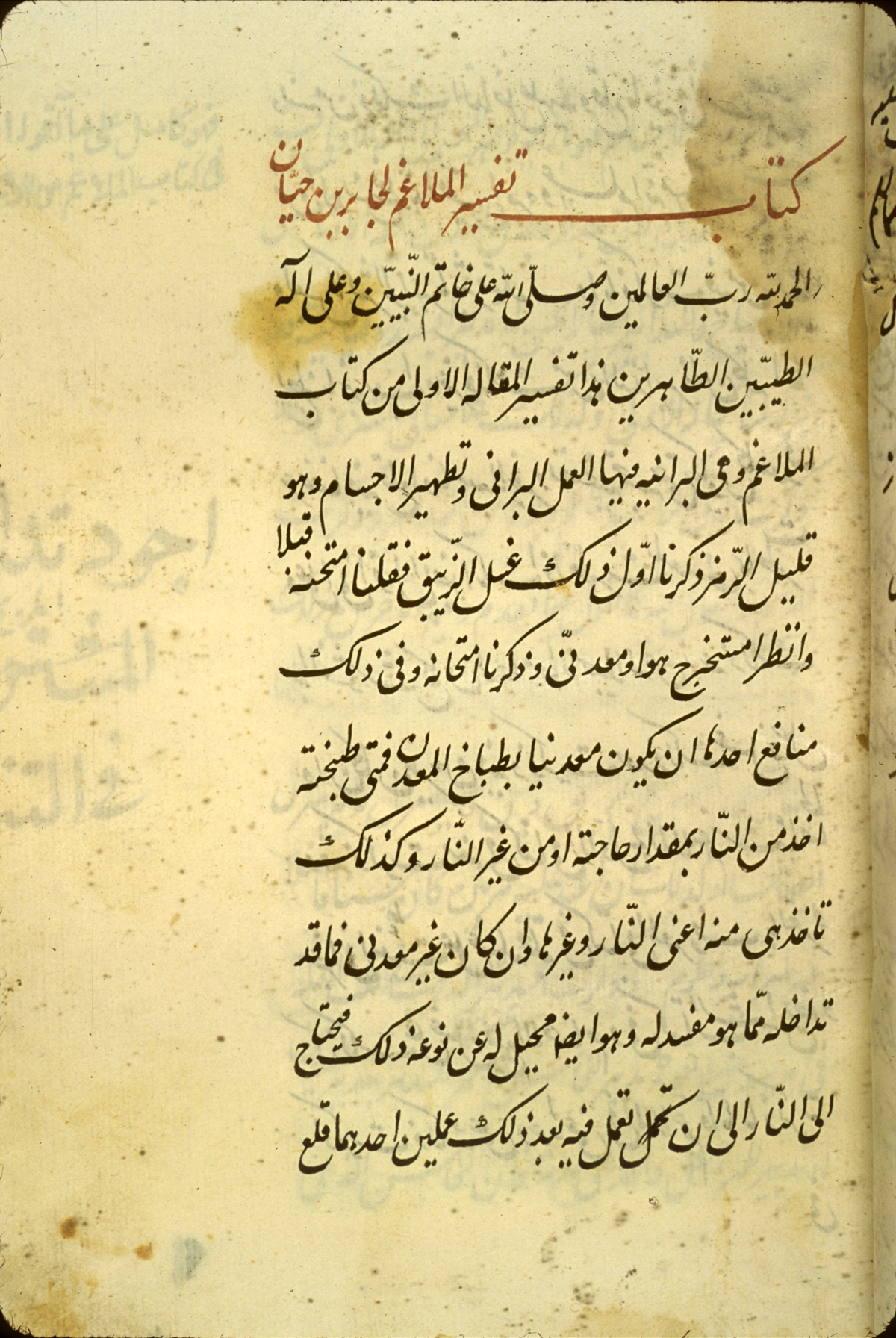


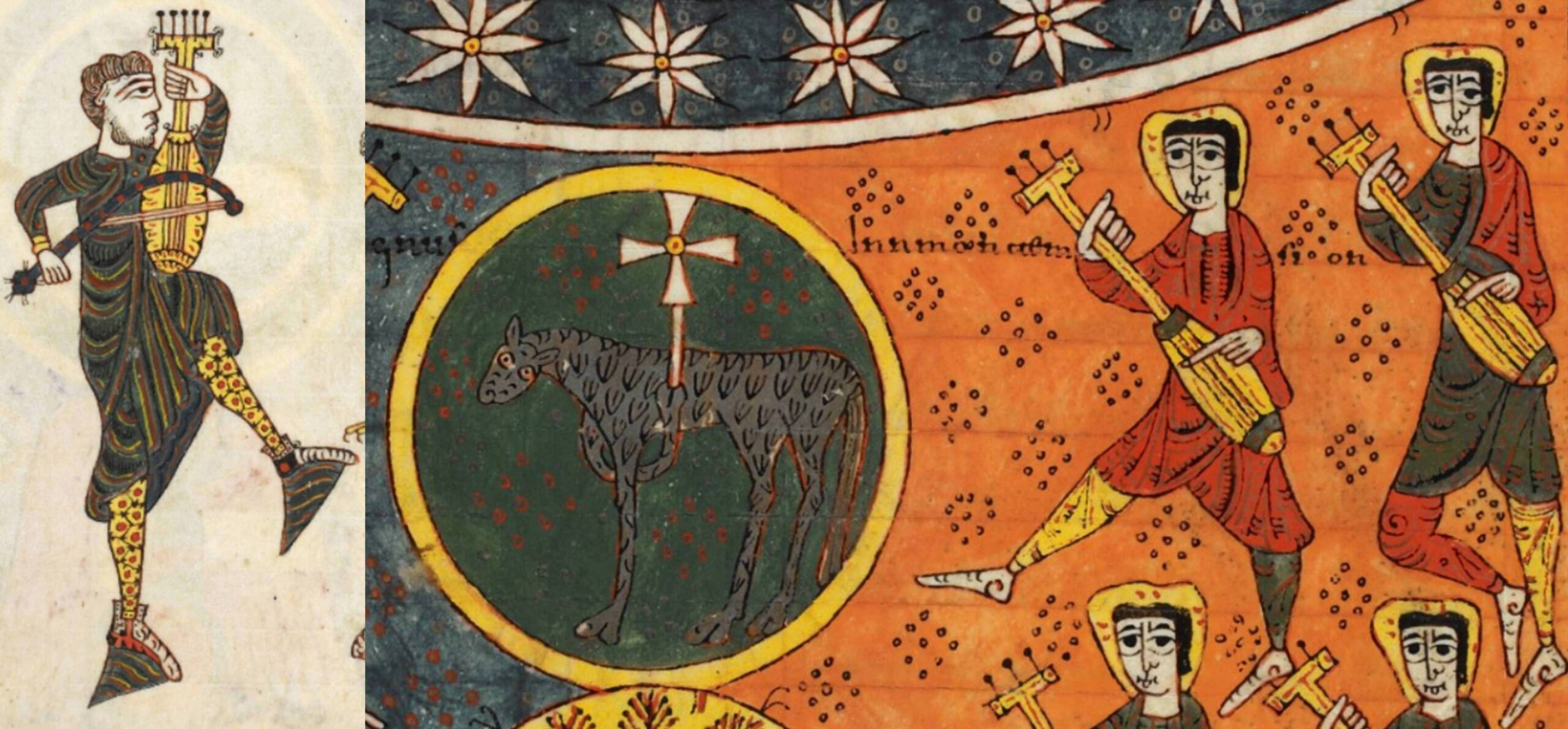
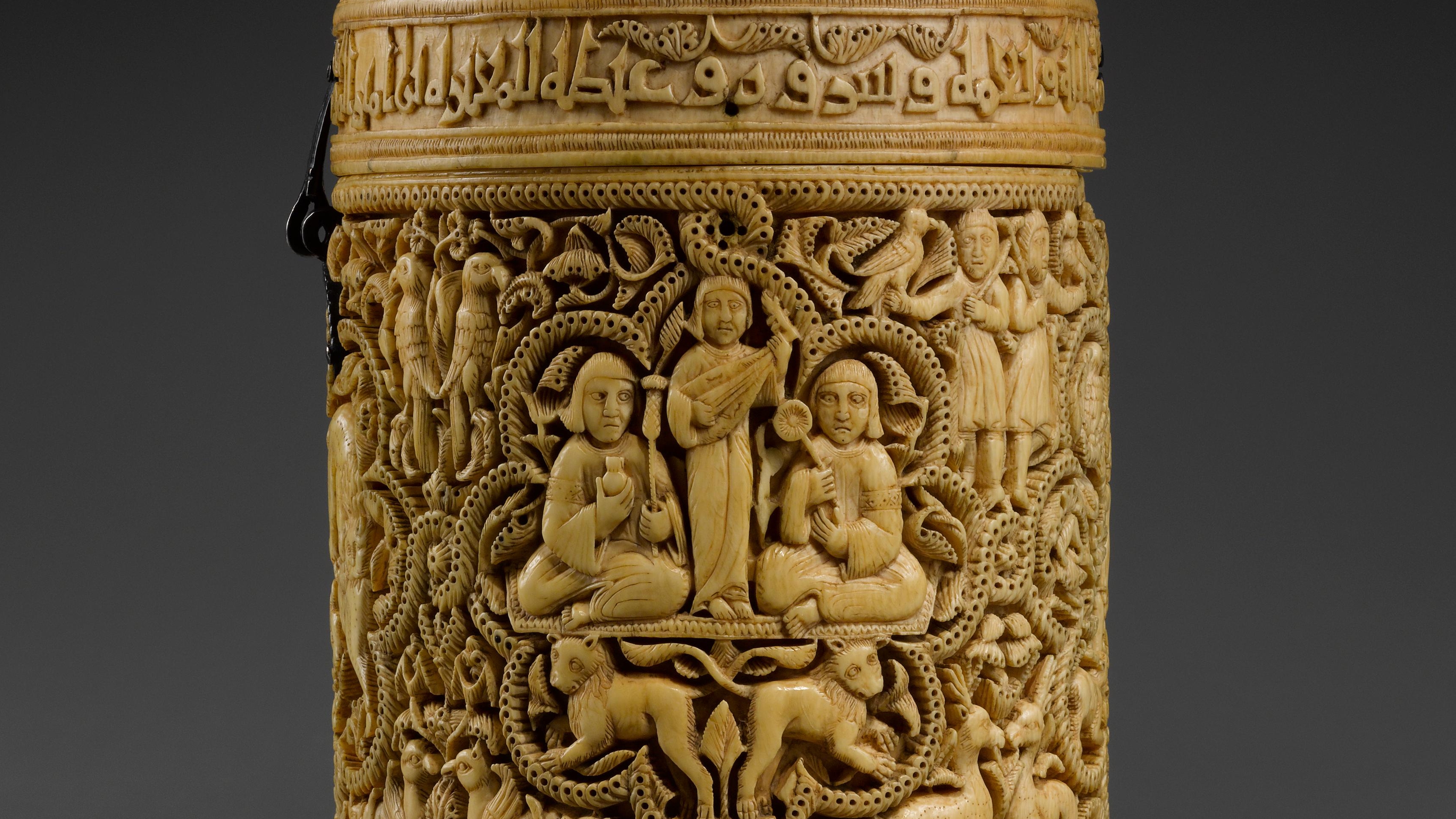
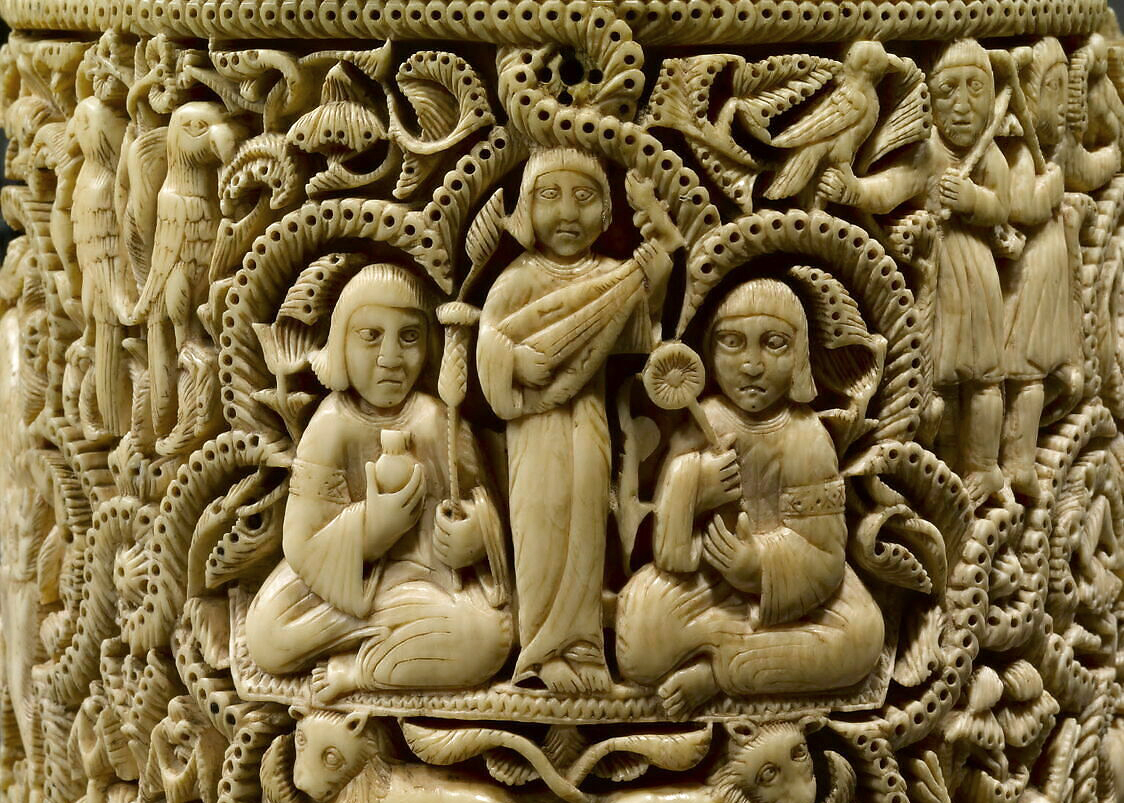
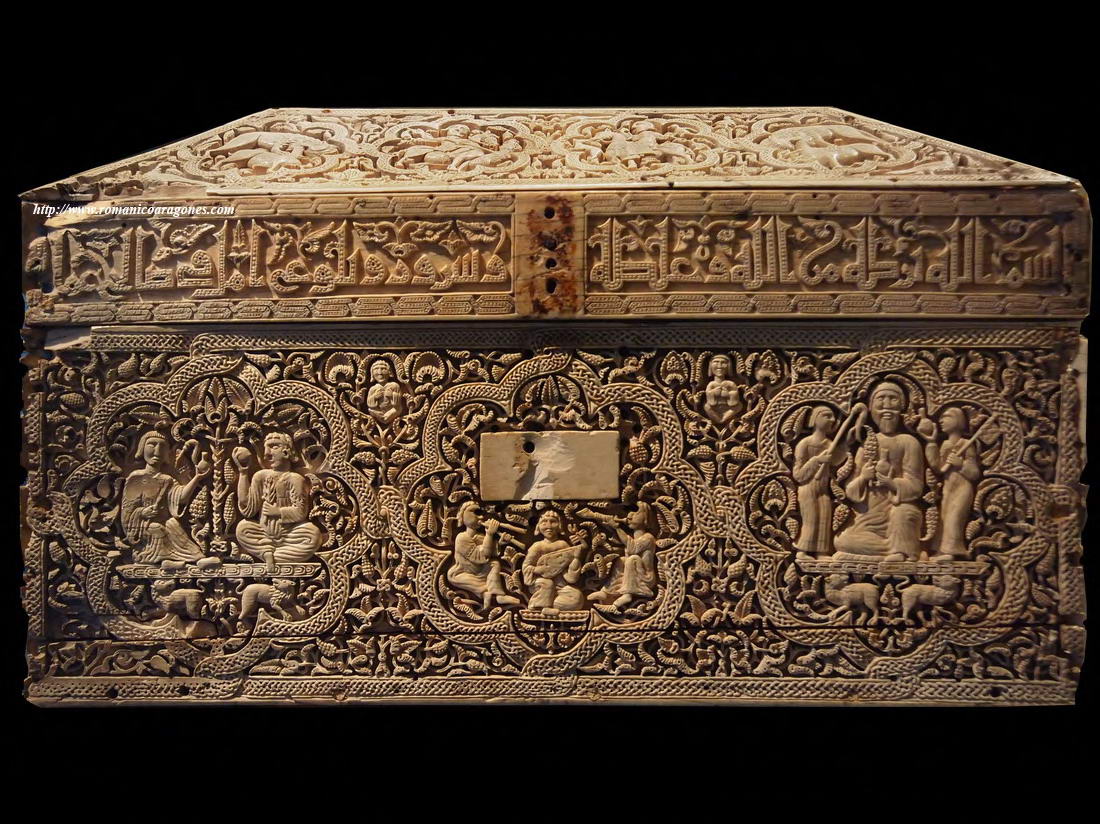
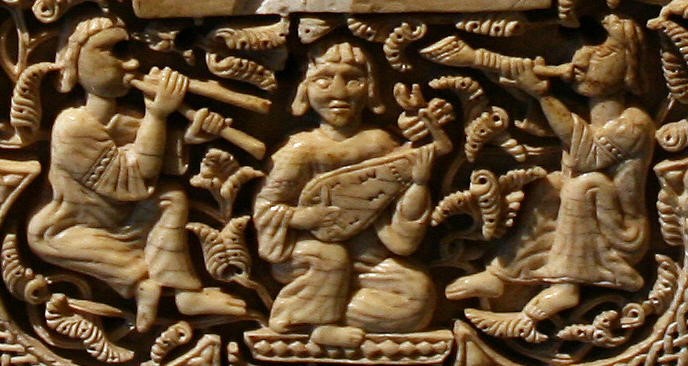


.jpg)